Guide
Sales One‑Pager: How to Write One Buyers Forward, With a Template
A sales one-pager helps your champion sell for you when you are not in the room. What to include at each deal stage, a template, and common mistakes.
Updated · 5 min read
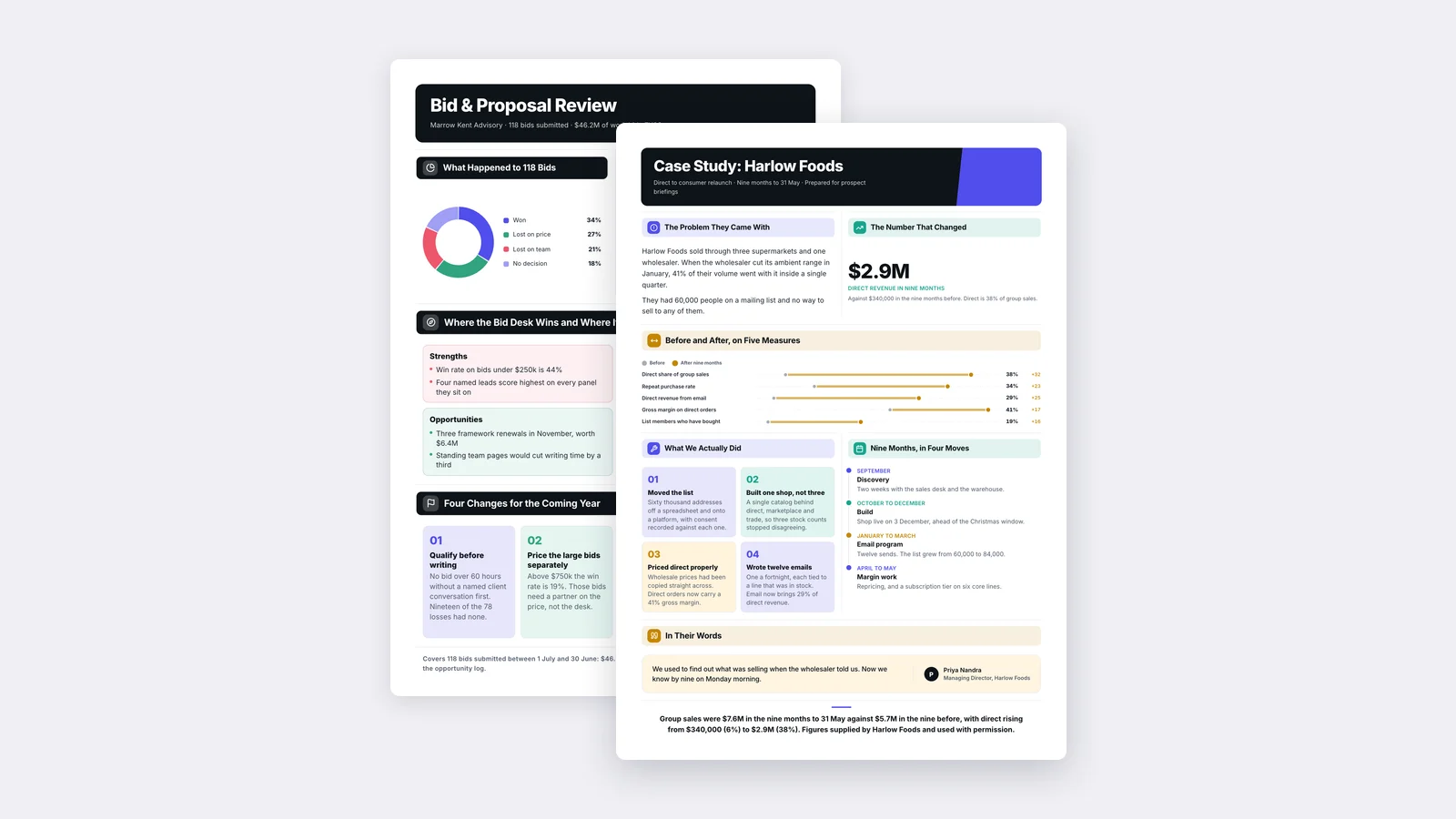
A sales one-pager is a single sheet that explains what your product does for a specific buyer, proves it, and tells them the next step. Its real job is to sell for you when you are not in the room: your contact forwards it to their boss, their finance team or their IT lead, and the One-Pager has to make the case on its own.
That changes how you write it. This guide covers what goes on a sales One-Pager, how it changes by deal stage, a fill-in template, and the mistakes that get it ignored.
Who actually reads your sales One-Pager
The person you send it to already heard your pitch. The people they forward it to did not. In most business purchases more than one person has a say: a budget owner, someone who will use the product, someone who checks security or contracts.
So write for the second reader. Ask: if someone who has never heard of us reads only this sheet, will they understand the problem, believe the result, and know what to do next? If the answer depends on context from your call, the One-Pager is not finished.
What to include in a sales One-Pager
1. A headline about the buyer's outcome
Lead with what changes for them, not with your product name. "Close your books three days faster" beats "Introducing LedgerFlow 2.0". Add one line under it saying who it is for.
2. The problem, in their words
Two or three lines describing the problem the way the buyer would describe it to a colleague. If you have heard a customer say it on a call, use their phrasing.
3. What you do about it
How your product solves the problem, as three short benefits. Each benefit is a result ("Approvals happen in Slack, so nothing waits in an inbox"), not a feature name.
4. Proof
The section that makes the rest believable. A customer result with a number and a name if you have permission to use it, a short quote, recognisable customer logos, or a relevant certification. One specific result beats five vague claims.
5. How it works
Three steps at most, or a single screenshot. The aim is to make it look easy to start, not to explain every feature.
6. The next step
One clear action: book a demo, start a trial, reply for pricing. Include a real name and contact, not just a generic inbox.
Match the One-Pager to the deal stage
One sales One-Pager rarely fits every conversation. These are the common versions:
| Stage | What the buyer needs | What the One-Pager emphasises |
|---|---|---|
| First contact | "Is this relevant to me?" | The problem and outcome, one proof point |
| After the demo | "How do I explain this internally?" | Benefits, proof, how it works, pricing range |
| Evaluation | "Is it safe and does it fit?" | Security, integrations, implementation steps |
| Business case | "Is it worth the money?" | Cost of the problem, expected return, terms |
You do not need all four on day one. Start with the post-demo version, because it is the one most often forwarded.
A sales One-Pager template
| Block | What to write | Length |
|---|---|---|
| Headline | The outcome for the buyer | 1 line |
| Subhead | Who it is for | 1 line |
| Problem | In the buyer's words | 2 to 3 lines |
| Benefits | Three results, each with a short explanation | 3 bullets |
| Proof | One customer result with a number, a quote or logos | 2 to 4 lines |
| How it works | Three steps or one screenshot | 3 lines |
| Next step | One action, a named contact | 1 to 2 lines |
You can start from our sales pipeline One-Pager template or the proposal template for a deal-specific version.
Personalise without starting over
The strongest sales One-Pagers name the prospect's company and their specific problem. Writing a new one for every deal by hand is slow, which is why most teams send the same generic PDF.
A faster route is to keep your product docs, case studies and call notes, and generate a tailored One-Pager from them for each account. With MakeOnepagers you can drop in a deck, a case study or a page of call notes and get a One-Pager back that keeps the numbers from your source, then change any line before you send it. It is free for 7 days with 3 One-Pagers included.
If you need to know who opened the One-Pager and how long they spent on it, an interactive tool with reader analytics, like Storydoc, is the better fit. We compare the two in MakeOnepagers vs Storydoc.
Mistakes that get a sales One-Pager ignored
- It is about you, not them. If the first three lines are your company history, the reader stops.
- Feature lists without results. "AI-powered dashboards" means nothing until you say what the buyer gets from them.
- No proof. Claims without a customer, a number or a quote read as marketing.
- Too much on the page. Small text and crowded sections signal that nobody edited it.
- Two or three calls to action. Pick one next step.
- Out-of-date numbers. A stale price or an old customer count undermines everything else on the sheet.
One‑Pager examples
Six real One-Pagers made with MakeOnepagers. Open any one to edit it as your own.
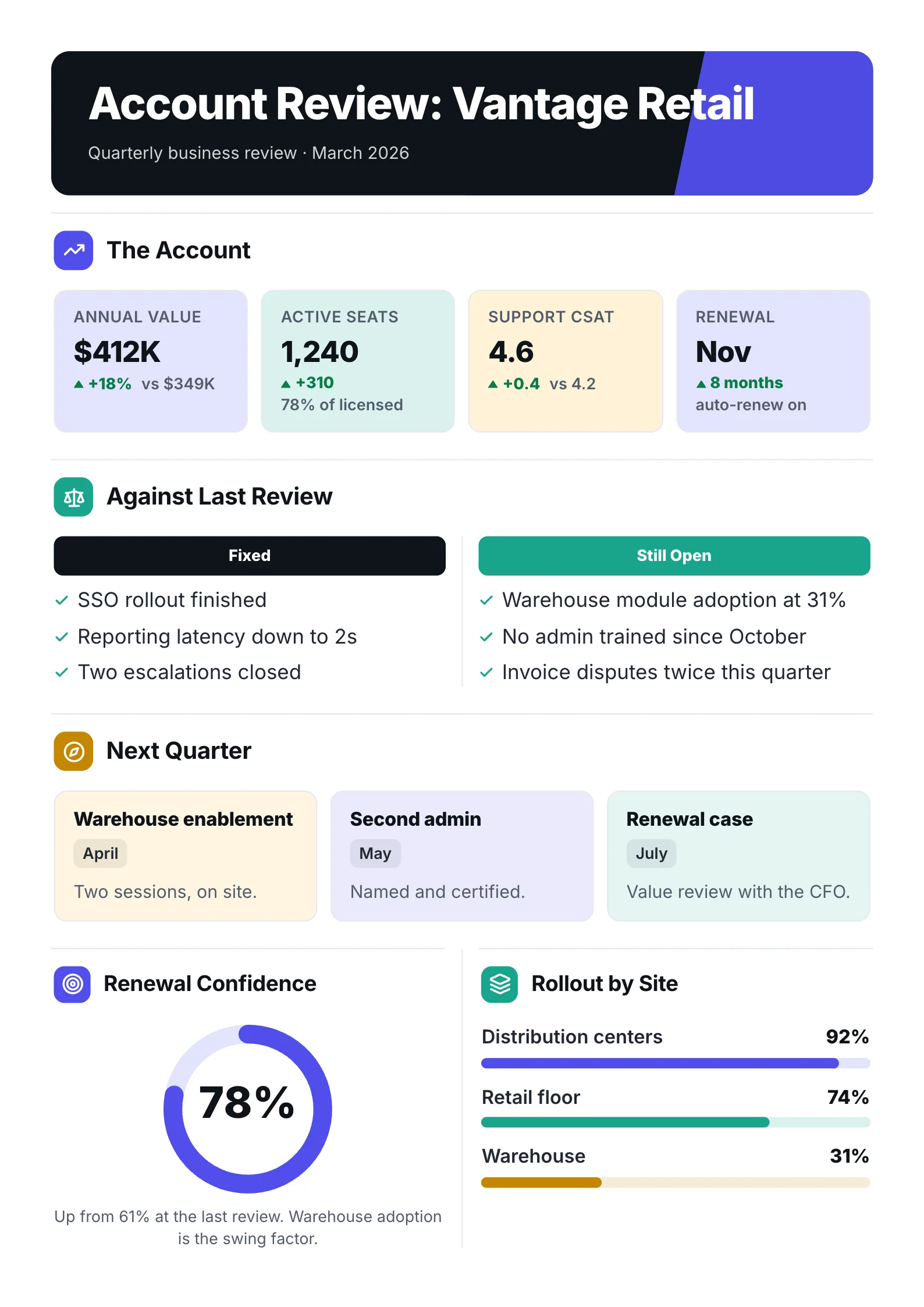 Quarterly business reviewOpen the template (opens in a new tab)
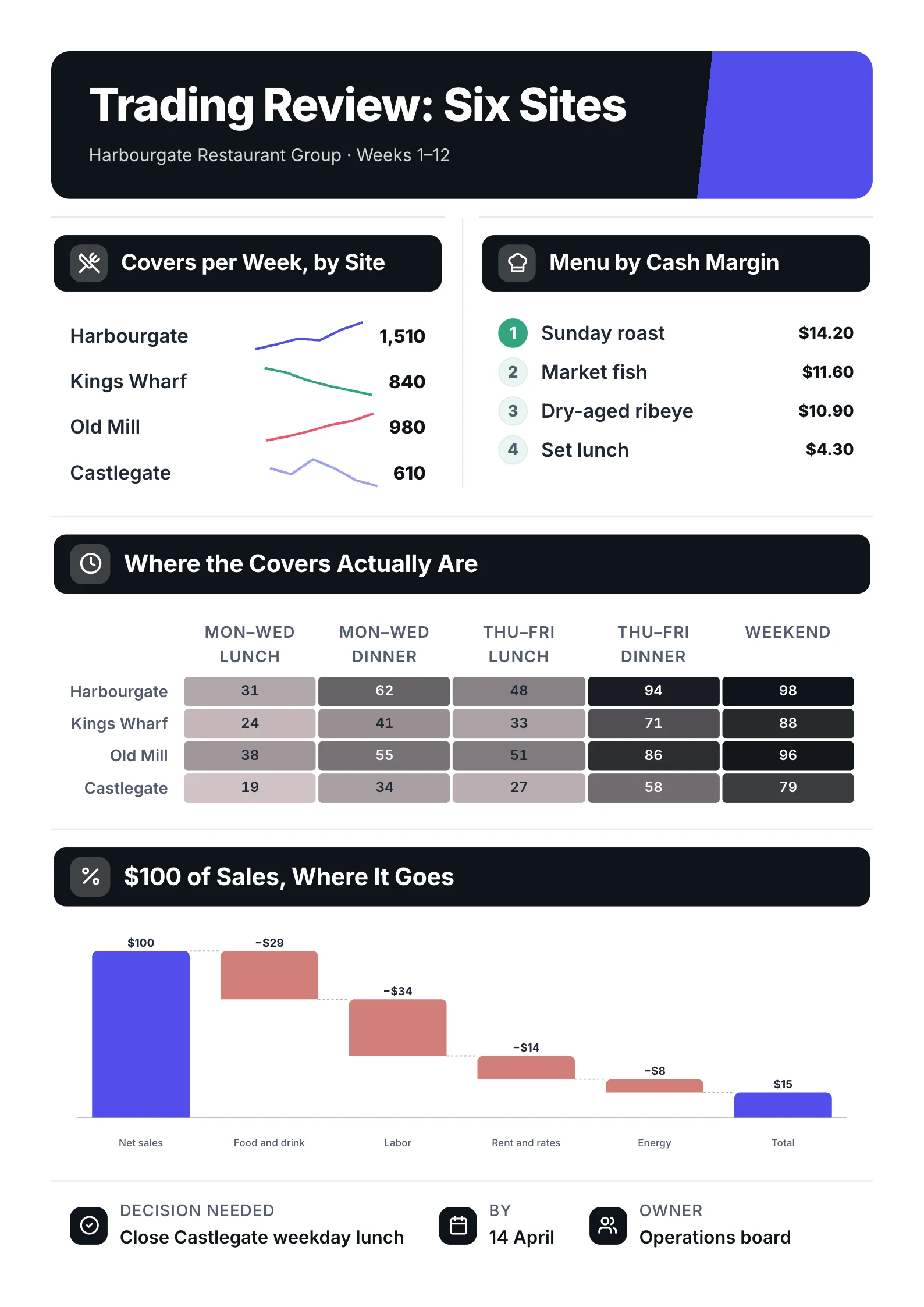 Trading reviewOpen the template (opens in a new tab)
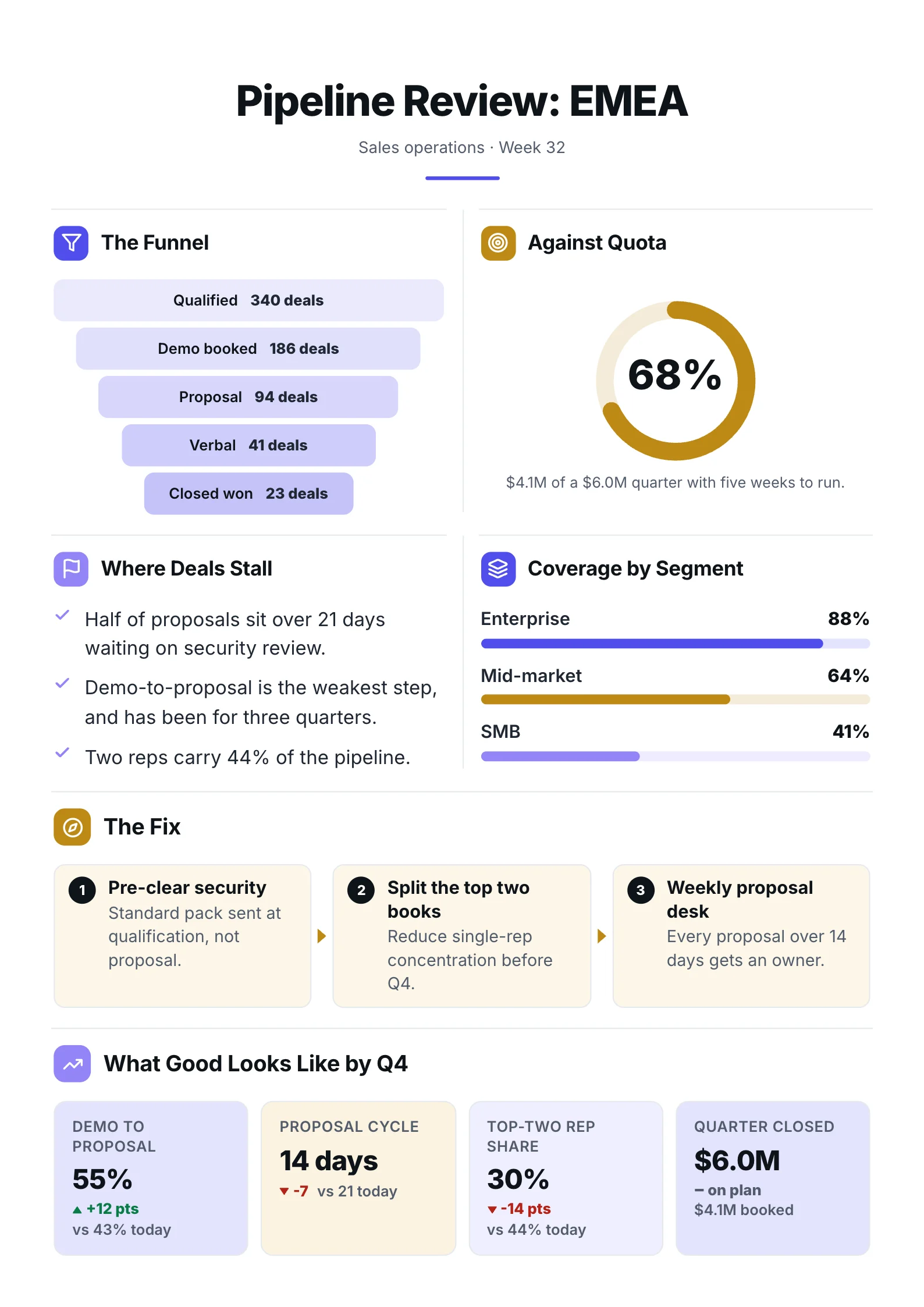 Sales pipelineOpen the template (opens in a new tab)
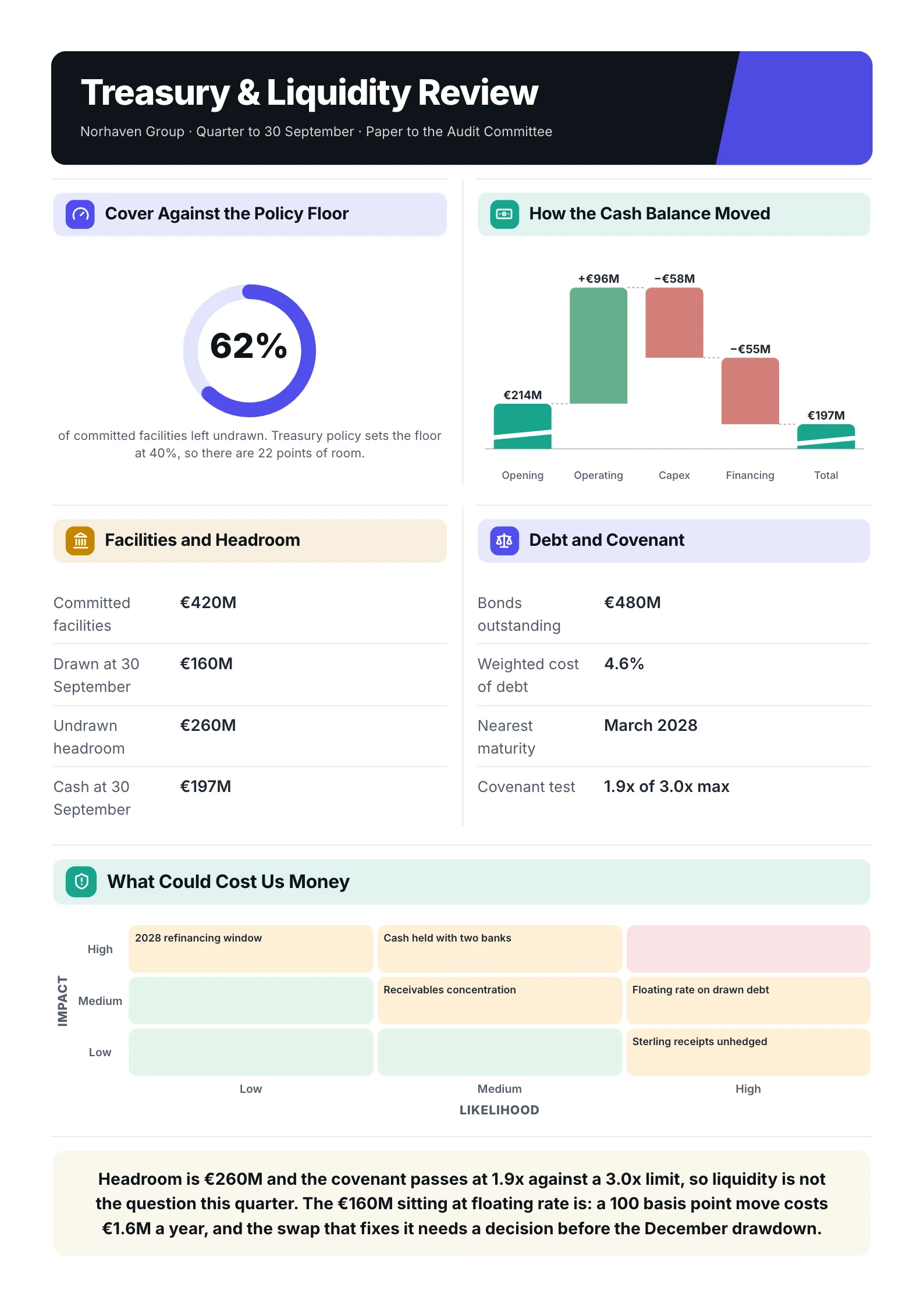 Treasury reviewOpen the template (opens in a new tab)
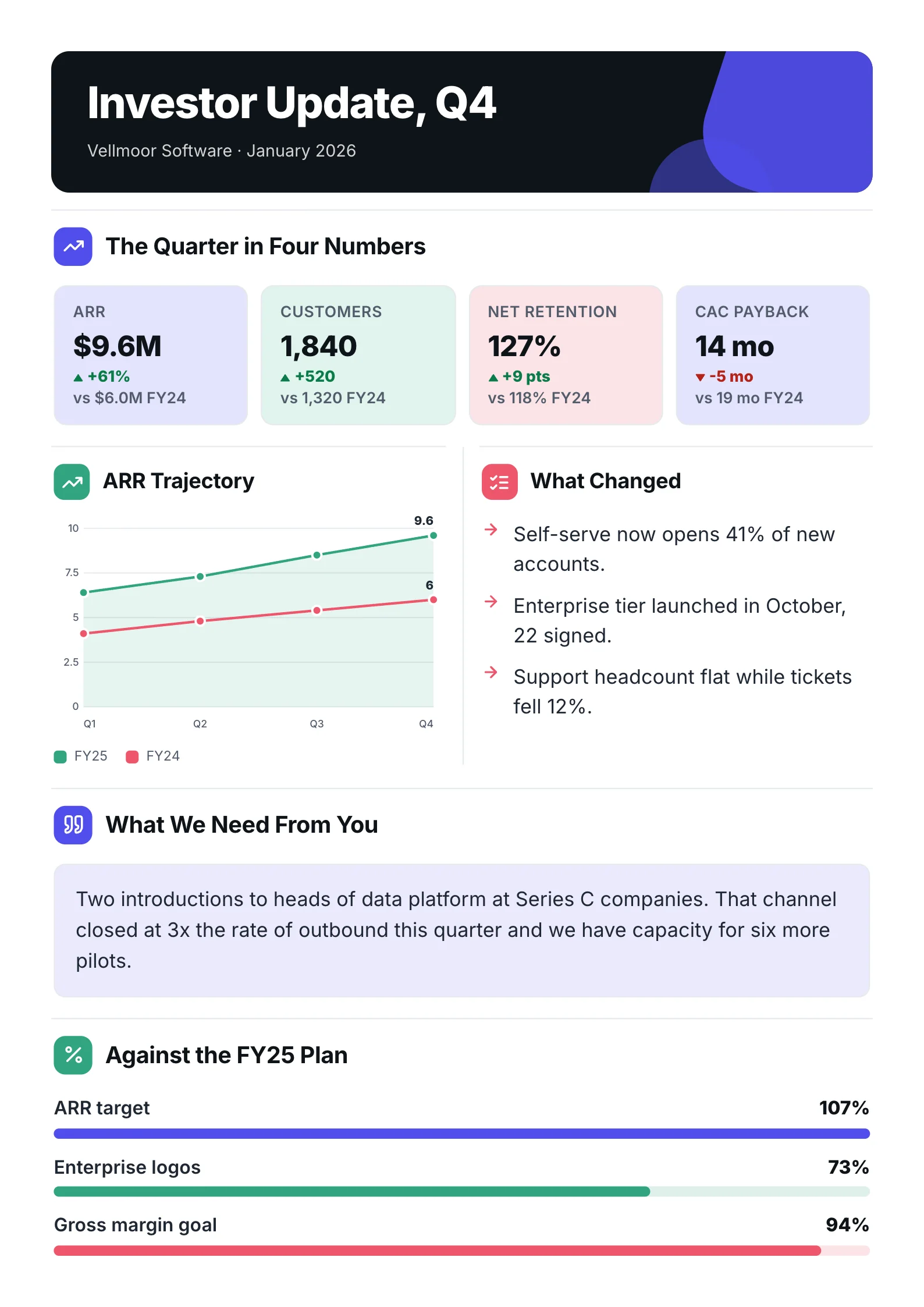 Board updateOpen the template (opens in a new tab)
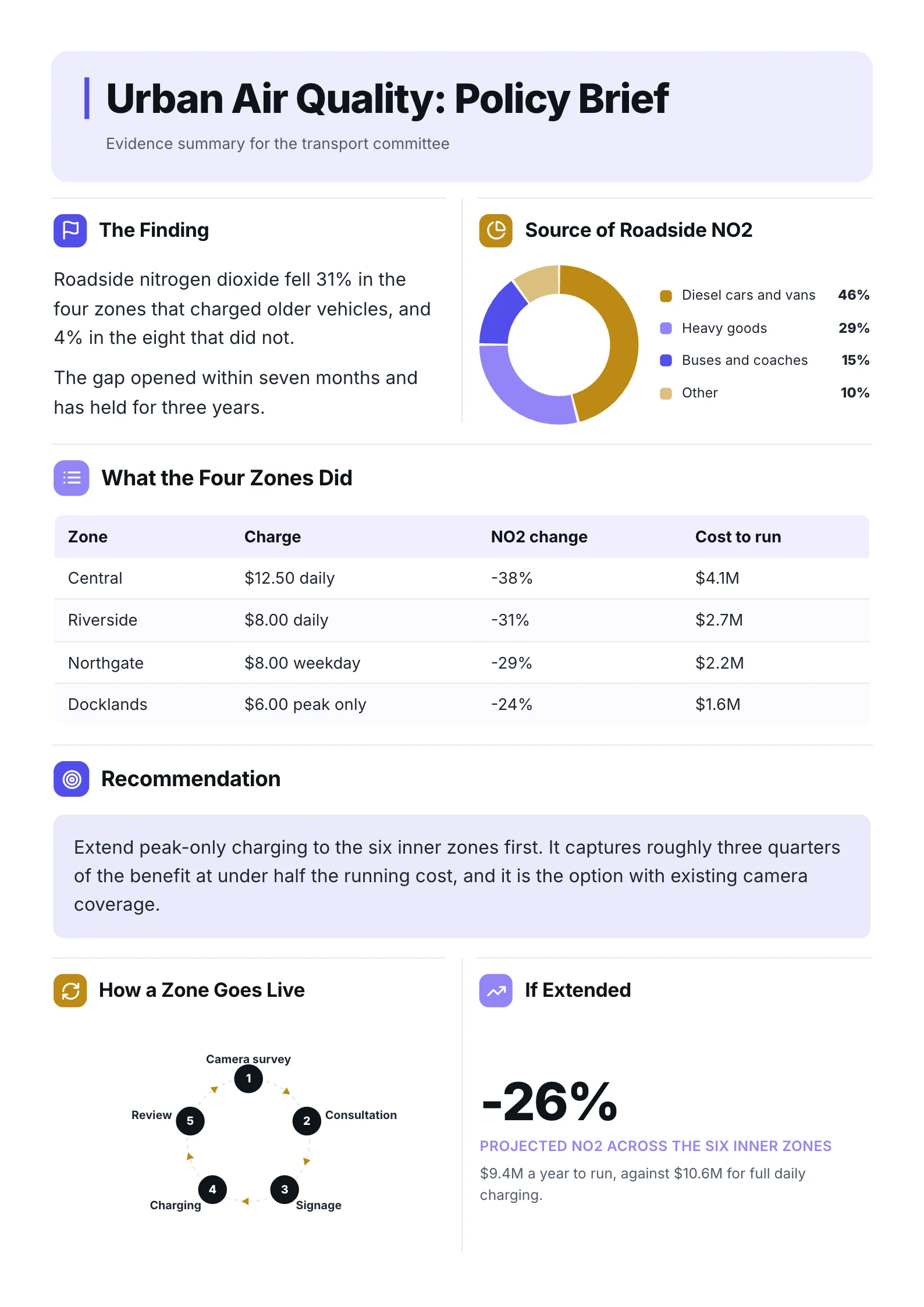 Policy briefOpen the template (opens in a new tab)
Frequently asked questions
What should a sales one-pager include?
A headline about the buyer's outcome, the problem in their words, three benefits, proof such as a customer result, a short explanation of how it works, and one clear next step with a named contact.
How is a sales one-pager different from a product one-pager?
A product One-Pager describes the product for anyone, including internal teams. A sales One-Pager is written for a buyer at a stage of a deal, so it leads with their problem and ends with a next step. Many teams keep one product One-Pager and several sales versions.
Should a sales one-pager include pricing?
Include it when it helps the buyer move forward, typically after the demo or in a business case version. On a first-contact One-Pager, a starting price or "pricing on request" is usually enough.
What format should a sales one-pager be in?
A PDF or a share link, so it looks the same on every screen and prints cleanly. Avoid sending an editable document that the reader might see with broken fonts or layout.
How do I make a sales one-pager quickly?
Start from material you already have: your product deck, a case study, or call notes. Our guide on how to make a One-Pager walks through the steps, and the best one-pager makers guide compares the tools.