BlogGuide
Media Kit Template: Free, One Page, 2 Examples
A free one-page media kit template for creators, newsletters, podcasts and publishers, the 6 parts brands look for, and 2 examples with real-looking rates.

By MakeOnepagers Team
Updated · 5 min read
A media kit template gives a brand everything it needs to decide whether to pay you: who your audience is, how many of them there are, whether they buy what you recommend, and what each option costs. Creators, newsletters, podcasts, bloggers and publishers send one whenever a brand asks "what are your rates?" The best media kits fit on one page, because the person reading it is comparing yours with twenty others. Below are the six parts brands look for, a free template you can copy and two examples.
One‑Pager examples
Real One-Pagers made with MakeOnepagers. Open any one to edit it as your own.
 Media KitEdit for free(opens in a new tab)
 Audience ProfileEdit for free(opens in a new tab)
 Speaker One-SheetEdit for free(opens in a new tab)
 Ad Revenue ReportEdit for free(opens in a new tab)
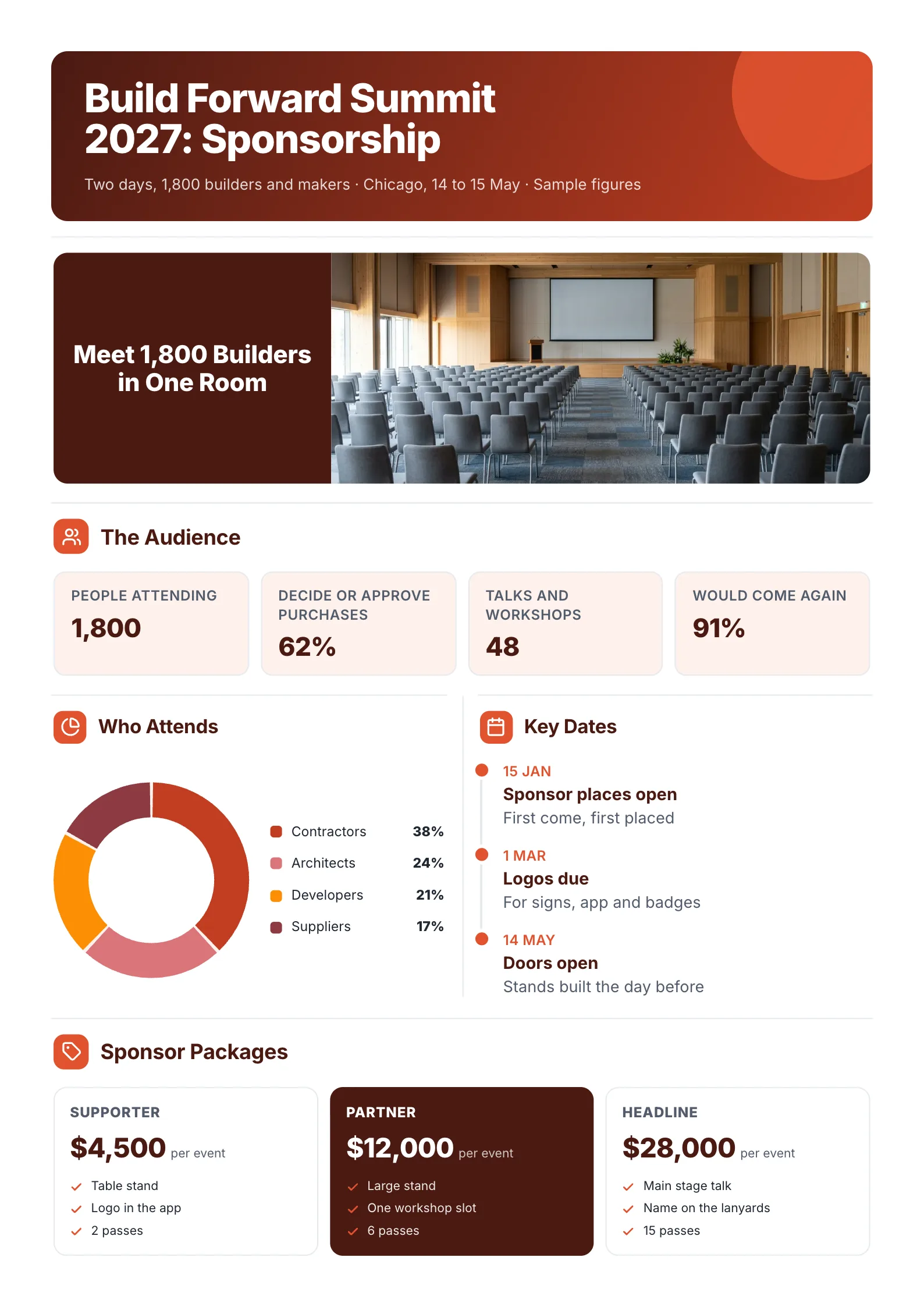 Event Sponsorship ProposalEdit for free(opens in a new tab)
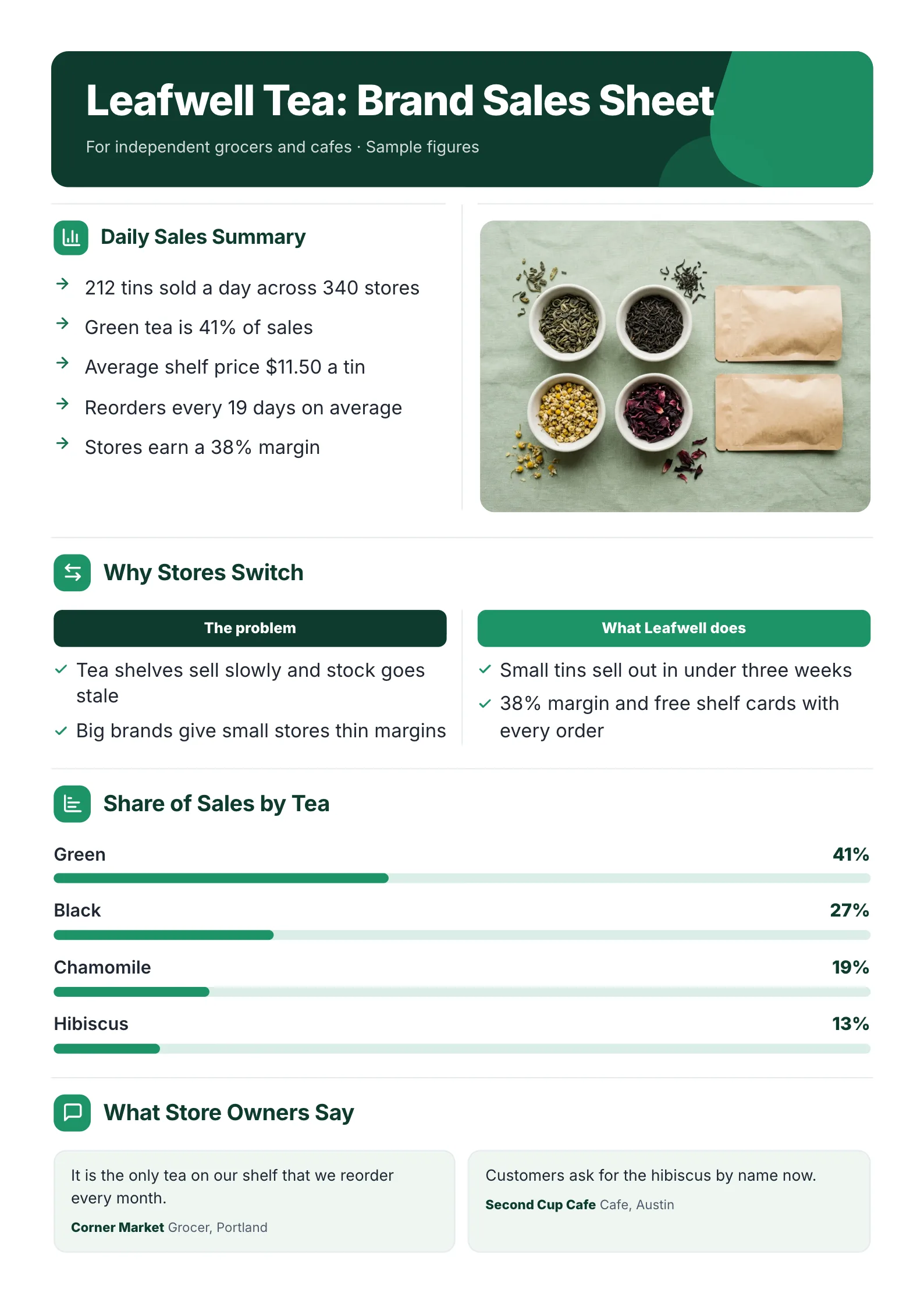 Brand Sales Sheet with PhotoEdit for free(opens in a new tab)
Both examples were made with MakeOnepagers. The names and figures are samples, and each one opens as a template you can edit for free.
What is a media kit?
A media kit is a short document that sells your audience to advertisers and sponsors. It is also called a press kit (when it is for journalists) or a sponsorship deck (when it is longer and for an event). For a creator or a publication, it is the sales sheet for ad space.
It answers four questions in this order: who reads, watches or listens to you; how many; do they act on what you say; and how can a brand work with you?
The 6 parts of a media kit
- Who you are, in one line. "The Weekly Grind: newsletter and podcast for coffee lovers."
- Audience size: three numbers, such as subscribers, open rate and monthly plays or views.
- Who they are: age, gender, income or interests, as four shares.
- Proof they buy: one number from a survey, a past campaign or affiliate sales.
- Ways to work with you: two to four options, each with a price and what the brand gets.
- How to book: a date, an email and one line on how slots are handed out.
A free media kit template
Copy this into a document, or open one of the examples below and edit it.
| Part | What to write, with an example |
|---|---|
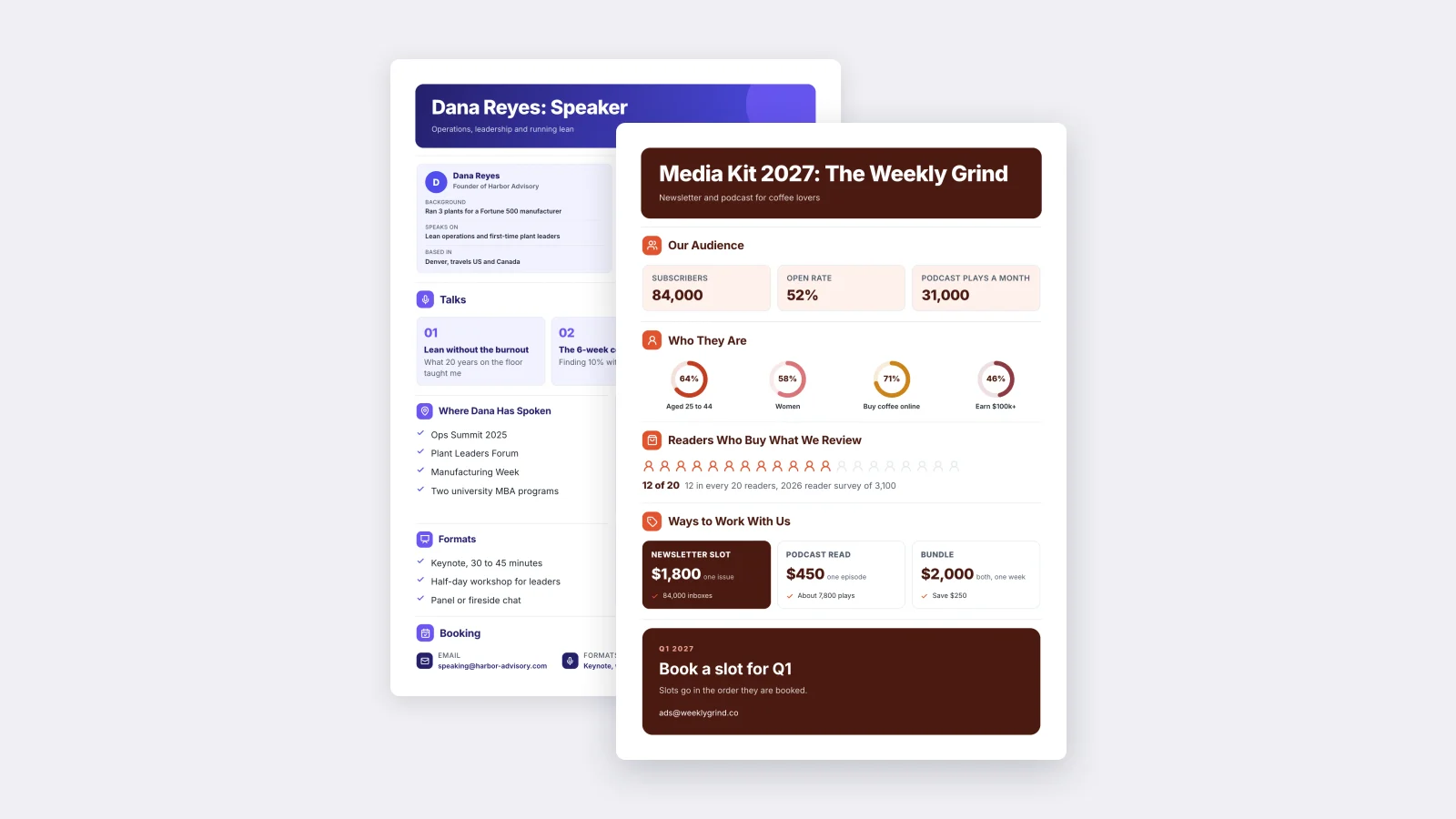
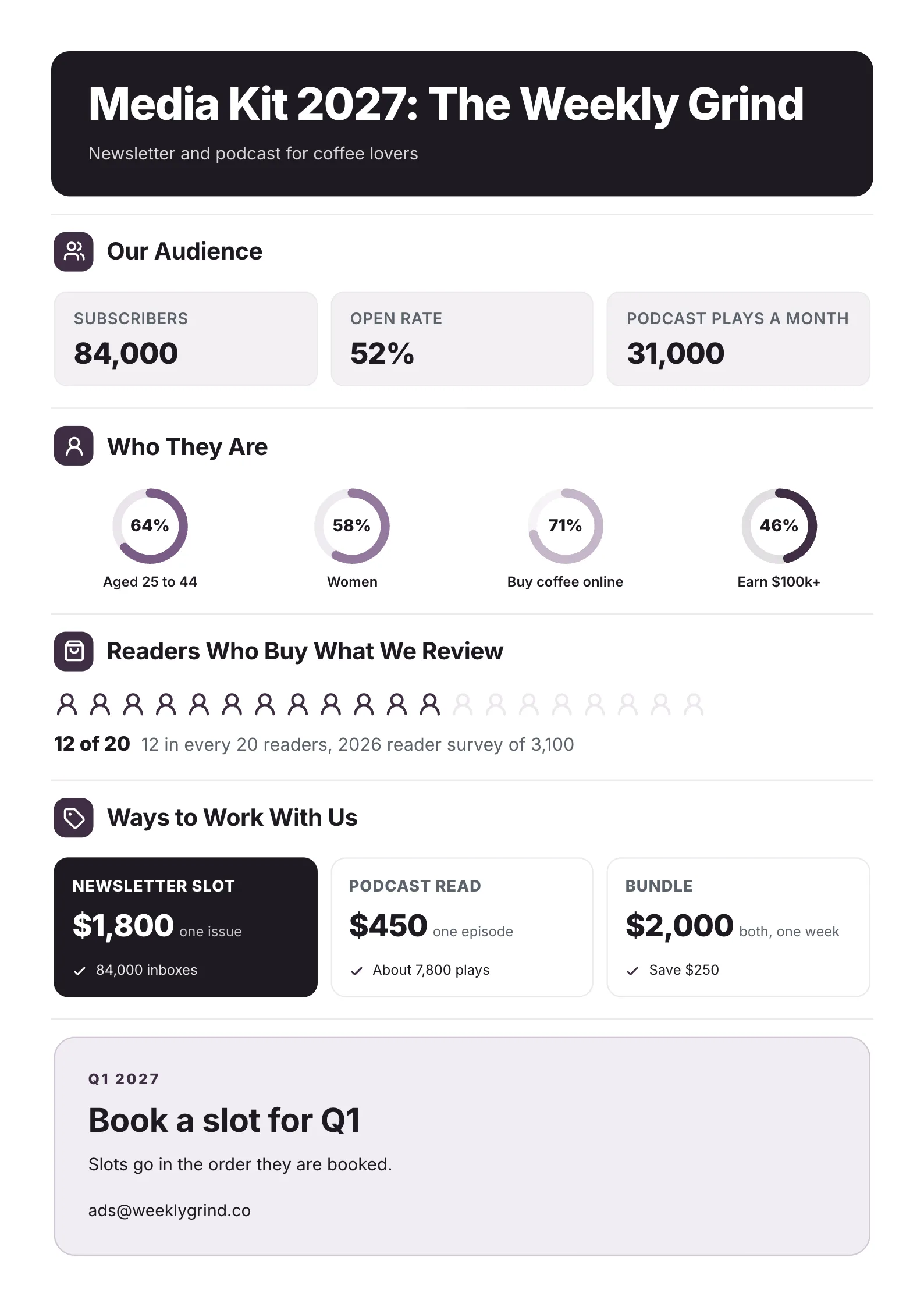
| Title | Name, year and what you are. Media Kit 2027: The Weekly Grind, newsletter and podcast for coffee lovers |
| Our audience | 3 numbers. 84,000 subscribers, 52% open rate, 31,000 podcast plays a month |
| Who they are | 4 shares. 64% aged 25 to 44, 71% buy coffee online |
| Proof they buy | 1 number and its source. 12 in every 20 readers buy what we review, 2026 survey of 3,100 |
| Ways to work with us | 3 options. Newsletter slot $1,800. Podcast read $450. Bundle $2,000 |
| Book | Date and email. Book a slot for Q1. Slots go in the order they are booked |
2 media kit examples
1. Media kit for a newsletter or podcast
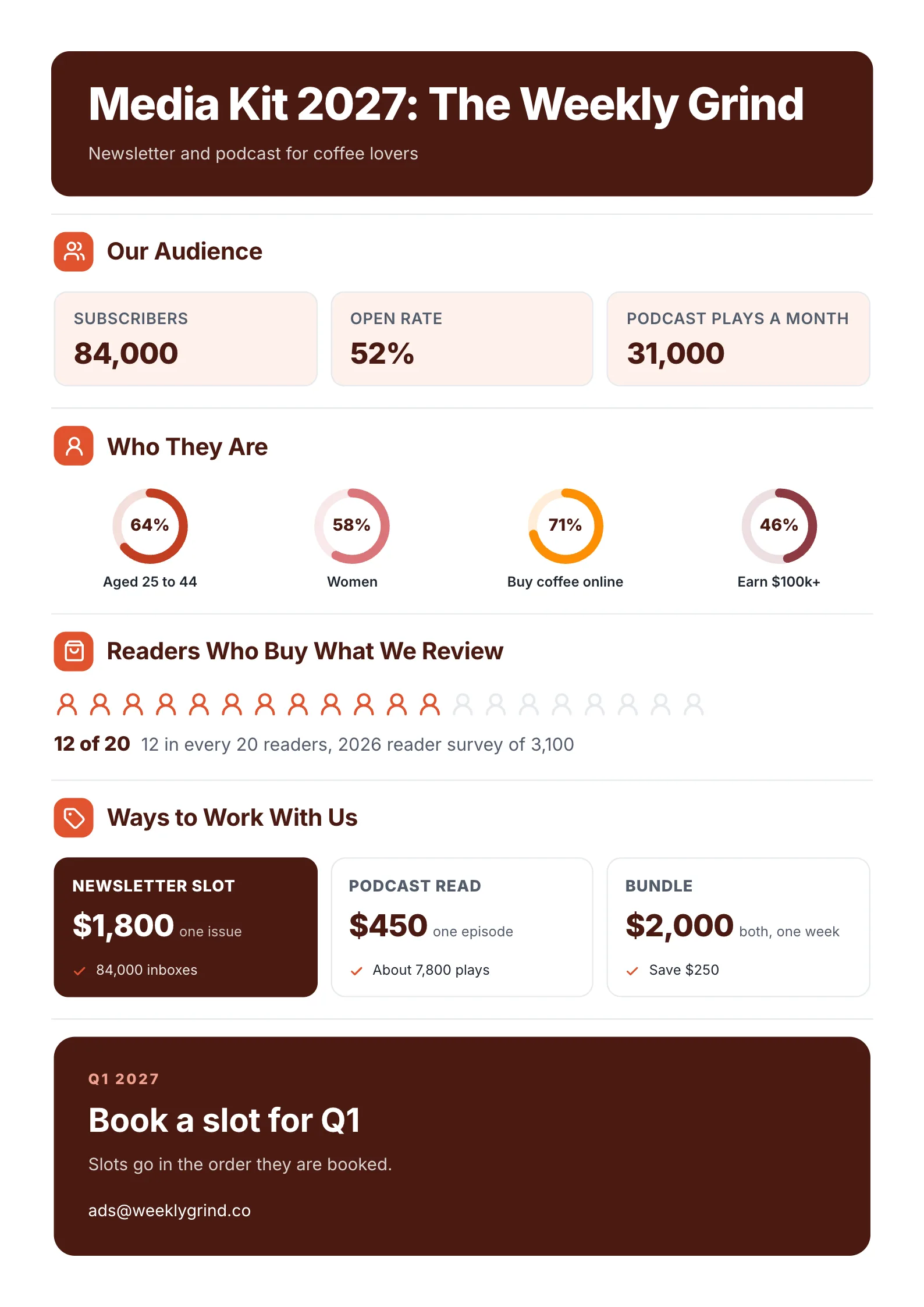 Edit this template
A creator's media kit: audience, proof, three prices and how to book, all on one page.
What to copy:
- "Readers who buy what we review" as its own section, with the survey size beside it: 12 in every 20, from 3,100 replies. Brands buy results, and this is the closest thing to a result before the campaign runs.
- Three options with the main one highlighted: the newsletter slot at $1,800, in a dark box. The bundle shows the saving ($250), which nudges brands to spend more.
- Booking with a reason to act now: "Slots go in the order they are booked."
Edit for free: media kit template.
2. Audience profile for media buyers
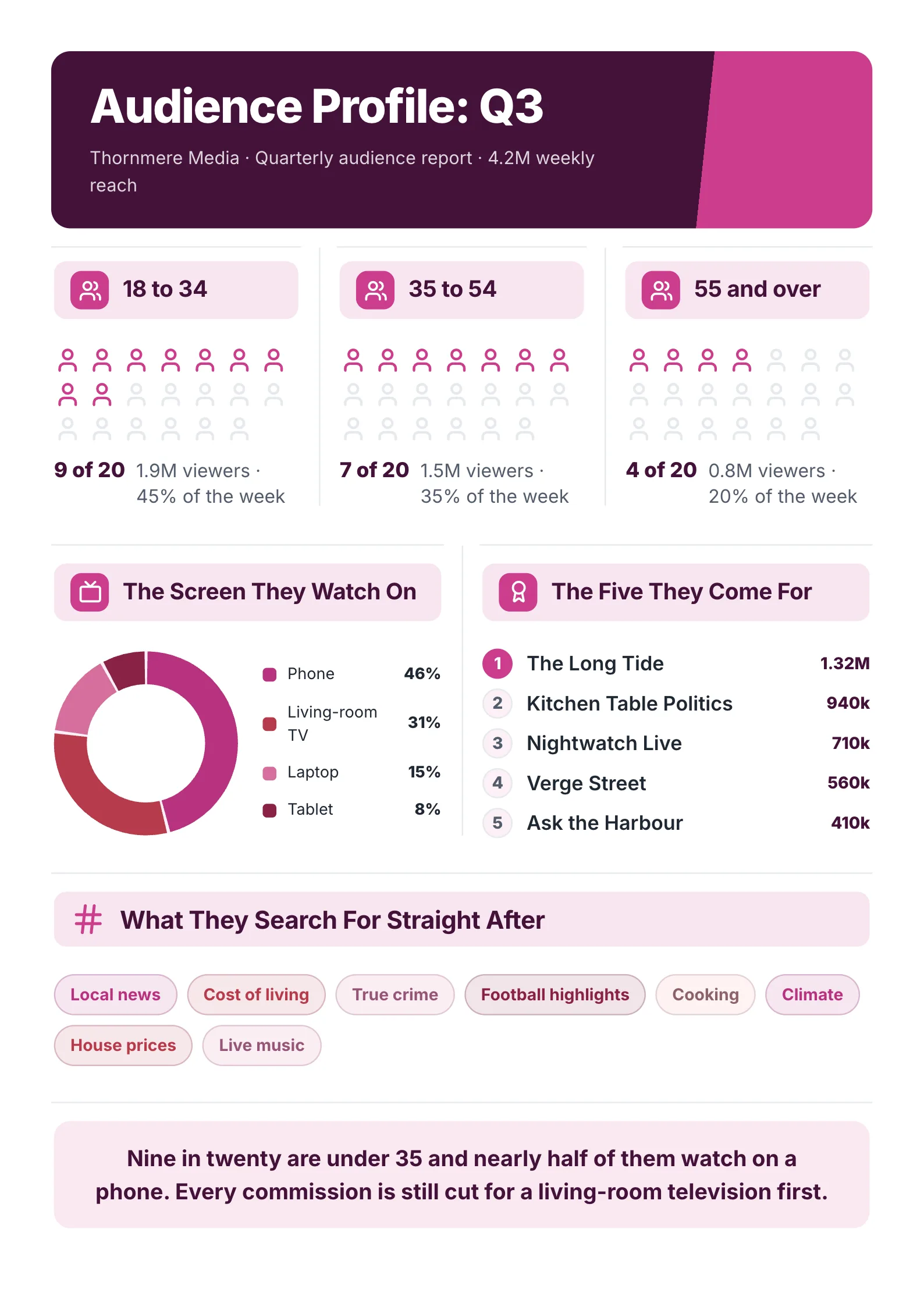 Edit this template
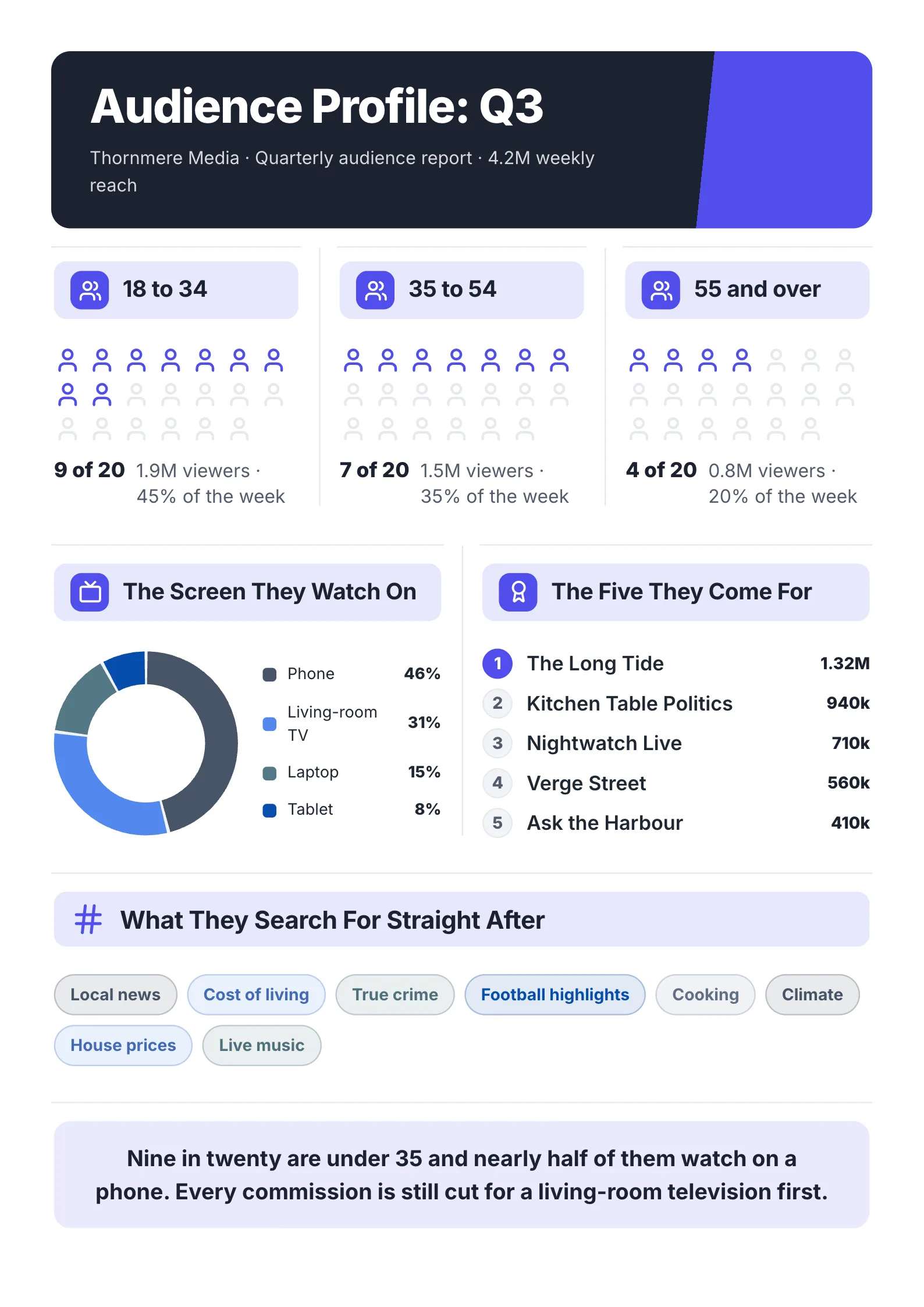
A larger publisher's audience, broken down the way a media buyer plans a campaign.
What to copy:
- Age bands as "9 of 20" figures, each with viewers and share of the week. A buyer can match them to a target in seconds.
- The screen they watch on: phone 46%, living-room TV 31%. It tells a brand which ad format to make.
- What they search for straight after: local news, cost of living, football highlights. Interests sell better than age.
Edit for free: audience profile template.
What to charge in a media kit
There is no single price list, but most creators and publishers set prices from their own numbers rather than from follower counts:
| Channel | What brands usually look at | Common way to price |
|---|---|---|
| Newsletter | Subscribers and open rate | Per issue, or per 1,000 opens |
| Podcast | Downloads per episode | Per episode, or per 1,000 downloads |
| Video or social | Views per post | Per post or per video |
| Blog | Monthly visitors | Per article, or per month of placement |
Whatever you charge, show three options and a bundle. For a fuller price sheet, see our rate card template.
How to make a media kit in 5 steps
- Pull your three biggest audience numbers from the last 90 days.
- Add four shares that describe your audience: age, gender, income, an interest that matters to brands.
- Find one proof number: a reader survey, affiliate sales or a past campaign's result.
- Price three options and a bundle.
- End with how to book, an email and a date.
Have your stats in a spreadsheet or a long sponsorship deck? Drop it into the free AI One-Pager generator and get it back as a designed media kit.
Media kit mistakes
- Only follower counts. Big numbers without engagement or proof look inflated.
- No prices. Brands comparing twenty creators skip the ones who make them ask.
- Old numbers. Put the month beside your stats, and update them every quarter.
- Ten pages. A brand manager reads the first page. Make it the only one.
Make your media kit
Open the free media kit template and put in your numbers and rates, or drop your stats into the free AI One-Pager generator and get a finished media kit back.
Frequently asked questions
What should a media kit include?
Who you are, three audience numbers, who your audience is, one number that proves they act on what you say, two to four ways to work with you with prices, and how to book.
Should I put prices in my media kit?
Yes, at least starting prices. Brands shortlist the creators whose prices they can see, and you avoid long email threads with brands that cannot afford you.
What is the difference between a media kit and a press kit?
A media kit sells your audience to advertisers. A press kit gives journalists the facts, photos and contacts they need to write about you.
How often should I update my media kit?
Every three months, or whenever a number changes a lot. Put the date beside your stats so brands know they are current.