Guide
One‑Pager vs Pitch Deck: Which to Send Investors, and When
One-pager vs pitch deck: the one-pager earns the meeting, the deck runs it. What each holds, when to send which, and how to turn one into the other.
Updated · 4 min read
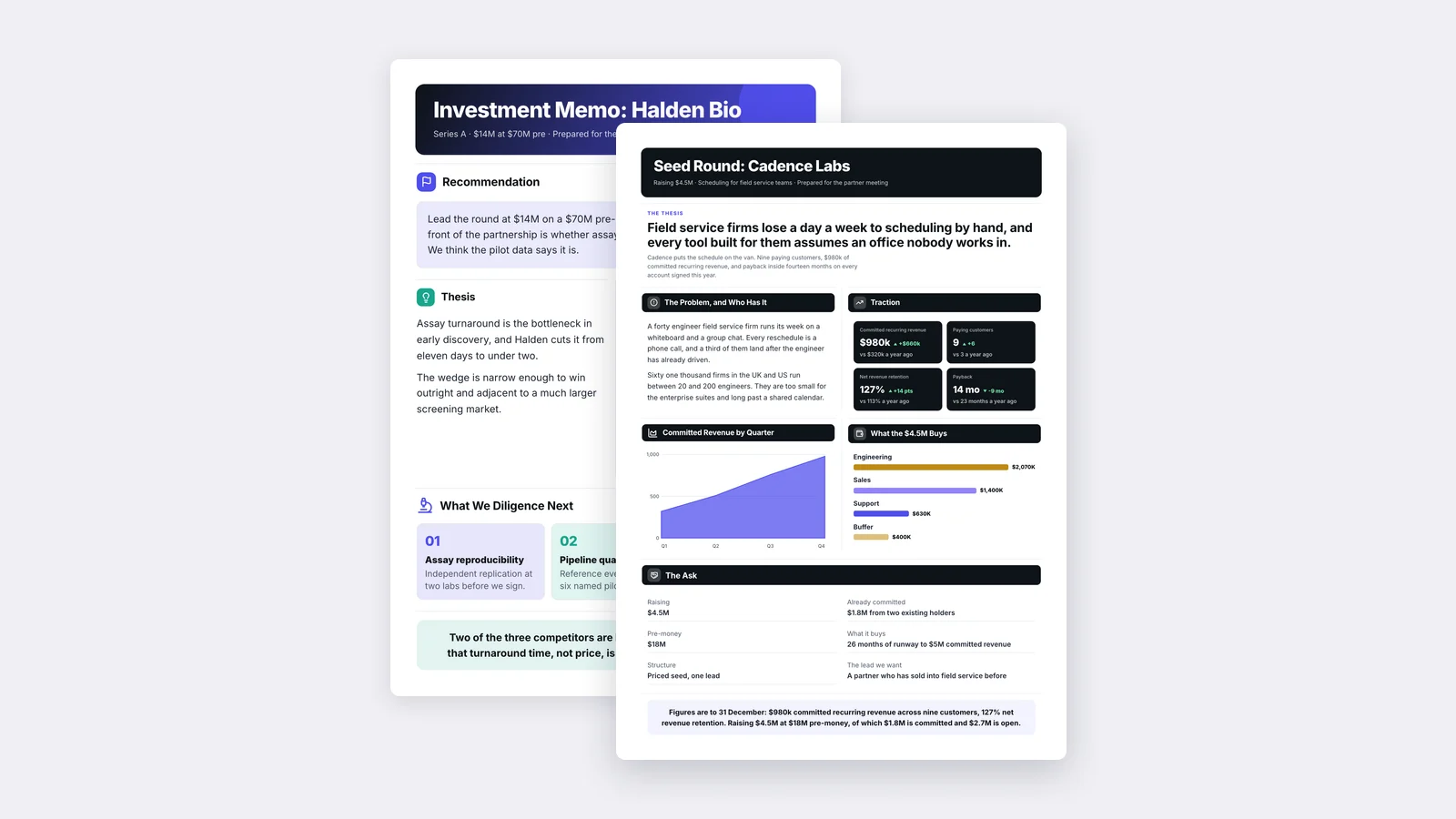
A One-Pager is a single sheet that summarises your company so an investor can decide in a couple of minutes whether to learn more. A pitch deck is a set of usually 10 to 20 slides that tells the full story, built to be presented in a meeting or read in depth. The One-Pager earns the meeting; the deck runs it.
Most startups need both. This guide compares them side by side, explains when to send which, and shows how to make a One-Pager from a deck you already have.
The difference at a glance
| One-Pager | Pitch deck | |
|---|---|---|
| Length | One page | Usually 10 to 20 slides |
| Reading time | About two minutes | Ten minutes or more, or a full meeting |
| Job | Earn a reply or a meeting | Explain the business in depth and support a decision |
| Content | The headline of each topic | Each topic with its evidence |
| Best sent | First contact, introductions, follow-ups | After interest is shown, before or during a meeting |
| Format | PDF or link that prints on one sheet | PDF, slides, or a share link |
| Forwarded? | Often, which is the point | Sometimes, usually within a firm |
What goes in each
They cover the same topics. The difference is depth.
| Topic | On the One-Pager | In the deck |
|---|---|---|
| Problem | One or two lines with the cost | A slide with evidence and customer quotes |
| Solution | What the customer gets | Product screens or a demo |
| Market | One bottom-up figure | Sizing with method and sources |
| Traction | Three or four numbers with comparisons | Charts, cohorts, pipeline |
| Business model | How you charge and deal size | Unit economics |
| Team | One line per founder | Bios, advisors, hiring plan |
| Competition | Who else, and why you win | A positioning map or comparison table |
| The raise | Amount and what it buys | Use of funds, milestones, financial plan |
If you can't fit a topic onto the One-Pager in a line or two, that is a sign the topic needs sharpening, not a smaller font.
When to send a One-Pager
- Cold outreach. A short email with a One-Pager is easier to say yes to than a 20-slide attachment.
- Warm introductions. The person introducing you wants something they can forward without explaining it. A One-Pager stands on its own.
- After meeting someone at an event. A leave-behind that prints cleanly.
- Updates to people who passed earlier. A One-Pager with new traction is an easy reason to reopen a conversation.
When to send the pitch deck
- When an investor asks for more. Interest is the signal to go deeper.
- Before a scheduled meeting, so they arrive with questions rather than spending the meeting reading.
- In the meeting itself, as the structure for your presentation.
- In a formal application to an accelerator or fund that asks for a deck.
Many founders send both together on first contact, the One-Pager in the email and the deck as a link. That works too, as long as the One-Pager is what they see first.
Which one should you make first?
Make the deck first if you are raising soon, because it forces you to work through every part of the business. Then make the One-Pager by distilling it. Each section of the deck becomes one line on the One-Pager, keeping only the strongest number from each slide.
Make the One-Pager first if you are early and still testing the story. One sheet is quicker to rewrite, and the reactions you get tell you what the deck needs to prove.
How to turn your pitch deck into a One-Pager
- Write the one sentence that says what you do. This is the headline.
- Take the strongest single fact from each slide. One per topic, with its comparison.
- Drop anything a reader would not miss. Roadmap, detailed financials and long bios stay in the deck.
- Put the raise and contact details at the bottom, clearly.
- Read it as a stranger would. If a line needs the deck to make sense, rewrite it.
You can also let a tool do the first draft. With MakeOnepagers you upload the deck itself, and it reads every slide, keeps the numbers, and designs a One-Pager you can then edit. It is free for 7 days with 3 One-Pagers included. For more on the sections investors expect, see our guide to the startup One-Pager, and for decks in general, the pitch decks use case.
One‑Pager examples
Six real One-Pagers made with MakeOnepagers. Open any one to edit it as your own.
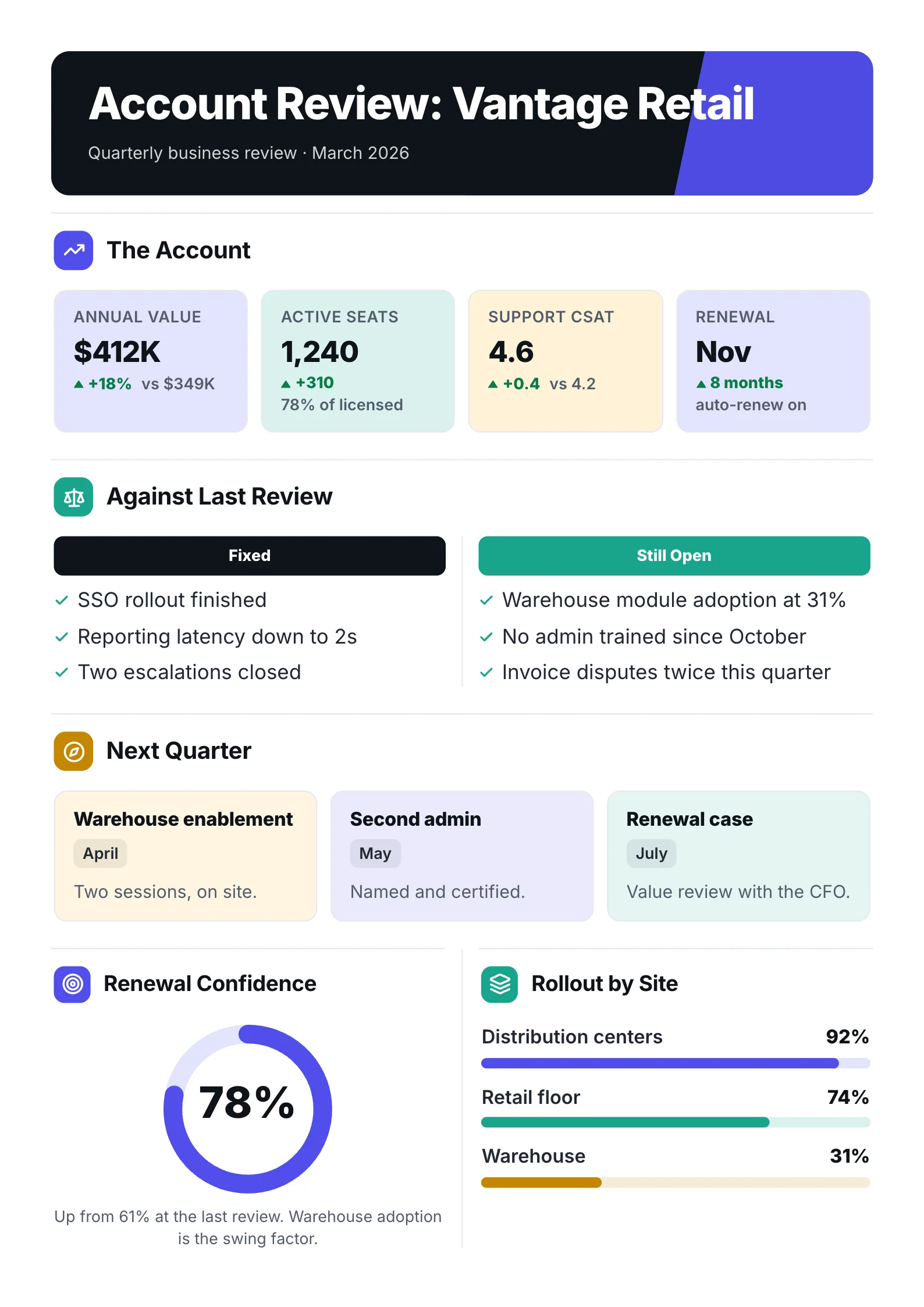 Quarterly business reviewOpen the template (opens in a new tab)
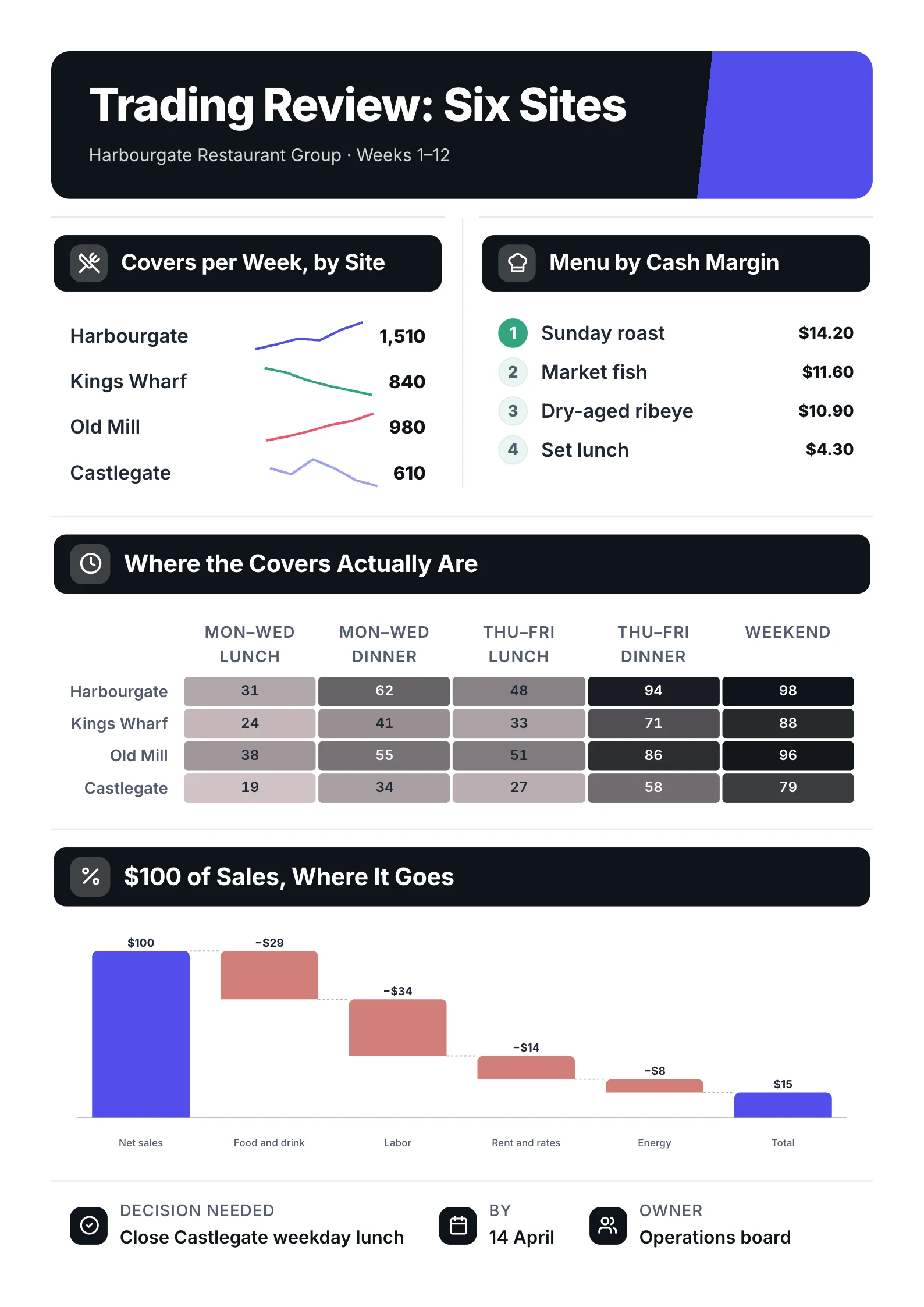 Trading reviewOpen the template (opens in a new tab)
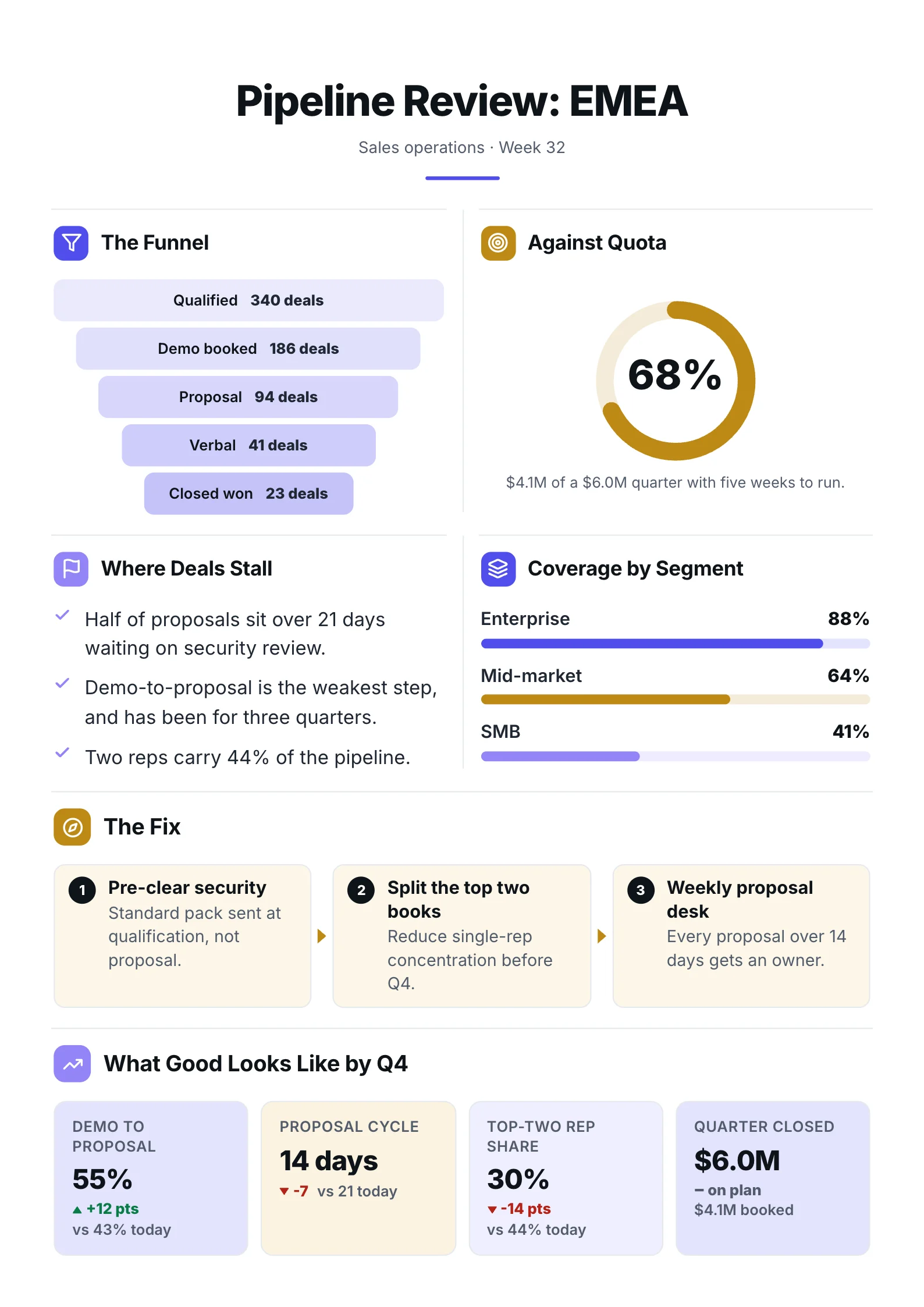 Sales pipelineOpen the template (opens in a new tab)
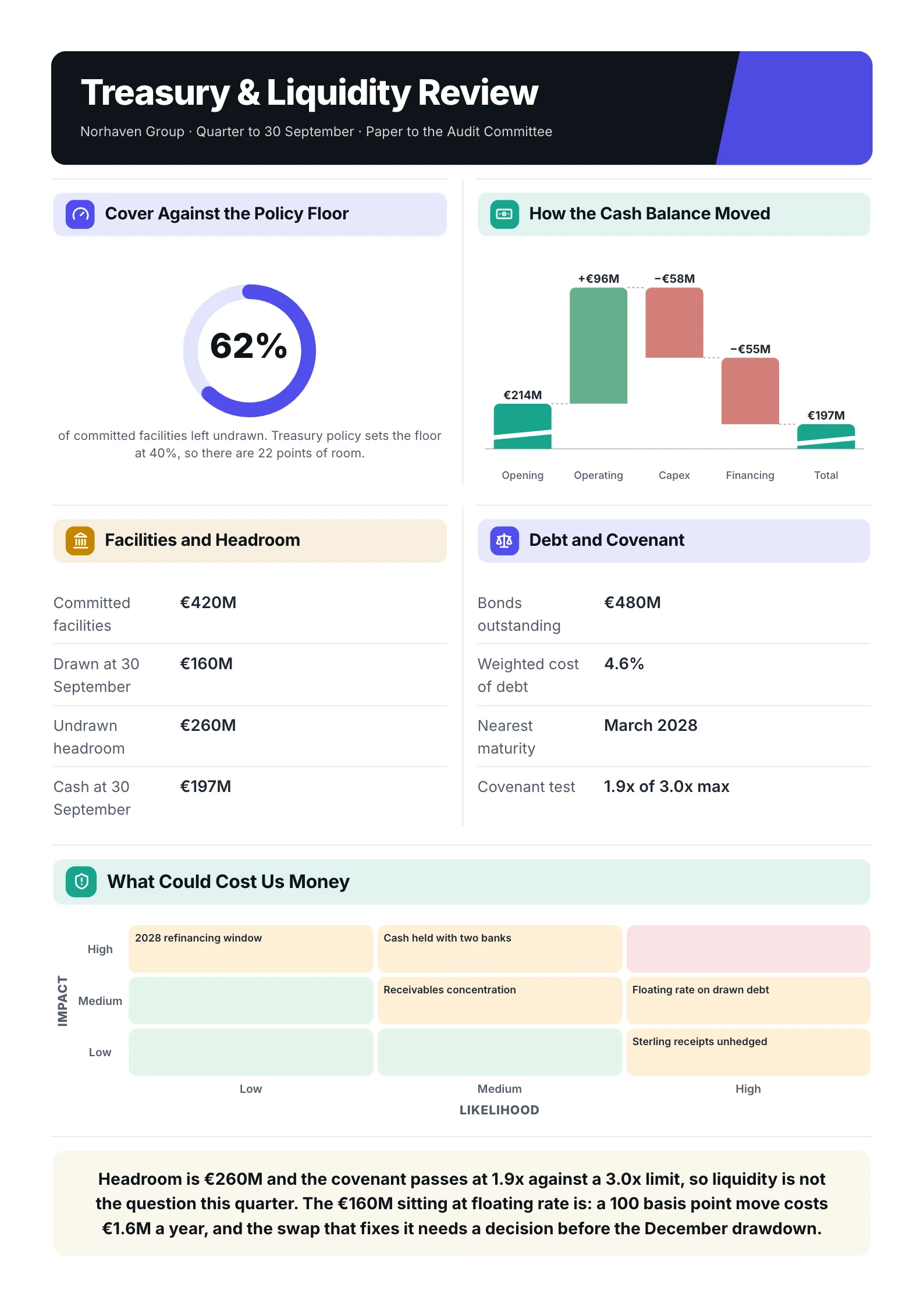 Treasury reviewOpen the template (opens in a new tab)
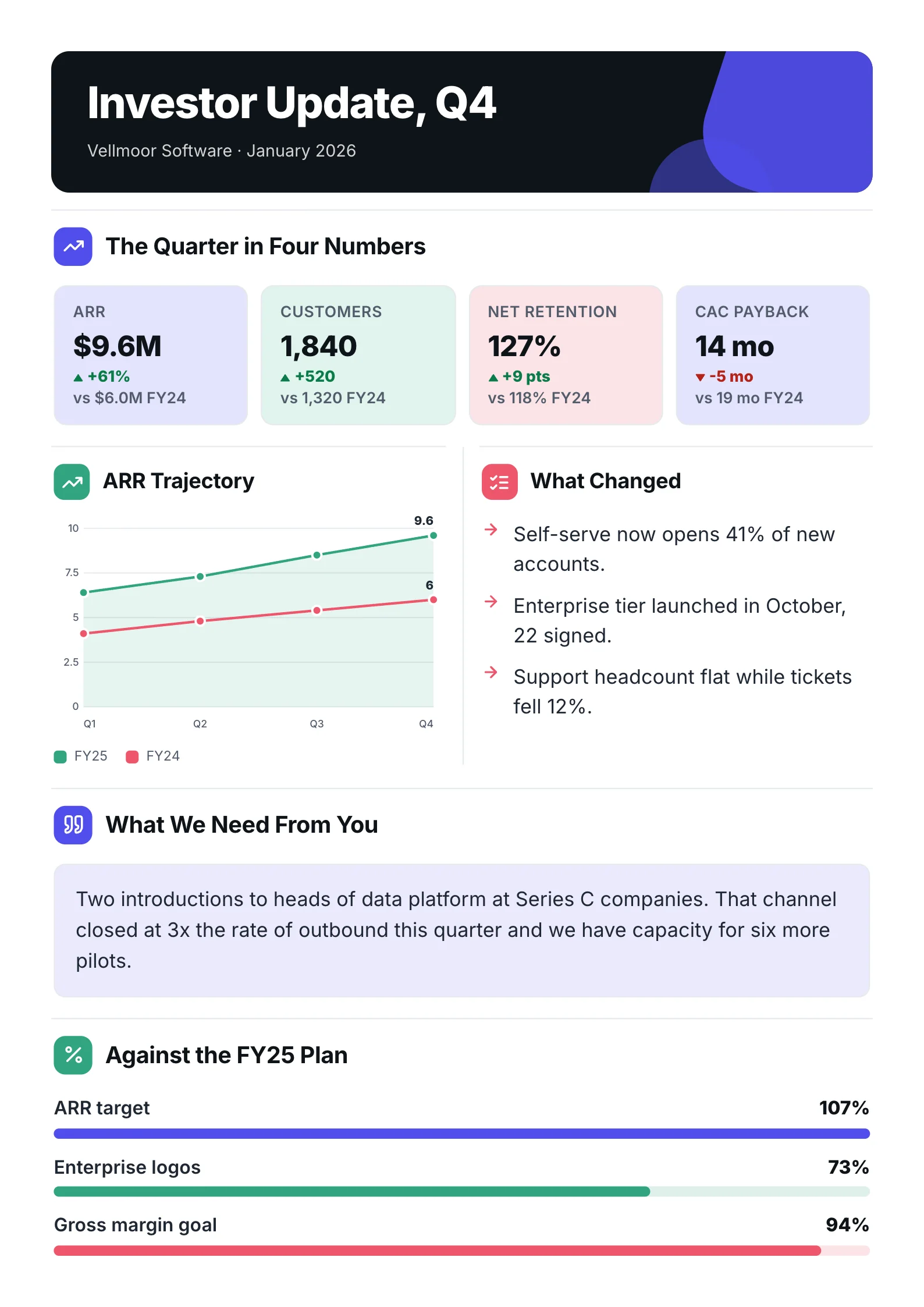 Board updateOpen the template (opens in a new tab)
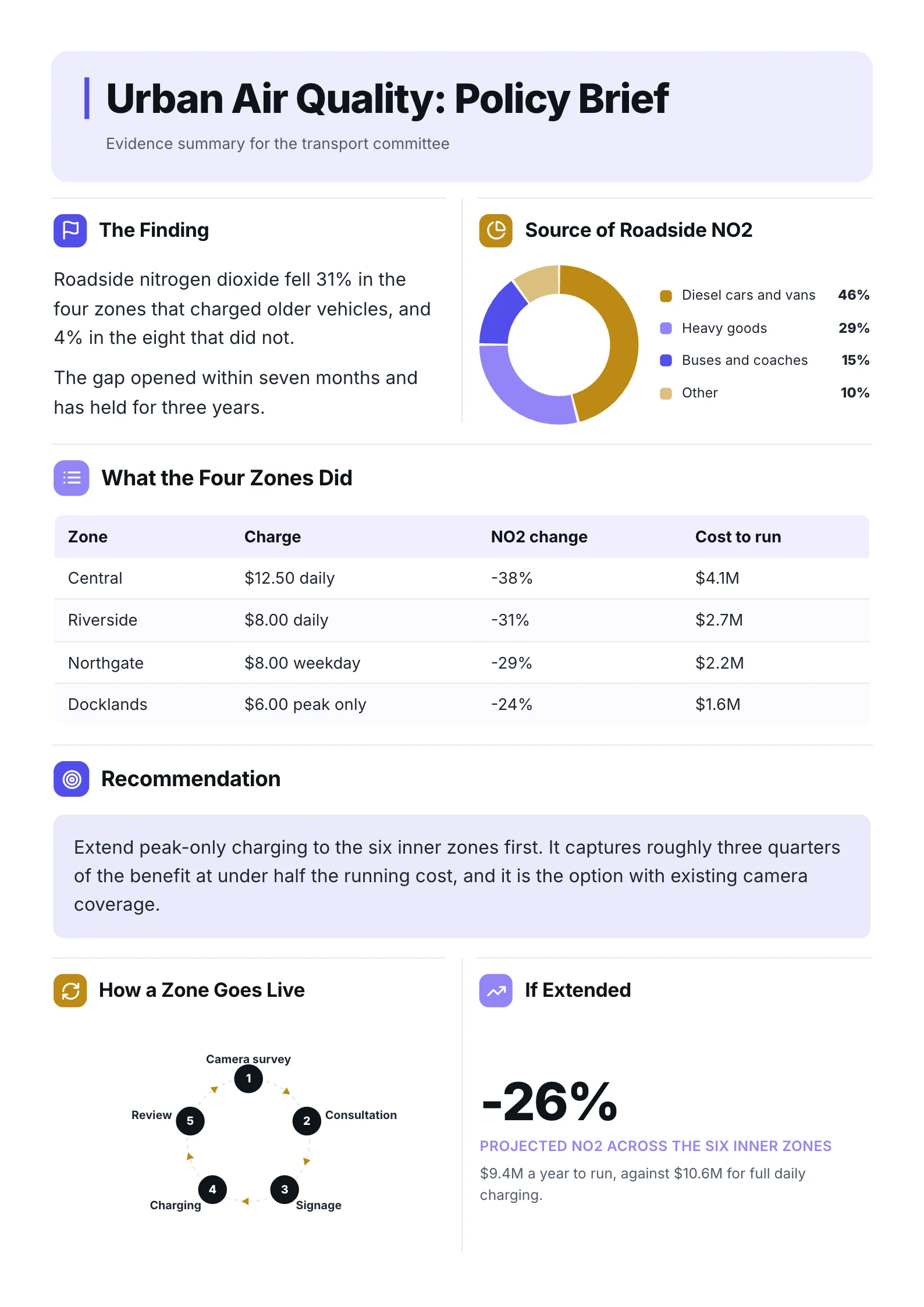 Policy briefOpen the template (opens in a new tab)
Frequently asked questions
Is a one-pager better than a pitch deck?
Neither is better; they do different jobs. A One-Pager is better for getting attention and being forwarded. A pitch deck is better for explaining the business in depth once someone is interested.
Do investors read one-pagers?
A One-Pager is designed to be read quickly, which makes it a good fit for a first look. What any given investor prefers varies, so if a firm's website asks for a deck, send the deck.
Can a one-pager replace a pitch deck?
Rarely for a full fundraise. Most investors will want the detail a deck provides before they commit. A One-Pager can replace the deck for first contact and introductions.
What is the difference between a one-pager and an executive summary?
An executive summary is often the opening section of a business plan or a longer document. A startup One-Pager is designed to stand alone. Our guide to the one-page executive summary covers that format.
How many slides should a pitch deck have?
Usually 10 to 20. Fewer is fine if every slide earns its place. The One-Pager is the extreme version of the same discipline.