One Page Analysis Template: SWOT, PESTLE, Competitor and Break-Even
A free one page analysis template for SWOT, PESTLE, competitor, break-even and financial analysis: which question each answers, and 5 examples to edit.

Which analysis belongs on your sheet depends on the question you're asking, so start there. A SWOT answers a different question from a break-even, and a one page analysis template holds just one of them: the question, the evidence, the finding and the next step. Start from a free one pager template.
One‑Pager examples
Real One-Pagers made with MakeOnepagers. Open any one to edit it as your own.
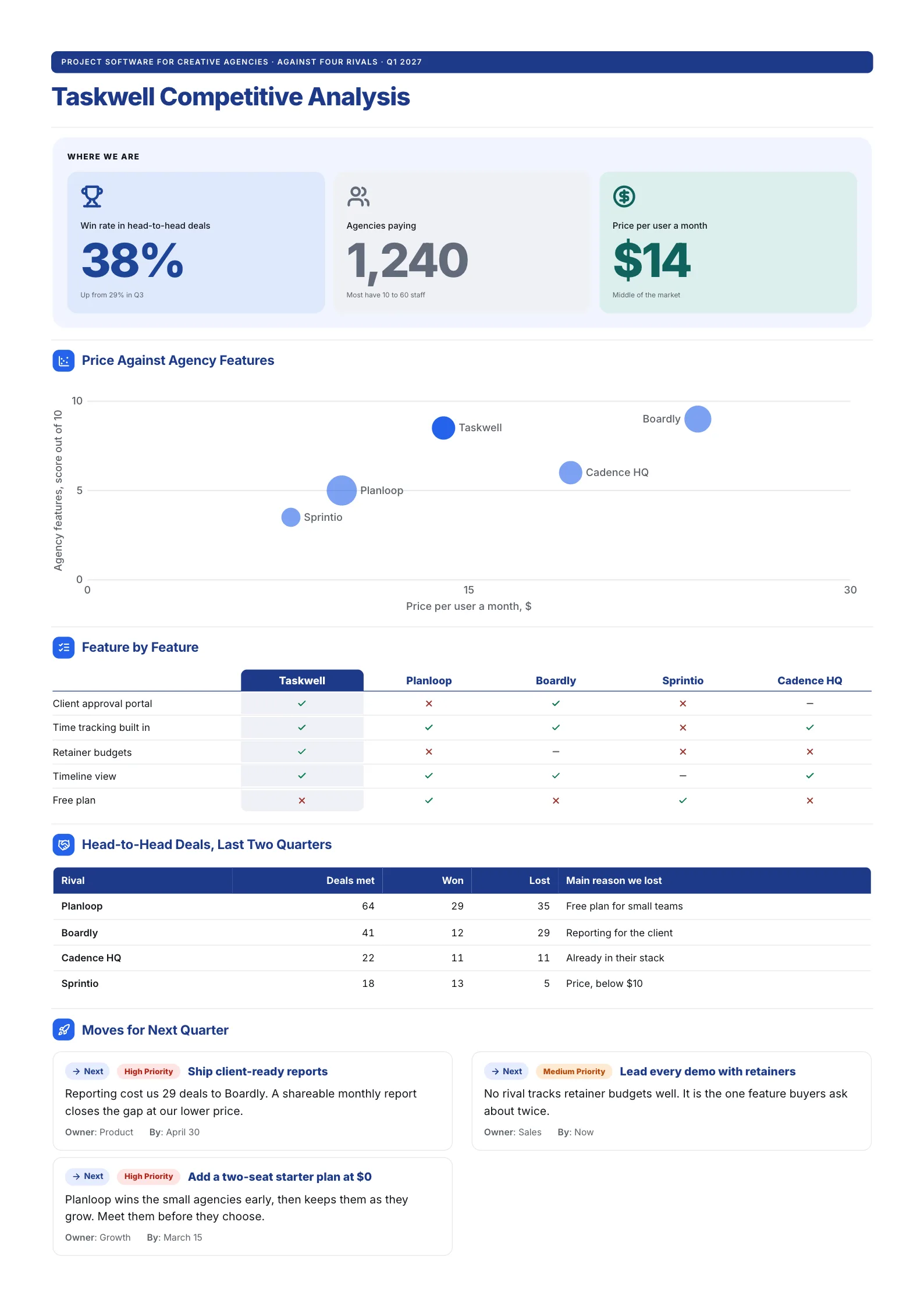 Competitive Analysis: SaaS ProductEdit for free(opens in a new tab)
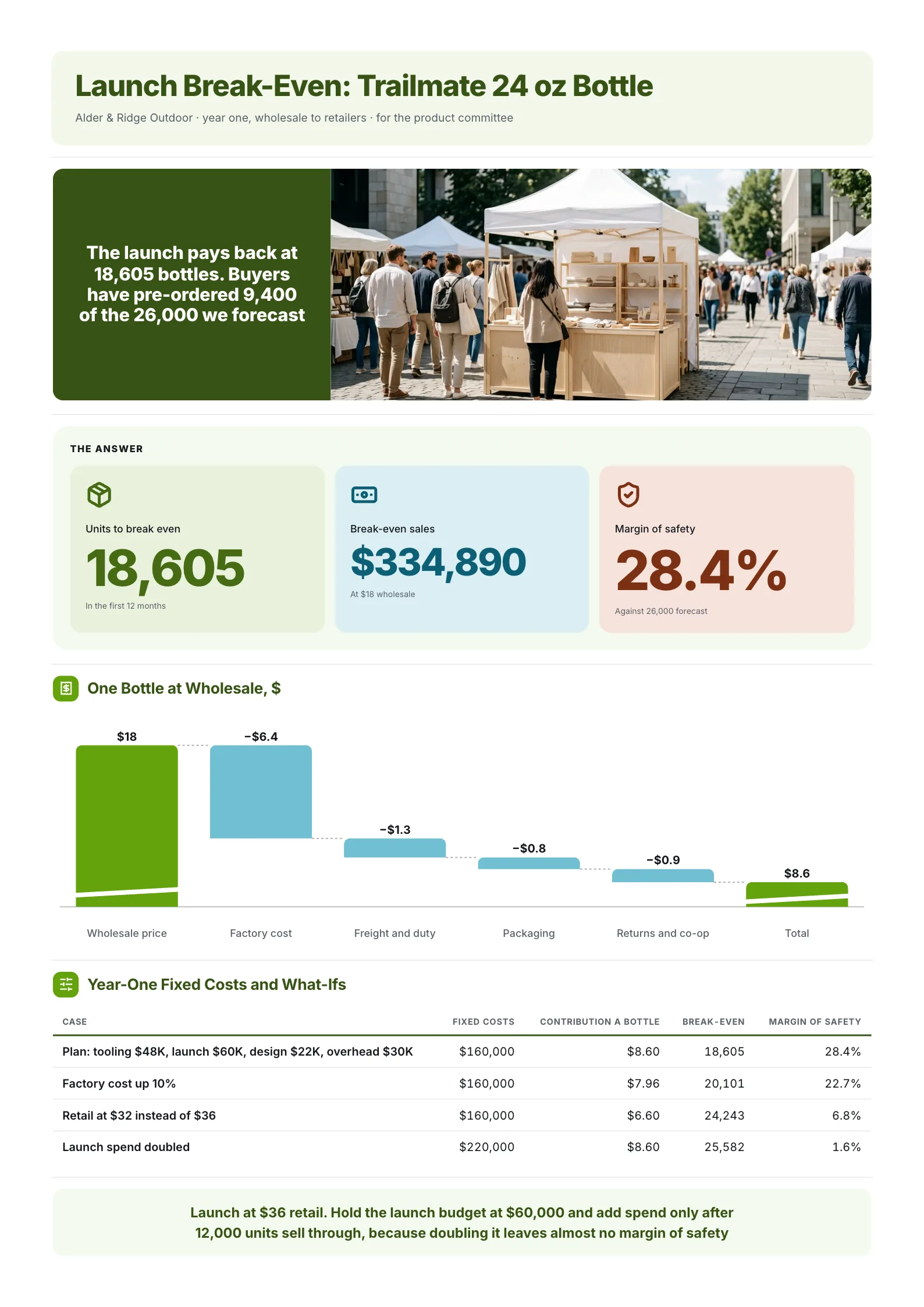 Break-Even Analysis: Product LaunchEdit for free(opens in a new tab)
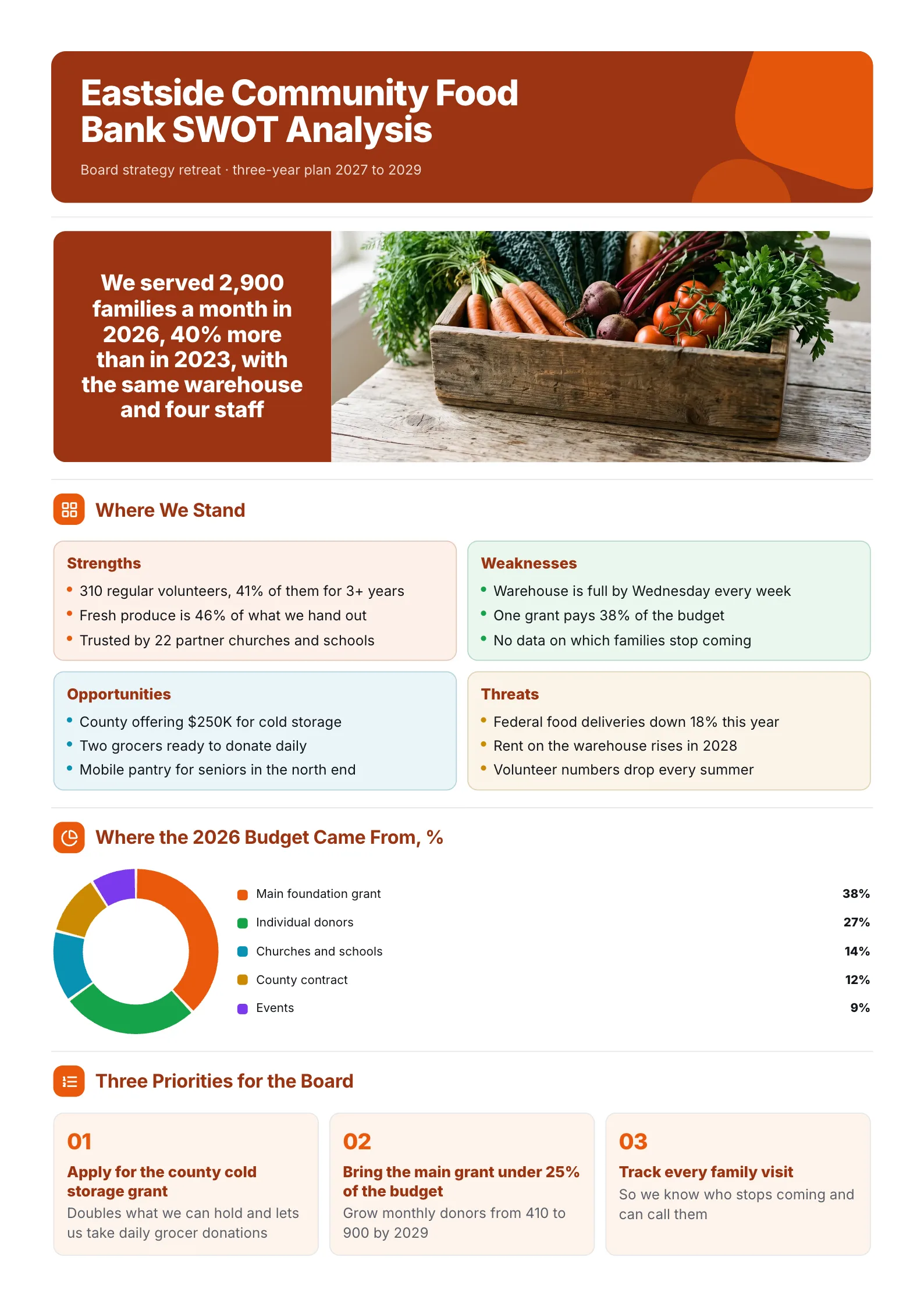 SWOT Analysis: Nonprofit Food BankEdit for free(opens in a new tab)
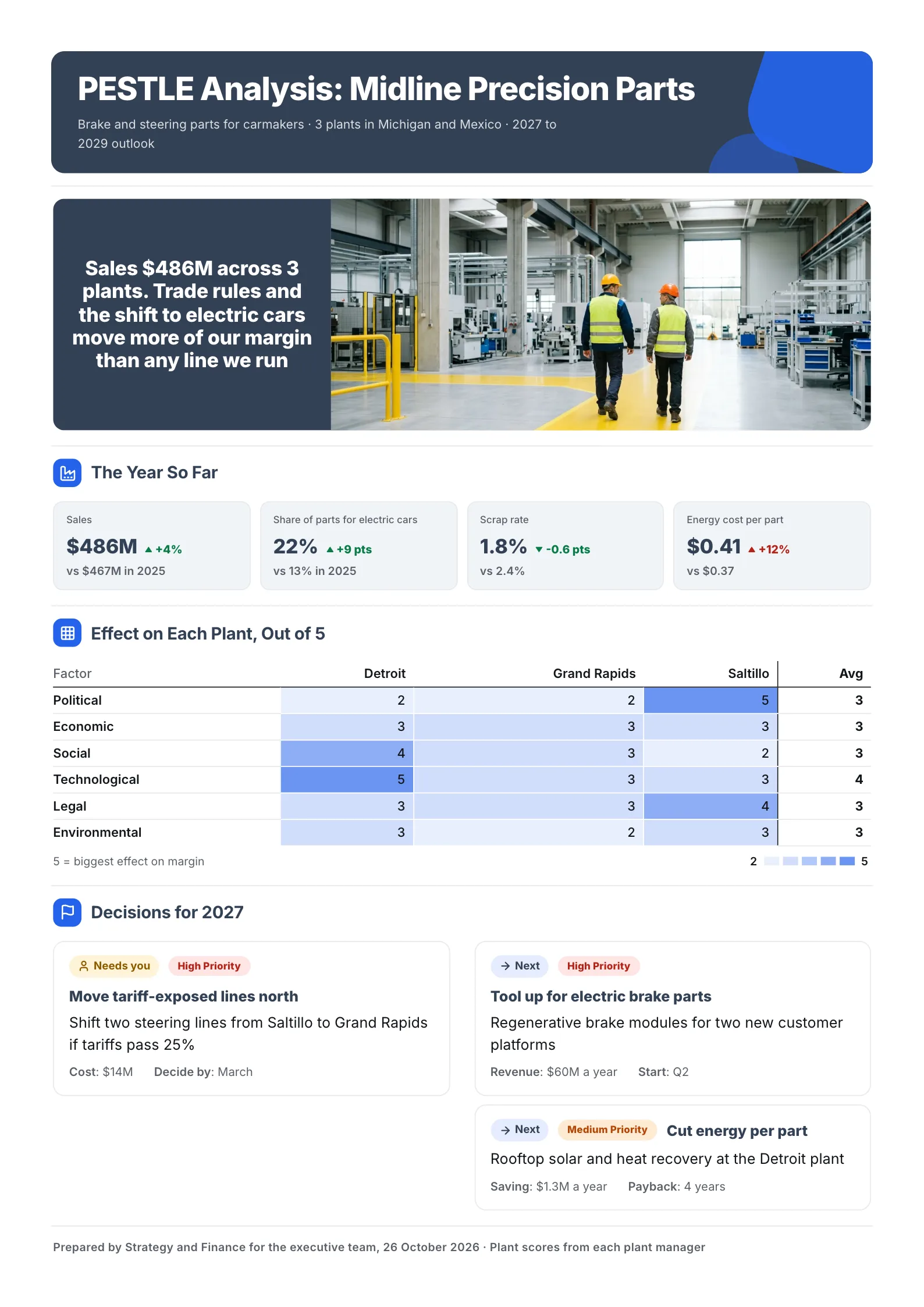 PESTLE Analysis: ManufacturingEdit for free(opens in a new tab)
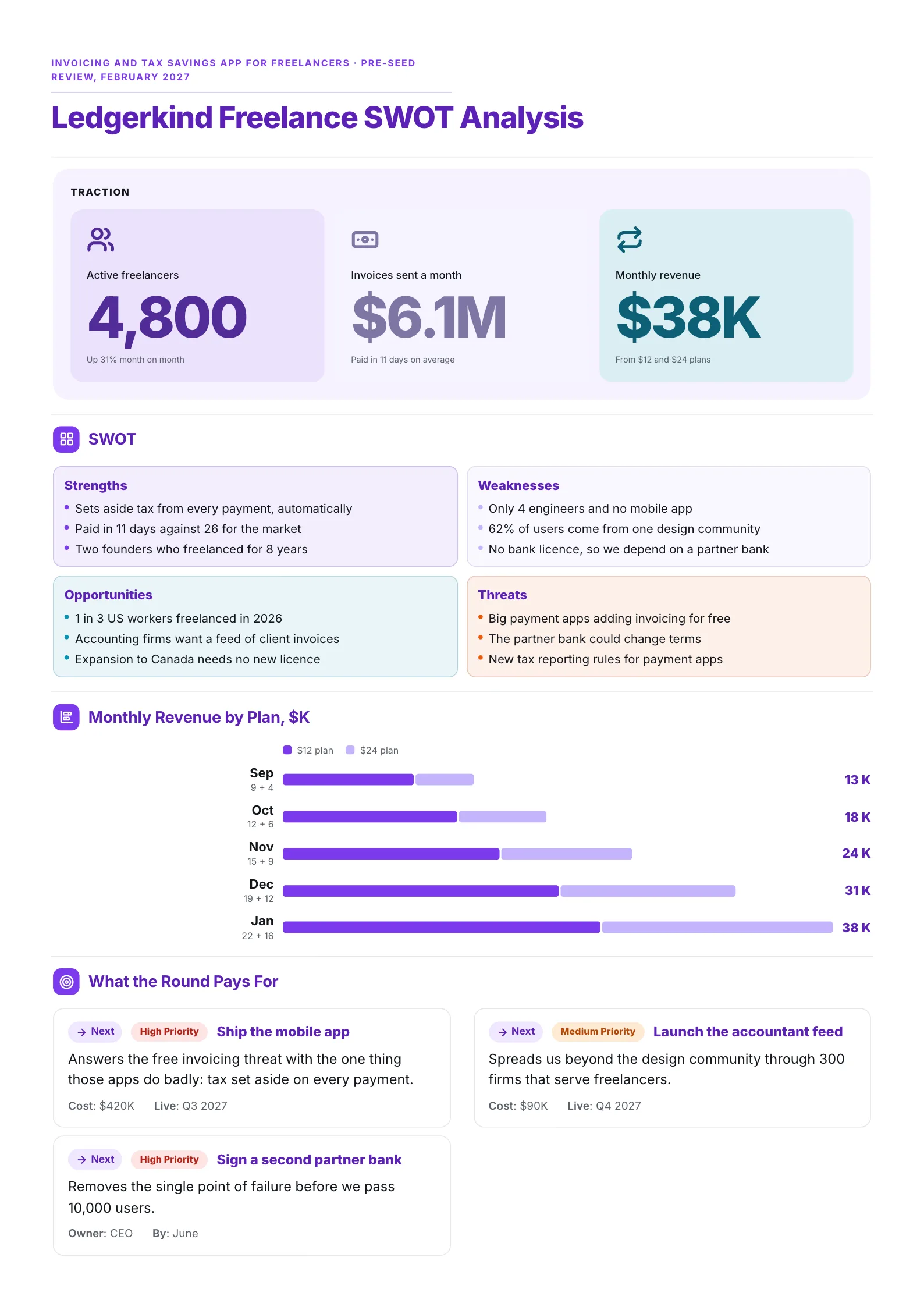 SWOT Analysis: StartupEdit for free(opens in a new tab)
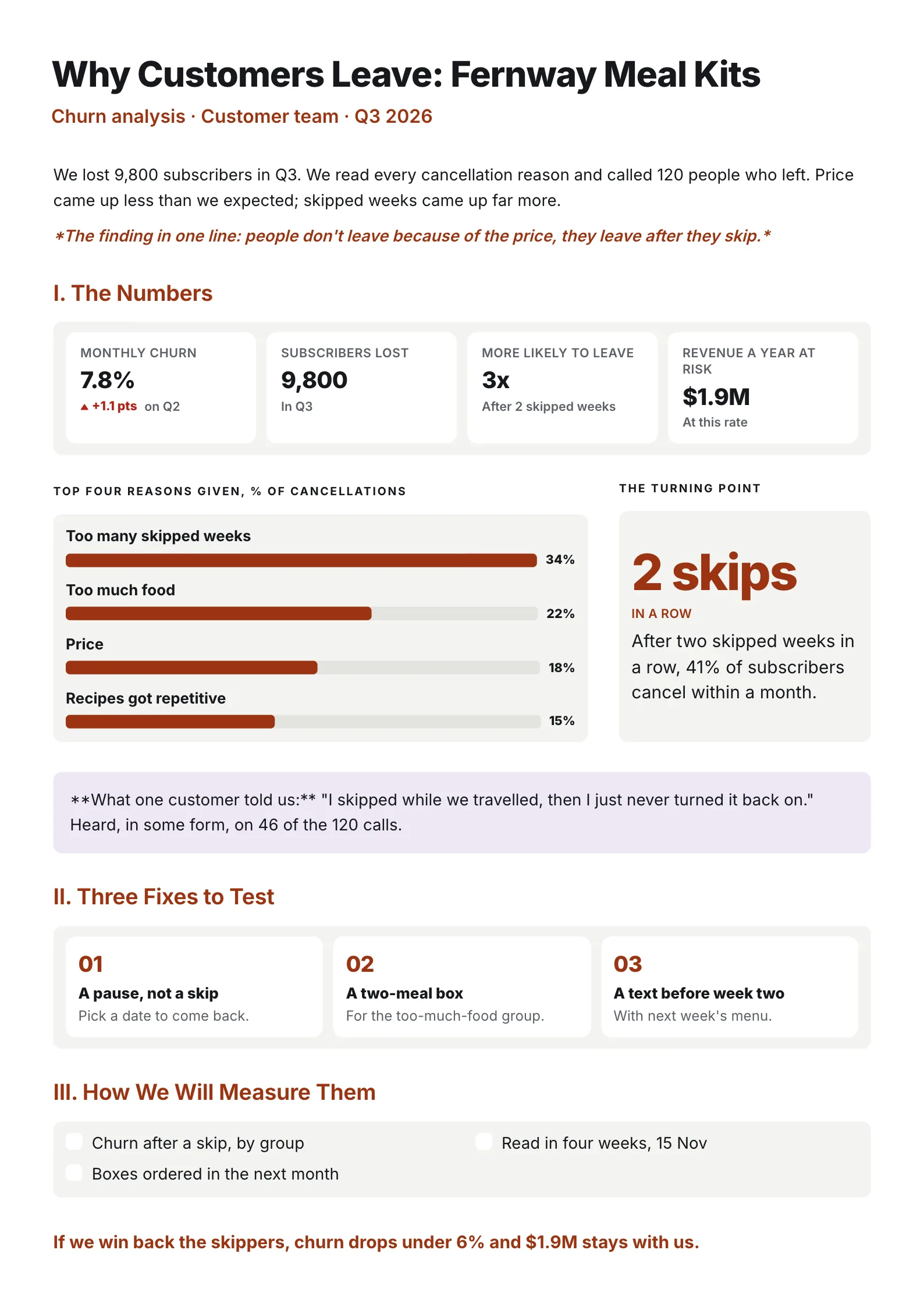 Customer Churn AnalysisEdit for free(opens in a new tab)
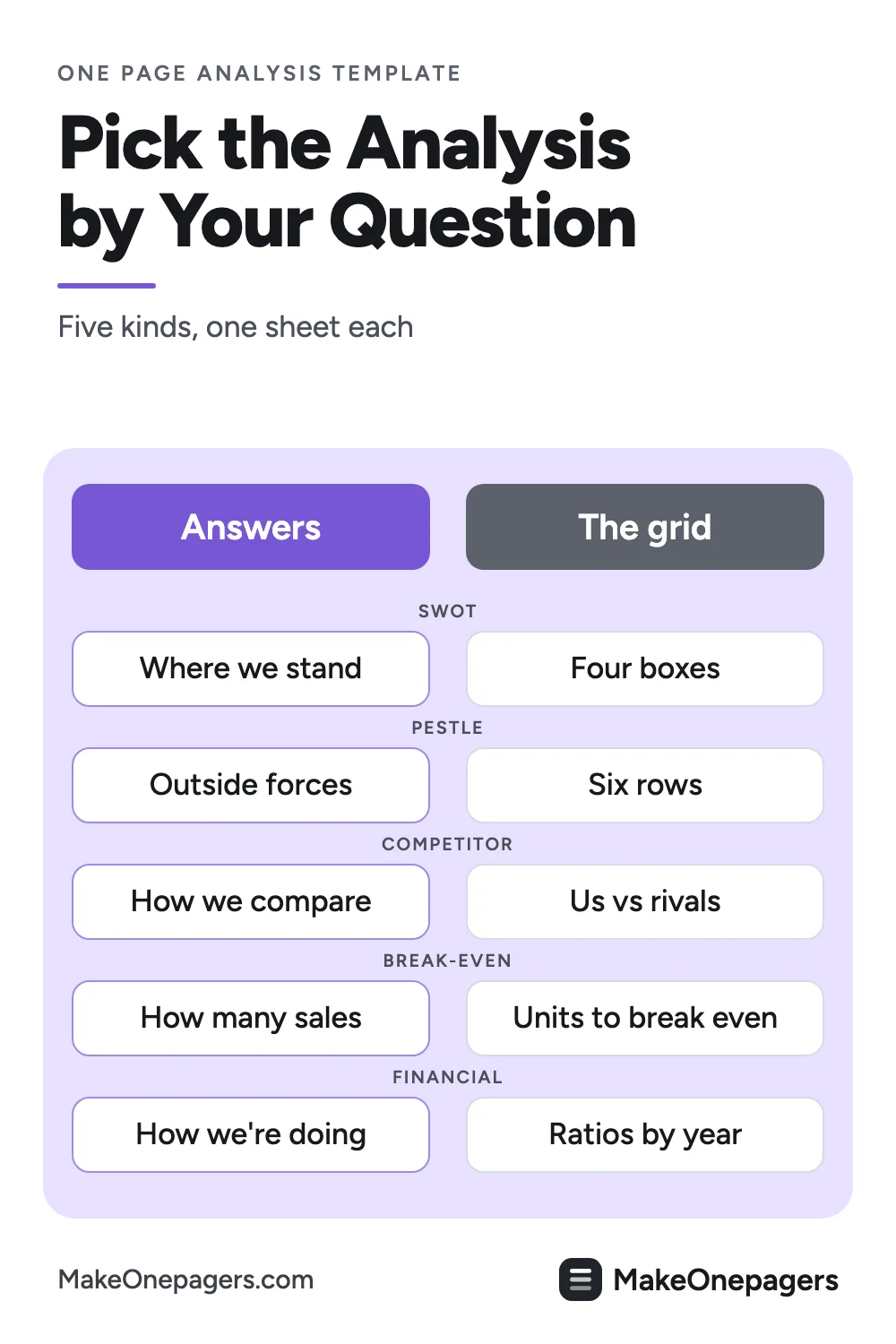
| Your question | Use | The grid |
|---|---|---|
| Where do we stand, inside and out? | SWOT | Four boxes: strengths, weaknesses, opportunities, threats |
| What outside forces could hit us? | PESTLE | Six rows: political, economic, social, technological, legal, environmental |
| How do we compare with rivals? | Competitive analysis | You against 3 or 4 rivals |
| How many sales before we stop losing money? | Break-even | Fixed costs, margin per sale, units needed |
| How is the business doing? | Financial analysis | Key ratios and a few years of results |
If your question fits no row, write it as one sentence at the top of a blank page. Then draw the grid that answers it.
SWOT: rank the boxes, then act
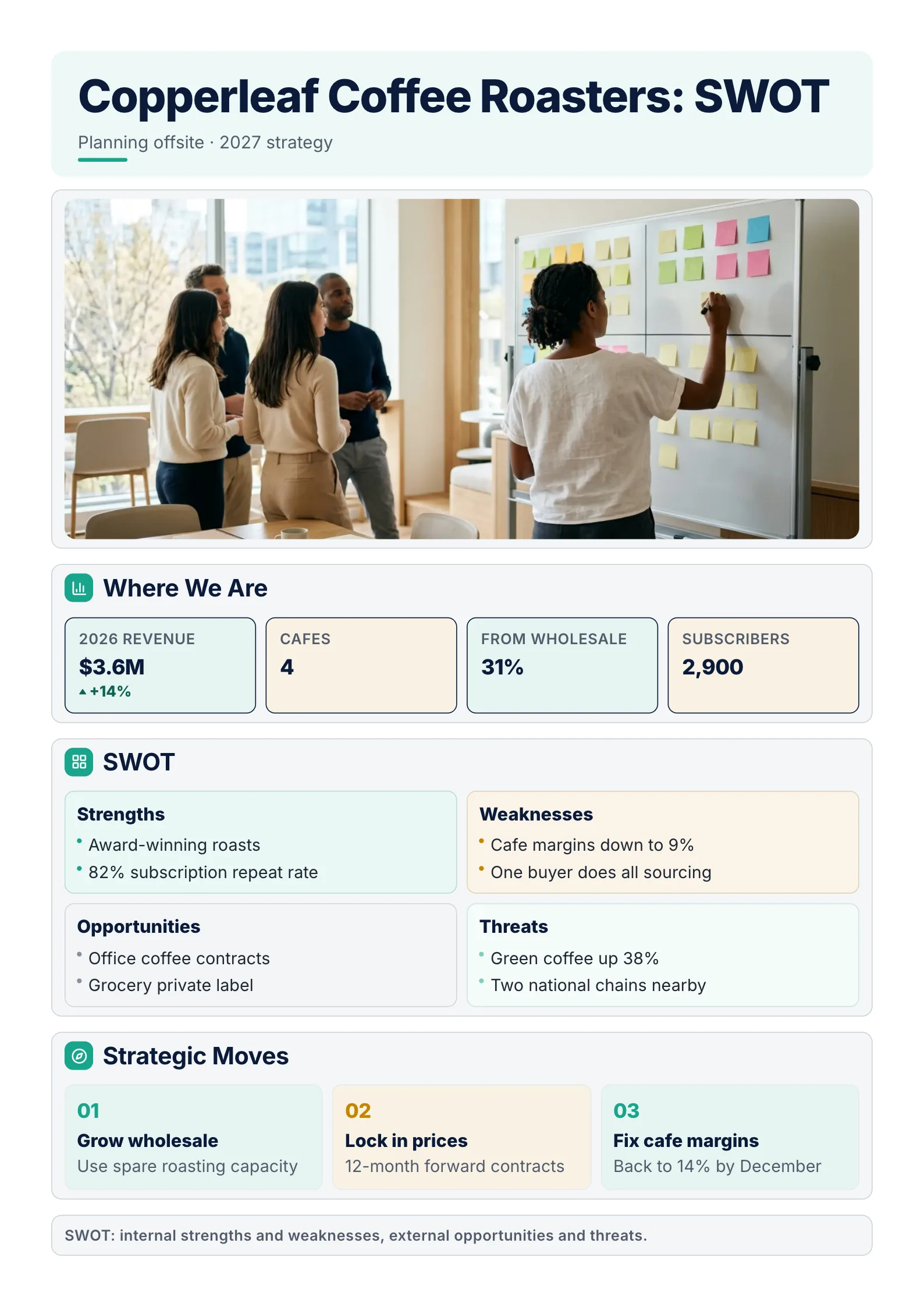
The University of Kansas Community Tool Box ends its SWOT method with the steps that matter for a one-pager: agree on the most important items in each category, relate them to your goals, and translate them into action plans. A wall of sticky notes is only the middle of the job.
It also warns against scoring yourself from the inside. Ask the people you serve and work with what they see, because they may spot problems or assets you can't.
 Edit this template
A coffee roaster's offsite, on one sheet. Revenue, cafes, wholesale share and subscribers set the scene. Several box items carry a measured fact, like an 82% repeat rate or green coffee up 38%, and three moves close the page. Our SWOT analysis template post has more.
PESTLE: don't drown in the scan
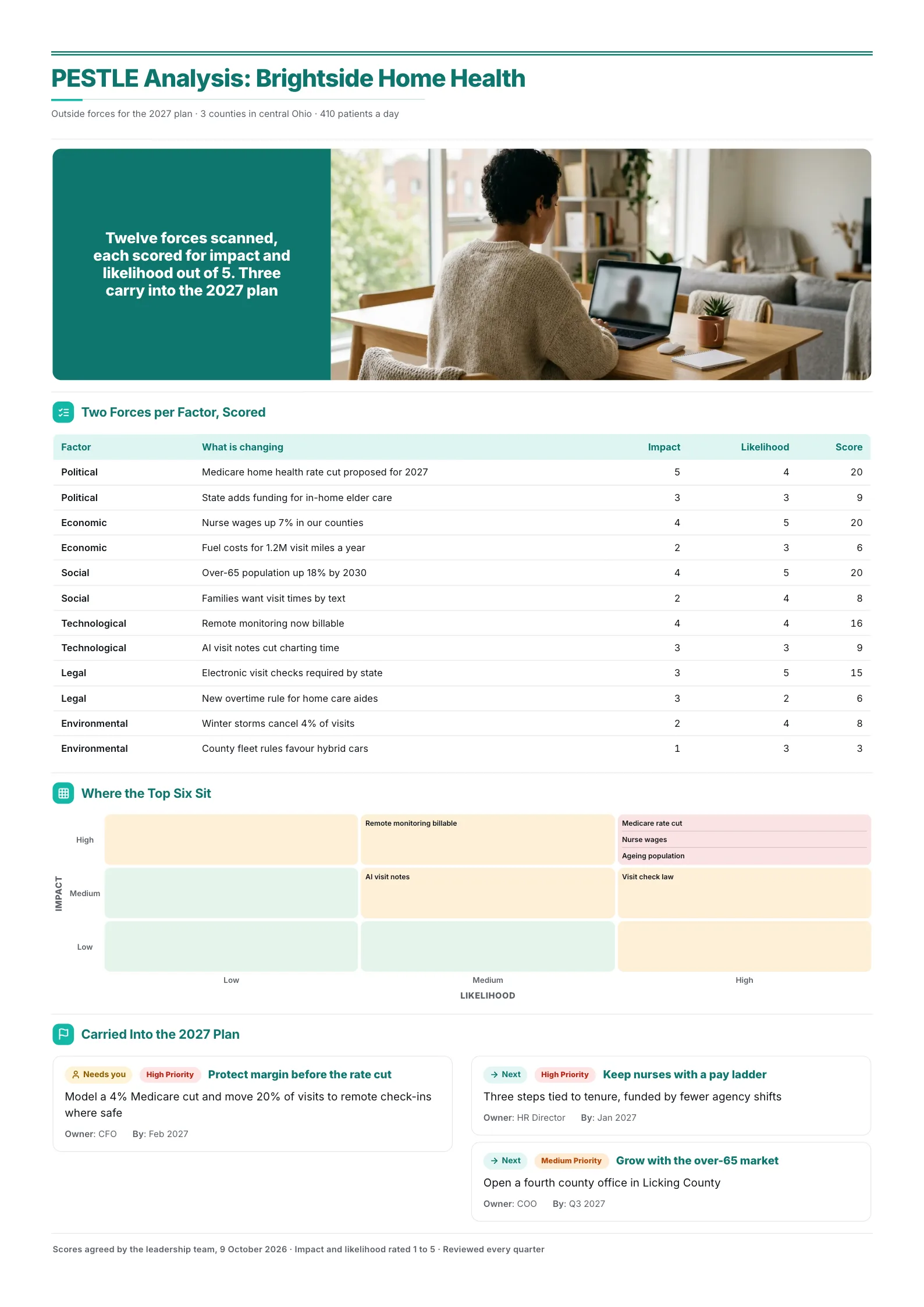
CIPD, the UK's professional body for HR, publishes a PESTLE factsheet that names the risk directly: capturing too much data can lead to "paralysis by analysis". Its method asks you to mark each item by its importance and potential risk, then identify the options for dealing with it. CIPD also advises against assuming the future will follow the past.
A single sheet helps here because it has no room for the full scan.
 Edit this template
A home health agency scanned twelve forces. Each is scored for impact and likelihood out of five, the top six land on a risk grid, and only three reach the plan, each with an owner and a date. See the PESTLE analysis template guide for more.
Competitive analysis: name the window
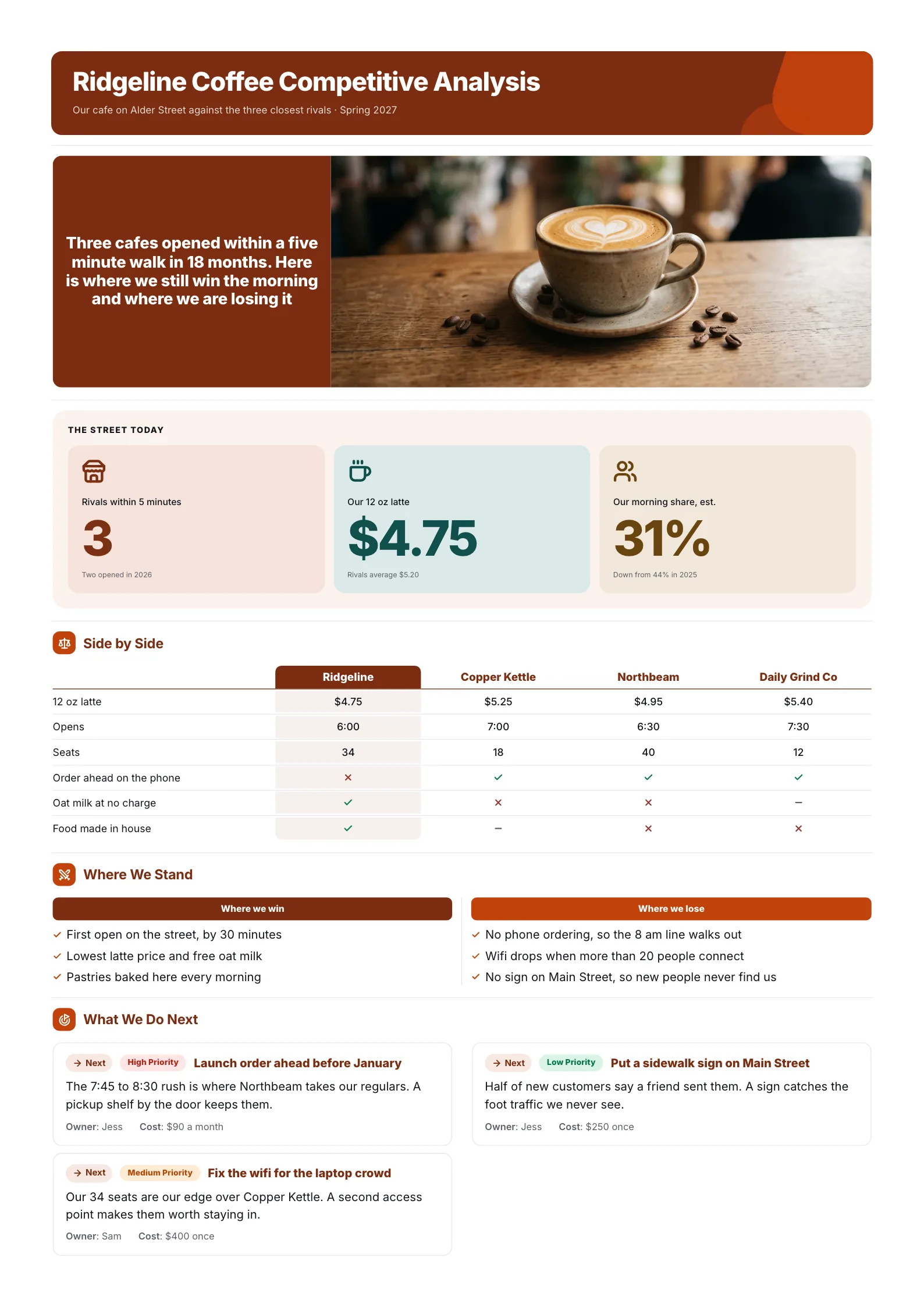
The U.S. Small Business Administration's guide to competitive analysis lists what to assess: market share, strengths and weaknesses, your window to enter, how much the target market matters to competitors, barriers to entry, and indirect rivals. That last one is easy to miss. A cafe's rival may also be the office coffee machine.
 Edit this template
Three rivals opened within a five minute walk, and the caption says so before anything else. The side-by-side grid compares price, hours, seats and phone ordering. "Where we win" and "where we lose" get a column each, and the first recommendation goes after the biggest loss. More in the competitive analysis template post.
Break-even: one number, shown early
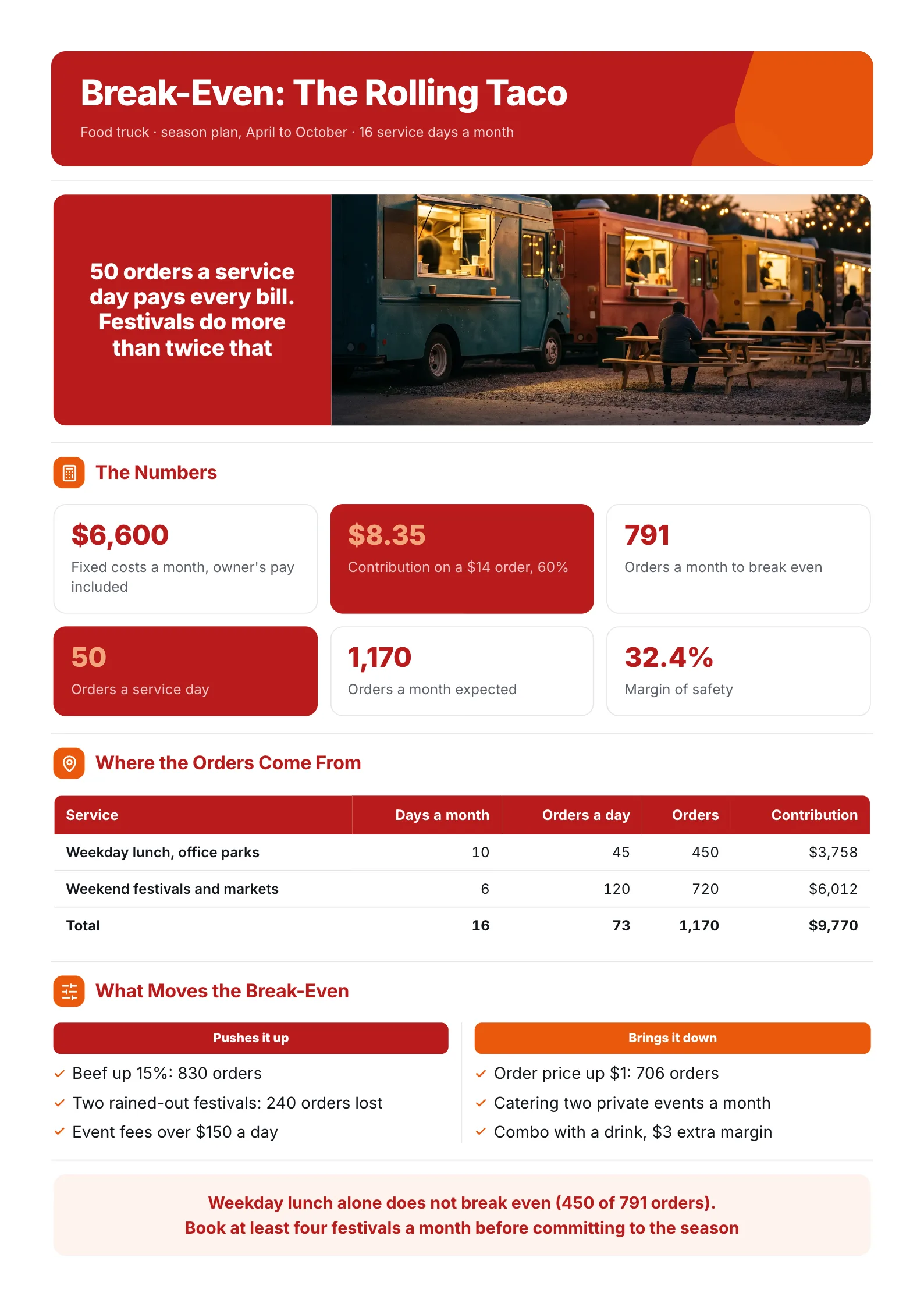
The sum is short. Divide fixed costs by what each sale leaves after its own costs. If a month's fixed costs are $3,000 and a $12 sale costs $7 to make, each sale leaves $5, so you need 600 sales. The SBA's guide to startup costs has a free break-even calculator if you'd like to check yours.
Everything else on the sheet explains what moves that number.
 Edit this template
A food truck's answer sits in the photo caption: 50 orders a service day pays every bill. The table shows weekday lunches fall short, so the footer tells the owner to book four festivals a month before committing. Our break-even analysis template guide covers the math.
Financial analysis: pick the years that tell the story
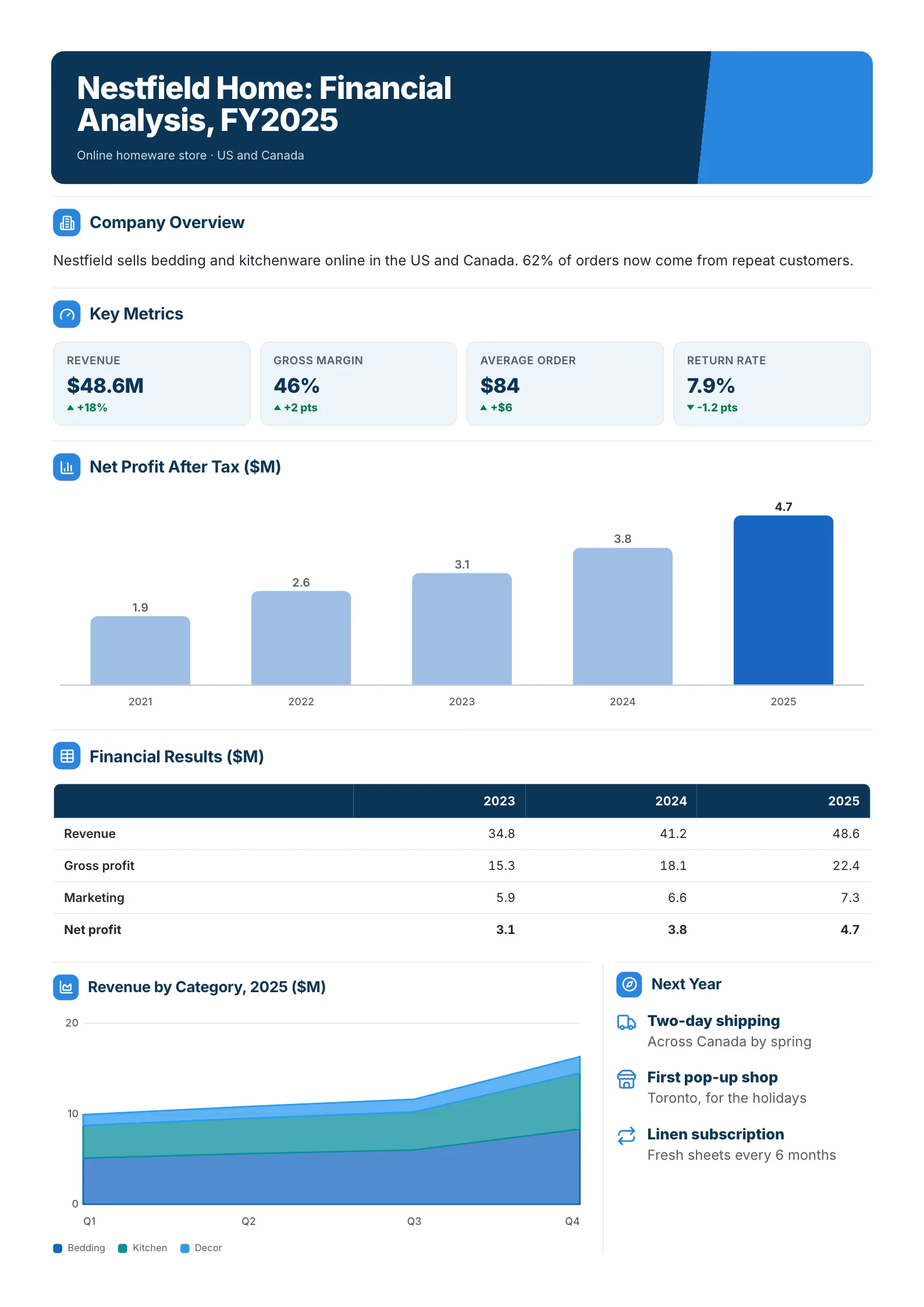
Here the grid is time. Choose the few measures your reader will act on, and show enough years for a direction to appear.
 Edit this template
An online homeware store gets a two-line overview, four key metrics, five years of profit and a short results table. For more on company numbers on one sheet, see the financial one pager guide.
Getting a long analysis down to one sheet
- Write the question in the subtitle. Every block has to help answer it.
- Rank, then cut. Keep the three or four items that matter most per box or row.
- Give each item one line and a number. "Rivals average $5.20 for a latte" beats "rivals charge more".
- Write the finding last and place it first. One line at the top, so the reader has the answer before the evidence.
- End on two to four moves. Each gets an owner and a date.
- Link the full work in the footer. Add your source and its date there too.
Summing up a report someone else wrote? The how to summarize a report guide walks through it.
Make your one page analysis
Word and Google Docs will draw a SWOT grid fine, right up until a chart and three recommendations push it onto a second page. MakeOnepagers starts with the grid already placed and resizes the type as you add to it. For a strategy deck you'd rather not retype, the free AI One-Pager generator drafts from the file.
Frequently asked questions
What is the difference between SWOT and PESTLE?
A SWOT covers your organization's strengths and weaknesses plus the opportunities and threats around it. A PESTLE looks only outside, at six kinds of force. CIPD suggests using PESTLE alongside SWOT, since the outside scan feeds the O and T boxes.
What should a one page analysis include?
The question, one grid of evidence, a one-line finding, two to four recommendations with owners, and a source line. Add a few context numbers if your reader needs them first.
How many items should each SWOT box hold?
Three or four, ranked. If a box runs longer, the ranking isn't finished yet.
Can I use a one page analysis for a school assignment?
Yes. A SWOT on a case study or a PESTLE on a market both fit. Swap in your own facts and cite your sources in the footer.
Is there a free one page analysis template?
Yes. You'll find the SWOT, PESTLE and other grids in our template gallery, free to open and edit, with a PDF download at the end.
Next step: pick the one question your analysis has to answer, then open the grid that fits it.




