BlogGuide
Break-Even Analysis Template: Free, With Formula and Example
A free one-page break-even analysis template, the formula in units and in sales, a worked example with three what-if cases and the mistakes to avoid.

By MakeOnepagers Team
Updated · 8 min read
A break-even analysis template answers one question before you sign a lease, launch a product or change a price: how much do we need to sell before we stop losing money? The answer is a single number, the break-even point, but the page around that number is what makes it useful. It shows the costs behind it, how far expected sales sit above it and what happens to it when the price or the costs move. Below are the formula in units and in sales, the six parts of a good break-even analysis, a free template you can copy and a worked example with three what-if cases.
One‑Pager examples
Real One-Pagers made with MakeOnepagers. Open any one to edit it as your own.
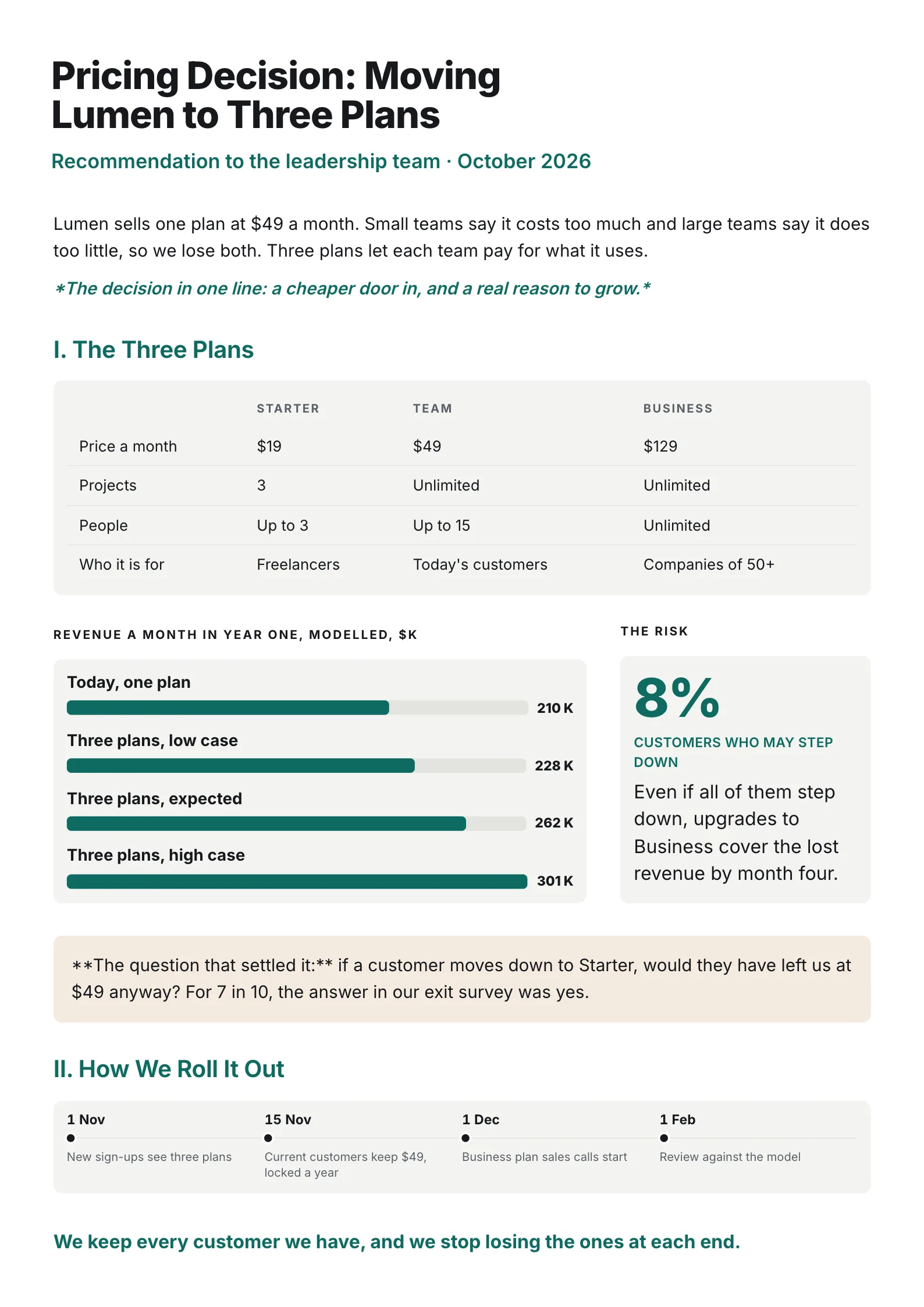 Pricing Decision BriefEdit for free(opens in a new tab)
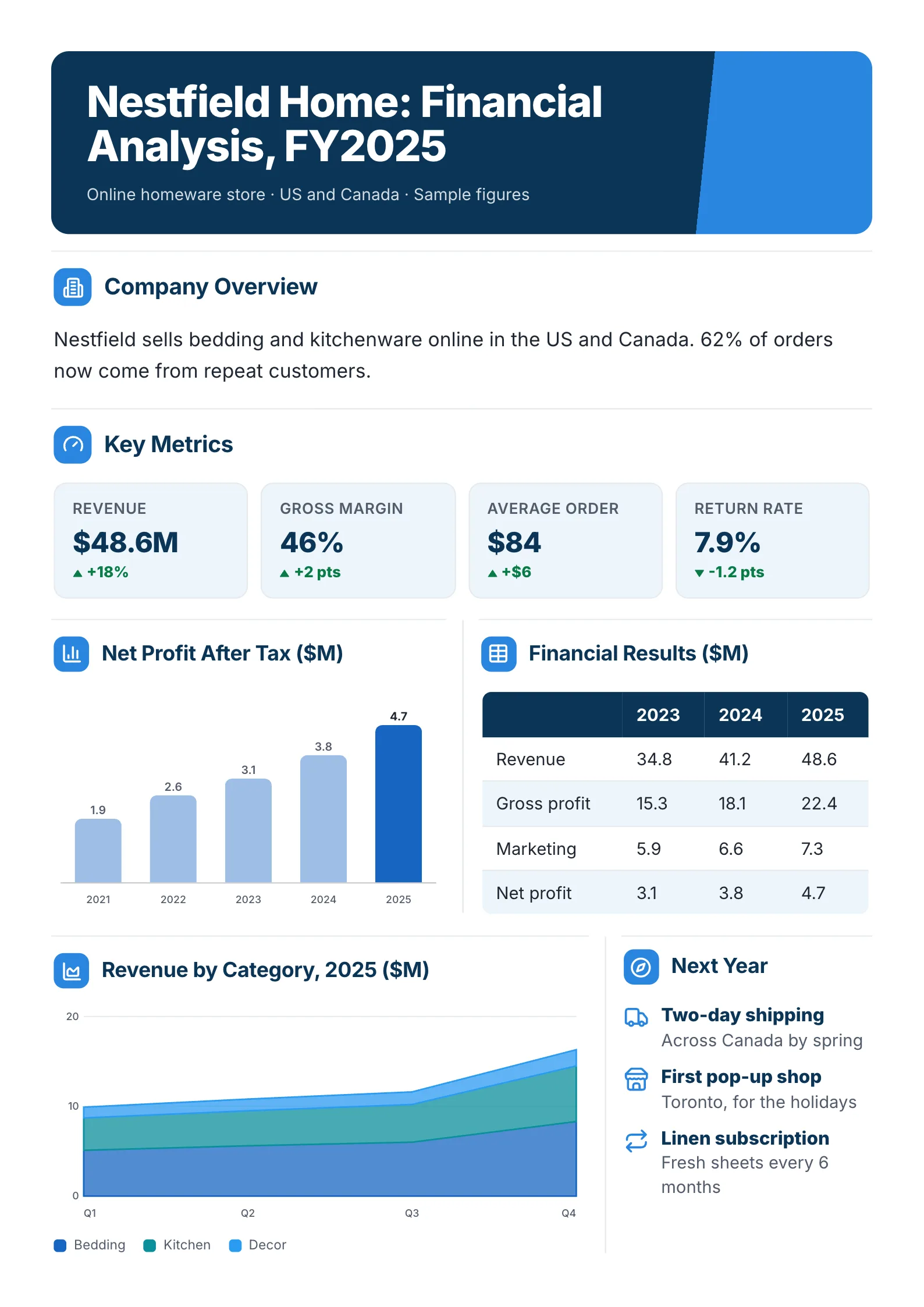 E-Commerce Financial AnalysisEdit for free(opens in a new tab)
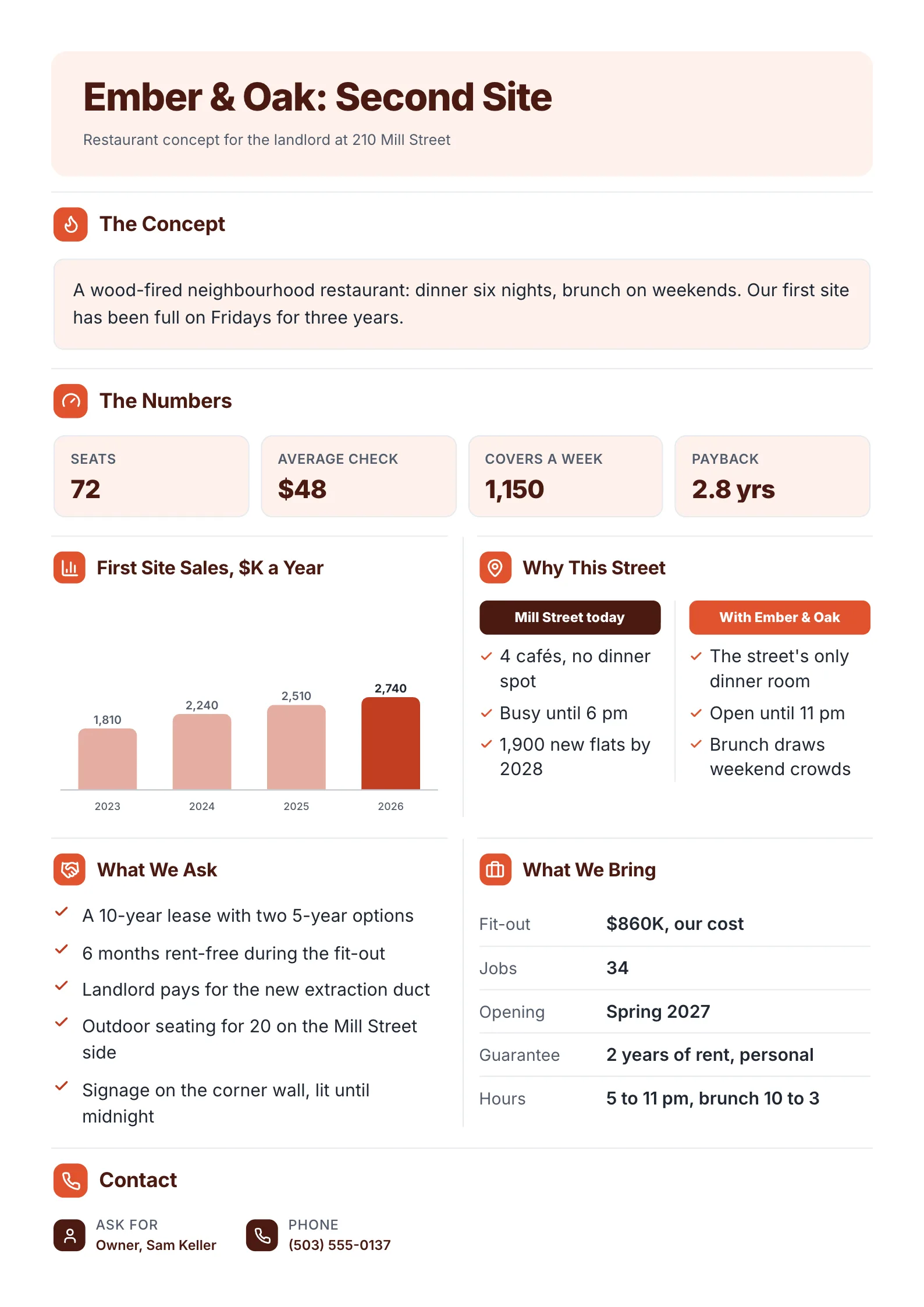 Restaurant Concept One-PagerEdit for free(opens in a new tab)
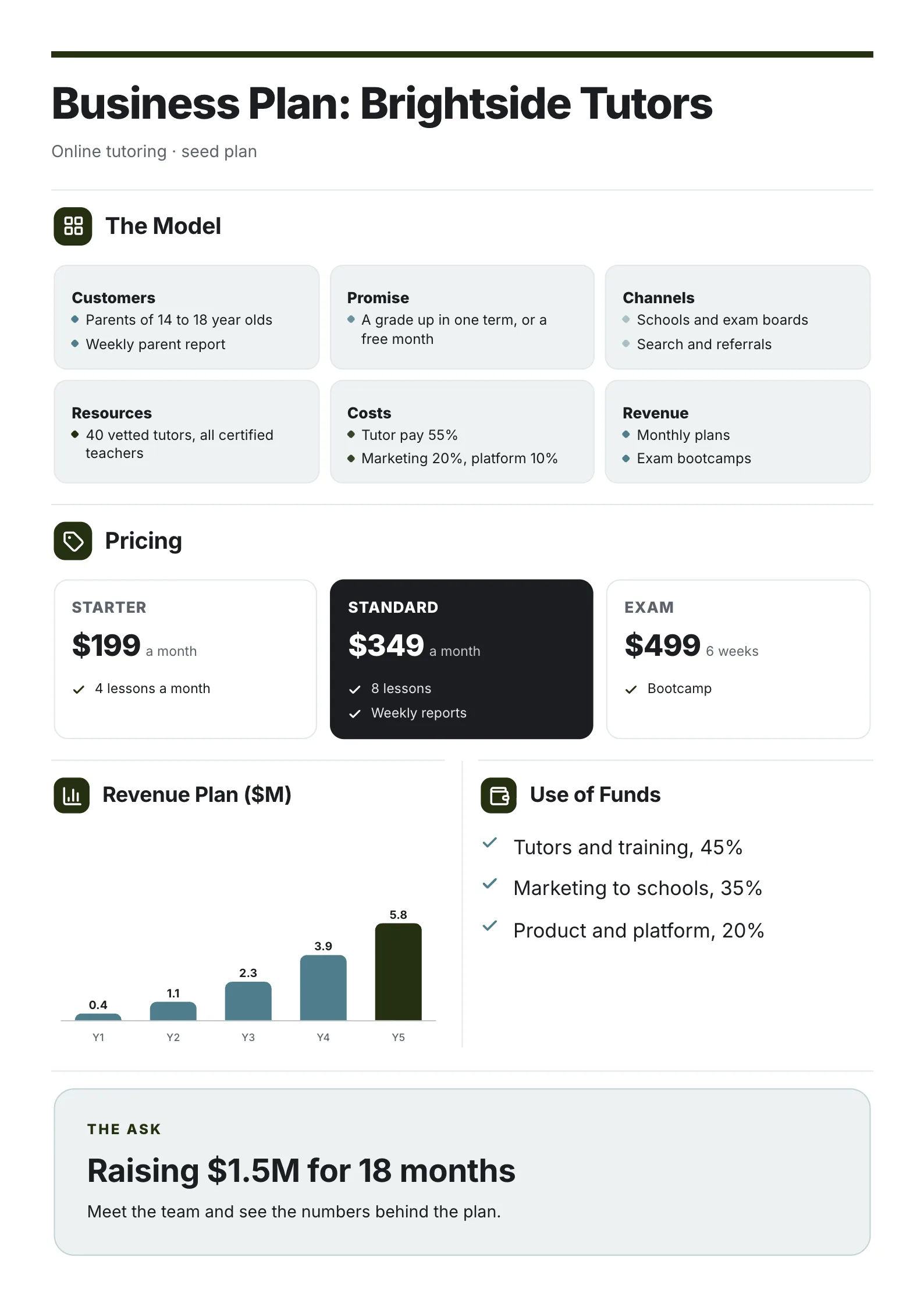 Business Plan SummaryEdit for free(opens in a new tab)
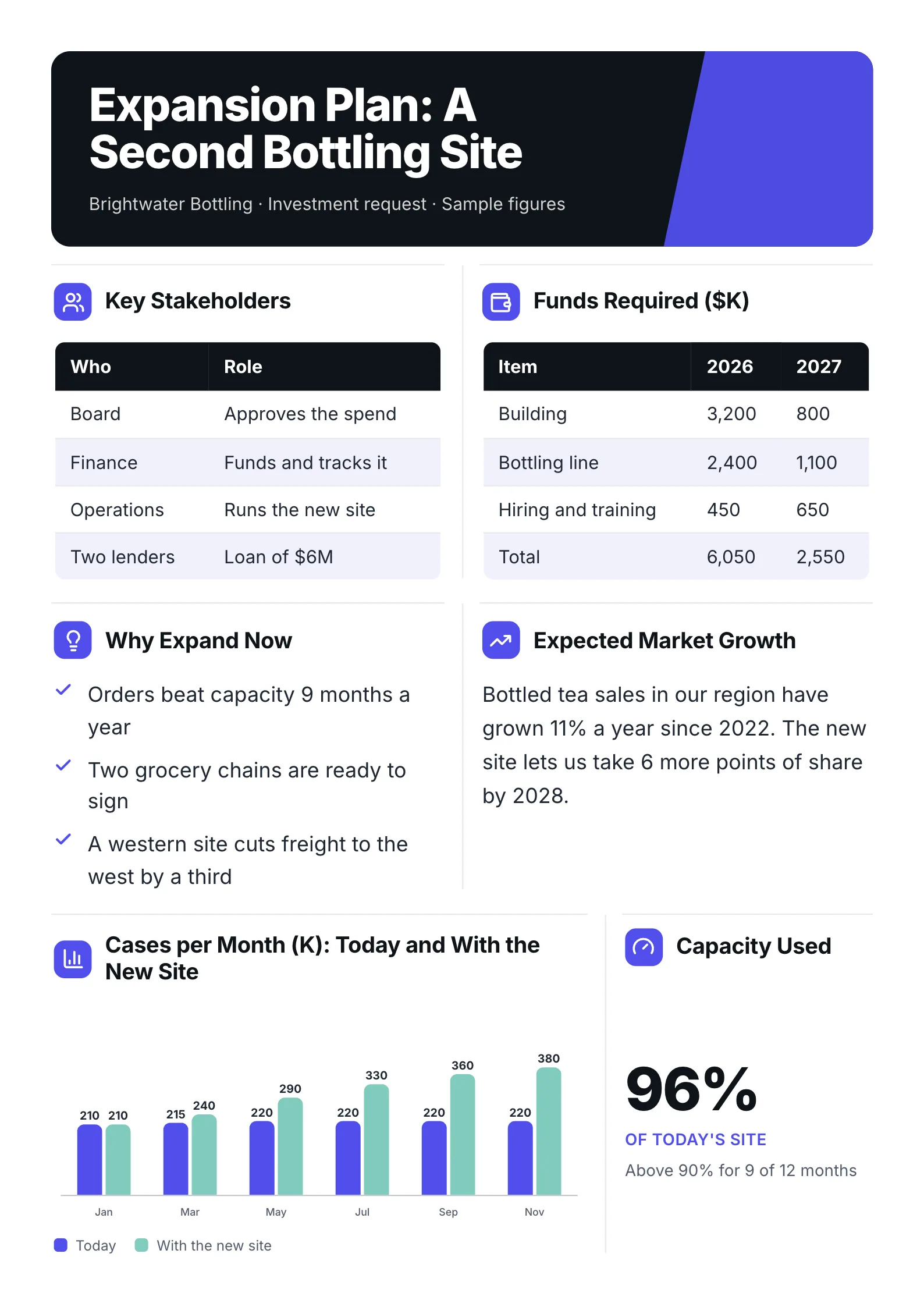 Business Expansion InvestmentEdit for free(opens in a new tab)
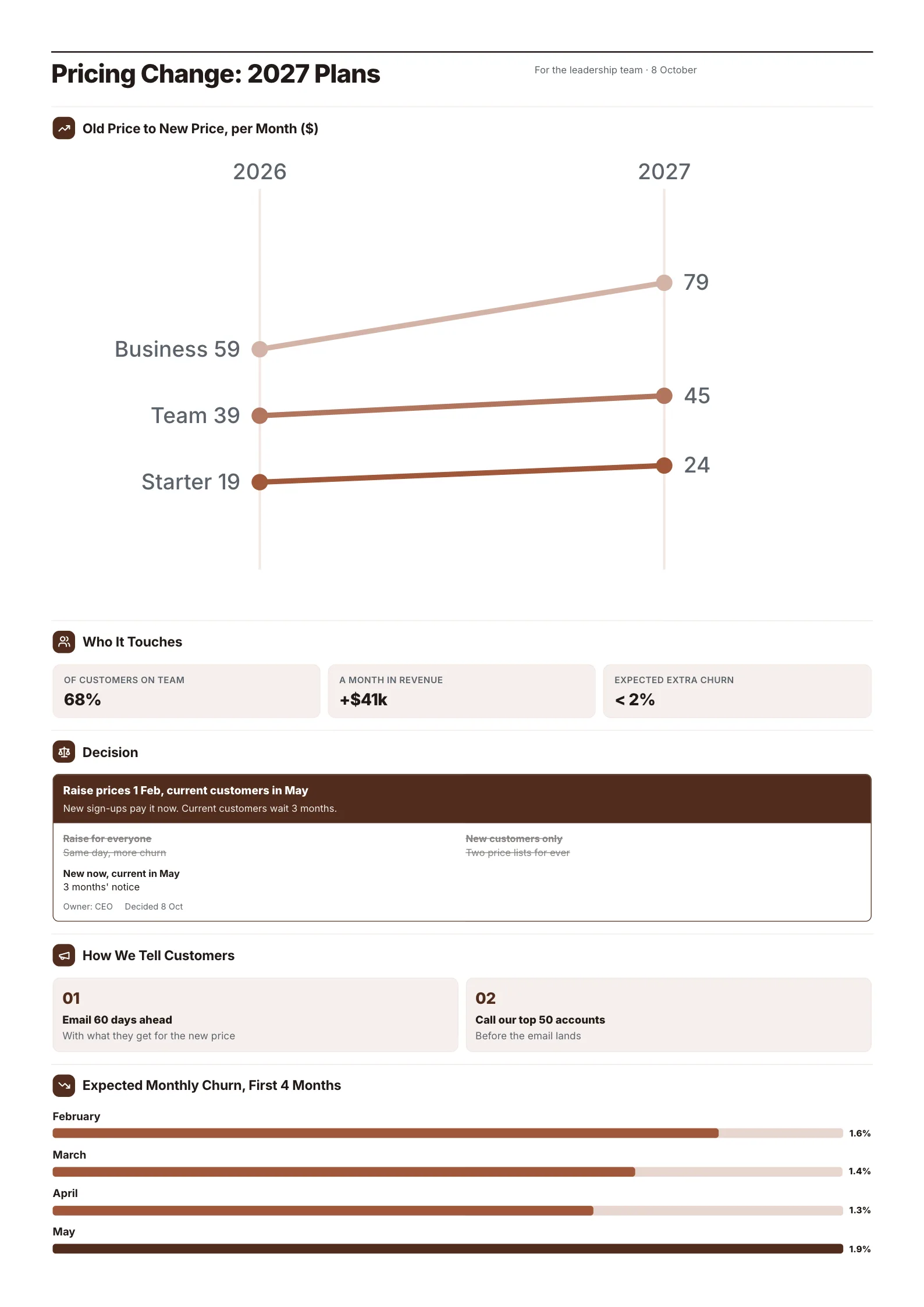 Pricing Change BriefEdit for free(opens in a new tab)
The examples were made with MakeOnepagers. Each one opens as a template you can edit for free: every word, chart and color.
What is a break-even analysis?
A break-even analysis compares two kinds of cost with what each sale brings in.
- Fixed costs stay the same whatever you sell in the period: rent, salaried staff, insurance, software, a lease.
- Variable costs rise with every unit you sell: ingredients, materials, packaging, shipping, sales commission, transaction fees.
Each sale first pays its own variable cost. What is left over, the contribution margin, goes toward the fixed costs. The break-even point is the number of sales at which those contributions add up to exactly the fixed costs. Below it you lose money. Above it every extra sale adds its full contribution to profit.
The break-even formula
Break-even point in units = fixed costs ÷ (price per unit minus variable cost per unit)
Break-even point in sales = fixed costs ÷ contribution margin ratio
The contribution margin ratio is the contribution per unit divided by the price. If a product sells for $12 and costs $5.40 to make, the contribution is $6.60 and the ratio is 55%.
Margin of safety = (expected sales minus break-even sales) ÷ expected sales
The margin of safety tells you how far sales can fall short of the plan before you start losing money. It is the number lenders and investors look for first, because it says how much room for error the plan has.
The 6 parts of a break-even analysis
- The decision it supports. "Should we open the second kitchen?" A break-even figure with no decision attached is trivia.
- Fixed costs, listed by line, with the period stated (a month, a quarter, a year).
- Price and variable cost per unit, and the contribution margin they leave.
- The break-even point in units and in sales.
- Expected sales and the margin of safety.
- Two or three what-if cases: a price change, a cost rise, a slower start. Then the recommendation.
A free break-even analysis template
Copy this into a document, or open one of the examples further down and edit it.
| Part | What to write, with an example |
|---|---|
| Title | What is being tested. Break-Even: Meal-Prep Kitchen, Monthly |
| Decision | Sign a 2-year kitchen lease, yes or no |
| Fixed costs | Each line and the total. Rent $3,200, staff $4,800, van $700, insurance and software $600: $9,300 |
| Price per unit | $12 a meal |
| Variable cost per unit | $5.40: ingredients, packaging, delivery |
| Contribution | $6.60 a meal, 55% of the price |
| Break-even | 1,410 meals, about $16,900 a month |
| Expected sales and safety | 1,900 meals; 25.8% margin of safety |
| What-ifs | Price up, cost up, slow start, each with its new break-even |
| Recommendation | Sign, and review the price in month three |
A worked example: a meal-prep kitchen
The figures below are an example, made up for this guide so the arithmetic is easy to check. Replace them with yours.
A small meal-prep business wants to move into its own kitchen. Its monthly fixed costs would be:
| Fixed cost | Per month |
|---|---|
| Kitchen rent | $3,200 |
| Salaried staff | $4,800 |
| Van lease | $700 |
| Insurance and software | $600 |
| Total | $9,300 |
Each meal sells for $12 and costs $5.40 in ingredients, packaging and delivery. The contribution is $12 minus $5.40, which is $6.60 a meal, or 55% of the price.
Break-even in units: $9,300 ÷ $6.60 = 1,409.1, so 1,410 meals a month. You always round up, because 1,409 meals still leaves a small loss.
Break-even in sales: 1,410 meals × $12 = $16,920 a month.
The owner expects to sell 1,900 meals a month once the kitchen is running. The margin of safety is (1,900 minus 1,410) ÷ 1,900 = 25.8%. Sales could fall by about a quarter before the kitchen loses money.
Three what-if cases
| Case | Contribution per meal | Break-even | Margin of safety at 1,900 meals |
|---|---|---|---|
| Plan as above | $6.60 | 1,410 meals | 25.8% |
| Price up $1 to $13 | $7.60 | 1,224 meals | 35.6% |
| Ingredients and packaging up 10% ($5.94) | $6.06 | 1,535 meals | 19.2% |
The table tells the story in seconds. A $1 price rise cuts the break-even by 186 meals. A 10% rise in variable cost adds 125. If the owner can hold the price at $12 only by absorbing rising ingredient costs, the margin of safety drops below a fifth, and that is the risk to raise with the landlord's two-year lease on the table.
The recommendation then reads: "Sign the lease. At 1,900 meals the kitchen clears break-even with a 25.8% margin. Review the price in month three if ingredient costs rise more than 5%."
2 break-even analysis examples
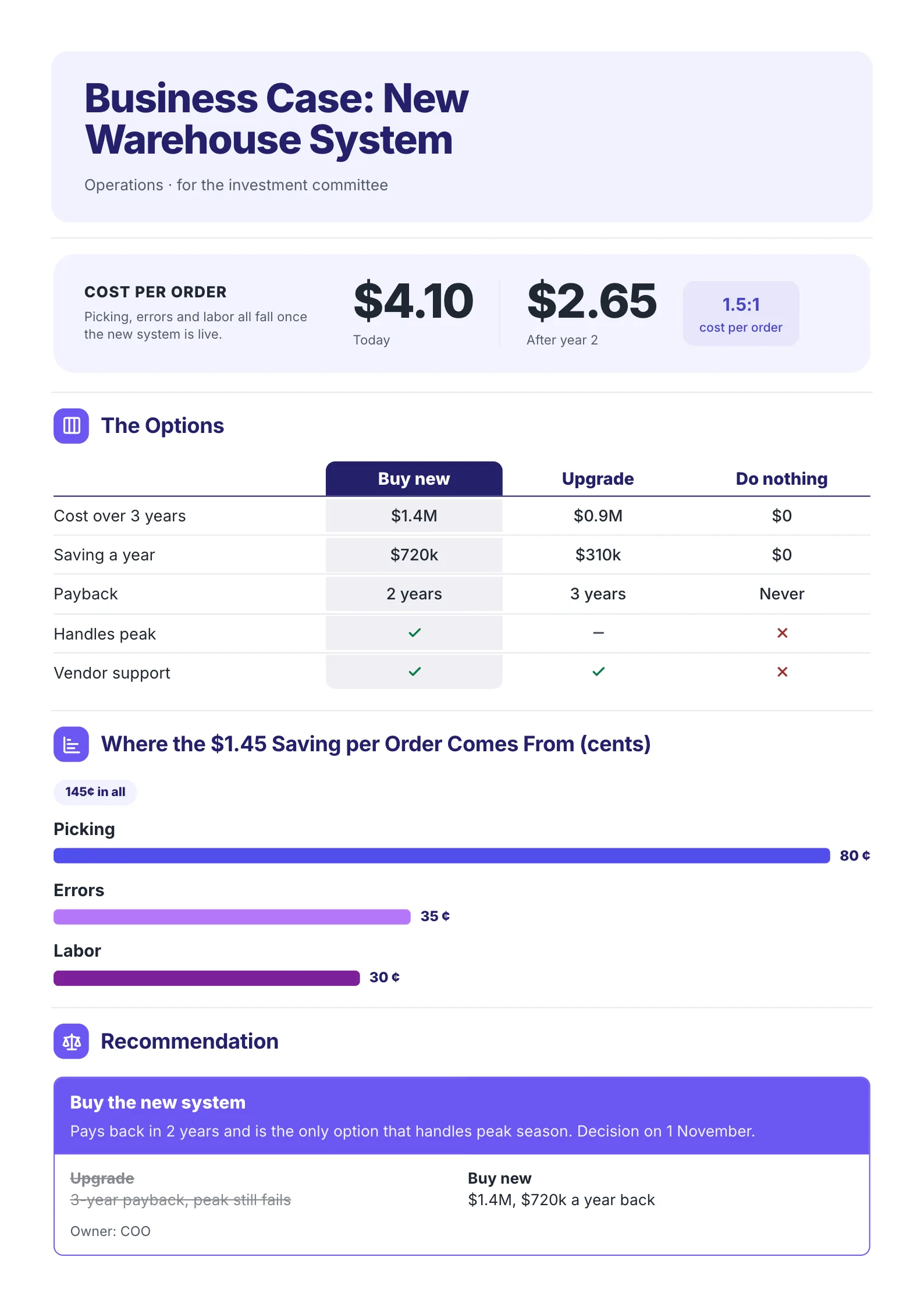
1. A business case with payback
 Edit this template
Break-even over time: the new system costs $1.4M and saves $720K a year, so it pays back in two years.
What to copy:
- Payback as its own row beside cost and saving. Payback is the break-even point measured in time instead of units.
- The "do nothing" option in the table, so the reader sees what waiting costs.
- One recommendation with a date to decide, the way every break-even analysis should end.
Edit for free: business case template.
2. A pricing decision
The pricing decision brief is the natural partner to a break-even analysis: once you know how the break-even moves with price, it lays out the options, what each one does to the numbers and the price you recommend.
Break-even analysis in a spreadsheet or on one page?
Searches for this template often add "excel" or "google sheets". Both have a job.
| Spreadsheet | One-page break-even analysis | |
|---|---|---|
| Who uses it | The person modelling costs | The people deciding |
| Detail | Every cost line, every scenario | Totals, the break-even point, two or three what-ifs |
| Good for | Testing many cases fast | Getting a yes on one decision |
| Read in | As long as you like | Two minutes |
Build the model in a spreadsheet, then put the answer on one page. If your costs already sit in a PDF or a slide deck, the free AI One-Pager generator reads a PDF, Word or PowerPoint file and gives it back as a designed One-Pager. Check every figure against your model before you share it.
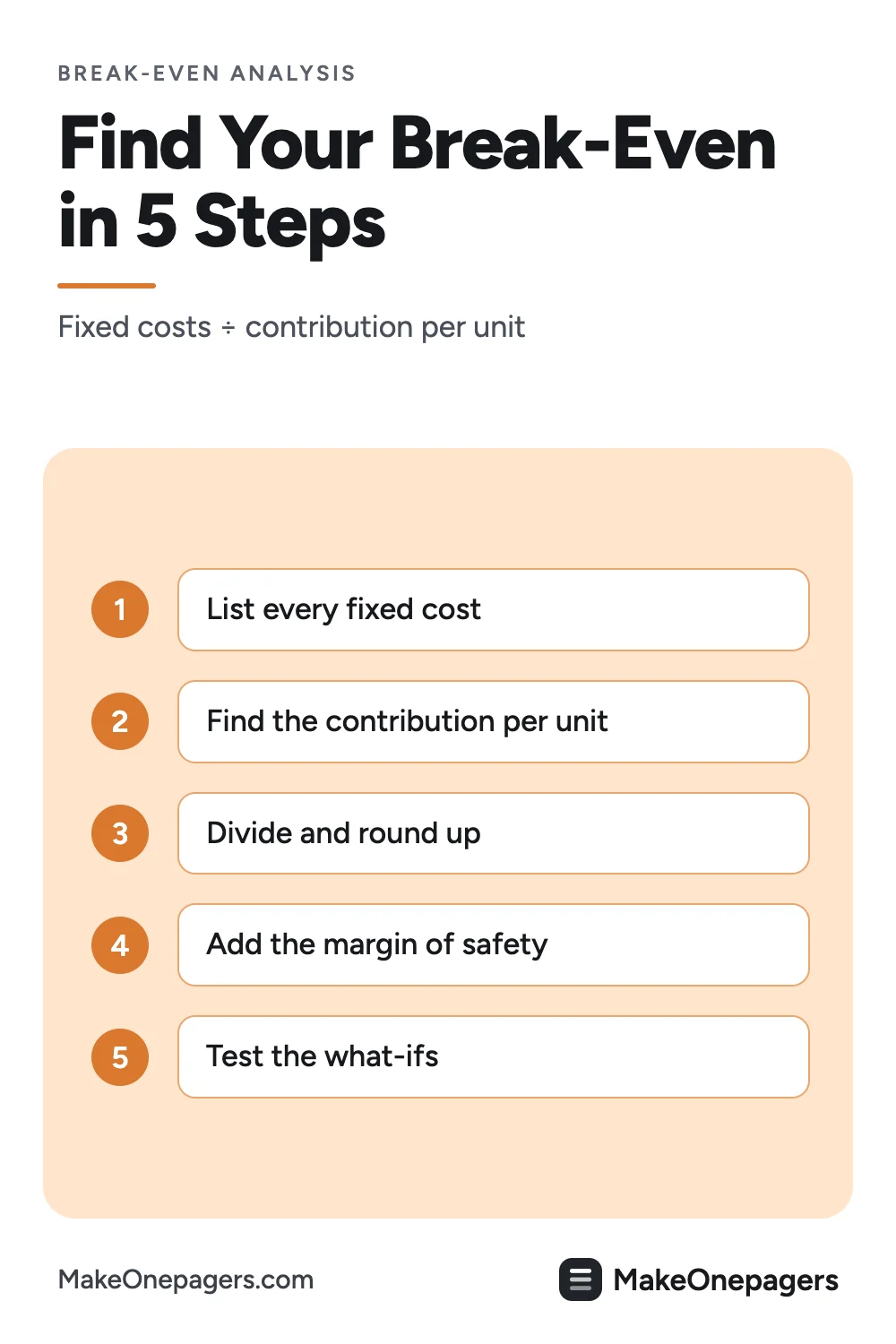
How to do a break-even analysis in 5 steps
- List every fixed cost for one period and add them up.
- Work out the contribution per unit: price minus variable cost.
- Divide fixed costs by the contribution, and round up.
- Add expected sales and work out the margin of safety.
- Test the what-ifs: a price change, a cost rise and a slower first few months.
For a business with several products, use a weighted average contribution based on the expected mix, or work out the break-even for each product line with its own share of fixed costs. For a service business, the "unit" is usually an hour billed or a client served.
Break-even analysis mistakes
- Putting a cost in the wrong group. Staff paid by the hour for every order are variable. A manager on a salary is fixed. Getting this wrong moves the break-even a long way.
- Rounding down. 1,409.1 meals means 1,410. Rounding down reports a break-even you have not reached.
- No margin of safety. "Break-even is 1,410" sounds fine until you learn expected sales are 1,450.
- One case only. Prices and costs move. Show at least the two cases most likely to hurt.
- Ignoring the start-up period. If it takes four months to reach expected sales, show the cash needed to cover the losses until then.
Make your break-even analysis
Open the free business case template and put in your own costs and payback, or drop your cost model into the free AI One-Pager generator and get a finished break-even analysis back.
Frequently asked questions
What is included in a break-even analysis?
Fixed costs, the price and variable cost per unit, the contribution margin, the break-even point in units and in sales, expected sales with the margin of safety, and what-if cases for the changes most likely to happen.
How do you calculate the break-even point?
Divide total fixed costs by the contribution margin per unit, which is the price minus the variable cost per unit. For the break-even in sales, divide fixed costs by the contribution margin ratio.
What is a good margin of safety?
It depends on how predictable your sales are. A business with steady repeat customers can live with a smaller margin than a new product with no sales history. State the margin and let the reader judge it against the risk.
Can I do a break-even analysis for a service business?
Yes. Use an hour billed, a project or a client as the unit, with its own price and variable cost, and the same formula.