BlogGuide
Balance Sheet Template: Free, One Page, for Small Business
A free one-page balance sheet template for a small business, every line explained, a worked example that balances and the ratios lenders read first.

By MakeOnepagers Team
Updated · 10 min read
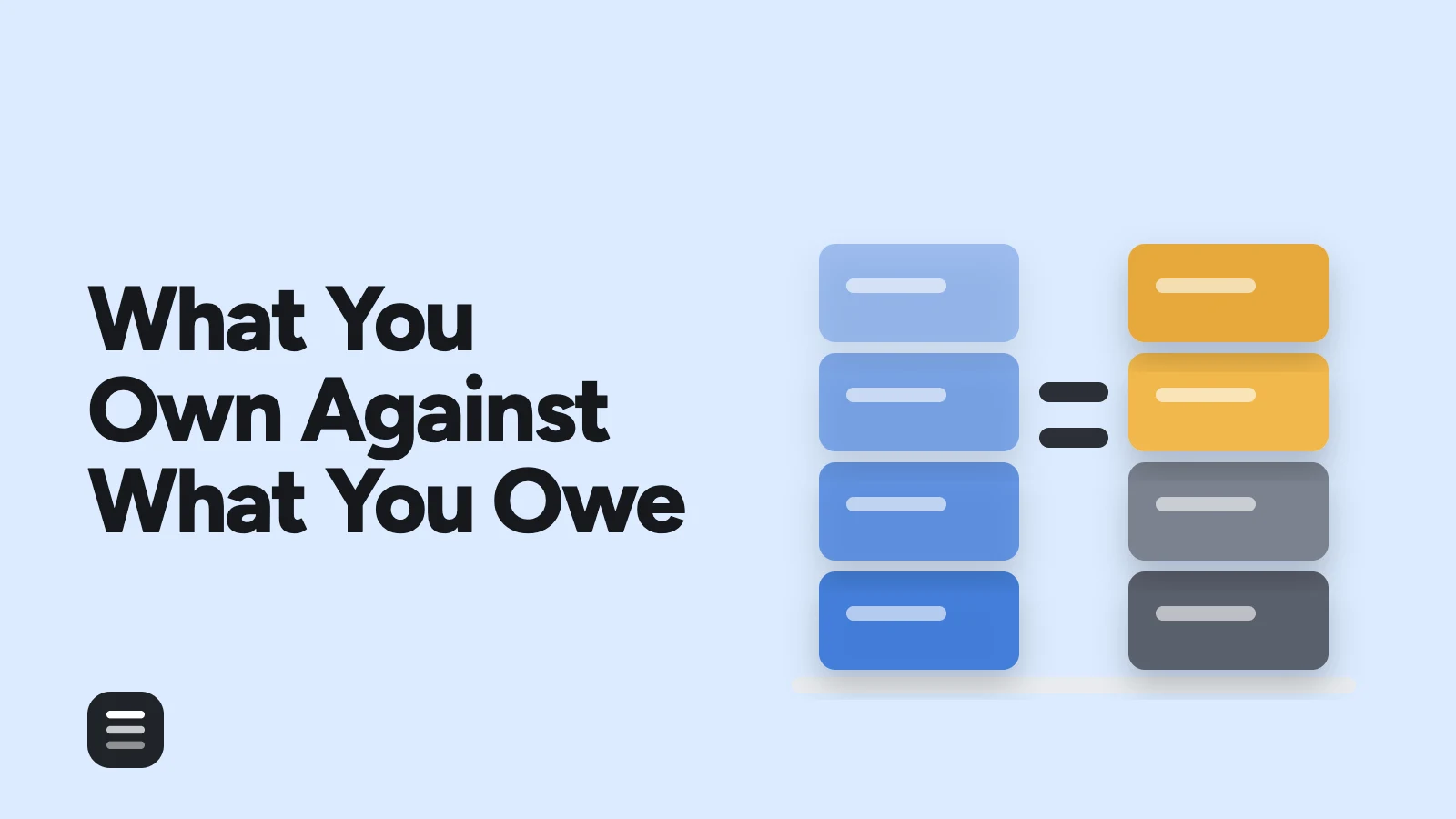
A balance sheet template lays out what a business owns, what it owes and what is left over for the owners, on a single date. It is one of the three main financial statements, and the one a bank, a buyer or an investor looks at to judge how solid a business is. The detailed version comes out of your accounting software. The version people read fits on one page: assets, liabilities and equity grouped into a handful of lines, last year beside this year, and two or three ratios that say what the numbers mean. Below is every line explained, a free balance sheet template you can copy, a worked example that balances to the dollar, five balance sheet examples and the mistakes that make a balance sheet hard to trust.
One‑Pager examples
Real One-Pagers made with MakeOnepagers. Open any one to edit it as your own.
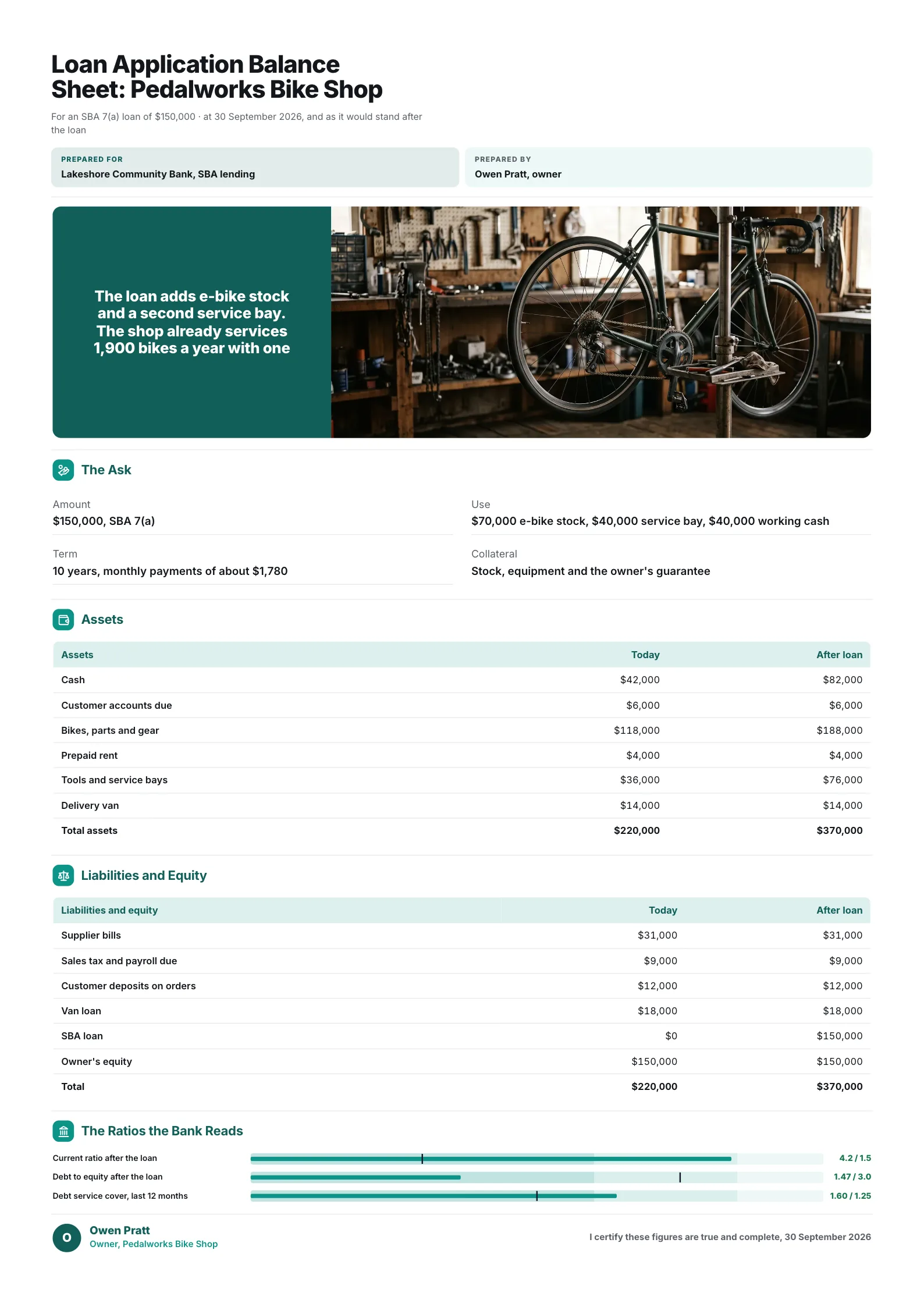 Balance Sheet: Loan ApplicationEdit for free(opens in a new tab)
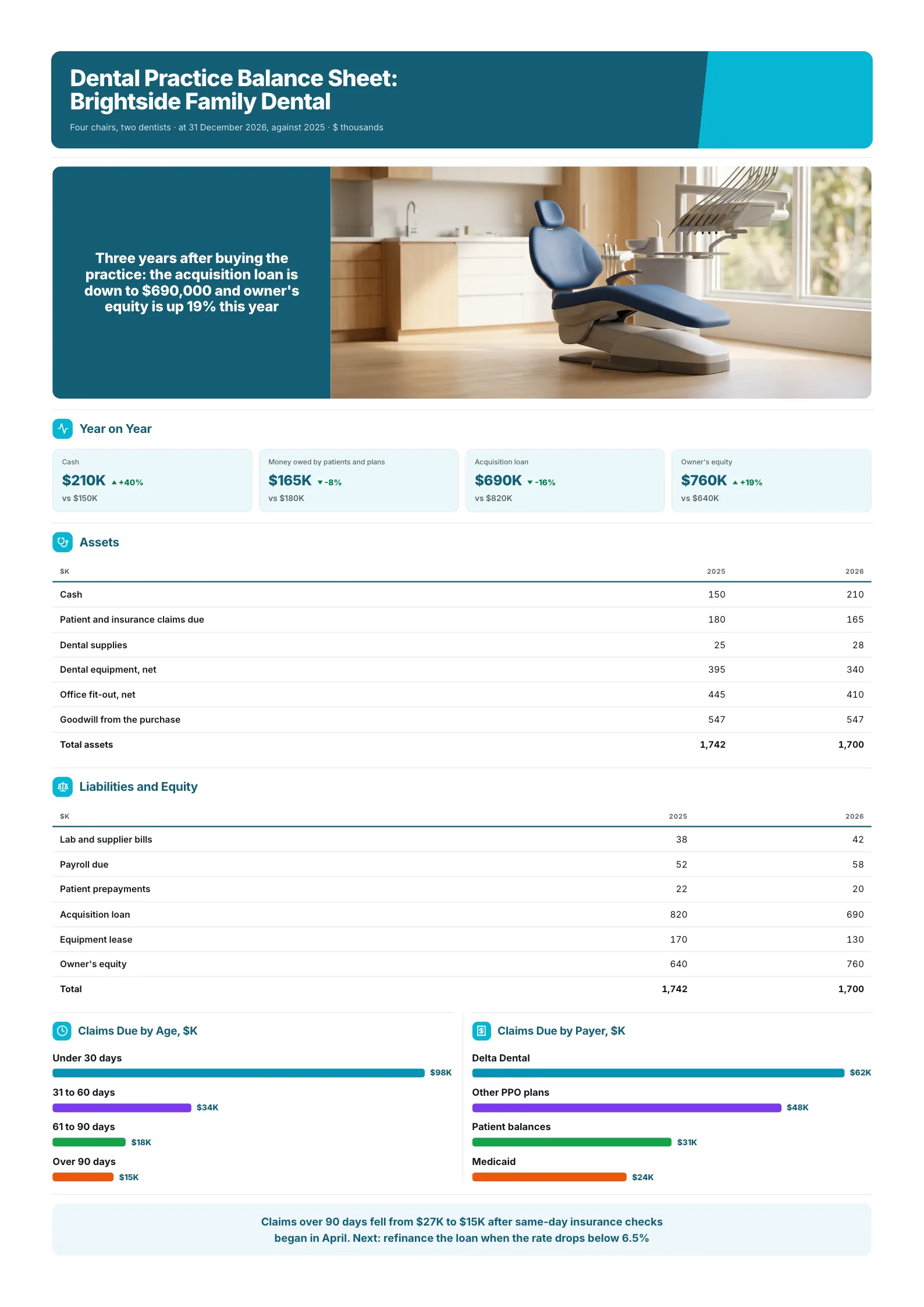 Balance Sheet: Dental PracticeEdit for free(opens in a new tab)
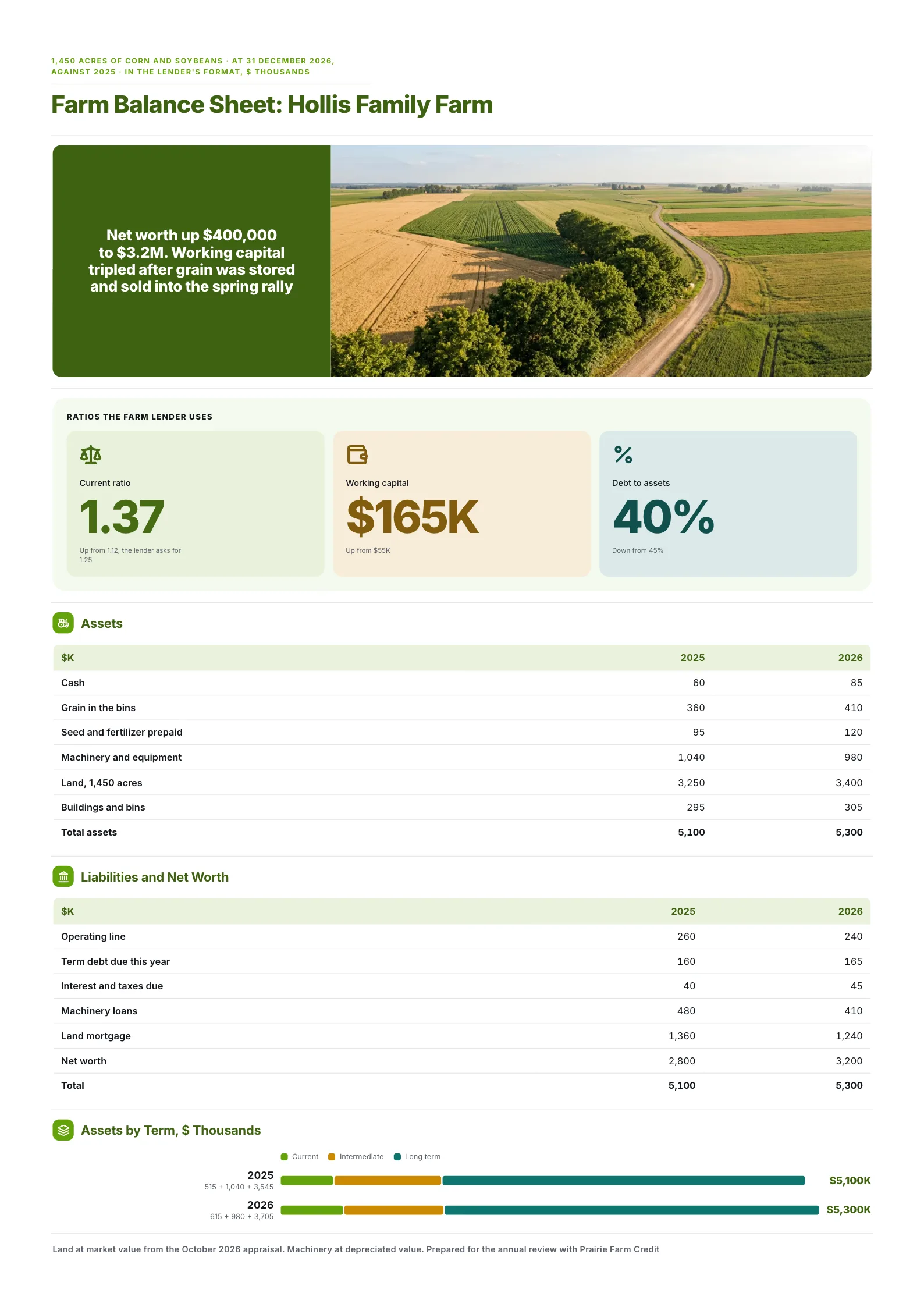 Balance Sheet: FarmEdit for free(opens in a new tab)
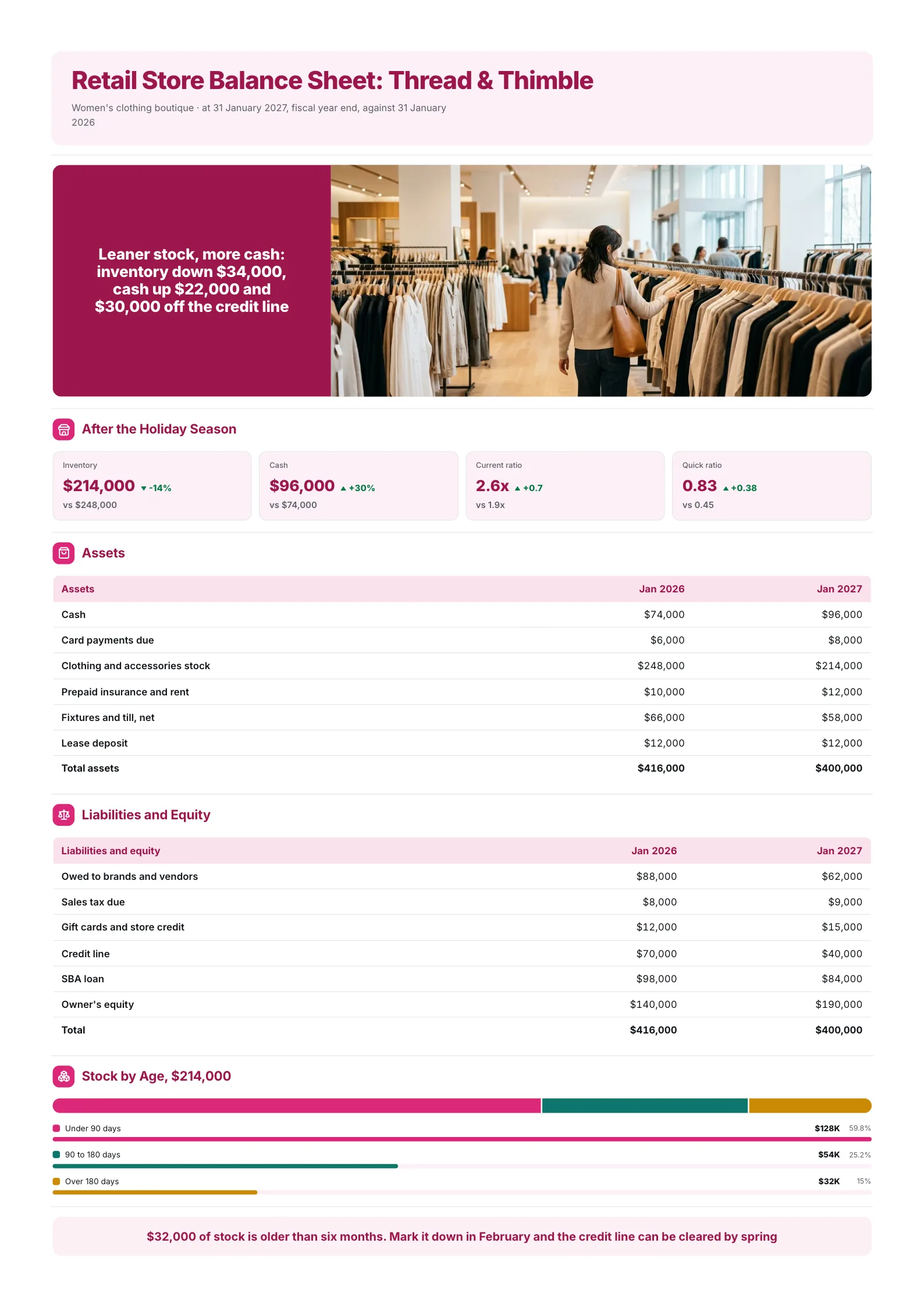 Balance Sheet: Retail StoreEdit for free(opens in a new tab)
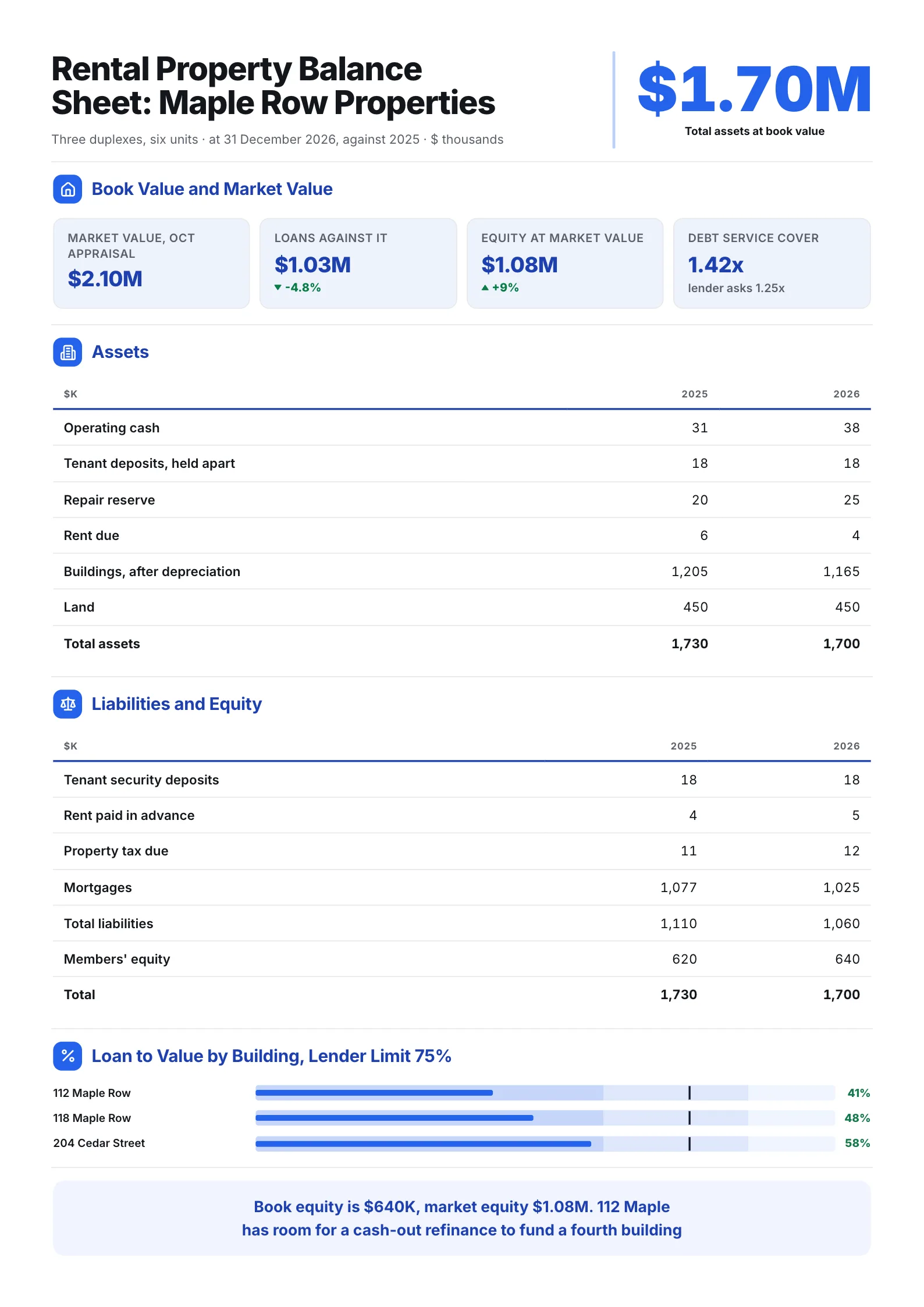 Balance Sheet: Rental PropertyEdit for free(opens in a new tab)
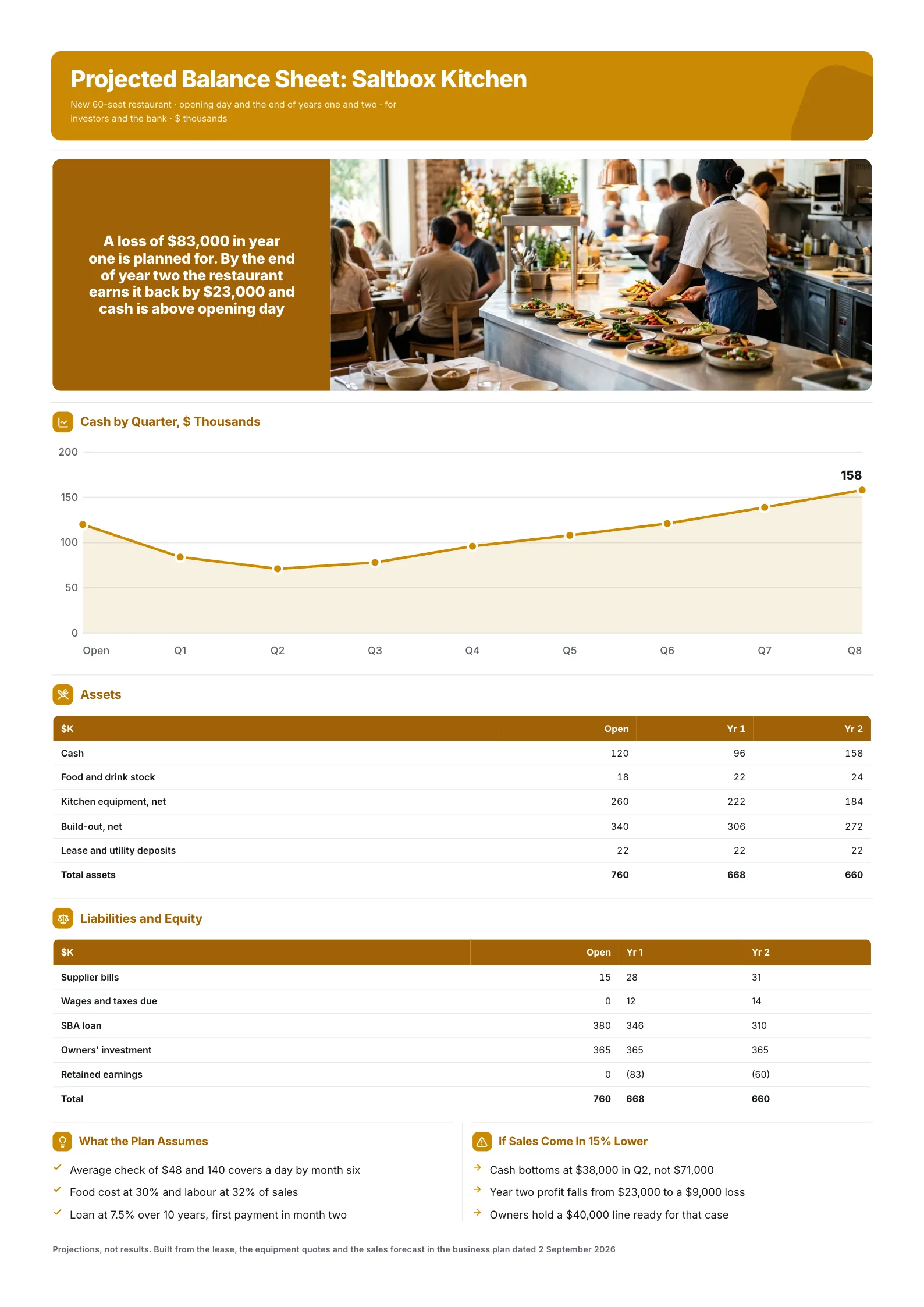 Balance Sheet: ProjectedEdit for free(opens in a new tab)
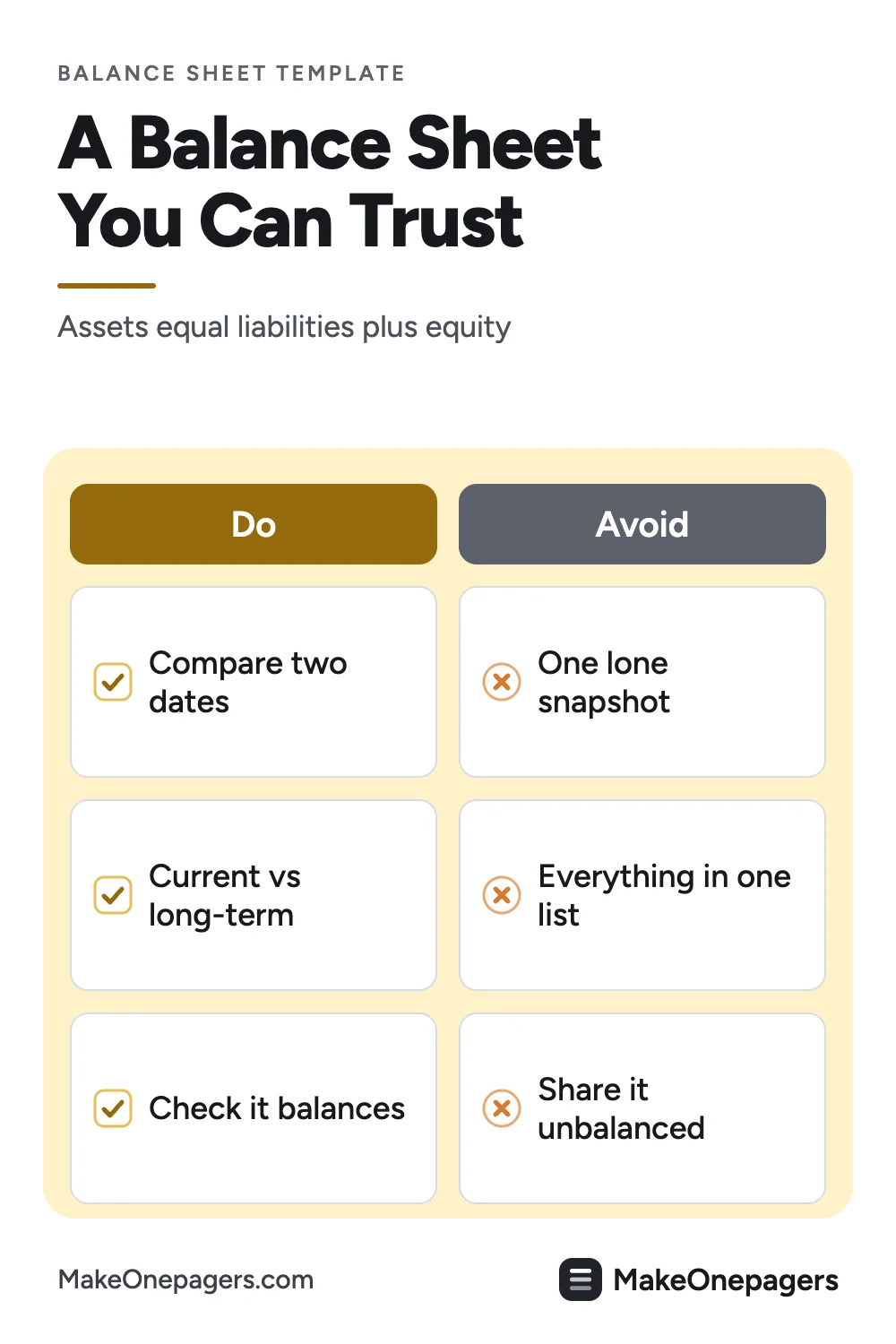
The examples were made with MakeOnepagers. Each one opens as a template you can edit for free: every word, chart and color.
What is a balance sheet?
A balance sheet, also called a statement of financial position, is a snapshot of a business on one day, usually the last day of a month, quarter or year. It rests on one equation:
Assets = Liabilities + Equity
- Assets are what the business owns or is owed: cash, money customers owe, stock, equipment, vehicles, property.
- Liabilities are what the business owes to others: supplier bills, taxes due, loans, leases.
- Equity is what is left for the owners: the money they put in plus the profits kept in the business over the years.
The two sides always balance, which is where the name comes from. If they do not, something has been missed or entered twice.
The balance sheet is different from the profit and loss statement, which covers a period and shows whether the business made a profit, and the cash flow statement, which shows how cash moved. The three are linked: the profit kept from the P&L adds to equity on the balance sheet, and the change in cash on the balance sheet matches the cash flow statement.
The lines of a balance sheet
Current assets: turn into cash within a year.
- Cash and bank balances
- Accounts receivable: what customers owe you
- Inventory: stock and materials
- Prepaid expenses: costs paid in advance, such as insurance
Non-current (long-term) assets: used for more than a year.
- Equipment, vehicles and furniture, less depreciation
- Property
- Long-term investments and intangible assets
Current liabilities: due within a year.
- Accounts payable: what you owe suppliers
- Accrued expenses: wages and costs owed but not yet paid
- Taxes due
- The part of long-term loans due this year
Non-current (long-term) liabilities: due after a year.
- Bank loans and equipment finance
- Long-term leases
Equity
- Owner's capital or share capital
- Retained earnings: profits kept in the business
- Less owner's drawings, for sole traders and partnerships
A free balance sheet template
Copy this into a document, or open one of the examples further down and edit it.
| Line | This year | Last year |
|---|---|---|
| Current assets | ||
| Cash | ||
| Accounts receivable | ||
| Inventory | ||
| Other current assets | ||
| Non-current assets | ||
| Equipment and vehicles, net | ||
| Other long-term assets | ||
| Total assets | ||
| Current liabilities | ||
| Accounts payable | ||
| Accrued expenses and taxes due | ||
| Loans due within a year | ||
| Non-current liabilities | ||
| Long-term loans | ||
| Total liabilities | ||
| Equity | ||
| Owner's capital | ||
| Retained earnings | ||
| Total equity | ||
| Total liabilities and equity | ||
| Ratios and one sentence on what changed |
A worked example: a landscaping business
The figures below are an example, made up for this guide so every line can be checked. Use your own from your accounting software.
Balance sheet at 31 December:
| Line | Amount |
|---|---|
| Cash | $58,000 |
| Accounts receivable | $46,000 |
| Inventory (plants, stone, supplies) | $18,000 |
| Current assets | $122,000 |
| Trucks and equipment, net | $290,000 |
| Total assets | $412,000 |
| Accounts payable | $31,000 |
| Accrued wages and taxes | $19,000 |
| Loans due within a year | $22,000 |
| Current liabilities | $72,000 |
| Long-term equipment loans | $164,000 |
| Total liabilities | $236,000 |
| Owner's capital | $60,000 |
| Retained earnings | $116,000 |
| Total equity | $176,000 |
| Total liabilities and equity | $412,000 |
Check that it balances: liabilities of $236,000 plus equity of $176,000 is $412,000, the same as total assets.
Current ratio = current assets ÷ current liabilities = $122,000 ÷ $72,000 = 1.69. The business has $1.69 of short-term assets for every $1 it must pay within a year.
Debt to equity = total liabilities ÷ total equity = $236,000 ÷ $176,000 = 1.34. For every $1 the owner has in the business, lenders and suppliers have $1.34.
Working capital = current assets minus current liabilities = $122,000 minus $72,000 = $50,000.
On its own, this says the business can meet its short-term bills and carries a fair amount of equipment debt, which is common for a business that owns its trucks. Beside last year it would say more: whether the equipment loans are shrinking, whether customers are taking longer to settle, whether retained earnings are growing. That is why the template has a "last year" column.
One more figure is worth a line on the page: retained earnings. Here $116,000 of the owner's $176,000 stake is profit left in the business over the years, rather than money put in. A lender reads that as a business that has funded much of its own growth.
Where a balance sheet ends up: a loan application
A lender reads the balance sheet beside the P&L. The loan application summary template shows how both feed one page for a credit committee: the loan and its term, how well the business covers its debt, what the money is for and where it comes from, and why the loan makes sense. If you are applying for finance, a clean one-page balance sheet with last year beside it is the first thing to prepare.
5 balance sheet examples
Five balance sheets, each built for the person who reads it: a cafe owner, a contractor's surety, a startup board, a food bank's board and a household's mortgage lender. Each keeps the same core: what is owned, what is owed, and two dates side by side.
1. Small business balance sheet
 Edit this template
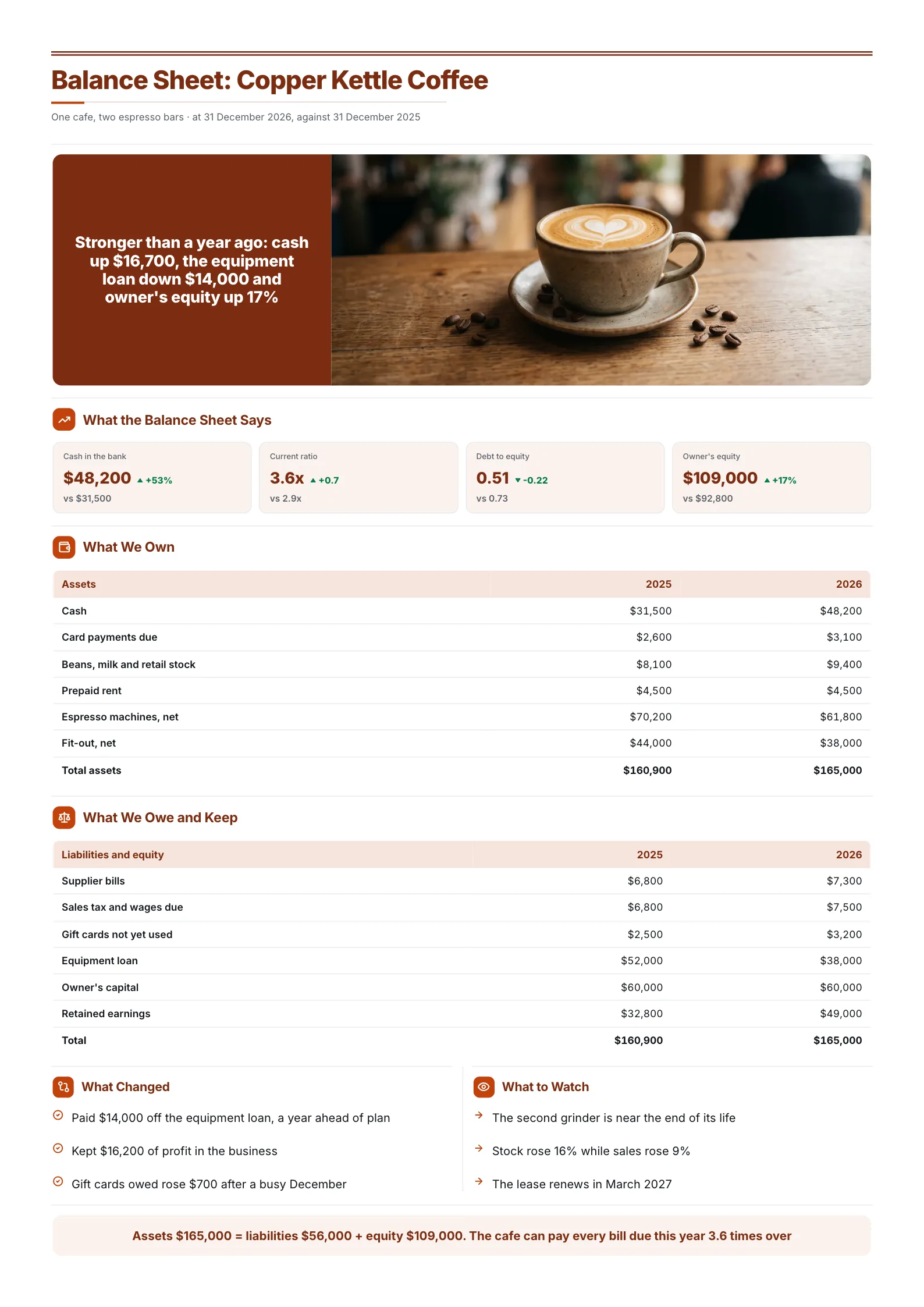
A one-cafe business shows this year beside last, with the three ratios its owner watches read out at the top.
What to copy:
- The verdict in one line. "Stronger than a year ago: cash up $16,700, the equipment loan down $14,000 and owner's equity up 17%."
- Each ratio beside last year's. Current ratio 3.6x against 2.9x, debt to equity 0.51 against 0.73.
- Plain headings. "What we own" and "What we owe and keep" read faster than "assets" and "liabilities and equity".
Edit for free: cafe balance sheet template.
2. Contractor balance sheet
 Edit this template
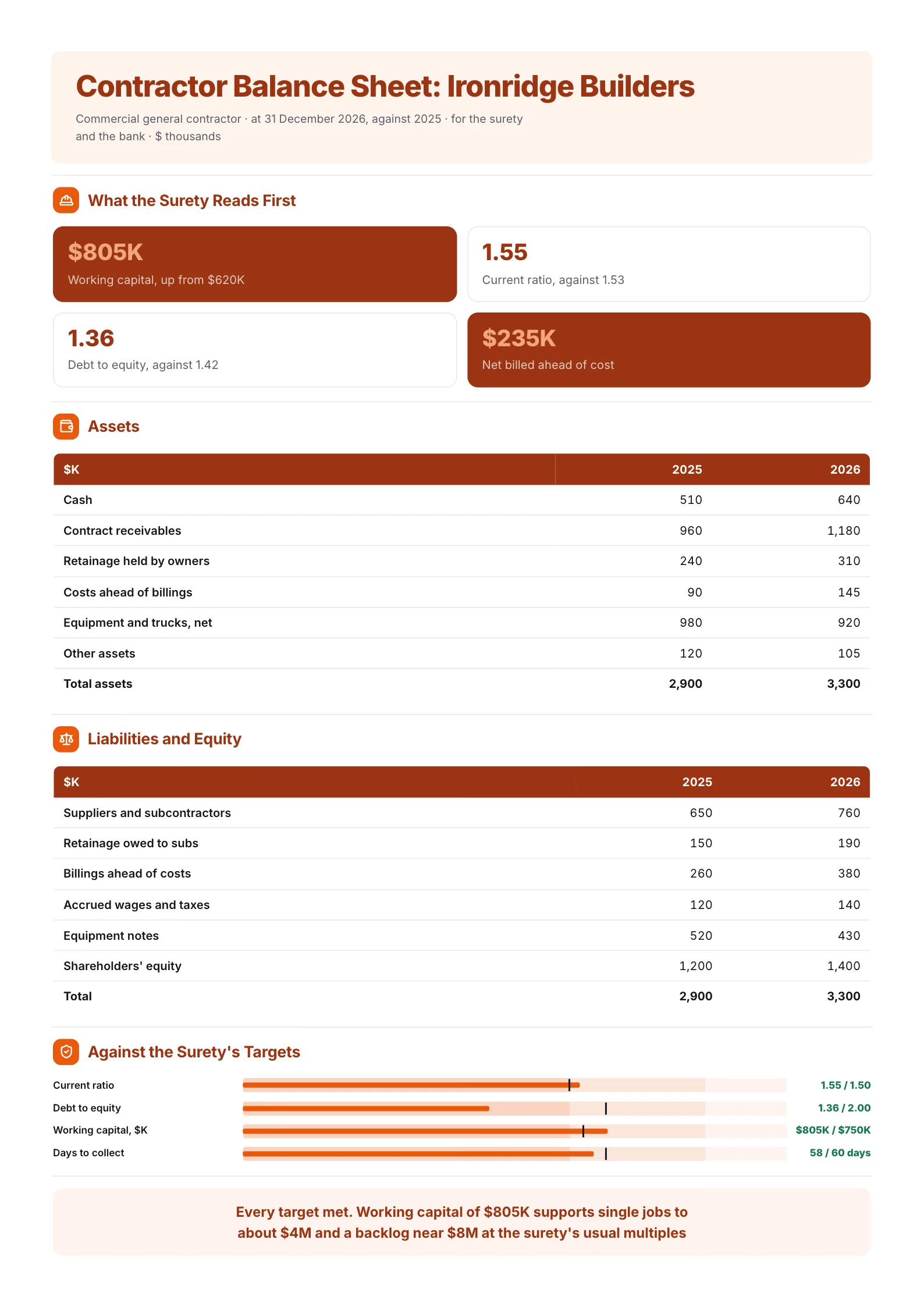
A builder lays out its balance sheet the way its bonding company reads it.
What to copy:
- What the reader checks first, at the top. "What the surety reads first": working capital of $805K, up from $620K.
- Lines your industry uses. Retainage held by owners ($310K) and billings ahead of costs ($380K) get their own rows.
- One net figure for the work in progress. $235K billed ahead of cost.
Edit for free: contractor balance sheet template.
3. Startup balance sheet for the board
 Edit this template
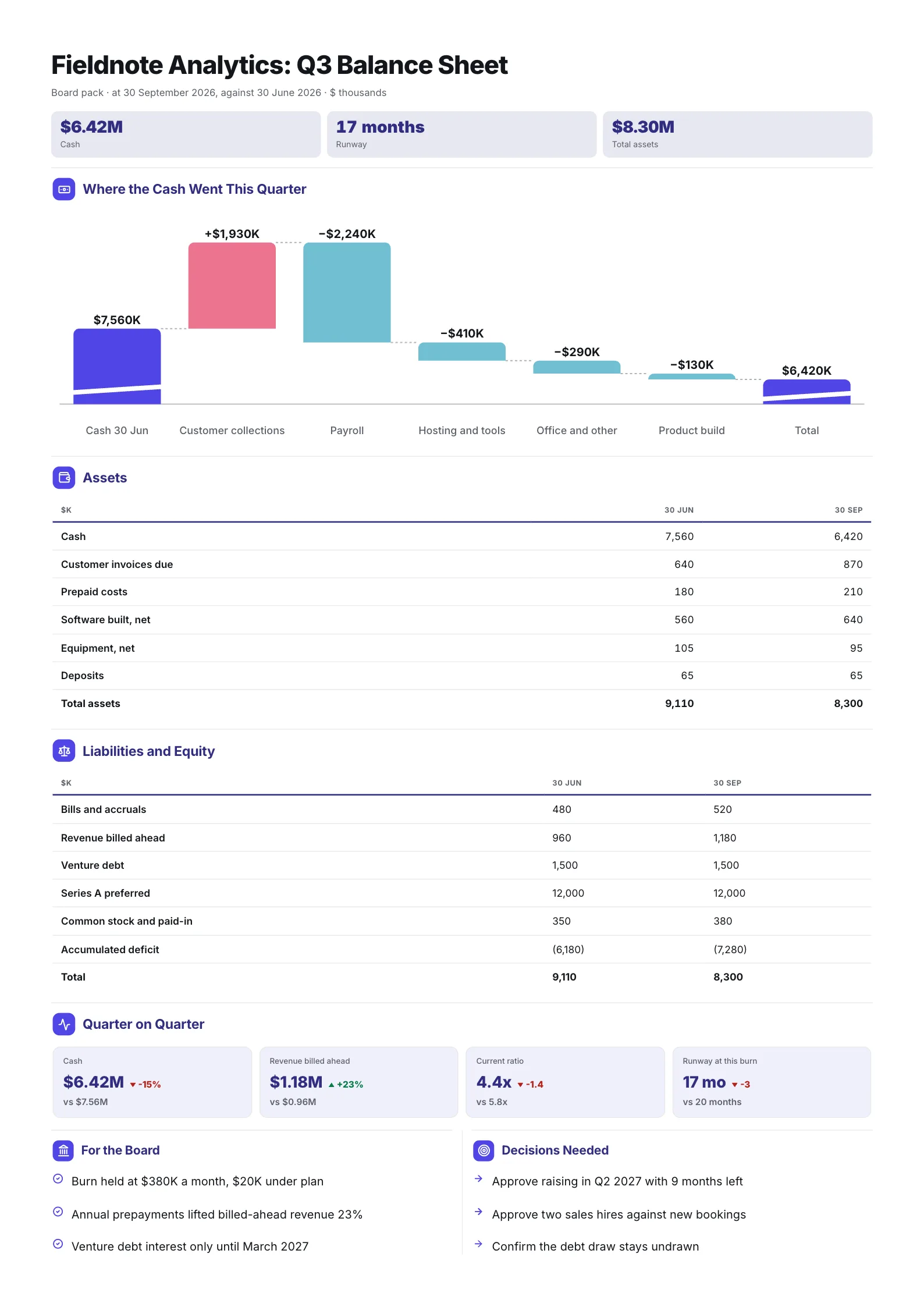
A venture-backed company shows its board where the quarter's cash went, then the balance sheet behind it.
What to copy:
- A cash waterfall. From cash on 30 June, through customer collections, payroll, hosting and product build, to cash on 30 September.
- Quarter on quarter, not year on year. Cash $6.42M, down 15% from $7.56M.
- A good number the balance sheet hides. Revenue billed ahead rose 23% to $1.18M, which shows up as a liability.
Edit for free: startup board balance sheet template.
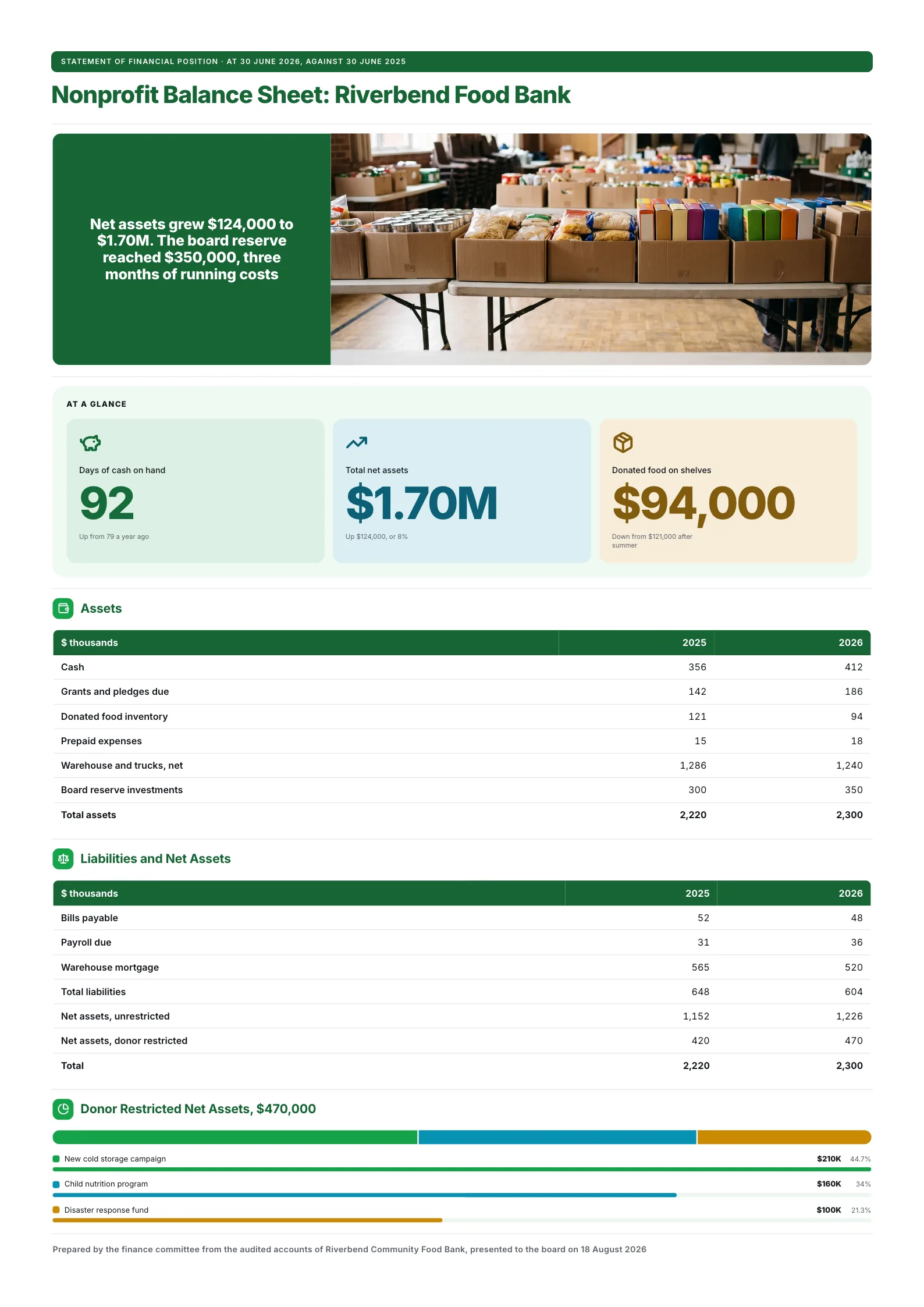
4. Nonprofit balance sheet
 Edit this template
A food bank's statement of financial position, the nonprofit name for a balance sheet, for its board.
What to copy:
- Days of cash on hand. 92 days, up from 79 a year ago, is the figure a nonprofit board asks for first.
- Net assets in place of equity. $1.70M, up $124,000, split into unrestricted and donor restricted.
- The reserve against a goal. The board reserve reached $350,000, three months of running costs.
Edit for free: nonprofit balance sheet template.
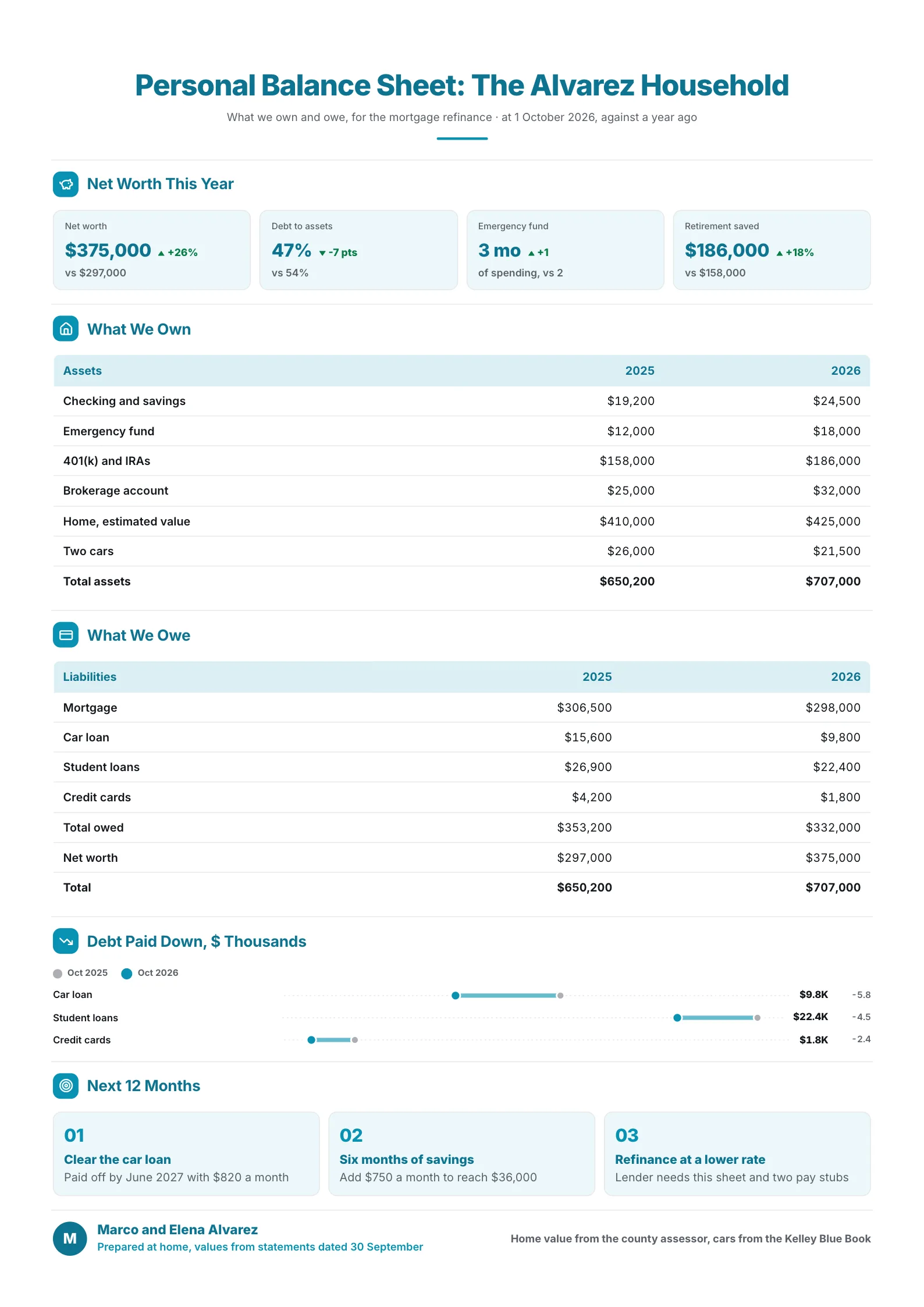
5. Personal balance sheet
 Edit this template
A household's balance sheet, ready to hand to a lender for a refinance.
What to copy:
- Net worth as the headline. $375,000, up 26% from $297,000.
- Debt paid down, loan by loan. The car loan fell from $15,600 to $9,800 and credit cards from $4,200 to $1,800.
- Safety in months, not dollars. An emergency fund of 3 months of spending, up from 2.
Edit for free: personal balance sheet template.
How to make a balance sheet in 6 steps
- Choose the date, usually the last day of the month, quarter or year.
- List every asset at that date, split into current and long-term.
- List every liability, split into due within a year and later.
- Work out equity: owner's capital plus retained earnings, less drawings.
- Check that assets equal liabilities plus equity. If not, find the gap before going further.
- Add last year's figures and two or three ratios, with one sentence on what changed.
If your accountant sends the balance sheet as a PDF, the free AI One-Pager generator reads a PDF, Word or PowerPoint file and gives it back as a designed One-Pager, with the figures pulled from your file. Check every total against the original before you share it.
Balance sheet mistakes
- It does not balance. Never share one that does not. Something is missing.
- No comparison date. A single snapshot cannot show a trend.
- Current and long-term mixed together. It hides whether the business can pay its bills this year.
- Equipment at its purchase price. Show it net of depreciation, or assets look bigger than they are.
- Personal and business money mixed. A personal car or loan on the business balance sheet confuses every ratio.
Make your balance sheet
Open the free loan application summary template if you are preparing for a lender, or drop your accountant's balance sheet into the free AI One-Pager generator and get a finished one-page view back.
Frequently asked questions
What should a small business balance sheet include?
Current and long-term assets, current and long-term liabilities, owner's equity, the totals, and last year's figures beside this year's. Add the current ratio and debt to equity so the reader does not have to work them out.
What is the balance sheet equation?
Assets equal liabilities plus equity. Every balance sheet must satisfy it.
What is the difference between a balance sheet and a profit and loss statement?
A balance sheet is a snapshot of one date: what you own, owe and have left. A profit and loss statement covers a period and shows whether you made a profit in it.
How often should a small business prepare a balance sheet?
At least once a year for tax and accounts, and monthly or quarterly if you have loans, investors or a busy season that ties up cash.