BlogGuide
PESTLE Analysis Template: Free One-Page PESTLE With Example
A free one-page PESTLE analysis template, the questions for each of the six factors, a worked example scored by impact and how to turn it into a plan.

By MakeOnepagers Team
Updated · 7 min read
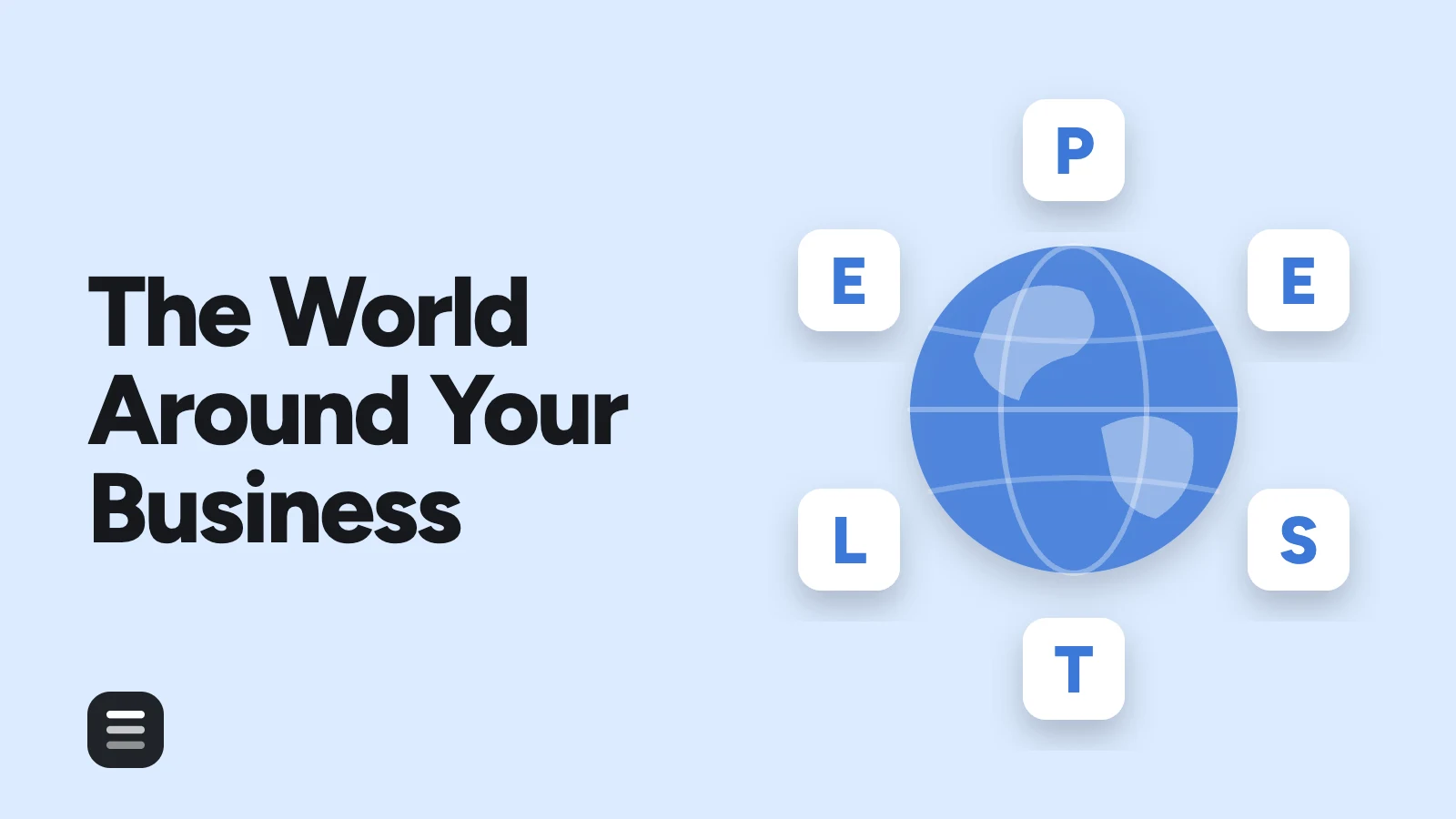
A PESTLE analysis template helps a team look outside its own walls before it plans. It covers six kinds of change that no business controls but every business feels: political, economic, social, technological, legal and environmental. The analysis is easy to start and easy to get wrong. Most PESTLEs become long lists of everything happening in the world, with no sense of which forces matter. A good one fits on one page, keeps two or three items per factor, scores each one and carries only the few that matter into the plan. Below are the six factors with the questions to ask, a free PESTLE analysis template you can copy, a worked example and how to turn the scan into decisions.
One‑Pager examples
Real One-Pagers made with MakeOnepagers. Open any one to edit it as your own.
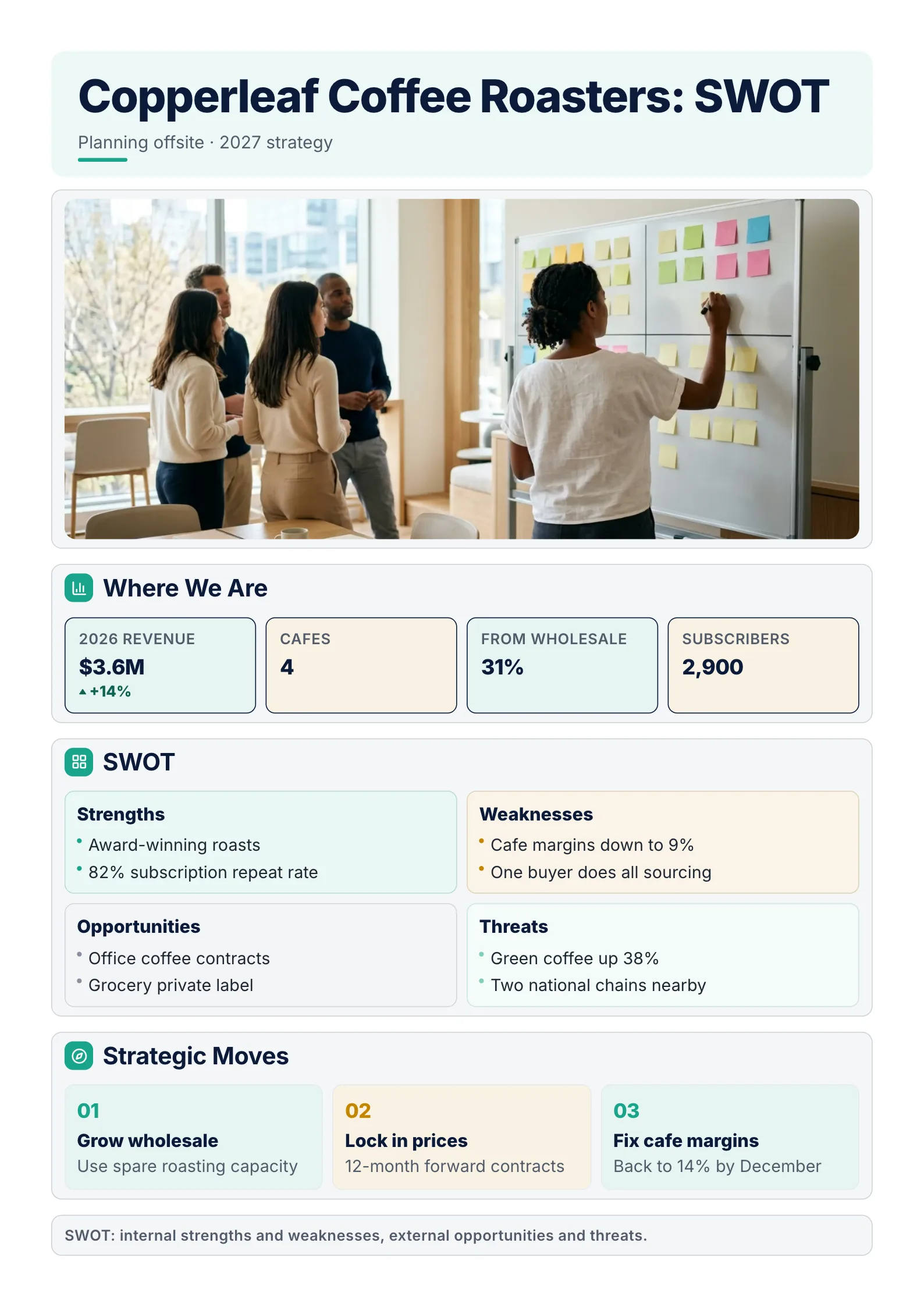 SWOT AnalysisEdit for free(opens in a new tab)
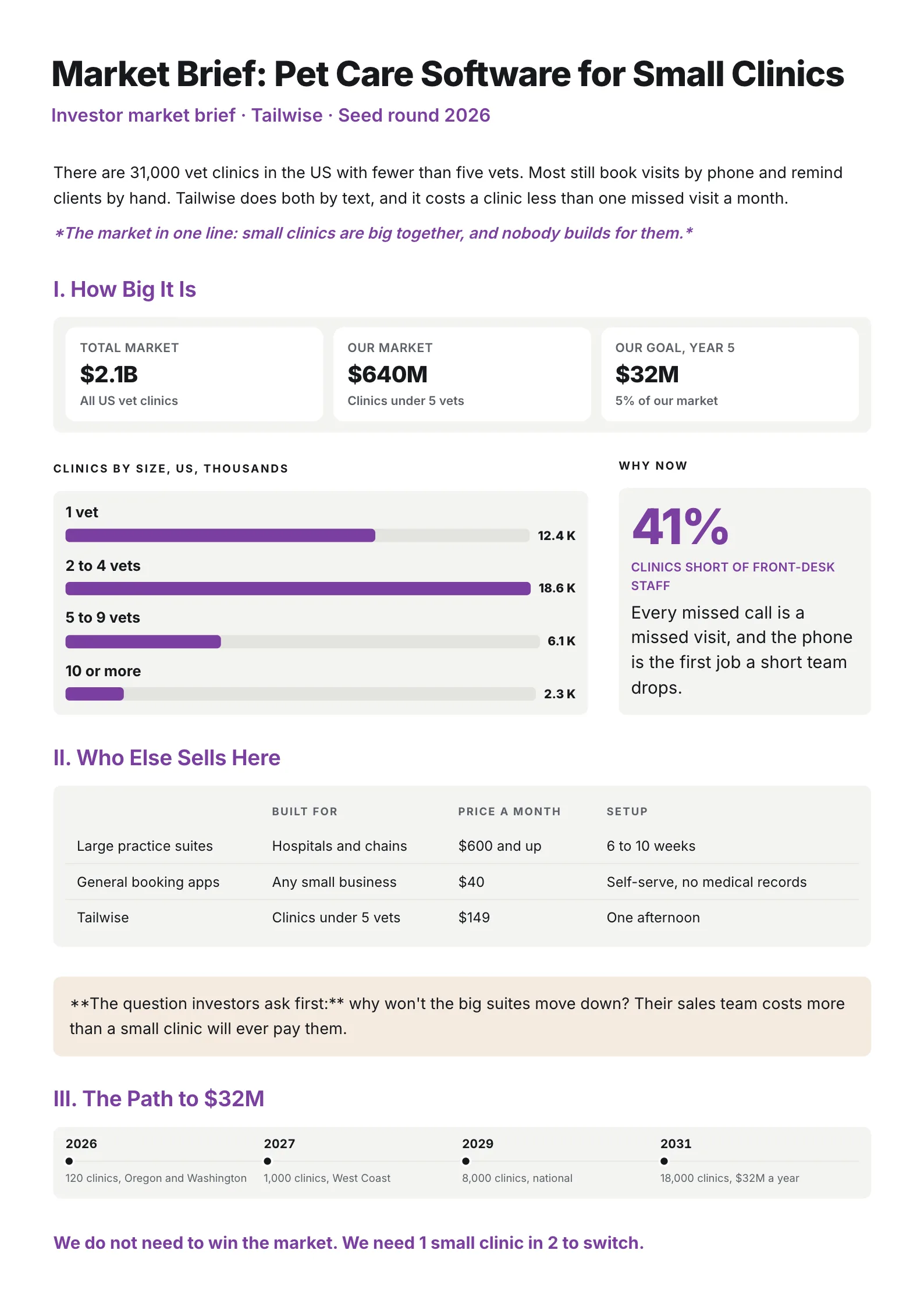 Market Size BriefEdit for free(opens in a new tab)
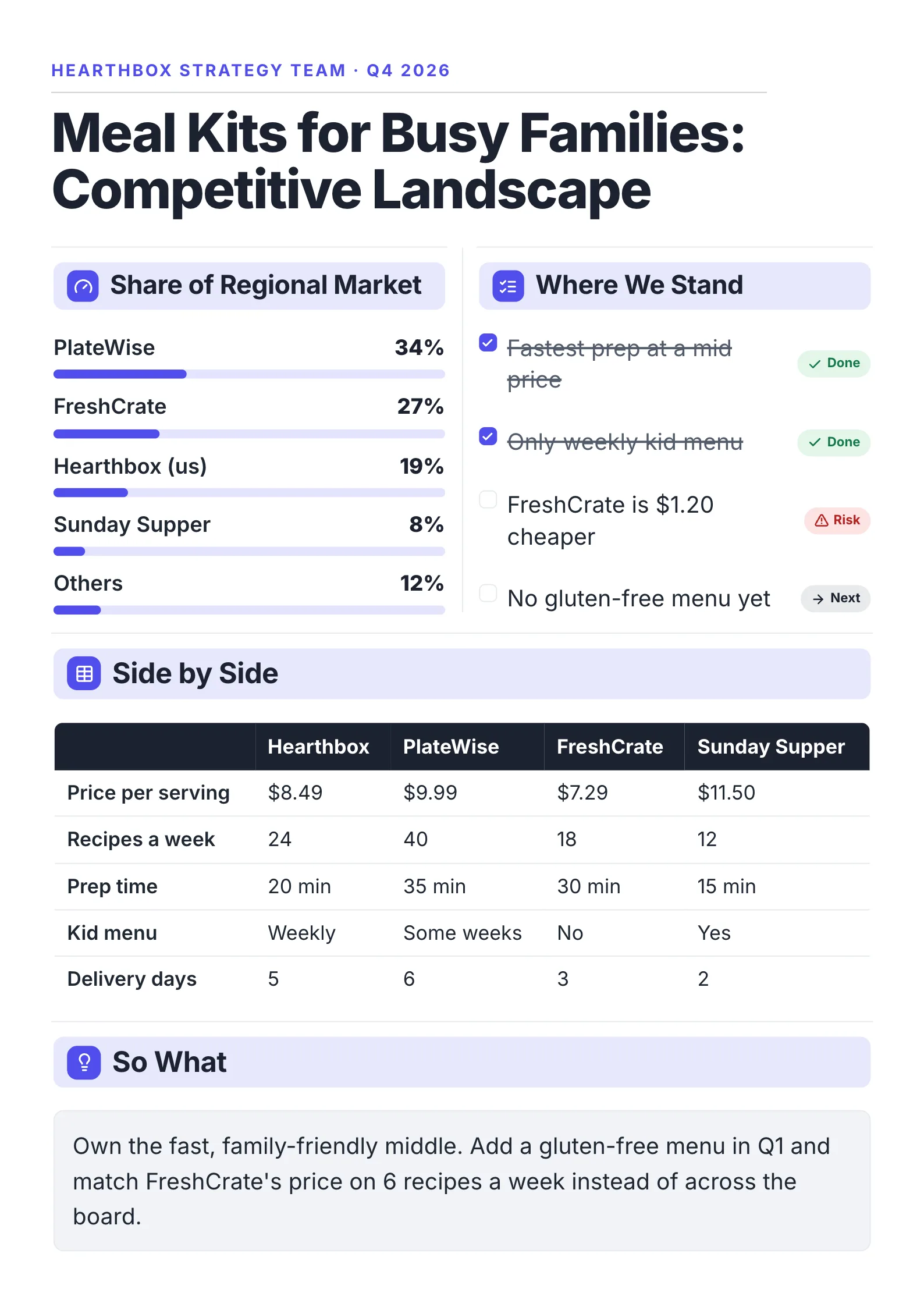 Competitive LandscapeEdit for free(opens in a new tab)
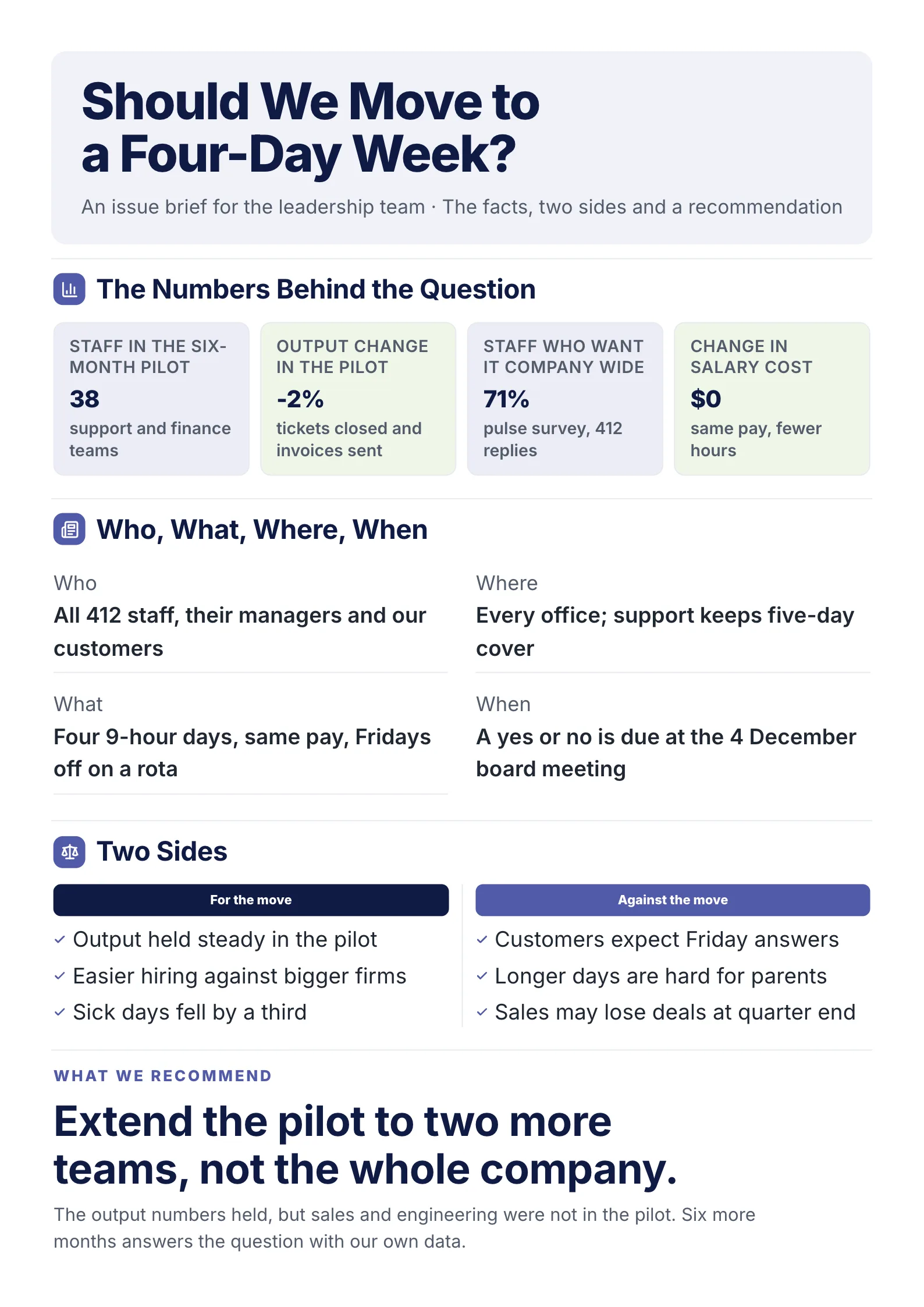 Issue BriefEdit for free(opens in a new tab)
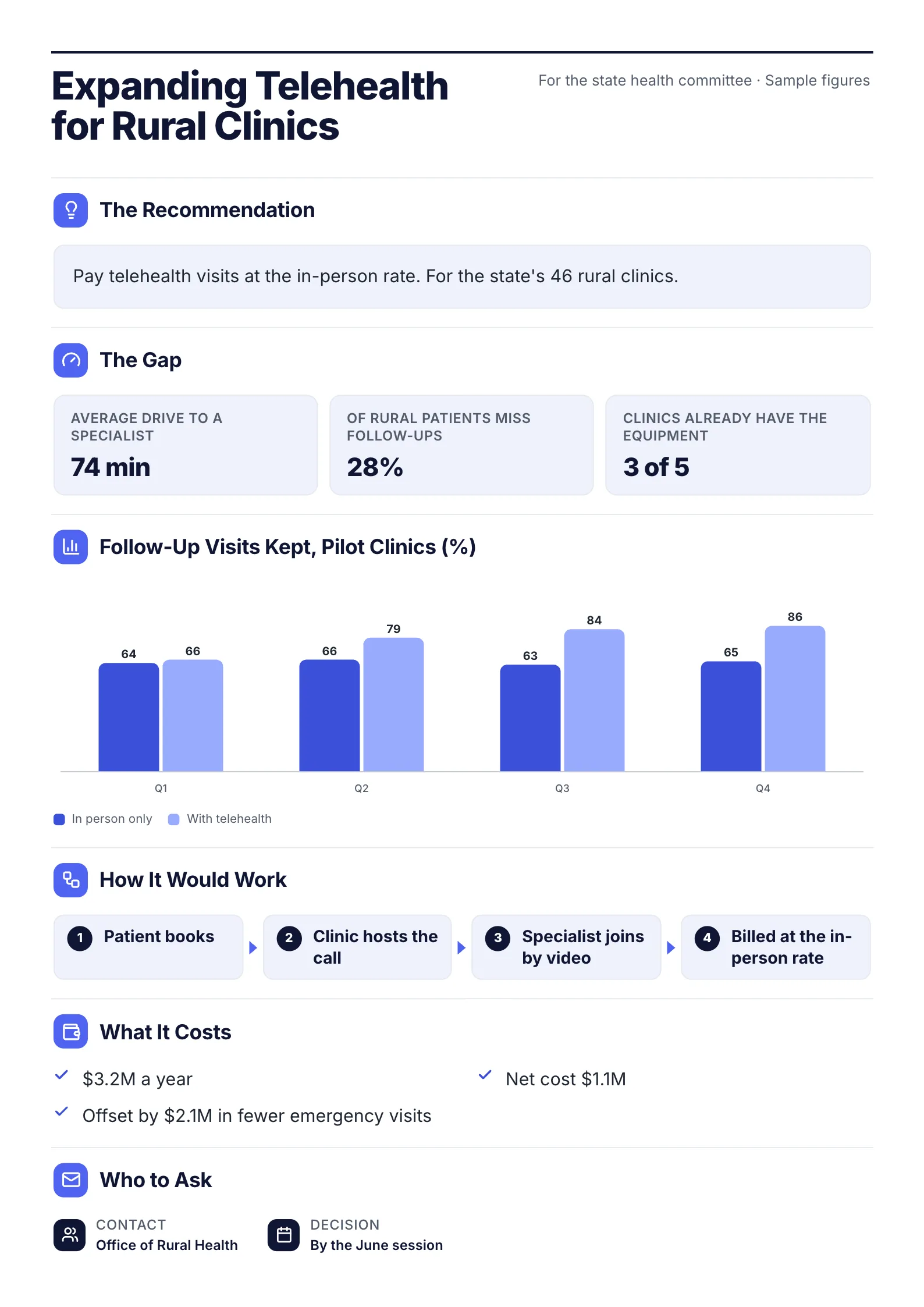 Policy Brief: Rural TelehealthEdit for free(opens in a new tab)
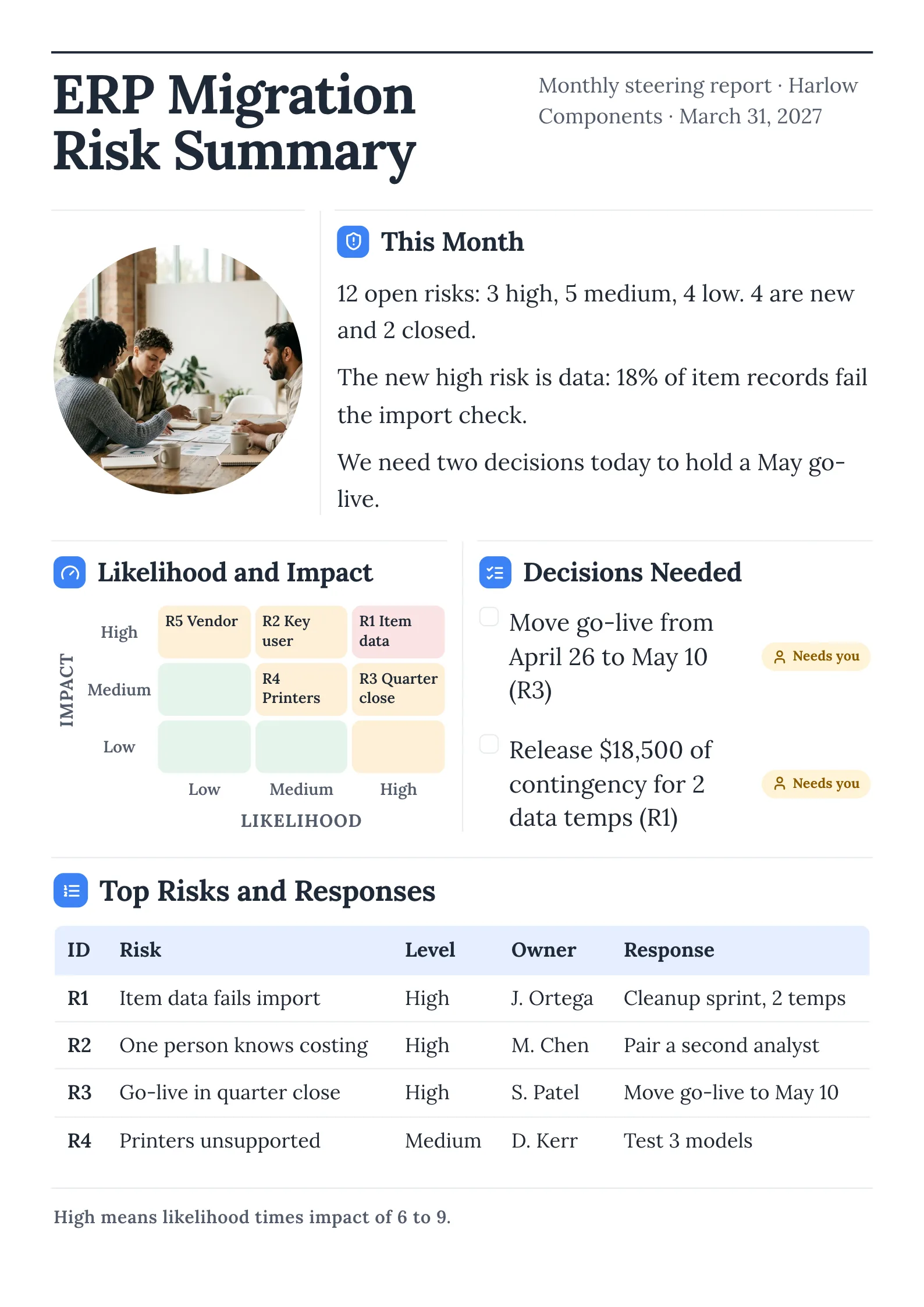 Risk Register SummaryEdit for free(opens in a new tab)
The examples were made with MakeOnepagers. Each one opens as a template you can edit for free: every word, chart and color.
What is a PESTLE analysis?
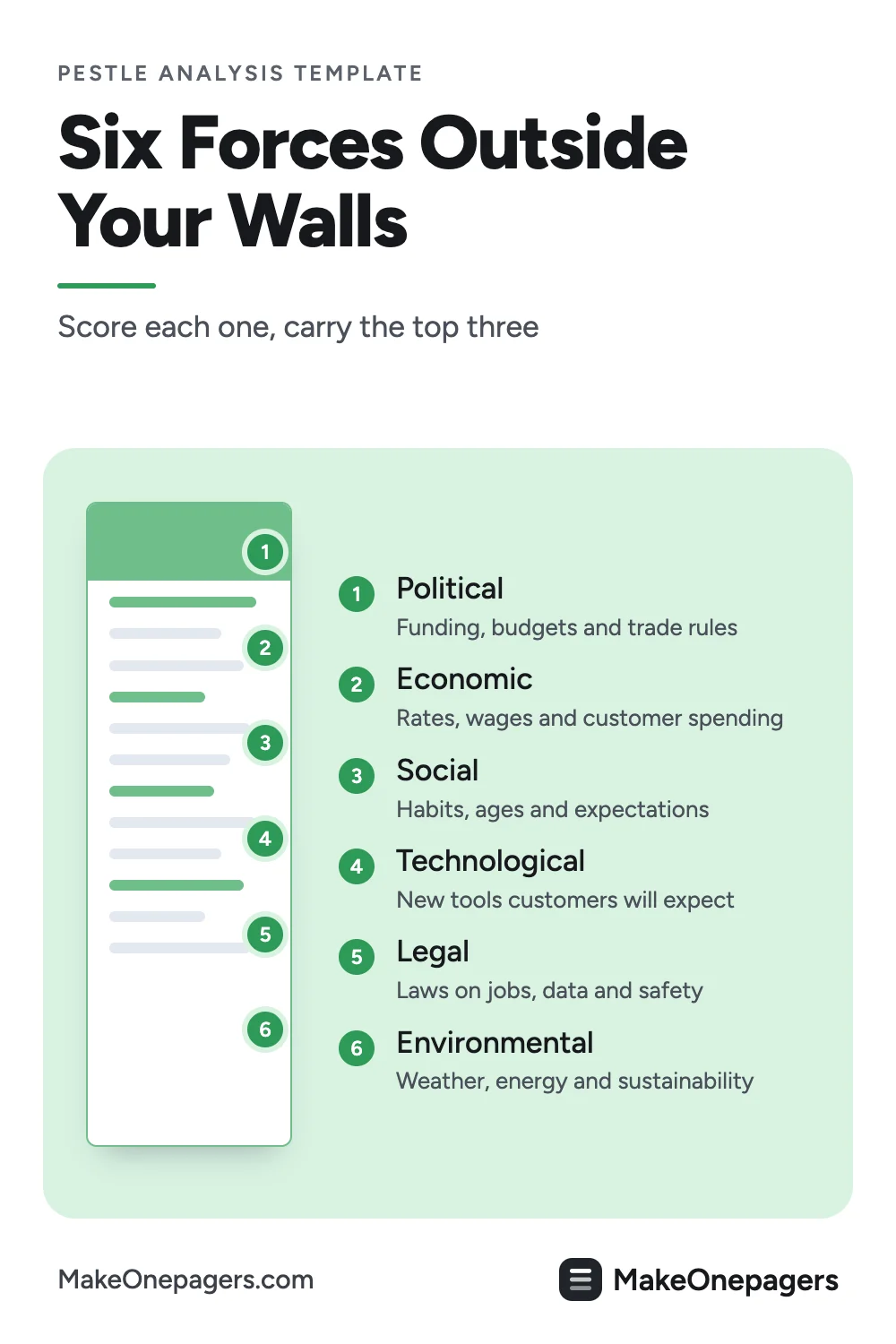
PESTLE is an acronym for the six outside forces it covers:
- Political
- Economic
- Social
- Technological
- Legal
- Environmental
You may also see it as PEST (the first four), PESTEL (the same six in another order) or STEEPLE (which adds ethical). They are the same tool with more or fewer boxes, so pick the version your team already knows.
It is an external scan. It does not ask what your business is good or bad at. That is the job of a SWOT analysis, which looks at strengths and weaknesses inside the business alongside opportunities and threats outside it. Many teams run a PESTLE first and use its results to fill the opportunities and threats boxes of their SWOT.
Teams use a PESTLE before a strategy review, a business plan, a new market or region, a big investment, or a change programme. It works for a company, a single product, a nonprofit program or a public service.
The 6 factors and the questions to ask
Political
- Which government decisions, budgets or priorities affect our customers or costs?
- Are trade rules, tariffs or public funding programs changing?
Economic
- How are interest rates, inflation and wages moving for us?
- Are our customers spending more or less, and on what?
Social
- How are our customers' habits, ages or expectations changing?
- What do people now expect from a business like ours?
Technological
- Which new tools could change how we deliver, sell or compete?
- What are customers starting to expect online that we do not offer?
Legal
- Which new laws or regulations affect employment, data, safety or our industry?
- Is any licence, standard or contract rule up for change?
Environmental
- How could weather, energy prices or resource limits affect us?
- What do customers, staff or regulators now expect on sustainability?
Write two or three items per factor. If a factor has nothing that matters for you this year, say so in a line rather than inventing something.
A free PESTLE analysis template
Copy this into a document, or open one of the examples further down and edit it.
| Part | What to write, with an example |
|---|---|
| Title | Who and when. PESTLE: Home Health Services, 2027 planning |
| Scope | The whole service, three counties |
| Political | Two or three items. Public funding for care at home under review |
| Economic | Nurse wages rising faster than fees |
| Social | More older patients choosing care at home |
| Technological | Remote monitoring devices now cheaper and simpler |
| Legal | New patient data rules for apps |
| Environmental | Fuel costs for home visits |
| Scores | Impact and likelihood for each item, 1 to 5 |
| Carry forward | The top three, and where each one goes in the plan |
A worked example: a home health provider
The organisation, items and scores below are an example, made up for this guide to show the method. Use your own research.
A home health provider is preparing its 2027 strategy. Its PESTLE, scored 1 to 5 for impact and for likelihood:
| Factor | Item | Impact | Likelihood | Score |
|---|---|---|---|---|
| Political | Public funding for care at home under review | 5 | 3 | 15 |
| Economic | Nurse wages rising faster than fees | 4 | 5 | 20 |
| Social | More patients choosing care at home | 5 | 4 | 20 |
| Technological | Remote monitoring cheaper and simpler | 4 | 4 | 16 |
| Legal | New data rules for patient apps | 3 | 4 | 12 |
| Environmental | Fuel costs for home visits | 2 | 3 | 6 |
Score is impact multiplied by likelihood. The three highest scores are the ones that go into the strategy:
- More patients choosing care at home (20): an opportunity. The strategy should grow home visits and remote monitoring.
- Wages rising faster than fees (20): a threat. The strategy needs productivity, such as fewer wasted trips and booking through one line.
- Remote monitoring cheaper and simpler (16): an opportunity that also answers the wage threat, because a nurse can watch more patients remotely than they can visit.
The legal item (12) does not drop out. It goes on the risk register with an owner, because the patient app will need to meet the new rules. The fuel item (6) is noted and left.
That is the step that makes a PESTLE useful. Six factors were scanned, but only three shape the plan, and each one has a reason.
Where a PESTLE leads: strategy on a page
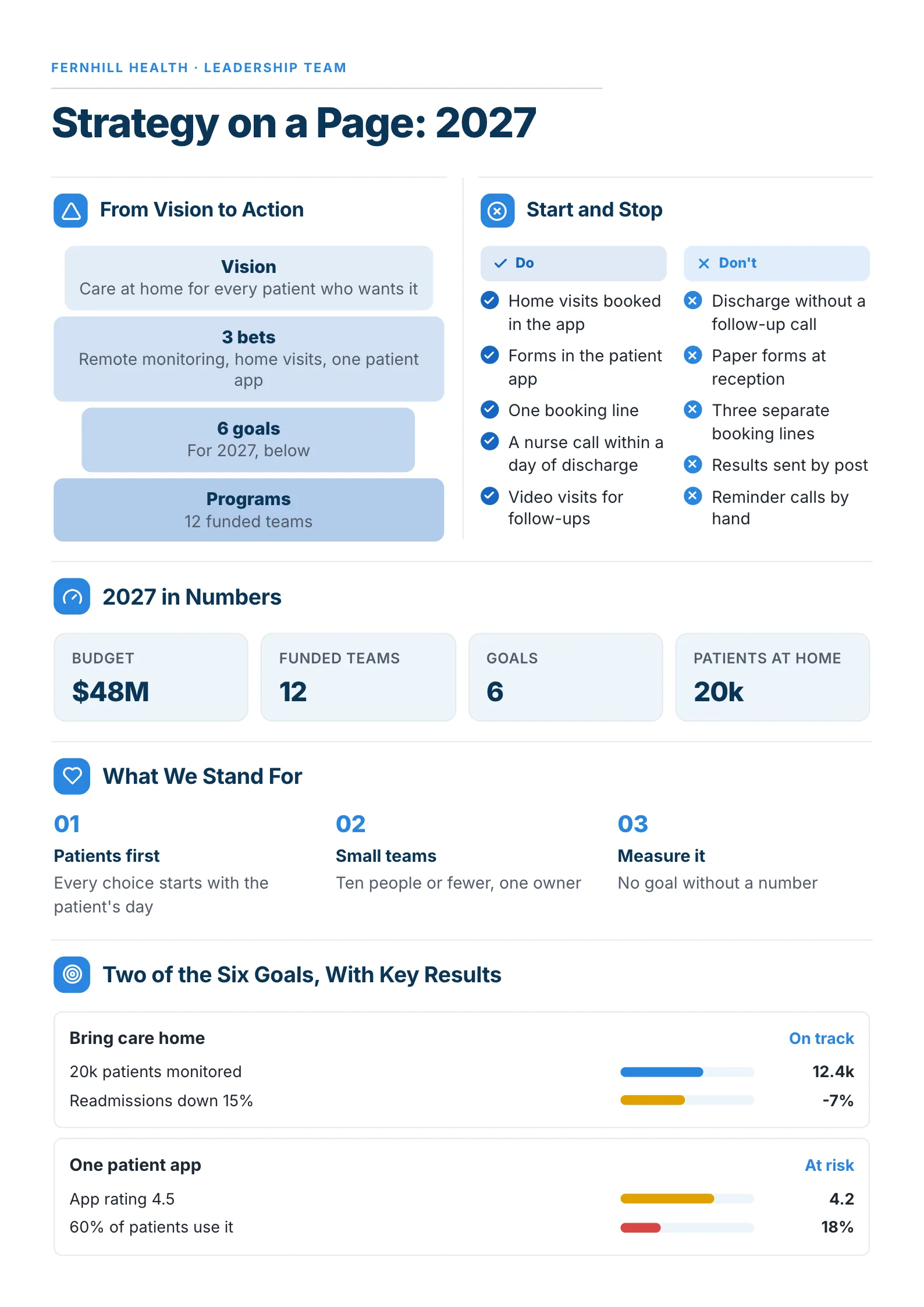 Edit this template
A sample health organisation's strategy. Its three bets, remote monitoring, home visits and one patient app, are the kind of answer a PESTLE like the one above points to.
What to copy:
- From vision to action in four layers: vision, bets, goals, programs. Each top PESTLE item should be visible in at least one layer.
- Start and stop, side by side. Outside forces usually mean doing some things less, not only more.
- Goals with key results and a status, so next year's PESTLE can check whether the response worked.
Edit for free: strategy on a page template.
Other PESTLE and strategy examples
- SWOT analysis: the natural next step, putting your top PESTLE items into the opportunities and threats boxes.
- Issue brief: when one PESTLE item, such as a new law, needs a decision on its own.
- Risk register summary: where the threats you do not act on yet are tracked with owners.
PESTLE vs SWOT
| PESTLE | SWOT | |
|---|---|---|
| Looks at | Outside forces only | Inside and outside |
| Boxes | Six factors | Strengths, weaknesses, opportunities, threats |
| Answers | What is changing around us | Where we stand and what to do |
| Best used | First, as research | Second, to decide |
How to do a PESTLE analysis in 6 steps
- Set the scope: the business, a product, a market or a region, and the time frame.
- Research each factor from news, industry bodies, government sources, customers and staff.
- Write two or three items per factor, each as a specific change, not a topic.
- Score each item for impact and likelihood, 1 to 5.
- Carry the top three to five into your SWOT, strategy or plan.
- Give the rest an owner to watch, and revisit the scan once a year.
If your research already sits in a long report or slide deck, the free AI One-Pager generator reads a PDF, Word or PowerPoint file and gives it back as a designed One-Pager. Check every item against your sources before you share it.
PESTLE analysis mistakes
- Topics instead of changes. "Technology" is a topic. "Remote monitoring is now cheaper and simpler" is a change you can plan for.
- Internal items. "Our app is slow" belongs in a SWOT, not a PESTLE.
- No scores. Without them, every item looks equally important.
- Thirty items. Two or three per factor is enough.
- No link to the plan. If nothing in the strategy changes, the PESTLE was a research exercise.
Make your PESTLE analysis
Open the free strategy on a page template to turn your top PESTLE items into a plan, or drop your research into the free AI One-Pager generator and get a finished one-page scan back.
Frequently asked questions
What does PESTLE stand for?
Political, economic, social, technological, legal and environmental: the six kinds of outside change the analysis covers.
What is the difference between PESTLE and PESTEL?
None. They cover the same six factors in a different order. PEST covers the first four, and STEEPLE adds ethical.
How do you prioritise a PESTLE analysis?
Score each item for impact and likelihood, multiply the two and carry the highest scores into your plan. Keep the rest on a watch list with an owner.
Should I do a PESTLE or a SWOT first?
Usually PESTLE first. It gives you the outside changes, which then become the opportunities and threats in your SWOT.