Progress Report Examples Sorted by Where Your Project Stands
Five progress report examples sorted by status, with status lines to copy and the questions 4 public funders put in every report they ask for.

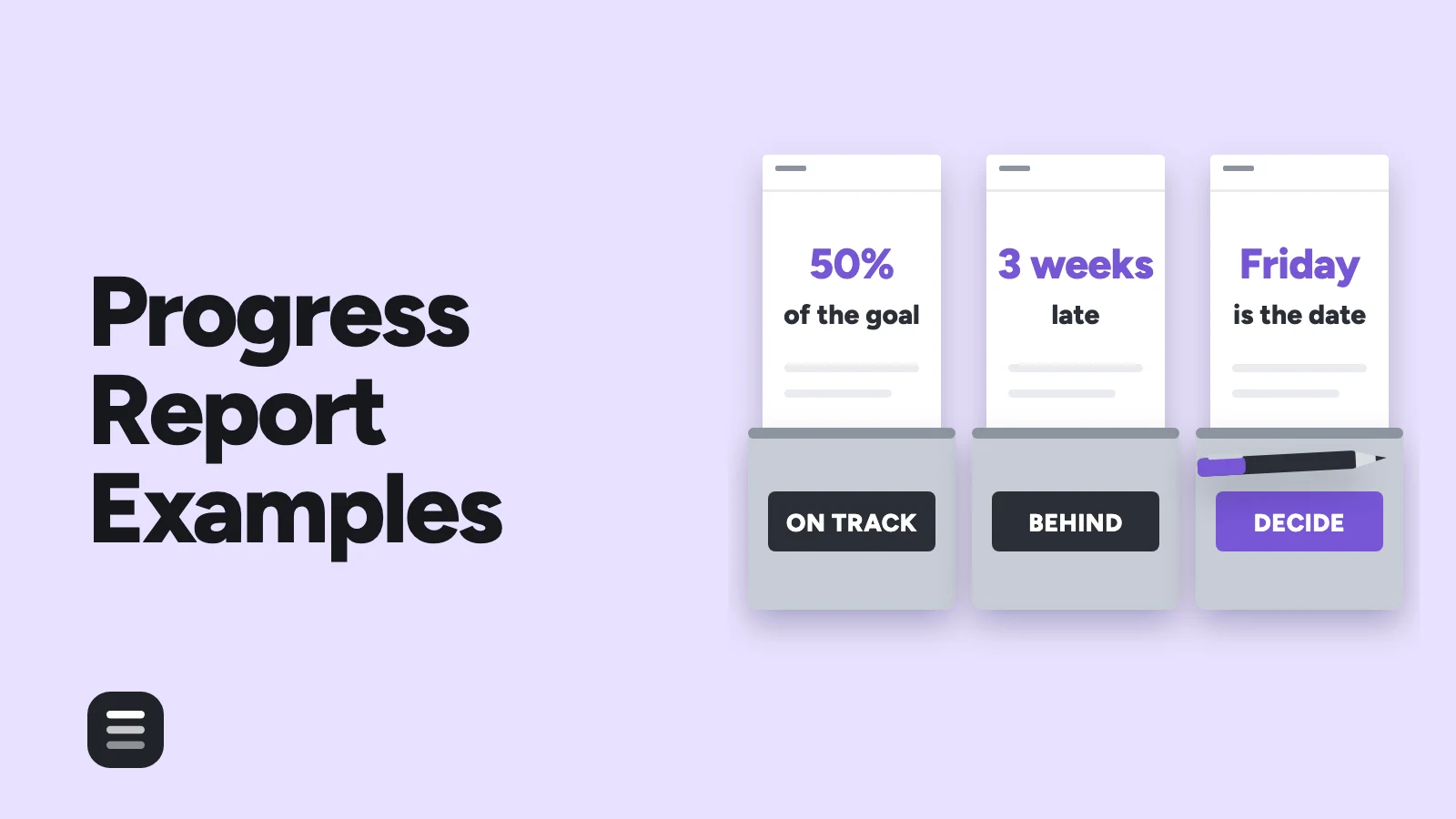
Every progress report example below tells your reader in its first line whether the work is on track, running behind or waiting on a decision. The rest of the page proves it with numbers against the plan and ends on what you need from them. Start from a free one pager template.
One‑Pager examples
Real One-Pagers made with MakeOnepagers. Open any one to edit it as your own.
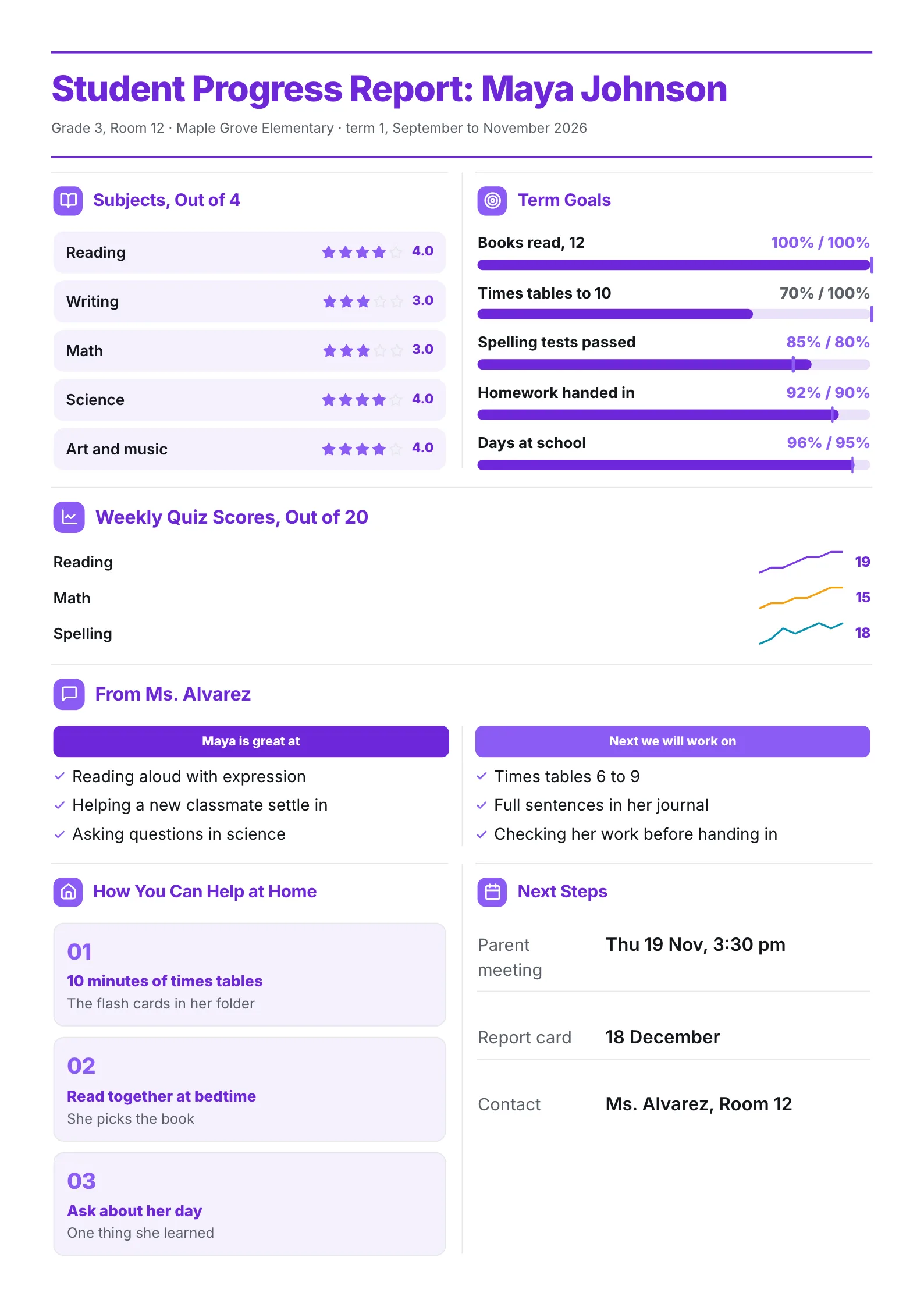 Progress Report: Student TermEdit for free(opens in a new tab)
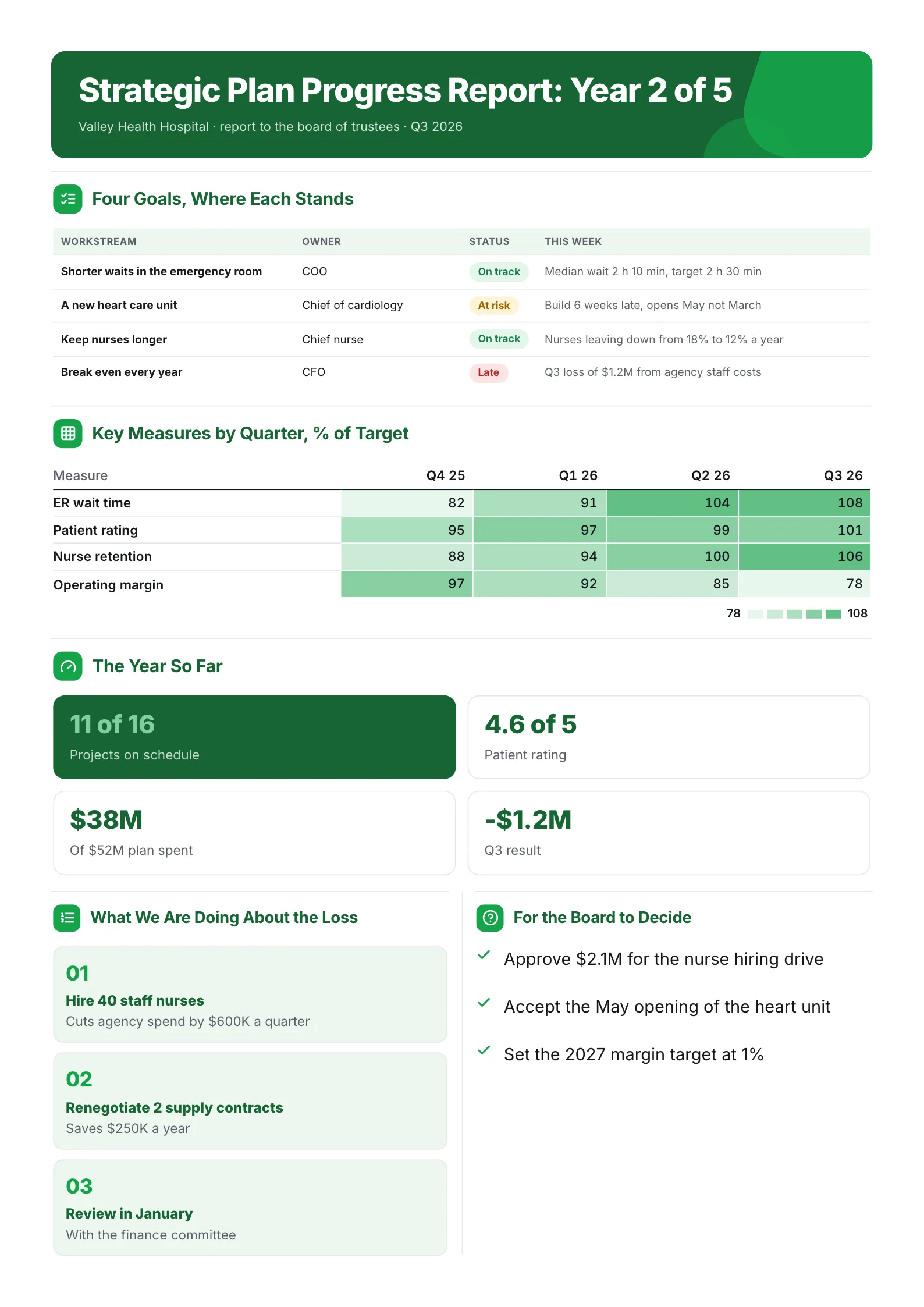 Progress Report: Strategic PlanEdit for free(opens in a new tab)
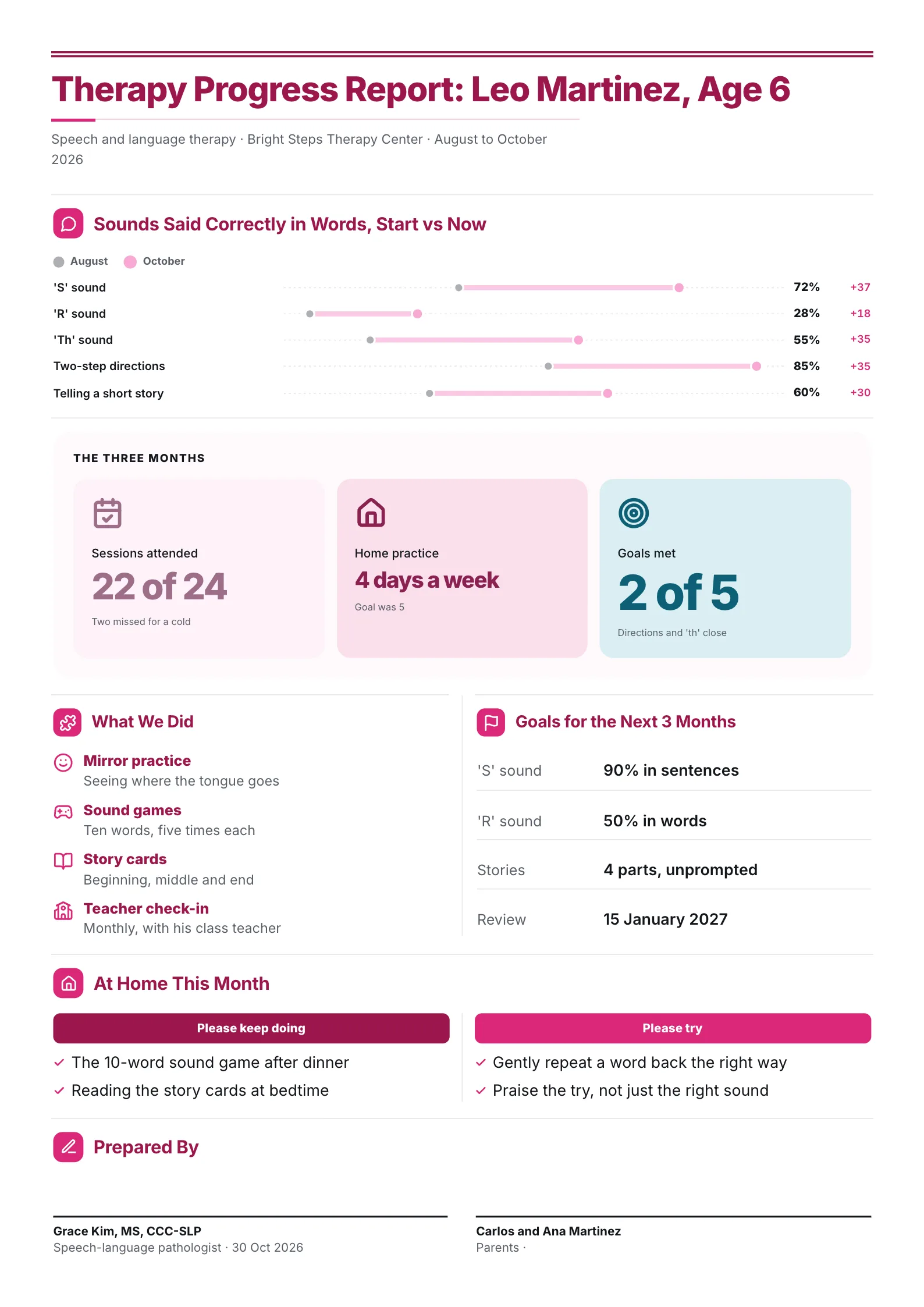 Progress Report: TherapyEdit for free(opens in a new tab)
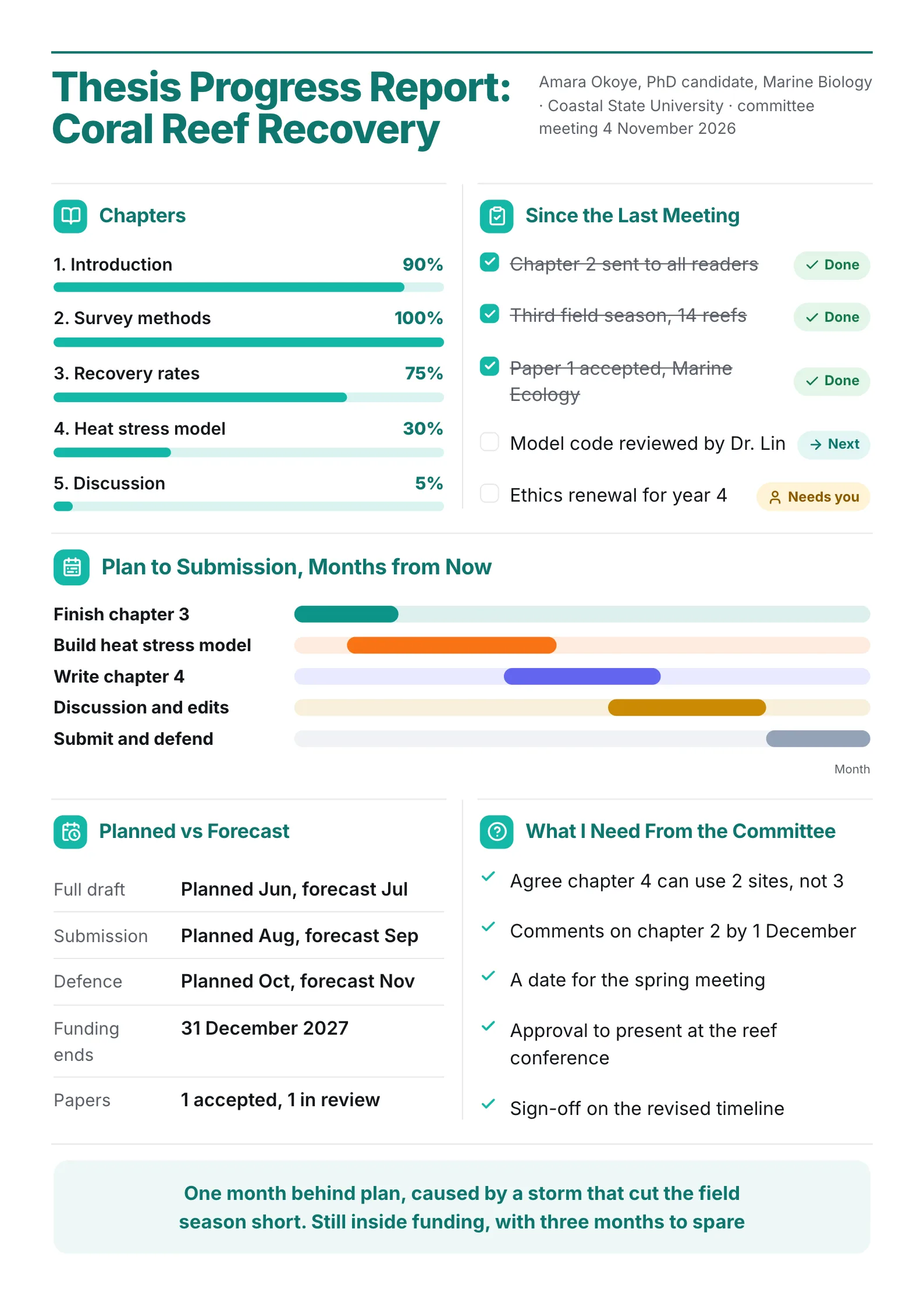 Progress Report: ThesisEdit for free(opens in a new tab)
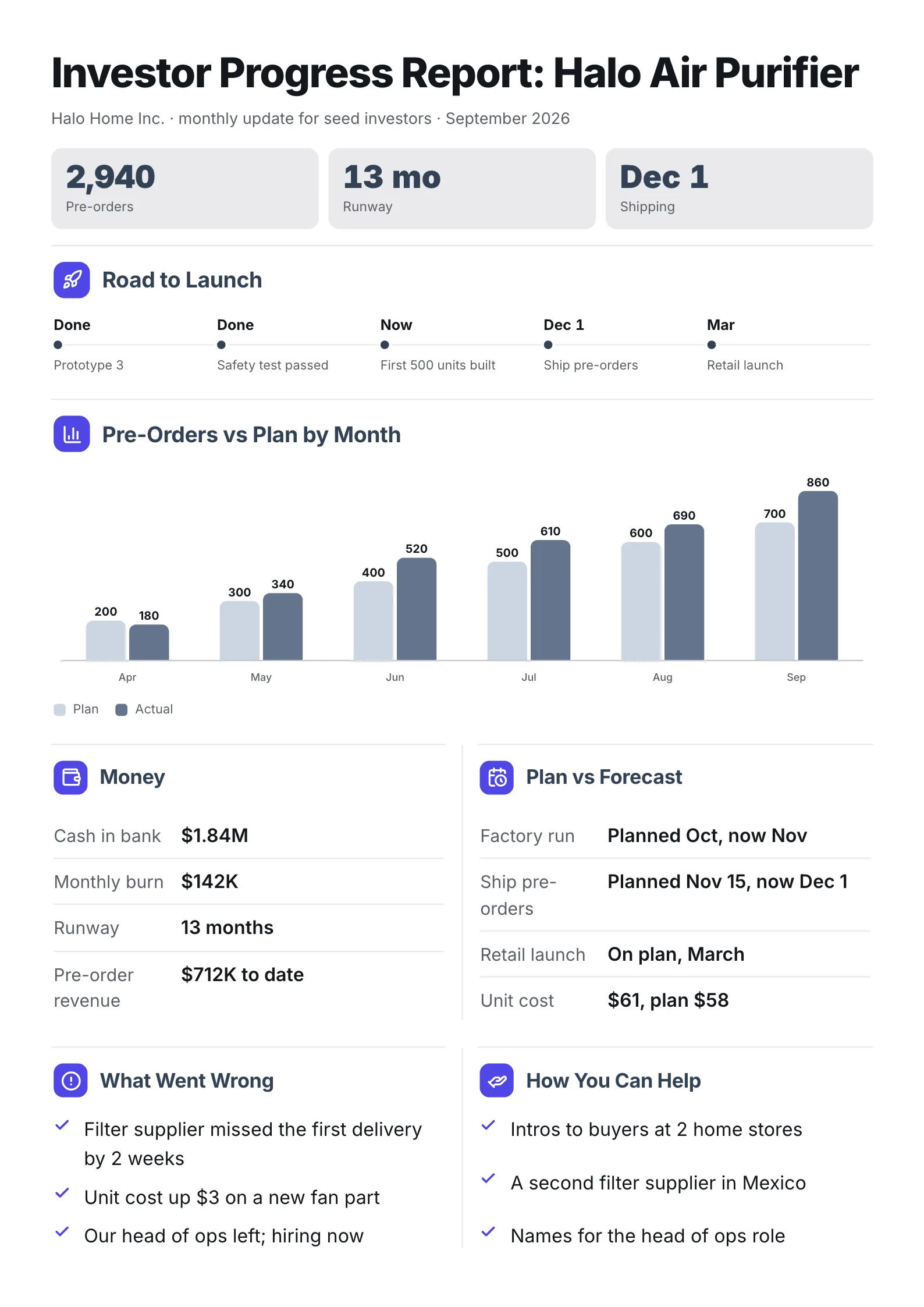 Progress Report: Investor UpdateEdit for free(opens in a new tab)
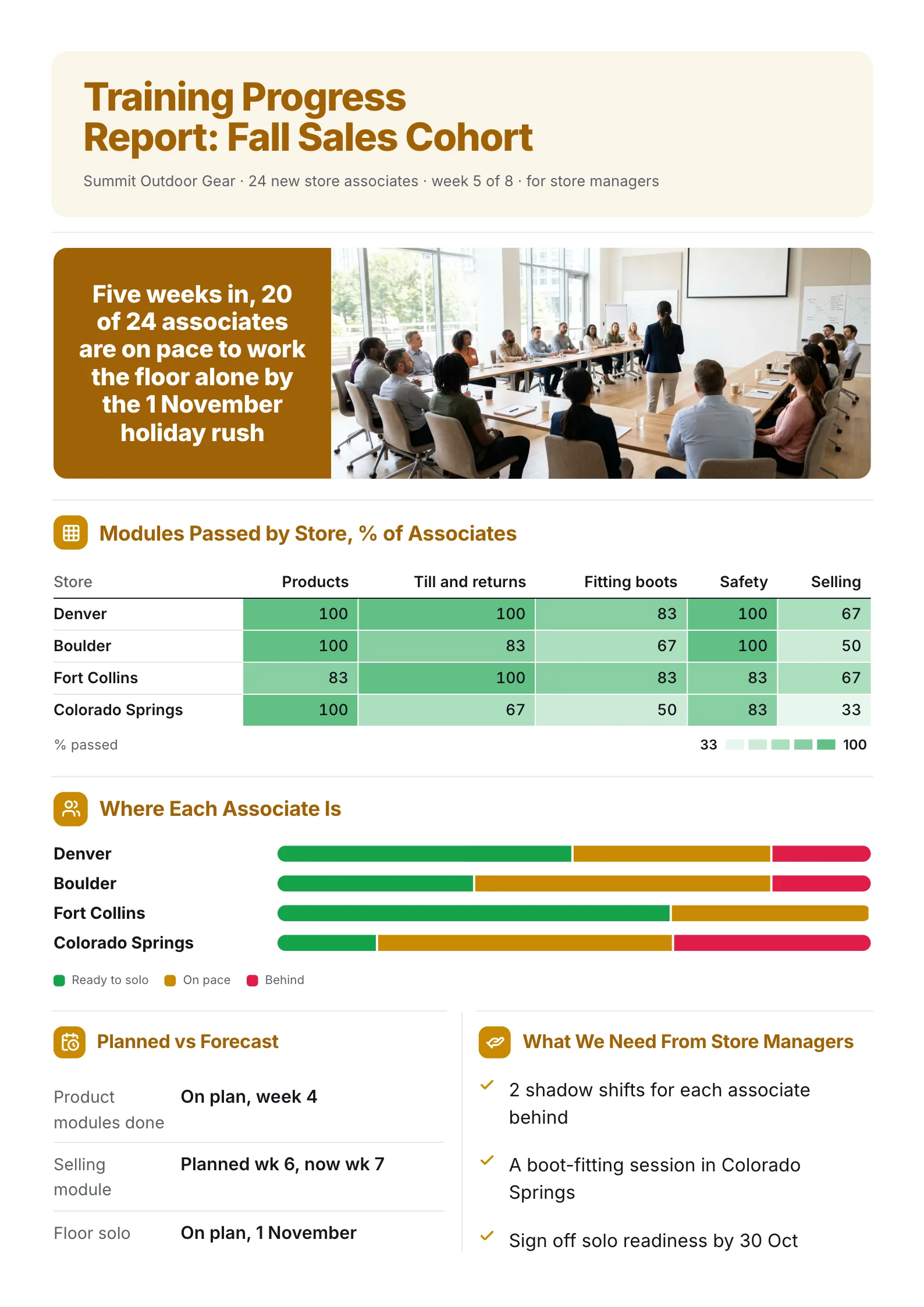 Progress Report: Training CohortEdit for free(opens in a new tab)
The status also decides how much explaining you owe. We read the report forms and guides of 4 public funders on October 30, 2026, and a late project gets asked more than an on-track one. The National Endowment for the Humanities wants to know why any goal was missed, and the Institute of Museum and Library Services wants the date it approved each change. Each status below carries the funder rules that apply to it.
Every example is a MakeOnepagers design you can open and edit. If you want a walk-through before you pick one, our guide on how to write a progress report covers it step by step.
On track
When the project is on pace, your job is to make that easy to believe. Lead with the share of the goal you've hit and show the time that's passed beside it.
 Edit this template
Sample food bank and foundation. Your grant number and goals go here.
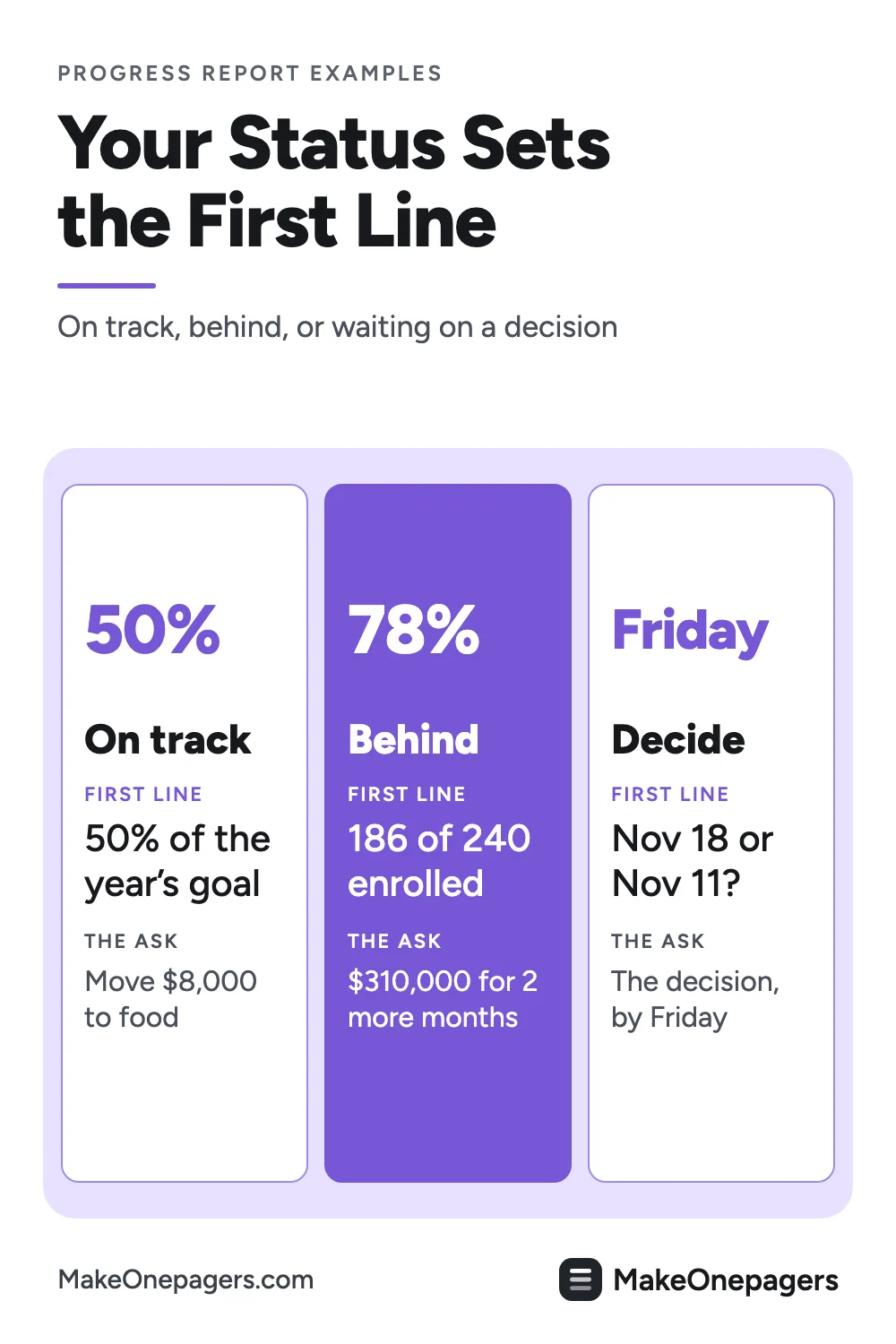
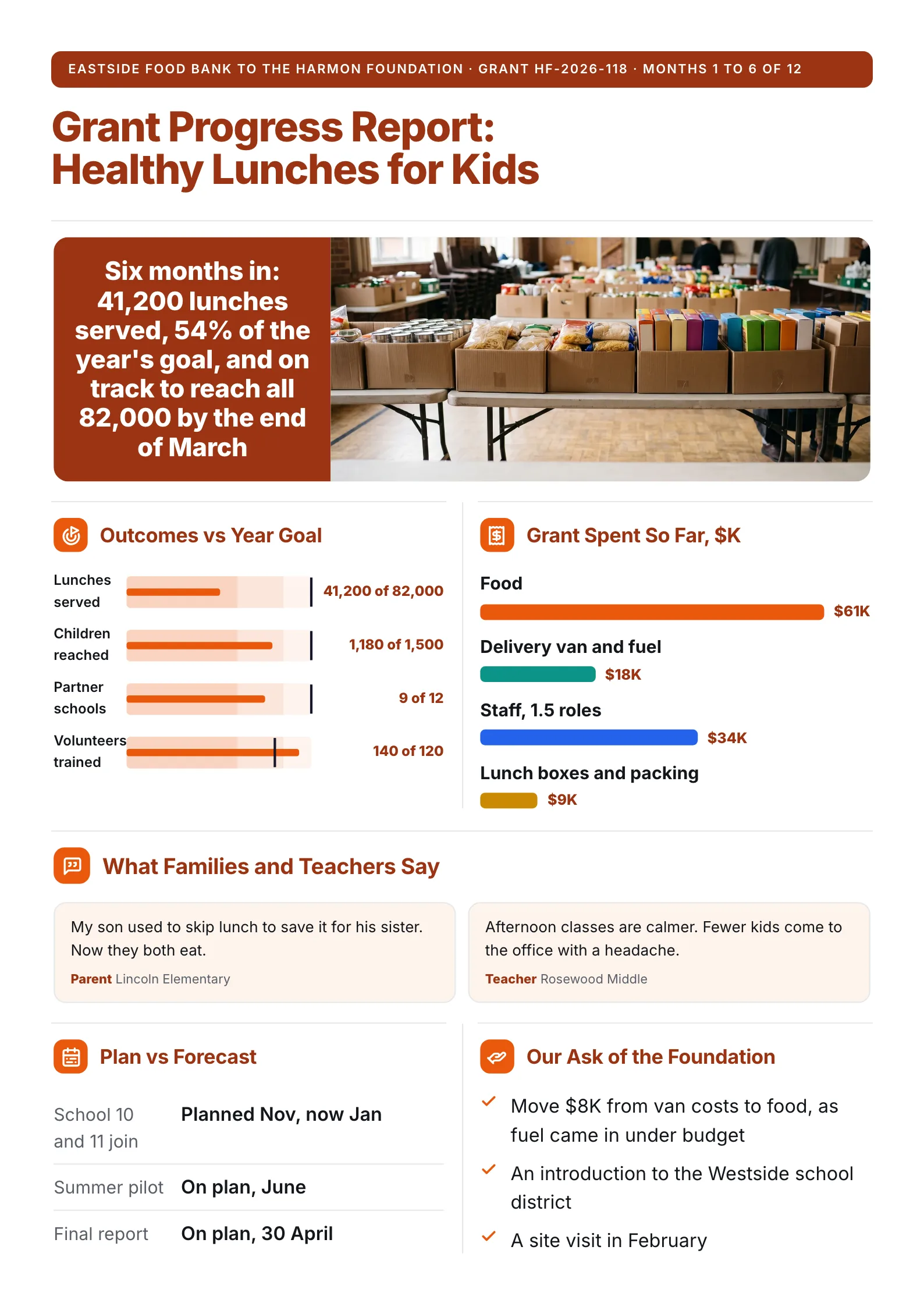
This interim grant report reaches the foundation at month 6 of 12. The photo caption carries the whole status in one line: 41,200 lunches served, 50% of the year's goal, and on track for all 82,000 by the end of March. A funder who stops reading there already knows what they need.
The outcome bars do the next job. Lunches, children reached and partner schools are each shown against the year goal, and one row beats it, with 140 volunteers trained against 120 planned. Then the page shows where the money went, in four bars from food to packing.
It's also honest about what moved. Schools 10 and 11 were planned to join in November and now join in January, and the report says so in a small plan versus forecast block. Your funder sees a slip without a scare. The ask at the bottom is specific. Move $8,000 from van costs to food, since fuel came in under budget.
Funders check an on-track claim activity by activity. The California State Library has you mark each one complete, in progress or not started, and IMLS asks for progress on each activity too. The outcome bars here do that job, with one row per promise.
 Edit this template
Agency and clinic names are samples. Swap in your client's numbers.
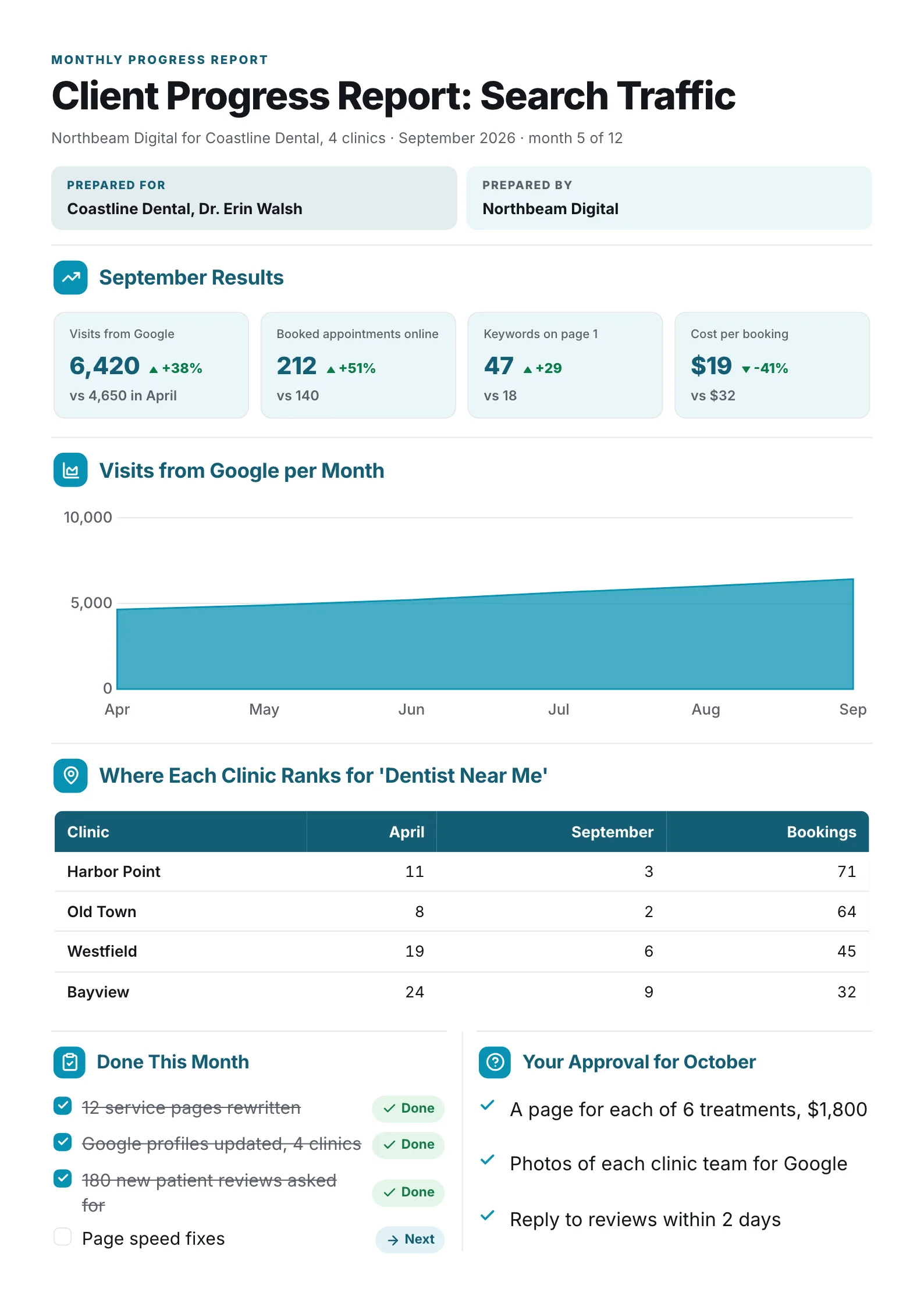
An agency report to a client is an on-track report almost by default, because the client is paying to see progress each month. This one, at month 5 of 12, opens with four results against April. Visits from Google are up 38% to 6,420, online bookings rose 51% to 212, and the cost per booking fell to $19 from $32.
The clinic table is the part your client will forward. It shows each of the 4 clinics moving up for "dentist near me," with Old Town going from 8th to 2nd. A short checklist of the month's work follows, with page speed fixes still marked as next, and the report ends on three approvals for October, one of them priced at $1,800.
Behind
A late project needs a different first line. Say how late, say why, then show the plan to recover. Readers forgive a delay much faster than a surprise.
This is also where funders ask the most. NEH wants the reason for any missed goal, IMLS wants the date each change was approved, and the California State Library asks what you're doing about each challenge. Put the cause and the fix in your first two lines and you've answered all three before they ask.
 Edit this template
The project and contract value are samples.
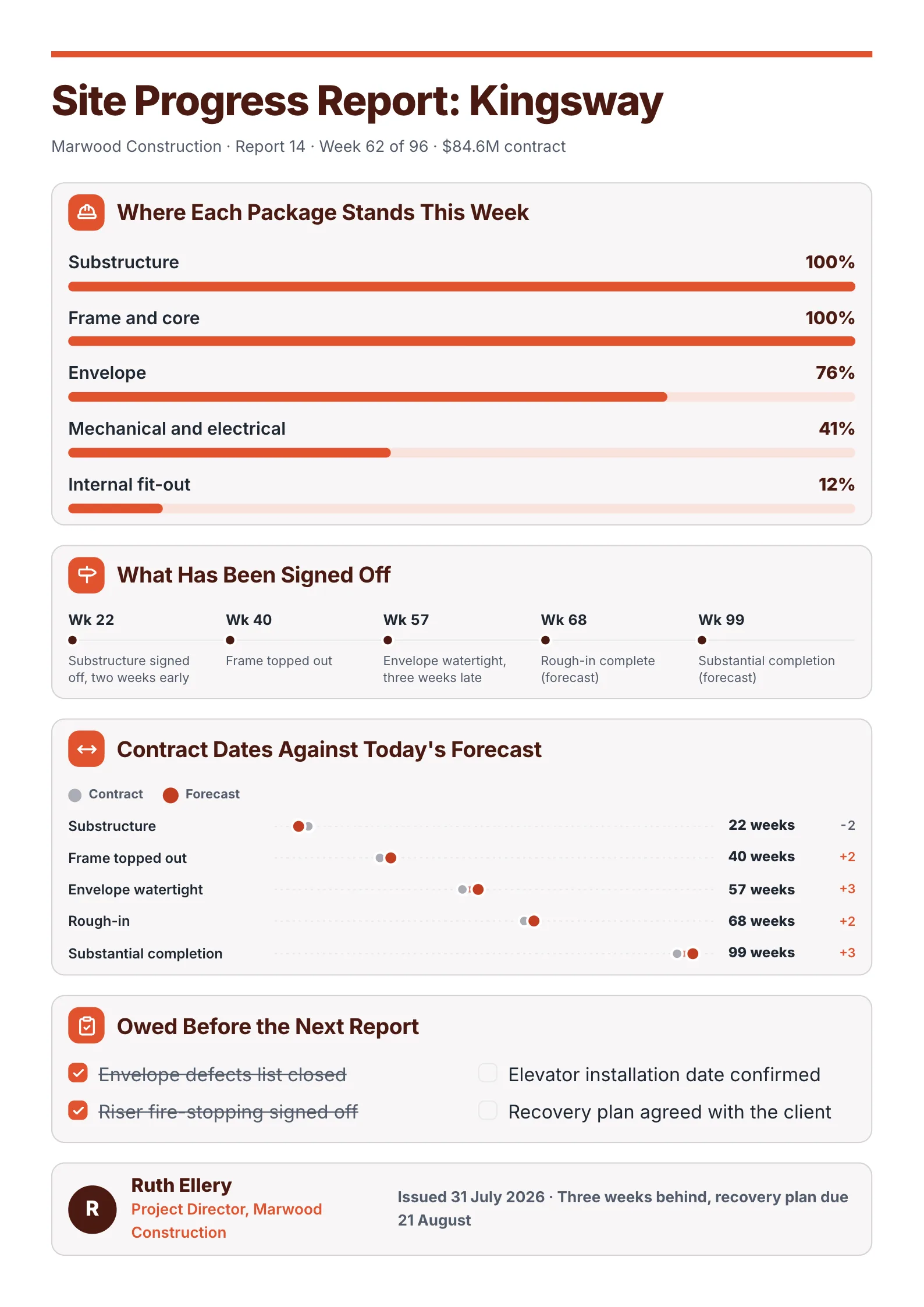
This site report on an $84.6 million contract owns the delay openly. The dumbbell chart puts each contract date beside today's forecast, so you can see the slip grow from two weeks early on the substructure to three weeks late on substantial completion, now forecast for week 99 against 96.
The progress bars explain why without a paragraph. Substructure and frame are done, the envelope is at 76% and fit-out has barely started at 12%. The footer carries the status line in plain words, three weeks behind, with a recovery plan due August 21. The checklist then lists what's owed before the next report, including the elevator date that's still open.
 Edit this template
Study name, sites and counts are made up for the sample.
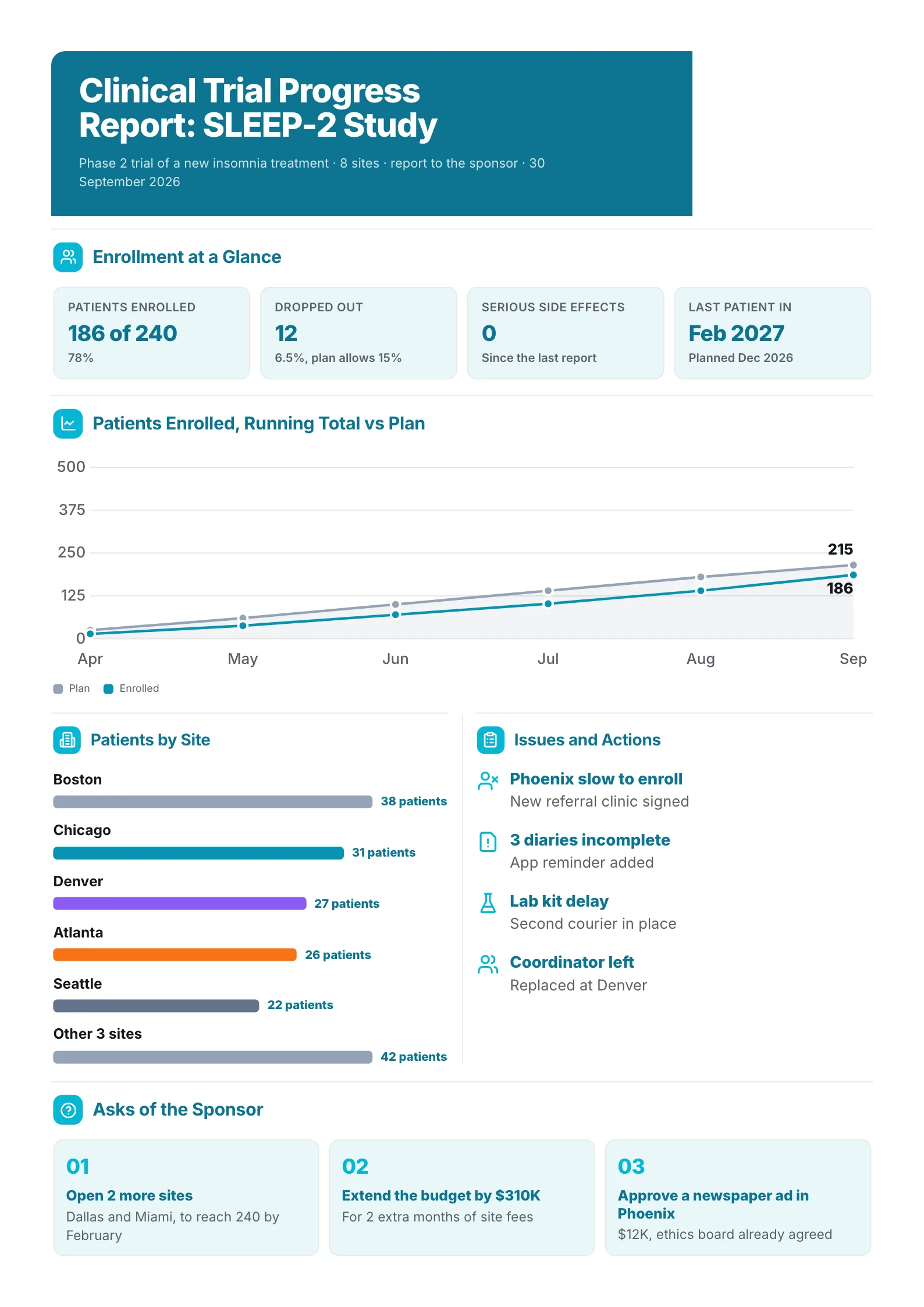
In a trial, behind usually means enrollment. This sponsor report leads with 186 of 240 patients enrolled, 78%, and the last patient now expected in February 2027 against a plan of December 2026. The line chart shows the gap opening in the very first month and never quite closing.
What makes it useful is how each problem gets an answer beside it. Phoenix was slow to enroll, so a new referral clinic was signed. Three diaries came in incomplete, so an app reminder was added. Then come three asks of the sponsor with numbers, the largest being $310,000 to cover two extra months of site fees. Your sponsor can say yes to each one in turn.
Needs a decision
Sometimes the most important line in your report is a question. Put it near the top, give the options and a date, and recommend one.
 Edit this template
Bank and team names are samples.
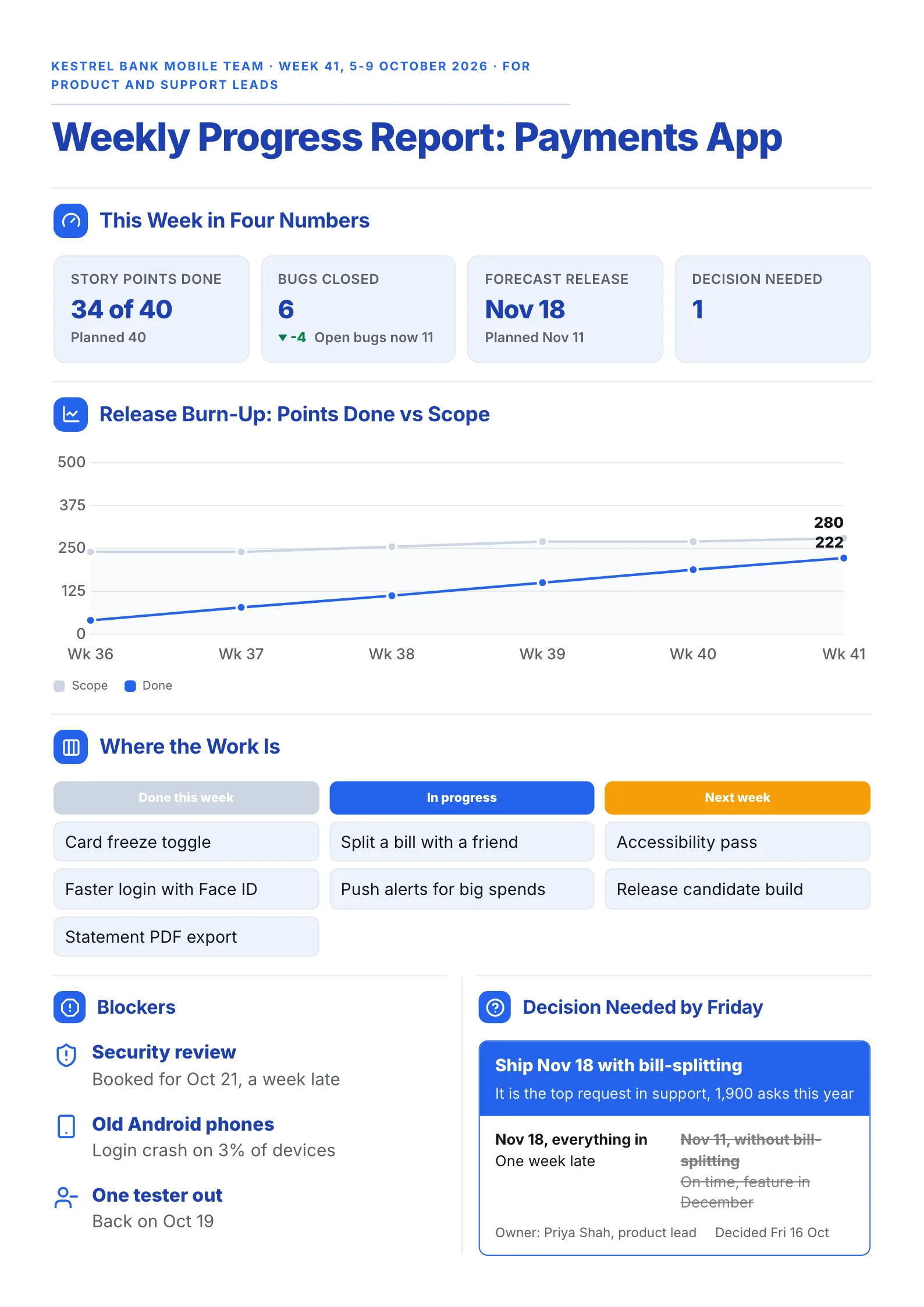
This weekly team update looks routine until the fourth number, which reads "1 decision needed." The release has slipped from November 11 to November 18, and the burn-up chart shows why: scope grew from 240 to 280 points while the team kept closing work.
The decision box at the bottom does the rest. It lays out two options, shipping on November 18 with bill-splitting or on November 11 without it. It recommends the later date because bill-splitting is the top request in support, with 1,900 asks this year. It names an owner and a deadline of Friday, October 16. Your reader doesn't have to dig for the question or guess what you'd pick.
Seven first lines, one status each
Your first line carries most of the weight. These come from the examples above and from the six designs in the grid below, and each one states the status, gives a number and points forward.
| Status | A line that works |
|---|---|
| On track | Six months in, 41,200 lunches served, 50% of the year's goal, and on track to reach all 82,000 by the end of March. |
| On track | Five weeks in, 20 of 24 associates are on pace to work the floor alone by the November 1 holiday rush. |
| Behind | Three weeks behind, with a recovery plan due August 21. |
| Behind | One month behind plan, caused by a storm that cut the field season short, and still inside funding with three months to spare. |
| Behind | Ship pre-orders, planned November 15, now December 1. |
| Needs a decision | Decision needed by Friday: ship November 18 with bill-splitting, or November 11 without it. |
| Needs a decision | For the board to decide: approve $2.1 million for the nurse hiring drive. |
Notice what the behind lines share. Each gives the size of the slip, and the best ones give the cause or the fix in the same sentence. A line like "a few delays this month" leaves your reader to ask the follow-up you could have answered.
Progress report FAQ
How long should a progress report be?
Shorter than you think. The NEH caps each answer at 1,000 characters, IMLS asks for a project summary of no more than 300 words, and the California State Library wants an abstract of 90 to 160 words. One page with charts fits all three, as long as your words stay tight.
What should a progress report include?
Where you stand against the plan, what changed and why, the numbers that prove it, and what you need next. Those four parts show up in every example above and on every funder form we read.
How do you write a progress report when you're behind?
Lead with the size of the slip and its cause, then the fix and its date. The construction and trial examples above both show the plan beside the forecast, so your reader sees the gap and the recovery together. For a red or amber week, our project status report post shows other layouts.
The four funder forms, side by side
If you report to a funder, here's the whole comparison in one place. We read these four forms and guides on October 30, 2026.
| What they ask | NEH | IMLS, awards after Oct. 2015 | NEA, final report | California State Library |
|---|---|---|---|---|
| Progress against your goals | Yes, and if a goal was missed, why | Yes, activity by activity | Yes, for the whole period | Yes, each activity marked complete, in progress or not started |
| What changed from the plan | Yes, changes and problems | Yes, with the date the change was approved | Not asked in the guide we read | Yes, challenges and what you're doing about them |
| A length cap | 1,000 characters a question | Project summary up to 300 words | Mind the character limits | Abstract of 90 to 160 words |
| Who you reached | Yes, audiences and the difference made | Yes, who benefits | Only participation figures your records support | Yes, outputs and survey results |
| Spending | Not asked in the guide we read | Budget changes | Separate financial report | On track to spend all funds, yes or no |
| Something extra | Partner questions answered yes or no | Lessons learned | A table of key partners | A self-rating on a 1 to 7 scale |
Every funder wants your progress measured against the plan you wrote, so keep your original goals open beside you as you draft. The rules on format don't agree, though. The NEA's final report guide tells you to use numbered lists, while the California State Library asks you to avoid numbered lists of goals and bullets and to write for a general audience. Read your own funder's form before you choose a layout.
Which tray is your report in this week?
Every report you send fits one of three trays: on track, behind or waiting on a decision. Kingsway's line shows how few words that takes: "Three weeks behind, with a recovery plan due August 21." Our progress report templates post sorts its examples by report type instead, from a building site to a student's report for parents. Our project report examples score five more against a state transportation checklist.
In the MakeOnepagers examples above, the tray also sets the size of the ask. The food bank, on track, only asks to move $8,000 from van costs to food. The trial, behind, asks for $310,000 to cover two more months of site fees. The weekly update, waiting on a decision, asks for nothing but the decision, by Friday.




