How to Write a Progress Report Your Funder Can Check Goal by Goal
We read NIH's rules and 4 state grant forms. All 5 ask about problems, and 1 wants a report even in a quarter when nothing happened.

A funder reads your progress report with your original promises open beside it. So when you write it, the format matters less than being honest about where each one stands. You list the goals you promised, say how far each one got, give the numbers, name what went wrong and say what comes next. A client or your boss reads it the same way, to decide whether to keep backing the work. Start from a free one pager template.
One‑Pager examples
Real One-Pagers made with MakeOnepagers. Open any one to edit it as your own.
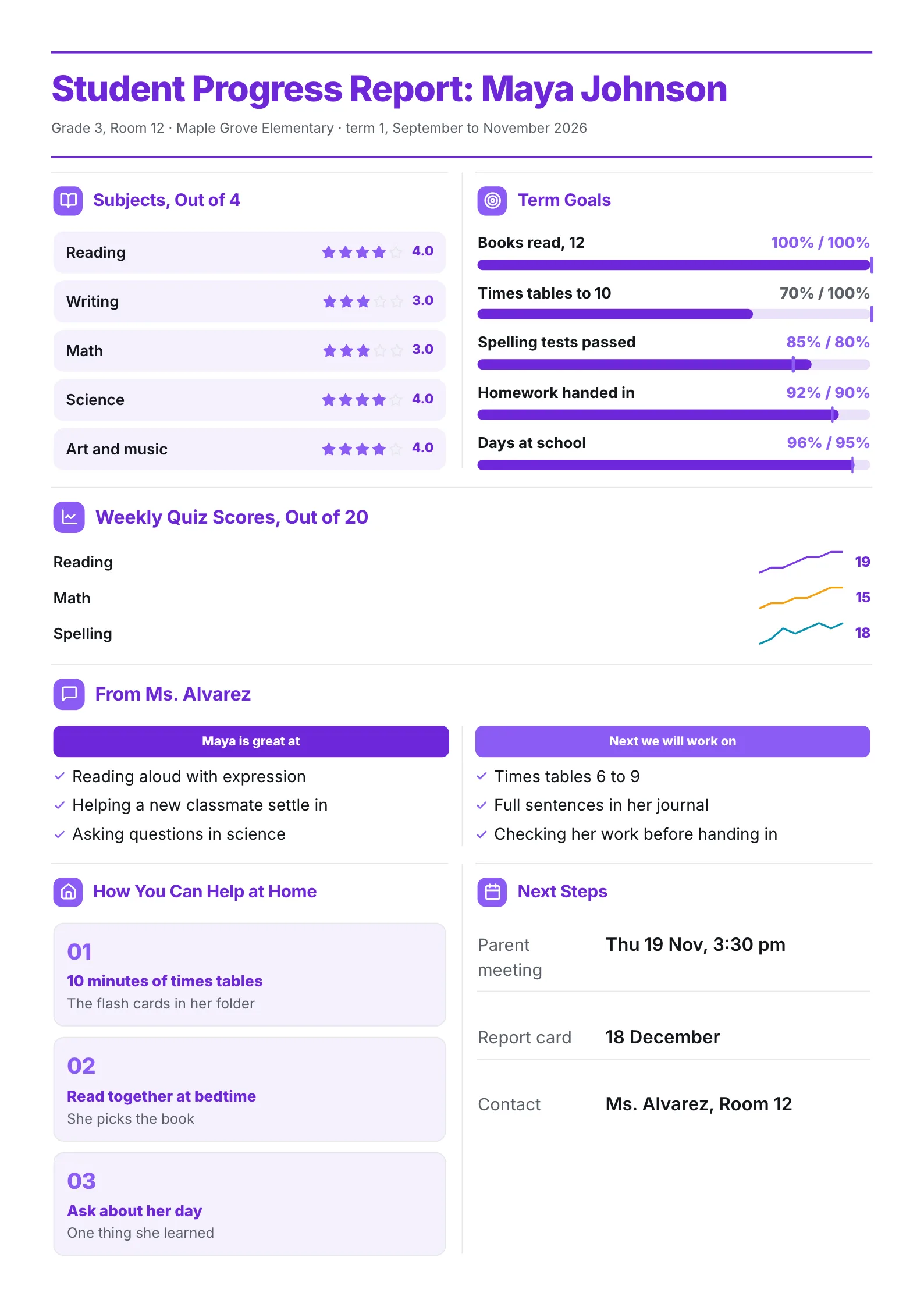 Progress Report: Student TermEdit for free(opens in a new tab)
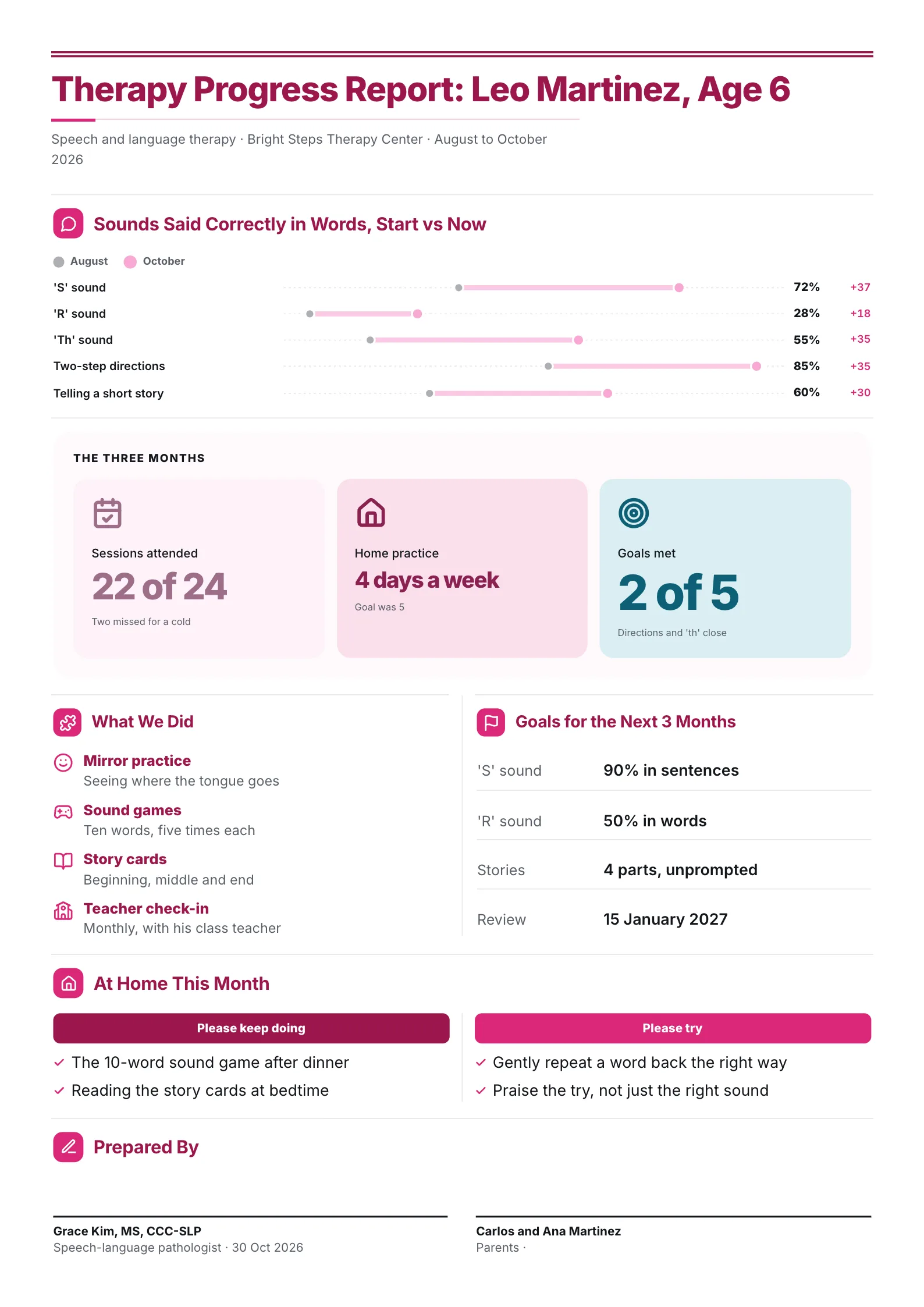 Progress Report: TherapyEdit for free(opens in a new tab)
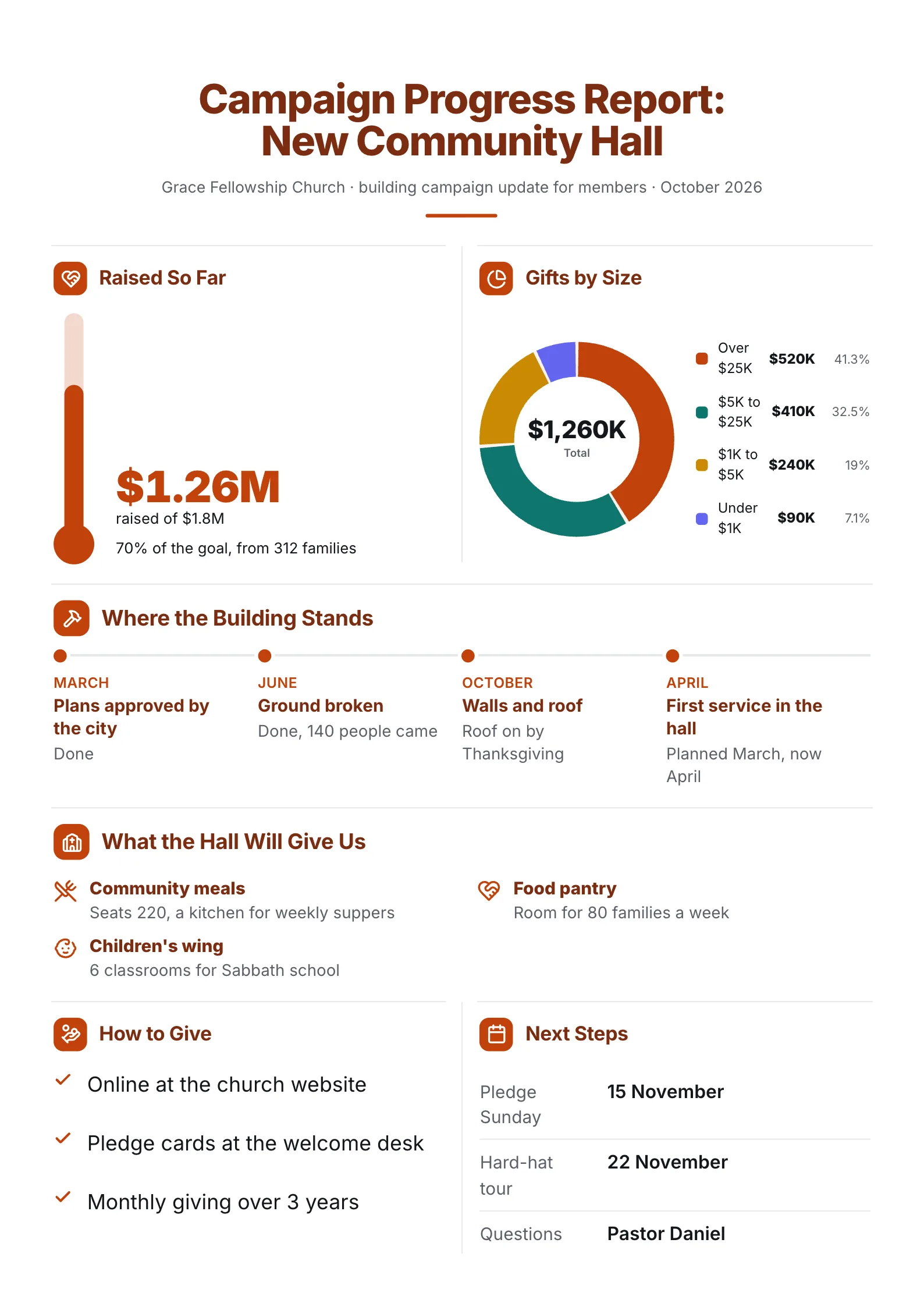 Progress Report: Fundraising CampaignEdit for free(opens in a new tab)
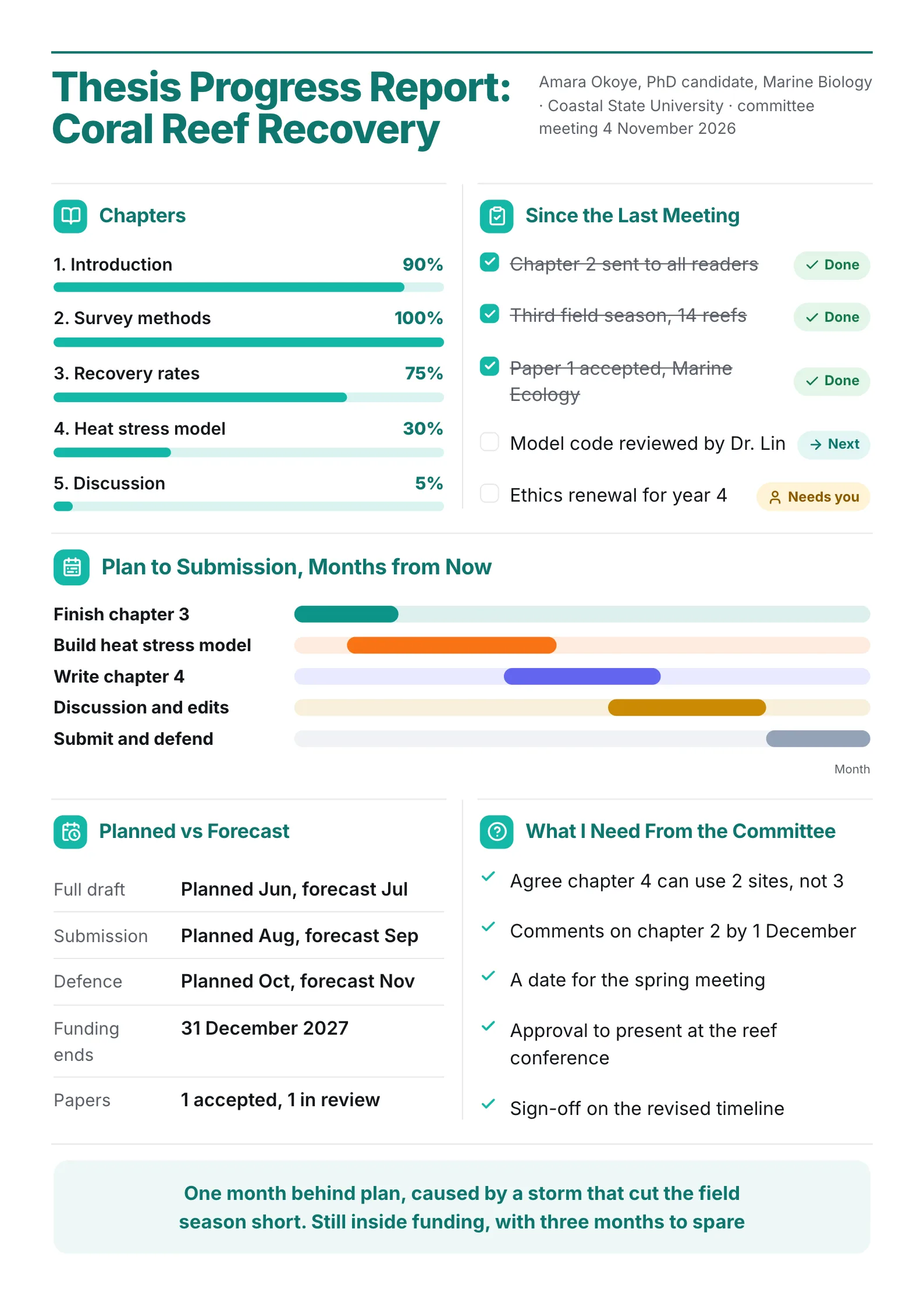 Progress Report: ThesisEdit for free(opens in a new tab)
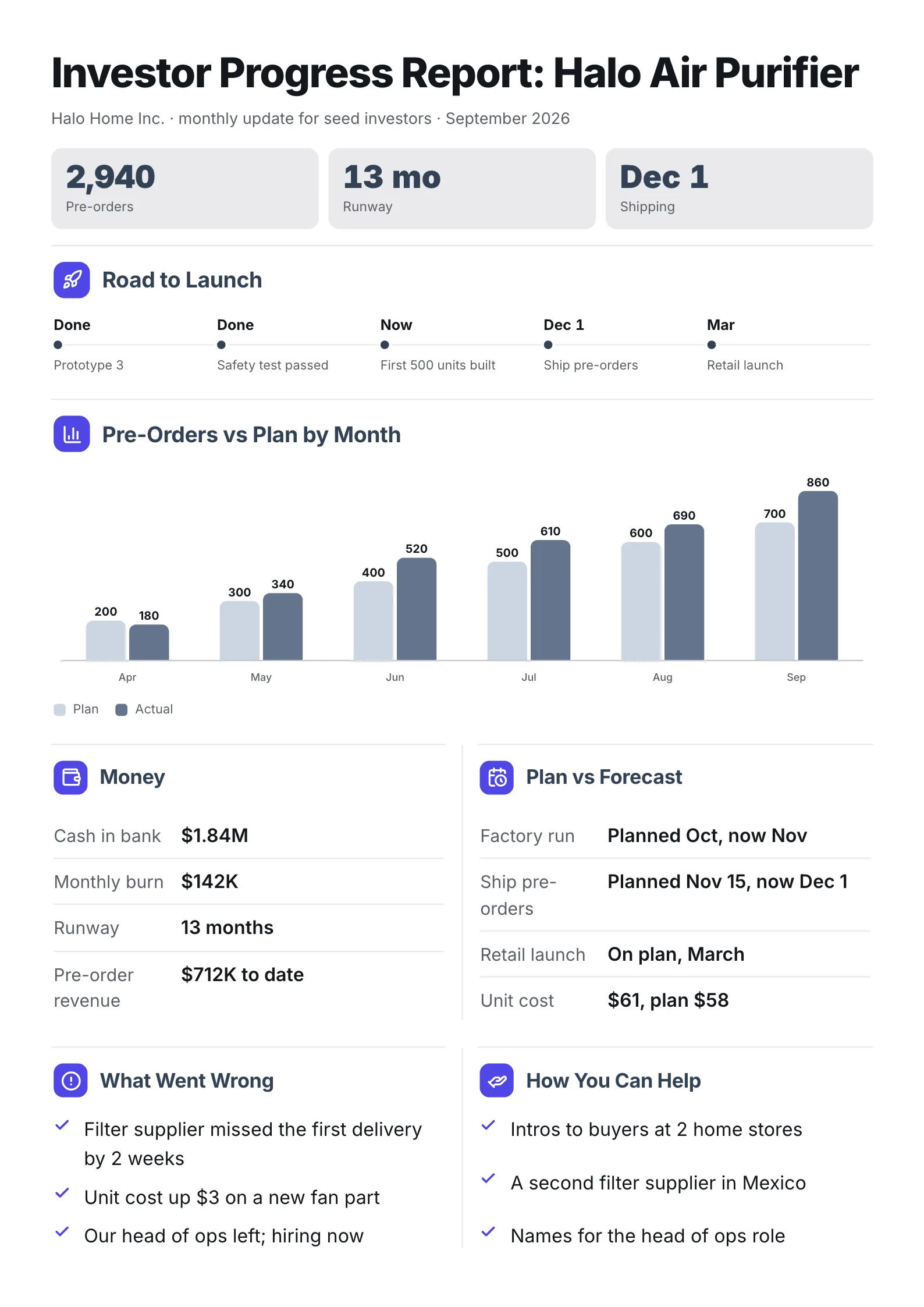 Progress Report: Investor UpdateEdit for free(opens in a new tab)
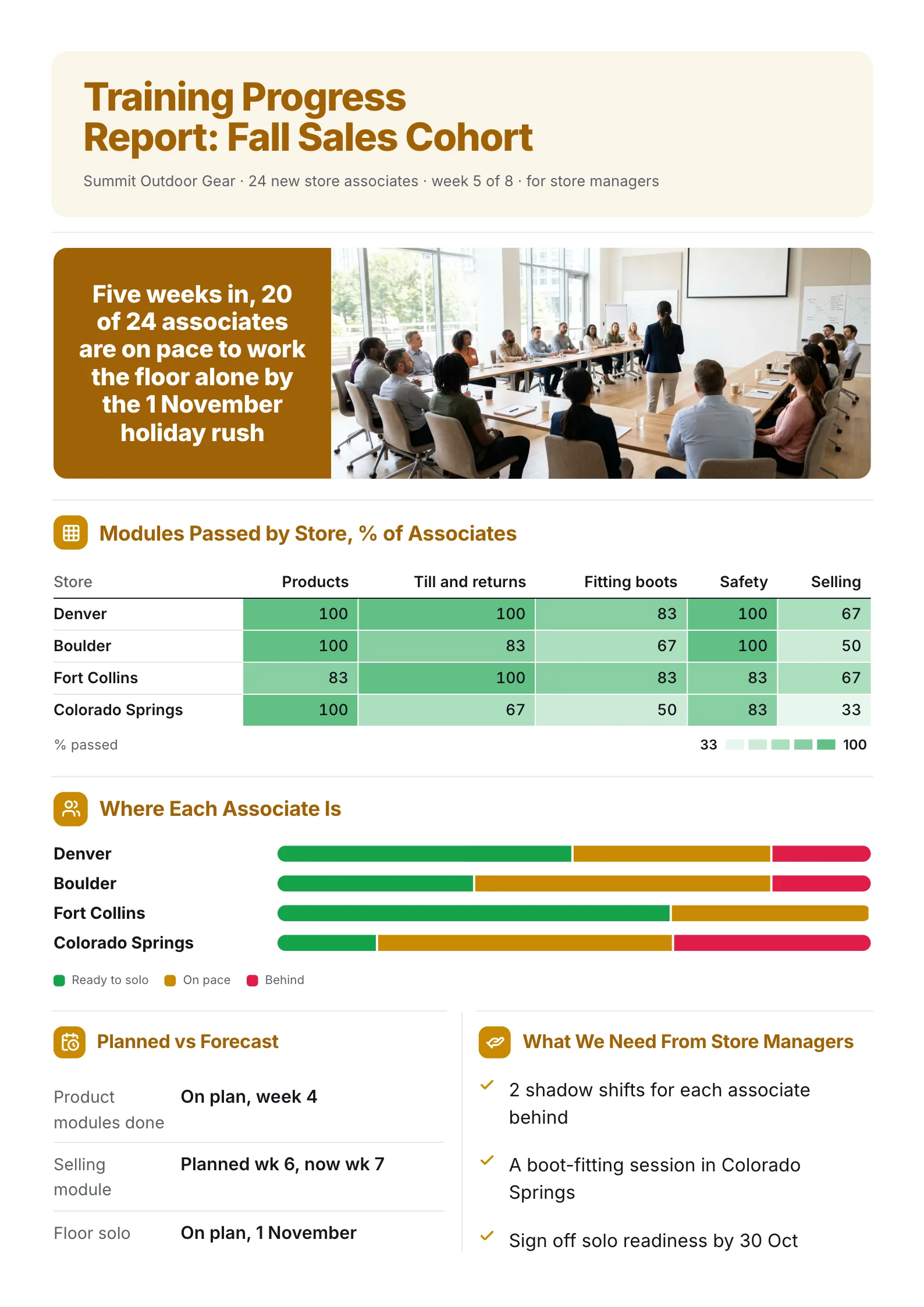 Progress Report: Training CohortEdit for free(opens in a new tab)
We read five real progress report forms. One is the National Institutes of Health page for its research progress report. The other four are quarterly grant forms from state agencies in Virginia, Montana, Minnesota and Maryland. All 5 ask you to report against your original goals and all 5 ask about problems. Only 3 ask what you'll do next period. One wants a report even if nothing happened that quarter, and another wants every idle task listed by name.
What 5 progress report forms ask you to write
| What the form asks for | Forms that do |
|---|---|
| Progress on each goal or task you promised | 5 of 5 |
| Problems and how you're dealing with them | 5 of 5 |
| Plans for the next period | 3 of 5 |
| Money spent so far | 3 of 5 |
| Counts to date against the goal | 2 of 5 |
| Planned dates beside actual dates | 2 of 5 |
| A report even when nothing happened | 1 of 5 |
| Tasks with no activity listed | 1 of 5 |
| A success story | 1 of 5 |
Source: MakeOnepagers read of NIH's progress report page and 4 state grant progress forms, October 30, 2026. Each one is linked at the end of this post.
The top two rows are the core of any progress report. The rows below them are what make a report useful to the person deciding what to do next.
Start from the goals you promised
Start with the plan you were funded or hired to deliver. Copy each goal or task word for word from the grant, contract or project plan. Every form we read is built this way. Maryland's courts office asks for the goals, measurable outcomes and activities from your application, then an update on each one. Montana's water grant form asks you to list the tasks from the scope of work in your agreement.
This keeps you honest. If a goal changed, you'll see it on the page and you can explain why. It also saves your reader from hunting for the original plan to compare against.
What happened under each goal
Under each goal, write what happened this period in two or three sentences. Then give its status. Virginia's criminal justice grant form asks you to mark each objective as initiated, ongoing, partially completed or completed. Montana's form shows a plainer version in its example, "Installation is 80% complete."
Montana also asks you to cover tasks with no activity. Its second example reads "No activity this quarter." Your reader can tell the difference between a task you forgot and a task you paused on purpose.
Virginia goes further. Its form says progress reports are required even if no activity occurred. A slow quarter still gets a report, one that says so.
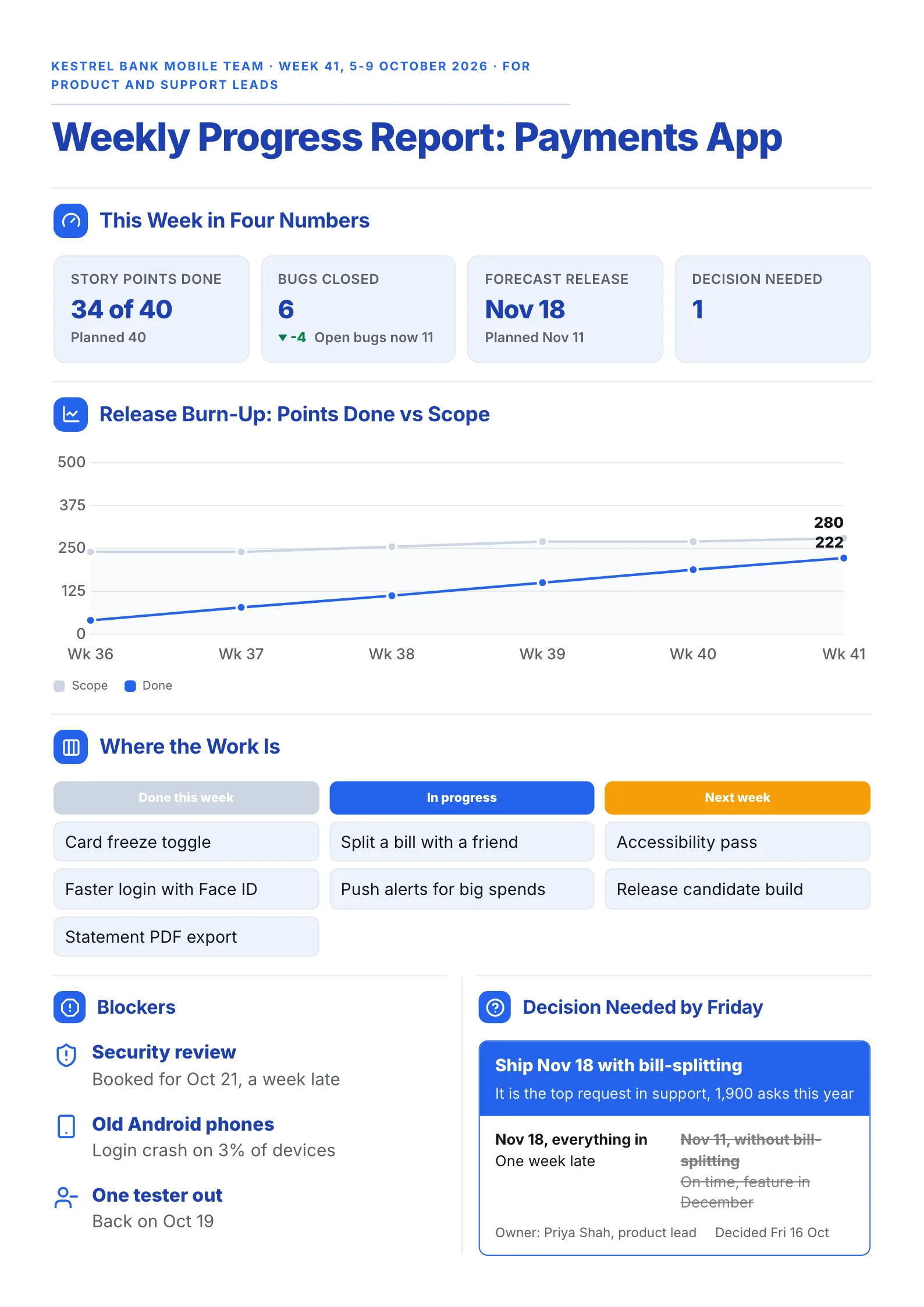 Edit this template
Sample names and figures. The slip from November 11 to November 18 sits in the top row, beside a decision box.
Numbers against the target
A sentence like "enrollment is going well" doesn't help anyone. Give the number you've reached and the number you promised. Minnesota's health department form has a row for each workplan goal and a column for each quarter, so the count builds up over the year. Maryland's form asks for the services you've provided this quarter and the total to date.
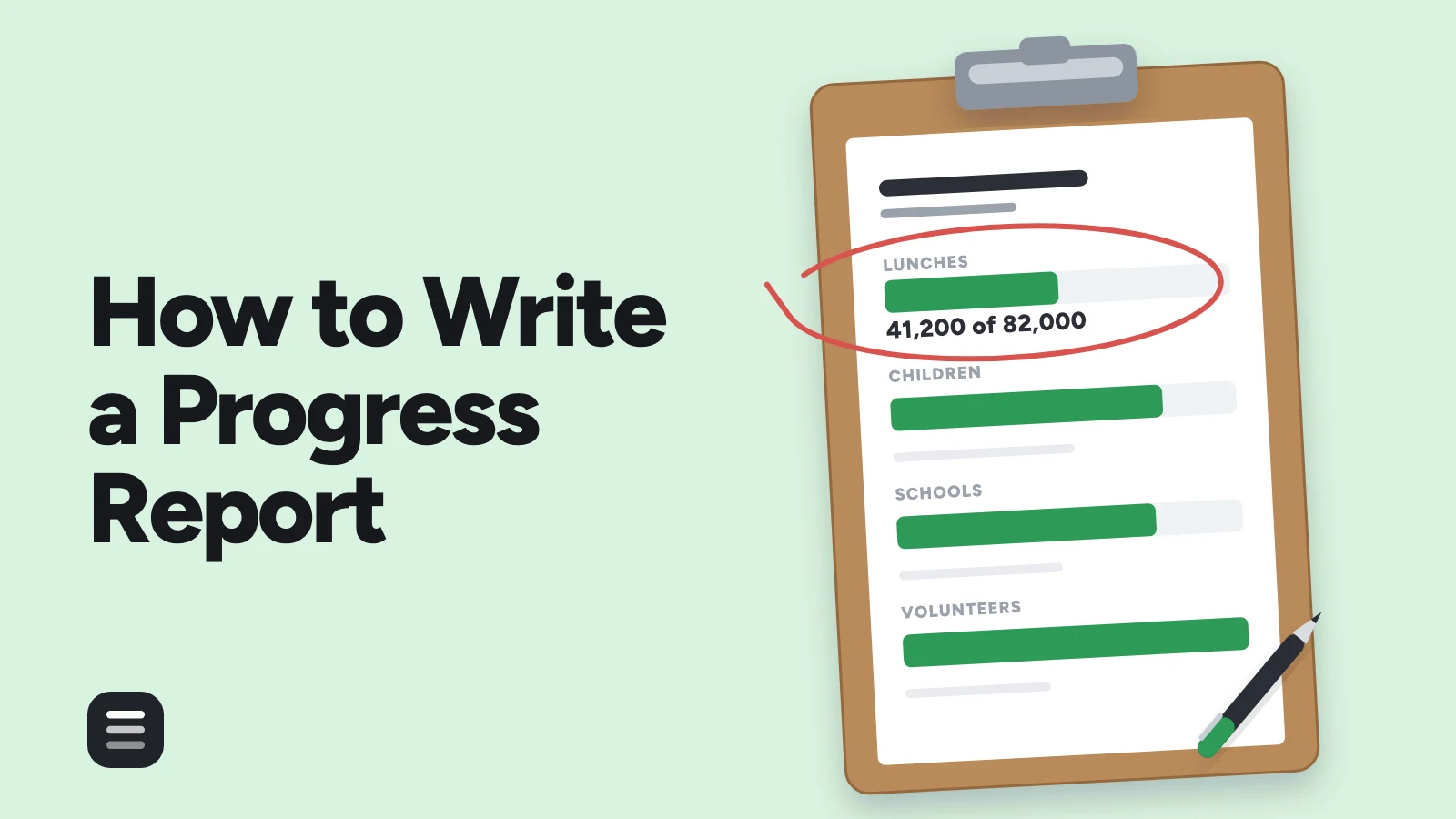
Use the same unit as your original plan. A plan that promised 82,000 lunches reports lunches. Then give the share, so your reader can see at a glance if you're on pace.
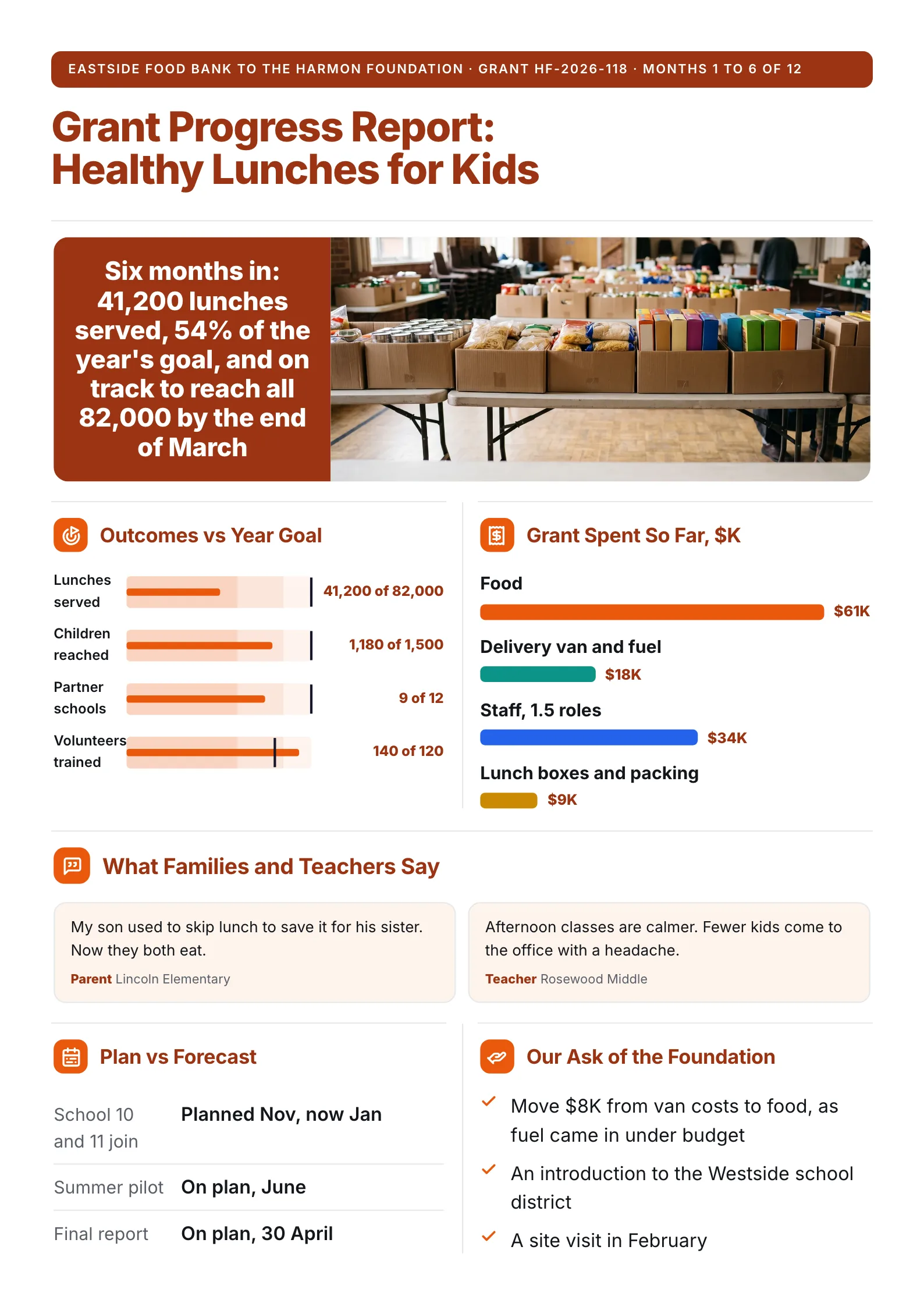 Edit this template
Sample names and figures. Each outcome reads as a count of the promise, like 9 of 12 partner schools.
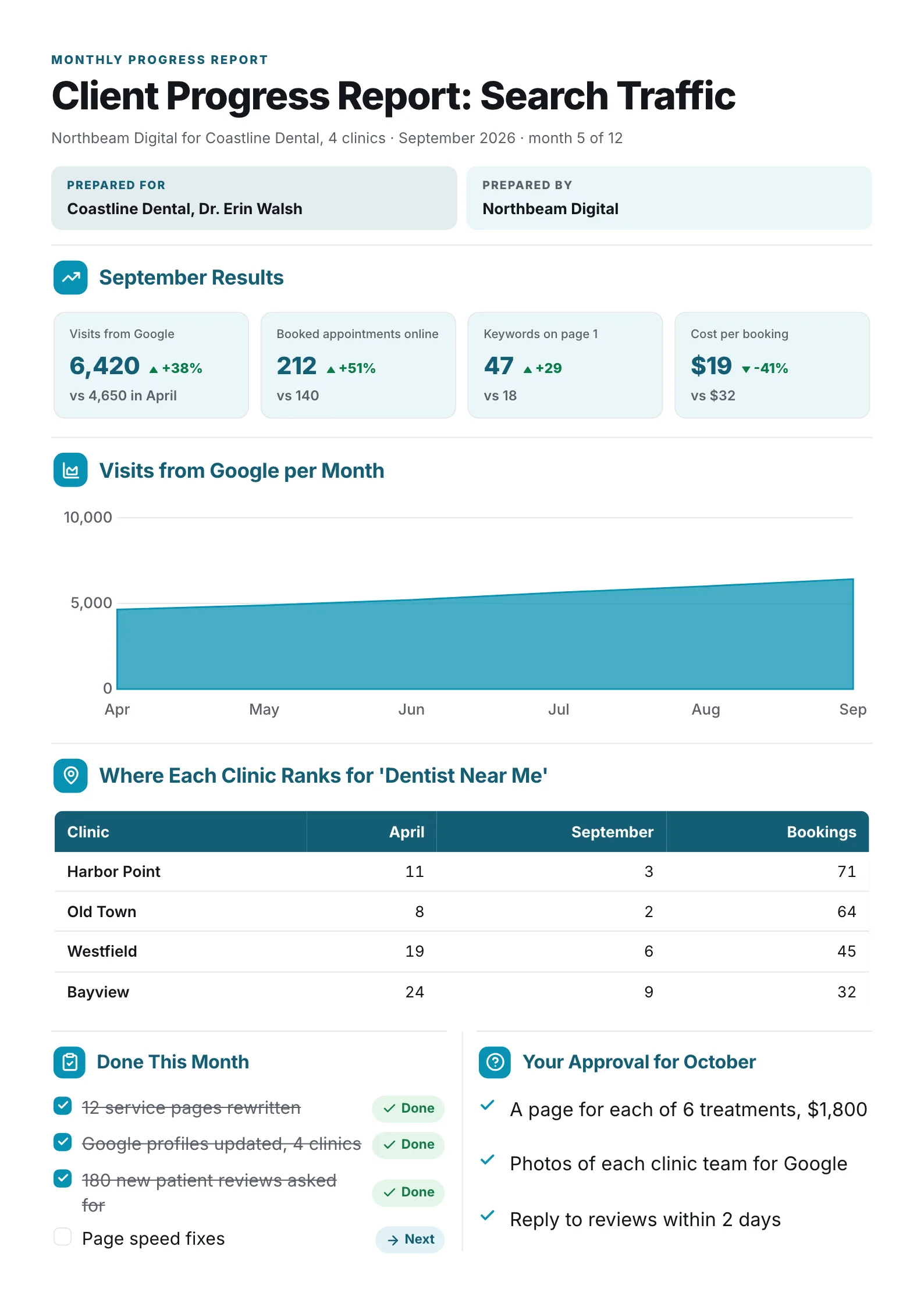 Edit this template
Sample names and figures. Every number has its April starting point beside it, so the client sees the change without doing math.
Problems, and what you're doing about them
Every form we read asks about problems, so leave them out and the report looks hollow. NIH's report has a section called changes and problems. Virginia asks for any issues or obstacles under each objective. Montana asks for problems or concerns, like trouble with the schedule, contractors or budget, plus the steps underway to fix them. Minnesota asks for any departures from the plan, including delays.
Write each problem in one line, then the fix in the next line. Put the bad news near the top of the page. Your reader will find it either way. It reads better coming from you first.
If a date moved, give the old date and the new one. Virginia's form makes this easy with a table of planned and actual start and end dates for every objective.
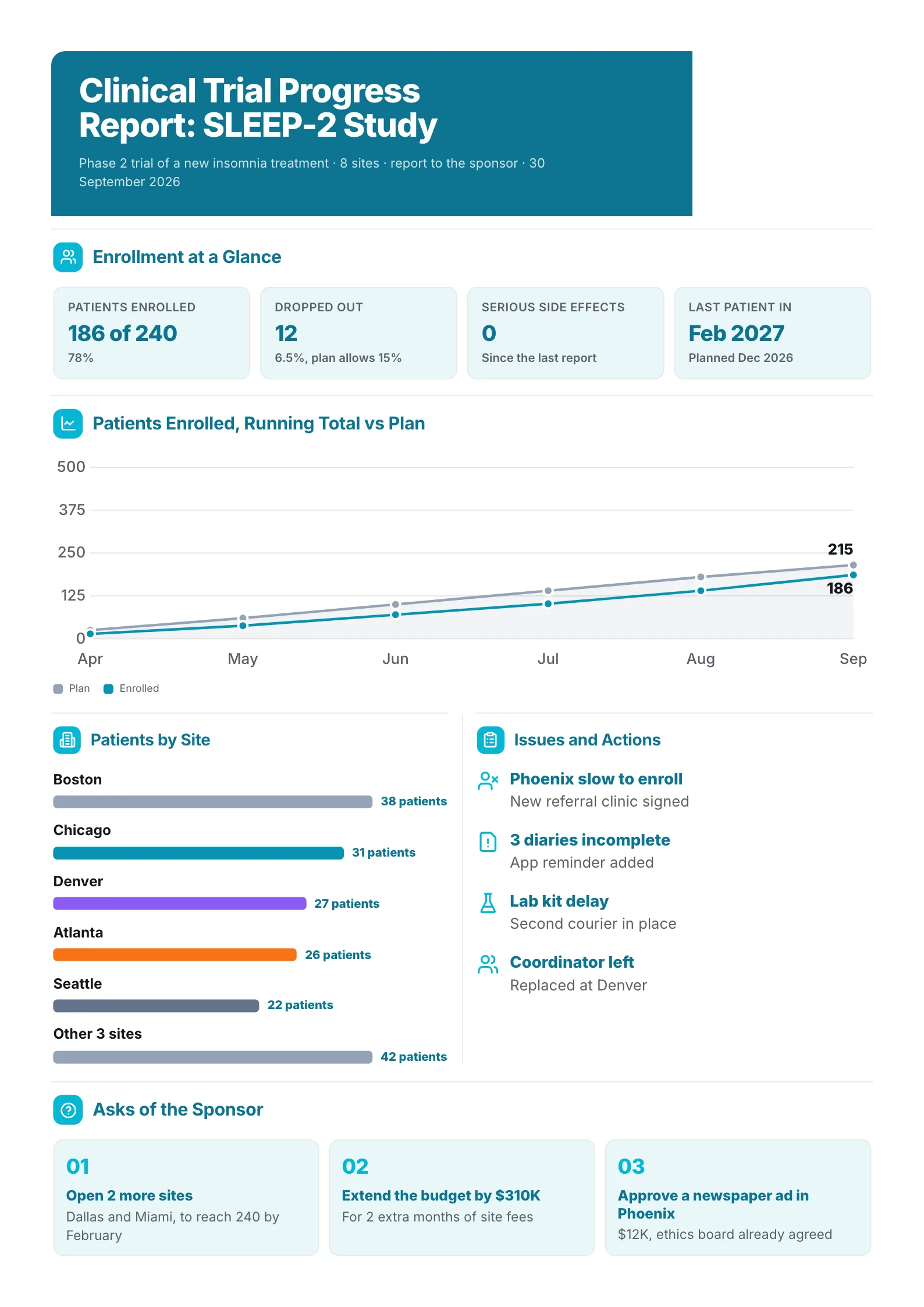 Edit this template
Sample names and figures. The late date sits beside the planned one, and each issue has its action on the same line.
The money
Three of the five forms ask about spending. Montana requires an updated budget sheet with current and earlier spending. Maryland's fourth part is a financial report and invoice. NIH's report has a budget section too.
Even if nobody asks, add one small table. Show what was budgeted, what's spent and what's left. Mark any line running more than 10% over. Your reader will connect a delay in the problems section to a cost here, so put both in the same report.
Next period's plan
Close with the plan for the next period. NIH, Montana and Minnesota all ask for this. Montana wants the coming quarter's activities for every task, including tasks where you expect nothing to happen.
Keep it to three to five lines. Each line should name a task, an owner and a date. Then add one line on anything you need from your reader, like a decision, a signature or a contact. Minnesota's form has a box just for help you need, such as training or a site visit.
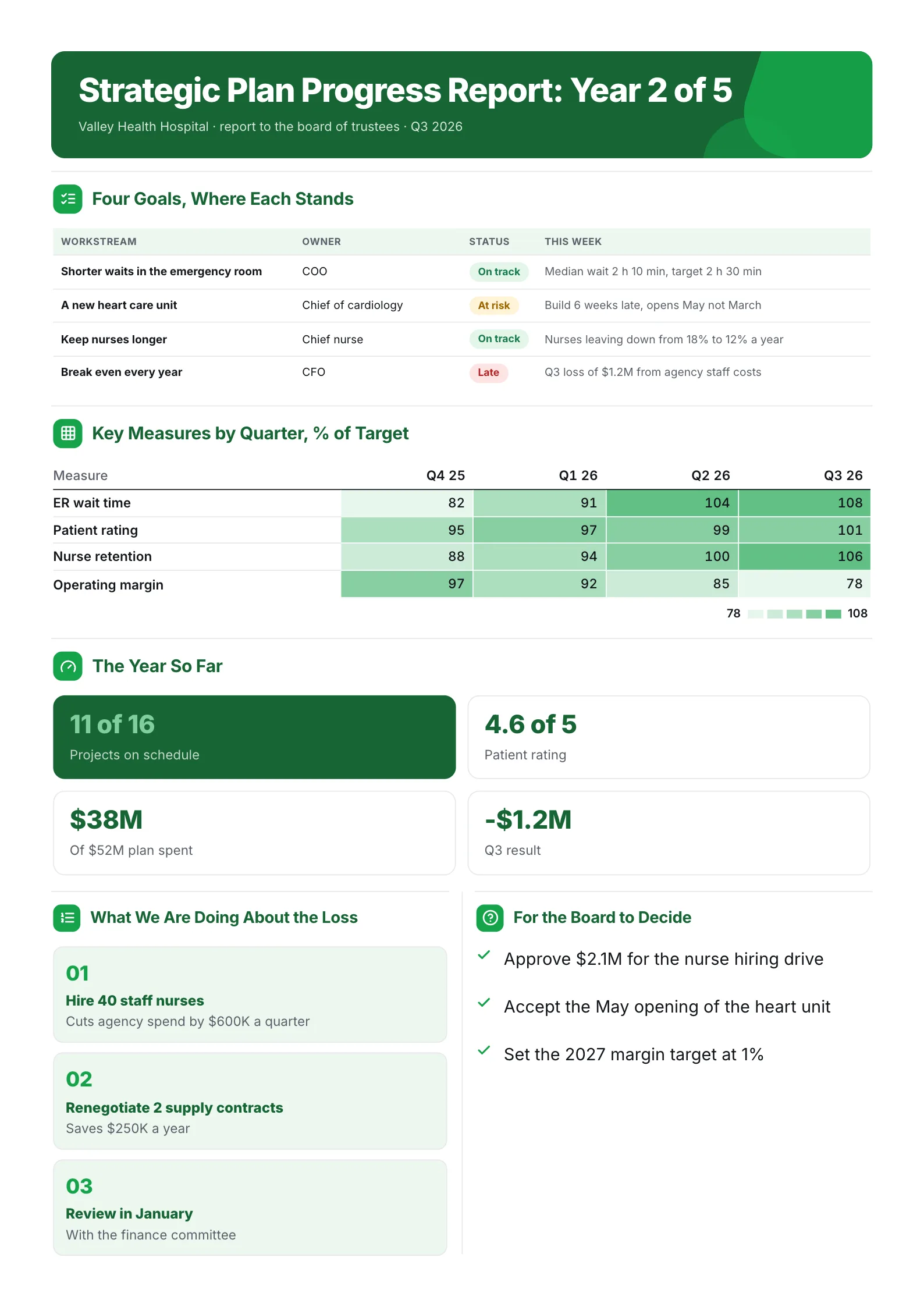 Edit this template
Sample names and figures. One goal is red with its cause in plain words, so the board knows what to ask about.
One goal, from vague to useful
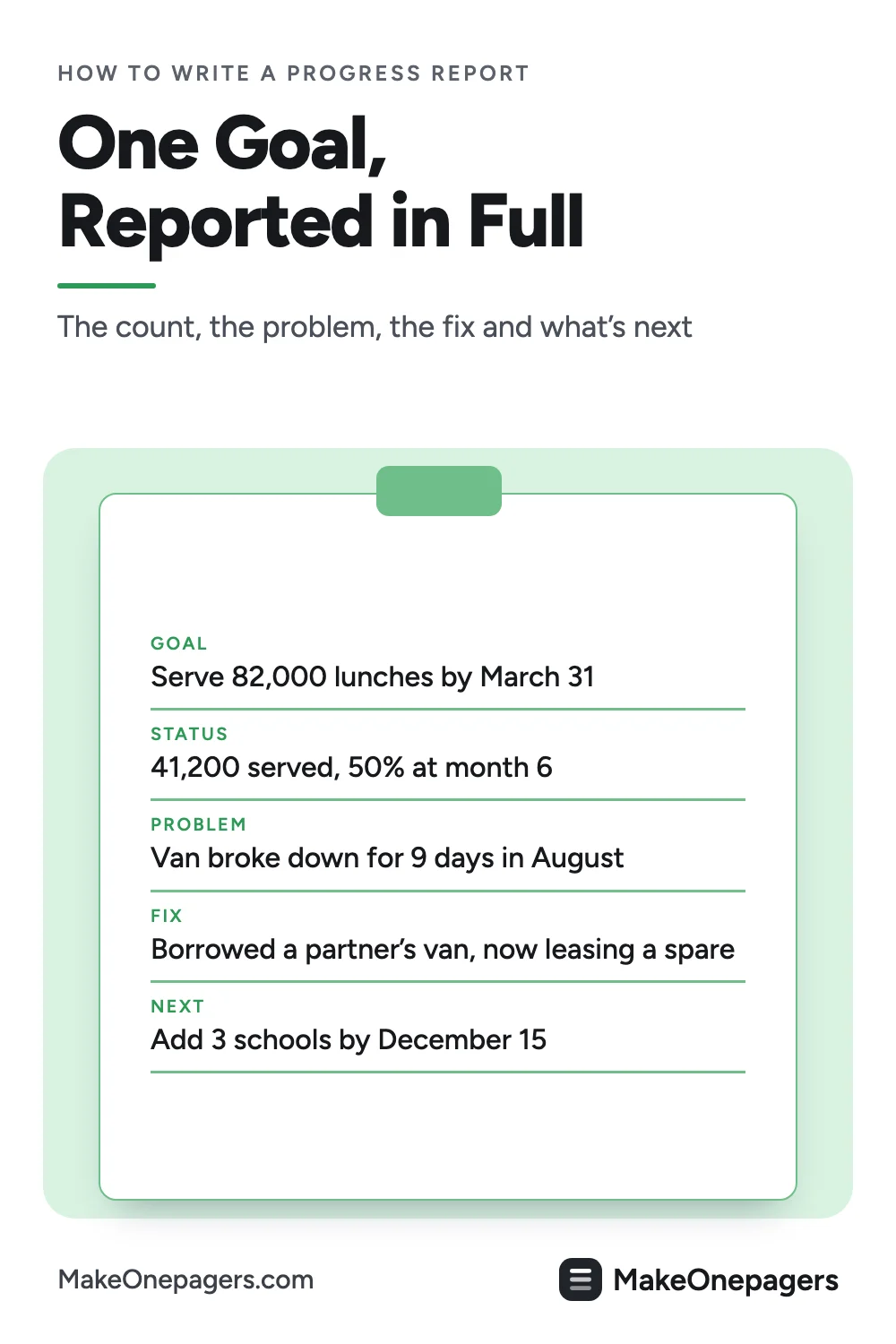
Put all six parts together and one lunch goal changes like this. The figures are made up.
| For this goal | First draft | Full update |
|---|---|---|
| Goal | Serve lunches | Serve 82,000 lunches by March 31 |
| Status | Going well | 41,200 served, 50% at month 6 |
| Problem | Not mentioned | Van broke down for 9 days in August |
| Fix | Not mentioned | Borrowed a partner's van, now leasing a spare |
| Next | Keep going | Add 3 schools by December 15 |
Each line on the right answers a question the funder would otherwise send you by email. The spare van and the three new schools are both things they can check next quarter.
The 5 forms, and when each one is due
How often you report is usually set for you. The four state forms are quarterly, and NIH asks once a year. For a client or your own team, agree on a rhythm up front, like weekly or monthly, and match it to how fast your numbers move. Here are the deadlines from the forms we read.
| Form | When it's due |
|---|---|
| NIH final or interim progress report | 120 days after the project period ends |
| NIH yearly report, simplified (SNAP) awards | About 45 days before the next budget period |
| NIH yearly report, other awards | About 60 days before the next budget period |
| Virginia DCJS quarterly report | By the 12th working day after the quarter closes |
| Montana DNRC quarterly report | The 15th of the month after each quarter |
| Maryland MACRO quarterly report, 2018-19 | October 31, January 31, April 30 and August 15 |
Two of the state forms also ask you to build on earlier quarters. Maryland's form is cumulative, so you add each quarter below the last. Virginia's final report must include a summary of the whole grant.
| Form | Pages | Who made it |
|---|---|---|
| Research Performance Progress Report (RPPR) | Web page | National Institutes of Health |
| Byrne-JAG Grant Quarterly Progress Report | 2 | Virginia Department of Criminal Justice Services |
| Off-Season Stock Water Mitigation Grant Progress Report | 4 | Montana Department of Natural Resources and Conservation |
| SRAE Quarterly Progress Report, FFY26 | Word form | Minnesota Department of Health |
| FY2019 Community Conferencing & Community Conflict Resolution Project Grants, Quarterly Progress Report | Word form | Maryland Judiciary, MACRO |
We read all five on October 30, 2026. NIH's rules sit on one web page, and each state form is the blank version a grantee fills in.
Put the status of every goal on one page
Grant forms can run several pages, but most of your readers want the summary first. Put the status of each goal at the top, the numbers in one chart, the problems in a short table and next steps at the bottom. Attach the long form if your funder needs it.
Our MakeOnepagers progress report layouts give every goal its own status row, with a chart of progress against plan and a box for issues. Type in your goals and numbers and the page is ready to send. The layouts in our progress report template post are ready to copy. For a report you send every week, our weekly status report template post shows a shorter version.
Send your next report before it's due
Copy your goals from the original plan. Under each one, write what happened, a number against the target and any problem with its fix. Add the money and next period's plan. Build the page in MakeOnepagers a week before the due date, so your funder hears any bad news from you first.
Frequently asked questions
What are the main parts of a progress report?
Your goals, what you did on each, numbers against the target, problems and fixes, money spent and plans for next period. The forms we read all start from the goals in the original plan.
How long should a progress report be?
Long enough to cover each goal once. For a team or a client, one page is usually right. Grant forms can run longer because they add budget sheets and sign-offs, but the summary on top should still fit on one page.
Should I send a progress report if nothing happened?
Yes. Virginia's form says reports are required even if no activity occurred, and Montana asks you to list tasks with no activity. A short report that says "paused, and here's why" builds more trust than a missing one.
What's the difference between a progress report and a status report?
They overlap. A status report is usually a short weekly check on a project. A progress report covers a longer period, like a quarter, and measures what you've done against what you promised.




