SWOT vs PESTLE Analysis: How 3 Real Plans Used Both
SWOT vs PESTLE analysis: what each one covers, which to run first, and how a university, a hospital and a medical college used both in one plan.

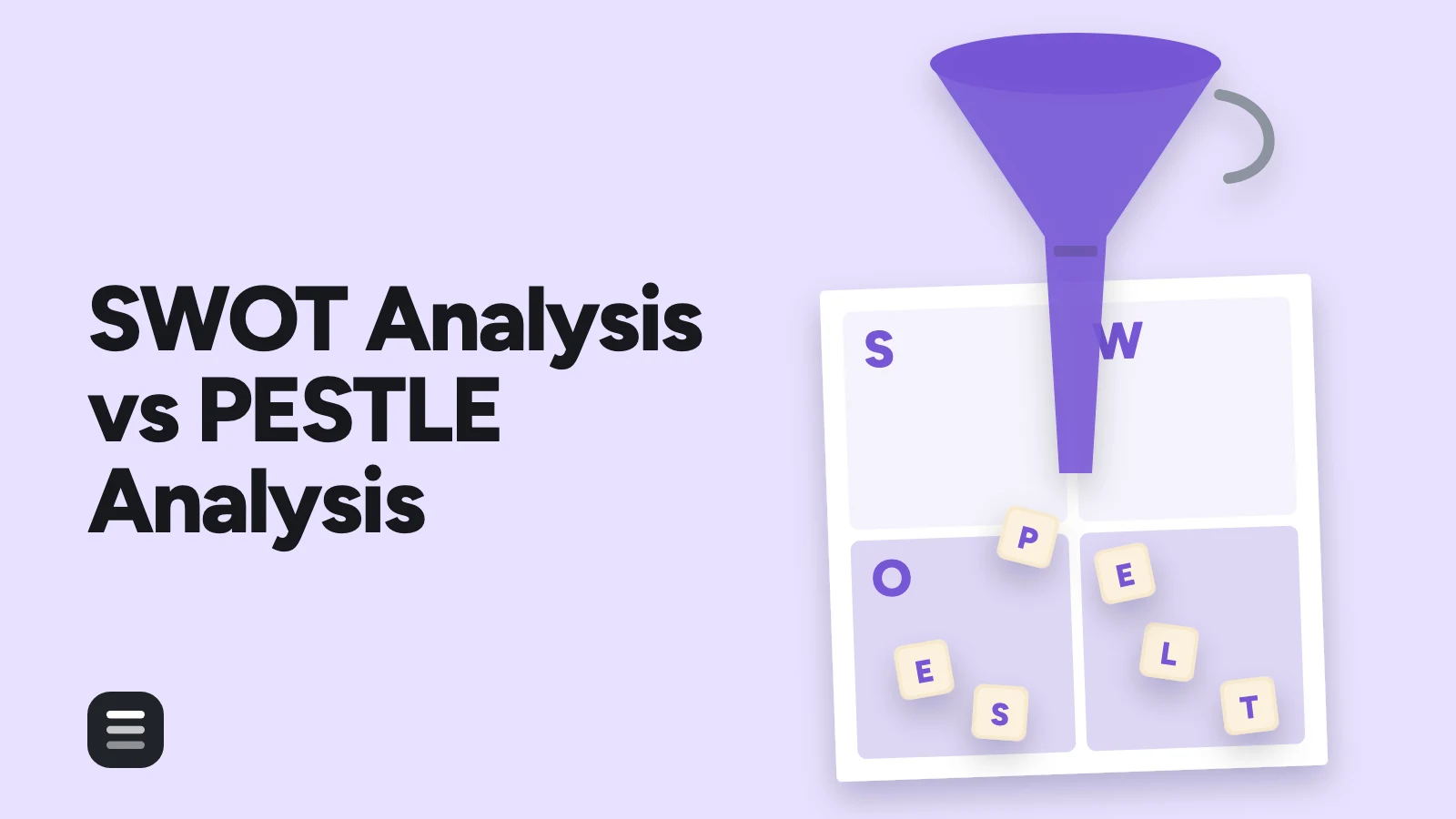
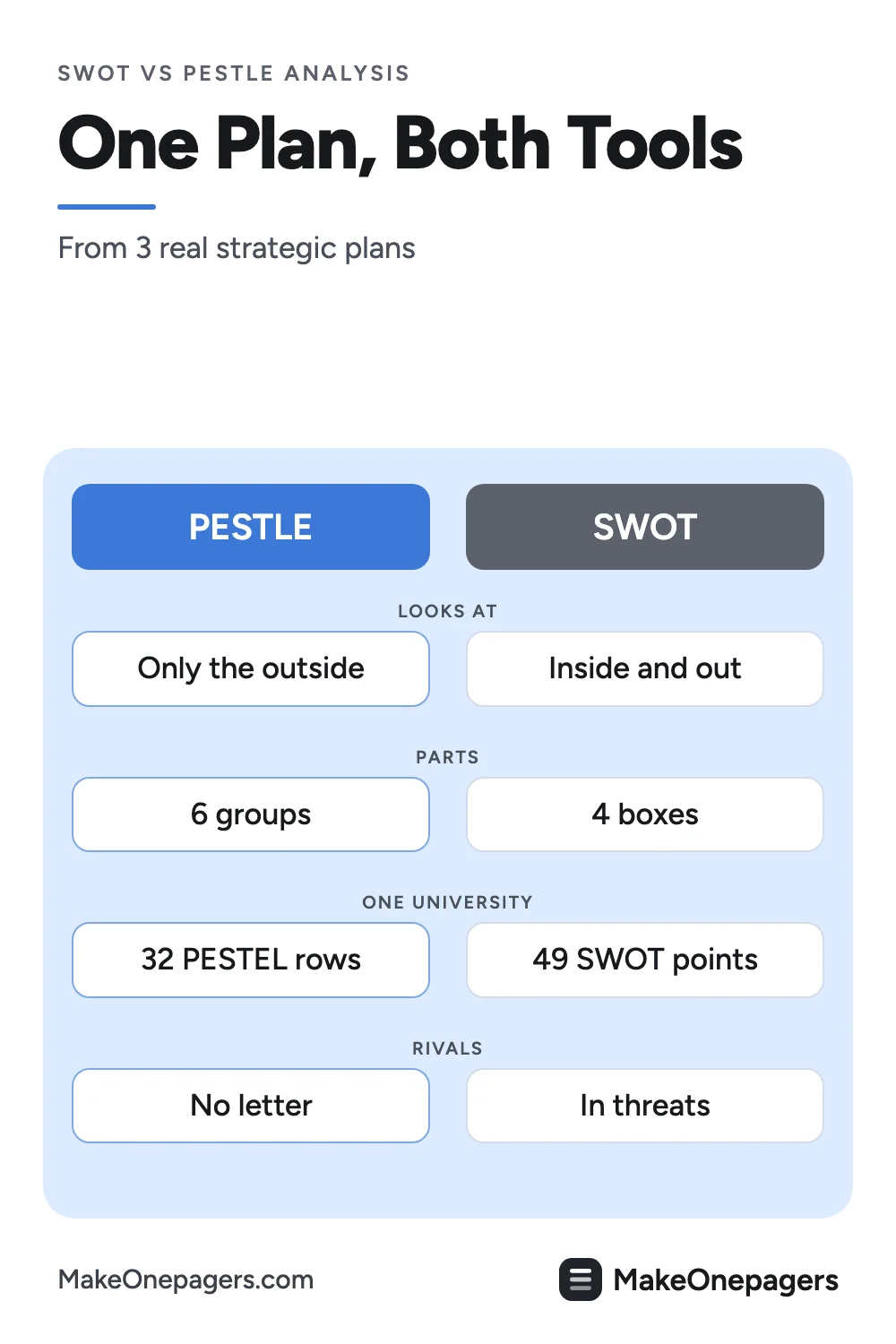
Here's the quick rule for SWOT analysis vs PESTLE analysis. A PESTLE analysis looks only outside your organization, at political, economic, social, technological, legal and environmental change. A SWOT analysis looks inside too. It lists your strengths and weaknesses, then the opportunities and threats around you. The University of Thessaly's 2024 to 2027 strategic plan uses both. It holds 32 PESTEL rows and 49 numbered SWOT points. Start from a free one pager template.
One‑Pager examples
Real One-Pagers made with MakeOnepagers. Open any one to edit it as your own.
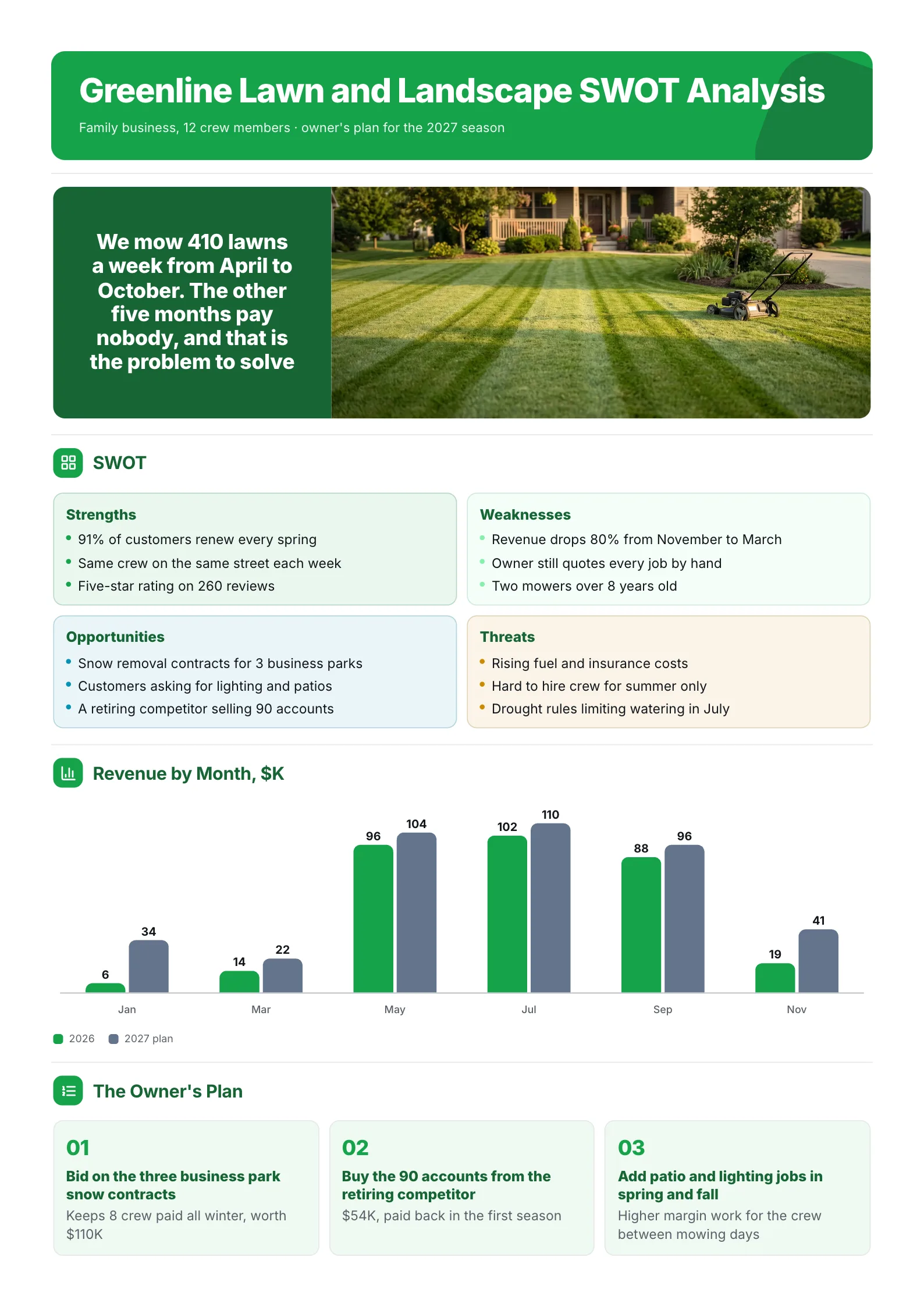 SWOT Analysis: Small BusinessEdit for free(opens in a new tab)
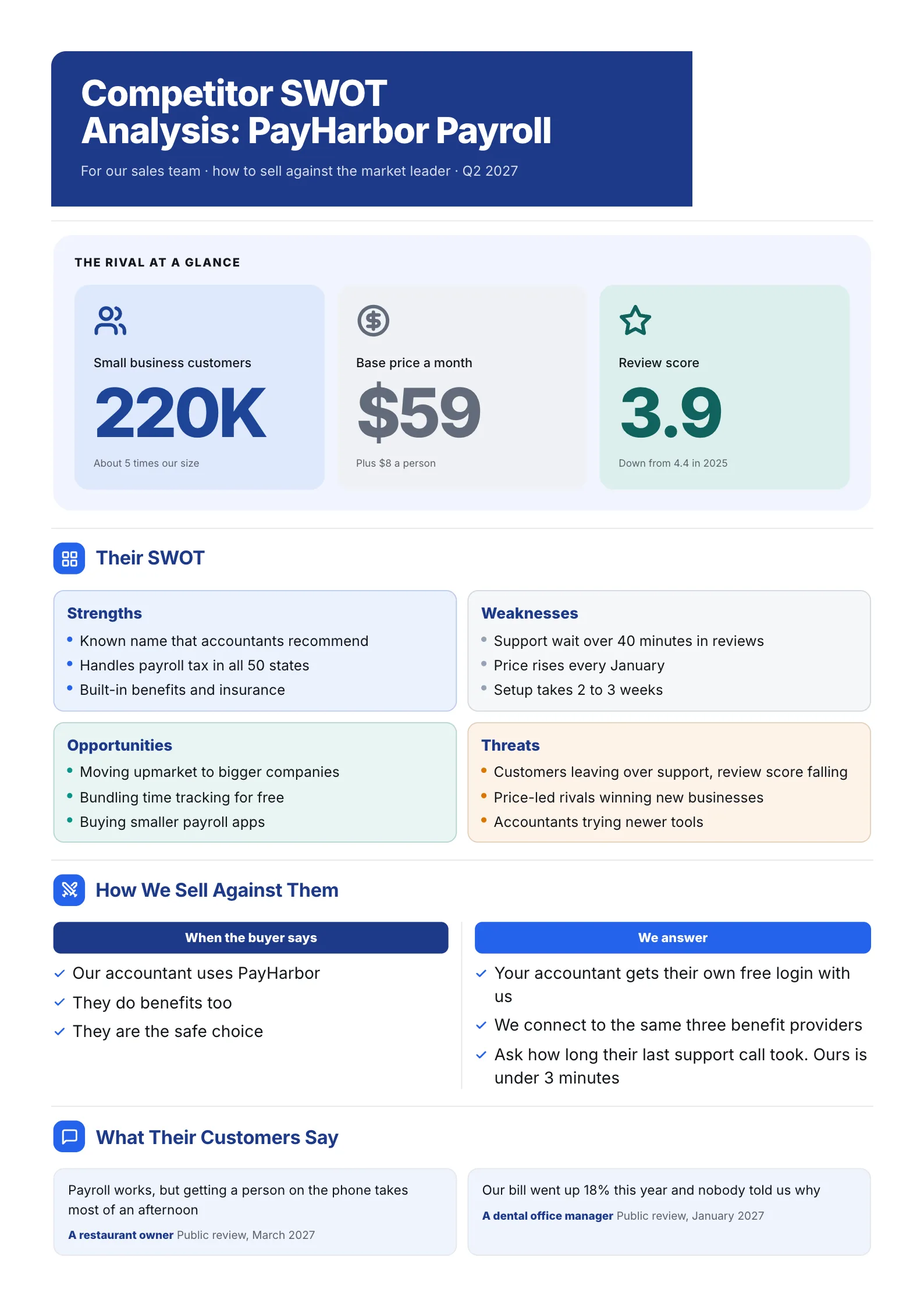 SWOT Analysis: CompetitorEdit for free(opens in a new tab)
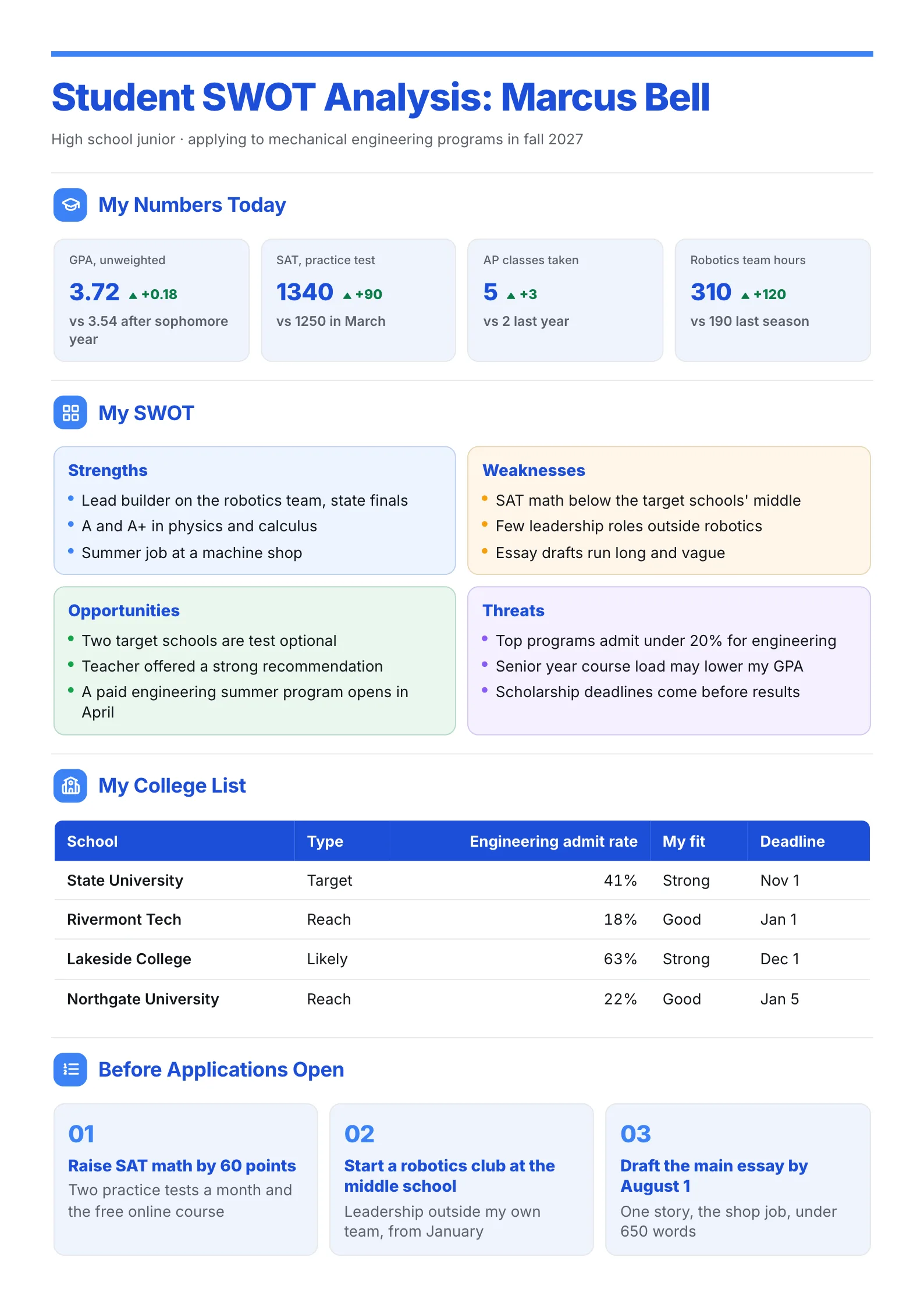 SWOT Analysis: StudentEdit for free(opens in a new tab)
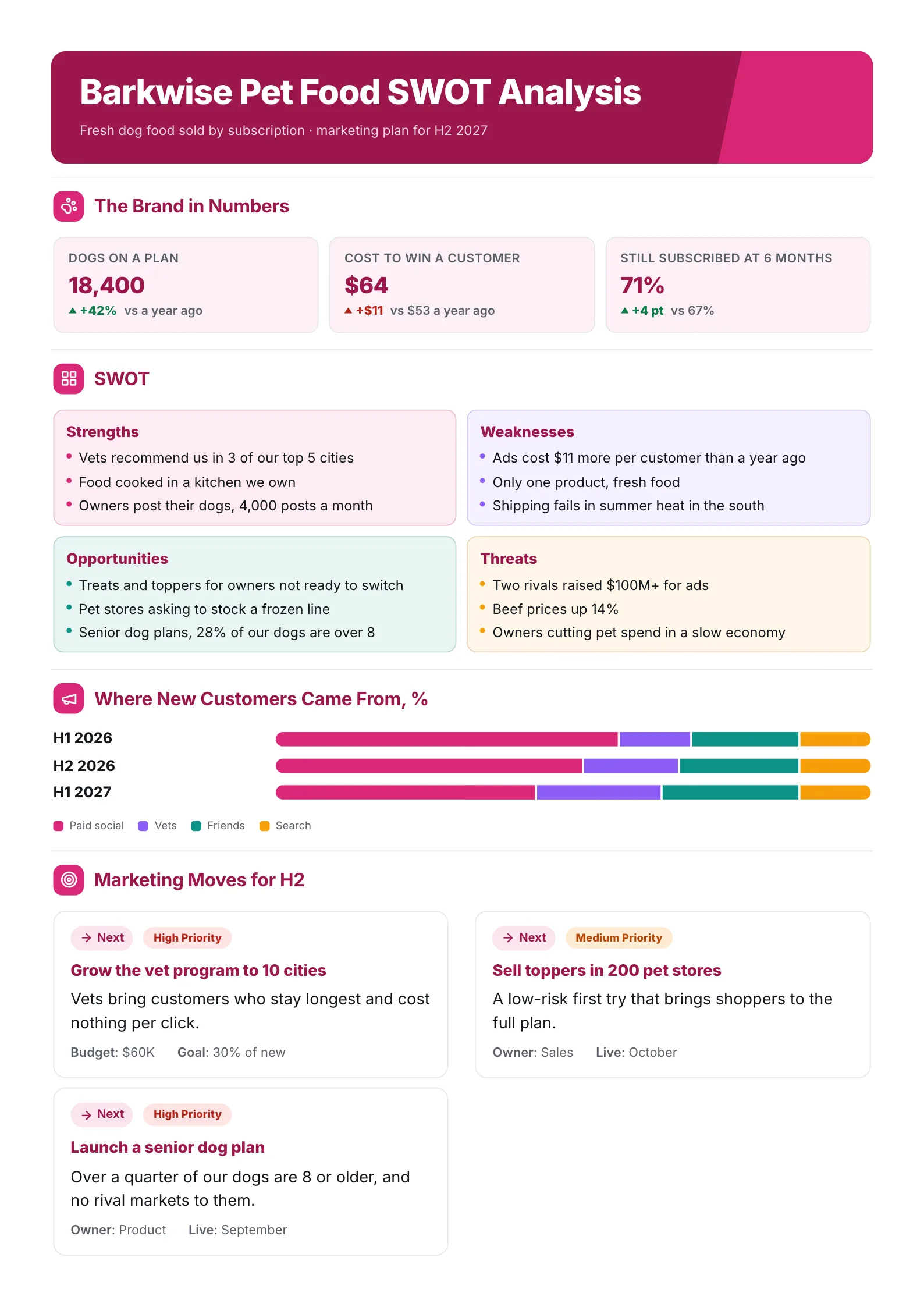 SWOT Analysis: Pet Food Brand MarketingEdit for free(opens in a new tab)
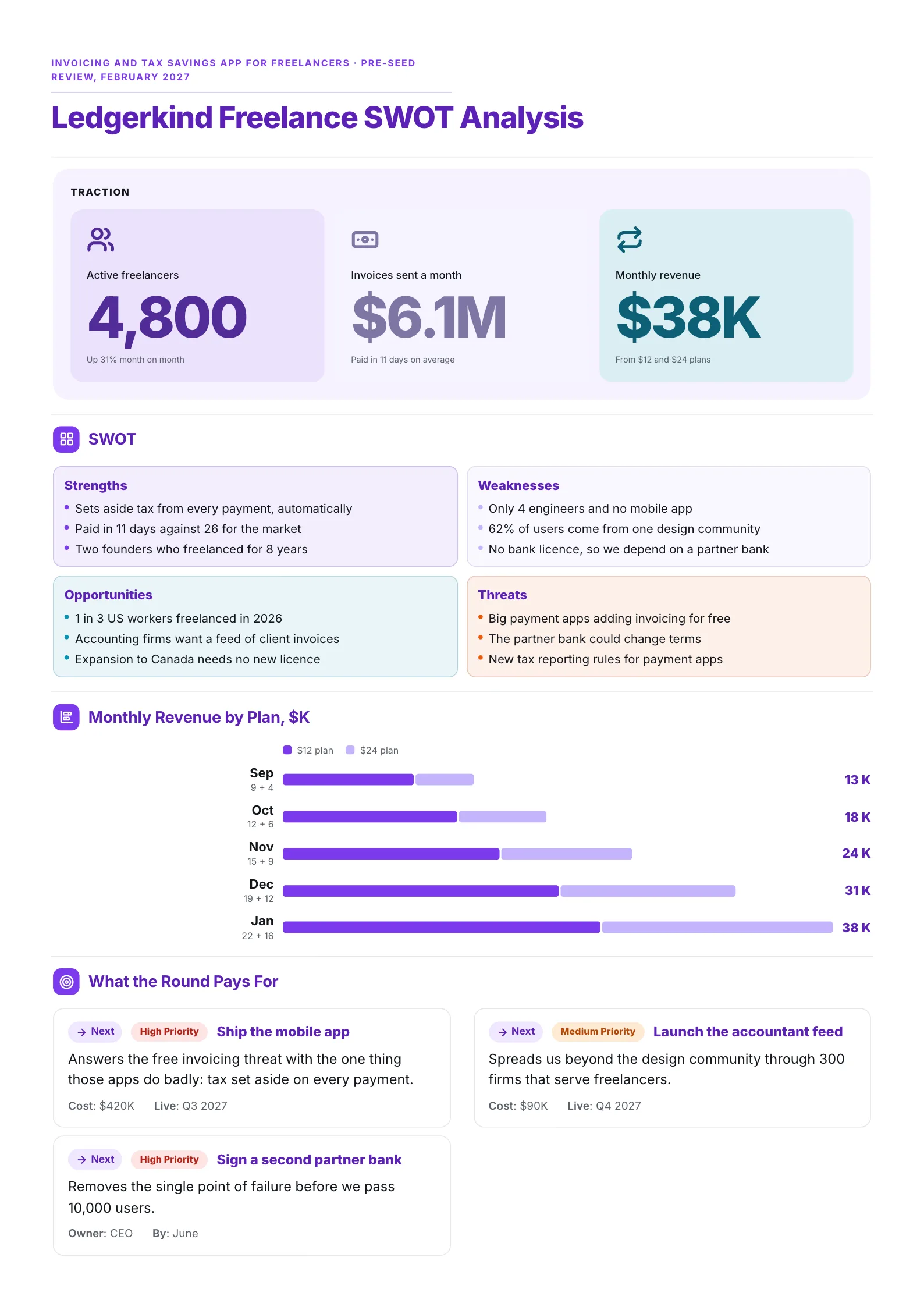 SWOT Analysis: StartupEdit for free(opens in a new tab)
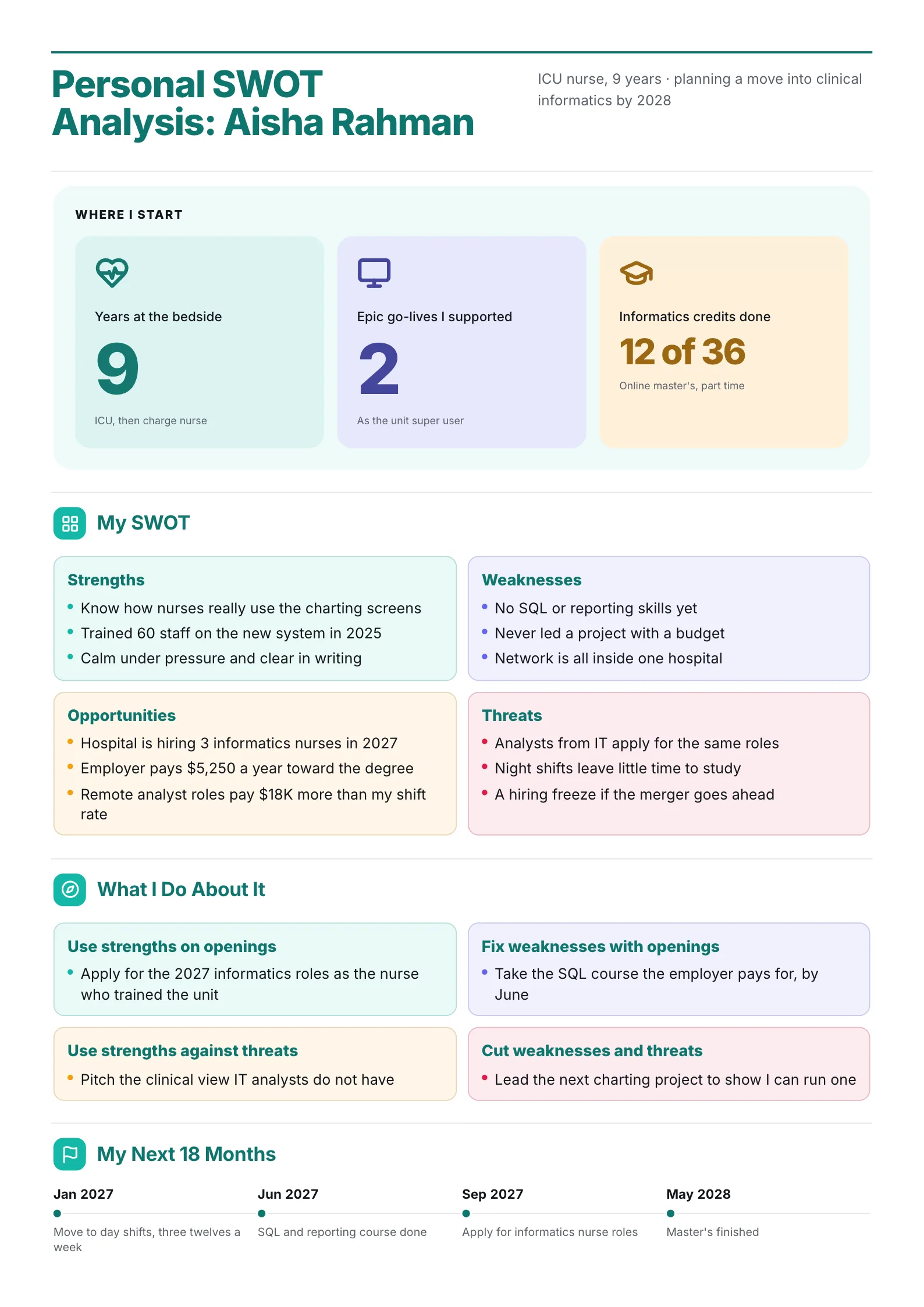 SWOT Analysis: Personal Career ChangeEdit for free(opens in a new tab)
We read that plan and two more, from a hospital trust and a medical college. Each one fits the two tools together in a different order. You'll see what to copy from each, then five sample SWOTs with their outside forces tagged.
| PESTLE analysis | SWOT analysis | |
|---|---|---|
| Looks at | Only the world outside | Inside and outside |
| Parts | 6 groups: political, economic, social, technological, legal, environmental | 4 boxes: strengths, weaknesses, opportunities, threats |
| Can you change it? | No. You can only respond | Strengths and weaknesses, yes |
| Rivals | No letter of their own | Go in threats |
| Ends with | A list of forces | A list of moves |
PEST is the same idea with four groups. PESTEL is PESTLE with the letters in another order.
The 3 plans, counted
| Plan | Outside scan | SWOT | Which came first |
|---|---|---|---|
| University of Thessaly, Greece, 2024 to 2027 | 32 PESTEL rows in 6 groups | 49 numbered points (15, 14, 10, 10) | SWOT |
| United Bristol Healthcare NHS Trust, UK, 2008 | 16 PEST factors in 4 groups | 34 factors (10, 10, 7, 7) | PEST |
| King Faisal University College of Medicine, 2020 to 2025 | 15 PEST factors in 4 groups | 10 themes, from a 77-item draft | Both at once |
The counts are ours, made row by row from each plan's own tables. The sources are linked in each section below.
A university that ran SWOT first, then checked outside
The University of Thessaly plan says how it worked: "Initially, the internal environment of the organization was evaluated through a SWOT analysis". Then came the outside scan, "to identify the main trends and challenges affecting higher education".
Its SWOT has 15 strengths, 14 weaknesses, 10 opportunities and 10 threats. Its PESTEL has 6 political rows, 6 economic, 6 social, 5 technological, 4 environmental and 5 legal. Each row is a short label with a sentence or two.
Running SWOT first meant the outside forces turned up twice. Three examples:
- Climate. Threat 1 is "Climate change and pandemic consequences affecting educational and research operations." The PESTEL repeats it as an environmental row and names the damage from Storm Daniel.
- Money. Threat 2 is "Restrictions on public funding impacting education quality and infrastructure." The political row on state funding says the same thing from the outside.
- People. Threat 5 warns of "declining student numbers". The social row explains why: "The decline in birth rates, a particularly acute phenomenon in Greece, is expected to reduce the overall demand for studies".
The repeats aren't a mistake. They show the PESTEL doing its job as a check on the threats box. Now look at what's missing. Threat 6, private universities entering the Greek market, has no PESTEL row at all. A rival is a competitor, so it lives only in the SWOT, and you'll need to add yours by hand too.
One row also shows the limit of six neat groups. The labor law row sits under legal, and its whole text says it's both social and legal. Some forces don't sort cleanly. When you hit one, pick the letter that fits best and move on, because the response matters far more than the label.
A hospital that wrote a response to every factor
The United Bristol Healthcare NHS Trust business plan, version 5.2 from March 2008, runs the other way. Chapter 4 scans the outside world and ends with a PEST summary. Chapter 5 opens with the SWOT, done "Alongside the external environment review, described in the preceding chapter".
Its PEST table has 16 factors: 5 political, 6 economic, 3 societal and 2 technological. Each one gets three columns: the factor, its impact and the trust's response. Plurality of providers, for example, carries the impact "Potential activity and income loss".
The SWOT then reuses that work:
- The political factor on other providers becomes the threat "Predation by competing providers, NHS or independent sector".
- The research funding factor becomes the threat "Loss of research and development support funding".
- A response in the PEST table, services at the new South Bristol Community Hospital, becomes the opportunity to win that service role.
Each of the 34 SWOT factors also carries proof. Strengths and weaknesses have a "Supporting evidence" column. Opportunities and threats have a "Validation" column, and every row names an action. The trust says the SWOT "has informed our decisions about where to prioritise our efforts."
Two more things are worth copying. Competition gets its own section right after the PEST. And with no E for environment, climate change sits under economic, as a risk to energy prices. With PEST, every force still gets a home somewhere in the table.
A medical college that asked different people for each tool
The King Faisal University College of Medicine plan for 2020 to 2025 ran both tools at once. In its words, the teams "worked parallel to each other in identifying SWOT, evidence validation and PEST trend analysis".
The difference is who took part. The PEST had 15 factors under four headings, such as inflation, demographics and web-based teaching. Its note reads "PESTS analysis done only with high officials".
The SWOT went much wider. The team drew up "a list covering 10 themes, which contain 77 items" and sent it to every department and curriculum committee. Then it went through three more rounds, each marked "Amendments of SWOT analysis". Student groups came first, then an open meeting with all faculty and staff, then one with ministry of health staff.
That split makes sense. Leaders can read trends in law, money and technology. The people who teach and study there see the weak spots up close. The college also laid its SWOT out as pairs, strengths beside opportunities and weaknesses beside threats, under the same 10 themes. Try it yourself. You'll see at a glance which strength could chase which opening.
What the three plans have in common
All three plans put outside change into the opportunities and threats boxes, whichever tool came first. Here's how to do the same:
- Scan with PESTLE. Write each force as one short line, sorted under its letter.
- Move each force to O or T. Ask whether it helps you or hurts you. Money shows up on both sides at Thessaly: European funding is an opportunity, and limits on public funding are a threat.
- Add your rivals by hand. No PESTLE letter is set aside for them, so check that they're in your threats.
- Ask more people for S and W. King Faisal sent its SWOT draft to every department.
- Write a response for every line. The Bristol trust never left a factor without one.
Run both on one page
You don't need a 58-page plan to use the two tools well. Here's a short version you can run with your team.
- Write the question at the top. Name the decision, such as a new location or next year's budget. Keep it to one line.
- Start with the PESTLE. Write one line per force under each letter, and leave a letter empty if nothing real belongs there.
- Sort every line into O or T. Drop the ones that don't touch your decision.
- List your rivals. Put each one in threats, or in opportunities if it's leaving the market.
- Ask the people who do the work for S and W. Give them the draft first, so they can fix it instead of starting cold.
- Write one move per box. Each move should answer a line, like the Bristol trust's response column.
Keep the finished sheet to one page. If a point won't fit, it's probably not one of your top three.
Which one should you use?
- Use PESTLE alone when the question is about the world, not you. Entering a new market or a new state is a good example.
- Use SWOT alone for a quick team review, when everyone already knows the outside picture.
- Use both for a strategic plan, a grant or a board review that runs three years or more. All three plans above did.
Five SWOTs with their outside forces tagged
Each sample below shows a SWOT where you can trace the threats and openings back to a PESTLE letter. The letters are our reading. The facts come from each One-Pager.
A coffee roaster facing a price spike
 Edit this template
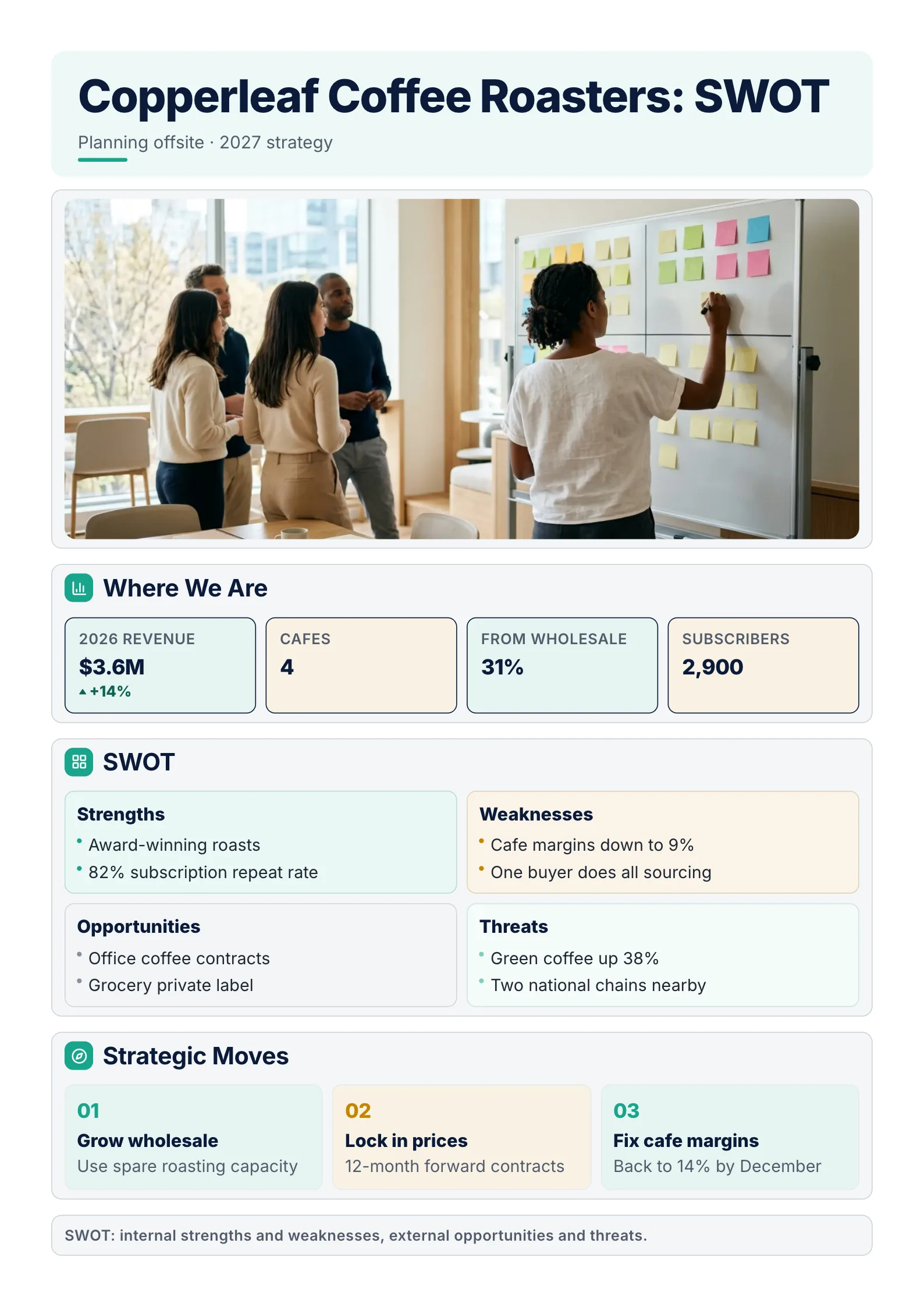
This SWOT analysis for Copperleaf Coffee Roasters lists "Green coffee up 38%" as a threat. You'd file that under economic, the first E in PESTLE. The other threat, two national chains nearby, is a rival with no letter at all. Look at how the move answers the price spike: lock in prices with 12-month forward contracts. Give each of your big threats a move like that.
An urgent care clinic watching pay and payers
 Edit this template
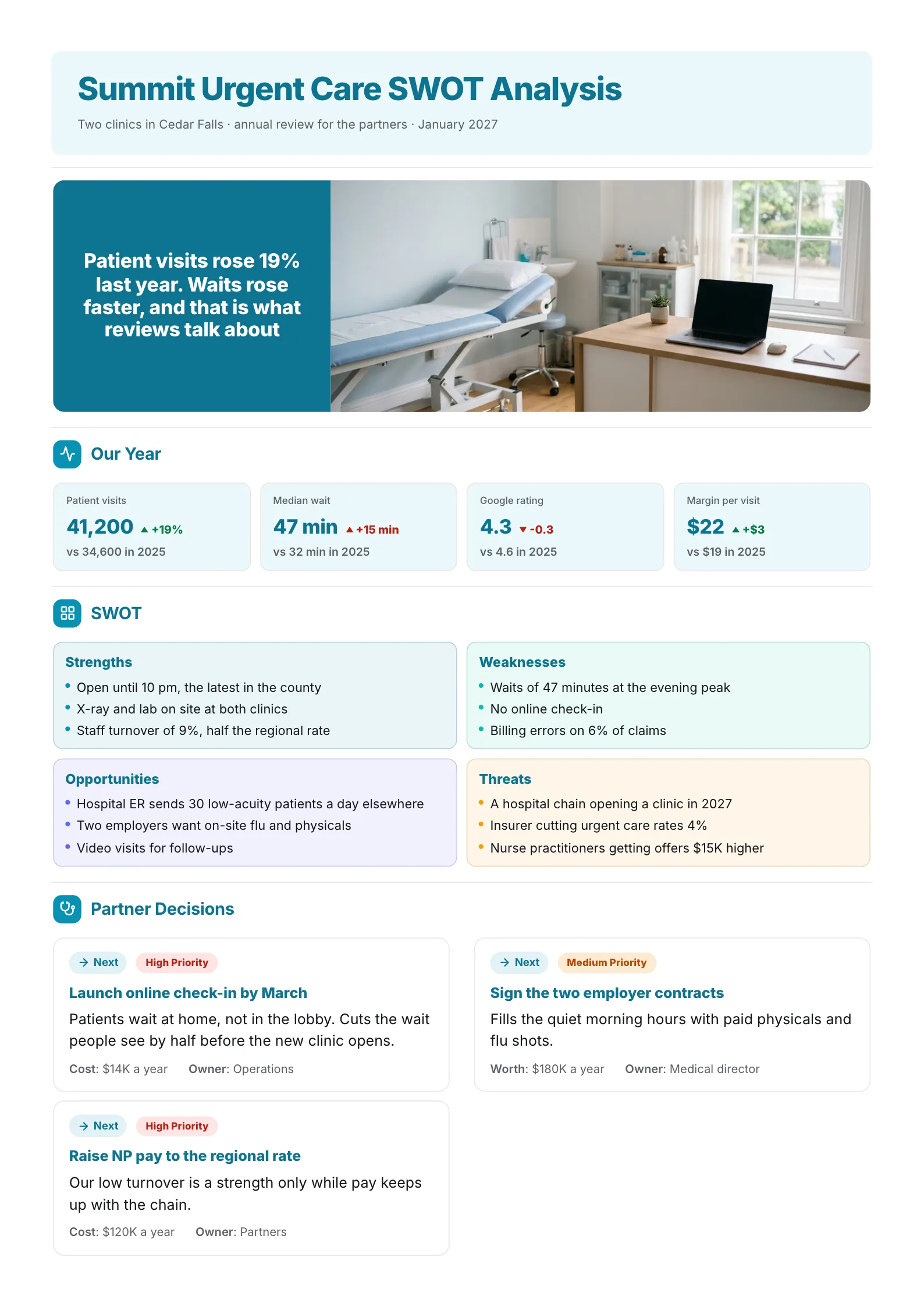
In this urgent care clinic SWOT, two threats are economic. An insurer is cutting urgent care rates 4%, and nurse practitioners are getting offers $15K higher. The third, a hospital chain opening a clinic in 2027, is a rival. The partners answer the pay threat directly: raise NP pay to the regional rate, at $120K a year. If you run a clinic, put a cost next to every move, as this one does.
A farm with a weather threat
 Edit this template
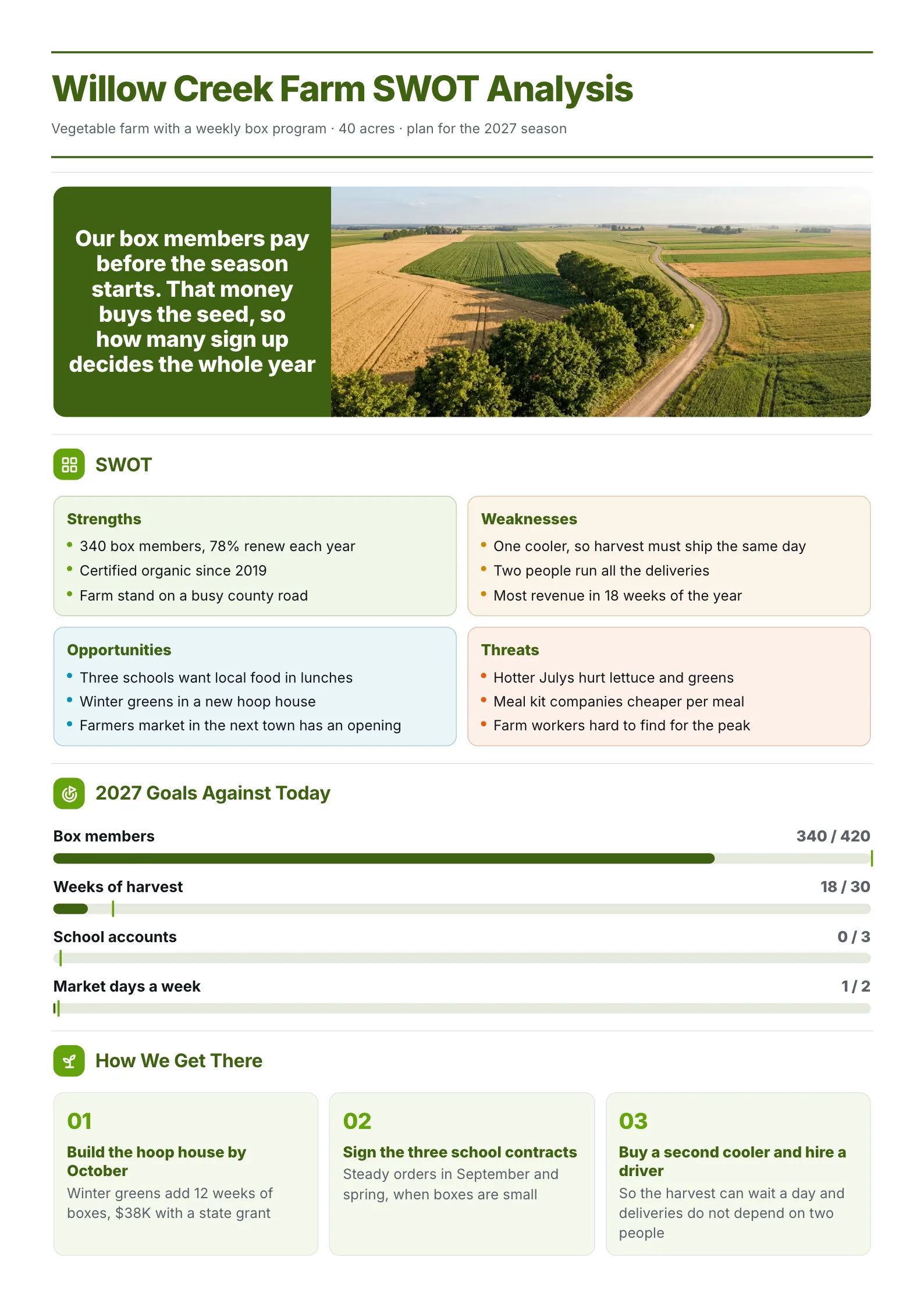
This farm SWOT has an environmental threat that a PESTLE scan would catch first: hotter Julys hurt lettuce and greens. A labor problem follows: farm workers are hard to find for the peak. If you farm, check the weather line first. This plan builds a hoop house by October, and winter greens add 12 weeks of boxes, $38K with a state grant.
A food bank shaped by government
 Edit this template
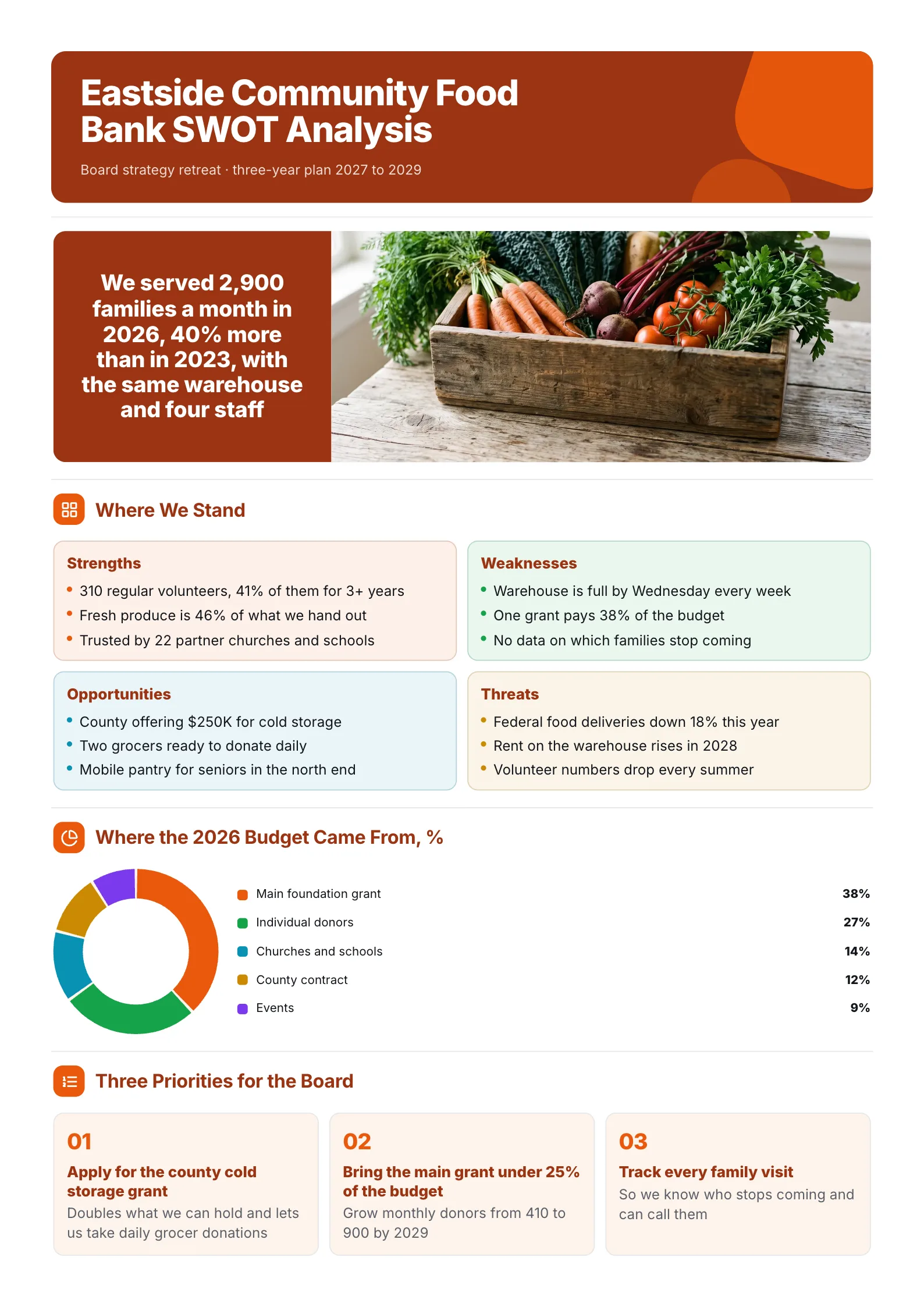
Two outside points in this nonprofit SWOT are political. Federal food deliveries are down 18% this year, and the county is offering $250K for cold storage. Rent on the warehouse rising in 2028 is economic, and fewer summer volunteers is social. The board's first priority answers the political opening: apply for the county cold storage grant. When you scan for a nonprofit, read the county and state budgets before anything else.
A product with a technology threat
 Edit this template
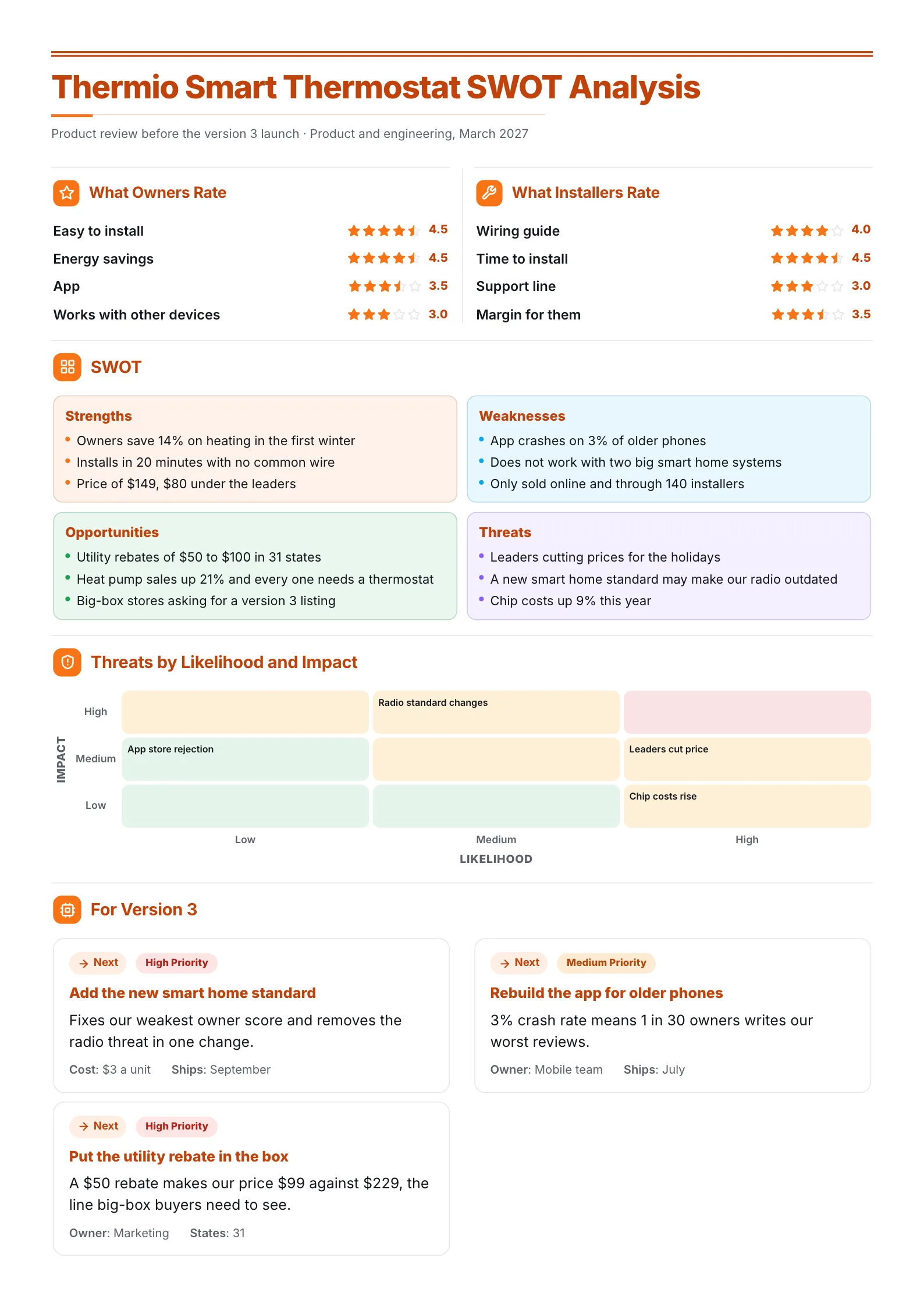
This product SWOT touches three letters. Utility rebates of $50 to $100 in 31 states are political. Heat pump sales up 21% and chip costs up 9% are economic. A new smart home standard that may make its radio outdated is technological. Its top fix for version 3 targets that one, so you can see how one change can remove a threat: add the new standard, at $3 a unit, shipping in September.
Make your SWOT
Start from a MakeOnepagers SWOT, then run your PESTLE lines into its opportunities and threats. Our guide on how to write a PESTLE analysis scores each outside force. The SWOT analysis questions post gives you wording that public plans used for every quadrant. And when most of your threats are rivals, competitive analysis vs SWOT shows when to switch tools. Got a page of scan notes already? Drop them into the free AI One-Pager generator, and it lays out a SWOT grid you can edit.
Frequently asked questions
Is PESTLE part of a SWOT analysis?
Not formally, but they're often used together. PESTLE covers only outside forces, so its findings feed the opportunities and threats boxes of a SWOT. All three plans above did this.
Should I do a SWOT or PESTLE analysis first?
Either order works. The Bristol hospital trust ran PEST first, the University of Thessaly ran SWOT first, and King Faisal's medical college ran both at once. If you're new to both, do PESTLE first. It gives you a fuller threats box.
What does PESTLE leave out that SWOT covers?
Two things: your own strengths and weaknesses, and your rivals. No letter is set aside for competitors. The Bristol trust reached them through policies, such as patient choice and plurality of providers, and then gave competition its own section right after the PEST.
Is PEST the same as PESTLE?
PEST is the shorter version, with political, economic, social and technological groups. PESTLE adds legal and environmental. With PEST, a force like climate change still needs a group. The Bristol trust put it under economic.
How long should each one be?
As long as your plan needs. The Thessaly plan has 32 PESTEL rows and 49 SWOT points, while the King Faisal PEST fits 15 factors on one page. For a team meeting, keep it short. Four of the five samples above hold three points per box, and the fifth holds two.




