Newsletter Format: Put the One Thing to Do Under the Masthead
A newsletter format that fits one page, shown on 5 layouts from a member association to an art room, plus the FTC's 8 CAN-SPAM rules for email.

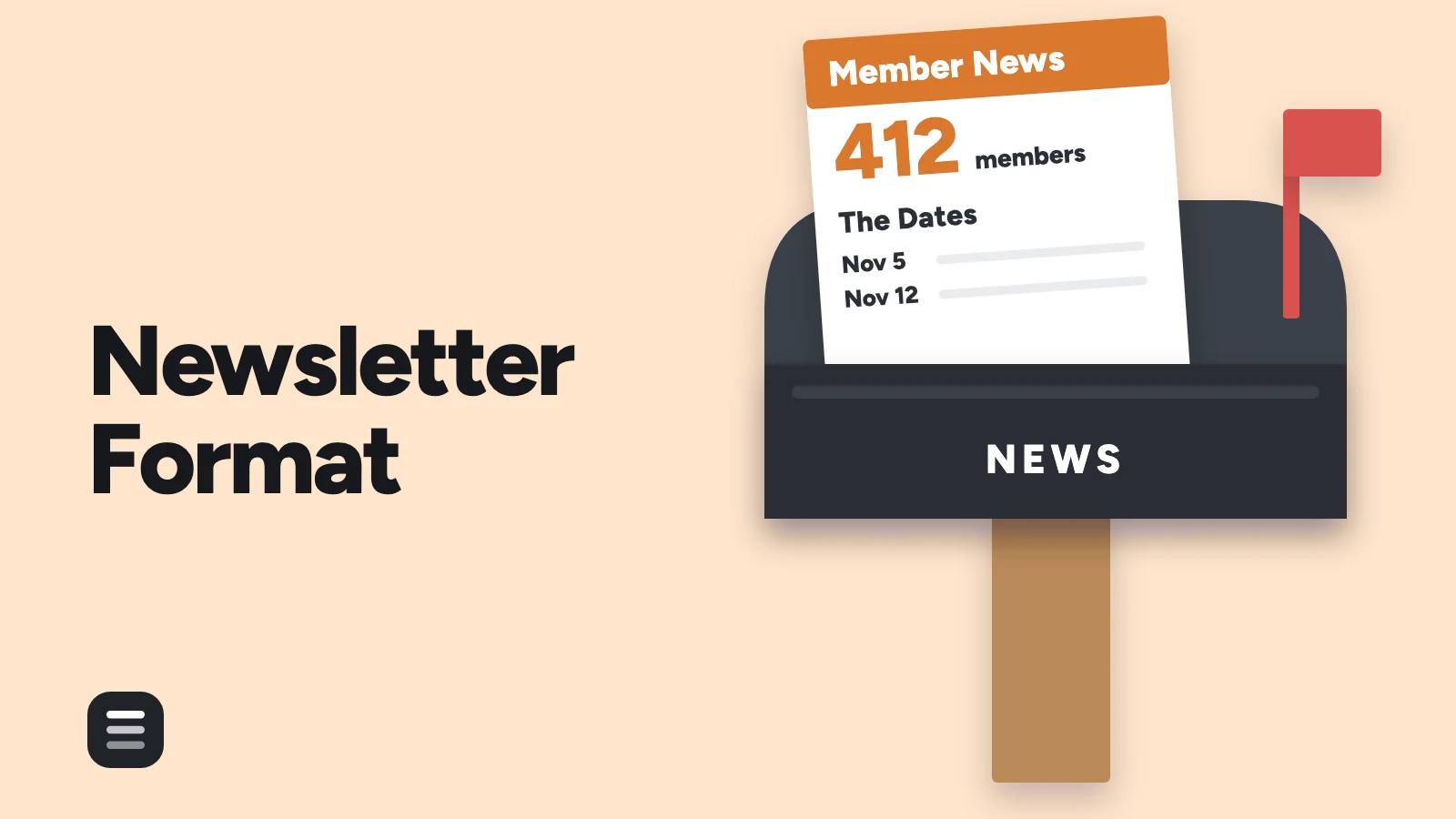
A newsletter gets read in the time it takes your reader to decide whether anything in it is for them. A good newsletter format makes that decision easy. It puts the one thing they need to do at the top, the dates in a list, and a real person's name at the bottom. Start from a free one pager template.
One‑Pager examples
Real One-Pagers made with MakeOnepagers. Open any one to edit it as your own.
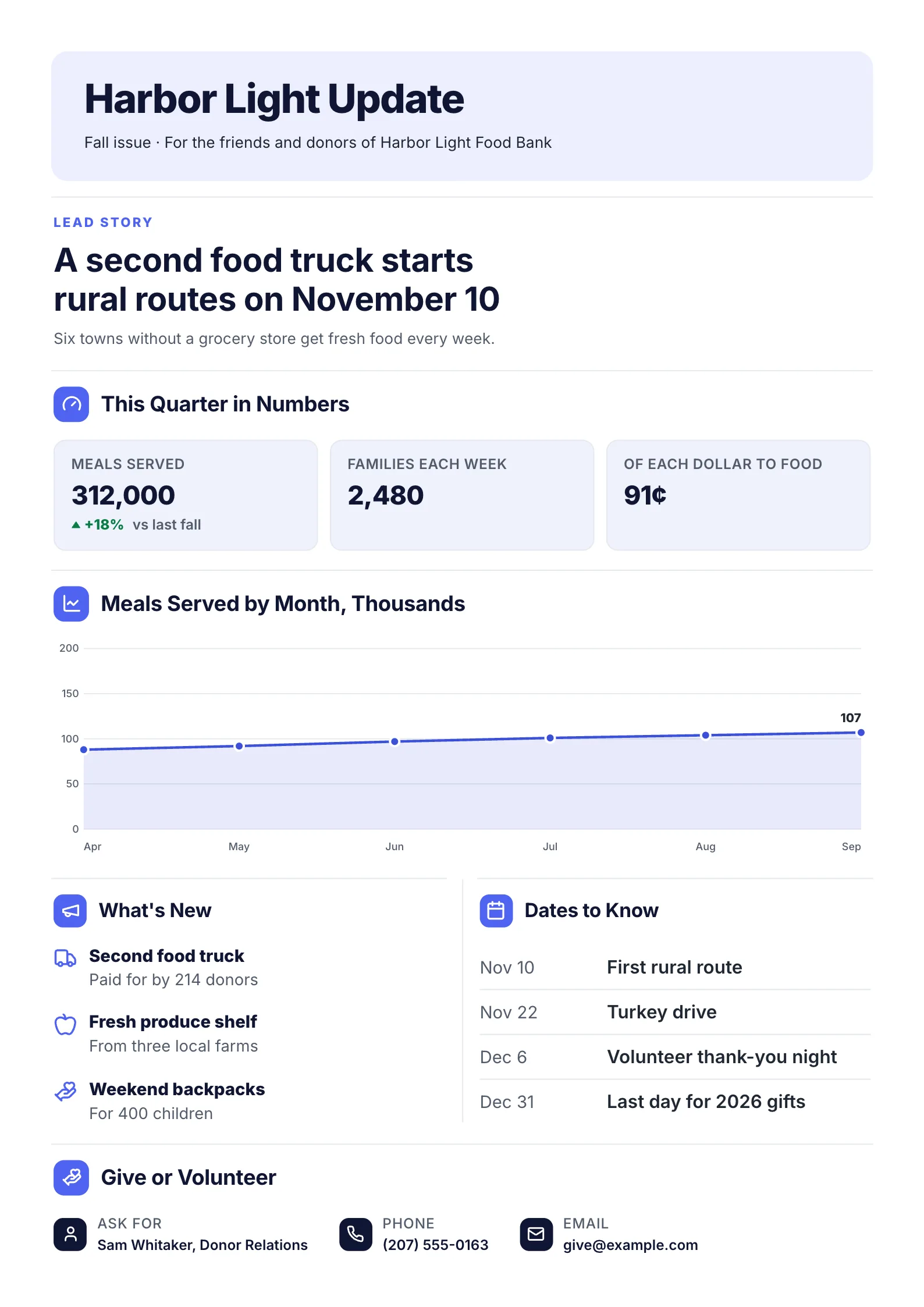 Nonprofit Donor NewsletterEdit for free(opens in a new tab)
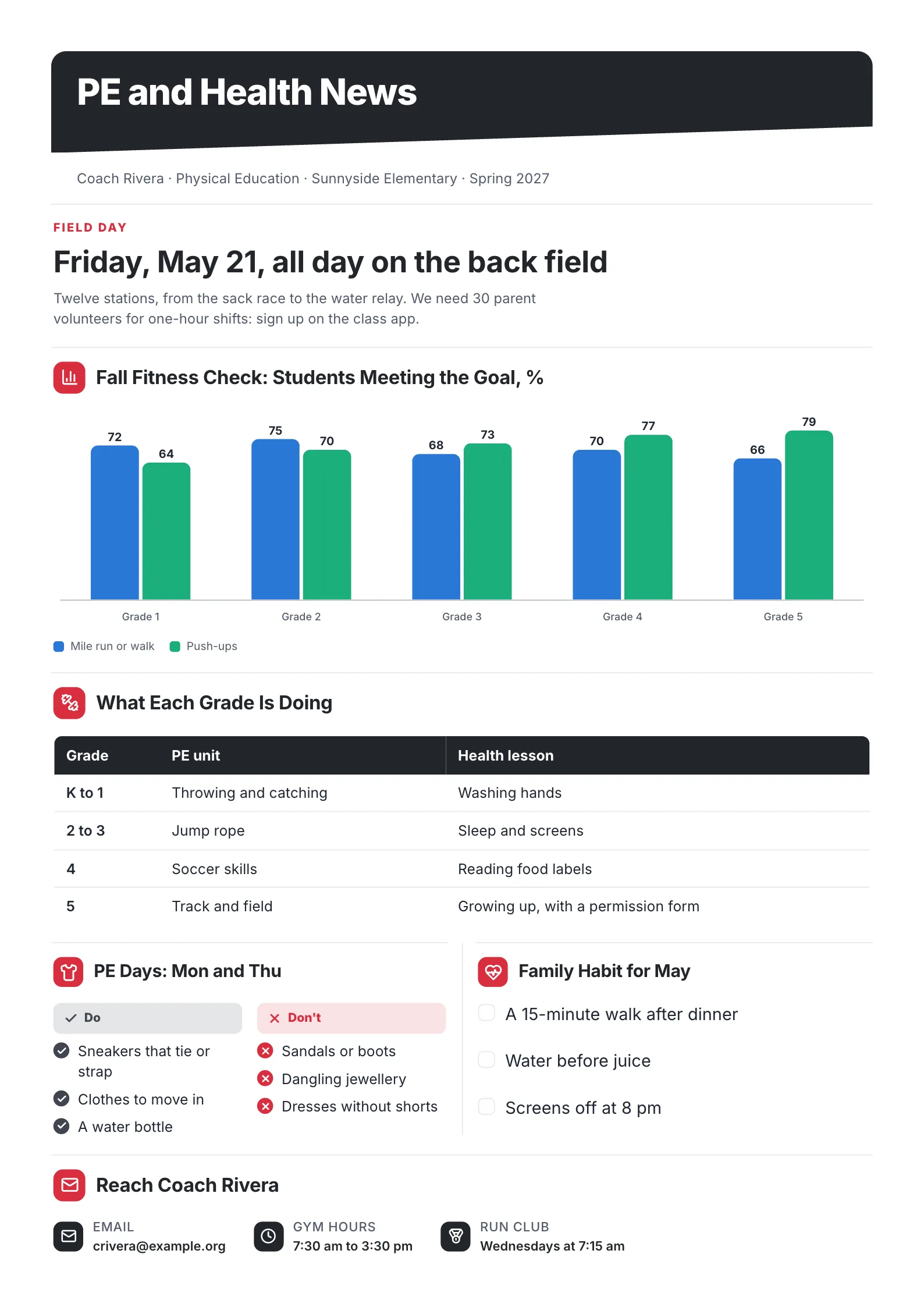 Teacher Newsletter: PE and HealthEdit for free(opens in a new tab)
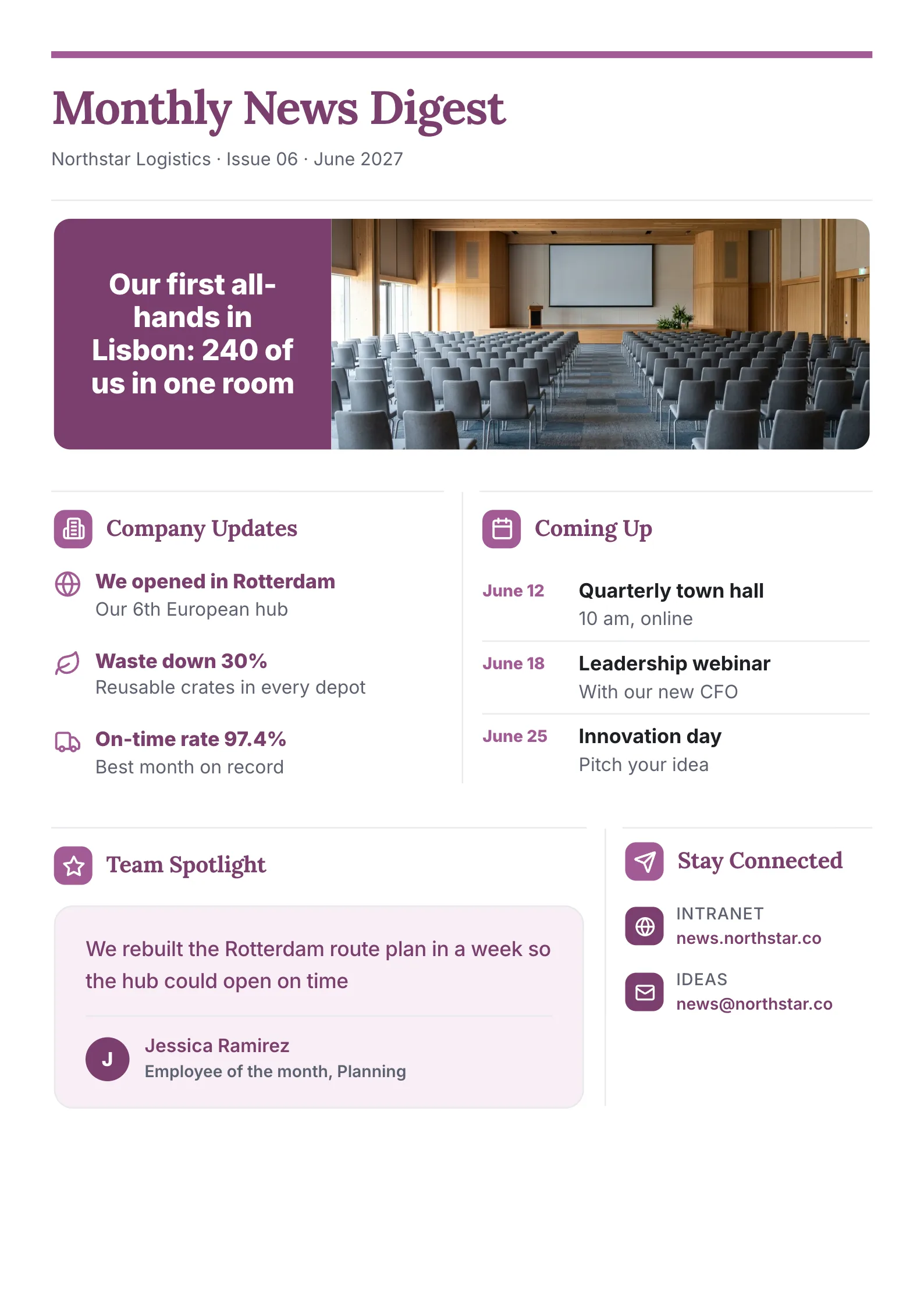 Staff Newsletter One-PagerEdit for free(opens in a new tab)
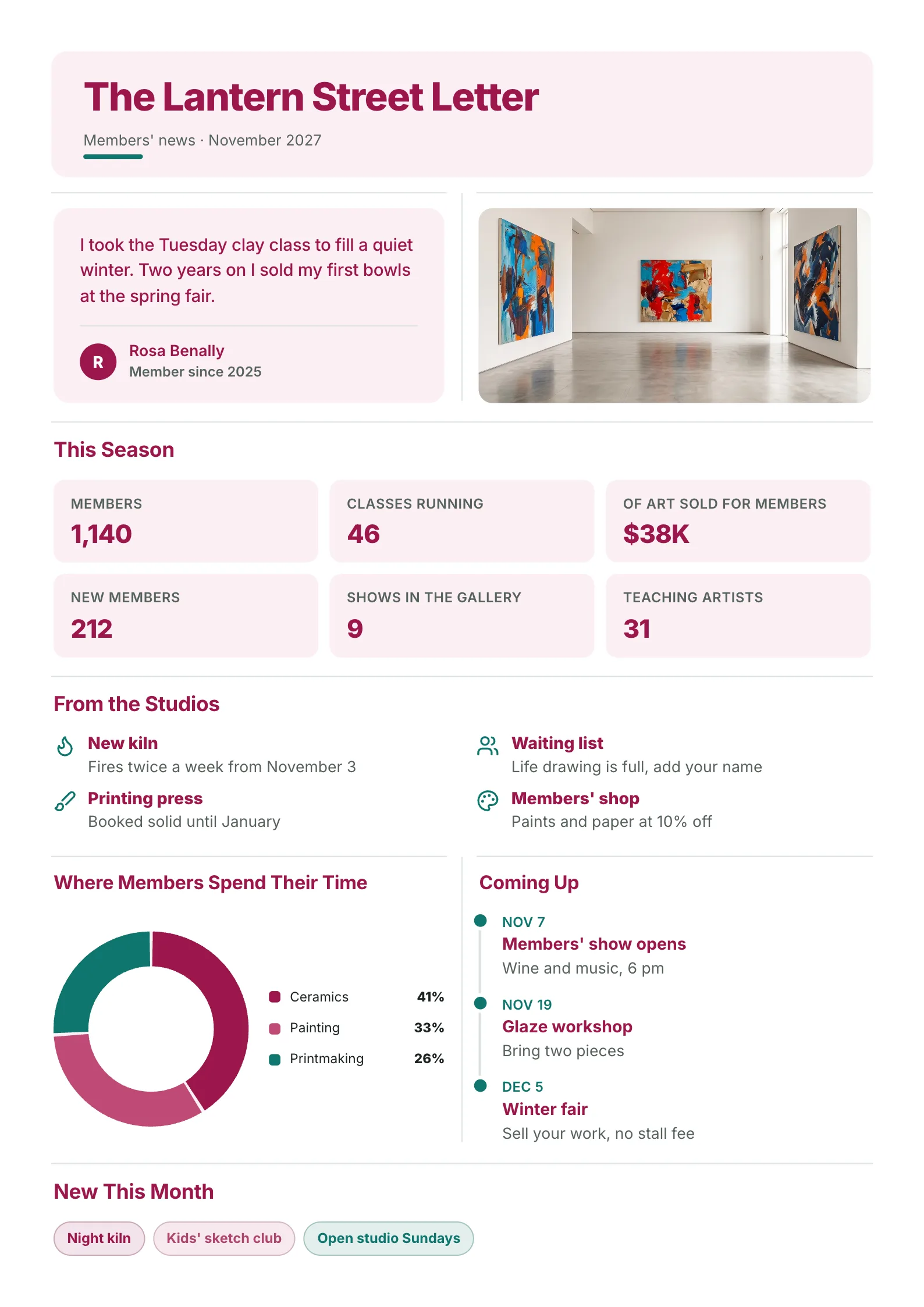 Arts Centre Member NewsletterEdit for free(opens in a new tab)
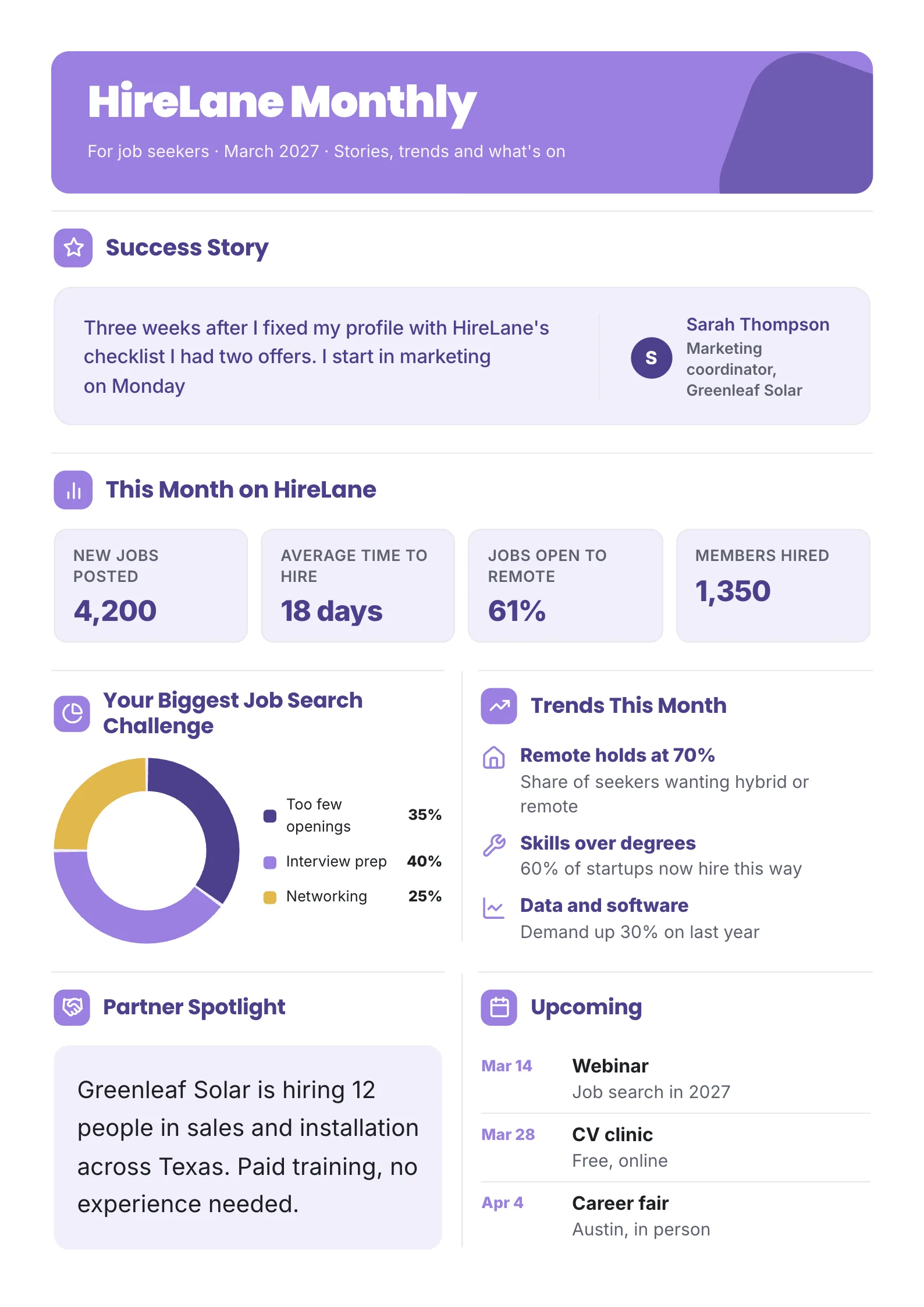 Job Seekers Newsletter One-PagerEdit for free(opens in a new tab)
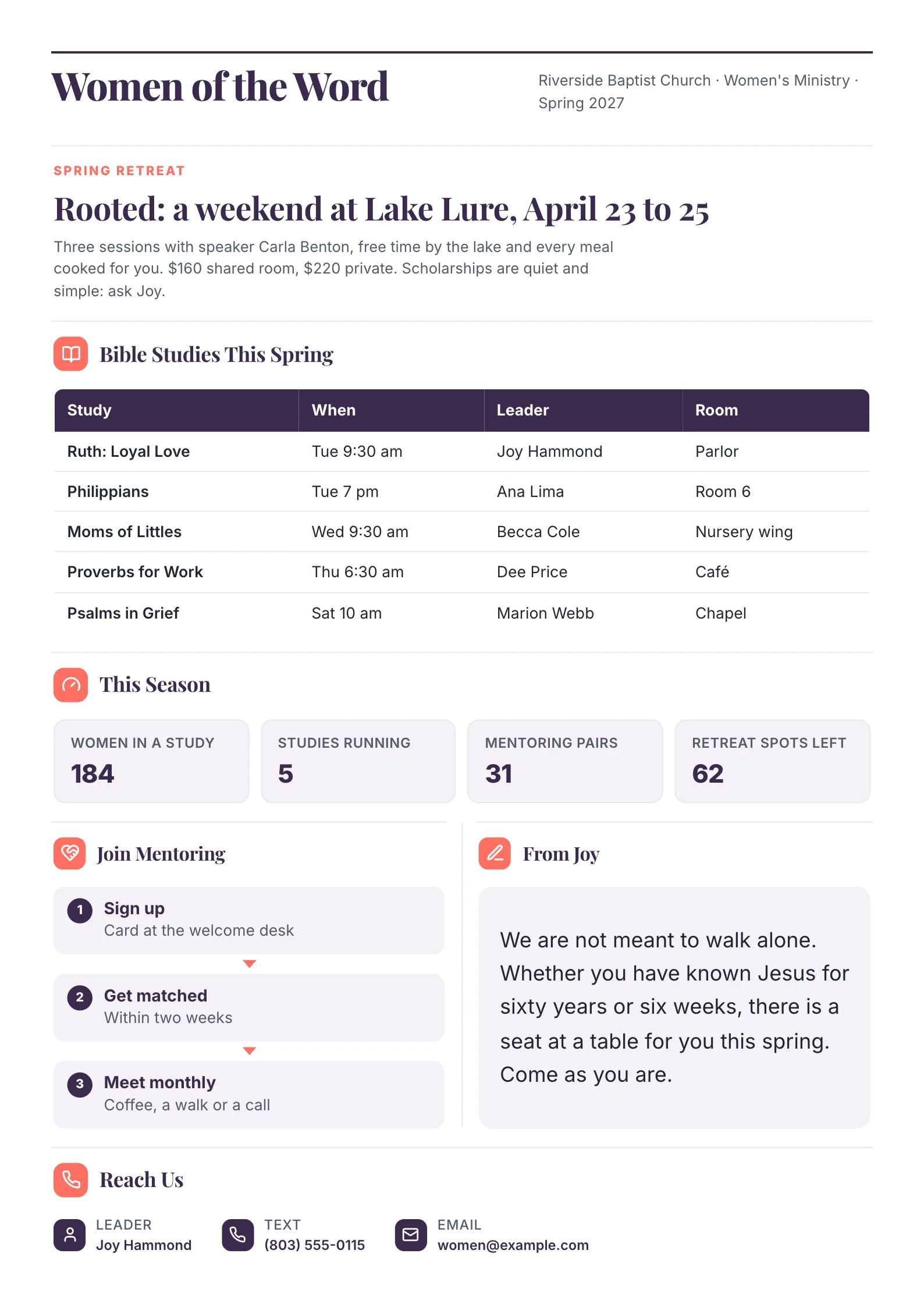 Church Newsletter: Women's MinistryEdit for free(opens in a new tab)
A marketing association wants early sign-ups, a church's small groups page wants new hosts, and a new church's launch update wants helpers. A homeschool co-op needs its dues in, and an art teacher needs old T-shirts for clay week. So each of these one-page newsletters uses a different set of boxes. If you send yours by email, the last section covers the FTC's rules for that.
A member association, with a deadline up top
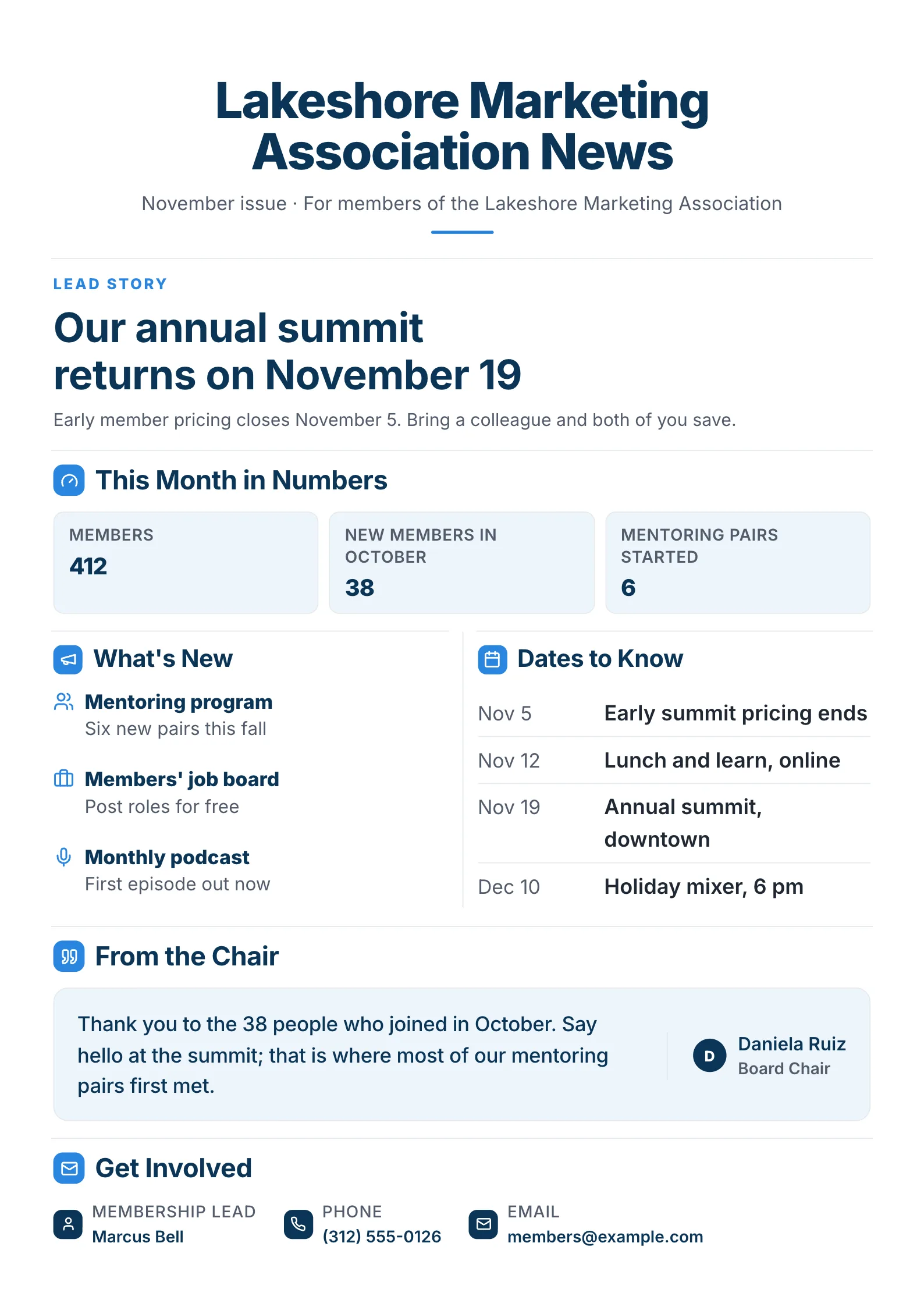
Lakeshore Marketing Association's November issue goes to its members, and the first line under the masthead is a deadline. Early member pricing closes November 5, and if you bring a colleague, you both save.
 Edit this template
A sample association. The lead line is the one action the chair wants this month.
"This Month in Numbers" gives you three: 412 members, 38 new members in October and 6 mentoring pairs started. Numbers like these tell your members the group is growing, which is its own reason to stay.
November 5 is when early summit pricing ends. November 12 is an online lunch and learn, November 19 is the annual summit downtown, and December 10 is the holiday mixer at 6 pm.
The note from the chair is two sentences. It thanks the 38 people who joined in October and asks them to say hello at the summit, where most mentoring pairs first met. Your own letter can stay just as short.
A church's small groups, with three steps to join
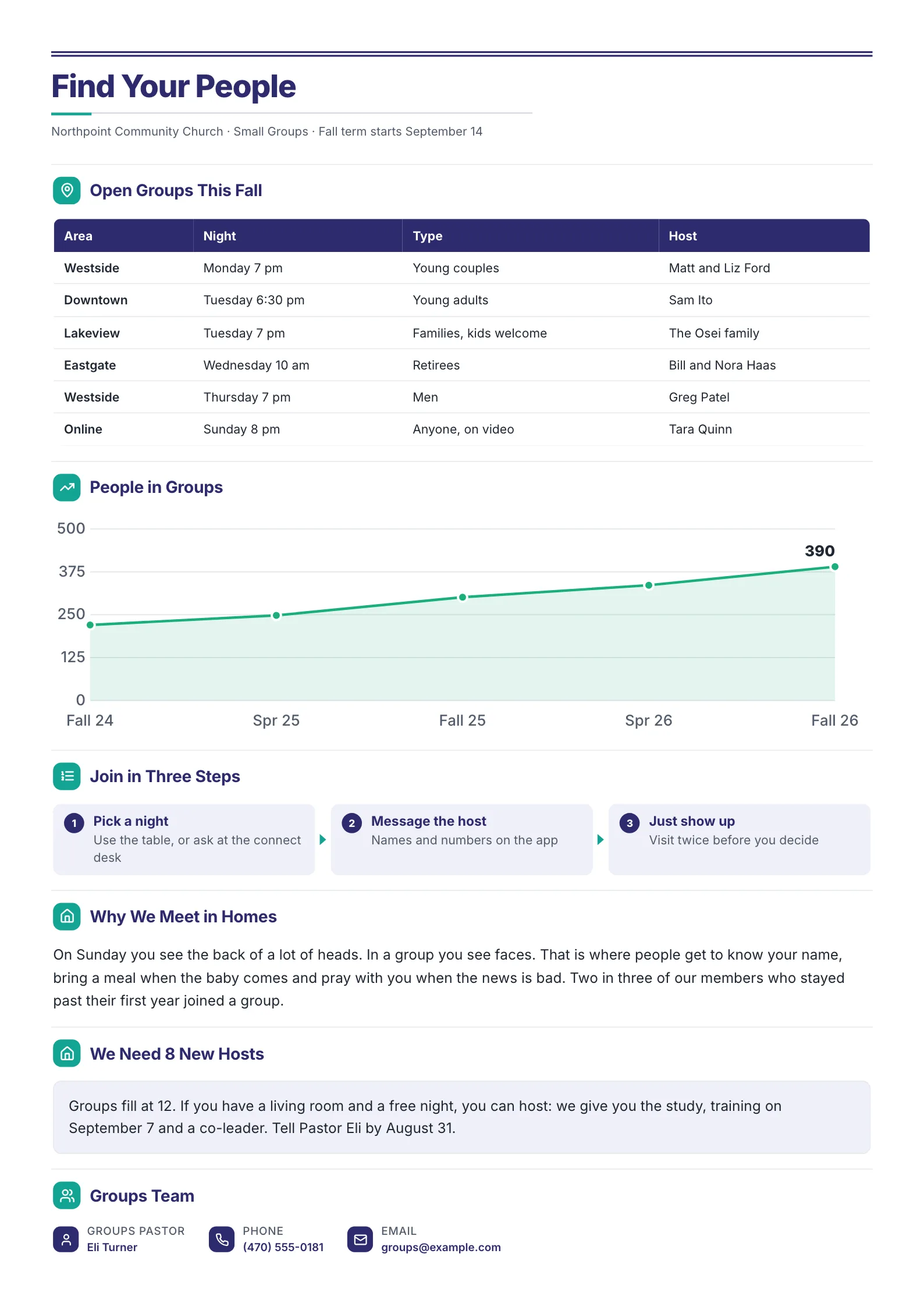
Northpoint Community Church's small groups newsletter opens with a headline, "Find Your People," and the fall term start date, September 14.
 Edit this template
Northpoint is invented. The three steps make joining feel like a small ask.
"Join in Three Steps" removes every excuse. Pick a night from the table or ask at the connect desk. Message the host, whose name and number are on the app. Then just show up, and visit twice before you decide.
"Why We Meet in Homes" explains the reason in plain words. In a service you see the back of a lot of heads, and in a group you see faces. That's where people learn your name, bring a meal when the baby comes and pray with you when the news is bad.
The second ask is specific. Groups fill at 12, so the church needs 8 new hosts. If you have a living room and a free night, the church gives you the study, training on September 7 and a co-leader, and you tell Pastor Eli by August 31.
A new church's launch update, for the church that sent it
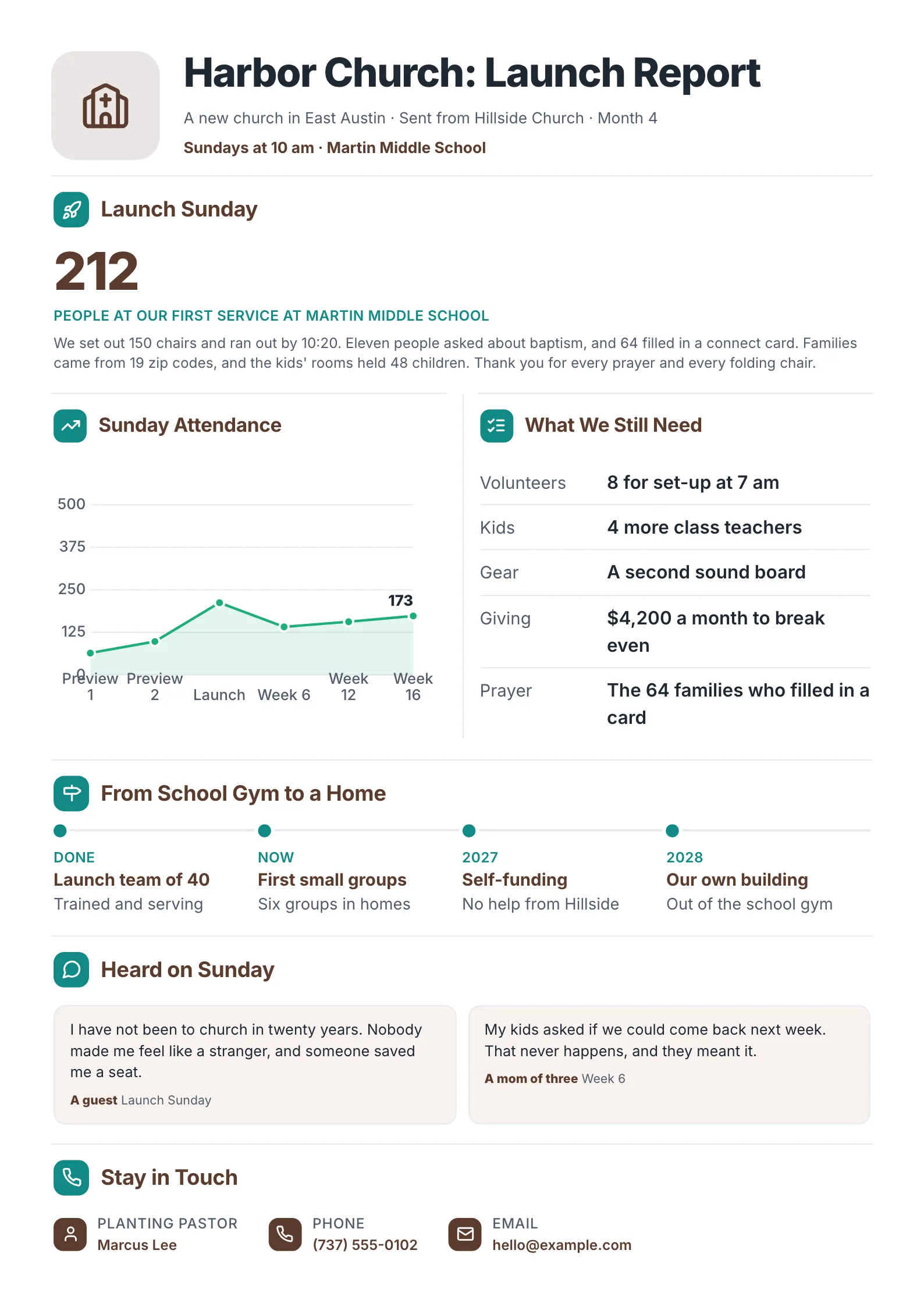
Harbor Church is a new church in East Austin, sent from Hillside Church. Its month 4 newsletter is a report back to the people who funded and prayed for it.
 Edit this template
Harbor Church is a sample plant. "What We Still Need" turns readers into helpers.
Launch day gets one big number: 212 people at the first service, held at Martin Middle School. A chart of weekly attendance for adults and kids sits beside it.
"What We Still Need" lists eight volunteers for set-up at 7 am, four more kids' class teachers, a second sound board, $4,200 a month in giving to break even and prayer for the 64 families who filled in a card. Each need is small enough that one of your readers can say yes to it.
"Heard at Launch" closes with two quotes from visitors. One hadn't been to church in twenty years, and someone saved them a seat.
A homeschool co-op's term news
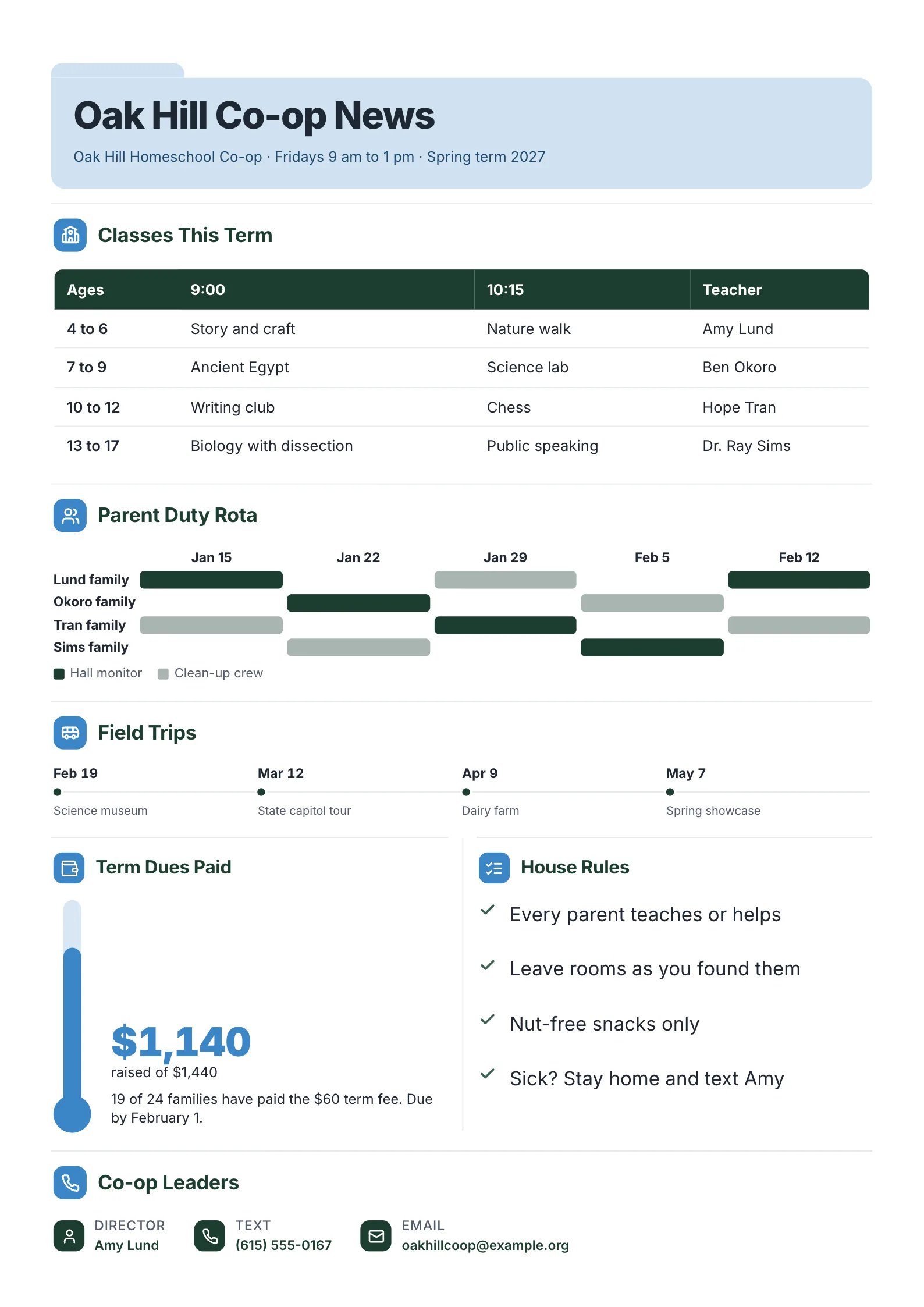
Oak Hill Homeschool Co-op meets Fridays from 9 am to 1 pm, and this is its spring 2027 term newsletter. It's built for parents who share the teaching.
 Edit this template
A sample co-op. The duty schedule names each family, so nobody can say they missed it.
Each family's name sits next to its week in the parent duty schedule, so every parent knows when they're on.
"Term Dues Paid" is a gentle nudge. It shows $1,140 collected, with 19 of 24 families paid at $60 each, and a due date of February 1. Nobody's named for being late, but the five families who haven't paid can do the math.
Field trips list the term's four outings, from the science museum and the state capitol tour to a dairy farm and the spring showcase.
An art teacher's March letter
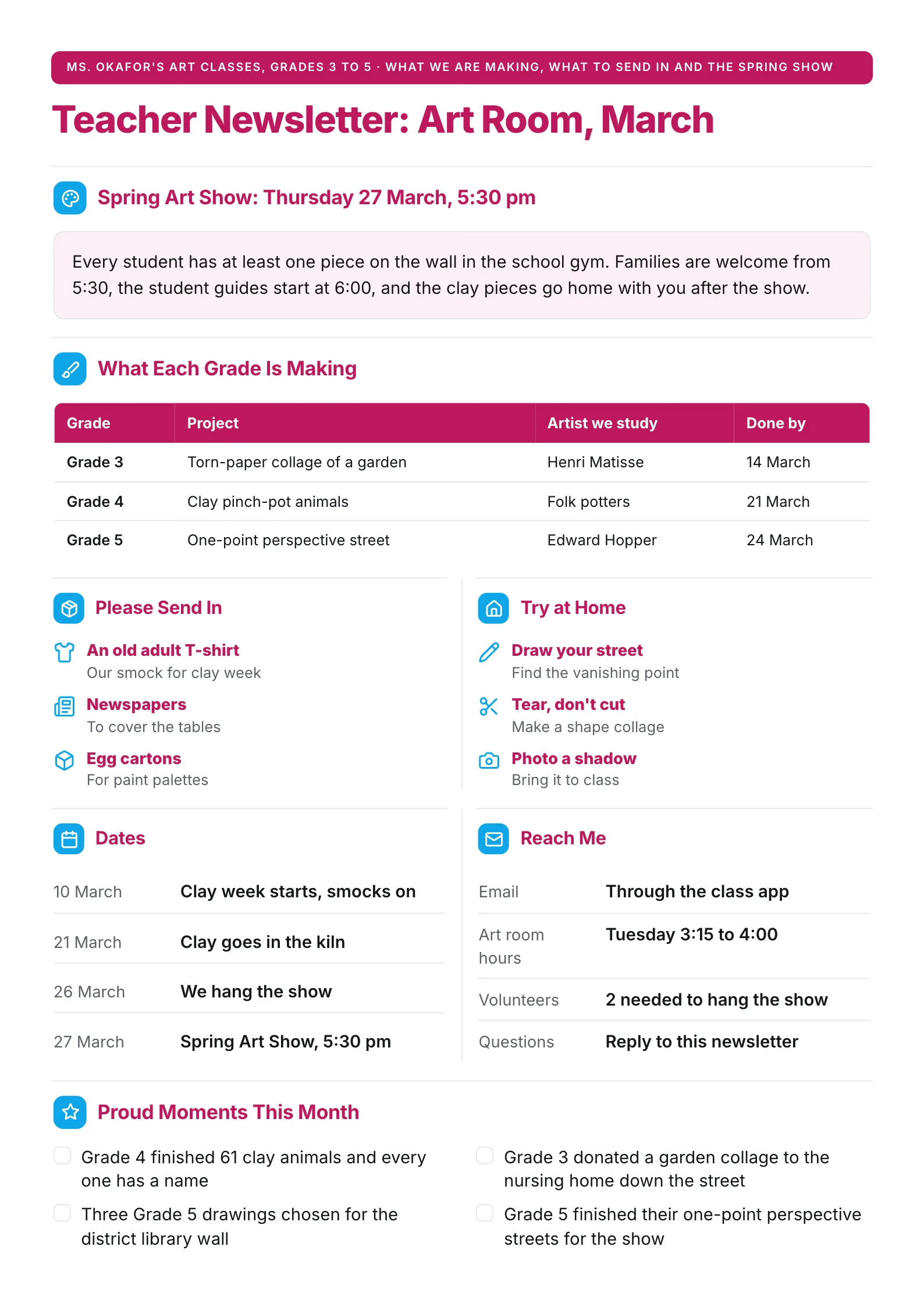
Ms. Okafor teaches art for grades 3 to 5, and her March newsletter covers what classes are making, what to send in and the spring show.
 Edit this template
Ms. Okafor is invented. The send-in list tells parents exactly what each item is for.
The show gets the top band: Thursday, March 27, at 5:30 pm, in the school gym. Every student has at least one piece on the wall. Families are welcome from 5:30, student guides start at 6:00, and the clay pieces go home with you after the show.
"Please Send In" explains each request. An old adult T-shirt becomes a smock for clay week. Newspapers cover the tables. Egg cartons become paint palettes. When you tell parents why, more of them remember.
"Try at Home" gives families five small projects, from drawing your street to finding the vanishing point. The dates box runs from clay week on March 10 to the show on March 27.
The FTC's rules if you email it
If your newsletter goes out by email and promotes anything, the CAN-SPAM Act applies. We read the FTC's compliance guide on October 30, 2026. It says the law doesn't apply just to bulk email, and it lists 8 main requirements.
| FTC requirement | What it means for your newsletter |
|---|---|
| Don't use false or misleading header information | Send from your real name and address |
| Don't use deceptive subject lines | "November issue: summit pricing ends Nov 5" is fine |
| Identify the message as an ad | Label any issue whose main purpose is to sell |
| Tell recipients where you're located | Include a valid physical postal address |
| Tell recipients how to opt out | A clear unsubscribe link in every issue |
| Subscribers and members can opt out too | Membership doesn't remove the right to stop marketing email |
| Honor opt-out requests promptly | Within 10 business days; the link must keep working for at least 30 days after you send |
| Monitor what others do on your behalf | Your email service's mistakes are still yours |
Each separate email that breaks the law can bring a penalty of up to $53,088. The guide is about email, so a printed copy handed out at a meeting falls outside it.
Lead with the one thing to do
Find the single action you want readers to take this issue and put it under your masthead. Lakeshore's November page from MakeOnepagers leads with early pricing closing November 5, and Northpoint's leads with a start date. Then list your dates, add the person readers can call, and send it. A filled one page newsletter template gives you this order ready to print on US Letter or A4.
Frequently asked questions
What is the standard newsletter format?
A masthead with the name and date, one lead item, a block of news or numbers, a dated list and a contact. One page is enough for most monthly issues. Our guide on how to write a newsletter walks through each box.
How long should a newsletter be?
One page for a monthly or termly issue. If you have more to say, link to it. Keep the dates and the asks on page one.
Should a newsletter have pictures?
One or two, if they show your people or your work. The art room letter would be a natural fit for a photo of last year's show. For more layouts, see these newsletter examples.




