Cash Flow Mistakes: 7 to Fix, Checked Against a Fed Survey of 6,500 Firms
Cash flow mistakes, checked against the Fed's 2026 survey: 50% of small employers had uneven cash flow, and 24% in trouble paid late or not at all.

Cash flow mistakes are nearly always timing mistakes. Money arrives later than you planned or leaves sooner, and you find out on the day the account runs low. The numbers show how common that is. In the Federal Reserve's 2026 survey of small employers, 50% said uneven cash flow was a financial challenge in the past year, and 54% had trouble paying operating expenses such as payroll, rent and inventory. Start from a free one pager template.
One‑Pager examples
Real One-Pagers made with MakeOnepagers. Open any one to edit it as your own.
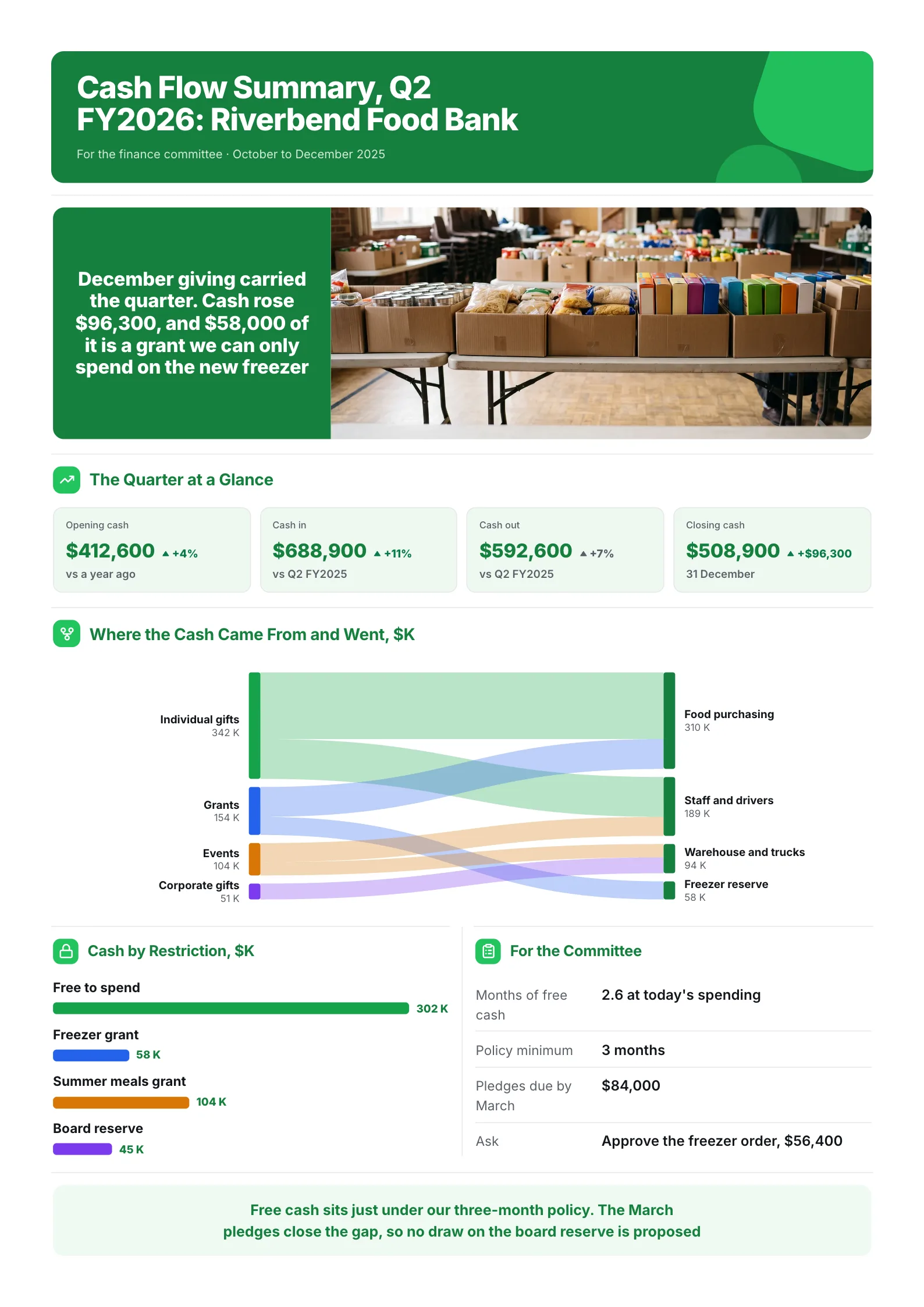 Cash Flow Summary: Food Bank QuarterEdit for free(opens in a new tab)
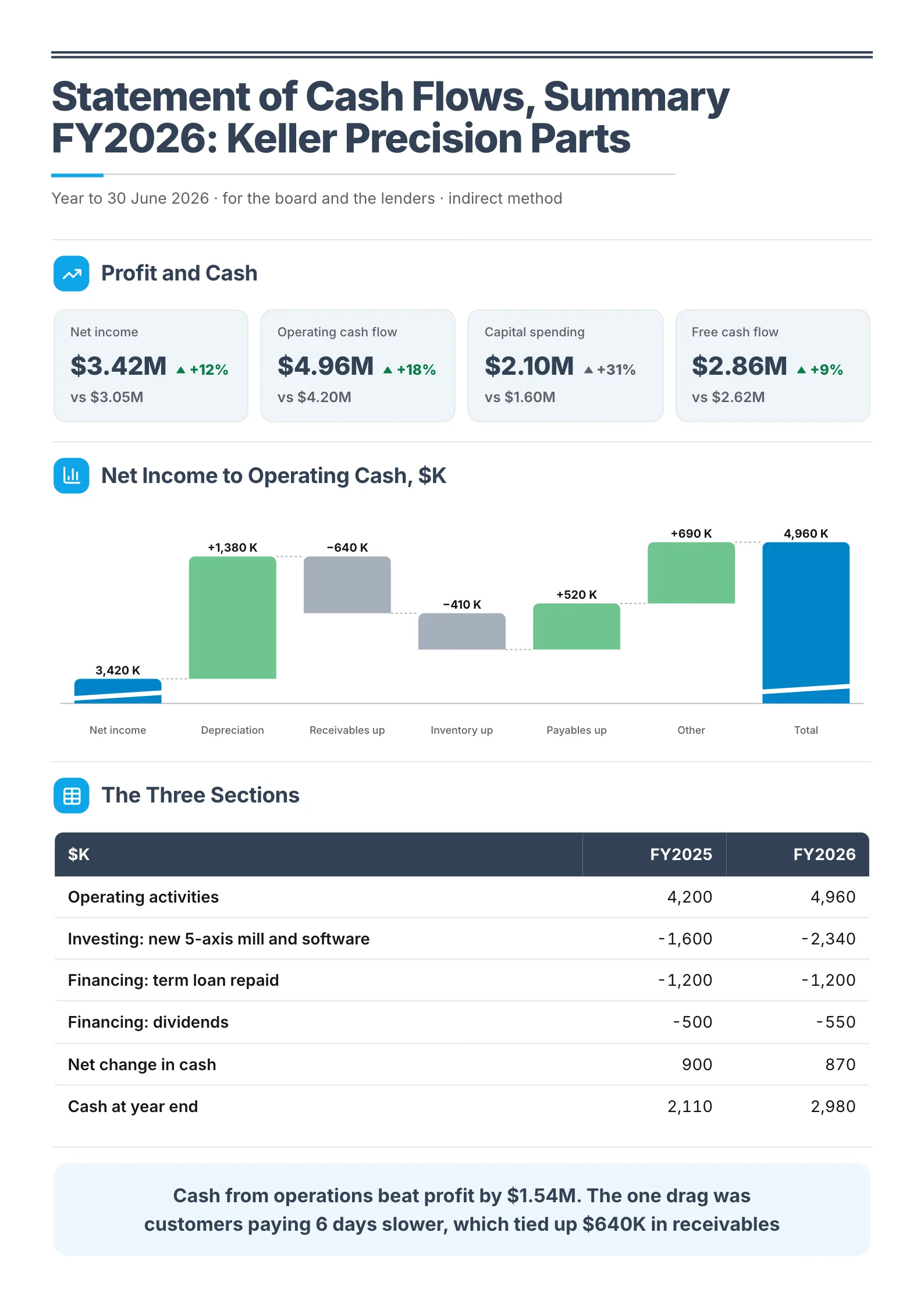 Cash Flow Summary: Manufacturer Year, Indirect MethodEdit for free(opens in a new tab)
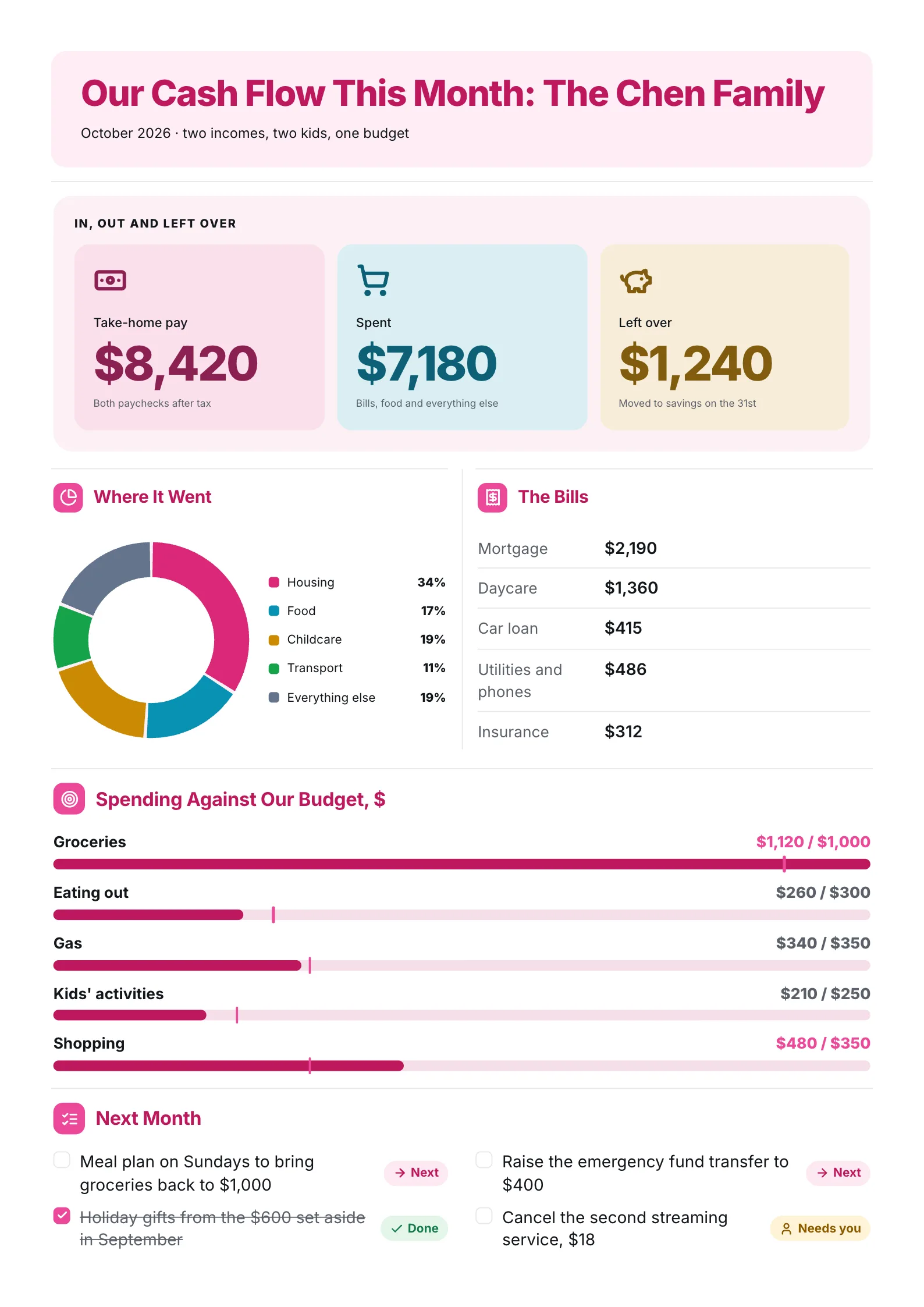 Cash Flow Summary: Household MonthEdit for free(opens in a new tab)
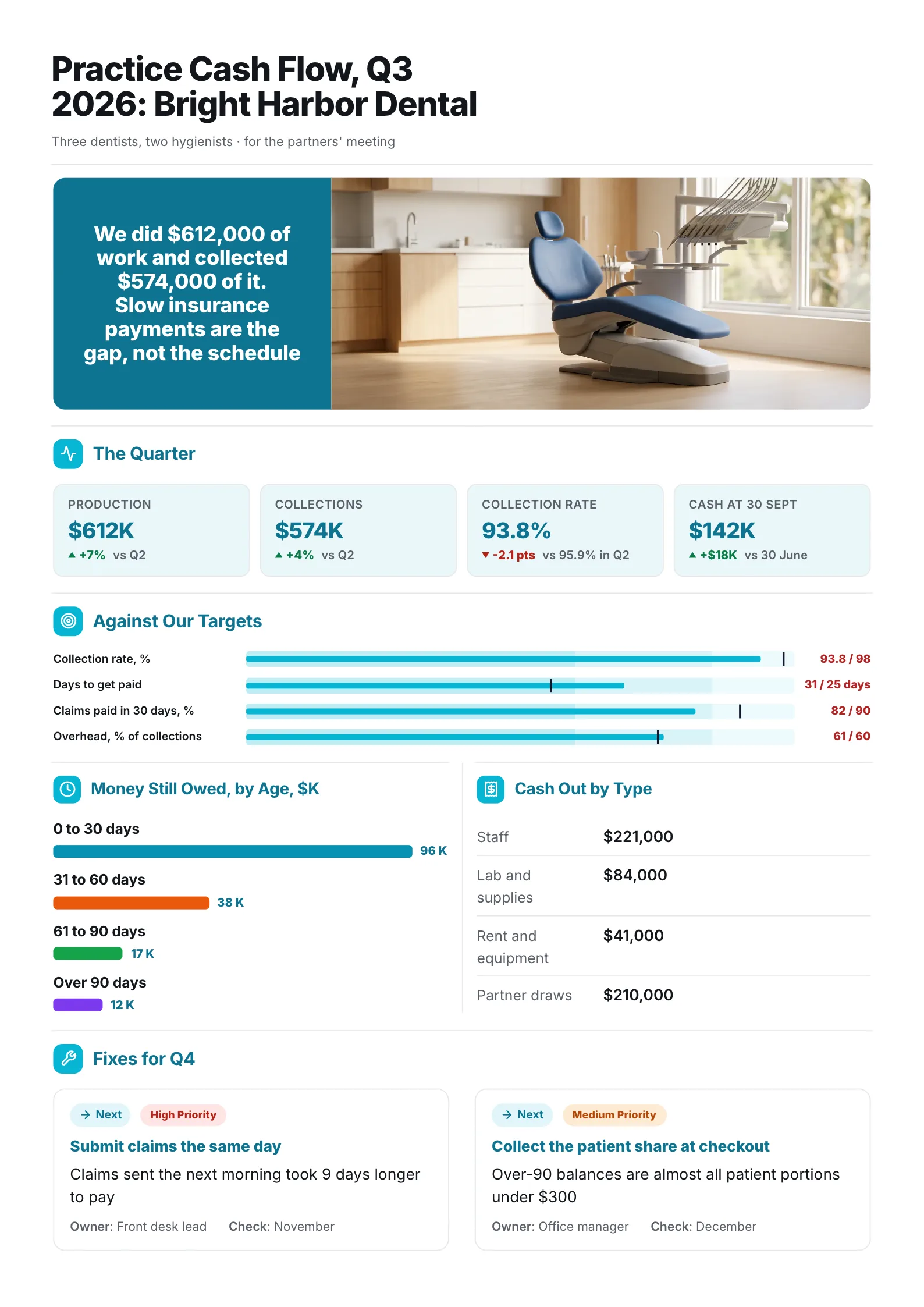 Cash Flow Summary: Dental Practice QuarterEdit for free(opens in a new tab)
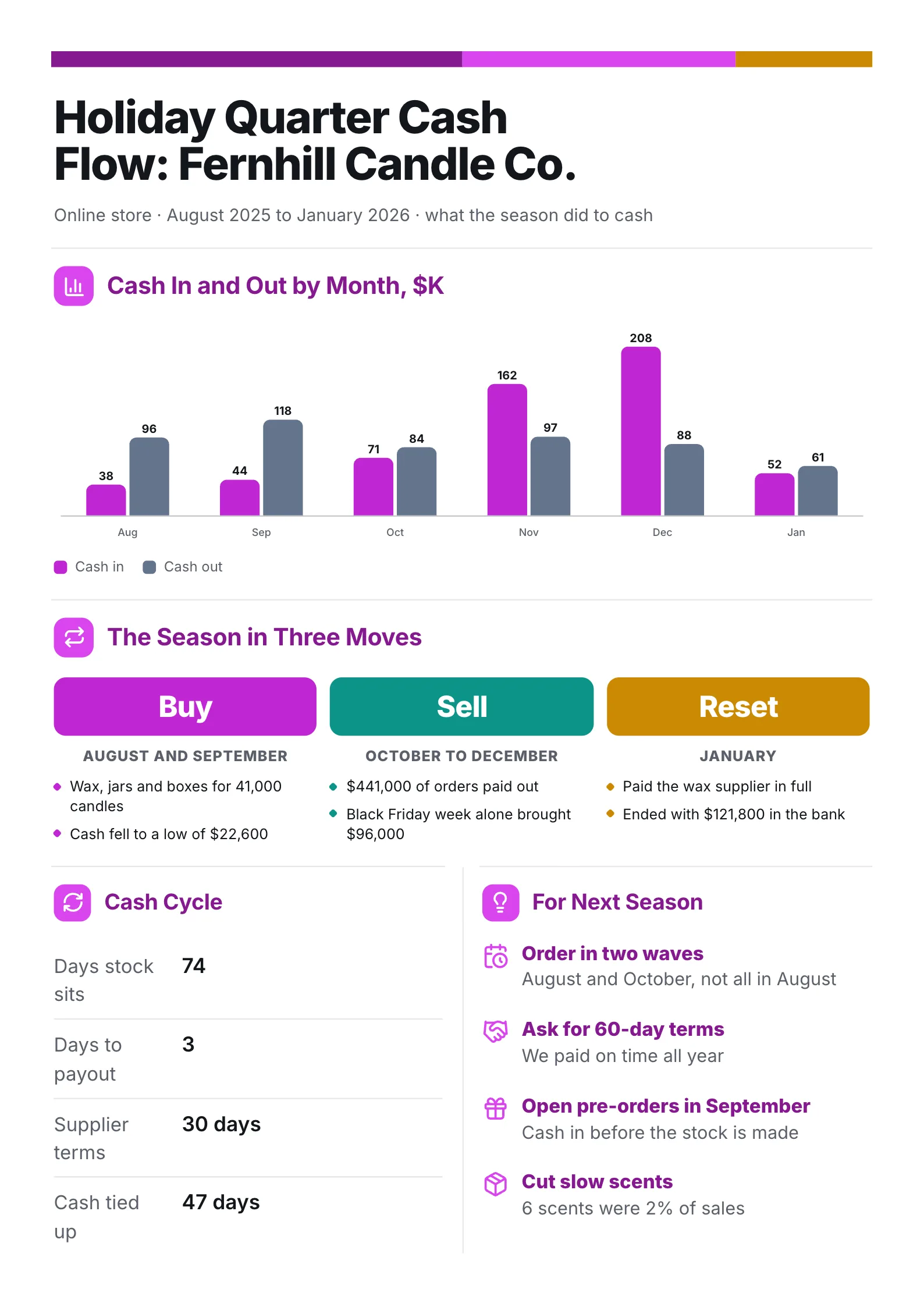 Cash Flow Summary: Online Store Holiday SeasonEdit for free(opens in a new tab)
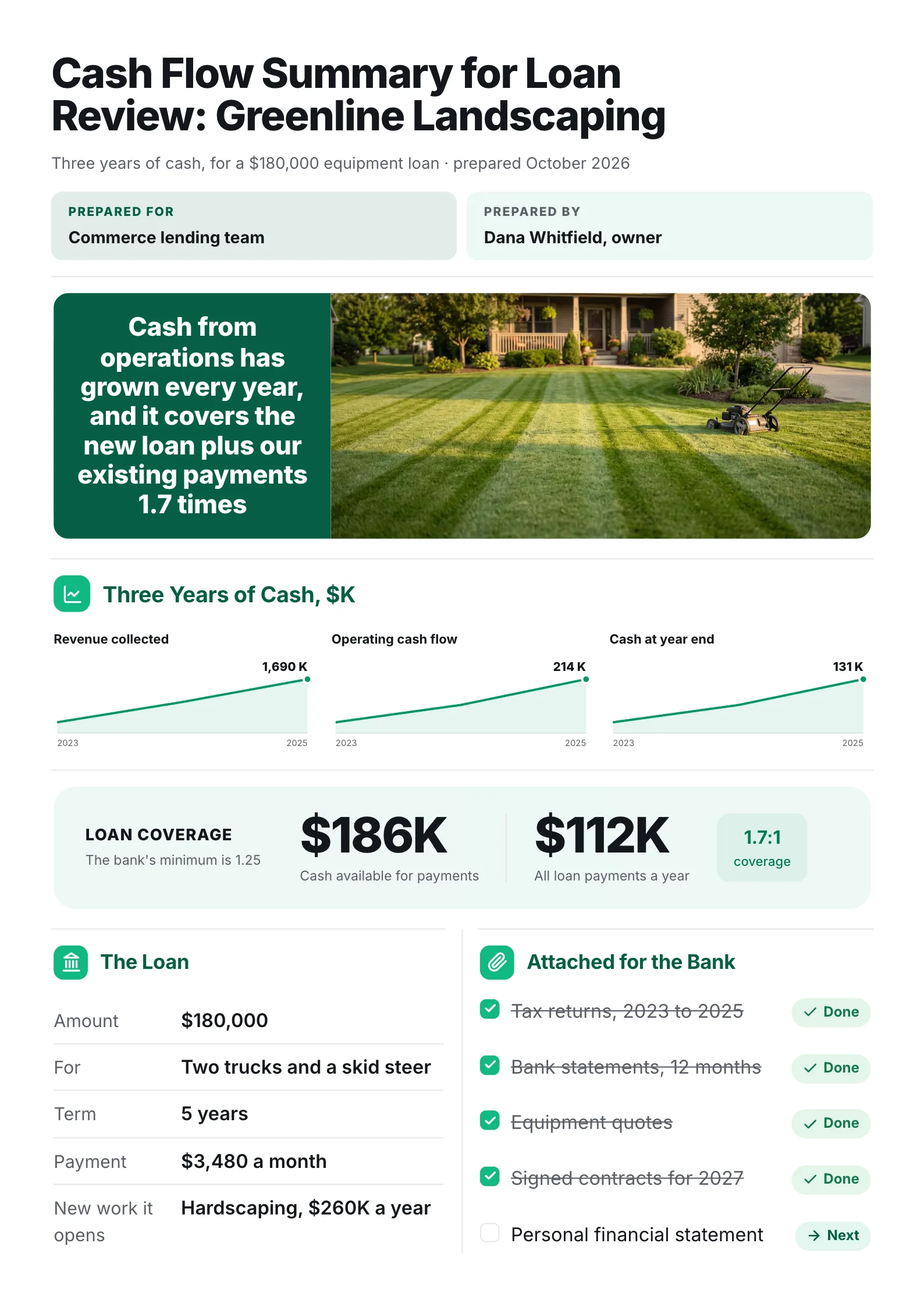 Cash Flow Summary: Loan ApplicationEdit for free(opens in a new tab)
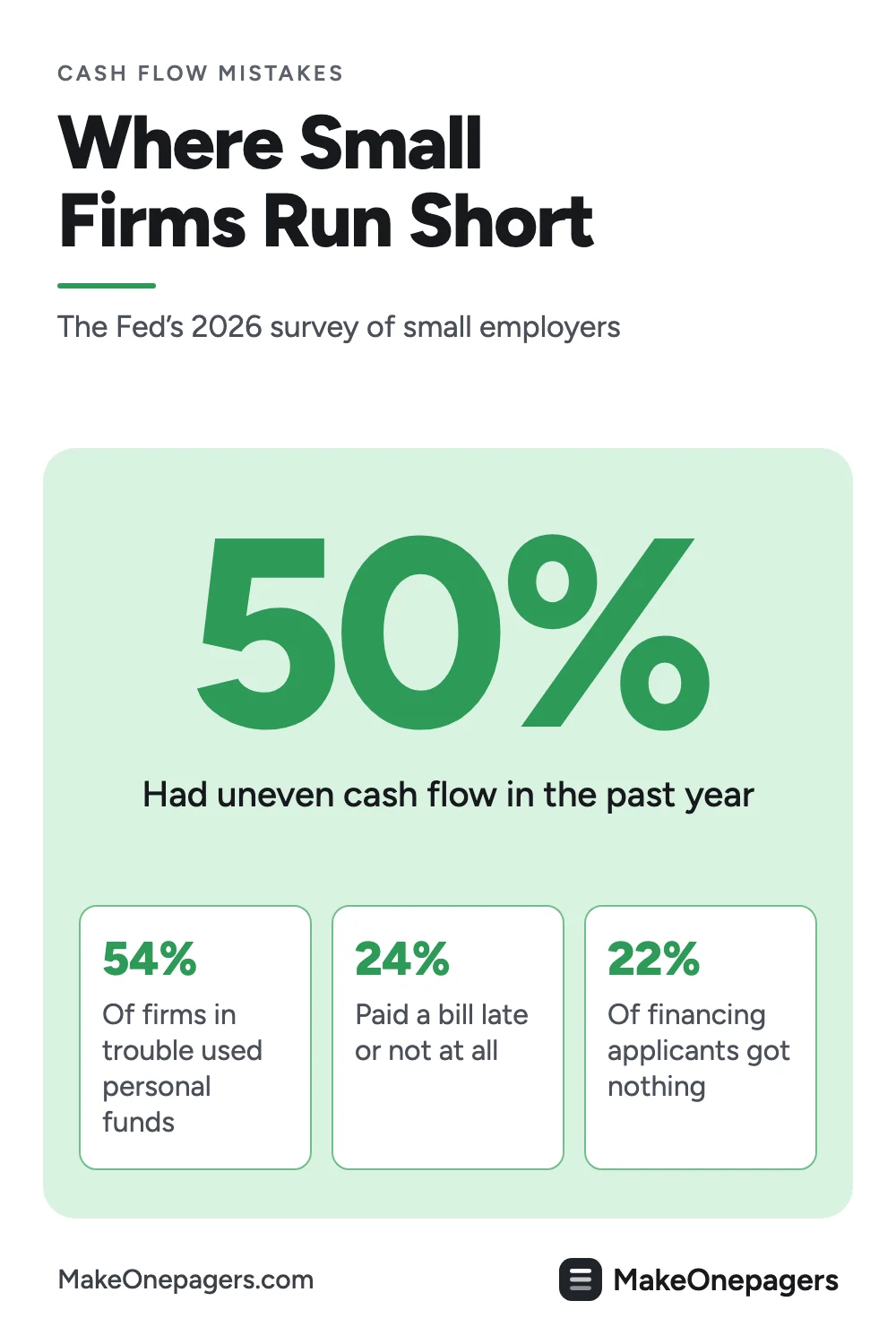
What firms did next matters just as much. Of those with money trouble, 54% put in personal funds and 24% made a late payment or didn't pay. Below are 7 mistakes that lead there, the rule or number behind each, and a sample sheet with the fix worked out in dollars.
What the Fed's survey shows
The Small Business Credit Survey is run each year by the 12 Federal Reserve Banks. The 2026 report, published in March, covers firms with 1 to 499 employees and was fielded from September 3 to November 14, 2025. It drew 6,525 responses, and 6,500 firms answered the question on financial challenges. The Fed notes that it "is not a random sample," so treat each share as a guide to how common a problem is.
| Financial challenge in the past 12 months | Share of small employers |
|---|---|
| Higher costs of goods, services or wages | 73% |
| Paying operating expenses | 54% |
| Uneven cash flow | 50% |
| Weak sales | 48% |
| Higher costs from tariffs | 42% |
| Making debt payments | 33% |
| Getting credit | 29% |
| None of these | 6% |
Two rows are cash flow in plain words. The Fed's footnote says "uneven cash flow" includes collecting on receivables, and its examples for paying operating expenses are payroll, rent and inventory. Firms could pick more than one row, which is why the column adds up past 100%.
Then the report asks what firms did about it. Among firms with a financial challenge:
- 54% used personal funds.
- 47% used cash reserves.
- 36% took out debt.
- 24% made a late payment or did not pay.
Borrowing late is hard, too. Of the 60% of firms that applied for financing, 56% did it to meet operating expenses, and 22% of applicants got none of what they asked for.
Mistake 1: You send the invoice and wait
Uneven cash flow starts with money you've earned and haven't collected. Every day an invoice sits unpaid, you're lending your customer money for free.
The fix. Bill the day the work is done. Ask for a deposit before you start on large jobs. Put a follow-up date on every invoice, and chase it on that date rather than when you notice the bank balance.
 Edit this template
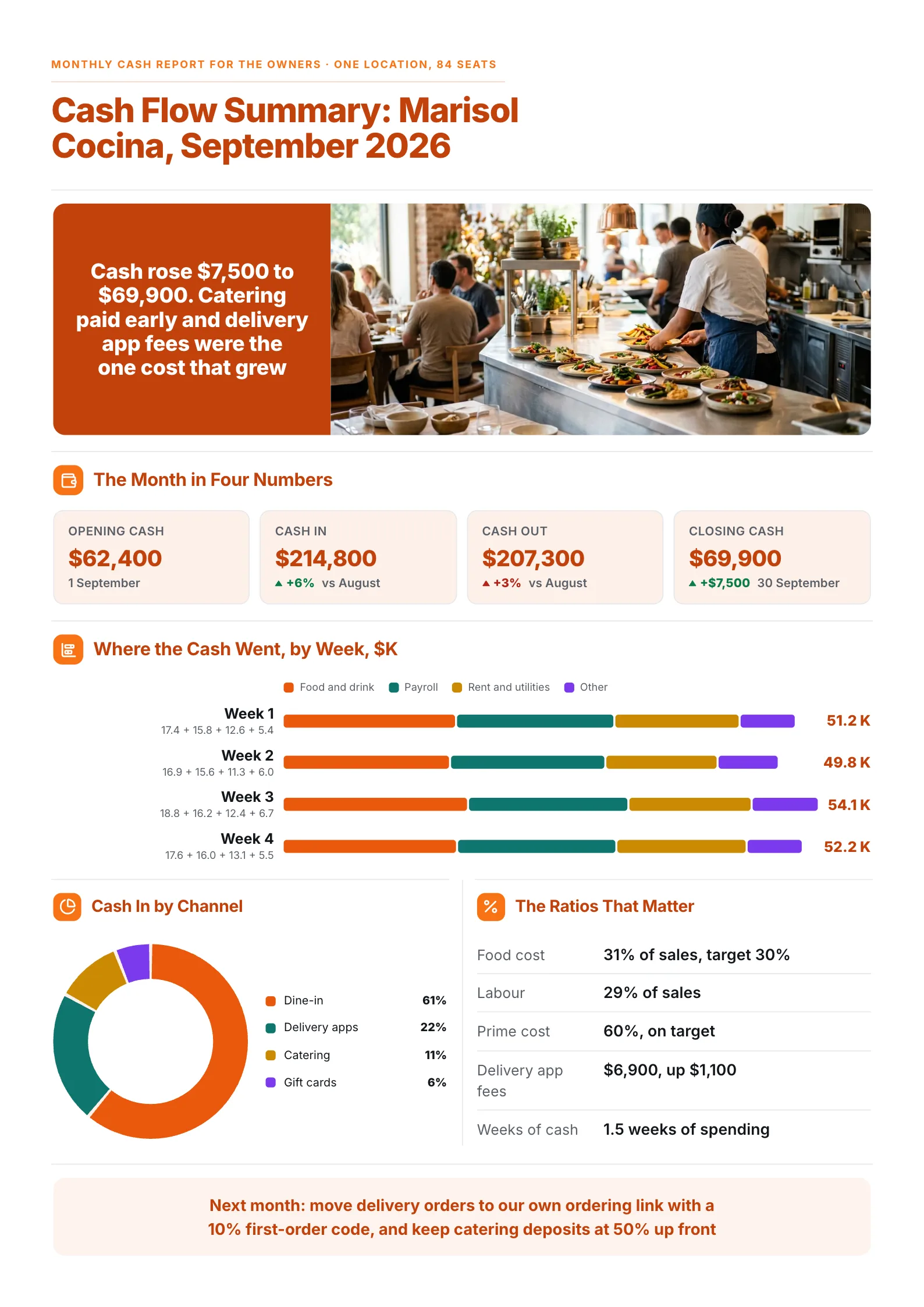
This restaurant monthly cash flow summary shows a deposit rule at work. Cash rose $7,500 to $69,900 in September, and the headline says catering paid early. The plan for next month keeps catering deposits at 50% up front. It also names the one cost that grew, delivery app fees, at $6,900 and up $1,100. Copy that habit and put your deposit rule in writing where your team can see it.
Mistake 2: You only look back
A profit and loss report tells you what happened last month. It can't warn you that cash will dip in week 7. So you need a forward view, by week, for the next quarter.
The fix. Build a 13-week cash forecast. List what's already known to come in and go out, week by week, and mark the lowest point. Then set a minimum you won't go below, and plan what you'll do if a week gets close.
 Edit this template
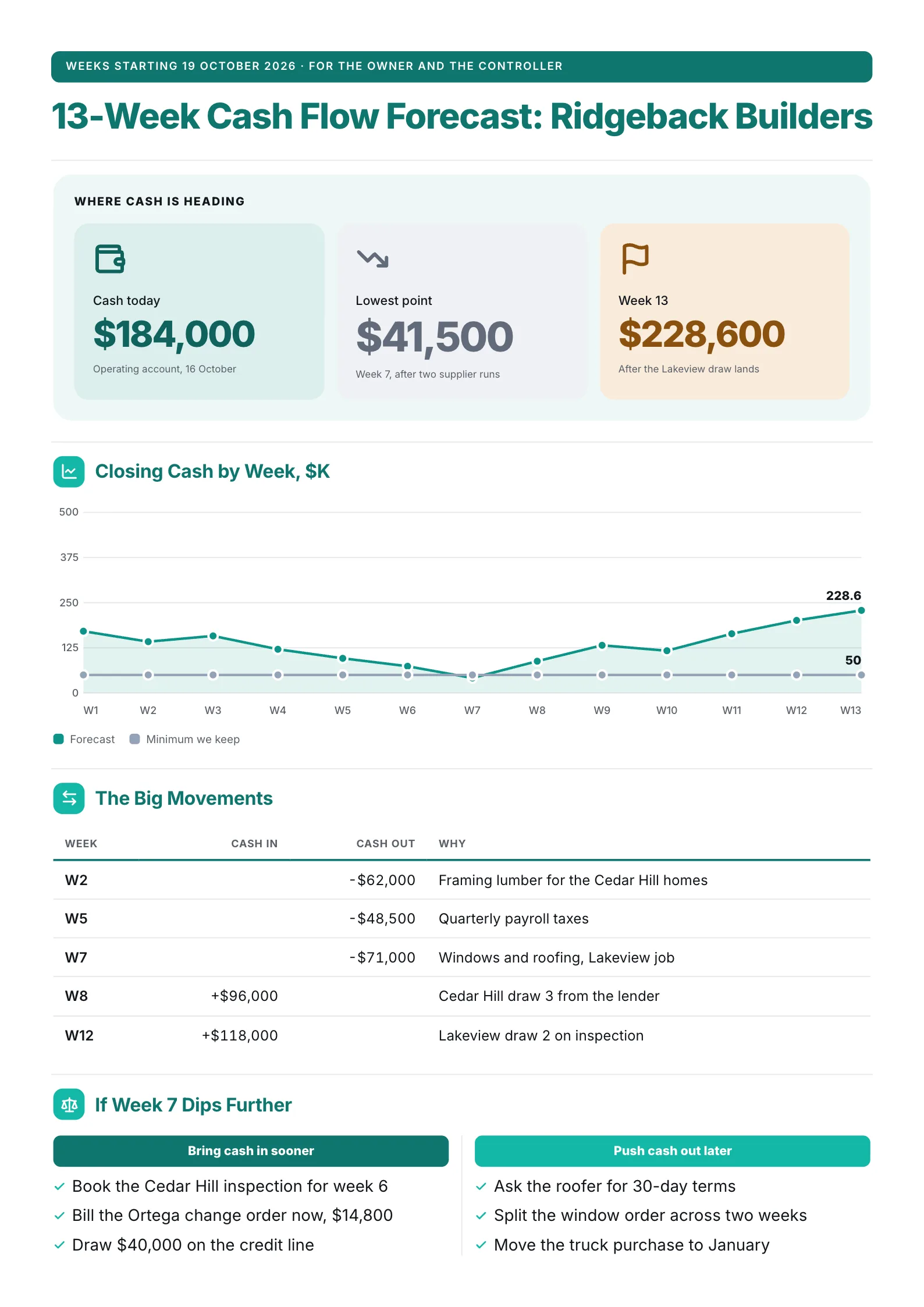
This 13-week cash flow forecast starts at $184,000 and finds its lowest point, $41,500, in week 7, after two supplier runs. Week 13 ends at $228,600 once a lender's draw lands. Below the chart sit two lists for a bad week 7. One brings cash in sooner, such as billing a $14,800 change order now. The other pushes cash out later, such as asking the roofer for 30-day terms. Give yourself both lists before you need them.
Mistake 3: You spend money that belongs to the tax office
Payroll taxes you withhold aren't yours to spend. They sit in your account until you deposit them, so the balance looks bigger than it is.
The IRS spells out the cost of a late employment tax deposit. The penalty is a share of the late amount, and it climbs with time:
| How late | Penalty on the unpaid deposit |
|---|---|
| 1 to 5 calendar days | 2% |
| 6 to 15 calendar days | 5% |
| More than 15 calendar days | 10% |
| More than 10 days after the first notice, or the day you get a notice for immediate payment | 15% |
Income tax works the same way if you run your own business. The IRS says taxes "must be paid as you earn or receive income during the year." Sole owners, partners and S corporation shareholders generally pay estimated tax if they expect to owe $1,000 or more, and corporations if they expect to owe $500 or more. A late payment can bring a penalty "even if you are due a refund."
The fix. Move tax money into a separate account the day you run payroll or get paid. Put every tax date on your cash forecast as a line of its own. The 13-week forecast above does this, with $48,500 of quarterly payroll taxes in week 5.
Mistake 4: You pay for big things out of everyday cash
A new machine, a down payment or a big stock order can be a smart buy and still leave you short for payroll. The buy uses the cash at once, while the payoff comes in over months.
The fix. Before a big purchase, ask how many weeks of spending you'll have left afterward. Set a floor and don't buy below it. Fund long-lived things with a loan sized to the thing, so your operating cash stays free for bills.
 Edit this template
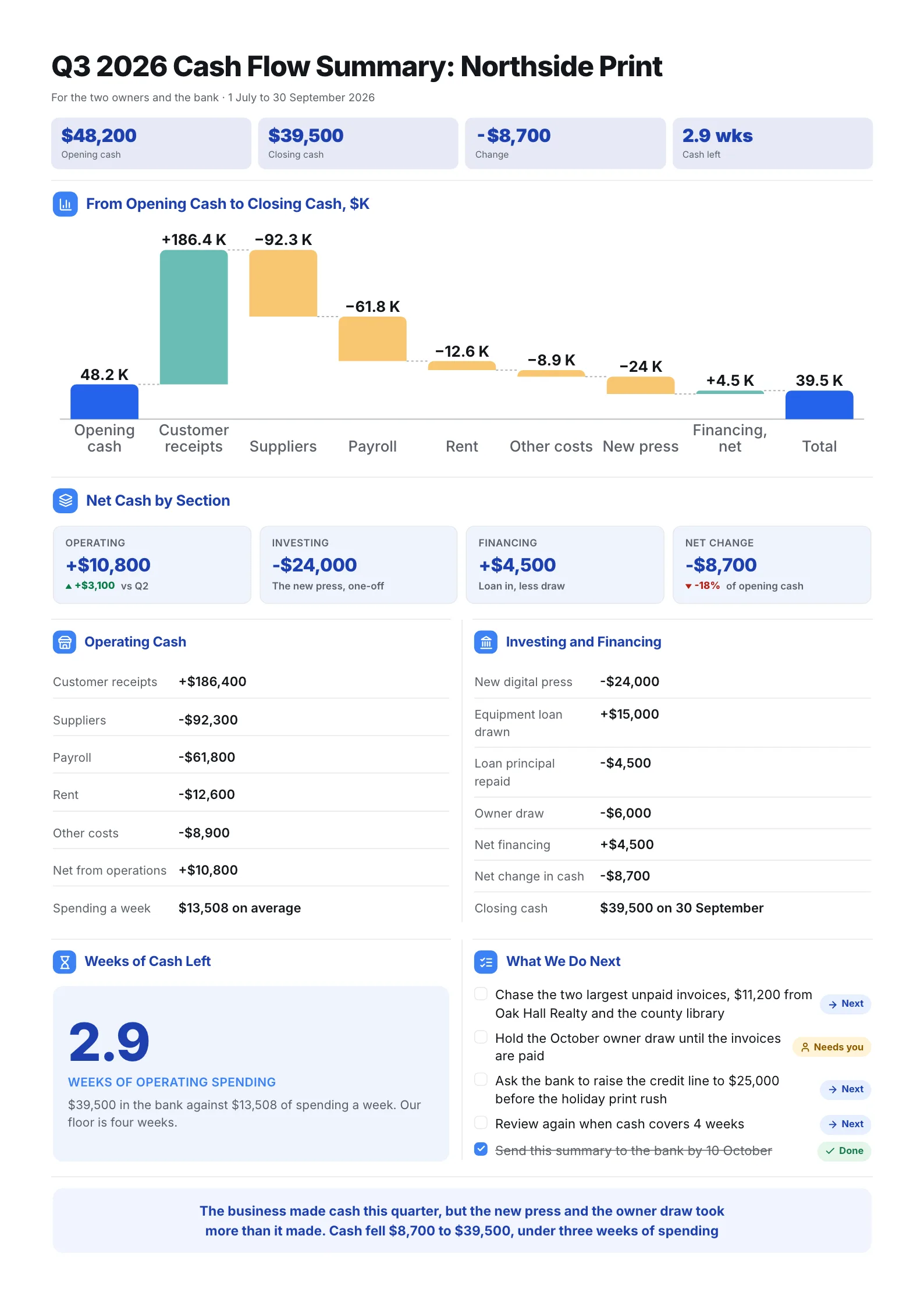
This quarterly cash flow summary for a print shop made $10,800 from operations in the quarter. Then it bought a $24,000 press, repaid $4,500 of loan principal and the owners drew $6,000. A $15,000 equipment loan helped, but cash still fell $8,700 to $39,500. That's 2.9 weeks of spending against a floor of four weeks. The next steps fix it in order. Chase the two largest unpaid invoices, hold the October owner draw until they're paid, and ask the bank to raise the credit line to $25,000 before the holiday rush. Write your own floor in weeks, the same way, so everyone reads it the same.
Mistake 5: You ask for credit after you need it
The Fed's numbers show what happens when the gap arrives first. More than half of firms with money trouble used personal funds. Of firms with debt, 59% had secured it with a personal guarantee. And 22% of financing applicants got nothing at all.
The fix. Open a line of credit while your recent statements look good, and leave it unused until a bad week comes. Then your plan for a bad week is a draw on the line, rather than your personal savings or a late bill.
 Edit this template
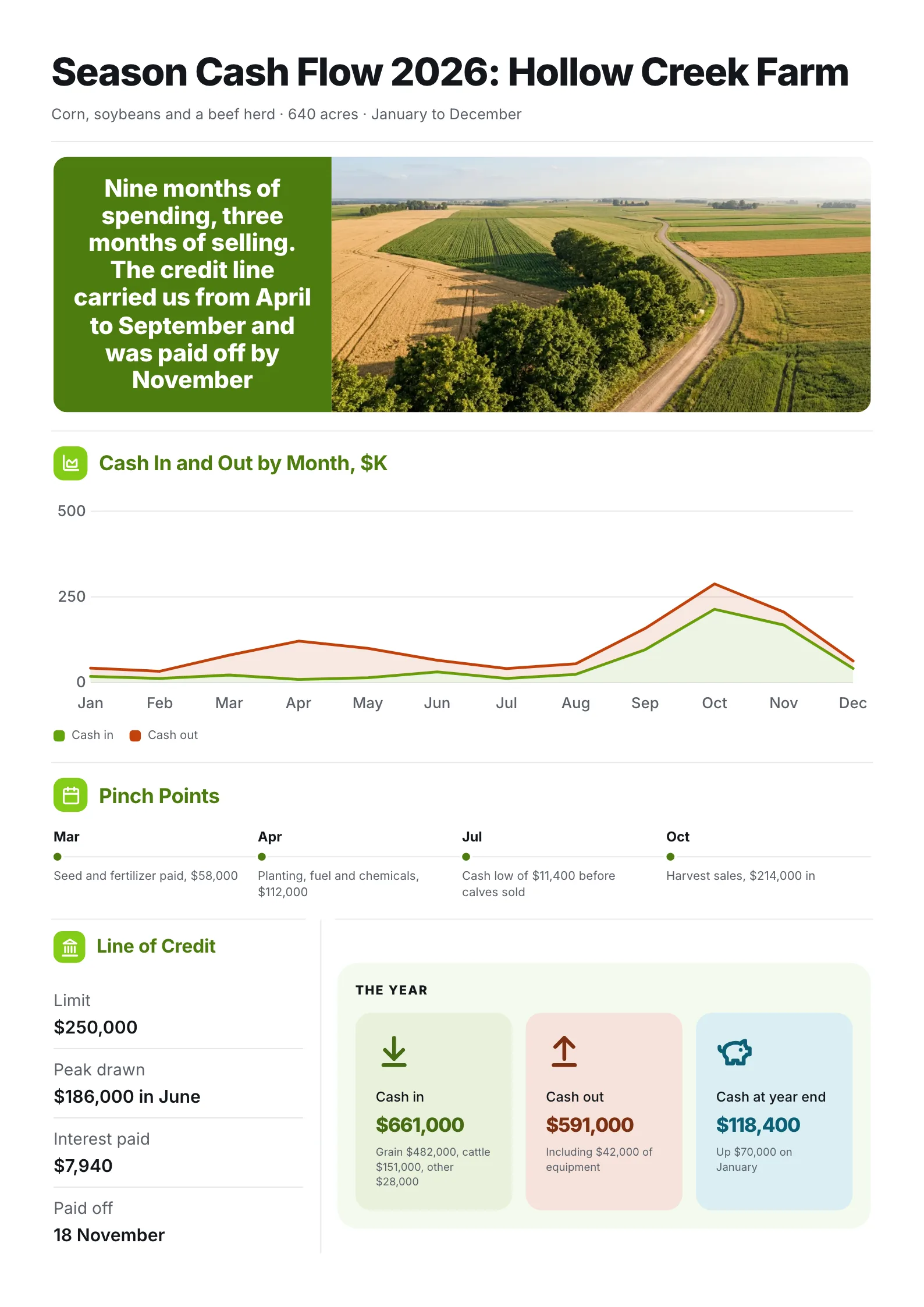
This farm seasonal cash flow has nine months of spending and three of selling. A $250,000 line of credit carries it through. The draw peaks at $186,000 in June, cash bottoms out at $11,400 in July before the calves sell, and the line is paid off on November 18. Interest for the year comes to $7,940. That's the cost of a planned gap. Compare it with a late payroll deposit, which starts at 2% of the amount after a single day.
Mistake 6: You plan for an average month
Seasonal businesses rarely have an average month. If you divide the year's sales by 12, the slow months look fine on paper and come up short in the bank.
The fix. Plan month by month from your real history. Find your lowest month and work out how much cash you need going into it. Order stock in waves, so you don't pay for the whole season before the first sale.
The farm above lists its pinch points by month: $58,000 of seed and fertilizer in March, $112,000 of planting, fuel and chemicals in April, and $214,000 of harvest sales in October. Over the whole year, it took in $661,000, spent $591,000 and ended $70,000 up. An average month would have hidden the July low.
Mistake 7: You grow spending faster than collections
New hires, new tools and new campaigns all start costing money before they bring any in. When spending grows faster than cash collected, you shorten the time you can keep going.
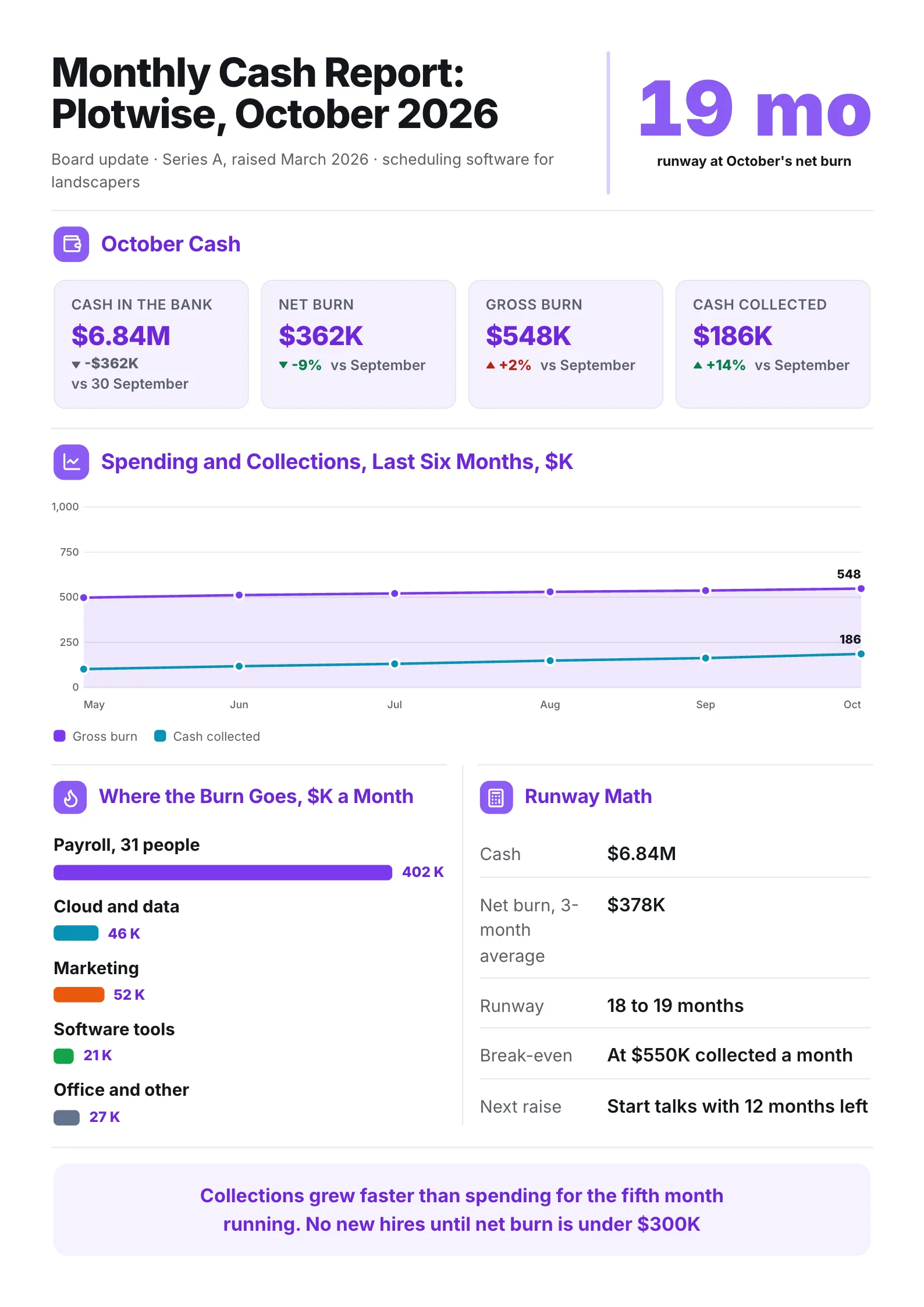
The fix. Track net burn, which is cash out minus cash in, every month. Set a rule that ties new spending to collections, and write it where your team will see it.
 Edit this template
This startup burn and runway report shows $6.84M in the bank and $548K of gross burn in October. Collections of $186K bring net burn down to $362K. At that rate the runway is about 19 months. The rule sits in its closing note: no new hires until net burn is under $300K. It also says to start talks for the next raise with 12 months left, so the company asks for money well before it runs low.
A 10-minute cash check for every Monday
Run these each week. Each one answers a mistake above.
- Count unpaid invoices by age, and chase anything past its due date.
- Update your 13-week forecast with last week's real numbers, and find the new low point.
- Check the tax account holds every dollar withheld or set aside.
- Compare cash with your floor, in weeks of spending, before you approve any big purchase.
- Check your credit line is open and how much is free to draw.
- Look at next month, not an average one, and know what it needs.
- Read net burn against your hiring rule before you add a cost.
Put your cash on one page
Choose the MakeOnepagers cash flow summary that's nearest to your business and fill in your own numbers. Have a bank export or a messy spreadsheet? Paste the figures into the free AI One-Pager generator, then edit the sheet it builds. To see why a profitable month can still leave you short, read cash flow vs profit. For real statements read line by line, see cash flow examples, and for a ready layout, start with the cash flow summary template.
Frequently asked questions
What is the most common cash flow problem for small businesses?
In the Fed's 2026 survey, the most common financial challenge was rising costs, named by 73% of small employers. Paying operating expenses came next at 54%, and uneven cash flow at 50%. The Fed counts slow-paying customers under uneven cash flow.
How many weeks of cash should a small business keep?
There's no single rule. Pick a floor that covers your next big bill and your slowest stretch. The print shop sample above uses four weeks of spending, and the 13-week forecast sample draws a minimum line on its chart.
Is it a mistake to use personal money to cover business bills?
It's common, and 54% of firms with financial challenges did it in the Fed's survey. It becomes a mistake when it's your only plan. Mixing the two makes your books harder to read, and you could lose savings you need. A credit line arranged early gives you a business option first.
What happens if I pay payroll taxes late?
The IRS charges a failure to deposit penalty of 2% if you're 1 to 5 days late, 5% for 6 to 15 days, and 10% after that. It rises to 15% once you're more than 10 days past the first notice. Interest is charged on penalties too.
How often should I update a cash flow forecast?
Weekly is best when cash is tight or a large bill is close. A 13-week forecast updated every Monday shows the low point early enough to act. When cash is steady, monthly can be enough.




