Solution Brief Examples That Put a Number on the Buyer's Problem
5 solution brief examples that price the buyer's problem, for food plants, restaurants, finance, field service and clinics, plus what 8 vendor briefs leave out.

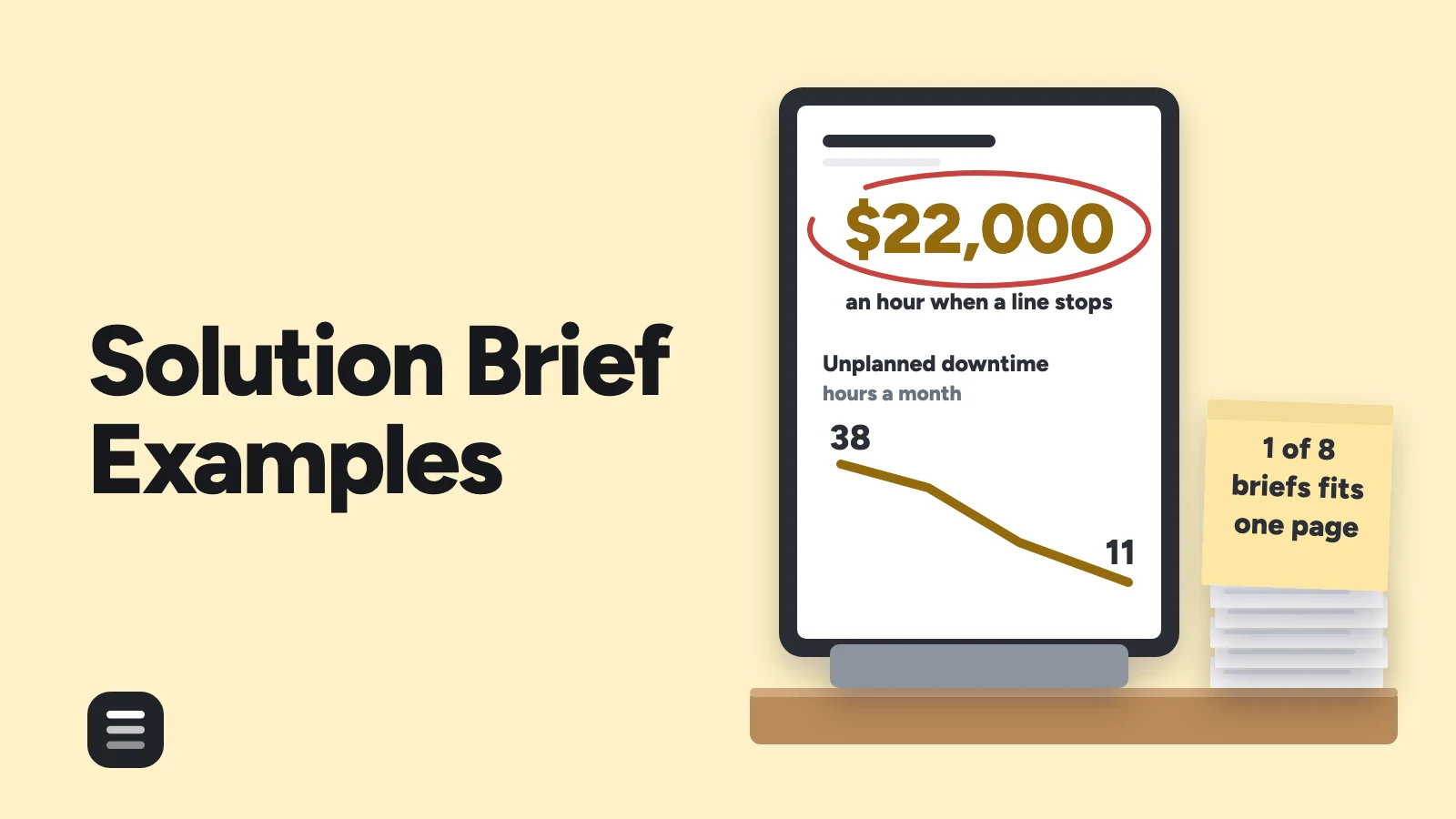
A solution brief works when buyers find their own problem on it, with a price on that problem. Most published briefs skip the price. Intel, Fortinet, Red Hat and Nutanix publish solution briefs for hospitals, banks, retailers and factories, and of the 8 we read, only 3 put a number on the buyer's problem. None quotes a customer by name, and only 1 fits on a single page. Start from a free one pager template.
One‑Pager examples
Real One-Pagers made with MakeOnepagers. Open any one to edit it as your own.
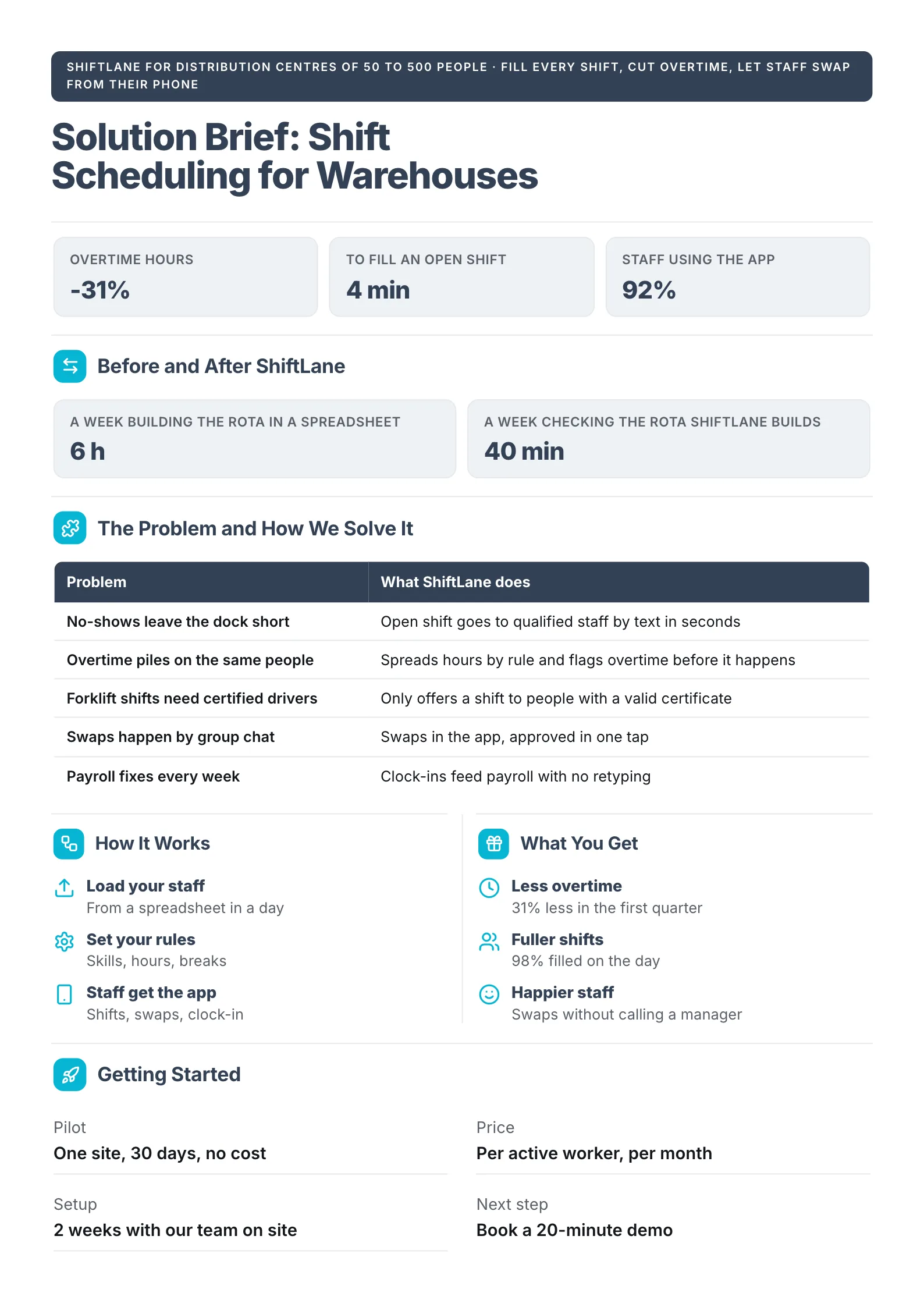 Solution Brief: Shift Scheduling for WarehousesEdit for free(opens in a new tab)
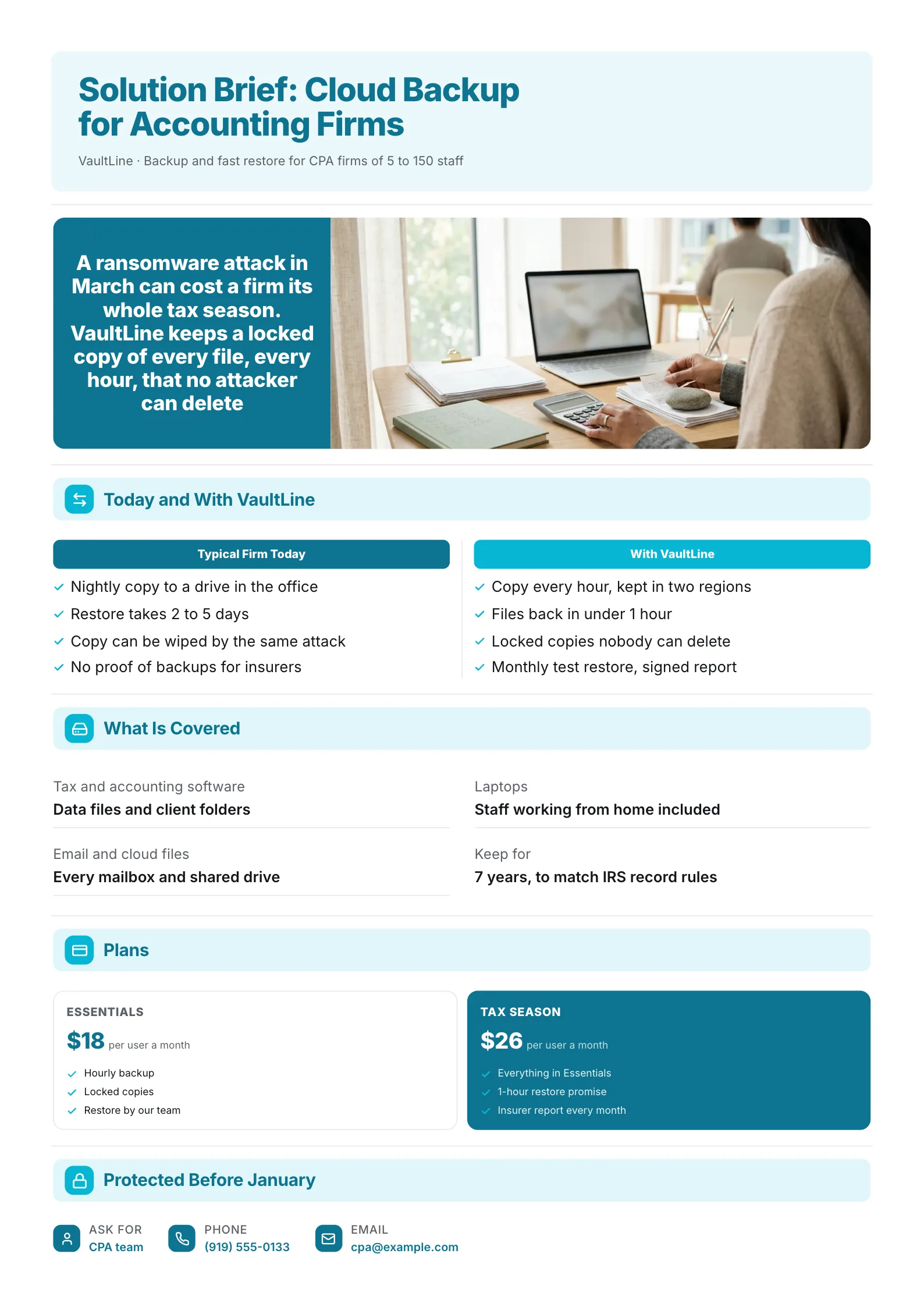 Solution Brief: Cloud Backup for Accounting FirmsEdit for free(opens in a new tab)
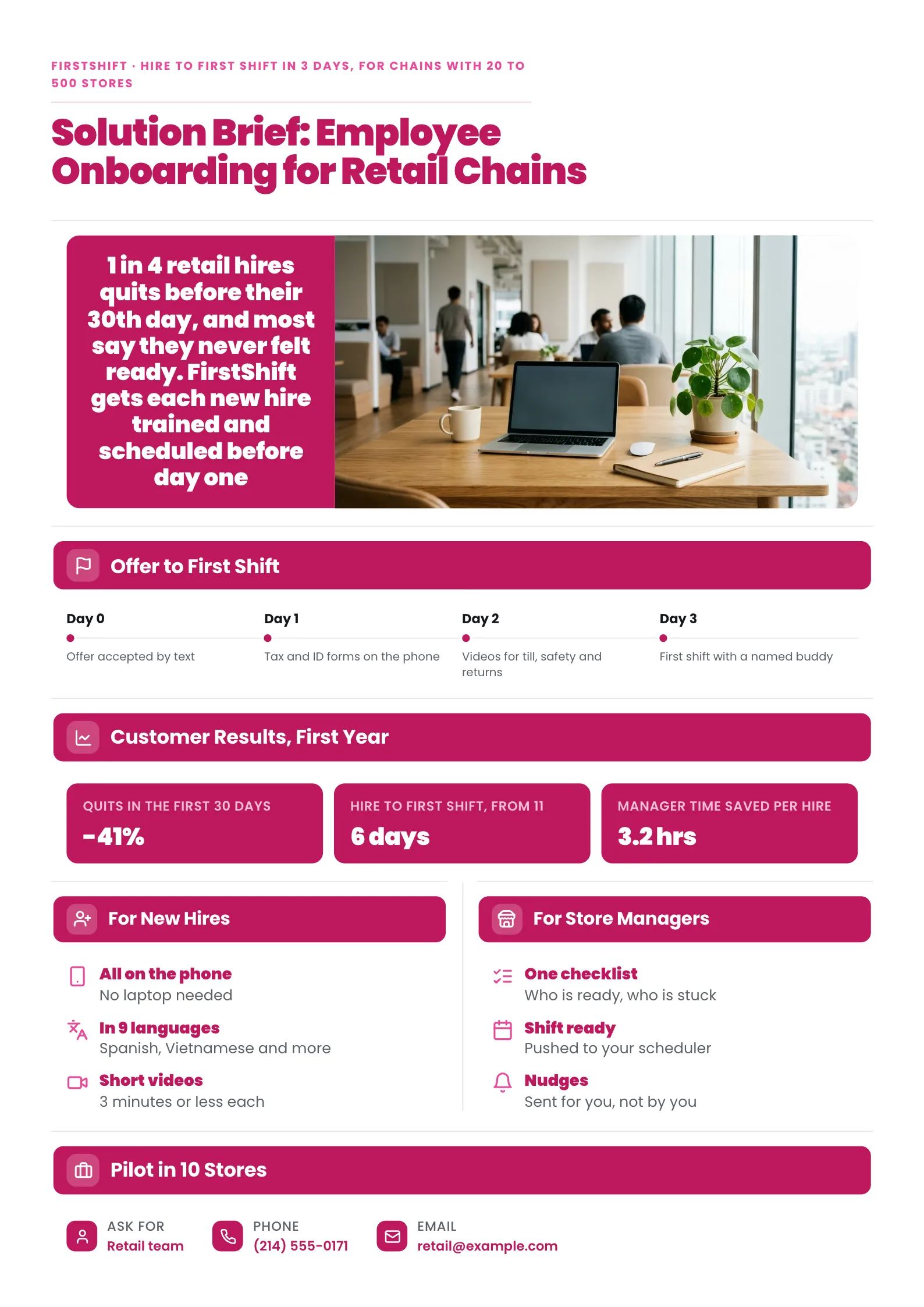 Solution Brief: Employee Onboarding for Retail ChainsEdit for free(opens in a new tab)
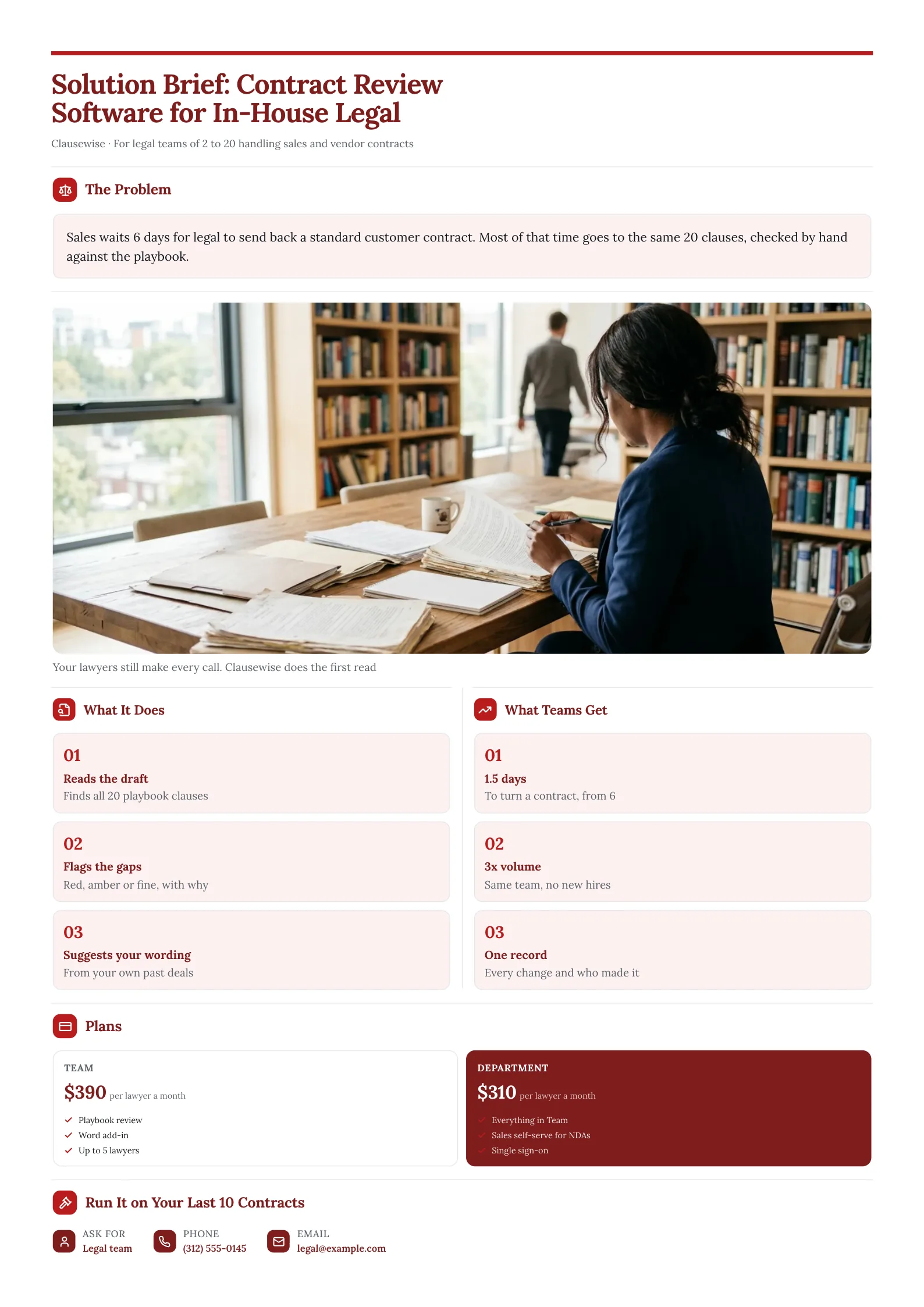 Solution Brief: Contract Review Software for In-House LegalEdit for free(opens in a new tab)
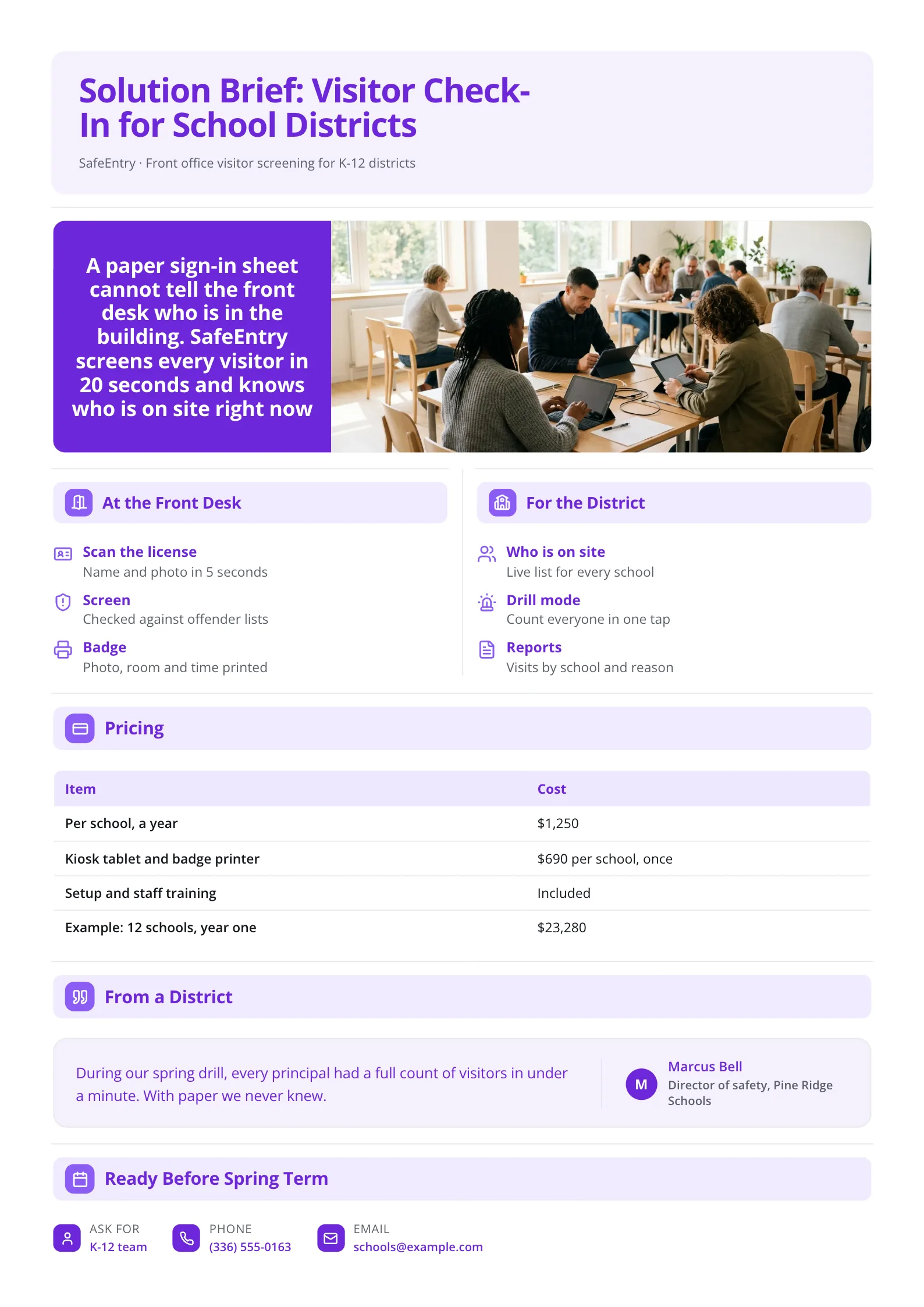 Solution Brief: Visitor Check-In for School DistrictsEdit for free(opens in a new tab)
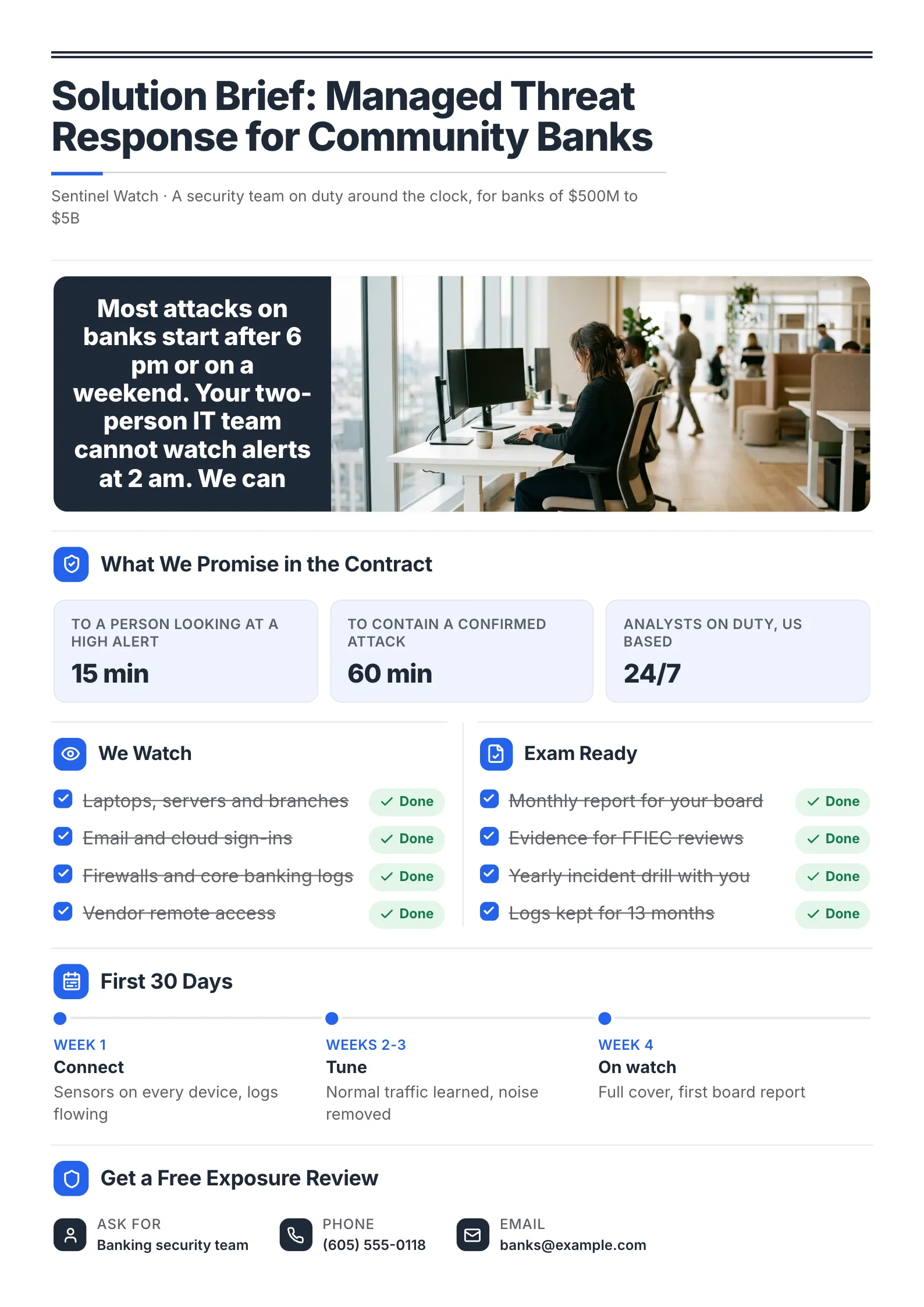 Solution Brief: Managed Threat Response for Community BanksEdit for free(opens in a new tab)
These five solution brief examples each fit on one page and size the problem every time, in dollars or in hours. They cover machine monitoring for food plants, ordering for independent restaurants, an invoice tool for finance teams, fleet tracking for service vans and online booking for clinics. One of them also carries a customer's own words.
The 5 briefs at a glance
| Brief | Who it's for | The problem, in numbers | The proof | The next step |
|---|---|---|---|---|
| Machine monitoring | Food plant managers | $22,000 an hour when a line stops | Downtime from 38 to 11 hours a month | Start on your worst line |
| Online ordering | Independent restaurants | $11,200 a month to a delivery app | $10,000 kept every month | See your own menu online |
| Invoice automation | Controllers with 500 to 5,000 invoices a month | 300 hours a month keying 2,000 invoices | $4.10 per invoice, from $15.20 | See it on your invoices |
| Fleet tracking | HVAC, plumbing and electrical companies with 10 to 200 vans | 2 dispatcher hours a day on the phone | Fuel per van from $612 to $497 | Try 5 vans free for 30 days |
| Patient scheduling | Practices with 3 to 40 providers | $150K lost a year per provider | 87% of visits kept after 6 months | Book a 20-minute demo |
Read across any row and you can say what the brief is selling in one breath. That's the test to run on your own brief before you write the long version.
The five briefs, one buyer at a time
Machine monitoring that prices an hour of downtime
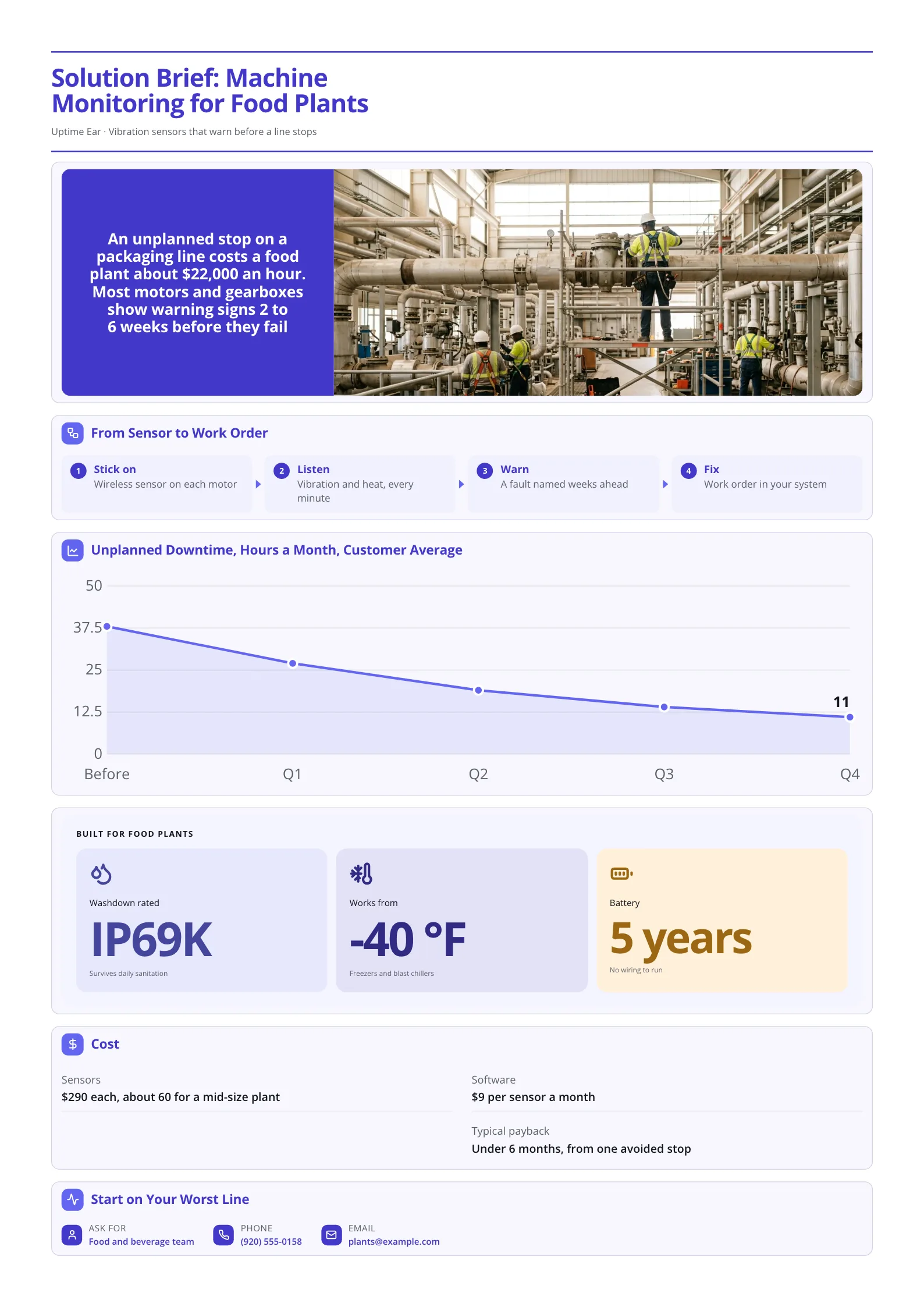
Uptime Ear's brief is written for a food plant manager, and the first thing you read on it is a price. An unplanned stop on a packaging line costs about $22,000 an hour. The same line says most motors and gearboxes show warning signs 2 to 6 weeks before they fail, so the plant manager learns the stop could have been caught.
Next comes one sensor, followed from the motor to a work order in four steps, and a line chart of what changed. Customers averaged 38 hours of unplanned downtime a month before, and 11 a month by the fourth quarter. A box built for food plants answers what the sanitation crew will ask, with an IP69K washdown rating, sensors that work down to -40 °F in a blast chiller and a 5-year battery with no wiring to run.
The cost box is short enough to check on your phone. Sensors are $290 each, a mid-size plant needs about 60, and the software is $9 per sensor a month. The brief puts payback at under 6 months from one avoided stop, and you can see why, because 60 sensors come to $17,400, less than one hour of a stopped line. Do that sum with your own prices before you print them.
 Edit this template
Sample company, costs and phone number. The photo caption carries the problem, so the price of downtime is the first thing a plant manager reads.
Online ordering written for the guest and the kitchen
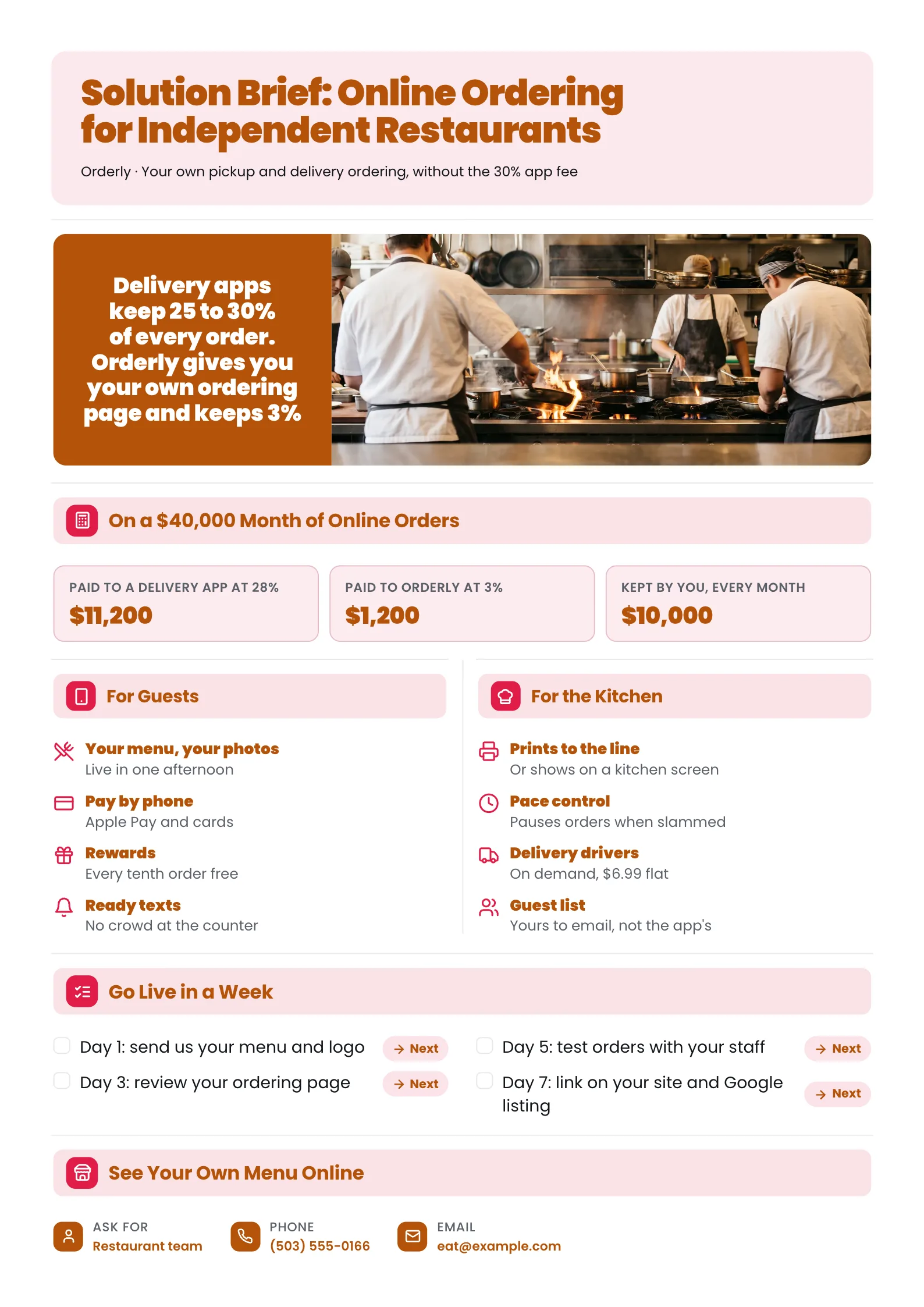
Orderly's brief splits its middle into two lists, one for guests and one for the kitchen, so the brief speaks to the owner's customers and the owner's staff at once. Guests get the restaurant's own menu, phone payments and every tenth order free. The kitchen gets orders printed to the line and a pause button for when it's slammed. The brief also points out that the guest list stays with the restaurant instead of the app.
Above those lists sits the money, in one row of three figures. On a $40,000 month of online orders, a delivery app at 28% takes $11,200. Orderly at 3% takes $1,200. The owner keeps $10,000 more every month, a subtraction an owner could do standing at the counter. Find the subtraction in your own pricing, and you have your top row.
The last box turns go-live into a week with four dated steps, from sending the menu on day 1 to adding the link to the Google listing on day 7. An owner worried about a long setup sees a finished week instead.
 Edit this template
Sample names and prices. The middle row turns a percentage into the dollars an owner keeps each month.
Invoice automation that answers the integration question
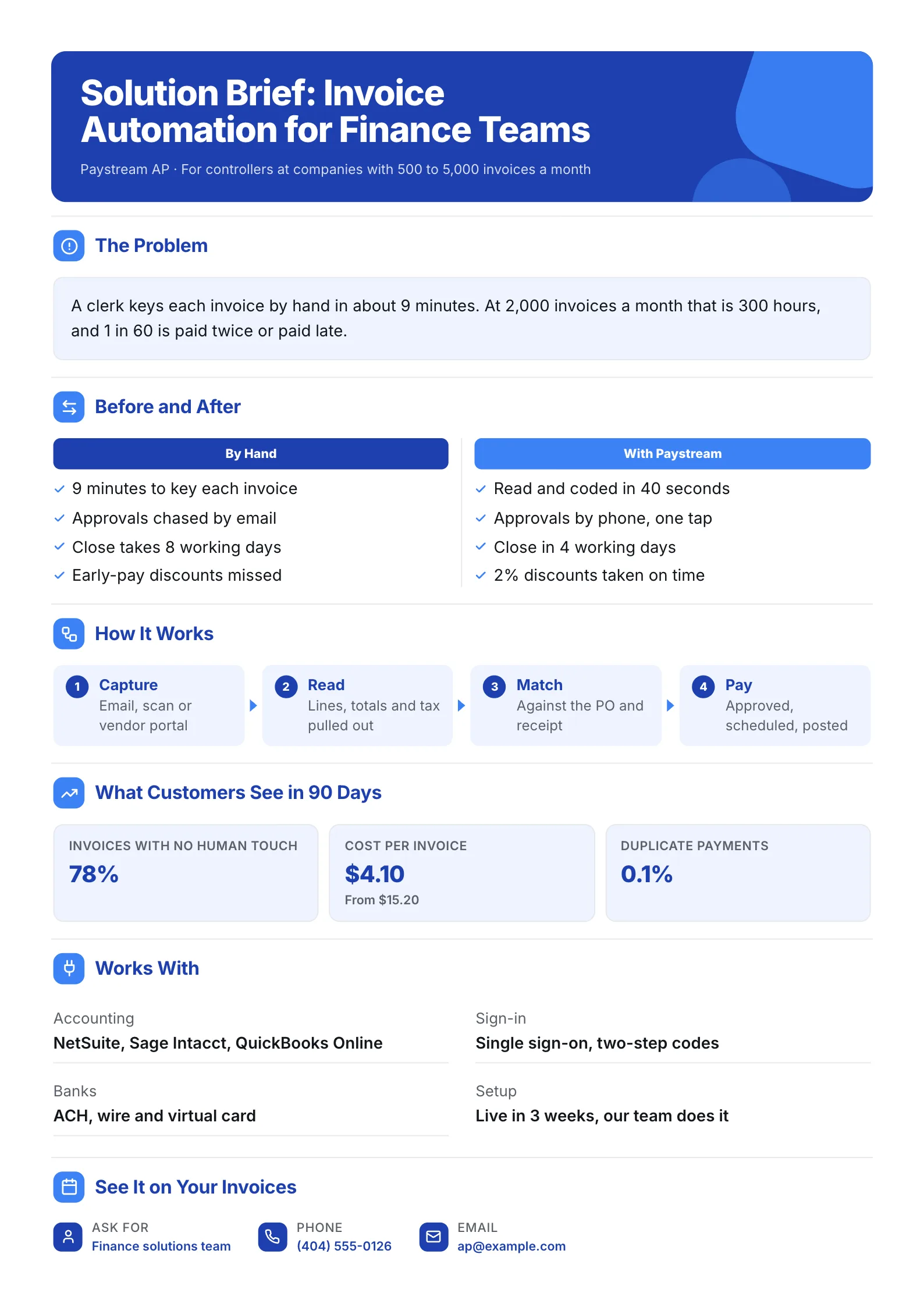
Keying drops from 9 minutes to 40 seconds, approvals move from email chases to one tap, and the monthly close falls from 8 working days to 4. That before and after on Paystream AP's brief puts a controller's old way and the new way side by side.
The problem callout above it does the controller's arithmetic. A clerk keys each invoice in about 9 minutes, so 2,000 invoices a month takes 300 hours, and 1 in 60 is paid twice or paid late. A controller will check those numbers, so the brief uses ones that hold. Four steps then explain the product as capture, read, match and pay.
The brief also names its systems before anyone can ask about them: NetSuite, Sage Intacct and QuickBooks Online, live in 3 weeks with the vendor's team doing the setup. When you sell software that plugs into a finance stack, make that box plain.
The 90-day results close the case, with 78% of invoices needing no human touch and the cost per invoice falling from $15.20 to $4.10.
 Edit this template
Sample company, prices and phone number. The problem callout gives the buyer a sum they can check themselves.
Fleet tracking that counts the dispatcher's day
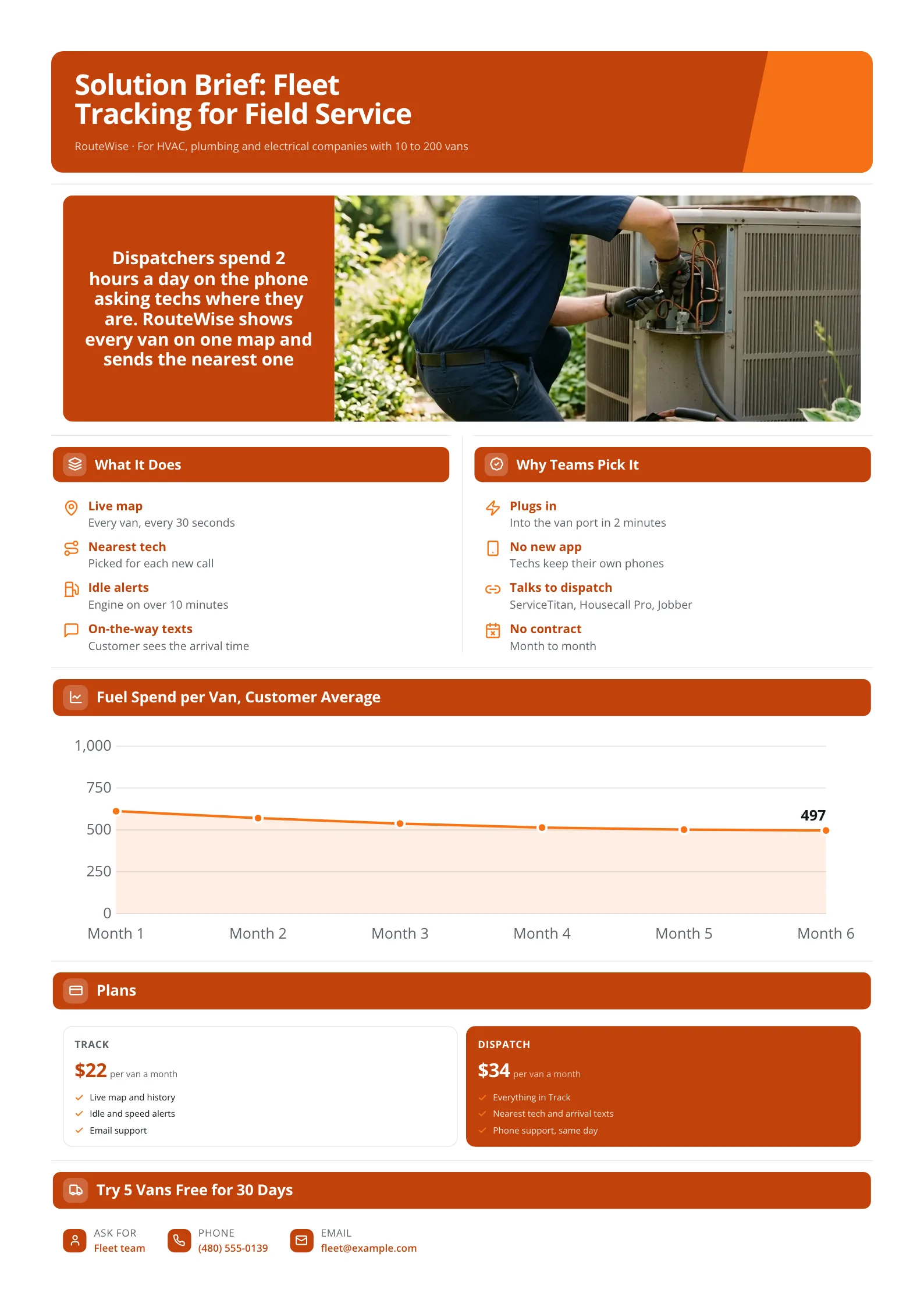
RouteWise makes its case with a subtraction. Fuel spend per van falls from $612 in month 1 to $497 by month 6, and that $115 drop is more than either plan costs, at $22 or $34 per van a month. Set your saving beside your price, and you have the main argument.
The buyers are HVAC, plumbing and electrical companies with 10 to 200 vans, and the brief starts with the dispatcher rather than the owner. Dispatchers spend 2 hours a day on the phone asking techs where they are. The problem sits on the photo line and the answer right after it, with every van on one screen and the nearest one sent to each call.
Two short lists follow. What It Does covers the map, refreshed every 30 seconds, plus an alert when an engine idles over 10 minutes and a text that tells the customer when the tech will arrive. Why Teams Pick It answers the owner's objections before a sales call can. The unit plugs into the van port in 2 minutes, techs keep their own phones, it talks to ServiceTitan, Housecall Pro and Jobber, and there's no contract.
A line chart carries the fuel proof in the owner's own money, and the next step is a 30-day trial on 5 vans.
 Edit this template
Made-up company, plans and fuel figures. The fuel chart lets an owner set the saving against the monthly price.
Patient scheduling told as the patient's day
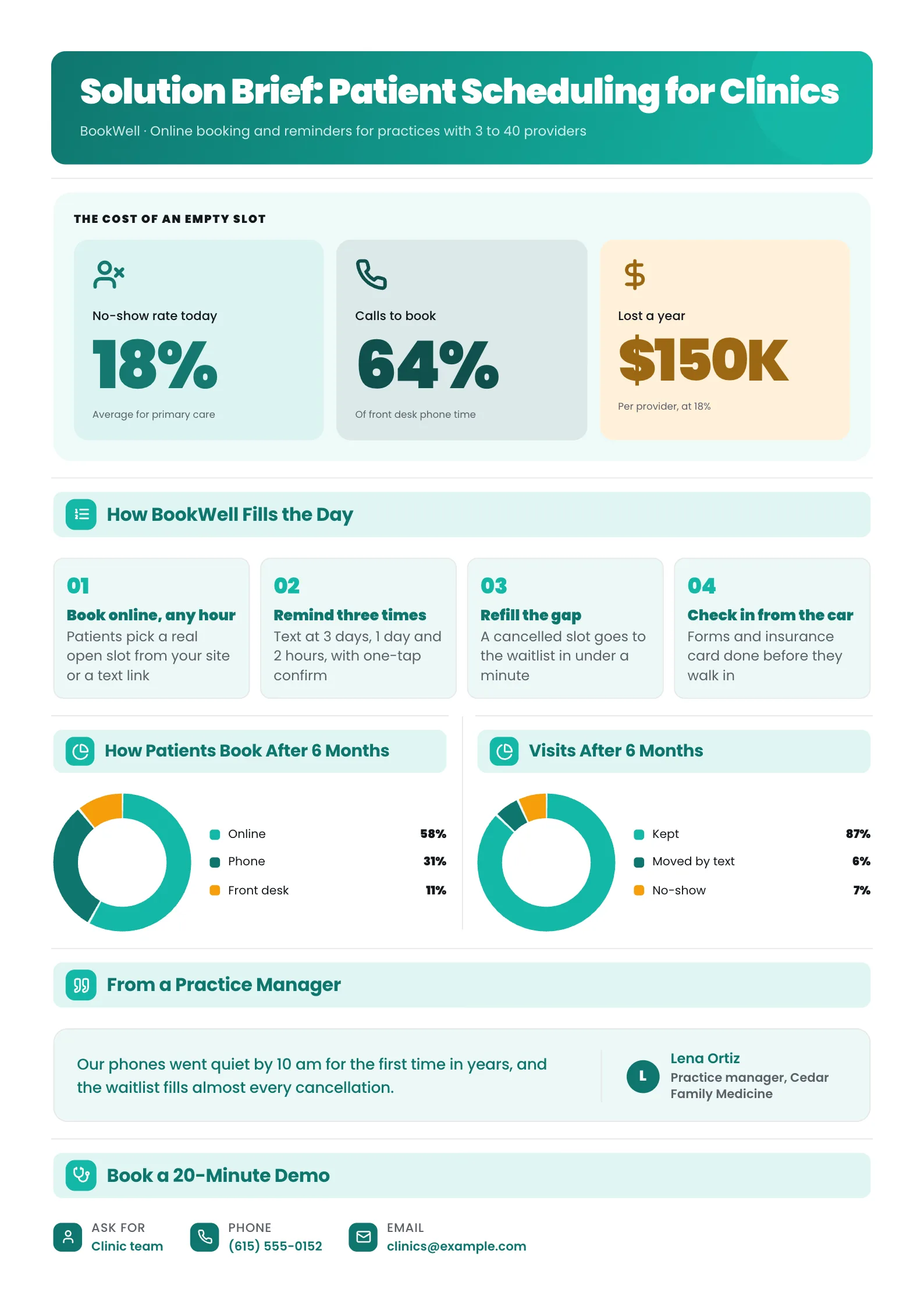
BookWell's brief tells its product as a patient's day. Book online at any hour, get three reminders at 3 days, 1 day and 2 hours, and check in from the car. In between, the waitlist fills an open slot in under a minute. Two rings show the result after six months. Online booking reaches 58% of all bookings, and only 7% of visits end in a no-show.
Above the steps, the practice manager gets the cost of an empty slot. The no-show rate is 18%, booking calls take 64% of front desk phone time, and each provider loses $150K a year. The first and last figures are the practice's money, and the middle one is the front desk's day.
It's also the one example with a named quote, from a practice manager who says the phones "went quiet by 10 am for the first time in years." A line like that from a real customer carries more weight in your brief than any chart.
 Edit this template
Made-up practice and figures. The two rings show the result in a glance, 58% booked online and 87% of visits kept.
What 8 published vendor briefs include
Big technology companies publish solution briefs by the hundreds, so you have plenty to compare yours against. We read 8 of them in full, 3 from Intel's Industry Solution Builders library and 5 from Nutanix. Two of Intel's were written with partners, Fortinet and Red Hat. Together they cover pharma, retail, manufacturing, hospitals and financial services.
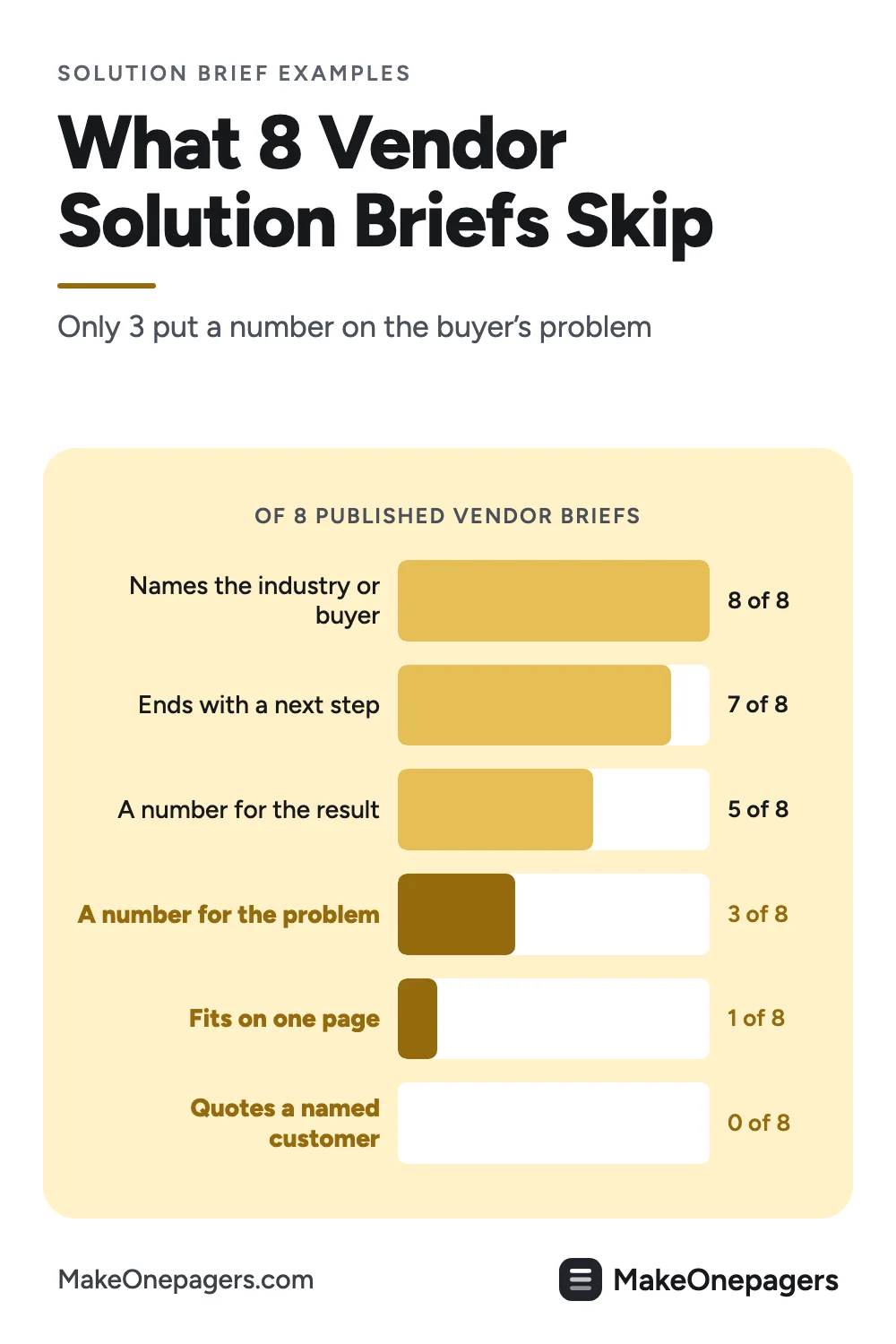
| What the brief includes | Briefs that do |
|---|---|
| The industry, buyer or system served in the title | 8 of 8 |
| A next step at the end, like a contact, demo or link | 7 of 8 |
| A number for what the product achieves | 5 of 8 |
| A number for the size of the buyer's problem | 3 of 8 |
| Everything on one page | 1 of 8 |
| A quote from a named customer | 0 of 8 |
We read all 8 on October 30, 2026. They're listed with links below.
The biggest gap you can fill is proof from a customer. Several briefs cite surveys or their own lab numbers, like Nutanix's retail brief saying 93% of retailers call hybrid cloud the ideal model. None lets your buyer hear from someone like them, so one named customer quote puts your brief ahead of all 8.
Length is the other gap. The Nutanix financial services brief is the only one that fits on a single page, and the Intel pharma brief runs to 5. A marketing agency that writes these for vendors, CyberEdge, describes a solution brief as "typically a 2-4 page brochure." One page is the safer bet when you want your buyer to read to the end, with the long version a link away.
You'll also notice the numbers tend to sit on one side. The Intel pharma brief sizes the problem well, saying a breach takes up to 257 days to find, but never says what the product changes. The Nutanix EHR brief does the opposite, with savings like 80% less space and no figure for the problem. Give your buyer both numbers, the size of the problem and what changes, the way our five samples are laid out.
The 8 briefs we read:
- Pharmaceutical and Biotechnology Organizations Reduce Cybersecurity Risk, Intel and Fortinet, 5 pages
- Integrated Retail Solution, Intel, 4 pages
- Industrial Edge Platform for Distributed Control Systems, Intel and Red Hat, 4 pages
- Nutanix for Epic, Nutanix, 2 pages
- Electronic Health Record Solution Brief, Nutanix, 2 pages
- Financial Services Industry Solution Brief, Nutanix, 1 page
- Nutanix Enables Digital Transformation in Retail, Nutanix, 3 pages
- Nutanix Enterprise Cloud and Financial Services, Nutanix, 3 pages
Lead with what the problem costs
Uptime Ear's brief opens on about $22,000 for every hour a packaging line stops without warning. Orderly's opens on the 25 to 30% a delivery app keeps, and RouteWise's on the 2 hours a dispatcher spends each day phoning techs to ask where they are. Your buyer meets their own cost before a single feature. A problem you can't put a figure on yet is research still to do, and every other box on your page leans on it. Our solution brief template guide walks through each part one box at a time.
Size your own buyer's problem in the unit they already count in. A practice owner budgets in dollars, so BookWell's brief in MakeOnepagers turns its 18% no-show rate into $150K lost a year for each provider.
Frequently asked questions
How long should a solution brief be?
One page is enough when it names one buyer and one problem. Only 1 of the 8 vendor briefs we read fits on a page, and the others run 2 to 5. Your extra detail can live in a longer document, linked from the brief.
What's the difference between a solution brief and a datasheet?
A datasheet tells your buyer what a product is, like specs, sizes and features. A solution brief starts from a buyer's problem and shows how the product fixes it, with a result. Our post on the product One-Pager covers the feature-first version.
Should a solution brief include pricing?
Include it when your buyer needs a number to move forward, like the food plant brief that prices 60 sensors at $290 each and puts payback under 6 months. Leave it out when the price depends on a quote, and offer an assessment or demo as the next step instead.




