Solution Brief Template: Free One-Page Solution Brief
Free one-page solution brief template for tech teams: the 7 parts buyers look for and a worked example with before and after numbers.

A solution brief template gives your software or tech company one sheet that answers what a buyer wants to know. What problem do we have? How does your product solve it? Why you and not the others? What result should we expect? Your sales team sends it after a first call. Buyers forward it to the people who sign off, and partners use it to explain your product when you're not in the room. A long white paper gets saved for later. A one-page solution brief gets read the day it arrives. Below you'll find the seven parts your brief needs, a free solution brief template you can copy, a worked example and the mistakes to avoid. Start from a free one pager template.
One‑Pager examples
Real One-Pagers made with MakeOnepagers. Open any one to edit it as your own.
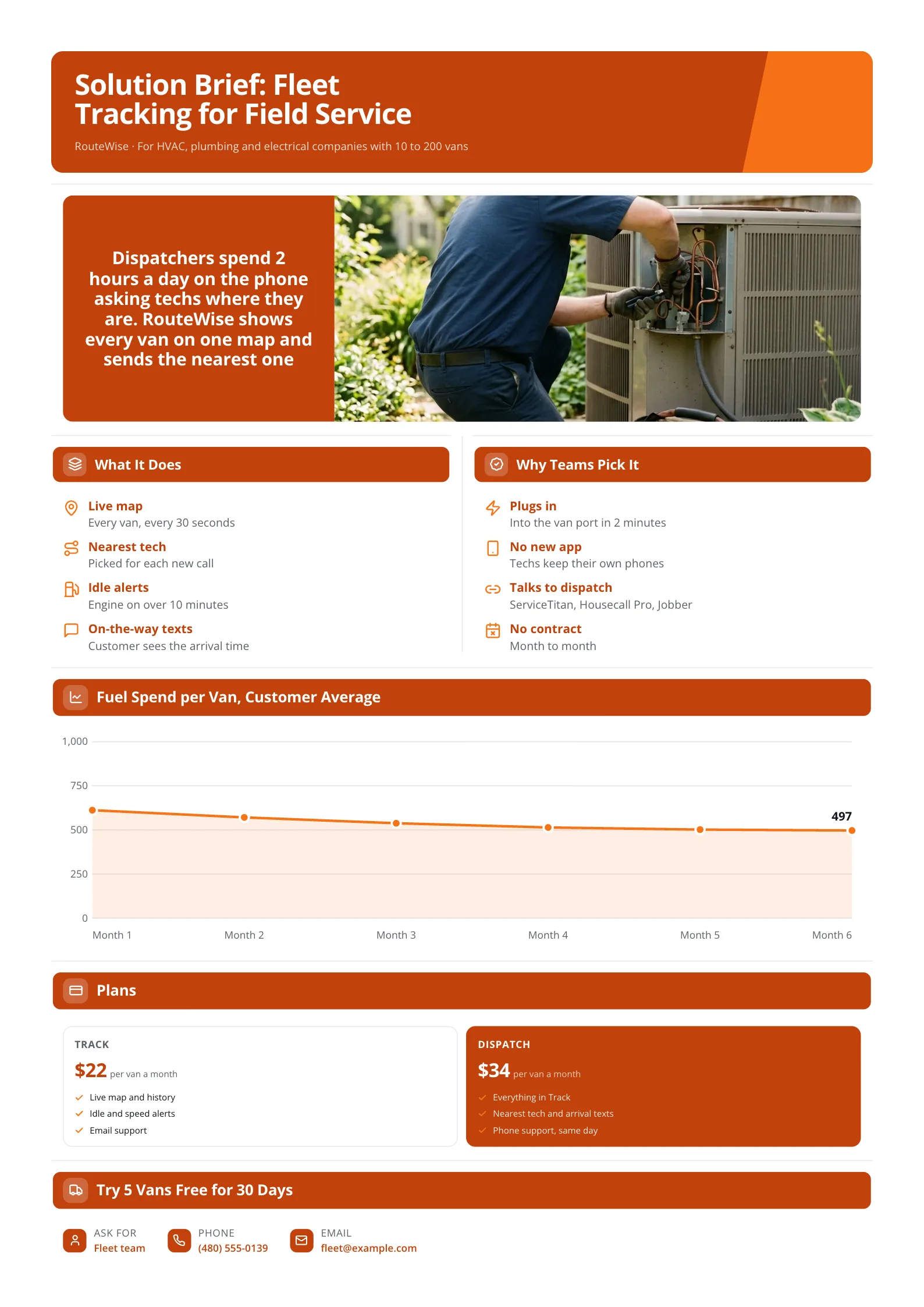 Solution Brief: Fleet Tracking for Field ServiceEdit for free(opens in a new tab)
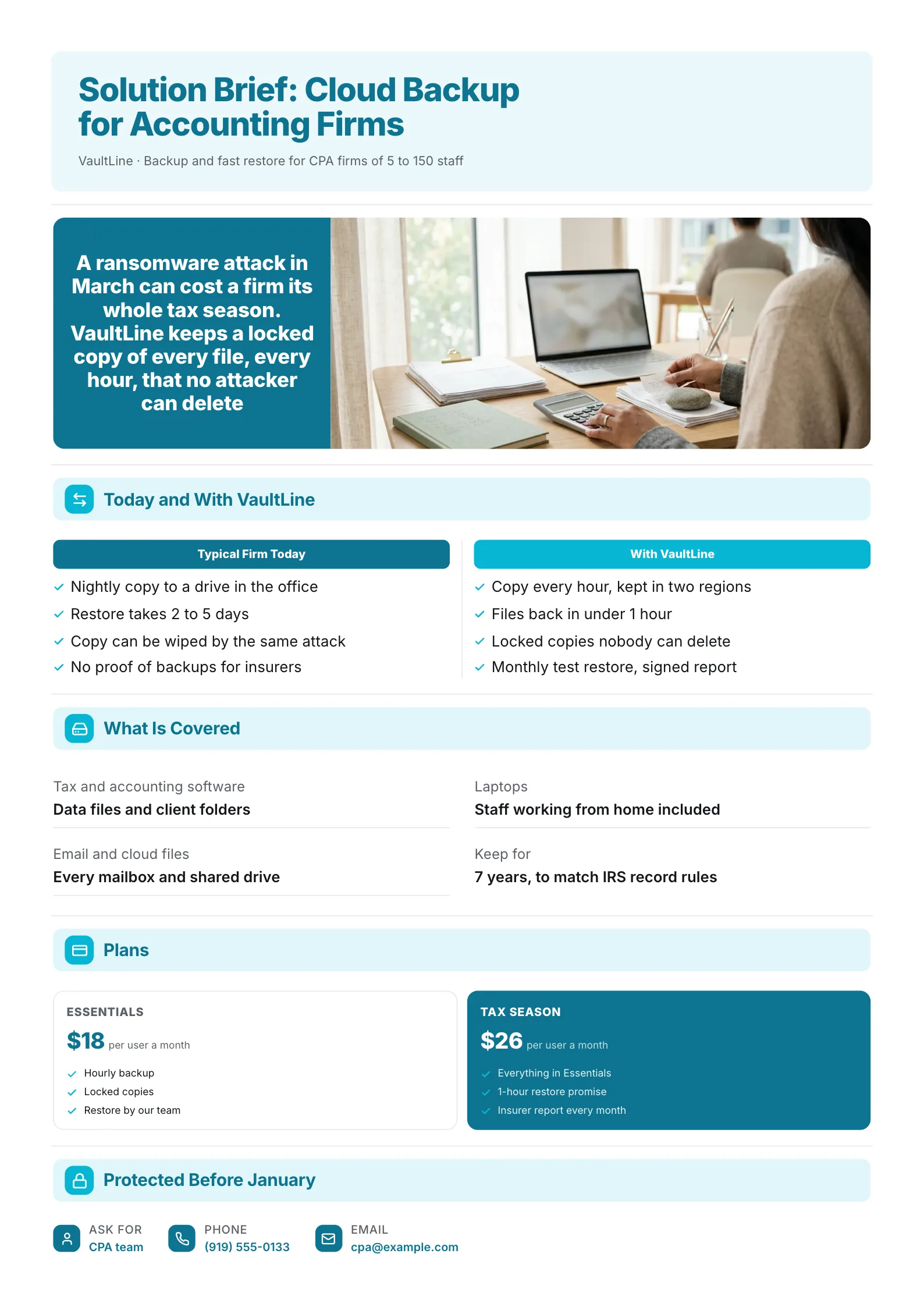 Solution Brief: Cloud Backup for Accounting FirmsEdit for free(opens in a new tab)
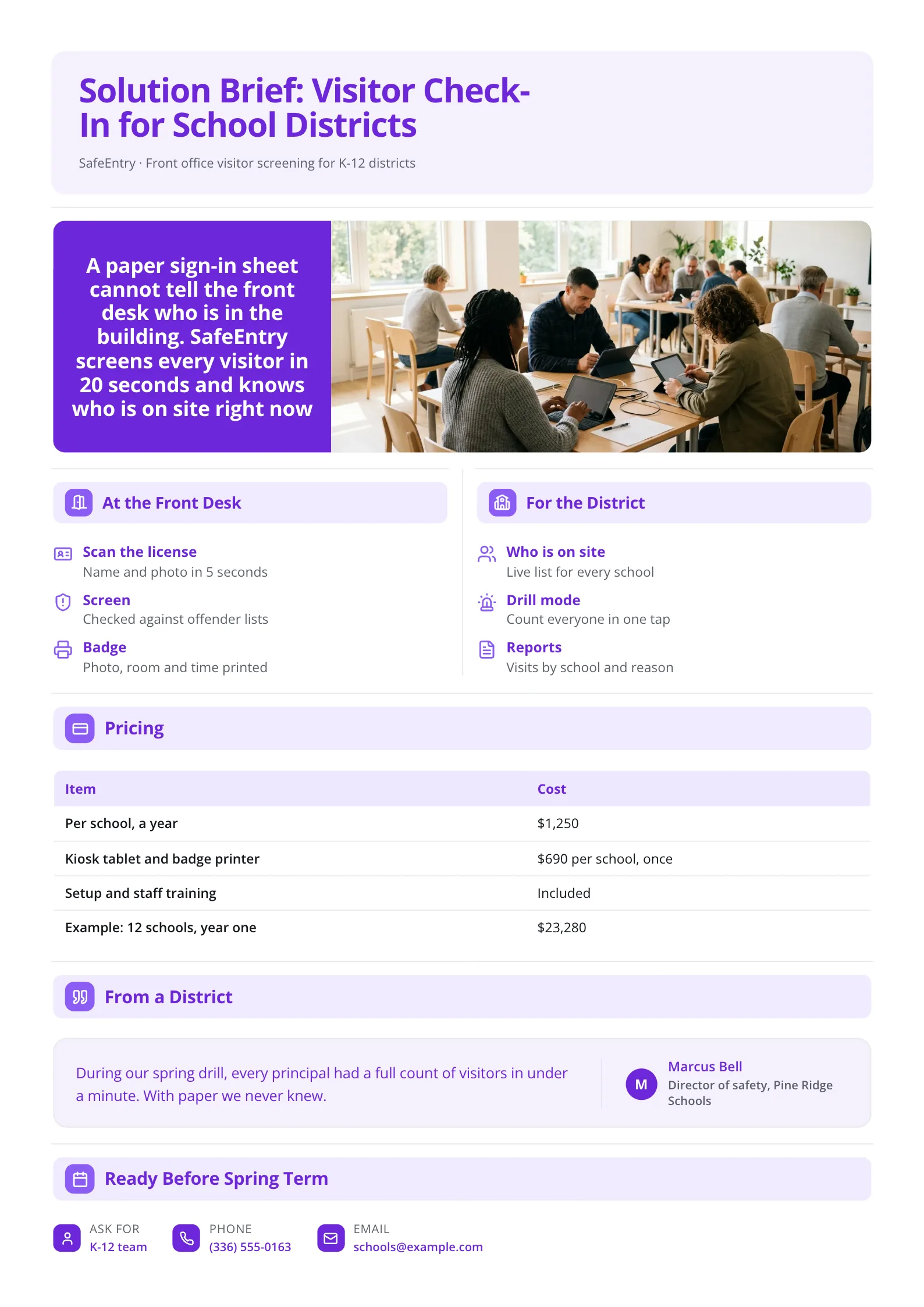 Solution Brief: Visitor Check-In for School DistrictsEdit for free(opens in a new tab)
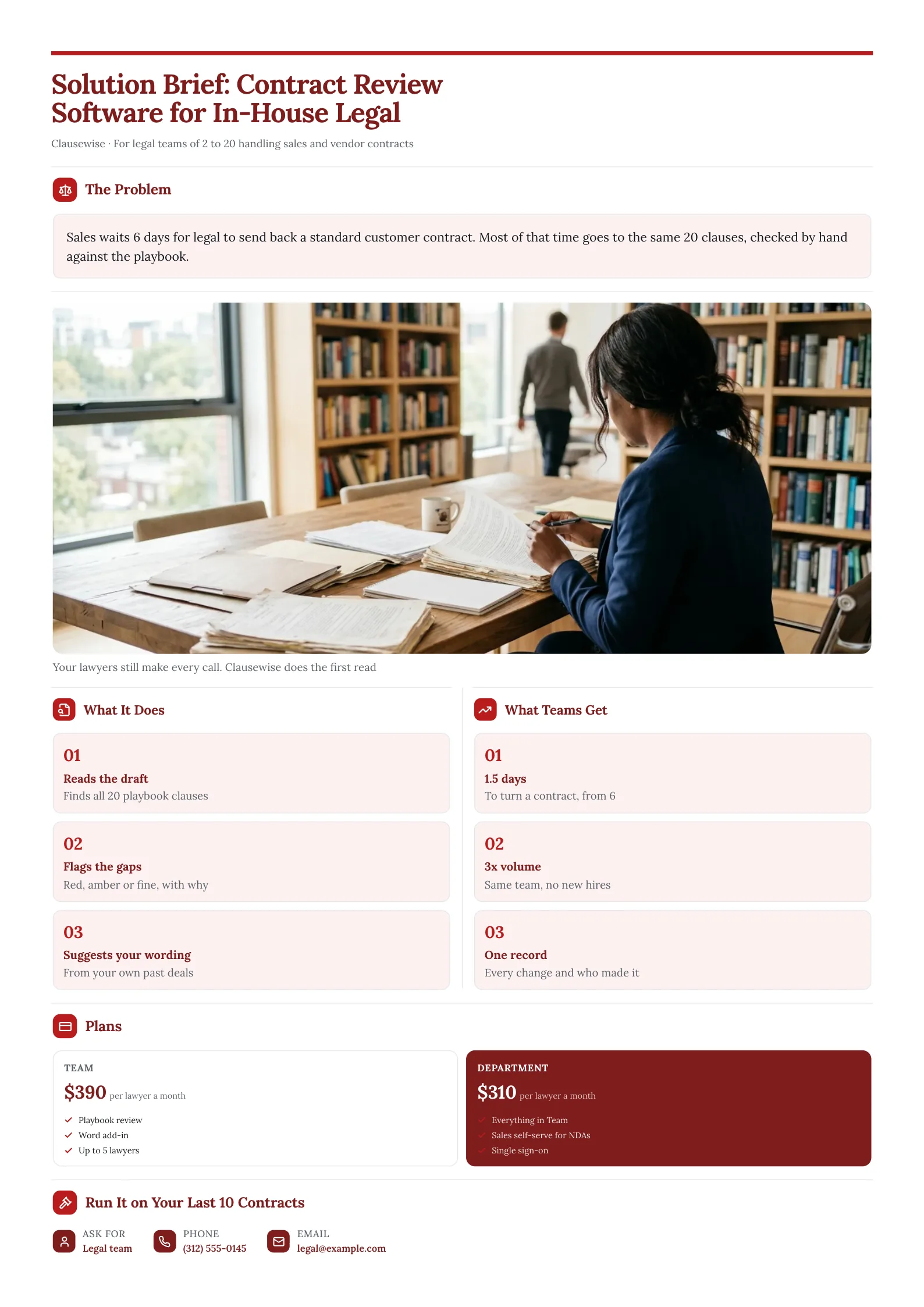 Solution Brief: Contract Review Software for In-House LegalEdit for free(opens in a new tab)
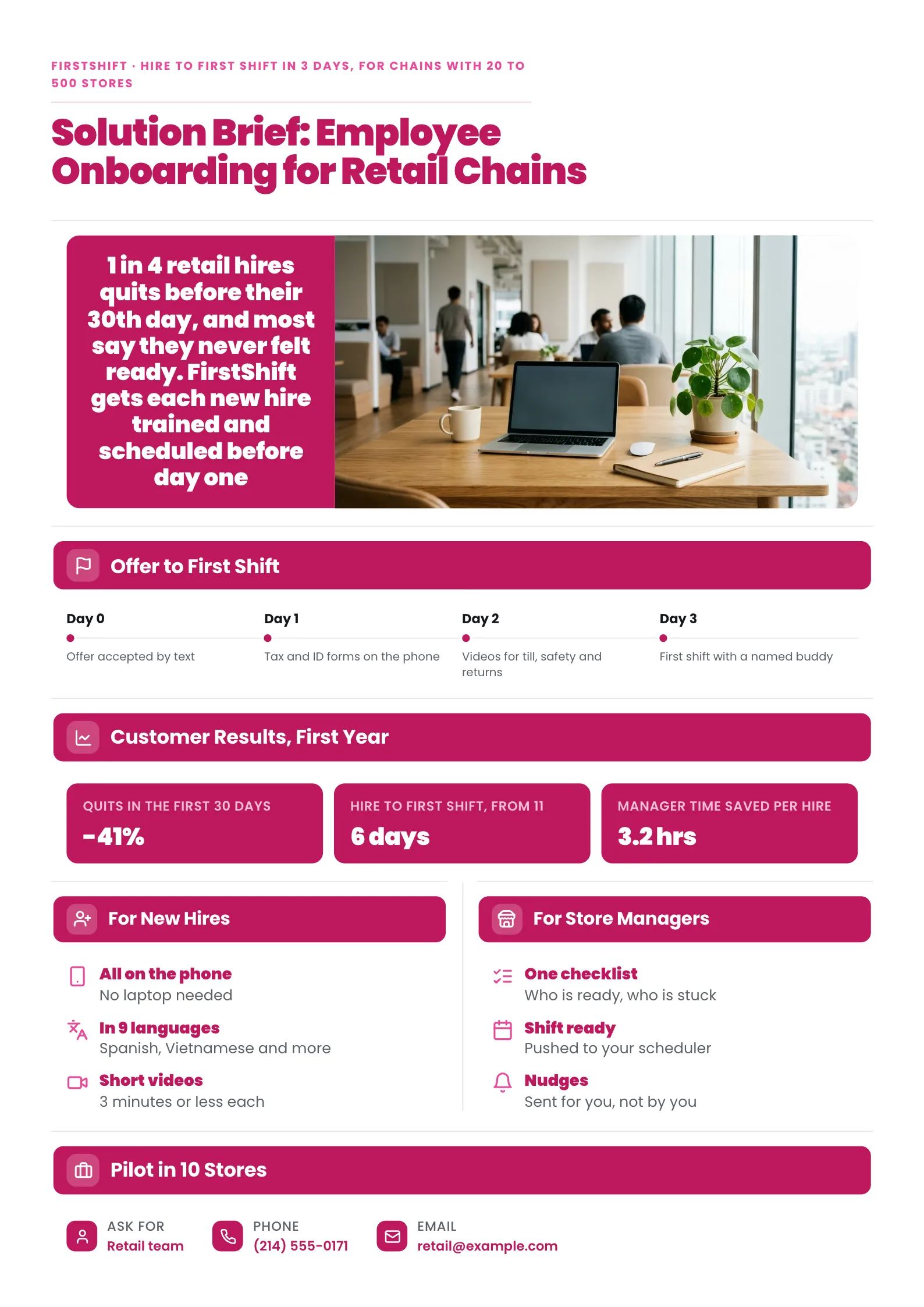 Solution Brief: Employee Onboarding for Retail ChainsEdit for free(opens in a new tab)
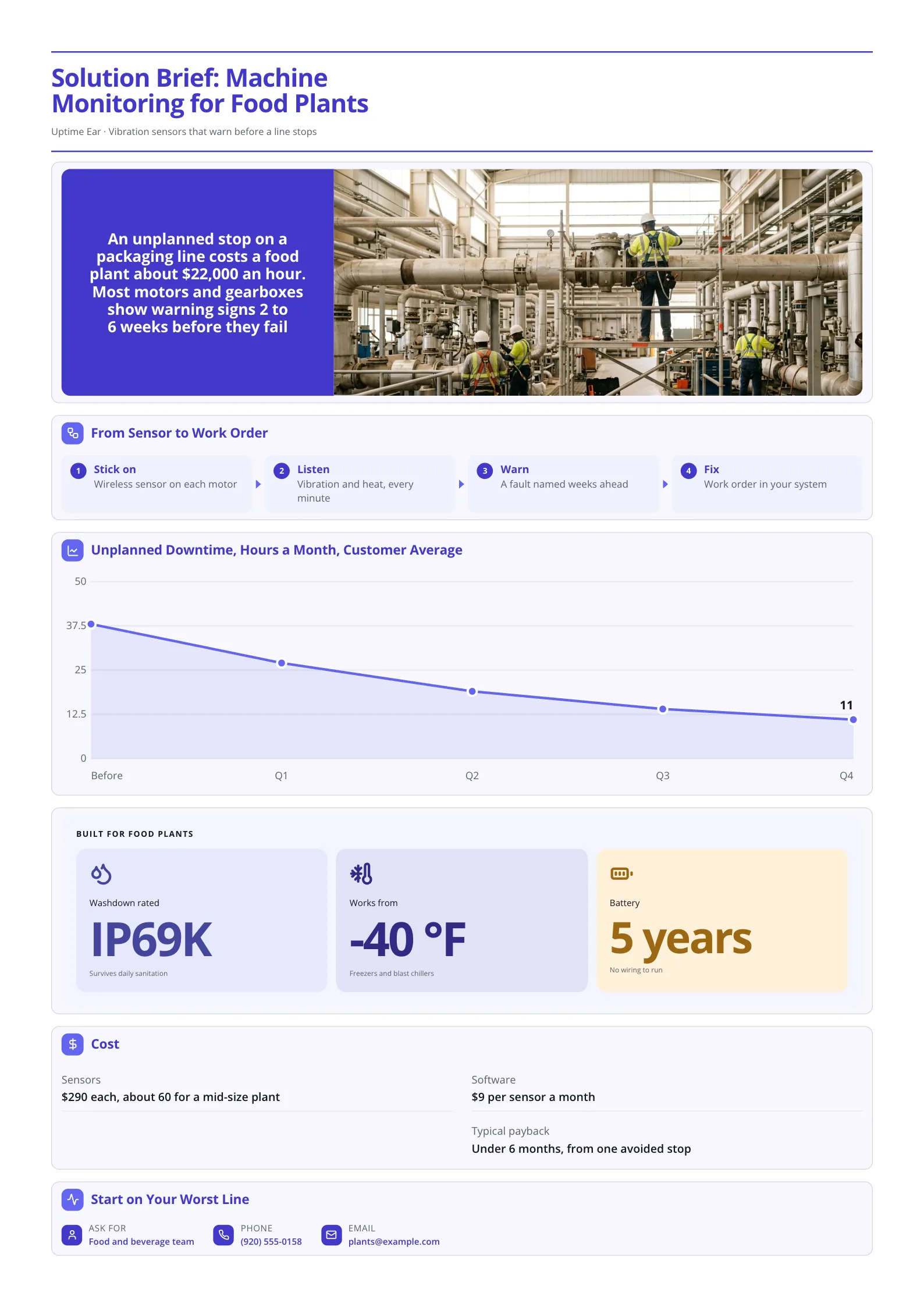 Solution Brief: Machine Monitoring for Food PlantsEdit for free(opens in a new tab)
We made the example with MakeOnepagers. You can open it as a template and edit it for free, down to every chart and color.
What is a solution brief?
A solution brief (sometimes called a solution overview or solution sheet) is a short sheet for buyers about one use case. It names a problem your buyer has, shows how your product solves it, and backs that up with proof. Product marketing usually writes it, with help from the product and sales teams and from customer success.
The word is used two ways. In marketing and sales, a solution brief is the sheet for customers that this post is about. Inside some product teams, a "solution brief" is an internal one-page pitch for an approach, written before a full requirements document. The parts below work for both. Each one says what the problem is, what the fix is and how you'll know it worked.
Solution brief, data sheet or white paper?
| Solution brief | Data sheet | White paper | |
|---|---|---|---|
| Leads with | The buyer's problem | The product's specs | An idea or trend |
| Length | One sheet | One or two sheets | Many pages |
| Reader | A buyer weighing a fix | A buyer checking details | A buyer still learning |
| Best moment | After the first call | During evaluation | Early research |
If your reader already knows the problem and wants specs, a data sheet is the better start. If they are still learning, a white paper is.
The 7 parts of a solution brief
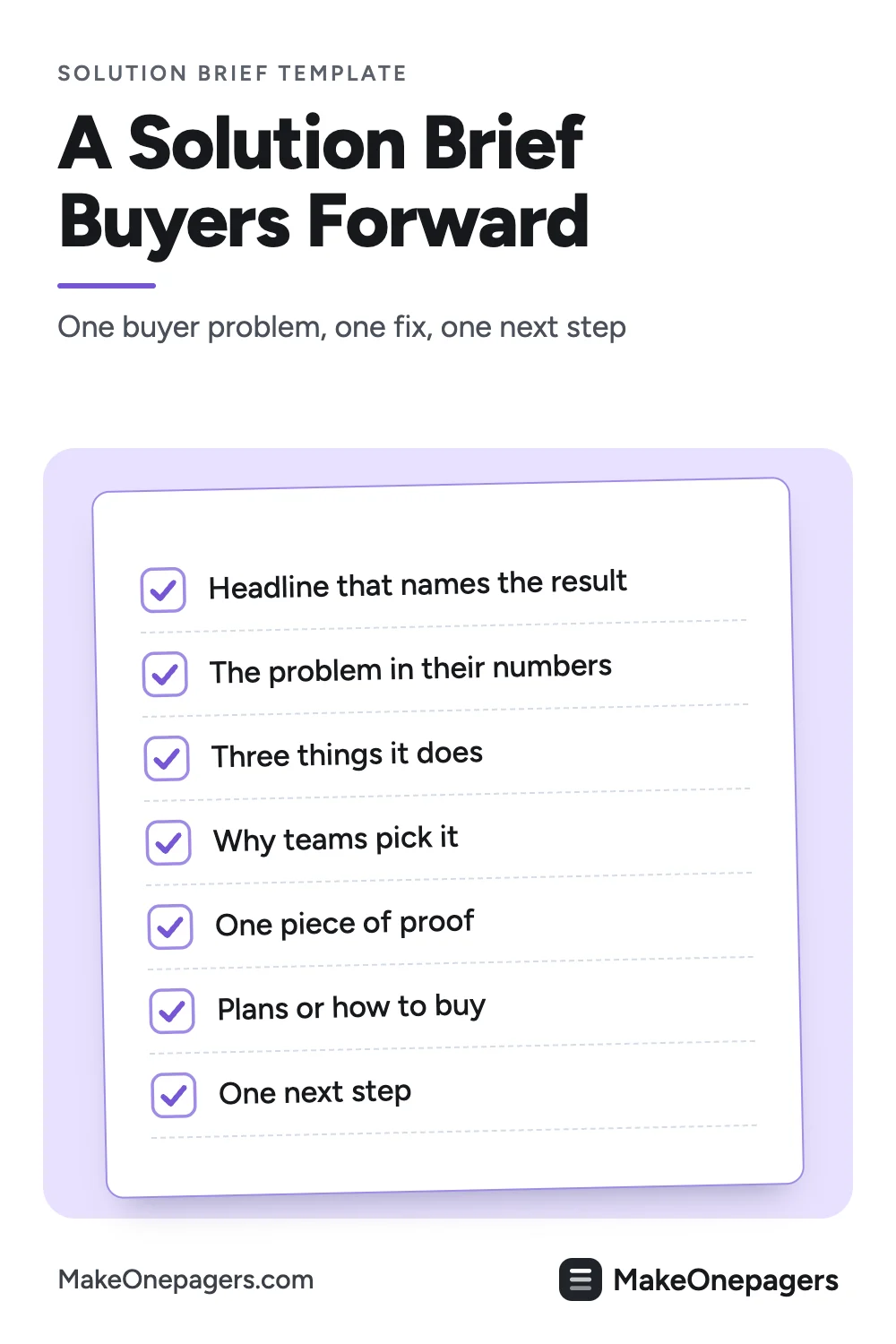
- A headline that names the result, with the product name. "Reporting your team will read", not "Introducing Lumen 4.0".
- The problem, in the buyer's numbers. Hours lost, errors made, money spent. One before and after figure is worth a paragraph.
- What it does: three short points, each a verb and a result.
- Why teams pick it: three or four differences that matter to this buyer, not every feature you have.
- Proof: one customer result, a short quote, or a fact the buyer can check.
- Plans or how to buy, in one line or a small table, if the buyer needs it to decide.
- One next step, with a link or a contact. Not three calls to action.
Keep it to one use case per brief. If you sell to finance teams and to IT teams, write two briefs, each in that reader's words.
A free solution brief template
Copy this into your own file, or open the example below and edit it.
| Part | What to write, with an example |
|---|---|
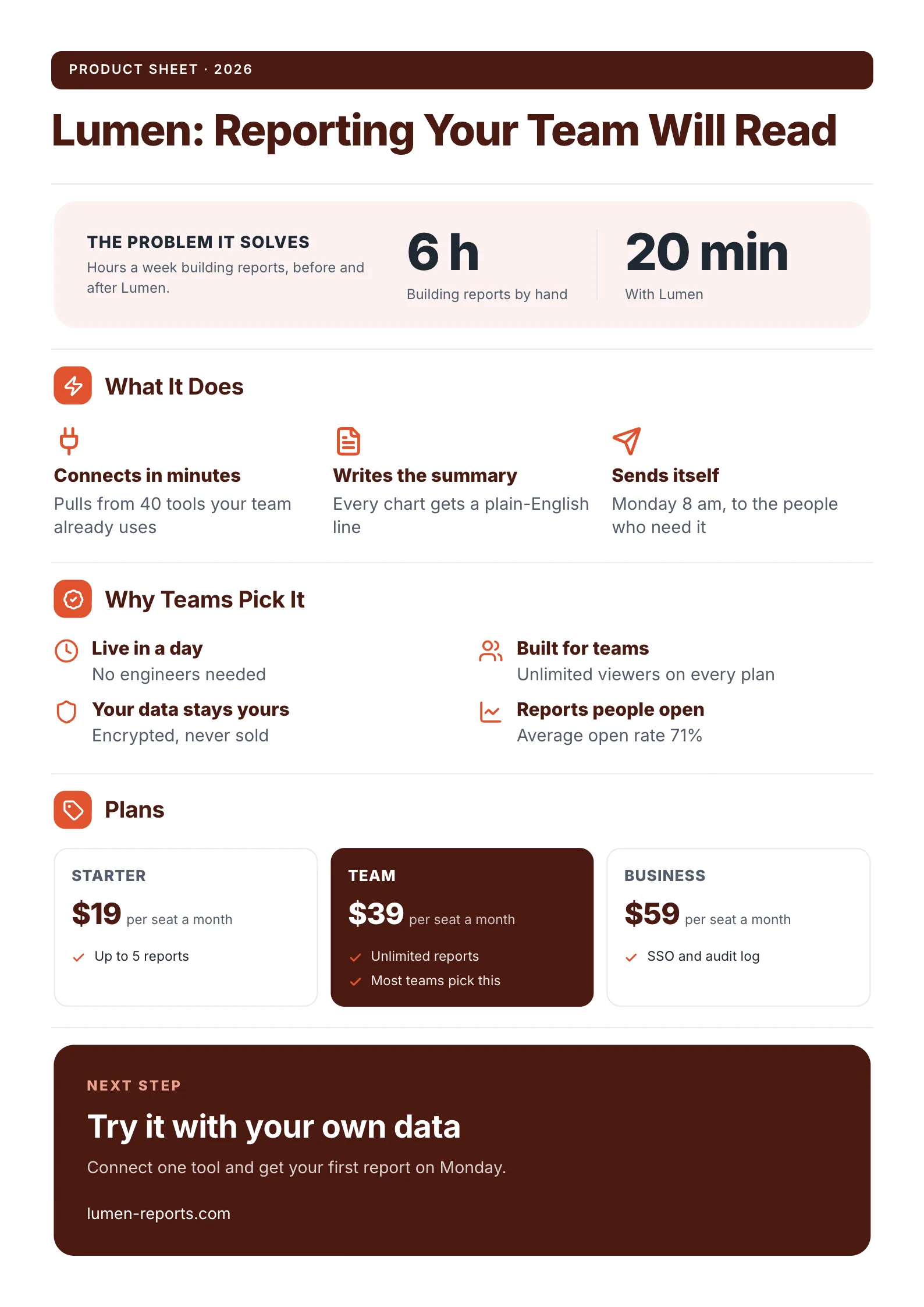
| Headline | Product and result. Lumen: Reporting Your Team Will Read |
| The problem | Before and after in numbers. 6 hours a week building reports by hand, 20 minutes with Lumen |
| What it does | 3 points. Connects in minutes, writes the summary, sends itself |
| Why teams pick it | 3 or 4. Live in a day, no engineers needed |
| Proof | 1 fact or quote. Average report open rate 71% |
| Plans | 1 line or 3 columns. $19, $39 or $59 per seat a month |
| Next step | 1 action. Connect one tool and get your first report on Monday |
Solution brief example
 Edit this template
One buyer problem, one fix and one next step, readable before your next meeting starts.
What to copy:
- The problem as two numbers: 6 hours against 20 minutes. The buyer can repeat that line to their manager without opening the brief again.
- What it does in three verbs: connects, writes, sends. Each one has a short result under it, such as "Monday 8 am, to the people who need it."
- A facts table: price, set-up time, tools it connects, viewers, open rate. Buyers look for these anyway, and a table saves them an email.
- Why teams pick it, aimed at worries: "Live in a day" answers "this will take months", and "Your data stays yours" answers the security question before it is asked.
- One next step: "Try it with your own data." One action is easier to take than a choice of four.
You can edit this solution brief template for free.
A worked example: building the problem line
The strongest line in a solution brief is the problem in numbers. Here's how you might build one for a sample team. The figures below are made up for the example.
| Question | Answer (example) |
|---|---|
| Who does the task today? | 4 team leads |
| How long does it take each week? | About 90 minutes each, so 6 hours in total |
| How long with the product? | 20 minutes, mostly checking the summary |
| Hours saved in a 48-week working year | (6 hours minus 20 minutes) x 48 = about 272 hours |
| At a loaded cost of $60 an hour | About $16,300 a year |
Use your customer's real numbers whenever you have them, name where they came from, and never round up. A buyer who checks one number and finds it inflated stops trusting the rest of the sheet.
5 more solution brief examples
Each brief speaks to one buyer with one problem. Here are five more you can borrow from, each for a different industry.
1. Invoice automation solution brief
 Edit this template
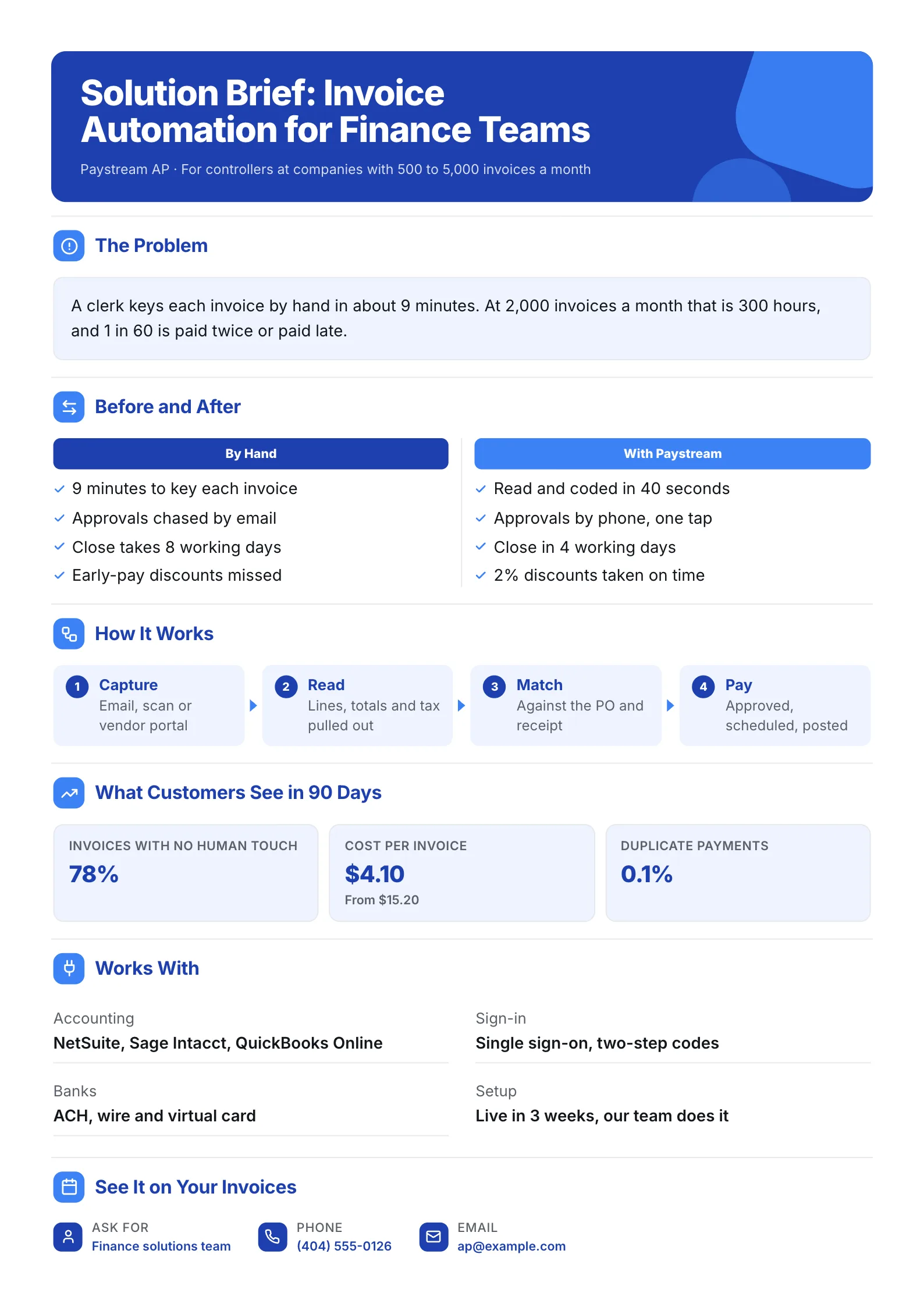
A brief for controllers at companies with 500 to 5,000 invoices a month.
What to copy:
- The hours lost keying invoices, the cost the reader already feels.
- 90-day results, plus the systems it works with.
You can edit this invoice automation solution brief template for free.
2. Patient scheduling solution brief
 Edit this template
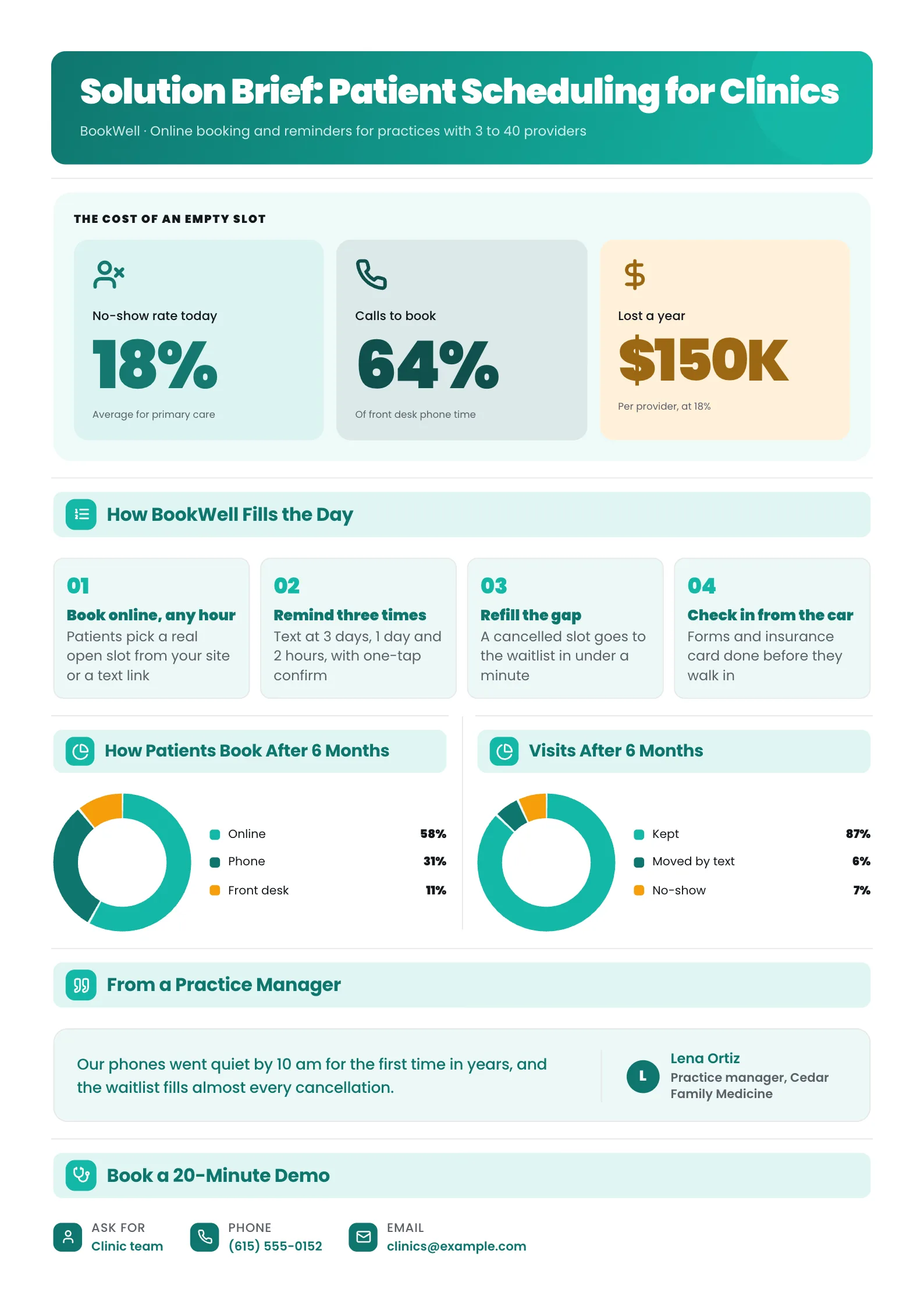
A brief for medical practices with 3 to 40 providers.
What to copy:
- What no-shows cost, before the product is named.
- Visits kept against no-shows, and a practice manager's own words.
You can edit this patient scheduling solution brief template for free.
3. Cybersecurity solution brief
 Edit this template
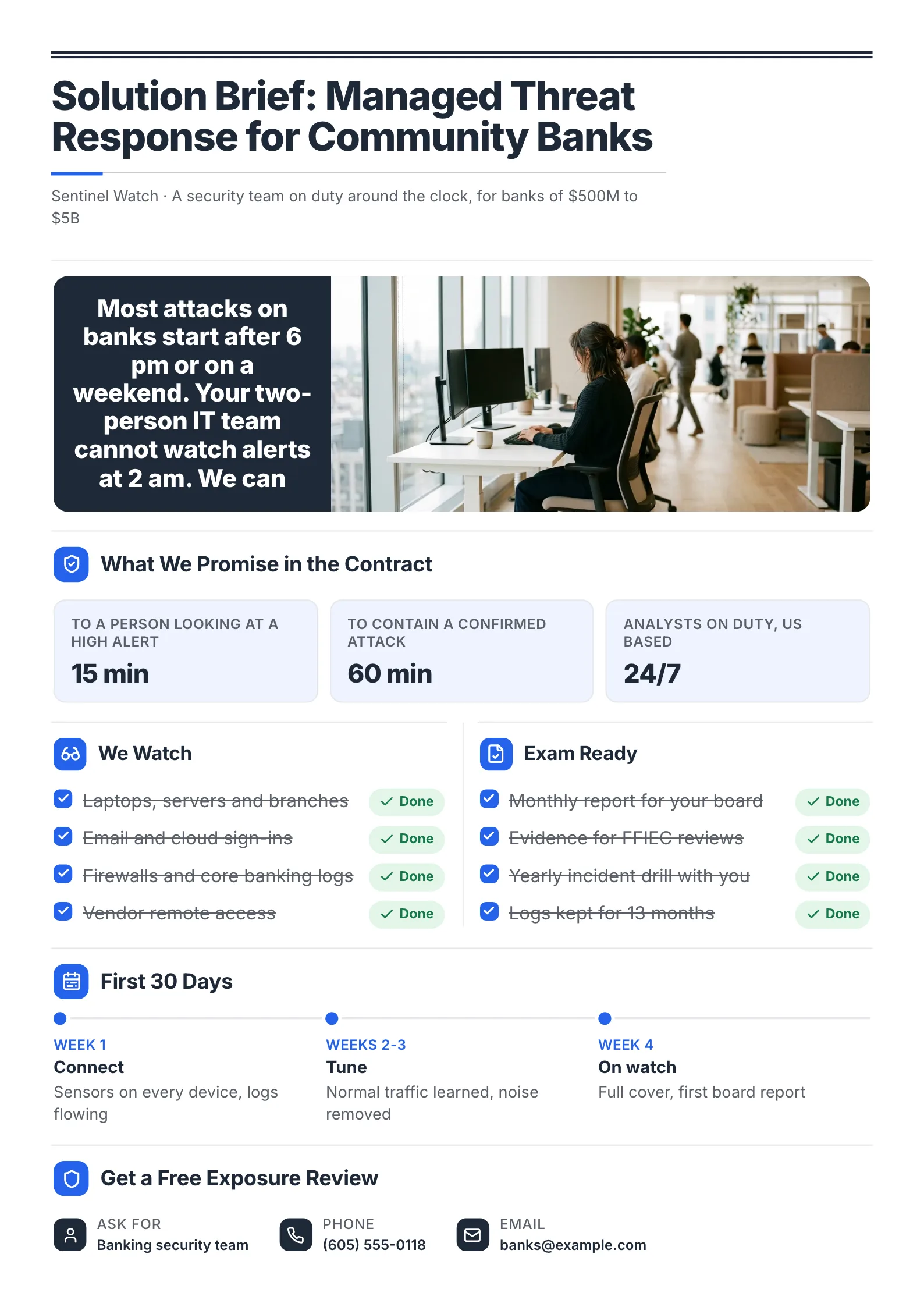
A managed threat response brief for community banks of $500M to $5B.
What to copy:
- Response times as written in the contract, not as a promise.
- The first 30 days, so the buyer sees how it starts.
You can edit this cybersecurity solution brief template for free.
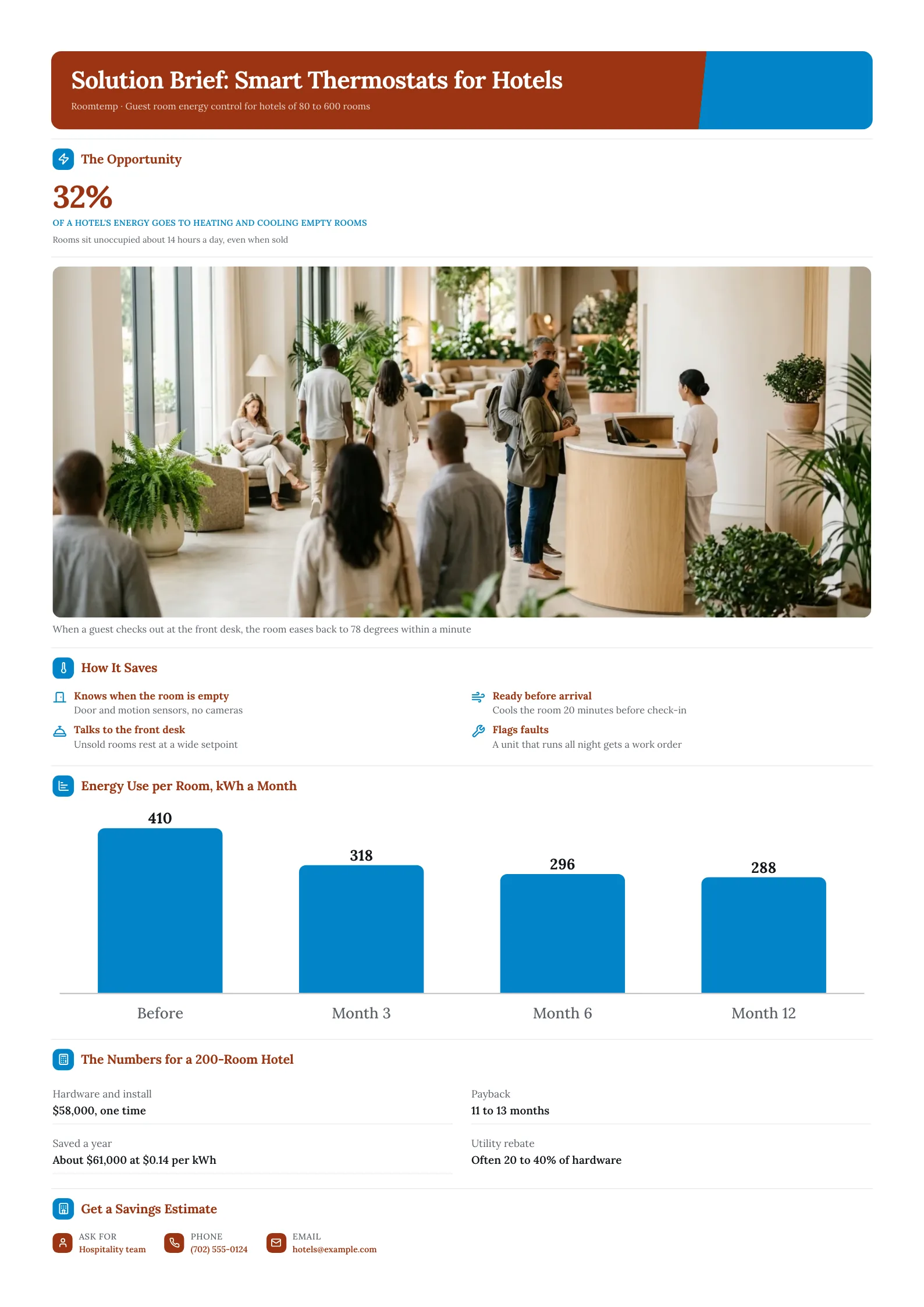
4. Hotel energy solution brief
 Edit this template
A smart thermostat brief for hotels of 80 to 600 rooms.
What to copy:
- The share of energy spent on empty rooms, the problem in one number.
- Cost, savings and payback for a 200-room hotel, worked out.
You can edit this hotel energy solution brief template for free.
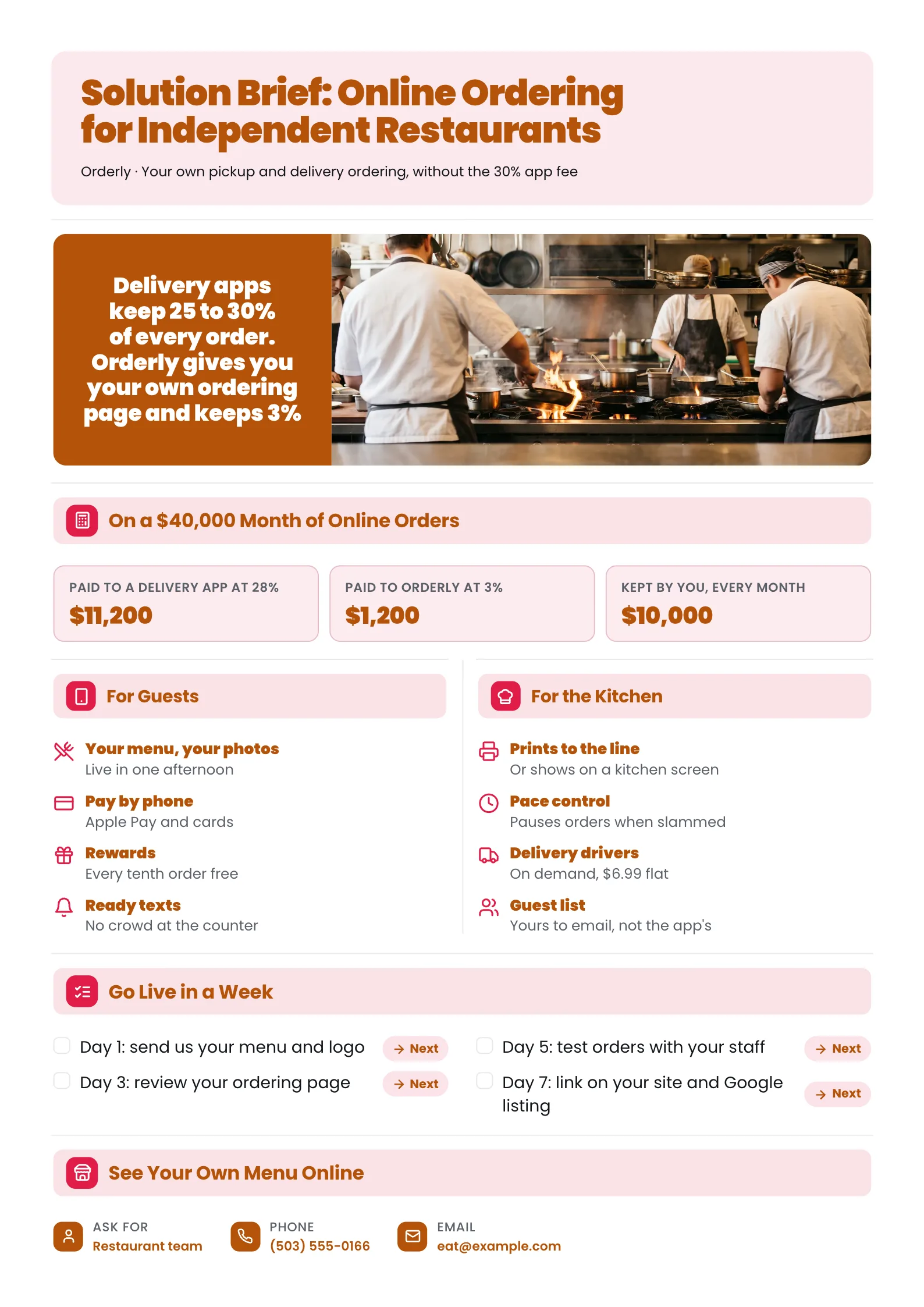
5. Restaurant ordering solution brief
 Edit this template
An online ordering brief for independent restaurants.
What to copy:
- What a restaurant keeps on a $40,000 month, against the 30% app fee.
- A one-week path to going live, so the switch looks small.
You can edit this restaurant ordering solution brief template for free.
How to write a solution brief in 6 steps
- Pick one buyer and one use case. Start with the one that brings in the most revenue or has the strongest proof.
- Interview three customers about life before your product: what took time, what went wrong, what it cost.
- Write the problem line first, in their numbers and their words.
- Choose three things it does that answer that problem, and cut every other feature.
- Add one piece of proof and one next step.
- Have a salesperson read it out loud. If they stumble on a line, a buyer will too.
Do you already have a long product deck or a white paper? Drop it into the free AI One-Pager generator and you'll get it back as a designed solution brief. Then tune your problem line by hand.
Solution brief mistakes
- Starting with the company. "Founded in 2015" is not why the buyer opened the brief. Start with their problem.
- A feature list. Twenty features say nothing about which three matter. Pick the three that fix this buyer's problem.
- Words only your team uses. Internal product names and acronyms make a buyer feel like an outsider.
- No numbers. "Saves time" is a claim. "6 hours to 20 minutes" is a result a buyer can test.
- Gating it behind a form. A brief is meant to be forwarded. Let it travel.
- Several calls to action. Book a demo, start a trial, read the blog, follow us: pick one.
Make your solution brief
Open the free solution brief template and put in your buyer's problem. Or drop your product deck into the free AI One-Pager generator and get a finished solution brief back.
Frequently asked questions
What should a solution brief include?
Start with a headline that names the result and your buyer's problem in numbers. Then add what the product does, why teams pick it, one piece of proof, how to buy and one next step.
How long should a solution brief be?
Keep it to one sheet for one use case. Some teams write two or three pages, but a buyer forwarding it to a manager will thank you for the single sheet.
What is the difference between a solution brief and a data sheet?
A solution brief leads with the buyer's problem and the result. A data sheet leads with the product's specs. Most buyers need your brief first and the data sheet later.
Who writes a solution brief?
Usually product marketing writes it. Product managers check it for accuracy, sales adds what buyers ask about, and customer success brings the proof.
Is a solution brief the same as a solution overview?
Close. Many companies use the names for the same buyer-facing sheet. Whatever you call it, keep it to one problem and one fix.




