Safety One‑Pager Template: Free Briefings, Scorecards and Huddles
Free safety one-pager templates for a site briefing, a plant scorecard, a nursing huddle, a hospital fact sheet and a cylinder SDS, built on OSHA's advice.

Your crew has ten minutes before the shift, and a charge nurse down the road has a 7 am huddle for 28 patients. Both groups need to hear what's different today, and your page is how they hear it. A safety one pager puts today's risks and the rules that never change on one sheet, with who to call at the bottom. Start from a free one pager template.
One‑Pager examples
Real One-Pagers made with MakeOnepagers. Open any one to edit it as your own.
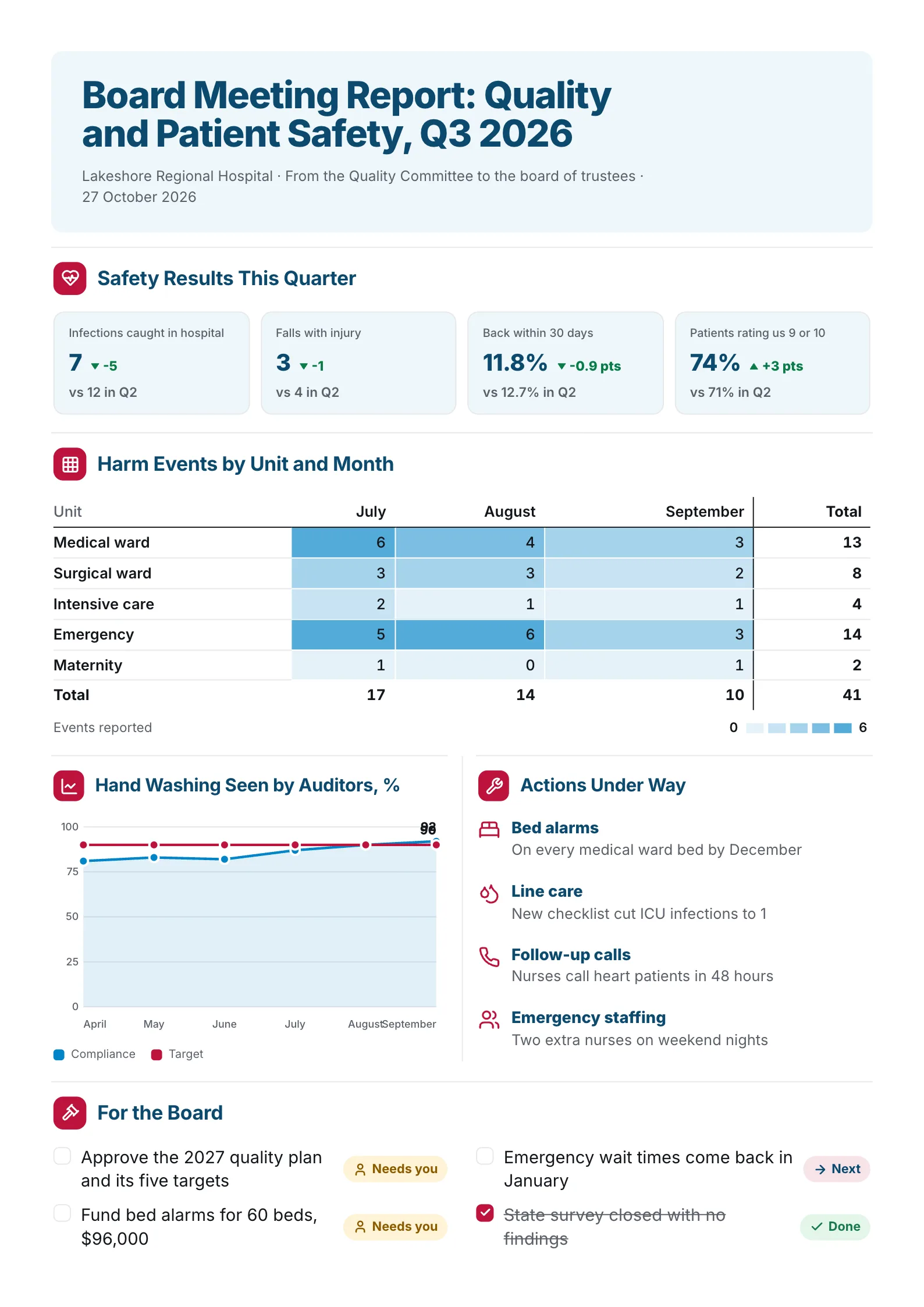 Board Meeting Report: Hospital Quality and SafetyEdit for free(opens in a new tab)
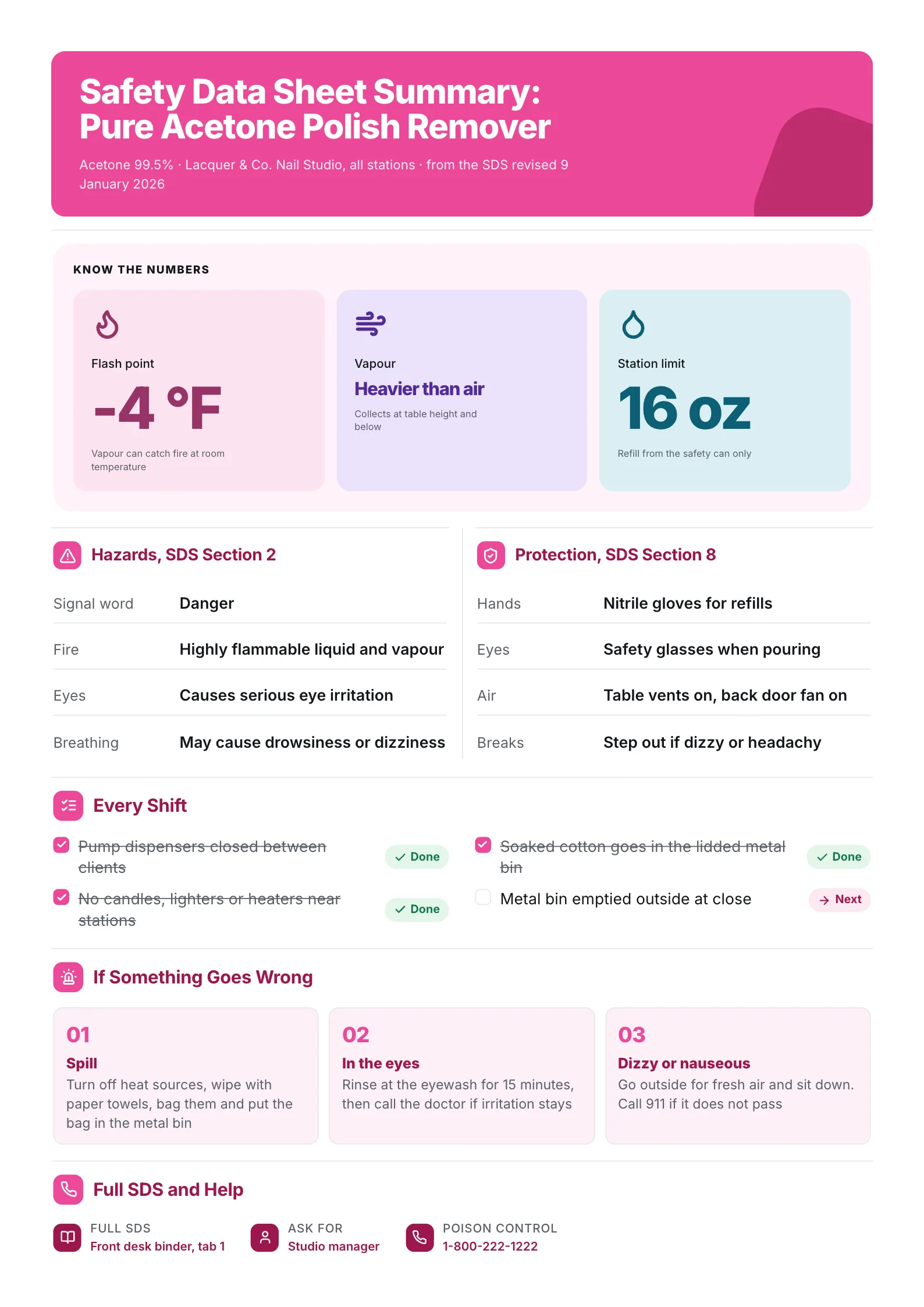 Safety Data Sheet Summary: Acetone for Nail SalonsEdit for free(opens in a new tab)
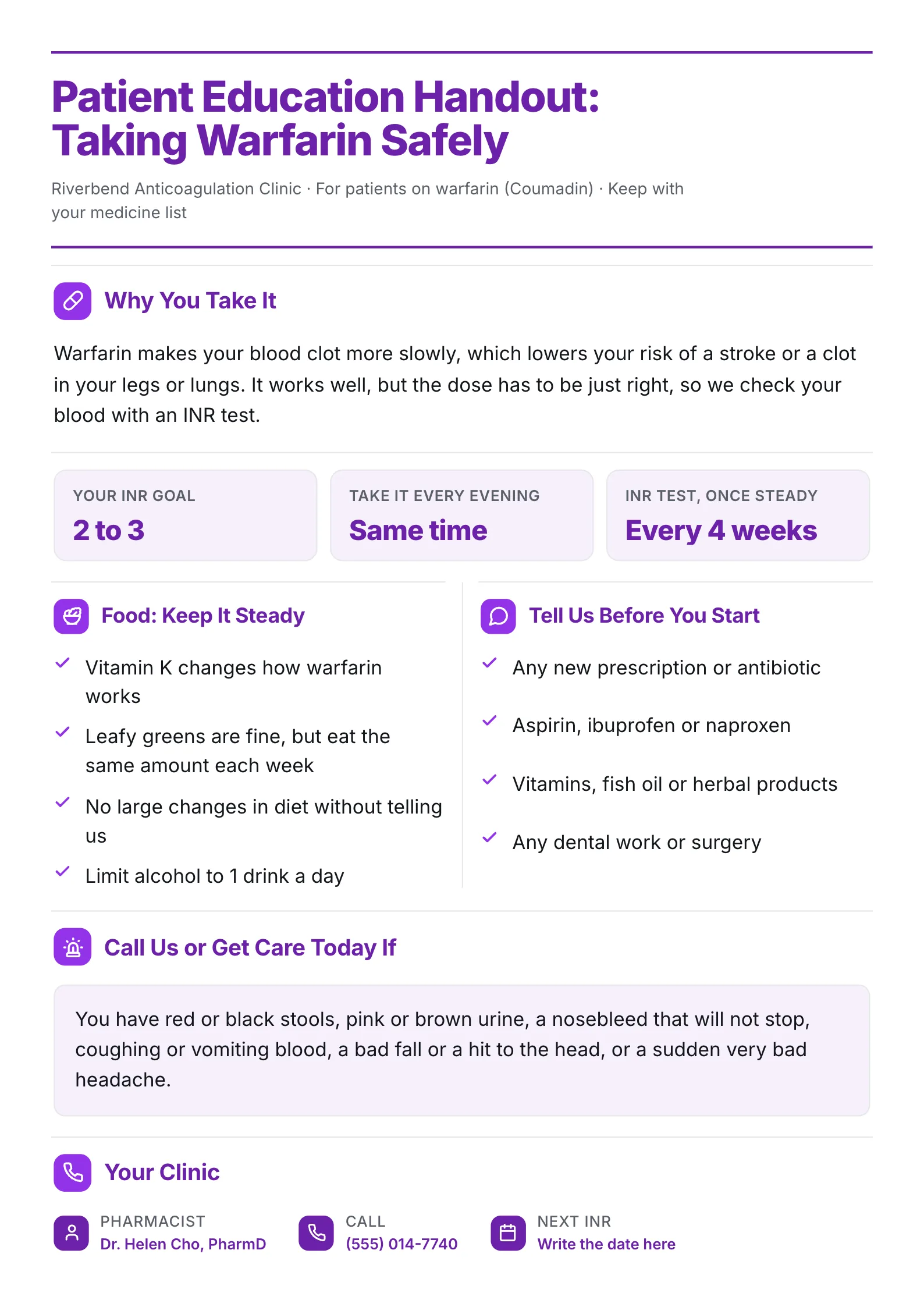 Patient Education Handout: New Medication SafetyEdit for free(opens in a new tab)
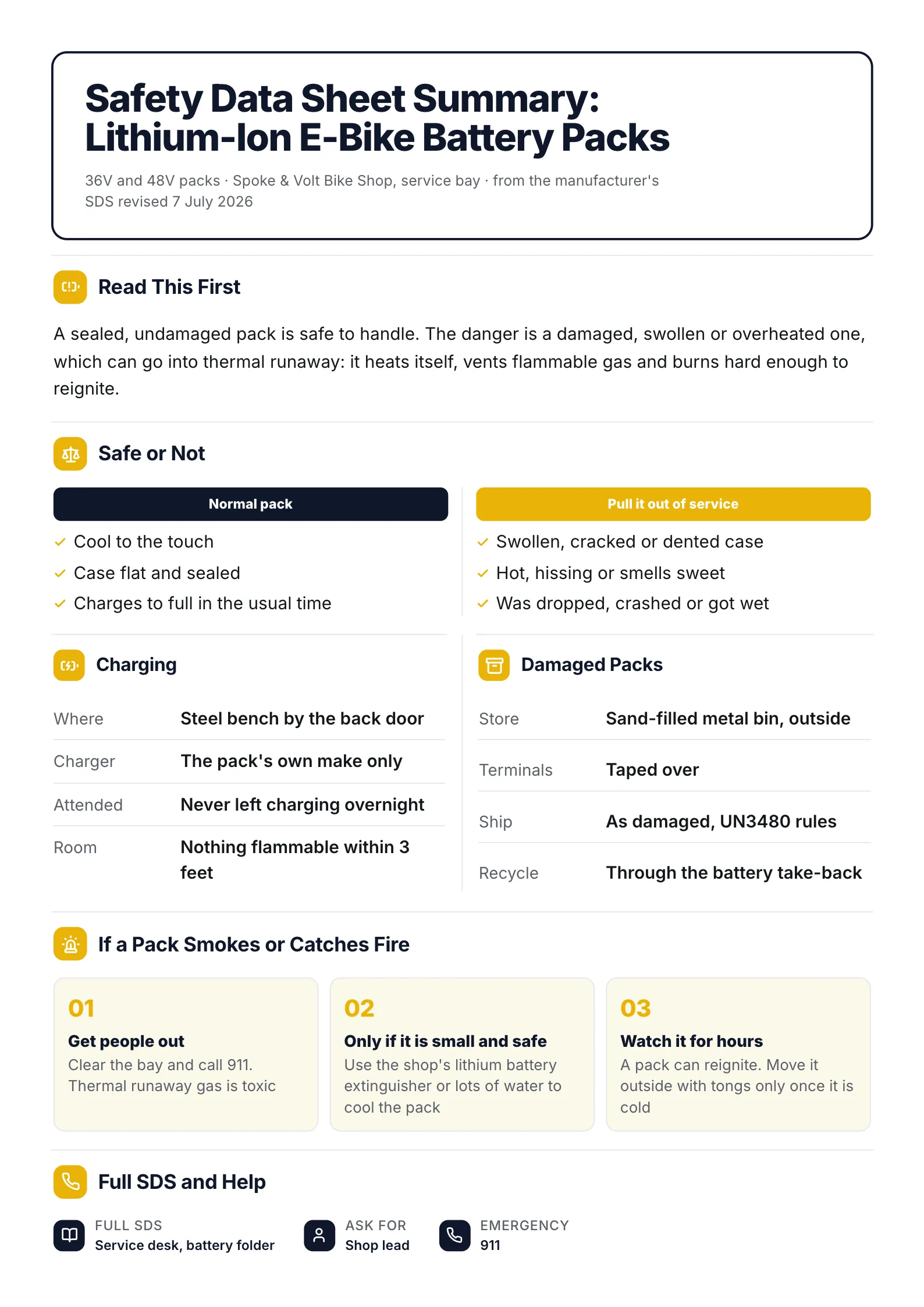 Safety Data Sheet Summary: Lithium-Ion Battery PacksEdit for free(opens in a new tab)
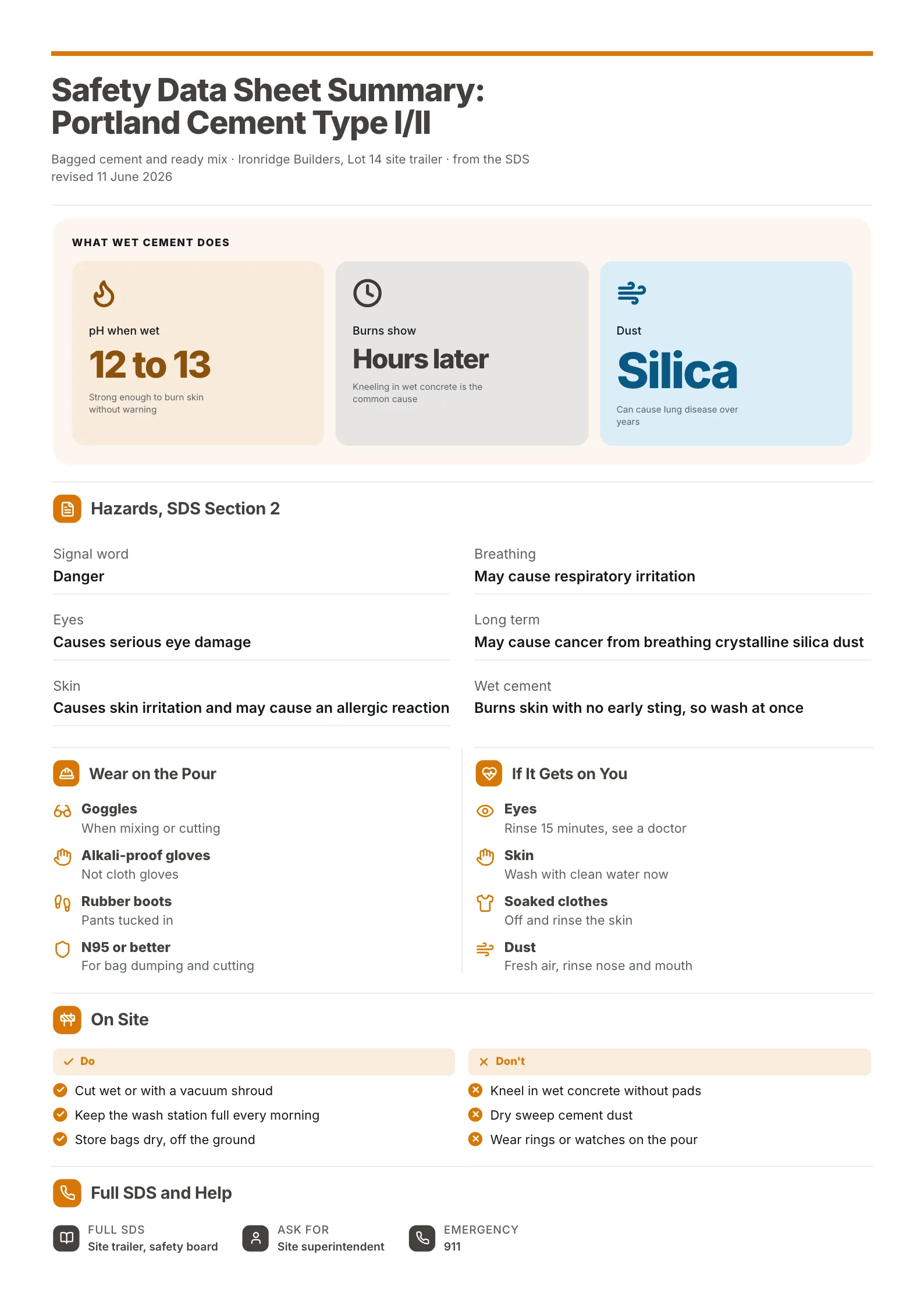 Safety Data Sheet Summary: Portland Cement on SiteEdit for free(opens in a new tab)
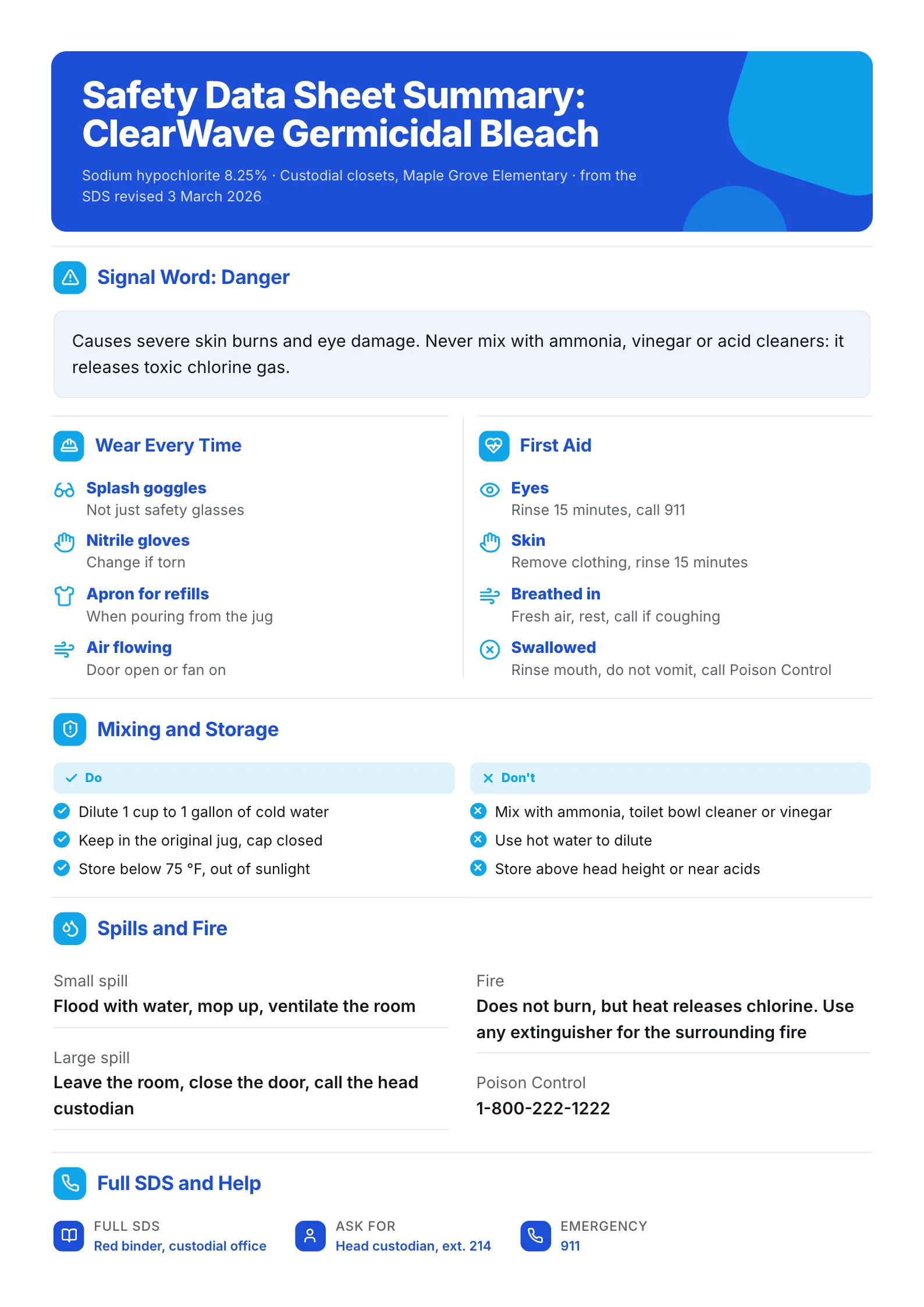 Safety Data Sheet Summary: Bleach for School CustodiansEdit for free(opens in a new tab)
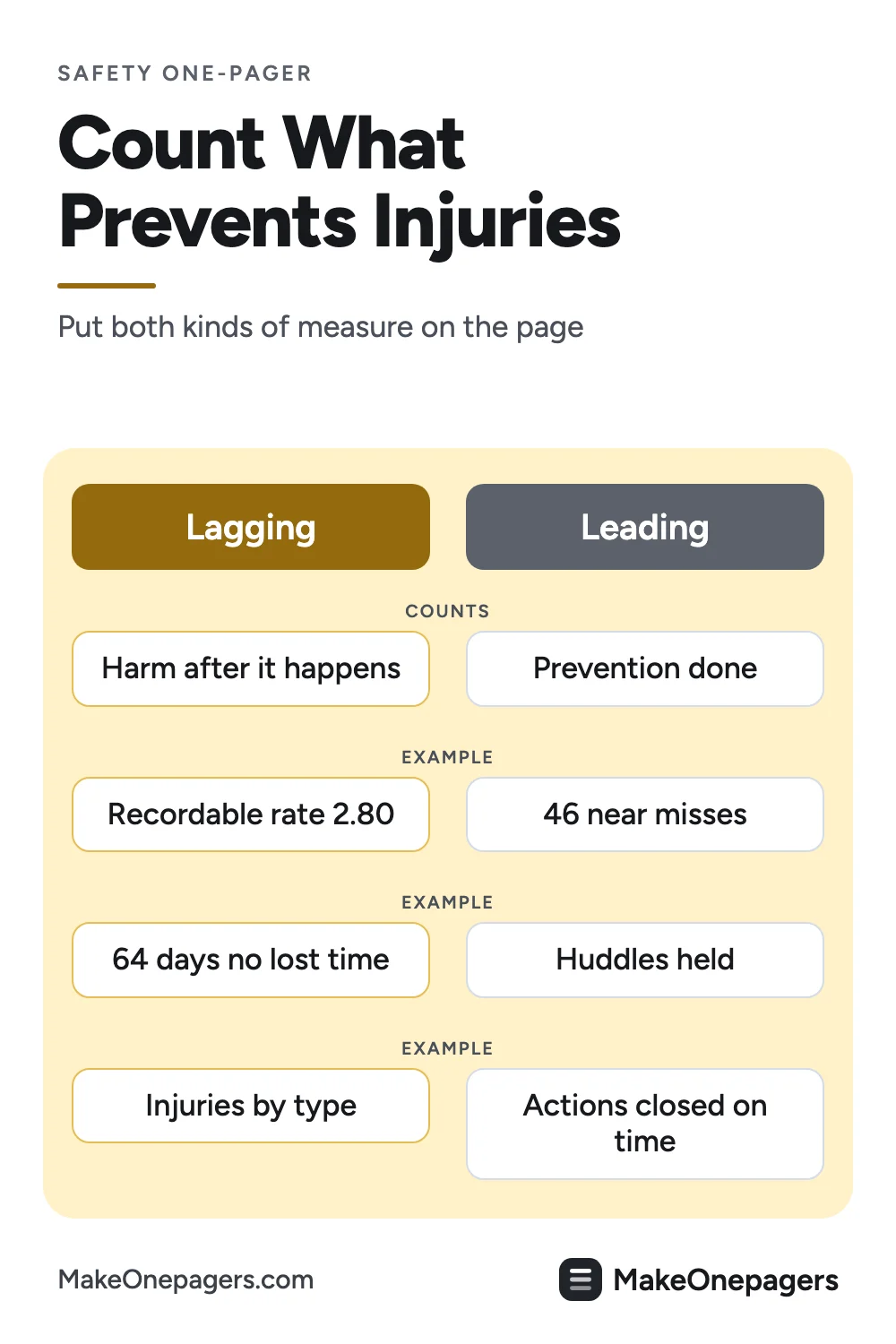
The best safety pages share a habit that OSHA recommends. They count the things that prevent injuries as well as the injuries themselves.
Count what prevents injuries
OSHA's Recommended Practices for Safety and Health Programs are built around seven core elements, including management leadership, worker participation and program evaluation. Its page on management leadership has three lines that should shape your safety one pager.
| What OSHA recommends | What it means on the page |
|---|---|
| Goals "emphasizing injury and illness prevention should be included rather than focusing on injury and illness rates" | Show leading measures, like training done and actions closed, beside the injury rate |
| "Begin work meetings with a discussion or review of safety and health indicators" | The briefing or huddle sheet is the first thing read at the meeting |
| Positive recognition for reporting "close calls/near misses", attending training and doing inspections | A rising count of near misses reported is good news, and the page says so |
OSHA adds that successful programs "reward, rather than discipline, workers who identify problems". If your page only shows injuries, it can teach your people to keep quiet. If it celebrates reports, it teaches the opposite.
Five places a safety page gets read
A site briefing before the shift
 Edit this template
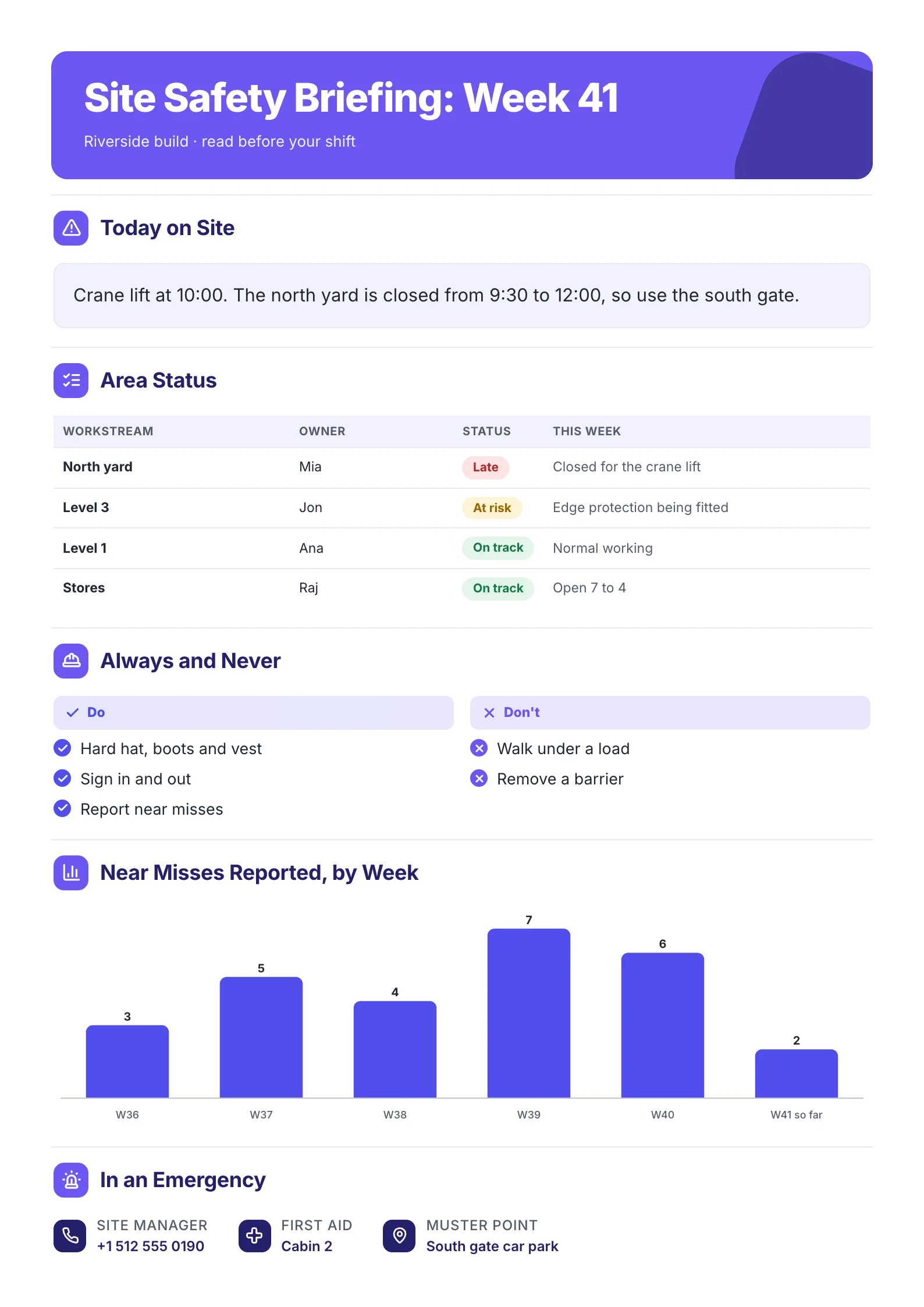
The top line is the only news that day. There's a crane lift at 10 am, so use the south gate. Every area has a color and a named lead, which turns your long talk into a ten-second scan. The near-miss chart gets a full block, which is OSHA's point about recognizing reports. Start from the site safety briefing for your own crew.
A plant scorecard for the quarter
 Edit this template
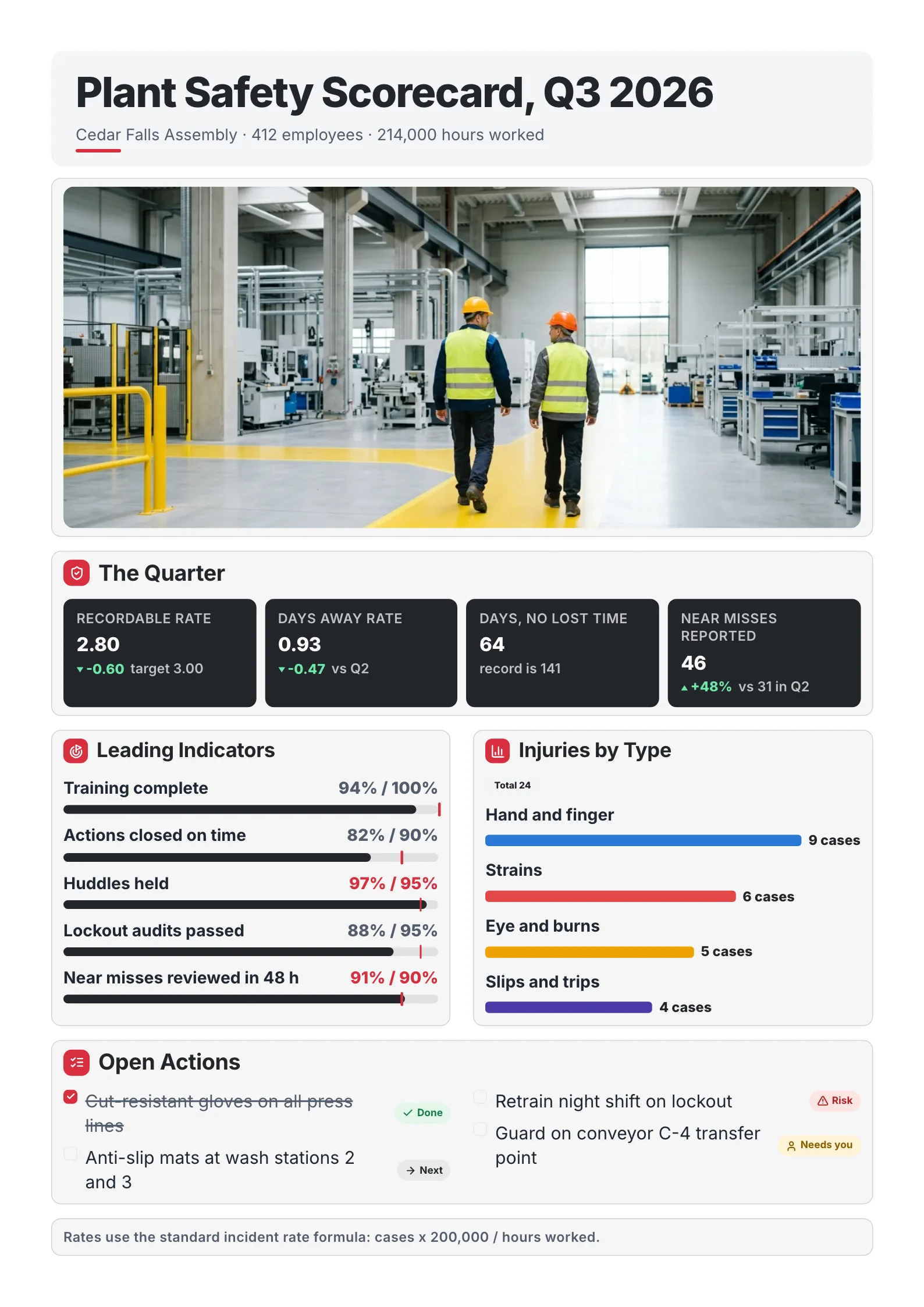
Your scorecard should show both kinds of measure, and this one does. The lagging ones, the recordable and days-away rates, sit in the top row. Leading indicators, like training complete and lockout audits passed, get their own chart. Near misses are up 48%, from 31 to 46, and the page treats that as progress. Open actions carry a label, so you know which ones to chase at the meeting. The plant safety scorecard keeps both kinds of measure side by side.
A nursing unit's morning huddle
 Edit this template
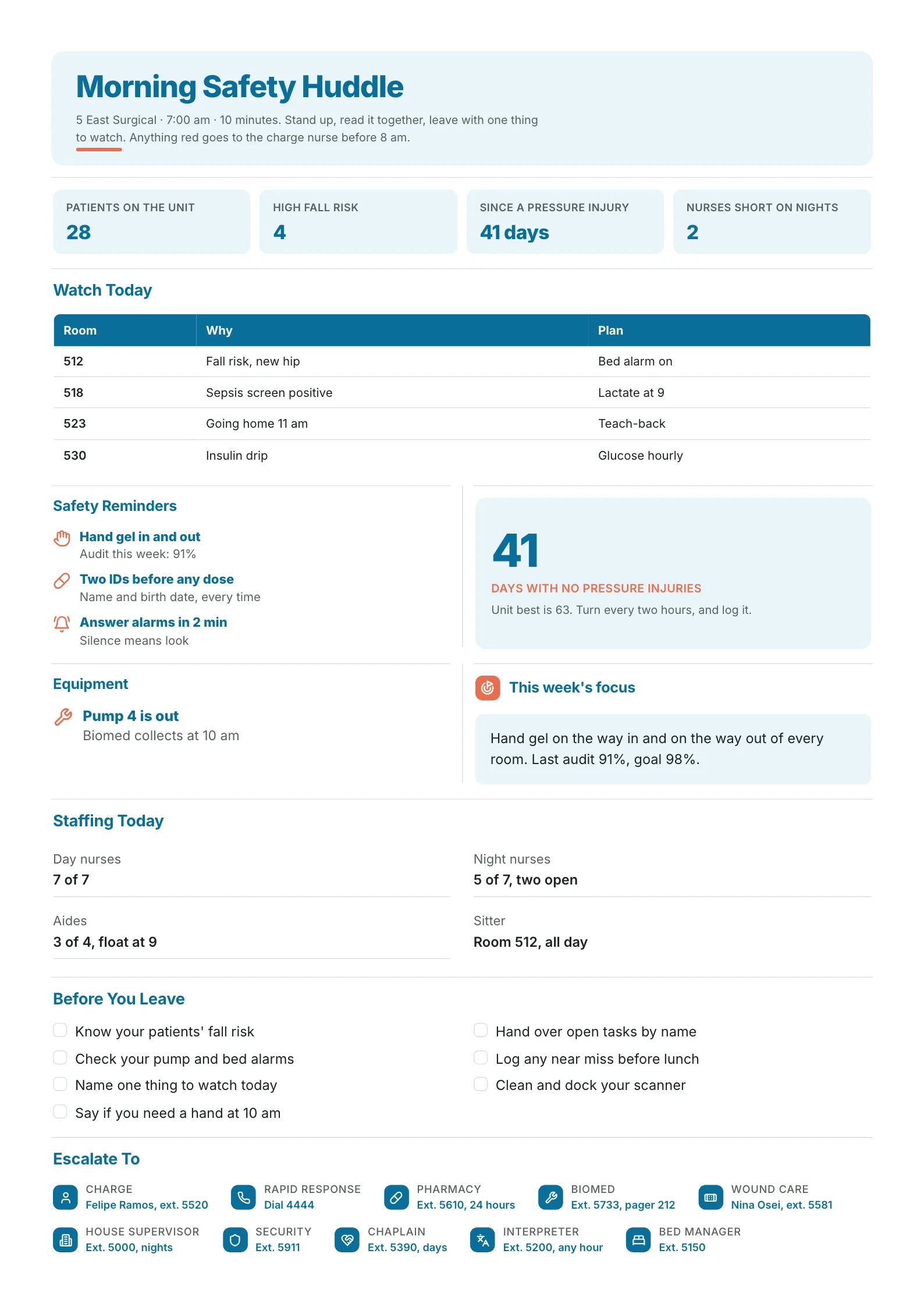
You read it together in ten minutes, standing. The "Watch Today" table names four rooms and the plan for each. One focus for the week, hand gel in and out of every room, comes with its number: 91% at the last audit, 98% the goal. Anything red goes to the charge nurse before 8 am. Edit the nursing safety huddle sheet for your unit.
A quality and safety fact sheet for patients
 Edit this template
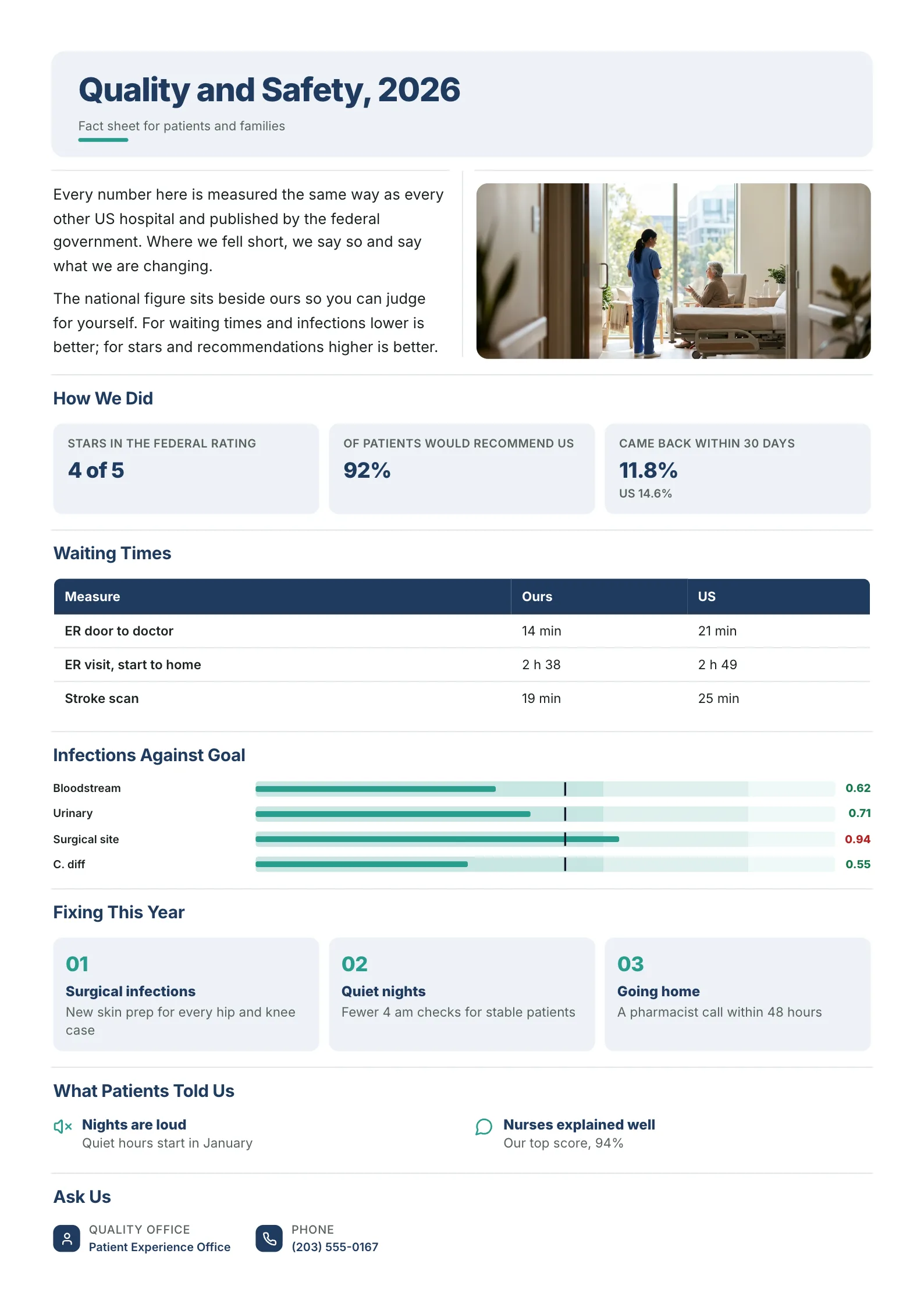
Your safety page can face patients too. This one is for patients and families, and it earns trust two ways. The national figure sits beside each of the hospital's, like 14 minutes from ER door to doctor against 21, so your readers can judge it. And the hospital quality snapshot says where the hospital fell short and what it's changing. Our clinic one-pager template post has more pages for patients.
A safety data sheet summary for one hazard
 Edit this template
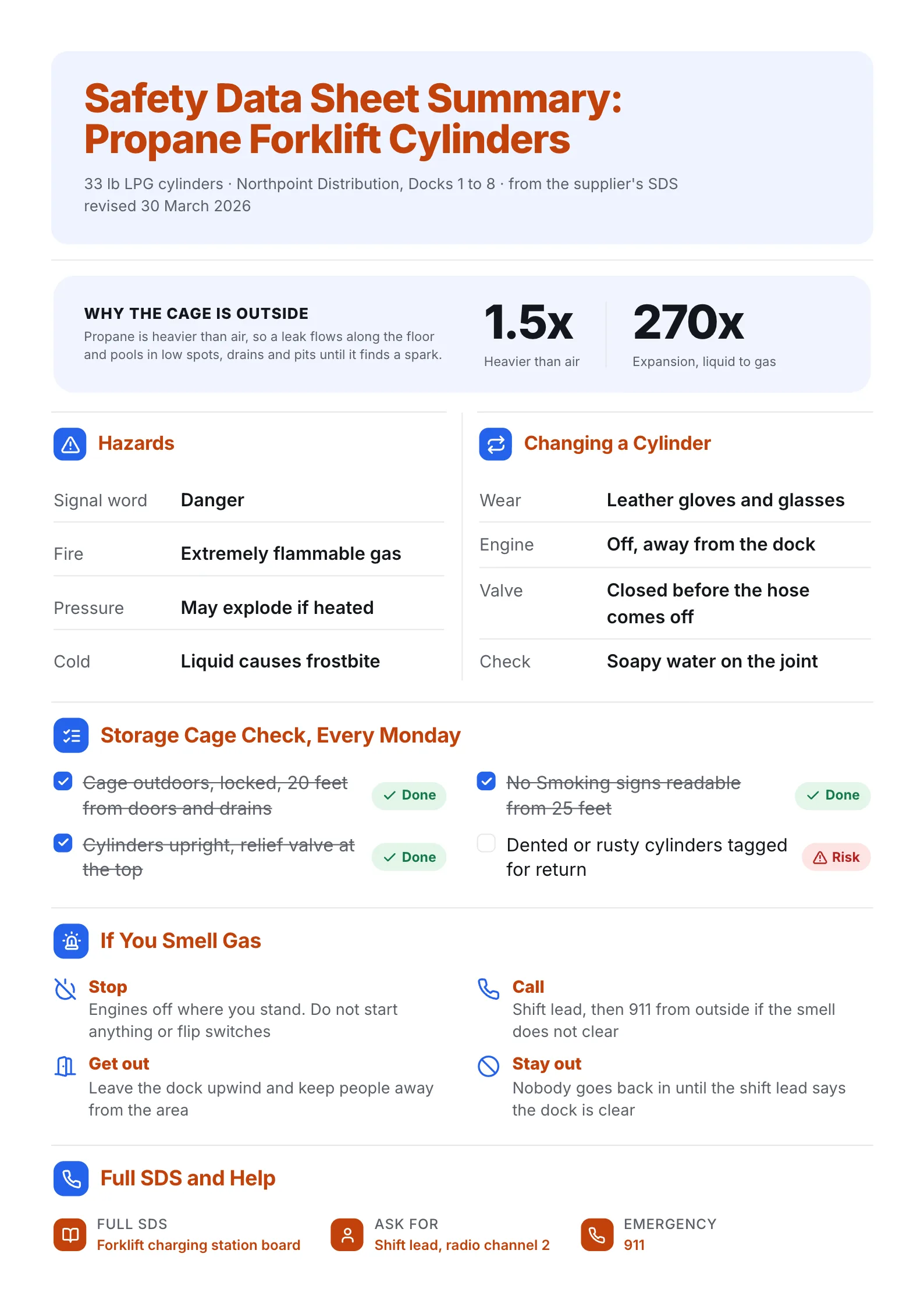
Your full safety data sheet runs many pages (the ten in our safety data sheet example post run 5 to 16). Your summary picks one product in one place and answers the question your workers actually ask. Why the rule? Propane is 1.5 times heavier than air, so a leak pools on the dock floor. That's why the cage sits outside, 20 feet from doors and drains. The propane cylinder summary shows the whole page. Our safety data sheet summary guide covers the format.
Check the rate before it goes on the wall
The Cedar Falls scorecard prints its formula in the footnote. You multiply cases by 200,000 and divide by hours worked. Run it backward to check your page. A recordable rate of 2.80 on 214,000 hours means about 3 recordable cases, since 3 × 200,000 ÷ 214,000 is 2.80.
Do the same with your numbers. Then look at any injury count elsewhere on the page. The Cedar Falls chart shows 24 injuries by type, while the rate implies about 3 recordable cases, and nothing on the page says why the two differ. If yours counts first aid cases too, label it that way, or a careful reader will stop trusting the rate.
Keep it to one page
- Today's risk first, in one or two sentences.
- Colors that mean one thing. Red, amber and green for status, nothing else.
- Leading measures beside lagging ones. Training, audits, near misses, actions closed.
- Rules as "always" and "never", five or six of them.
- Emergency contacts and the muster point in the same place every week.
Make your safety one pager
Start with the meeting where your page will be read, such as a shift briefing, a huddle or a quarterly review. Choose the layout for it in MakeOnepagers, fill in this week's details and refresh the numbers every week. A long safety plan or an SDS can be condensed with the free AI One-Pager generator. Have someone qualified check every safety fact before you post it.
Frequently asked questions
What is a safety one pager?
A single page that gives a crew, unit or team today's risks, the standing rules, key safety numbers and emergency contacts, usually read at the start of a shift or meeting.
What should a safety briefing include?
Today's main hazard and what changes because of it, area status, always and never rules, a leading measure such as near misses reported, and emergency contacts and the muster point.
What are leading and lagging safety indicators?
Lagging indicators count harm after it happens, like injury rates. Leading indicators count prevention, like training completed, inspections done and near misses reported. OSHA recommends goals that emphasize prevention.
How do you calculate a recordable incident rate?
Multiply recordable cases by 200,000 and divide by total hours worked. Three cases in 214,000 hours gives a rate of about 2.80.
Is there a free safety one pager template?
Yes. Choose from our safety layouts and edit one at no charge. Add this week's hazards and contacts, then print a copy for the wall or the huddle.
Write today's one risk first. Then pick the safety page that fits your meeting.




