Retail One‑Pager Template: Free Buyer Pitch, Store Profile and Plan
Free retail one-pager templates for a buyer pitch, a battlecard, a store profile, a sales forecast and an account plan, plus the barcode count to do first.

Before a category reset, a grocery buyer has to decide which new items earn shelf space and which current ones lose it. Leave one sheet with your sales numbers, the store's margin, the launch support and exactly what you're asking for, and that decision gets easier. Start from a free one pager template.
One‑Pager examples
Real One-Pagers made with MakeOnepagers. Open any one to edit it as your own.
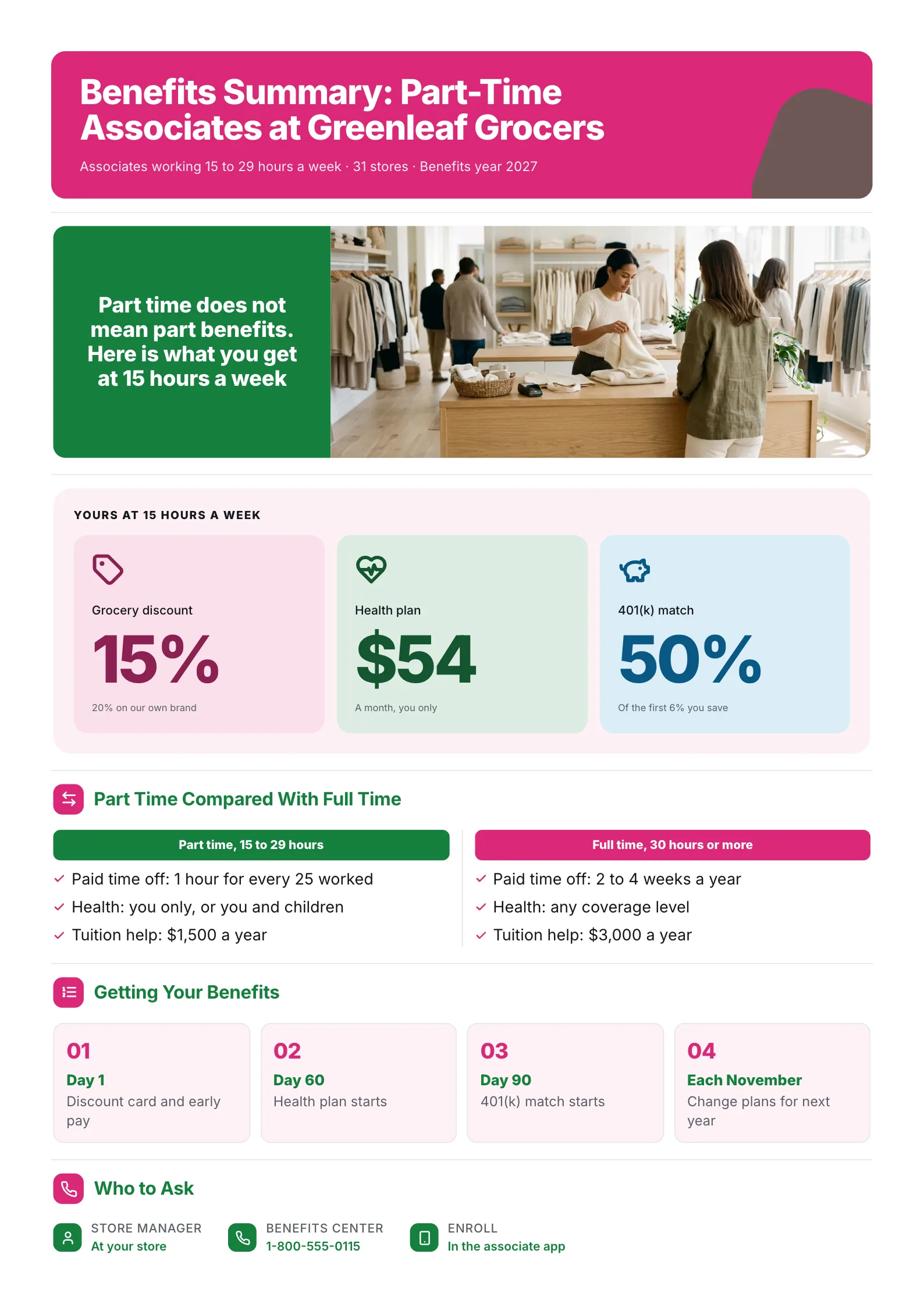 Benefits Summary: Part-Time Retail AssociatesEdit for free(opens in a new tab)
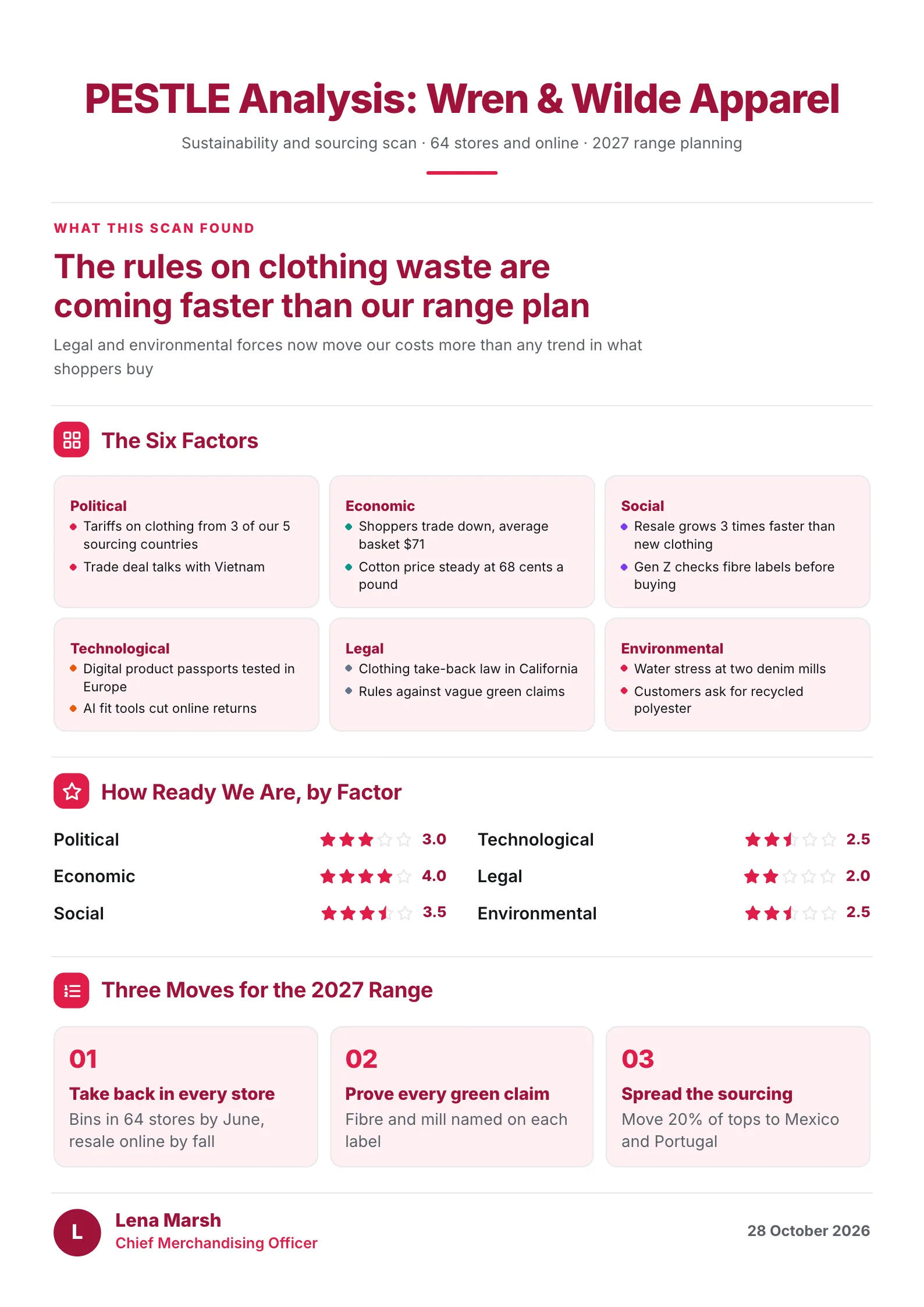 PESTLE Analysis: RetailEdit for free(opens in a new tab)
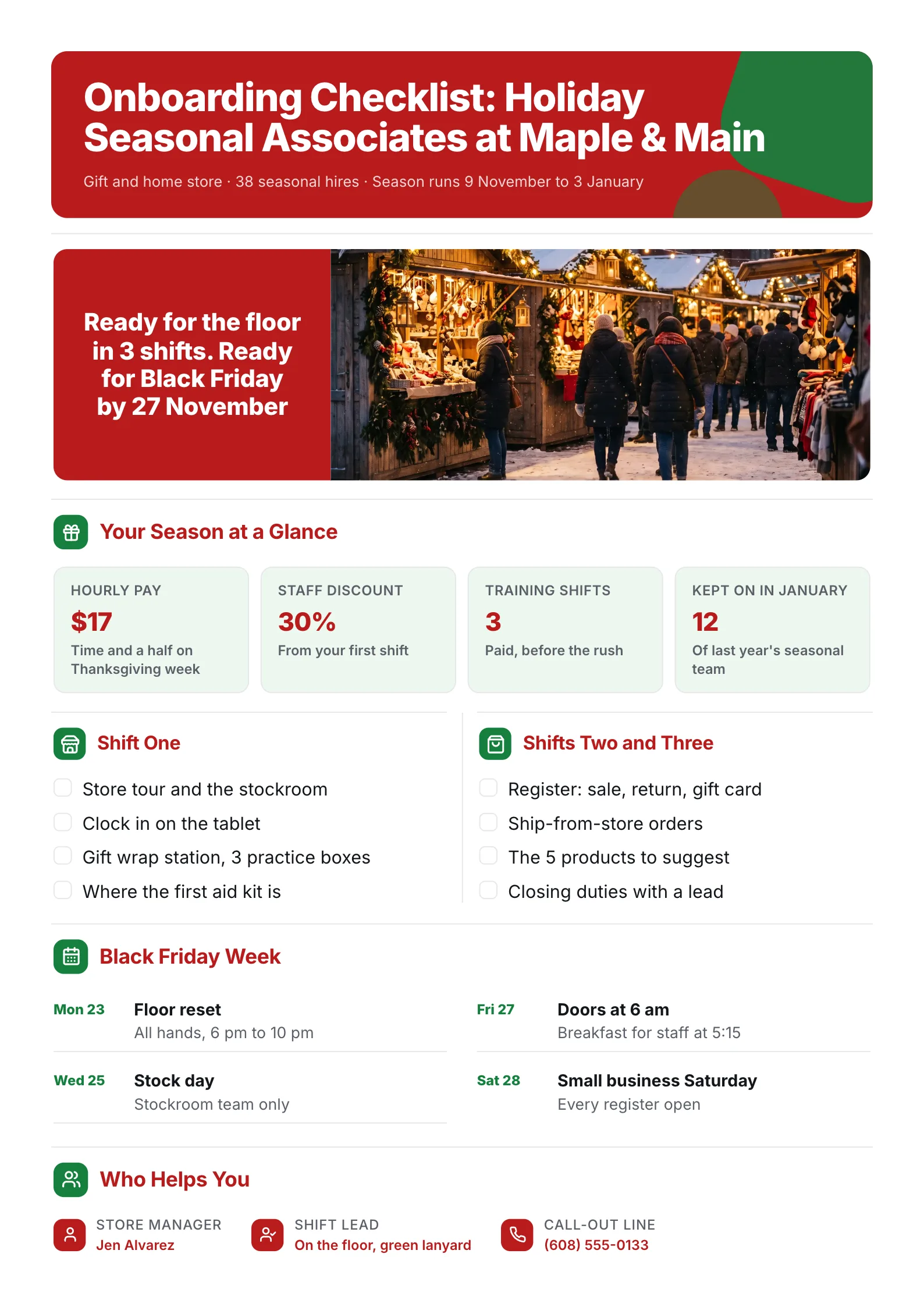 Onboarding Checklist: Seasonal Retail AssociatesEdit for free(opens in a new tab)
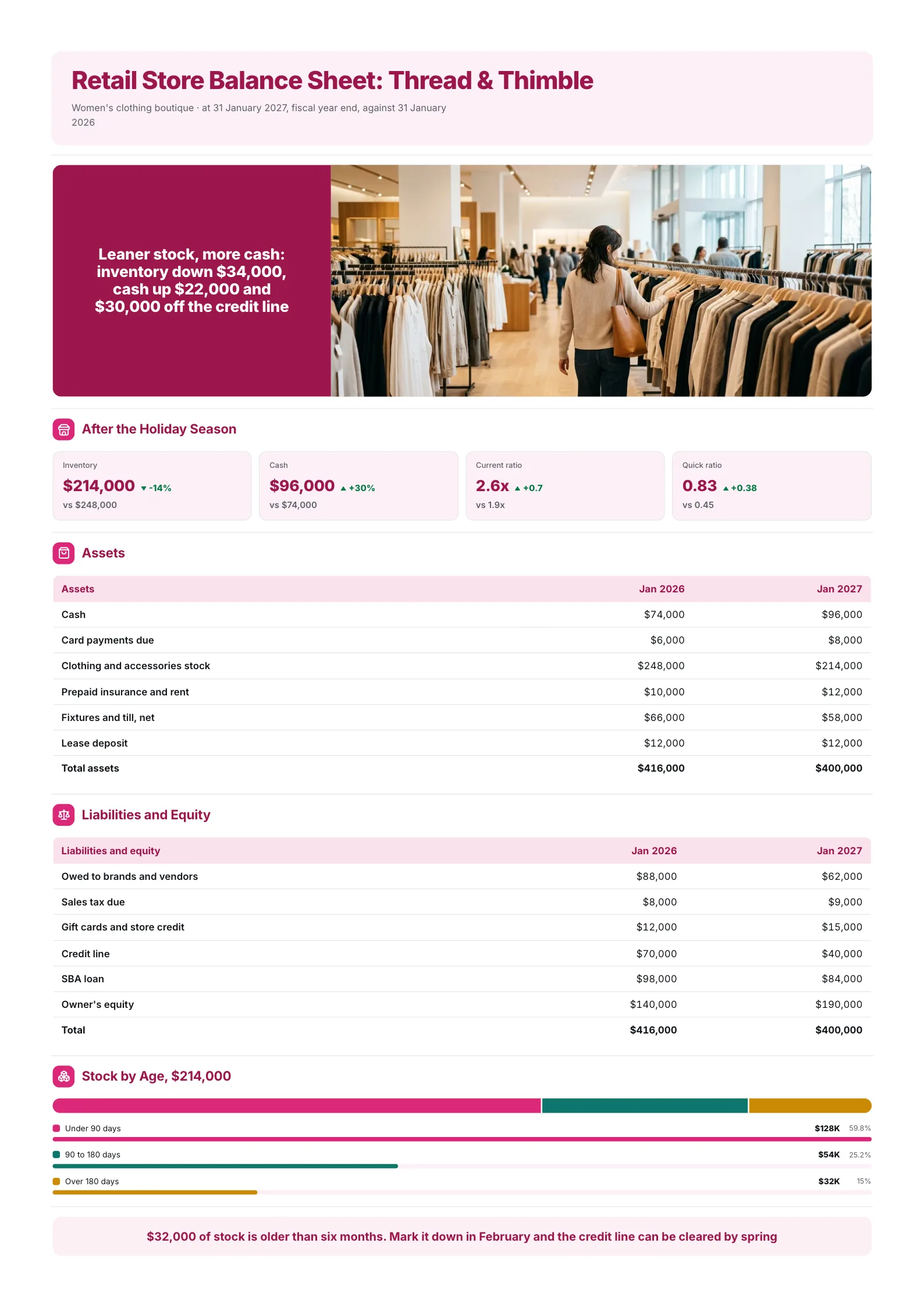 Balance Sheet: Retail StoreEdit for free(opens in a new tab)
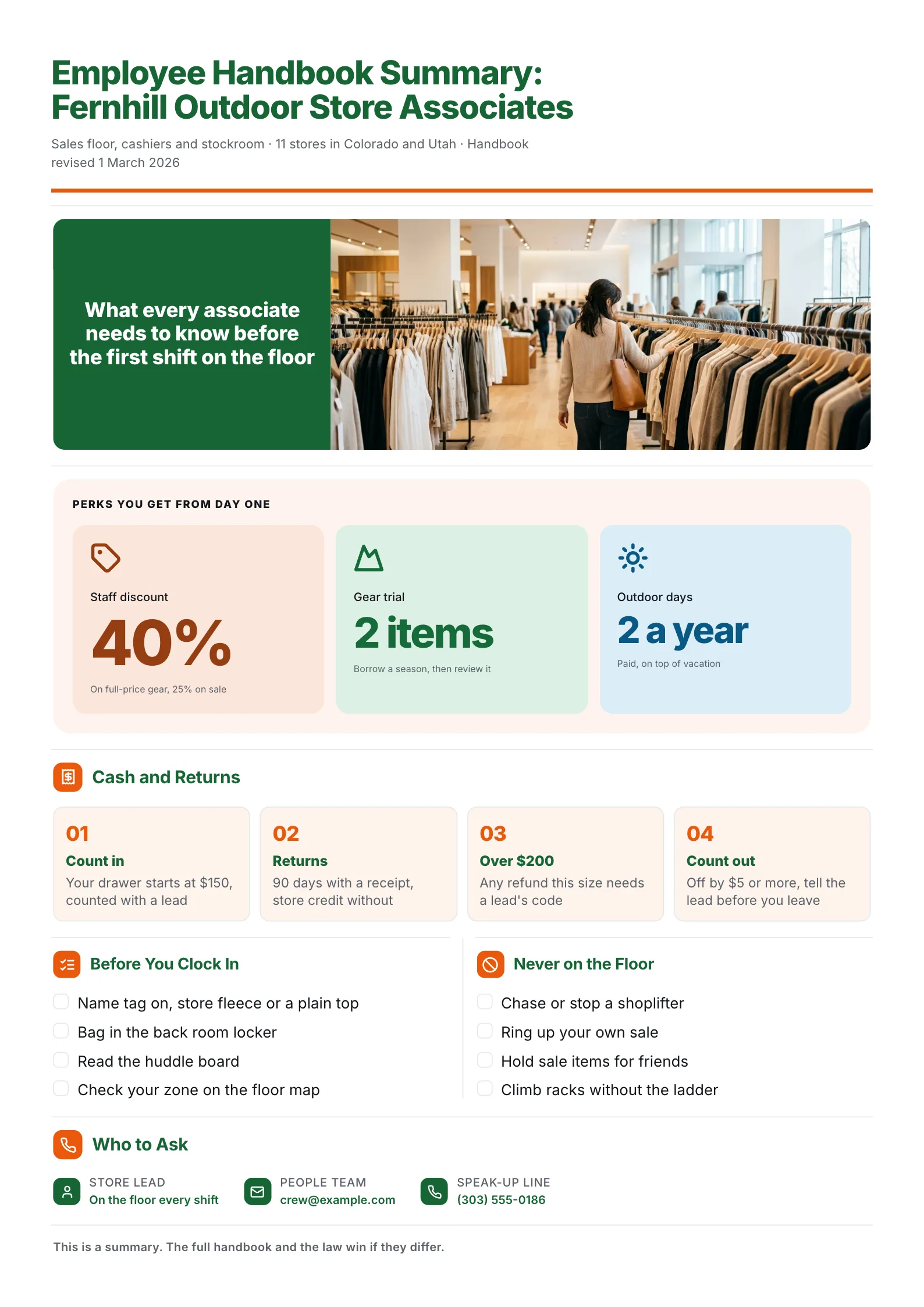 Employee Handbook Summary: Retail Store AssociatesEdit for free(opens in a new tab)
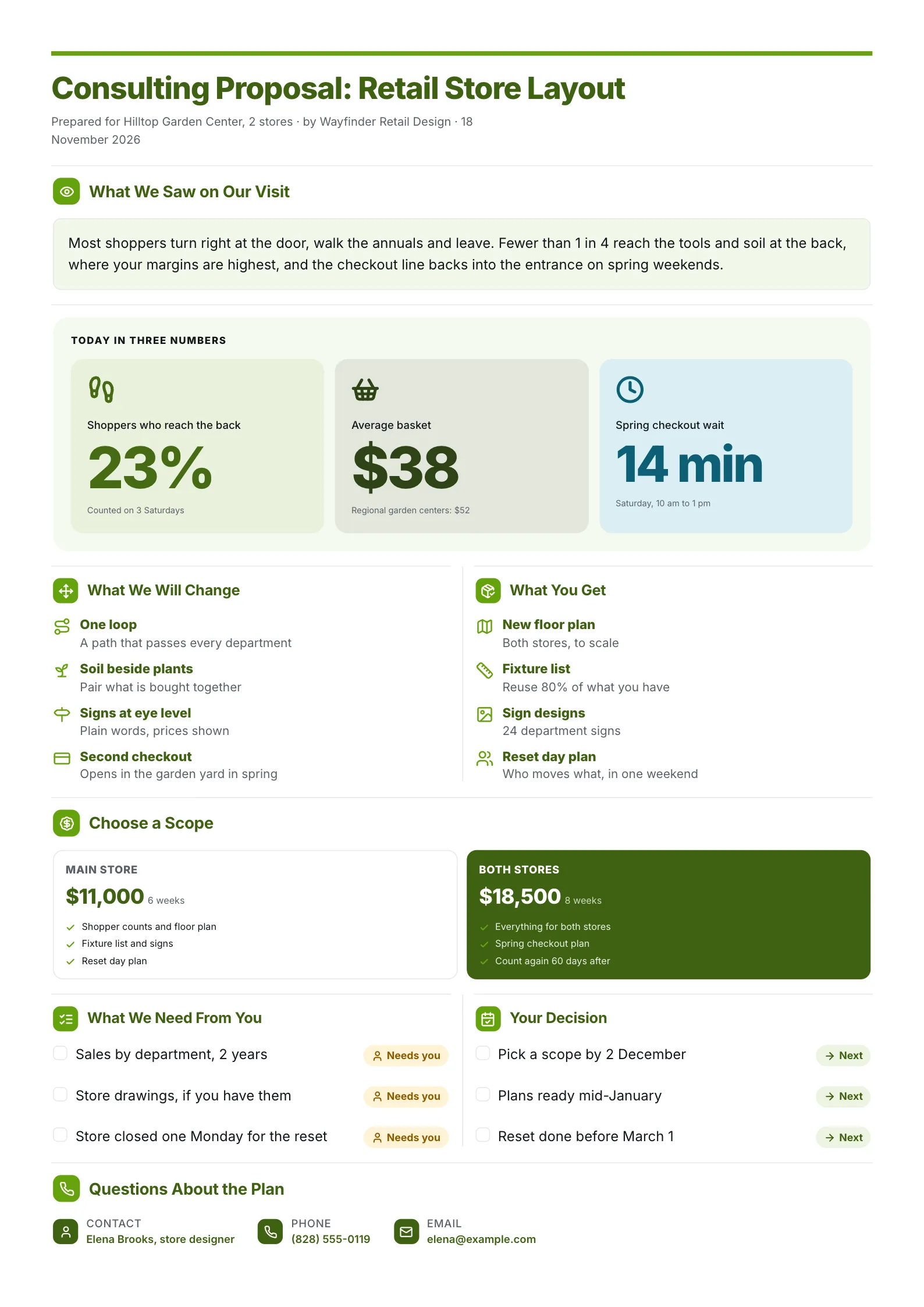 Consulting Proposal: Retail Store LayoutEdit for free(opens in a new tab)
A retail one pager does that job for a brand selling into stores. If you own a store, it works the other way round too, telling a landlord, a lender or new staff what your business is. Both kinds are below.
Count your items before you ask for shelf space
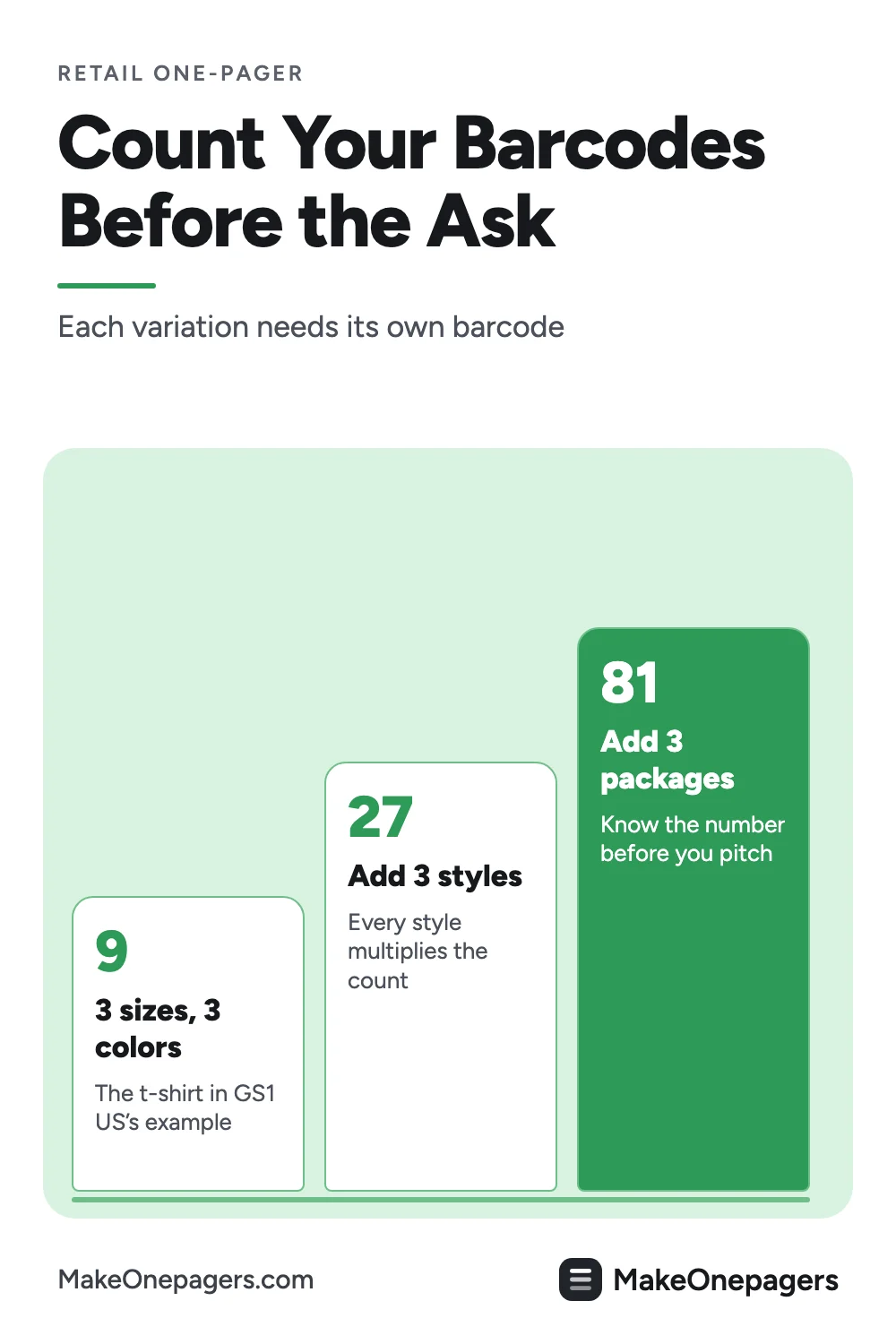
Your ask names a number of items, and each of those items needs its own barcode. GS1 US, the organization that issues the barcodes U.S. retailers scan, puts it plainly in its guide on how to get a UPC barcode: "each variation of each product you sell requires a unique barcode."
Its own example is a t-shirt.
| The t-shirt comes in | Barcodes needed |
|---|---|
| 3 sizes and 3 colors | 9 |
| ...and 3 styles | 27 |
| ...and 3 packages | 81 |
Do this count before you write your ask, because buyers think in items, often called SKUs. Four flavors in one bag size is 4 items. Add a family-size bag and it's 8, and the buyer now has to find twice the shelf.
GS1 US also notes that its barcodes identify your company as the brand owner, "which retailers look for". If you only have a few products, you can buy single GTINs, the numbers behind each barcode, at $30 each with no annual renewal fee. For a bigger range, you license a company prefix sized to the number of products you'll need.
What a buyer reads first
| The buyer's question | The line that answers it |
|---|---|
| Will it sell? | Units per store per week, against the aisle average |
| What do I make? | Margin to the store, as a percent |
| Will shoppers find it? | Ratings, repeat buying, new shoppers to the aisle |
| What are you paying for? | Free fill, demos, coupons, shelf talkers |
| What exactly do you want? | Items, facings, the reset date |
Five sheets, from the pitch to keeping the account
A pitch to a grocery buyer
 Edit this template
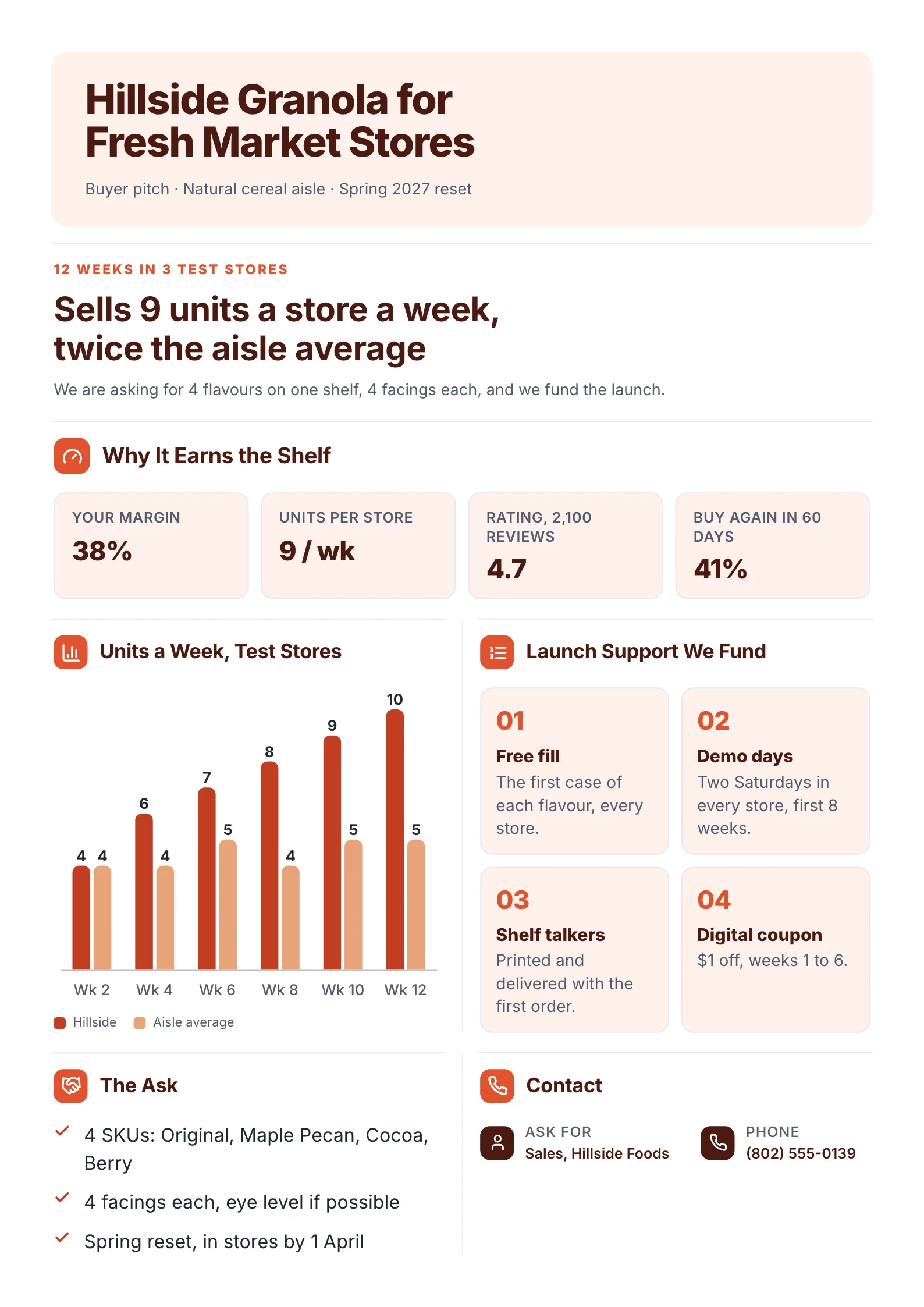
The short version is the first block: 12 weeks, 3 stores, 9 units a week, twice the aisle average. The four proof numbers follow, then what Hillside pays for: free fill, demo days, shelf talkers and a $1 coupon. The ask on this retail buyer pitch names the 4 items, 4 facings each and the date. A buyer has what they need to say yes in the meeting.
A battlecard against the store brand
 Edit this template
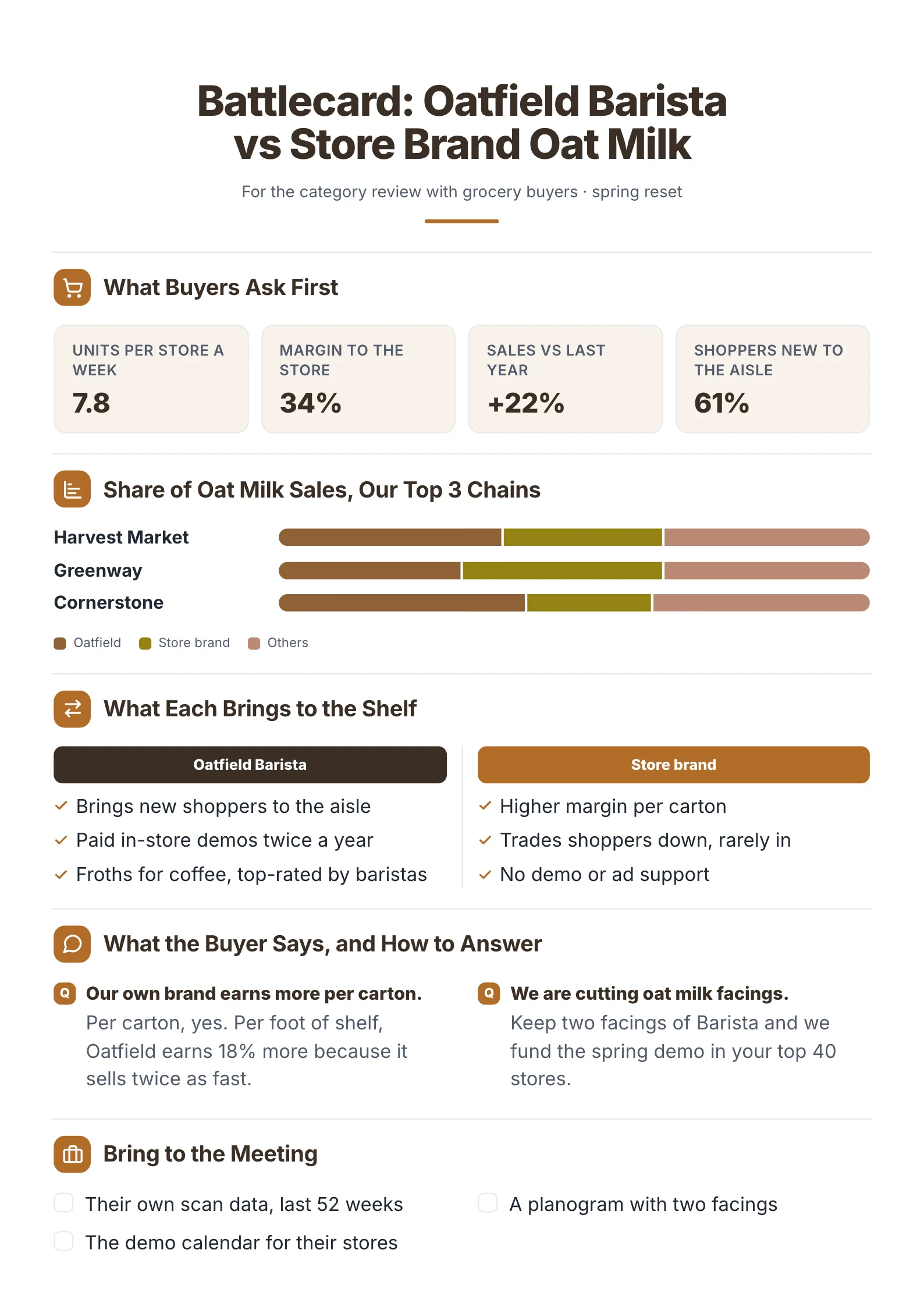
You keep this one for yourself. It prepares your answer to the hardest line in the meeting: "Our own brand earns more per carton." The reply is on the page. Per carton, yes, but Oatfield earns 18% more per foot of shelf because it sells twice as fast. Copy the buyer battlecard for your own category. For more prep sheets like it, see our battlecard template post.
A store profile for landlords and partners
 Edit this template
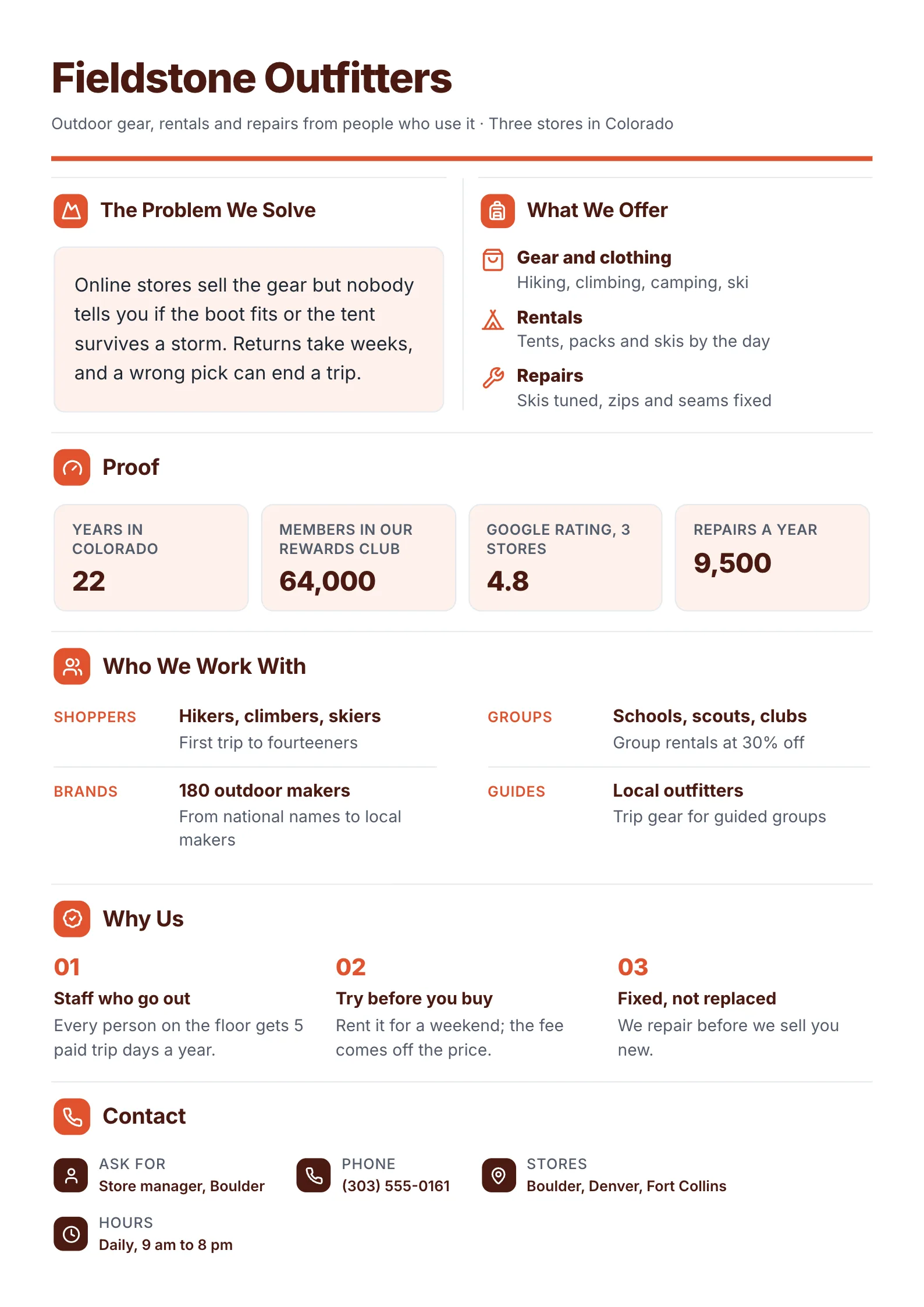
You use this when a landlord, a brand or a school group asks who you are. Four numbers do most of the convincing: 22 years, 64,000 members, a 4.8 rating and 9,500 repairs a year. Under Why Us, three short lines, from paid trip days for staff to a promise to repair before selling new, say what the store does differently. The store profile template keeps that block.
A year's sales forecast for one store
 Edit this template
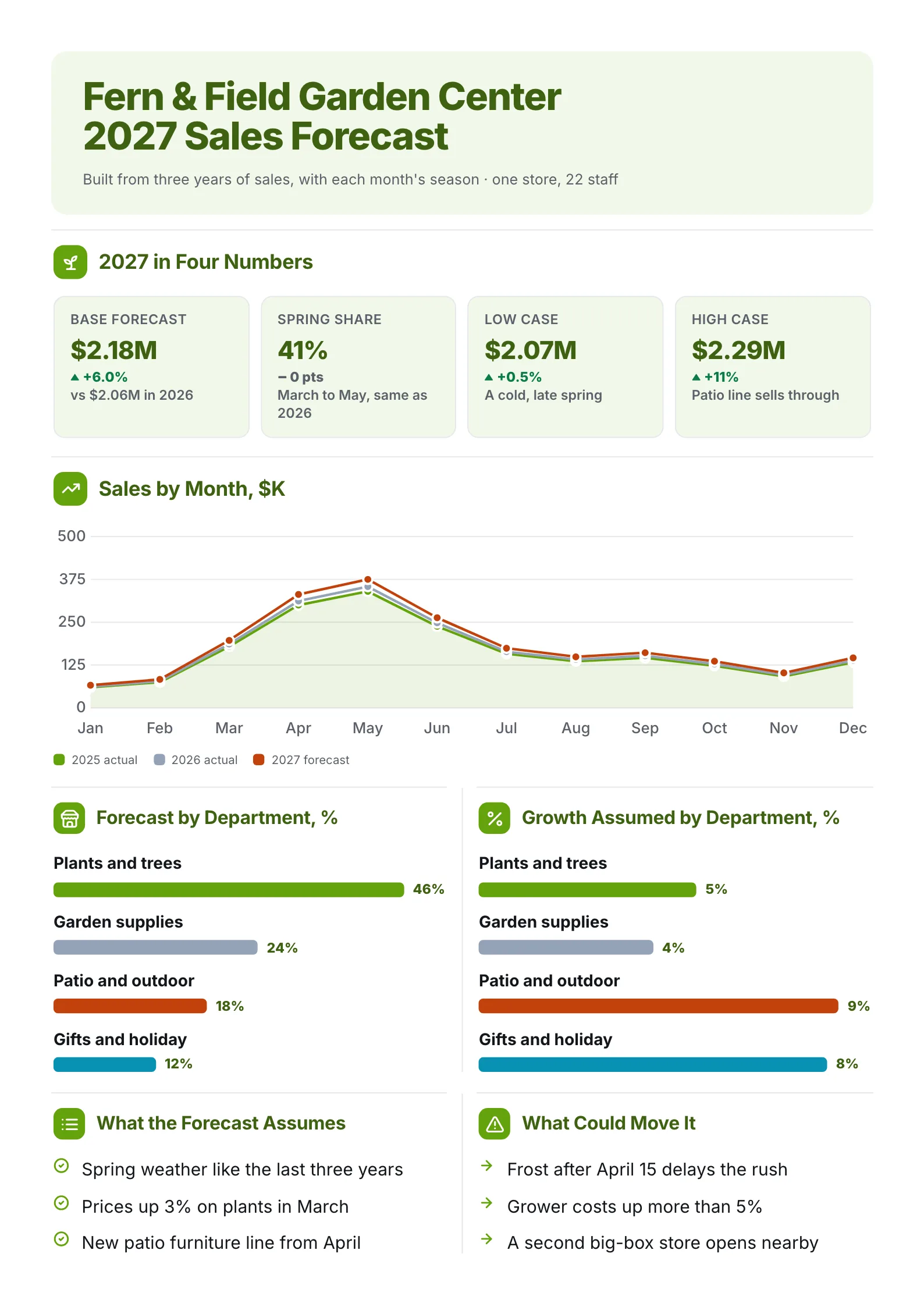
A garden center lives on spring, and the page says so: 41% of the year's sales fall from March to May. The base, low and high cases on the annual sales forecast each have a reason in plain words. Our sales forecast template guide covers how to build the three cases.
An account plan for a grocery chain
 Edit this template
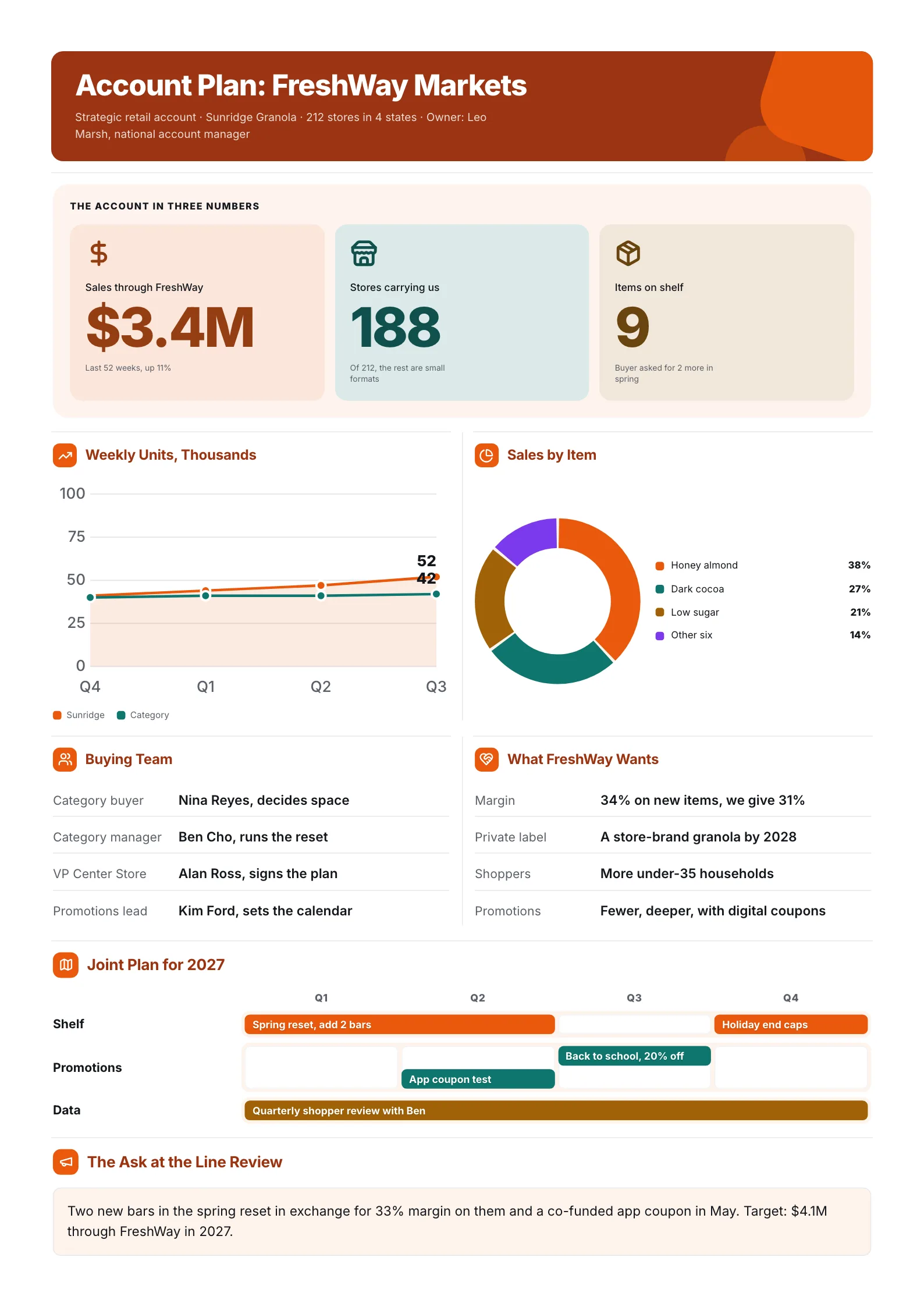
Once you're on the shelf, your work becomes keeping the account. This plan names four people on the buying team and what each one controls. It's honest about the gap, too. FreshWay wants 34% on new items and gets 31%. The ask on this grocery account plan meets it partway at 33%. The account plan template post explains the format.
Keep it to one page
- One product photo, or none. The buyer will hold the real thing.
- Four proof numbers. Velocity, margin, rating, repeat buying.
- Launch support as a short list, each line something you pay for.
- The ask last, in one sentence, with items, facings and a date.
- Your contact on the page. A buyer passing it to a manager shouldn't have to search.
For a distributor or a chain's head office, the sell sheet guide covers the product-first version.
Make your retail one pager
Count your items, then pull 12 weeks of sales from your test stores. In MakeOnepagers, choose the retail sheet for your reader and enter your velocity, margin and rating where the samples sit. Scan data in a spreadsheet? Paste it into the free AI One-Pager generator to get the layout started.
Frequently asked questions
What is a retail one pager?
A single page a brand gives a store buyer, or a store gives a landlord or partner. For a buyer it shows sales per store, margin, launch support and the ask.
What is a retail sell sheet?
Another name for the same idea, often used for one product. It shows the product, its price and margin, why it sells and how to order.
How many barcodes do I need?
Multiply your sizes, colors, styles and pack types. The answer is your barcode count, because GS1 US gives each variation its own number.
What do retail buyers look for?
Proof the item will sell in their stores, usually units per store per week against the aisle average, plus their margin and what the brand will fund at launch.
What is a SKU?
A stock keeping unit, the code a store uses for one exact item. Each size, flavor or pack you sell is its own SKU, and buyers count your ask in them.




