BlogGuide
Battlecard Template: Free One-Page Competitive Battlecard
A free one-page sales battlecard template, the 6 parts reps use on live calls, a worked example against a rival with win rates and answers to objections, and the mistakes that make battlecards go stale.

By MakeOnepagers Team
Updated · 4 min read
A battlecard template gives a sales rep everything they need about one competitor on a single page: how you compare head to head, when you usually win, when you usually lose, what the buyer will say about the rival and the answer to each. Reps open a battlecard in the middle of a call, so it has to be scannable in seconds. A ten-page competitor report does not get read. A one-page battlecard does. Below are the six parts reps rely on, a free battlecard template you can copy and a worked example.
One‑Pager examples
Real One-Pagers made with MakeOnepagers. Open any one to edit it as your own.
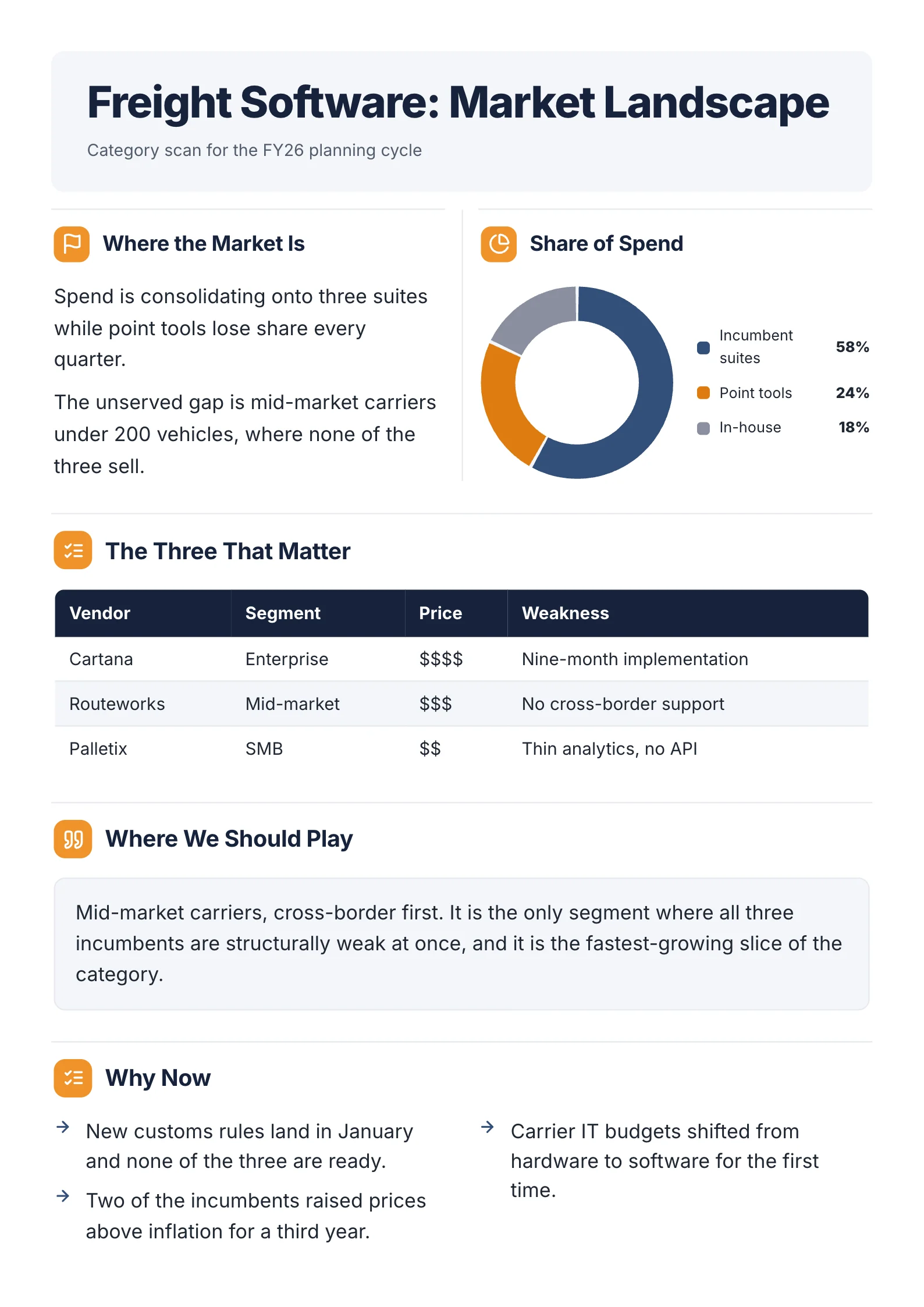 Market LandscapeEdit for free(opens in a new tab)
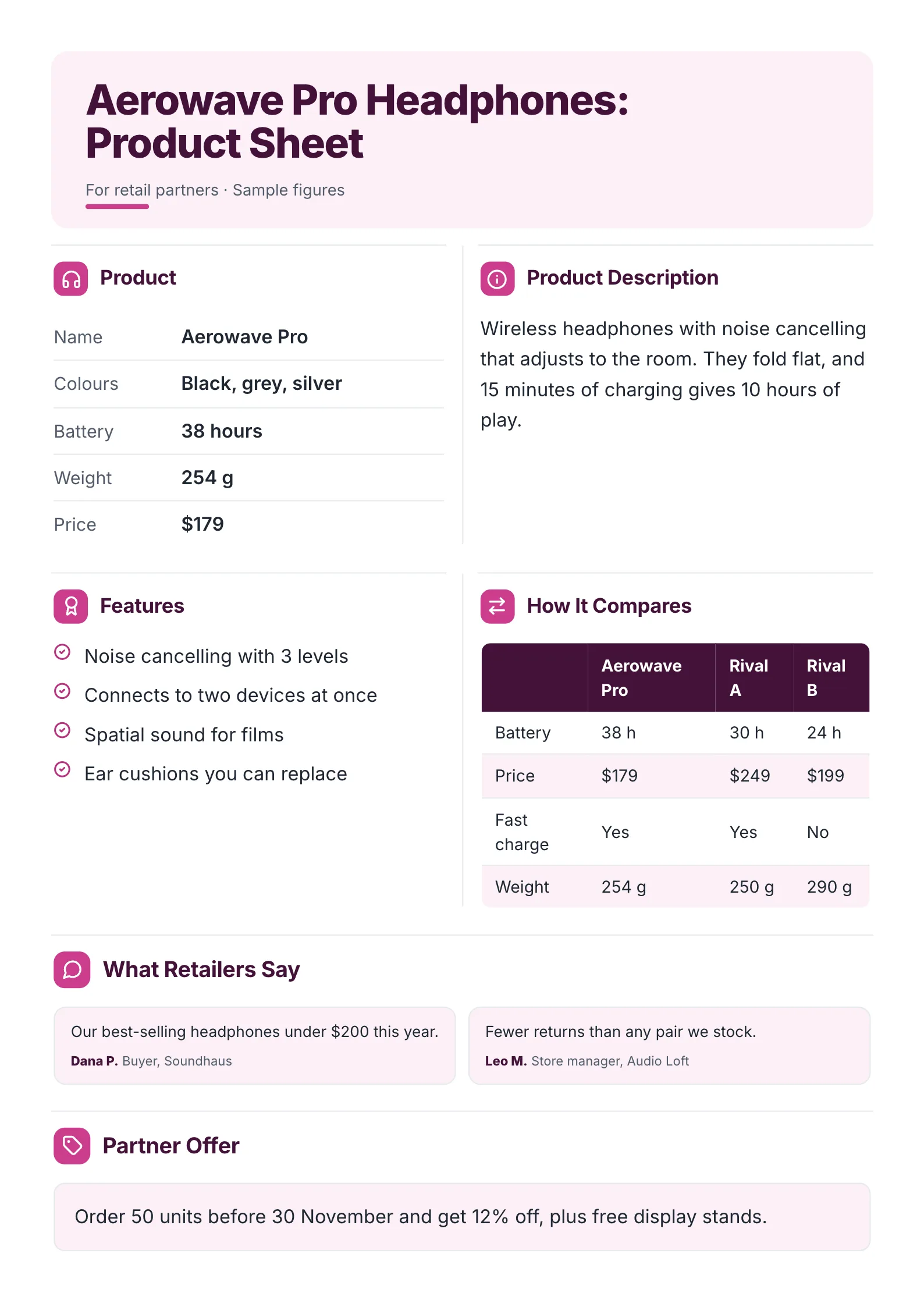 Product Marketing SheetEdit for free(opens in a new tab)
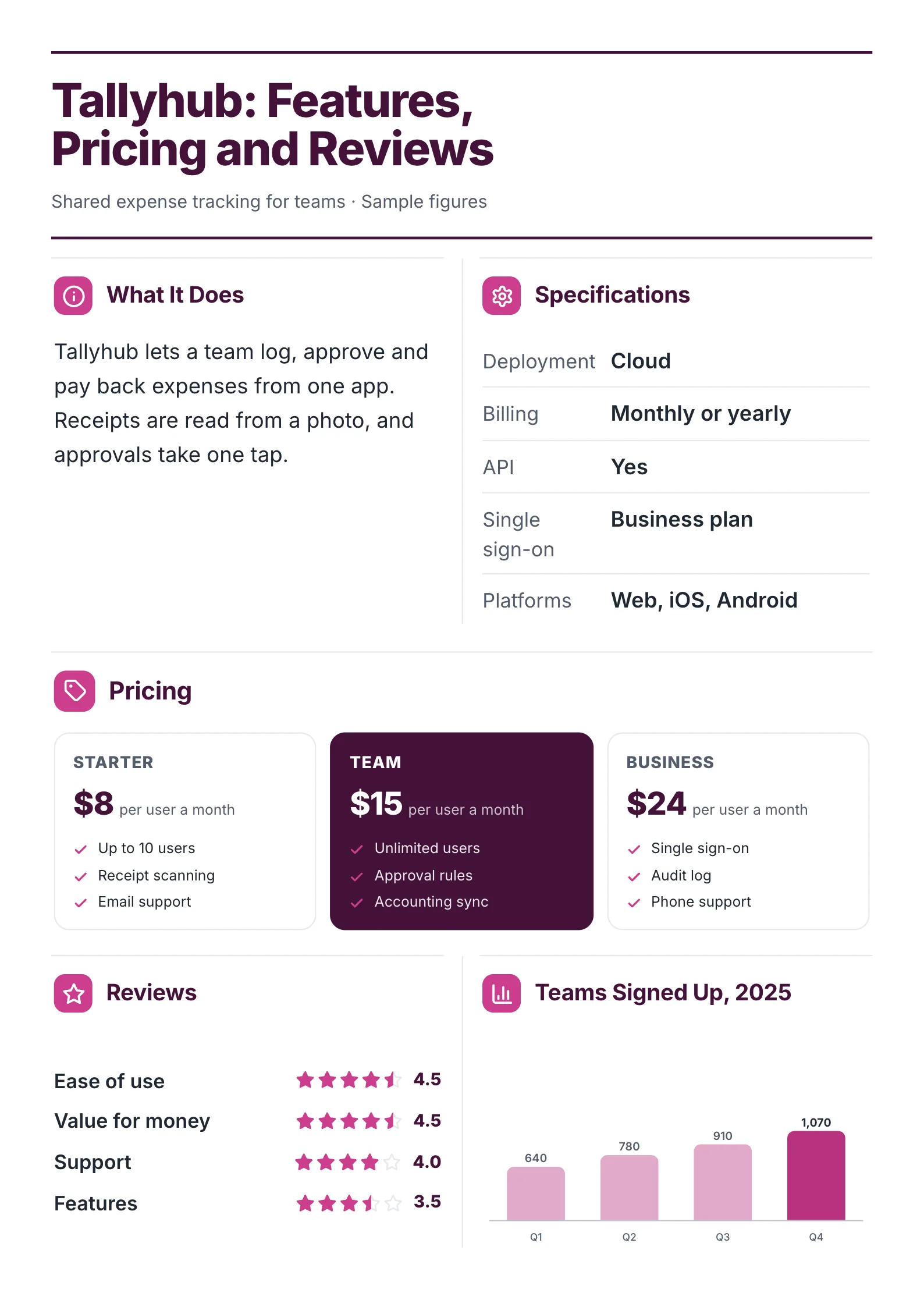 Software Features, Pricing and ReviewsEdit for free(opens in a new tab)
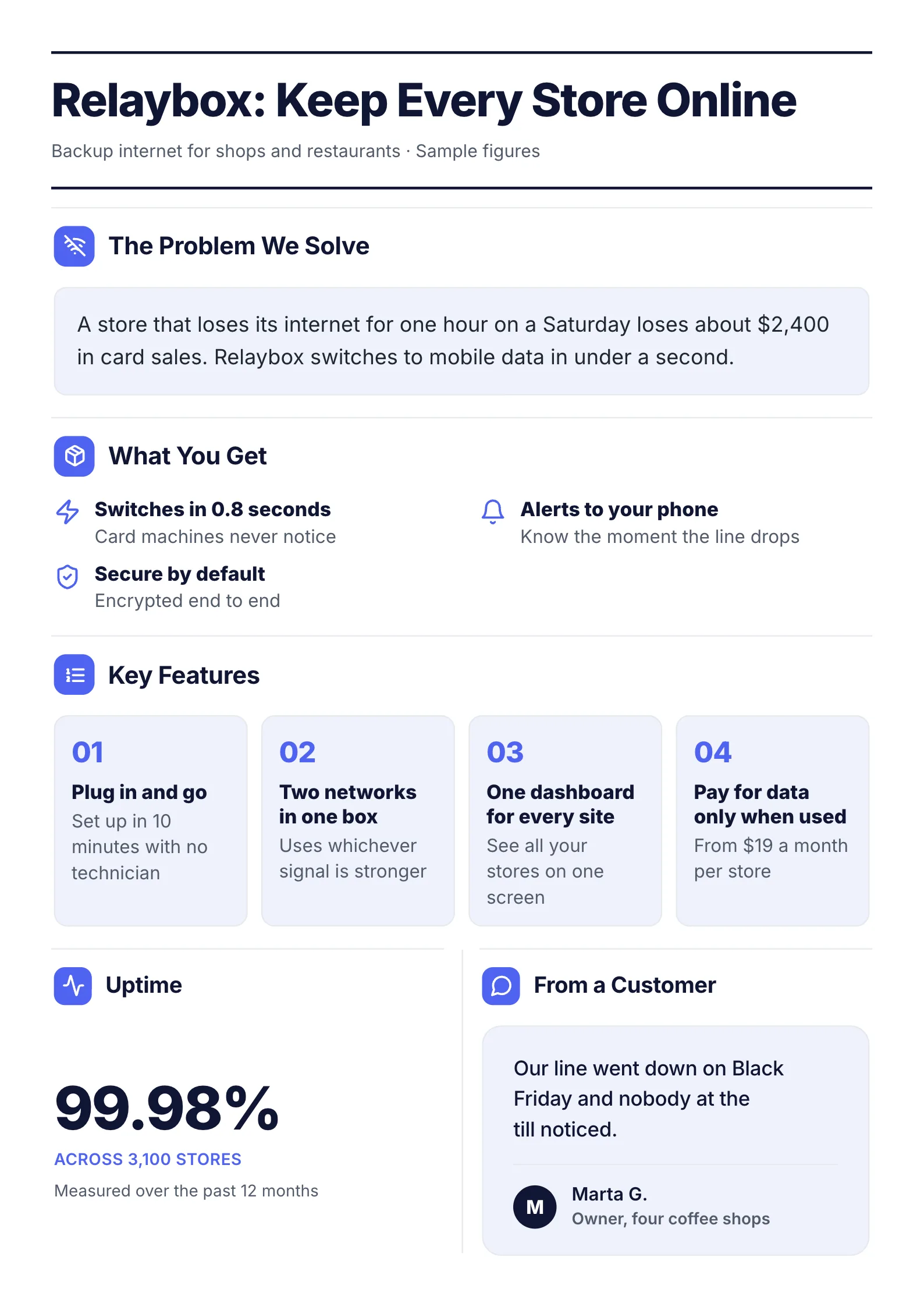 Technology Sell SheetEdit for free(opens in a new tab)
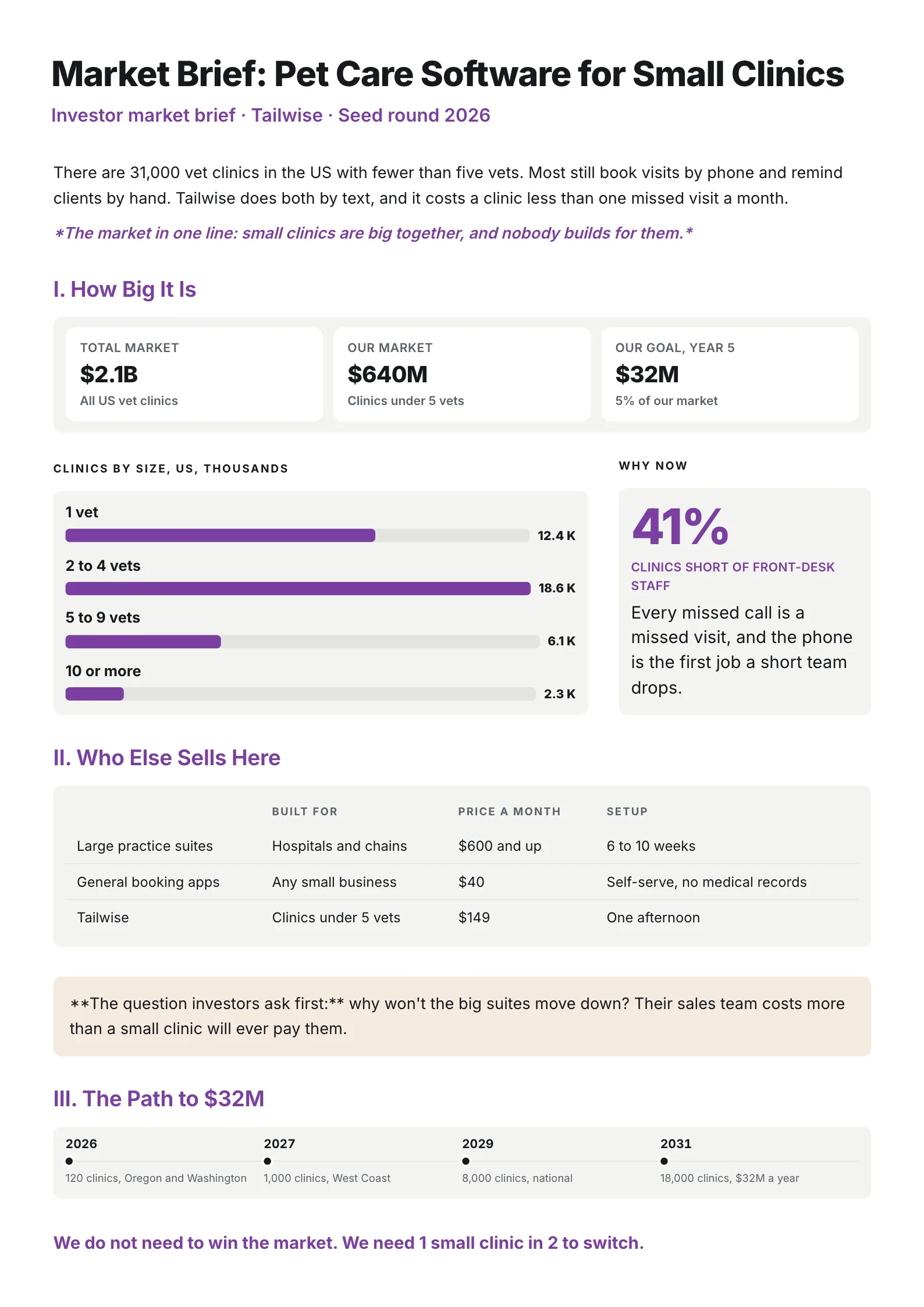 Market Size BriefEdit for free(opens in a new tab)
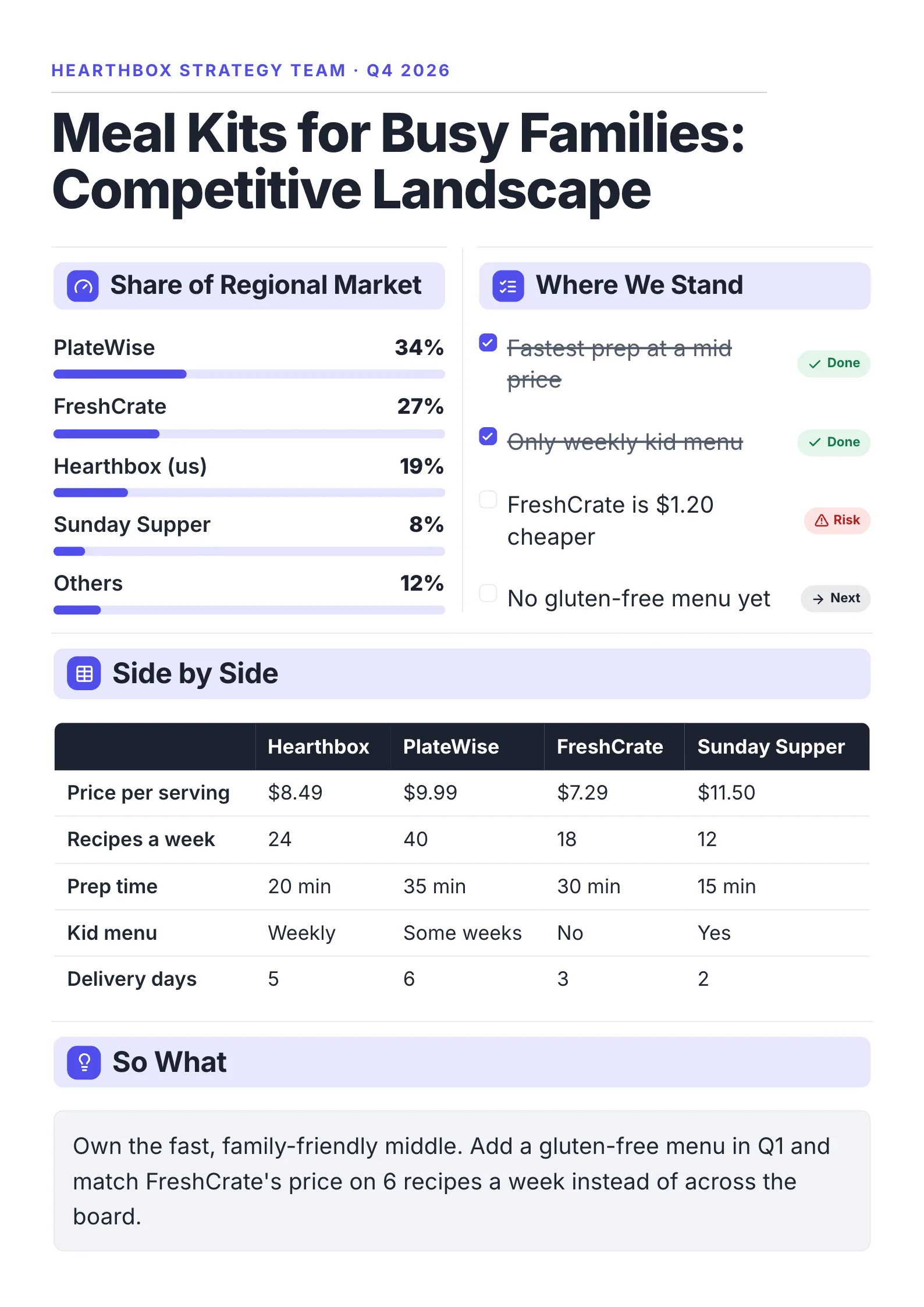 Competitive LandscapeEdit for free(opens in a new tab)
The example was made with MakeOnepagers. It opens as a template you can edit for free: every word, chart and color.
What is a battlecard?
A battlecard (or sales battlecard, competitive battlecard) is a short reference that helps sales teams win against a specific competitor. Product marketing usually writes it, sales uses it, and it is updated whenever the rival changes price, launches something or starts winning.
Good battlecards are specific and honest. A battlecard that says you win everywhere teaches reps nothing.
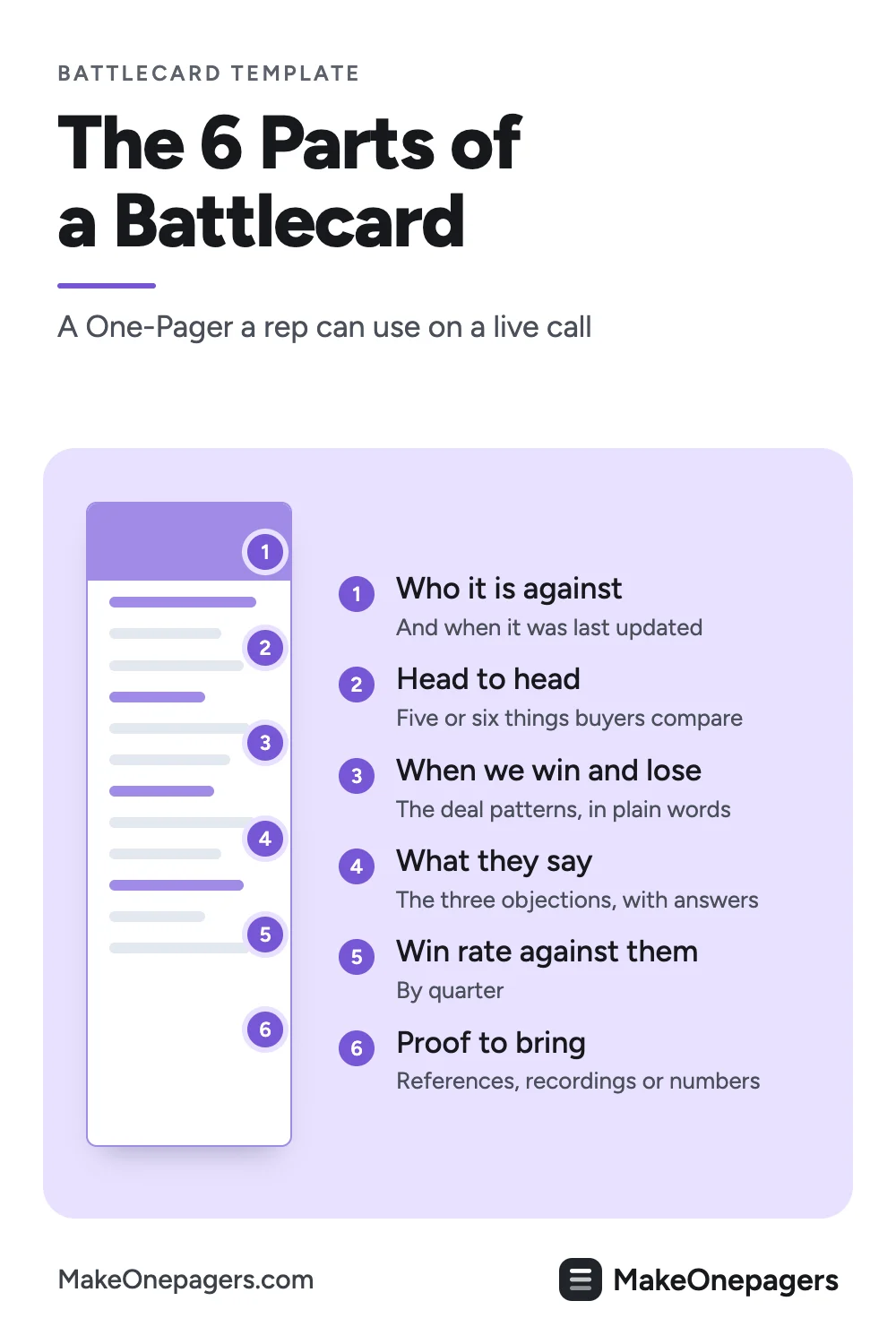
The 6 parts of a battlecard
- Who it is against and when it was last updated.
- Head to head: five or six things buyers compare, with both answers.
- When we win and when we lose: the deal patterns, in plain words.
- What they say, and how to answer: the three objections reps hear most.
- Win rate against them, by quarter.
- Proof to bring: references, recordings or numbers that close the gap.
A free battlecard template
Copy this into a document, or open the example below and edit it.
| Part | What to write, with an example |
|---|---|
| Title | Us vs them, team, date. Battlecard: Us vs Northdesk, sales team, updated October |
| Head to head | 5 rows. Set-up time: 1 day against 3 weeks |
| We win when | 3. They need it live this month |
| We lose when | 2. IT already runs Northdesk |
| What they say | 3 objections and answers |
| Win rate | 4 quarters. 38%, 41%, 47%, 55% |
| Proof to bring | 2. 3 references in their industry |
Battlecard example
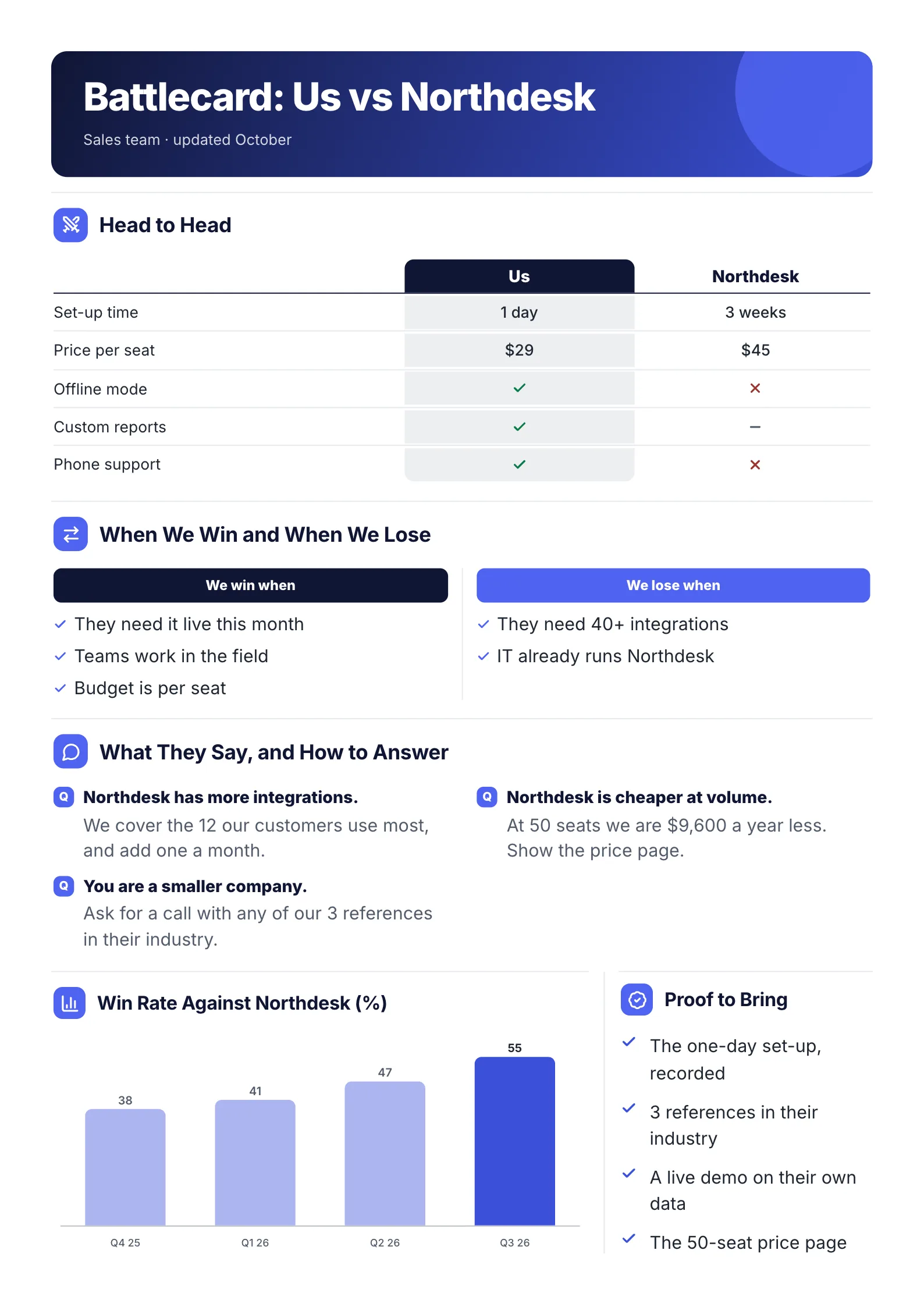 Edit this template
One competitor on one page, readable in the ten seconds a rep has on a live call.
What to copy:
- Head to head in numbers where possible: set-up in 1 day against 3 weeks, $29 per seat against $45. A rep can say either line without looking twice.
- When we lose, written down: "They need 40+ integrations" and "IT already runs Northdesk." Reps stop pouring weeks into deals that were never winnable.
- Each objection with a ready answer: "Northdesk is cheaper at volume." "At 50 seats we are $9,600 a year less. Show the price page."
- Win rate by quarter: 38%, 41%, 47%, 55%. It proves the battlecard works and shows reps the rival can be beaten.
Edit for free: battlecard template.
Battlecard or competitive analysis?
| Battlecard | Competitive analysis | |
|---|---|---|
| Reader | Sales reps | Leadership, product, marketing |
| Length | One page per competitor | Many pages, many competitors |
| Used | During calls and deal reviews | During planning |
| Tone | What to say | What it means |
The analysis comes first. The battlecard is the part of it a rep can use on Tuesday.
How to make a battlecard in 6 steps
- Pick the competitor you meet most often in deals.
- Ask five reps when they win against them, when they lose and what buyers say.
- Build the head-to-head table from the five things buyers ask about.
- Write one answer per objection, short enough to say out loud.
- Add the win rate from your CRM, by quarter.
- Date it and review it every quarter, or whenever the rival changes price.
Have competitor notes in a long report or a shared doc? Drop them into the free AI One-Pager generator and get them back as a designed battlecard.
Battlecard mistakes
- Only strengths. If the battlecard never admits a loss, reps stop trusting it.
- Feature lists. Compare what buyers ask about, not everything you have.
- No date. A battlecard from last year can lose a deal this year.
- Talking down the rival. Buyers notice. Answer with facts and proof instead.
Make your battlecard
Open the free battlecard template and put in your competitor, or drop your notes into the free AI One-Pager generator and get a finished battlecard back.
Frequently asked questions
What should a sales battlecard include?
The competitor, a head-to-head comparison, when you win and lose, common objections with answers, your win rate against them and proof to bring.
How long should a battlecard be?
One page per competitor. Reps read it during or just before a call, so it has to be scanned in seconds.
Who writes a battlecard?
Usually product marketing, with input from sales reps who meet the competitor in deals.
How often should battlecards be updated?
At least every quarter, and whenever the competitor changes price, launches a major feature or your win rate against them moves.