BlogGuide
Lesson Plan Template: Free One-Page Plan, With Example
A free one-page lesson plan template teachers can glance at mid-lesson, the 6 parts every lesson plan needs, a worked Grade 4 fractions example and the mistakes that make plans useless in class.

By MakeOnepagers Team
Updated · 5 min read
A lesson plan template puts one lesson on a single page: what students will be able to do by the end, the steps with their timings, the key words, the questions you will ask and what you need on the desks. Teachers use a one-page lesson plan to glance at mid-lesson, to leave for a substitute and to share at an observation. Long plans get written once and never read again. A one-page plan gets used, because it fits beside you on the desk. Below are the six parts every lesson plan needs, a free template you can copy and a worked example.
One‑Pager examples
Real One-Pagers made with MakeOnepagers. Open any one to edit it as your own.
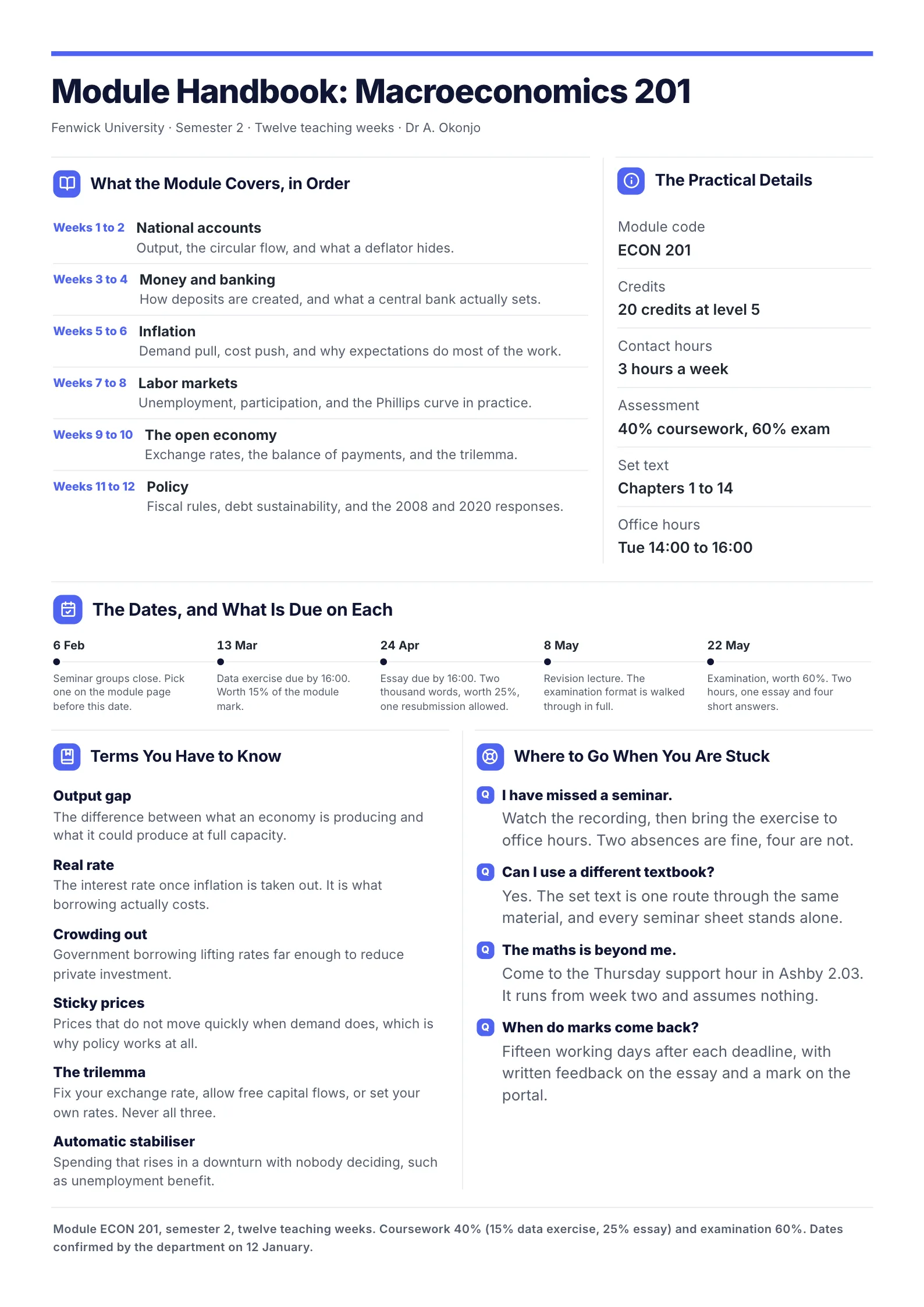 Course SyllabusEdit for free(opens in a new tab)
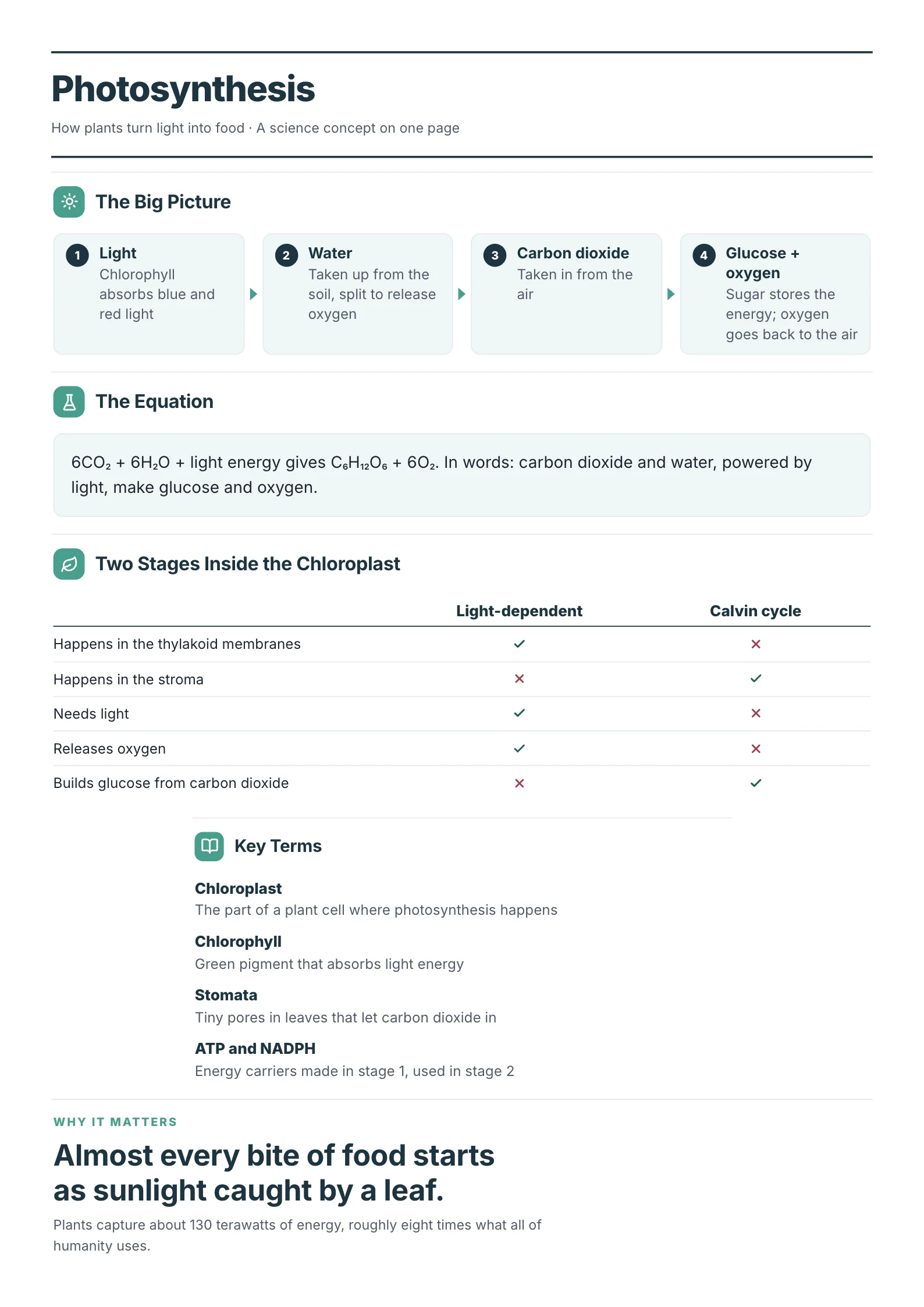 Science ConceptEdit for free(opens in a new tab)
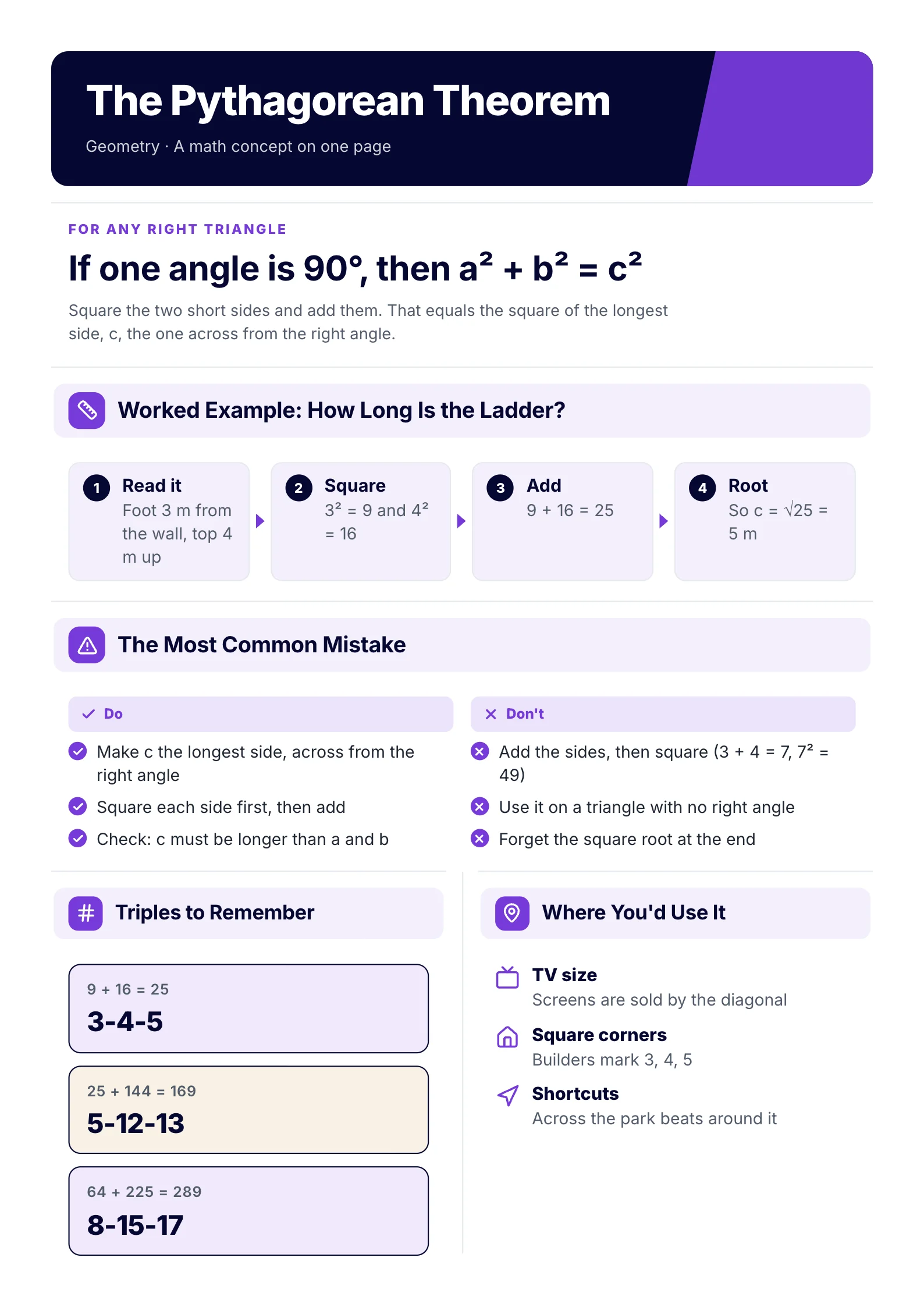 Math ConceptEdit for free(opens in a new tab)
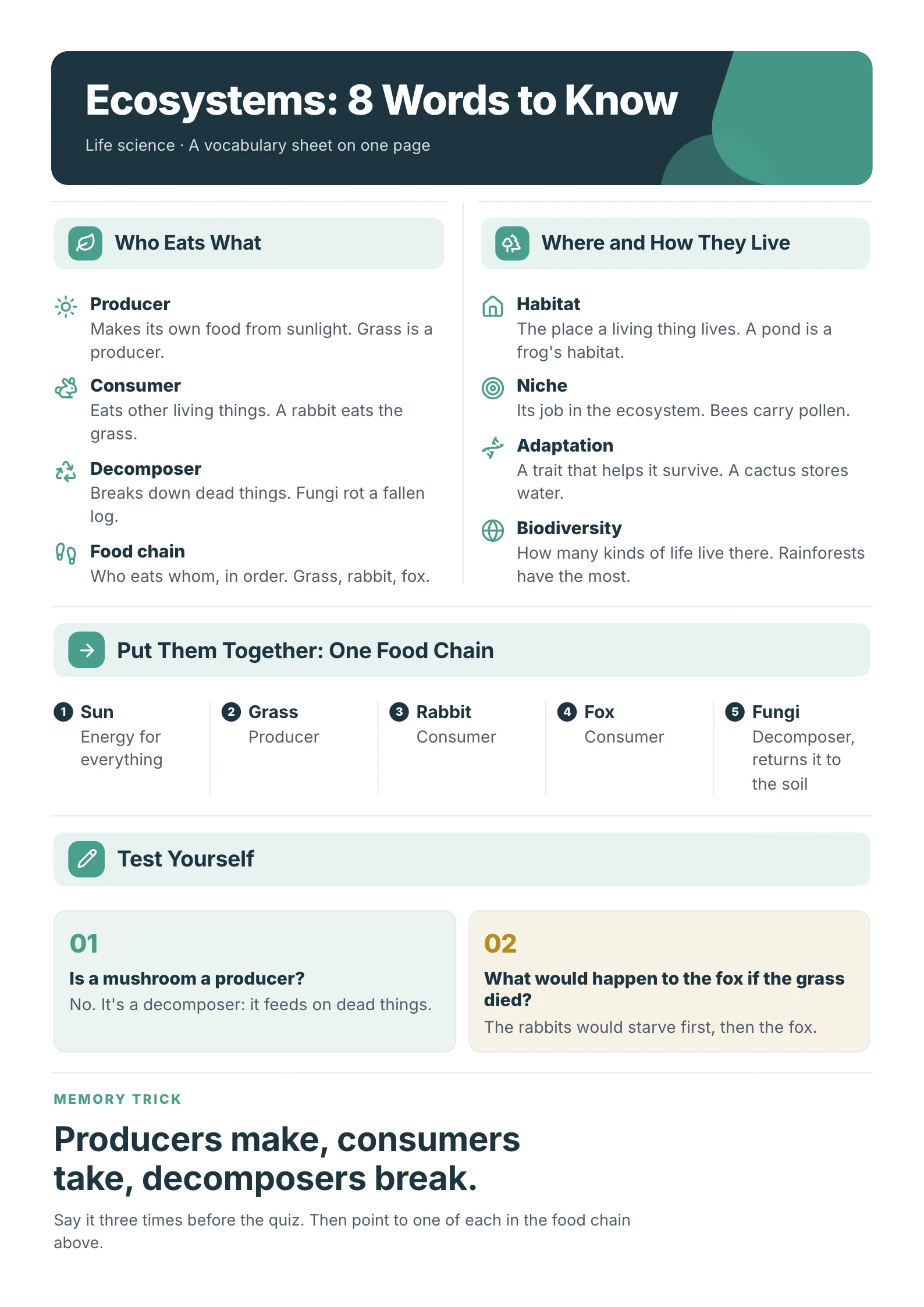 Vocabulary SheetEdit for free(opens in a new tab)
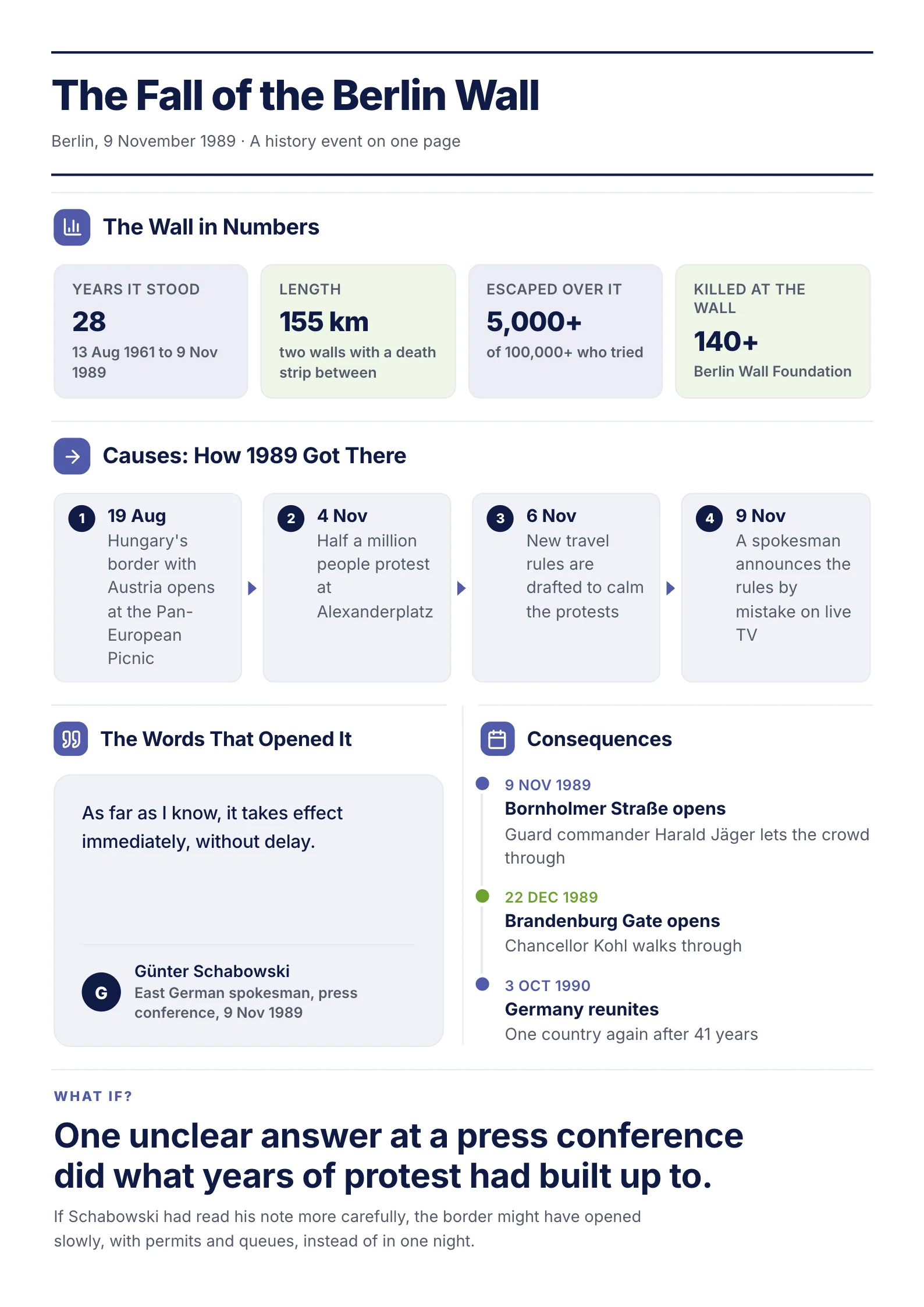 History EventEdit for free(opens in a new tab)
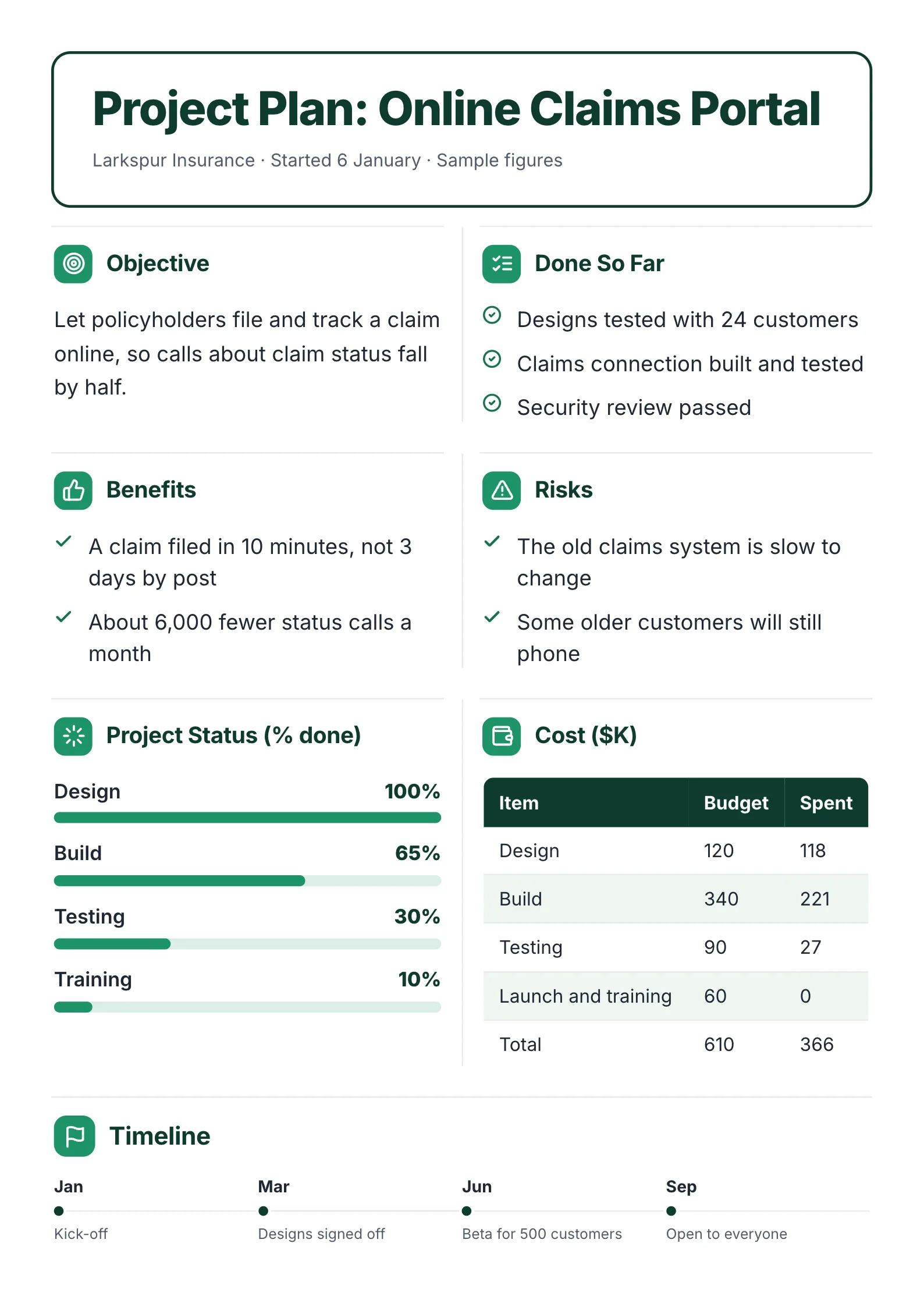 Project Plan with Objectives and CostEdit for free(opens in a new tab)
The example was made with MakeOnepagers. It opens as a template you can edit for free: every word, chart and color.
What is a lesson plan?
A lesson plan is a teacher's outline of one lesson: the goal, the activities in order, how long each takes and how you will check that students learned it. Schools ask for them, substitutes depend on them and new teachers use them to keep a lesson on track.
The best lesson plans are short. They answer three questions: what will students be able to do, how will we get there, and how will I know it worked?
The 6 parts of a lesson plan
- The title, subject, grade and length. "Fractions on a Number Line. Grade 4 math, 50 minutes."
- Learning goals: what students can do by the end, in two lines at most.
- The lesson in timed phases: warm-up, teach, practice, check.
- Key words with a short meaning for each.
- Questions to ask during the lesson.
- Materials: everything that has to be ready before students walk in.
Add one more if you have it: how the class did last time. It tells you where to start.
A free lesson plan template
Copy this into a document, or open the example below and edit it.
| Part | What to write, with an example |
|---|---|
| Title | Topic, subject, grade, length. Fractions on a Number Line, Grade 4 math, 50 minutes |
| By the end, students can | 2 goals. Place halves, quarters and eighths on a number line |
| The lesson | 4 phases with minutes. 5 min warm up, 15 min teach, 20 min practice, 10 min check |
| Last lesson's check | Scores from the last exit question |
| Key words | 4 words and meanings. Denominator: how many equal parts |
| Questions to ask | 3. Where does one half go on the line? |
| You'll need | 4 items. Number line strips, one each |
Lesson plan example
 Edit this template
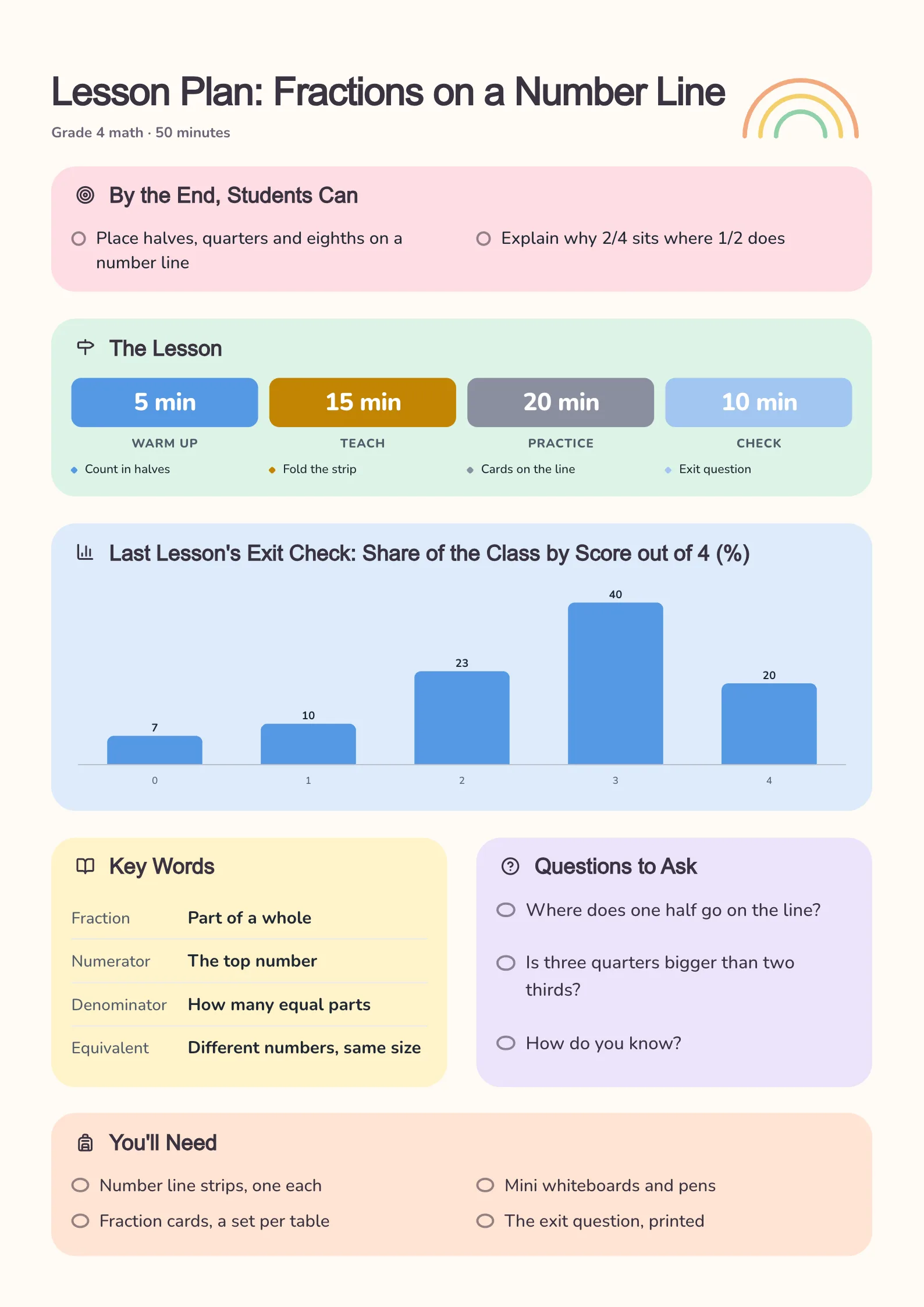
A whole math lesson on one page, readable at arm's length while you teach.
What to copy:
- Goals written as things students can do: "Place halves, quarters and eighths on a number line" and "Explain why 2/4 sits where 1/2 does." You can check both in the last ten minutes.
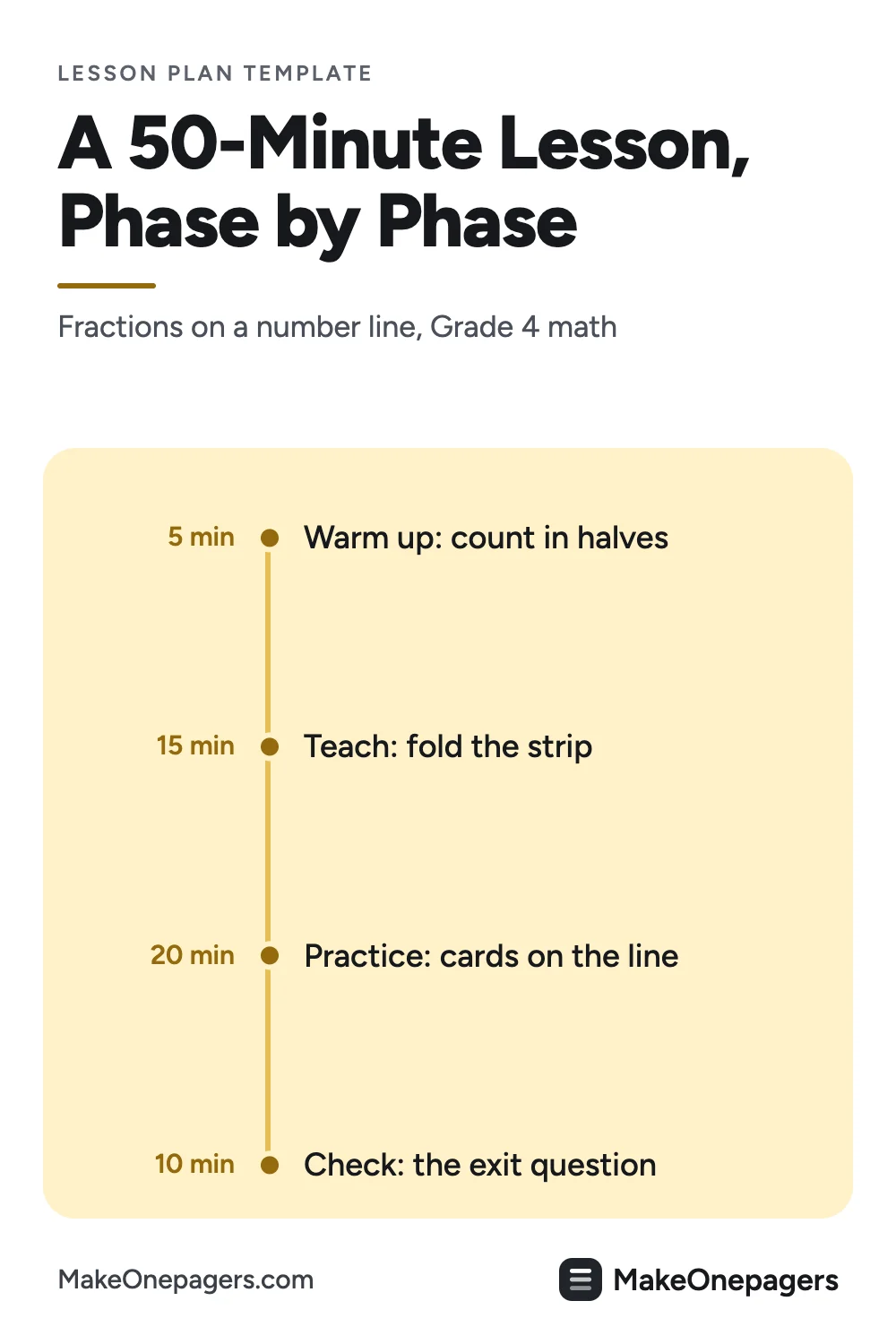
- Four phases with minutes on them: 5 minutes warm up (count in halves), 15 teach (fold the strip), 20 practice (cards on the line), 10 check (exit question). If the teach phase runs long, you can see exactly what to cut.
- Last lesson's exit check as a chart: 40% of the class scored 3 out of 4, and 7% scored 0. It tells you who needs the warm-up most.
- Questions written out in full: "Is three quarters bigger than two thirds? How do you know?" Good questions are hard to invent in the moment.
Edit for free: lesson plan template.
Lesson plan formats compared
| Format | Best for | Length |
|---|---|---|
| One-page lesson plan | Daily teaching, substitutes, observations | One page |
| Detailed lesson plan | Training teachers, formal observations | Two to five pages |
| Unit plan | A series of lessons on one topic | One page per unit, plus lessons |
Most teachers write the one-page version every day and the detailed version only when they are asked for it.
How to write a lesson plan in 6 steps
- Write what students can do by the end, as one or two actions you can check.
- Plan the check first: the exit question that proves the goal was met.
- Split the time into four phases and put minutes on each.
- Pick four key words and write each meaning in five words or fewer.
- Write three questions that make students explain their thinking.
- List the materials and set them out before the lesson.
Have a long plan from a scheme of work or a shared Word file? Drop it into the free AI One-Pager generator and get it back as a designed one-page lesson plan.
Lesson plan mistakes
- Goals about the teacher. "Teach fractions" is what you do. "Place halves on a number line" is what they learn.
- No times. Without minutes, the practice phase gets squeezed every time.
- No check. If nothing at the end tests the goal, you will not know whether it worked.
- A plan too long to read mid-lesson. If you need to scroll, it will not get used.
Make your lesson plan
Open the free lesson plan template and put in your lesson, or drop your notes into the free AI One-Pager generator and get a finished lesson plan back.
Frequently asked questions
What should a lesson plan include?
The topic, subject, grade and length, what students can do by the end, the activities in timed phases, key words, questions to ask, materials and how you will check learning.
How long should a lesson plan be?
One page for everyday teaching. A substitute or an observer should be able to read it in two minutes.
What is the difference between a lesson plan and a unit plan?
A lesson plan covers one lesson. A unit plan covers a series of lessons on one topic and sets out what each lesson builds toward.
Can I use a lesson plan template for any subject?
Yes. The parts stay the same in math, science, English or art: goals, timed phases, key words, questions and materials.