Resume vs CV: Which One the Job Wants, and How Long
Resume vs CV: what goes in each, how long each runs, and why US federal jobs now reject any resume over 2 pages. With rules from 3 university career centers.

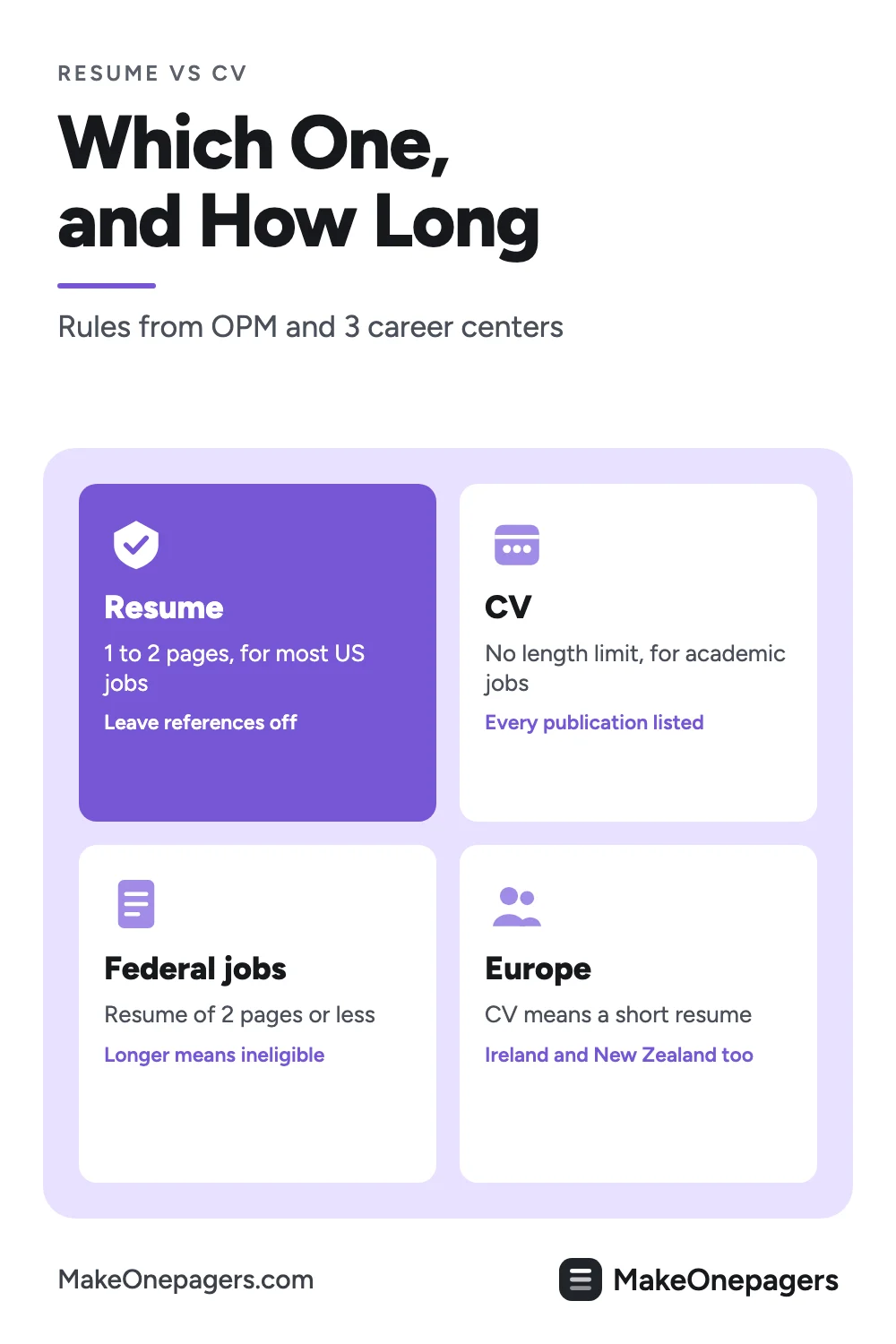
In the US, the resume vs CV choice is usually made for you by the job. A resume is a short summary of your work, one or two pages, and it's what nearly every employer asks for. A CV, short for curriculum vitae, is a complete record of an academic career. You'd send one for a faculty post, a research role, a fellowship or some medical jobs. Start from a free one pager template.
One‑Pager examples
Real One-Pagers made with MakeOnepagers. Open any one to edit it as your own.
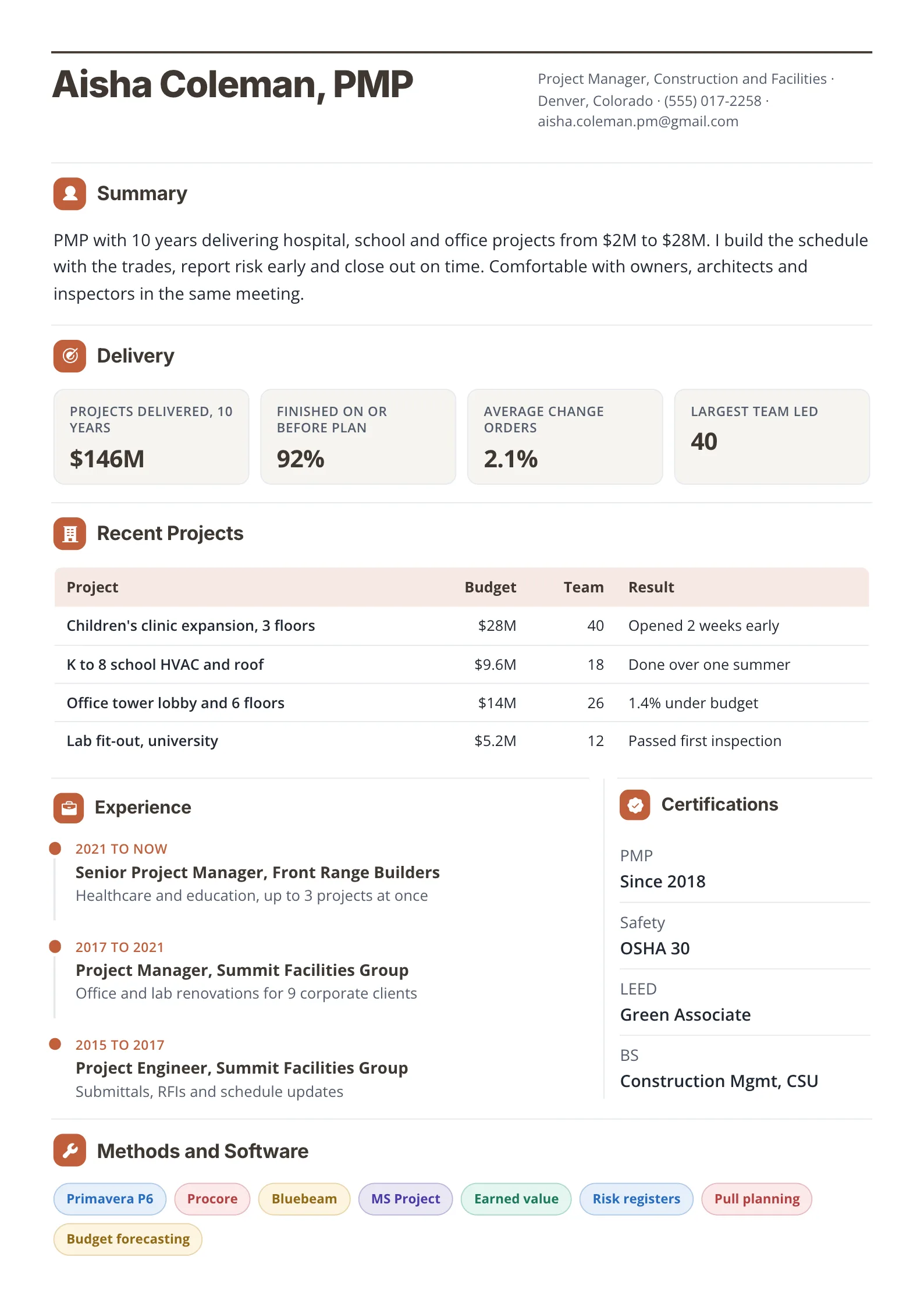 Resume: Project ManagerEdit for free(opens in a new tab)
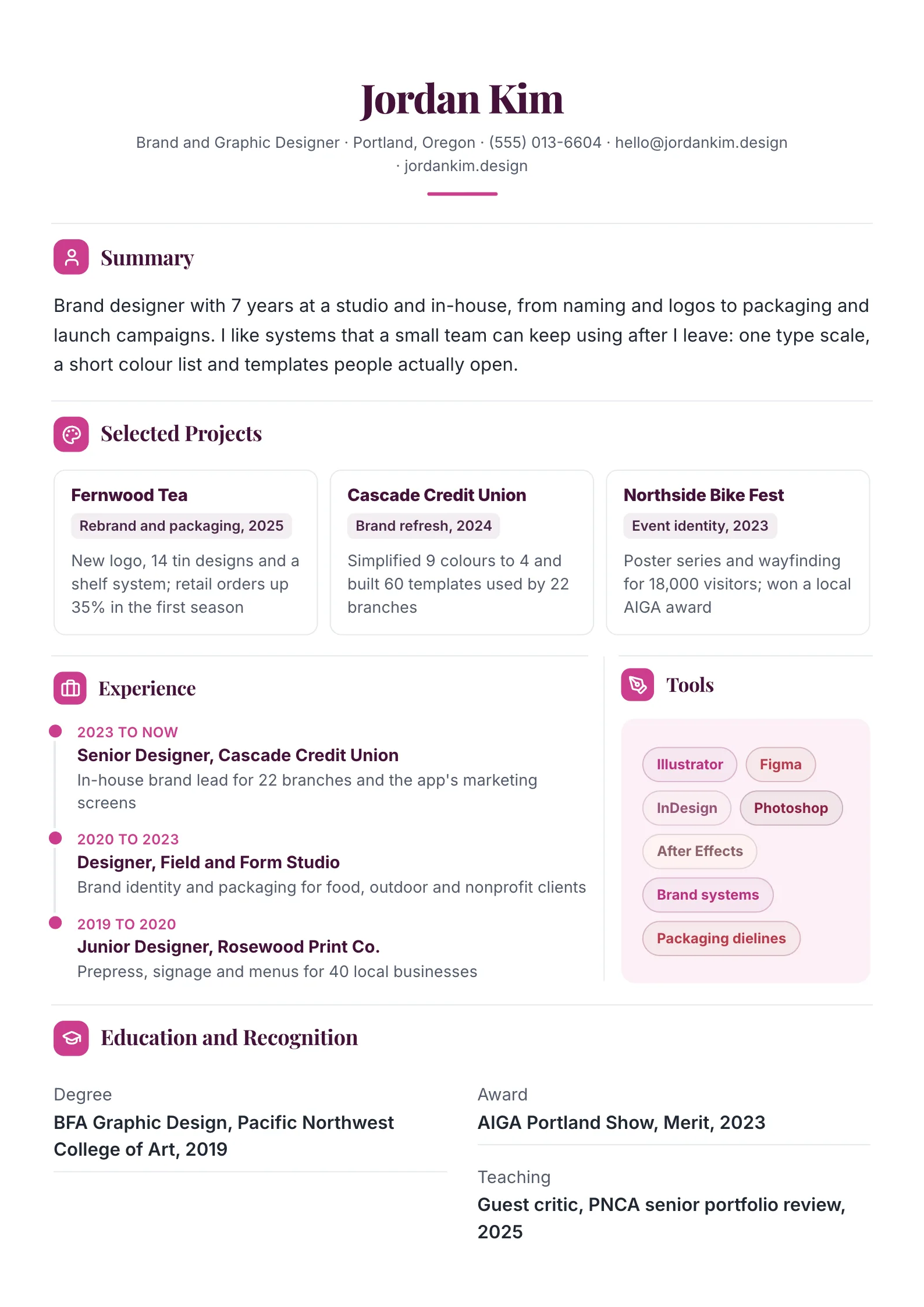 Resume: Graphic DesignerEdit for free(opens in a new tab)
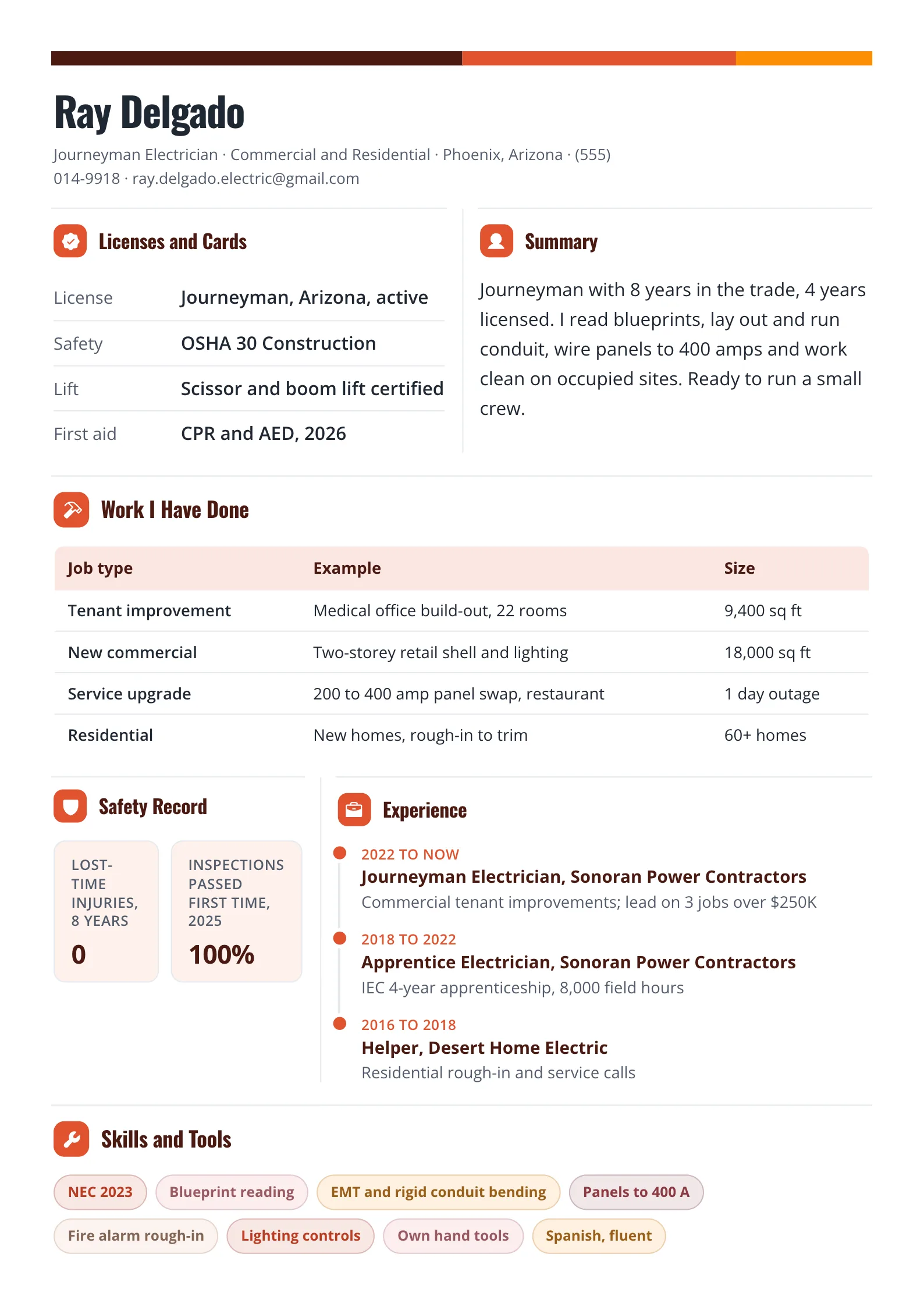 Resume: ElectricianEdit for free(opens in a new tab)
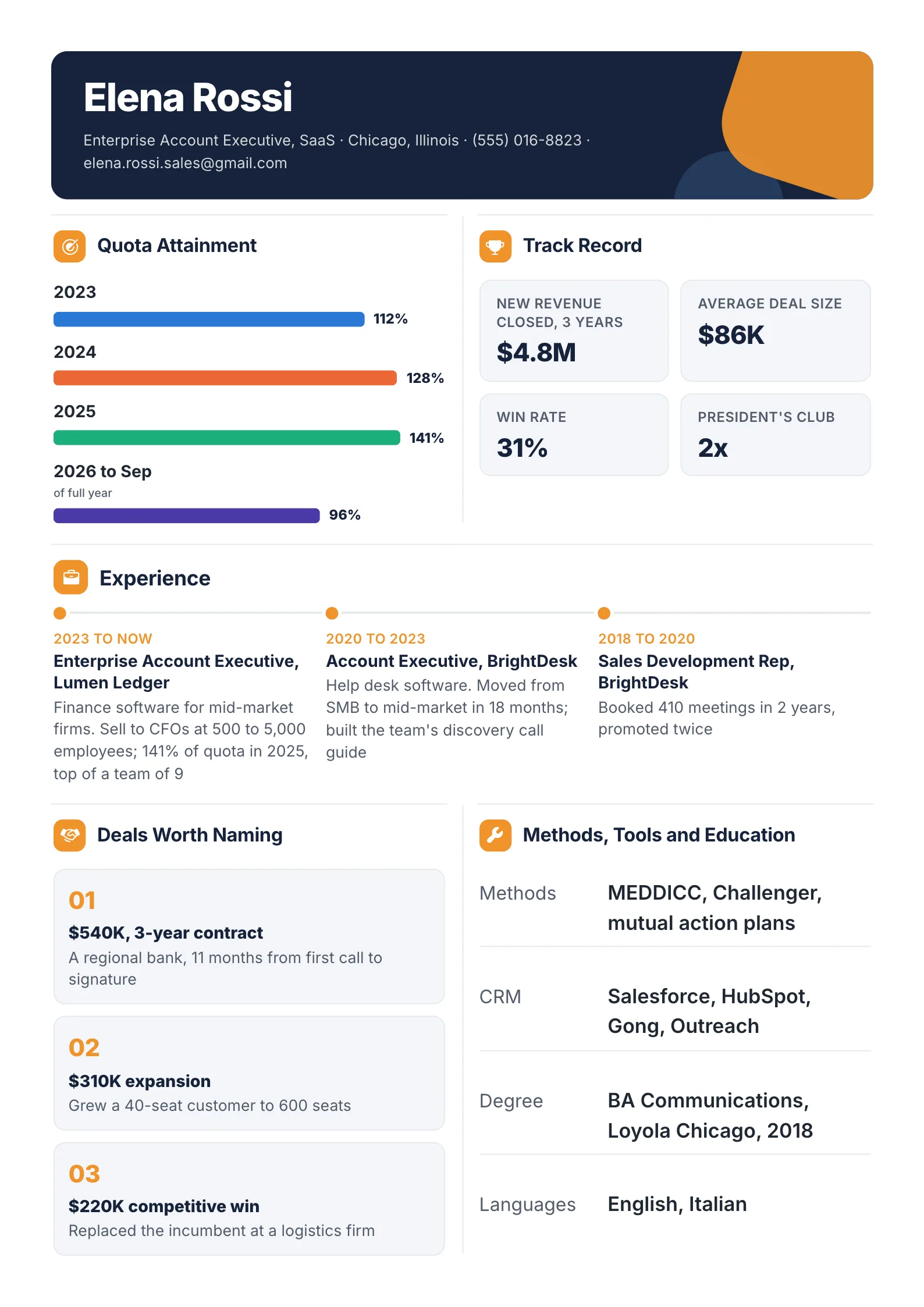 Resume: Sales Account ExecutiveEdit for free(opens in a new tab)
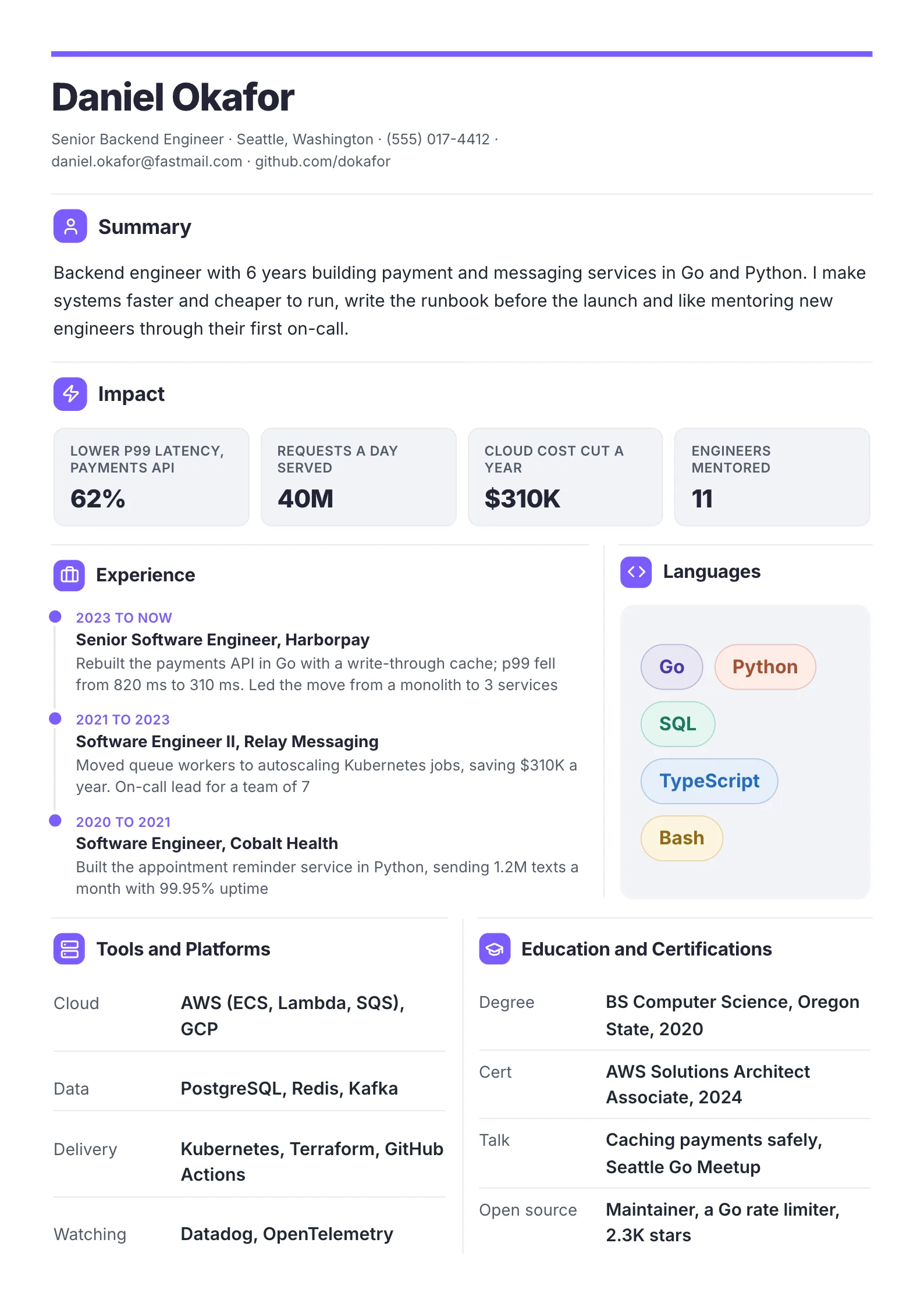 Resume: Software EngineerEdit for free(opens in a new tab)
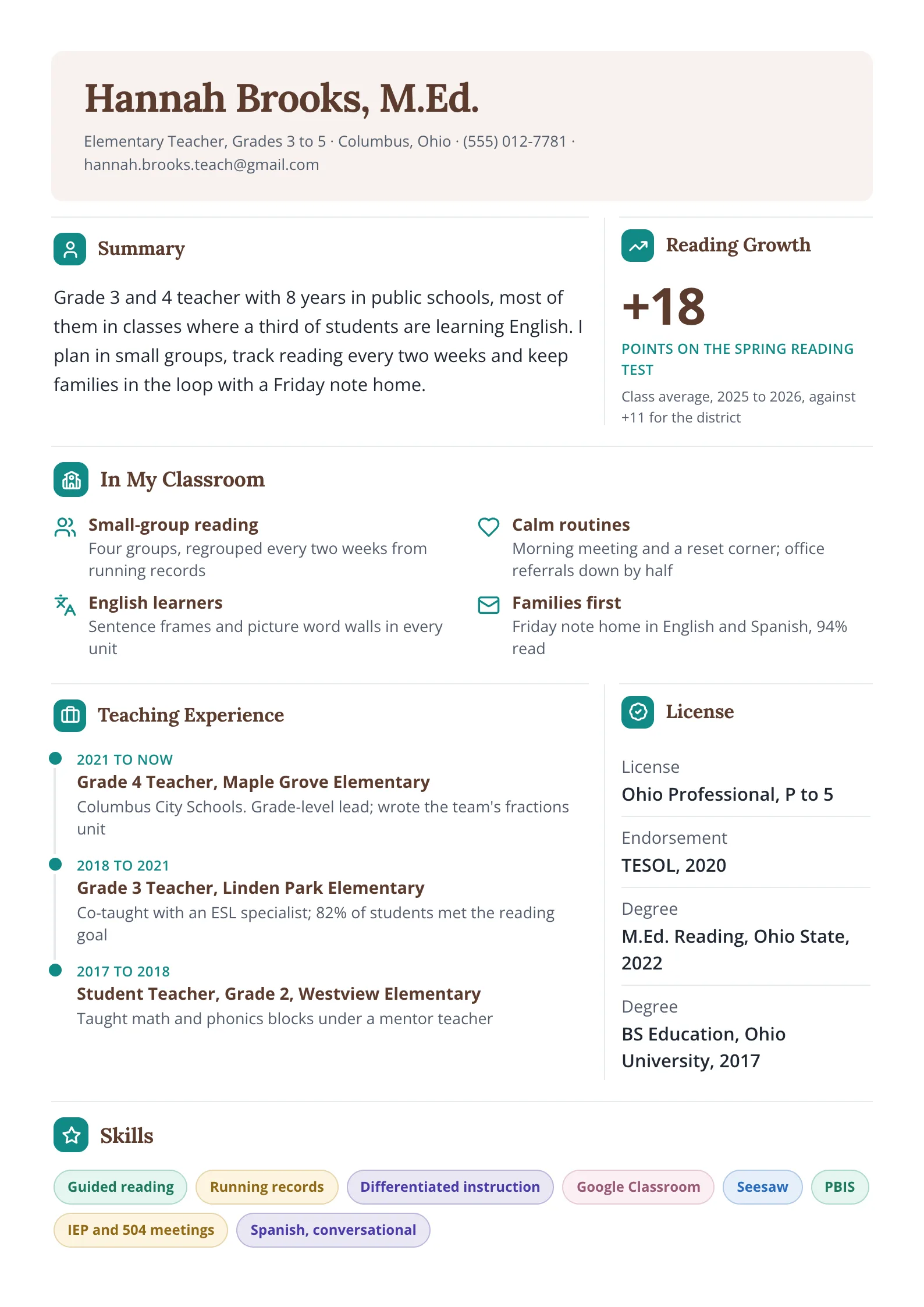 Resume: Elementary TeacherEdit for free(opens in a new tab)
Princeton's career center guide gives the roots of the words. CV is Latin for "course of life," and résumé is French for summary. That's a good way to remember them. Your CV tells the whole course. Your resume gives the short version.
| Resume | CV | |
|---|---|---|
| Who asks for it | Most employers | Universities, research labs, grant panels, some medical employers |
| Length | 1 to 2 pages | No limit; grows over a career |
| What it shows | Your most relevant jobs and results | Everything: teaching, research, publications, grants, talks |
| Publications | Only selected ones, if relevant | All of them |
| References | Leave them off | Always include them |
| Changes for each job | Yes, every time | Mostly the same, with new items added |
What three career centers say about length
Here's what three university career offices say about length.
- Princeton: a resume runs "one-to-two pages at most." For consulting, finance or tech jobs, it recommends one page. A CV's length is "Flexible."
- UCLA: a resume is "1-2 pages (1 page highly recommended)." A CV is again "Flexible," and may be asked for "in lieu of a resume" for academic or research roles.
- University of Nebraska Omaha: a resume is "1 page (2 pages max!)." A CV runs "two to four pages" early on and "more than ten pages" well into a career, and "there is no length limit for a CV."
Princeton adds one line worth remembering when you're tempted to send the long version: "Recruiters typically do not have time to read a CV."
The federal rule that turned this into a hard limit
For US government jobs, the page count is no longer advice. The Office of Personnel Management's guidance on the two-page limit says it plainly: "Starting September 27, 2025, USAJOBS will restrict all resumes to two pages." It covers uploaded resumes, ones built in the USAJOBS Resume Builder and saved profiles.
The penalty is strict. If your only resume runs longer than two pages, "the applicant is ineligible for further consideration." For jobs that need a CV, which OPM says are "typically in the medical and research fields," you upload the CV as a separate "other document." So on a federal application, your resume and your CV now sit side by side, each doing its own job.
OPM's guidance also says what a federal resume should hold, in four boxes:
- Contact information: name, email address and phone number.
- Work experience: for each job, your title, employer, start and end dates as month and year, and hours worked per week.
- Education, certificates and licenses: when the job needs them.
- Optional details: a security clearance, training, languages, memberships or publications.
Its hints read like a good edit of any resume: "Prioritize most relevant and recent experience," and "Remove outdated or unrelated experience." Those two lines are most of the work of turning a CV into a resume.
Turning a CV into a resume
If you have a CV and the job wants a resume, you're cutting, not rewriting. Princeton's table of differences tells you what to cut:
- Publications: keep only the ones that matter for this job. A CV lists all of them.
- References: take them off. Princeton's table says a resume should "not include" them.
- Honors and memberships: shrink them, or fold them into your education section, as Princeton's table suggests.
- Teaching and research: turn them into results, with numbers, under each job.
- Length: stop at two pages, or one if the job is in consulting, finance or tech.
Going the other way, from resume to CV, means adding sections back in full. Every paper, every talk, every grant and every course you've taught gets a line.
Five one-page resumes, and when each might meet a CV
These samples from MakeOnepagers are all resumes, filled with invented names and employers. For each, you'll see if a CV would ever travel with it.
A nurse who could apply to a federal hospital
 Edit this template
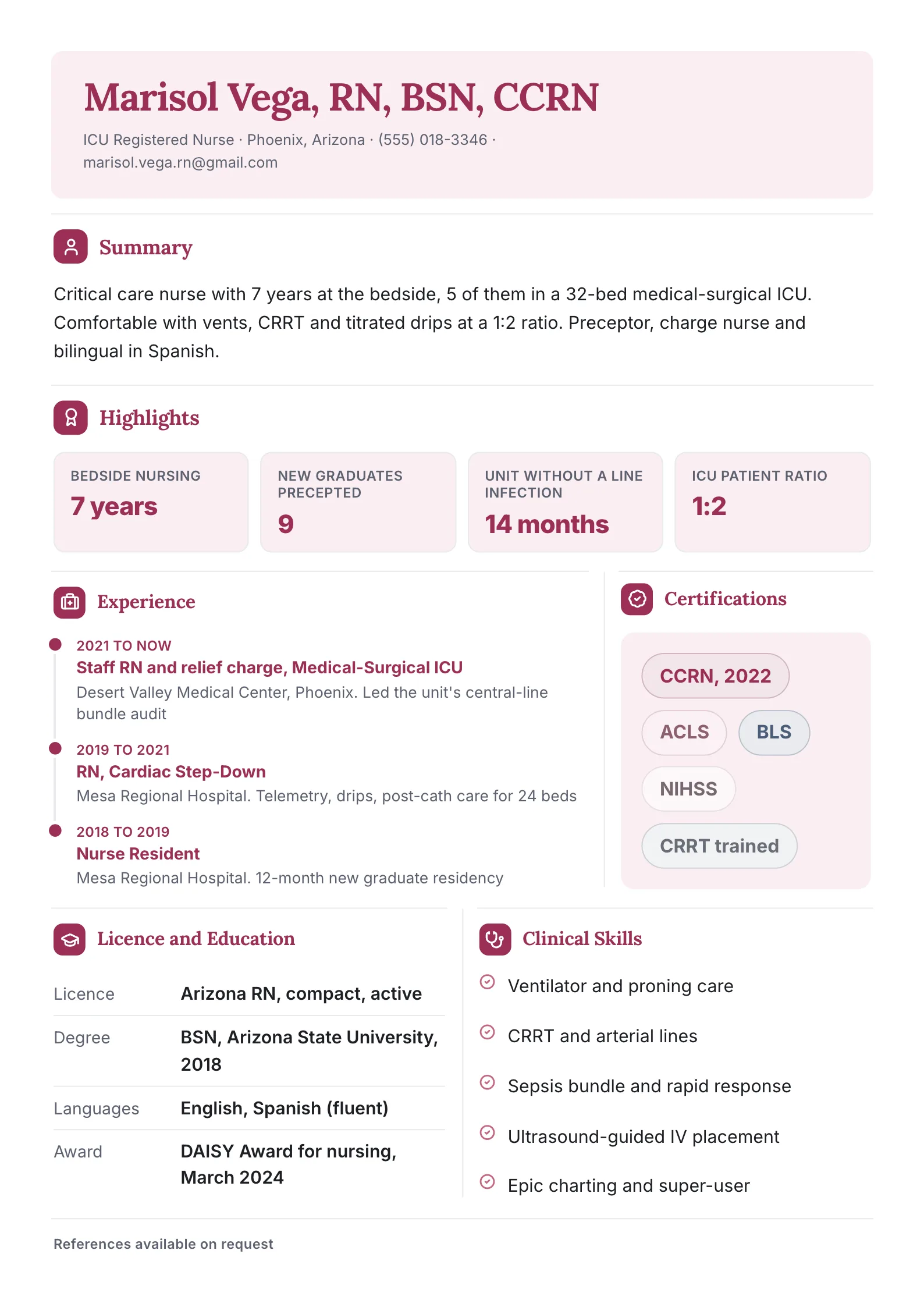
Medical jobs are one place a CV can come up. This one-page nurse resume packs 7 years at the bedside, 5 of them in an ICU, onto a single page, with numbers like a 1:2 patient ratio and 14 months without a line infection. For most hospital jobs, that's all you send. For a federal medical post that asks for a CV, you'd upload the CV as a second document and keep this resume as your two-page-or-less main file.
A college student heading toward grad school
 Edit this template
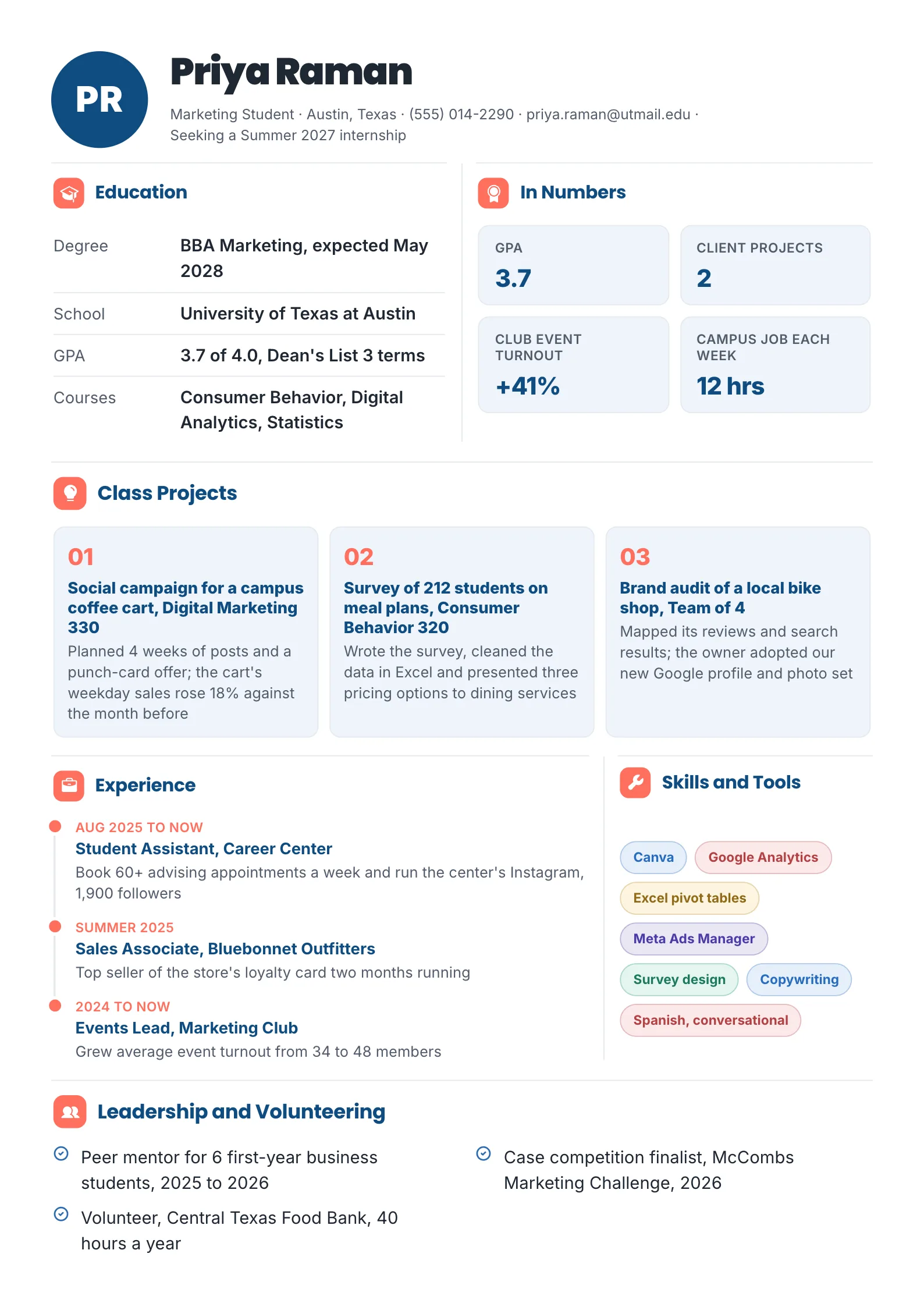
Students often ask whether they need a CV yet. For an internship, no. This college student resume puts education first, then class projects like a survey of 212 students on meal plans. If you later apply to a research master's or a PhD, that survey becomes the first line under "Research" on your CV.
An accountant whose license leads the page
 Edit this template
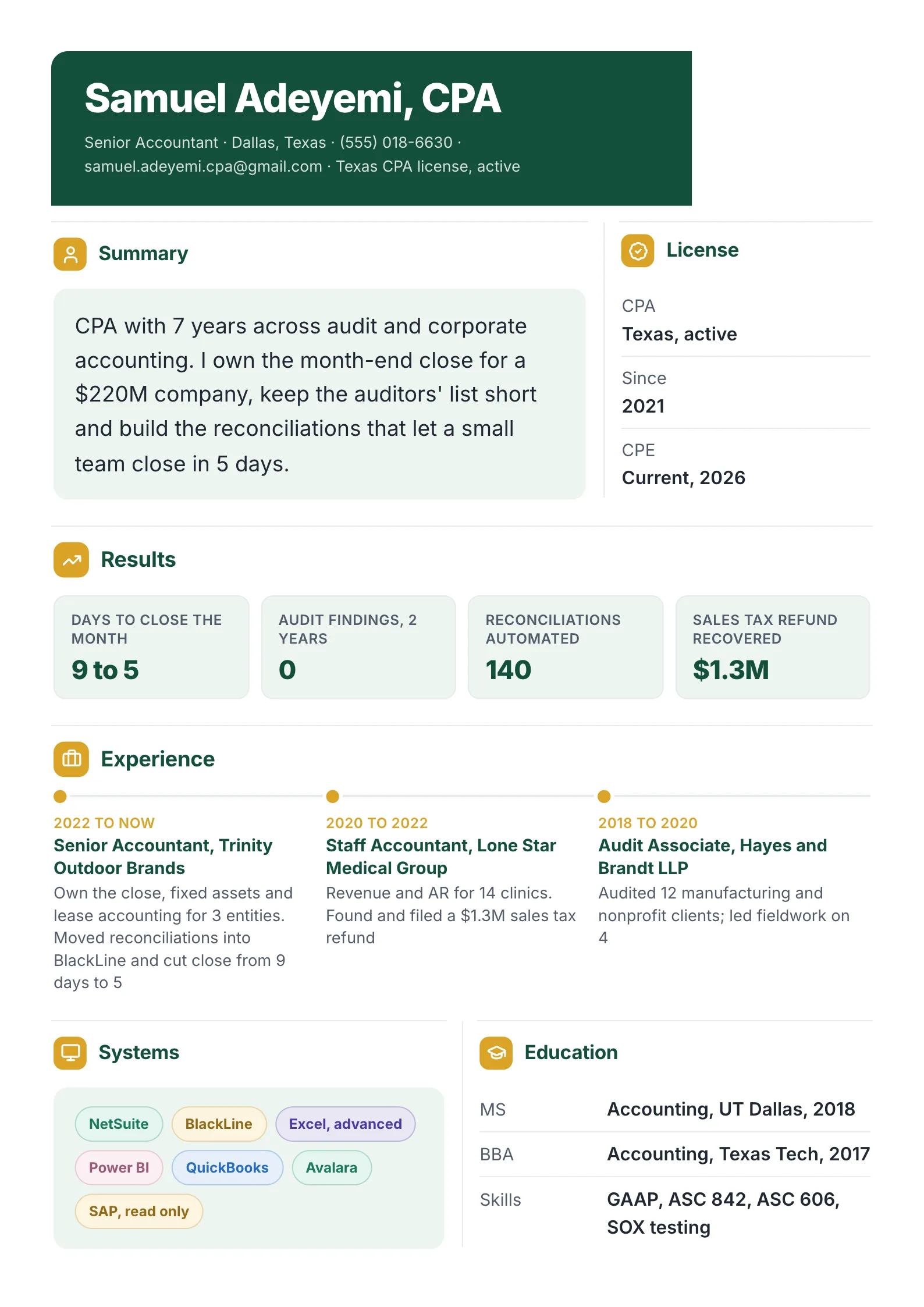
Business jobs almost never ask for a CV, so a resume is your whole application. This accountant CPA resume opens with the license, then four results, like cutting the month-end close from 9 days to 5. A CV would list every course and exam. A resume shows a hiring manager only what changes their mind.
A career changer who has to cut, not add
 Edit this template
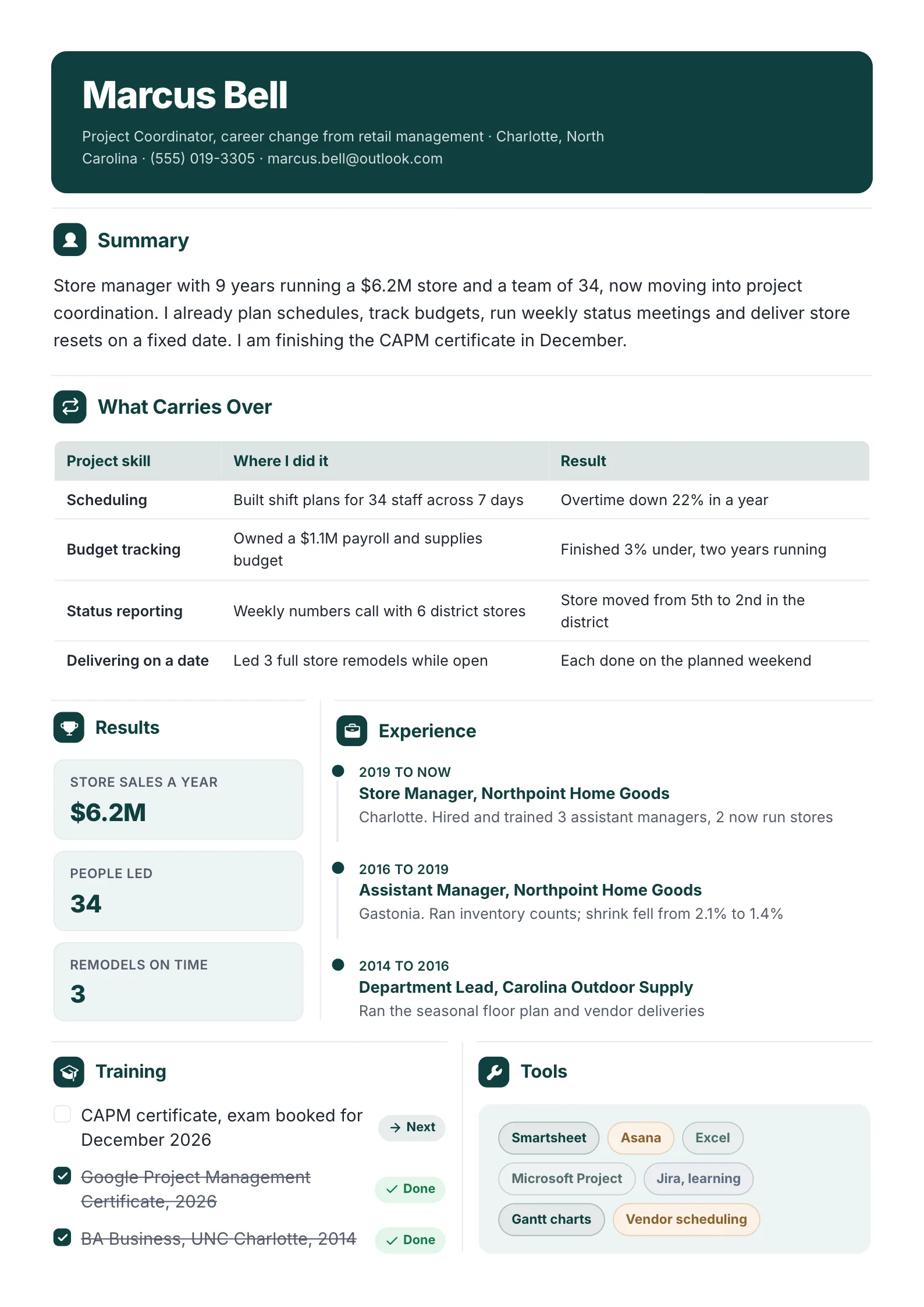
A career change is where the resume's short form helps you most. This career change resume turns 9 years of retail management into a table of project skills, such as owning a $1.1M budget and finishing 3% under it. Listing every store job in full, CV style, would bury the point. Pick the four skills that carry over and show where each one happened.
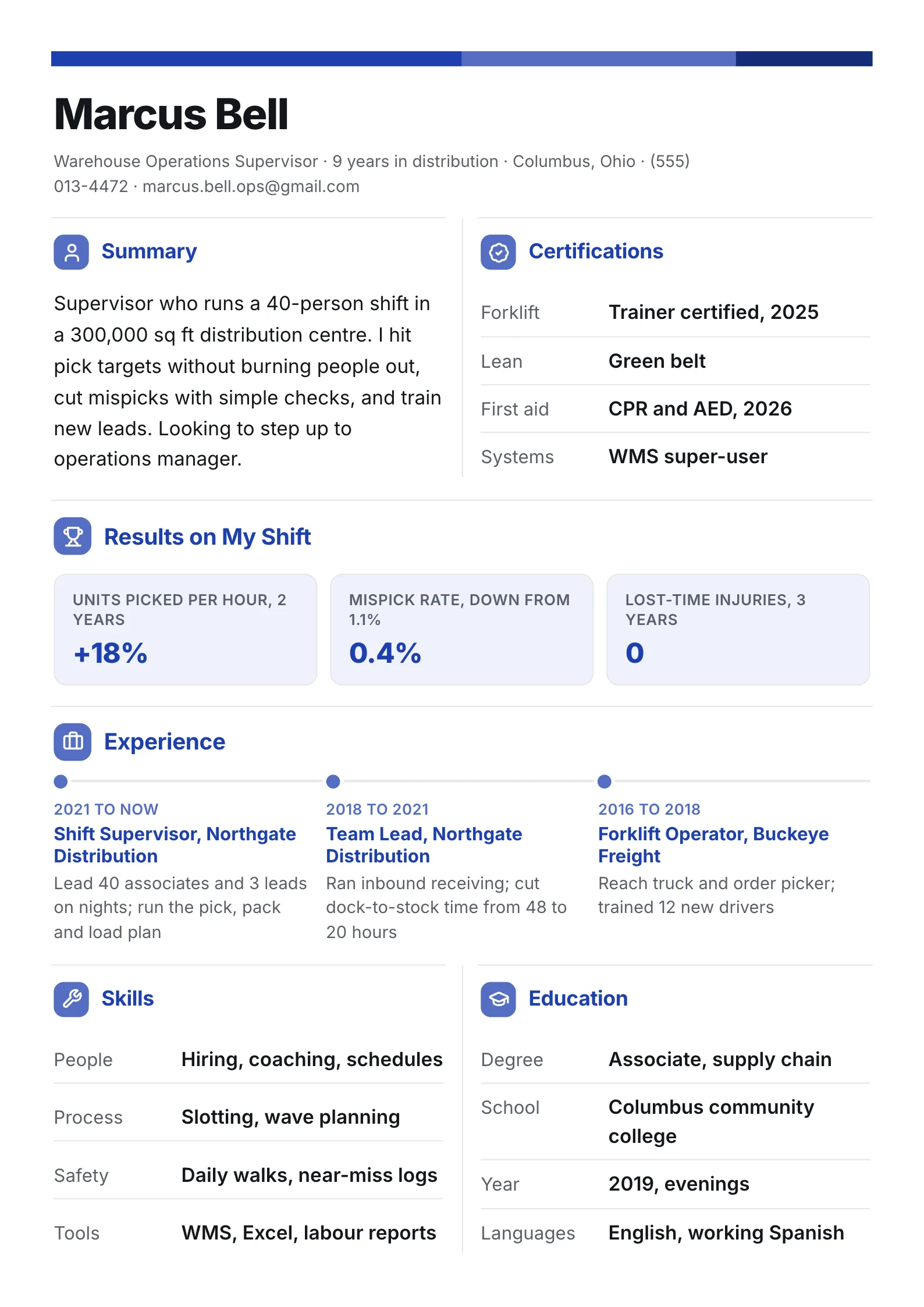
A supervisor stepping up to manager
 Edit this template
Trade and operations jobs want proof you can do the work, fast to read. This warehouse supervisor resume shows a 40-person shift, picks per hour up 18% over 2 years and mispicks down from 1.1% to 0.4%. Nobody in this field will ask you for a CV. A CV here would only add pages a busy manager skips.
Which one should you send?
Read the job post first. If it says CV, send a CV. If it says resume, or says nothing, send a resume. Then check these cases:
- US academic, research or teaching job: a CV.
- Grant, fellowship or a PhD program: usually a CV.
- US federal job: a resume of two pages or less, plus a CV only if the post asks for one.
- Any other US job: a resume, one page if you can.
- A job in Europe, Ireland or New Zealand: they'll call it a CV, but they mean a resume. Princeton notes the word changes meaning across the Atlantic.
Make your resume
Choose the MakeOnepagers resume nearest your field, then swap in your own jobs and numbers. You can paste your old CV into the free AI One-Pager generator and let it lay out a one-page version, then cut whatever doesn't fit the job. For more help, read how to write a resume, and compare layouts in our resume format guide.
Frequently asked questions
How is a CV different from a resume?
A resume is a 1 to 2 page summary of your most relevant work. A CV is a full record of an academic or research career, with every publication, grant and talk, and it has no length limit.
Is a CV longer than a resume?
Yes, almost always. The University of Nebraska Omaha says a CV runs two to four pages early in a career and can pass ten pages later.
Do US federal jobs accept a CV?
Only as an extra document, for jobs that ask for one. Since September 27, 2025, the main resume on USAJOBS must be two pages or less, or the application isn't considered.
Should a resume include references?
No. Princeton's guide says a resume should leave them off, while a CV should always include them. Have a list ready to send when an employer asks.
Is a CV the same as a resume outside the US?
In much of the world, yes. Princeton's guide notes that in Europe, Ireland and New Zealand, "CV" means the short document Americans call a resume. Check the job post's length limit to see which kind they expect.




