How to Write a Resume in the Order That Saves You Rewrites
How to write a resume in six steps, built from six university career guides plus OPM and USAJOBS federal rules: read the posting, write results, proofread backward.

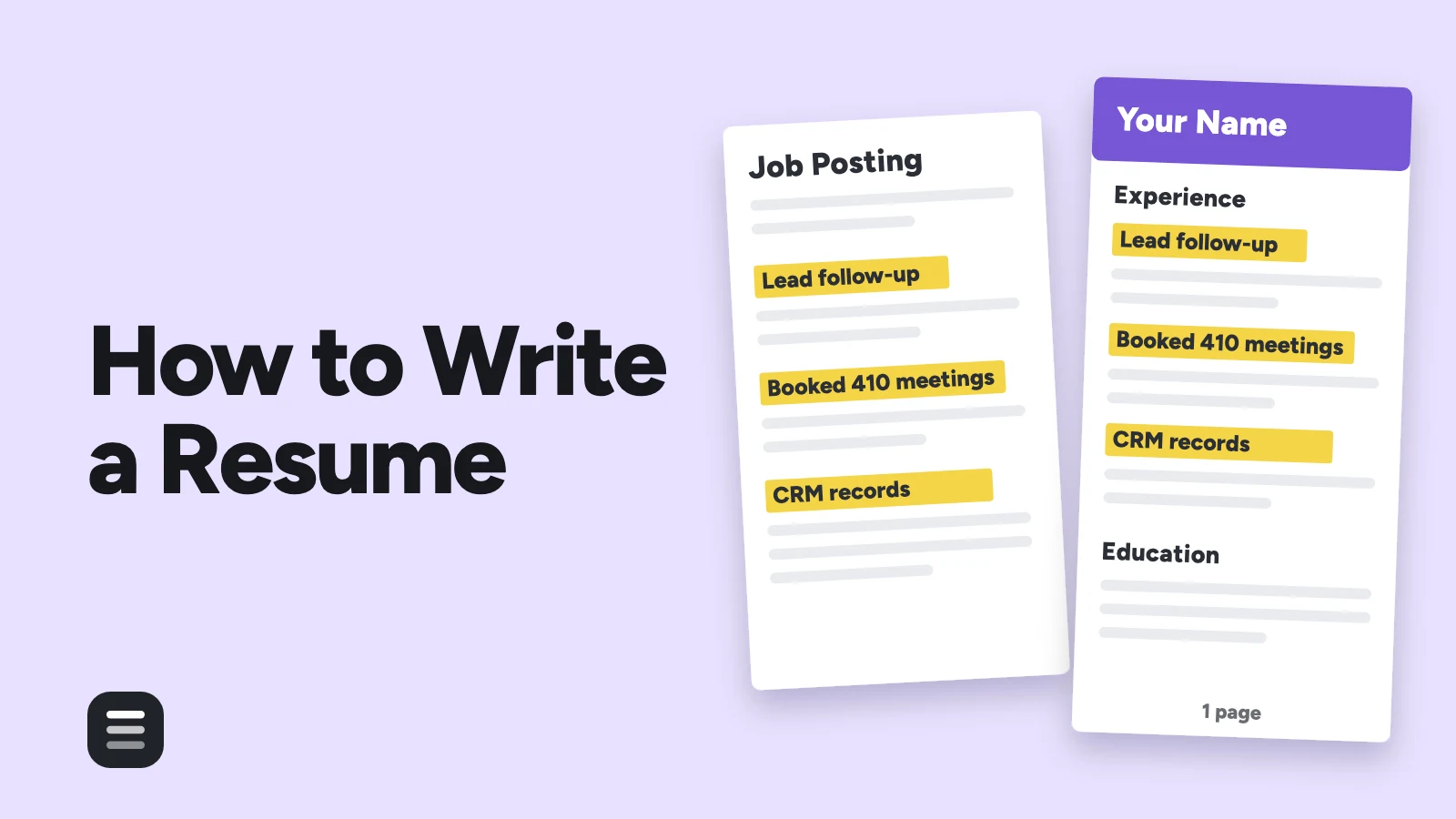
Knowing how to write a resume is mostly knowing where to begin, and the top of the page is a poor place to start. A summary is hard to write until everything under it exists, and it may turn out you don't need one at all. Start from a free one pager template.
One‑Pager examples
Real One-Pagers made with MakeOnepagers. Open any one to edit it as your own.
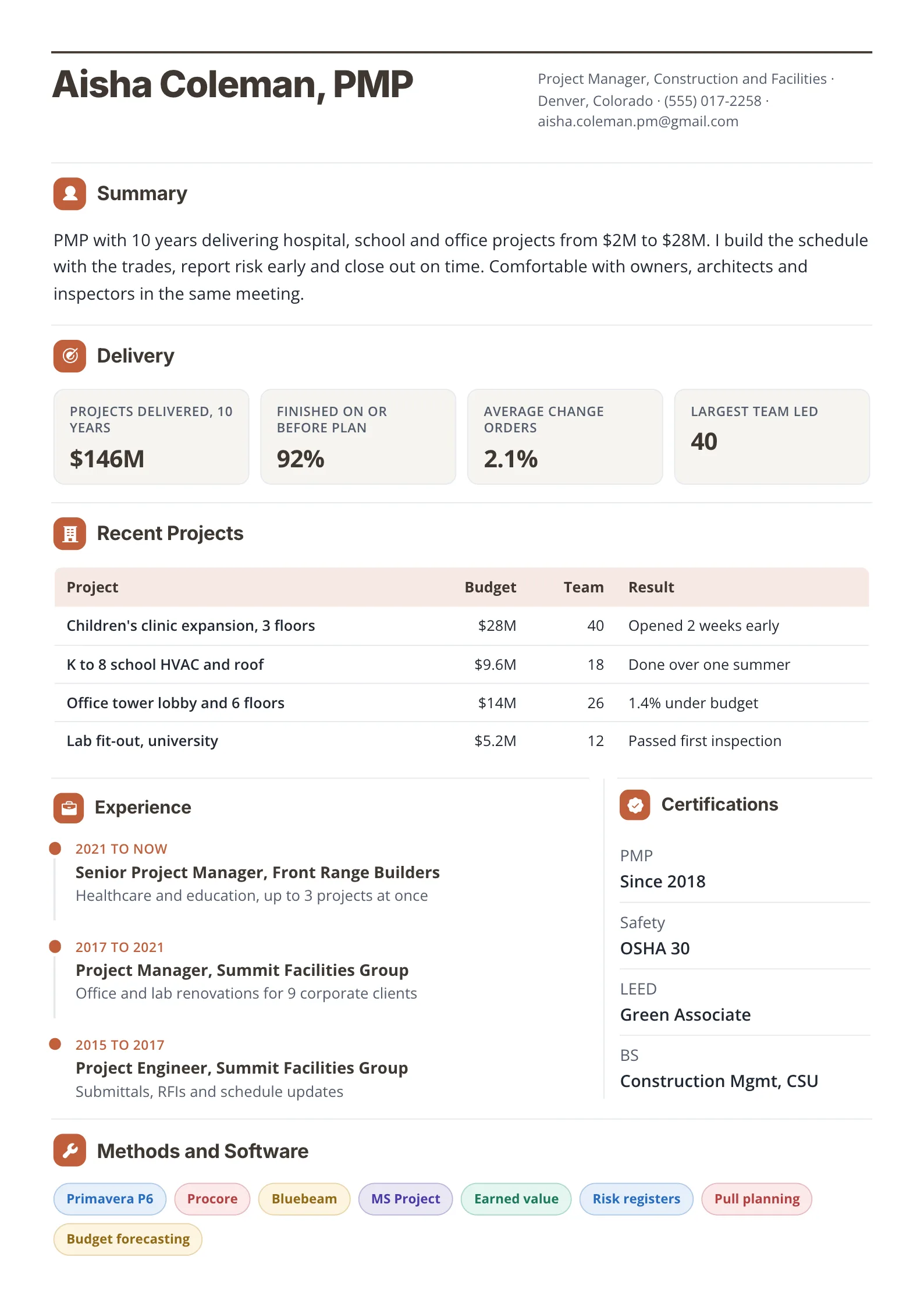 Resume: Project ManagerEdit for free(opens in a new tab)
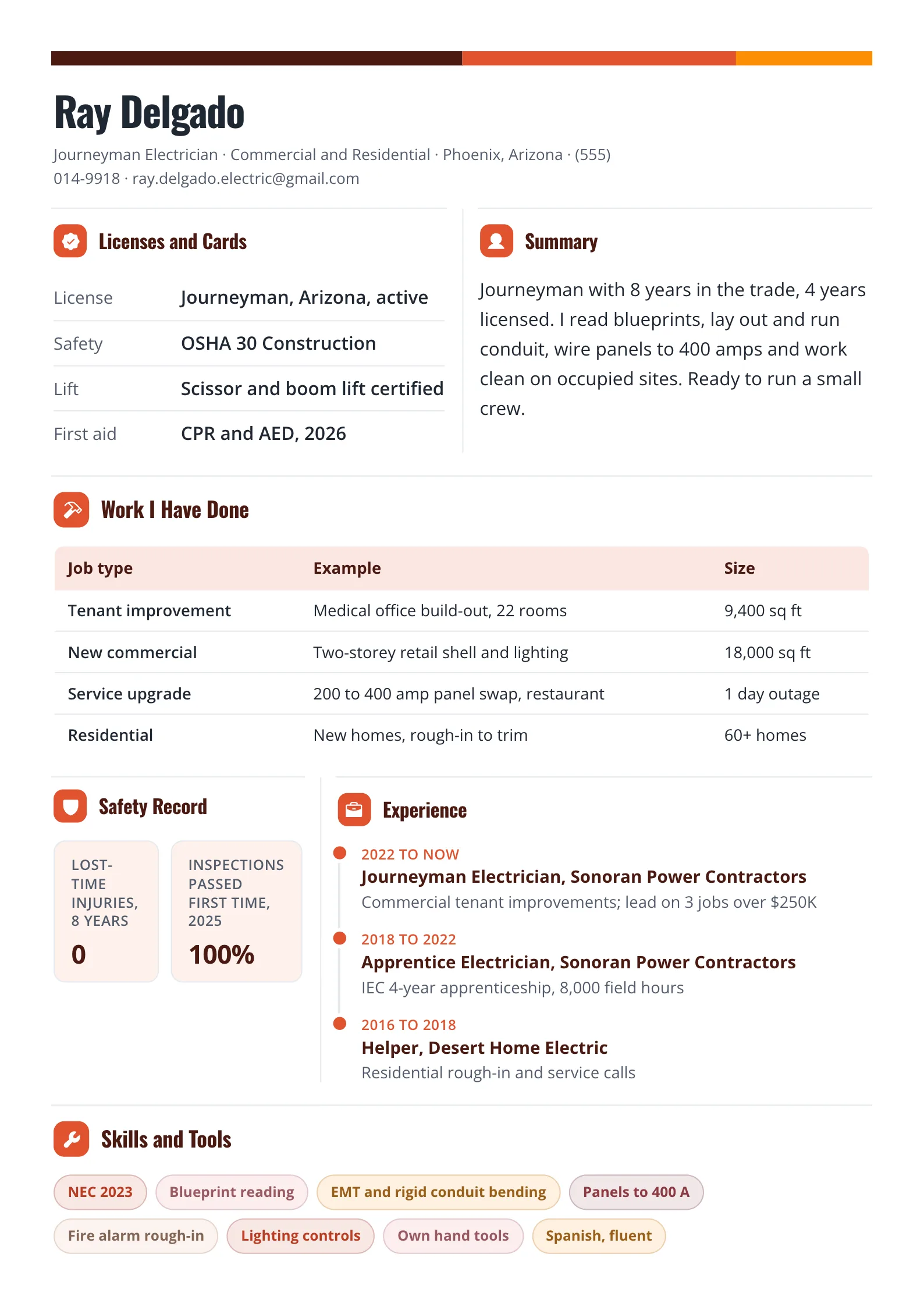 Resume: ElectricianEdit for free(opens in a new tab)
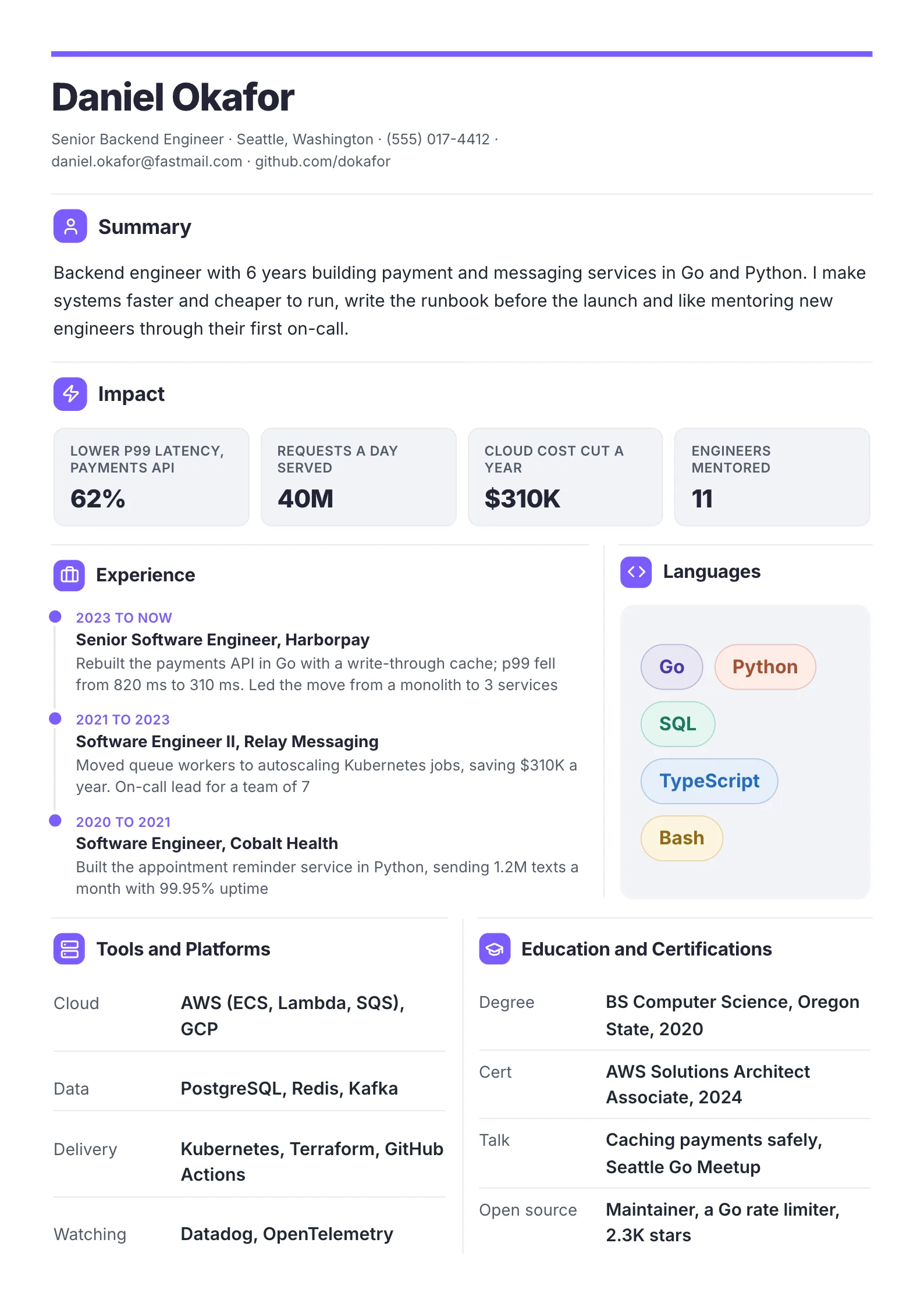 Resume: Software EngineerEdit for free(opens in a new tab)
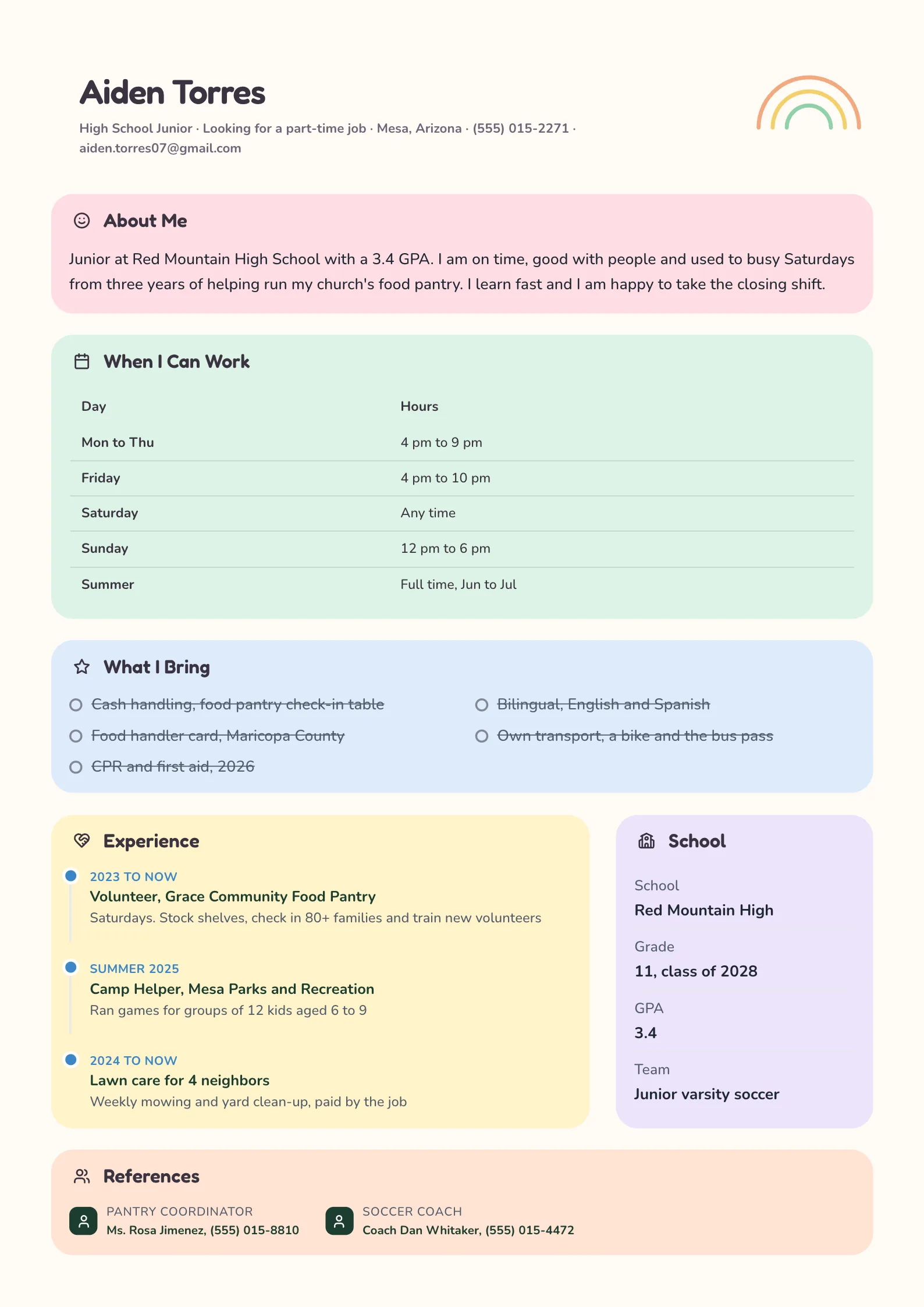 Resume: High School StudentEdit for free(opens in a new tab)
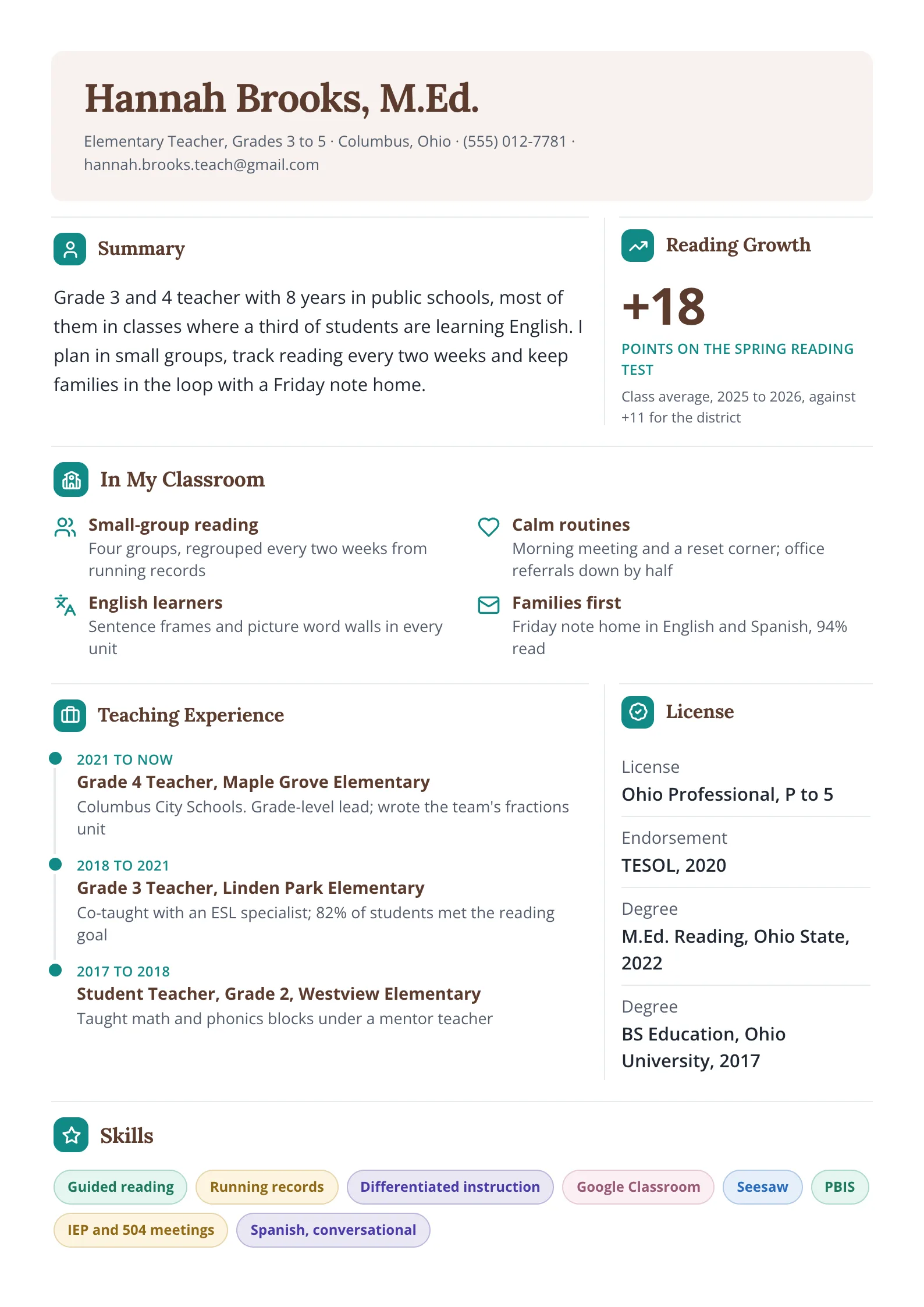 Resume: Elementary TeacherEdit for free(opens in a new tab)
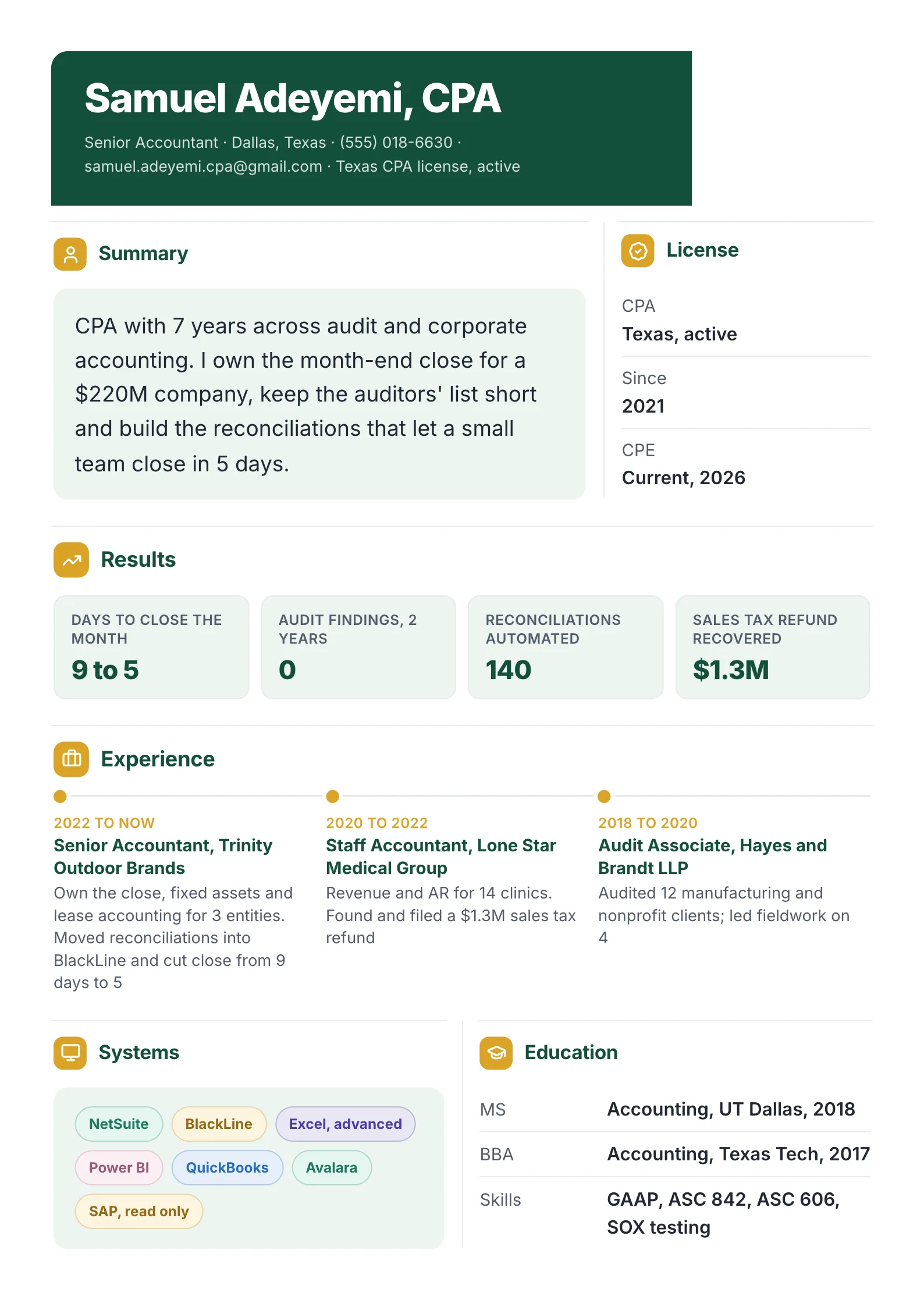 Resume: AccountantEdit for free(opens in a new tab)
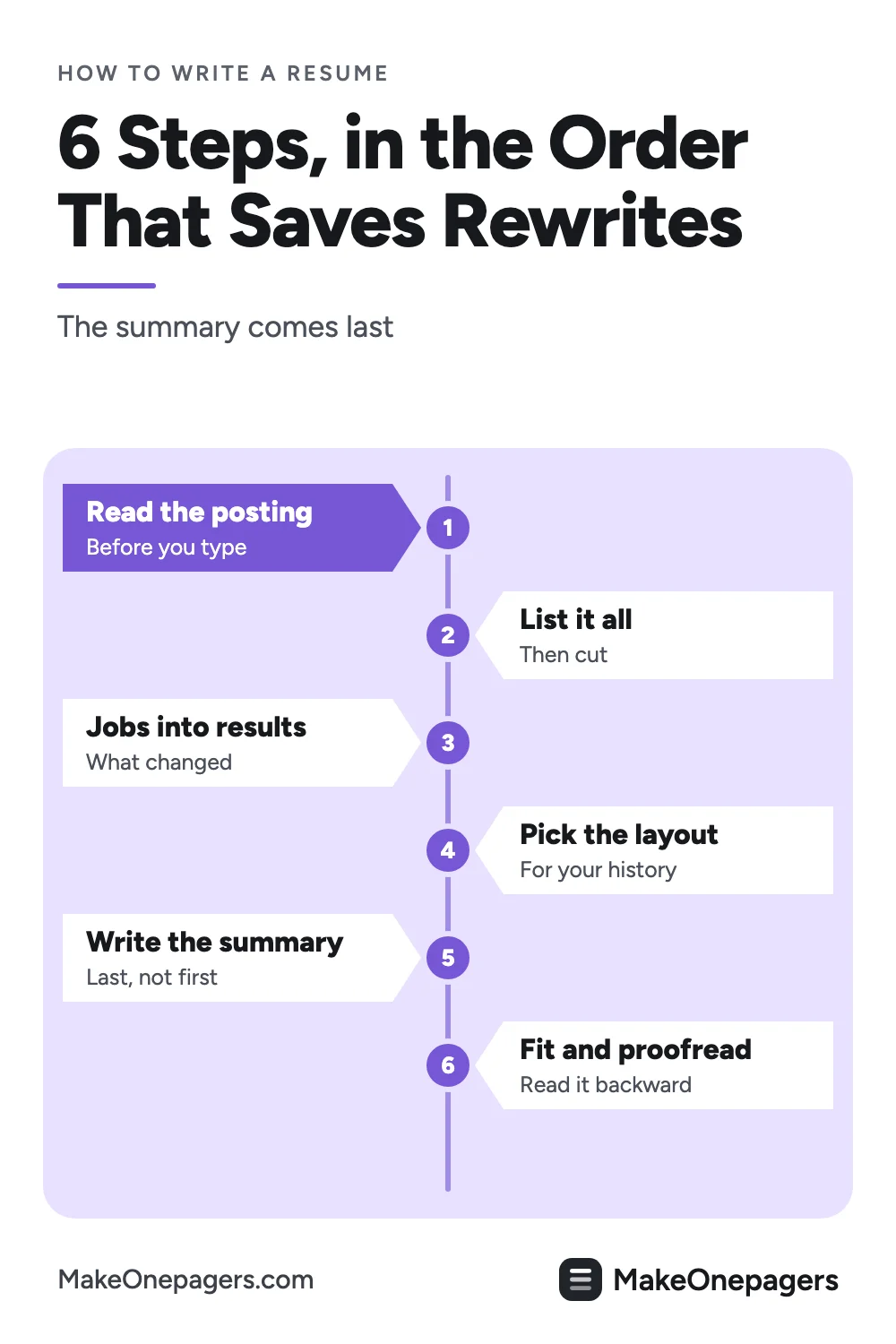
Here's an order you can follow in one sitting. We read six university career guides and two federal sources, and we say below where they agree, where they split and which step is only our own suggestion. The samples come from MakeOnepagers, and their people and figures are made up.
Step 1: Read the posting before you type
Print the job posting and mark every skill it asks for, since you'll speak to each one you can honestly claim.
All eight sources push some version of this. Berkeley says to "analyze the position description to tailor your resume to each job." Georgetown adds a smart second source: read the employer's own website and notice which words it uses over and over. OPM's federal guidance says to "align language from the job announcement."
The reason is partly software. Texas A&M warns that many organizations screen with applicant tracking systems, and Minnesota says a resume gets either a glance of about 6 seconds from a person or a scan for key words. Don't paste the posting in. Georgetown warns against overusing keywords where they don't belong, saying "your application could be removed from consideration," and some federal postings are stricter still, as you'll see below.
Step 2: List everything, then cut
Open a blank document and list each job, volunteer role, license and class project you can think of. Add dates as you go. Now cross out whatever doesn't connect to the posting you marked up. The federal guidance is blunt here: "Remove outdated or unrelated experience."
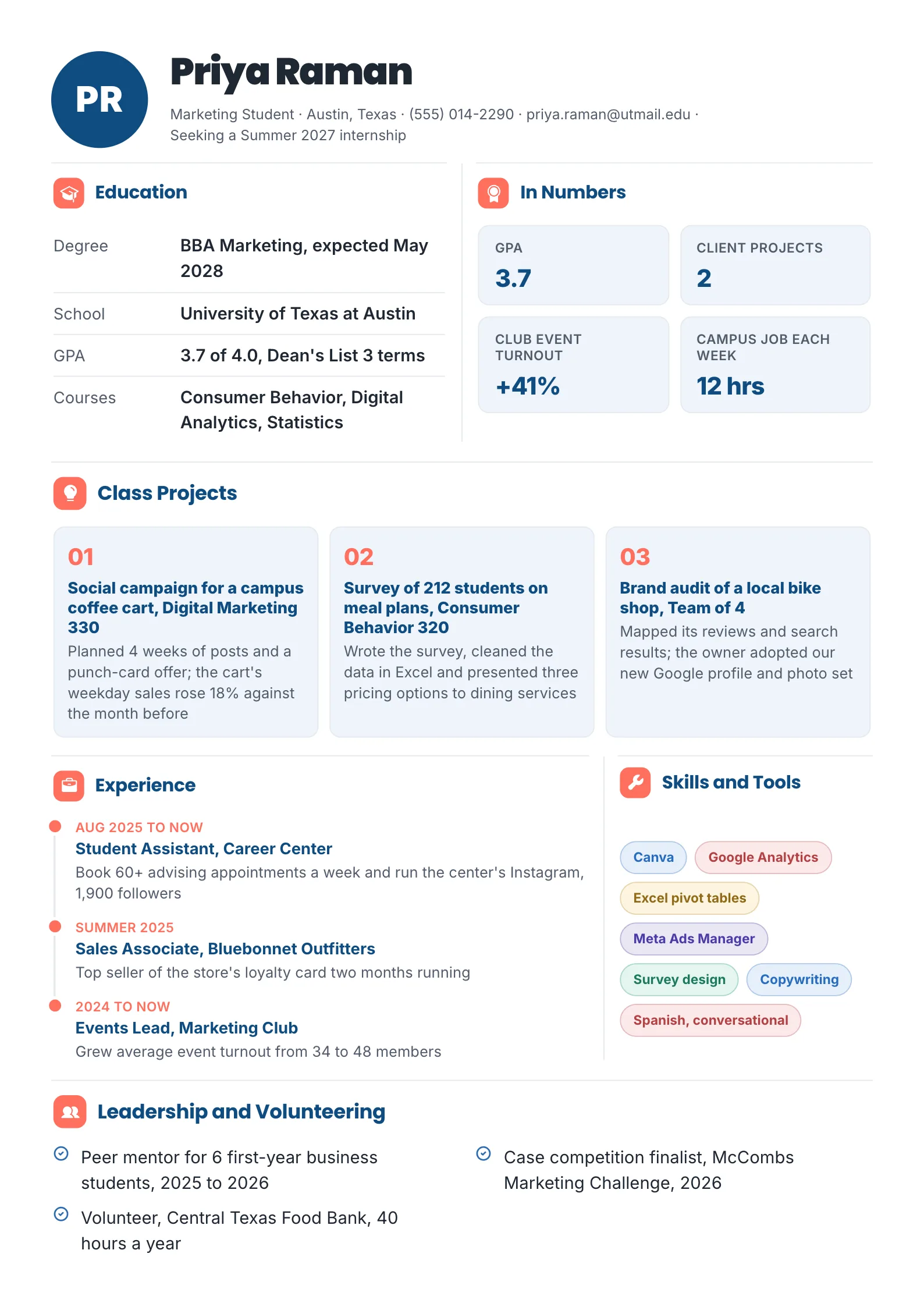
If you don't have much to cut, your class projects can do real work.
 Edit this template
A class project earns a place when it has a result, like the coffee cart's weekday sales rising 18%.
Step 3: Turn each job into results
Now write your bullets, starting each with an action verb and adding a number if you have one. MIT puts the difference plainly: your descriptions "shouldn't read like job descriptions." Harvard lists "not demonstrating results" among its top five resume mistakes, and Berkeley asks you to quantify your results if possible.
| Duty you might write first | Result from the samples |
|---|---|
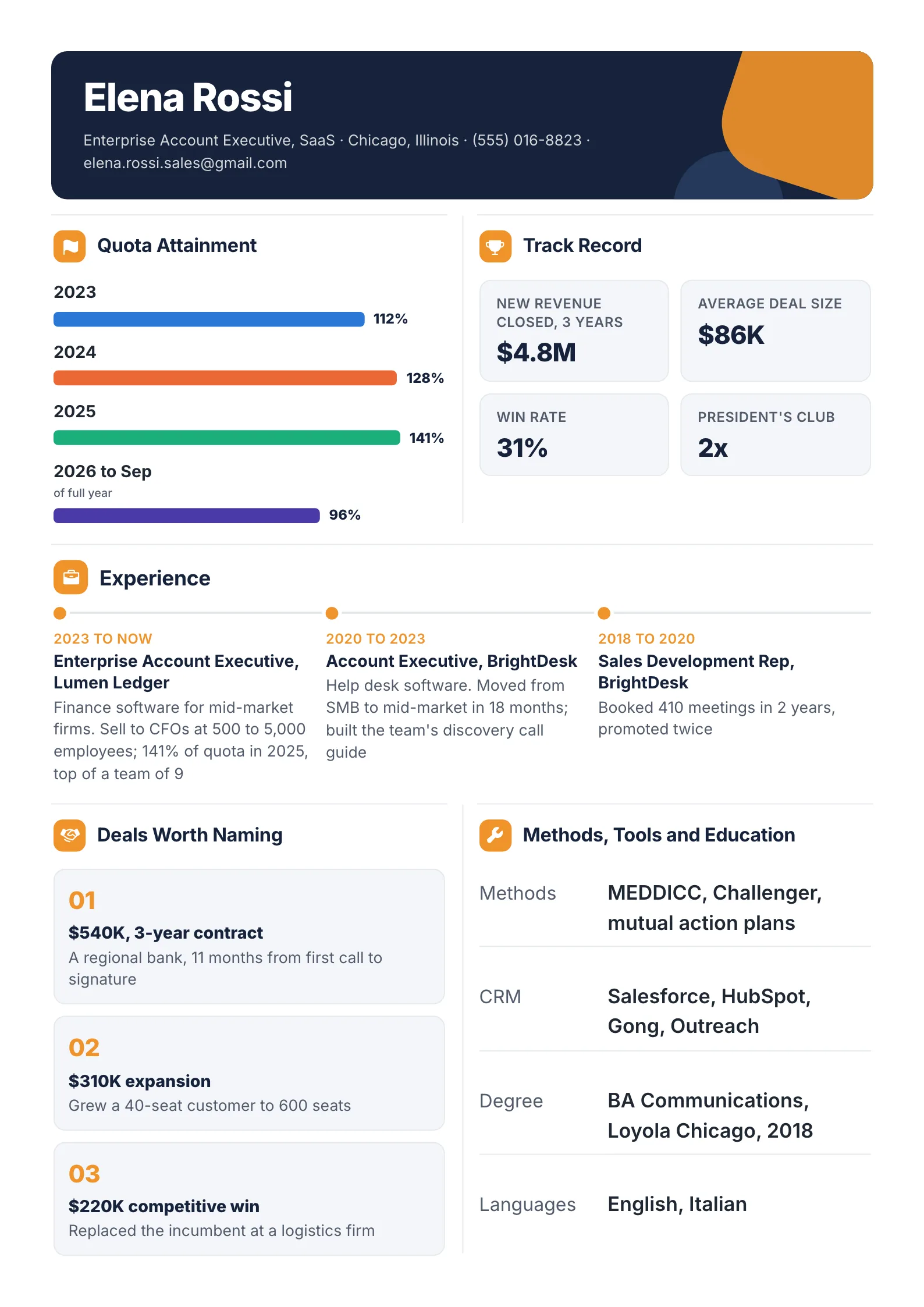
| Helped run the marketing club | Grew average event turnout from 34 to 48 members |
| Responsible for inbound leads | Booked 410 meetings in 2 years, promoted twice |
| Worked on an infection audit | Led the unit's central-line bundle audit; 14 months without a line infection |
Keep your tenses straight, too. Georgetown and Minnesota both say to use the present tense for a job you hold and the past for one you've left. If you can't recall an exact figure, check old reviews or reports, because you may have to explain any number you print.
 Edit this template
"Deals Worth Naming" gives three specific wins, each with a size and a one-line story.
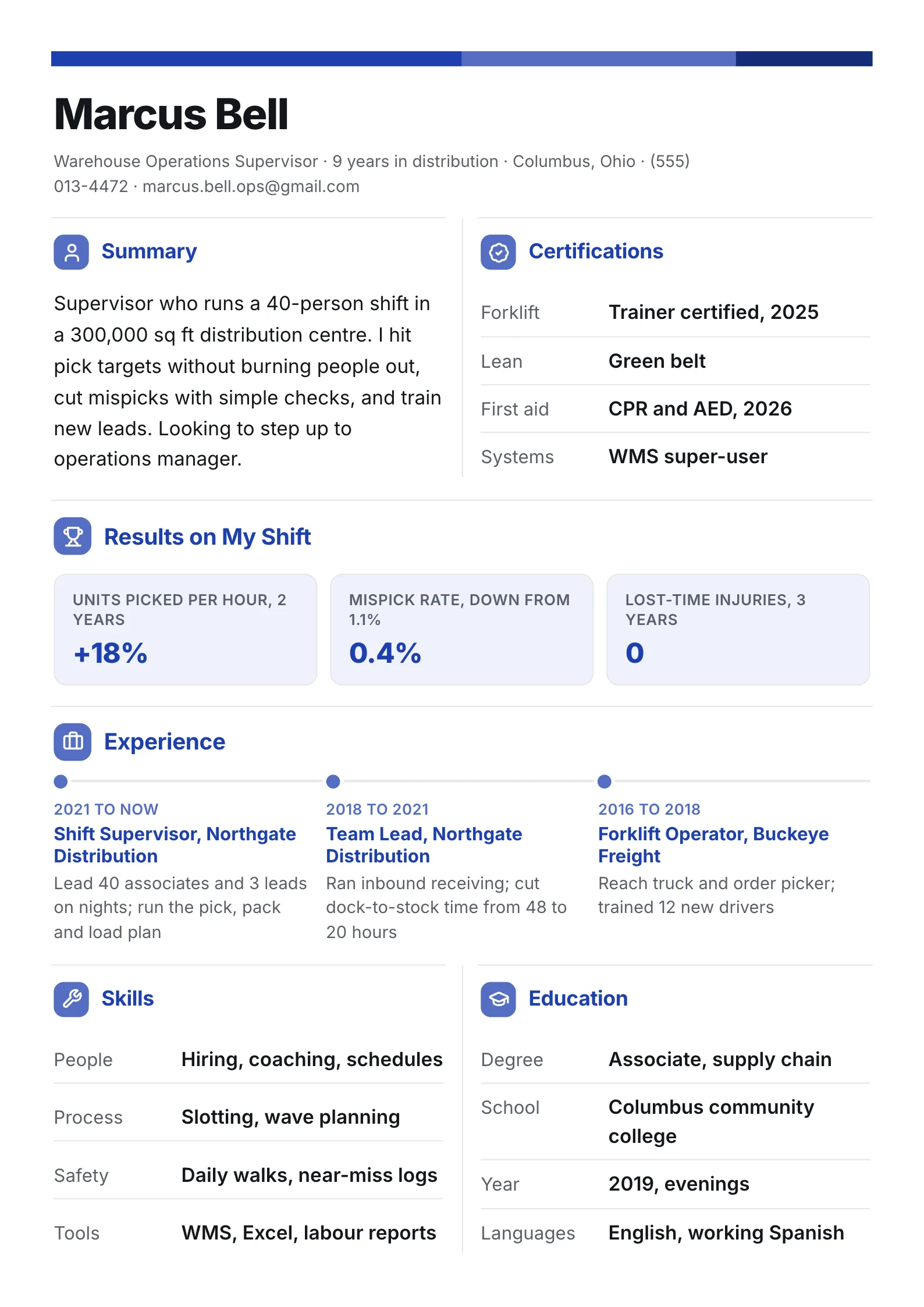
Numbers work just as well on a warehouse floor.
 Edit this template
A mispick rate that fell from 1.1% to 0.4% gives the reader a before and an after.
Step 4: Pick the layout your history needs
Texas A&M describes these formats, the situation column is our own reading, and your history decides between them.
| Your situation | Format | What goes first |
|---|---|---|
| Steady path, growing responsibility | Chronological | Your most recent job, then back in time |
| Changing fields, skills carry over | Functional | Your skills, then your job history |
| Academic or research work | CV | Longer record of study and research |
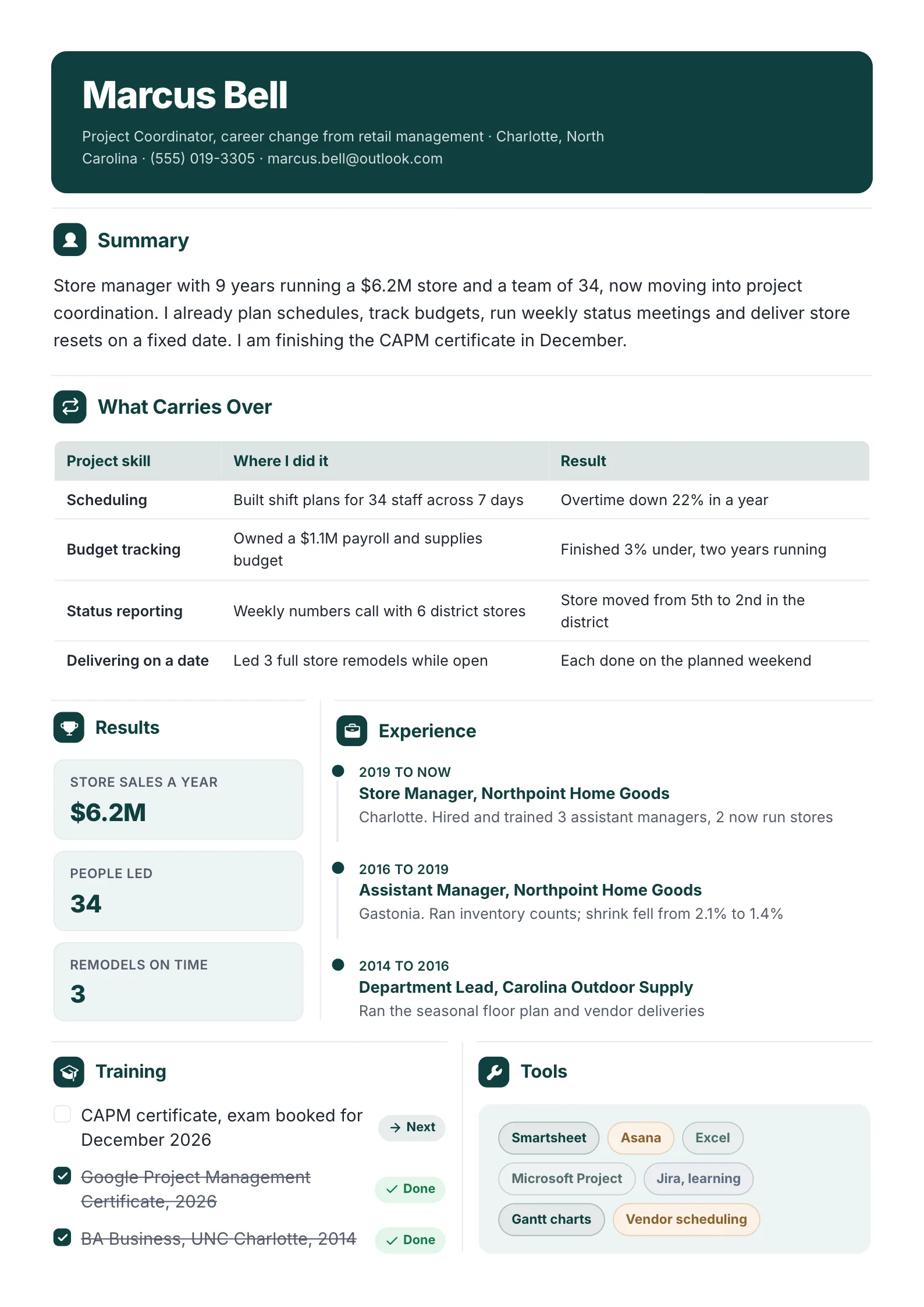
Most students and early-career readers will land on chronological, with education near the top while it's still your strongest line. Changing fields is the case where skills move up, right under the summary.
 Edit this template
"What Carries Over" sets each project skill beside the retail work that proves it.
Step 5: Decide on a summary last
No guide we read sets this order, so treat it as our own advice: leave the summary until the rest is done. You'll know by then what deserves repeating. Minnesota calls a summary optional and caps it at three to five bullet points, and it advises against objective statements altogether.
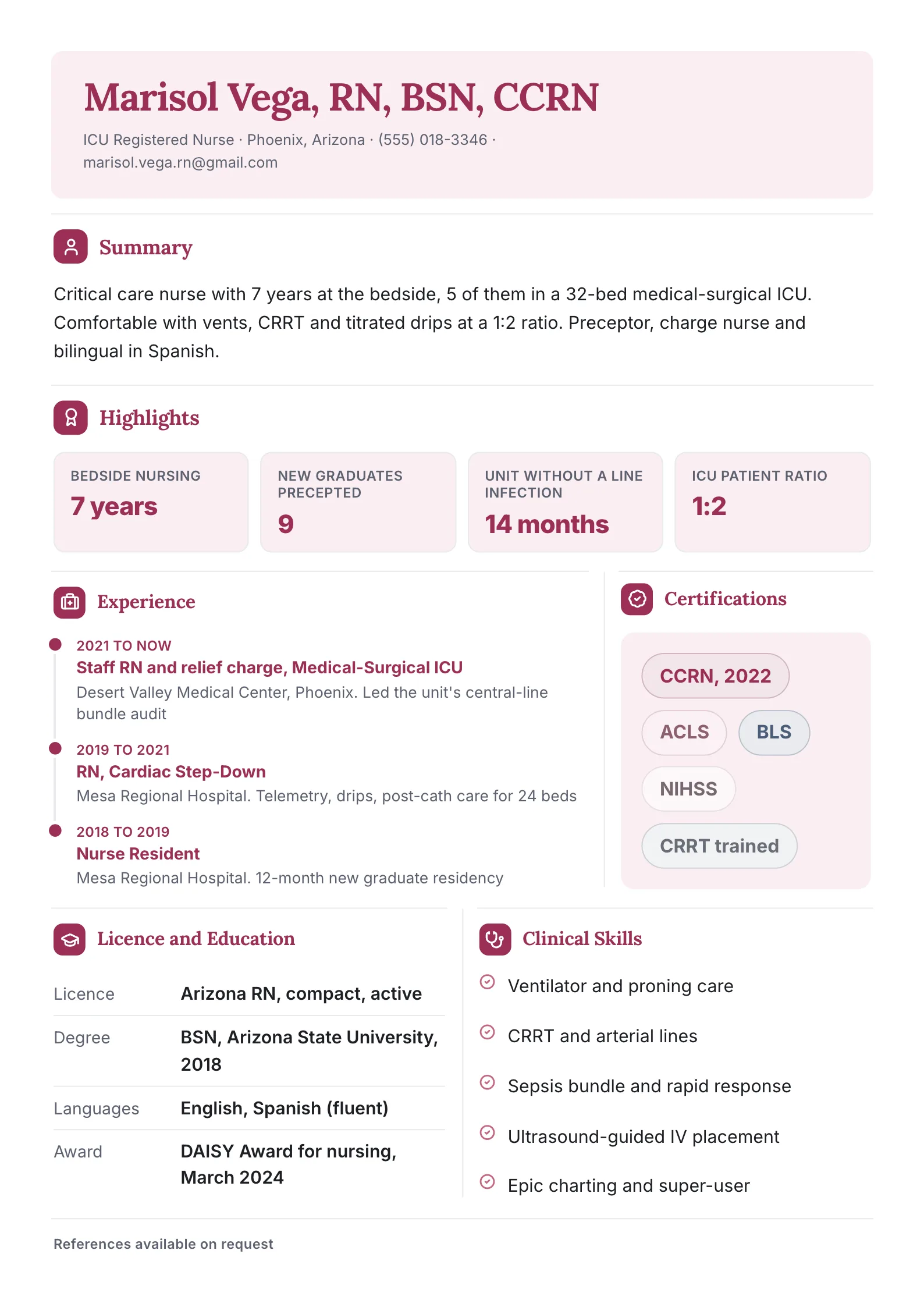
Name your job, your years in it and your strongest skill, with no pronouns. Georgetown says "Do not use the word 'I' or other first-person pronouns," MIT says to avoid I, me and my, and Harvard lists personal pronouns among its don'ts. Of the five samples in this guide, three have a summary, and the nurse's opens "Critical care nurse with 7 years at the bedside."
 Edit this template
Three short sentences with no "I" in them, and the employer still learns her unit, her ratio and her languages.
Step 6: Fit it, then proofread backward
Now check your length, which is where the guides split. Georgetown says "Keep your resume to one page," with margins of at least half an inch. Berkeley allows more than a page only with "extensive experience related to your job objective." Texas A&M treats one or two pages as a decision based on what fits your match to the job.
For proofreading, Texas A&M warns that spell-check won't catch "led" against "lead," or "to" against "too." Its rule of thumb is to read your resume backward, then have someone else check it too.
If you're applying for a federal job
Federal resumes follow their own rules, and your length isn't a choice. OPM says they "must be no longer than two-pages," and this USAJOBS posting, closed February 23, 2026, shows how an announcement words it: "Your resume must be no more than two (2) pages." The same posting warns that leaving out the required details "may result in disqualification." For each job, list:
- Your job title, plus occupational series and grade for any federal position
- Job-related qualifications
- Start and end dates with month and year
- The hours you worked per week
That posting also says: "Do not copy language directly from the vacancy announcement, as you will be deemed ineligible for consideration." So use the ideas from Step 1 and write them in your words. Read your posting closely, since each announcement states its own requirements.
For type size, photos and page count across six guides, see our resume format comparison.
Frequently asked questions
How long does it take to write a resume?
Plan on one focused sitting for your first draft, using the list you built in Step 2. Tailoring it to each later posting should only take you a few edits.
Should you use one resume for every job?
Keep one master list, and adjust your skills and bullet order for each posting. Your marked-up posting from Step 1 shows you which words to bring forward.
Should a resume be one page?
Usually, early in your career. Georgetown says one page, Berkeley allows more only with extensive related experience, and federal postings set their own limit.
Should a resume have a summary?
It's optional. Minnesota treats it that way, and two of the five samples in this guide do without one.




