Resume Format: What Harvard, MIT and 4 More Career Guides Agree On
The resume format six career guides teach, from Harvard to CalHR: one page, 10 to 12 point type, no photo, no I. Plus where they split and 5 resumes to copy.

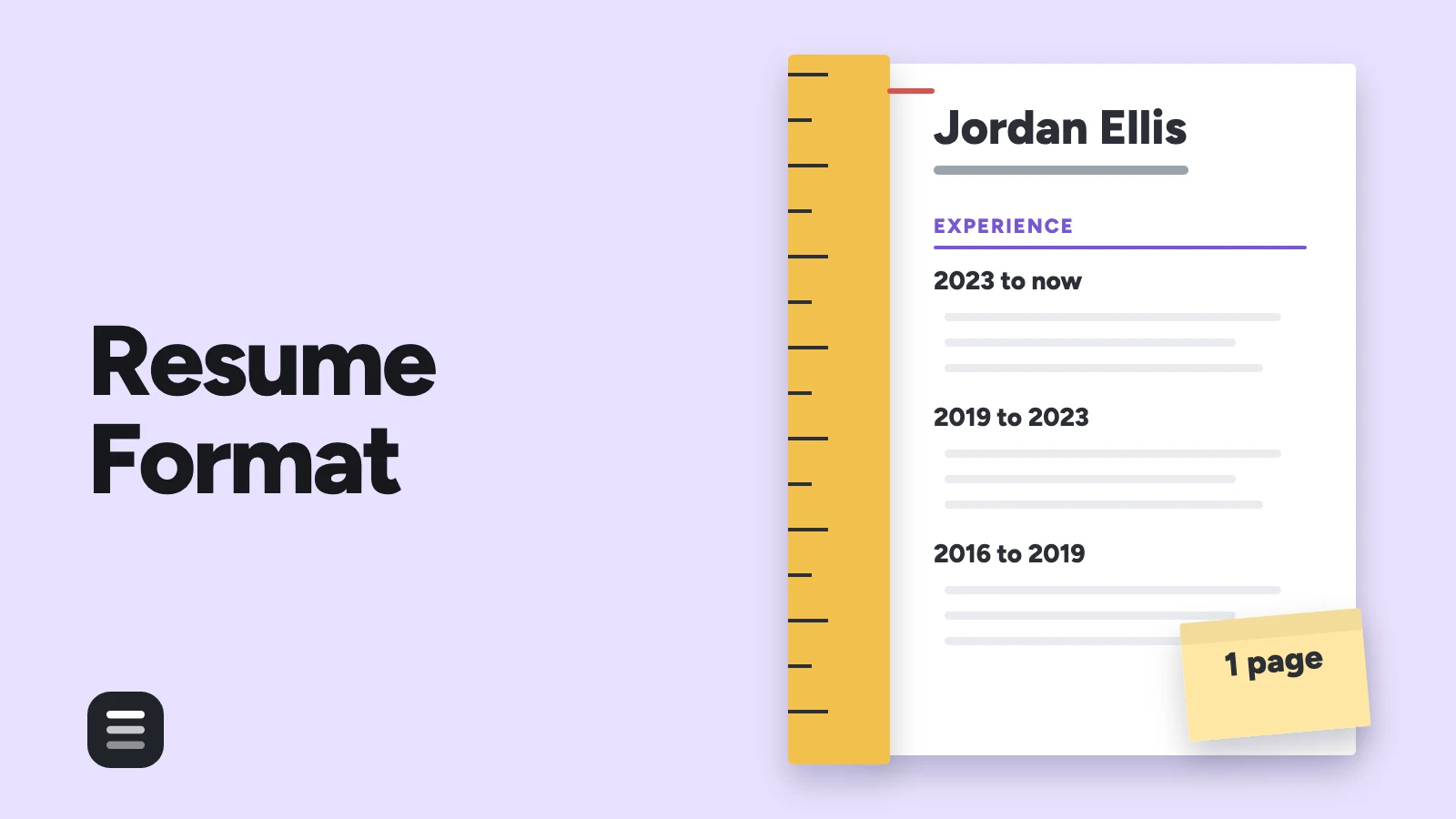
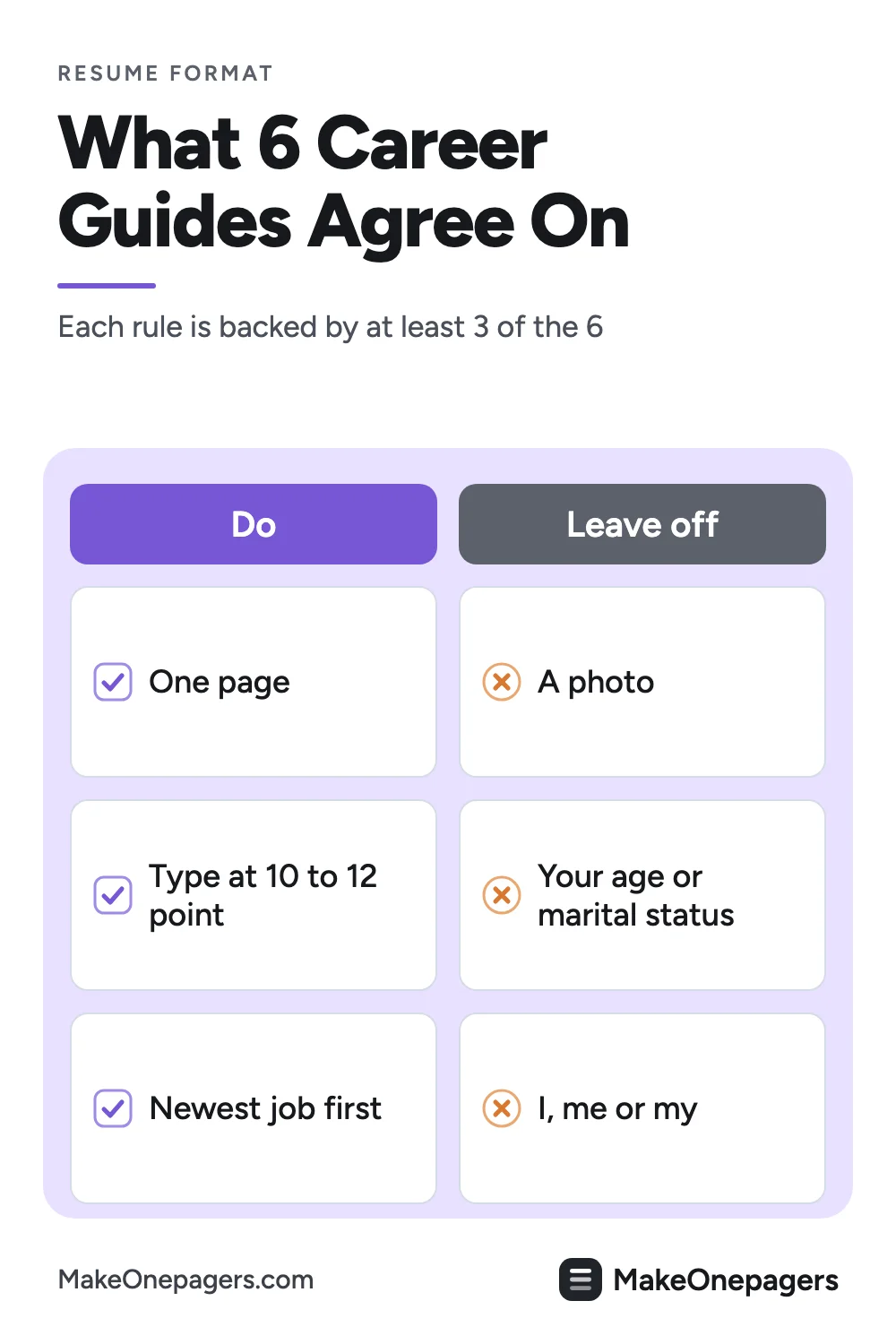
The resume format most career advisers teach fits on one page. Your type is 10 to 12 point, your margins are at least half an inch, and your newest job comes first. You leave off a photo, your age and other personal details, the word I, and your references. Those rules come from six career offices, and where they disagree, we'll show you both sides. Start from a free one pager template.
One‑Pager examples
Real One-Pagers made with MakeOnepagers. Open any one to edit it as your own.
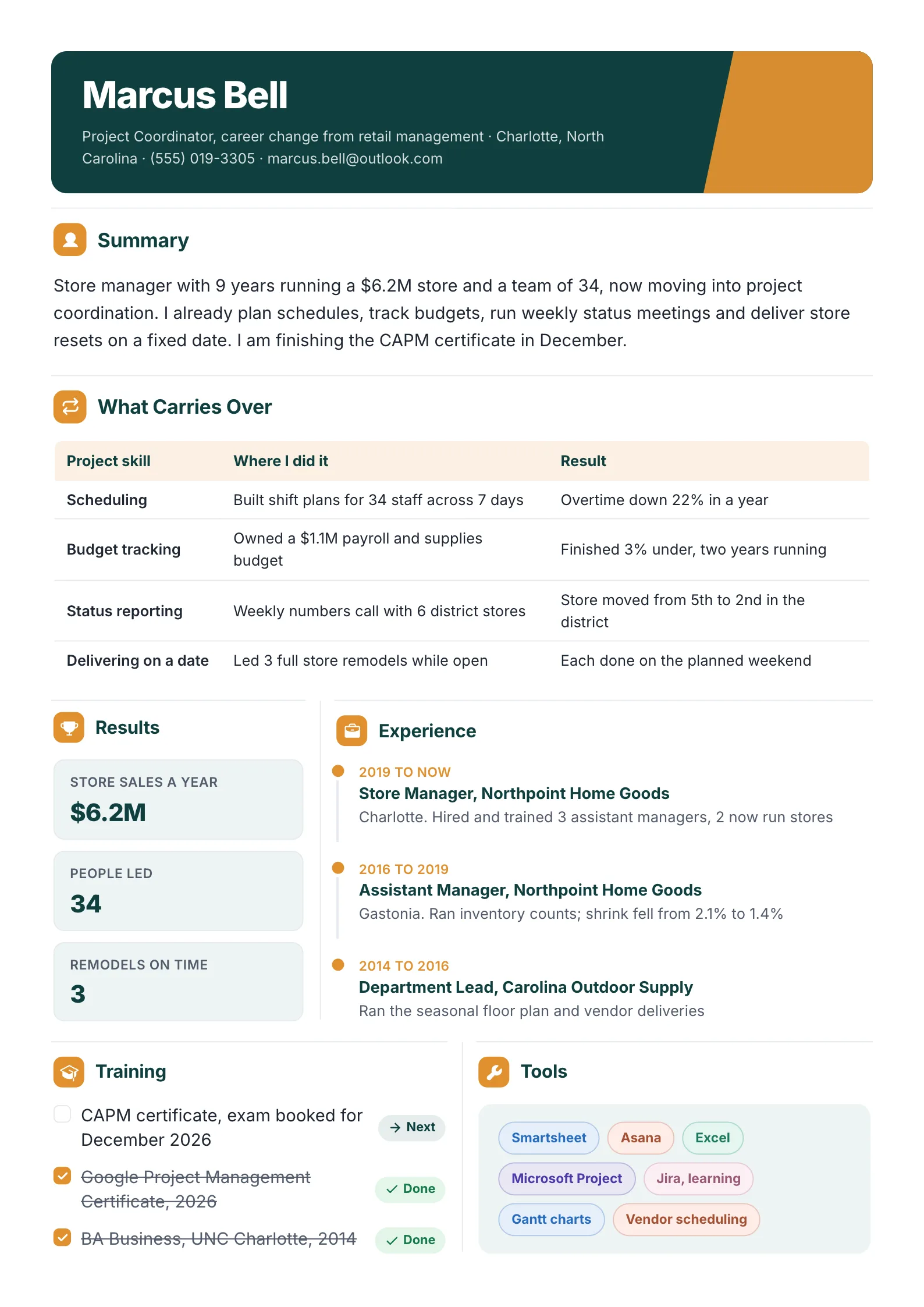 Resume: Career ChangeEdit for free(opens in a new tab)
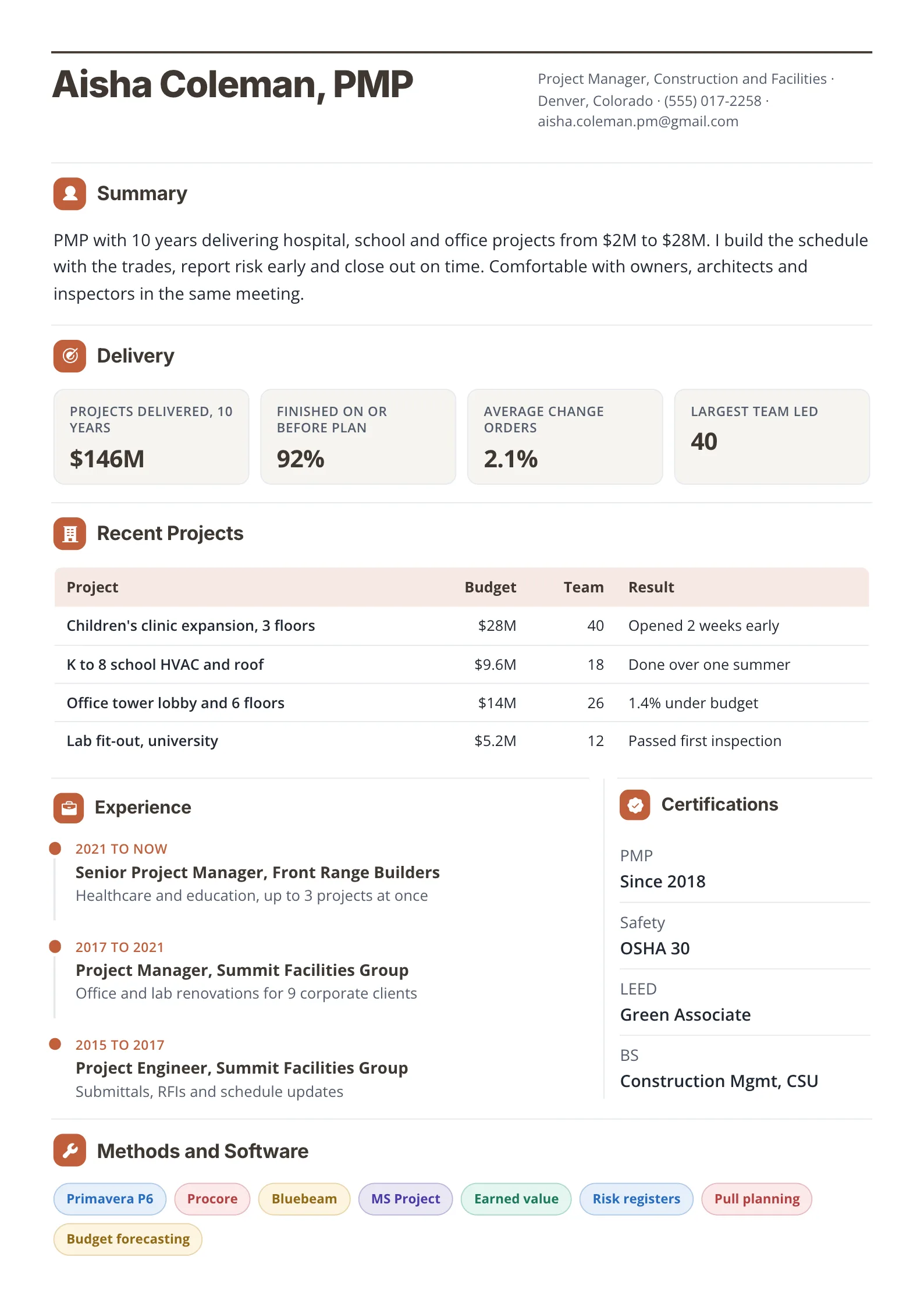 Resume: Project ManagerEdit for free(opens in a new tab)
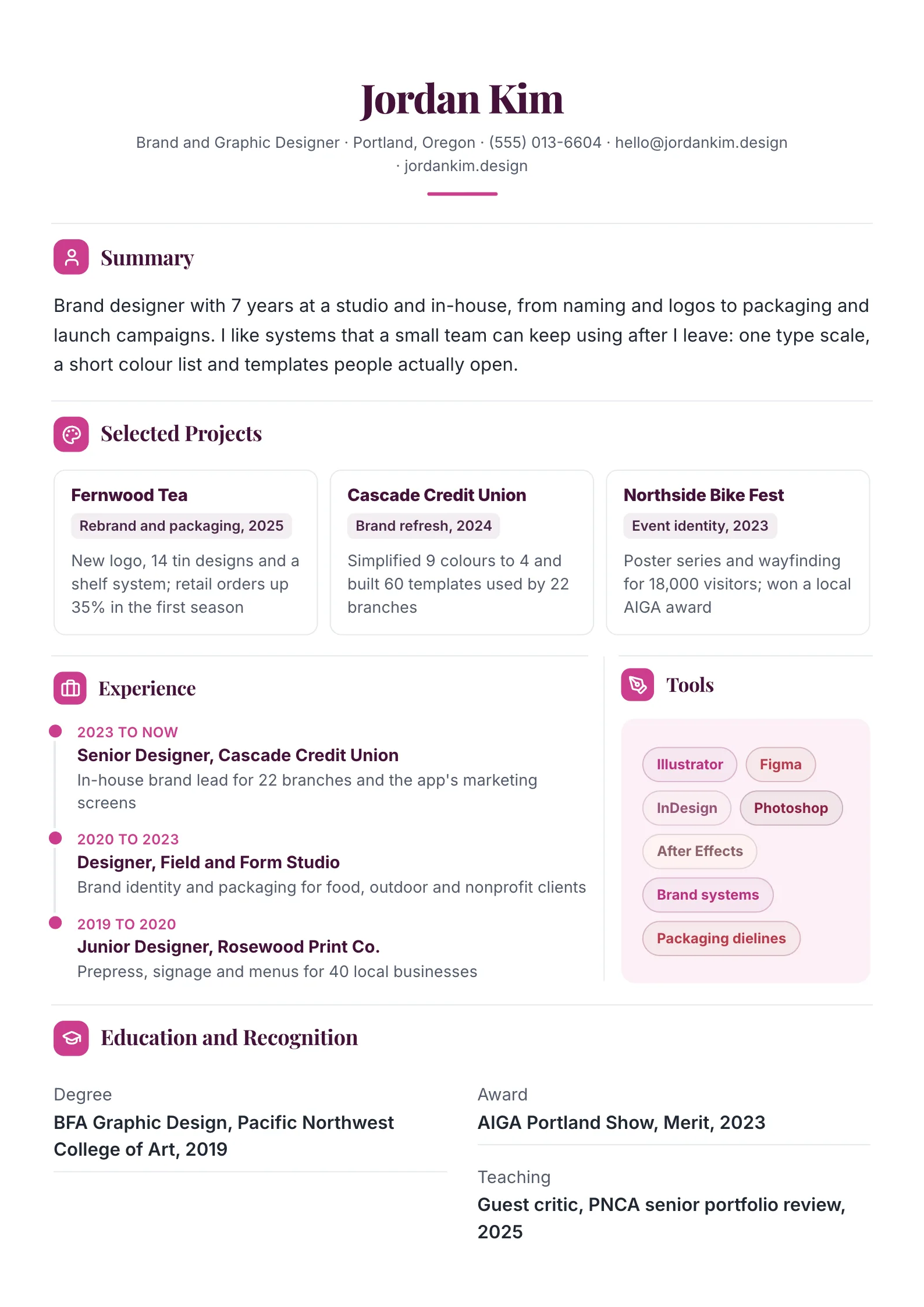 Resume: Graphic DesignerEdit for free(opens in a new tab)
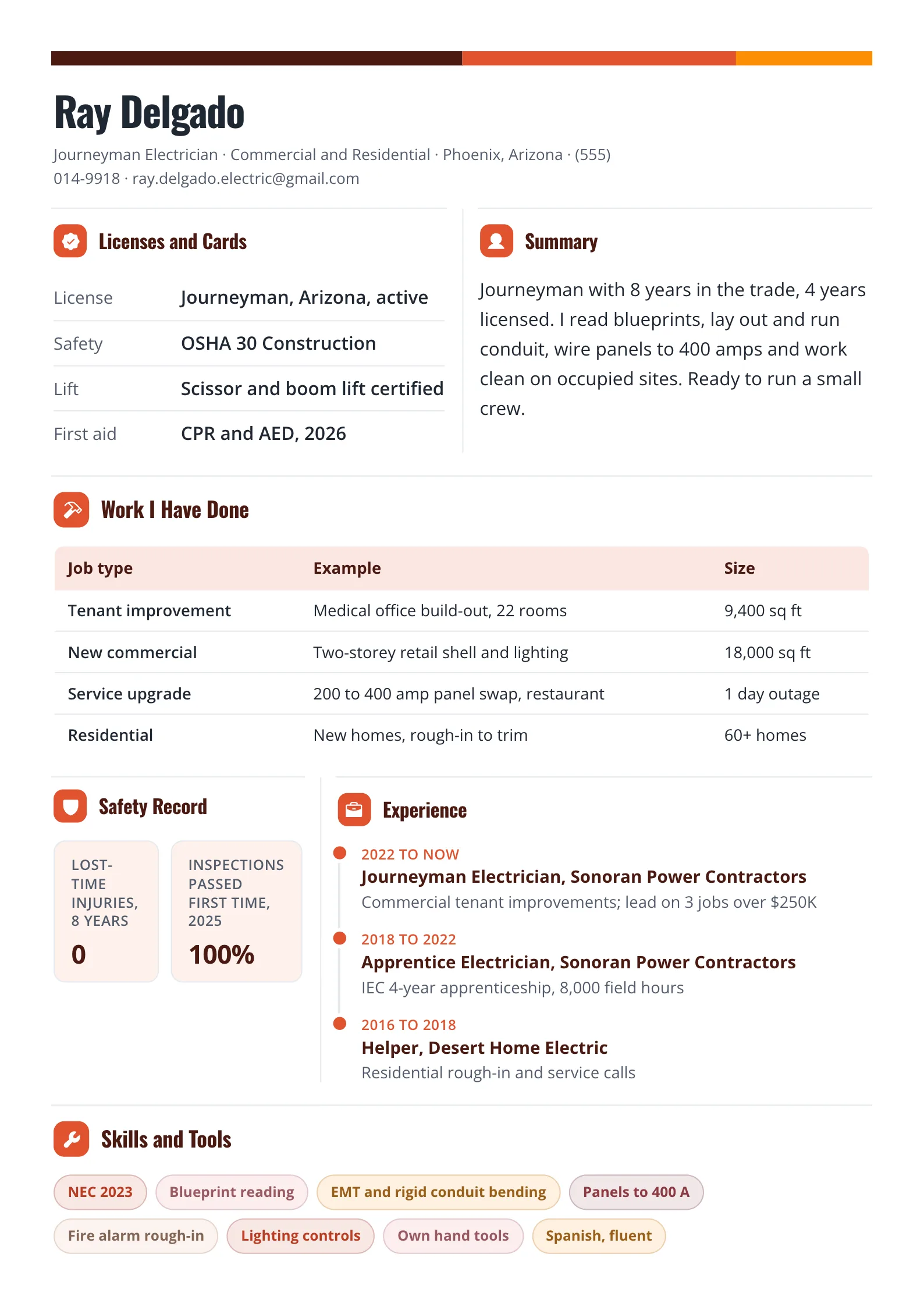 Resume: ElectricianEdit for free(opens in a new tab)
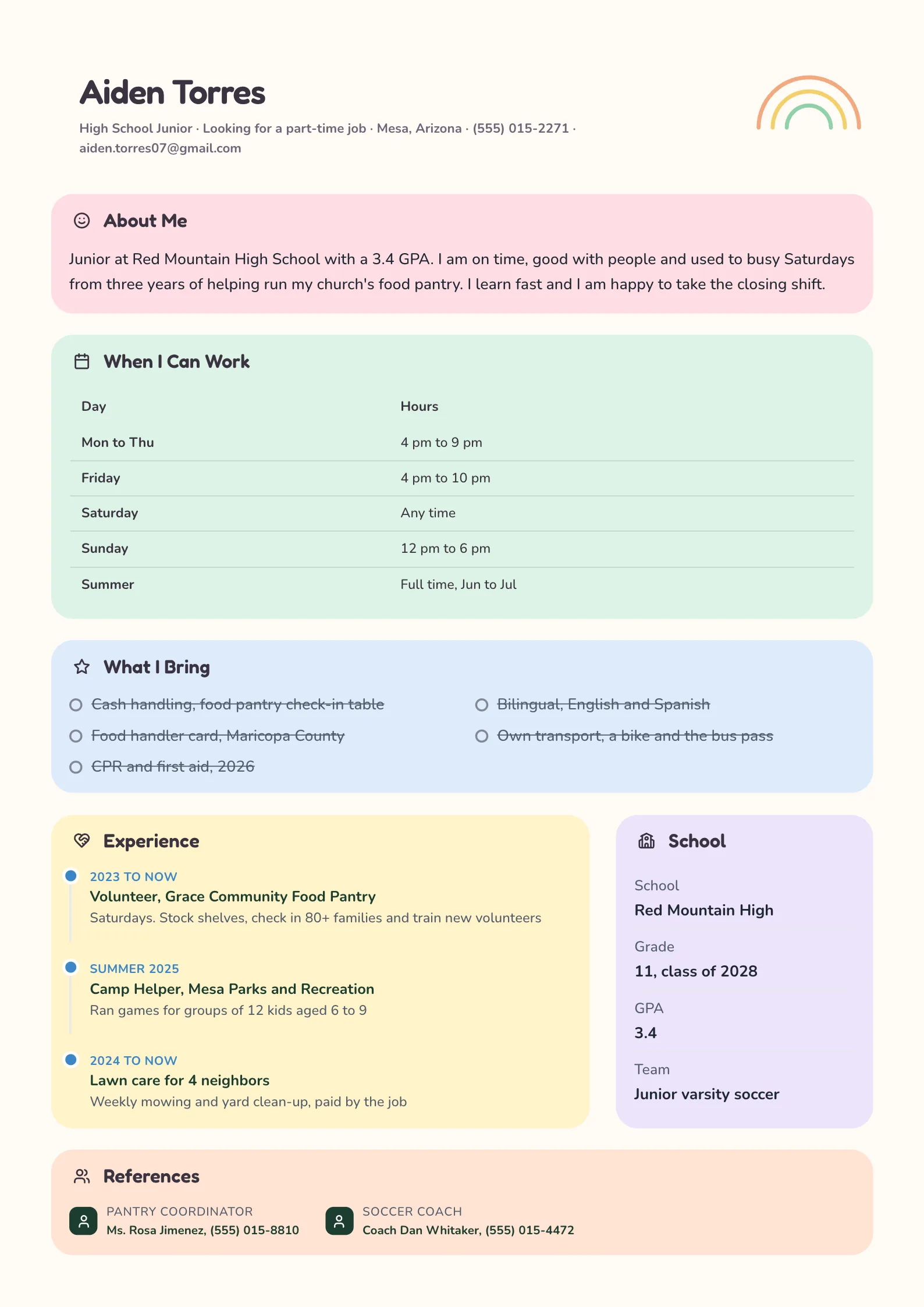 Resume: High School StudentEdit for free(opens in a new tab)
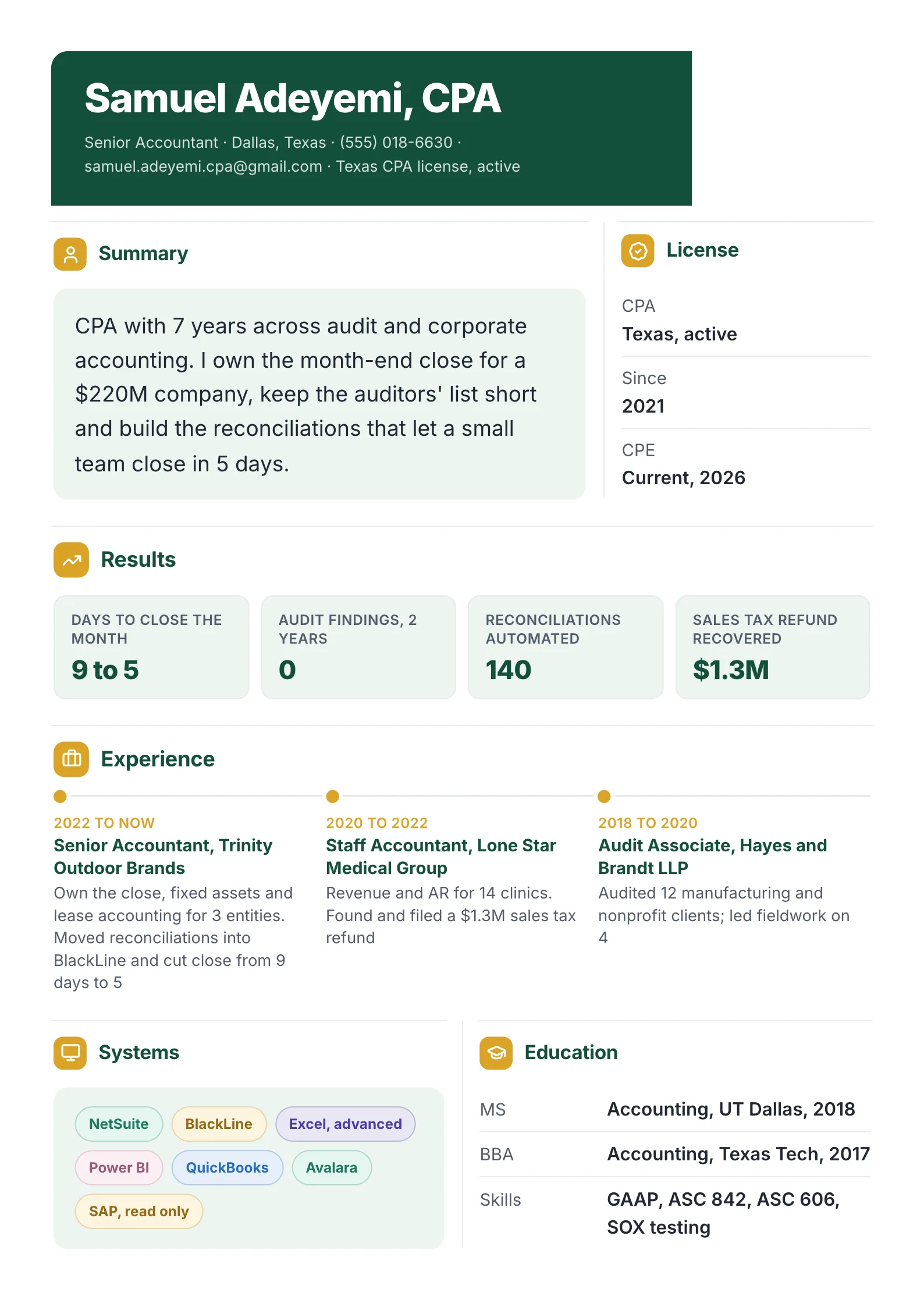 Resume: AccountantEdit for free(opens in a new tab)
Five are university career offices that review student resumes every week. The sixth is CalHR, the State of California's HR department, which writes the guide for people applying to state jobs. It says an employer will often spend only 30 to 60 seconds scanning your resume, and that's the generous figure. MIT says just a few seconds, and Minnesota says 6 seconds or less on average.
Who wrote these rules
| Career office | What it is |
|---|---|
| Georgetown University, Cawley Career Education Center | Resume content and formatting tips |
| Harvard College, Mignone Center for Career Success | Its guide to creating a strong resume, with do and don't lists |
| CalHR, State of California | Its resume guide for state job seekers |
| MIT, Career Advising and Professional Development | Its resume tips page |
| UC Berkeley, Career Engagement | Its resume page and FAQ, including how to pass applicant tracking software |
| University of Minnesota, College of Liberal Arts | Its undergraduate resume guide |
Source: the six pages linked in the sources table below, each read in full on October 30, 2026.
Eight rules, and how many guides back each
| Rule | Guides that say it | The detail |
|---|---|---|
| One page | 4 of 6 | MIT allows more with extensive experience or an advanced degree |
| Type 10 to 12 point | 4 of 6 | Berkeley narrows it to 10 or 11; none goes under 10 |
| No photo | 4 of 6 | MIT says photos are generally not preferred for U.S. resumes |
| No personal details | 4 of 6 | Birth date, age, marital status, religion, health, height |
| No I, me or my | 4 of 6 | Harvard puts "we" on the list too |
| References on a separate sheet | 4 of 6 | MIT: employers assume you have them |
| Margins at least half an inch | 4 of 6 | Berkeley gives half an inch to one inch |
| Newest experience first | 3 of 6 | Reverse chronological order, inside each section |
Harvard adds one rule we hadn't seen elsewhere: don't start each line with a date. Put the job title or the result first, and let the dates sit to the side.
Chronological, functional or combination
Three layouts cover almost every resume, and two of our guides name them. CalHR says a chronological resume is the most common, with your jobs listed by date, newest first. A functional resume groups your experience into skill areas instead. A combination does both, and Minnesota calls its version skills-based, a layout that puts your skills ahead of your jobs.
Pick chronological if your job titles tell your story. Pick a skills-first layout if you're changing fields or your skills say more than your titles. All five samples below are chronological, with the strongest numbers pulled up top. For a skills-first version, open the career change resume in the grid at the end, where a What Carries Over box sits above the jobs.
Where the guides split
Three questions get different answers, and each answer depends on who you are.
An objective statement. CalHR tells you to state a specific career objective near the top. Minnesota advises against one because it rarely adds value, and recommends three to five summary bullets instead. If you're applying for a state job, follow CalHR. Everywhere else, a short summary does the same job and tells the reader more.
Hobbies. CalHR says don't list them. Berkeley says they can show who you are, but they're one of the first sections to go when you run out of room. Keep a hobby only if it shows a skill the job needs.
Your GPA. Georgetown says include it. Berkeley says include it if it's 3.0 or above, and Minnesota if it's above 3.0. Once you have a few years of work behind you, it's the first line you can drop.
The file you send
Georgetown wants your resume saved as a PDF with a name that says whose it is, like M.CrawfordEventPlannerResume. That way it doesn't arrive as resume_final_v3.
Berkeley adds a warning for online applications. Applicant tracking software reads plain layouts best, so for those uploads it says to avoid headers, footers, text boxes, tables, colors, pictures and graphics. The designed one-page resumes below are for the people you hand them to or email directly. Keep a plain text version of the same content for the upload box.
A sales executive who leads with numbers
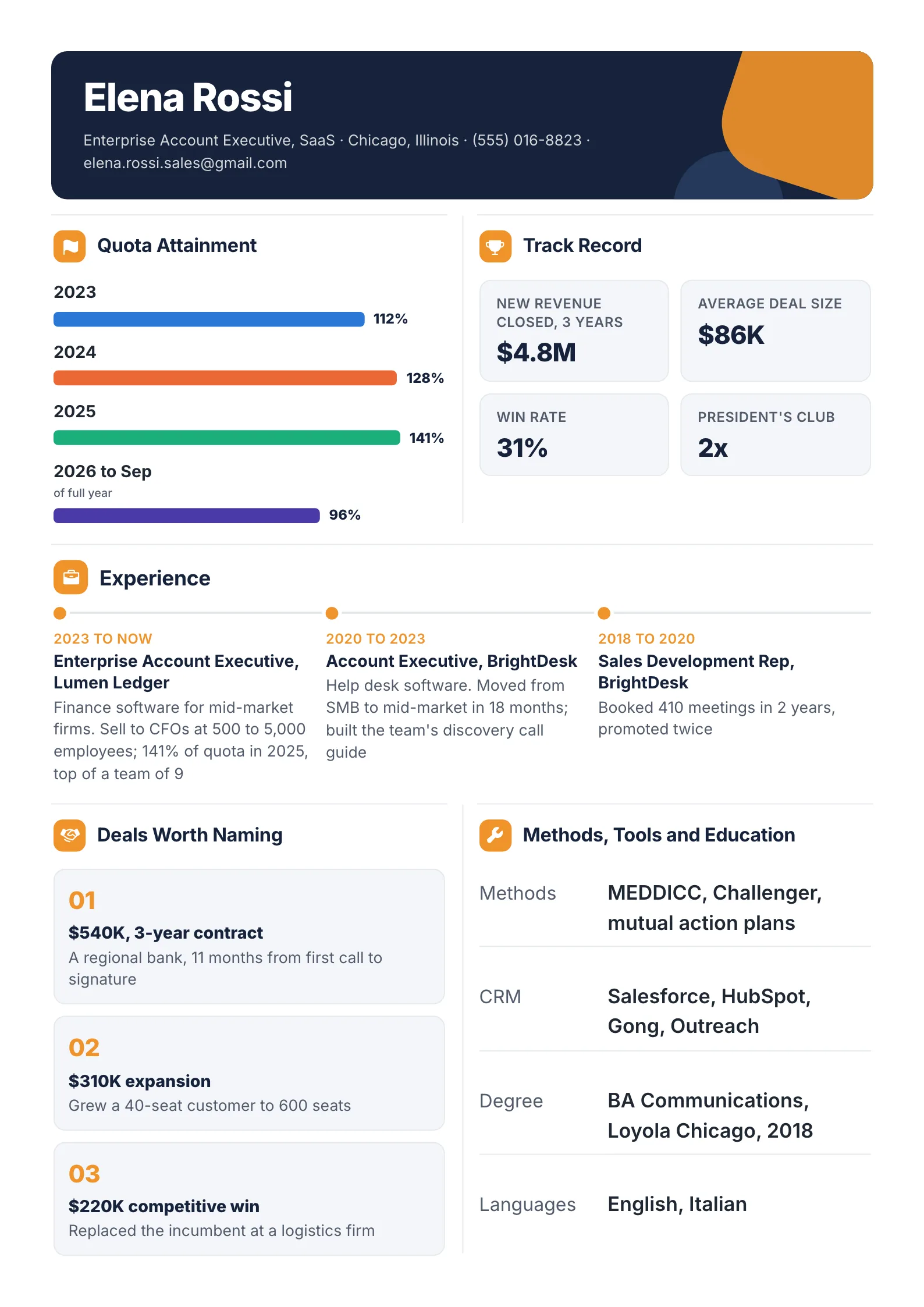
Elena Rossi sells finance software to companies with 500 to 5,000 employees. Her resume puts a track record box above her experience: $4.8M in new revenue over 3 years, an $86K average deal, a 31% win rate and President's Club twice.
 Edit this template
Sample names and figures. The results come before the job titles, which is where a scanning reader looks first.
Her three jobs run newest first, from enterprise account executive at Lumen Ledger, where she hit 141% of quota in 2025 and finished top of a team of 9, back to sales development rep at BrightDesk. "Deals Worth Naming" gives you three, starting with a $540K three-year contract with a regional bank, then a $310K expansion from 40 seats to 600 and a $220K competitive win.
Her dates sit in a small label above each job title, so the eye lands on the title and the numbers first, and you won't find an I on any line. In sales your numbers are your resume, and this format puts them where a reader with only seconds to spare will see them.
A software engineer, with one line to rewrite
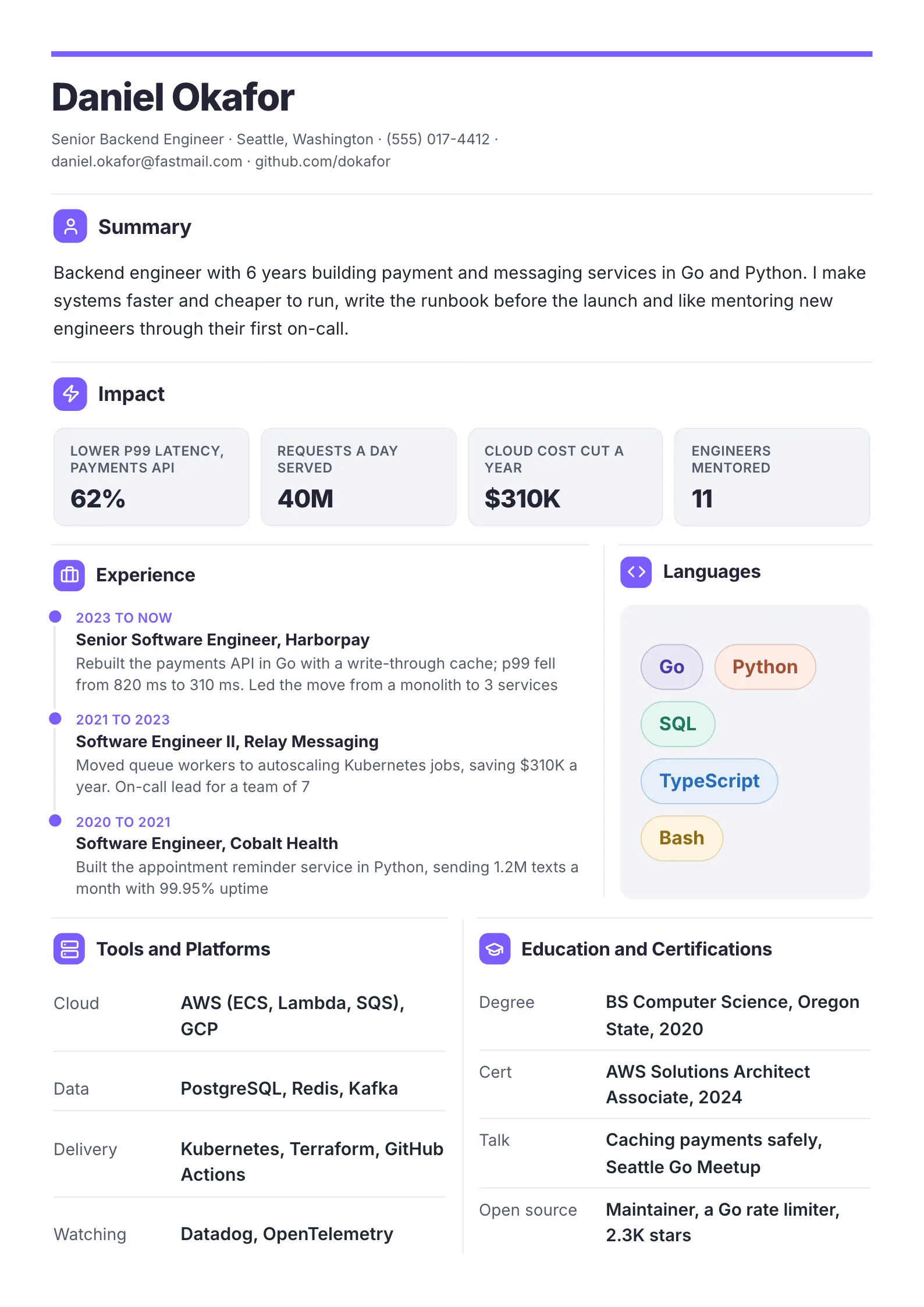
Daniel Okafor is a senior backend engineer in Seattle with 6 years on payments and messaging services. His impact box gives you four numbers: 62% lower p99 latency on a payments API, 40M requests a day, $310K a year in cloud costs cut, and 11 engineers mentored.
 Edit this template
Sample names and figures. Each job line names the system, the change and the measured result.
Each experience line follows the same order: what he built, how, and what changed. The payments API rewrite took p99 from 820 ms to 310 ms. The queue workers move saved $310K a year.
His summary is the one place this page breaks the rules above. It says "I make systems faster and cheaper to run." Four of the six guides would cut the I. Try: "Makes systems faster and cheaper to run, writes the runbook before launch, and mentors new engineers through their first on-call."
A warehouse supervisor, summary rewritten
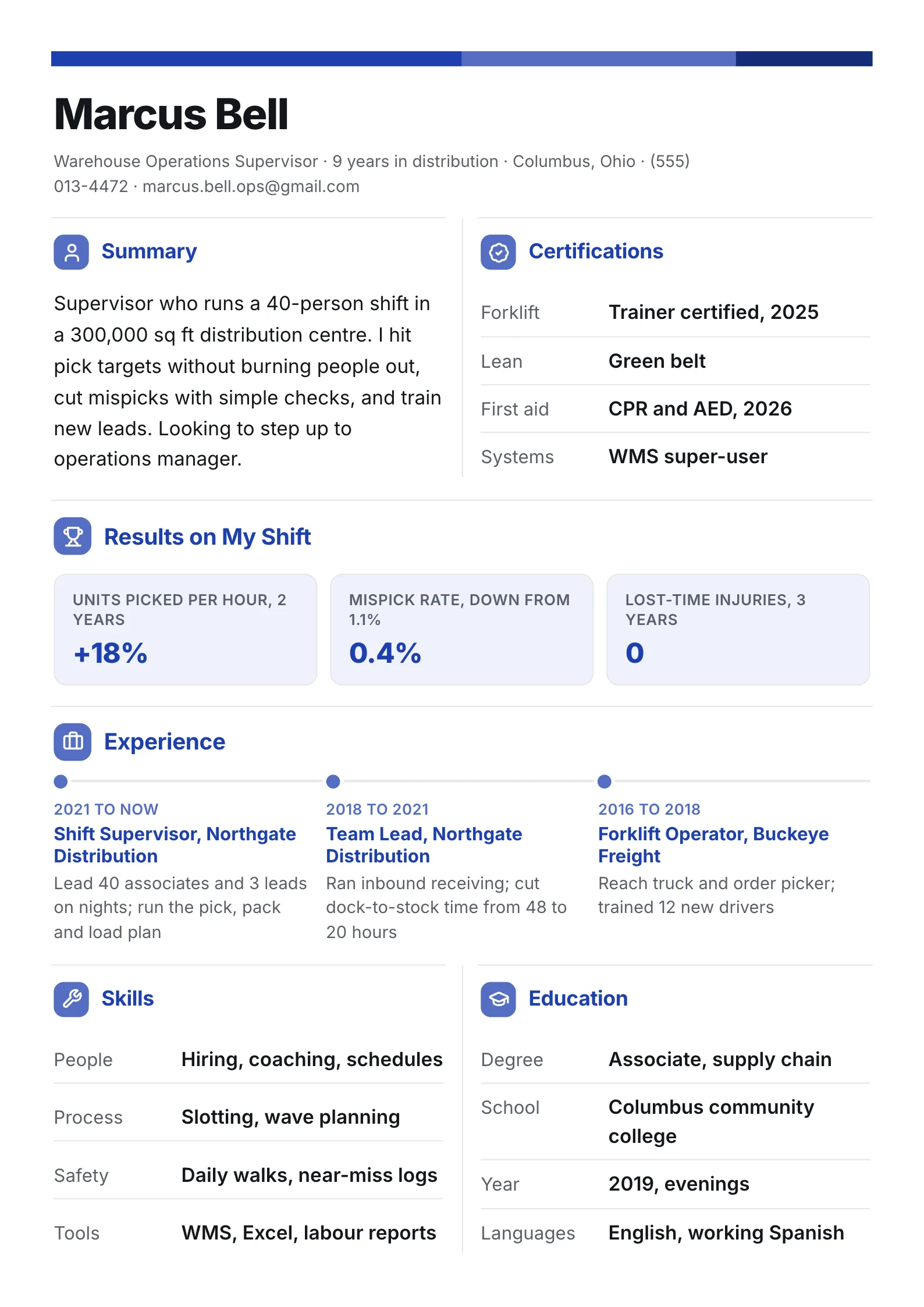
Marcus Bell runs a 40-person night shift in a 300,000 square foot distribution center. "Results on Shift" carries three numbers a hiring manager in logistics checks first: units picked per hour up 18% over 2 years, a mispick rate of 0.4%, down from 1.1%, and zero lost-time injuries in 3 years.
 Edit this template
Sample names and figures. The certifications sit near the top because a warehouse job often requires them.
His jobs show the climb in three lines: forklift operator at Buckeye Freight, team lead at Northgate where he cut dock-to-stock time from 48 hours to 20, then shift supervisor leading 40 associates and 3 leads.
His summary already drops the I: "Hit pick targets without burning people out." Here's the same summary in the format the career guides teach: "Shift supervisor running 40 people in a 300,000 sq ft distribution center. Hits pick targets without burning people out, cut mispicks from 1.1% to 0.4% with simple checks, and trains new leads. Ready to step up to operations manager." Same facts, and the strongest number moved into the summary.
An elementary teacher with her license up front
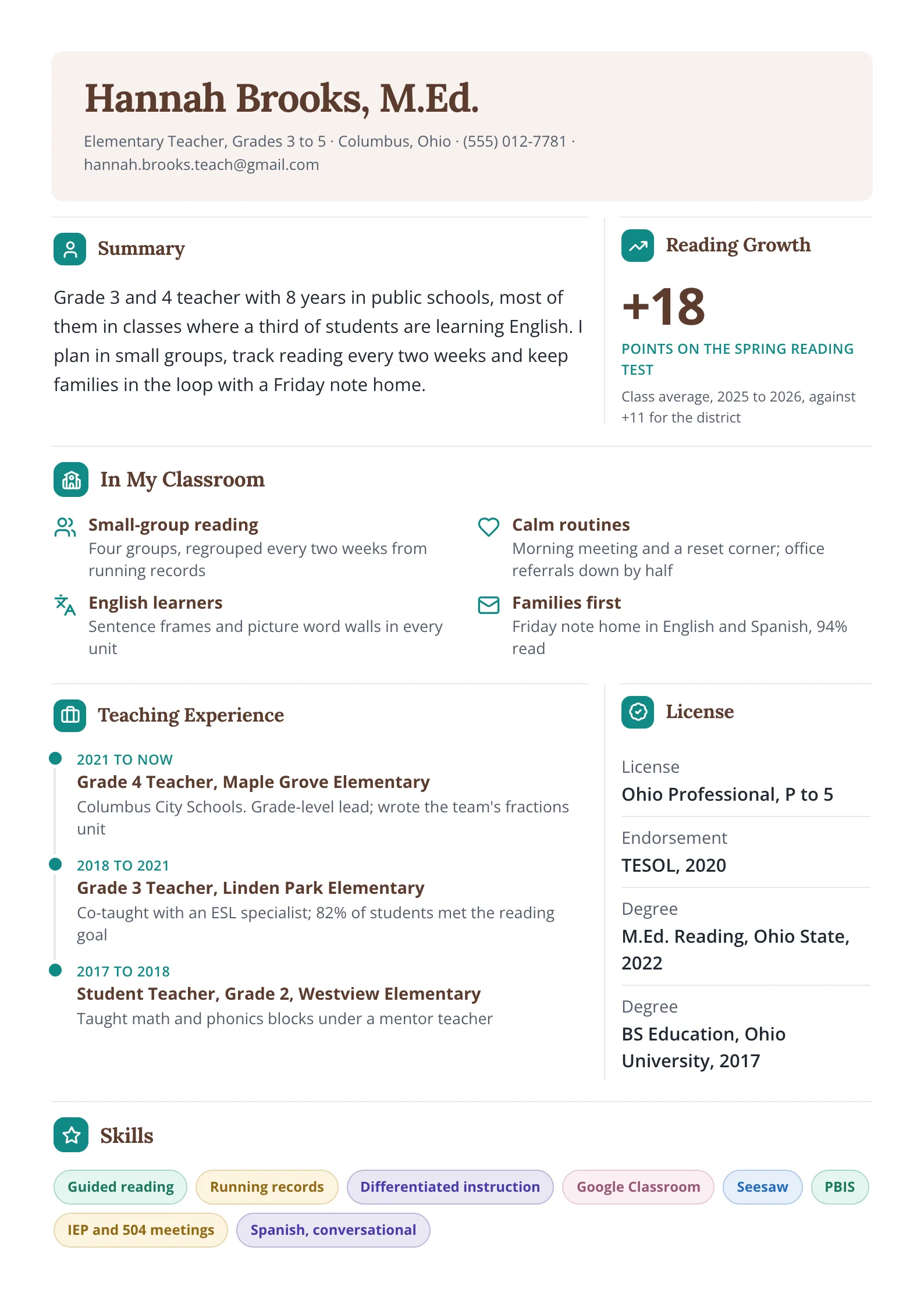
Hannah Brooks has taught grades 3 and 4 for 8 years in Columbus. Her headline number is a gain of 18 points on the spring reading test, and her license block names an Ohio Professional license, P to 5, and a TESOL endorsement from 2020.
 Edit this template
Sample names and figures. For a teaching job, the license is one of the first things a principal checks.
The classroom box turns her practice into four lines a principal can picture. Reading groups are regrouped every two weeks, and English learners get sentence frames. A reset corner cut office referrals by half, and 94% of families read her Friday note home in English and Spanish.
Her experience runs newest first, from grade-level lead at Maple Grove back to her student teaching. Like the engineer's, her summary uses I ("I plan in small groups"), and the same fix works: start with the verb.
A college student with education on top
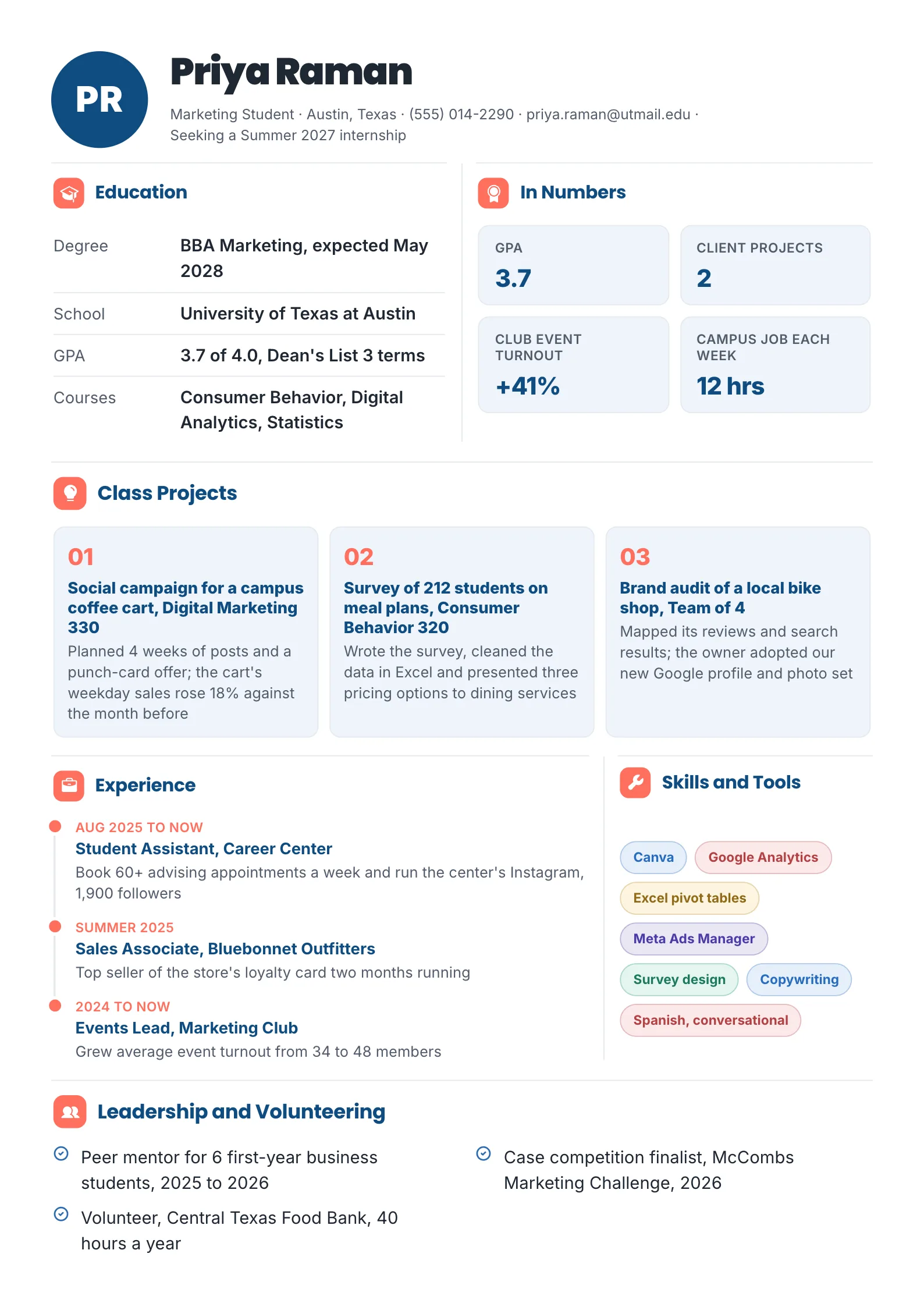
Priya Raman studies marketing in Austin and wants a Summer 2027 internship. With little full-time work yet, education goes first: a BBA expected May 2028 and a 3.7 GPA with the Dean's List three terms. That passes Berkeley and Minnesota's 3.0 line, so she lists it.
 Edit this template
Sample names and figures. Class projects with results stand in for the work history a student doesn't have yet.
Each class project carries a result the way a job line would. Her posts for a coffee cart on campus end on an 18% weekday sales lift, and her audit of a bike shop ends with the owner using her team's photo set. Your own projects can end the same way, on what changed.
Her paid and campus work comes after. At the career center she books 60+ advising appointments a week and runs an Instagram account with 1,900 followers. As events lead for the marketing club, she grew average turnout from 34 to 48. Copy this order while your degree is still your strongest line.
Sources
| Source | Publisher | What we took |
|---|---|---|
| Resume content and formatting | Georgetown University | One page, 10 to 12 point, half-inch margins, no I, no personal data, GPA, PDF file names |
| Create a strong resume | Harvard College | No pronouns, picture, age or references; don't start lines with dates |
| Writing a resume | CalHR, State of California | 30 to 60 seconds, objective statement, no hobbies, no picture |
| Resumes | MIT | 10 point minimum, half-inch margins, one page, references and photos |
| Resumes | UC Berkeley | 10 to 11 point, GPA at 3.0, hobbies, the tracking software warning |
| Resume | University of Minnesota | One page, no objective, no pronouns, references separate |
All six were read on October 30, 2026.
Run the six rules before you send it
Open your resume next to the counted table and go row by row: one page, 10 point or larger, half-inch margins, newest first, no photo and no I. If your summary starts with I, rewrite it the way Marcus's was. Then pick a layout from MakeOnepagers for the copy you hand over, and save a plain version for the online form.
Frequently asked questions
What is the best resume format?
Reverse chronological, with your newest job first. CalHR calls it the most common format, and Georgetown, Harvard and Minnesota all ask for newest first. If you're a student, put education above experience until you have a full-time job to lead with.
Should a resume be one page?
For most people, yes. Four of the six guides say so. MIT makes room for a second page if you have extensive experience or an advanced degree. Our one page resume template post has more pages you can start from.
What font size should a resume use?
10 to 12 point. Georgetown and Minnesota allow 10, 11 or 12, Berkeley says 10 or 11, and MIT says no smaller than 10. Pick one size for your body text and keep it the same all the way down.




