Research Summary vs Abstract: Same Study, Two Readers, a Different First Line
Research summary vs abstract, shown on 5 one-page summaries, with NIH's 30-line abstract and 3-sentence narrative rules side by side.

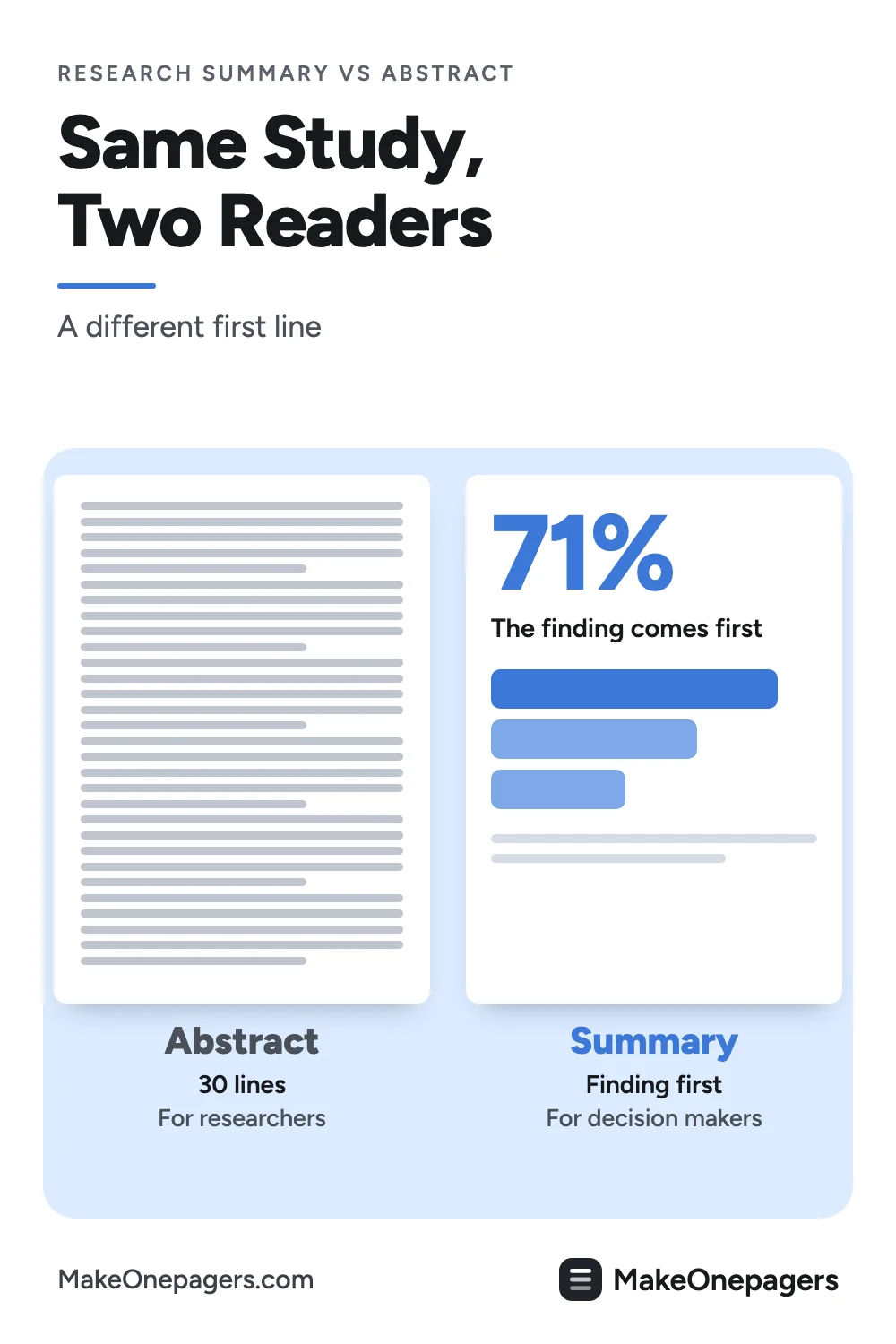
The difference comes down to who's reading your work. An abstract is written for other researchers, so it follows the format a journal or funder sets and walks through background, methods, results and conclusions in order. A research summary is written for the person who has to decide something, like a council, a committee or a product team, so it opens with the answer. Start from a free one pager template.
One‑Pager examples
Real One-Pagers made with MakeOnepagers. Open any one to edit it as your own.
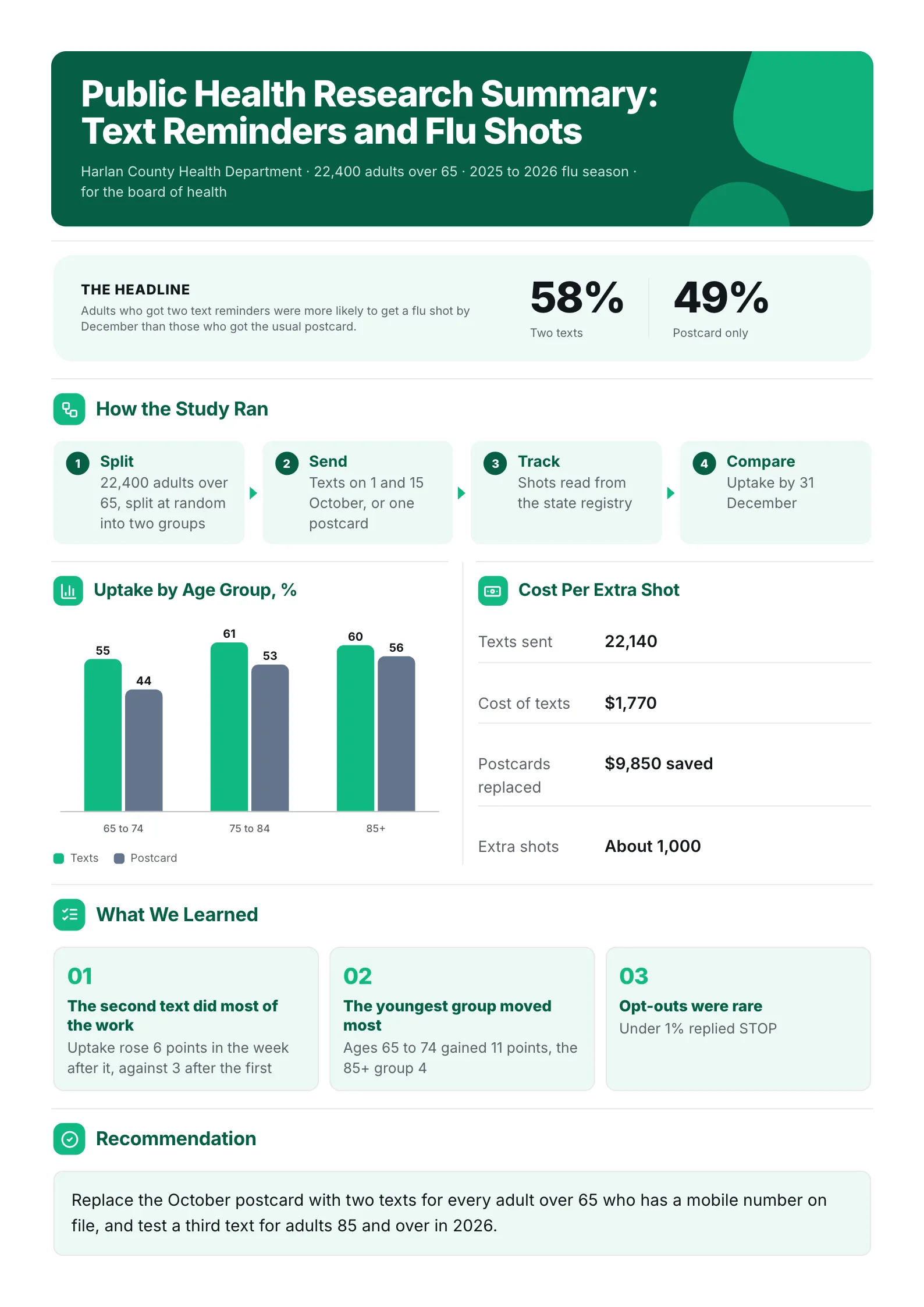 Research Summary: Public Health TrialEdit for free(opens in a new tab)
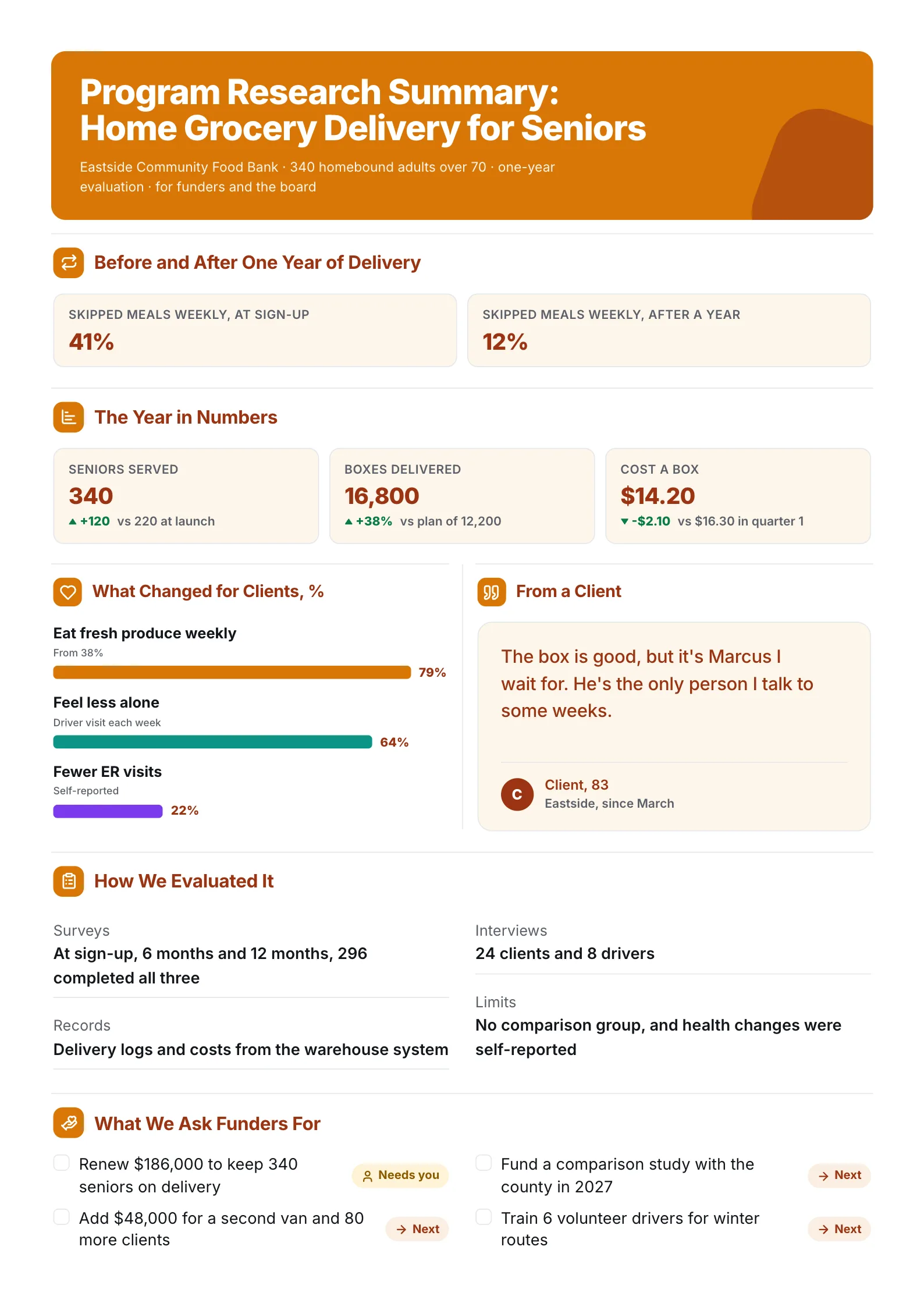 Research Summary: Nonprofit Program EvaluationEdit for free(opens in a new tab)
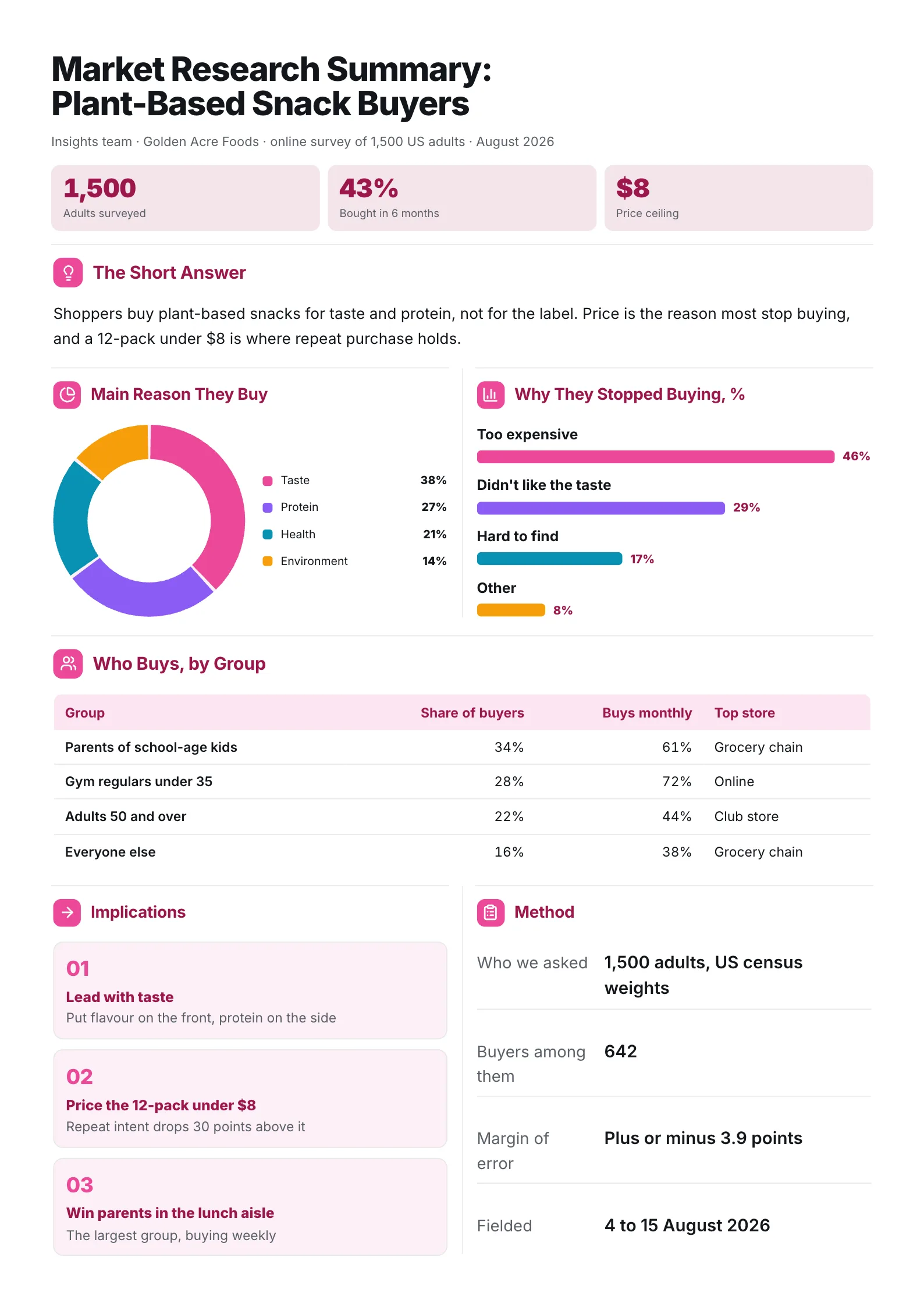 Research Summary: Consumer Market SurveyEdit for free(opens in a new tab)
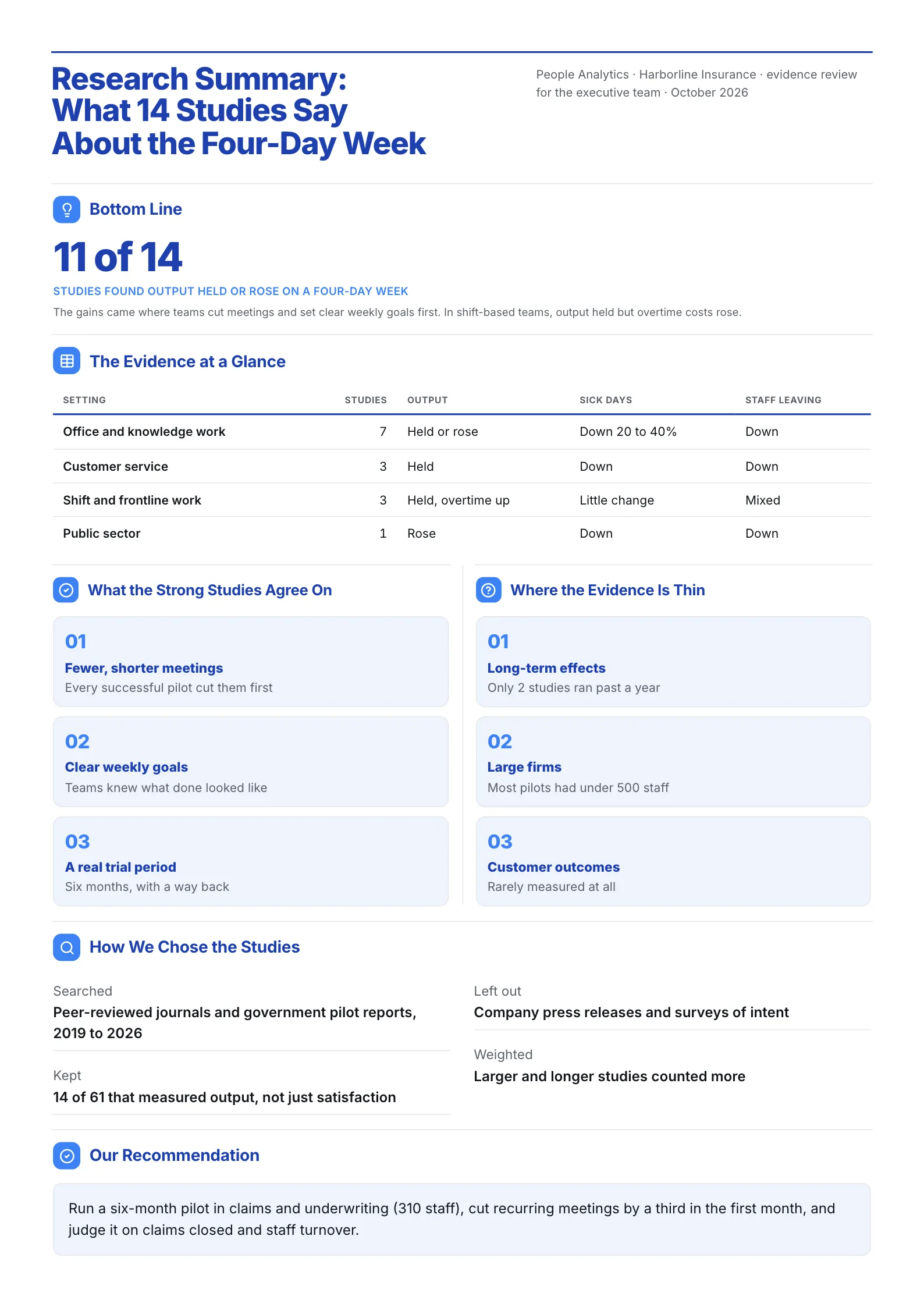 Research Summary: Literature ReviewEdit for free(opens in a new tab)
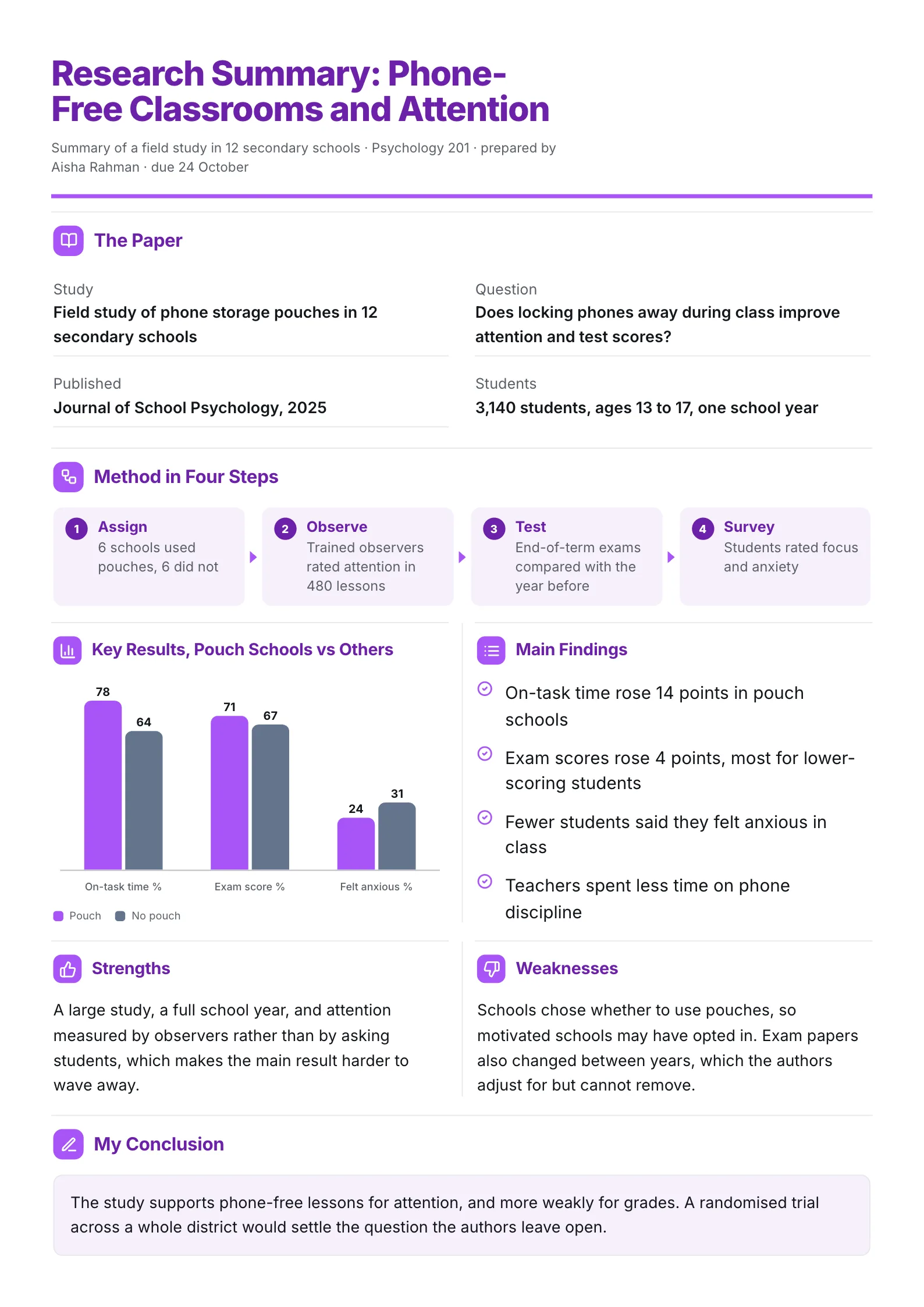 Research Summary: Student Paper ReviewEdit for free(opens in a new tab)
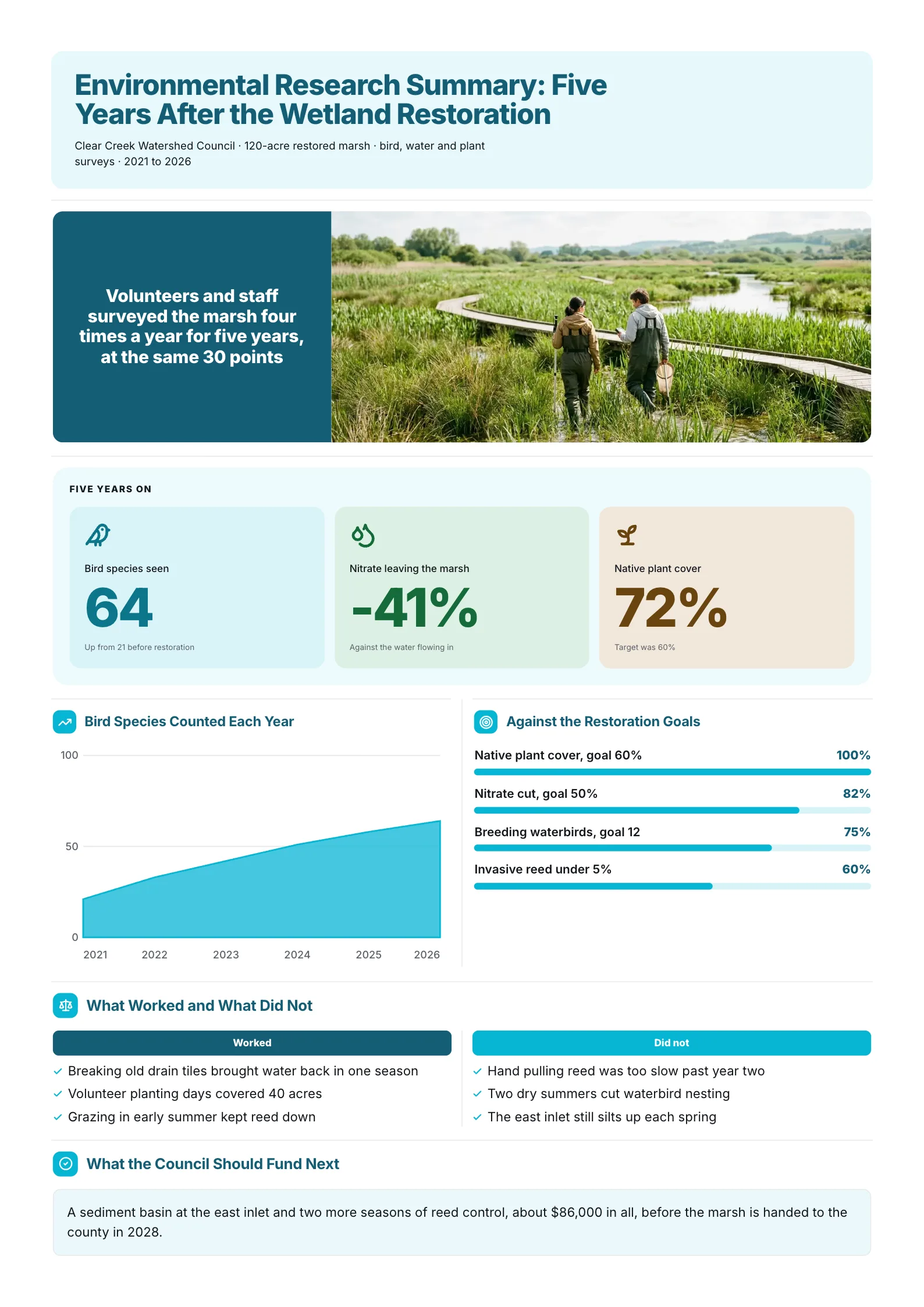 Research Summary: Environmental MonitoringEdit for free(opens in a new tab)
A sleep apnea trial, a minimum wage study, user interviews for a budgeting app, a battery lab and a farm co-op's field trials each get a one-page summary below. Beside each one is what an abstract of the same study would have to keep, and what the summary was free to change. NIH asks for both in one grant application, so we set its two sets of rules side by side after the examples.
A clinical trial, read by a hospital committee
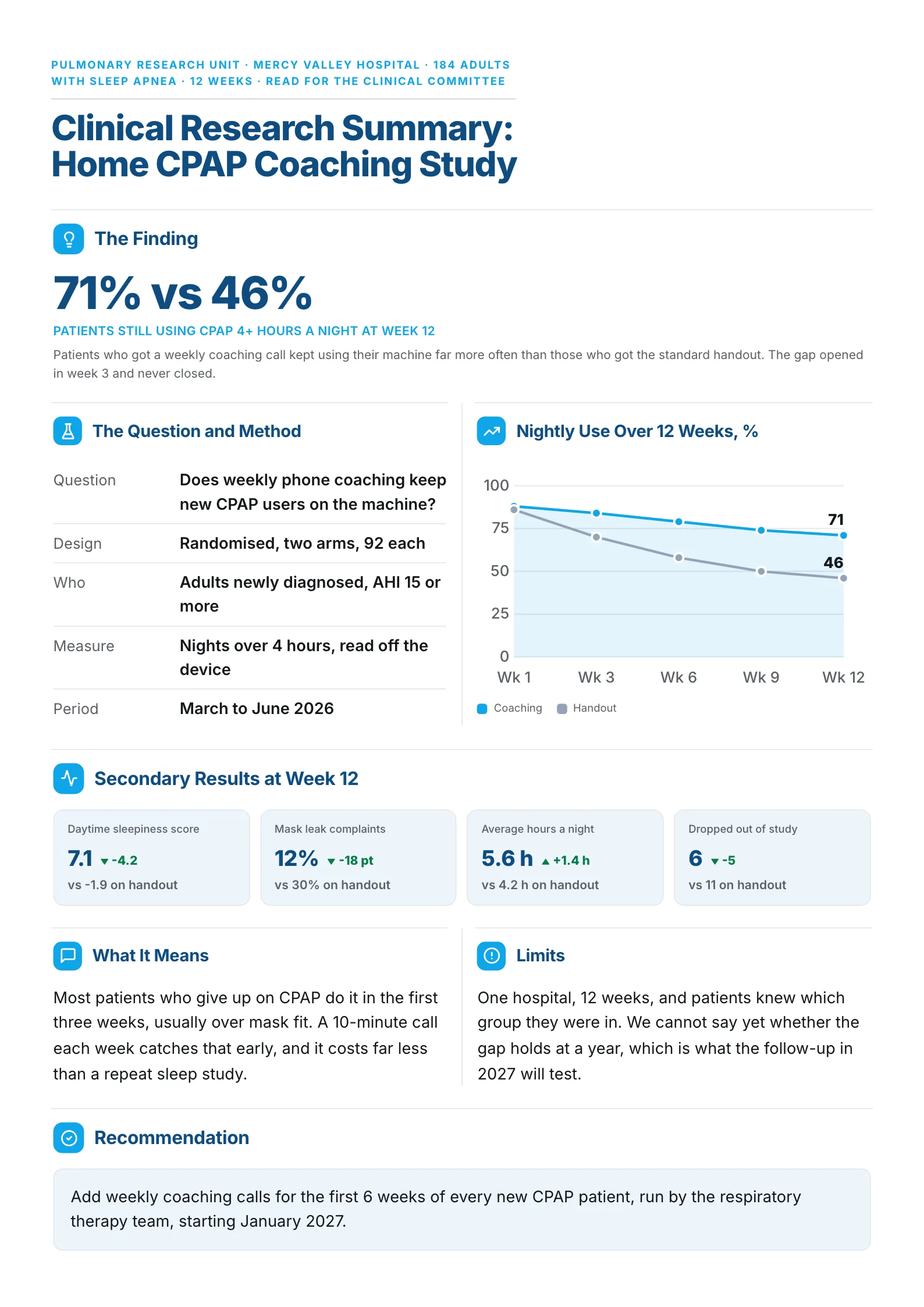
The Home CPAP Coaching Study at Mercy Valley Hospital followed 184 adults with sleep apnea for 12 weeks. The summary is marked "read for the clinical committee," and that tells you how it's built, because your committee wants the answer before the method.
 Edit this template
A made-up study with sample results. The finding sits above the method, in the biggest type on the page.
The first thing your committee sees is "71% vs 46%," the share of patients still using CPAP 4+ hours a night at week 12 with and without coaching. An abstract would hold that number until its results sentence, after the background and methods.
The method box still gives you everything a careful reader needs. The question is whether weekly phone coaching keeps new users on the machine. The design is randomized with two arms of 92. Patients are adults newly diagnosed with an AHI of 15 or more, nights are read off the device, and the study ran from March to June 2026. Nothing is dropped. It's just moved below the answer.
An economic study, read by a city council
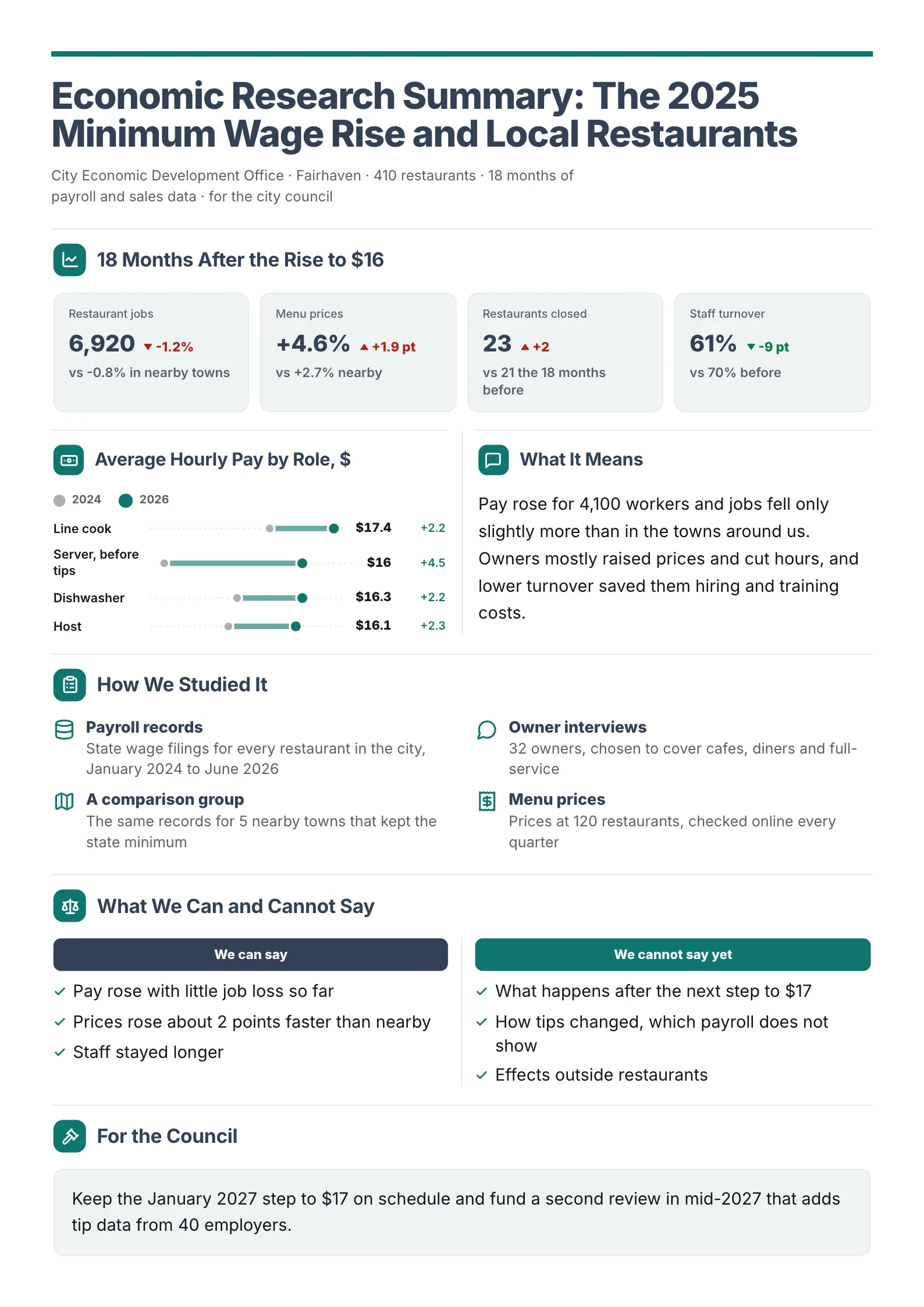
Fairhaven's economic development office looked at 410 restaurants across 18 months of payroll and sales data after the minimum wage rose to $16. If you've ever presented to a council, you know they want impact first, and this summary is addressed to them.
 Edit this template
Fairhaven is invented. Four numbers answer the four questions a council member would ask.
Fairhaven's council gets four numbers across the top: 6,920 restaurant jobs, menu prices up 4.6%, 23 restaurants closed and staff turnover at 61%. Those are the questions your council will ask in the first minute of the meeting. Lead your own summary with the questions you'd expect in that room.
If you wrote an abstract for an economics journal, you'd frame the same work around a hypothesis and an estimation method. This summary trades that for a "What It Means" box and puts "How We Studied It" last, with state wage filings for every restaurant in the city as the source. If a council member wants to check the method, it's there for them.
User interviews, read by a product team
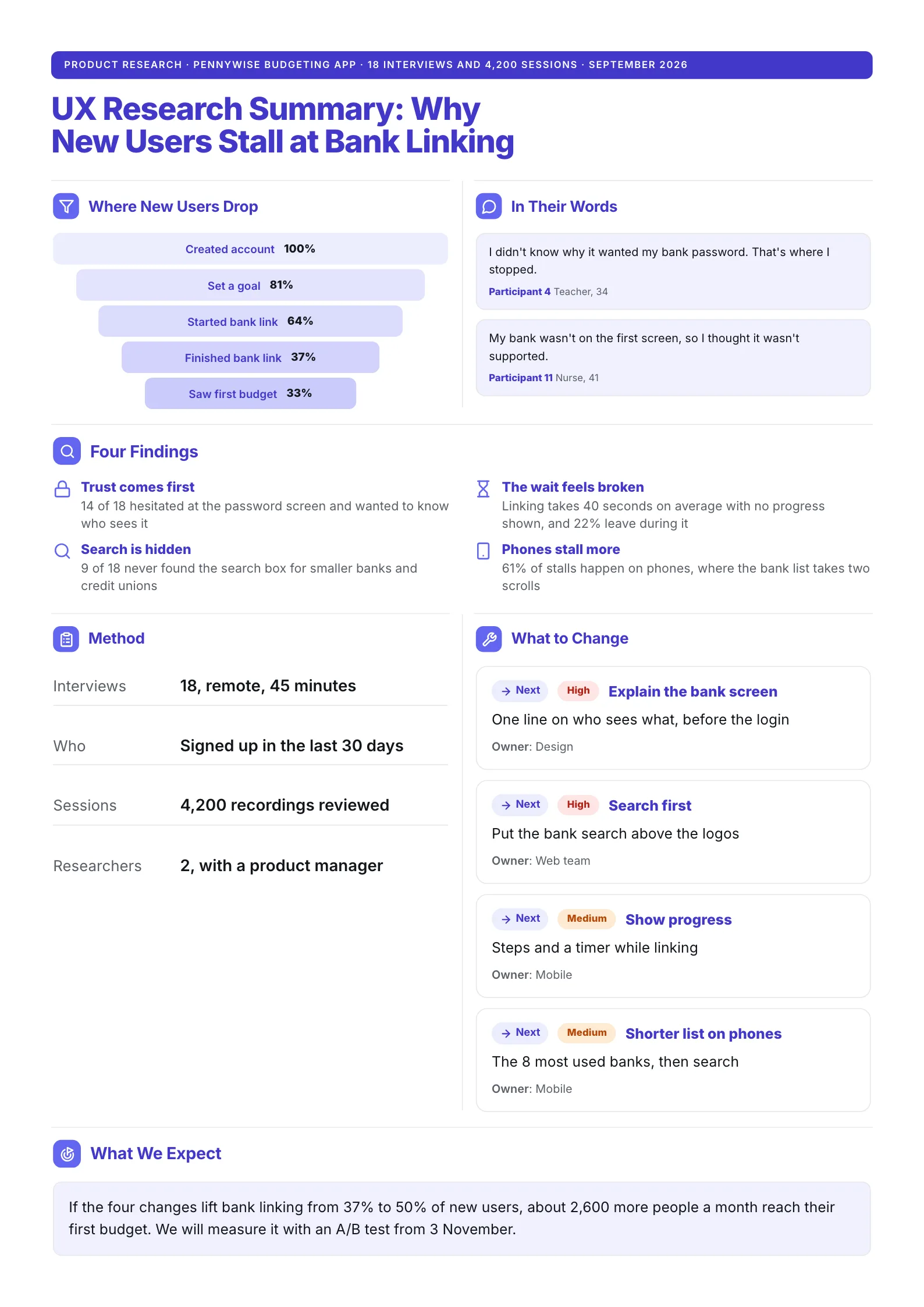
Pennywise, a budgeting app, ran 18 interviews and studied 4,200 sessions in September 2026 to learn why new users stall at bank linking. You can't write this one as an abstract at all, because it was never meant for a journal.
 Edit this template
A sample app with sample quotes. The funnel shows the drop before any text explains it.
A funnel runs from created account through set a goal, started bank link and finished bank link to saw first budget. Your eye goes straight to the step where users fall away.
Then you read two quotes in users' own words. One says they didn't know why the app wanted their bank password, and that's where they stopped. The first finding, "Trust comes first," puts a number on it: 14 of 18 hesitated at the password screen. Quotes and a funnel would never fit in a 250-word abstract, and here they carry the whole argument.
A lab result, read by an industry panel
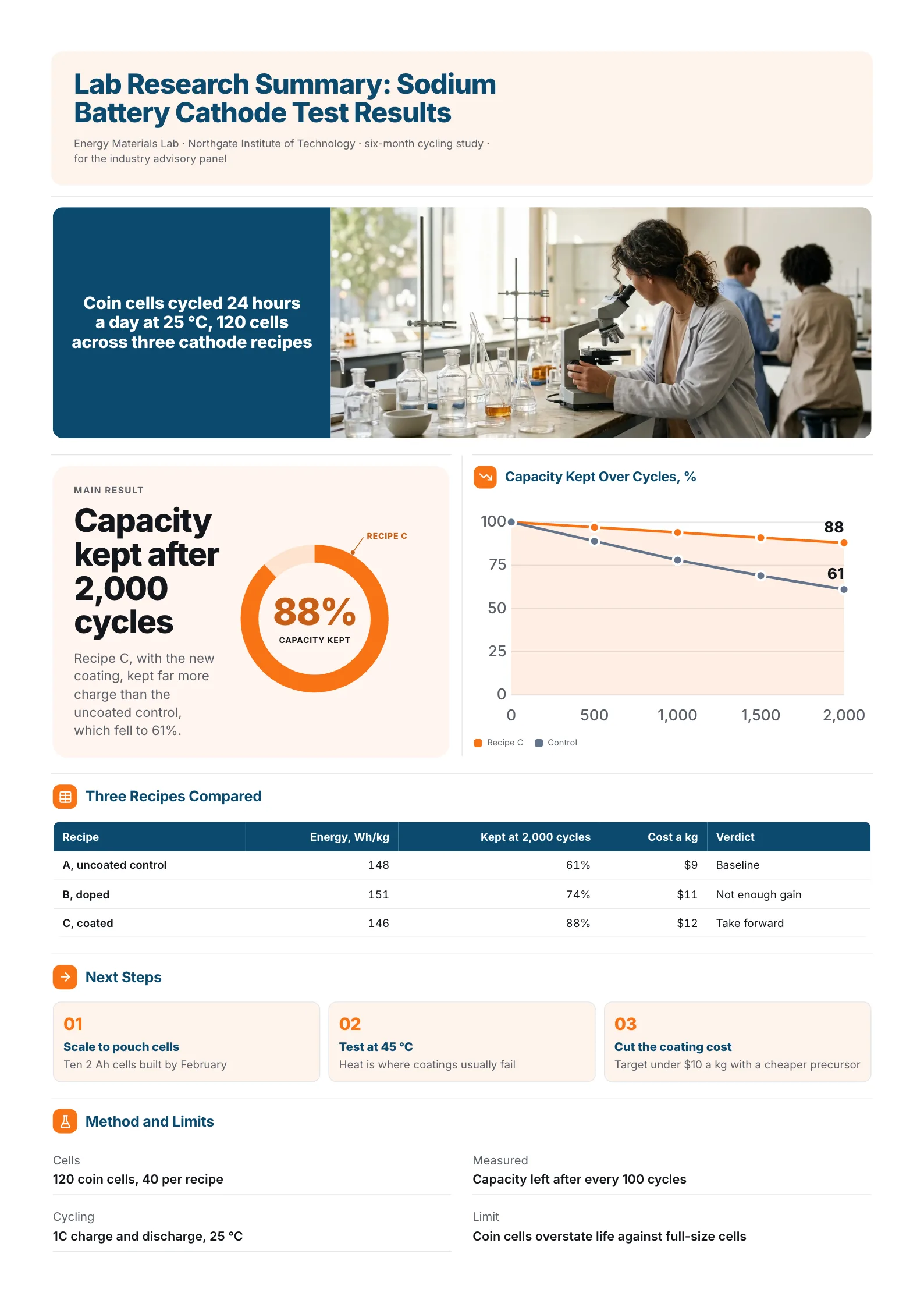
Northgate Institute of Technology's energy materials lab cycled 120 coin cells across three cathode recipes for six months. The summary goes to the lab's industry advisory panel, the people your funding depends on.
 Edit this template
Northgate is invented. "Next Steps" turns a result into a request.
The main result is capacity kept after 2,000 cycles. Recipe C, with a new coating, kept 88% of its charge, while the uncoated control fell to 61%. A chart of capacity over cycles shows you the gap widening.
This is the example closest to an abstract, because the panel is technical. The difference is the last box. "Next Steps" proposes scaling to pouch cells, starting with ten 2 Ah cells. An abstract reports what happened, and this summary asks your panel to back what happens next.
Field trials, read by farmers
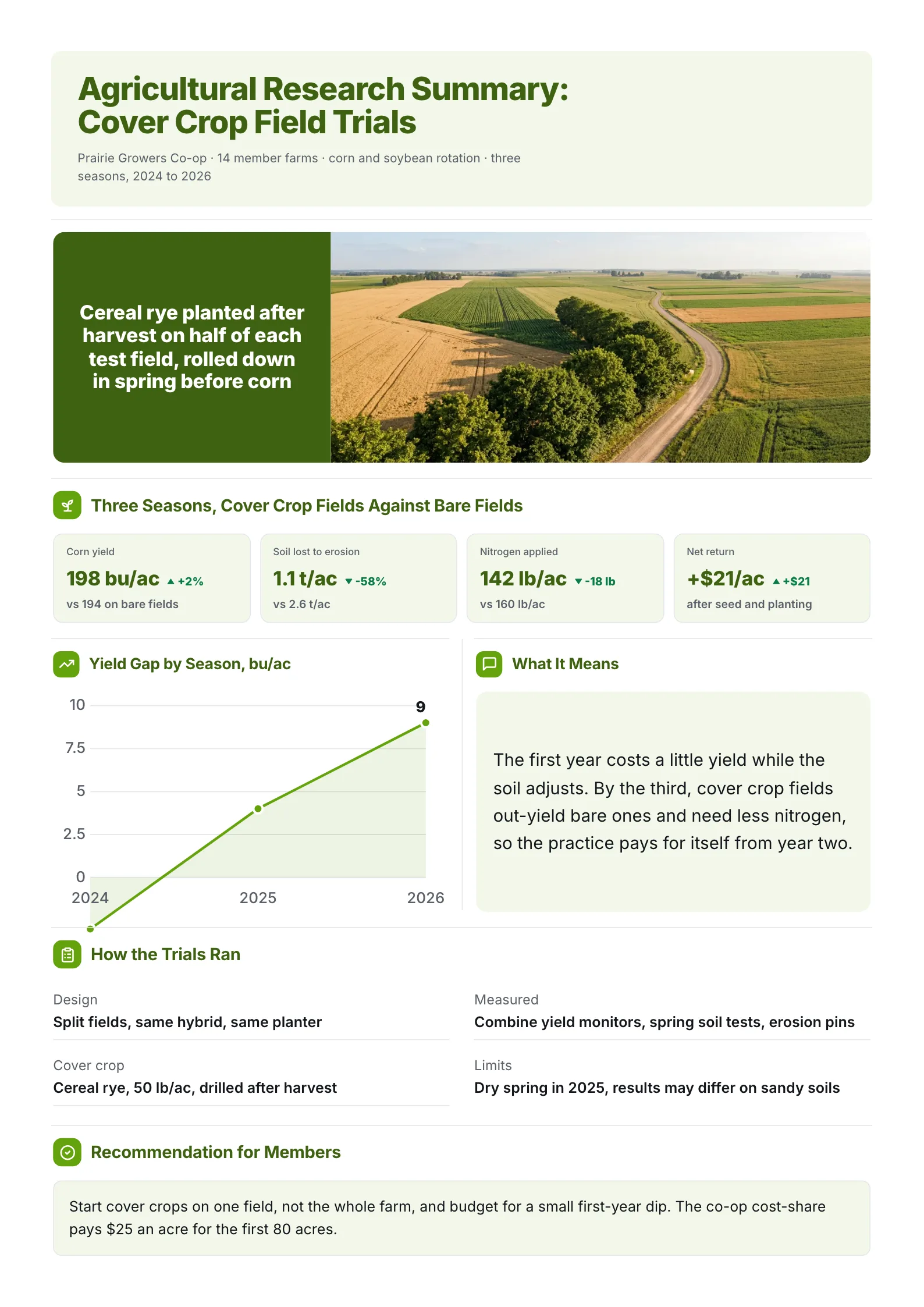
Prairie Growers Co-op ran cover crop trials on 14 member farms over three seasons, 2024 to 2026, in a corn and soybean rotation. Your readers here are the farmers deciding whether to plant cereal rye this fall.
 Edit this template
A sample co-op with sample yields. Net return per acre is the number a farmer acts on.
Farmers read the results row first: corn yield at 198 bu/ac, soil lost to erosion at 1.1 t/ac, nitrogen applied at 142 lb/ac and a net return of +$21/ac. That last number is the one a farmer will act on, and it's right there in the first row.
In a journal abstract, you'd report yield differences with their statistics. The summary keeps the design in "How the Trials Ran," with split fields on each farm, so you can trust the comparison without reading a methods section.
What NIH asks for, side by side
NIH grant applications ask for both kinds of writing on the same form, which makes the difference easy to see. We read NIH's instructions for the R&R Other Project Information form on October 30, 2026.
| Project Summary/Abstract | Project Narrative | |
|---|---|---|
| Length | Limited to 30 lines of text; over 30 is flagged as an error | At most three sentences |
| Reader | Understandable to a scientifically literate reader | Anyone asking why the work matters to public health |
| Voice | No first person; no descriptions of past accomplishments | No rule beyond the three-sentence cap |
| Content | Broad, long-term objectives and specific aims | How the work could add to knowledge or improve health |
| Links | Hyperlinks and URLs not allowed unless the funding notice says so | Same |
A one-page research summary sits closer to the Narrative's spirit than the Abstract's. You write it for someone outside the field, and you lead with why it matters.
Put the answer where the abstract puts the background
Take your abstract's results sentence and move it to the top of the page, in large type. Then ask who's going to act on it, and add the one number they'll care about, like the co-op's +$21 an acre. Each summary above, from MakeOnepagers, keeps the full method on the page, just lower down.
Frequently asked questions
Is a research summary the same as an abstract?
No. They cover the same study, but the abstract follows a fixed order for researchers and the summary leads with the finding for decision makers. A journal may also cap an abstract's word count, while a summary is usually capped by the page.
Which comes first, the summary or the abstract?
Write the abstract first if you're submitting to a journal or funder, since its format is set for you. Then write the summary from it for your board, client or team. Our guide on how to write a research summary covers that second step.
Can a research summary include charts?
Yes, and most of the examples here do. A funnel, a chart of capacity over cycles or a yield gap by season will show your reader the result faster than a sentence. For more layouts, see these research summary examples.




