How to Write a Research Summary Anyone Can Read, From the Cochrane Template
Learn how to write a research summary from Cochrane's plain-language template. In a study of 4,360 earlier summaries, 80% had no clear message.

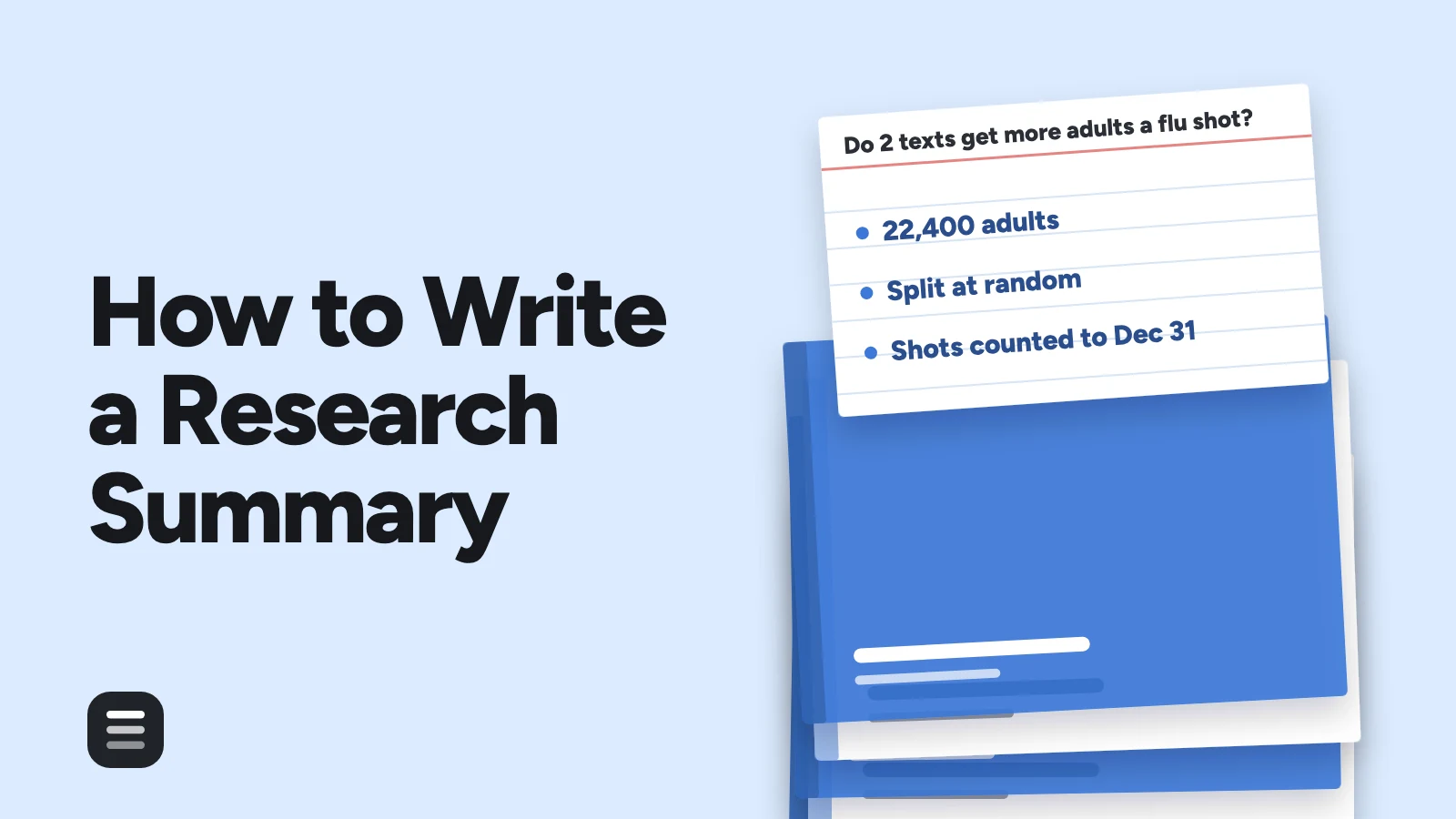
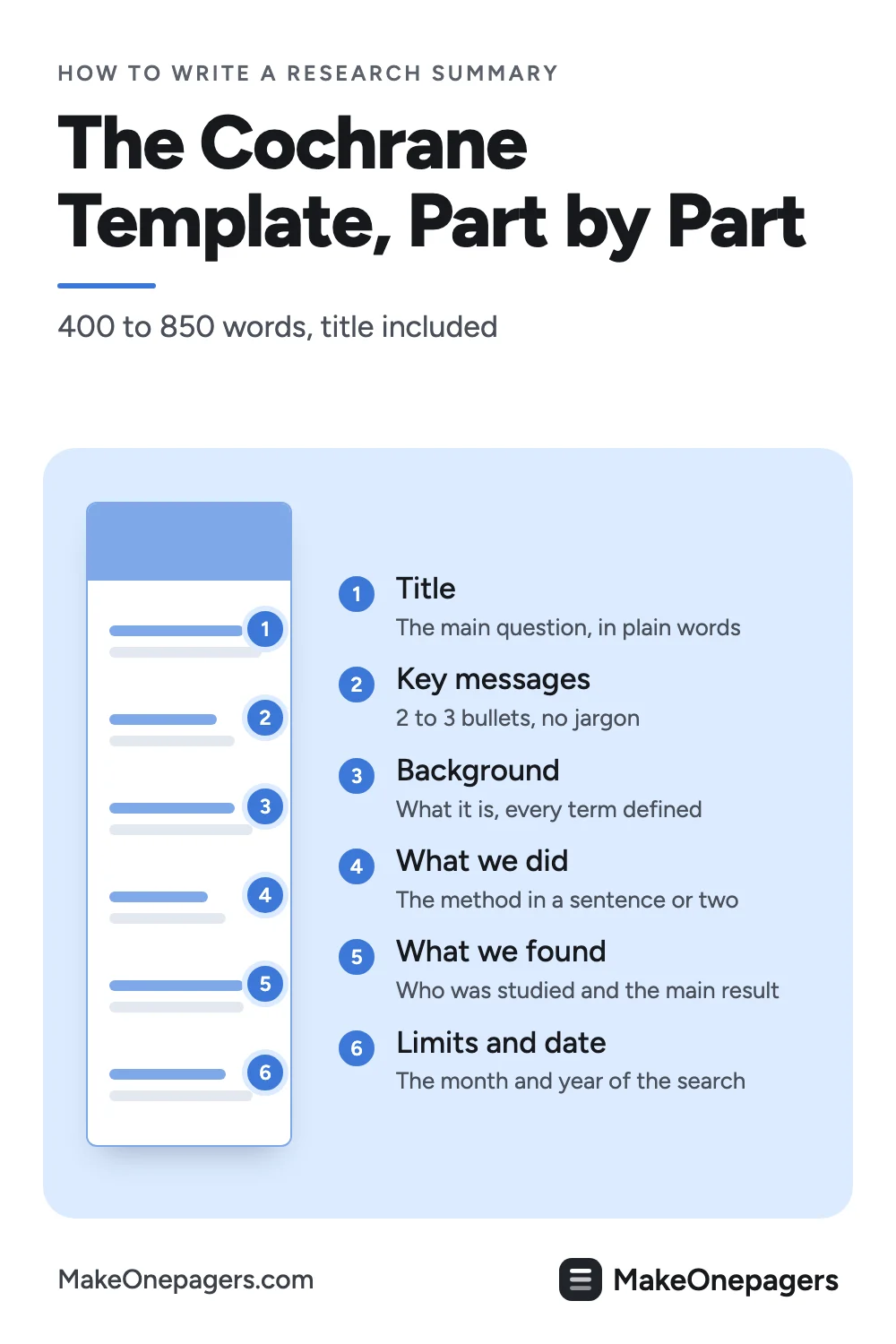
The best model we found for how to write a research summary that people outside your field will read comes from Cochrane. It's the network that writes plain language summaries for its health reviews, and it gives authors a fill-in template. You title the summary with the question, open with 2 or 3 key messages and then answer five fixed questions. The template sets a limit of 400 to 850 words. Start from a free one pager template.
One‑Pager examples
Real One-Pagers made with MakeOnepagers. Open any one to edit it as your own.
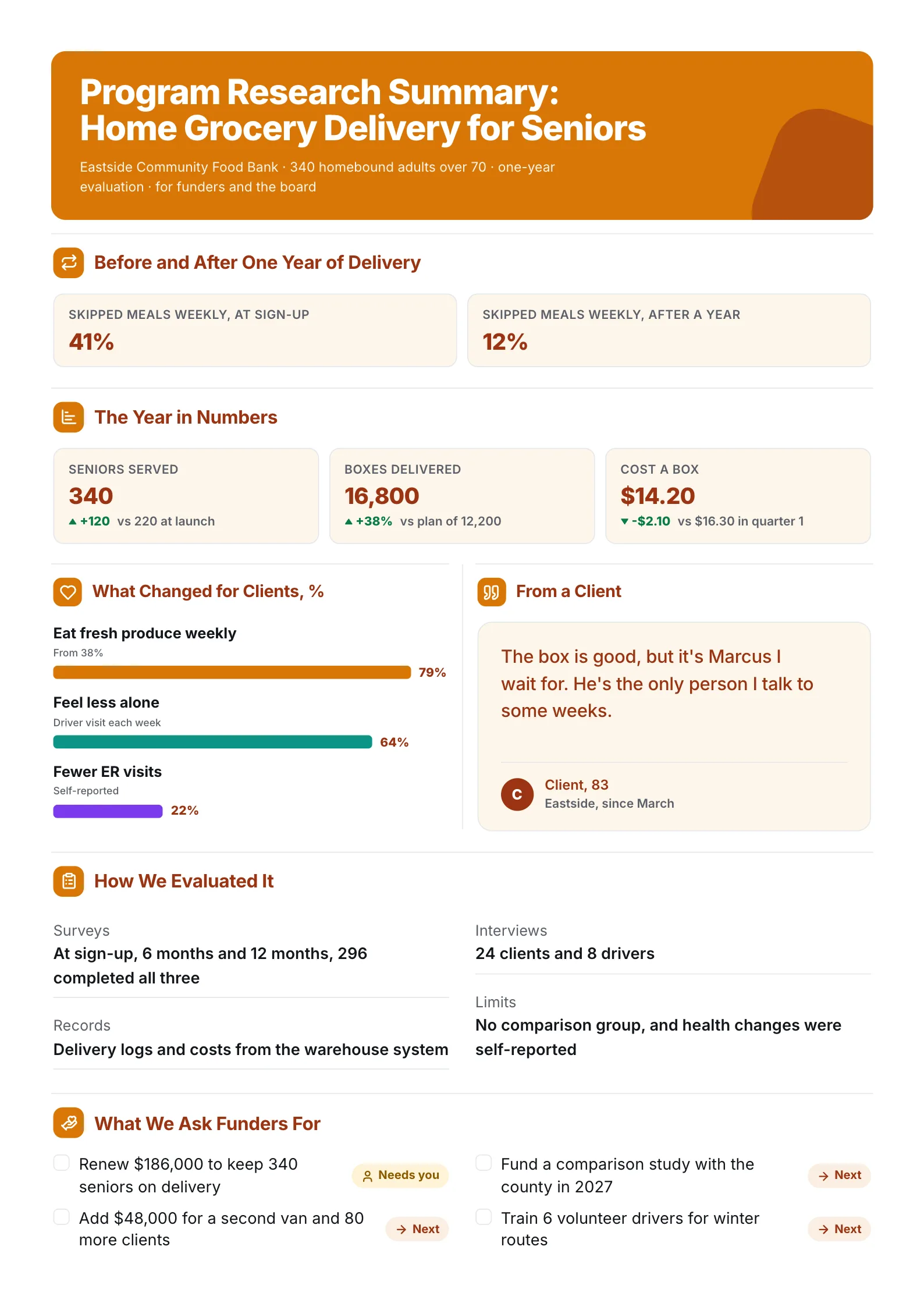 Research Summary: Nonprofit Program EvaluationEdit for free(opens in a new tab)
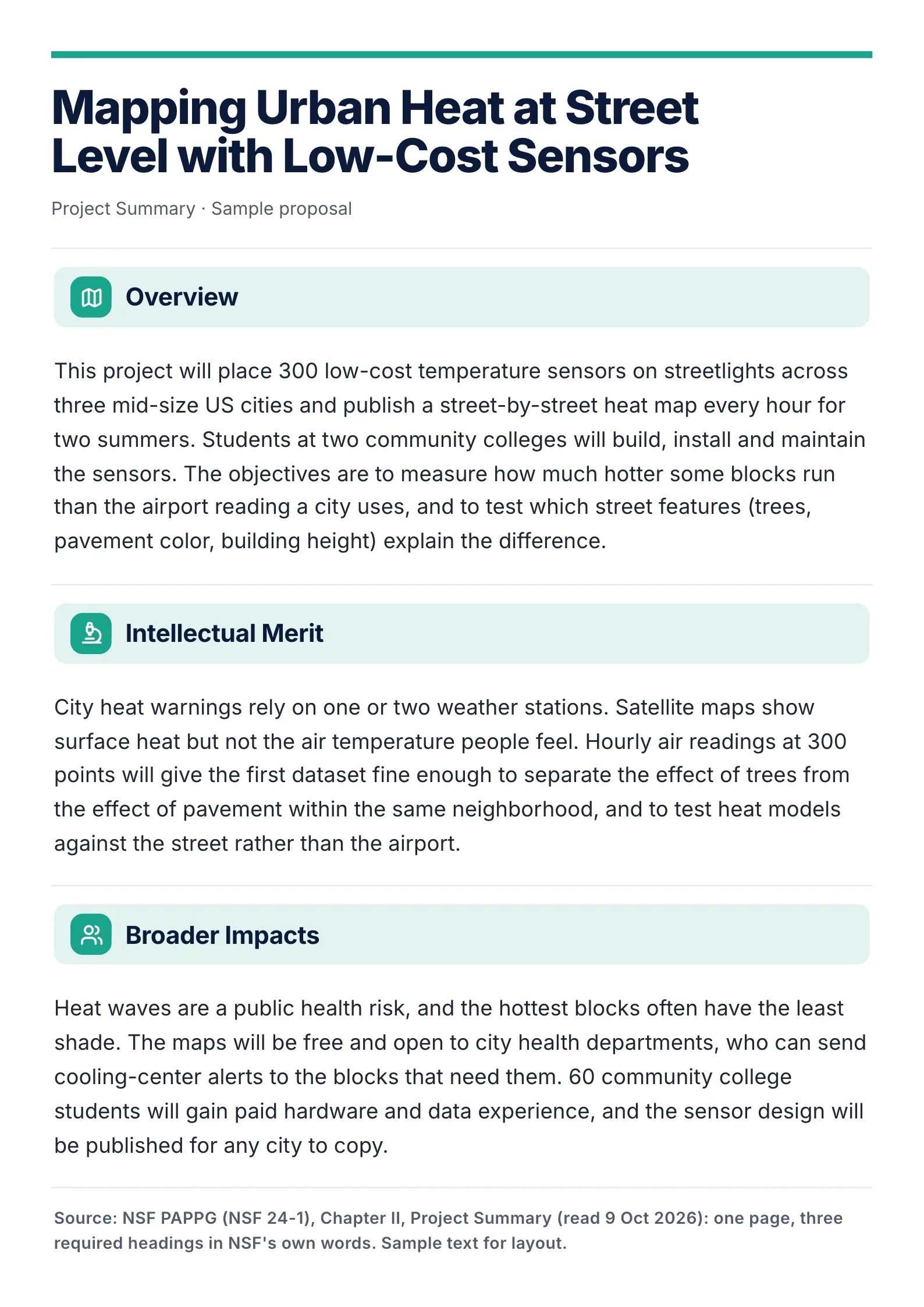 Research Project SummaryEdit for free(opens in a new tab)
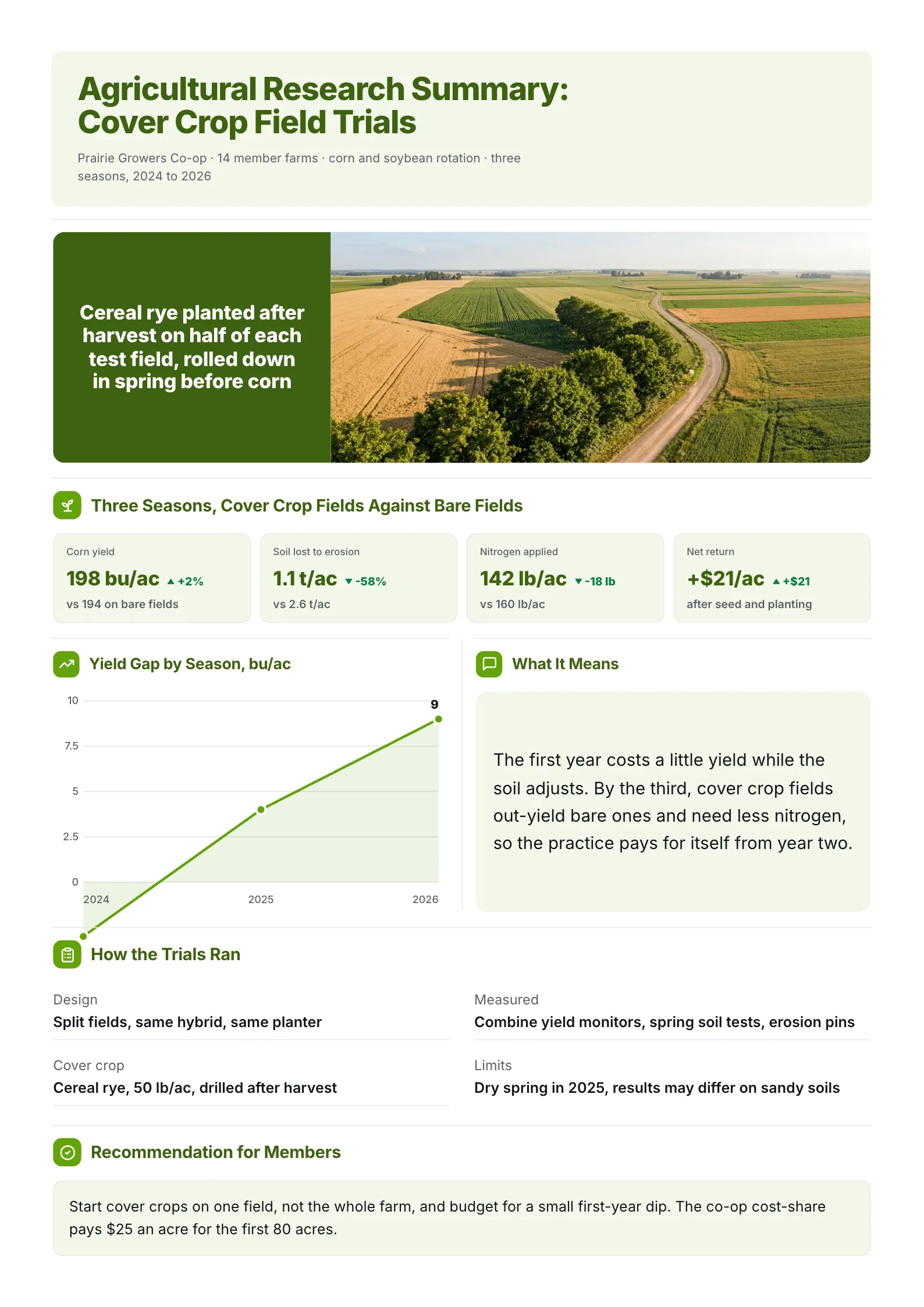 Research Summary: Farm Field TrialsEdit for free(opens in a new tab)
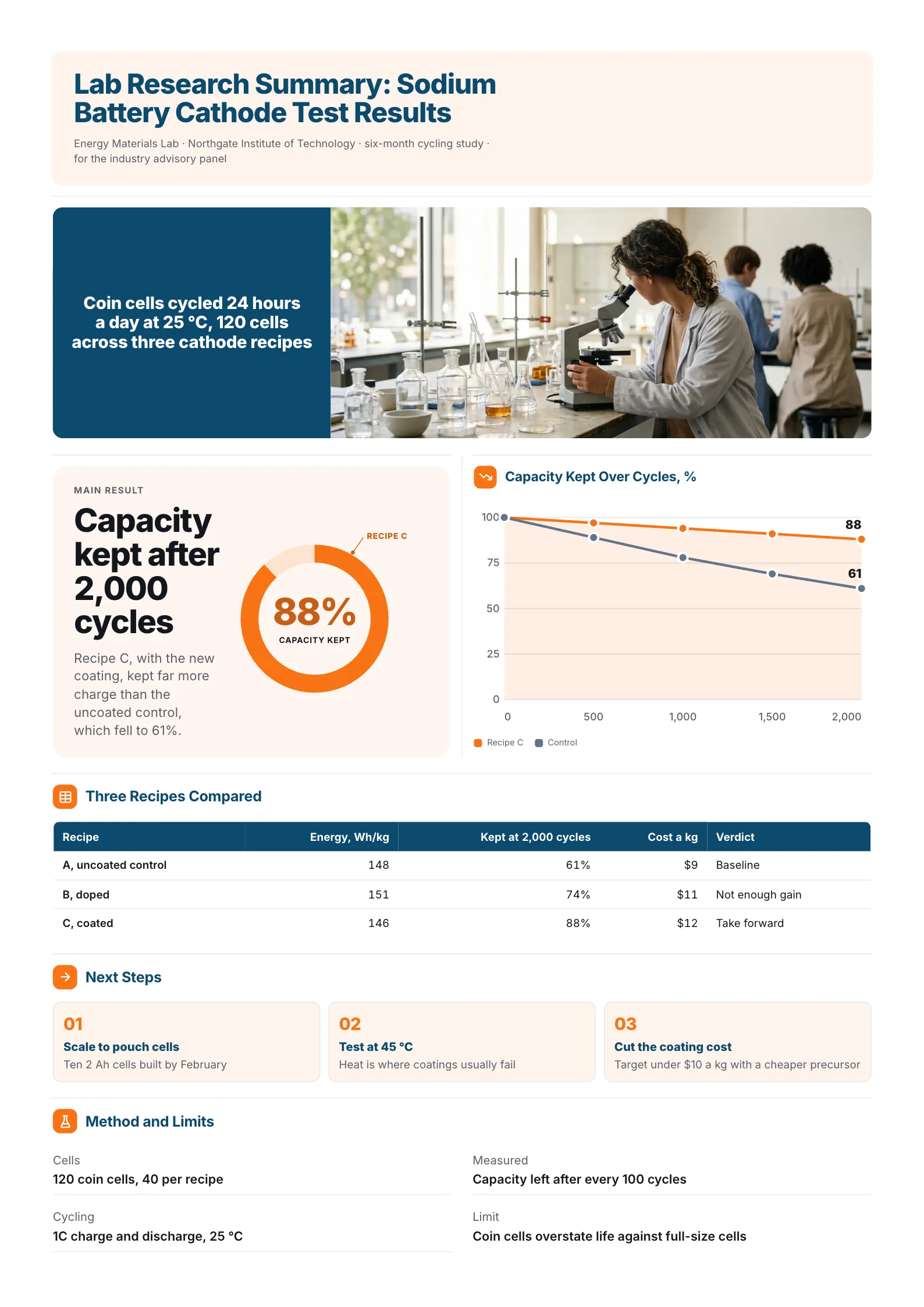 Research Summary: University Lab ResultsEdit for free(opens in a new tab)
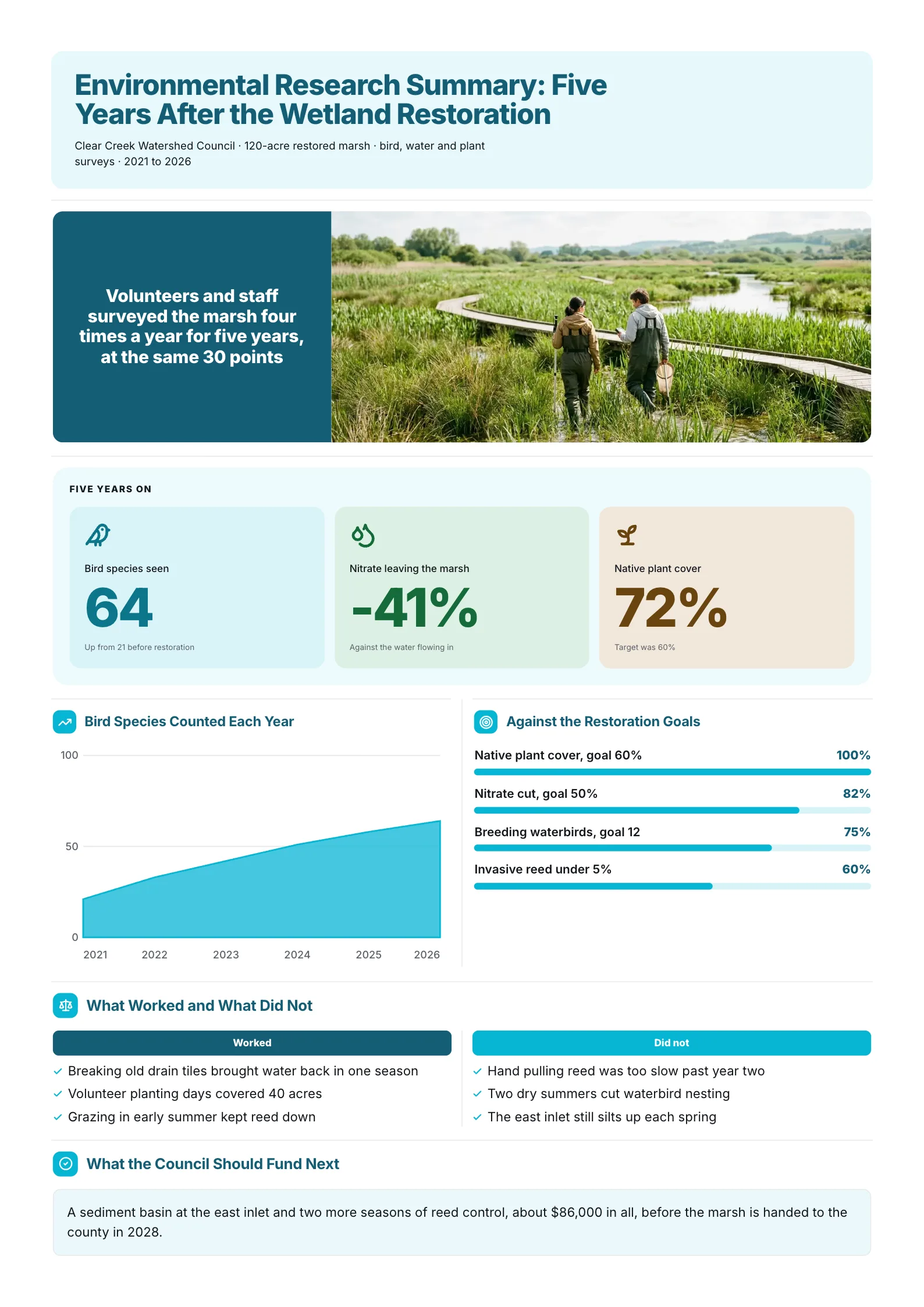 Research Summary: Environmental MonitoringEdit for free(opens in a new tab)
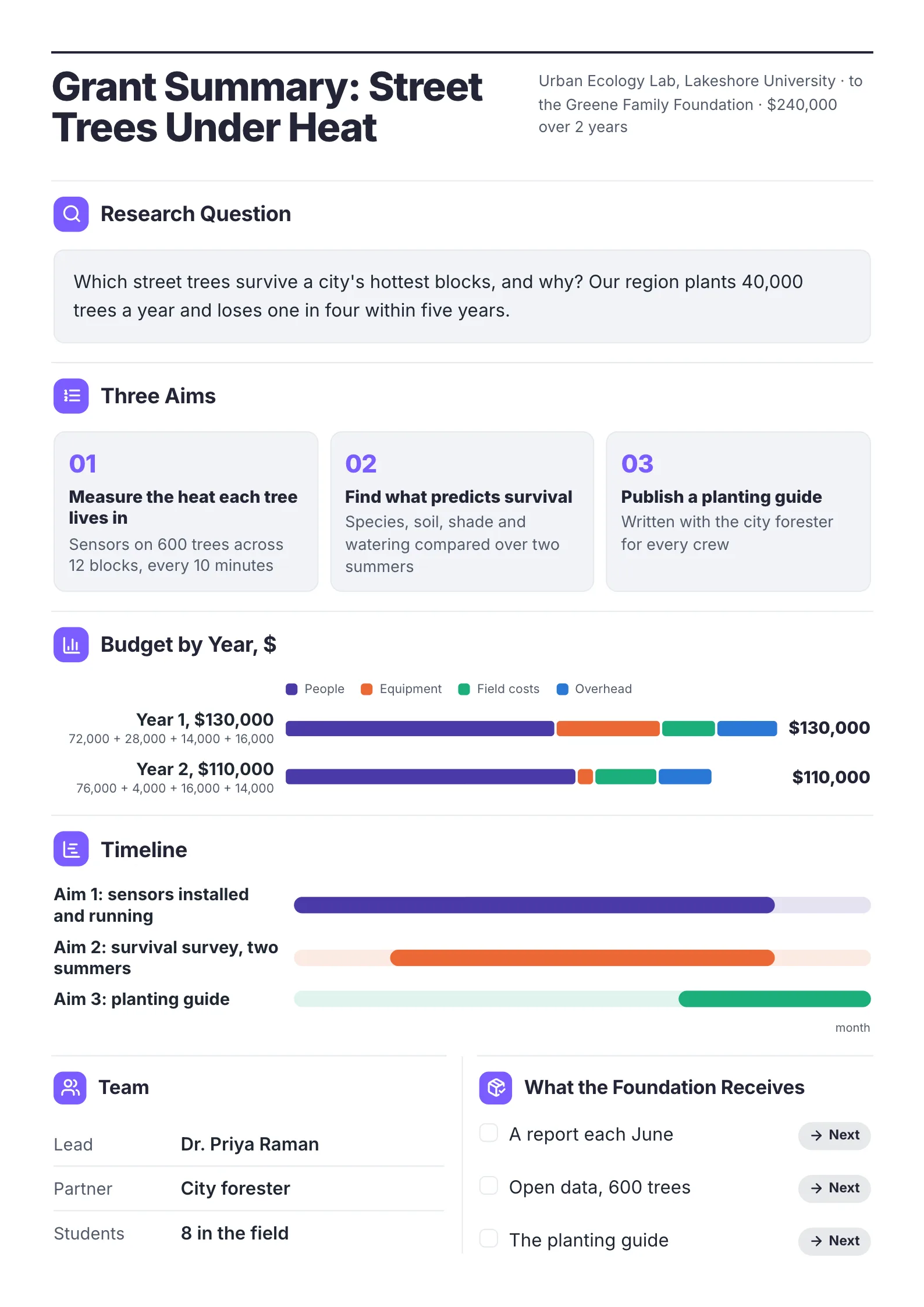 Grant Summary: University Research ProjectEdit for free(opens in a new tab)
Cochrane's rules haven't always produced plain summaries. A 2022 study in BMC Medical Research Methodology looked at 4,360 Cochrane plain language summaries published from 1995 to early 2019, before this template came out. It found 80% had no conclusive message. The median summary needed almost 15 years of schooling to read with ease. So the 6 steps below follow the template and fix the two things it can't do for you, a clear message and short words.
What a plain-language research summary contains
| Part | Cochrane template | What it asks for |
|---|---|---|
| Title | Required | The main question, in plain words |
| Key messages | Required | 2 to 3 bullets, terms explained, no recommendations |
| Background | Required | What the topic is and why it matters, terms defined |
| What did we want to find out? | Required | The aims |
| What did we do? | Required | The methods in a sentence or two |
| What did we find? | Required | Who was studied and the main results |
| What are the limitations of the evidence? | Required | The main limits, without jargon |
| How up to date is this evidence? | Required | The month and year of the search |
| Length | 400 to 850 words | Including the title |
Source: MakeOnepagers read of the Cochrane plain language summary template, October 30, 2026. It's linked further down with the other sources.
You don't need to be writing about medicine to use this. The same headings work for a market survey, a user study or a review of 14 papers.
One finding, before and after the template
We took the made-up text-reminder study in the first picture below and ran a first draft of it through the template. Each row is one part of the summary.
| Summary part | First draft | Plain version |
|---|---|---|
| Title | Evaluation of SMS reminders on vaccine uptake | Do text reminders get more older adults a flu shot? |
| Key message | Results were statistically significant | More adults who got two texts had a shot by December |
| Method | A randomized controlled design was used | We split 22,400 adults into two groups at random |
| Limit | Not stated | One county, one flu season |
| Date | Not stated | Shots counted to December 31 |
A county nurse could read the plain version aloud at a staff meeting and nobody would ask what it means. The six steps below show how each row was rewritten.
Step 1: Make the title the question
The Cochrane template says the title should be the main review question in plain language. A recent review on vitamin B2 shows how that reads. Its title is "Does riboflavin (vitamin B2) lower blood pressure in adults?" Anyone can tell what's inside before they read a word more.
Write your own title as the question your reader is asking. "Do text reminders get more older adults a flu shot?" beats "Evaluation of an SMS intervention for influenza vaccine uptake." A study that answers a business question should use the business words. Your reader knows what "bank linking" means even if the study calls it account aggregation.
Step 2: Write 2 or 3 key messages first
Write these before anything else, because many readers stop there. The Cochrane template says the key messages will likely be read first and might be the only part some people read. It asks for at least 2 and no more than 3 bullets. Every technical term in them has to be explained right there, even if you explain it again later.
It also says not to make recommendations about whether a treatment should be used. Outside a health review, you can be more direct about what to do next. Still, keep the findings and the advice in separate sentences so your reader can tell them apart.
Here's the test. If someone reads only your key messages, can they say what you found in one breath? The riboflavin review's two bullets pass. One says the effect on blood pressure is uncertain, and the other says larger trials are needed.
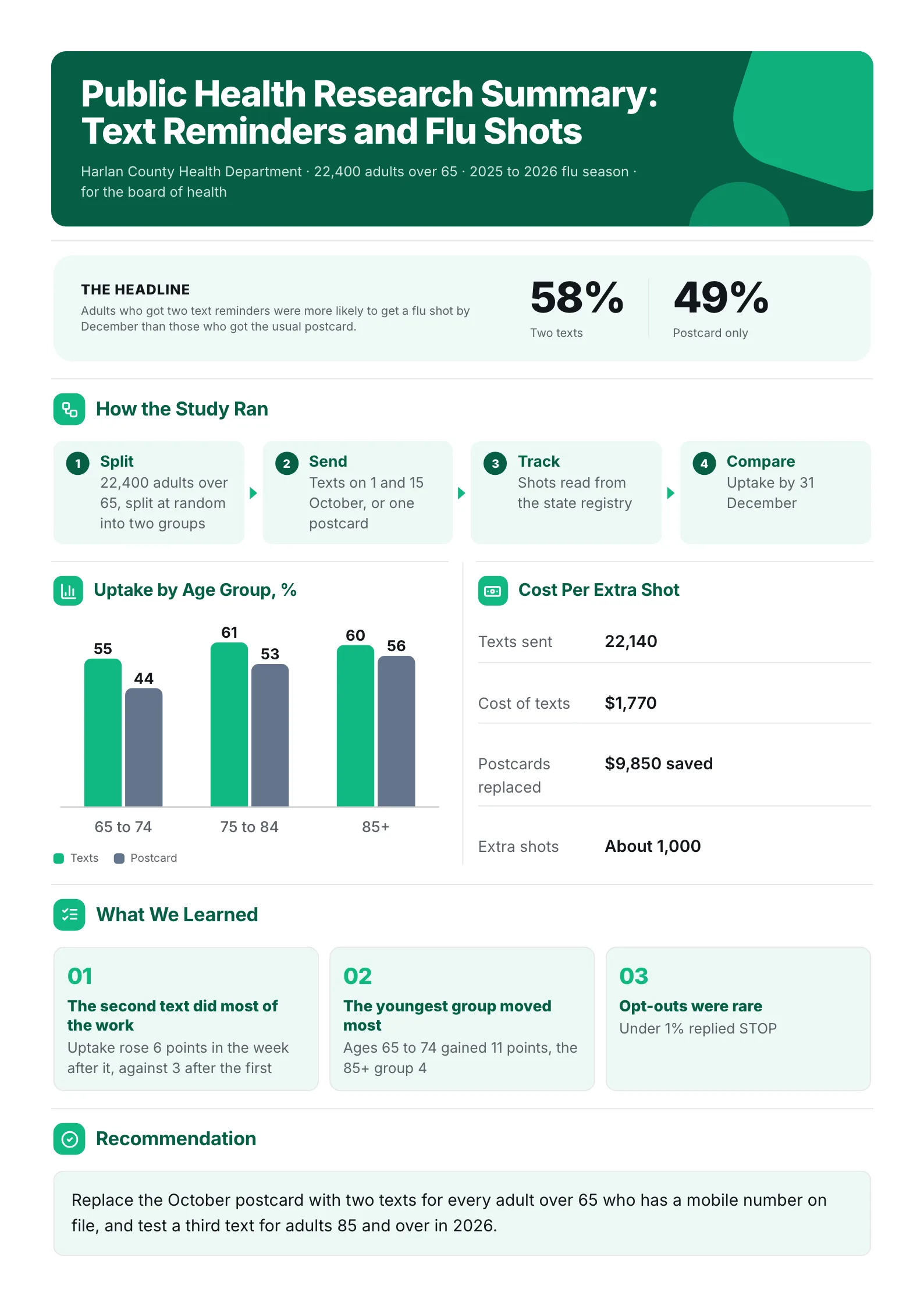 Edit this template
Sample names and figures. The headline sentence at the top is the key message, and everything below it backs that one claim.
Step 3: Explain the topic and define every term
The template asks for a short background that says what the review is about and why it matters. It tells you to avoid acronyms and define any technical term. The riboflavin summary does this with two tailored headings, "What is blood pressure?" and "What is riboflavin?" Each one takes two or three sentences.
You can borrow that trick. Two terms your reader needs to follow the rest each earn their own small heading and a two-sentence answer. Then never use a term you haven't explained.
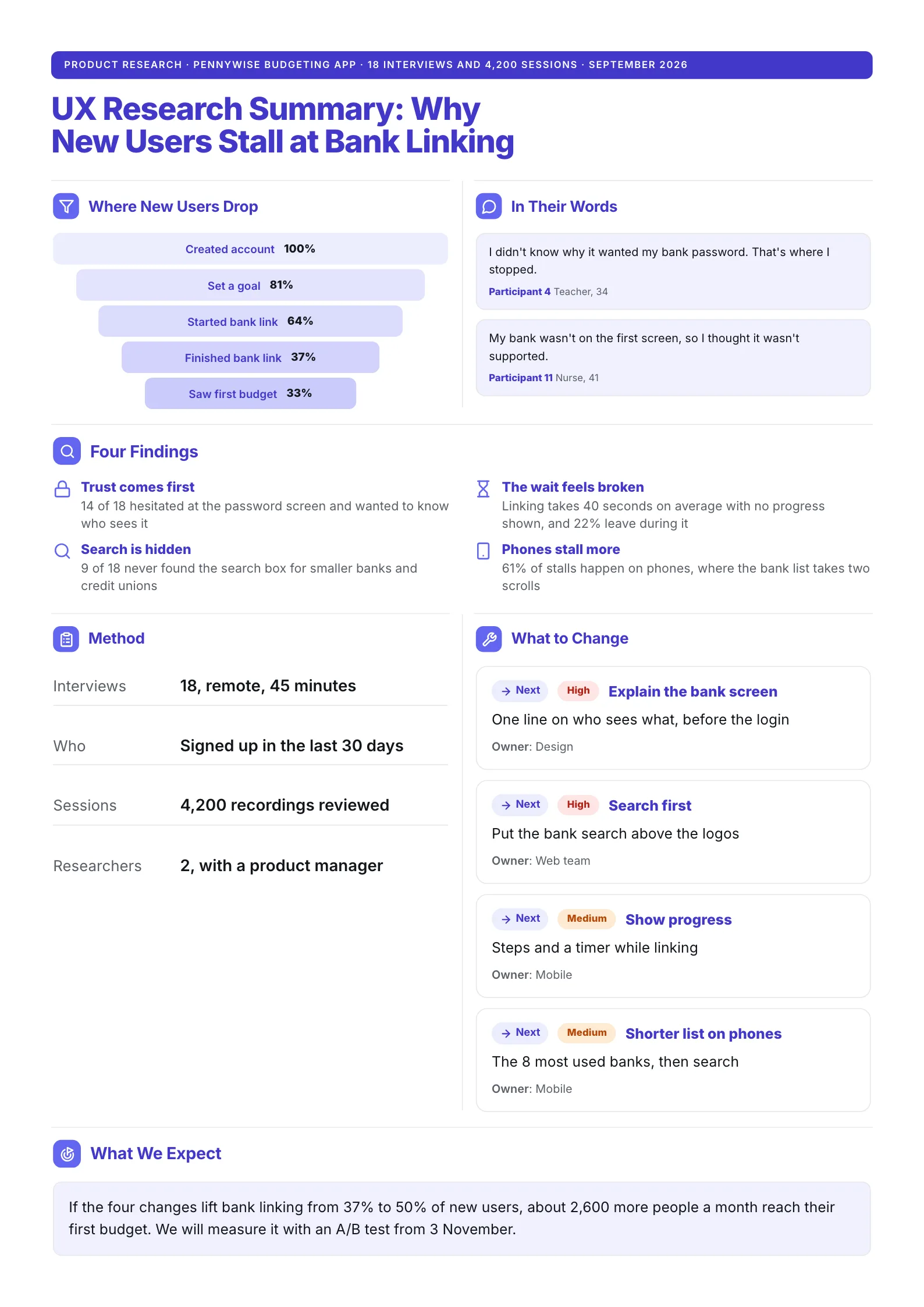 Edit this template
Sample names and figures. The funnel explains "bank linking" with a picture before the findings use the term.
Step 4: Report the method and the main result
Keep the methods short. The template wants a sentence or two, such as "We searched for studies that compared A with B in adults." Then report who was studied and the main results. The riboflavin summary says "We included four studies with a total of 374 people," and moves straight to the result.
The template has one firm rule here for health reviews. Don't report summary statistics, confidence intervals or labels like "low-certainty evidence." Say it in words instead. For a business or school summary, one number is often the clearest word you have. "14 of 18 people stopped at the password screen" is plain. Give the one number your reader needs and leave the rest for the full report.
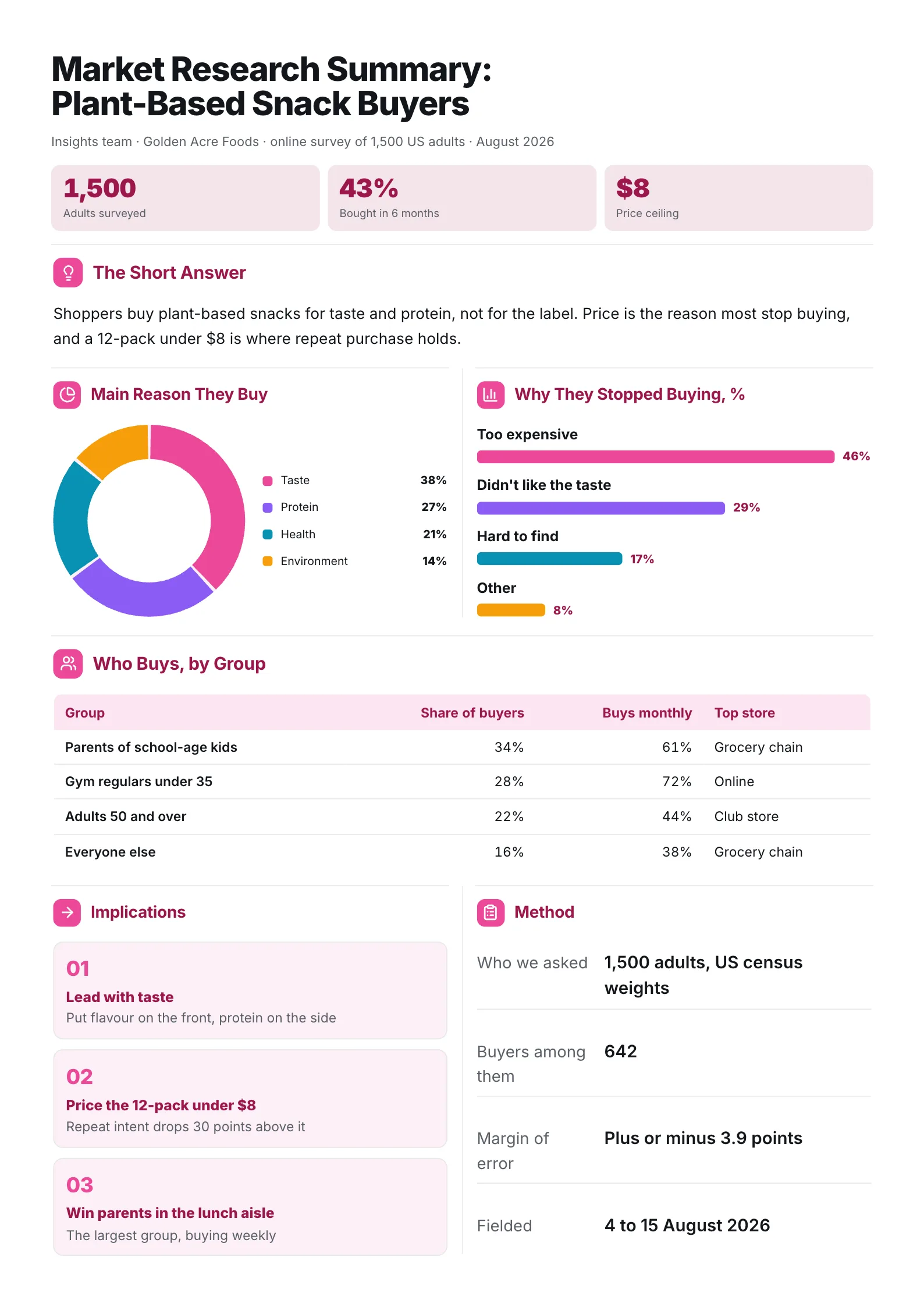 Edit this template
Sample names and figures. The short answer names one price point, so the reader leaves with a number they can act on.
Step 5: Name the limits and say how current it is
Two of the template's five questions are about trust. One asks for the main limits of the evidence, without phrases like "risk of bias." The other asks for the month and year the search was run. The riboflavin summary says its search ran up to October 2024, and the review came out a year later. Its limits are plain too. Some results weren't reported, and the studies were small.
Give your reader the same two facts. Say what could make your finding wrong, in a sentence. Then say when you collected the data, so nobody treats a 2023 survey as this year's news.
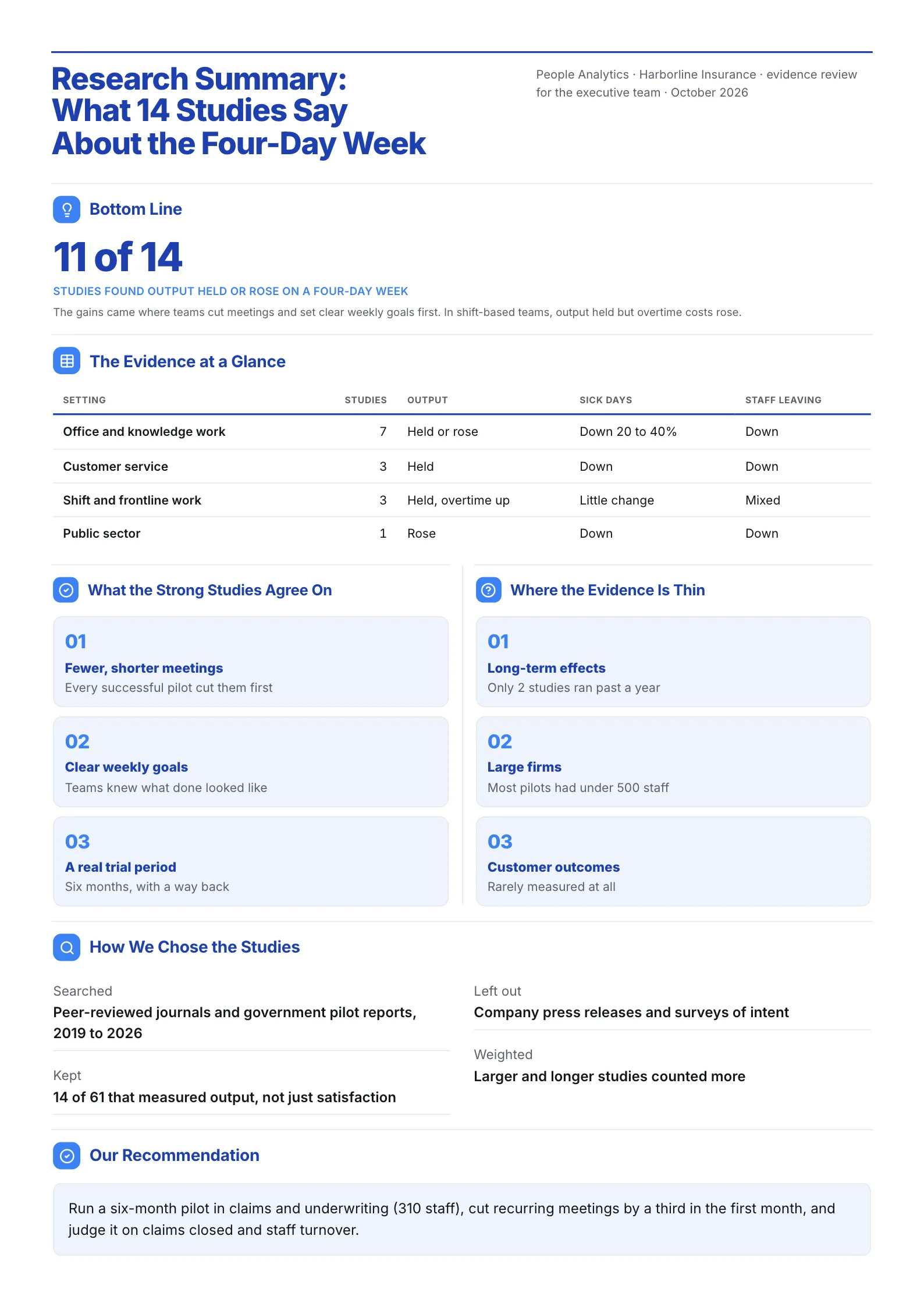 Edit this template
Sample names and figures. The table shows where the result held and where it didn't, which is the limit stated as a finding.
Step 6: Give it a clear message, then cut
This is where most summaries miss. In the 2022 study, 30% of summaries gave no opinion on the treatment at all. Another 23% gave an unclear one. If your evidence is mixed, say that in plain words. "We don't know yet, and here's why" is still a message.
Then cut for length and reading level. The template allows 400 to 850 words. In the study, written before the template, the median summary ran 332. Read yours aloud and swap any long word for a short one. Ask someone else to read it, which the template also tells you to do, and pick someone outside your field if you can. If they can repeat your key messages back to you, you're done.
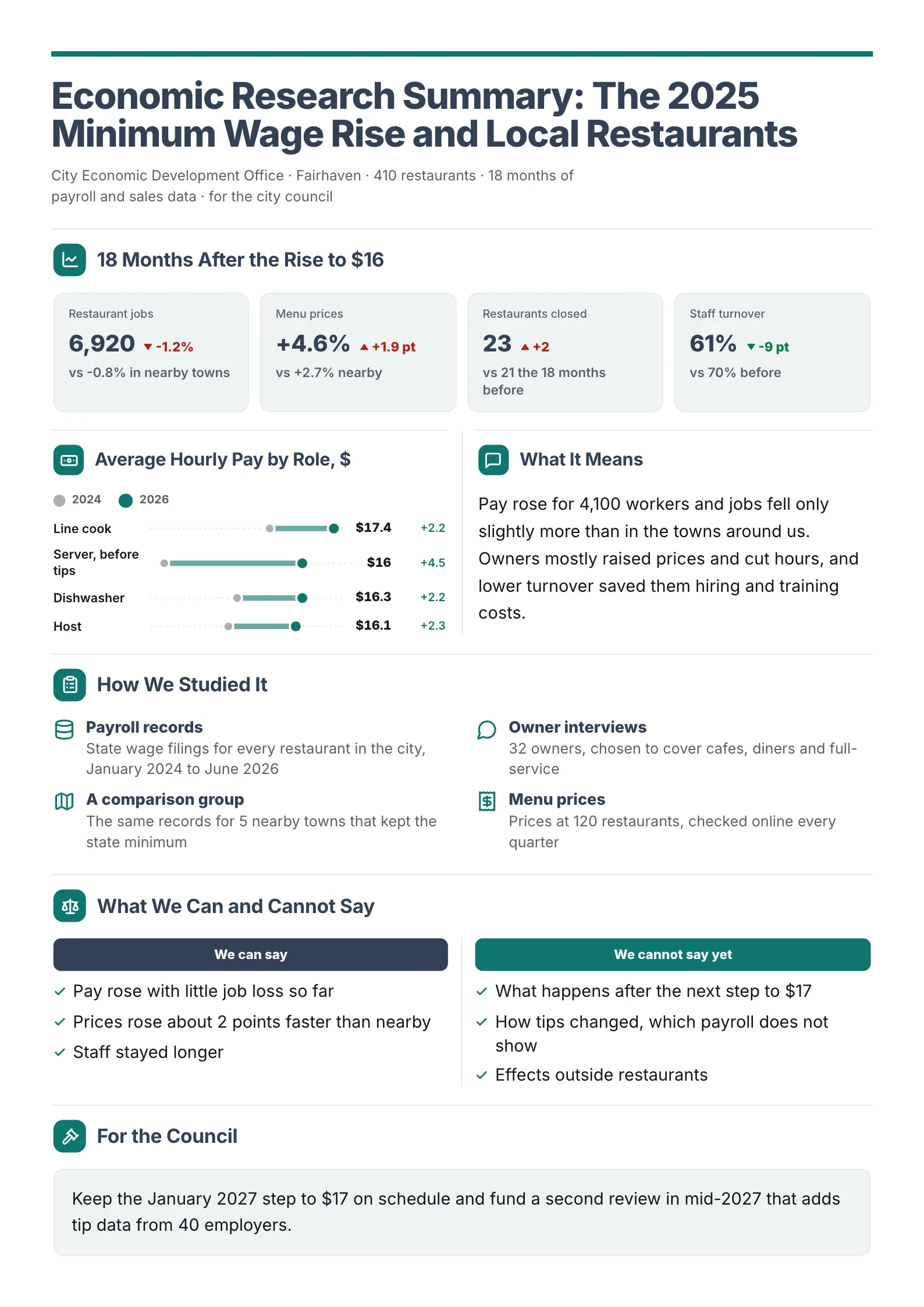 Edit this template
Sample names and figures. Each headline number sits beside the nearby towns, so the reader can judge it without a chart legend.
Lay out a research summary on one page
Most summaries are read once, often on a phone, so one page is plenty. Put the question and key messages at the top. Add one chart or table that carries the main finding, then the limits and the date at the bottom.
Each research summary design in MakeOnepagers has a headline box for your key messages, a chart for the main finding and a strip for the methods. You type your study into those three places. For more examples by field, see our research summary post. A summary bound for the NSF follows that funder's own format, which the NSF project summary example post lays out.
Cochrane, NIH and the 2022 study, linked
| Source | What it is | Who made it |
|---|---|---|
| Template for writing a Cochrane plain language summary | Fill-in template, version of January 2022 | Cochrane |
| Conclusiveness, linguistic characteristics and readability of Cochrane plain language summaries of intervention reviews | Study of 4,360 summaries, BMC Medical Research Methodology, 2022 | Aleksandra Banić and colleagues |
| Does riboflavin (vitamin B2) lower blood pressure in adults? | One published plain language summary | Cochrane |
| G.220 R&R Other Project Information Form | Rules for a grant's project summary | National Institutes of Health |
We read all four on October 30, 2026. The 80%, the 332 words and the reading level come from the Banić study, and the riboflavin details from its published summary.
Test your key messages on one reader today
Write your question as the title. Then write 2 or 3 key messages and test them on someone outside your field. Fill in the five headings, add the date and cut until it reads aloud easily. Then put it on one page in MakeOnepagers, with the key messages where a skimming reader lands first.
Frequently asked questions
How long should a research summary be?
It depends on who sets the rules. Cochrane allows 400 to 850 words for a plain language summary. NIH limits a grant's project summary to 30 lines of text. For a one-page summary at work, 300 to 500 words plus one chart is a good target.
What is the difference between a research summary and an abstract?
An abstract is written for other researchers and keeps the technical terms. A plain research summary is written for everyone else. It explains each term, drops the statistics and leads with what the reader should take away.
Should a research summary use "we"?
Cochrane's headings use "we," as in "What did we find?" NIH asks you to avoid the first person in a grant's project summary. Follow the rules of whoever will read it. For an internal summary, "we" is friendlier.
How do I summarize someone else's research paper?
Use the same headings and write them for your own reader. Say what question the authors asked, what they did and what they found, in your words. Then add the limits they admit and the year the data was collected. Name the paper and its authors at the top, so nobody takes their result for yours.
Can I put recommendations in a research summary?
Cochrane's template says not to recommend whether a treatment should be used. In a business summary, your reader usually wants a next step. Keep it in its own line, after the findings, so nobody mistakes your advice for a result.




