Product Spec Sheet Template: Free One Page, With Example
Free one-page product spec sheet template: four notebooks from $12 to $28 in one side-by-side table, plus the rows to add when a retail buyer is reading.

A product spec sheet template lets you show a product, or a whole range, on one page: each model, its price, and the same rows of facts for every model so a buyer can compare them at a glance. Manufacturers send them to retailers, sales teams carry them to trade shows, and online stores attach them to listings. This guide takes one real-looking sheet apart, a range of four notebooks, and then shows the rows a retail buyer will ask for that it leaves out. Start from a free one pager template.
One‑Pager examples
Real One-Pagers made with MakeOnepagers. Open any one to edit it as your own.
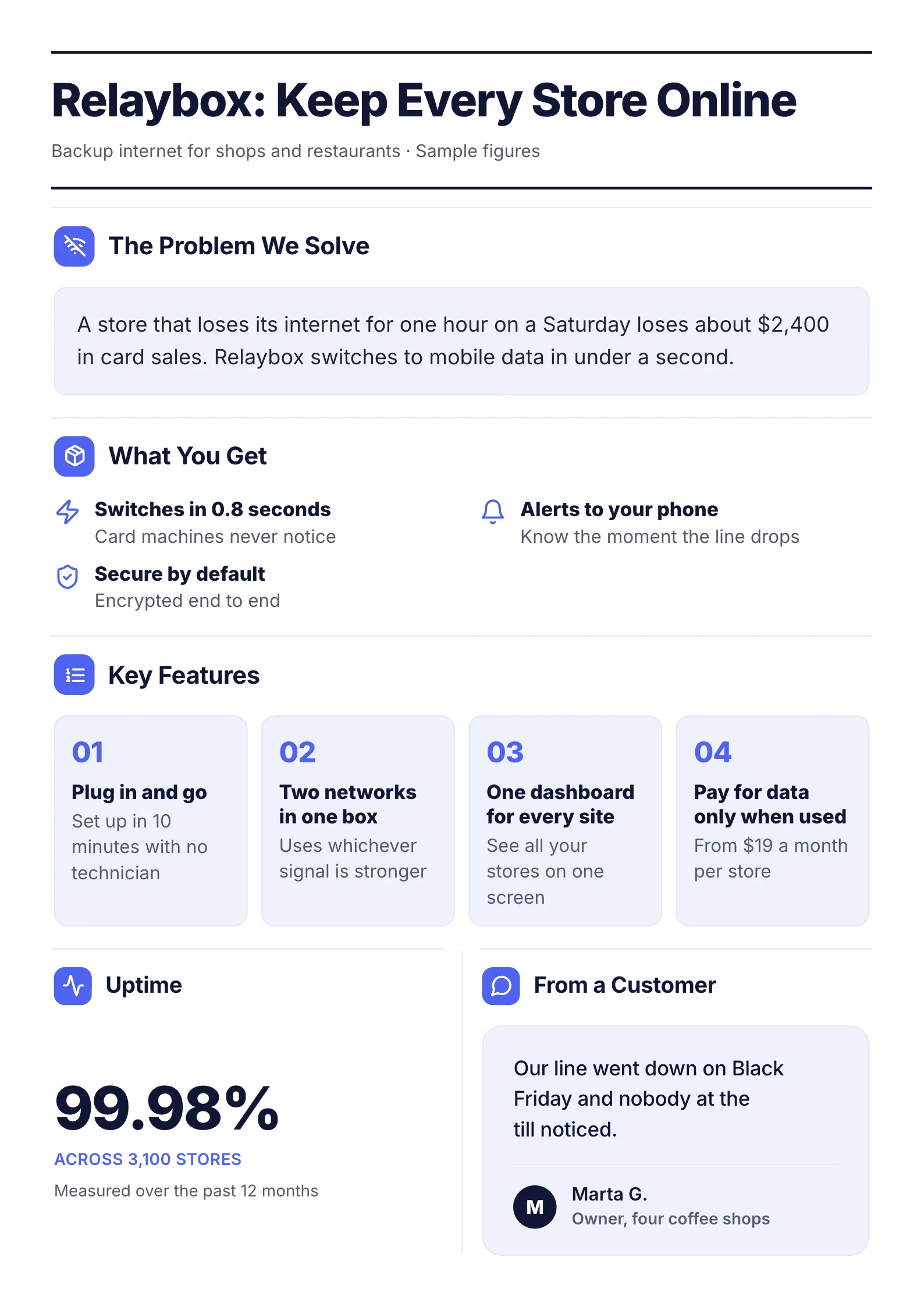 Technology Sell SheetEdit for free(opens in a new tab)
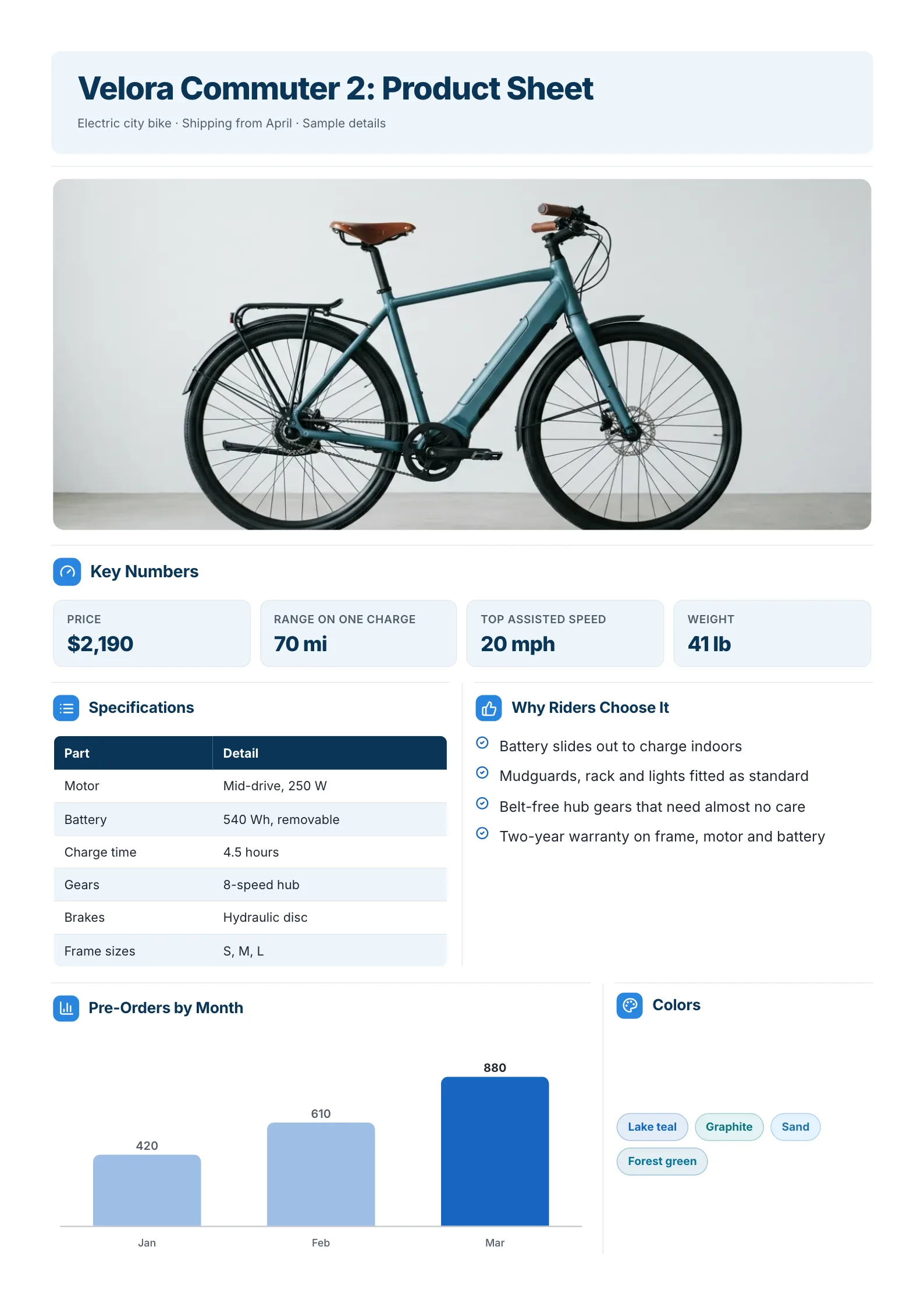 Product Spec Sheet with PhotoEdit for free(opens in a new tab)
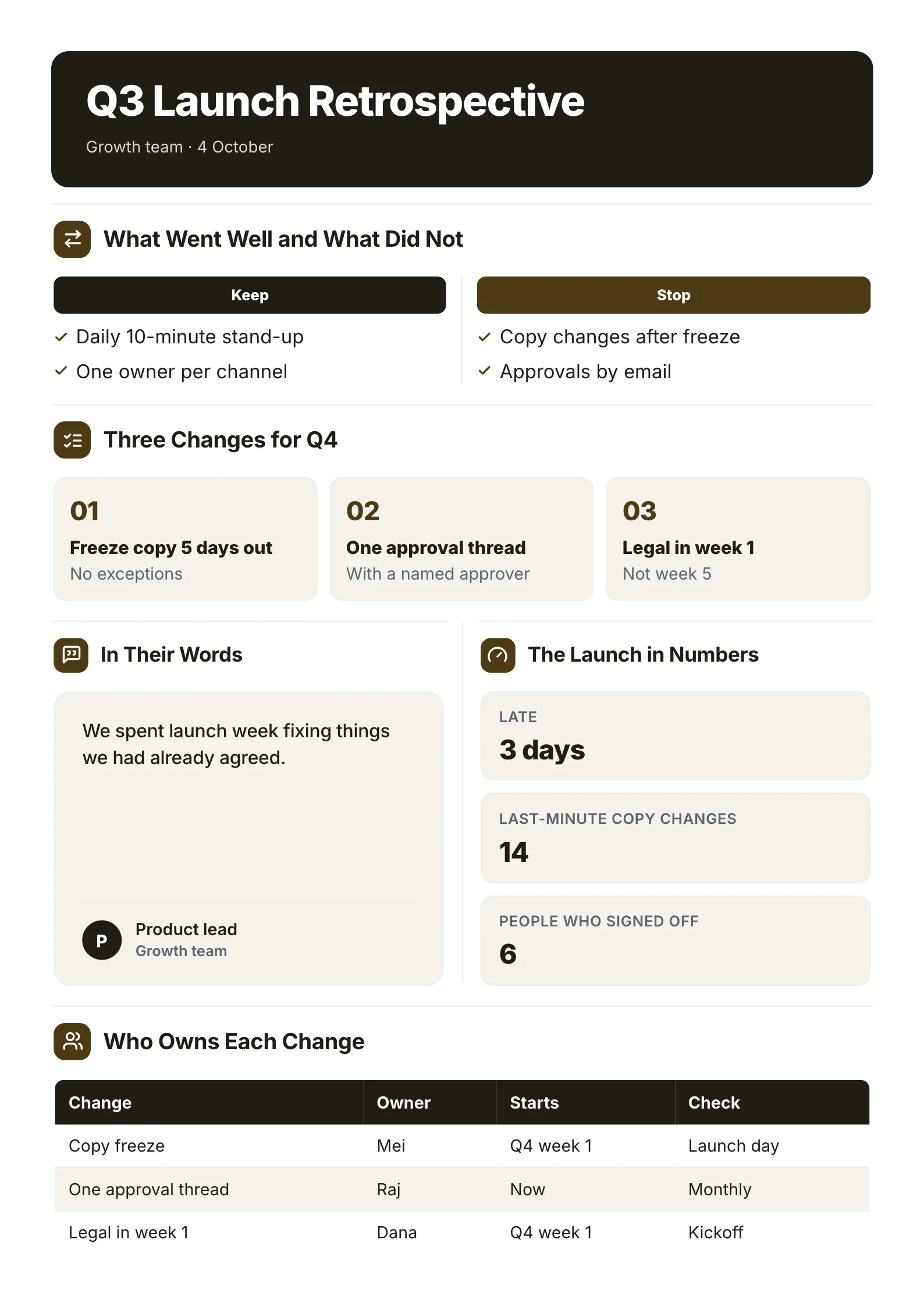 RetrospectiveEdit for free(opens in a new tab)
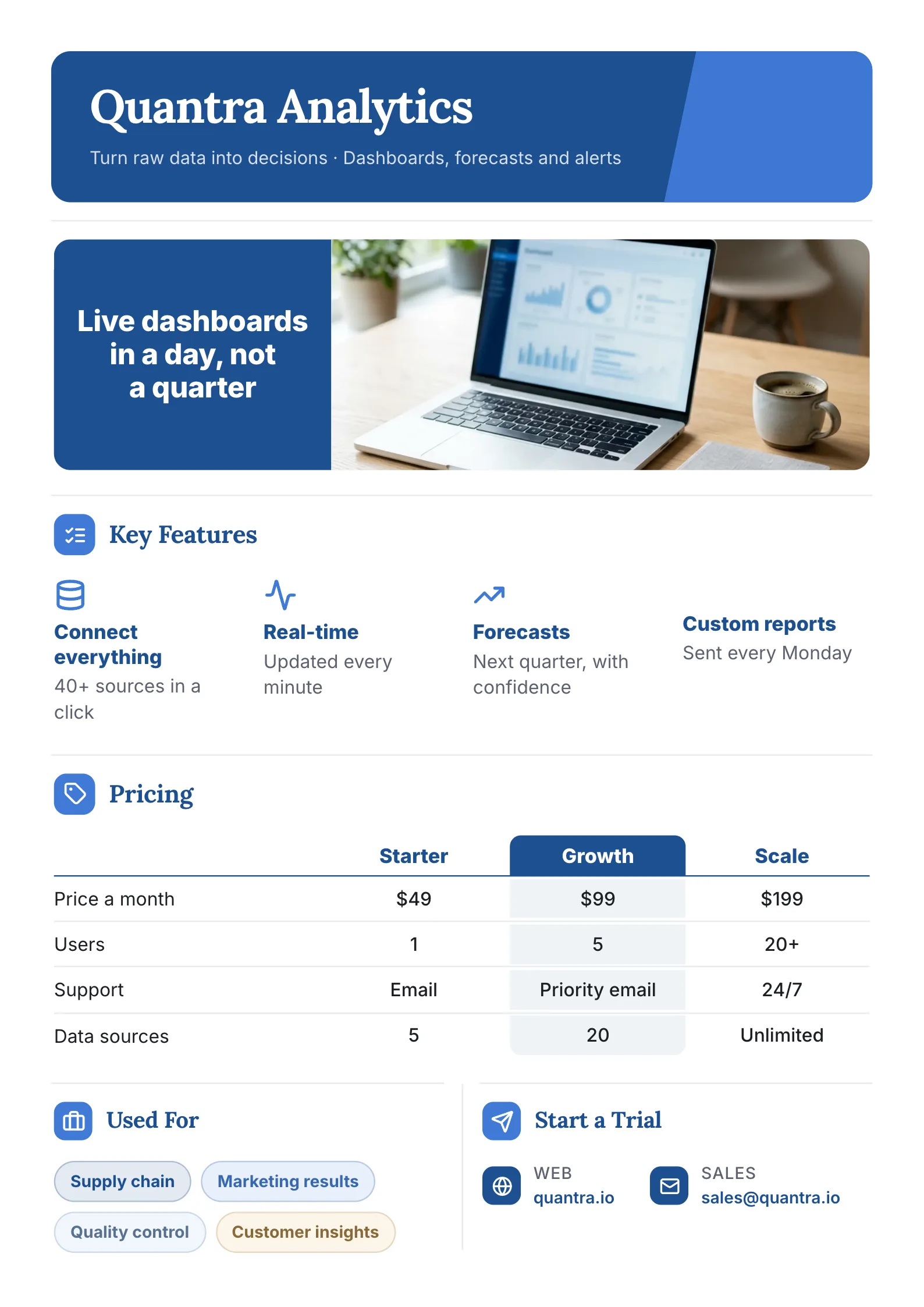 Tech Product One-PagerEdit for free(opens in a new tab)
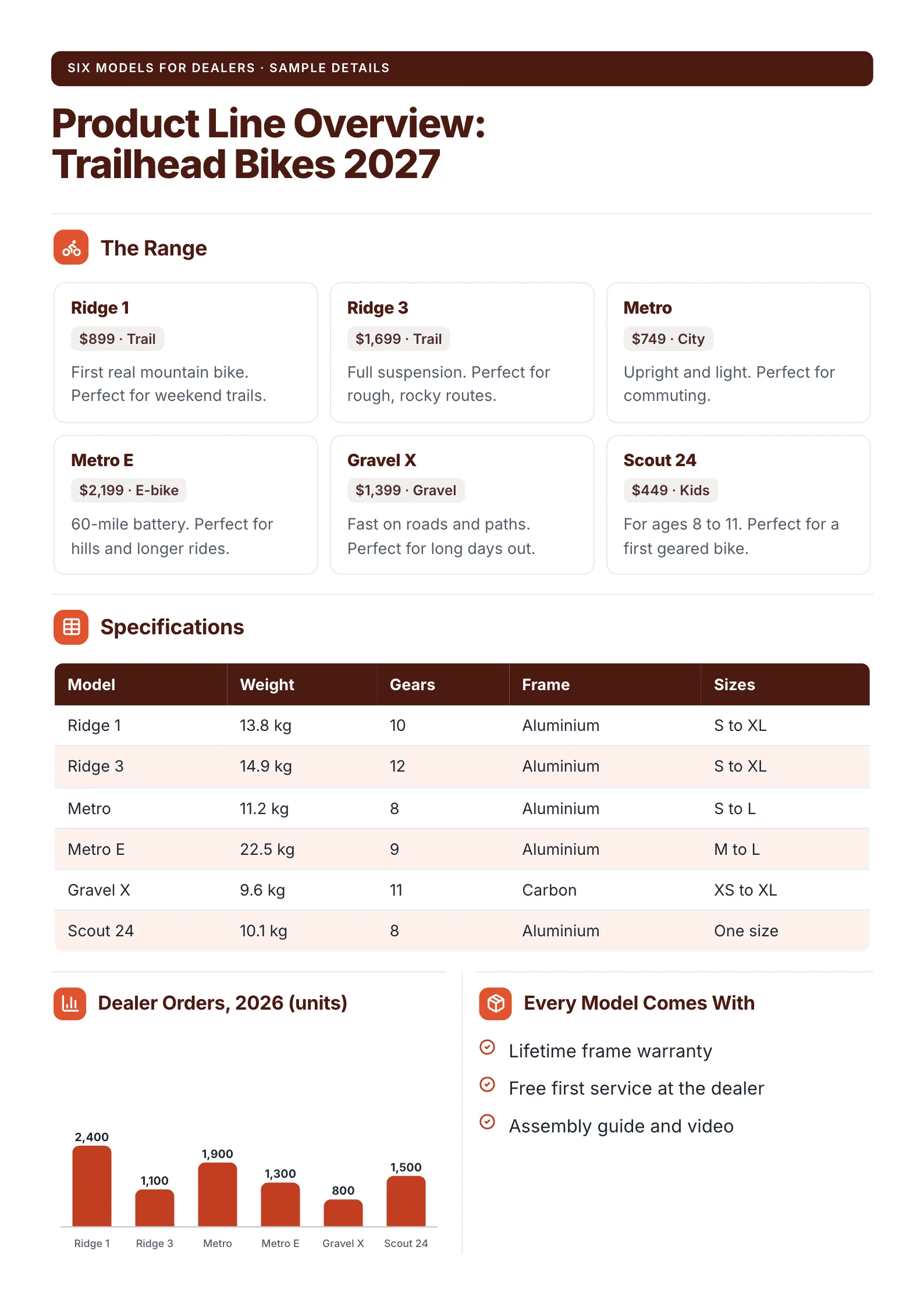 Product Line OverviewEdit for free(opens in a new tab)
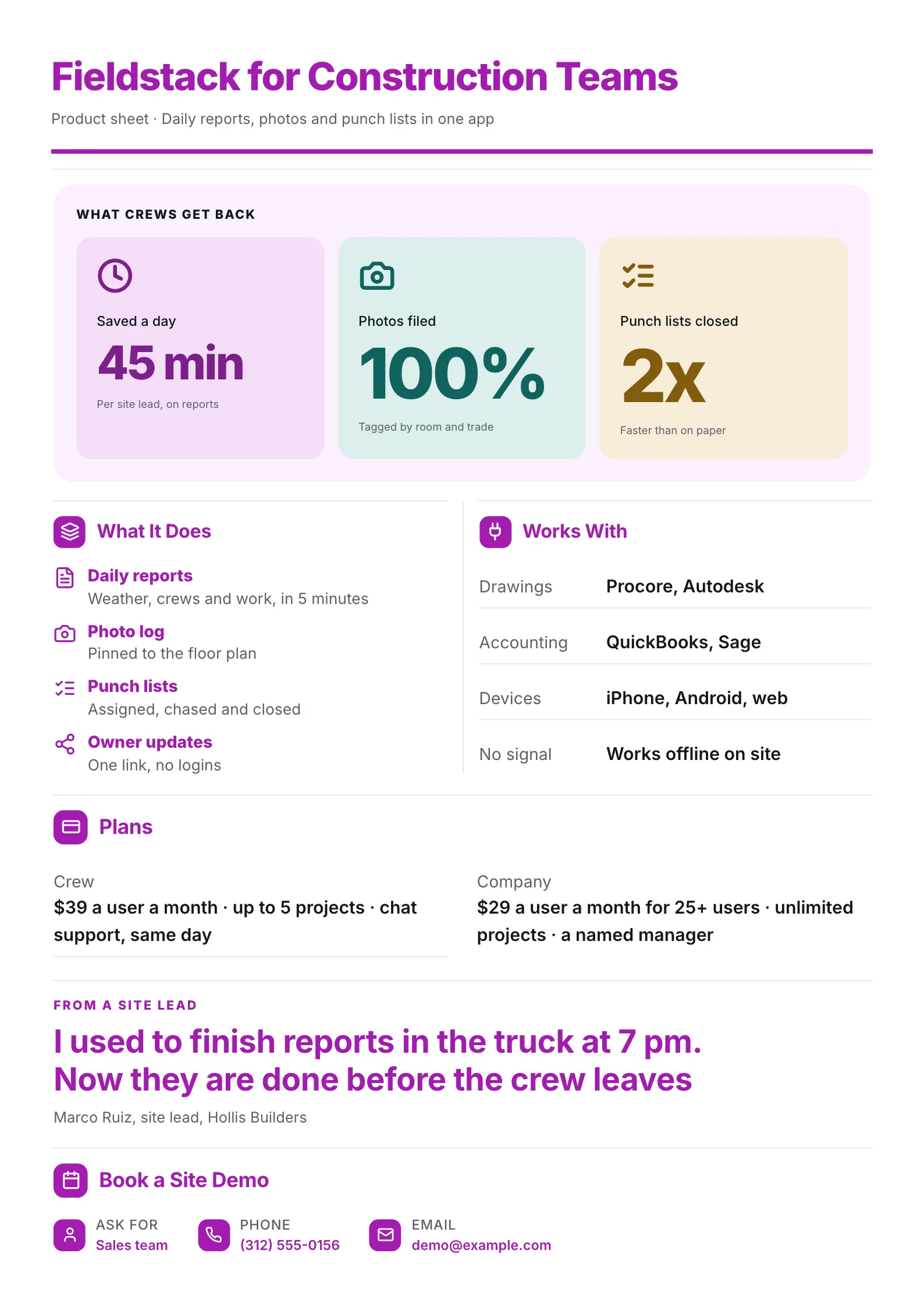 Product SheetEdit for free(opens in a new tab)
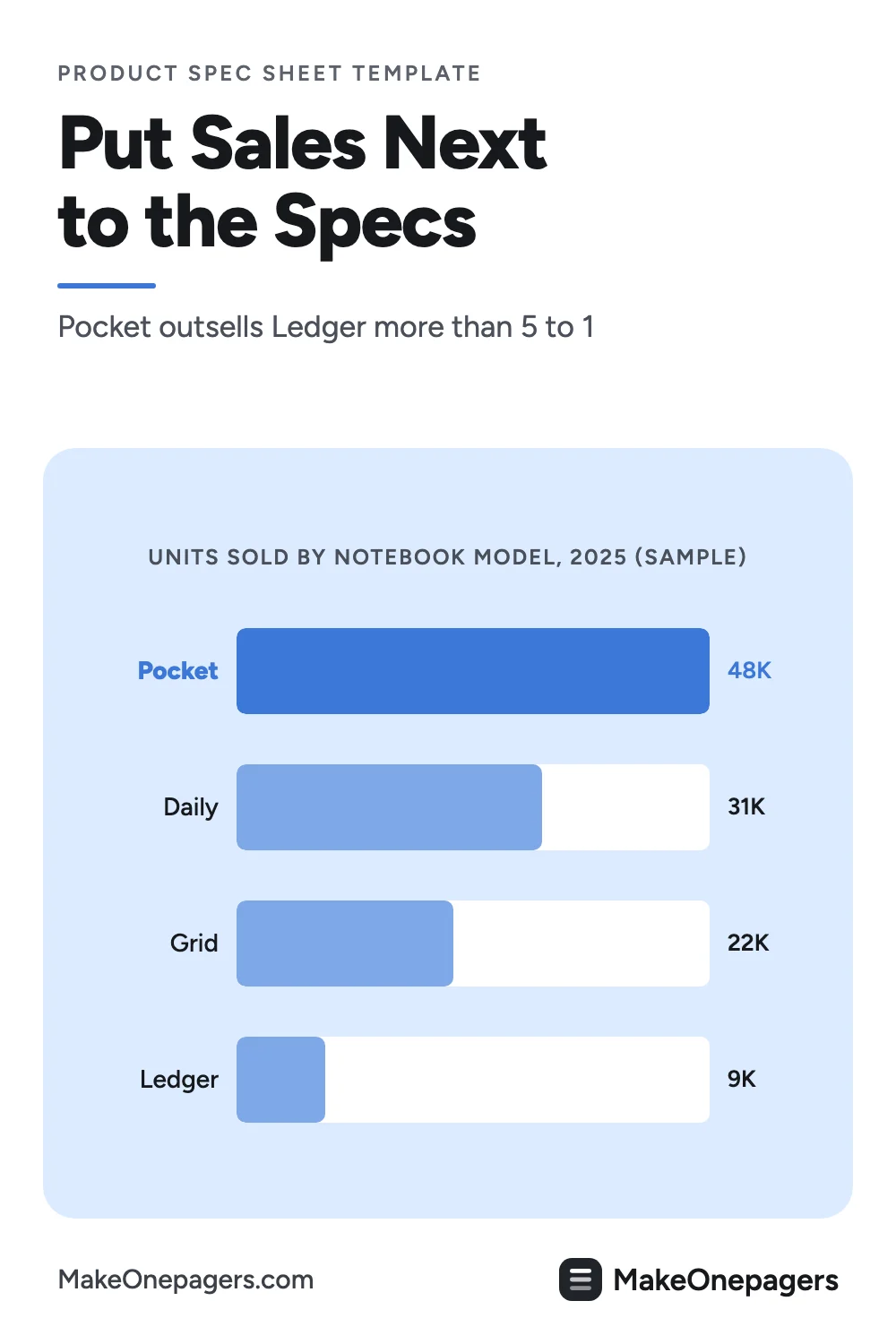
The example was made with MakeOnepagers. It opens as a template you can edit for free.
What's on the sheet
 Edit this template
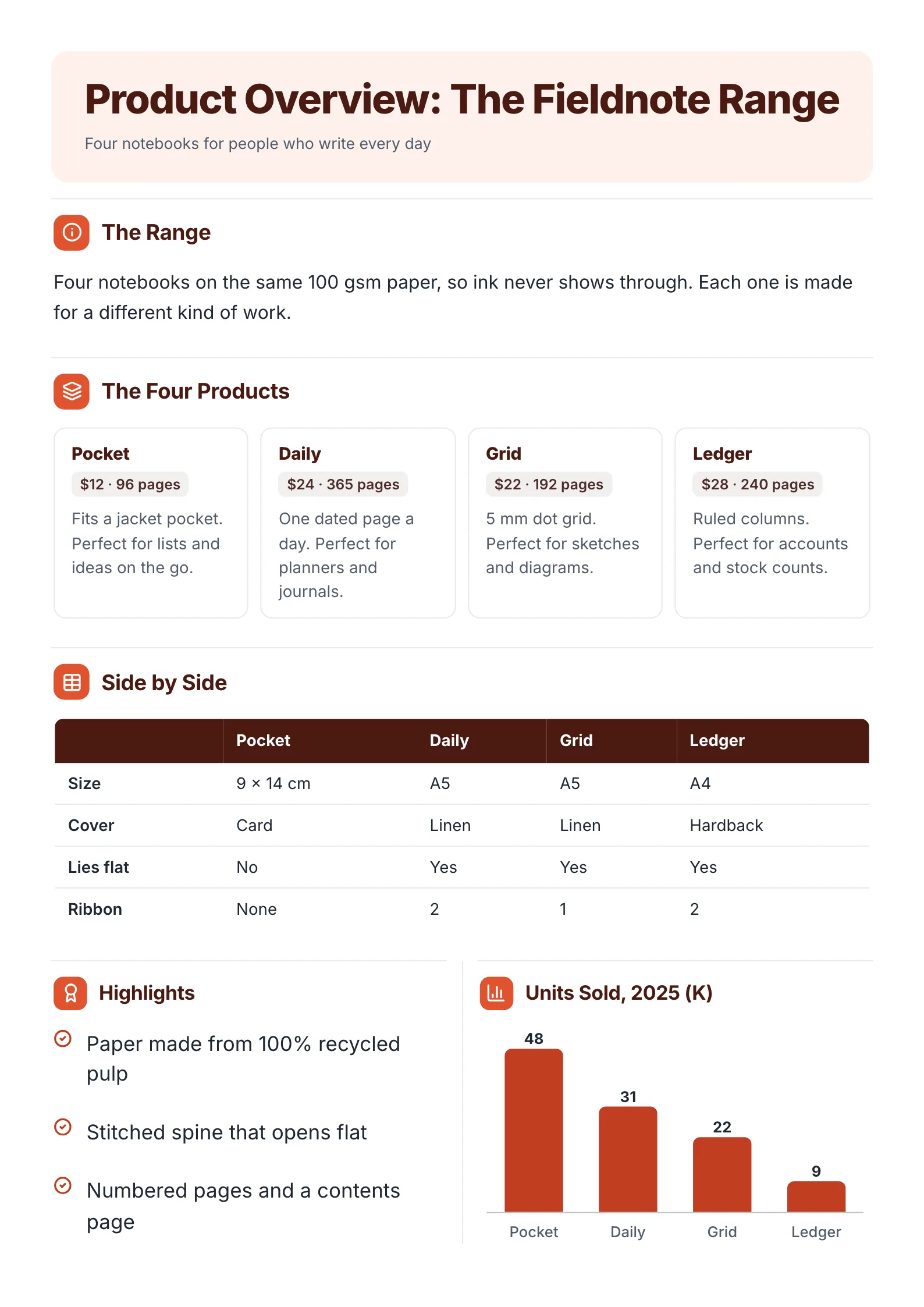
A four-model range on one sheet, with prices, specs side by side and the model that sells best.
Here's the heart of that sheet, written out:
| Daily | Grid | Ledger | ||
|---|---|---|---|---|
| Price | $12 | $24 | $22 | $28 |
| Pages | 96 | 365 | 192 | 240 |
| Size | 3.5 x 5.5 in | 5.8 x 8.3 in | 5.8 x 8.3 in | 8.3 x 11.7 in |
| Cover | Card | Linen | Linen | Hardback |
| Lies flat | No | Yes | Yes | Yes |
| Ribbon | None | 2 | 1 | 2 |
| Units sold, 2025 | 48K | 31K | 22K | 9K |
Read down any column and you know a model. Read across any row and you can make your decision. A paragraph can't do that, and the Pocket shows why: its "No" under lies flat jumps out of a row of "Yes", where a sentence would bury it.
Three smaller choices are worth copying.
One line for what they all share. All four use the same 100 gsm (about 27 lb) paper, "so ink never shows through." That settles quality before anyone compares models.
A use for each model. Pocket is for lists and ideas on the go, and Ledger for accounts and stock counts. A shop owner now knows who to sell each one to.
Sales by model. The Ledger costs the most and sold 9K, against the Pocket's 48K. If you run a shop deciding what to stock, demand is a spec too.
The template
Copy this into a document, or open the example and edit it.
| Part | What to write, with an example |
|---|---|
| Title | Range and audience. The Fieldnote Range, four notebooks for people who write every day |
| What it is | 1 or 2 sentences. Four notebooks on the same 100 gsm paper |
| Each model | Name, price, key figure, use. Daily: $24, 365 pages, one dated page a day |
| Side by side | 4 to 8 rows, the same for every model. Size, cover, lies flat, ribbon |
| Highlights | 3 things every model shares. Numbered pages and a contents page |
| Sales | Units by model, if you have them. Pocket 48K, Daily 31K, Grid 22K, Ledger 9K |
Edit this product spec sheet template for free.
Add these rows if a retailer is reading
A sheet for a shopper can stop at the table above. A sheet for a retail buyer usually can't, because that buyer also has to ship, store and shelve your product. GS1, the standards body behind retail barcodes, publishes a Package and Product Measurement Standard for this reason, and it names shelf planning among the uses of those measurements. So add:
- Packaged size, as well as product size. The Ledger's 8.3 x 11.7 in says nothing about the box it ships in.
- Weight, net and packed. Freight is priced on it.
- Case pack. How many units are in a carton, and the carton's own size and weight.
- Barcode. The GTIN for each model.
- Availability. Lead time, minimum order, and who to contact.
Measure these the same way for every model, and name your units. A buyer's first spreadsheet will be built straight from your rows.
Spec sheet, data sheet or sell sheet?
"Spec sheet" and "data sheet" are mostly the same thing. Pimberly's glossary, for one, lists product data sheet, technical data sheet and specification sheet as synonyms. A sell sheet is a different job:
| Product spec sheet | Sell sheet | |
|---|---|---|
| Main job | Inform | Persuade |
| Reader | Buyers comparing details | Buyers deciding whether to talk |
| Leads with | Models and specifications | The benefit and the offer |
For that one, see our sell sheet guide. For a company or a hotel rather than a product, a fact sheet template keeps the same short, checkable facts. To win support inside your company before a product ships, write a product one pager.
Where spec sheets go wrong
- Specs written as paragraphs. Your buyers compare rows, so give them rows.
- Different rows for different models. If one model lists weight, they all should.
- Thirty rows. Whatever nobody compares can stay in your catalog.
- No price. Your buyer can't shortlist a product with no number on it.
Is your product data in a spreadsheet or a long catalog? Upload it to the free AI One-Pager generator and edit the sheet it drafts.
Frequently asked questions
What should a product spec sheet include?
The product or range name, what it is, each model with its price, a specification table and highlights. Add sales figures if you have them, and packaging and availability for retailers.
How long should a product spec sheet be?
Keep it to one sheet, and link to a manual or catalog for longer technical details.
What is the difference between a spec sheet and a data sheet?
Most people use the terms interchangeably. Some companies keep "data sheet" for the more technical document, so check which one your buyer means.
Can one spec sheet cover several products?
Yes, if every model gets the same rows, as the notebook range does above.




