Press Release Format: 8 Federal Releases, Part by Part
A press release format laid out part by part, from 8 releases by NASA, the FDA, NOAA and 4 more agencies. Only 1 of 8 says For Immediate Release.

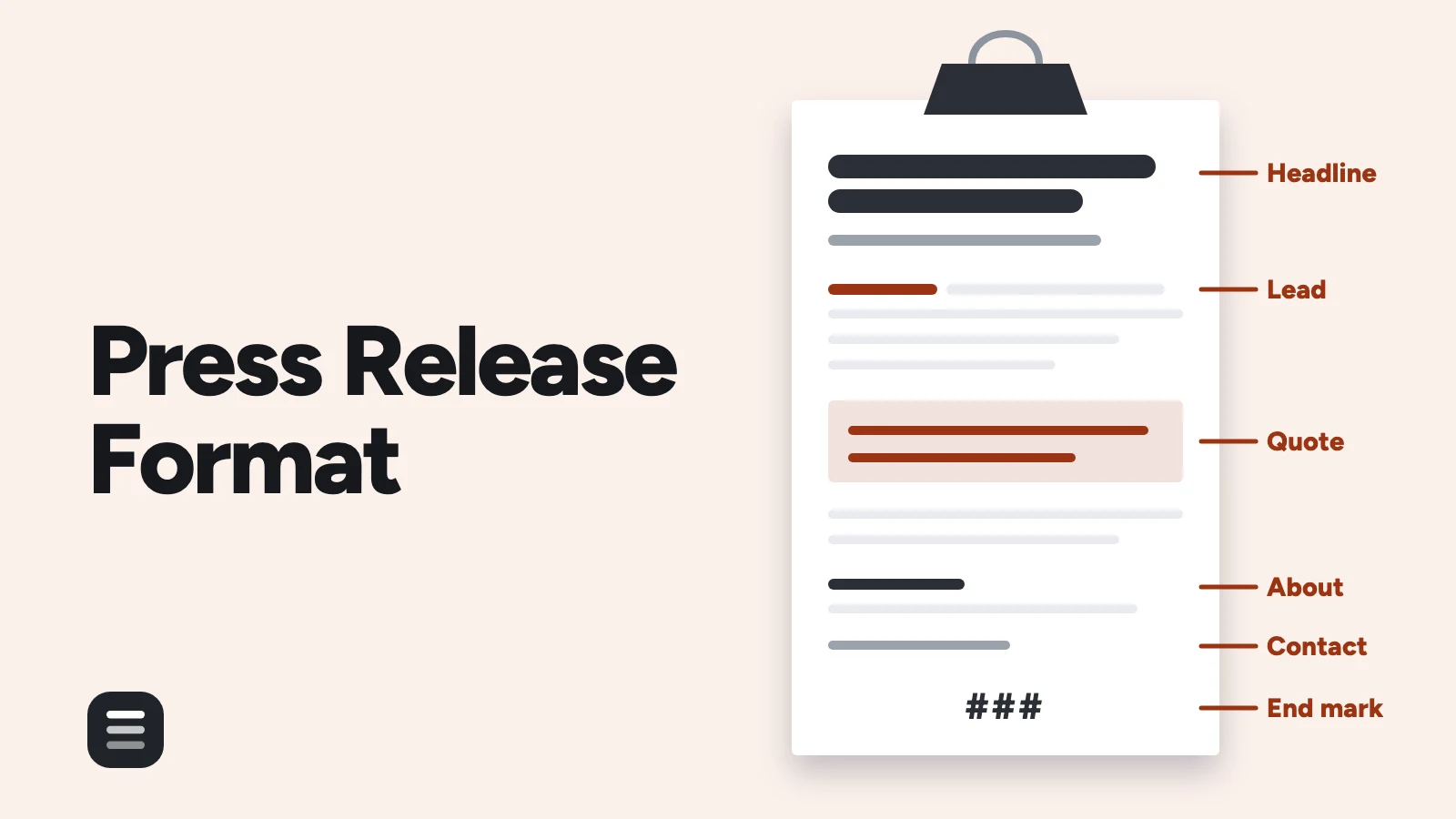
A press release format is a fixed order of parts that lets a reporter find your news, your proof and your phone number without reading every line. The order barely changes from one release to the next. What changes is which optional parts a writer keeps. Start from a free one pager template.
One‑Pager examples
Real One-Pagers made with MakeOnepagers. Open any one to edit it as your own.
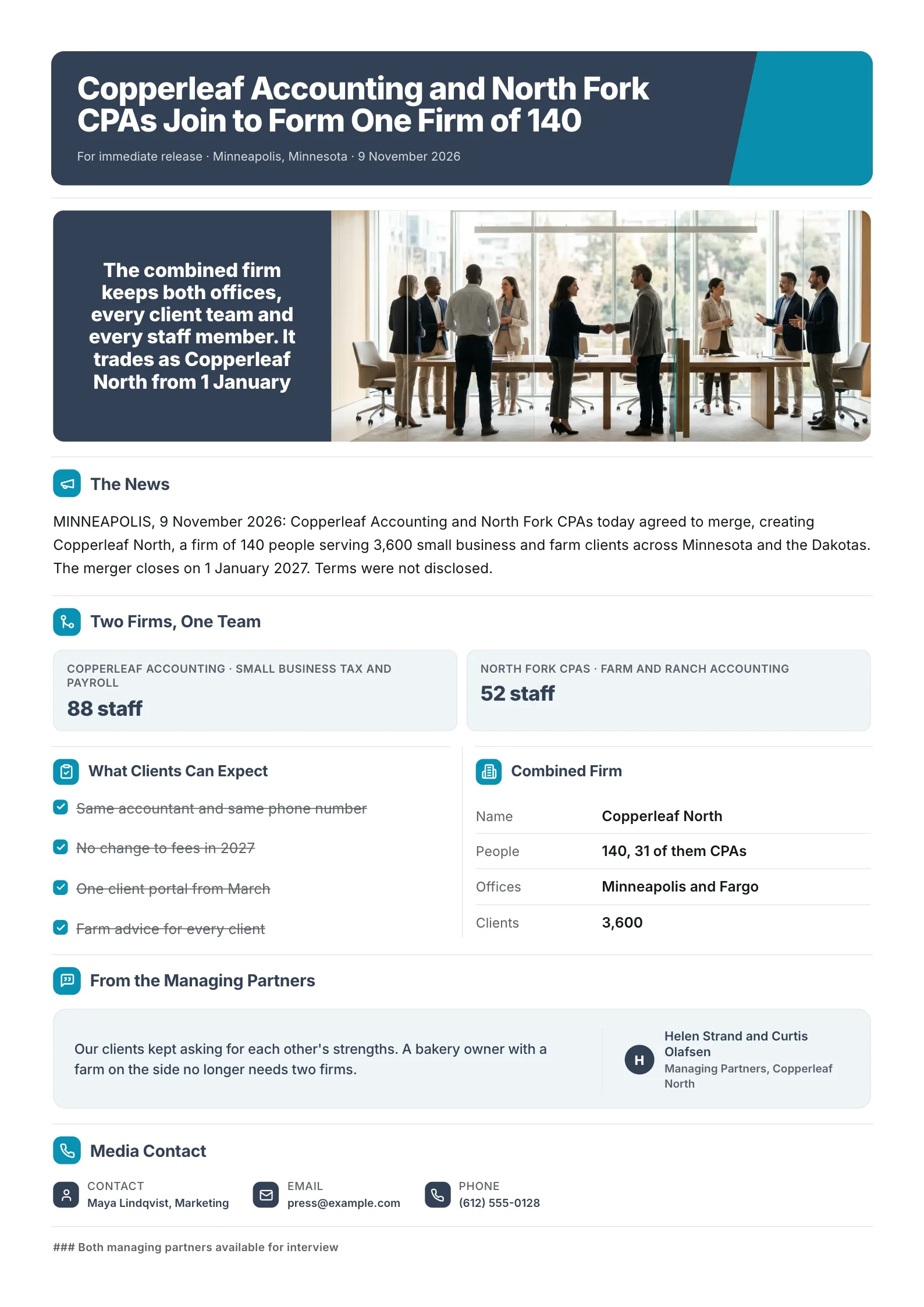 Press Release: Copperleaf North MergerEdit for free(opens in a new tab)
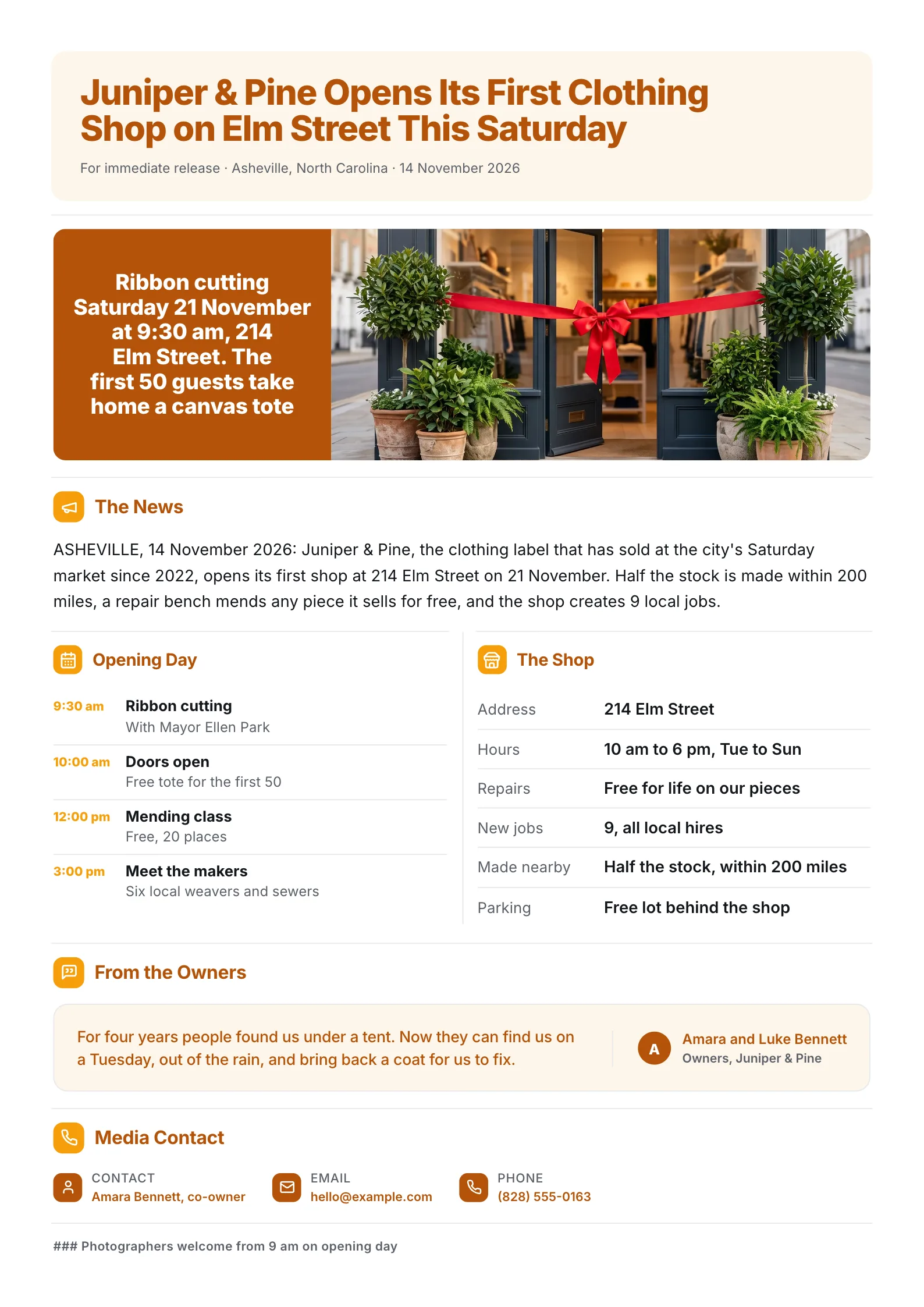 Press Release: Juniper & Pine Grand OpeningEdit for free(opens in a new tab)
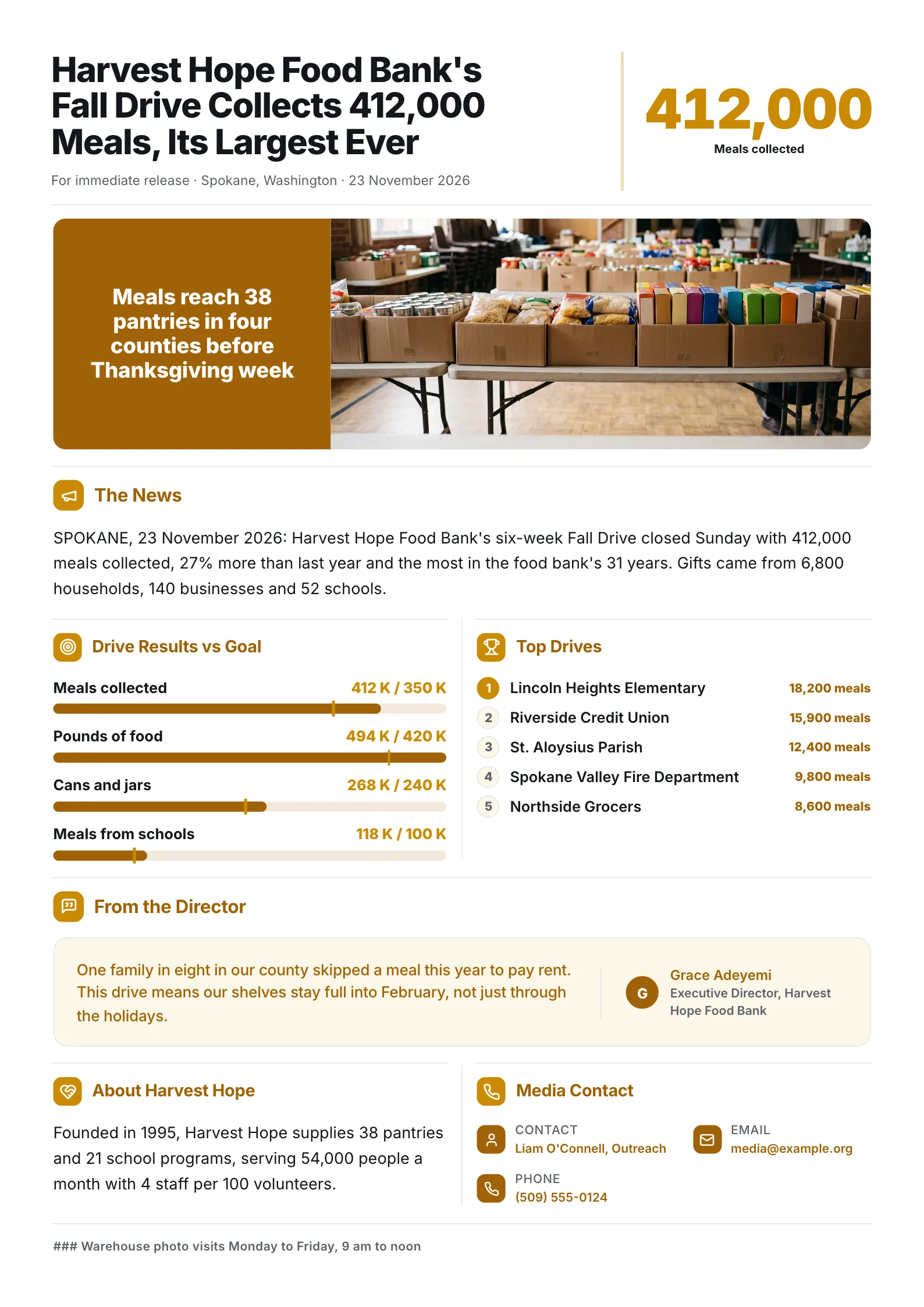 Press Release: Harvest Hope Fundraising ResultsEdit for free(opens in a new tab)
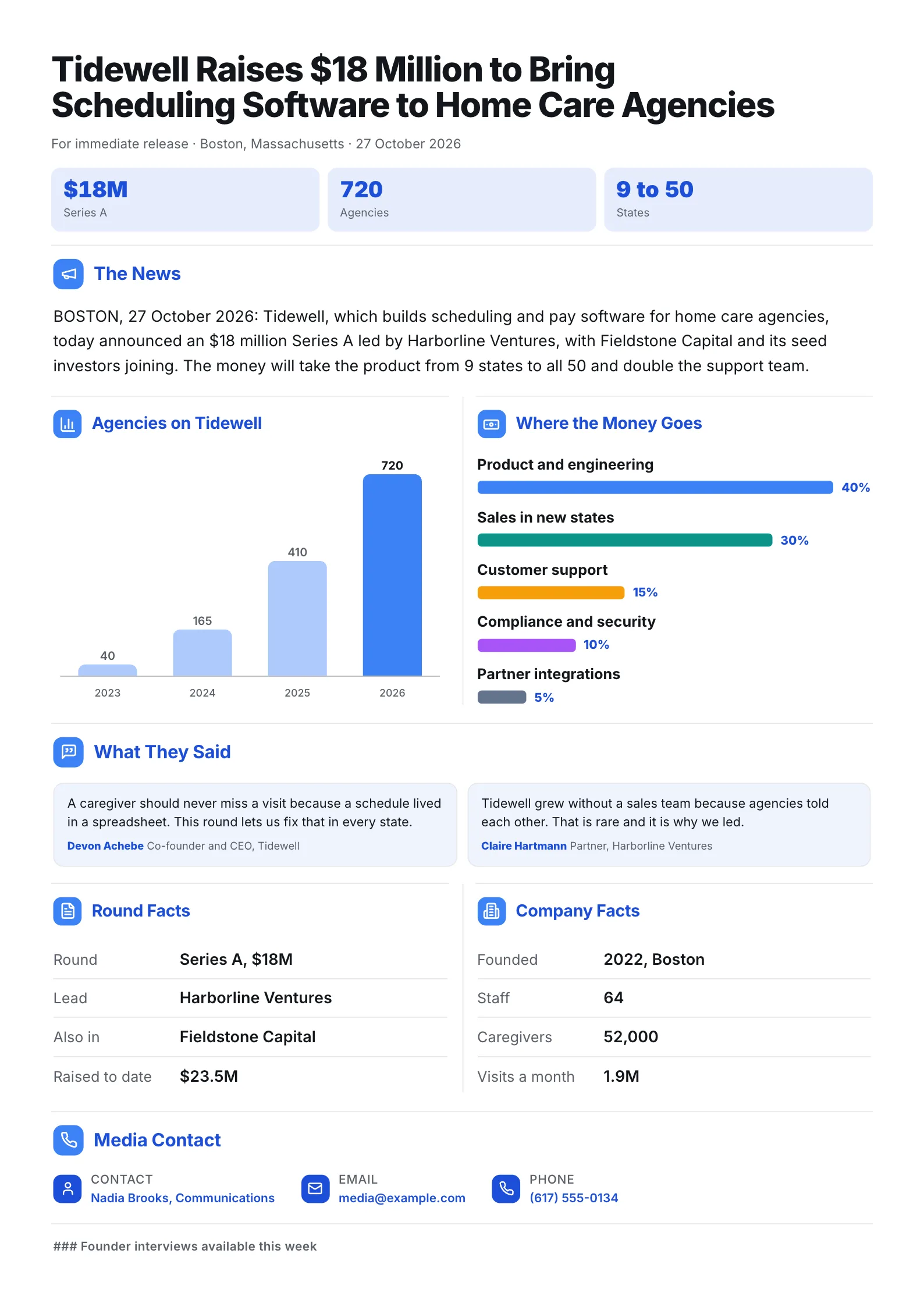 Press Release: Tidewell Series A FundingEdit for free(opens in a new tab)
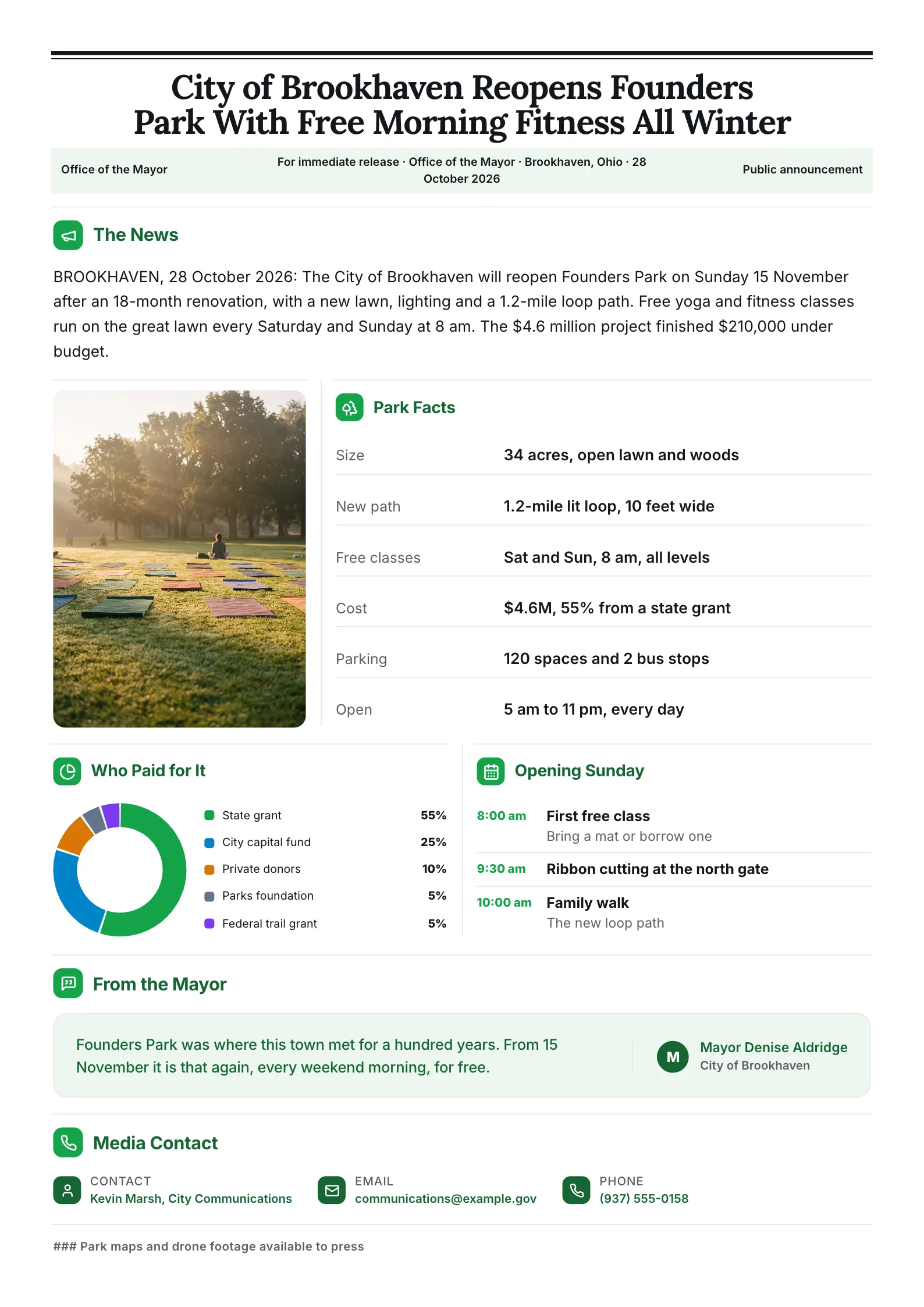 Press Release: Brookhaven Park ReopeningEdit for free(opens in a new tab)
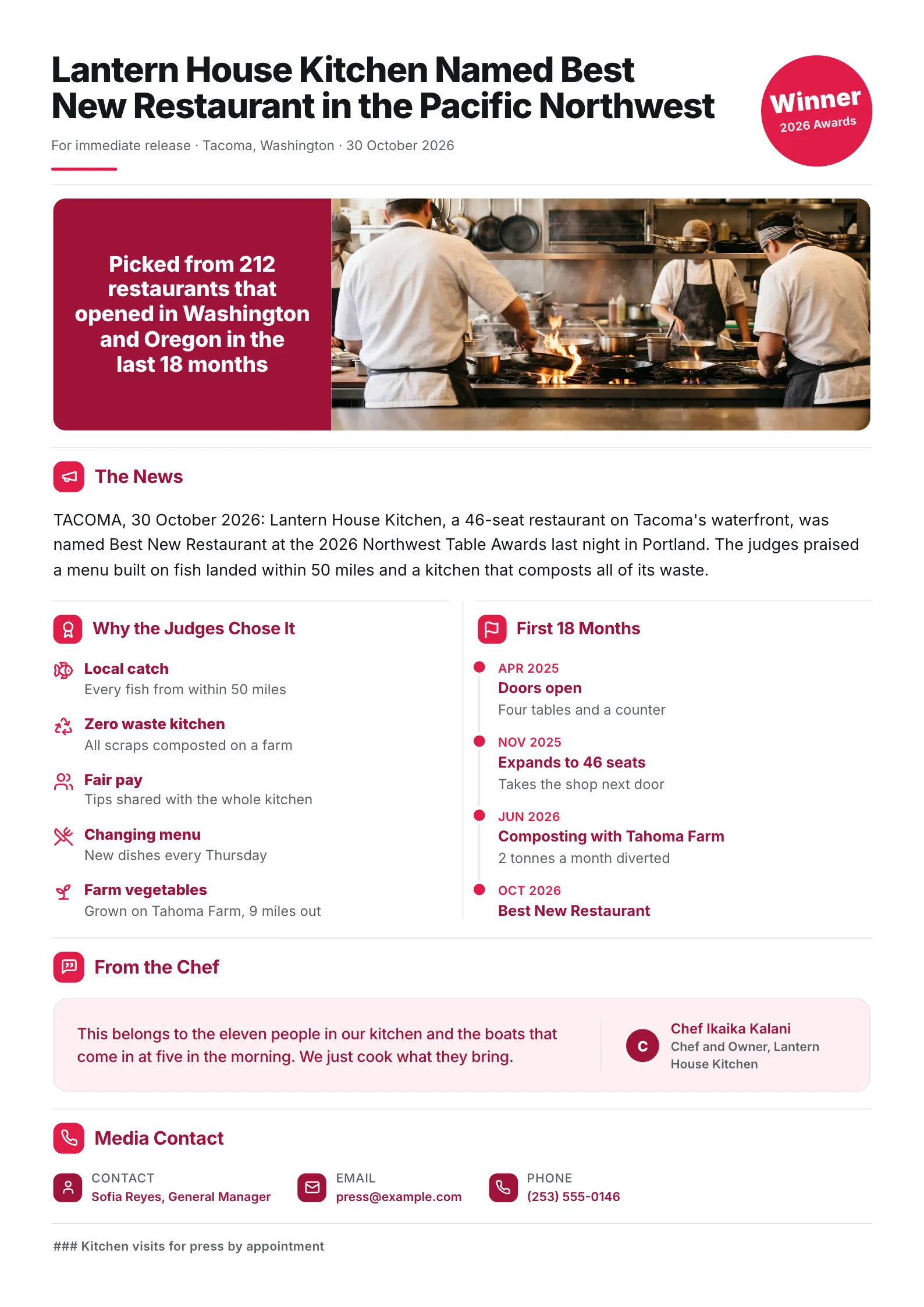 Press Release: Lantern House Award WinEdit for free(opens in a new tab)
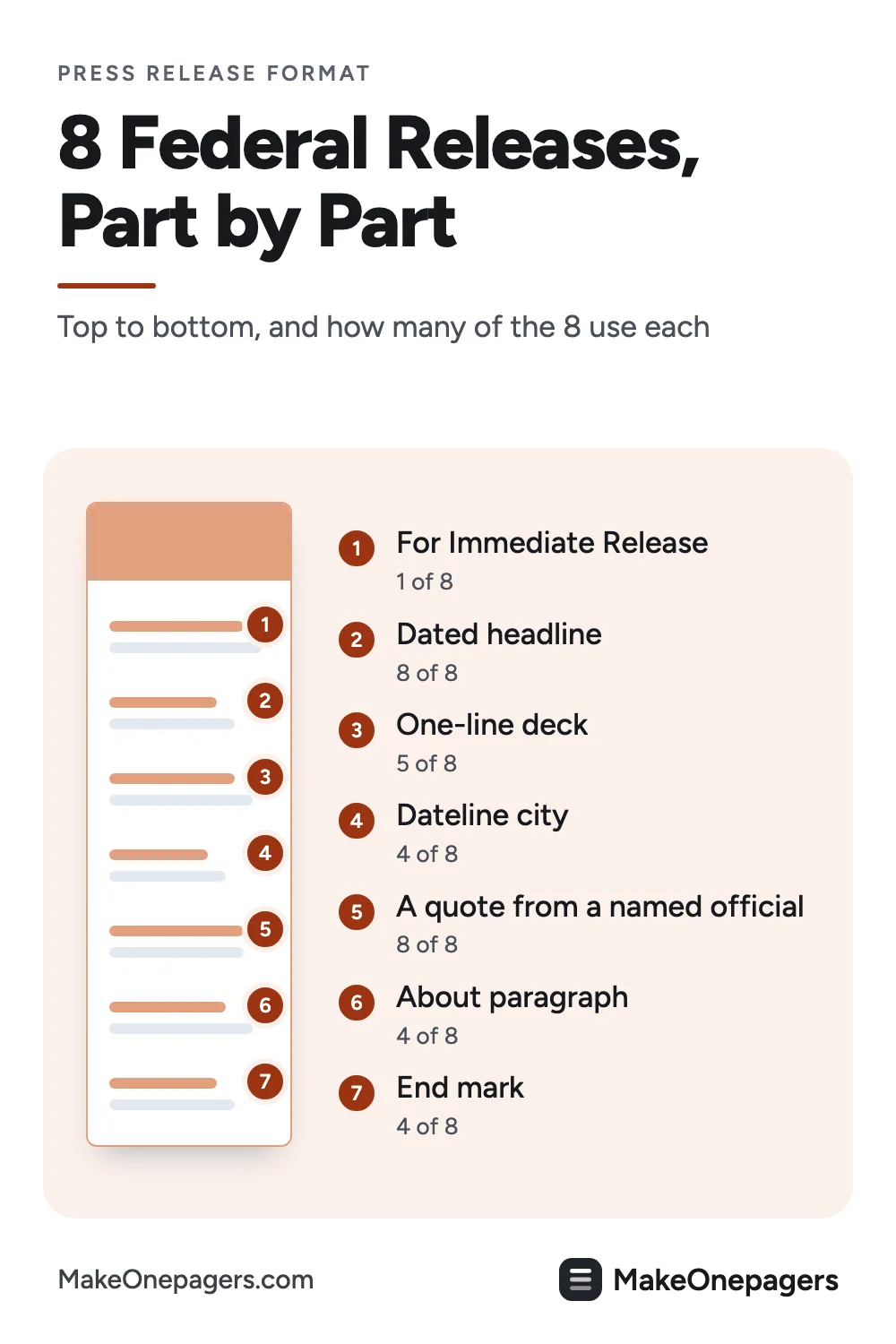
To see which parts are standard and which are habit, we took 8 recent releases from federal newsrooms and marked every part on each one. NASA, the FDA, NOAA, the Energy Department, the FAA, the US Geological Survey and the Interior Department all appear. Below you'll find what they share, where they split, and a layout you can copy for your own release.
The 8 releases, marked part by part
We read each release on its agency's own page on October 30, 2026. Body length counts the words from the first line of news to the end of the last paragraph.
| Release | Deck under the headline | City in the dateline | End mark | Named person to call | About paragraph | Body words |
|---|---|---|---|---|---|---|
| FDA, hepatitis B treatment approval | Yes | No | ### | No, a phone line | Yes | About 590 |
| NASA, new research center director | No | No | -end- | Yes, 2 | No | About 600 |
| NASA, names to Titan on Dragonfly | No | No | -end- | Yes, 3 | No | About 350 |
| NOAA, winter outlook | Yes | No | None | No, a team inbox | Yes, on the outlooks | About 700 |
| USGS, critical mineral deposits | Yes | Reston, Va. | # # # | No, an office inbox | Yes | About 650 |
| Energy Department, helium | Yes | Washington | None | No, a phone and inbox | No | About 315 |
| FAA, vertical flight standards | No | Washington | None | No, a press office inbox | No | About 320 |
| Interior, new national park | Yes | Willcox, Ariz. | None | No, an inbox | Yes, on the park | About 350 |
Source: our read of 8 federal news releases, September 29 to October 29, 2026. Each one is linked at the end.
All 8 open with a headline and a date, and all 8 quote at least one named official, so you can treat those as fixed. After that they split almost down the middle. Five put a short deck under the headline. Four start the first line with a city. Four close with an end mark.
The parts every release had
A headline that says what happened. The 8 headlines run from 6 words (USGS) to 15 (Energy). Most sit at 8 or 9. Each one has a verb you can picture, like "Approves," "Names," "Updates" or "Becomes."
A date near the top. Every release shows the day it went out. Both NASA releases also print a release number, 26-091 and 26-092, which helps when a reporter asks you about "the Titan one."
At least one quote. All 8 quote a named official, and 4 of them quote two people. The quote usually sits in the second paragraph, right after the facts. That placement gives a reporter a line to lift without hunting for it.
Those three parts are your floor. You can drop almost anything else and your release will still read as a press release.
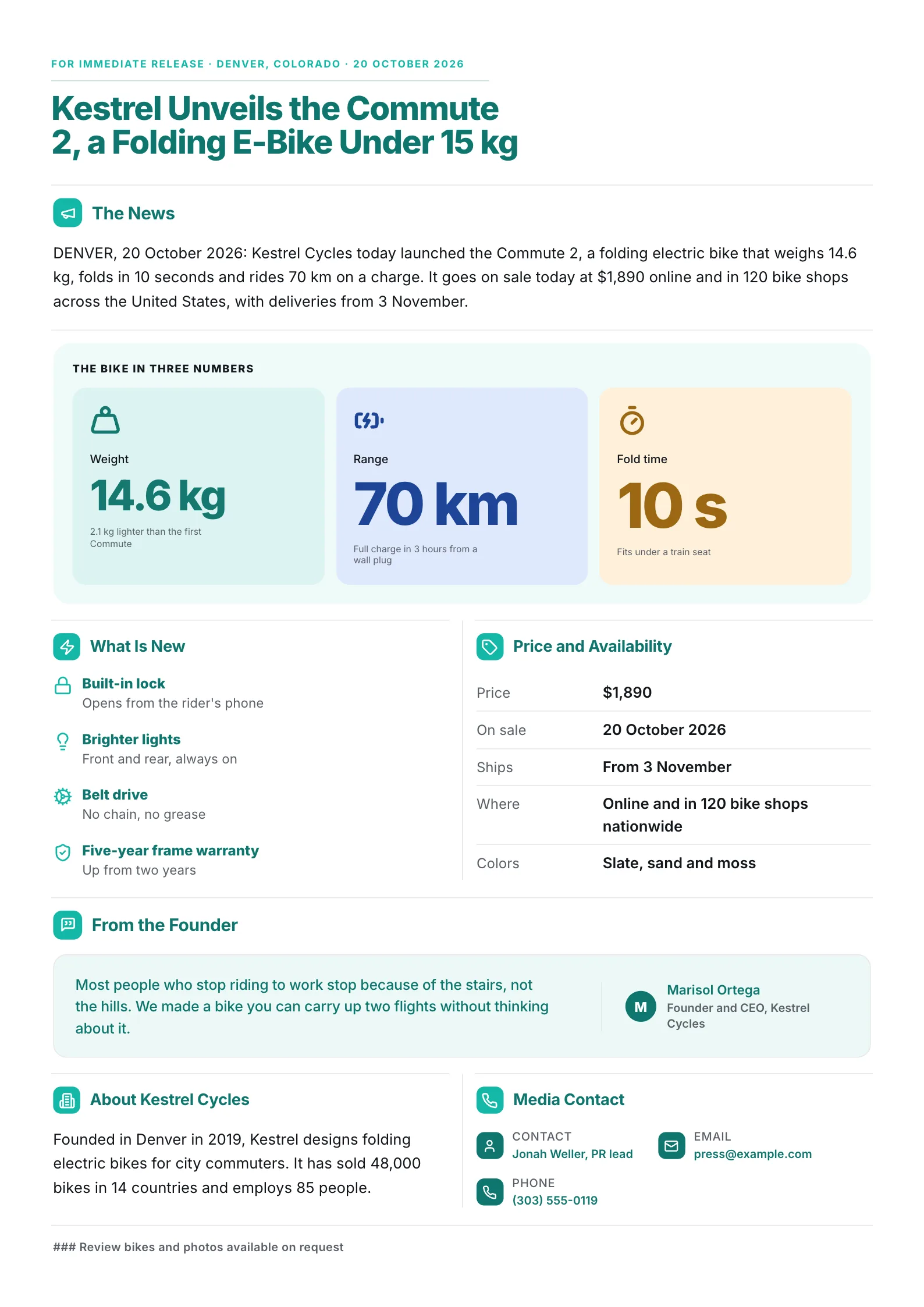 Edit this template
Sample names and figures. The news paragraph opens with DENVER and the date, the same city-first dateline USGS and Interior use.
The parts writers keep or drop
The deck. NOAA's winter outlook has a one-line subhead under its headline, "Expected impacts include warmer North, wetter South and East." USGS packs its two biggest numbers into its deck, 1,271 known deposits across 41 states and Puerto Rico. A deck earns its place when your headline can't hold the number that matters.
The dateline city. USGS starts "RESTON, Va." and Interior starts "WILLCOX, Ariz.," where the park sits. The FDA and both NASA releases skip the city and lead straight into the news, which you can do too. Add a city when the place is part of your story, like a local opening or a new site.
"For Immediate Release." Only the FDA prints it, as a label above the date. The other 7 rely on the date alone, and so can yours. On a release you post on your own site, the date does the same job. Keep the label when you're emailing a release that a reporter might file and read later.
The end mark. The FDA closes with ###, USGS with # # #, and NASA with -end-. The other 4 just stop. Use one when your contact details or About text follow, so nobody mistakes them for the story.
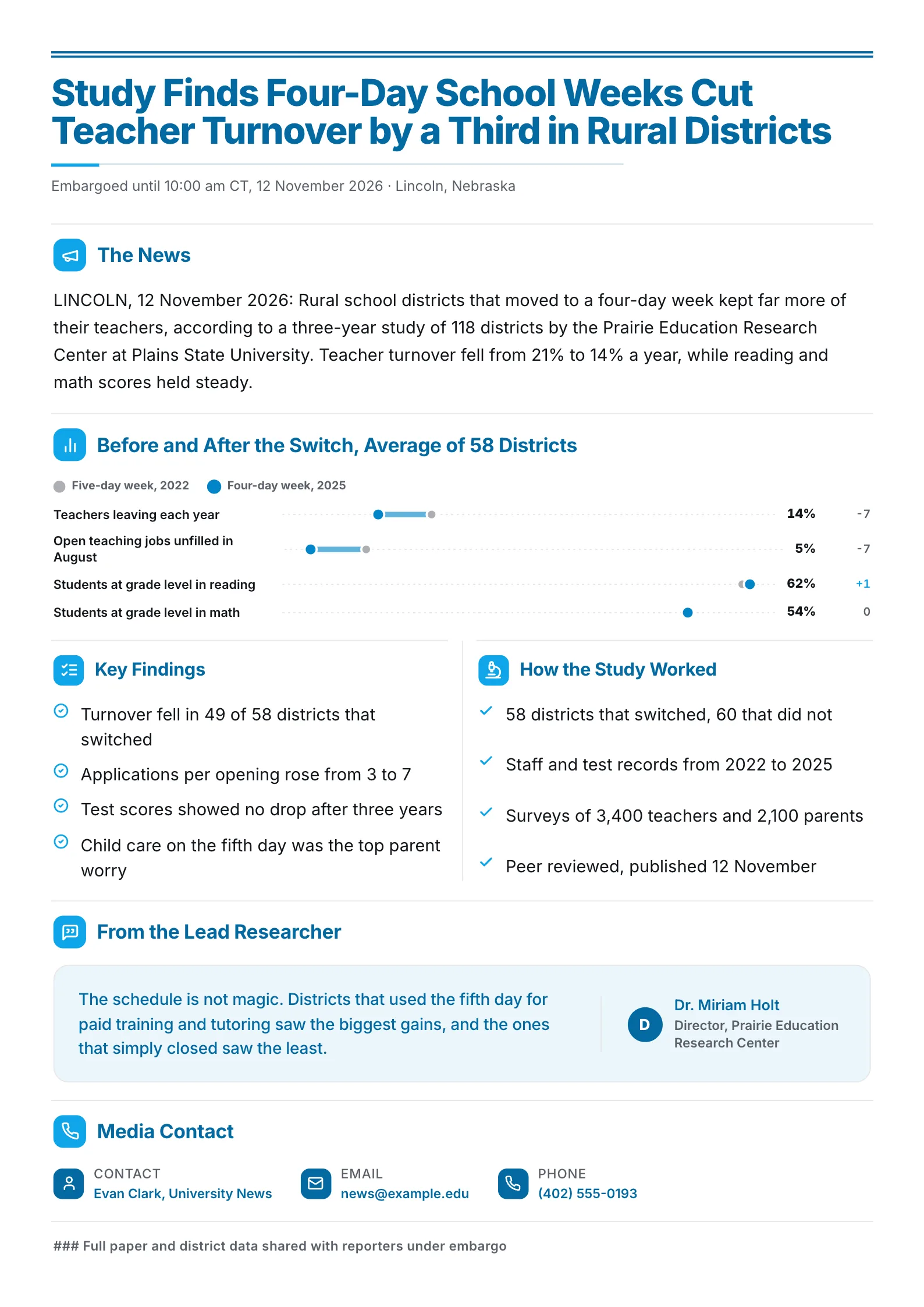 Edit this template
Sample names and figures. The line under the headline swaps For Immediate Release for an embargo time, the one case where that label line matters most.
Where the contact goes
Six of the 8 put the media contact at the bottom. Interior lists its inbox right under the date, and the FAA keeps its press office in a box beside the release. Either spot works on a web page. On a one-page release you'll send as a file, the bottom is where a reporter looks.
The bigger gap is who they list. Only NASA names people, and both NASA releases do it well. Each contact gets a name, an office, a direct line and an email, with a second contact for the partner, like the Johns Hopkins lab building Dragonfly. The other 6 give a team inbox or a general phone line.
A shared inbox is fine for an agency that gets hundreds of calls. For your business, a named person answers faster. Put your own name or your spokesperson's, with a phone that someone picks up.
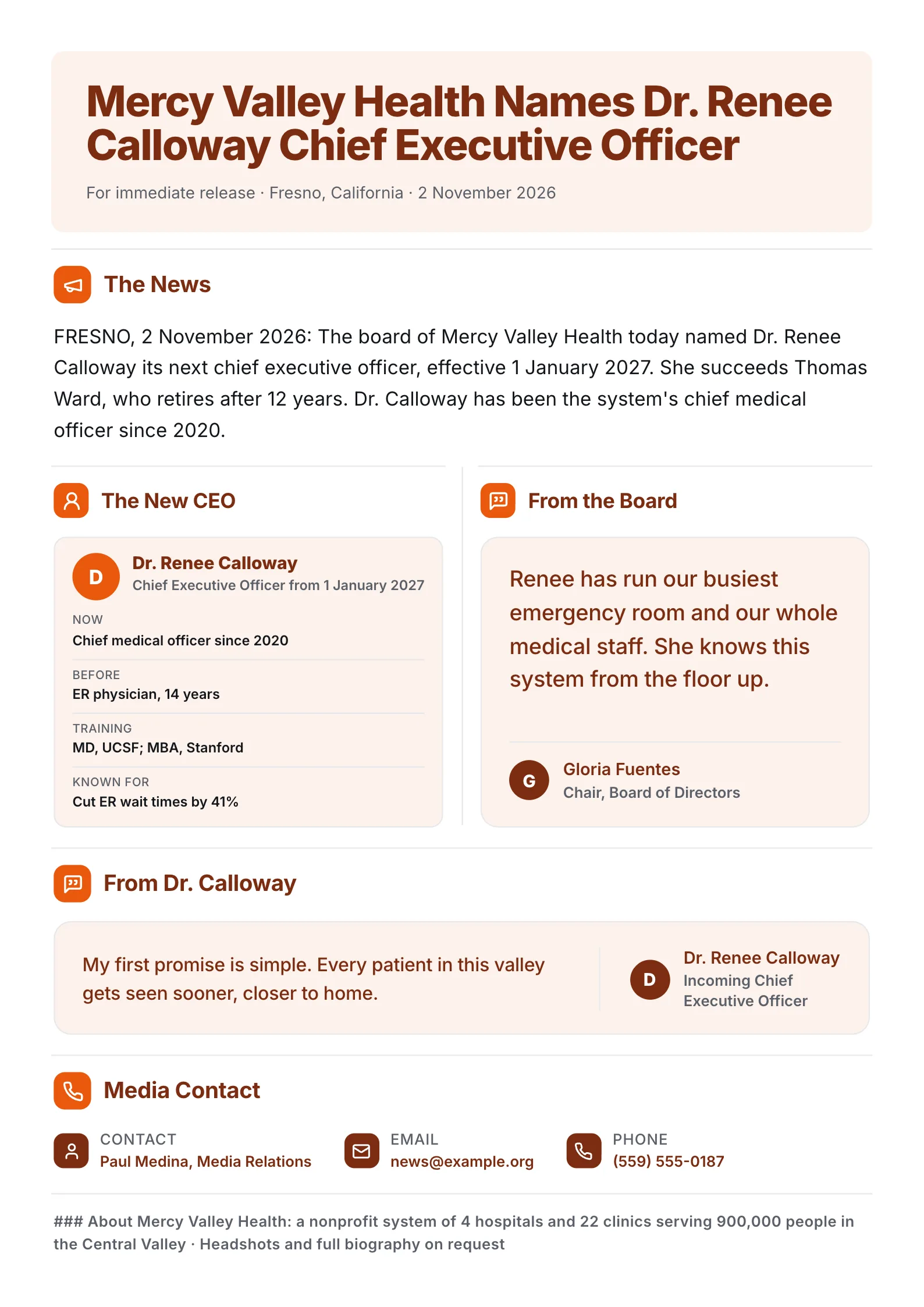 Edit this template
Sample names and figures. Media Contact names Paul Medina, Media Relations, with an email and a phone, and the footer offers headshots on request.
How long the body runs
The bodies run from about 315 words (Energy) to about 700 (NOAA). Four of the 8 come in under 360 words. The longer ones carry something a reporter will reuse. NOAA splits its outlook into temperature, precipitation and drought, each under its own subhead, and the FAA lists its 5 new design standards as bullets.
That's a useful test for your own length. Write the news, the proof and one quote, then stop. Go longer only when you have a list or a breakdown that a reporter would otherwise have to ask you for.
The About paragraph
Four of the 8 end with a short About section. The FDA's says what the agency does in two sentences. USGS puts its line after the end mark. Interior describes the park itself, about 12,000 acres near Willcox, which is the fact a travel writer needs. NOAA's About explains what a seasonal outlook can and can't predict.
Your About paragraph should do one of those two jobs. Either say who you are in two sentences, or answer the question your news raises.
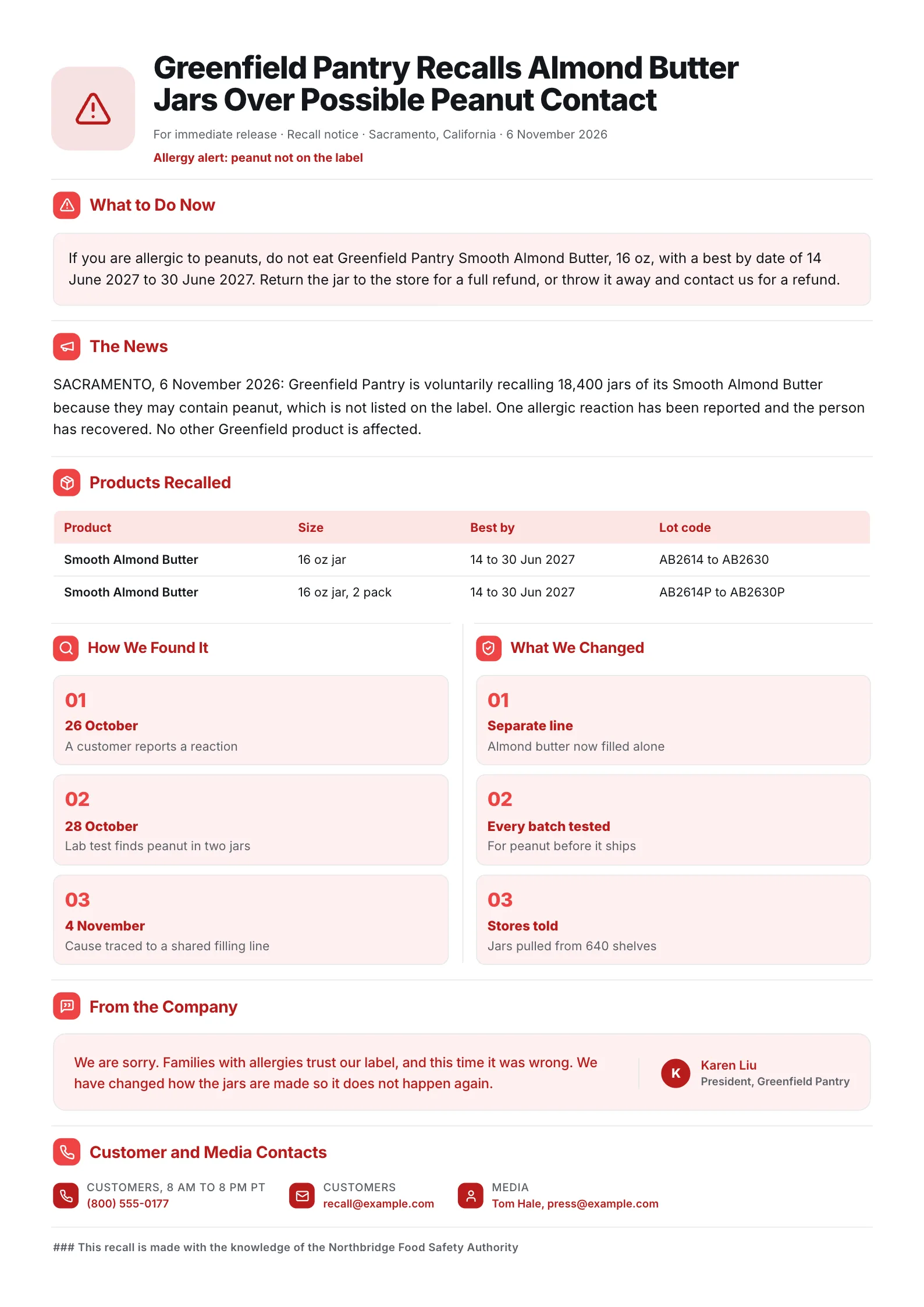 Edit this template
Sample names and figures. Customer and Media Contacts splits the phone line for shoppers from the press contact, Tom Hale.
A press release format you can copy
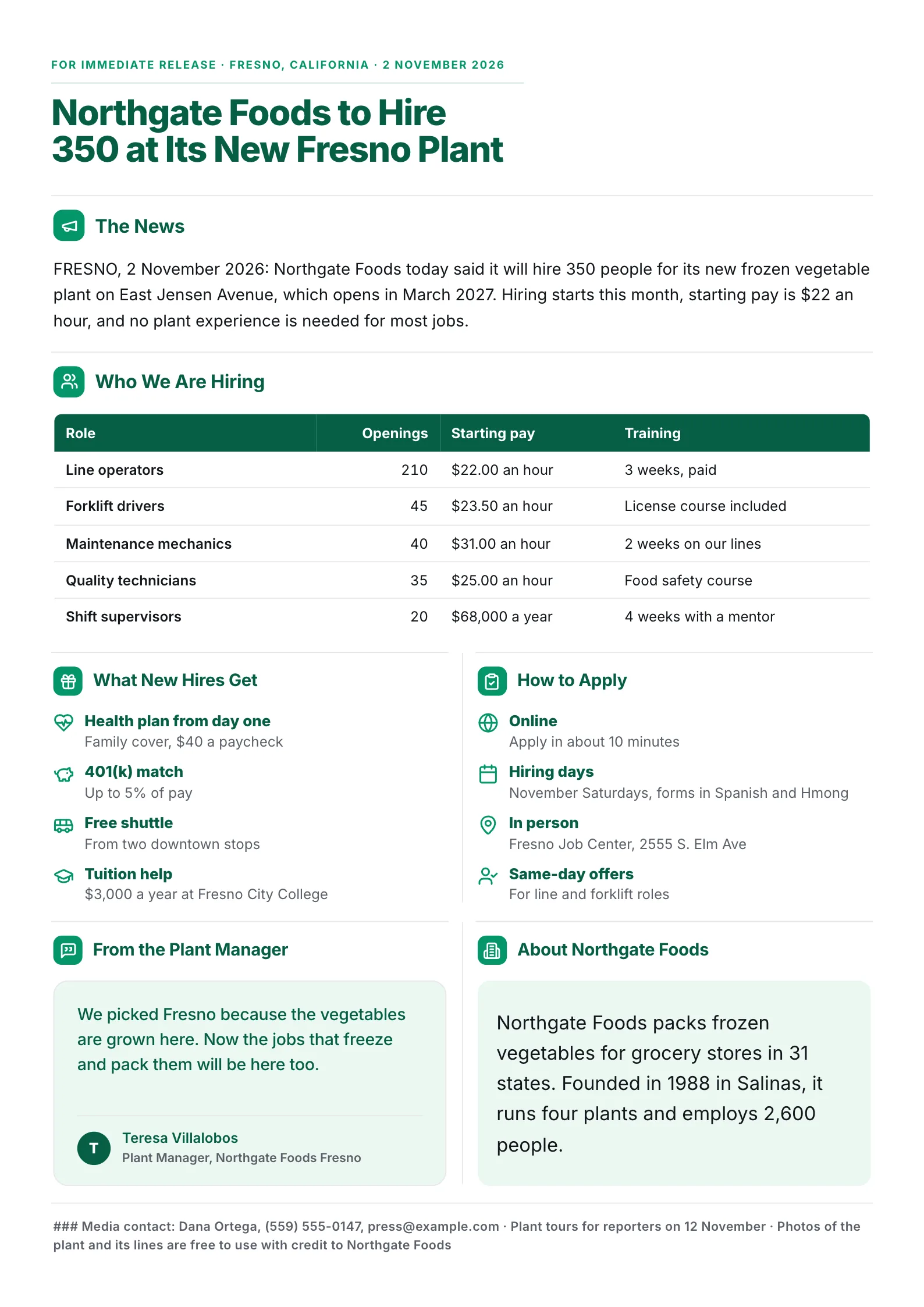
Here's the order to use, built from what the 8 releases share and the parts worth keeping.
- A release line with the date, or an embargo time if the news can't run yet.
- A headline of about 8 words with a clear verb.
- A one-line deck, only if your key number won't fit in the headline.
- Your lead sentence with who, what and when, opening with the dateline city in capitals when the place is part of the news.
- One or two paragraphs of facts, then a quote that someone in your company actually said.
- A short list or table if you have details a reporter would ask for.
- Two sentences About your company.
- A named media contact with phone and email.
- An end mark, like ###.
 Edit this template
Sample names and figures. How to Apply lists online, hiring days and in person, the details a local reporter would otherwise call to ask.
For the writing itself, see our guide on how to write a press release. Our press release template post has a fill-in version, and a media kit holds the logos and photos you can't fit on your release.
The 8 releases we read
| Release | Agency | Date |
|---|---|---|
| FDA Approves First-of-Its-Kind Chronic Hepatitis B Treatment | Food and Drug Administration | October 20, 2026 |
| NASA Names Troy Asher Armstrong Flight Research Center Director | NASA | October 29, 2026 |
| Send Your Name to Titan Aboard NASA's Dragonfly Mission | NASA | October 29, 2026 |
| El Nino looms large over U.S. Winter Outlook | NOAA | October 15, 2026 |
| USGS Updates U.S. Critical Mineral Deposits | US Geological Survey | September 29, 2026 |
| Energy Department Designates Helium as Critical Material to Strengthen American Manufacturing and Supply Chain Security | Department of Energy | October 23, 2026 |
| FAA Releases Draft Design Standards for Vertical Flight Facilities | Federal Aviation Administration | October 22, 2026 |
| Chiricahua National Monument Becomes America's Newest National Park | Department of the Interior | October 21, 2026 |
Give a reporter a name to call
Take your last release and check it against the 9-part order above. The part most often missing is the one only NASA got right, a named person with a phone number. Add yours, then lay the release out on a press release design in MakeOnepagers so the contact box sits at the foot of every release you send.
Frequently asked questions
What is the correct format for a press release?
Headline, date, an optional deck, a lead sentence with an optional dateline city, the body with at least one quote, an About paragraph, a media contact and an end mark. All 8 federal releases we read had the headline, the date and a quote. The other parts appeared in about half.
Do you still need "For Immediate Release" on a press release?
Only 1 of the 8 federal releases used it. Keep it on a release you email, because a reporter might open it days later. Use an embargo line with a time zone if the news can't run until a set moment.
What goes at the end of a press release?
An end mark such as ###, or -end- as NASA uses. Four of the 8 releases used one. NASA lists its contacts after -end-, USGS puts its About line after # # #, and the FDA ends on ### after both.
How long should a press release be?
Most fit on one page. The 8 releases ran from about 315 to about 700 words, and half were under 360. Write the news, the proof and one quote, and add more only for lists or numbers a reporter would want.




