BlogGuide
Performance Review Template: Free One-Page Summary
A free one-page performance review template for managers, the 6 parts every review needs, a worked example with scores against last year, and the mistakes that make reviews feel unfair.

By MakeOnepagers Team
Updated · 4 min read
A performance review template turns a year of work into one page an employee and manager can talk through: the overall rating, a score for each area with last year's beside it, what went well, goals for next year and a comment from the manager. Most performance reviews are long forms that take hours to fill in and minutes to forget. A one-page performance review summary is what people actually keep, reread before their next review and bring to a promotion conversation. Below are the six parts every review needs, a free template you can copy and a worked example.
One‑Pager examples
Real One-Pagers made with MakeOnepagers. Open any one to edit it as your own.
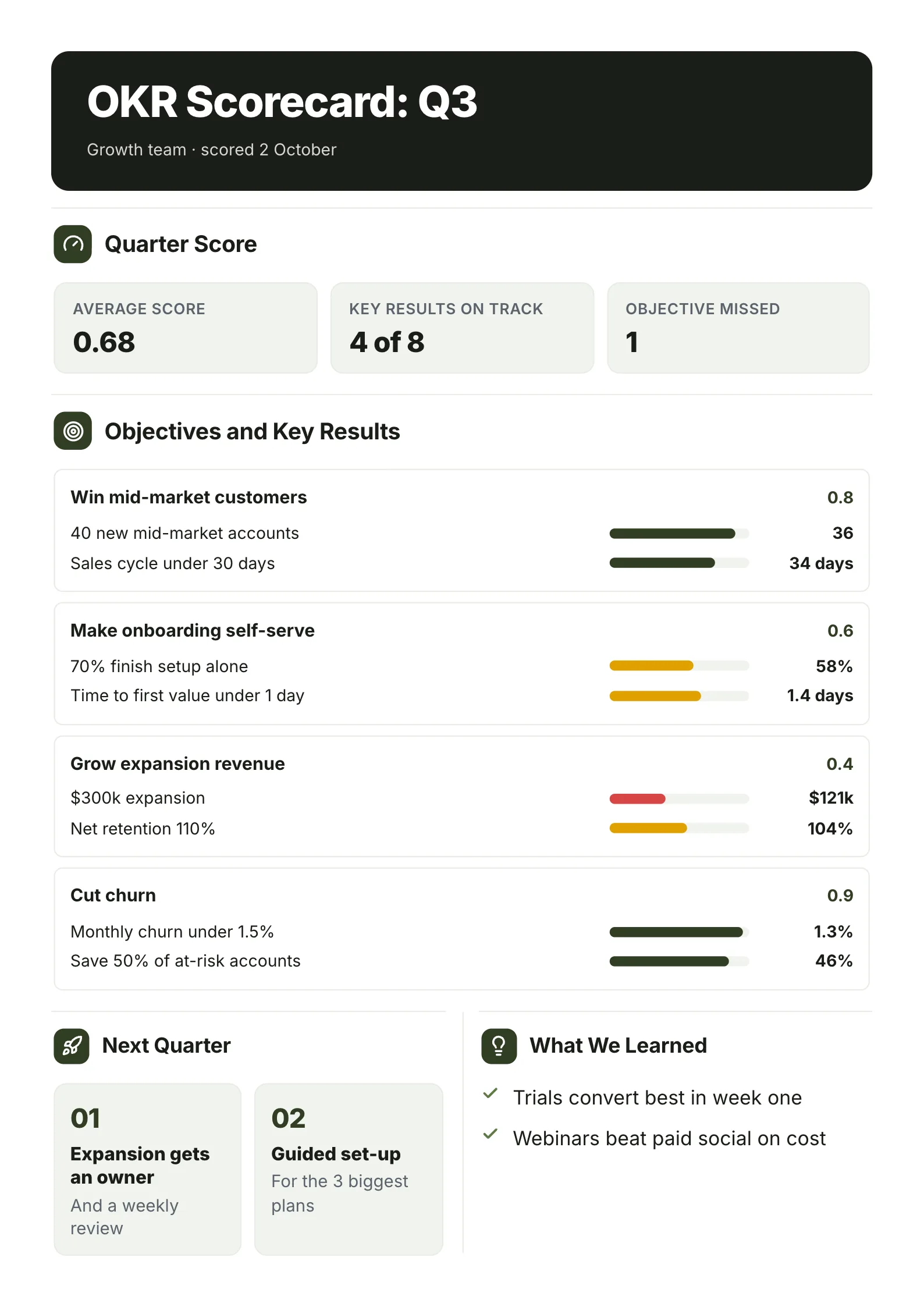 OKR ScorecardEdit for free(opens in a new tab)
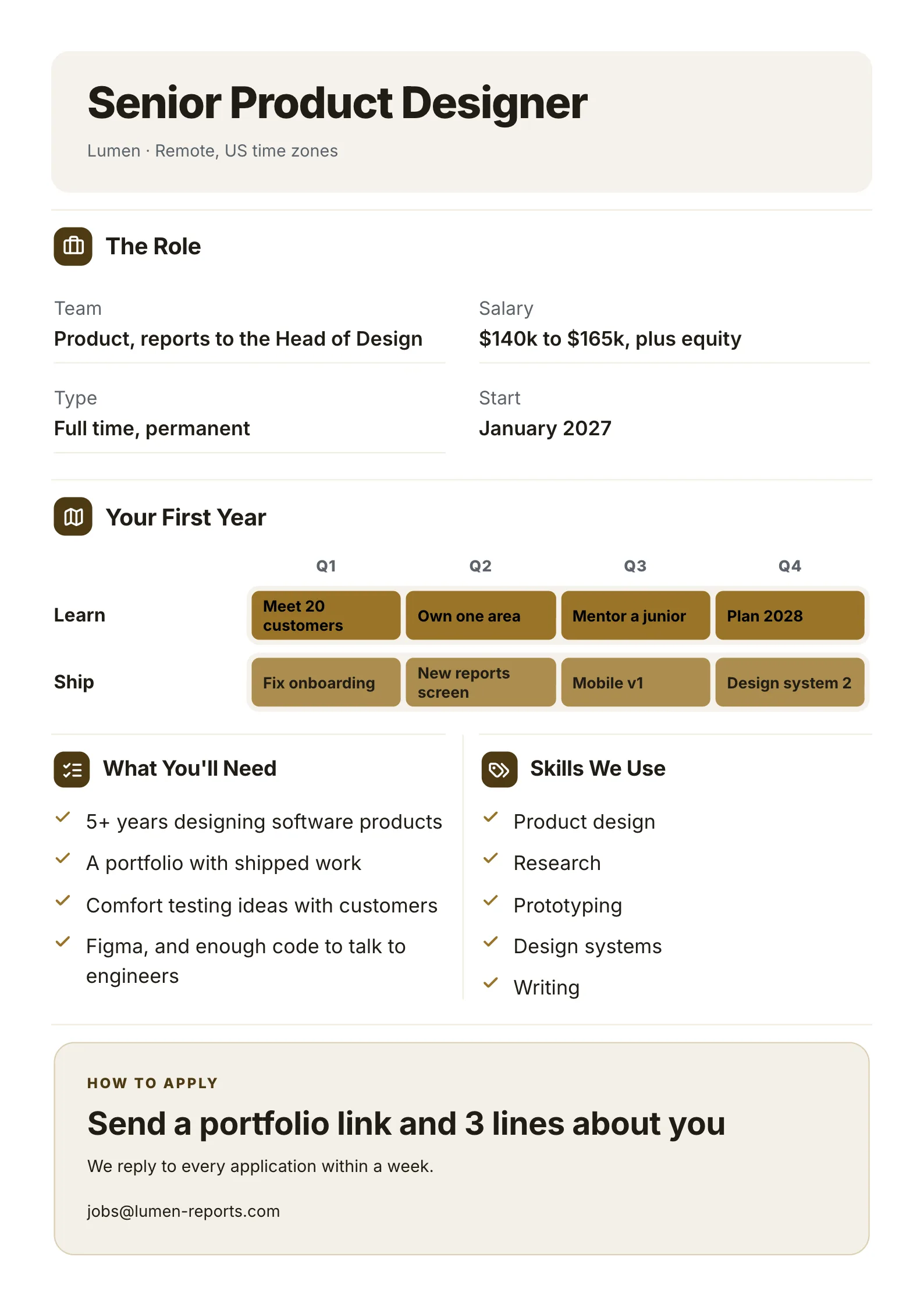 Job DescriptionEdit for free(opens in a new tab)
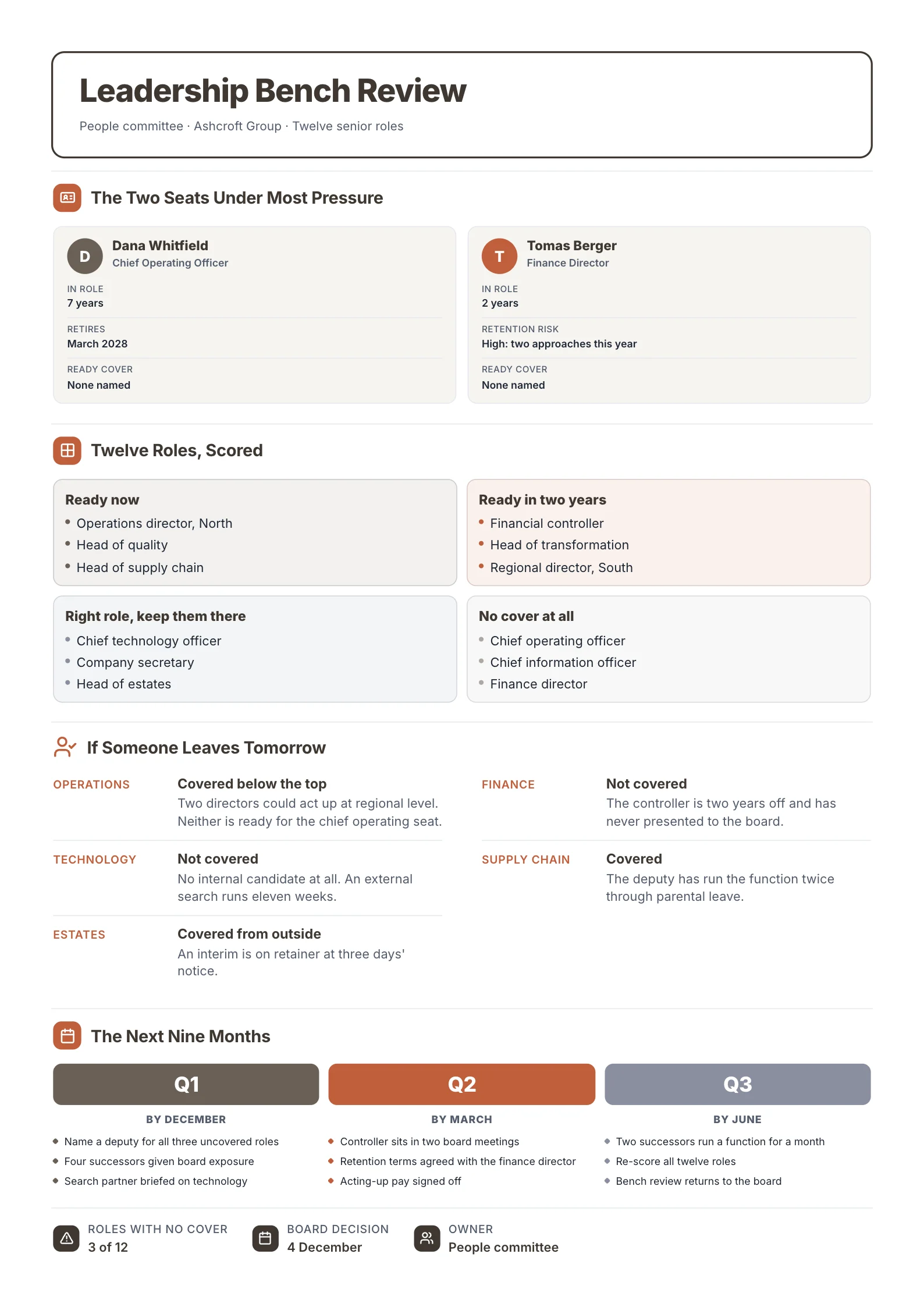 Succession PlanEdit for free(opens in a new tab)
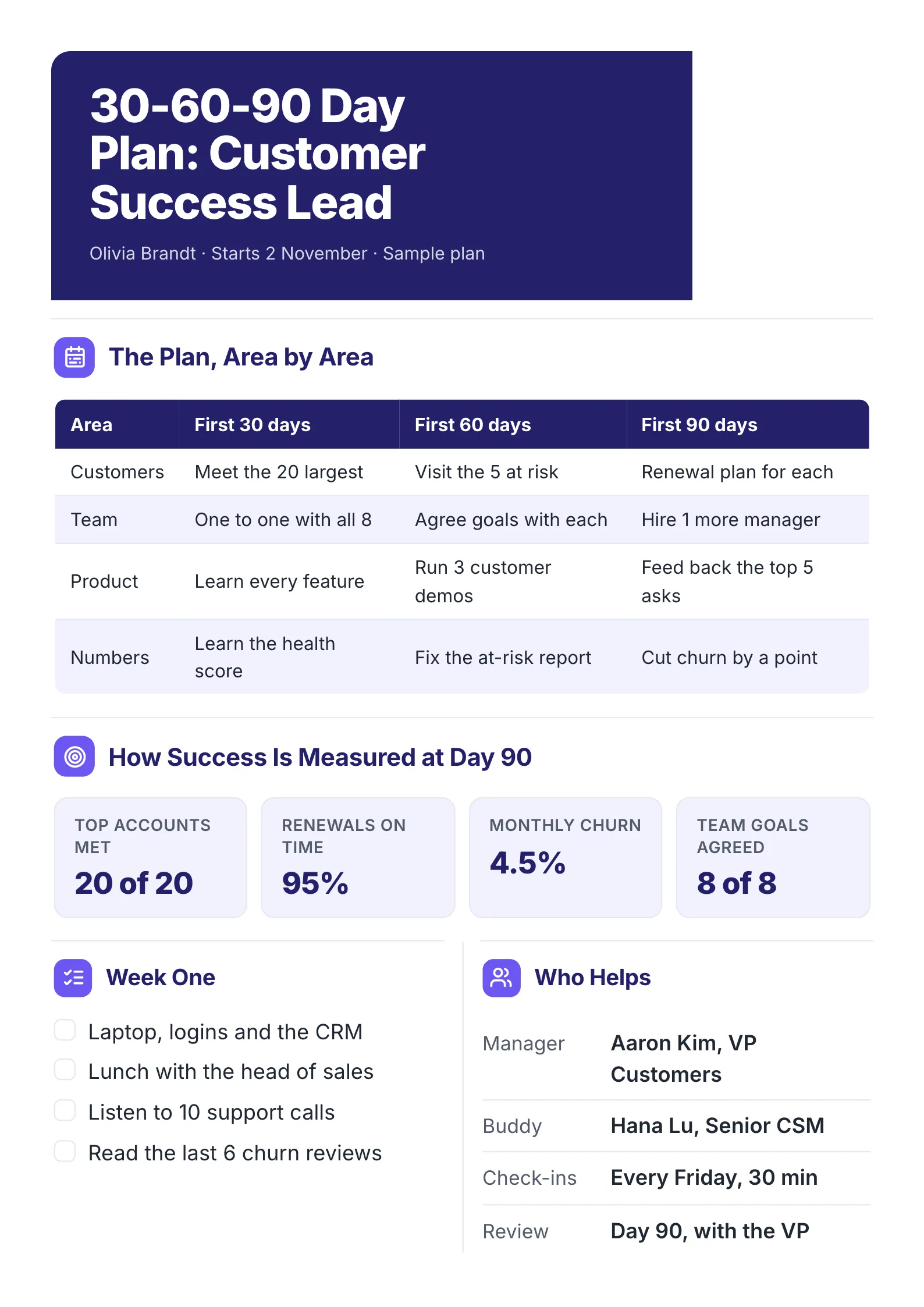 30-60-90 Day Onboarding PlanEdit for free(opens in a new tab)
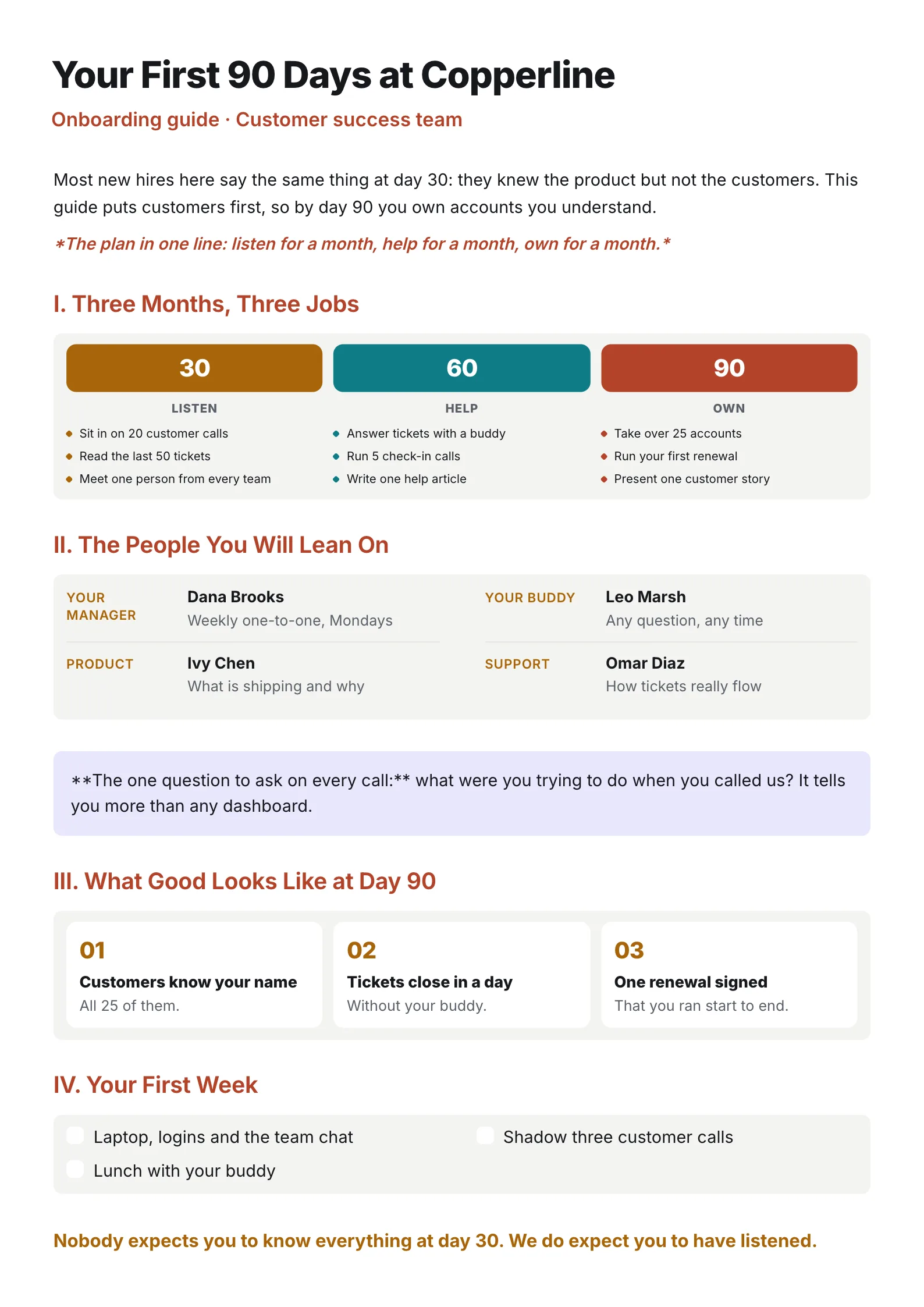 First 90 Days GuideEdit for free(opens in a new tab)
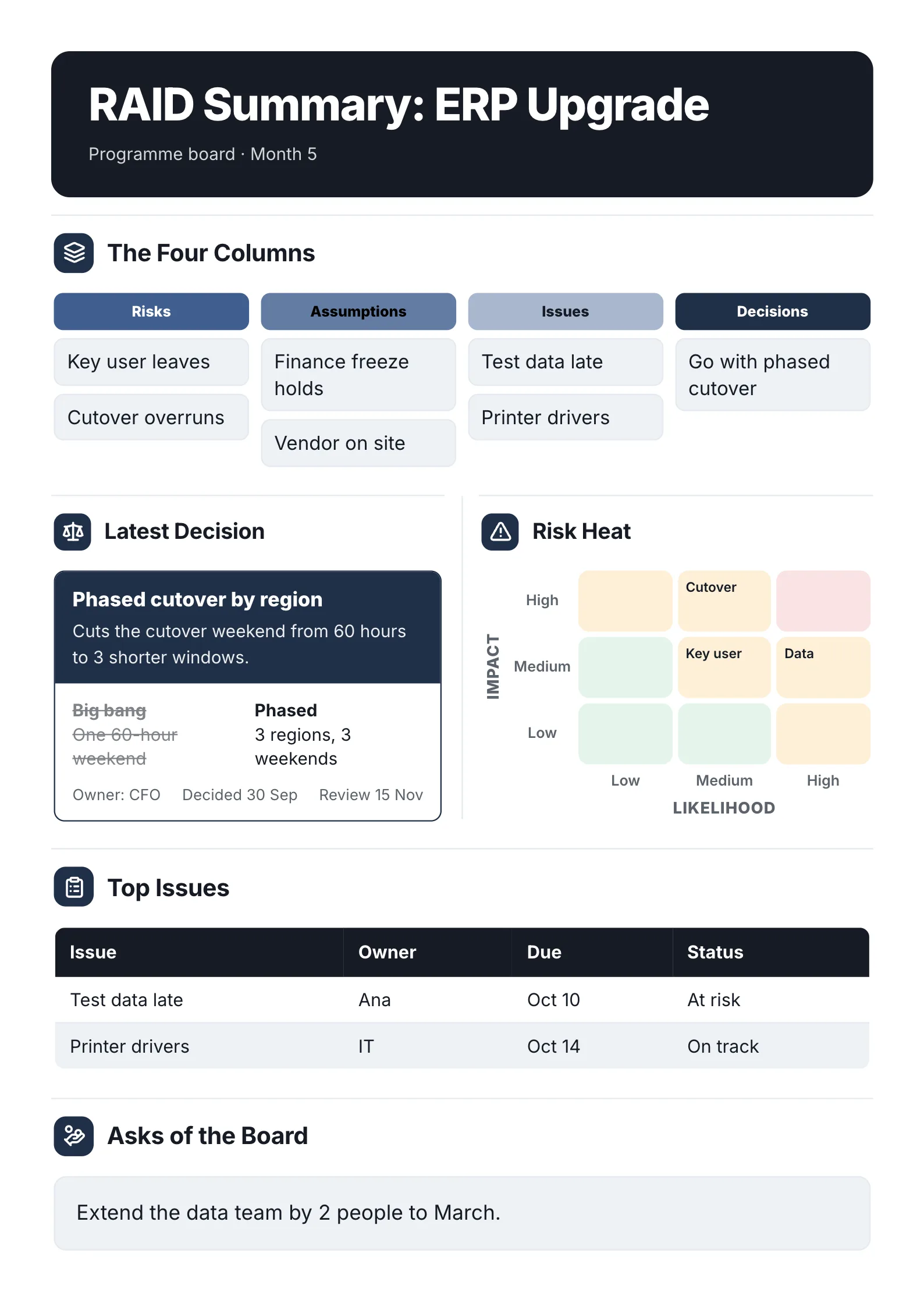 RAID Log SummaryEdit for free(opens in a new tab)
The example was made with MakeOnepagers. It opens as a template you can edit for free: every word, chart and color.
What is a performance review?
A performance review (also called a performance appraisal or annual review) is a manager's assessment of how an employee did over a period, usually a year. It records a rating, the reasons for it and what happens next.
A good review has no surprises. Everything in it should already have come up in one-to-ones during the year. The page simply puts it in one place.
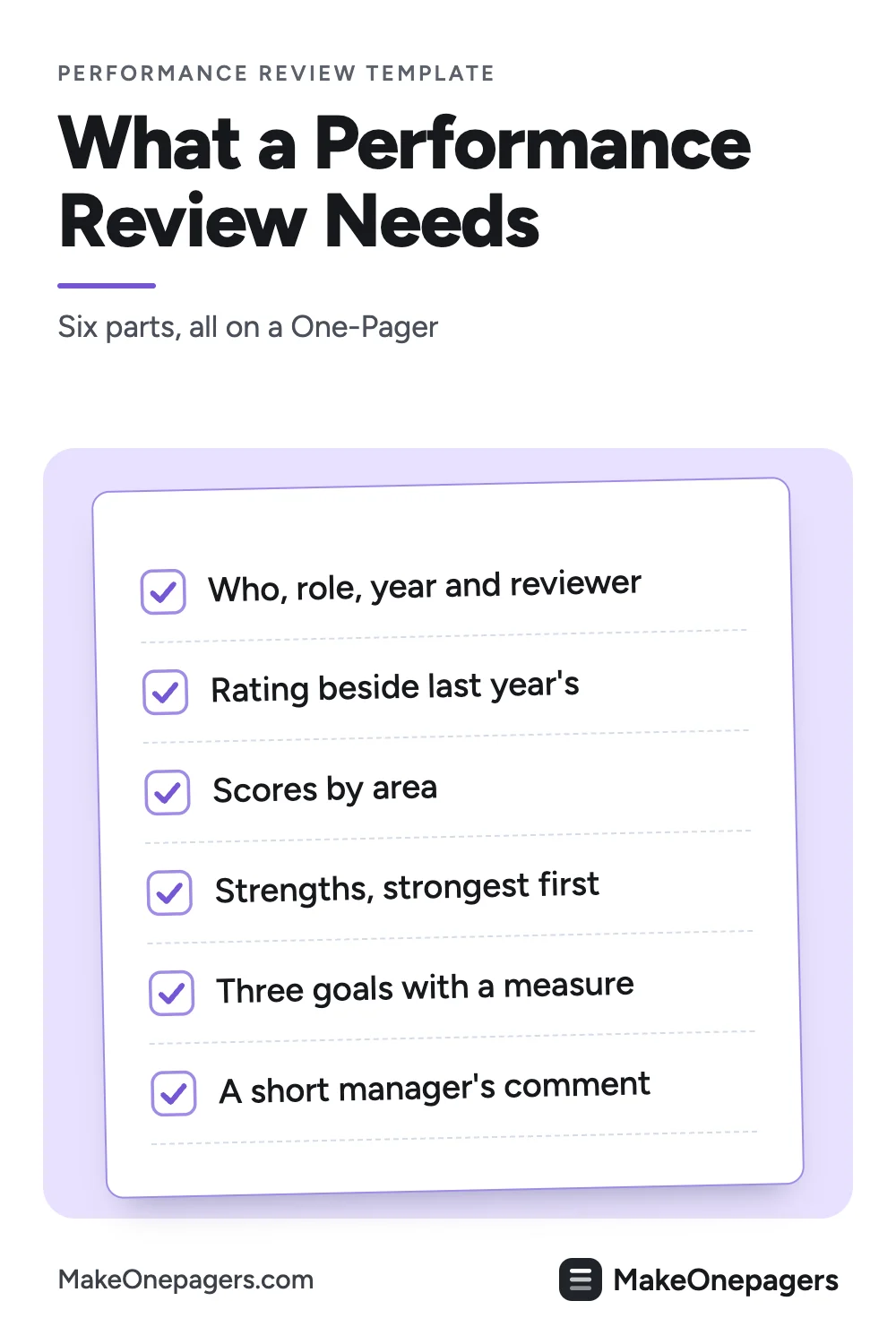
The 6 parts of a performance review
- Who and when: name, role, year and reviewer.
- The overall rating, with last year's beside it, and one sentence on why.
- Scores by area: delivery, quality, teamwork, ownership, growth, or your company's own list.
- Strengths, shown so the strongest area is obvious.
- Goals for next year: three, each with how you will know it is done.
- The manager's comment, one or two sentences in plain words.
A free performance review template
Copy this into a document, or open the example below and edit it.
| Part | What to write, with an example |
|---|---|
| Title | Year, name, role, reviewer. Review 2026: Priya Shah, Senior Analyst, reviewed by Ana Ruiz |
| Overall | Rating this year and last. Exceeds in 2026, Meets in 2025 |
| Why | 1 sentence. A step up on last year, led by ownership and delivery |
| Scores | 5 areas out of 5, last year in brackets. Ownership 4.8 (3.5) |
| Goals for next year | 3, each with a measure. Coach one junior analyst, weekly, all year |
| Comment | 1 or 2 sentences from the manager |
Performance review example
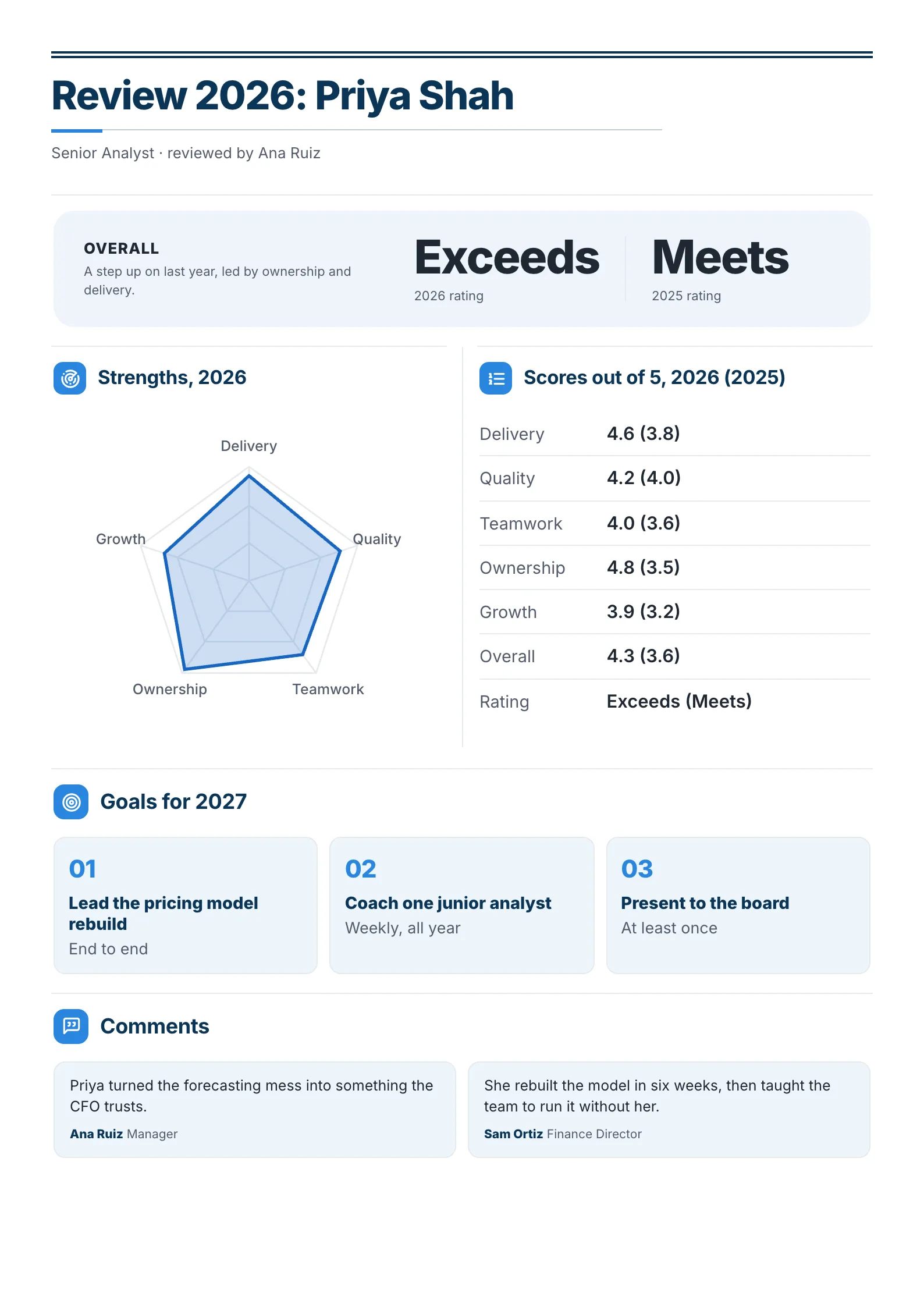 Edit this template
A year of work on one page: the rating, the change since last year and what comes next.
What to copy:
- Two ratings side by side: Exceeds in 2026, Meets in 2025. The first thing anyone asks is "better or worse than last year?", and the page answers it before they ask.
- Every score with last year in brackets: ownership 4.8 (3.5), delivery 4.6 (3.8), growth 3.9 (3.2). The biggest jump, ownership, becomes the headline of the conversation.
- Goals with a measure attached: "Lead the pricing model rebuild, end to end." "Present to the board, at least once." Next year's review can score them.
- A comment a person would actually say: "Priya turned the forecasting mess into something the CFO trusts." It is specific, so it is believed.
Edit for free: performance review template.
Performance review or self-evaluation?
| Performance review | Self-evaluation | |
|---|---|---|
| Written by | The manager | The employee |
| When | End of the review period | Before the review meeting |
| Contains | Rating, scores, goals, comment | What I did, what I learned, what I need |
Many companies ask for both. The employee's self-evaluation goes in first, and the manager's one-page summary is the record that comes out of the meeting.
How to write a performance review in 6 steps
- Collect the year: one-to-one notes, goals set last year, results and feedback from others.
- Score each area and write last year's score beside it.
- Pick the overall rating and write one sentence on why.
- Name the strongest area and one area to grow.
- Agree three goals for next year, each with a measure.
- Write a short comment in your own words, then share the page before the meeting.
Have review notes in a long form or a spreadsheet? Drop them into the free AI One-Pager generator and get them back as a designed performance review summary.
Performance review mistakes
- Surprises. If a problem first appears in the review, the review is not the problem.
- No comparison. A score of 4.0 means nothing until you know it was 3.6 last year.
- Goals with no measure. "Improve communication" cannot be scored next year.
- Only the last month. Recent work crowds out the whole year unless notes were kept.
Make your performance review
Open the free performance review template and put in your scores and goals, or drop your notes into the free AI One-Pager generator and get a finished review summary back.
Frequently asked questions
What should a performance review include?
The employee's name and role, the review period, an overall rating, scores by area, strengths, goals for the next period and a comment from the manager.
How long should a performance review be?
The summary should fit on one page. Supporting notes can sit behind it, but the page is what both people keep.
What are good performance review goals?
Goals with an outcome and a measure, such as "Lead the pricing model rebuild, end to end" or "Present to the board at least once."
How often should performance reviews happen?
Most companies review once a year, with a shorter check-in at six months. Regular one-to-ones in between make the annual review quicker and fairer.