Performance Review Examples: 5 Reviews, From the Top Rating Down
Performance review examples for a promotion, a nurse, a warehouse associate, a new hire and an improvement plan, walked down Clemson's 6-level rating scale.

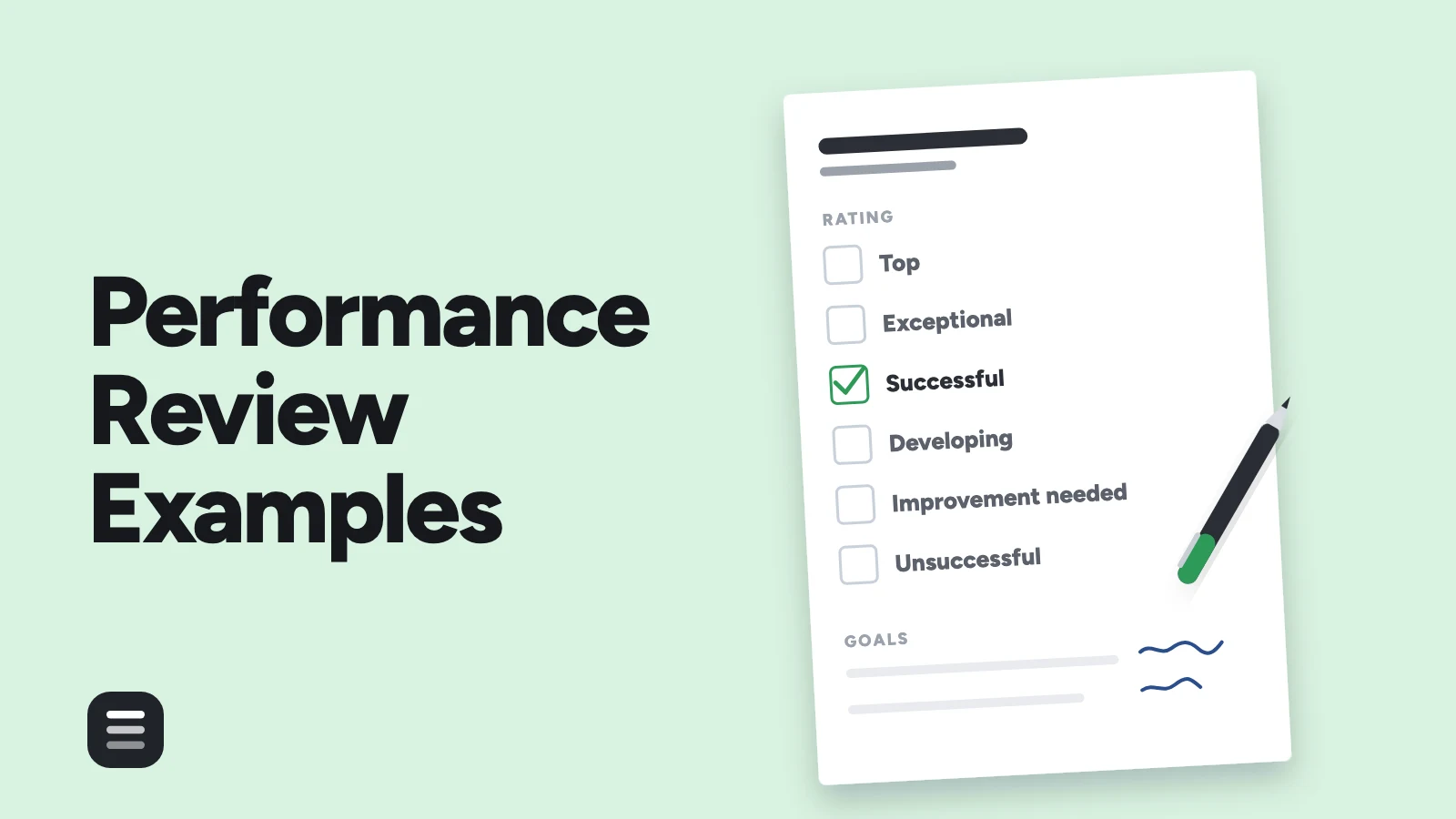
These performance review examples follow one rating scale from the top down. Clemson University gives its staff six levels and publishes the share of people it usually sees at each one. So we took the scale step by step and set a sample review beside each step: a promotion case, a nurse's annual review, a warehouse associate's review with a raise, a 90-day review and an improvement plan. Start from a free one pager template.
One‑Pager examples
Real One-Pagers made with MakeOnepagers. Open any one to edit it as your own.
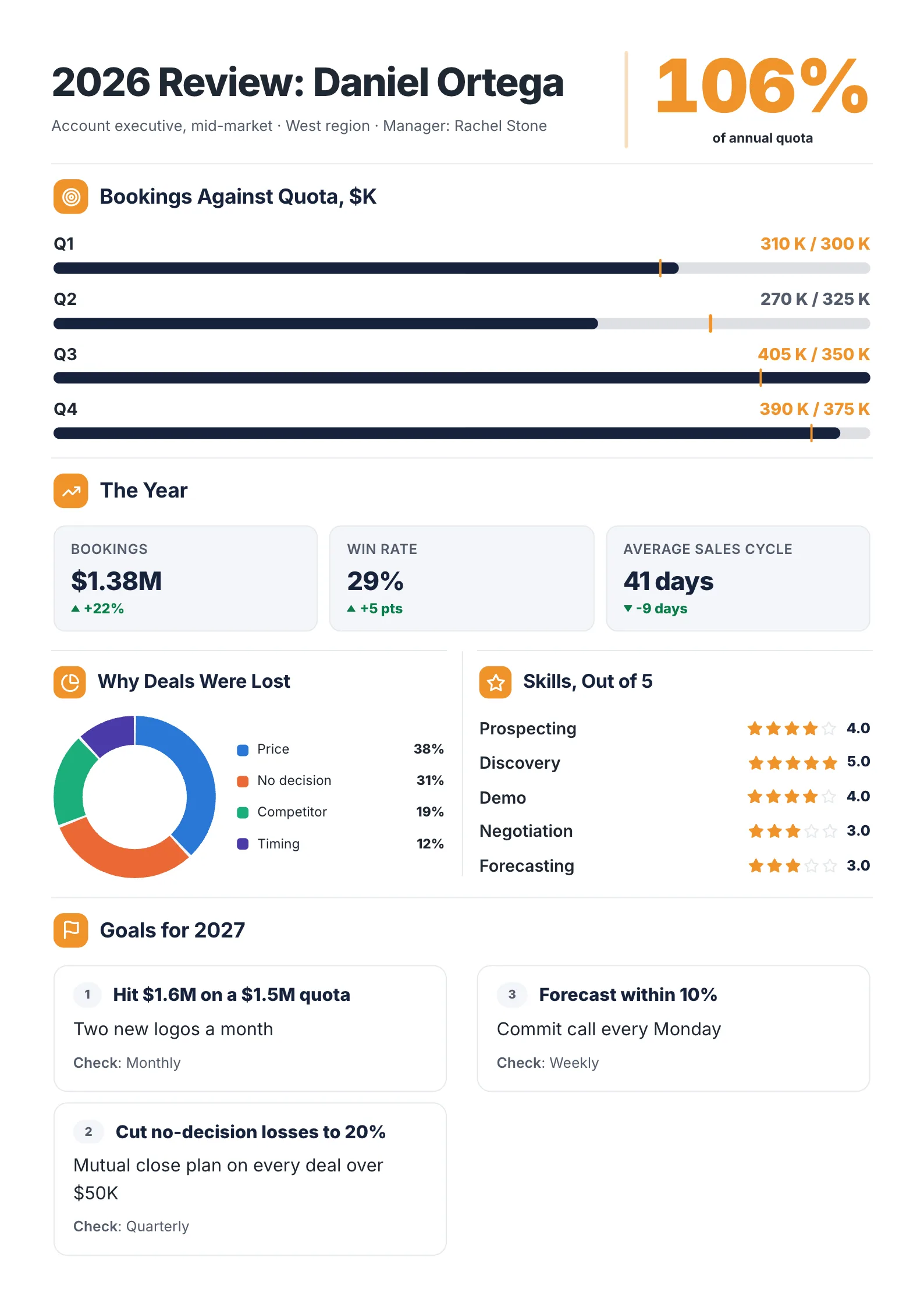 Performance Review: SalesEdit for free(opens in a new tab)
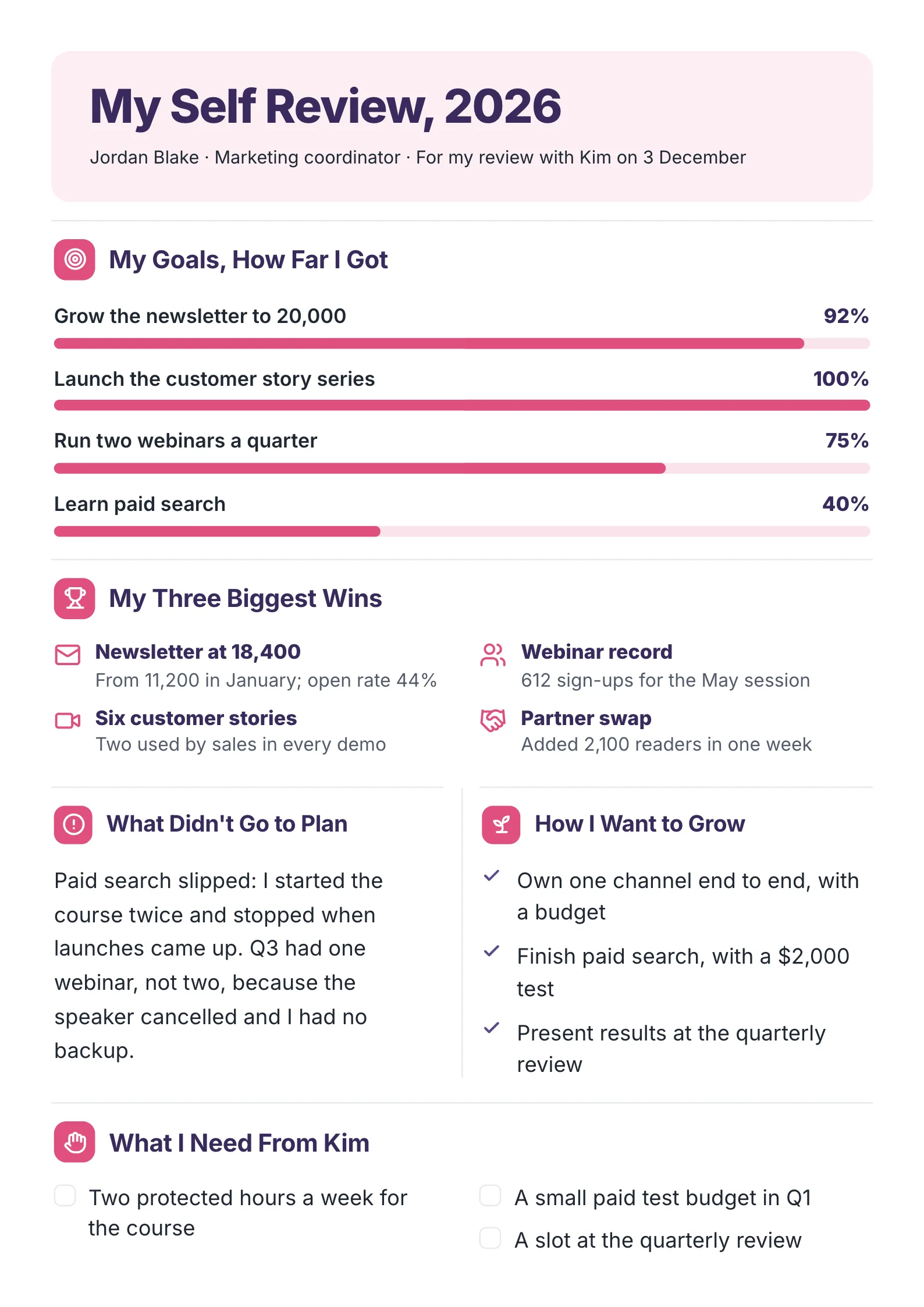 Performance Review: Self AssessmentEdit for free(opens in a new tab)
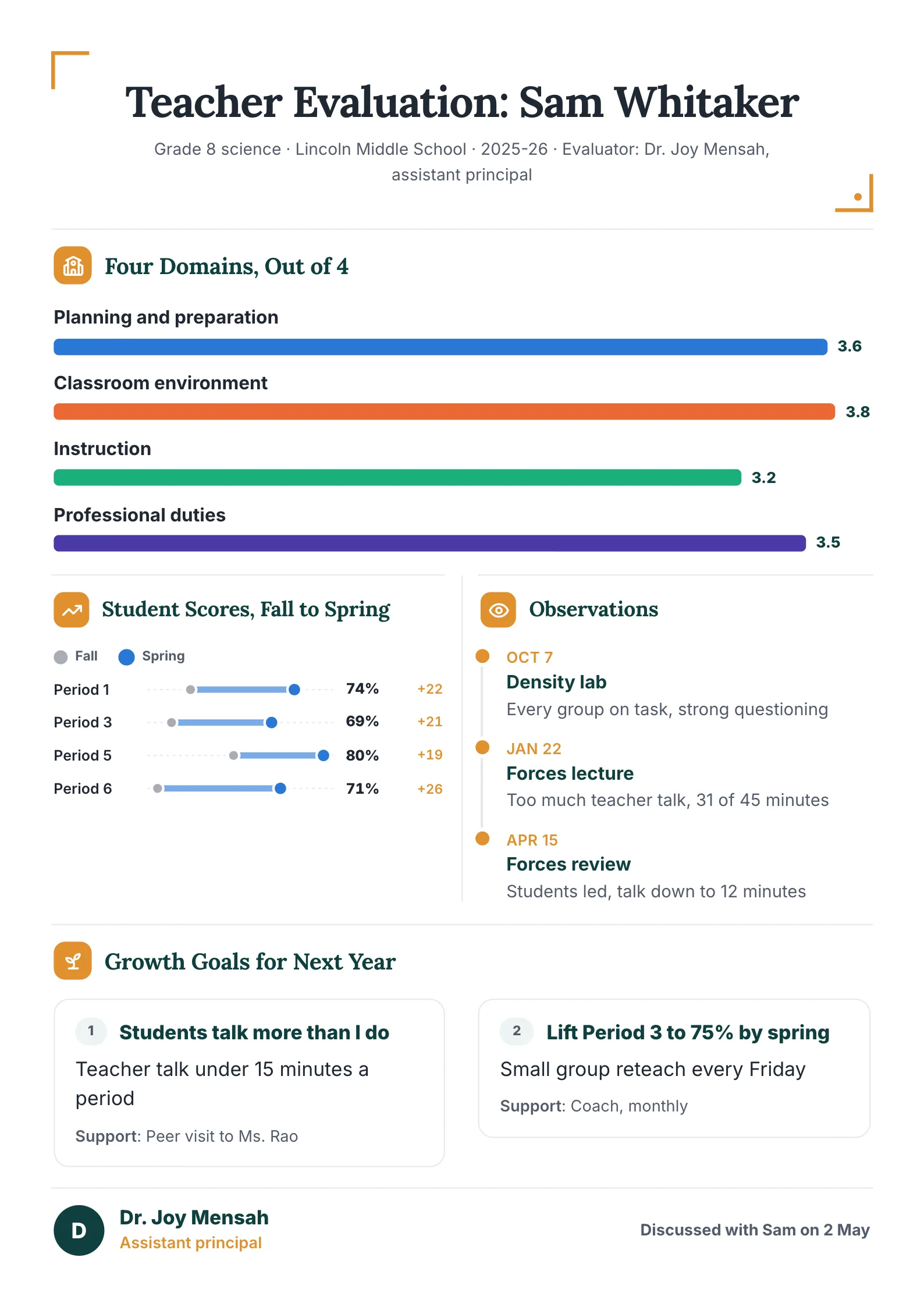 Performance Review: TeacherEdit for free(opens in a new tab)
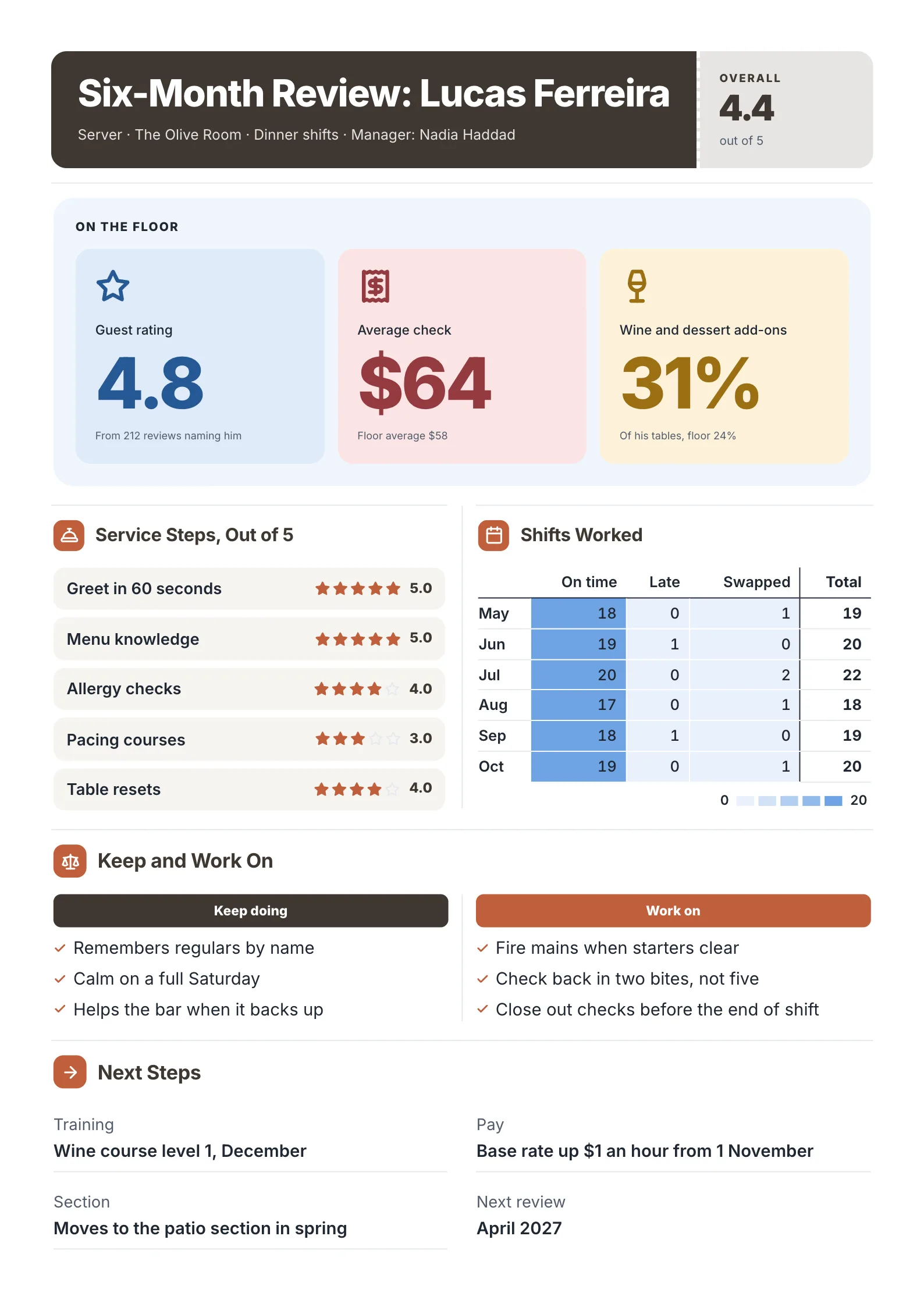 Performance Review: Restaurant StaffEdit for free(opens in a new tab)
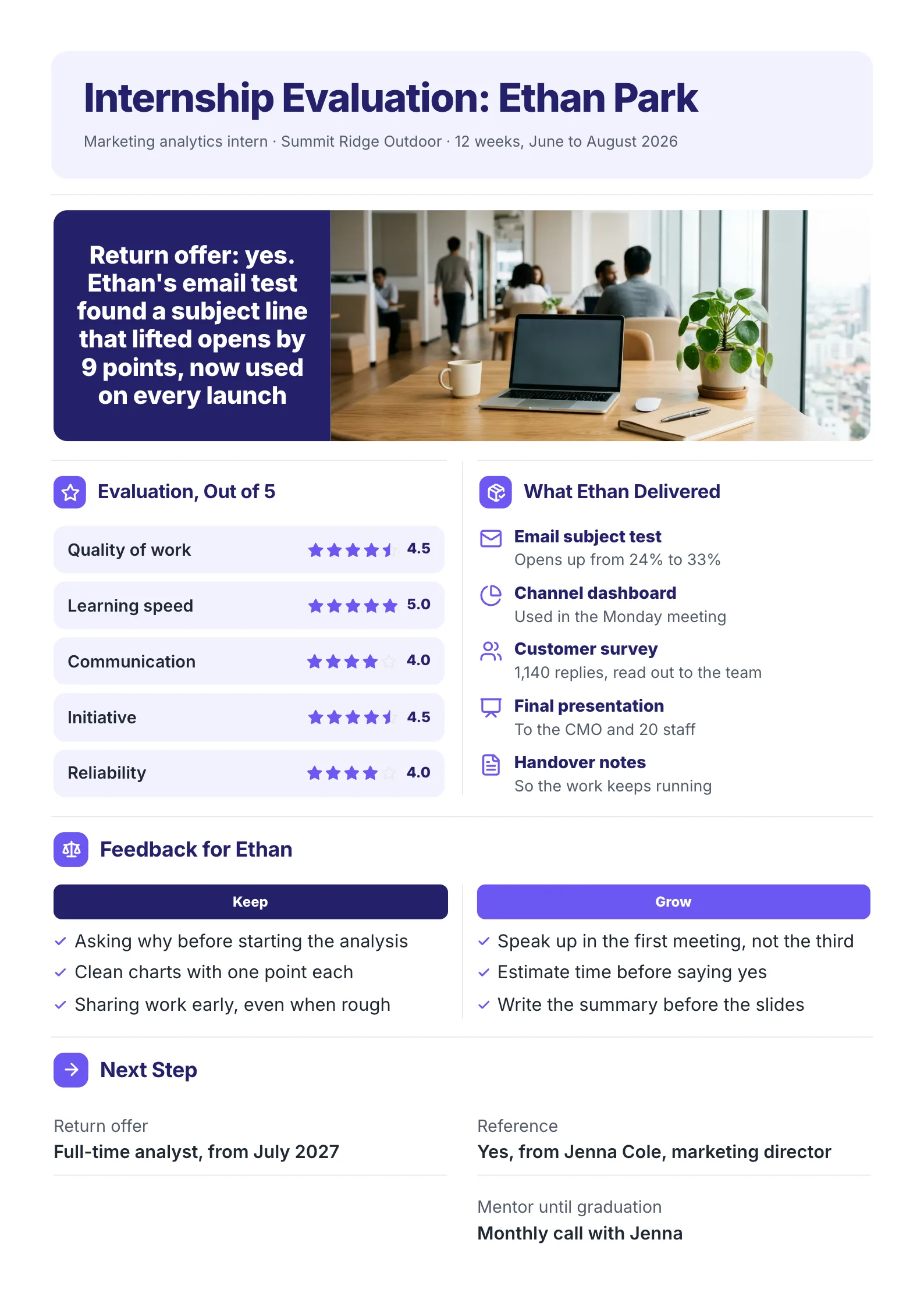 Performance Review: InternshipEdit for free(opens in a new tab)
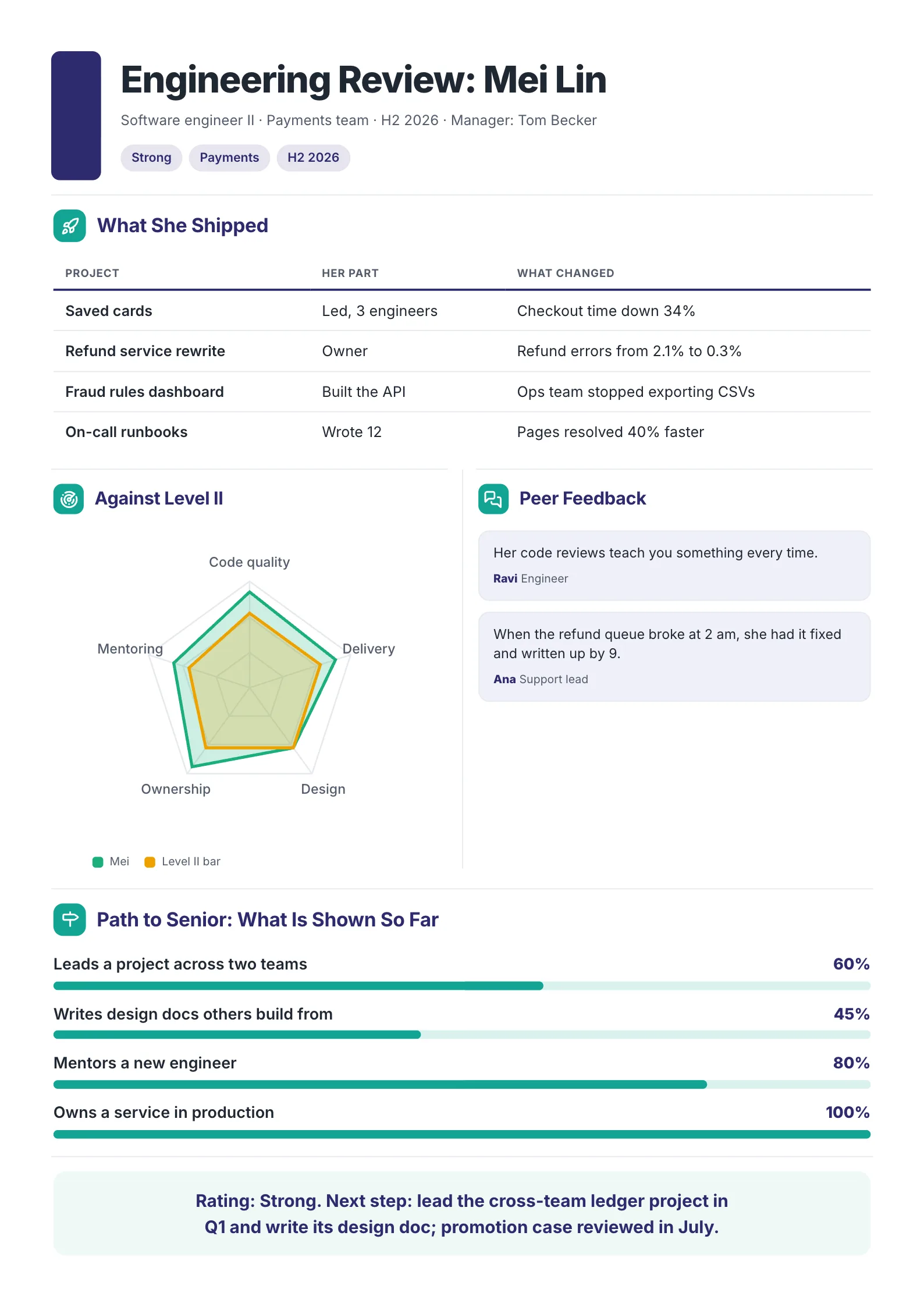 Performance Review: Software EngineerEdit for free(opens in a new tab)
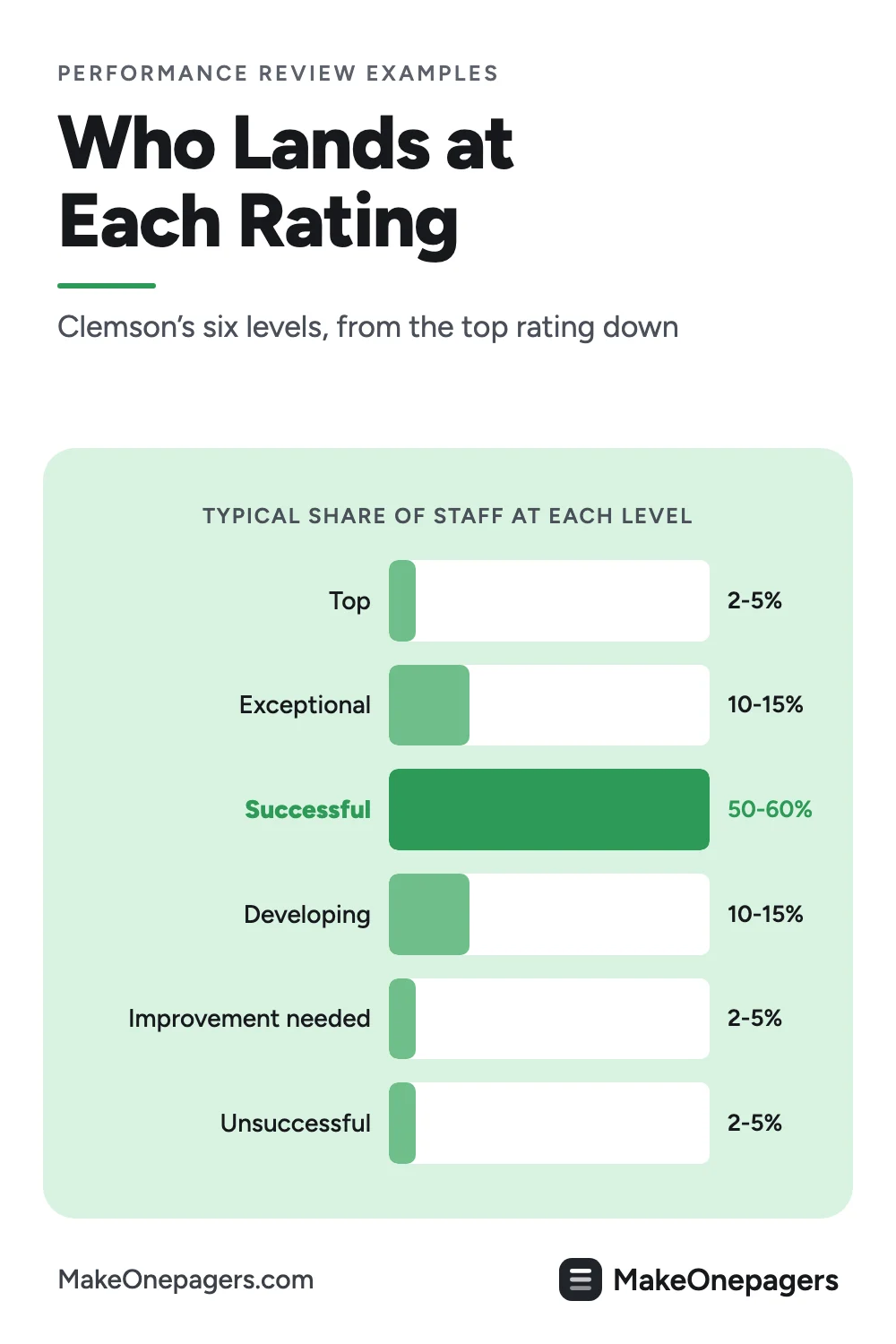
Walking it this way shows you something a single example can't, and it helps you match your review to your rating. The review changes shape as the rating changes. At the top it's a case for a committee. At Successful it's a decision about pay. Near the bottom it's a plan with dates. Most of your reviews will sit at one level, Successful, where Clemson expects 50 to 60% of staff.
The 4 scales we read
| University | Levels | Rating for solid work | What stands out |
|---|---|---|---|
| Clemson University | 6 | Successful | Typical share of staff at each level, no forced distribution |
| DePaul University | 5 | Successful | Each level judged on results and on behaviors |
| University of Colorado Colorado Springs | 5 | Meeting Expectations | Ratings of 1 or 2 require an improvement plan |
| University of Kentucky | 4 | Meets Expectations | Bullet descriptions for each level, as of December 8, 2016 |
Source: our read of each scale, October 30, 2026.
Top rating, 2 to 5% of staff: a promotion case
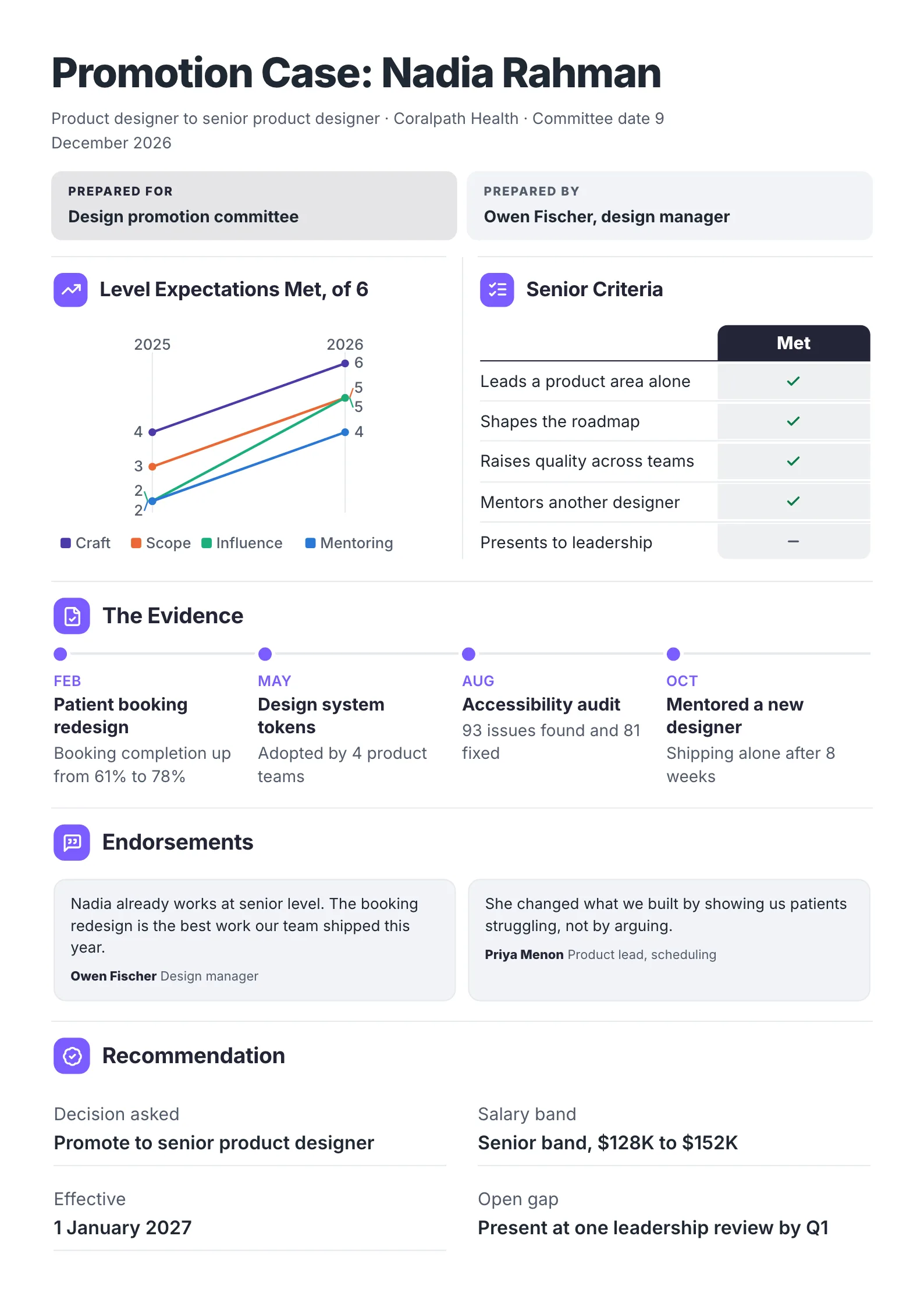
So few people land here that your rating usually has to convince someone who doesn't know your person well. That's a promotion committee. Nadia Rahman's case for senior product designer is written for exactly that reader.
It lists the senior criteria and marks each one met, with one "partial" for presenting to leadership. Then it gives evidence with dates. A booking redesign in February lifted completion from 61% to 78%. A design system she built in May was adopted by 4 product teams. An accessibility audit found 93 issues, and 81 of them were fixed. Your committee can check every claim, and so can you before you send it. That honest "partial" helps too, because a case with no gaps reads like a sales pitch.
 Edit this template
The employees and scores in these samples are fictional. Each criterion is matched to dated evidence a committee can check.
Exceptional, 10 to 15%: the evidence a nurse's review needs to get there
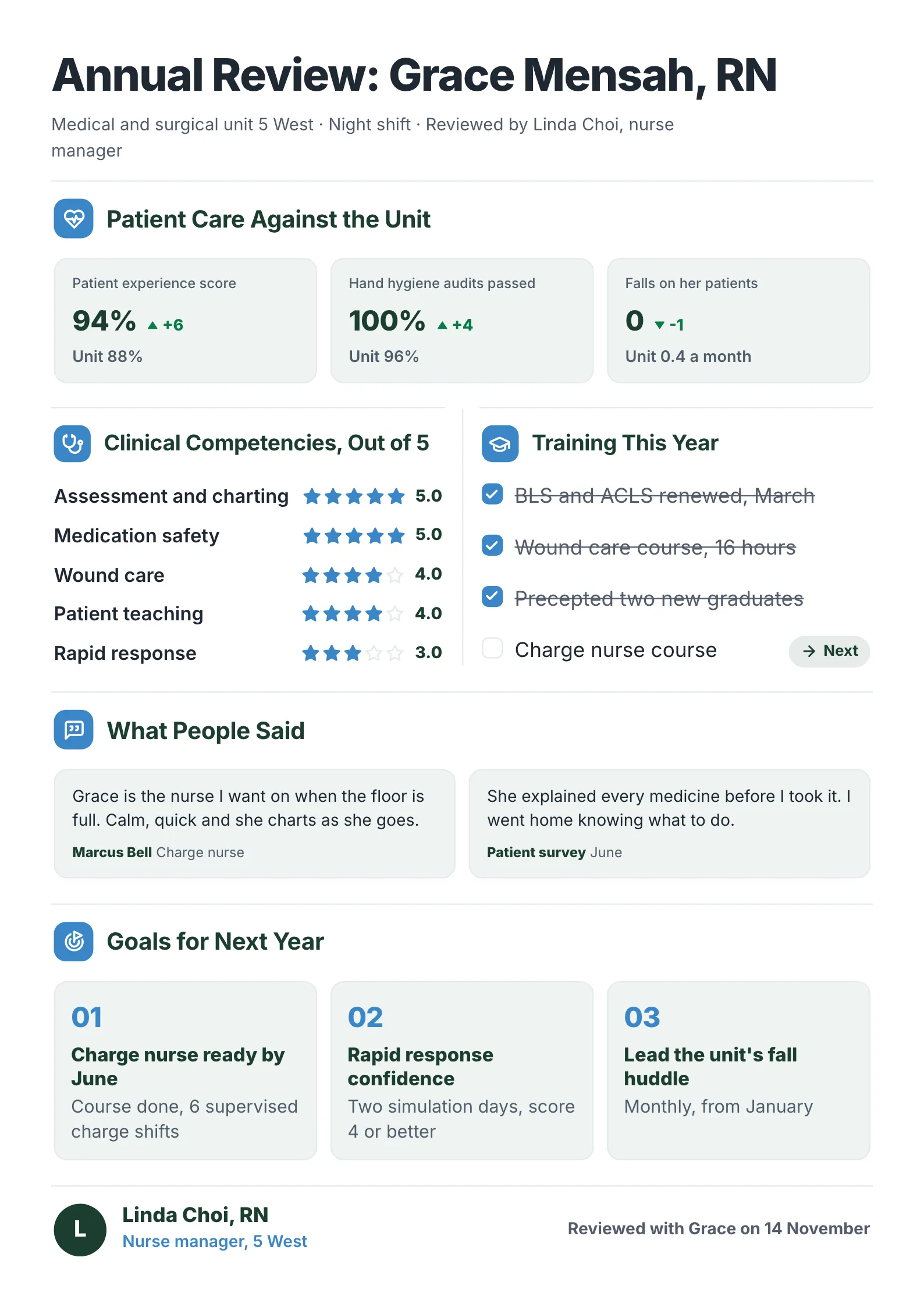
If you rate someone one step below the top, you still need proof they're ahead of their peers. Grace Mensah's review gives it the simplest way possible. Every number sits beside the unit's. Her patient experience score is 94% against the unit's 88%. She passed 100% of hand hygiene audits against the unit's 96%. The review also prints the unit's fall rate, so her own falls have a baseline.
DePaul judges each level on results and on behaviors, and Grace's page covers both. The numbers show results. A Training This Year box and quotes from a charge nurse and a patient show how she works. Her goal for next year, charge nurse ready by June, tells you where a rating like this should lead in your own reviews.
 Edit this template
Every number sits beside the team's, so a rating above the bar has context.
Successful, 50 to 60%: a warehouse review that says what "Meets" earns
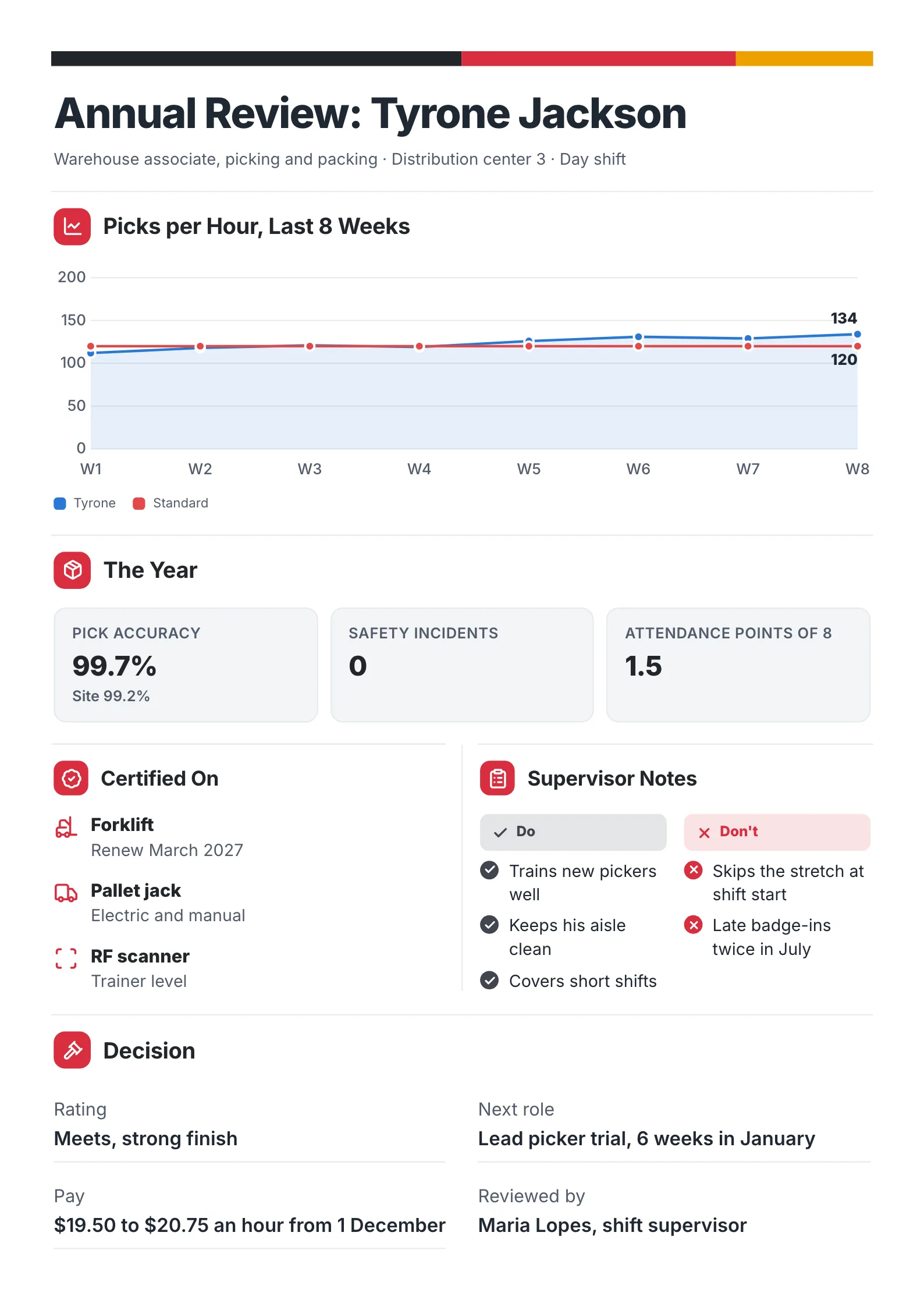
This is the level most of your people deserve, and it's where your reviews are most likely to go vague. Tyrone Jackson's warehouse review doesn't. His rating is "Meets, strong finish," and a Decision box spells out what that's worth. His pay moves from $19.50 to $20.75 an hour from December 1. He gets a six-week trial as lead picker in January.
The evidence above it is specific. Pick accuracy is 99.7% against the site's 99.2%, with 1.5 attendance points out of 8. The supervisor's notes cut both ways. He trains new pickers well and covers short shifts. He also skips the stretch at shift start and badged in late twice in July. A solid rating with two habits to fix is an honest review, and he knows exactly where he stands.
 Edit this template
The Decision box tells him what the rating means for his pay and his next role.
Developing, 10 to 15%: a 90-day review for someone still learning
Clemson's Developing level is meant for people who are still new to the role. UCCS does something similar and lets managers rate new hires within their first year as Meeting Expectations while they learn. Both give you a fair word for your newest people, one that doesn't read as a warning.
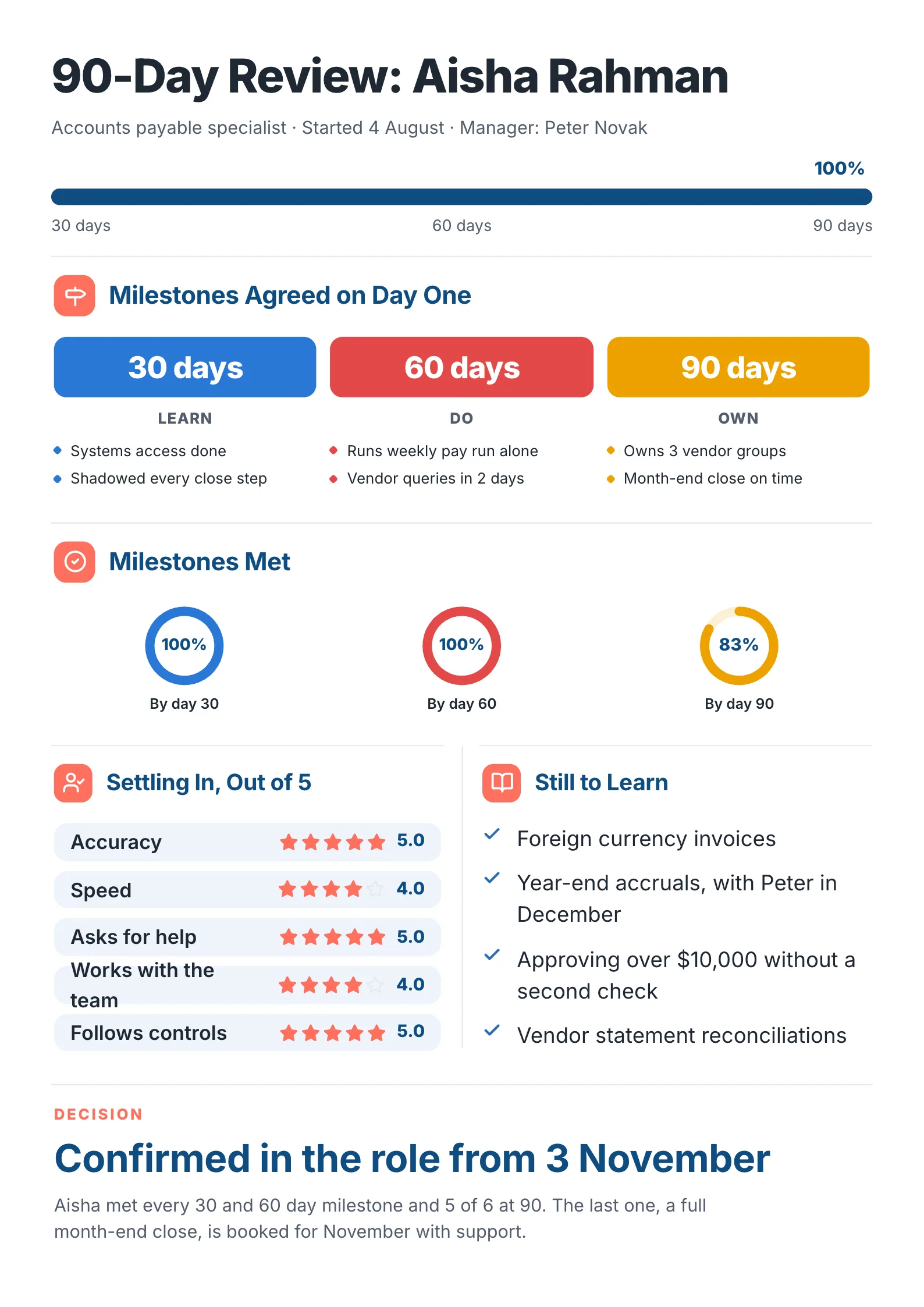
Aisha Rahman started as an accounts payable specialist on August 4. Her review lists the milestones agreed on day one, at 30, 60 and 90 days. She met every 30- and 60-day milestone and 5 of 6 at 90 days, with the last one, month-end close, booked for November. A Still to Learn box names four things she hasn't done yet, like year-end accruals, with her manager in December. The decision is clear. She's confirmed in the role from November 3.
 Edit this template
What she still has to learn is written as a plan with dates.
Improvement Needed and Unsuccessful, 2 to 5% each: a plan with targets
At the bottom of the scale, your review stops being a verdict and becomes a plan. At UCCS, a rating of 1 or 2 requires a Performance Improvement Plan. If you ever have to write one, the shift lead sample shows the parts that make it fair.
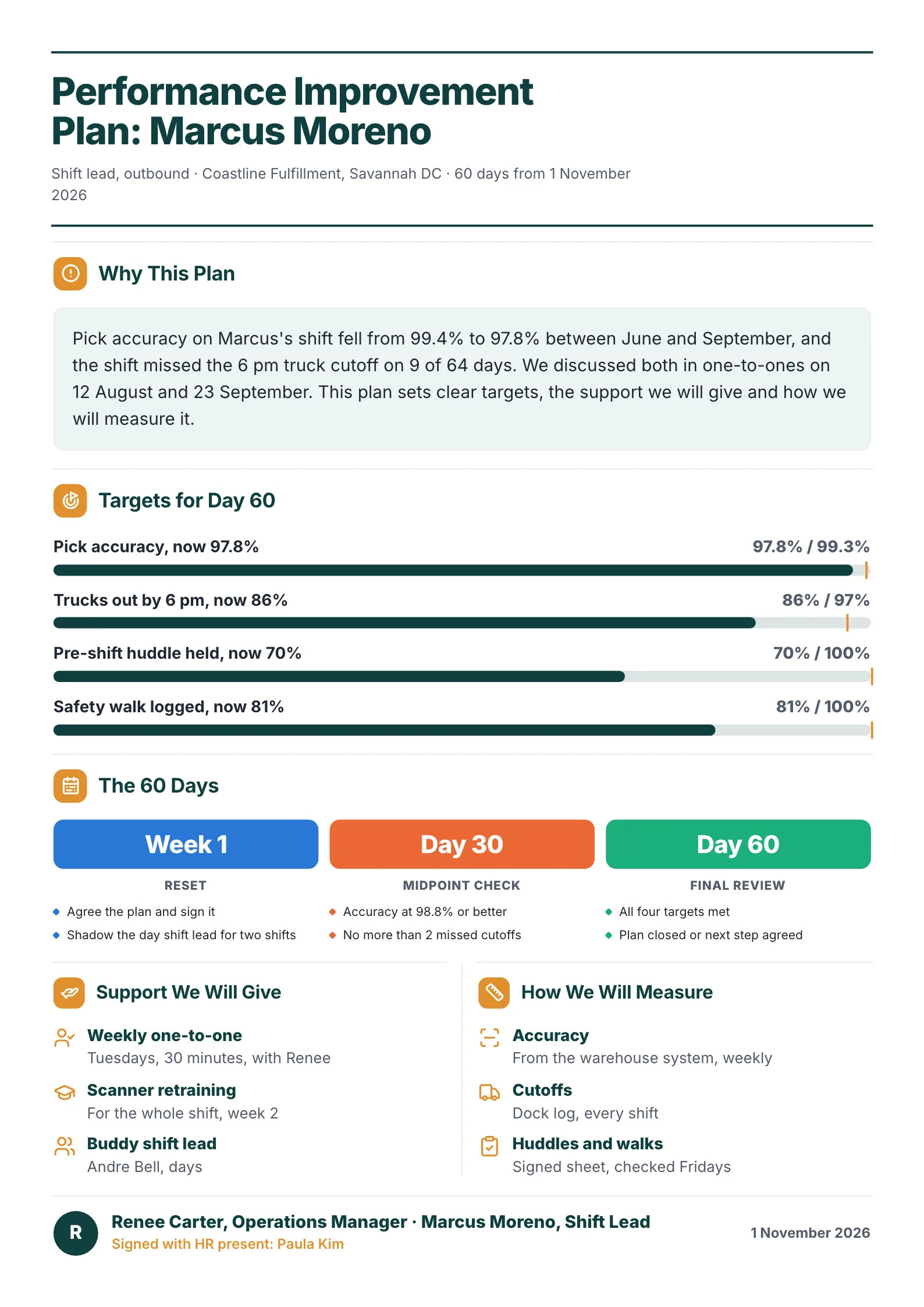
It starts with Why This Plan, in facts with dates. Pick accuracy on Marcus Moreno's shift fell from 99.4% to 97.8% between June and September. The shift missed the 6 pm truck cutoff on 9 of 64 days. Both came up in one-on-ones on August 12 and September 23, so none of it is news to him. Make sure the same is true for your person. Then it sets four targets for day 60, each with today's number beside it, and lays out week 1, day 30 and day 60.
 Edit this template
Each target shows where he is now, so progress can be measured.
Write the evidence before the rating
Gather your two or three numbers first, set each one beside the team or site average, and only then pick the level. You'll often find the numbers point to Successful, which is where Clemson expects most of your people to be. If they point lower, share your plan before the review meeting so nobody is surprised.
Then read your draft as the person you're reviewing. If you'd want to argue with a line, add a number or a date to it.
For the full method, our guide on how to write a performance review walks you through it. The performance review template post has more layouts, and the grid below shows six more examples, from a restaurant server to a self-assessment.
Decide the level, then the consequence
Before you write a word, pick the step on the scale and what it means for pay, role or a plan. Then gather two or three numbers that back it up and add one note each way. Share it before the meeting so nobody reads it cold. Each review above is a template in MakeOnepagers, ready for your own numbers.
Frequently asked questions
What should I write in a performance review?
Write the rating in plain words, two or three results with numbers, a short note on how the person works and what happens next. If you compare a number to a team or site average, the rating makes sense to the person reading it.
What is a good example of a performance review comment?
Specific and dated beats general. "Pick accuracy was 99.7% against the site's 99.2%" tells the person what they did. "Great attention to detail" doesn't. Pair each strength with evidence and each concern with a target.
How many rating levels should a review scale have?
The 4 university scales we read use 4, 5 or 6 levels, and two of them use five. A scale with a level for people who are still learning, like Clemson's Developing, gives you a fair rating for new hires.
What percentage of employees should be rated as exceeding expectations?
Clemson's guide expects 10 to 15% at Exceptional and 2 to 5% at its top level, with 50 to 60% at Successful. It treats those as typical shares, with no forced distribution. Most of your team doing good work should get a rating that says they meet the bar, in plain words.




