Patient Education Handout Template: Free One-Page Handout
Free one-page patient education handout template: the 7 parts patients use at home, a worked clinic example and plain-language rules.

A patient education handout template gives your clinic or hospital team one sheet that a patient takes home after a visit. It says what the condition or treatment means in plain words. It also gives the one thing to remember, what to do each day, the signs that mean call us, and when to come back. Your patients forget much of what they hear in an exam room. So the handout is the part of your visit that is still on the fridge a week later. Below you'll find the seven parts a good handout needs, a free patient education handout template you can copy, a worked example and the plain-language rules that decide whether anyone reads it. Start from a free one pager template.
One‑Pager examples
Real One-Pagers made with MakeOnepagers. Open any one to edit it as your own.
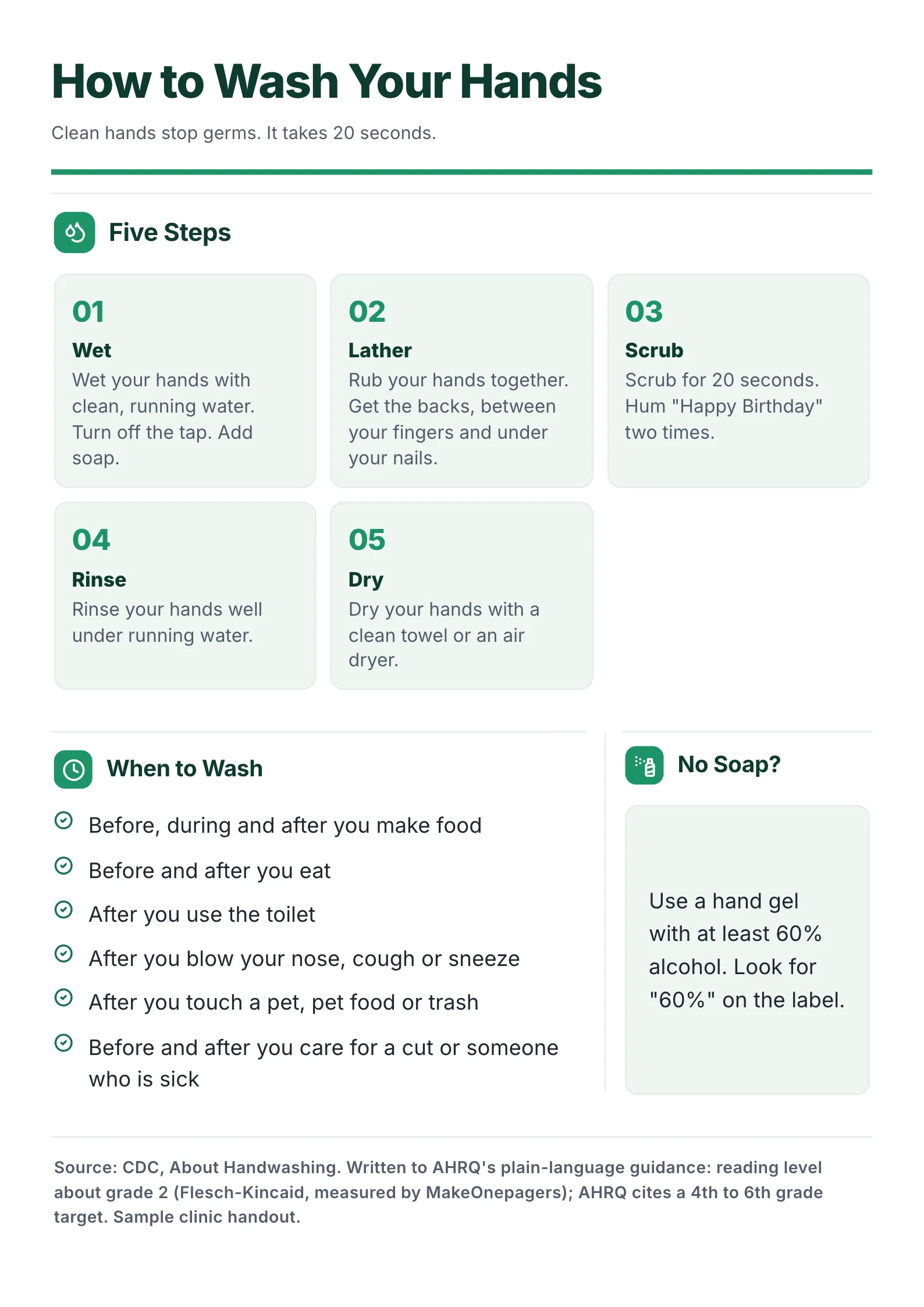 Patient Education HandoutEdit for free(opens in a new tab)
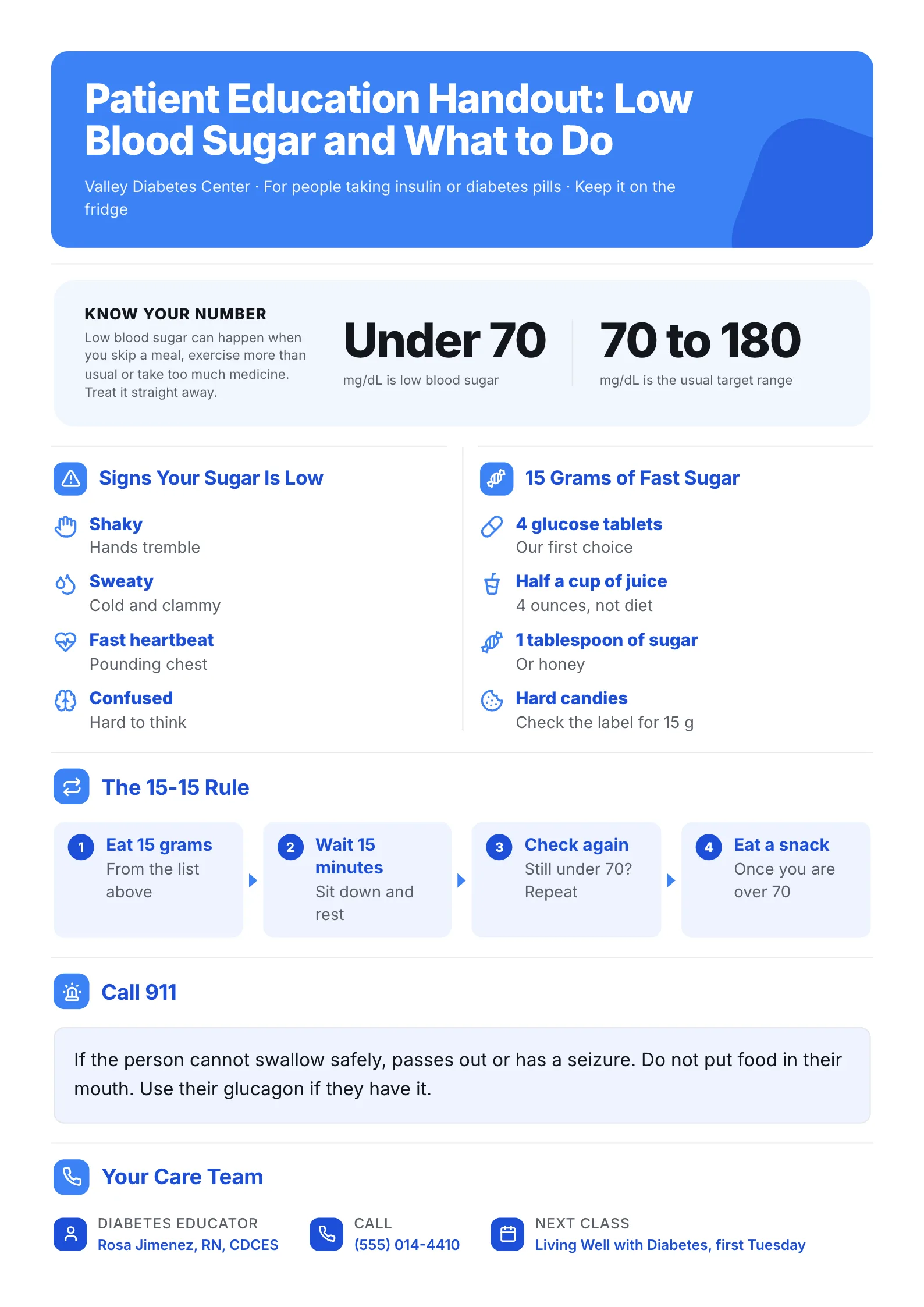 Patient Education Handout: Low Blood SugarEdit for free(opens in a new tab)
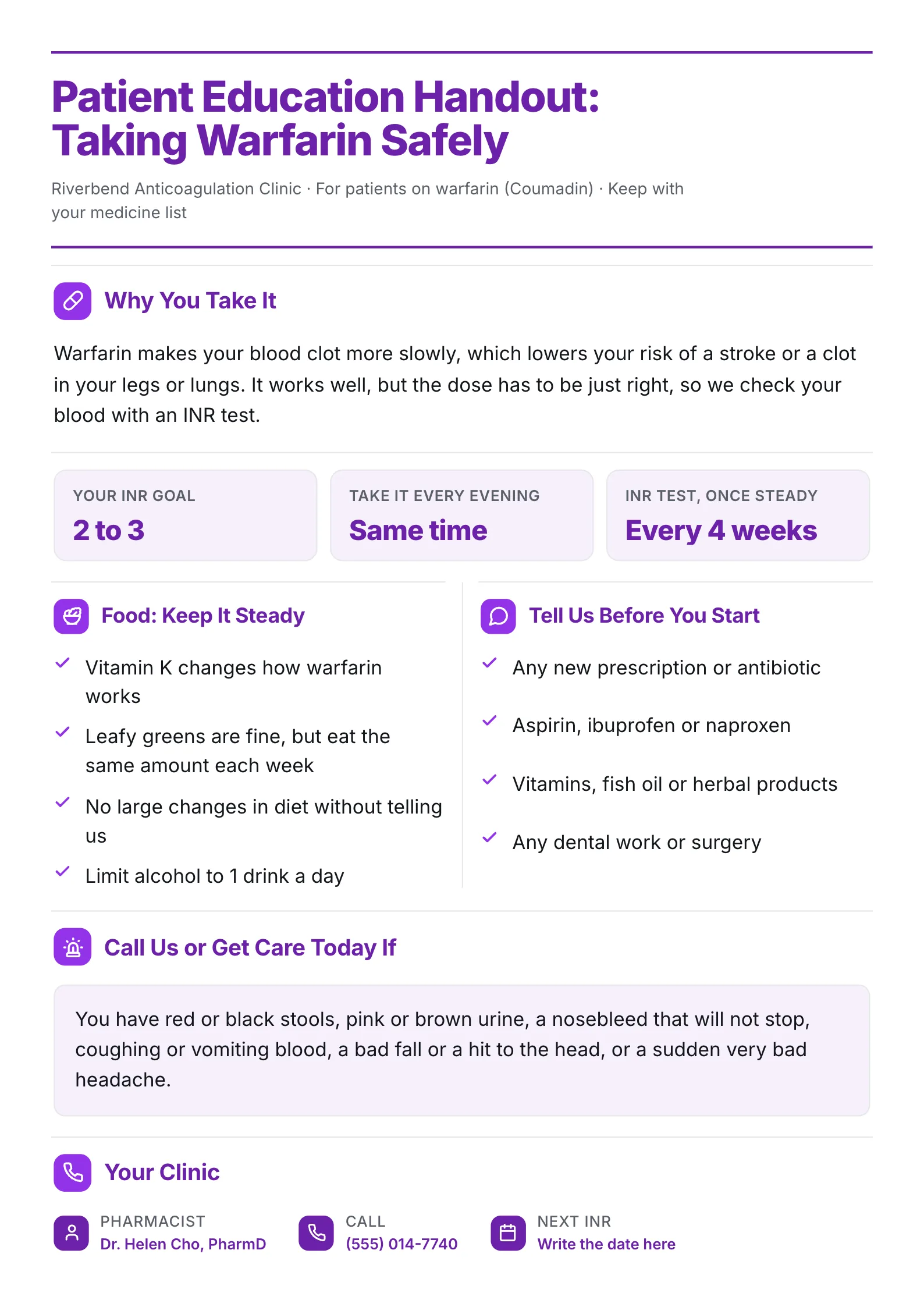 Patient Education Handout: New Medication SafetyEdit for free(opens in a new tab)
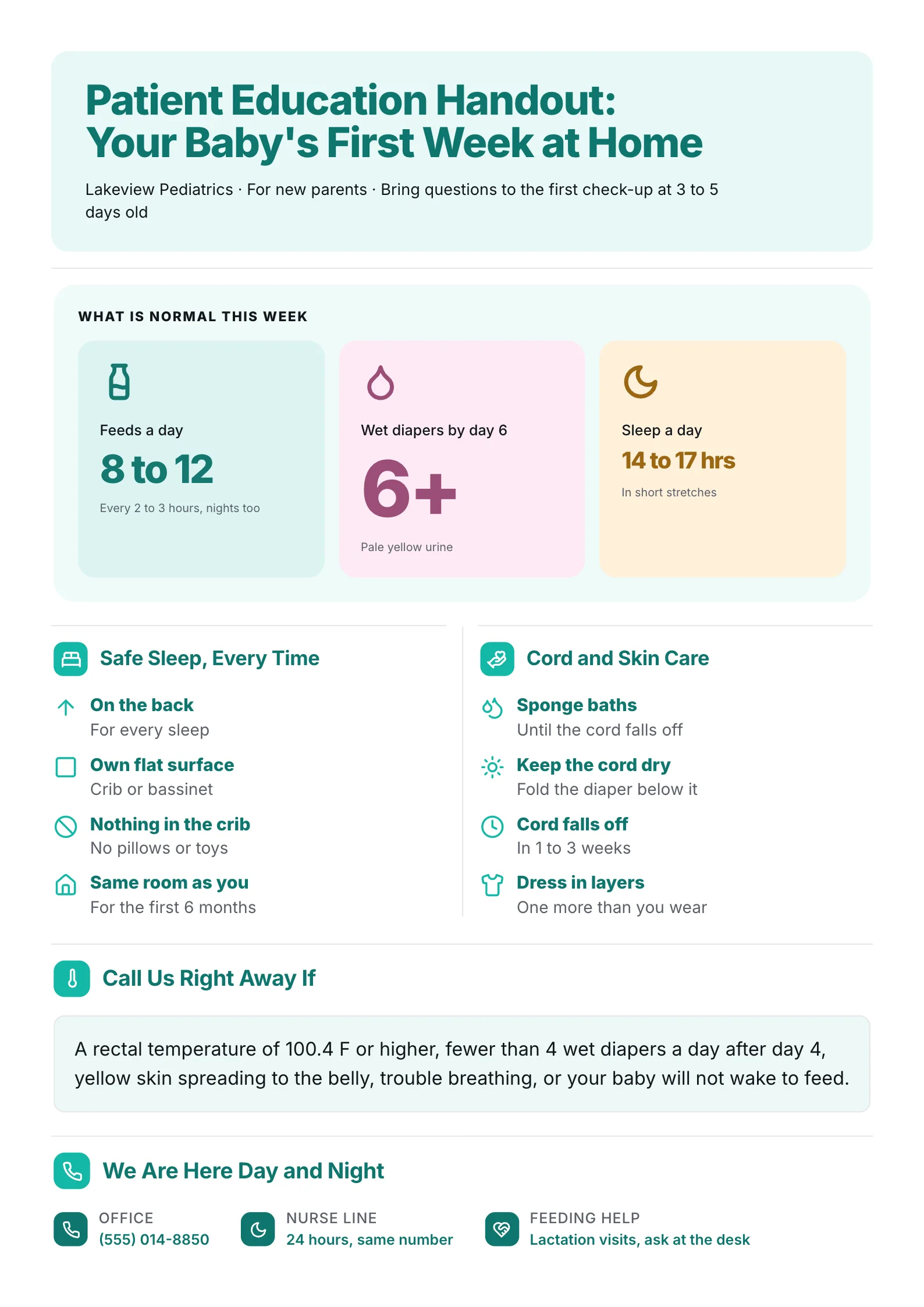 Patient Education Handout: Newborn CareEdit for free(opens in a new tab)
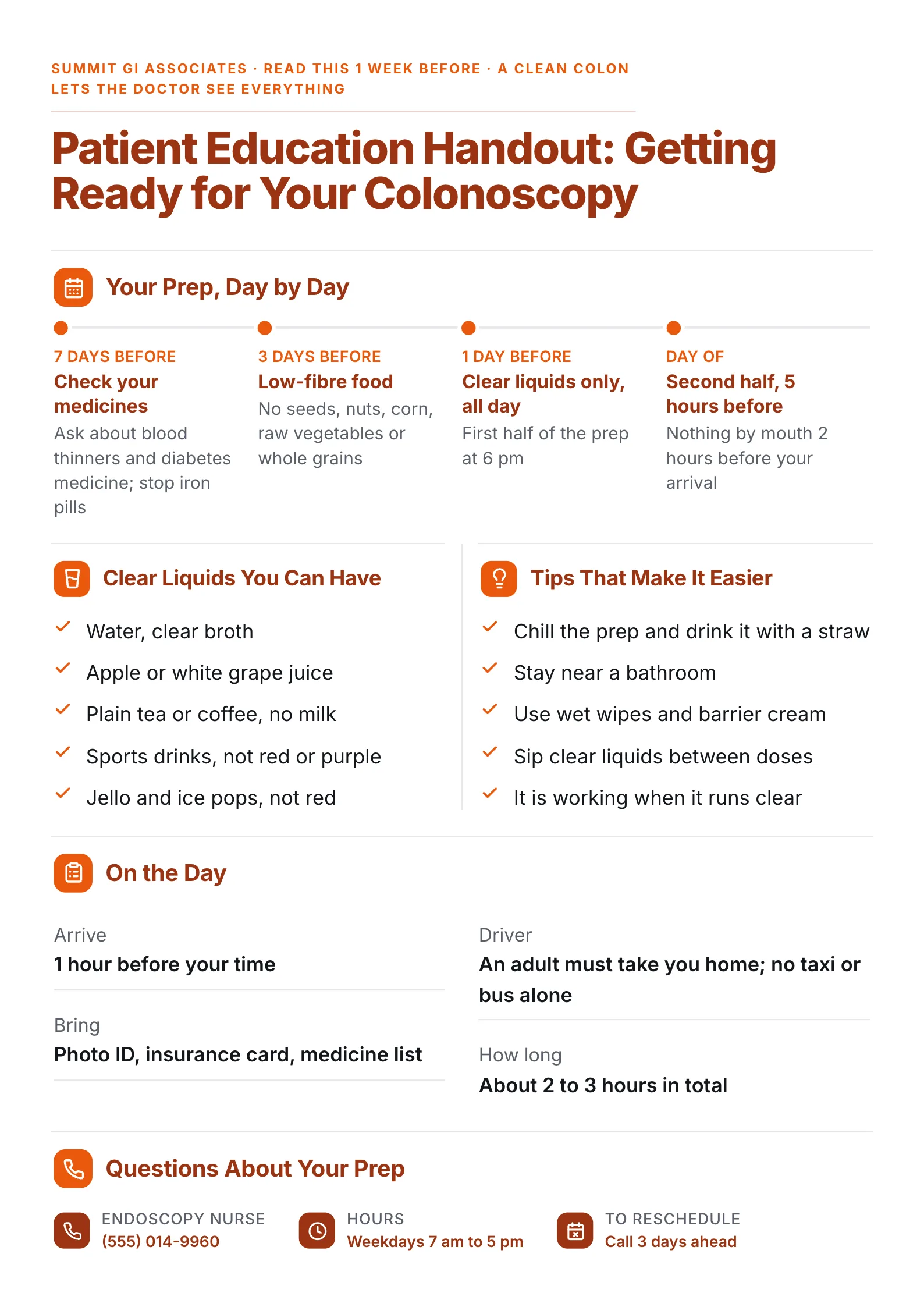 Patient Education Handout: Colonoscopy PrepEdit for free(opens in a new tab)
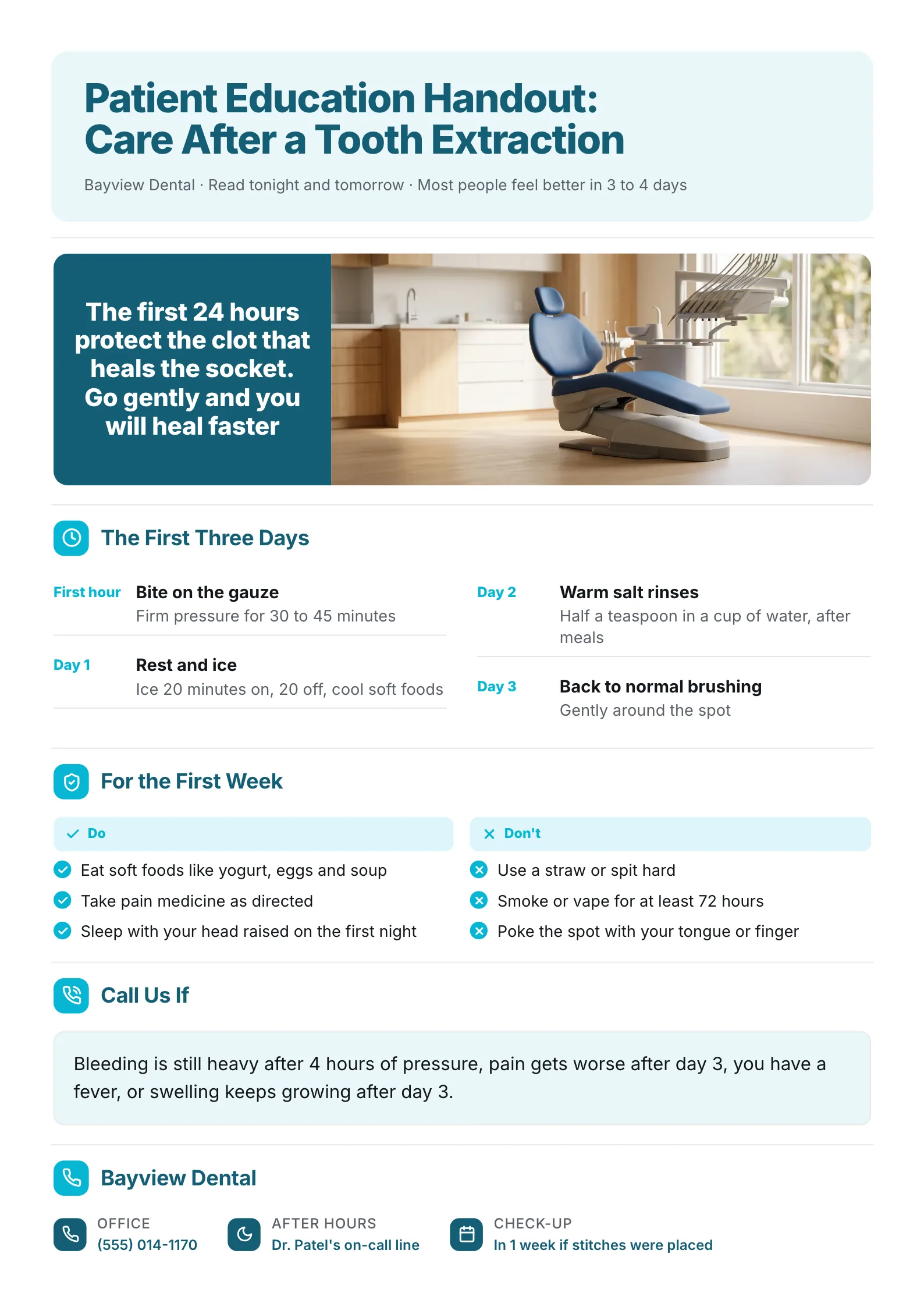 Patient Education Handout: Dental AftercareEdit for free(opens in a new tab)
We made the example with MakeOnepagers. It opens as a template you can edit for free, down to every word, picture and color. This post shows you how to write and lay out a handout. It is not medical advice, and a clinician should check every handout before it reaches a patient.
What is a patient education handout?
A patient education handout (also called a patient handout, patient information leaflet or take-home sheet) is a short written guide given to a patient about one topic: a diagnosis, a new medicine, a procedure, or a change to make at home. It backs up what you said out loud, so the patient and the family can read it again later.
The best handouts are about one topic and one audience. A sheet on "diabetes" tries to say everything and helps nobody. A sheet on "checking your blood sugar at home in your first month" can be read in two minutes and acted on that night.
Why one page matters
Reading health information is hard for most people. In the US Department of Education's 2003 National Assessment of Adult Literacy, only 12 percent of adults had proficient health literacy (NCES report 2006-483, published 2006). That means most of your patients will find a dense, two-sided leaflet harder than you expect. One sheet forces you to cut to what the patient must do, and it fits on the fridge, in a wallet folder or in a phone photo.
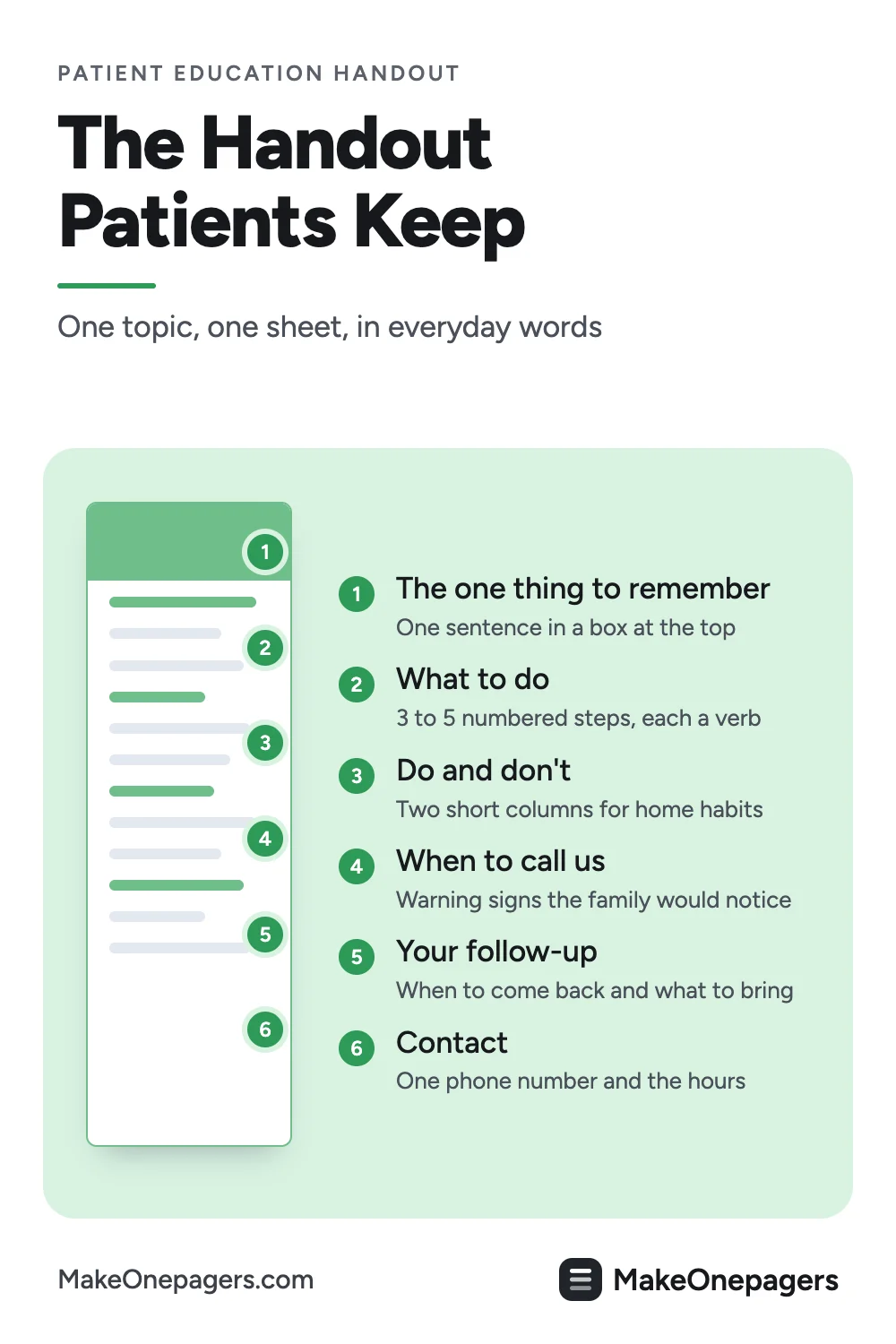
The 7 parts of a patient education handout
- A title in the patient's words, with your clinic name and the date. "Better Sleep at Home", not "Insomnia: Behavioral Interventions".
- The one thing to remember. One or two sentences. If the patient keeps nothing else, they keep this.
- What to do, as three to five numbered steps. Each step starts with a verb.
- Do and don't, side by side, for habits and home set-up.
- When to call us, as a short list of warning signs. Say which ones mean call the clinic and which mean call emergency services.
- Your follow-up: when to come back, what to bring, how to book.
- Contact: one phone number, the hours, and who answers.
Add a picture when it shows an action (how to hold an inhaler, where to place a cuff on the arm). Skip pictures that only decorate.
A free patient education handout template
Copy this table into a document, or open the example below and edit it.
| Part | What to write, with an example |
|---|---|
| Title | Topic in plain words, clinic, date. Better Sleep at Home, after your visit, Riverside Family Clinic |
| The one thing | One sentence. Get up at the same time every day, weekends too |
| What to do | 3 to 5 numbered steps. Caffeine before noon |
| Do and don't | 4 to 6 of each. Do: cool and dark room. Don't: phone in bed |
| When to call us | 3 to 5 warning signs. You fall asleep while driving or at work |
| Follow-up | When, what to bring, how to book. In 4 weeks, bring your sleep diary |
| Contact | One number and hours. Nurse line, 8 am to 6 pm |
Keep each line to one idea. If a line needs a second sentence, it may belong on a second handout.
Patient education handout example
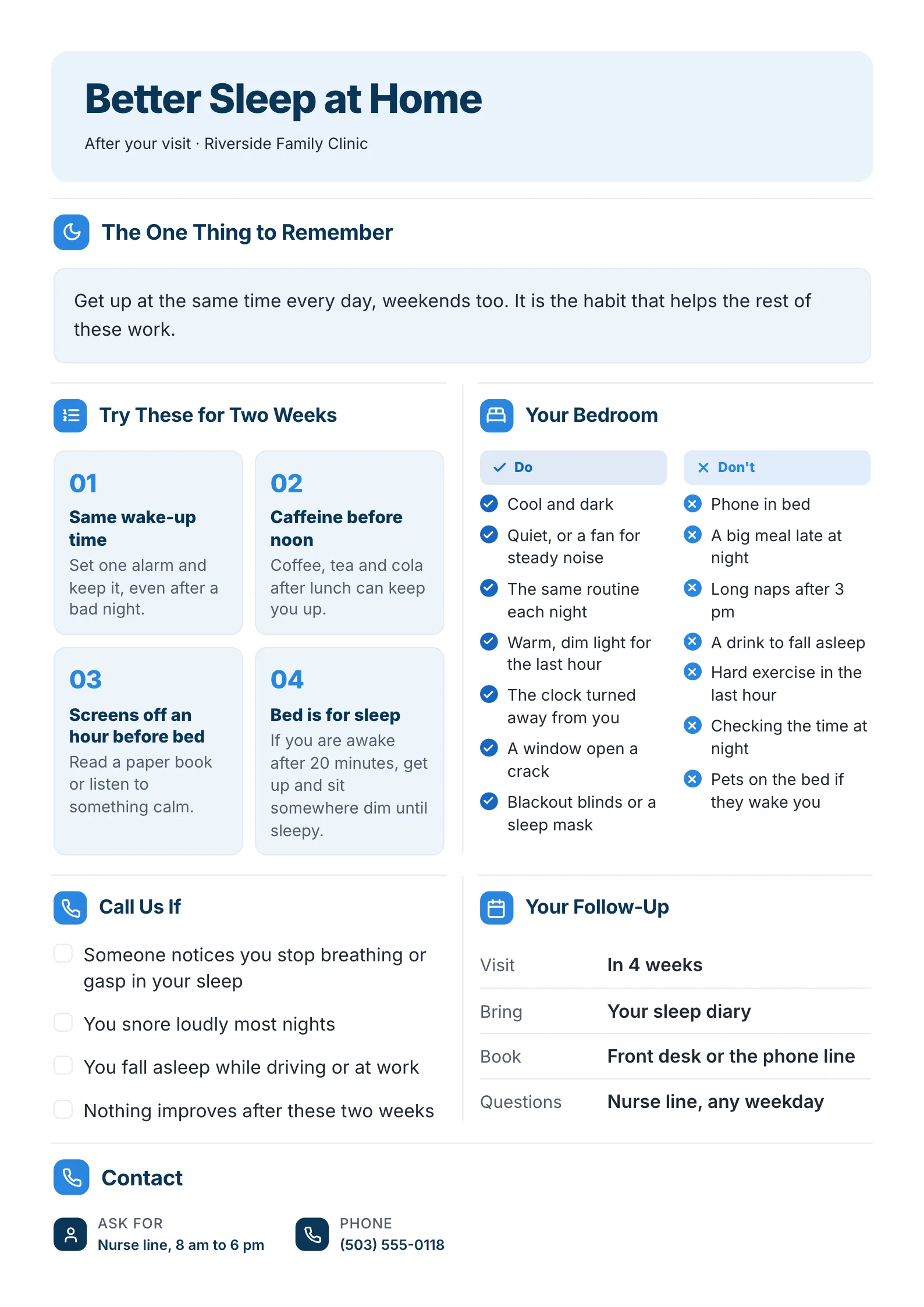 Edit this template
One topic, one sheet, written for the patient's kitchen table rather than the chart.
What to copy:
- One thing to remember, in a box at the top: "Get up at the same time every day, weekends too." A patient who reads nothing else still leaves with the habit that matters most.
- Steps with a time frame: "Try these for two weeks." A time frame turns advice into a plan the patient can finish and report back on.
- Do and don't in two short columns: "Cool and dark" against "Phone in bed." Lists this short get read in full.
- Reasons to call, written as what the patient or family would notice: "Someone notices you stop breathing or gasp in your sleep." Not a medical term the family has to look up.
- The follow-up as a small table: in 4 weeks, bring your sleep diary, book at the front desk, questions to the nurse line. Every part answers a question the patient would otherwise phone in about.
You can edit this patient education handout template for free.
5 more patient education handout examples
The same parts, written for five common visits. Each keeps one topic on one sheet.
 Edit this template
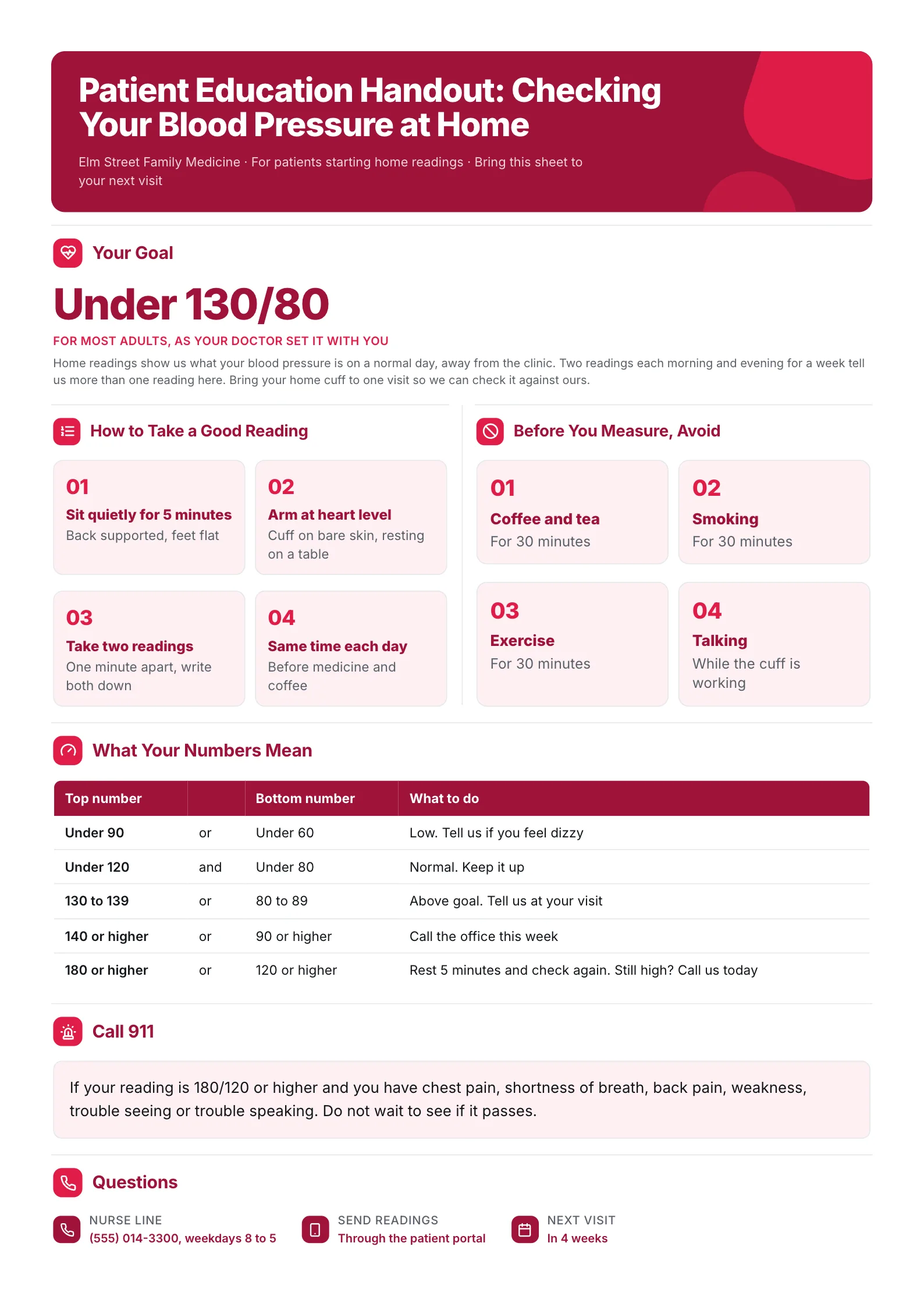
Blood pressure at home. The steps for a good reading come first, then what each number means.
 Edit this template
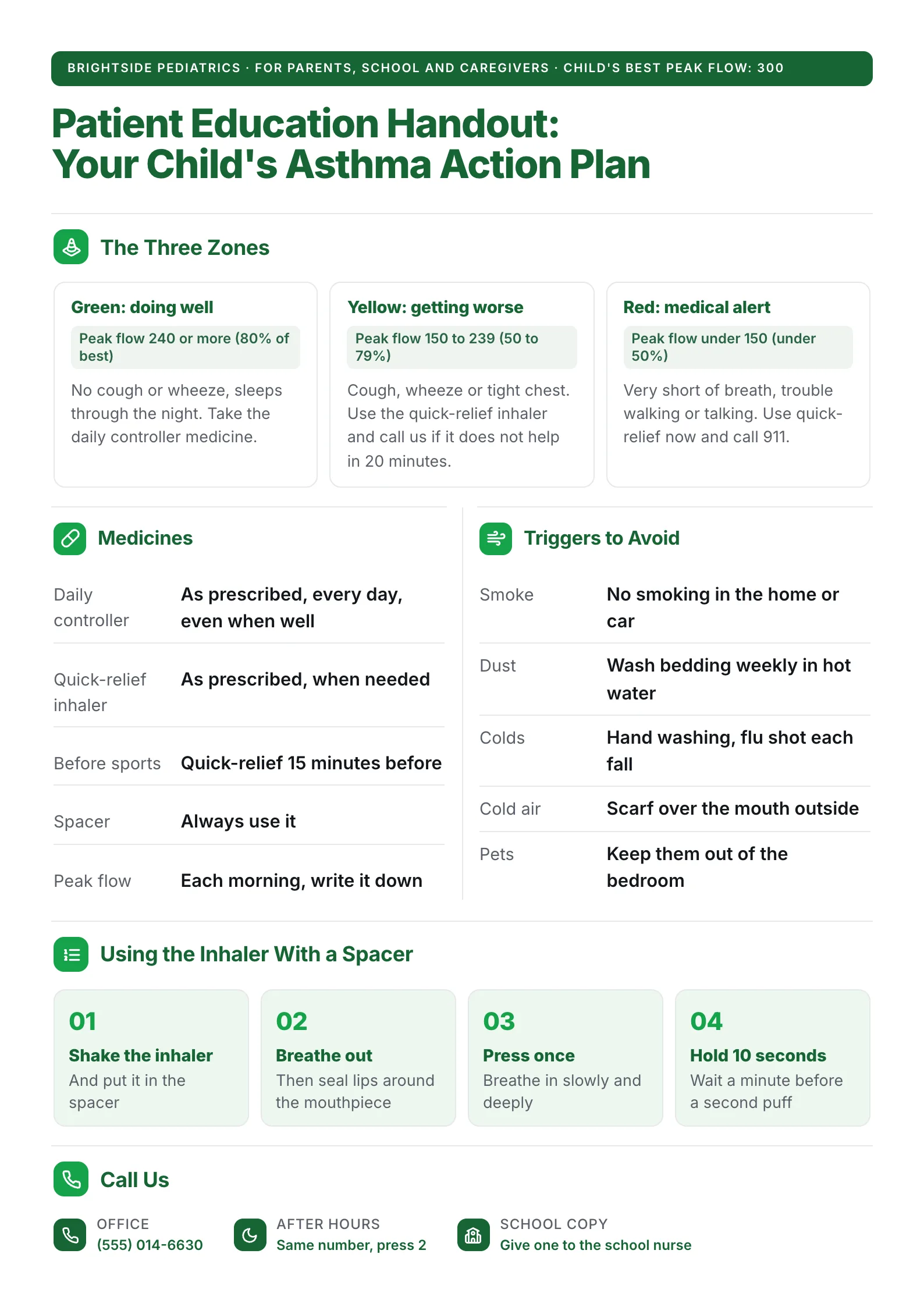
An asthma action plan with three zones a parent, a teacher or a sitter can follow.
 Edit this template
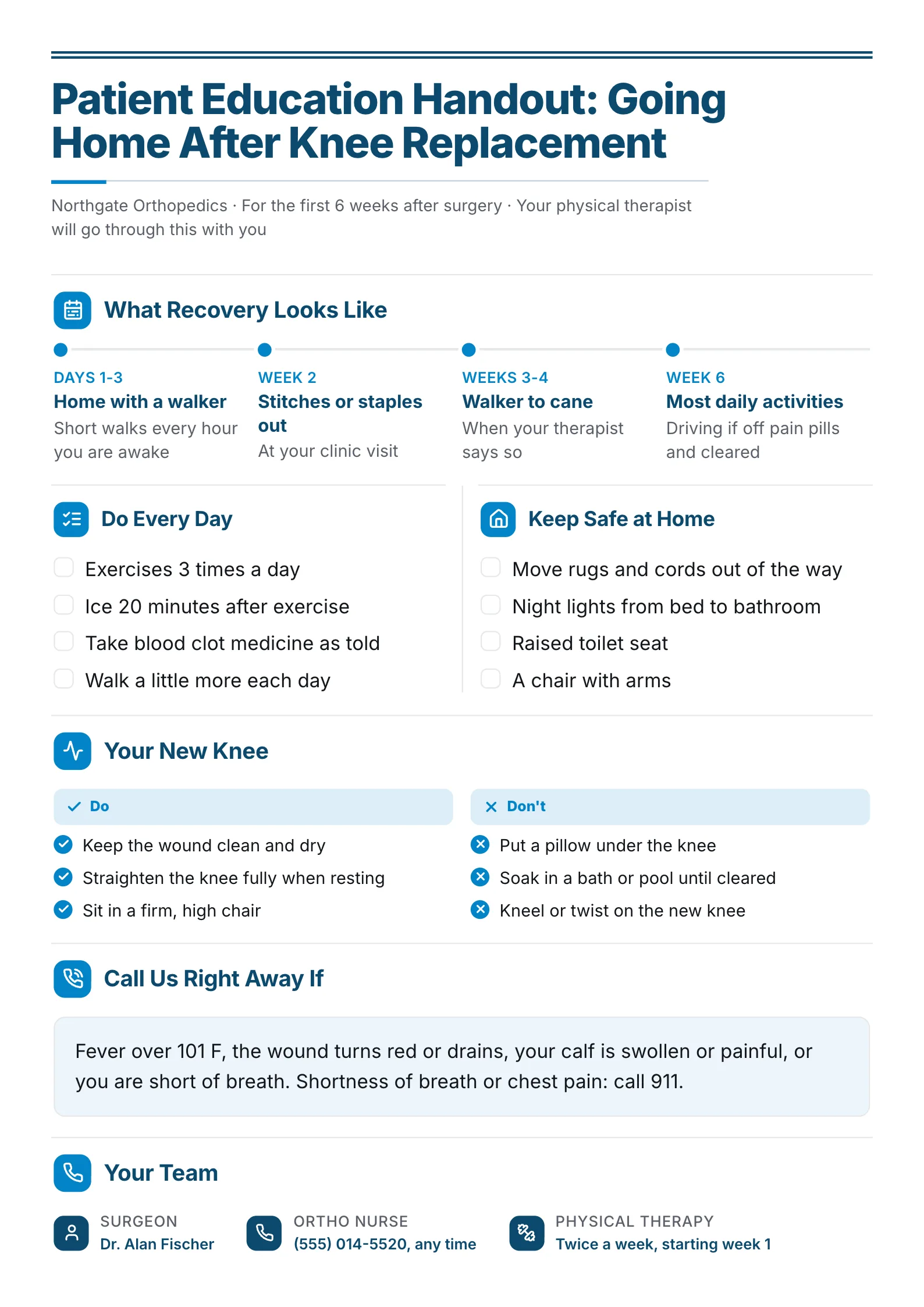
After surgery, a recovery timeline shows the patient what normal looks like each week.
 Edit this template
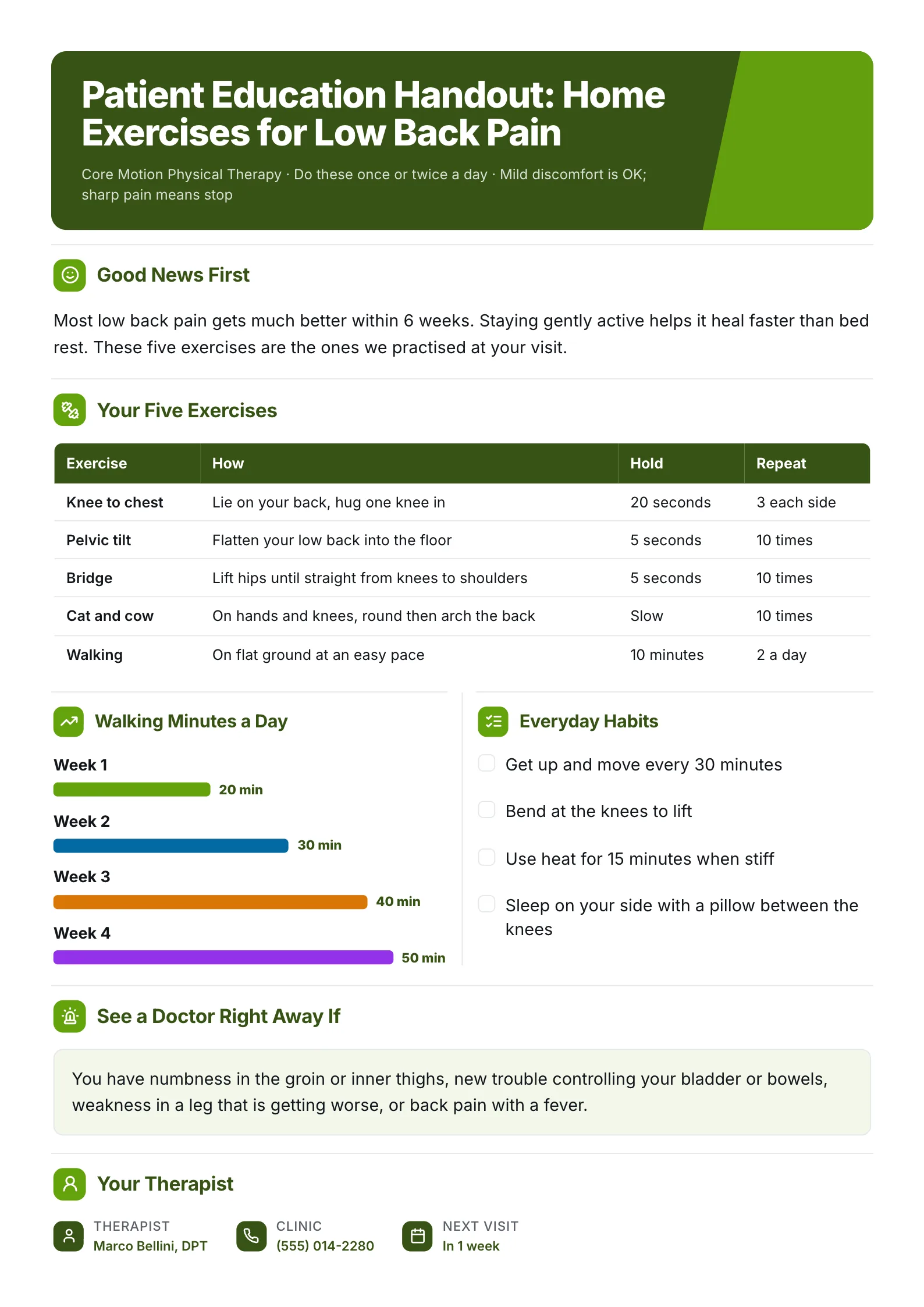
For physical therapy, list the exercises with how often. Then draw the line between normal soreness and a warning sign.
 Edit this template
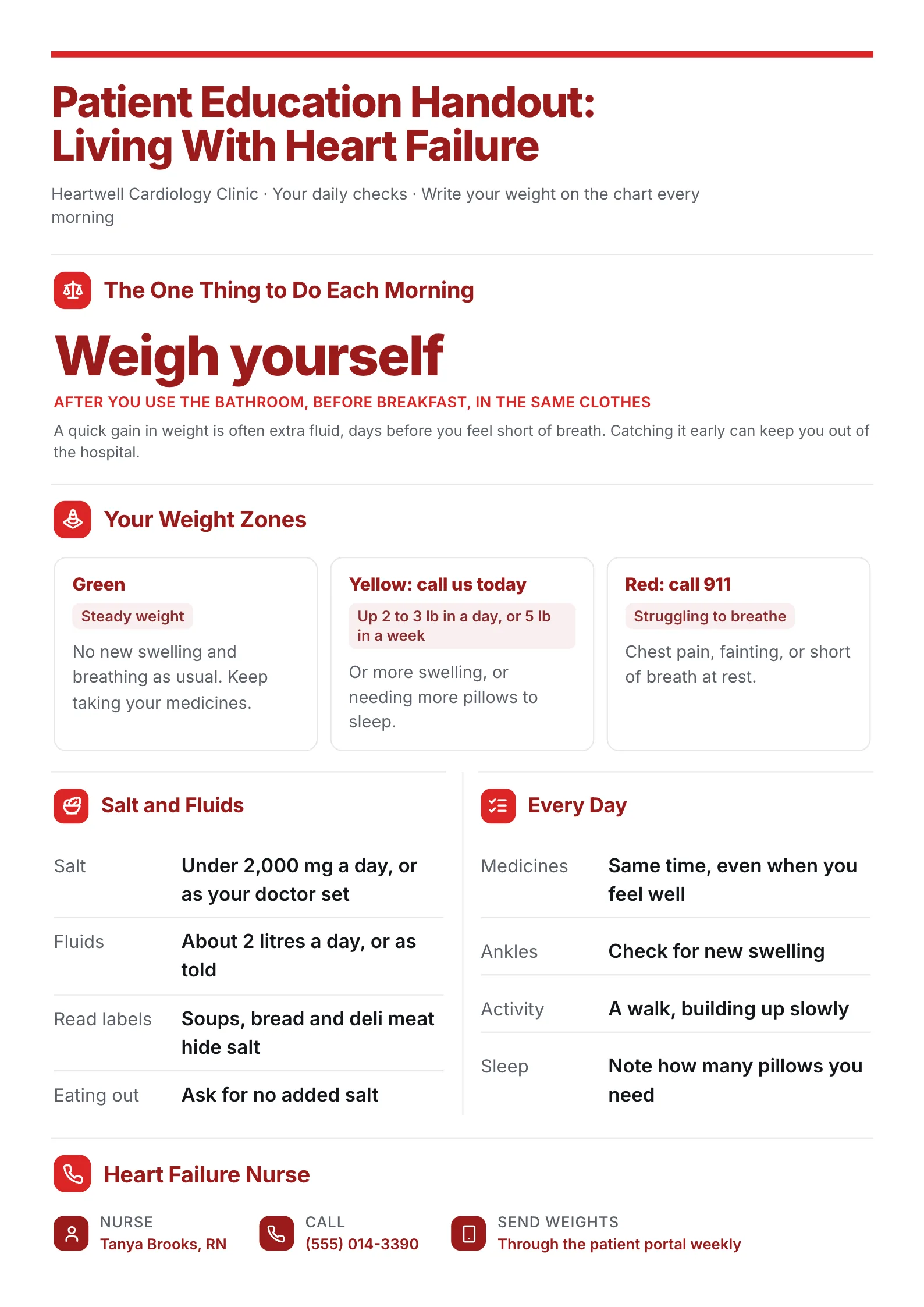
Heart failure gets one daily check, the morning weight, with zones that tell the patient when to call.
A worked example: testing the draft
Here is how one sample clinic might test a handout before printing it. These numbers are only an example and come from no study.
| Step | What they did | Result (example) |
|---|---|---|
| Draft | Nurse wrote the sheet from the visit notes | 410 words, 9 sections |
| Cut | Kept only what the patient does at home | 230 words, 7 parts |
| Teach-back | Five patients read it, then said the one thing in their own words | 4 of 5 got it right |
| Fix | Moved "same wake-up time" into the top box, in bold | 5 of 5 on the next round |
Teach-back (asking the patient to explain it back to you) is the cheapest test you can run. It catches the line that made sense only to the person who wrote it.
How to write a patient education handout in 6 steps
- Pick one topic and one reader. "Adults leaving the clinic after a sleep visit" is a reader. "Patients" is not.
- Write the one thing first. If you cannot say it in a sentence, the handout is trying to do too much.
- List what the patient must do, then cut anything they only need to know. Background goes in one short line, if at all.
- Use everyday words. "High blood pressure", not "hypertension". "Medicine", not "medication regimen". Keep sentences short, about 15 words or fewer.
- Check it with a clinician and test it with a patient. Use teach-back with two or three people before you print.
- Date it and review it whenever the advice changes, and at least once a year.
Have your instructions already, in a long protocol or visit notes? Drop them into the free AI One-Pager generator and get them back as a designed handout. Then edit the words by hand.
Plain-language rules for patient handouts
Plain language is a set of habits, not a lower standard. The US government's plain-language guidance and the health-literacy tools used by clinics agree on the basics:
- Lead with the action. "Take one pill each morning with food" beats a paragraph on how the medicine works.
- Be specific. "Drink a glass of water with every meal" is something a patient can do. "Drink plenty of fluids" is not.
- Use "you". Talk to the patient, not about them.
- Numbers as numerals: "20 minutes", "4 weeks". They are easier to spot when scanning.
- Short lists, white space, large type. Many readers are older, tired or worried, and some will read it on a phone photo.
- One language per sheet. Make a separate handout for each language your patients read, translated by a person and checked by a clinician who reads that language.
For a longer checklist, you can read our plain language checklist.
Handout, brochure or medication list?
| Patient handout | Brochure | Medication list | |
|---|---|---|---|
| Purpose | What to do after a visit | Tell people about a service | Track every medicine taken |
| Length | One sheet | Folded, several panels | One sheet, updated often |
| Given | At the end of a visit | In the waiting room, at events | Kept by the patient, brought to visits |
| Written for | One topic, one reader | Anyone who might come in | One person |
If what you need is a list of medicines and doses, the medication list template is the better start.
Patient education handout mistakes
- Writing for the chart. Medical terms and abbreviations that the team uses every day mean nothing at home.
- Five topics on one sheet. Make five handouts instead, and hand over only the one that applies.
- Hiding the warning signs. Put "when to call us" where it is easy to find, never in the last paragraph.
- No phone number or hours. A patient with a question at 7 pm needs to know who answers and when.
- No date. Advice changes, and an old handout in a drawer can do harm.
- Copying a leaflet off the internet without checking it. Every handout should match what your clinicians actually tell patients.
Make your patient education handout
Open the free patient education handout template and put in your topic, or drop your visit notes into the free AI One-Pager generator and get a finished handout back to review with your team.
Frequently asked questions
What should a patient education handout include?
Your handout needs a title in plain words, the one thing to remember, the steps to take at home, a do and don't list, the warning signs that mean call, the follow-up visit and one contact number with hours.
How long should a patient education handout be?
One sheet for one topic. If you need more, the topic is probably two topics and deserves two handouts.
What reading level should patient handouts be written at?
As plain as you can make it: short sentences, everyday words and one idea per line. Test it with teach-back on real patients rather than trusting a score alone.
Who should review a patient handout?
Have a clinician check that it is correct, and a few of your patients check that it is clear. Both reviews matter, and they catch different problems.
Can I make a patient education handout in Word or Google Docs?
Yes. A word processor works for text, but keeping one topic on one balanced sheet with clear sections takes time. A ready-made One-Pager handles the layout so you can spend your time on the words.




