BlogGuide
Medication List Template: What the FDA Says to Write Down
A medication list template built from the FDA's guidance and its My Medicines form, read at the source: every column, an example, when to update.

By MakeOnepagers Team
Updated · 7 min read
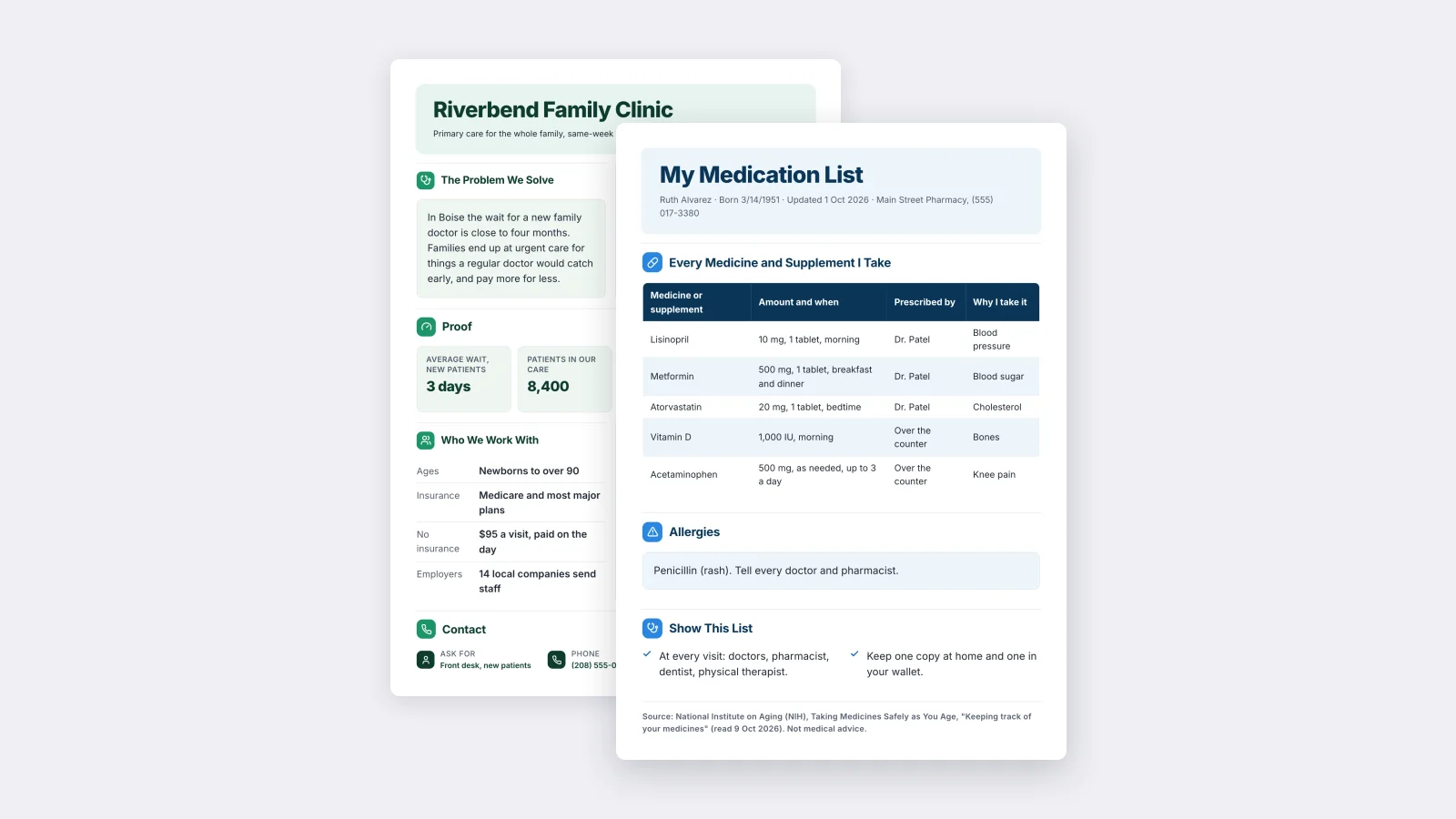
A medication list template gives you one page for everything you take: each prescription and over-the-counter medicine, vitamin and supplement, with its strength, how much and when you take it, and what it is for, plus your allergies and emergency contacts. That list of fields comes from the FDA's own guidance, Create and Keep a Medication List for Your Health, which we read on 12 October 2026 together with the FDA's printable My Medicines form. Below: what the FDA says to include, where its older form falls short, a template that fixes it, a filled example and when to update yours.
One‑Pager examples
Real One-Pagers made with MakeOnepagers. Open any one to edit it as your own.
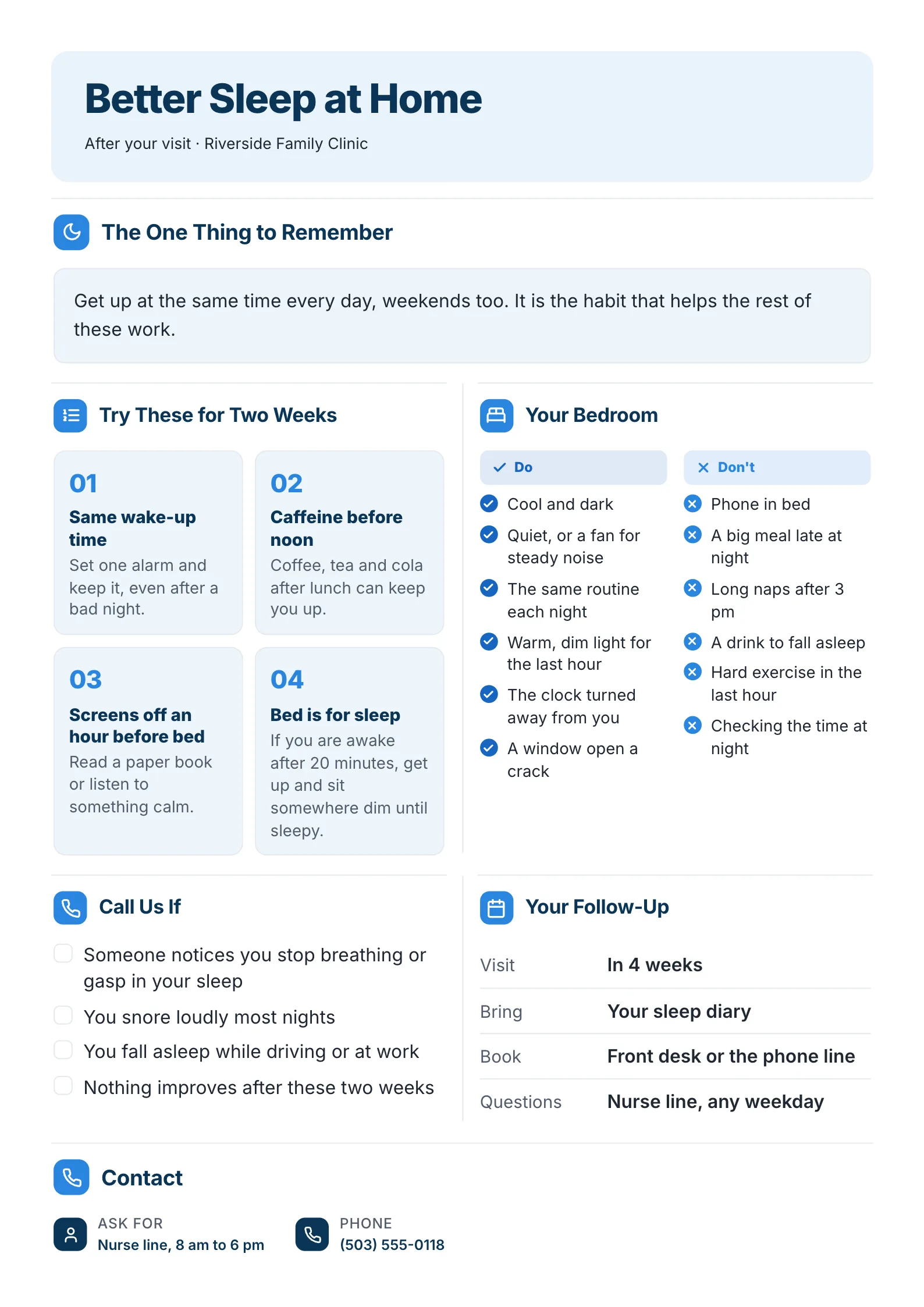 Patient Education SheetEdit for free(opens in a new tab)
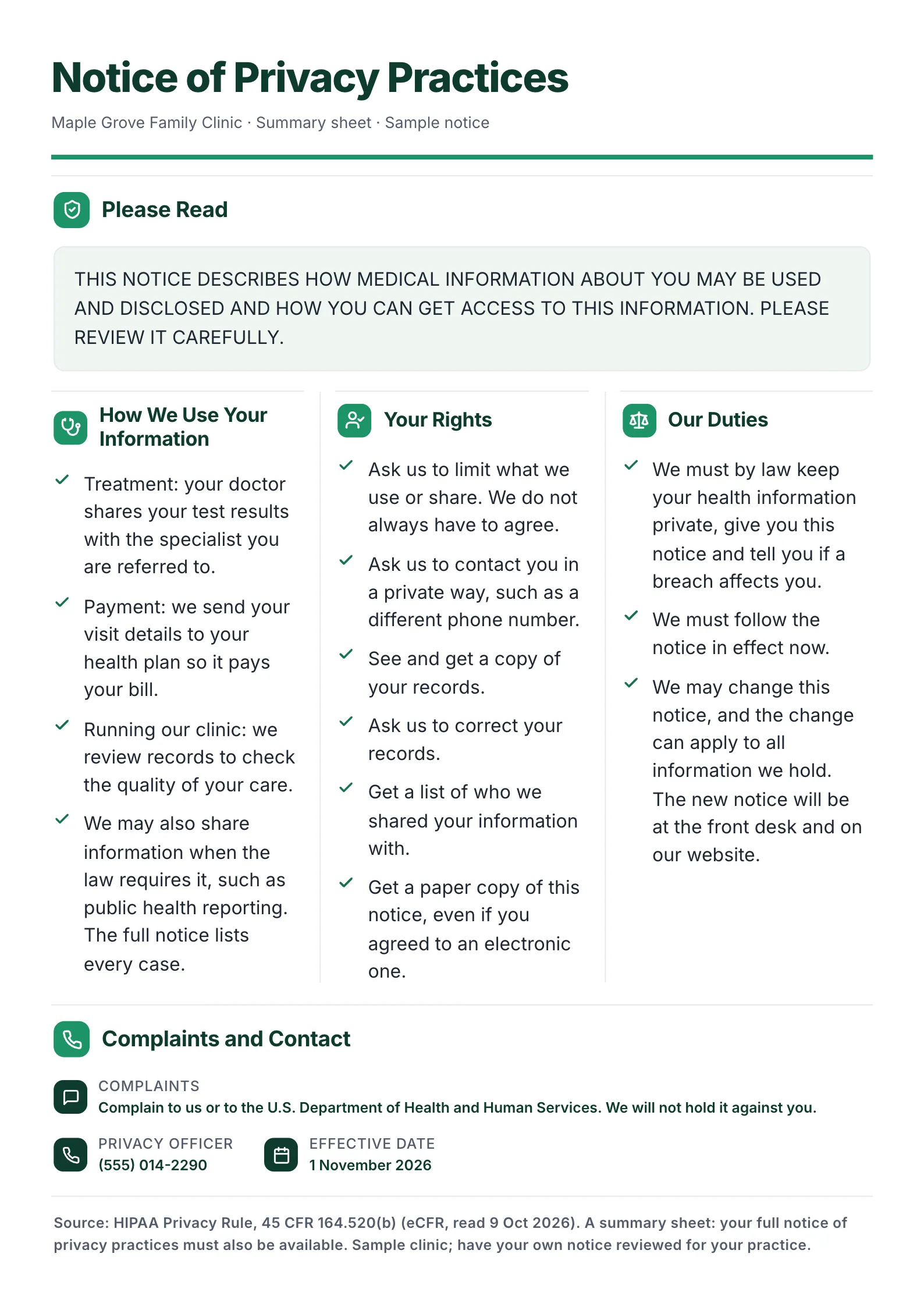 Privacy Notice SummaryEdit for free(opens in a new tab)
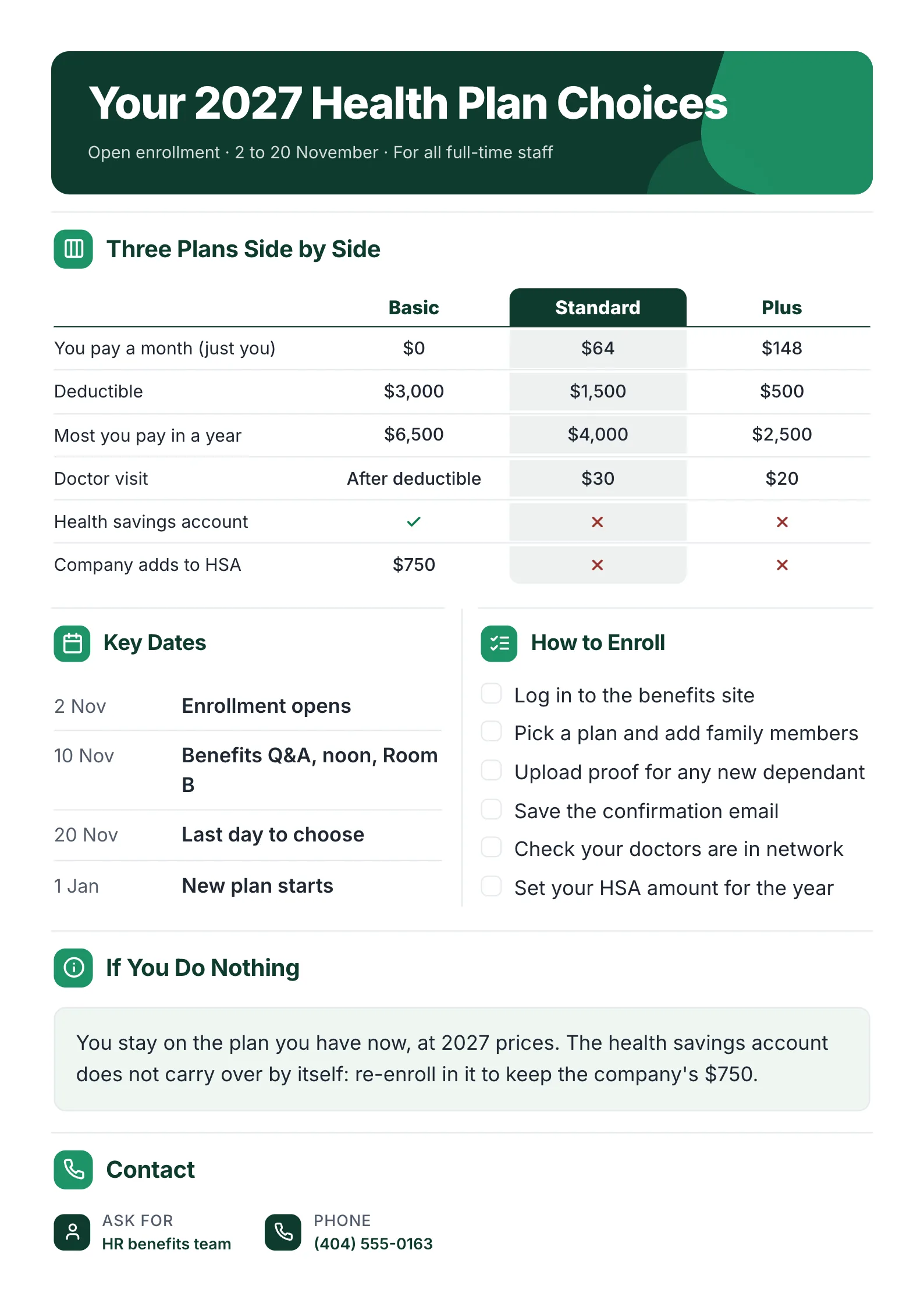 Health Plan Benefits SummaryEdit for free(opens in a new tab)
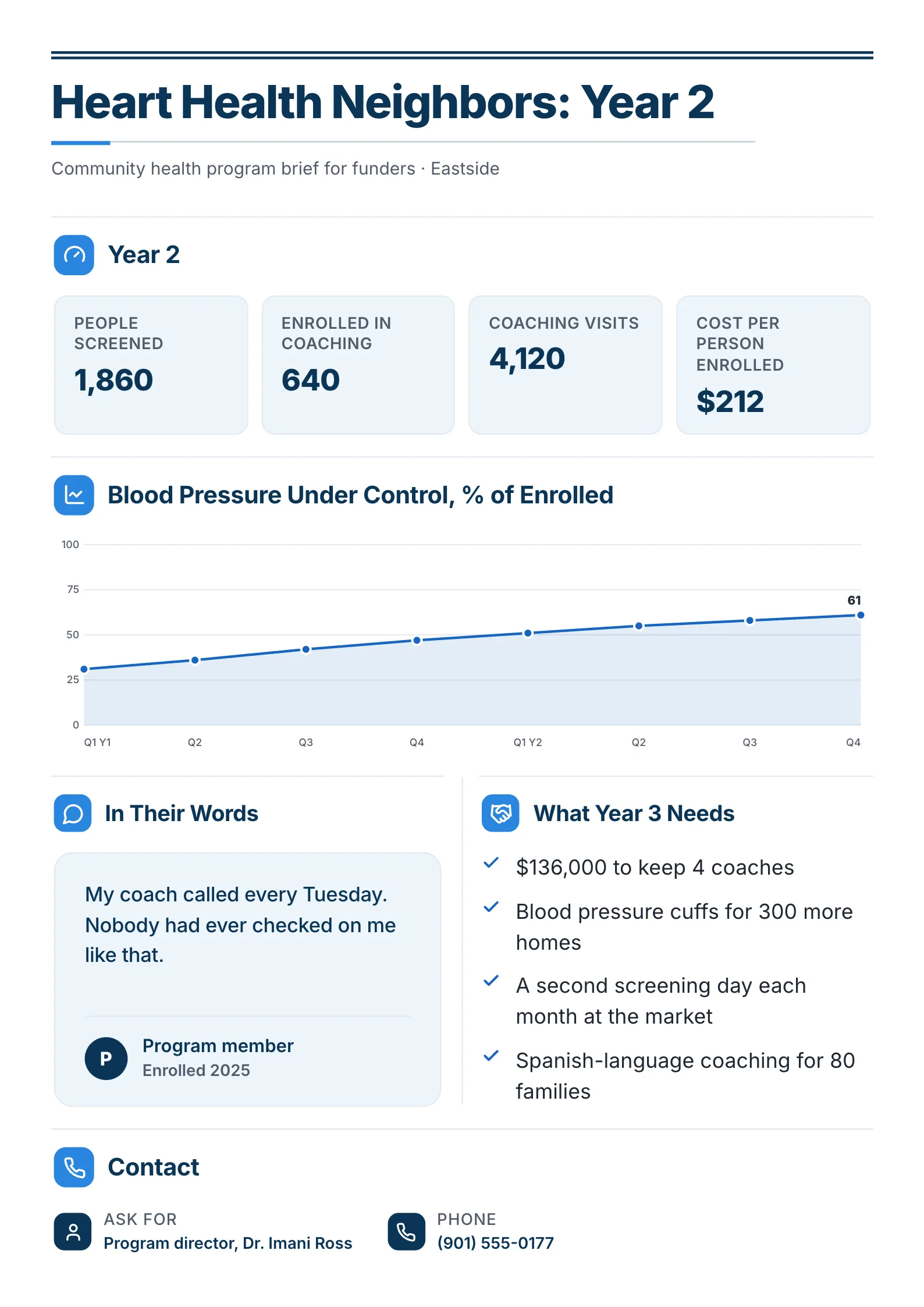 Community Health Program BriefEdit for free(opens in a new tab)
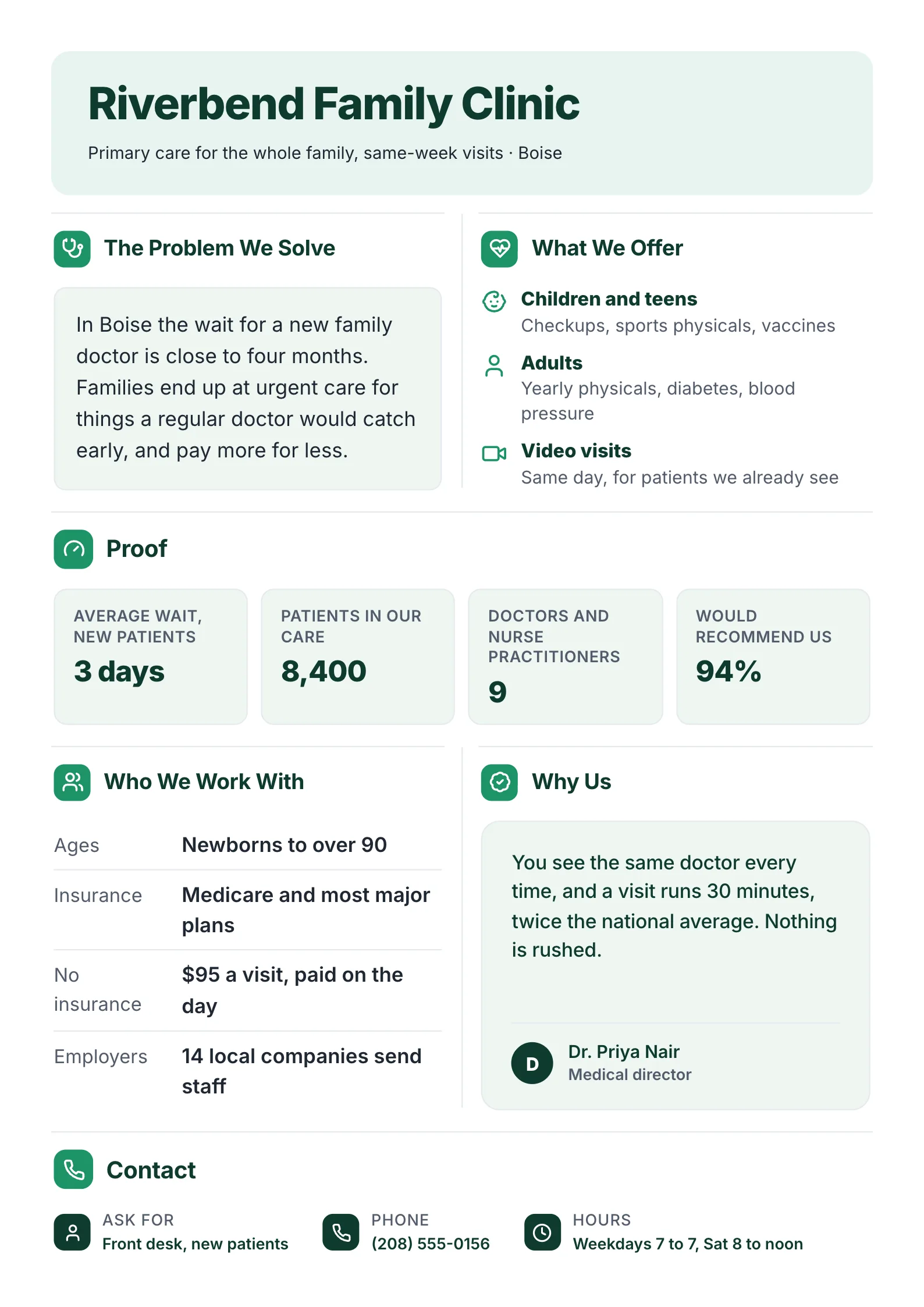 Medical Clinic ProfileEdit for free(opens in a new tab)
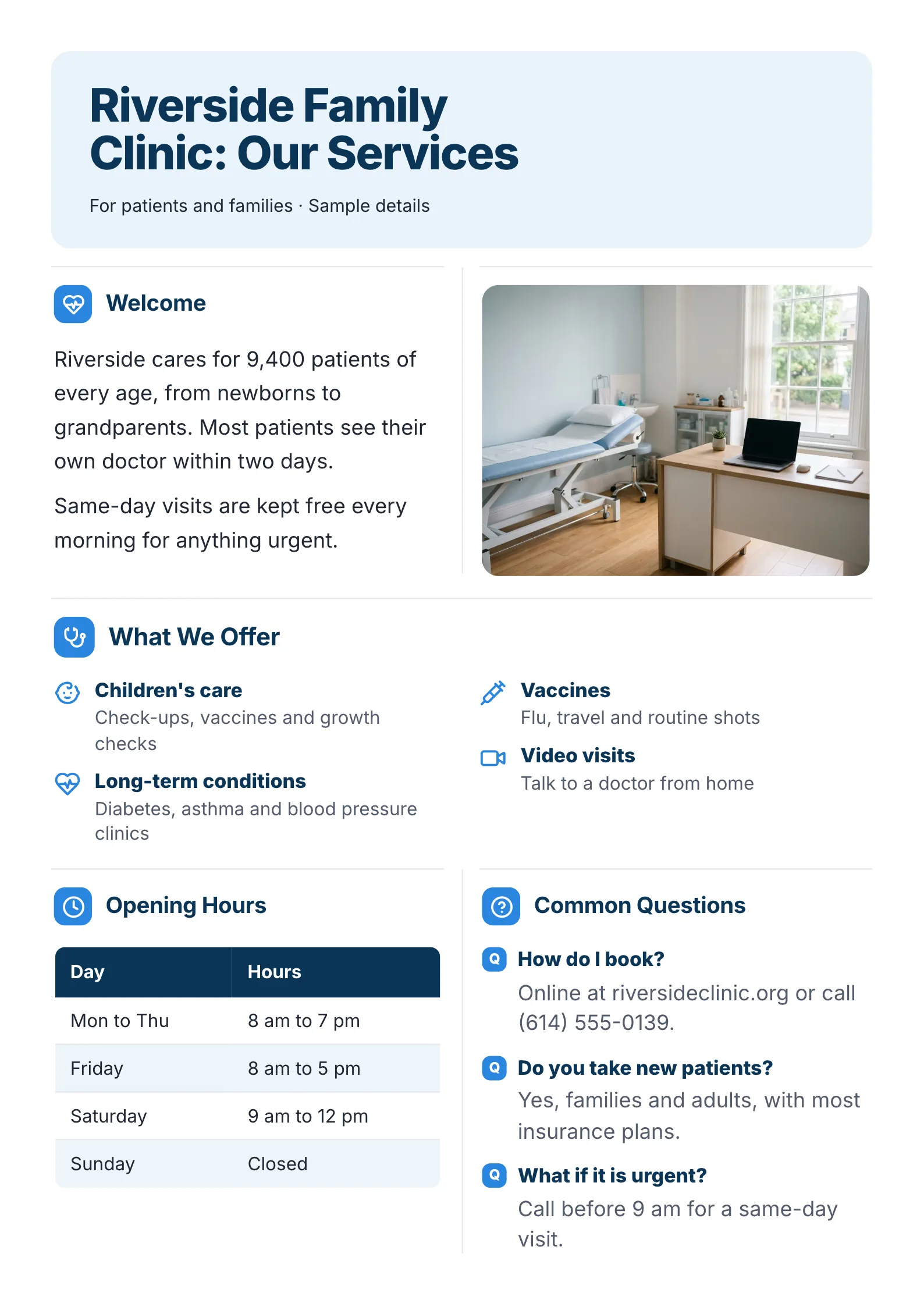 Clinic Services SheetEdit for free(opens in a new tab)
This is a guide to keeping a list, not medical advice. Ask your doctor or pharmacist about your own medicines.
Why keep a medication list
The FDA gives three reasons a list matters:
- In an emergency. It "could help paramedics and other first responders make more informed decisions", especially if you cannot speak for yourself, and helps hospital staff know what you should keep taking.
- At every appointment. Doctors, labs and pharmacies ask for it, and a list "can fill the gap between different health care information systems that do not communicate with each other."
- To avoid dangerous combinations. Some medicines should not be used with other drugs, foods or supplements, and a professional who does not know what you take could prescribe the wrong treatment.
The FDA also cites CDC figures: almost 70% of people aged 40 to 79 used at least one prescription drug in the past 30 days, and about 1 in 5 Americans used at least five.
What the FDA says a medication list should include
The FDA's guidance says the list should have "your emergency contacts, allergies and information about your prescription and nonprescription medicines, vitamins and supplements", including:
| For each medicine | Example |
|---|---|
| The name | Metformin |
| The strength | 500 mg |
| What you take it for | Type 2 diabetes |
| When, how and how much you take | 1 tablet twice a day with meals |
It also says to review and update the list "especially when something changes", such as a new prescription, a different dose or a medicine you stopped, and to keep a copy with you and share it with a trusted relative, friend or caregiver.
What the FDA's own form asks for
The FDA's My Medicines form, developed by its Office of Women's Health with the National Association of Chain Drug Stores, is a fill-in sheet with a record page. We read the fill-out-and-print version, dated 2012.
| Part of the form | What it asks for |
|---|---|
| Header | Your name, your doctor and the doctor's phone number |
| Allergies | A line to list them |
| Over-the-counter checklist | Boxes for pain or fever medicine, allergy medicine, antacids, cold and cough medicine, diet pills or supplements, laxatives, sleeping pills, vitamins, minerals, herbals and others |
| Record table | Date, name of the medicine, how much you take, when you take it, what you use it for, refills |
The form's sample row reads "1 tablet, 400 mg", "3 times a day after meals", "Arthritis", 2 refills.
Where the form and the guidance differ
| Field | FDA guidance (2025) | My Medicines form (2012) |
|---|---|---|
| Medicine name | Yes | Yes |
| Strength | Yes, its own item | Folded into "how much" |
| What it is for | Yes | Yes |
| When and how much | Yes | Yes |
| Allergies | Yes | Yes |
| Emergency contacts | Yes | No |
| Vitamins and supplements | Yes | As checkboxes, not rows |
| Pharmacy | Not named | No |
| Who prescribed each one | Not named | One doctor for the whole list |
So the form works, but a list made from it can miss two things the FDA's newer guidance asks for: each medicine's strength, written on its own, and who to call in an emergency. The template below has both, and adds a pharmacy line and a prescriber column because many people see more than one doctor.
A free medication list template
| Part | What to write |
|---|---|
| Name, date of birth, date updated | So a responder knows it is yours and current |
| Allergies and reactions | The drug or food, and what happens: "Penicillin: hives" |
| Conditions | The main ones, in plain words |
| Emergency contacts | Two people, with phone numbers |
| Doctors and pharmacy | Names and phone numbers |
| Medicines table | Name, strength, how much, when, what for, prescriber, start date |
| Over-the-counter, vitamins and supplements | In the same table, not a separate list |
| Stopped recently | Anything stopped in the last few months, and why |
A filled medication list example
A sample list for one person:
| Medicine | Strength | How much | When | What for | Prescriber | Started |
|---|---|---|---|---|---|---|
| Metformin | 500 mg | 1 tablet | Twice a day with meals | Type 2 diabetes | Dr. Patel | 2023 |
| Lisinopril | 10 mg | 1 tablet | Every morning | Blood pressure | Dr. Patel | 2021 |
| Atorvastatin | 20 mg | 1 tablet | Bedtime | Cholesterol | Dr. Patel | 2022 |
| Vitamin D3 | 1,000 IU | 1 capsule | Every morning | Low vitamin D | Self | 2024 |
| Ibuprofen | 200 mg | 1 to 2 tablets | As needed, up to twice a day | Knee pain | Self |
Above the table: allergies "Penicillin: hives. Shellfish: swelling", two emergency contacts, the doctor's and pharmacy's numbers, and "Updated 12 October 2026". Below it: "Stopped: amlodipine 5 mg in August, ankle swelling."
The person and medicines are a sample, not advice. Note the last two rows: the vitamin and the over-the-counter pain reliever go in the same table as the prescriptions, because they can interact with them too.
How to make your medication list in 15 minutes
- Gather every bottle and box, including vitamins, supplements and anything you take only now and then.
- Copy the name and strength from each label exactly.
- Write how much, when and what for in your own words.
- Add allergies with the reaction, your conditions and two emergency contacts.
- Add the doctors and pharmacy.
- Ask your pharmacist to check it. They can see what you fill there.
- Date it, print it and photograph it. Keep one copy with your insurance card and give one to a trusted person.
Have a pile of discharge papers or pharmacy printouts? Type out just the medicine lines and drop them into the free AI One-Pager generator to lay them out on one page, then check every name and strength against the labels before you rely on it.
When to update it
The FDA says to update the list whenever something changes. In practice:
- A new prescription, or a new over-the-counter medicine or supplement.
- A dose change, or a medicine stopped.
- After a hospital stay, when medicines may have changed.
- Before every appointment: read it once and fix the date.
Other one-page sheets for your health
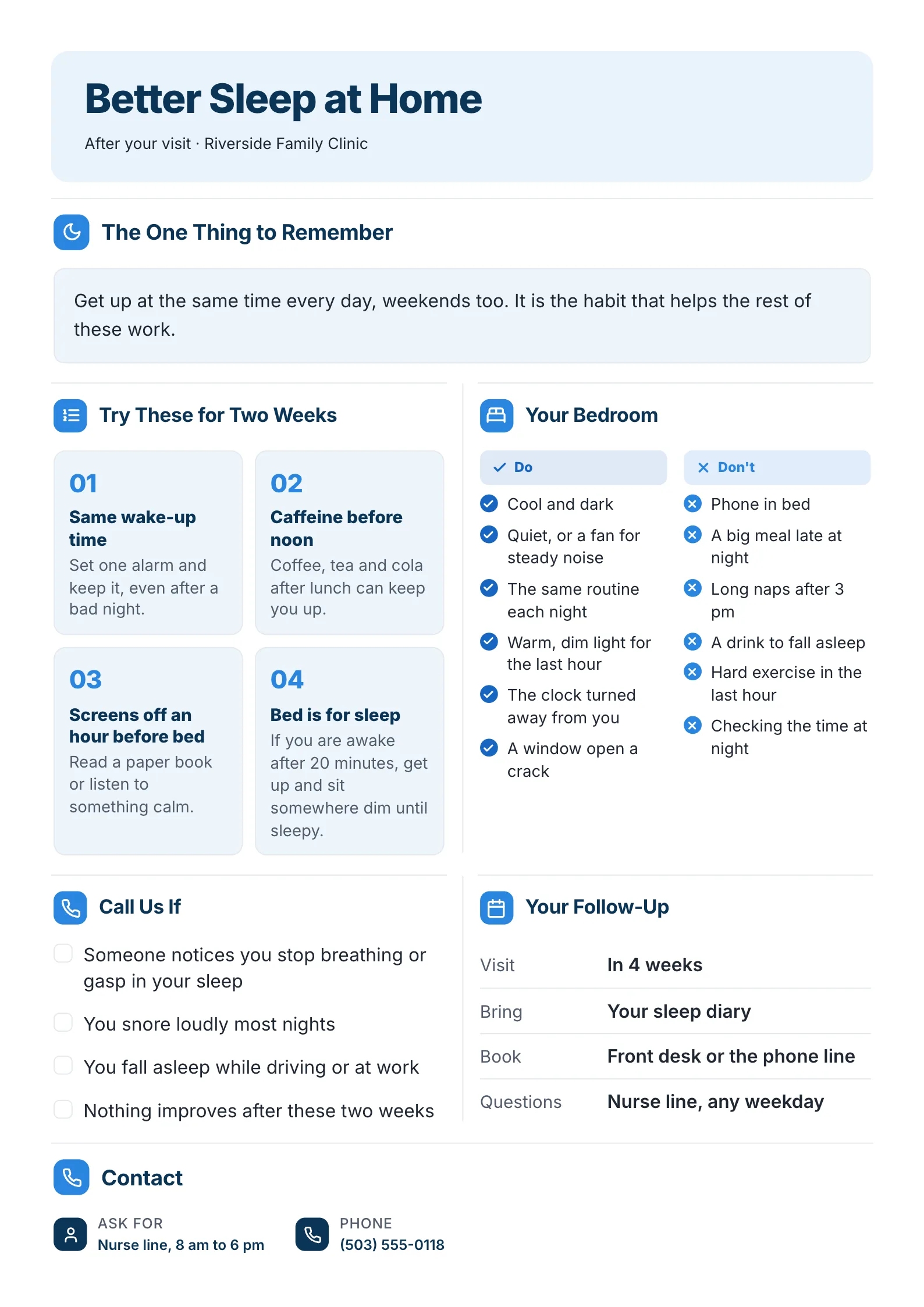
A clinic often hands out one-page sheets that sit well beside a medication list, such as instructions after a visit.
 Edit this template
A sample patient handout: the one thing to remember at the top, then short numbered steps, dos and don'ts and when to call.
Open it: patient education sheet template.
Medication list mistakes
| Mistake | Fix |
|---|---|
| Name with no strength | Copy the strength from the label: "10 mg" |
| Vitamins and over-the-counter medicines left off | Put them in the same table |
| "Allergic to penicillin" with no reaction | Add what happens: hives, swelling, trouble breathing |
| No date | Date every update, so a responder knows it is current |
| One copy, at home | A copy with your insurance card, a photo on your phone, one with a trusted person |
| Never shown to the pharmacist | Ask them to check it against what they dispense |
Make your medication list
Use the template table above, fill it from your labels, and ask your pharmacist to check it. Print it on one page, date it, and keep a copy with your insurance card and a photo on your phone.
Frequently asked questions
What should be on a medication list?
Your emergency contacts and allergies, then each prescription and nonprescription medicine, vitamin and supplement with its name, strength, what it is for, and when, how and how much you take it. Those are the items the FDA lists. Adding the prescriber, pharmacy and start date helps too.
Is there an official medication list form?
Yes. The FDA links to a My Medicines fill-in form developed by its Office of Women's Health and the National Association of Chain Drug Stores. Your doctor's office or pharmacy may also have one.
Should vitamins and supplements be on my medication list?
Yes. The FDA's guidance includes them, because they can interact with prescription medicines.
How often should I update my medication list?
Whenever something changes: a new medicine, a different dose, or a medicine you stopped. Read it over before each appointment.
Where should I keep my medication list?
The FDA suggests keeping a copy with you, for example a photo on your phone or a paper copy with your health insurance card, and sharing it with a trusted relative, friend or caregiver.