Marketing One Pager: Free Template, Example and What to Put on It
How to make a marketing one pager that gets read: the 7 parts, a free template to copy, a worked example and the mistakes that bury the offer.

A marketing one pager is a single sheet that sells one product, service or offer. It names the problem the buyer has, says what you do about it, proves it with a number or a quote and ends with one clear next step. Sales teams send it after a first call, hand it over at a trade show, attach it to a cold email or leave it behind after a meeting. It works because a busy buyer will read one side of paper and will not open a 20-slide deck. Below are the seven parts every marketing One-Pager needs, a free template to copy, a worked example and the mistakes that make buyers stop reading. Start from a free one pager template.
One‑Pager examples
Real One-Pagers made with MakeOnepagers. Open any one to edit it as your own.
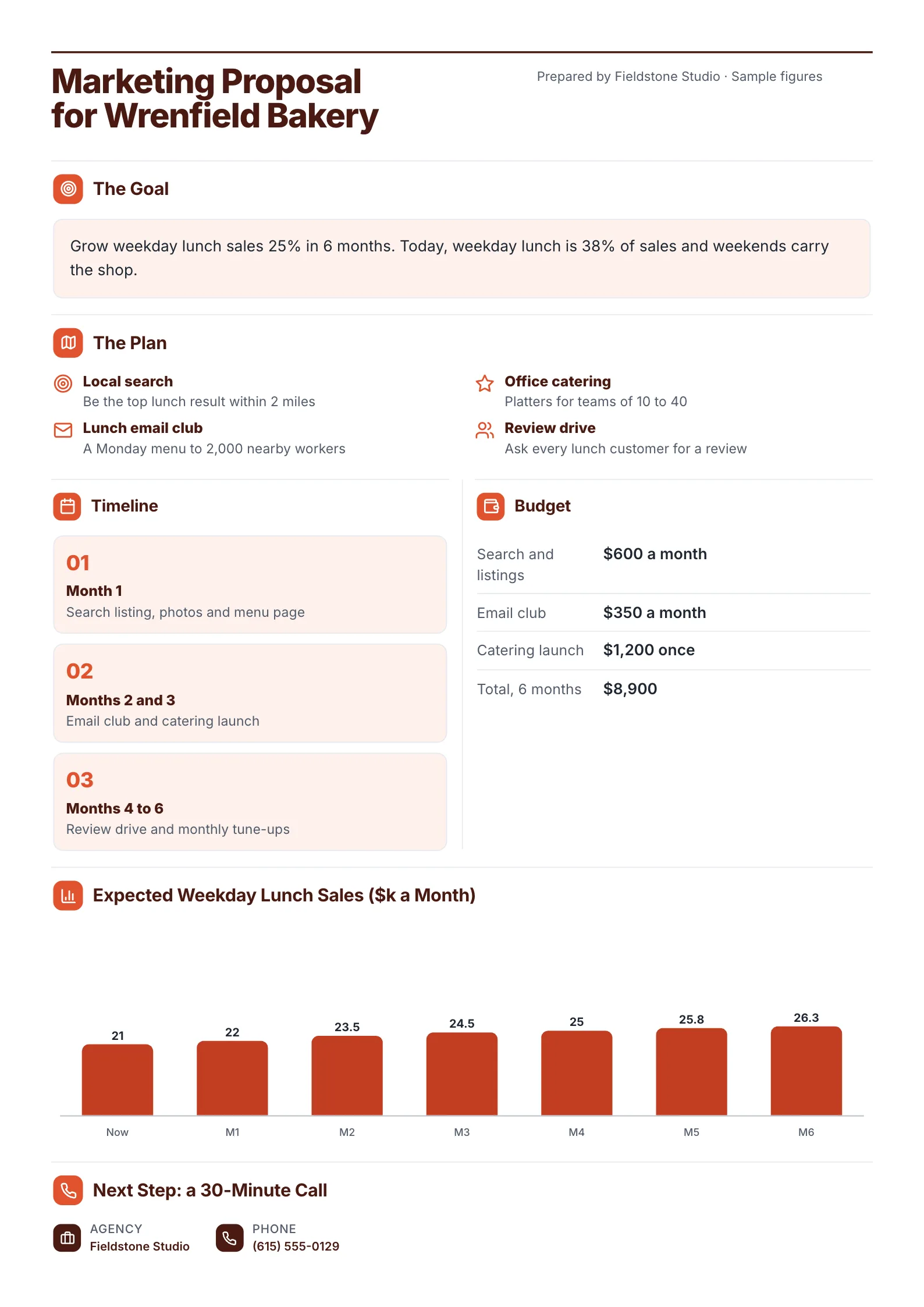 Marketing ProposalEdit for free(opens in a new tab)
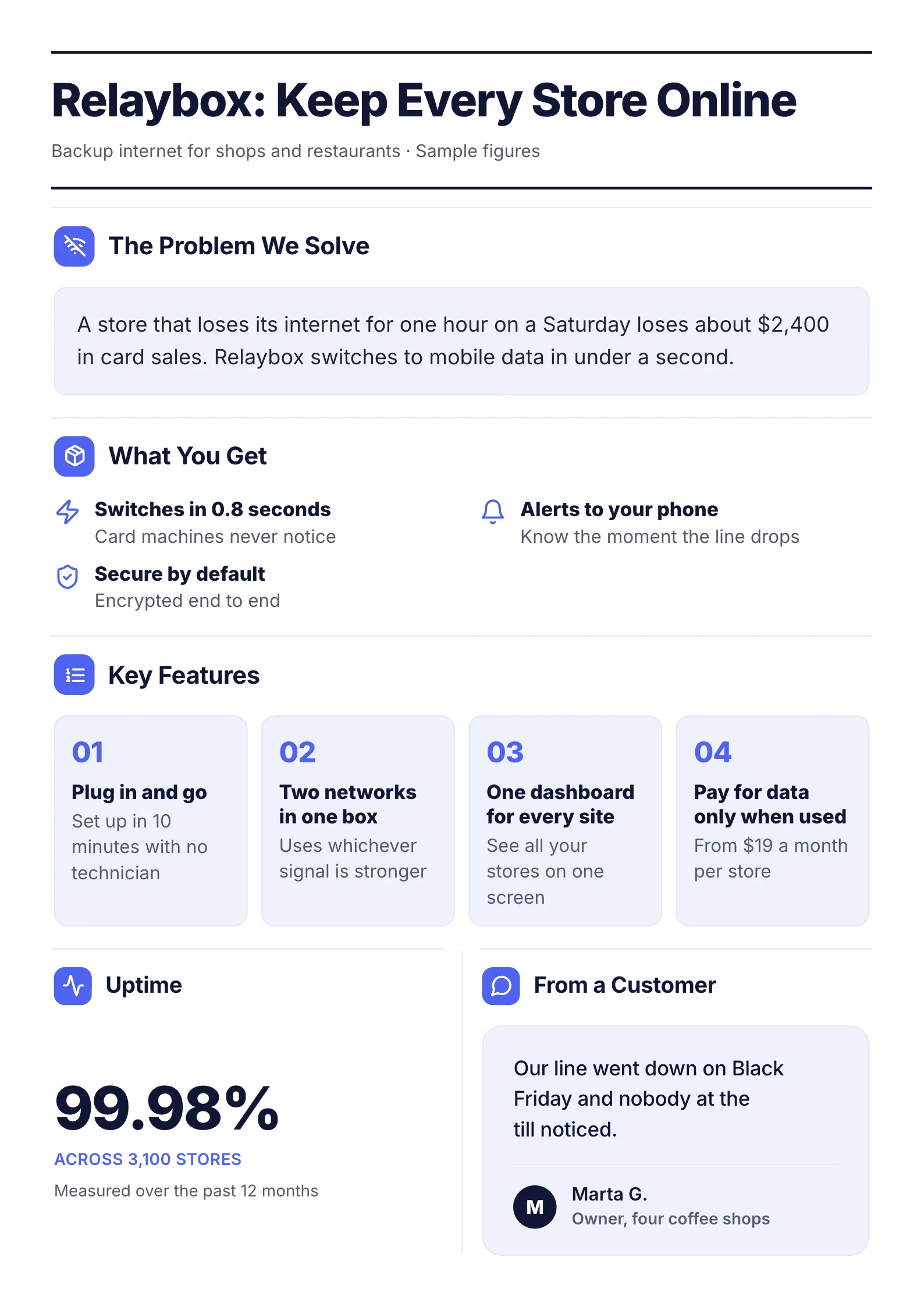 Technology Sell SheetEdit for free(opens in a new tab)
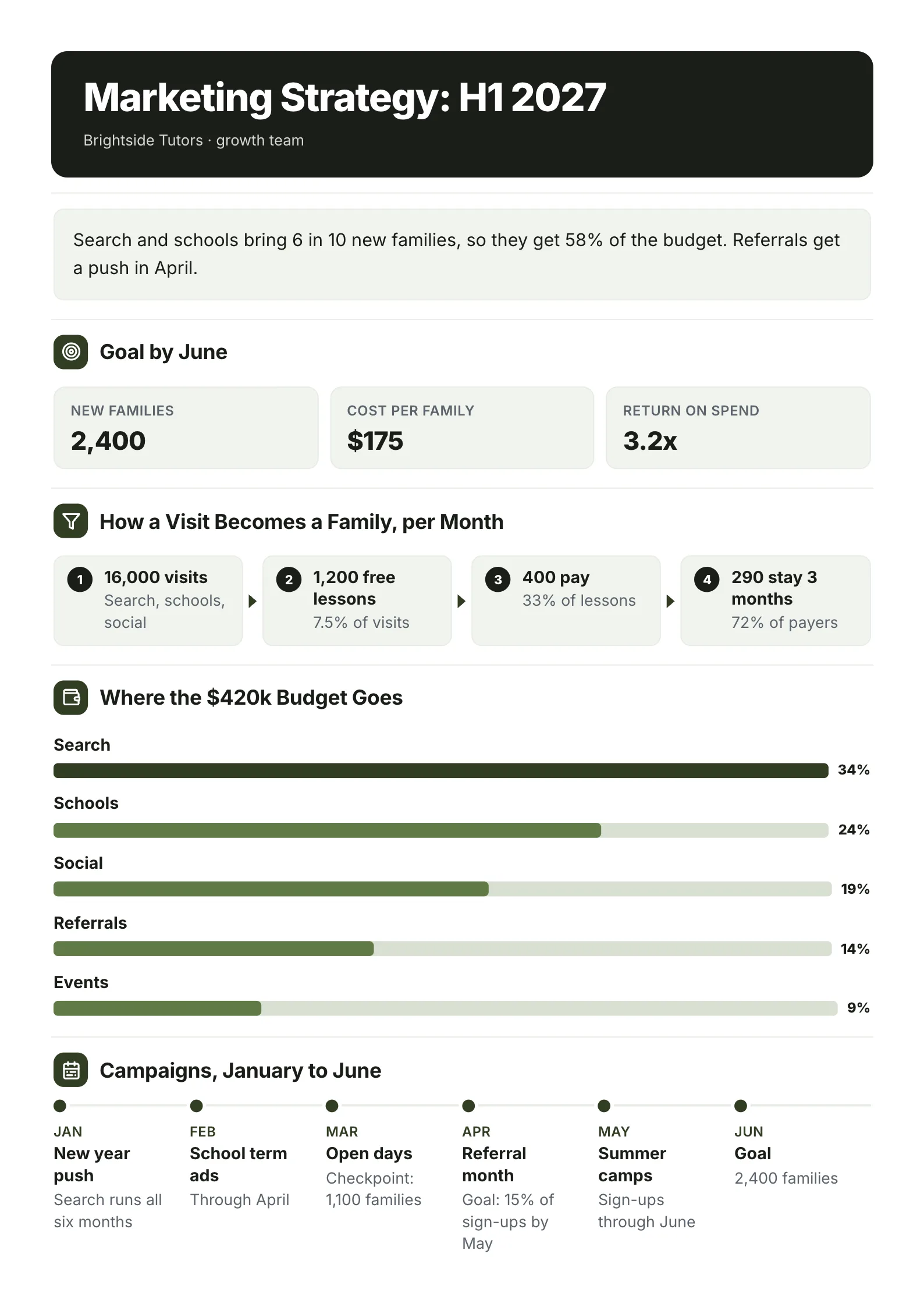 Marketing StrategyEdit for free(opens in a new tab)
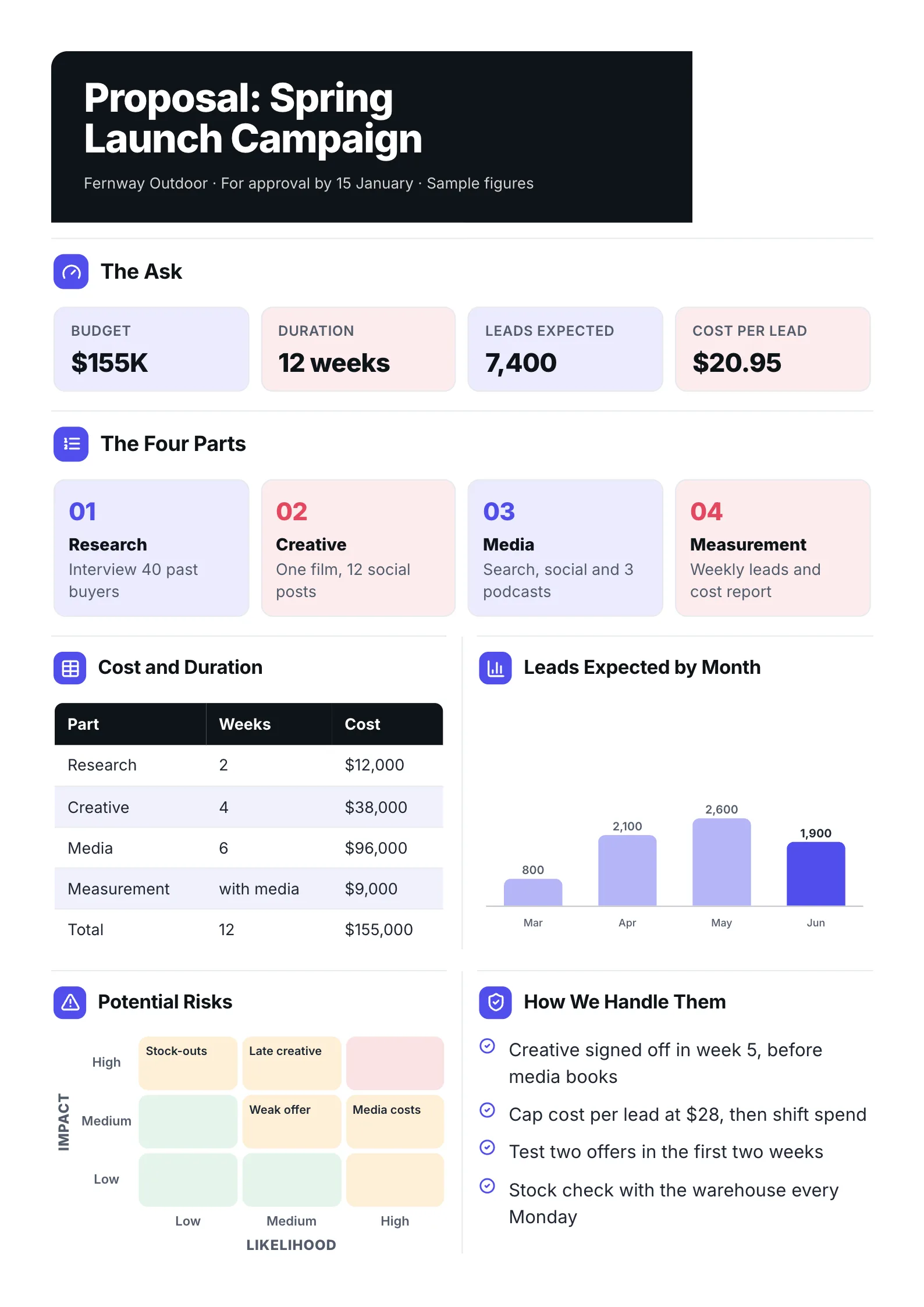 Marketing Project ProposalEdit for free(opens in a new tab)
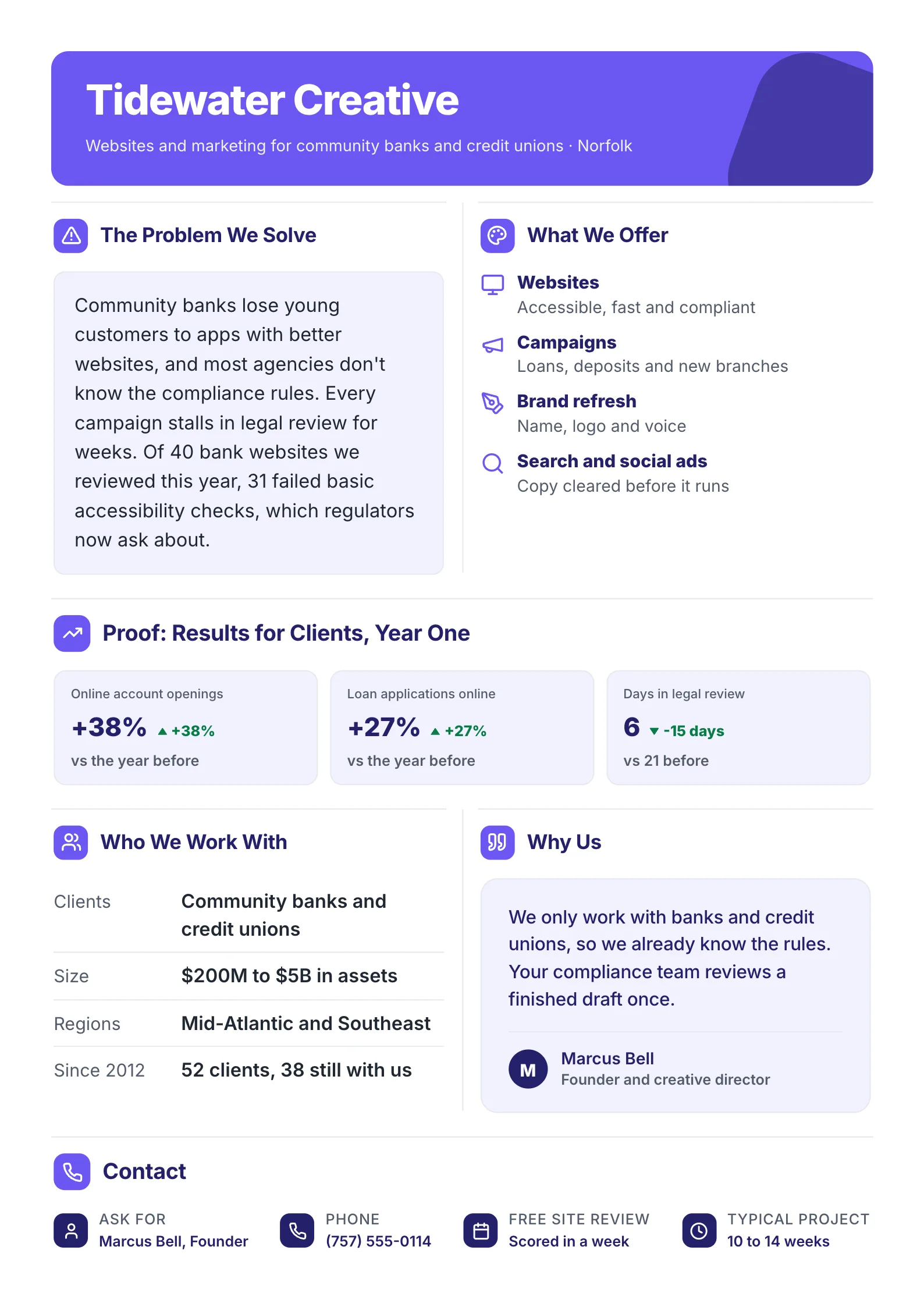 Marketing Agency ProfileEdit for free(opens in a new tab)
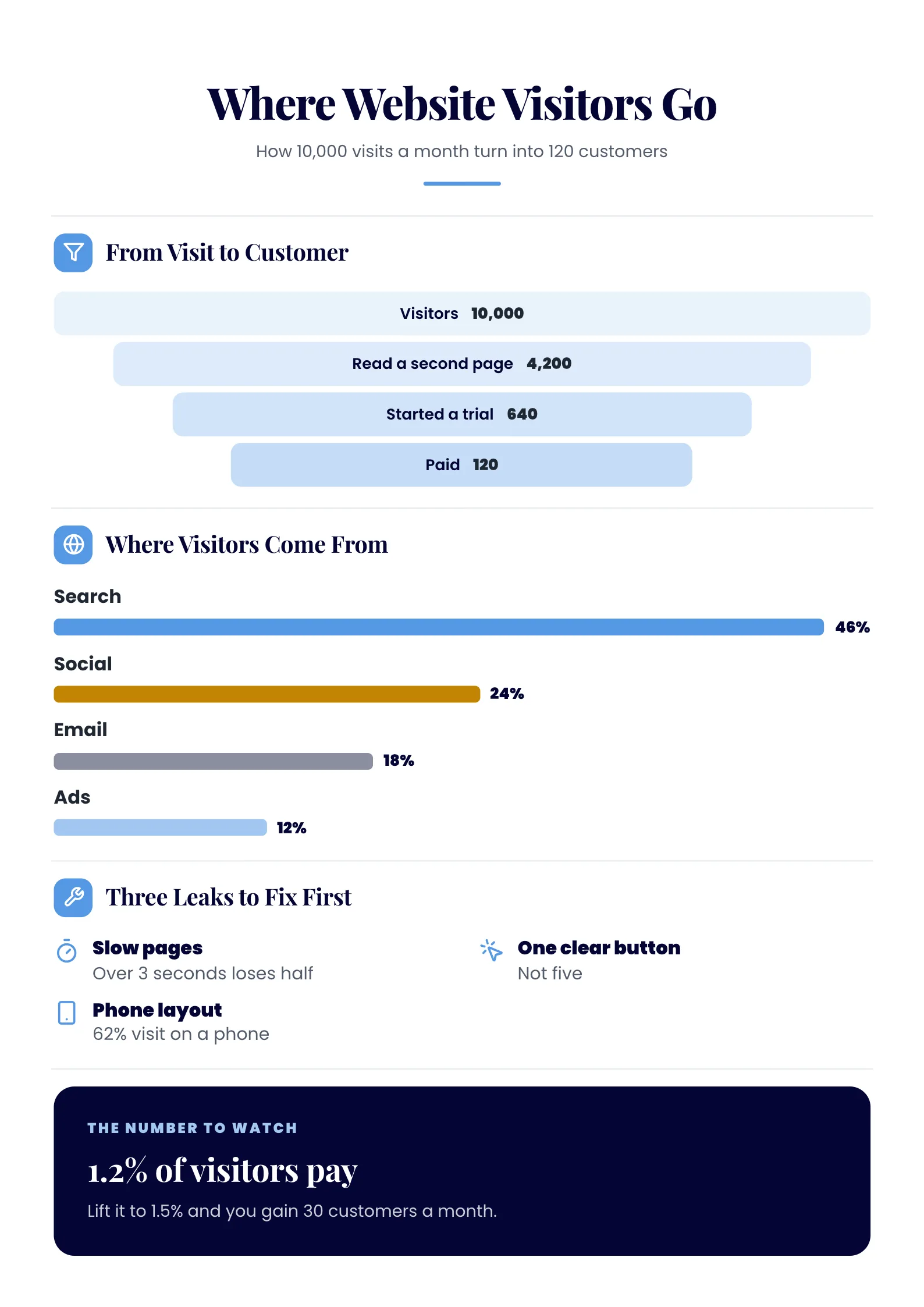 Marketing InfographicEdit for free(opens in a new tab)
The example was made with MakeOnepagers. It opens as a template you can edit for free: every word, chart and color.
What is a marketing one pager?
A marketing one pager (also called a sales sheet, a one sheet or a product one-sheet) is a short document that explains why one thing is worth buying. It is written for an outside reader: a customer, a retail buyer, a partner or an investor who has not yet said yes.
Some teams also use the term for an internal document that lines up sales and marketing before a campaign: who the buyer is, what message to lead with and what success looks like. That version has a different reader, so it needs different content. This guide covers the outside version, the one a buyer actually sees. If you need the internal one, a marketing strategy One-Pager is the better fit.
Marketing one pager, sell sheet or brochure?
| Marketing one pager | Brochure | Pitch deck | |
|---|---|---|---|
| Length | One side | 4 to 12 panels | 10 to 20 slides |
| Covers | One product or offer | The whole company | The company and the ask |
| Read | In a minute | When someone has time | In a meeting |
| Best moment | After a first call, at a booth | In a lobby, in a mailer | Live, with you talking |
If you sell several products, make one marketing One-Pager per product. A sheet that tries to cover the whole range turns into a brochure squeezed onto one side, and nobody reads it.
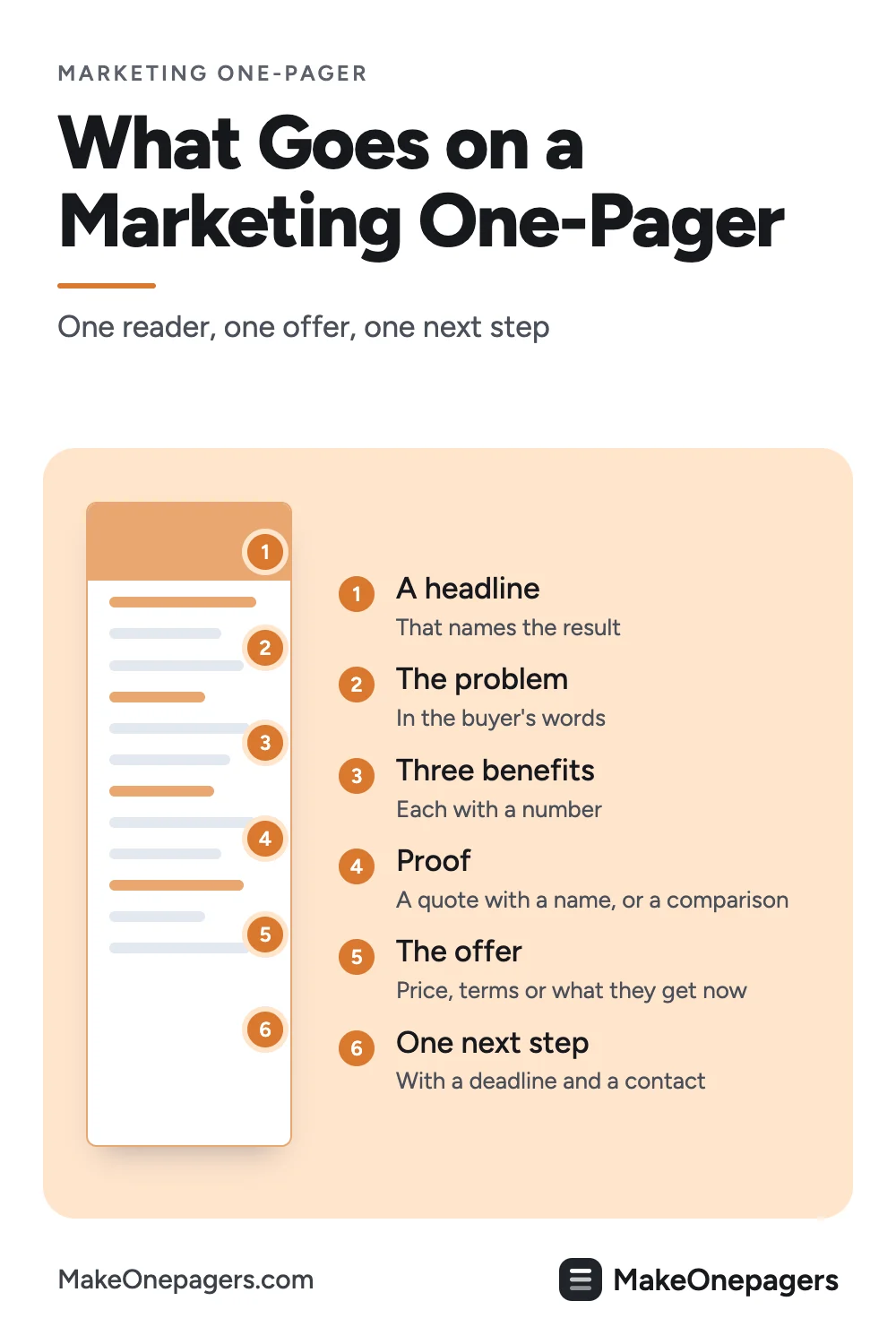
The 7 parts of a marketing one pager
- A headline that names the result, not the product category. "Cut returns on headphones" beats "Wireless headphones."
- The problem in the buyer's words. One or two sentences they would say themselves.
- What it is and what it does, in plain language a stranger could repeat.
- Three benefits, each with a number where you have one.
- Proof: a short quote with a name and role, a result, or a side-by-side comparison.
- The offer: price, terms or what the buyer gets if they act now.
- One next step, with a deadline and a way to reach a person.
Logo and contact details sit at the top or bottom. They matter, but they are not the reason anyone keeps reading.
A free marketing one pager template
Copy this into a document, or open the example below and edit it.
| Part | What to write, with an example |
|---|---|
| Headline | The result. The headphones customers keep |
| Problem | 1 to 2 sentences. Cheap headphones come back. Premium ones sit on the shelf. |
| What it is | 1 sentence. Wireless noise canceling headphones at $179 |
| Benefits | 3, with numbers. 38 hours of battery; 10 hours from 15 minutes of charge |
| Proof | 1 to 2 quotes or a comparison table |
| Offer | Terms. 12% off on 50 units |
| Next step | 1 action with a date. Order before November 30 |
Marketing one pager example
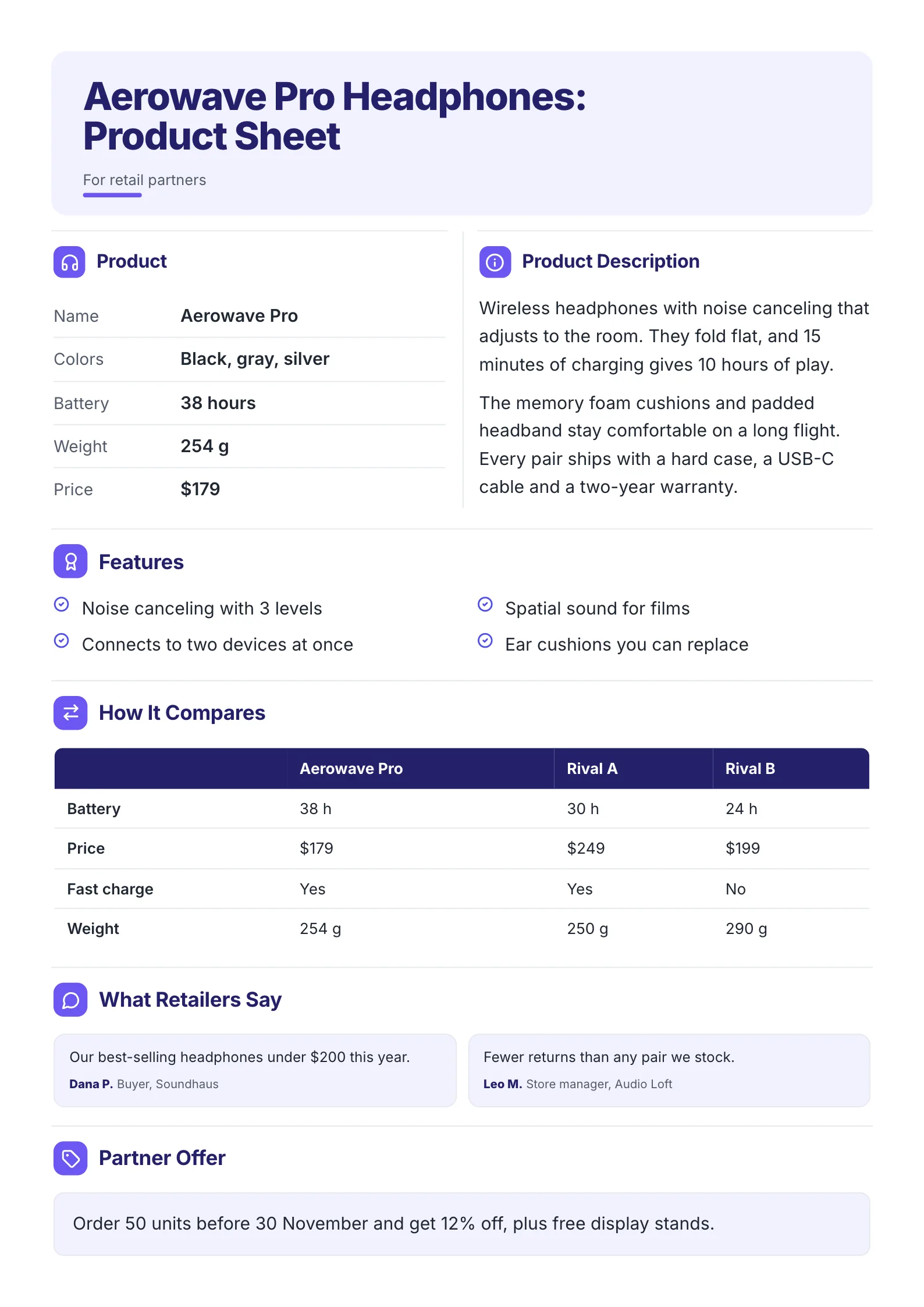 Edit this template
One product, one reader (the store buyer) and one offer with a deadline.
What to copy:
- Specs a buyer can check: 38 hours of battery, 254 g, $179. Each one fits on a shelf tag, which is what a retail buyer is picturing.
- A comparison that admits trade-offs: the rival is lighter by 4 g. Showing that makes the battery and price rows easier to believe.
- Quotes from people like the reader: a buyer and a store manager, not a happy end customer. Retailers trust other retailers.
- An offer with a date: 12% off 50 units before November 30, plus free display stands. A deadline turns "interesting" into a reply.
Edit for free: product marketing sheet.
A worked example: one offer, three drafts
Here is how one marketing One-Pager tightens from a first draft to the one that gets sent. The company and numbers below are an example, made up to show the method.
A small software company sells a scheduling tool to dental clinics. The first draft of its marketing one pager had 11 features, two prices and three buttons: book a demo, start a trial and download the guide.
Draft 2 cut the features to the three that clinic managers asked about most in the last 20 sales calls: automatic text reminders, online booking and a waitlist that fills empty slots. Each got one line and one number from the company's own customers: "no-shows fell from 9 in a week to 4 at a two-chair clinic."
Draft 3 picked one reader (the practice manager, not the dentist) and one ask: "Book a 20-minute setup call this month and get the first 60 days at the starter price." The headline changed from "Smart scheduling for dental clinics" to "Fill the chairs your patients forget."
The second draft is shorter. The third is clearer about who should act and when. That is the whole craft of a marketing One-Pager: removing everything the reader does not need in order to say yes.
How to make a marketing one pager in 6 steps
- Pick one reader. A retail buyer, a clinic manager, an IT lead. Write the name of a real person you are sending it to at the top of your draft, then remove it before you share.
- List what they ask on calls. Read your last ten call notes or ask two salespeople. The three questions that come up most are your three benefits.
- Write the headline last. Once the benefits are clear, the headline is usually the biggest one, said as a result.
- Find one piece of proof per benefit. A number, a quote with a name, or a row in a comparison table.
- Write the offer and the next step together. What does the reader get, by when, and who do they contact?
- Read it as the buyer, out loud, in 60 seconds. If you run out of time before the next step, cut.
Have product notes, a long brochure or a slide deck already? Drop them into the free AI One-Pager generator and get them back as a designed marketing One-Pager you can edit.
Design tips that make it get read
- Big headline, short lines. The reader decides in the first few seconds whether to keep going.
- One color for the call to action. If everything is highlighted, nothing is.
- Numbers in bold, words around them plain.
- A product picture or a simple chart, not a stock photo of people smiling at a laptop.
- White space. A crowded sheet reads as a crowded offer.
- A version for print and one for email. Same words, but the email version can carry a link where print carries a phone number.
Marketing one pager mistakes
- Writing for everyone. A sheet aimed at buyers, investors and new hires at once speaks to none of them.
- Features without results. "AI-powered" tells a buyer nothing. "Answers in 2 minutes" does.
- Three calls to action. The reader picks none. Choose one.
- No proof. A promise with no number, name or comparison reads as an advert.
- Out-of-date prices. Put a date in the footer and review it each quarter.
- Shrinking the type to fit more in. Cut words instead.
If you are pitching marketing work to a client rather than selling a product, use a marketing proposal template. To plan the year of marketing this sheet belongs to, start from a one-page marketing plan template.
Make your marketing one pager
Open the free product marketing sheet and put in your own product, or browse more marketing One-Pager templates and start from the one closest to your offer.
Frequently asked questions
What should a marketing one pager include?
A headline that names the result, the problem in the buyer's words, what the product is, three benefits with numbers, proof such as a quote or comparison, the offer and one next step with a contact.
How long should a marketing one pager be?
One side of US Letter or A4, usually 200 to 350 words. If it needs a second side, it is trying to cover more than one product or more than one reader.
What is the difference between a marketing one pager and a sell sheet?
Most people use the words for the same thing. A sell sheet is usually written for a retail or wholesale buyer and carries order terms, while a marketing One-Pager can be written for any buyer.
Should a marketing one pager have prices?
Yes when the price helps the reader decide, as in retail or a fixed-price service. Leave it out when the price depends on scope, and say what the next step is to get a quote instead.
When should I send a marketing one pager?
After a first conversation, as a leave-behind after a meeting, at a trade show, or attached to a cold email where a short read gets a reply more often than a long one.




