Lesson Plan vs Unit Plan: A Real 20-Lesson Unit, Unpacked
Lesson plan vs unit plan, read from a real Massachusetts Grade 3 unit: a 7-page unit plan over 20 lessons of 30 minutes each, and what every lesson plan adds.

The quickest way to settle the lesson plan vs unit plan question is to ask how much time each one covers. A unit plan covers a whole topic, often several weeks of teaching. It sets the big questions, the words students will learn and how you'll check understanding at the end. A lesson plan covers one class. It says what students will do today, in what order, for how many minutes, with which materials. Start from a free one pager template.
One‑Pager examples
Real One-Pagers made with MakeOnepagers. Open any one to edit it as your own.
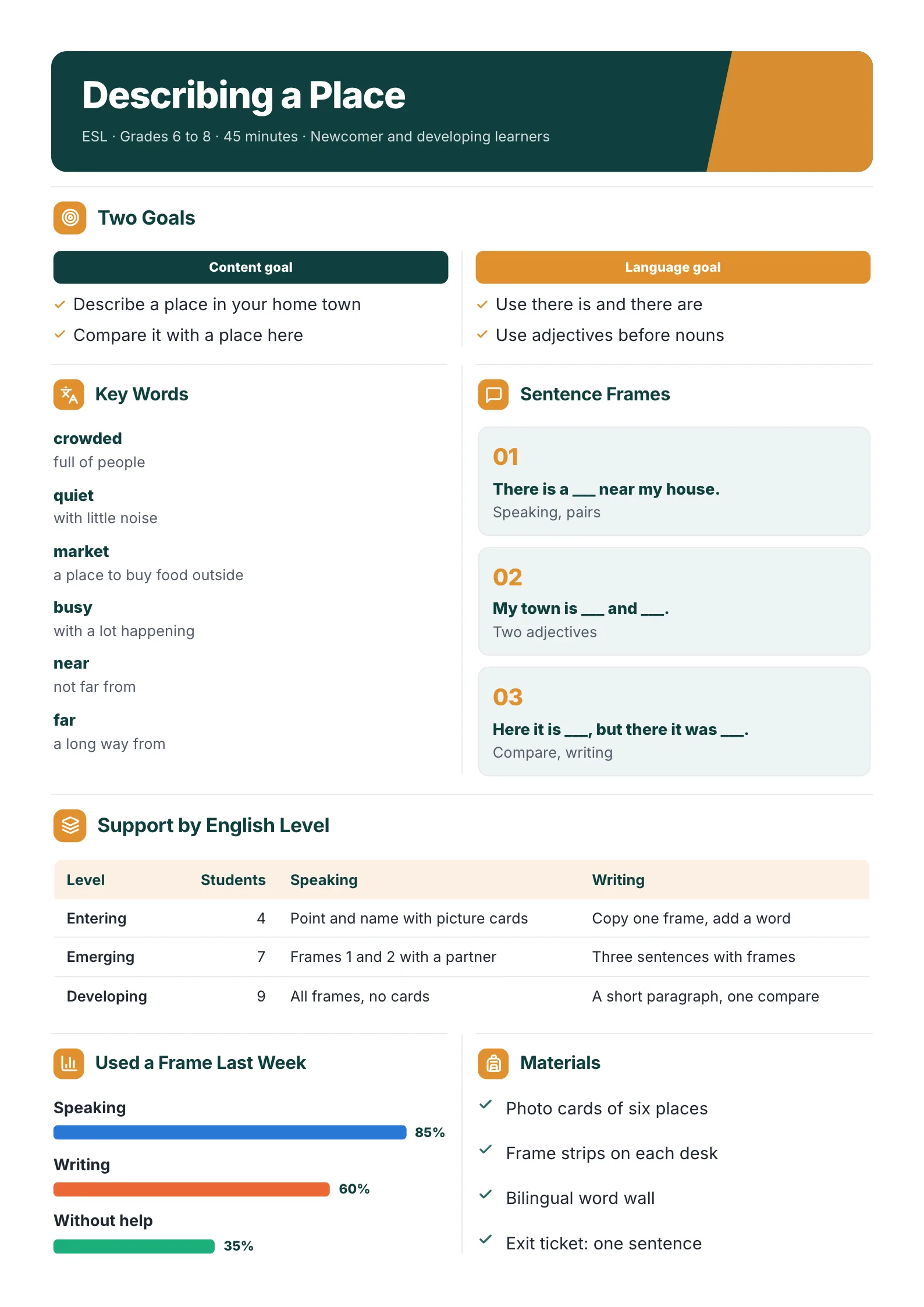 Lesson Plan: ESLEdit for free(opens in a new tab)
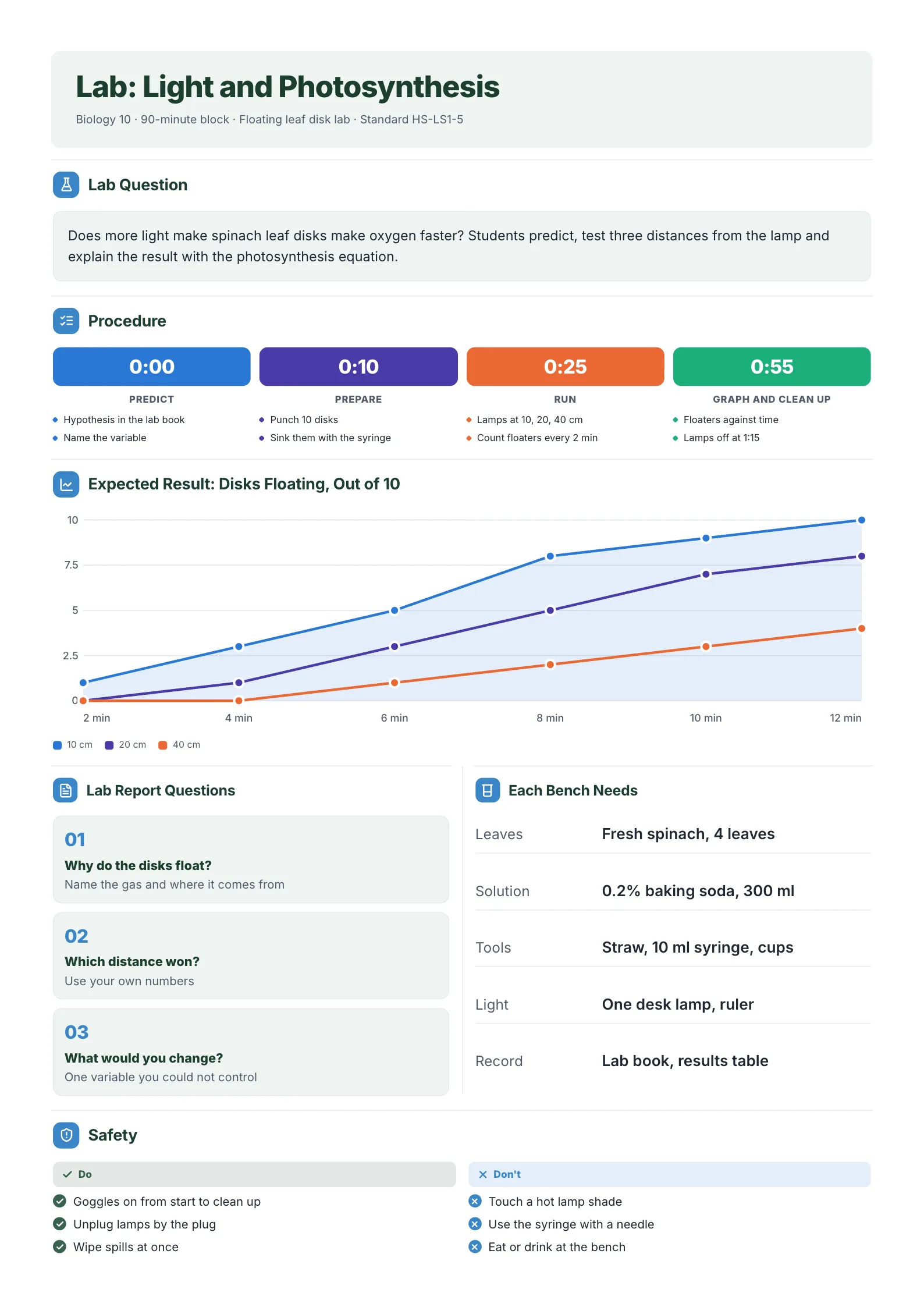 Lesson Plan: Biology LabEdit for free(opens in a new tab)
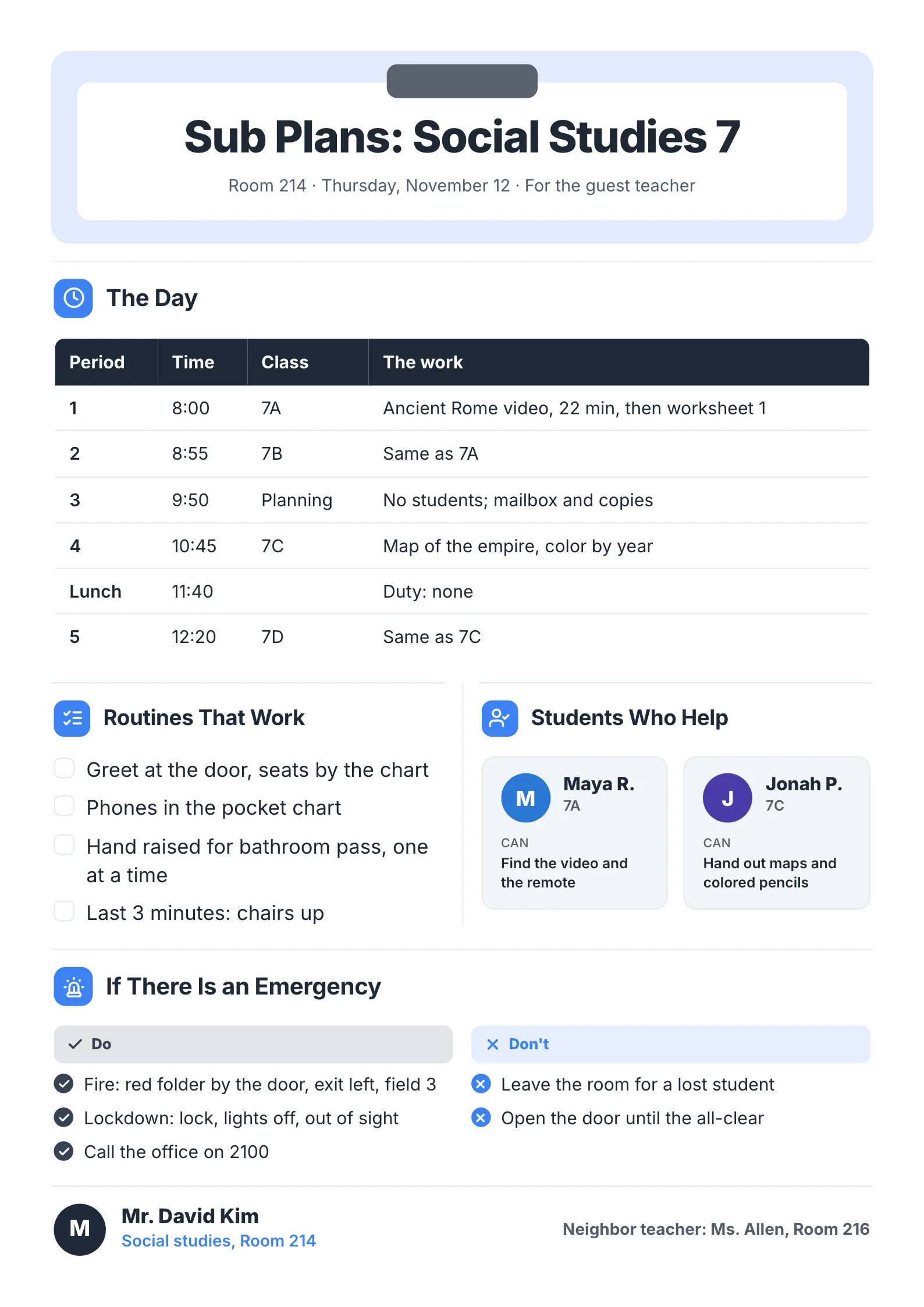 Lesson Plan: Substitute TeacherEdit for free(opens in a new tab)
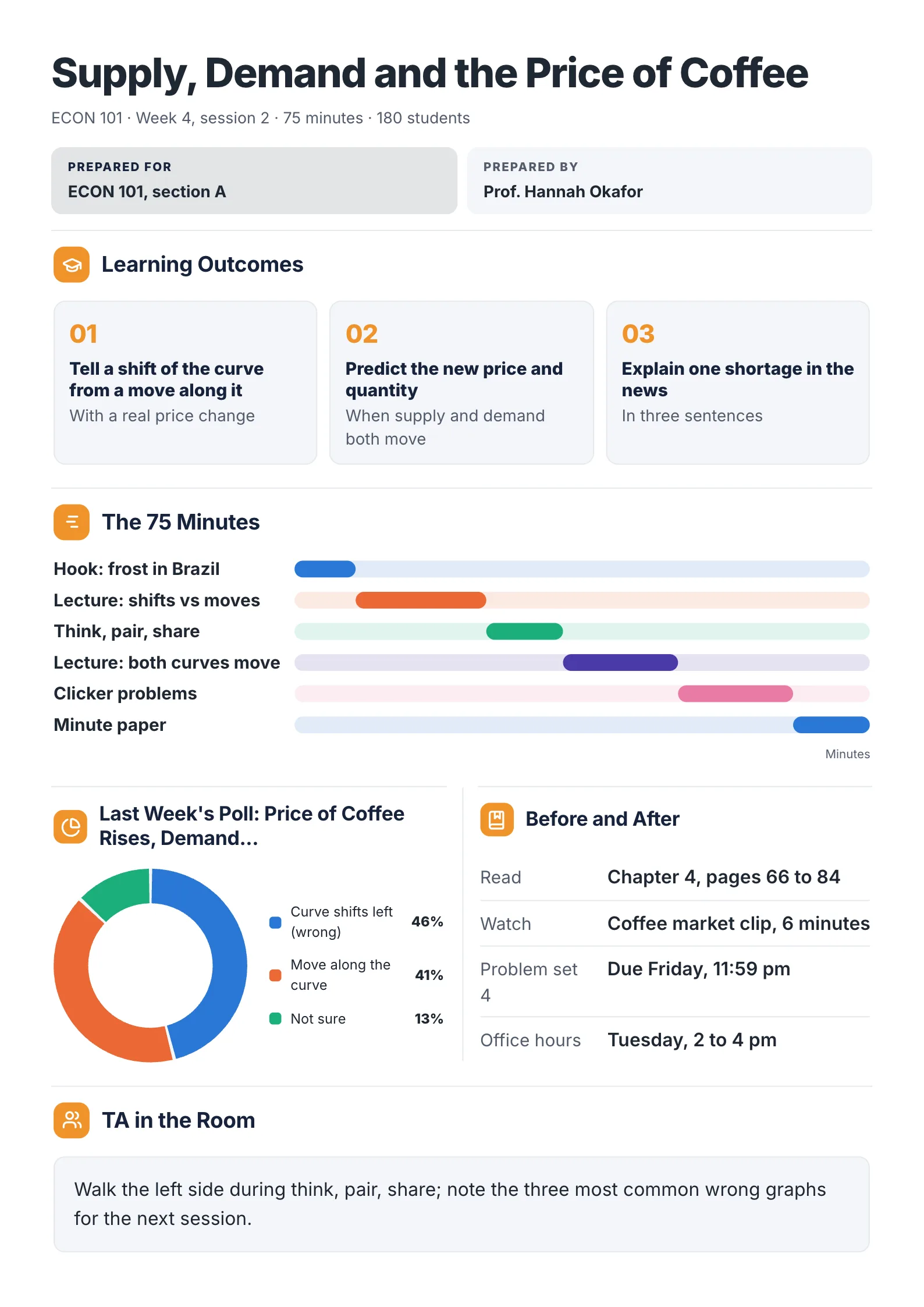 Lesson Plan: College LectureEdit for free(opens in a new tab)
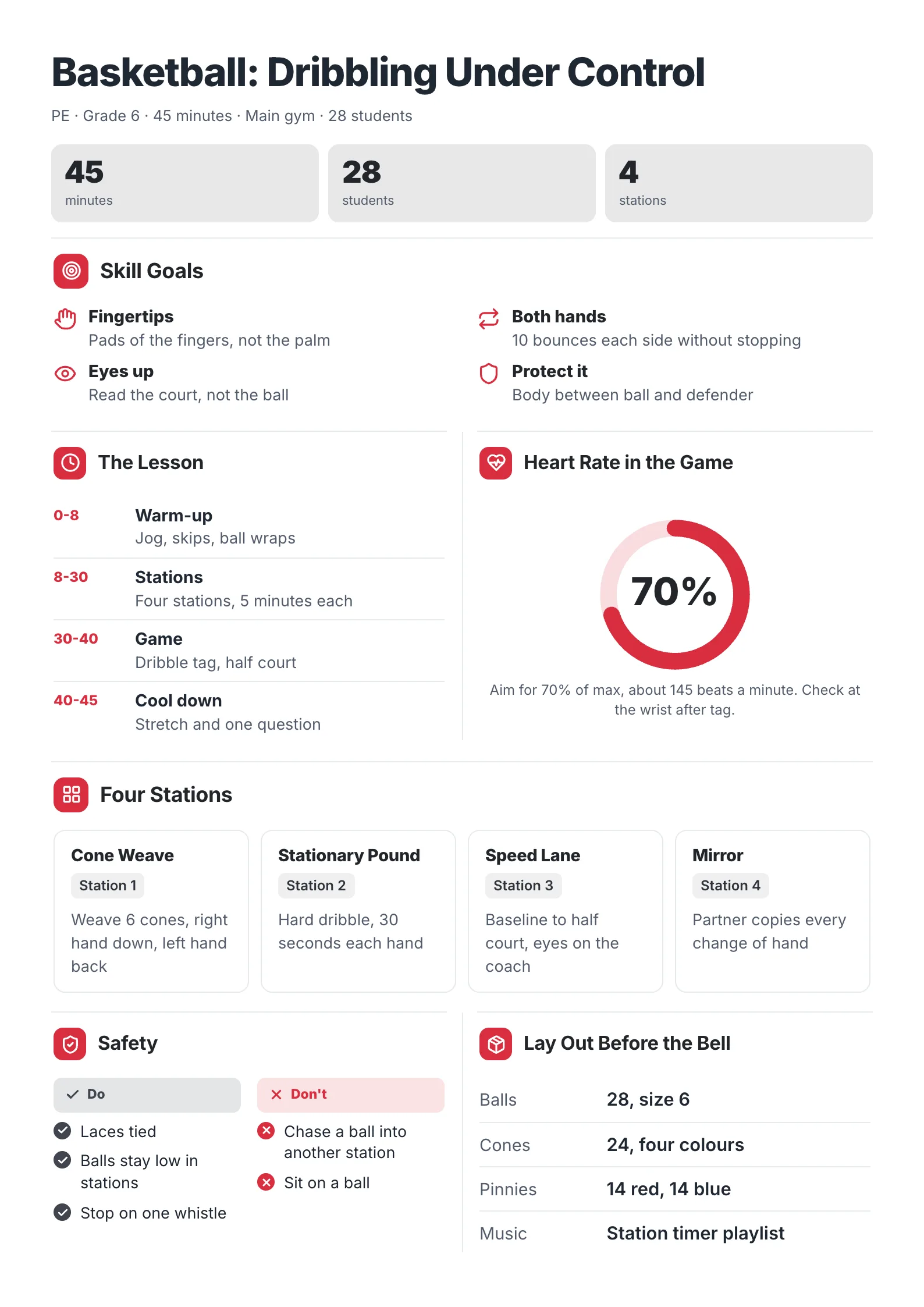 Lesson Plan: PEEdit for free(opens in a new tab)
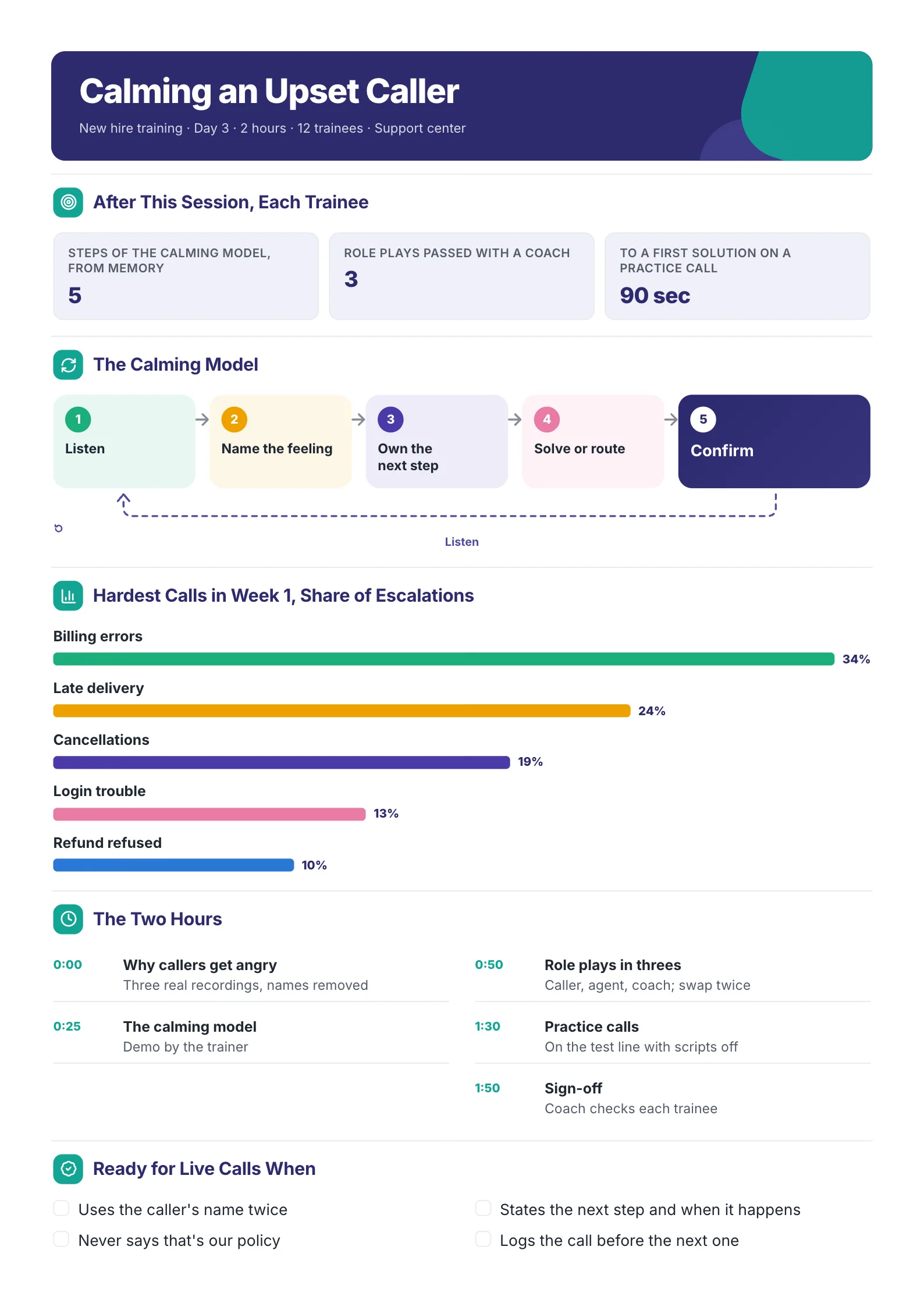 Lesson Plan: Employee TrainingEdit for free(opens in a new tab)
You write the unit plan first and the lessons after. Each lesson plan is one step toward the unit's goals, so if a lesson can't name the unit question it serves, it probably belongs somewhere else.
| Unit plan | Lesson plan | |
|---|---|---|
| Time it covers | Several weeks | One class period |
| Its question | Where is this topic going? | What happens in the room today? |
| Goals | Big ideas and essential questions | One or two objectives for the day |
| Assessment | The final project or test | A quick check, like an exit ticket |
| Detail | Standards, vocabulary, the order of lessons | Timed steps, materials, teacher moves |
| When you write it | Before the unit starts | The week or day before you teach |
One real unit, both plans
Massachusetts' state education department publishes a full social studies course called Investigating History. Each unit ships with its unit plan and its daily lesson plans together, so you can lay them side by side. We read Grade 3, Unit 1, "Indigenous Peoples of the Northeast." Its essential question is "How have Indigenous peoples lived in the Northeast, past and present?"
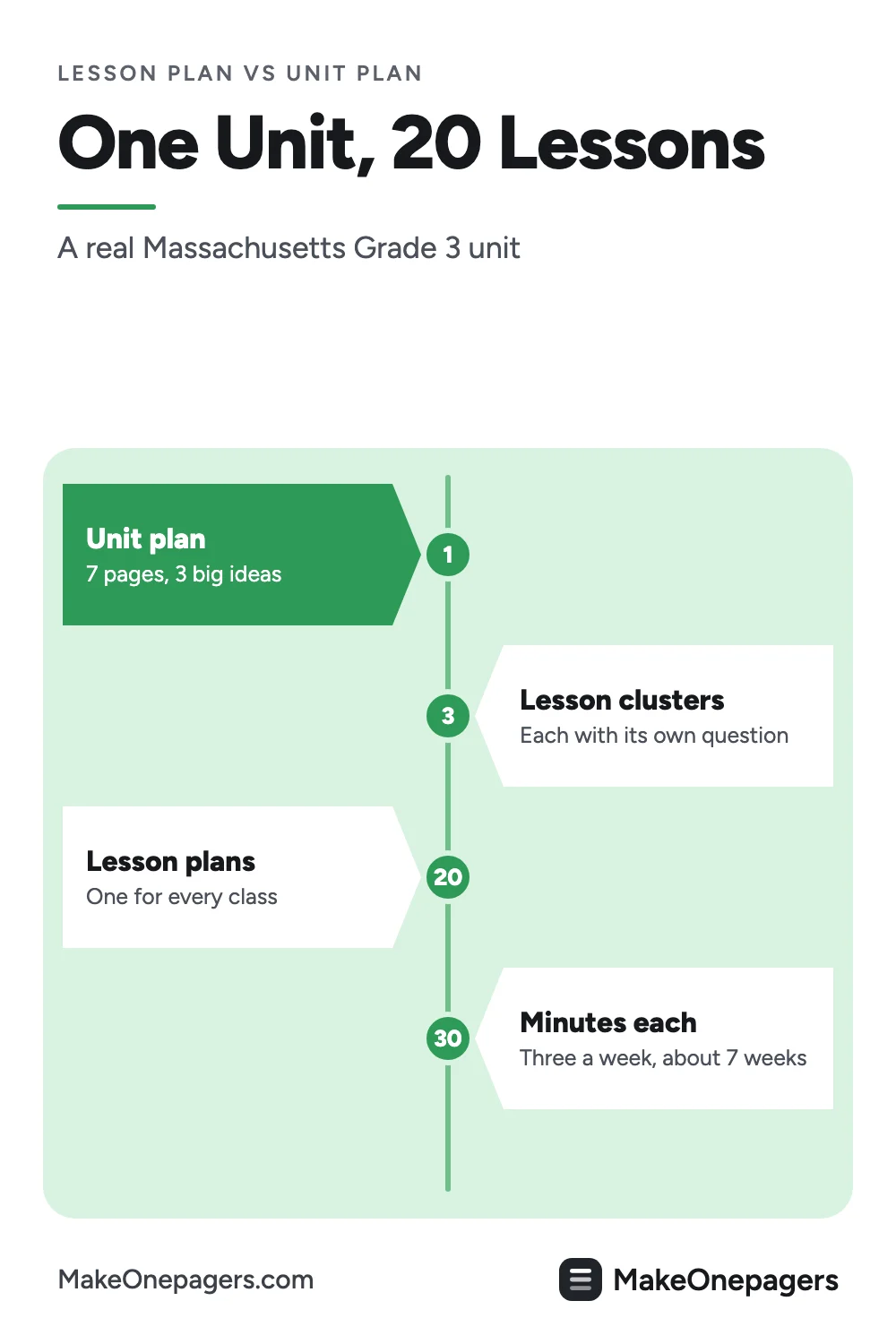
The unit plan: 7 pages for 20 lessons
The Unit Overview runs 7 pages and about 1,950 words. It names 3 enduring understandings, the ideas your students should keep long after the unit ends. One of them is that "Indigenous culture and traditions are passed through generations."
It lists 10 vocabulary words you'll teach, from map scale to gratitude. Then it splits the 20 lessons into clusters, each with its own supporting question:
- Lessons 1 to 5: maps of the Northeast. "How can maps help us learn about where we live?"
- Lessons 6 to 11: Indigenous peoples and the land.
- Lessons 12 to 18: Indigenous culture today.
- Lessons 19 and 20: the summative assessment, where students "create a short slide presentation."
What you won't find in the unit plan is just as telling. It gives you no timed steps, no materials list and no slide prompts. You'll find those only in the lessons.
The lesson plan: 30 minutes, slide by slide
The Teacher's Guide is 175 pages. It opens with the unit plan, then gives 136 pages to the first 18 lessons, and then sets out the 2-day summative assessment with its rubric. We read Lesson 6, "Unit Kickoff," in full. It takes 7 pages to plan 30 minutes of class.
Lesson 6 has its own learning objective: "Make connections and generate questions about Indigenous peoples of the Northeast." It adds a language objective, where students use "who, what, where, when, and why to ask questions." It lists the 2 materials you need, 1 vocabulary word and 5 standards. Then a small table called Lesson at a Glance splits the time. You get 10 minutes to launch the unit and build the word wall, and 20 minutes to build a Know and Wonder chart.
After that, the plan walks you through the class slide by slide, with side boxes for teaching tips and ways to support every student. The last slide tells you to "close the lesson by highlighting a few key understandings."
| Count | Unit plan | Lesson 6 plan |
|---|---|---|
| Pages | 7 | 7 |
| Time it covers | About 7 weeks | 30 minutes |
| Goals | 3 enduring understandings | 1 learning objective, 1 language objective |
| Questions | 1 essential question, 1 per cluster | The unit question and its cluster's question |
| Vocabulary | 10 words | 1 word |
| Materials | None listed | 2 |
| Assessment | A 2-day slide presentation | A Know and Wonder chart |
How long is a unit?
The state answers that for you too. Its pacing guidance for grades 3 to 5 says "DESE recommends three 30-minute lessons or 90 minutes of instructional time weekly." Unit 1 has 20 lessons, so by our math you'd spend about 7 weeks on it. The guide places it in September and October.
The core of every lesson we could read ran 30 minutes. Some add an "Optional Extension" of 15 to 30 minutes for teachers who have more time. That's a good habit to borrow. Plan the core your students must have, and mark the rest as extra.
Where the two plans connect
A blank template from the Iowa Department of Education puts both plans in one file. Its unit section asks for "Length of Unit." Each of its 8 lesson blocks asks for "Length of Lesson." The most useful field is in the unit's standards table. Next to each learning target, it asks: "In which lesson(s) will these be addressed?"
That one column is the link between your two plans. Fill it in, and you'll spot the standards you teach once, the ones you teach often and the ones you forgot. The Massachusetts unit does the same thing with its clusters. Lesson 6 repeats the essential question and its cluster's supporting question at the top, so you and your students never lose the thread.
Five lesson plans, and the unit each one sits in
These sample lesson plans from MakeOnepagers use made-up classes and teachers. For each, you'll see where it fits inside a bigger unit.
A lesson that names its unit
 Edit this template
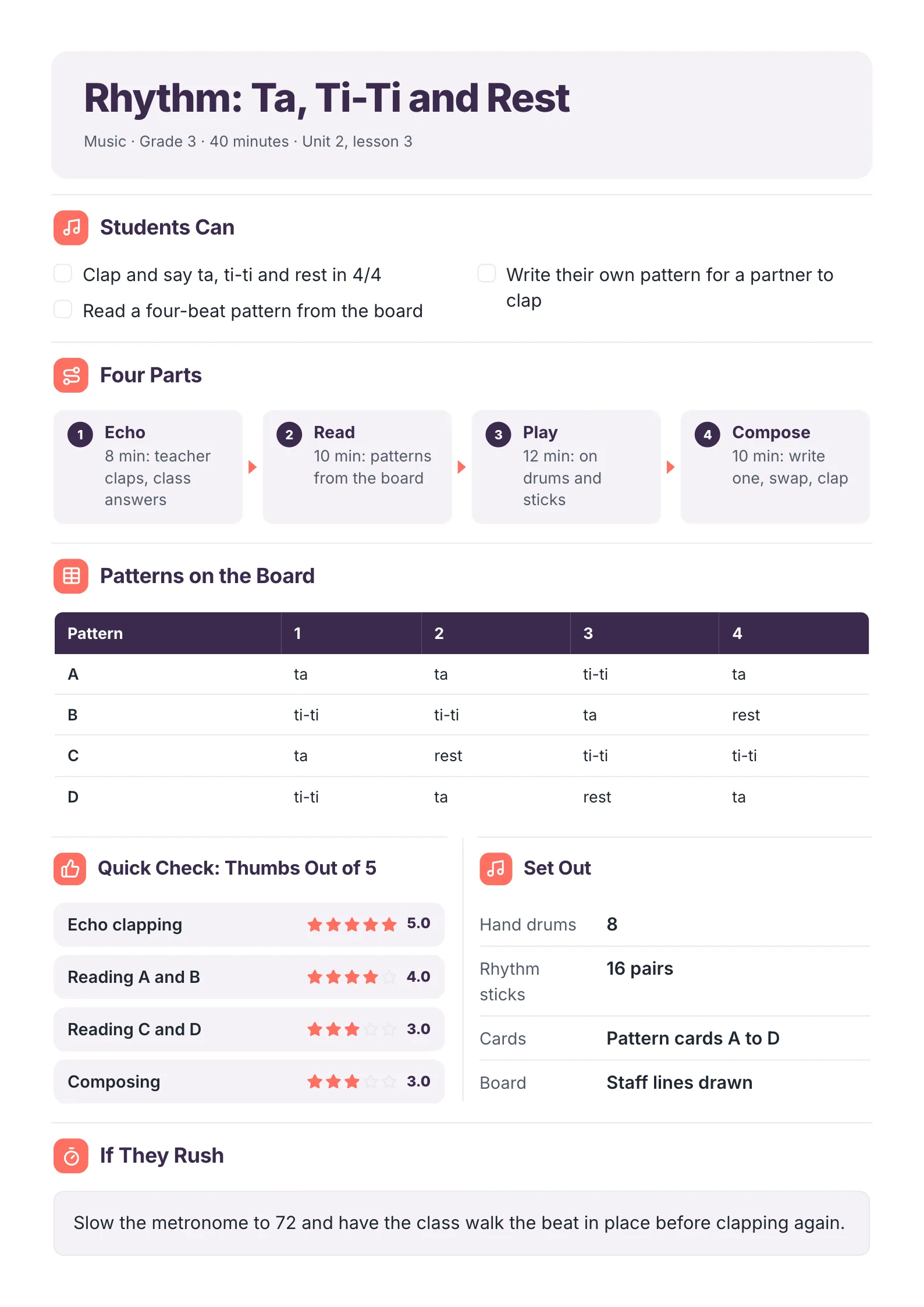
This music rhythm lesson plan is labeled "Unit 2, lesson 3." That tiny line tells you there's a unit plan above it. The 40 minutes split into four parts, from 8 minutes of echo clapping to 10 minutes of writing a pattern for a partner. Lessons 1 and 2 would have taught ta and ti-ti. This one adds the rest.
A lesson that checks the last one
 Edit this template
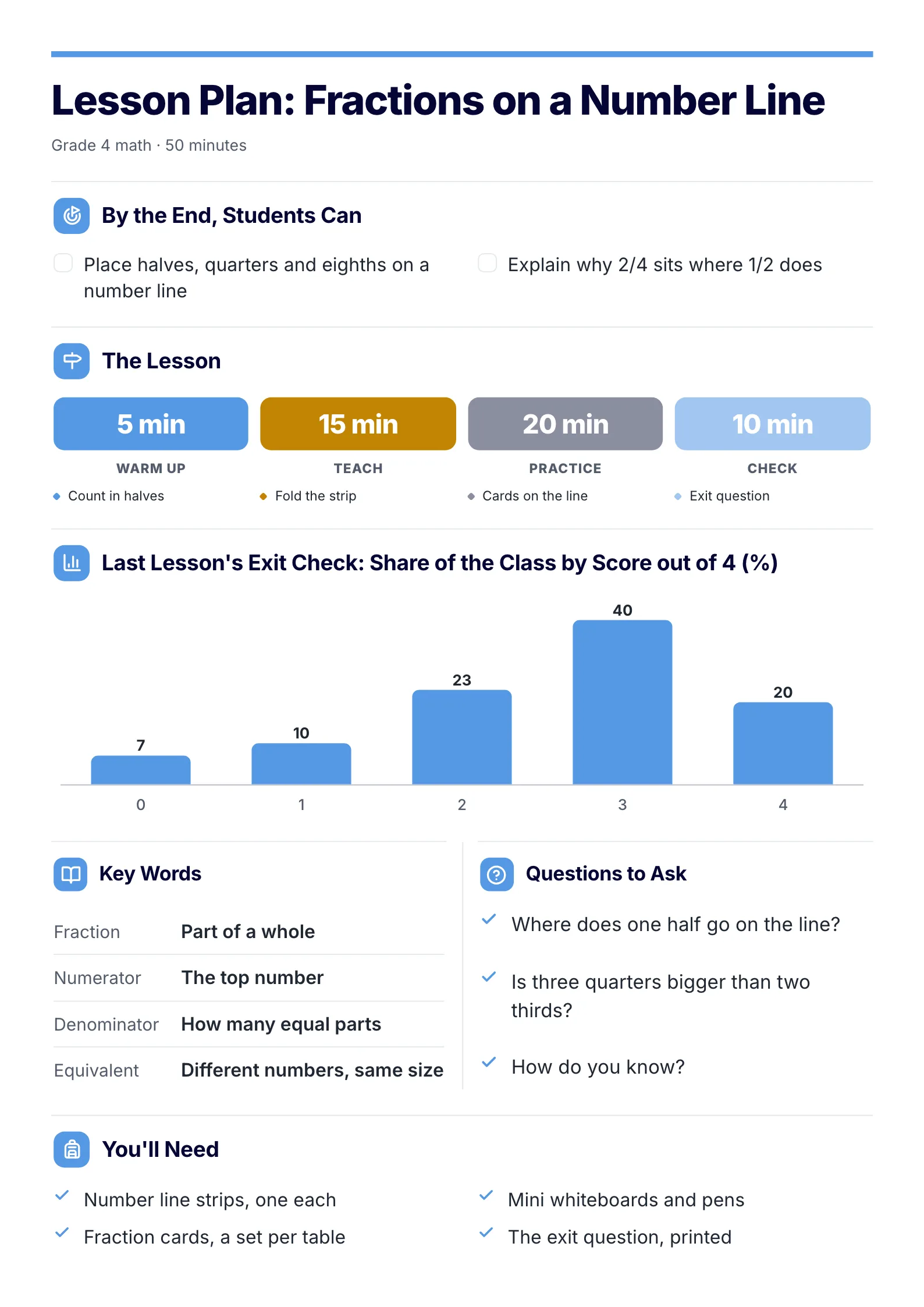
The lesson plan for fractions on a number line shows a chart of last lesson's exit check, scored out of 4. That's how one lesson hands off to the next inside a unit. The 50 minutes run warm up, teach, practice and check. If your exit check shows half the class lost, tomorrow's lesson in the unit plan moves back a day.
A week between the unit and the day
 Edit this template
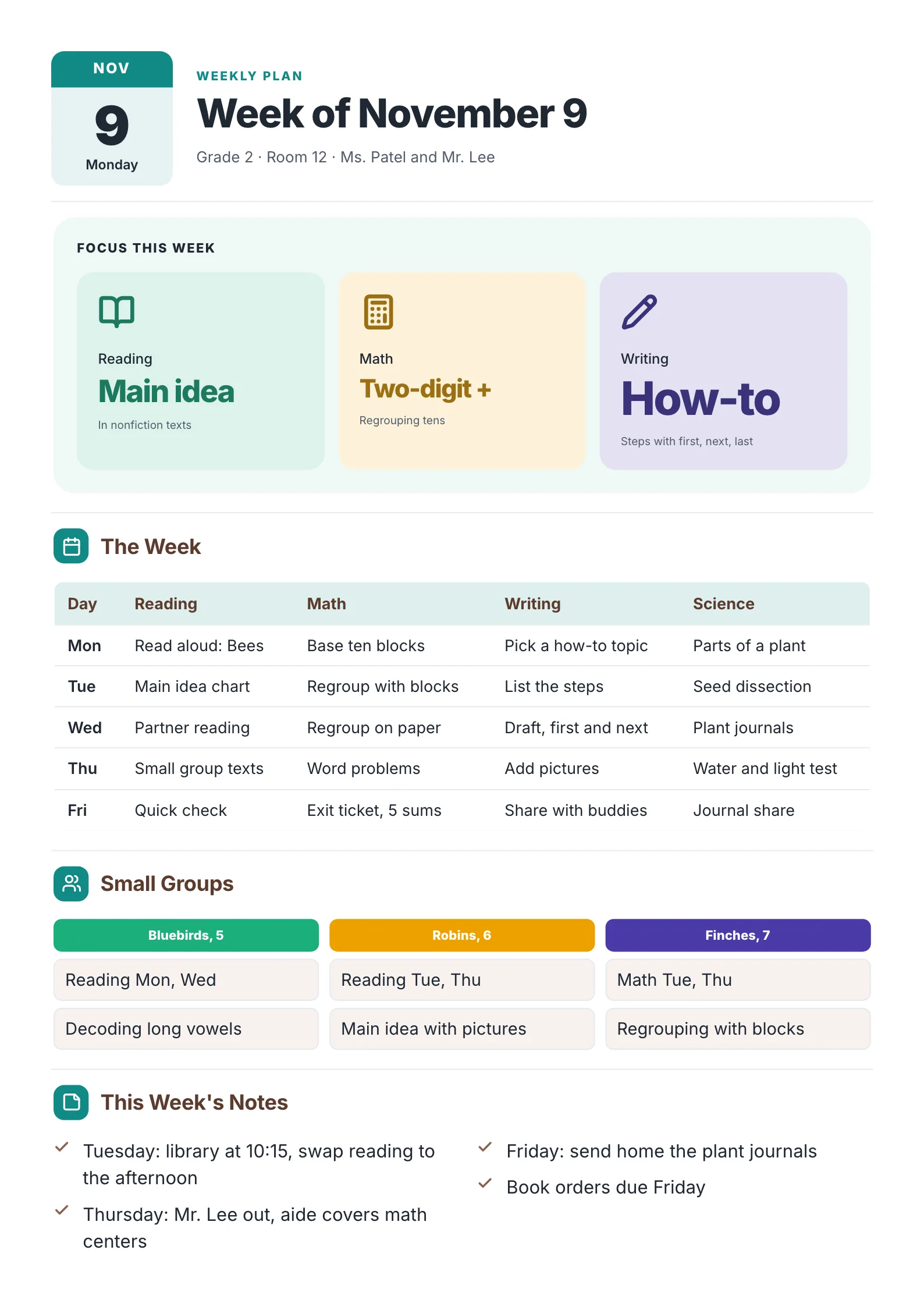
You can also plan in a middle layer, the week. This weekly lesson plan shows five days across four subjects, with a focus skill for reading, math and writing, like regrouping tens in math. It's shorter than a unit plan and broader than a lesson plan. Use it when your unit plan feels too far off and your daily plans feel too close.
A lesson inside a numbered week
 Edit this template
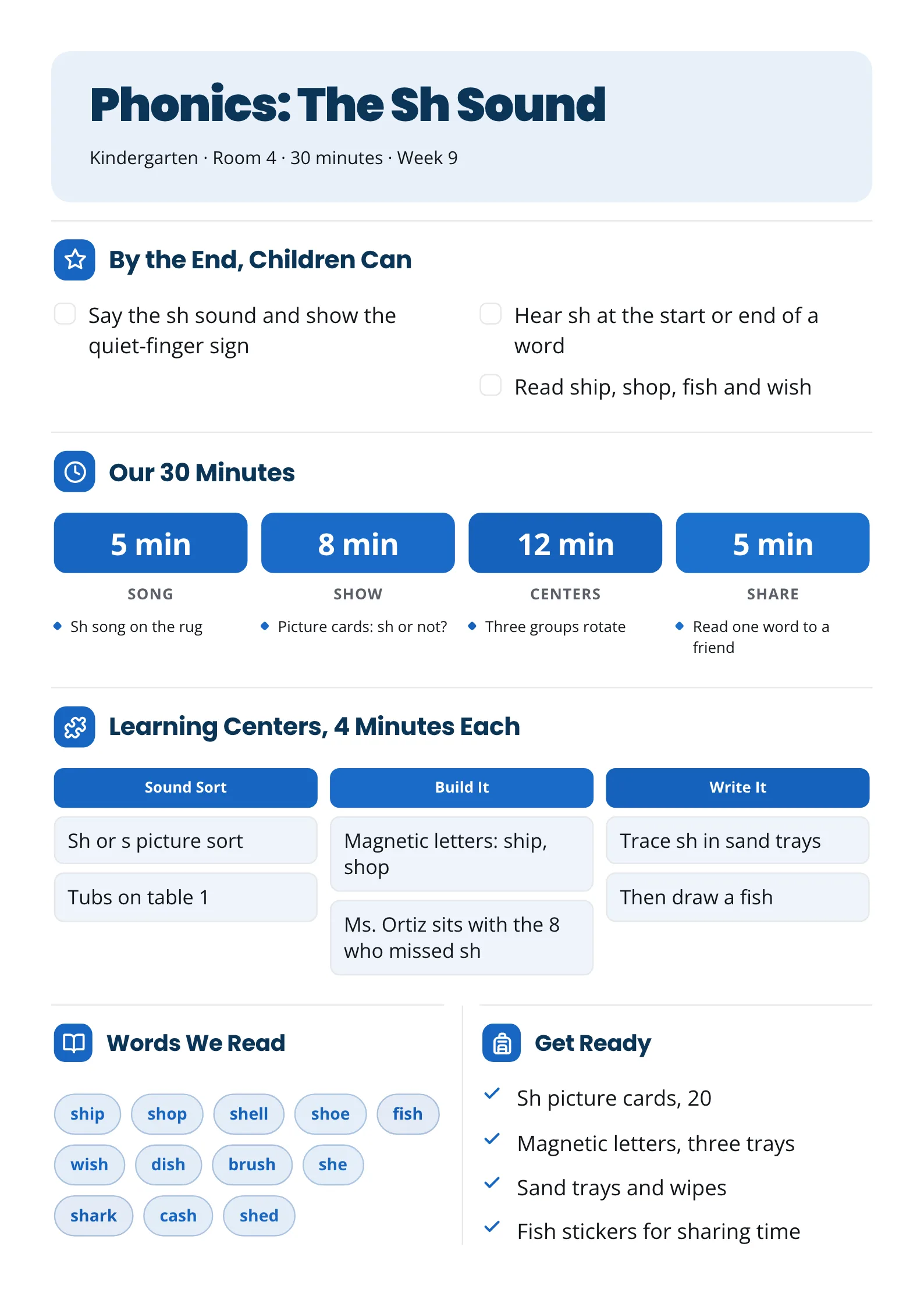
The kindergarten phonics lesson plan is marked Week 9 and runs 30 minutes, the same length as the Massachusetts lessons. It names one sound, sh, and 12 words to read. The unit plan above it would set the order of sounds for the term. This page only has to get the sh right, including a note that the teacher sits with the 8 children who missed it before.
A plan that spans two sessions
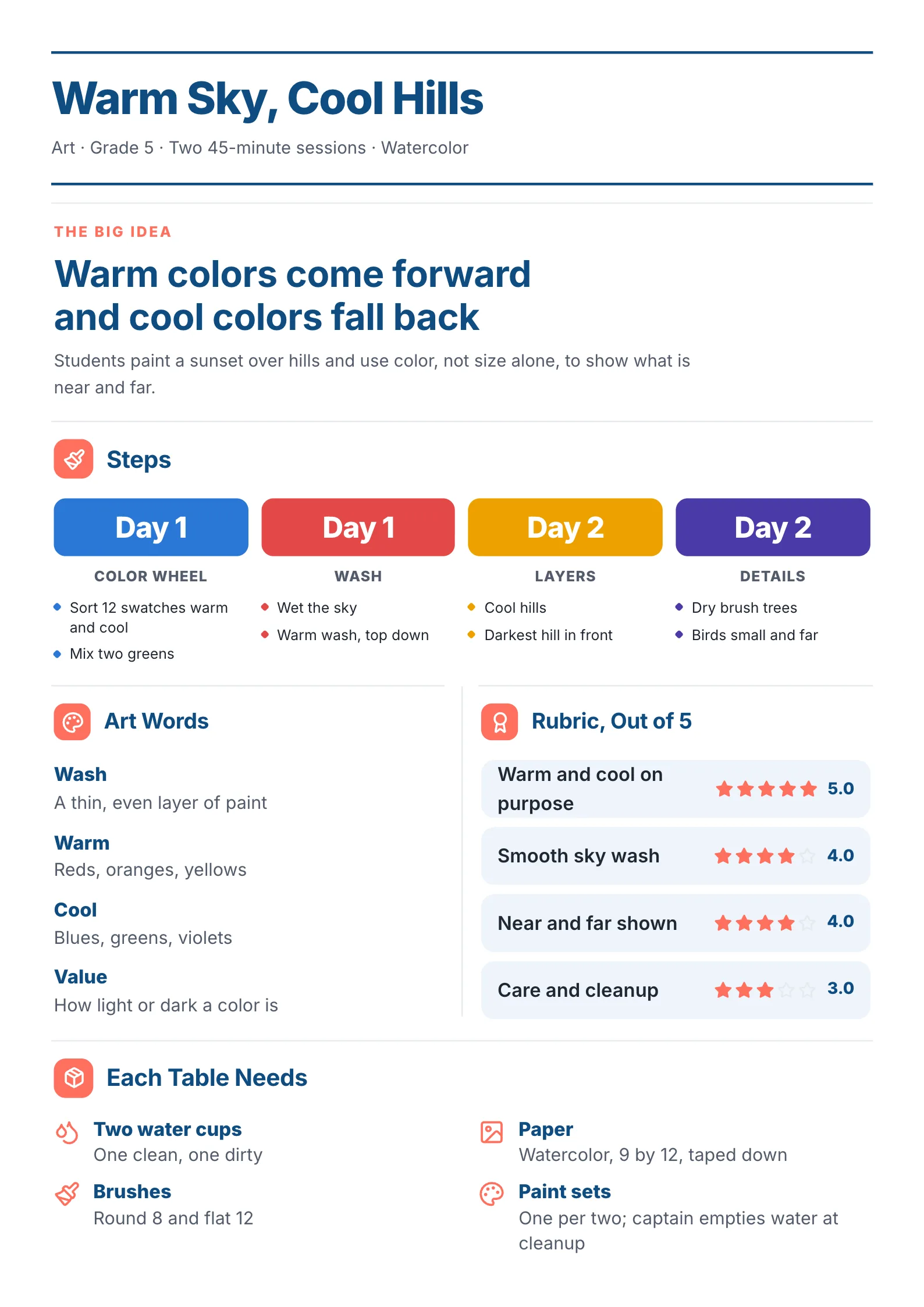 Edit this template
Some plans sit right on the line. This art watercolor lesson plan covers two 45-minute sessions, with a big idea, a rubric out of 5 and steps marked Day 1 and Day 2. That's a tiny unit. For a project longer than two sessions, you'd write a unit plan first, then give each day its own page.
Which plan to open
You need both, written in that order. Here's how to tell which to open:
- Starting a new topic next month: the unit plan. Set the questions, the final task and the order of lessons.
- Teaching tomorrow: the lesson plan. Time each step and list your materials.
- A sub is covering your class: a lesson plan, with the unit's question at the top so they know where it fits.
- Checking standards for the term: the unit plan's lesson column, like Iowa's.
- A project over two or three days: one short plan can cover it, like the watercolor sample.
Make your lesson plan
Start from the MakeOnepagers lesson plan for your grade and subject, and write your unit and lesson number in the header so it's clear where it belongs. If your unit plan is already typed up, paste one cluster into the free AI One-Pager generator and turn each lesson into a page. Every part of a daily plan is covered in how to write a lesson plan, and our lesson plan template post has more layouts. Planning a whole course? Read syllabus vs curriculum.
Frequently asked questions
Which comes first, the unit plan or the lesson plan?
The unit plan. It sets the goals and the order of lessons. Each lesson plan is then written to serve one step of it.
How many lessons are in a unit?
It varies. The Massachusetts Grade 3 units run from 20 to 26 lessons each, at three lessons a week.
Is a weekly plan a unit plan?
No. A weekly plan sits between the two. It shows five days of lessons but not the whole topic, its big questions or its final assessment.
What goes in a unit plan?
The essential question, the big ideas, the standards, key vocabulary, the order of lessons and the final assessment. The Massachusetts unit plan adds a supporting question for each group of lessons.
Do you need a lesson plan for every class?
Plan every class, even if the plan is short. All 20 Massachusetts lessons have their own. A new teacher or a substitute will want more detail than someone teaching the lesson for the fifth year.




