How to Write a Budget in 6 Steps, Checked Against 7 Free Worksheets
How to write a budget in 6 steps. We read 7 free worksheets: only 4 put your plan beside what you spent, and 1 asks for a goal with a date.

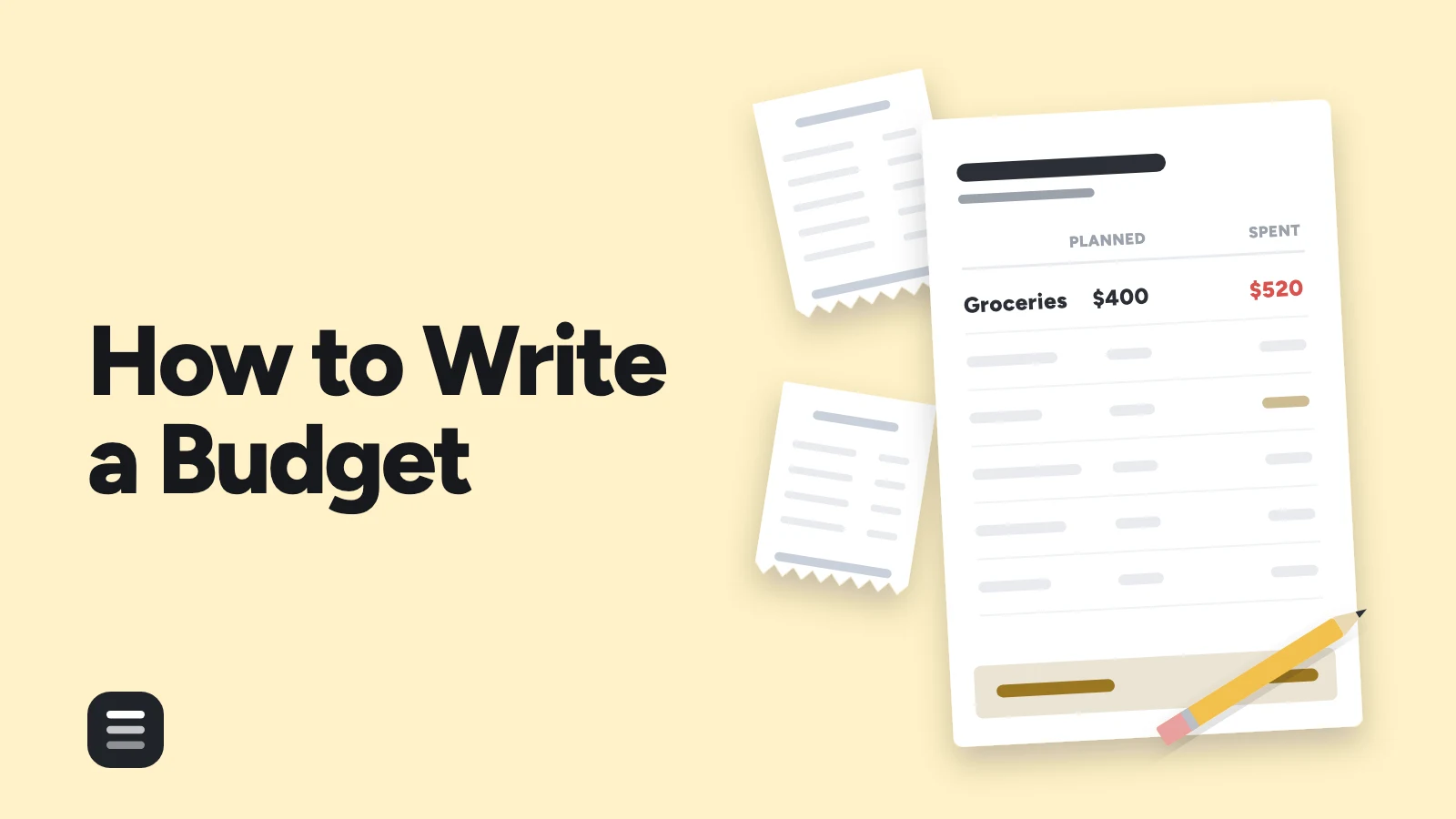
Four moves are all it takes to write a budget, and here's how they go. You list your take-home pay, list every place the money goes, subtract one from the other, and give whatever is left a job. The harder part is the details that make it hold up in real life. Start from a free one pager template.
One‑Pager examples
Real One-Pagers made with MakeOnepagers. Open any one to edit it as your own.
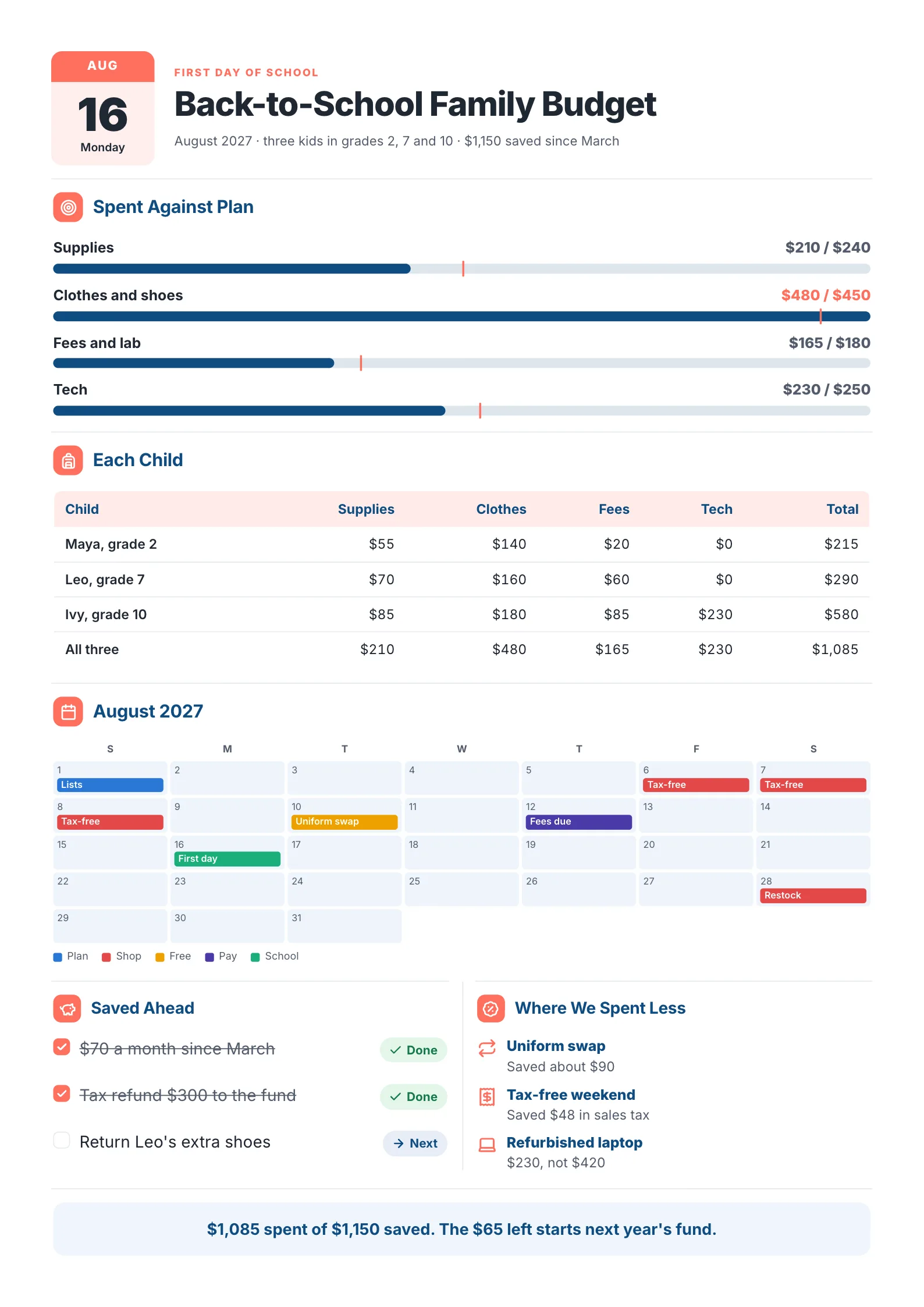 Family Budget: Back to SchoolEdit for free(opens in a new tab)
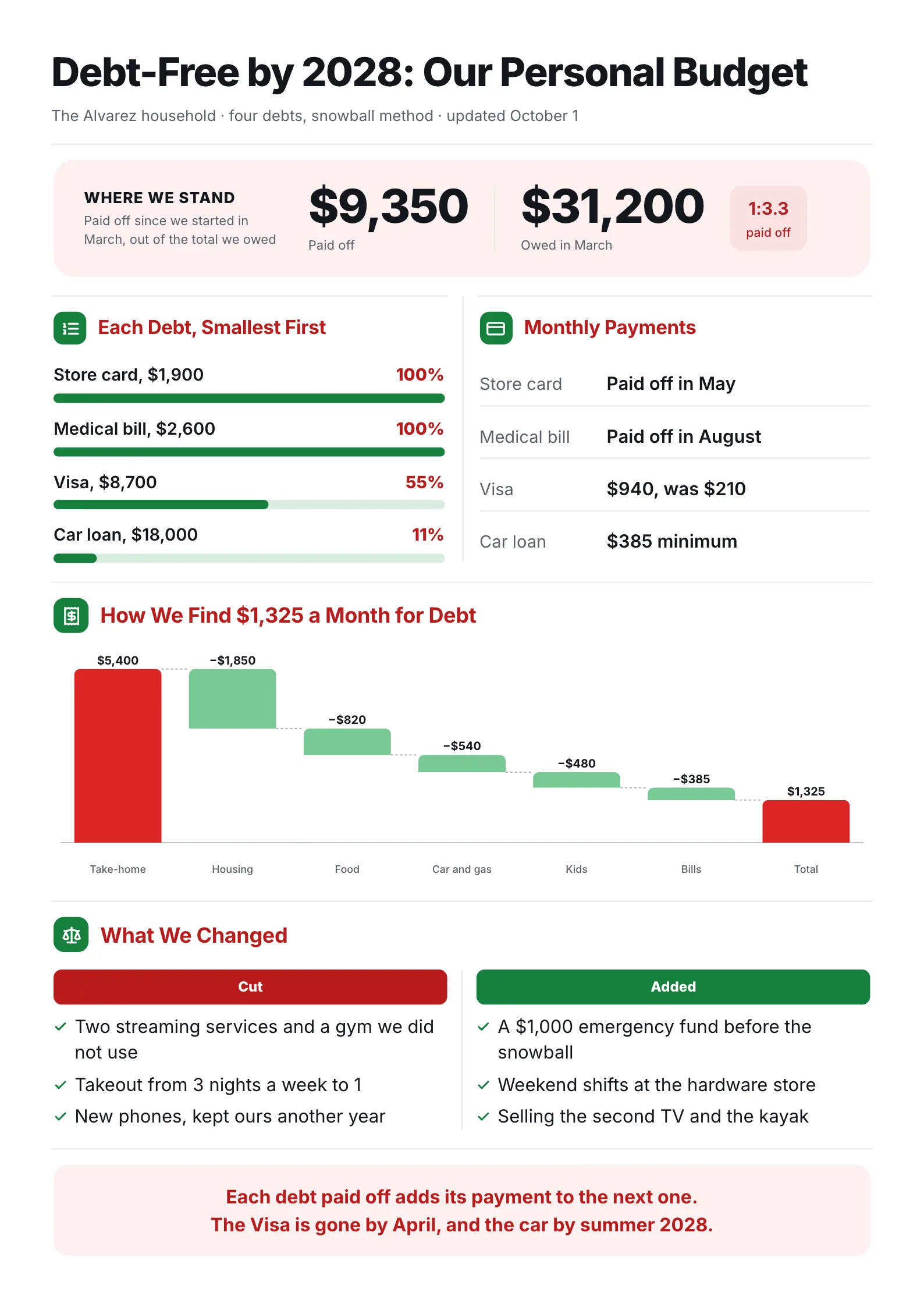 Personal Budget: Debt Payoff SnowballEdit for free(opens in a new tab)
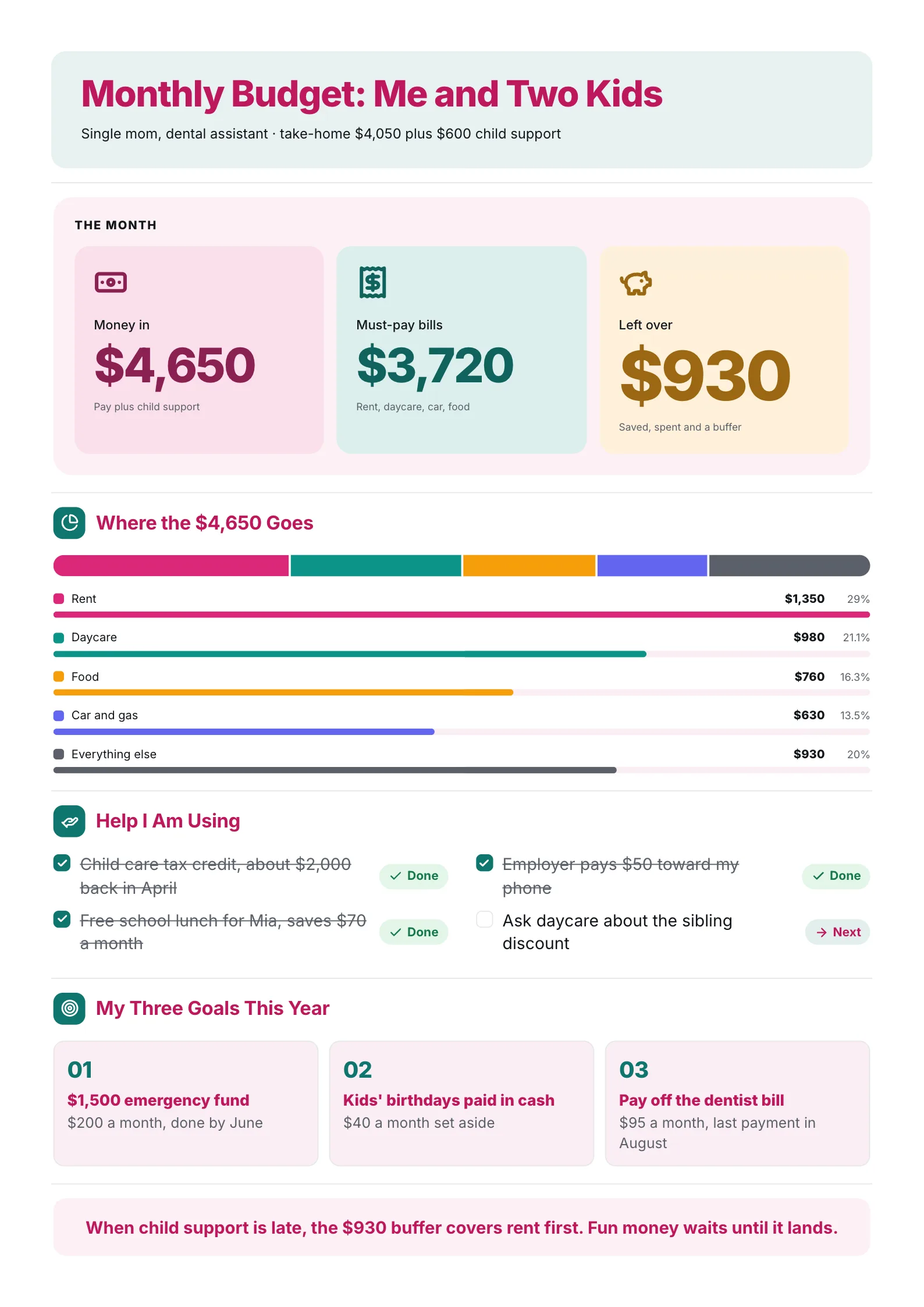 Personal Budget: Single Parent MonthlyEdit for free(opens in a new tab)
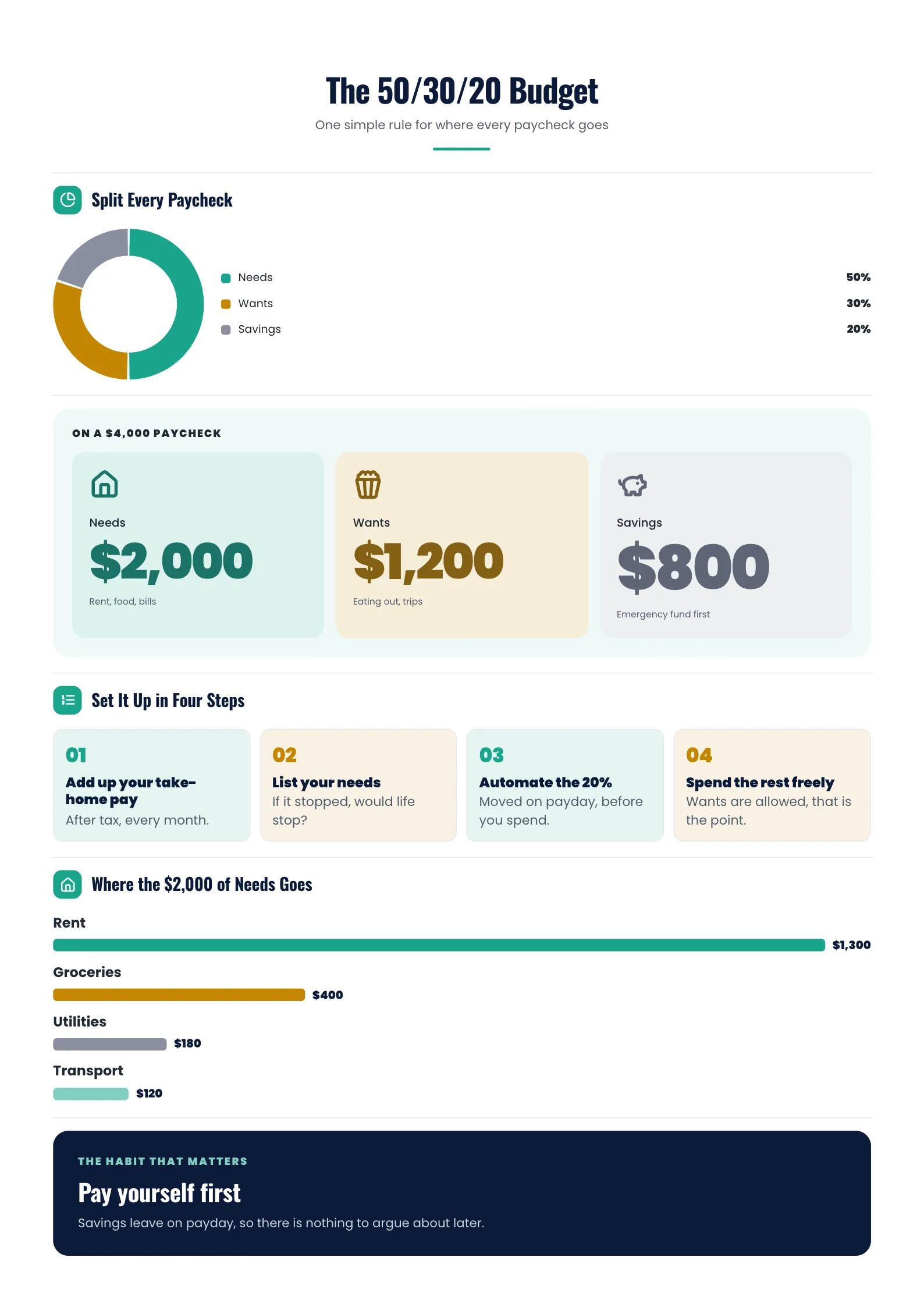 Budget InfographicEdit for free(opens in a new tab)
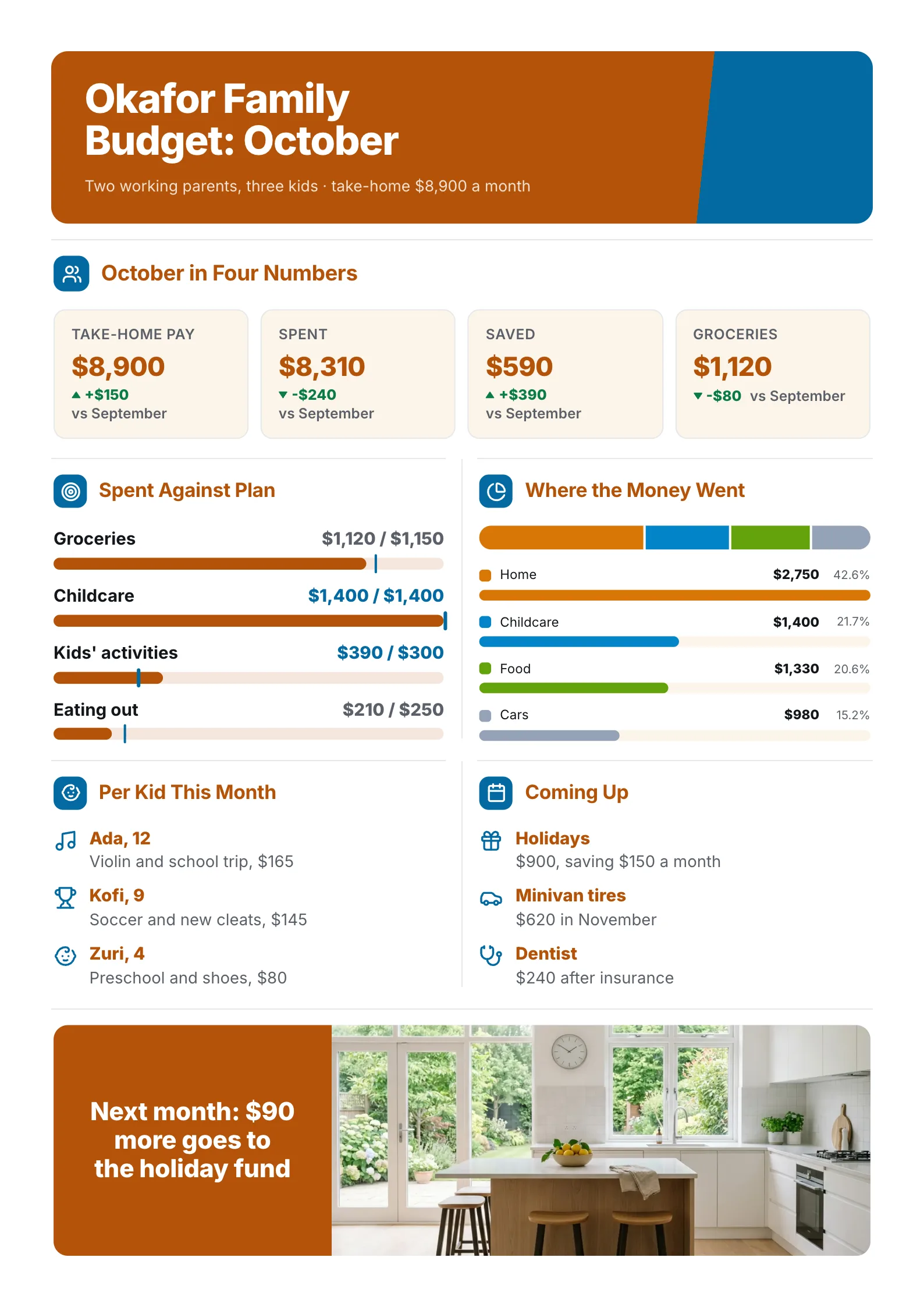 Personal Budget: Family of FiveEdit for free(opens in a new tab)
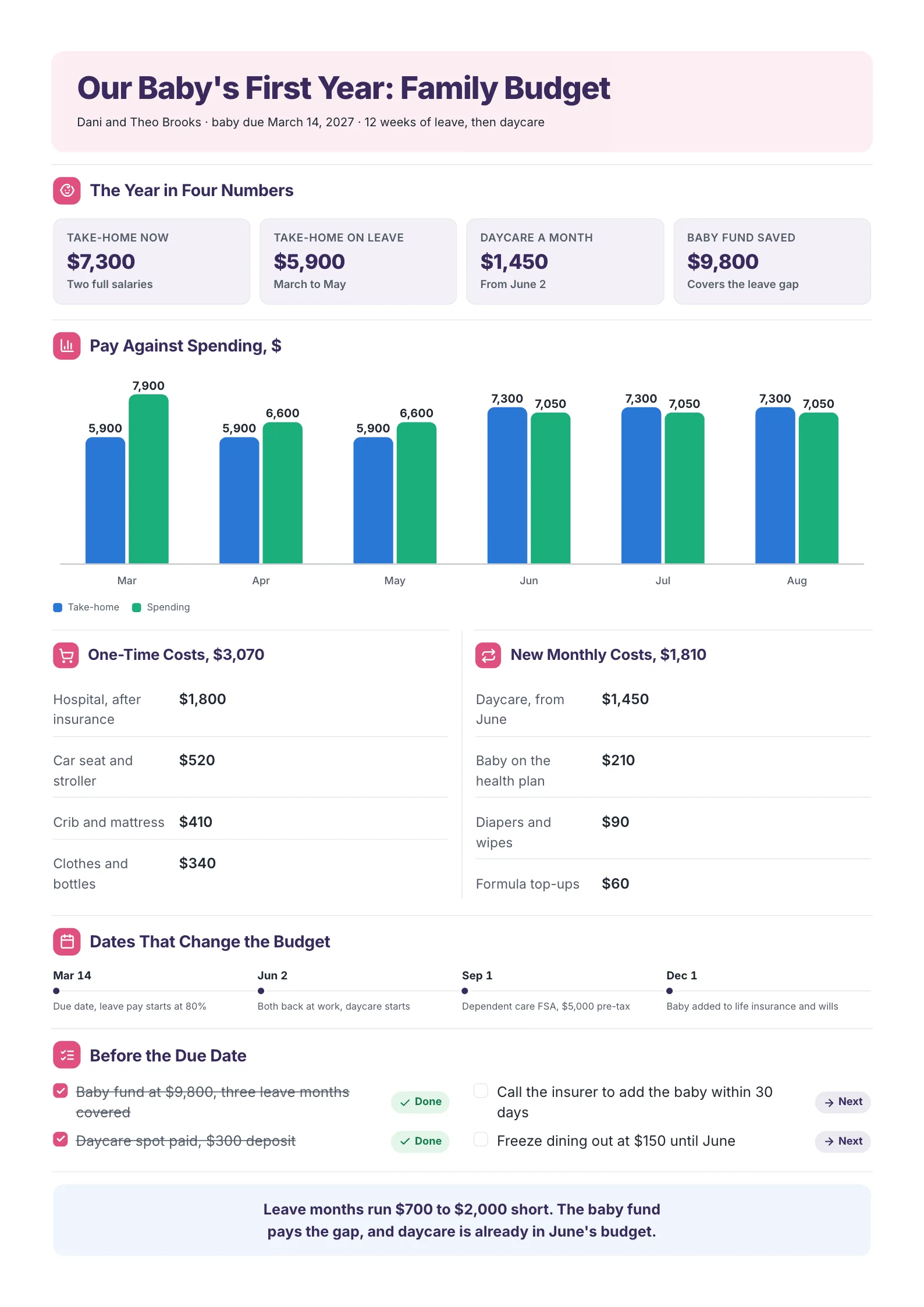 Family Budget: New Baby First YearEdit for free(opens in a new tab)
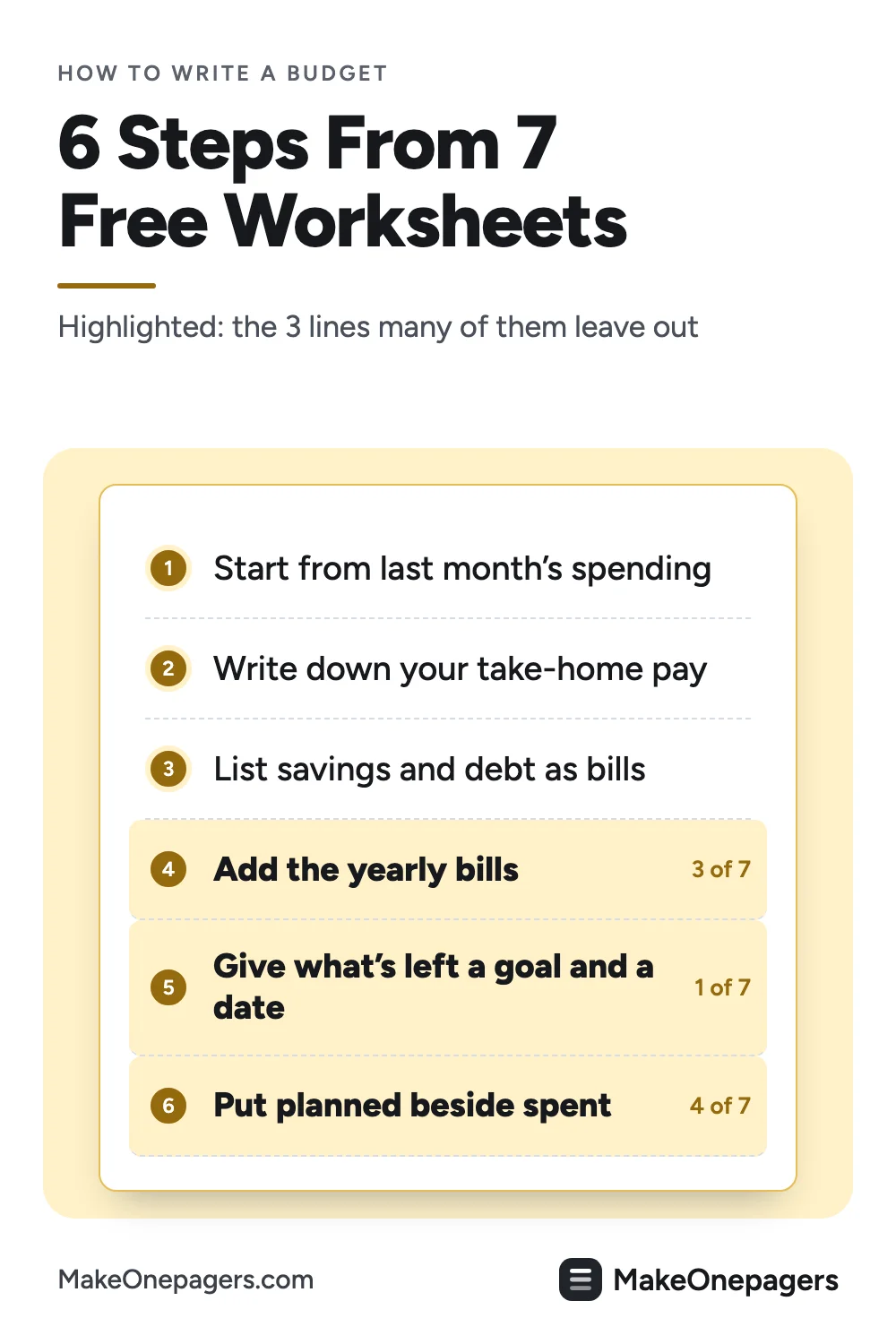
We read 7 free budget worksheets from the Consumer Financial Protection Bureau, two university extension services, a bank and three credit unions. Only 4 of the 7 put the amount you planned beside the amount you spent. Just 3 have a line for bills that come once or twice a year. And only 1 asks you to name a goal with a dollar amount and a date. The 6 steps below cover what all of them share, plus the three lines that many of them leave out.
What 7 free budget worksheets ask you to write
| What the worksheet asks for | Worksheets that do |
|---|---|
| A line for debt payments | 6 of 7 |
| What's left after expenses | 6 of 7 |
| Take-home pay, after taxes | 5 of 7 |
| A line for savings | 5 of 7 |
| Planned beside actual spending | 4 of 7 |
| Last month's real numbers first | 3 of 7 |
| Bills that don't come every month | 3 of 7 |
| A goal with an amount and a date | 1 of 7 |
Source: our read of 7 free US budget worksheets, October 30, 2026. Each one is linked at the end of this post.
The top rows are the parts most people already know to write. The planned-beside-actual row and the last two rows are the ones that decide whether your budget still works in month four.
Step 1: Start with what you spent last month
Before you plan a single number, write down what really happened last month. The CFPB worksheet builds this in. Its first column is labeled Month 1, and it asks for your actual take-home pay and actual expenses from the month that just ended. Only then does it give you a Month 2 column to plan.
Corda Credit Union's zero-based worksheet goes further. It suggests you base your numbers on at least two months of statements, in case your spending moves around. Texas A&M AgriLife Extension's two-month plan does the same thing in plainer words: use this worksheet to see how much money you spend in a month, then use that to plan next month.
So open your bank app and your card statements. Sort last month's spending into 8 to 12 groups, like housing, groceries, eating out, car and phone. Round to the nearest $10. If you guess $300 for groceries and the real number is $560, your budget is off before the month even starts.
Step 2: Write down your take-home pay
Use the amount that lands in your account, after taxes and paycheck deductions come out. Five of the 7 worksheets ask for it this way. Sallie Mae's sheet calls it monthly net salary. The AgriLife plan says paychecks after taxes, benefits and check cashing fees.
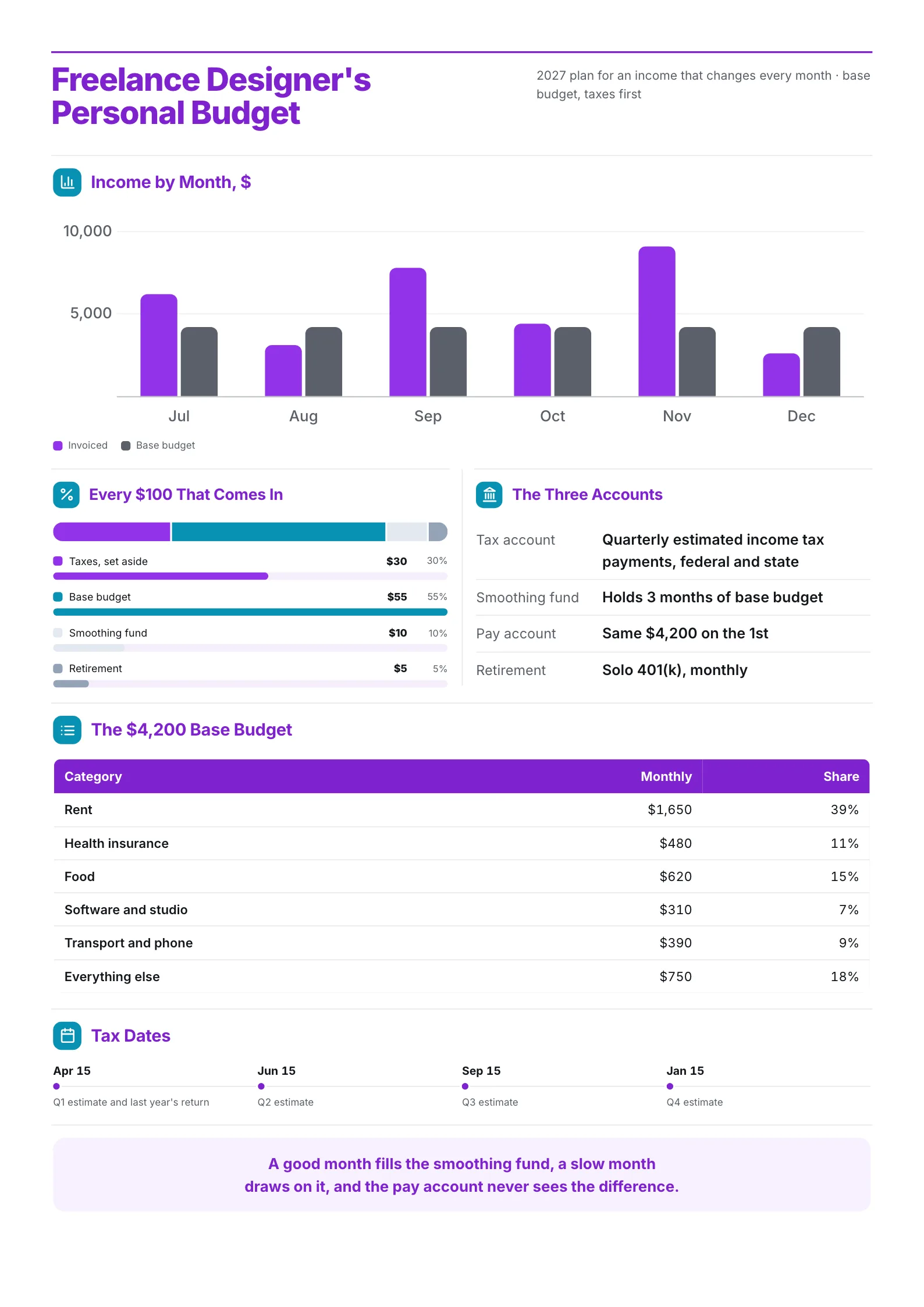
Paid every two weeks? Write the two paychecks you get in a normal month and treat the third paycheck in the two odd months as a bonus. When pay changes from month to month, pick a base amount you can count on and budget only that. Anything above it goes into a buffer for slow months.
 Edit this template
Sample names and figures. Invoices swing from $2,600 to $9,100 a month, but the pay account gets the same $4,200 on the 1st.
Step 3: List savings and debt as bills
Write savings and debt payments on the same list as rent, before the fun money. Six of the 7 worksheets have a line for debt, and 5 have one for savings. The Adventure Credit Union sheet puts three savings lines, starting with an emergency fund, inside its fixed expenses, right beside rent and insurance.
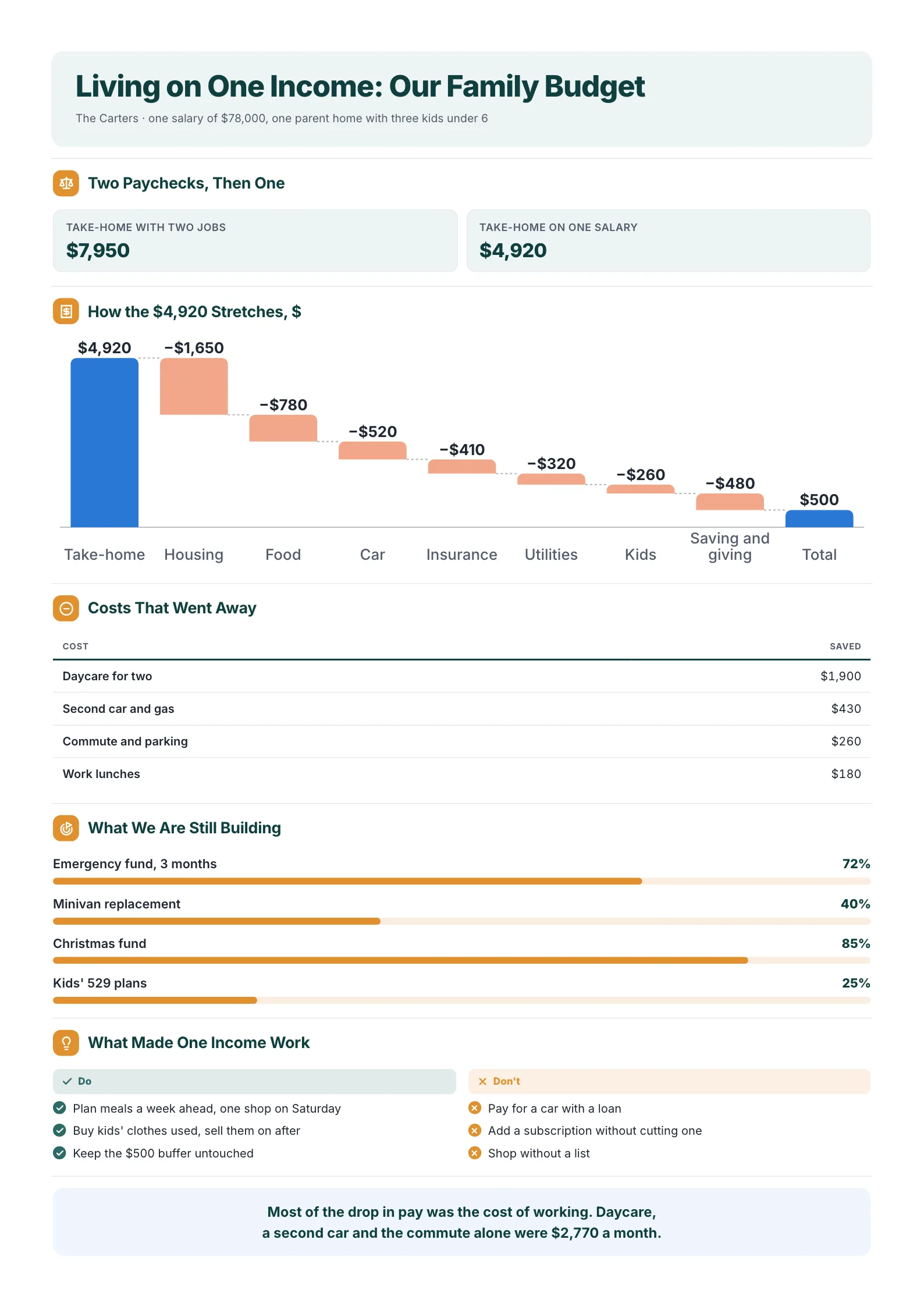
That placement matters. A savings line at the bottom of the list only gets whatever is left, and most months nothing is. Move it to the top and pay it the day your check lands, the same way you'd pay rent.
For debt, write the minimum on every account first. Then pick one debt to pay extra on each month, so you can see one balance get smaller.
 Edit this template
Sample names and figures. Saving and giving get $480 on the same list as housing and food, and $500 stays as a buffer.
Step 4: Add the bills that come once or twice a year
This is the line that breaks most budgets, and only 3 of the 7 worksheets have it. NDSU Extension gives these costs their own section, called occasional expenses, with vehicle registration, gifts and renter's insurance as examples. The AgriLife plan adds a line called other expenses this month for any bill that doesn't come every month. Adventure Credit Union lays out all 12 months at once, so a tax bill in January or a license fee in June has its own box.
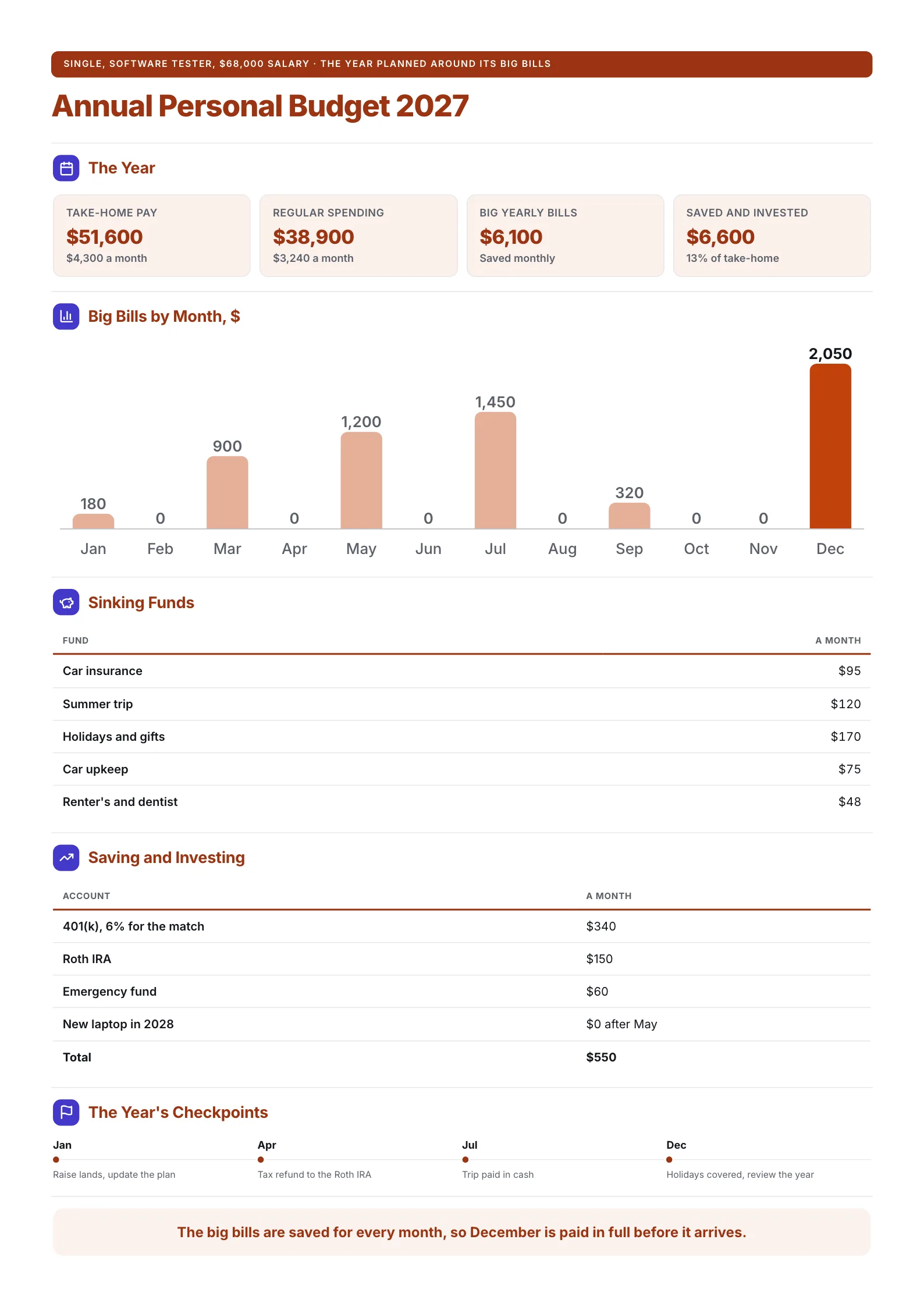
Here's how to add them. List every cost you paid in the last 12 months that wasn't monthly. Think car insurance every six months, registration, holiday gifts, school supplies, a dentist visit and the annual subscriptions. Add them up, divide by 12, and put that amount aside every month.
| Yearly cost | Total a year | Set aside a month |
|---|---|---|
| Car insurance, paid twice a year | $1,140 | $95 |
| Holidays and birthdays | $2,040 | $170 |
| Car registration and tires | $900 | $75 |
These figures are an illustration. Do the same math for your own list, and December stops being the month the credit card fills up.
 Edit this template
Sample names and figures. December's $2,050 in big bills is paid by sinking funds that fill a little every month.
Step 5: Give what's left a goal, an amount and a date
Subtract your expenses from your take-home pay. Six of the 7 worksheets have a line for this, from Sallie Mae's spendable income to the Vermont Federal Credit Union's difference. NDSU's worksheet is the one that totals income and expenses without ever asking what's left.
If the number is negative, go back to step 1 and find where to trim. Eating out and subscriptions are usually first. If it's positive, don't leave it blank. Money without a job tends to drift into small purchases, so give it one today.
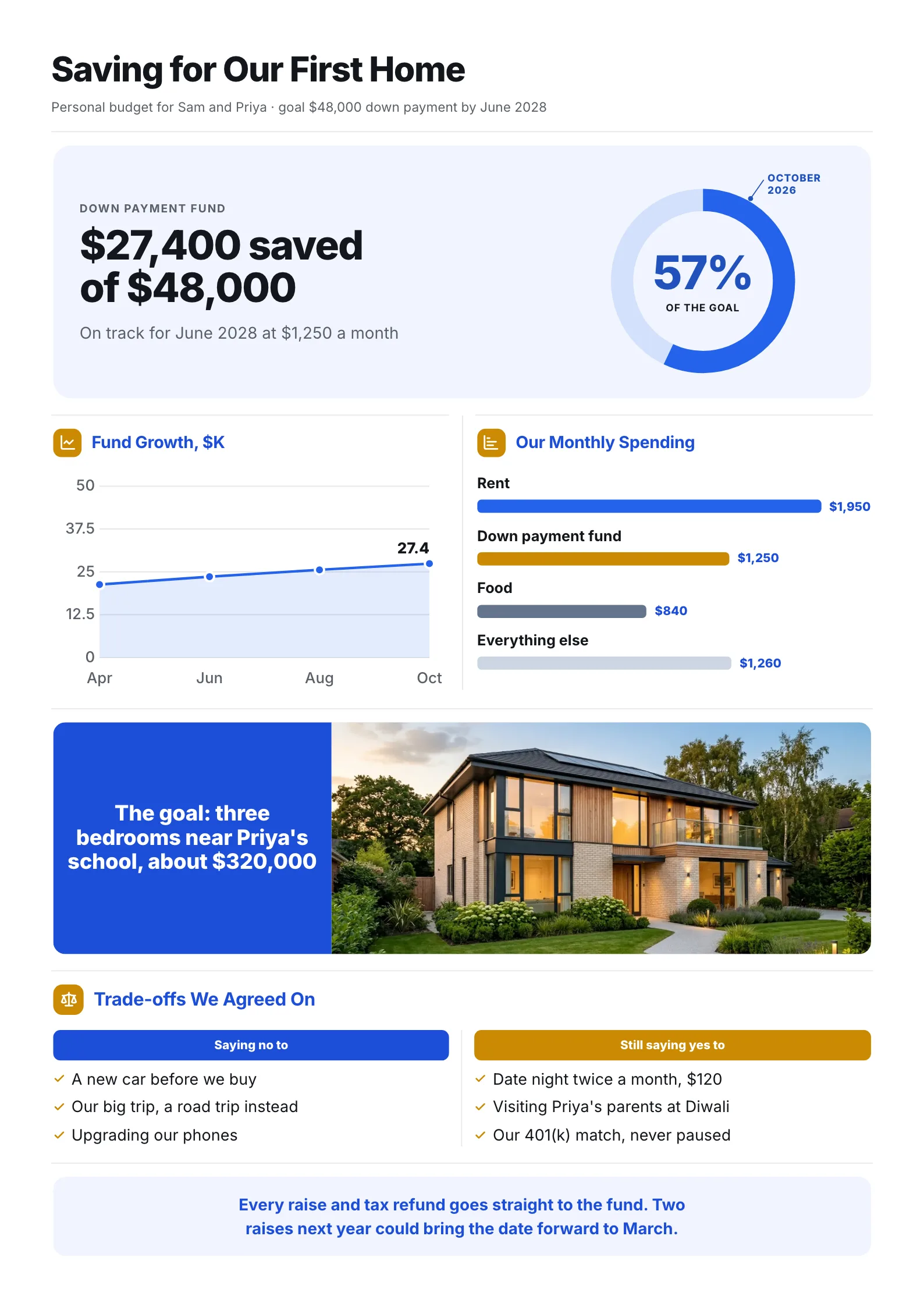
Only the CFPB worksheet asks you to name a goal properly. Its first page has a fill-in line, "I want $ by," followed by a date and a reason. Then it asks how many months that is and what you'd need to set aside each month. Write yours the same way: $6,000 for a used car by next September is $500 a month for 12 months.
 Edit this template
Sample names and figures. The goal has an amount and a date at the top, and $1,250 a month sits in the spending list beside rent.
Step 6: Put your plan beside what you really spent
A budget you never compare with real spending is a wish list. Four of the 7 worksheets build in that check. NDSU and Sallie Mae give each line a budgeted column and an actual column. Adventure Credit Union does it for all 12 months. The CFPB worksheet ends with a step called "See how you did & make adjustments" and says plainly that you may not hit every target the first month.
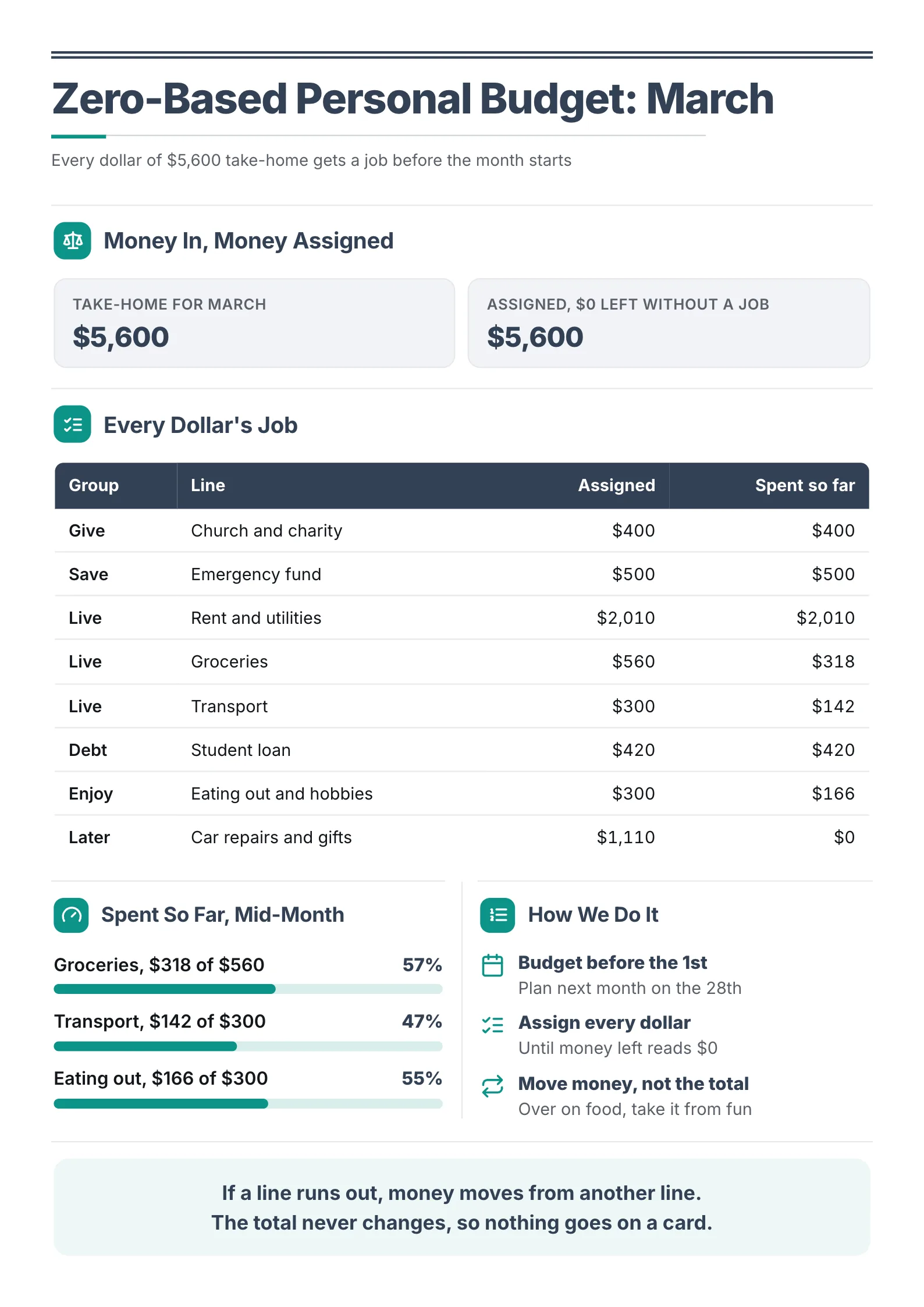
Pick one day a month to do this, like the 28th or the day before your first payday. Write each line's actual amount beside its plan and circle any line that's off by more than 10%. Then make one or two changes for next month. Moving $50 from fun to food beats rewriting the whole thing.
If you have time mid-month, check the two or three lines that run over most often. Groceries and eating out are the usual ones.
 Edit this template
Sample names and figures. Groceries show $318 spent of $560 at mid-month, so there's time to adjust before the month ends.
The three missing lines, added to a first budget
Here's how one month's budget changes when you add the three lines many worksheets skip. The left column follows a worksheet with income, a list of expenses and a total. The right column adds a plan-beside-actual check, a line for yearly bills and a dated goal.
| Line | Basic worksheet | With the missing lines |
|---|---|---|
| Groceries | $400 | $400 planned, $520 spent |
| Yearly bills | Not listed | $170 a month to a holiday fund |
| What's left | $300 | $300 to a $3,600 fund by December |
| Next step | None | Raise groceries to $500, trim eating out |
The figures are made up for the example. What matters is that the version on the right tells you what to change next month, and the one on the left doesn't.
Fit the whole budget on one page
Most of the worksheets we read fit on one or two pages, and that's the right size. A long budget is one you'll stop opening. Keep the categories to a dozen or fewer, put the totals at the top and leave room for the actual column.
Our budget designs come with a planned and spent column, a box for sinking funds and a goal tracker, so you fill in your numbers and keep the layout. For a monthly sheet you can print, see our personal budget template post. A household budget has one more job, and our family budget template post walks through sharing one with a partner.
Where to find all 7 worksheets
| Worksheet | Pages | Who made it |
|---|---|---|
| My New Money Goal | 4 | Consumer Financial Protection Bureau, a copy hosted by the Missouri State Treasurer |
| Spending Plan Worksheet FE222e | 1 | NDSU Extension |
| Two Month Spending Plan | 2 | Texas A&M AgriLife Extension, adapted from the FTC |
| Create Your Monthly Budget | 2 | Vermont Federal Credit Union |
| My Monthly Budget Worksheet | 1 | Sallie Mae, a copy hosted by Wisconsin's financial agency |
| Create a Zero-Based Spending Plan | 2 | Corda Credit Union |
| Budget and Spending Worksheet | 1 | Adventure Credit Union |
All 7 files were downloaded and read on October 30, 2026. Every count in this post traces to one of these seven files.
Write next month's budget tonight
Pull last month's statements, write your take-home pay and sort what you spent into a dozen lines. Then add the line most worksheets skip, the bills that come once a year, divided by 12. Put your plan into a budget design from MakeOnepagers and leave the actual column empty until the 28th.
Frequently asked questions
What are the main parts of a budget?
Every budget has money coming in, money going out and what's left. A useful one adds three more lines: what you planned beside what you spent, a monthly amount for once-a-year bills and a goal with a dollar amount and a date.
Is a spending plan the same as a budget?
Yes. NDSU Extension, Texas A&M AgriLife and two of the credit unions call their worksheets spending plans. The name is meant to sound less strict, but you fill it in the same way.
Should I budget by the month or by the paycheck?
Budget by the month if your bills come monthly and your pay is steady. If you're paid every two weeks or your income changes, plan by paycheck and match each bill to the check that pays it.
How much of my pay should I save?
There's no single right amount, and none of the 7 worksheets sets one. A common starting point is the 50/30/20 split from the book All Your Worth by Elizabeth Warren and Amelia Warren Tyagi, which puts 20% toward savings and extra debt payments.




