Hotel One‑Pager Template: Free Fact Sheet, Review and Break-Even
Free hotel one-pager templates for a fact sheet, a season review, break-even occupancy, a rate check and a guest persona, plus the three numbers they share.

A wedding planner is choosing between your hotel and two others for a 40-room block. Your owners want to know whether next year's budget clears break-even. A hotel one pager hands both of them what they came for, on one sheet. Start from a free one pager template.
One‑Pager examples
Real One-Pagers made with MakeOnepagers. Open any one to edit it as your own.
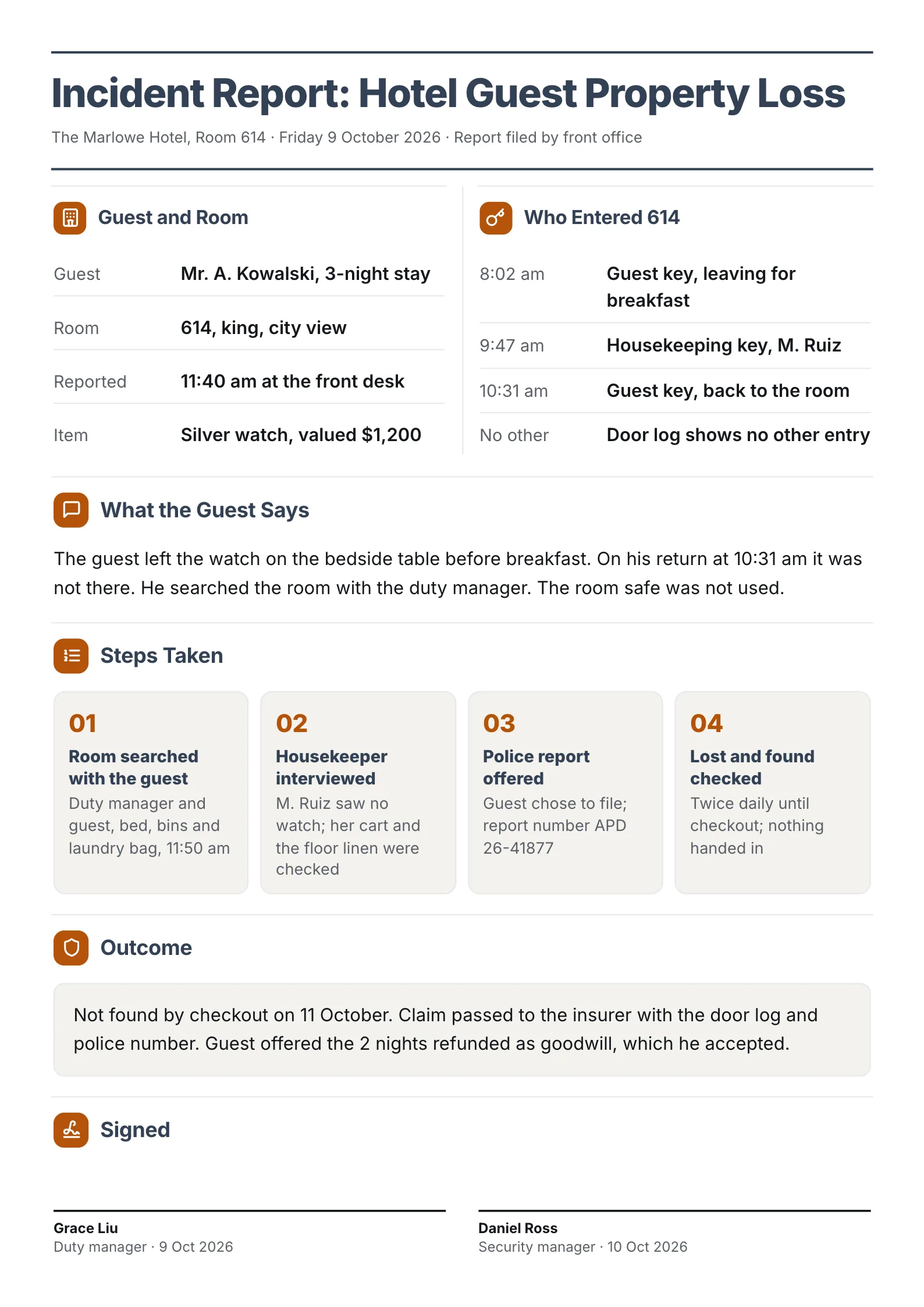 Incident Report: Hotel Guest Property LossEdit for free(opens in a new tab)
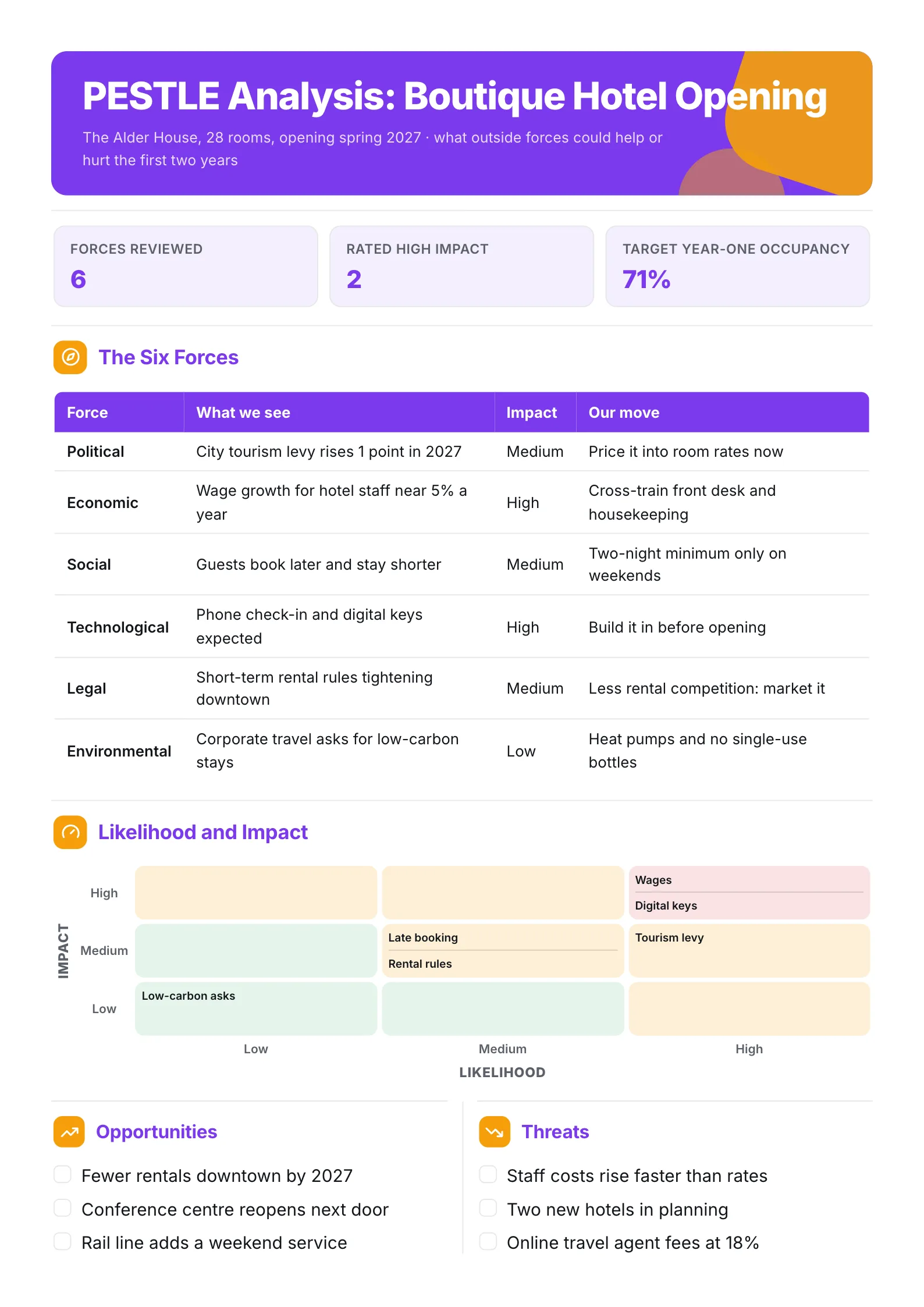 PESTLE Analysis: Boutique Hotel OpeningEdit for free(opens in a new tab)
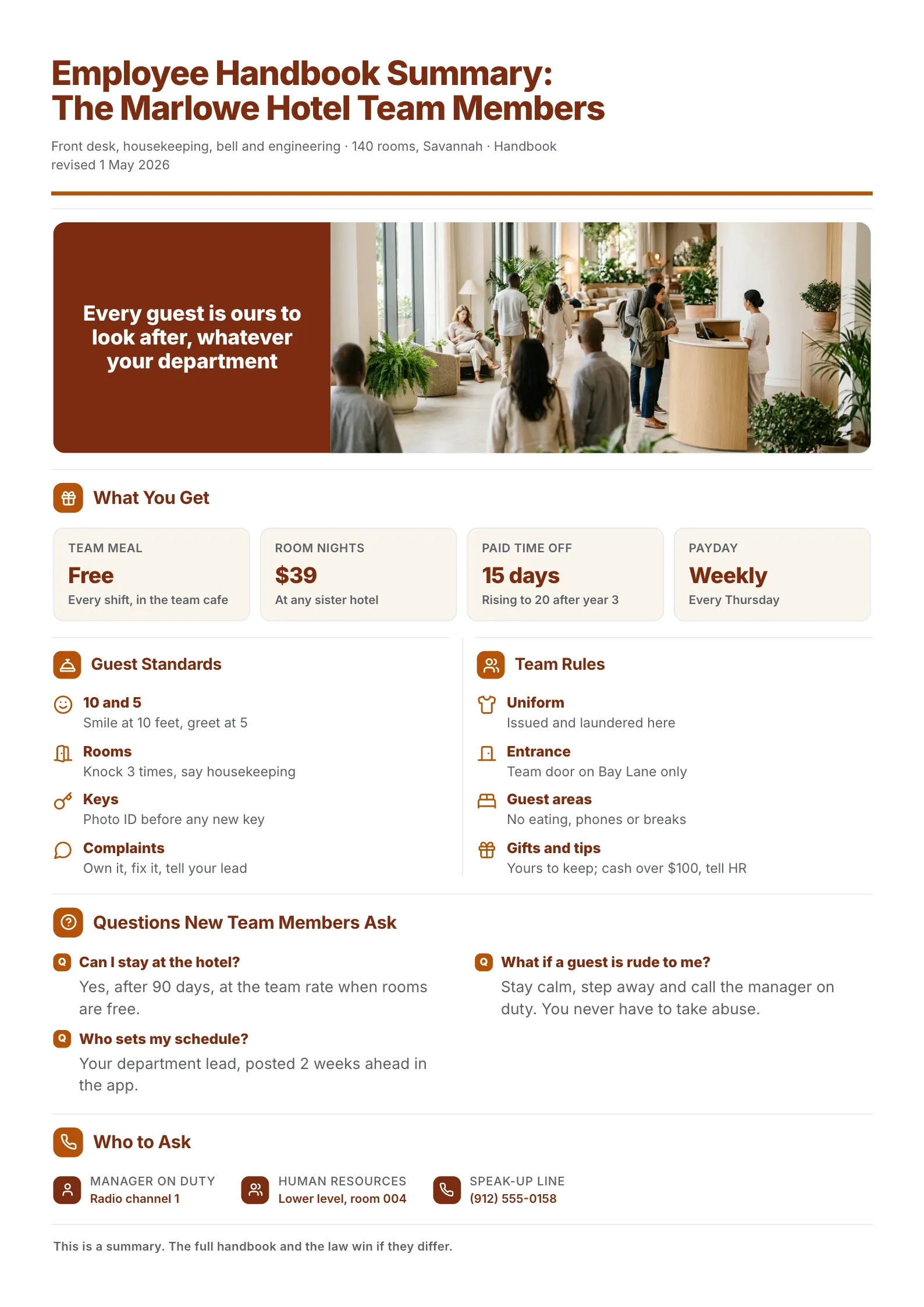 Employee Handbook Summary: Hotel Team MembersEdit for free(opens in a new tab)
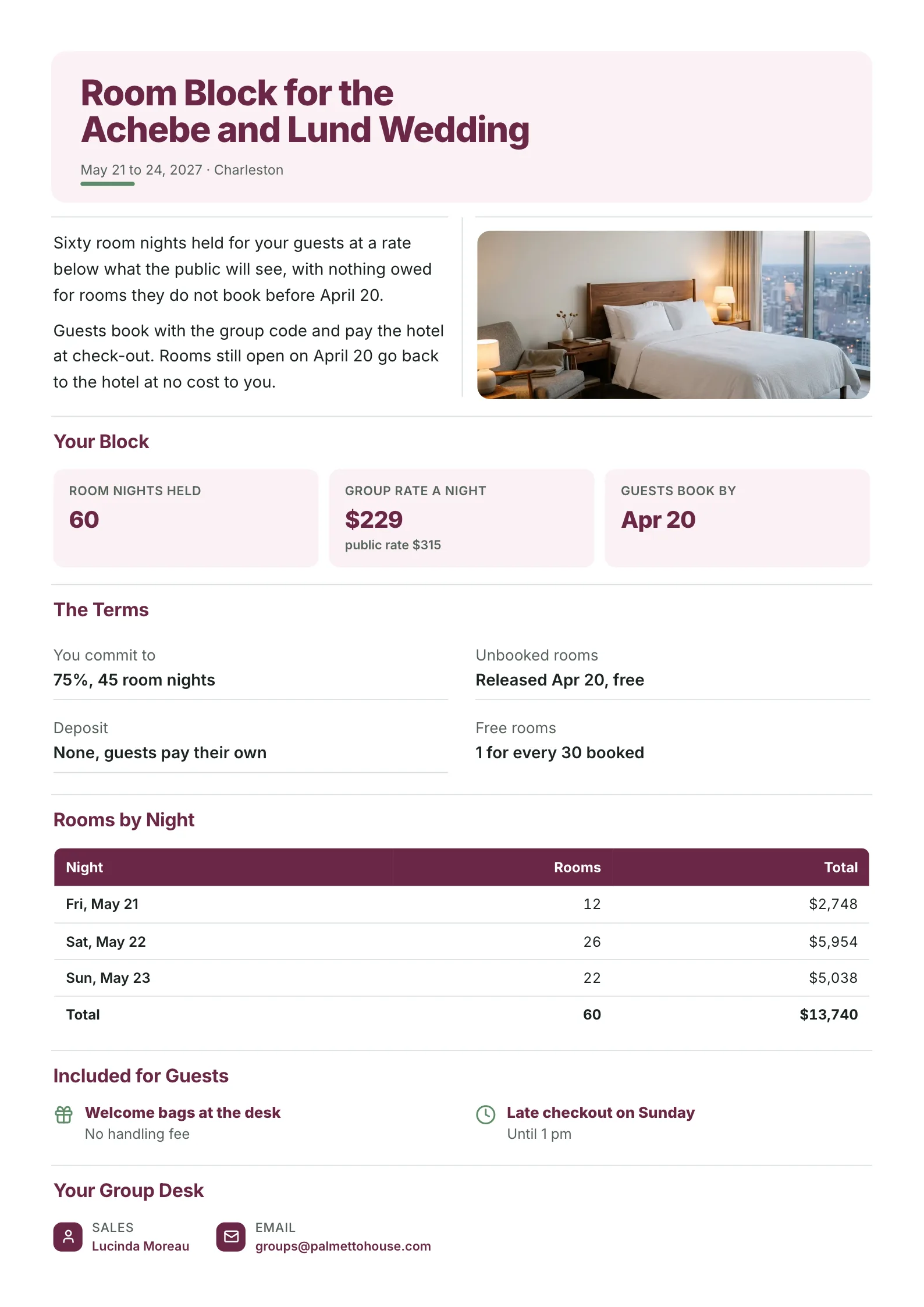 Wedding Hotel Room BlockEdit for free(opens in a new tab)
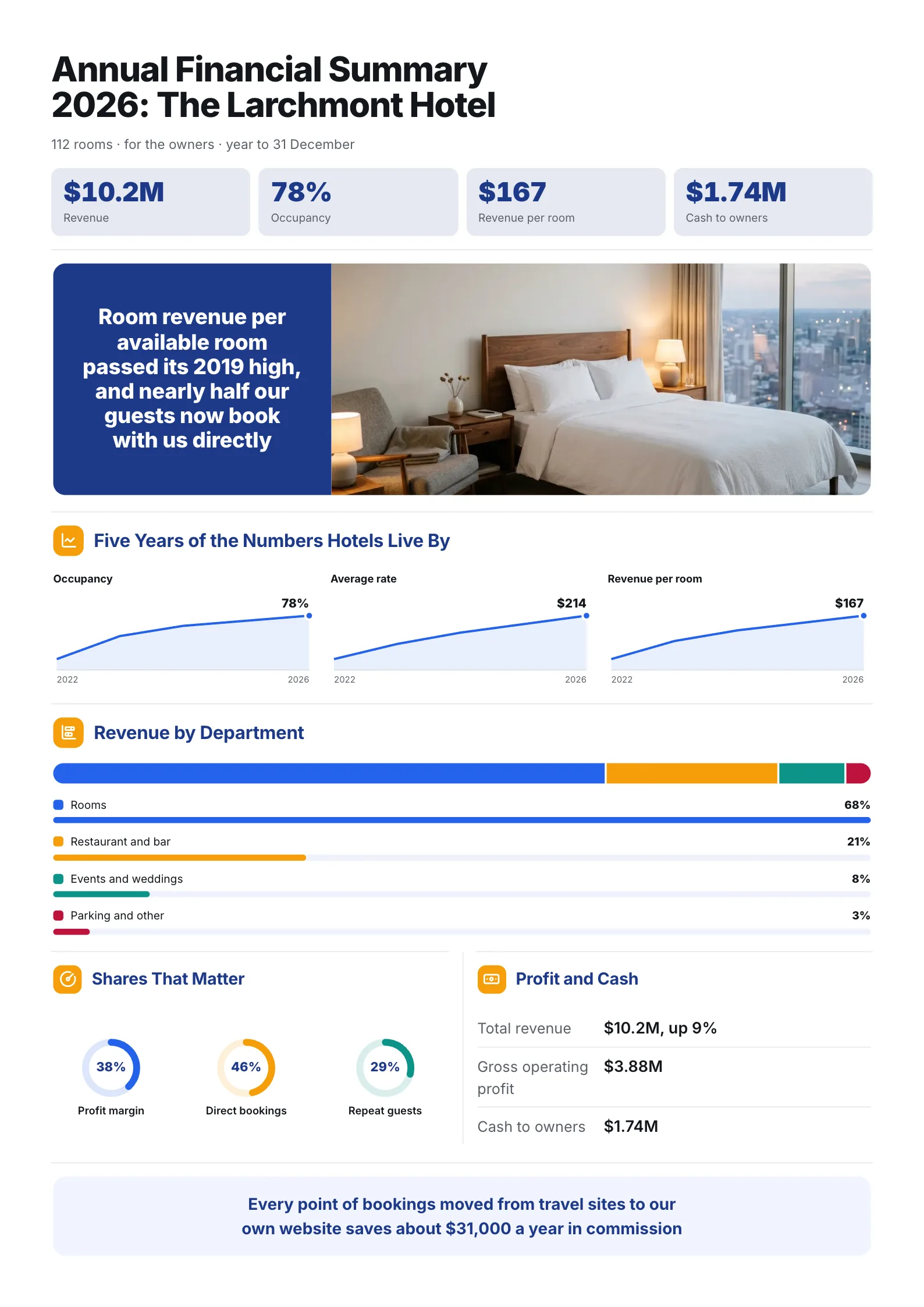 Financial Summary: Hotel YearEdit for free(opens in a new tab)
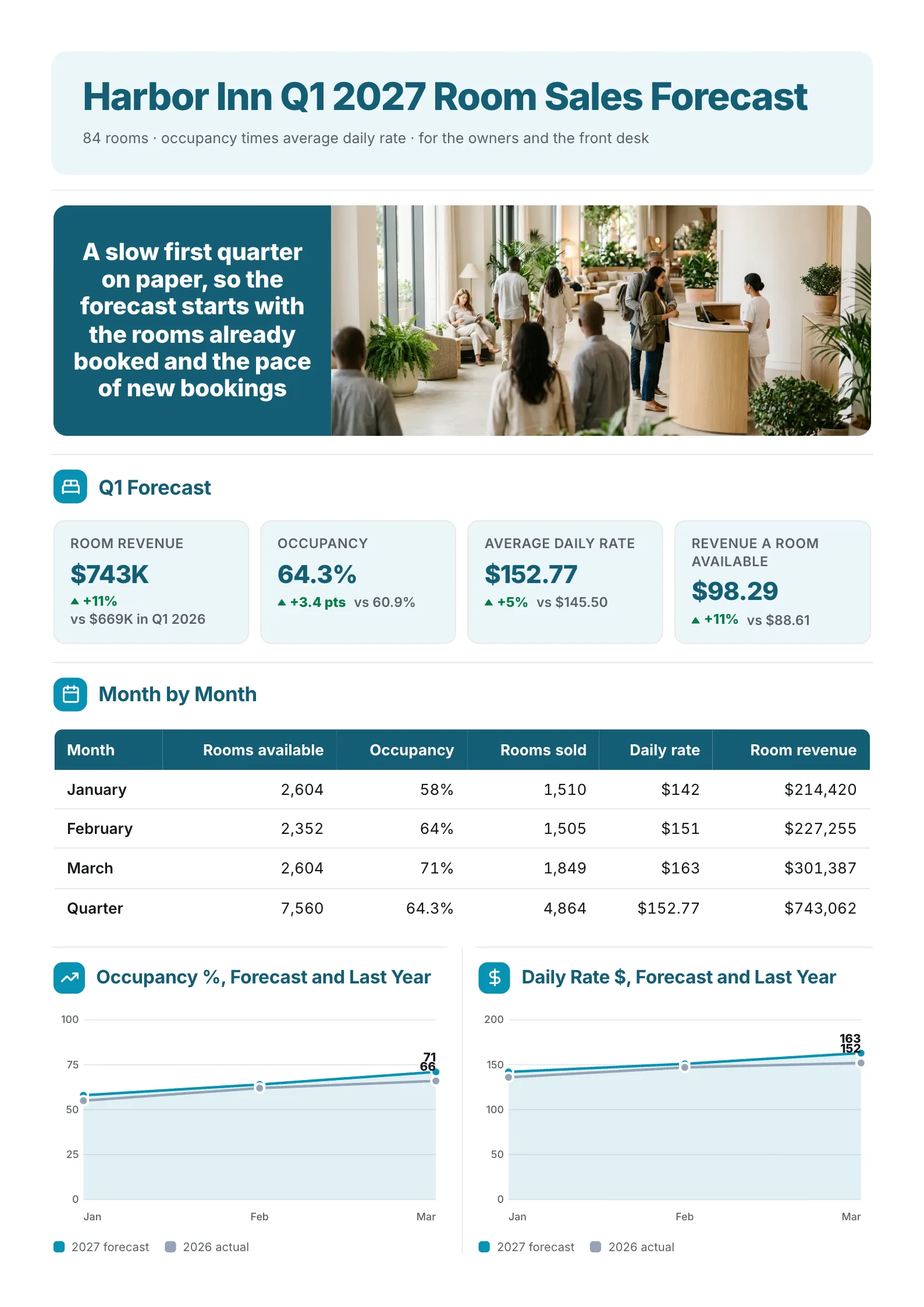 Sales Forecast: Hotel RoomsEdit for free(opens in a new tab)
The planner wants your rooms, rates and who to email. Your owners want occupancy and what you'll change. You'll need different pages for them, and most of those pages come back to the same three numbers.
The three numbers on almost every hotel page
| Number | What it means | How it's figured |
|---|---|---|
| Occupancy | Share of available rooms that sold | Rooms sold divided by rooms available |
| Average daily rate (ADR) | What a sold room brought in | Room revenue divided by rooms sold |
| Revenue per available room (RevPAR) | What every room brought in, sold or empty | ADR times occupancy |
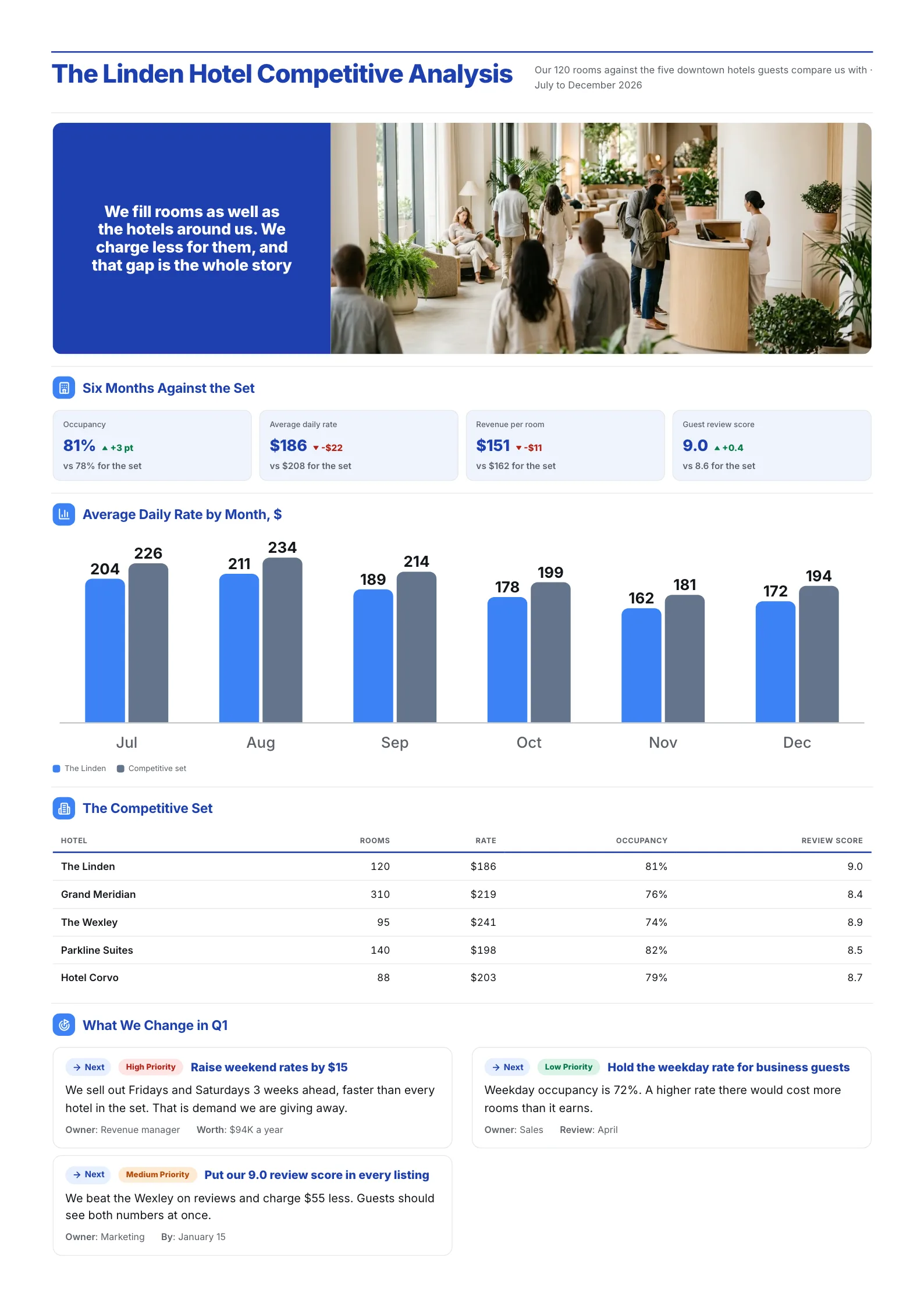
RevPAR is the one that settles arguments. You can fill every room at a low price, or charge a lot and sit half empty, and RevPAR shows which choice brought in more room revenue. You'll see it in the rate check below, where $186 times 81% is $151.
A page for each person who asks
A fact sheet for planners and travel agents
 Edit this template
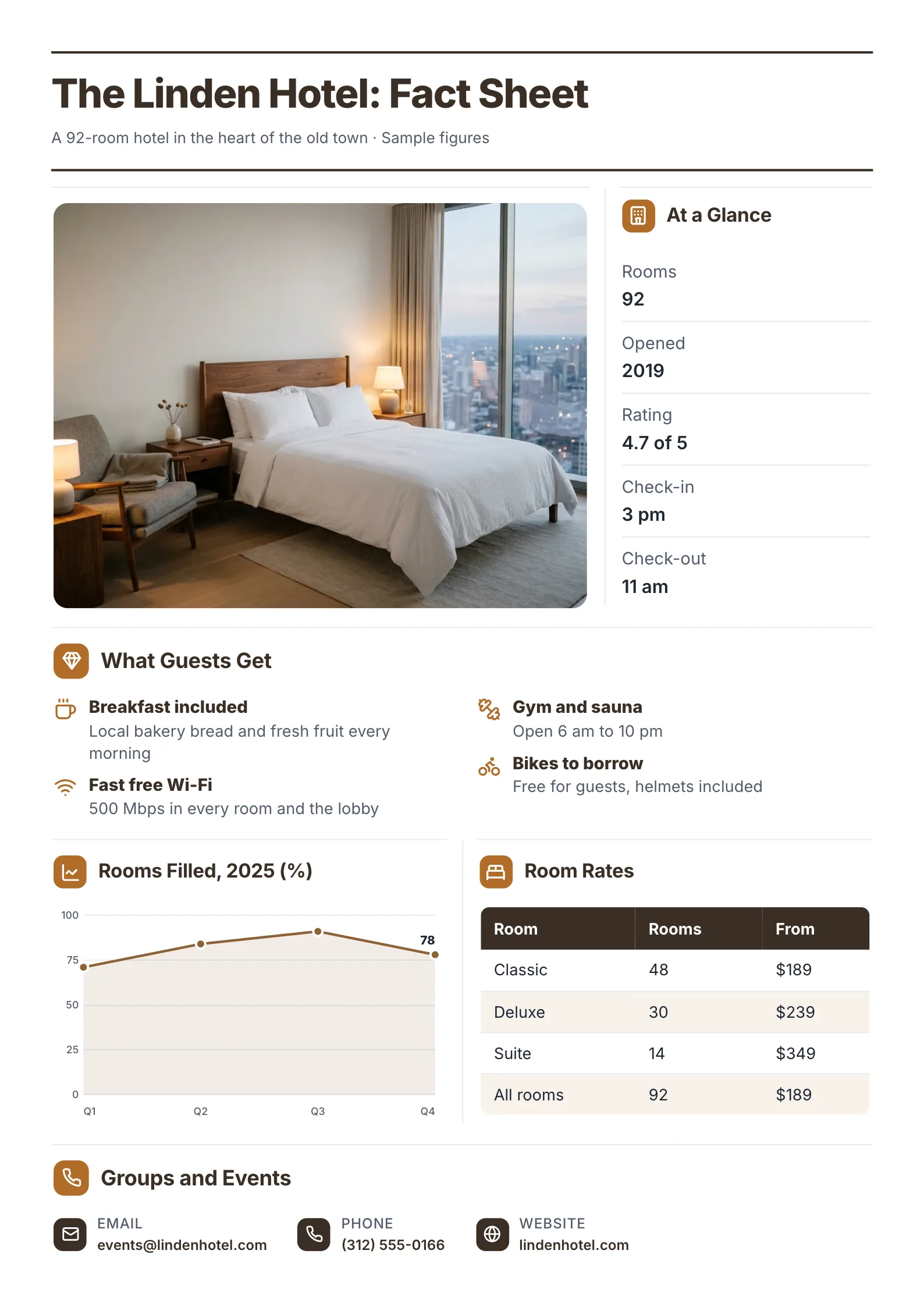
A planner scans your sheet for four things. How many rooms do you have, what do they cost, what's included, and who do they call? The rate table breaks 92 rooms into 48 Classic from $189, 30 Deluxe from $239 and 14 Suites from $349. Your group and event contacts sit at the bottom of this hotel fact sheet, where a planner looks for them.
A season review for the owners
 Edit this template
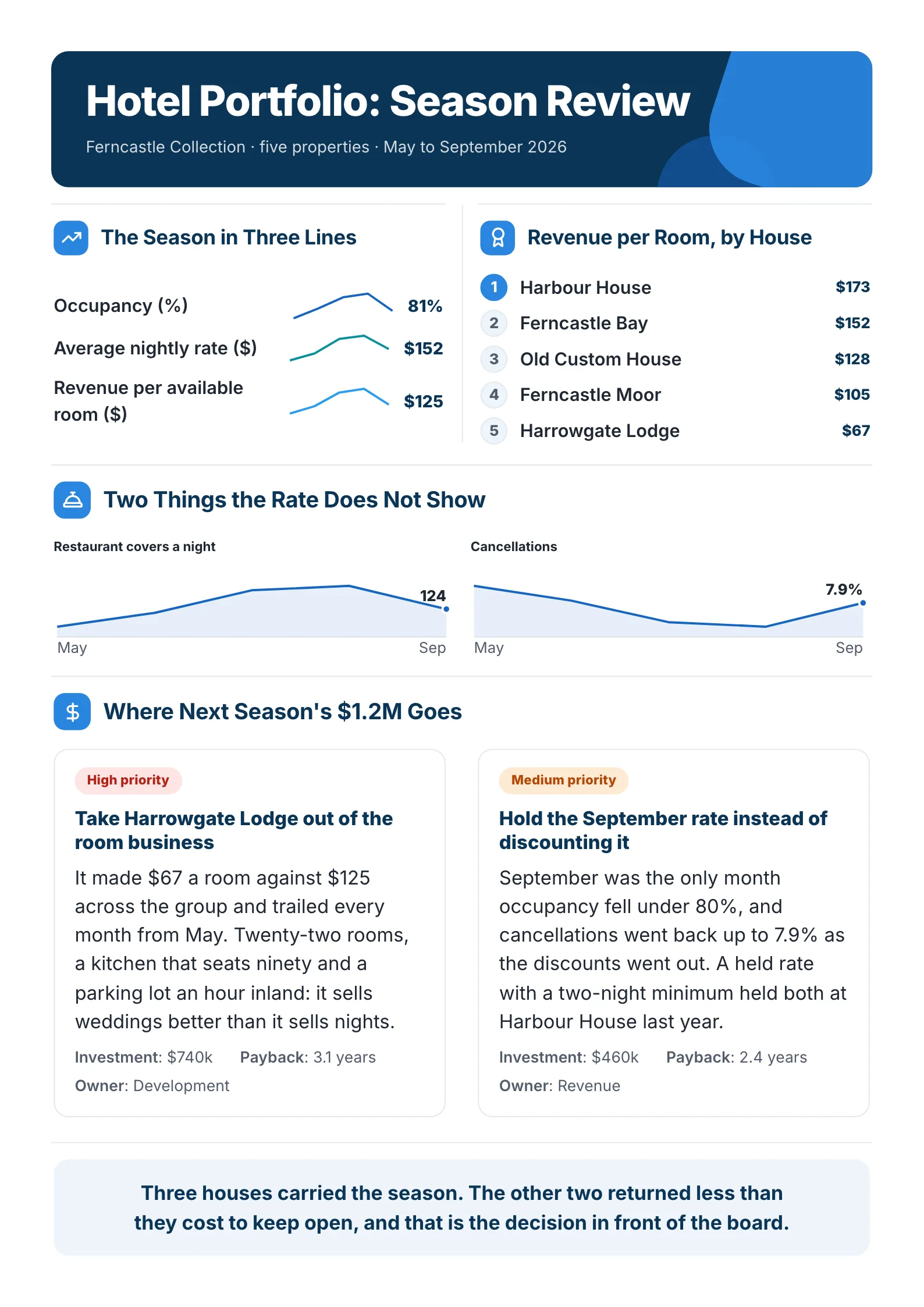
The season fits in three numbers at the top. Then a ranked list puts the five houses in order by revenue per room, and Harrowgate Lodge sits last at $67 against $125 for the group. If you run more than one property, this is the list your owners will point at. The hotel performance review ends on where next season's $1.2M goes, led by a $740k plan to turn that house toward weddings, with its payback beside it.
Break-even occupancy for the budget
 Edit this template
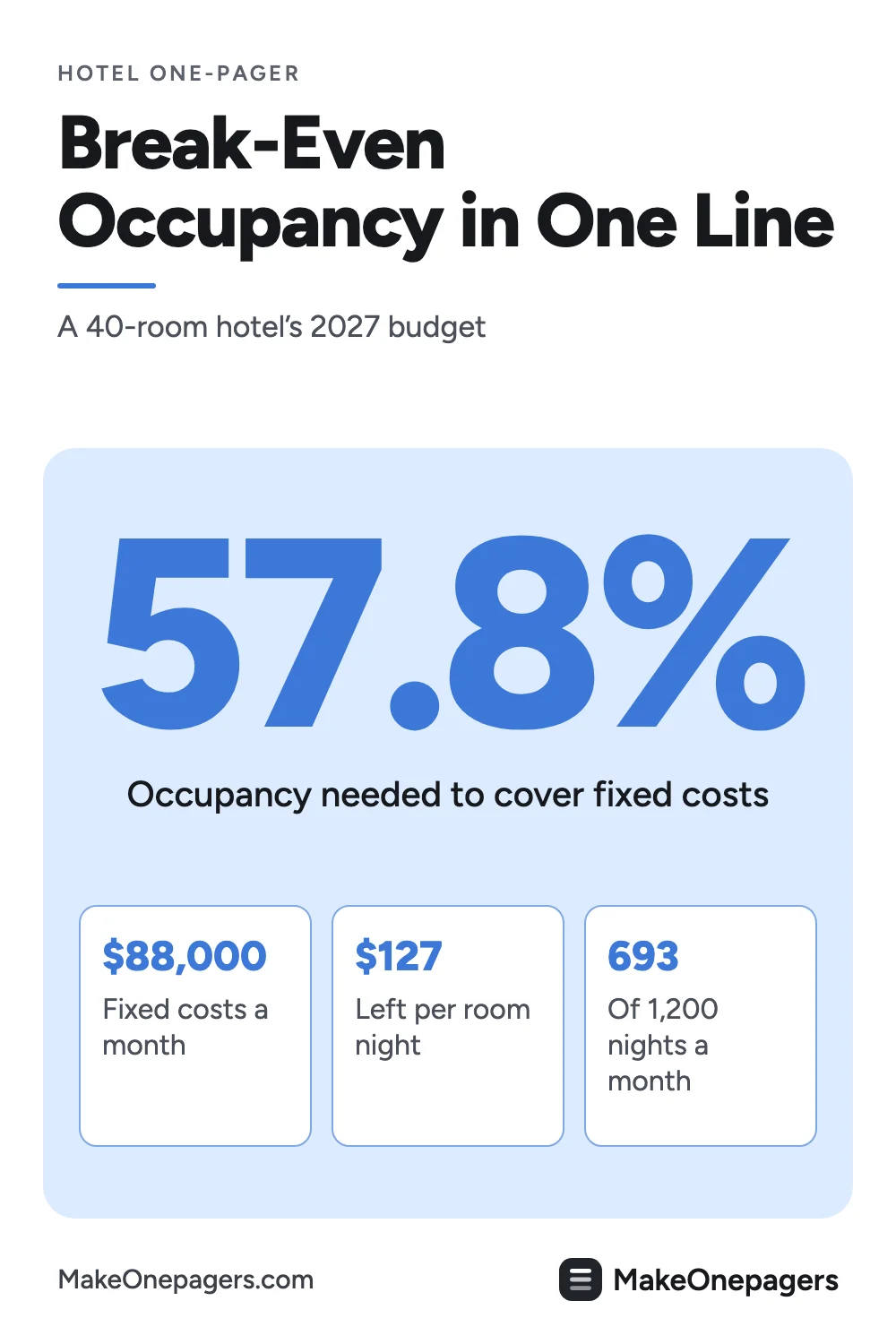
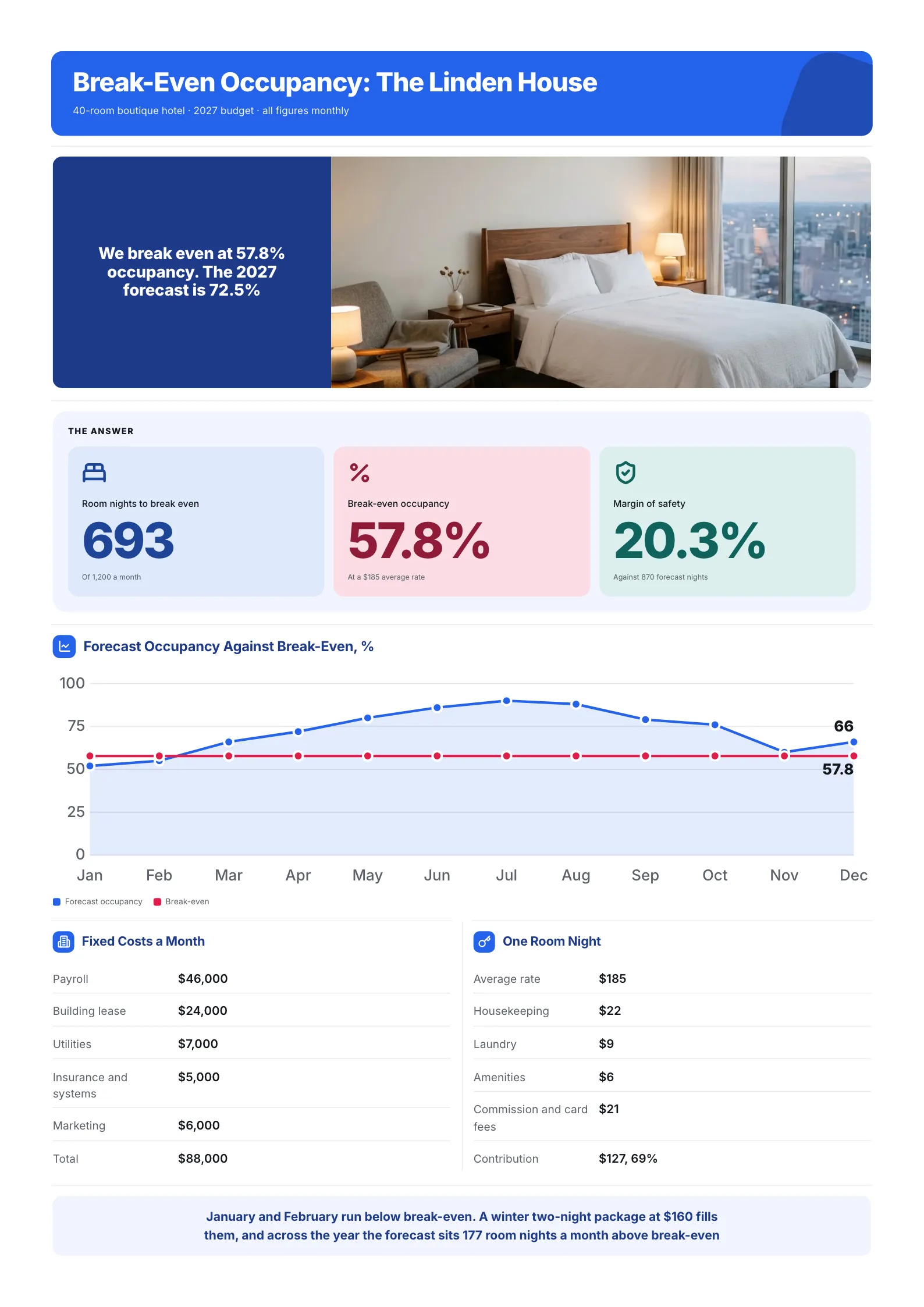
The math is short enough for you to check by hand. Each room night at $185 leaves $127 after housekeeping, laundry, amenities and fees. $88,000 of monthly fixed costs divided by $127 is 693 nights, or 57.8% of the 1,200 available. The forecast of 72.5% gives a margin of safety of 20.3%. If your forecast sits close to the line on the break-even occupancy page, you'll know which months need a package. Our break-even analysis template post shows the same method for other businesses.
A rate check against the hotels nearby
 Edit this template
This 120-room downtown hotel fills rooms as well as its neighbors, 81% against 78% for the set, and charges $22 less. The page says so in one sentence, then proves it with a table of the four hotels guests compare it with. Fridays and Saturdays sell out 3 weeks ahead, so a $15 weekend raise is worth about $94K a year. Start from the competitive analysis and swap in your own set.
A guest persona from real stays
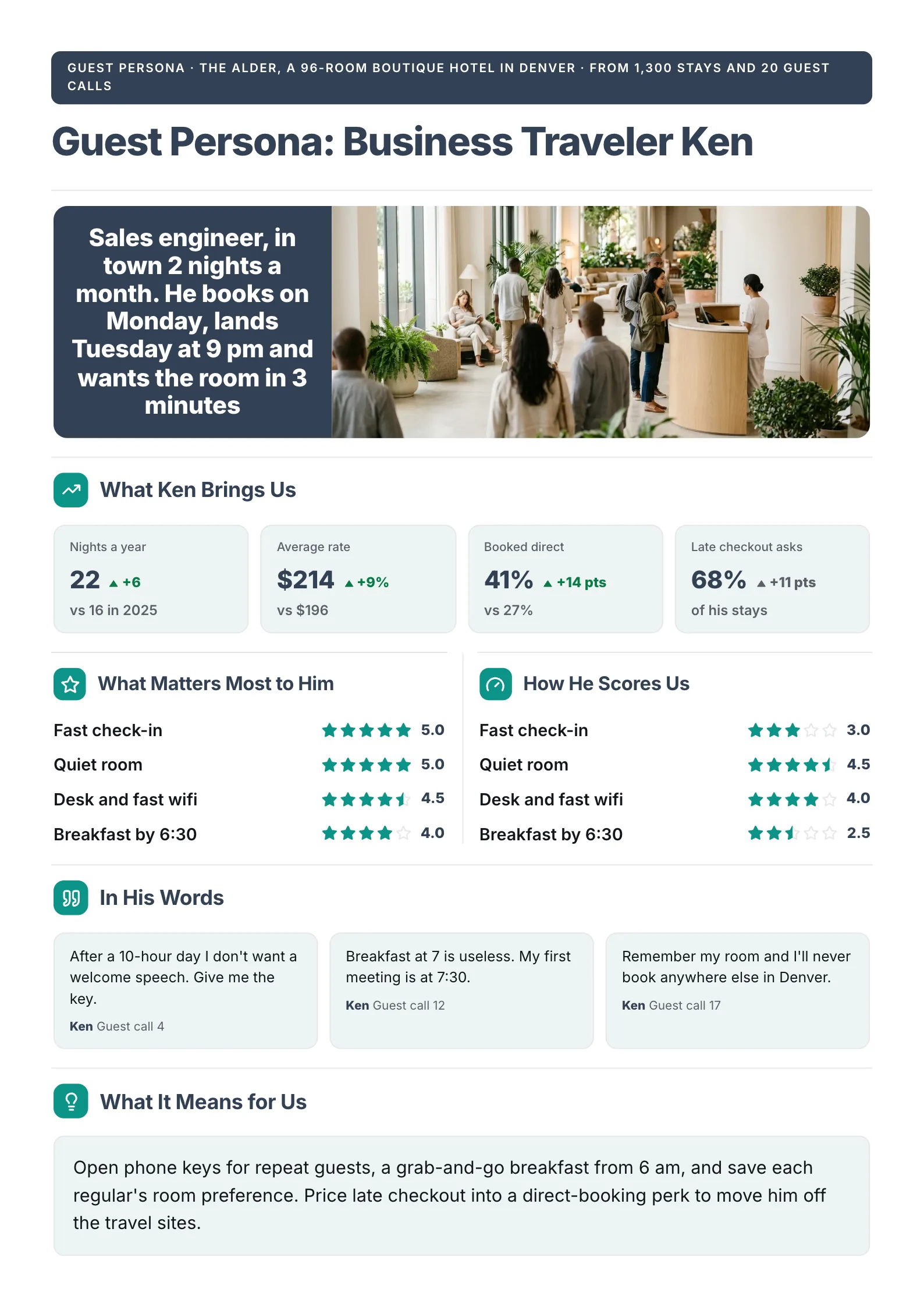 Edit this template
A persona earns its place when it comes from your own data. Ken comes from 1,300 stays and 20 calls, and his quotes are blunt: breakfast at 7 is useless when his first meeting is at 7:30. That one quote turns into a change, a grab-and-go breakfast from 6 am. The hotel guest persona shows the full page, and the customer persona template guide covers the method.
The line our own fact sheet is missing: accessible rooms
Planners and guests will ask you about accessible rooms. For your bookings, federal rules require an answer. The Linden sample above doesn't have that line yet, and under "What Guests Get" is where it goes.
The ADA regulation for hotel reservations, 28 CFR 36.302(e), says a hotel's reservations service must "identify and describe accessible features in the hotels and guest rooms" in enough detail for a guest with a disability "to assess independently" whether the room meets their needs. The same section says reservations for accessible rooms must be taken during the same hours and in the same way as any other room.
Strictly, that rule covers your reservations service. A sales sheet is outside it. But a planner booking 40 rooms for a wedding has the same question, and a line under "What Guests Get" answers it before they have to ask you.
- How many accessible rooms, and which types. A Classic or a Suite, and whether each has a roll-in shower or a tub with grab bars.
- What's accessible in the building. Entrance, lobby, breakfast room, gym.
- Who to ask. A name or an inbox that answers within a day.
"ADA compliant" on its own doesn't let a guest judge your room. Specific features do.
Keep the brochure out of it
- One photo. A room, or the lobby. Planners have seen every pool.
- Room types in a table, with counts and a "from" rate.
- Last year's occupancy as one small chart, for an owner, a lender or a planner looking for your quiet quarter. Leave it off a sheet written for guests.
- One contact for groups. A shared inbox beats a person who might leave before your next printing.
Make your hotel one pager
Pull last season's occupancy, ADR and RevPAR first. Then open the hotel page that fits your reader in MakeOnepagers and replace the sample figures with your own. Got a monthly report from your property system? The free AI One-Pager generator turns it into a page you can then trim.
Frequently asked questions
What is a hotel fact sheet?
A one-page summary of a hotel for planners, travel agents and corporate buyers: rooms, room types and rates, what's included, meeting space and the sales contact.
How do you calculate RevPAR?
Multiply the average daily rate by occupancy, or divide room revenue by rooms available. At a $186 rate and 81% occupancy, RevPAR is about $151.
What is break-even occupancy?
The share of room nights a hotel has to sell to cover its fixed costs. Divide monthly fixed costs by what each room night leaves after its own costs, then divide by the room nights available.
Should a hotel fact sheet list accessible rooms?
Yes. The ADA rule covers your reservations service rather than a sales sheet, but planners ask the same question, so answer it on the page.
What is ADR in a hotel?
Average daily rate: room revenue divided by rooms sold. It tells you what a sold room brought in, while RevPAR also counts the rooms that sat empty.




