Customer Persona Template: Free One-Page Buyer Persona With 5 Examples
A free customer persona template on one page: the 7 parts, the interview questions behind it, a worked example and the mistakes to avoid.

A customer persona template turns what you know about one kind of buyer into one sheet your whole team can use. It covers who the person is and what they're trying to get done. It shows what frustrates them, how they find and choose a product, and what they say in their own words. Your marketing team uses it to write ads and emails. Sales uses it to prepare for calls, and product uses it to decide what to build next. A persona only helps you if it's short enough to remember and true enough to trust. Below you'll find the seven parts of a good one and the interview questions that feed it. You'll also get a free customer persona template, five customer persona examples and a worked example. Start from a free one pager template.
One‑Pager examples
Real One-Pagers made with MakeOnepagers. Open any one to edit it as your own.
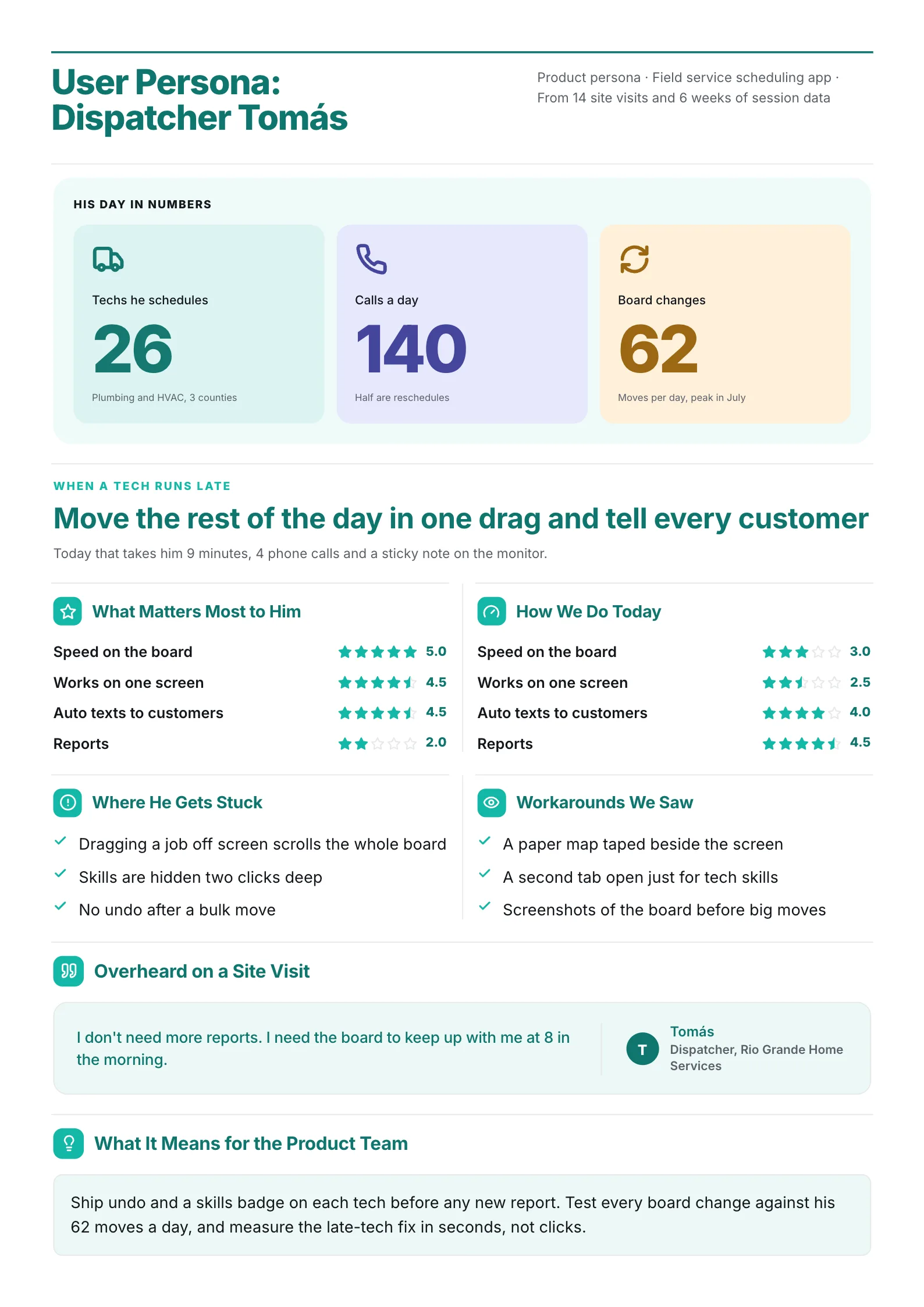 Customer Persona: Product UserEdit for free(opens in a new tab)
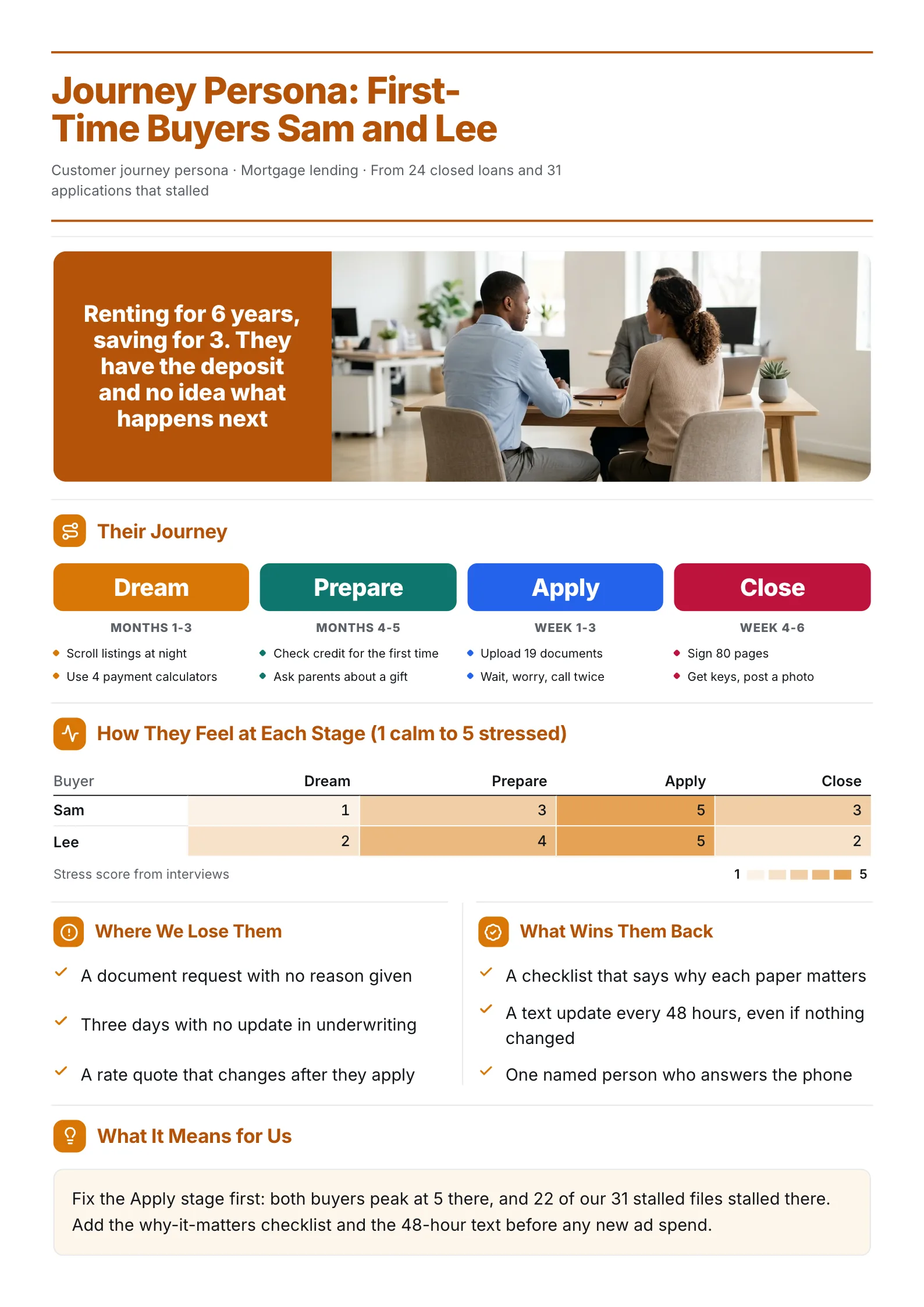 Customer Persona: Home Buyer JourneyEdit for free(opens in a new tab)
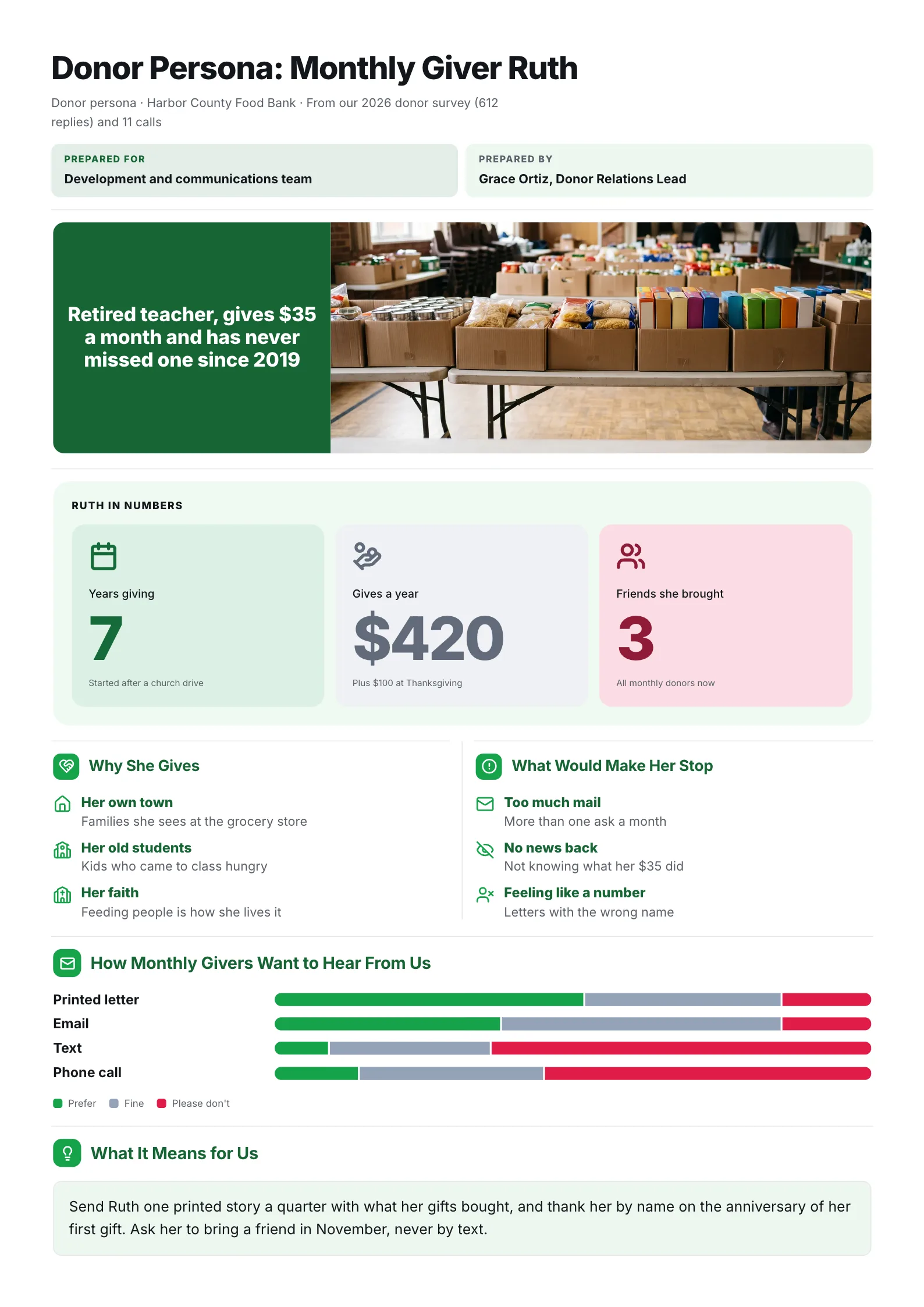 Customer Persona: Nonprofit DonorEdit for free(opens in a new tab)
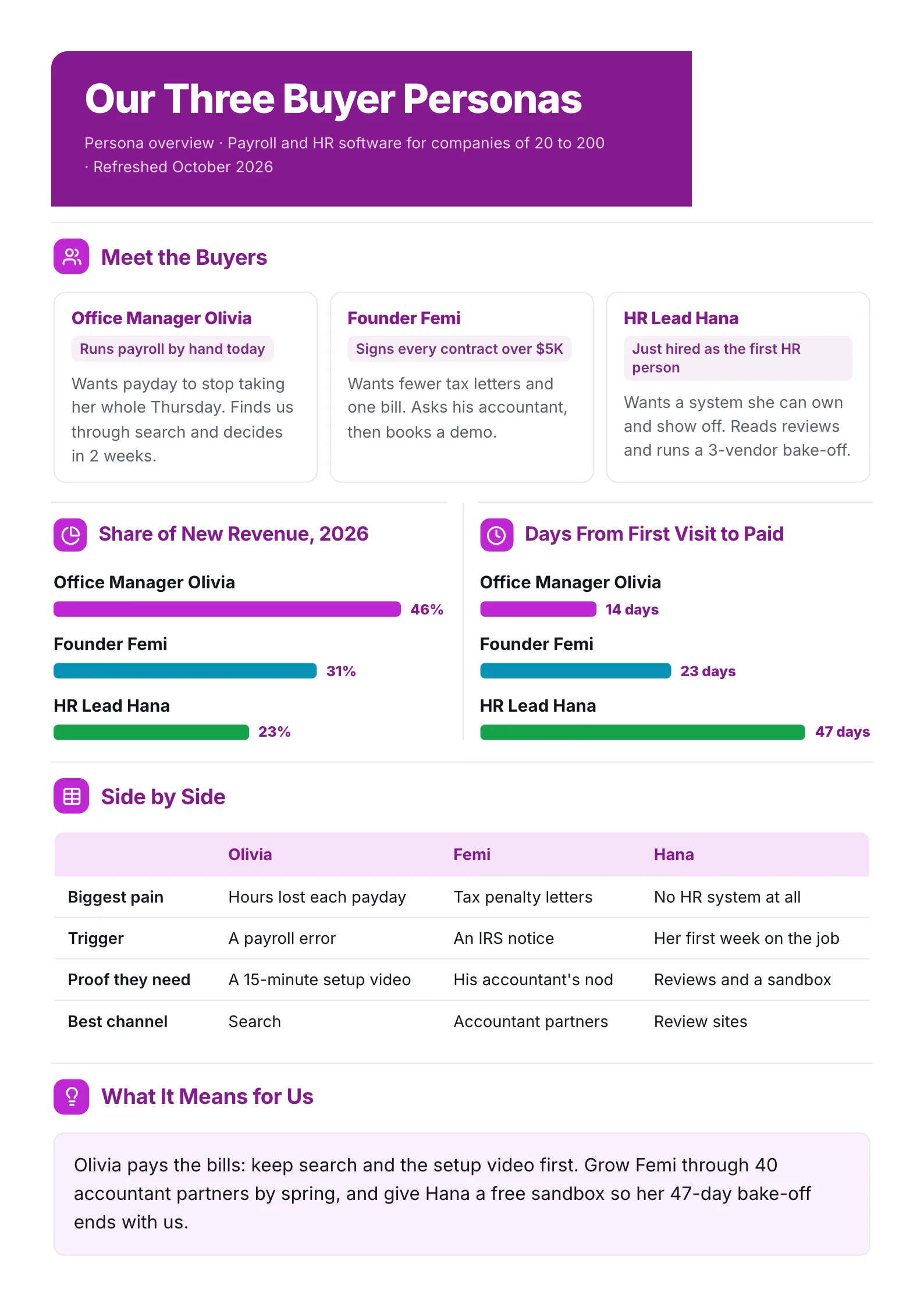 Customer Persona: Three Buyer OverviewEdit for free(opens in a new tab)
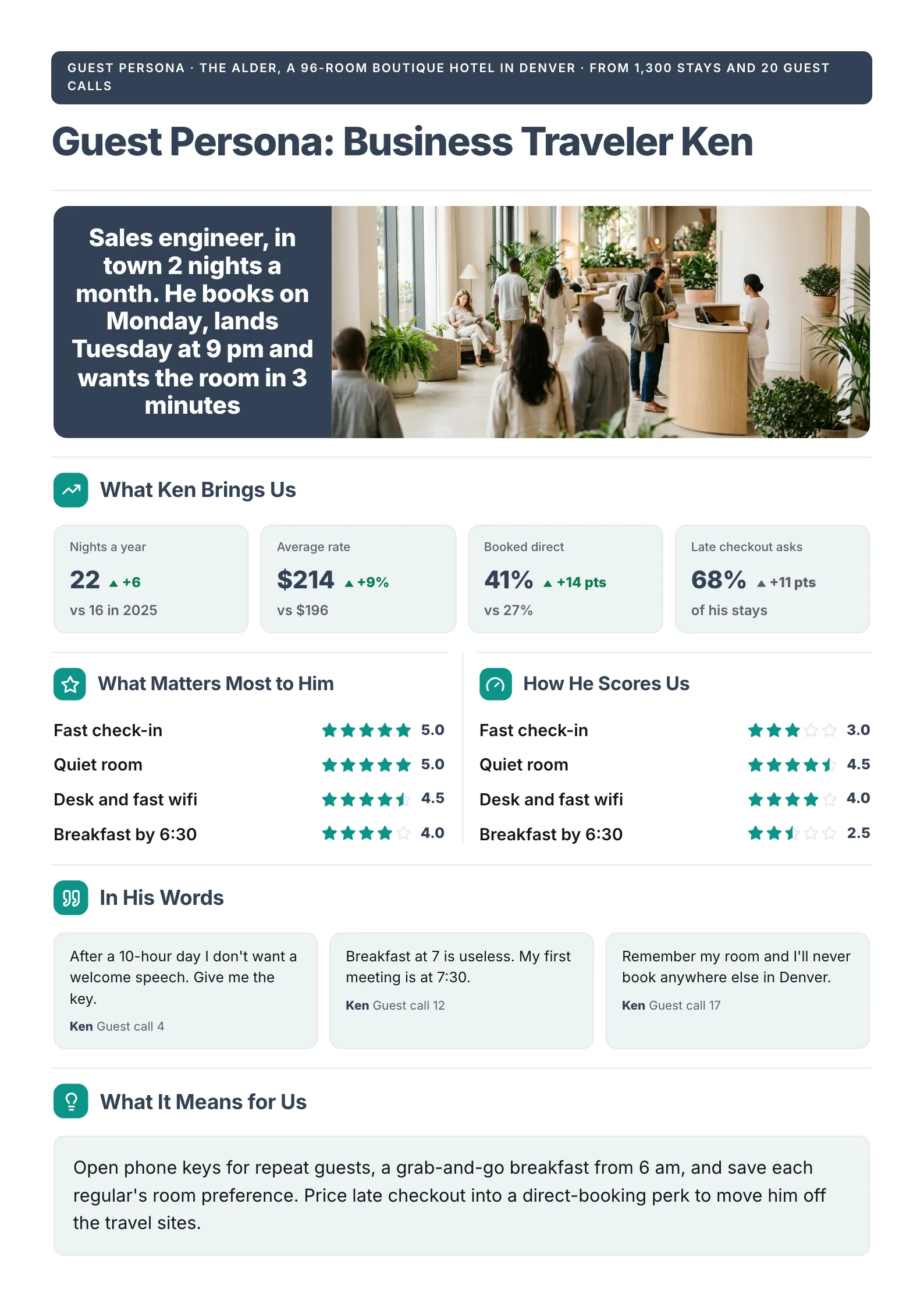 Customer Persona: Hotel GuestEdit for free(opens in a new tab)
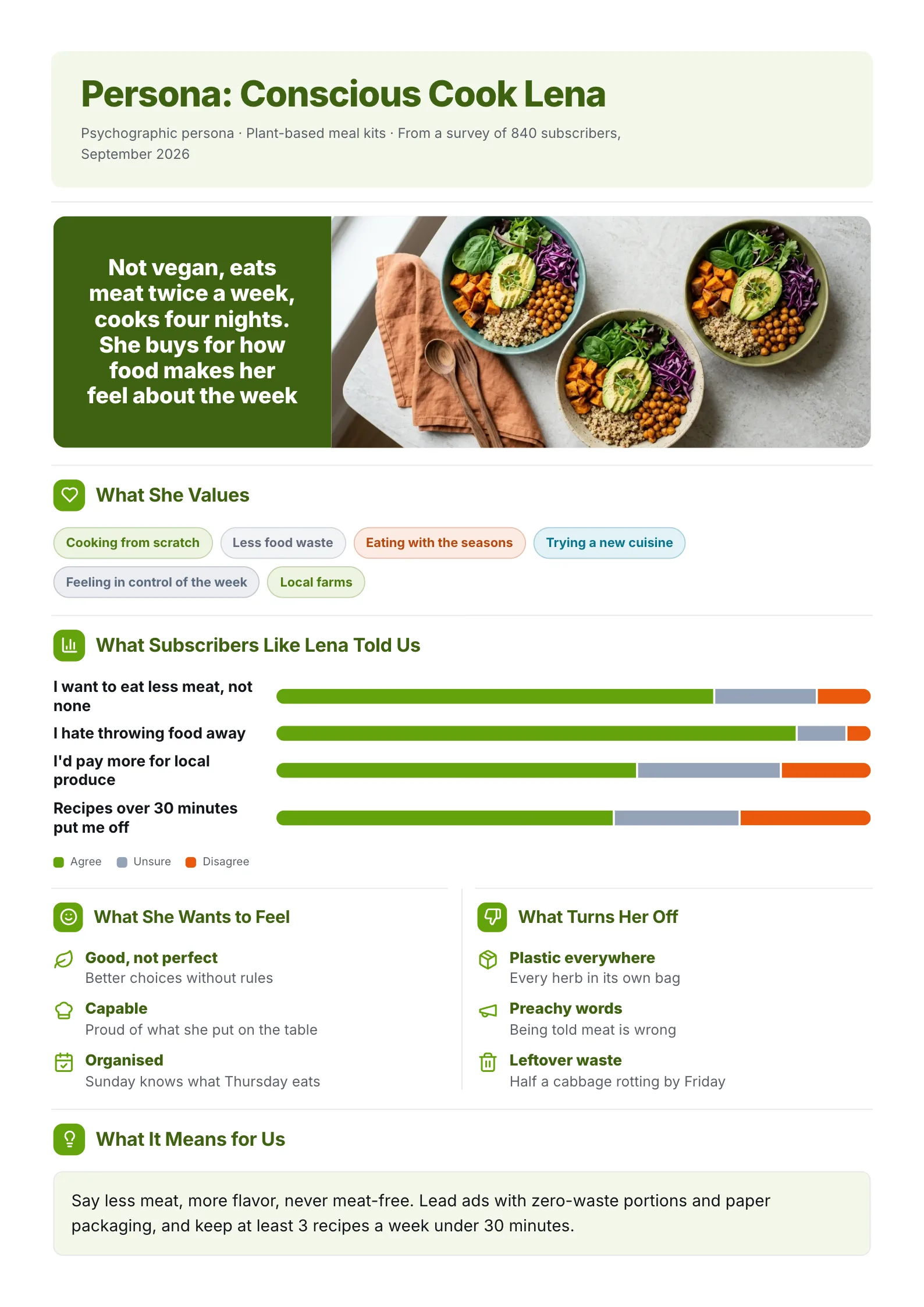 Customer Persona: PsychographicEdit for free(opens in a new tab)
Every example was made with MakeOnepagers. Each one opens as a template you can edit for free, down to the last word and color.
What is a customer persona?
A customer persona (also called a buyer persona or marketing persona) is a short profile of a typical customer, written as if it were one person. You build it from research. That means interviews and surveys, sales call notes and support tickets, plus what your analytics show about how people buy. For the research steps in order, see how to create a customer persona.
The persona gets a name and a face so your team remembers it. "Rosa, the busy bakery owner" sticks in a meeting in a way that "small food businesses, 5 to 20 staff" never does. But the name is only a memory aid. What matters is the pattern behind it.
Customer persona or ideal customer profile?
| Customer persona | Ideal customer profile | |
|---|---|---|
| Describes | A person | A company or account |
| Used by | Marketing, sales, product, support | Sales and marketing targeting |
| Contains | Goals, worries, how they buy, quotes | Industry, size, revenue, location |
| Answers | What do we say, and how? | Who do we go after? |
Business-to-business teams usually need both. The profile picks the companies you go after. The persona describes the person inside them who decides.
The 7 parts of a customer persona template
- Name, role and one-line summary. "Rosa, owner of two bakeries, still bakes most mornings."
- Who they are: the facts that change how they buy, such as job, team size, budget authority and experience with tools like yours. Leave out details that change nothing, like a favorite color.
- What drives them: the two to four outcomes they care about most.
- The trigger: the moment they start looking for a solution. This is the most useful line on the page.
- What gets in the way: worries, objections and past bad experiences.
- How they buy: where they research, who they ask, how long they take and what proof they need.
- Their own words and what it means for us: two or three real quotes, then the actions your team should take.
Which kind of persona do you need?
Most guides name a few styles. A demographic persona leans on age and location, plus income. A role-based persona leans on job and responsibilities, which suits business buyers. A psychographic persona leans on values and attitudes, and a journey-based persona follows the steps from first problem to purchase. The seven parts above work for all of them. You only change which details carry the most weight.
A free customer persona template
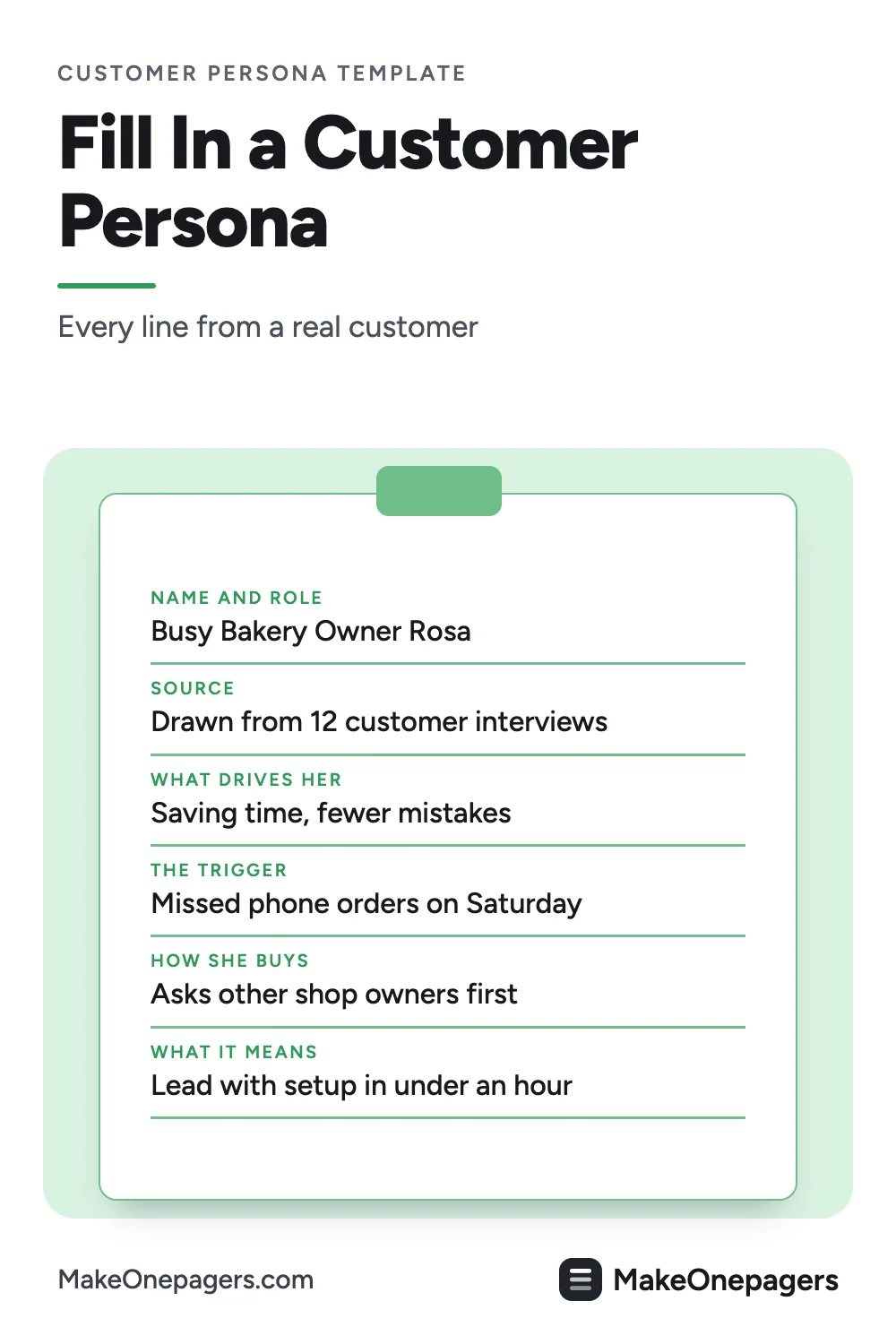
Copy this into your own document, or open the example below and edit it.
| Part | What to write, with an example |
|---|---|
| Name and role | Persona: Busy Bakery Owner Rosa |
| Source | Where it came from. Drawn from 12 customer interviews |
| What drives them | 3 to 4 short phrases. Saving time, fewer mistakes |
| The trigger | The moment. Missed phone orders during the Saturday rush |
| Who they are | 3 facts. Two locations, 14 staff |
| How they buy | 3 habits. Asks other shop owners first |
| Their words | 2 to 3 quotes with the interview number |
| What it means | 1 to 2 sentences of action for your team |
5 customer persona examples
These five personas were built from real interviews and data. You'll see a small business buyer, a business-to-business buyer and a first-time home buyer. There's also a patient and the customer a business should stop chasing.
1. Small business buyer persona
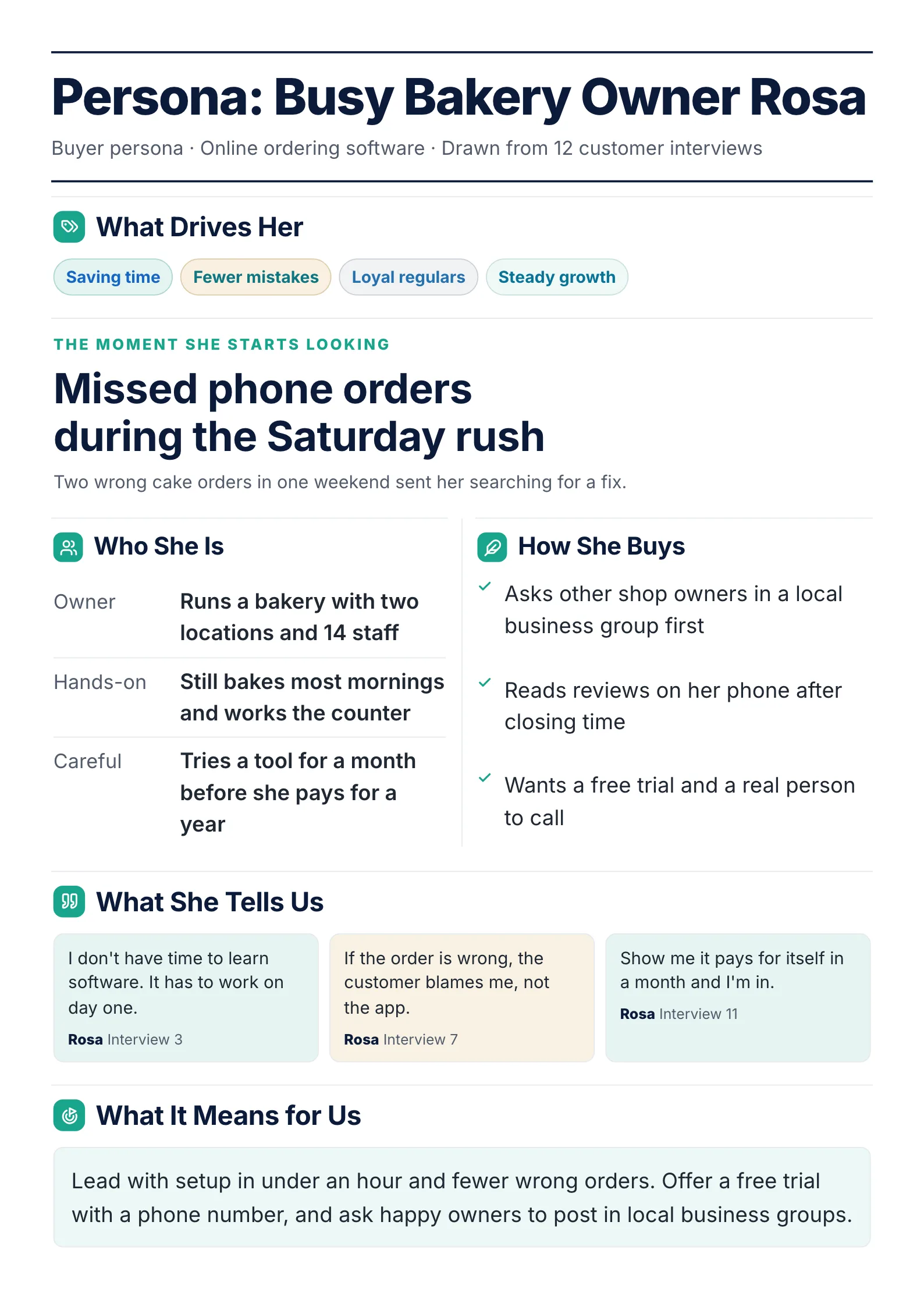 Edit this template
One buyer, one trigger and a clear line on what the team should do about it.
What to copy:
- The source in the subtitle: "Drawn from 12 customer interviews." A reader knows at once this is research, not a guess.
- The trigger as the headline: "Missed phone orders during the Saturday rush." That one line tells a copywriter what the ad should say and tells sales which question to open with.
- Quotes tagged with the interview number: anyone who doubts a line can go back to the source.
- A closing action: lead with setup in under an hour, offer a free trial with a phone number, ask happy owners to post in local business groups. A persona that ends without an action becomes a poster on the wall.
You can edit this customer persona template for free.
2. B2B buyer persona
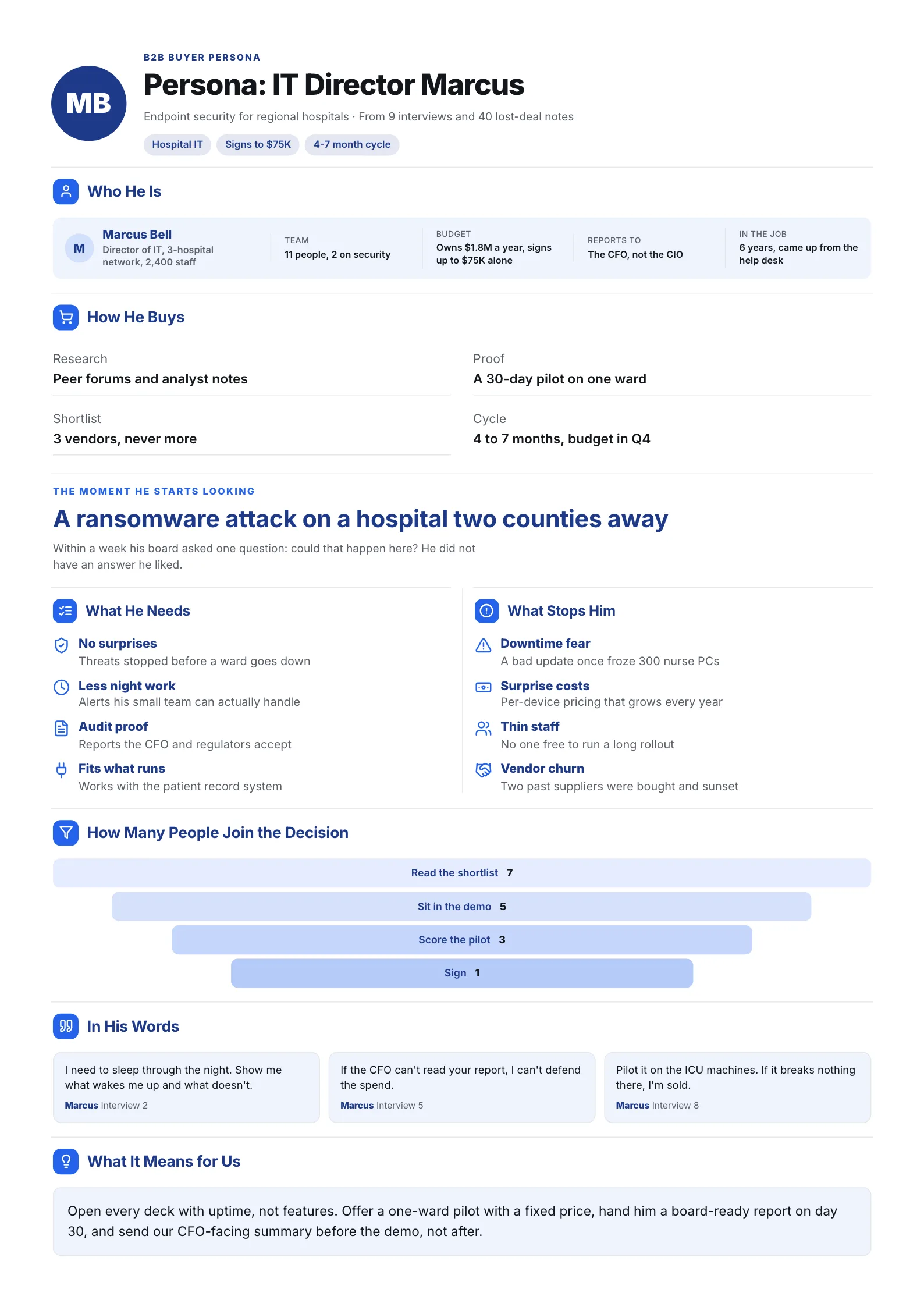 Edit this template
A role-based persona for a sale with a board, a CFO and a pilot in it.
What to copy:
- The trigger as a real event. A ransomware attack on a hospital two counties away, then his board asked: "could that happen here?"
- What stops him, with the reason. Downtime fear, because "a bad update once froze 300 nurse PCs".
- Who joins the decision. Some read the shortlist, some sit in the demo, some score the pilot, and one person signs.
You can edit this B2B buyer persona template for free.
3. First-time home buyer persona
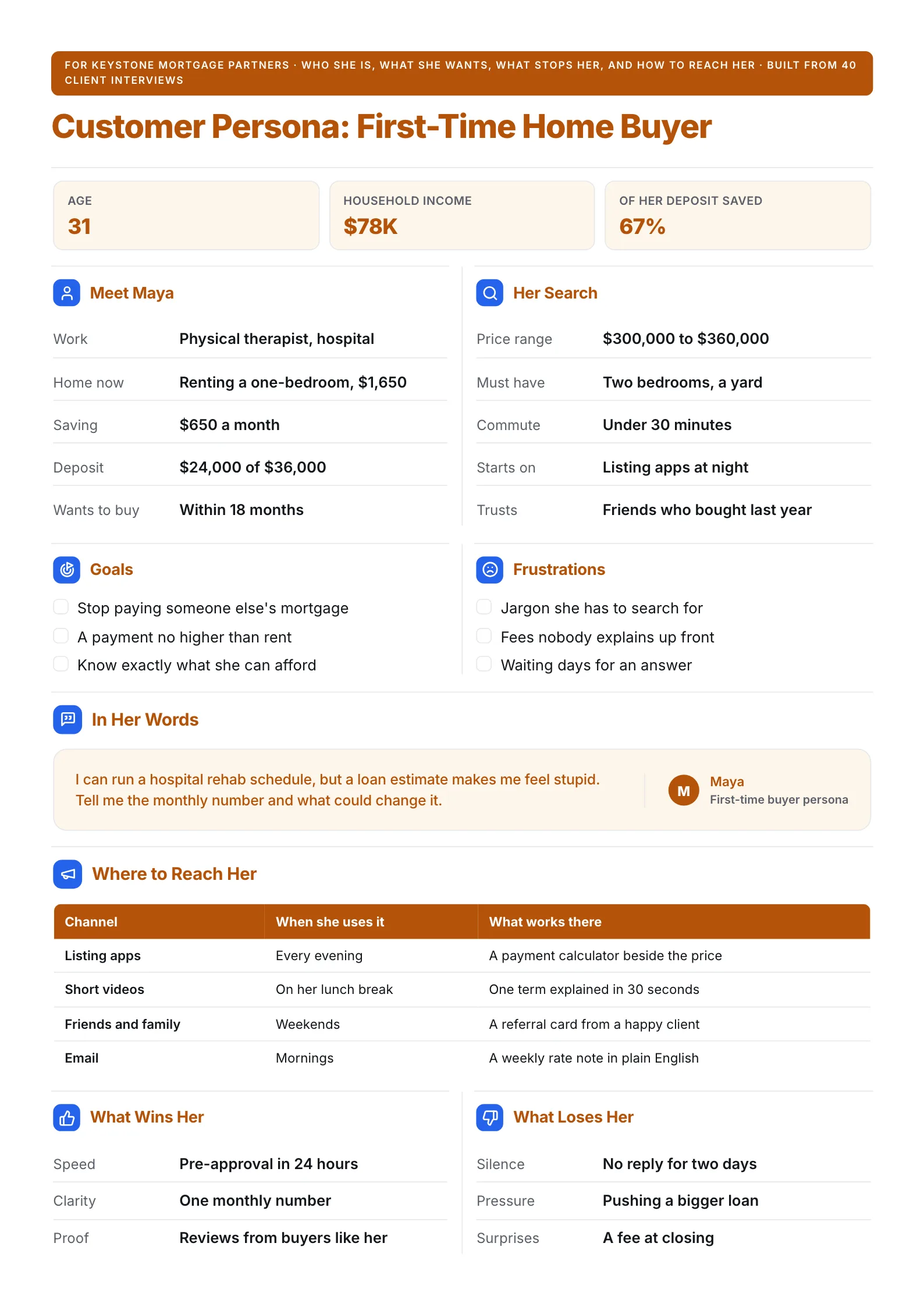 Edit this template
A mortgage broker's persona built from 40 client interviews, so every line is something a real buyer said.
What to copy:
- Progress, not just a profile. "67% of her deposit saved" tells sales how close she is to buying.
- Her own words as the brief. "Tell me the monthly number and what could change it."
- What wins her beside what loses her. Pre-approval in 24 hours wins; no reply for two days loses.
Your own buyers can go into this first-time home buyer persona template, free to edit.
4. Patient persona
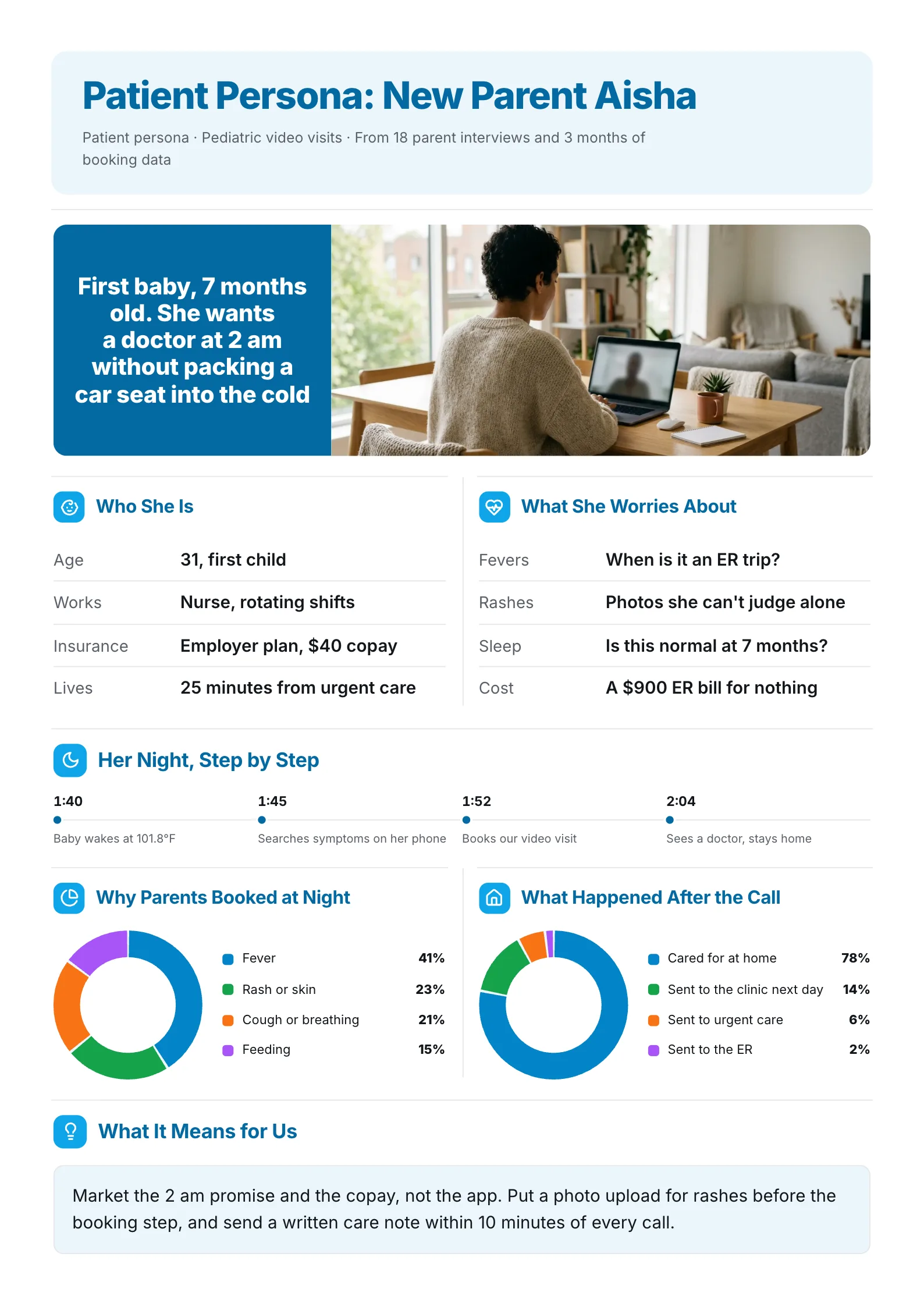 Edit this template
A care service follows one parent from a 2 am fever to a video visit.
What to copy:
- The need in one line. She wants a doctor at 2 am "without packing a car seat into the cold".
- Worries as her own questions. Fevers: "When is it an ER trip?"
- Her night as steps. Baby wakes at 101.8°F, she searches, books the video visit, and stays home.
You can edit this patient persona template for free.
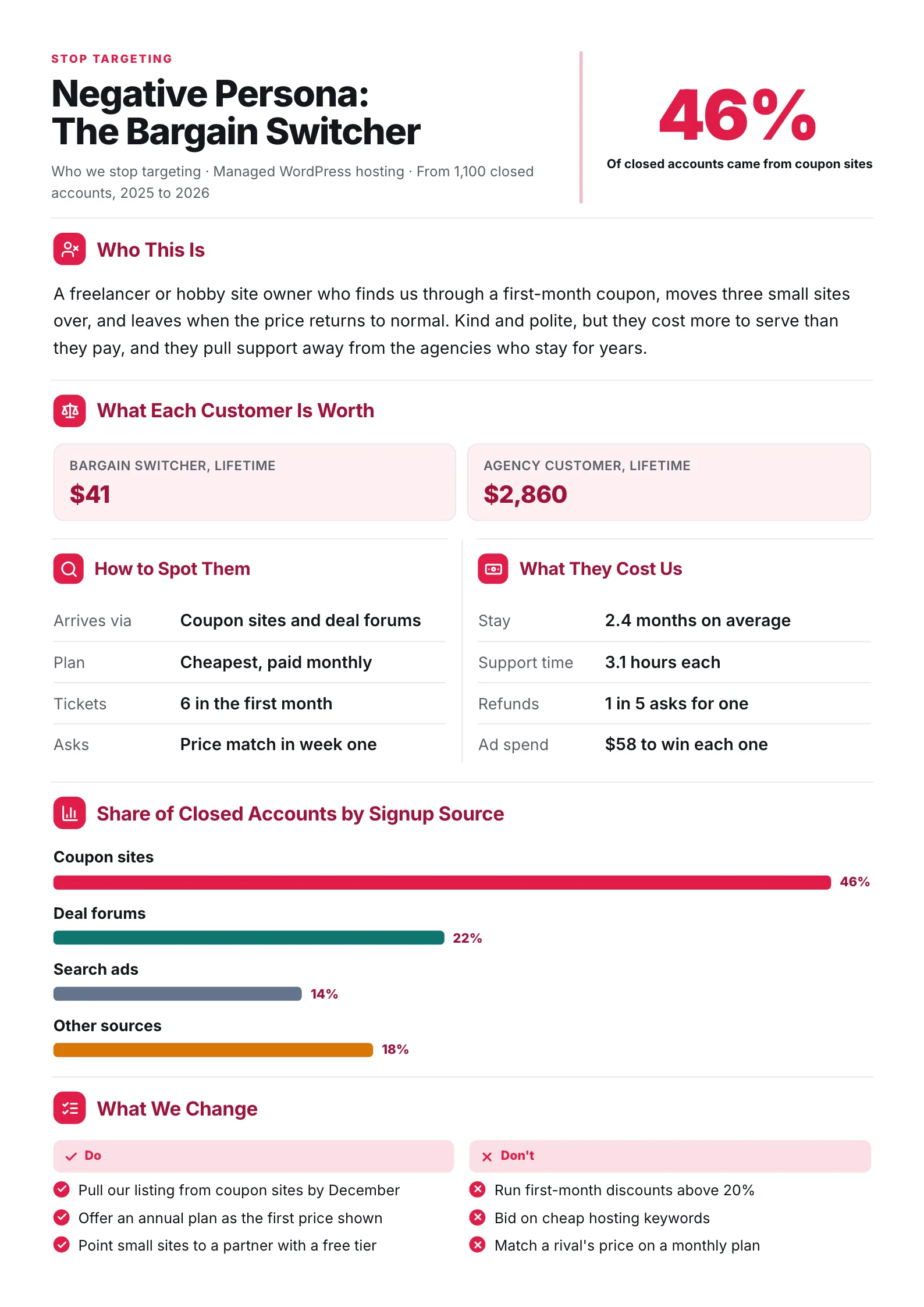
5. Negative persona
 Edit this template
Here, a hosting company names the customer it should stop chasing.
What to copy:
- Worth set against your best customer. $41 a lifetime against $2,860 for an agency customer.
- How to spot them early. They arrive from coupon sites and ask for a price match in week one.
- The cost in hours and dollars. 3.1 hours of support each and $58 of ad spend to win each one.
You can edit this negative persona template for free.
Questions to ask in persona interviews
You'll usually see the pattern after ten interviews with recent customers. Ask them about what actually happened, and skip what they think they would do.
- What were you doing the day you started looking for something like this?
- What were you using before, and what made you stop?
- Who else had a say in the decision?
- Where did you look first? Who did you ask?
- What almost stopped you from buying?
- What did you need to see or hear before you said yes?
- What would you tell a friend in your job about it?
Write down their exact words. A phrase like "I don't have time to learn software" is worth more to you as a marketer than any summary of it.
A worked example: from notes to a persona
The company and numbers below are an example, made up to show the method.
A company sells a booking app to independent fitness studios. The marketing lead reads notes from 15 sales calls and 8 customer interviews and tallies what comes up.
- 11 of the 15 calls mention double bookings after a class goes viral on social media.
- 6 of the 8 customers asked another studio owner before buying.
- 7 of the 8 tried a free version of a competitor first and left because it charged per booking.
- The phrase "I teach, I don't do admin" appears, in some form, in 5 interviews.
That becomes "Maya, the studio owner who teaches four classes a day." Her trigger is a full class that was booked twice. She buys on a recommendation and needs to see flat pricing. Her action line says to lead ads with "No more double bookings," show the price on the first screen and give current customers a way to refer other studios.
Every line traces back to a count. That's why your team will trust the persona when someone in a meeting says "I don't think our buyers care about that."
How to make a customer persona in 5 steps
- Pick one segment. Start with the buyers who bring in the most revenue or the most growth.
- Gather what you already have. Sales notes, support tickets, reviews and survey answers.
- Interview 8 to 12 recent customers, using the questions above.
- Tally the patterns and write only what shows up more than once.
- Fill in the template, then test it. Show it to two salespeople and ask "Is this who you talk to?" Fix what they push back on.
Have interview notes or survey results in a long document? Drop them into the free AI One-Pager generator and you'll get them back as a designed persona you can edit.
Customer persona mistakes
- Made up from the conference room. A persona nobody checked with a customer is a guess with a name.
- Too many personas. Three to five is plenty. Twelve means nobody remembers any.
- Demographics only. Age and city rarely explain why someone buys. The trigger and the worries do.
- No action at the end. If the persona does not change a headline, a sales question or a product decision, it is decoration.
- Never updated. Review it once a year, or whenever the people buying from you change.
Make your customer persona
Open the free customer persona template and fill it in from your own interviews. Or drop your research notes into the free AI One-Pager generator, and you'll get a finished persona back.
Frequently asked questions
What should a customer persona template include?
Your persona needs a name and role, who they are and what drives them. Add the moment they start looking and what gets in the way. Finish with how they buy, a few of their own quotes and what it means for your team.
How many customer personas should a business have?
Most businesses need two to four. Start with one for your most valuable buyer and use it for a quarter. Add another only when a different group clearly buys for different reasons.
What is the difference between a buyer persona and a customer persona?
Most teams use the two names for the same thing. Some use buyer persona for someone who has not bought yet and customer persona for someone who has.
How do you research a customer persona?
Interview 8 to 12 recent customers, read sales and support notes, and check your survey and analytics data. Then write down only the patterns you see more than once.
Should a customer persona have a photo?
A photo or illustration helps your team remember it. Pick one that fits the role, and don't let it add details your research doesn't support.




