How to Create a Customer Persona: What 15 Real Personas Have in Common
How to create a customer persona from research, based on 15 real personas from Washington State, the Commonwealth Fund and Virginia Tech.

If you want to learn how to create a customer persona, the best place to start is with personas that real teams built and published. We read 15 of them, from 4 public sets. Washington State built five for its Resident Portal. The Commonwealth Fund published four in two persona sets for its patient playbook. Virginia Tech's IT team built six. Every one of them puts a real voice and real problems on the page, and none of them lists an age. Here's what they include, in the order you'll build yours. Start from a free one pager template.
One‑Pager examples
Real One-Pagers made with MakeOnepagers. Open any one to edit it as your own.
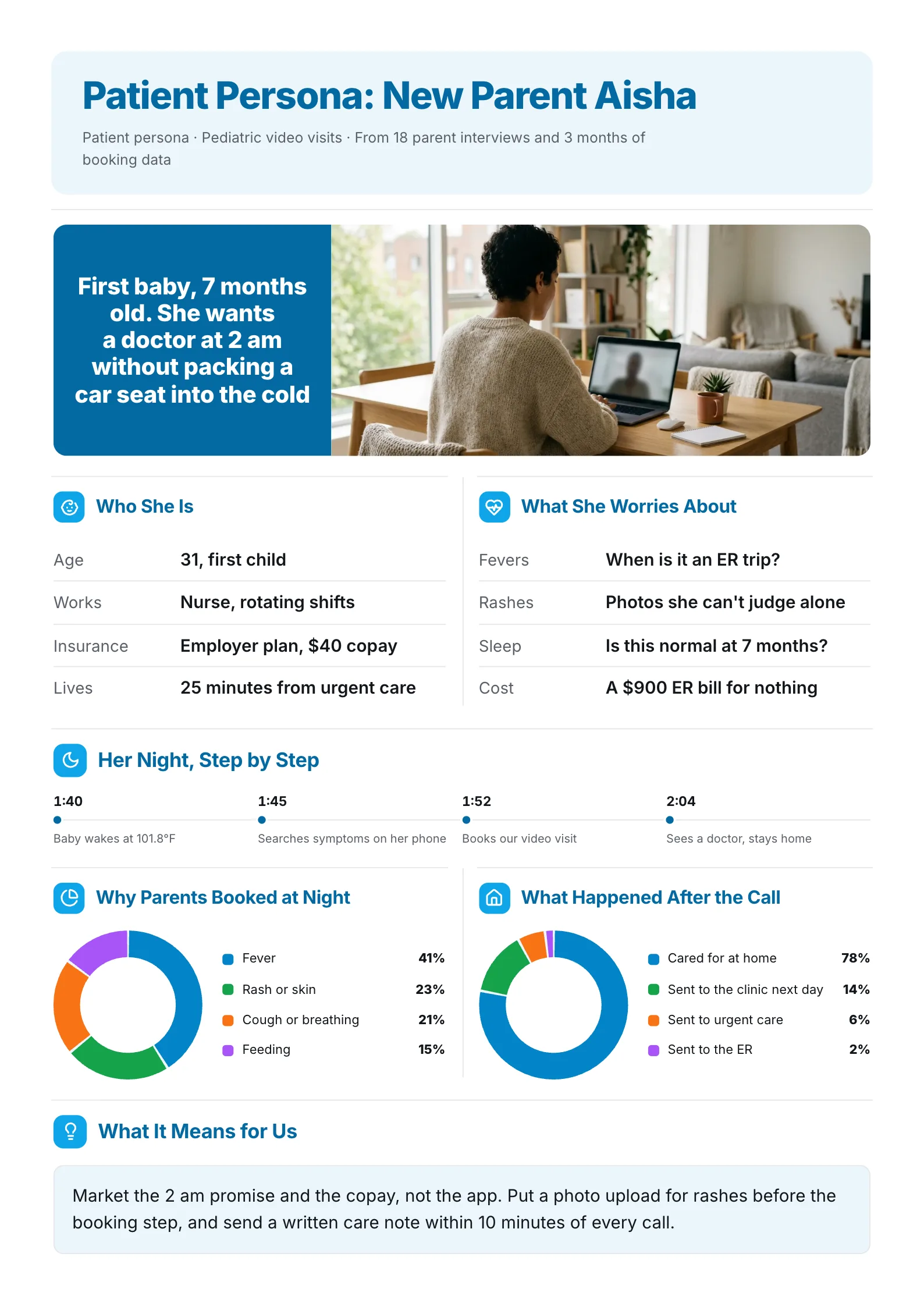 Customer Persona: PatientEdit for free(opens in a new tab)
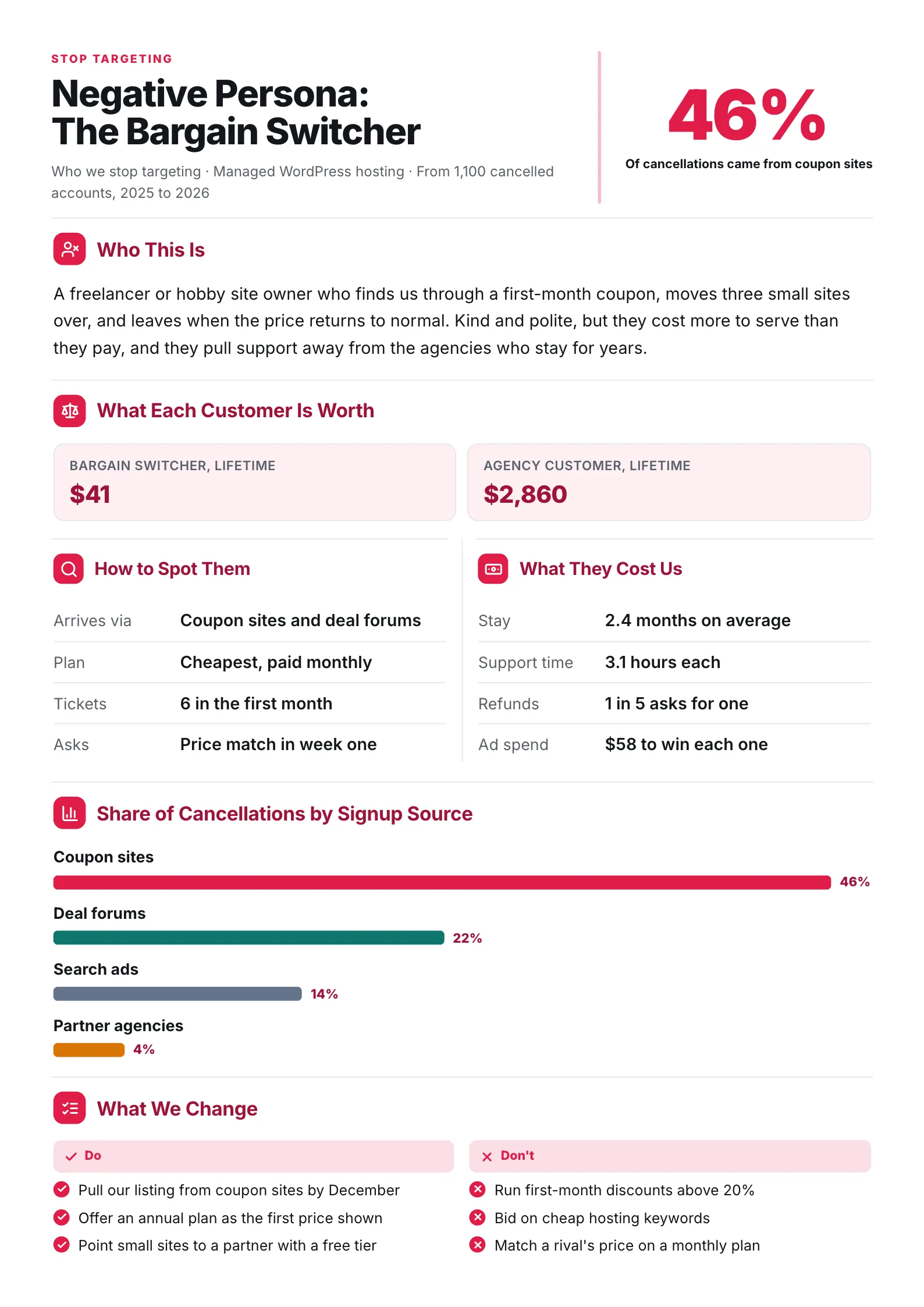 Customer Persona: Negative, Who Not to TargetEdit for free(opens in a new tab)
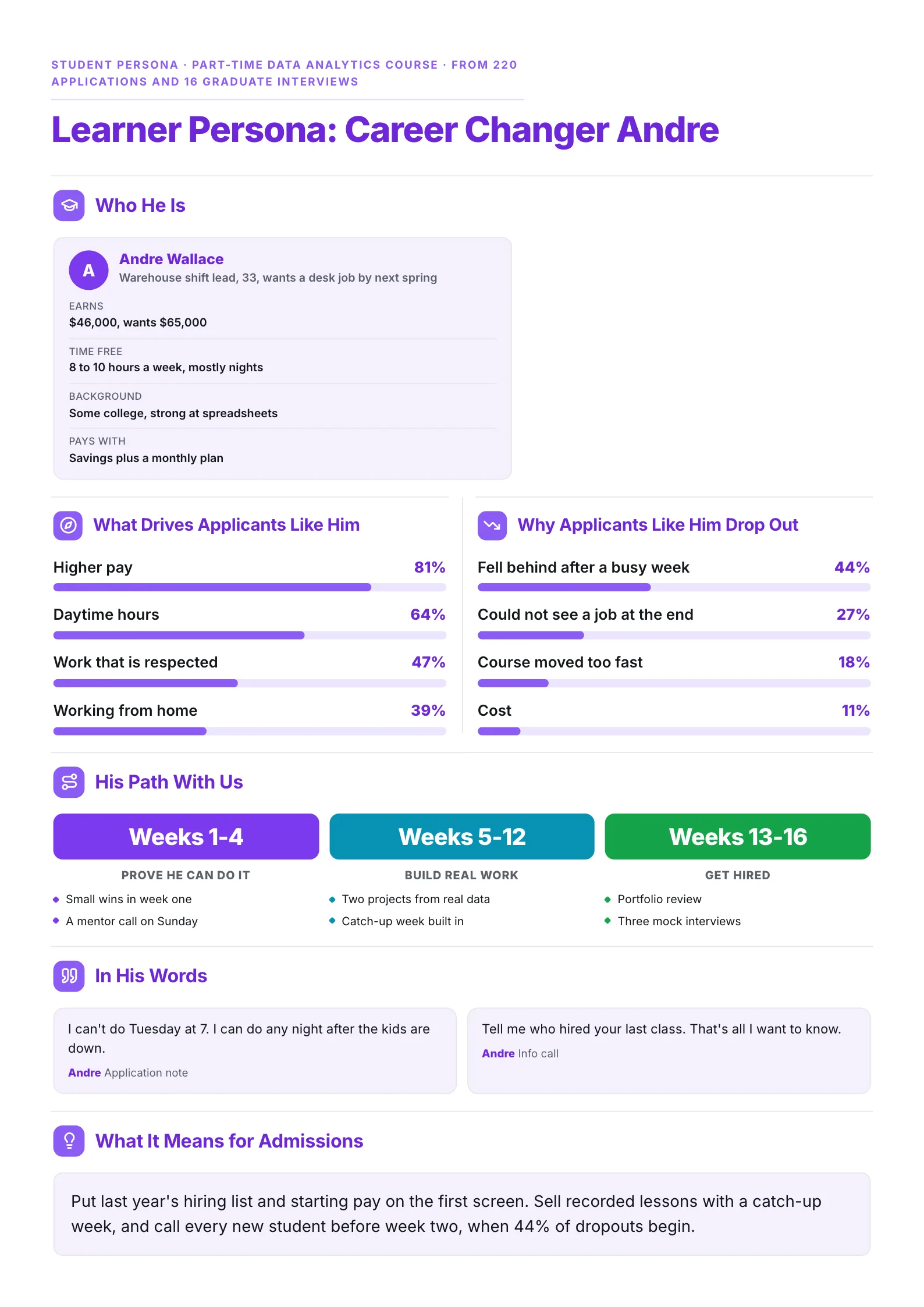 Customer Persona: Course LearnerEdit for free(opens in a new tab)
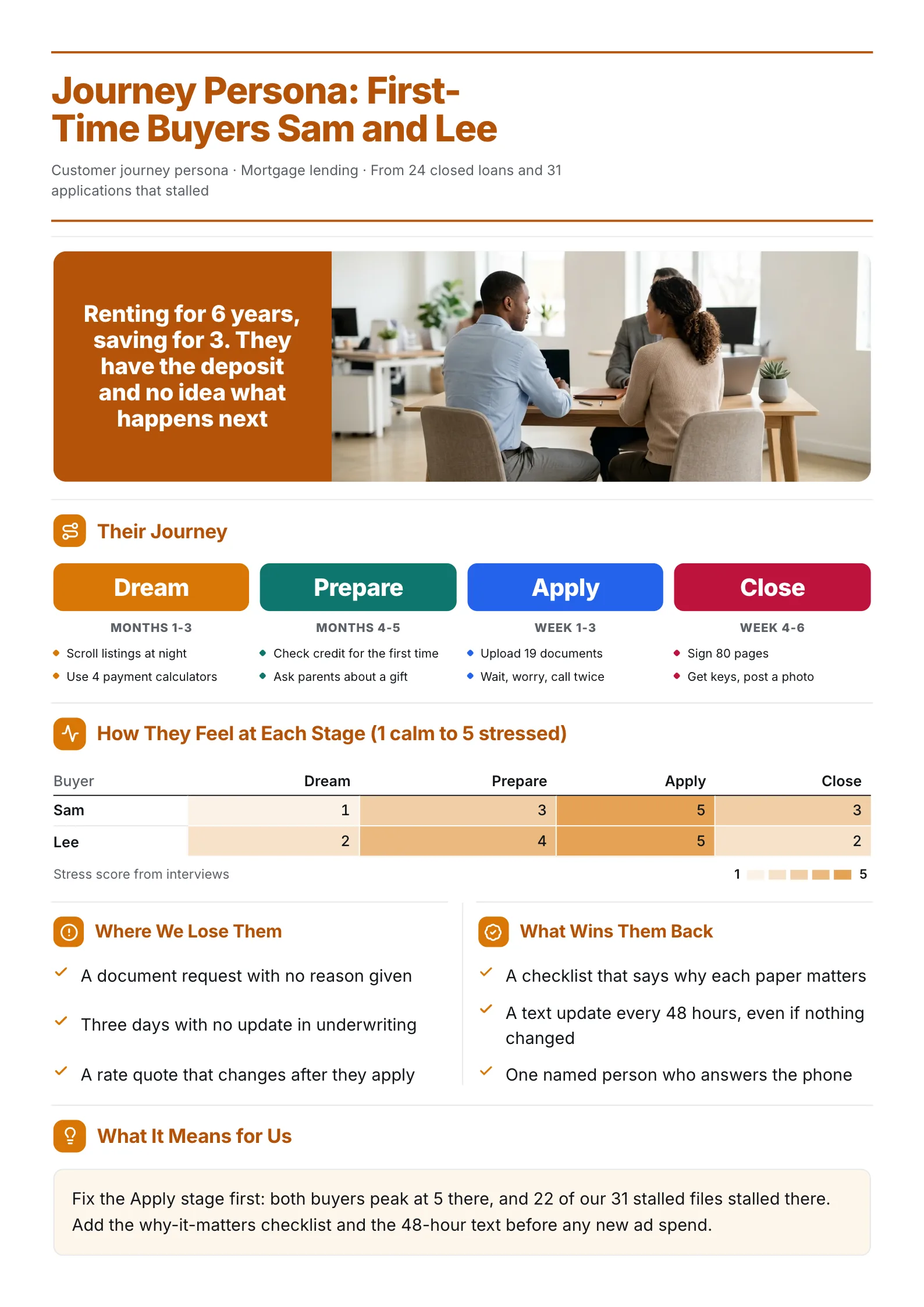 Customer Persona: Home Buyer JourneyEdit for free(opens in a new tab)
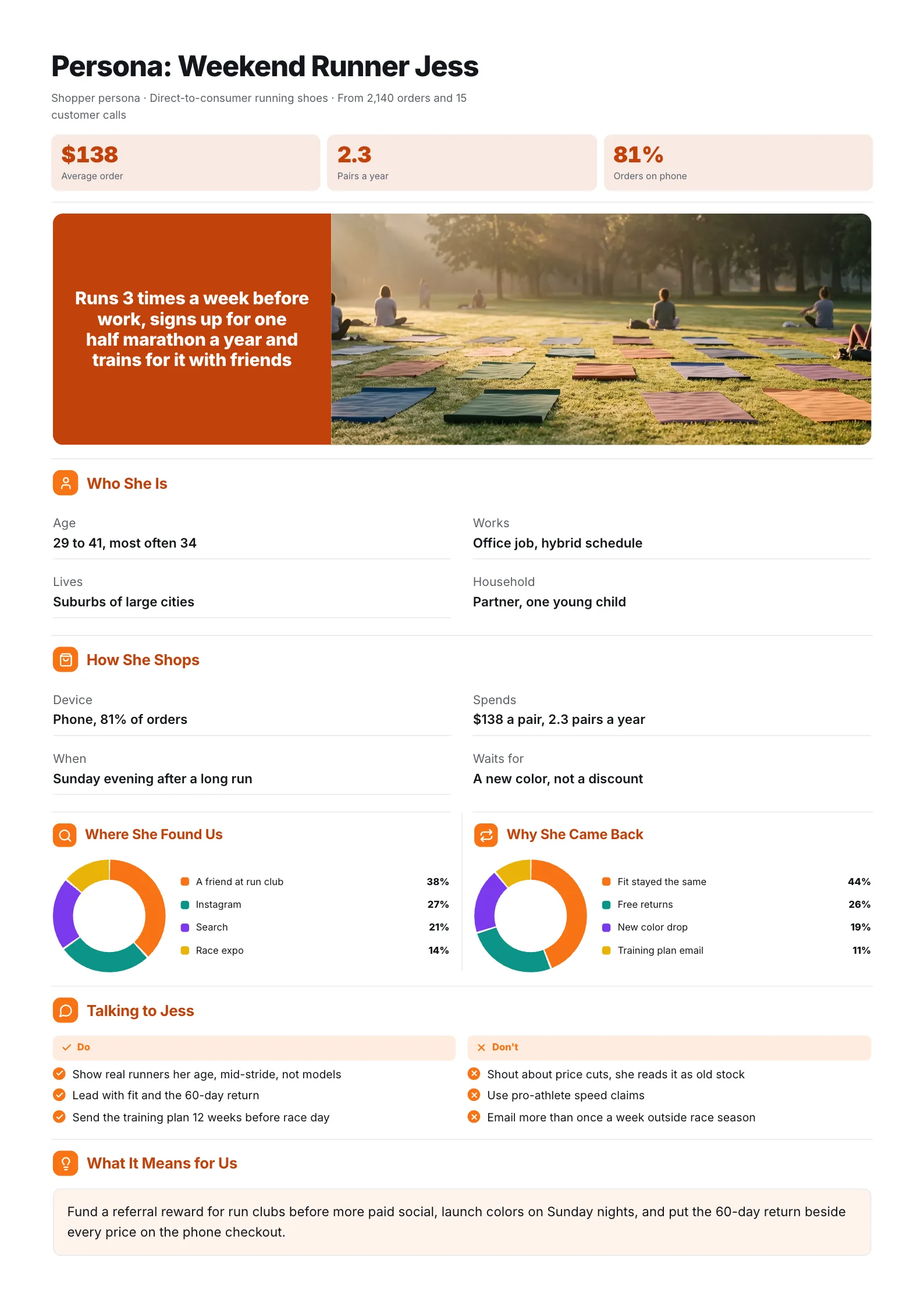 Customer Persona: Ecommerce ShopperEdit for free(opens in a new tab)
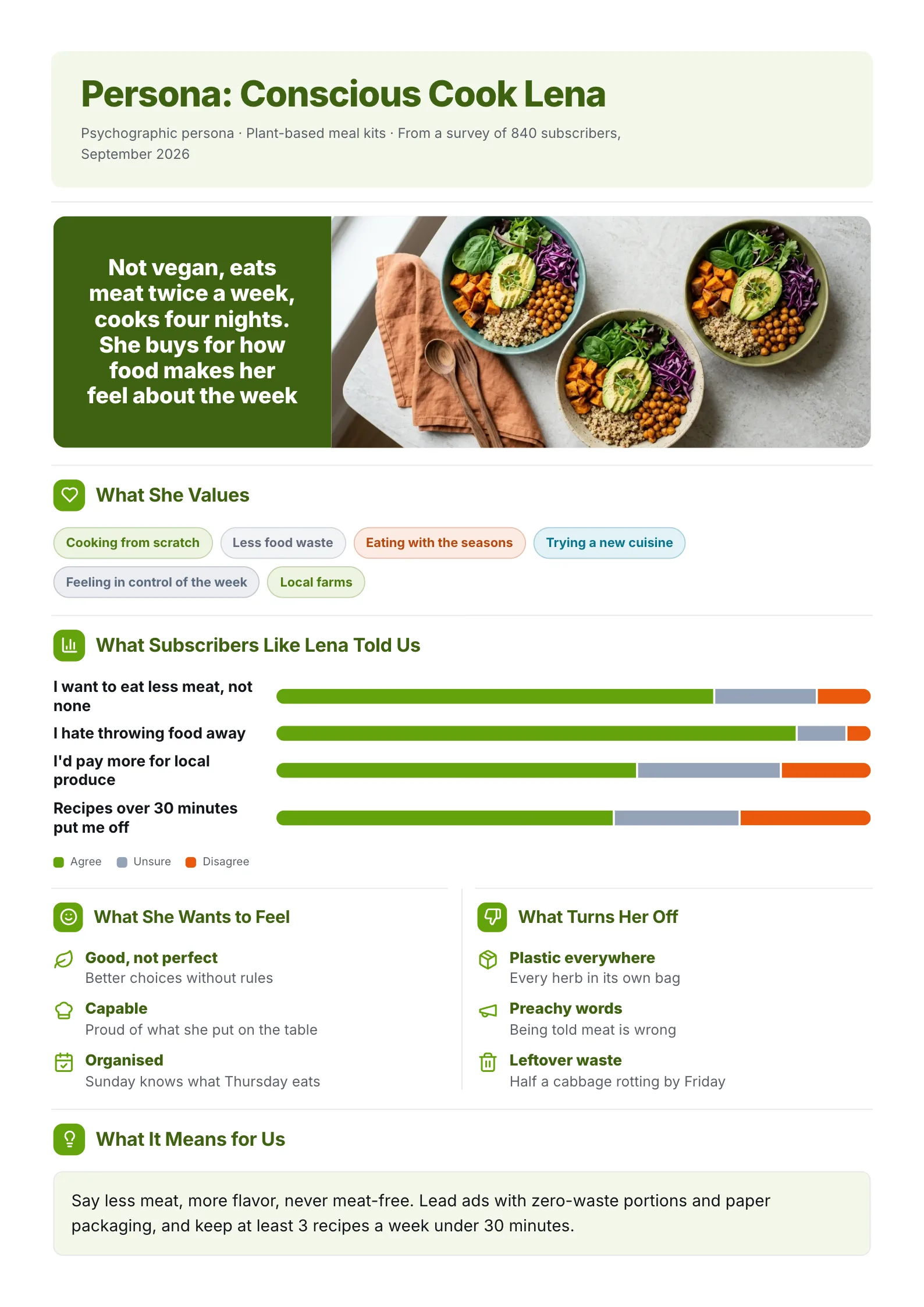 Customer Persona: PsychographicEdit for free(opens in a new tab)
The 4 persona sets we read
On October 26, 2026, we downloaded 4 persona documents that teams published for anyone to read. We counted the pages, the personas and the parts of each one.
| Persona set | Who made it | Personas | Research behind it | Pages |
|---|---|---|---|---|
| Resident Portal Personas | Washington State WaTech | 5 | A survey with 1,393 replies and 20 one-on-one interviews | 6 |
| Frail Elder personas | The Commonwealth Fund | 2 | Called research-based, size not given | 8 |
| Complex Chronic personas | The Commonwealth Fund | 2 | Called research-based, size not given | 8 |
| IT User Personas | Virginia Tech Division of IT | 6 | A survey with 345 replies, then 31 people invited to 30-minute interviews | 9 |
All 4 sets are about the people a team serves: residents, patients, students and staff. The method works the same for a business, because a customer persona is a picture of the people you sell to.
Step 1: Start with real customers
Every set says where its people came from. Washington State ran a 35-question survey from February to June 2024 and then interviewed 20 people. Virginia Tech surveyed 345 students and staff, then picked 31 with different needs for interviews. The Commonwealth Fund calls each persona a research-based "empathy tool."
So before you write a word, talk to your customers. A short survey shows you the patterns. Eight to twelve interviews usually give you the words and the stories. Add more if each new interview still turns up a new kind of customer. Washington State interviewed 20 people chosen to represent the groups its survey found. Then say on the page where your persona came from, so your team knows it's real.
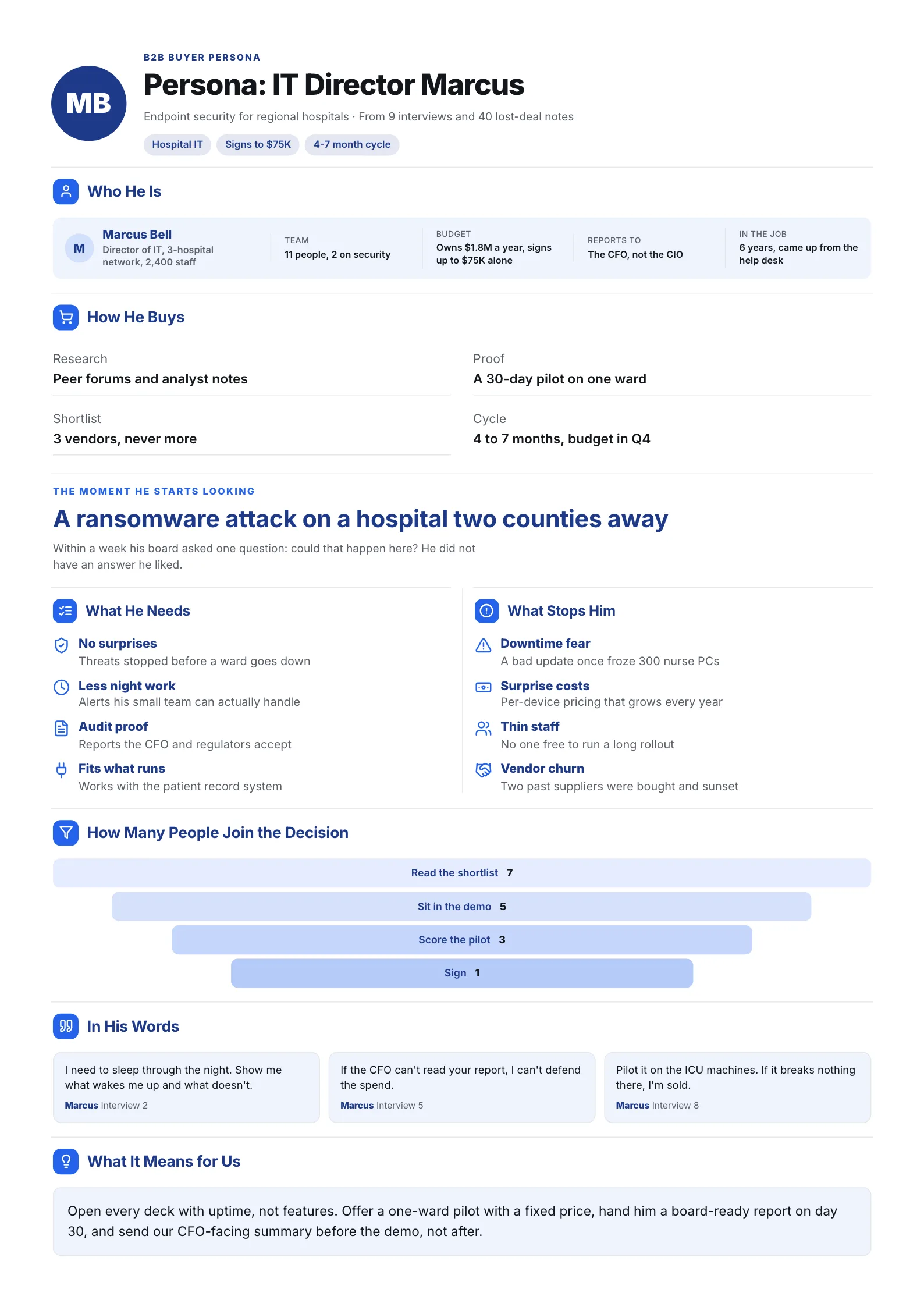 Edit this template
Sample company and buyer. The line under his name says the persona came from 9 interviews and 40 lost-deal notes, so nobody has to ask whether Marcus is made up.
Step 2: Group people by what they need
Washington State didn't sort residents by age or income. It sorted them by how they deal with the state: Public Benefits Recipients, Informal Supporters, Salaried Advocates, Complying Professionals and Occasional Engagers. It even notes that one resident can be two personas in one day, a Salaried Advocate at work and an Occasional Engager at home.
Virginia Tech did the same by role: an undergraduate, a graduate student, three kinds of faculty and a staff member. None of the 15 personas we read lists an age.
Look at your interview notes and sort your customers by the job they want done and the problem that sent them looking. Each group that wants something different becomes one persona.
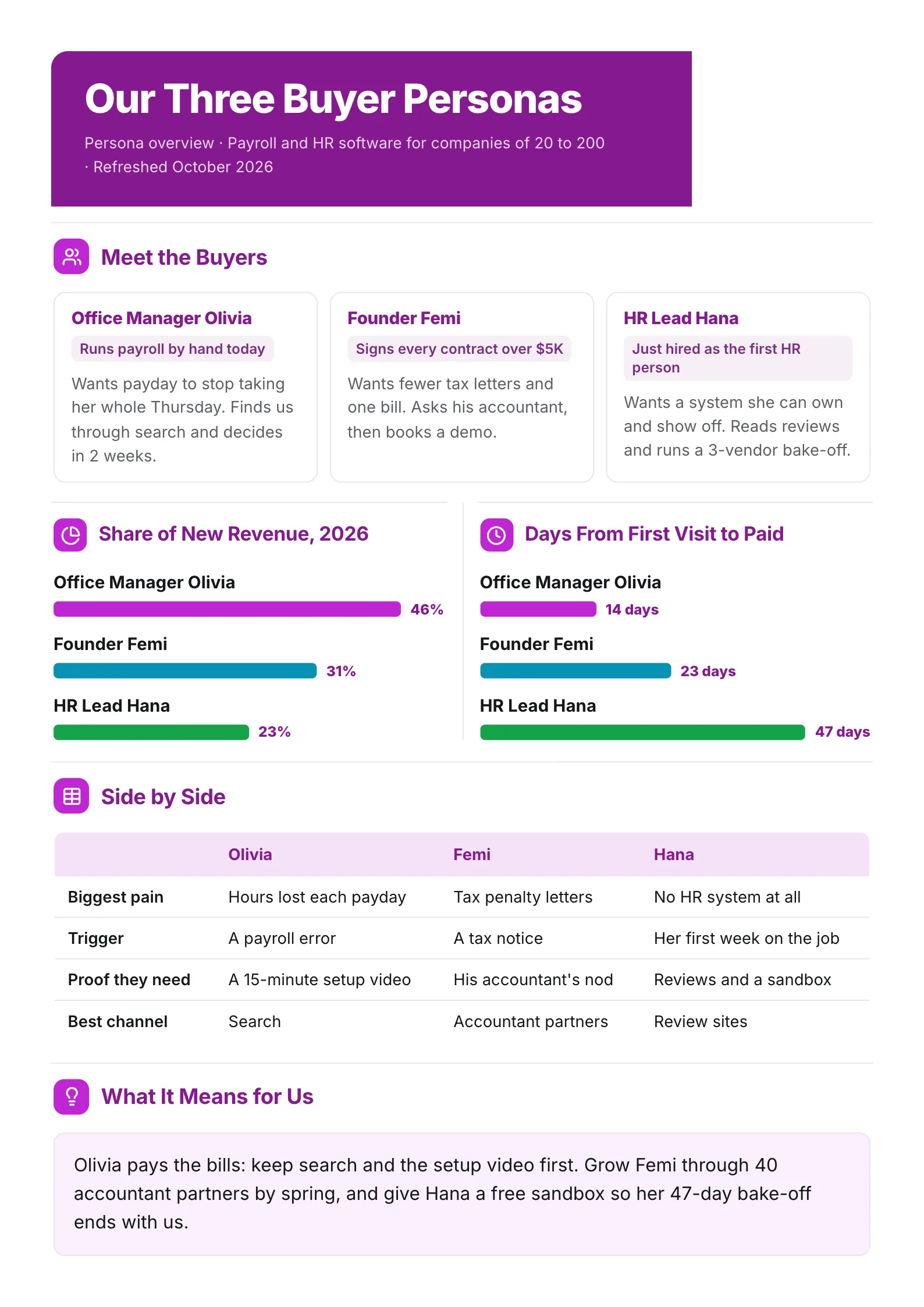 Edit this template
Sample company and buyers. Three groups, each sorted by the problem that starts their search, with one row per question so you can compare them at a glance.
Step 3: Let them speak in their own words
This is one of the two parts all 4 sets share. Washington State opens each group with a paragraph that starts with "We" and adds three first-person stories. The Commonwealth Fund gives each persona four quotes on a shared quote page, then a pull quote and a first-person story. Virginia Tech gives each of its six people a quote under their photo.
Copy real lines from your interviews, word for word. A quote tells your team how the customer talks, which is the language your ads and your website should use. One quote is the minimum. Three is better.
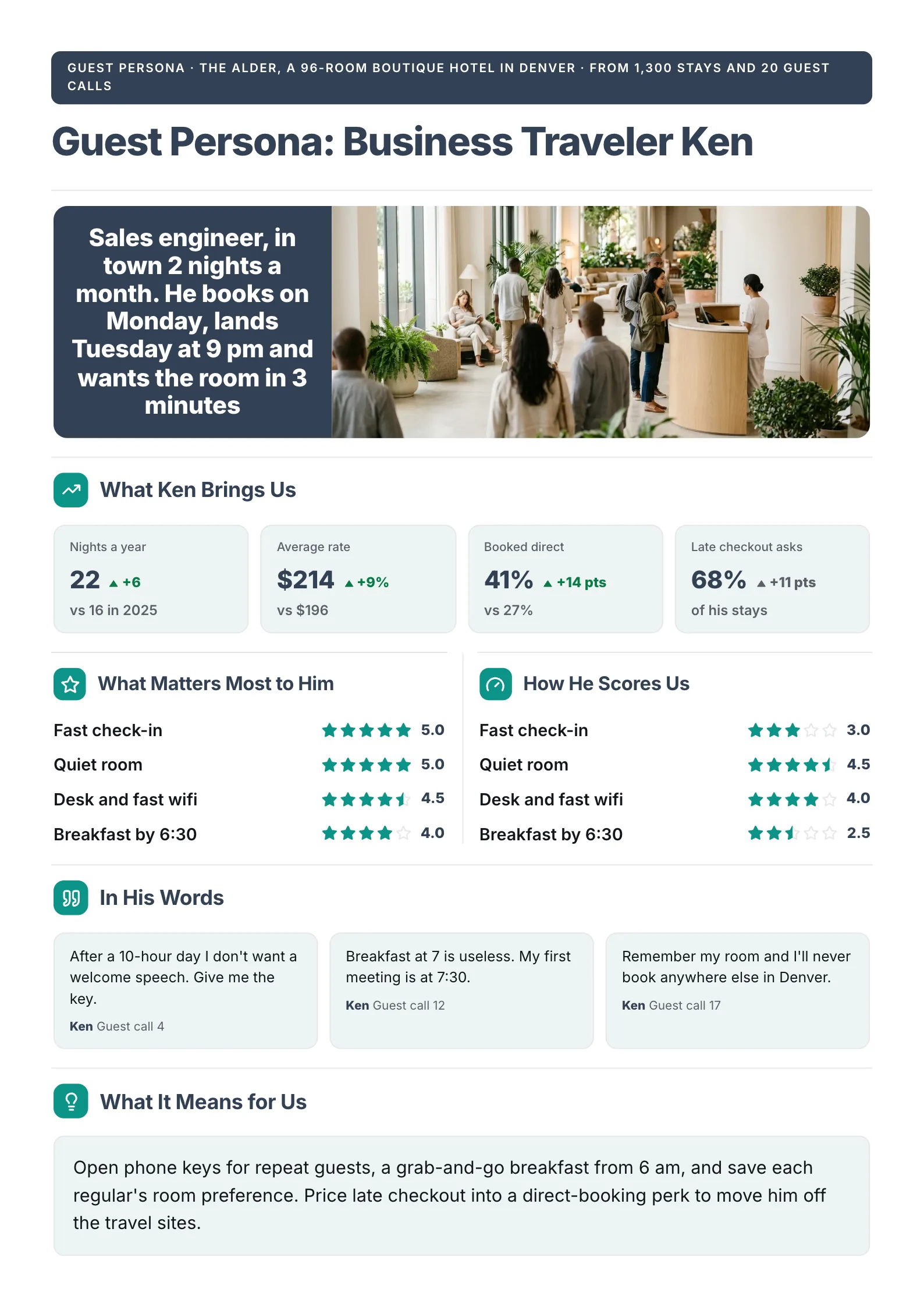 Edit this template
Sample hotel and guest. Each of the three quotes names the guest call it came from, so your team can go back and read the rest.
Step 4: Write their goals and what gets in their way
All 4 sets name what holds people back. The Commonwealth Fund calls them Barriers and gives each persona four, next to four Goals and four Motivations. Washington State lists Needs, several of them problems to remove, such as less waiting on the phone, and its stories are full of the rest. Virginia Tech lists Pain Points and the Desired Features that would fix them.
Write three or four of each. Keep every line to something a customer said or did. "Lack of affordable services" is one of the Commonwealth Fund's barriers, and it reads as plainly as a customer would say it.
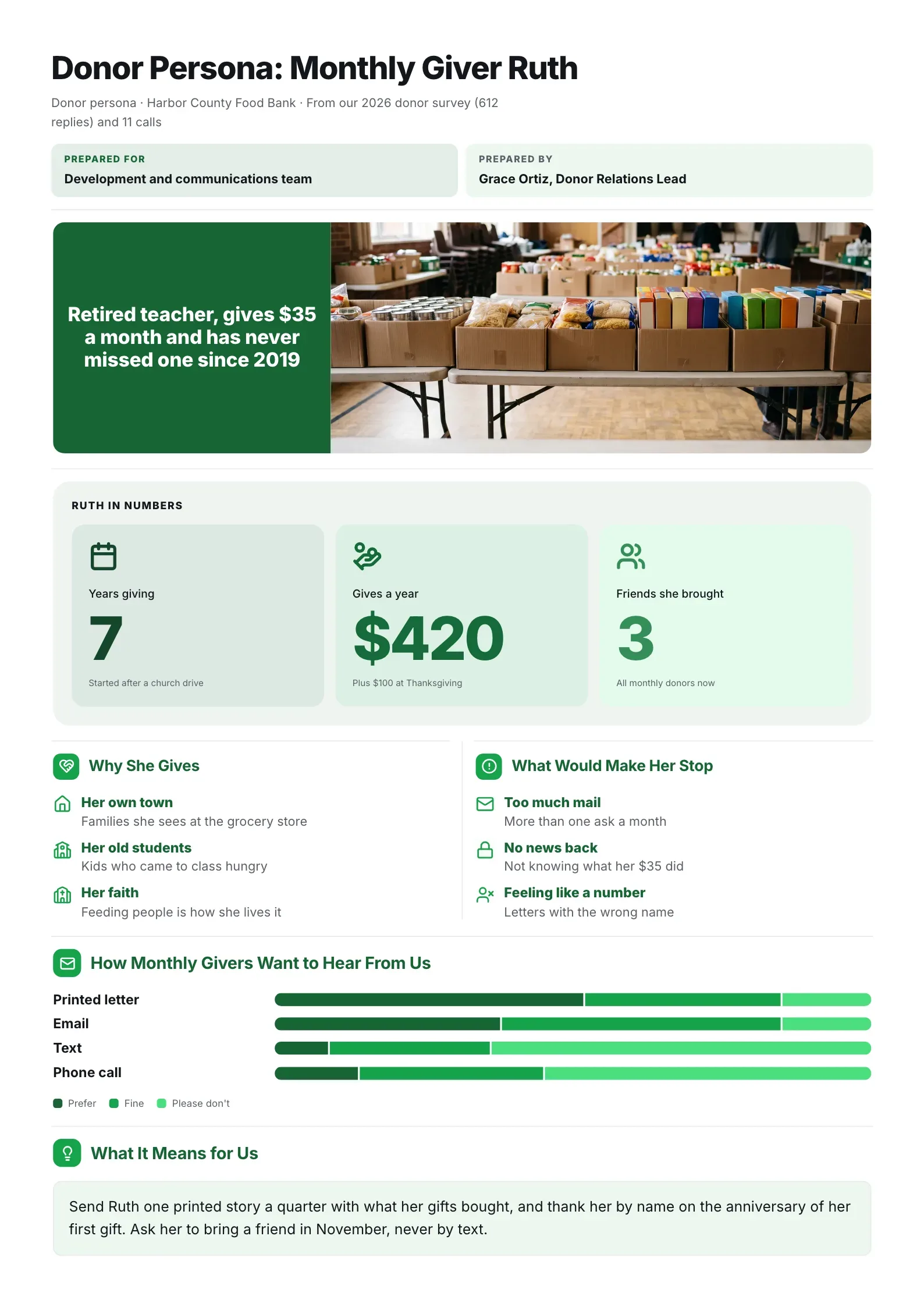 Edit this template
Sample food bank and donor. Why she gives sits right beside what would make her stop, so your team sees both sides at once.
Step 5: Put a few traits on a scale
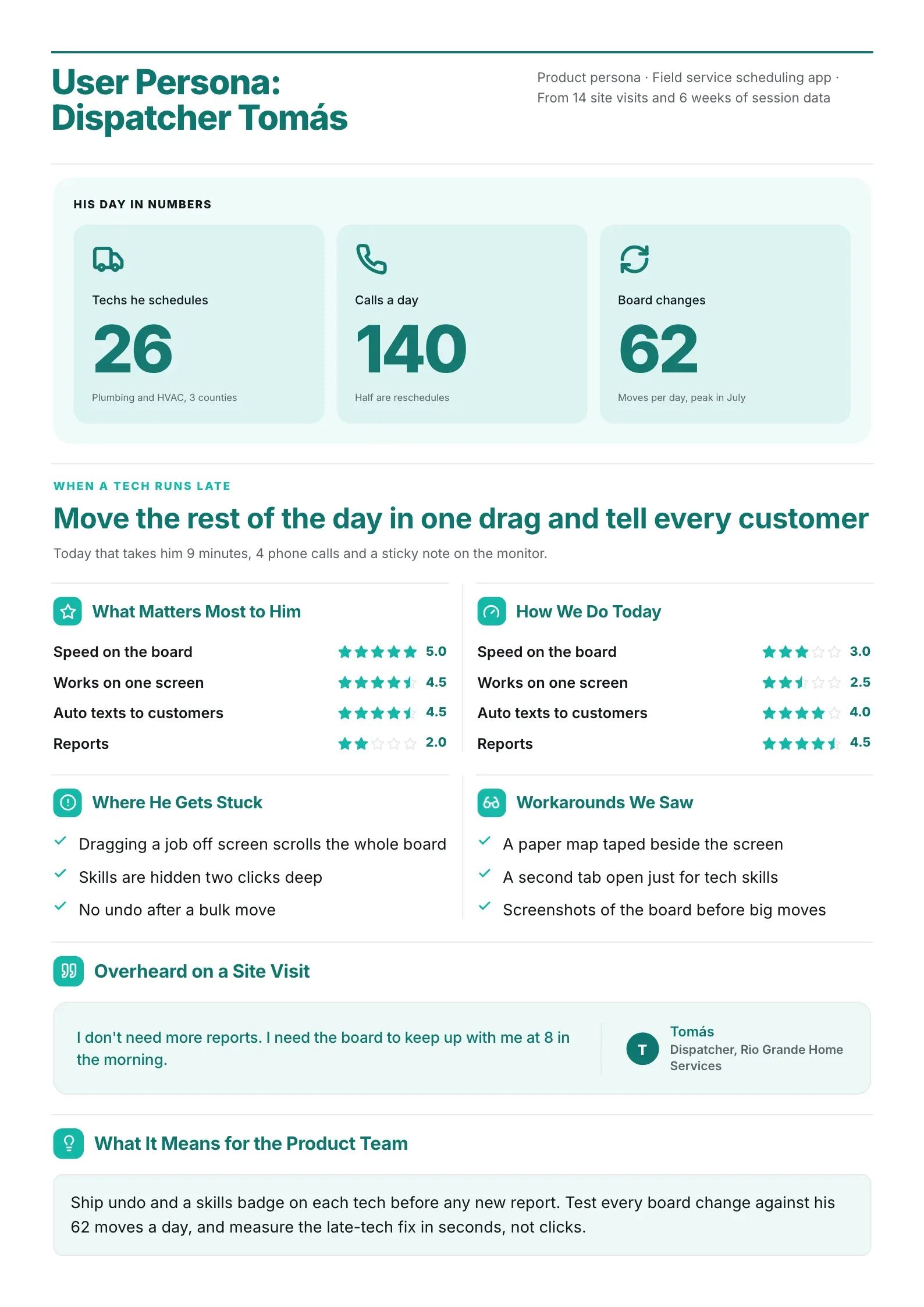
3 of the 4 sets use a scale for traits that aren't yes or no. Each Commonwealth Fund persona has four sliders, such as Willingness to Accept Help, from Resistant to Willing. Washington State puts each group on a scale for how often they deal with the state and for their income.
A scale is quicker to read than a sentence. Pick two to four traits that change how you sell, such as price sensitivity or how fast they decide, and mark where each persona sits.
 Edit this template
Sample app and user. Two sets of star ratings side by side show the gap between what he needs and what the product gives him today.
Step 6: Keep the set small and end with what it means
The sets we read hold 2 to 6 personas each. That's enough to cover the main groups without giving your team more people than they can remember.
The Commonwealth Fund ends every persona with Patient Considerations and System Considerations: what the persona needs from the care team and from the health system. That last box turns the persona into a to-do list. Close yours the same way, with a few lines on what your marketing, sales or product team should do for this person.
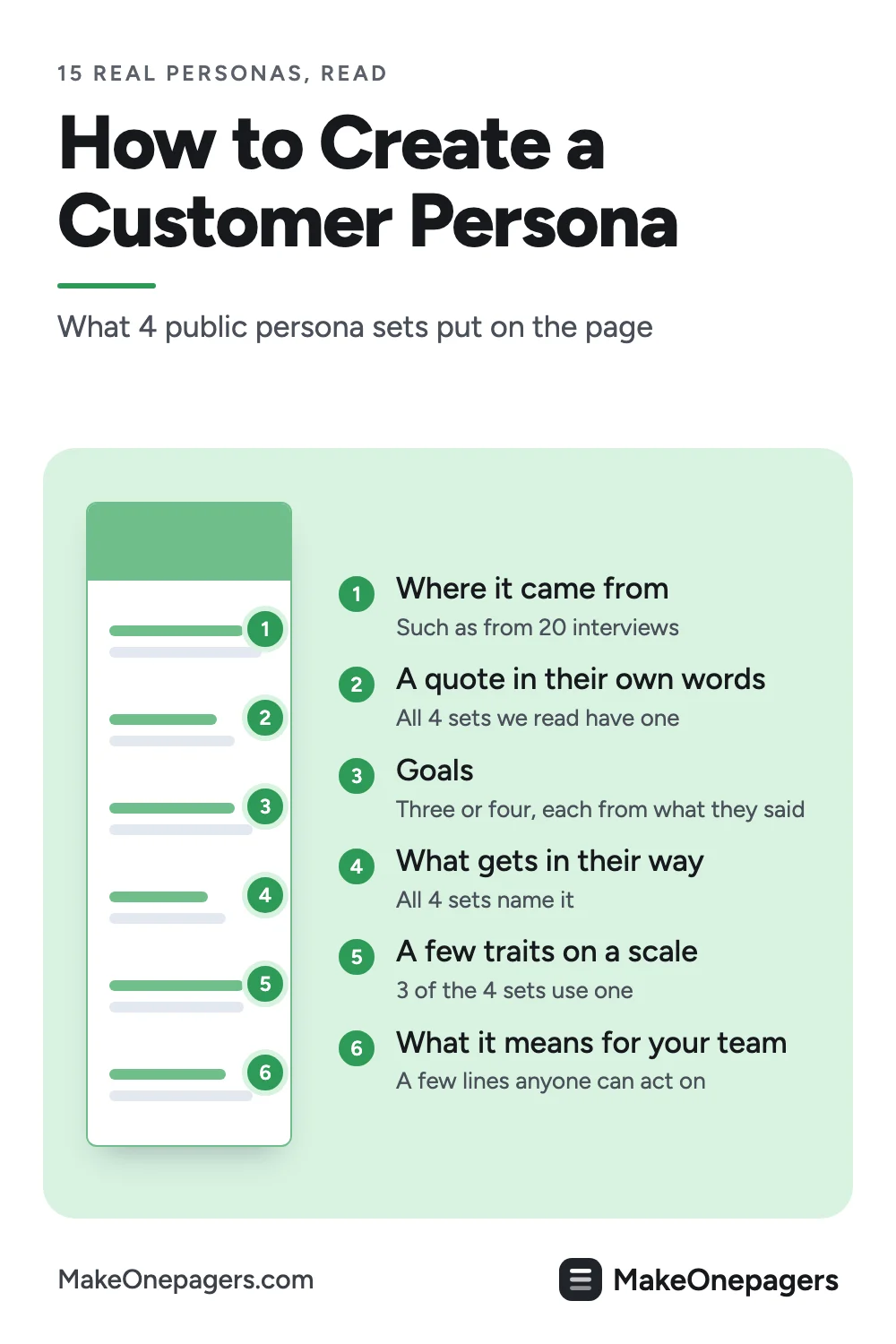
How to create a customer persona, step by step
- Survey your customers, then interview 8 to 12 of them.
- Group them by what they need and the problem that sent them looking.
- Give each group a name and a one-line description.
- Add a quote or two in their own words, copied from your interviews.
- List three or four goals and three or four things that get in their way.
- Put two to four traits on a scale, such as price sensitivity.
- Say where the persona came from, such as "from 20 interviews."
- End with what it means for your team, in a few lines anyone can act on.
Questions people ask about customer personas
What should a customer persona include?
A name, where the data came from, a quote in the person's own words, their goals and what gets in their way. Those are the parts all or most of the 15 personas we read include. Add a scale for key traits and a closing box on what it means for your team.
How many customer personas do you need?
Most businesses need two to four. The sets we read hold 2, 2, 5 and 6. The two bigger ones come from a state and a university, which serve almost everyone. Start with the group that brings in the most business, then add others when your interviews show a group that wants something different.
Does a customer persona need an age?
Only if it changes what you do. None of the 15 we read lists one. Some of our samples do, such as the new parent and the career changer, because their age shapes what they need from you.
What's the difference between a buyer persona and a user persona?
A buyer persona is about the person who decides and pays. A user persona is about the person who uses the product every day. In a business sale they're often two different people, so you may need both.
Make your customer persona
All 15 personas we read carried a quote in the person's own words, and none listed an age. So start with your interview notes and pick the line a customer said that your team should hear. Open a customer persona design in MakeOnepagers and put it at the top. Our customer persona template page has more examples, and our One-Pager maker (free for 7 days) can turn your notes into a first draft.




