Go to Market Strategy Checklist: 9 Checks From 4 IPO Filings
A go to market strategy checklist built from what Oura, Navan, Suja Life and Netskope wrote in their SEC filings. 9 checks, each with a real number.

A go to market strategy checklist helps you catch the gaps in your launch plan before your customers do. The top-ranking checklists we read list topics with no real examples behind them. So we read how real companies describe their own go-to-market plans, in documents they have to stand behind. Start from a free one pager template.
One‑Pager examples
Real One-Pagers made with MakeOnepagers. Open any one to edit it as your own.
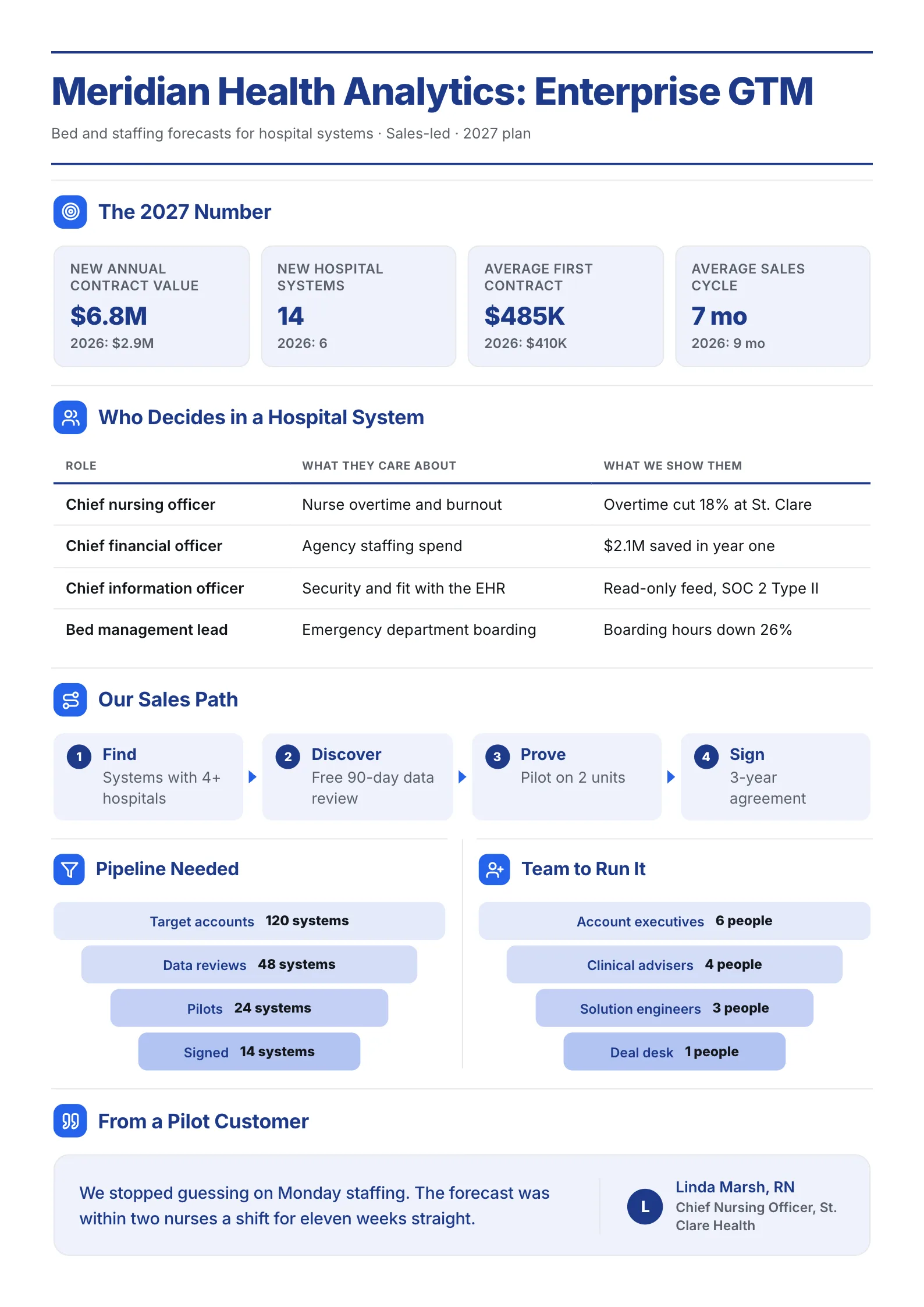 Go-to-Market Strategy: Enterprise SalesEdit for free(opens in a new tab)
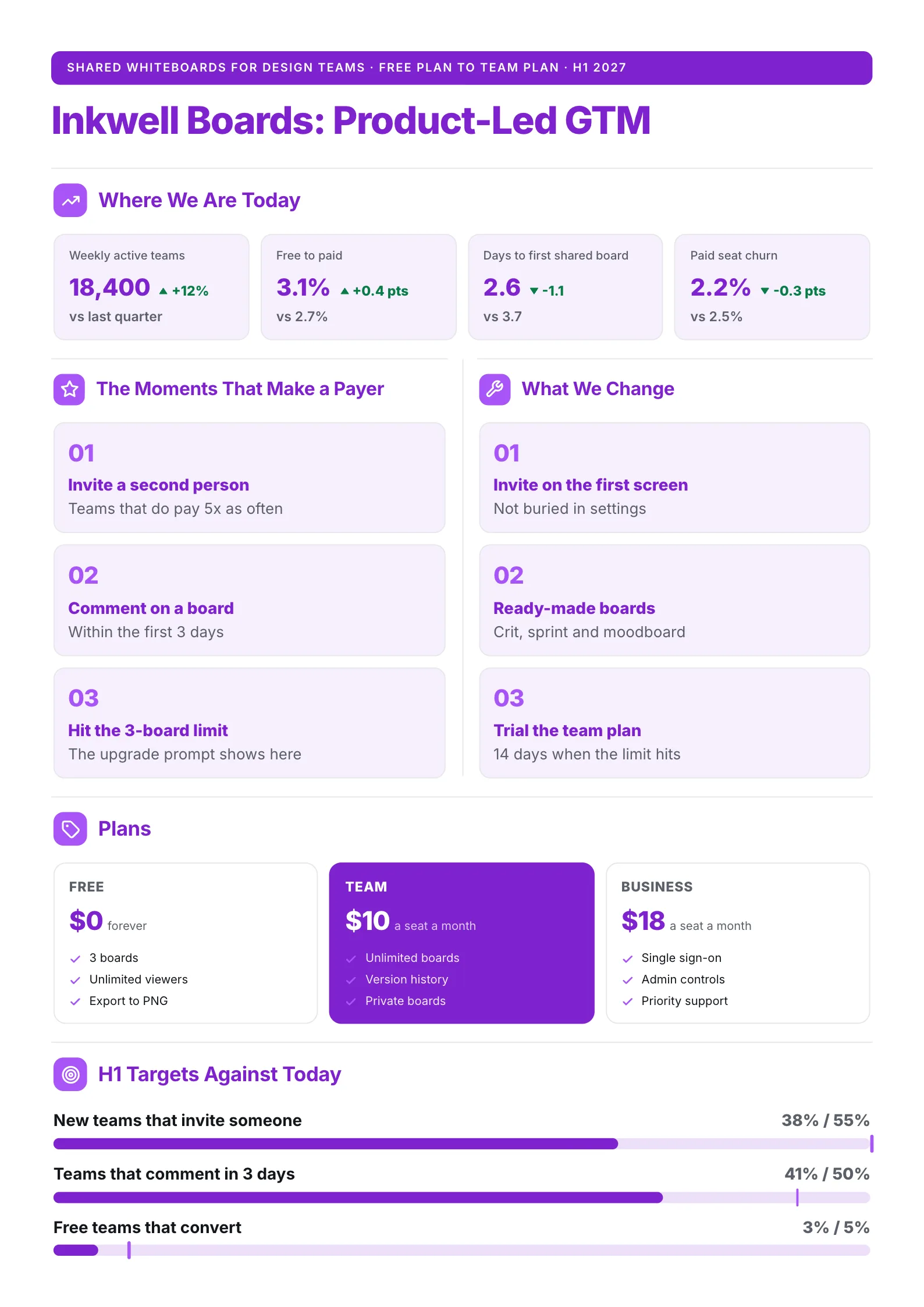 Go-to-Market Strategy: Product-Led GrowthEdit for free(opens in a new tab)
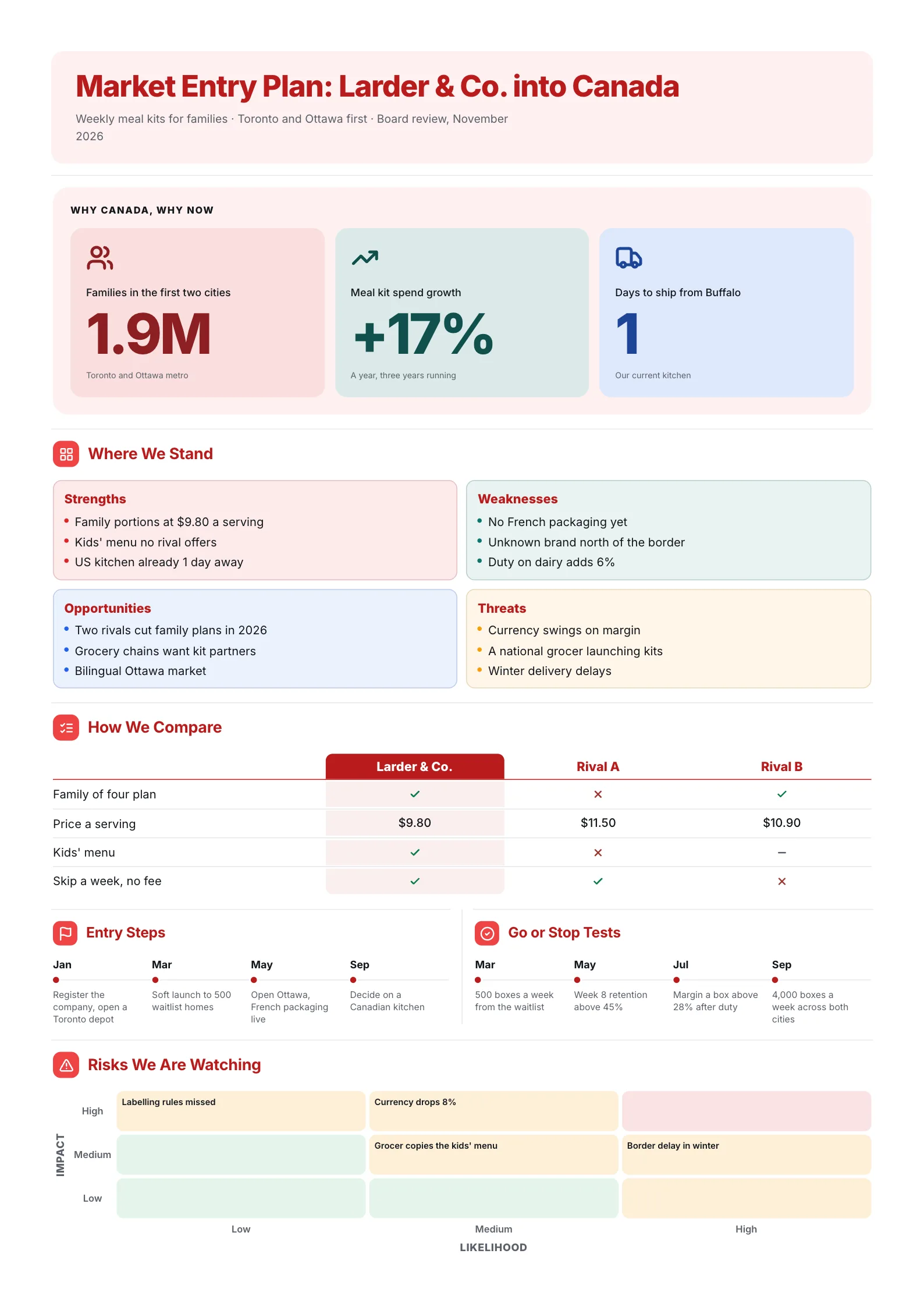 Go-to-Market Strategy: New Country EntryEdit for free(opens in a new tab)
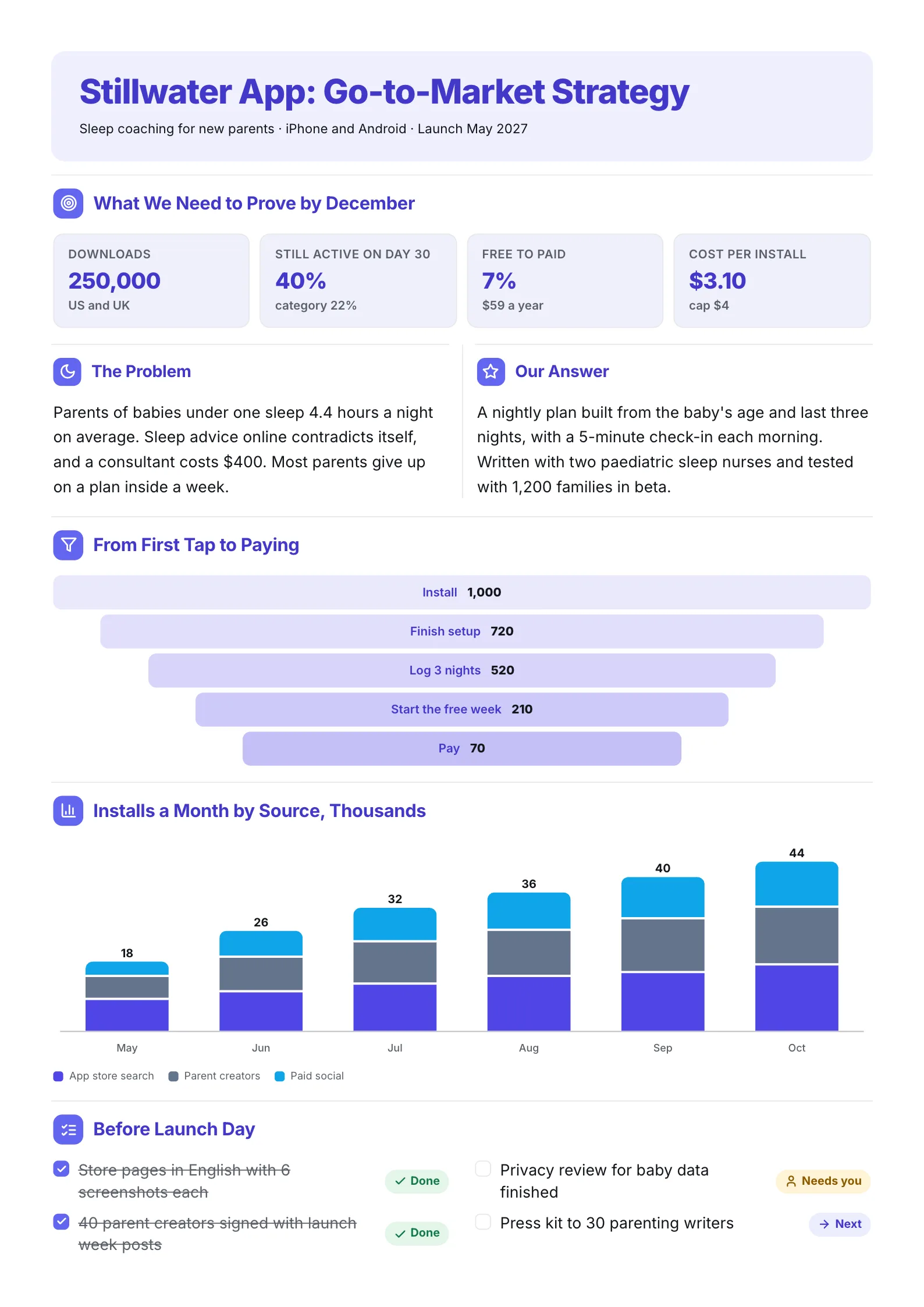 Go-to-Market Strategy: Mobile AppEdit for free(opens in a new tab)
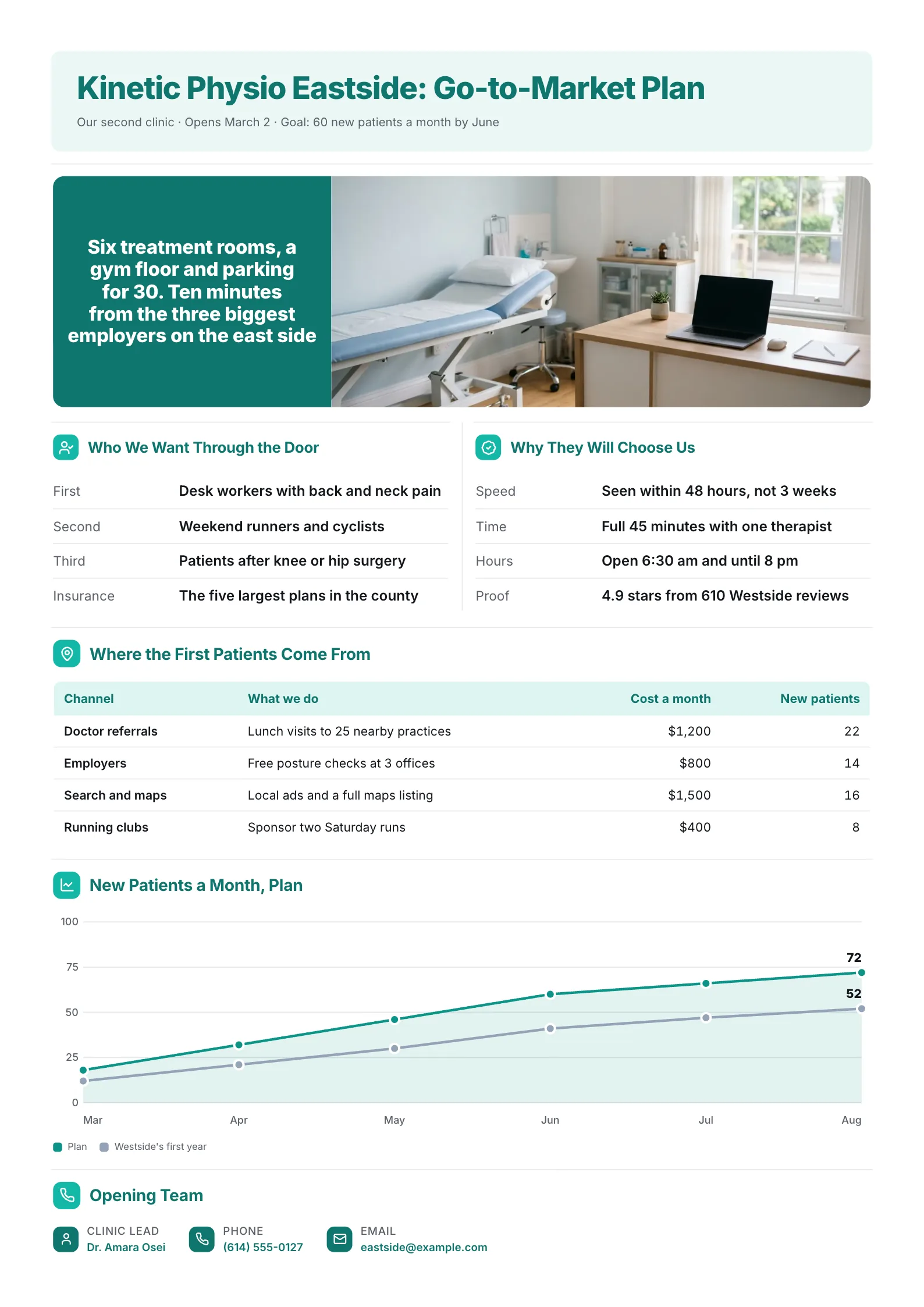 Go-to-Market Strategy: Local BusinessEdit for free(opens in a new tab)
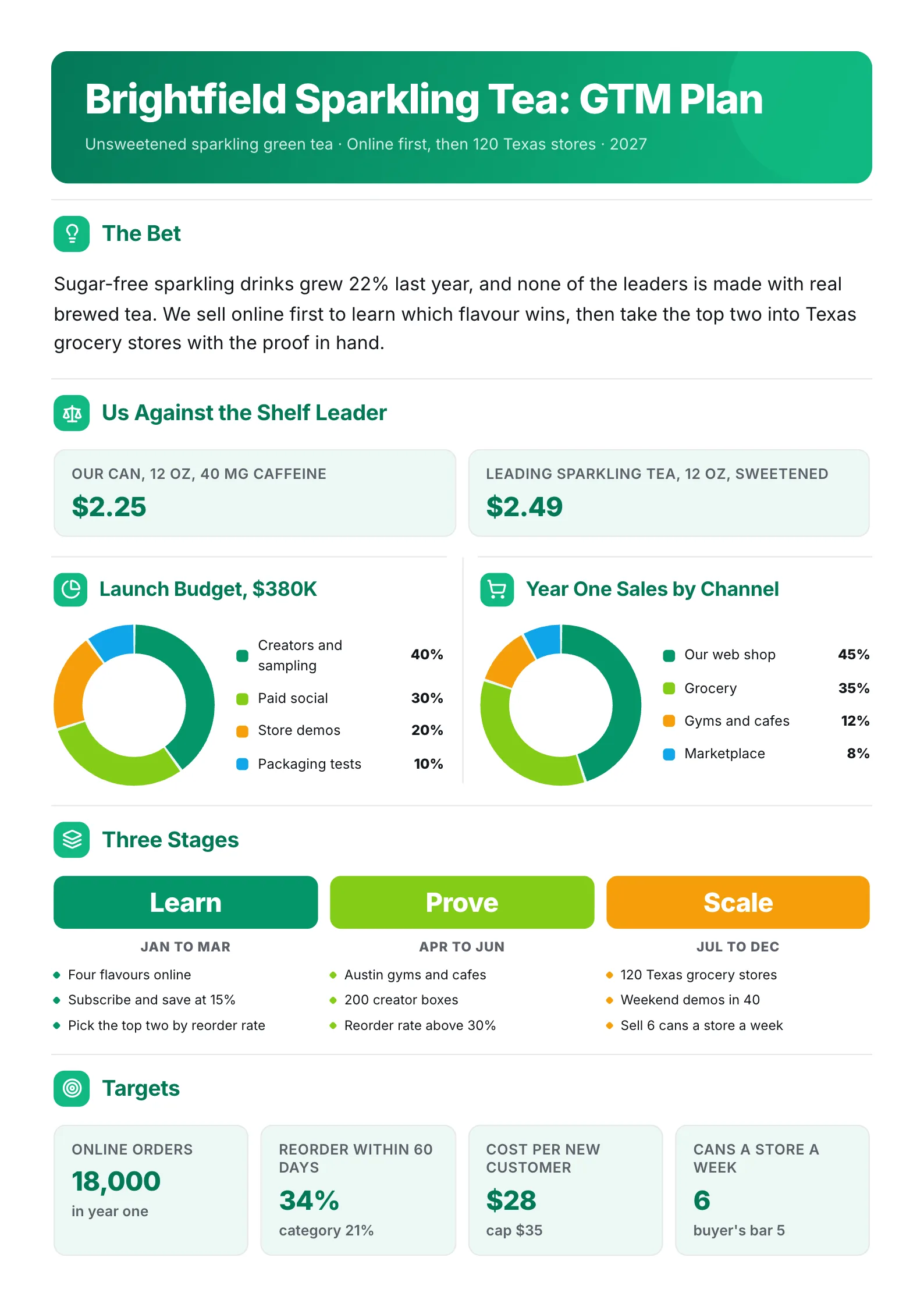 Go-to-Market Strategy: Consumer BrandEdit for free(opens in a new tab)
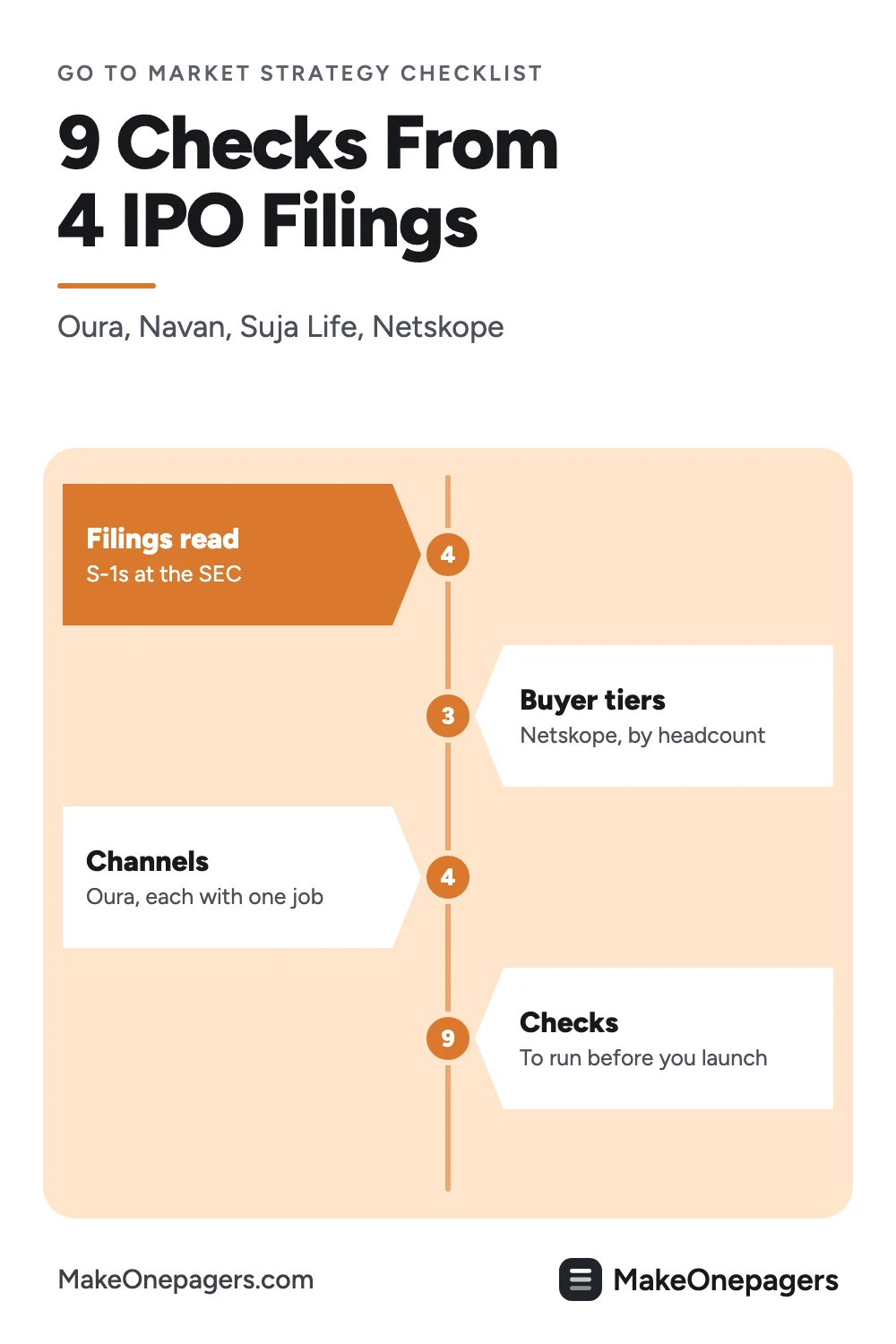
When a company files to go public in the US, it files an S-1 with the Securities and Exchange Commission (SEC). We read the go-to-market sections in 4 of them: Oura (smart rings), Navan (travel and expense software), Suja Life (cold-pressed juice) and Netskope (security software). Together they cover 9 questions every launch plan should answer. Use them as your checklist.
| # | Check | From | Their number |
|---|---|---|---|
| 1 | Split your buyers into tiers | Netskope | 3 tiers, about 80% of recurring revenue from the top 2 |
| 2 | Name the team that signs | Navan | Finance and procurement teams |
| 3 | Give each tier its own sales motion | Navan | 2 motions, self-serve since March 2022 |
| 4 | Give every channel one job | Oura | 4 channels, about 8,400 retail doors |
| 5 | Put partner terms in writing | Netskope | Top 5 partners, 33% of fiscal 2025 revenue |
| 6 | Track one awareness number | Oura | Aided awareness from about 15% to 38% |
| 7 | Prove it with one account | Suja Life | Kroger sales from $1M to $34M |
| 8 | Plan the second sale | Netskope | A first deal with 2 or more products |
| 9 | Add markets in steps | Oura | 20 new markets in fiscal 2025 |
1. Split your buyers into tiers you can count
Netskope sorts every customer by headcount. Its S-1 filing names three groups: Major Accounts with 40,000 or more employees, Enterprises with 2,000 to 39,999, and Mid-Market with fewer than 2,000. As of July 31, 2025, the first two "together accounted for approximately 80% of our ARR."
Your tiers don't need to be by headcount. Pick something you can count, like staff, revenue or locations. Then write down what share of your sales each tier should bring in. That share tells you where your sales time should go.
Check it. You have 2 to 4 buyer tiers, each with a number that defines it.
2. Name the team that signs
Navan's filing says its buyers usually sit in finance and procurement, with accounting alongside them, "and at times also the C-suite." Netskope's marketing "targets key decision-makers in IT, security, and networking."
Both name the desk the deal lands on. Do the same for each tier. Write the job title of the person who says yes, and the one who can say no.
Check it. Every tier has a named buyer role.
3. Give each tier its own sales motion
Navan runs two. Product-led growth lets smaller companies sign up on their own. For larger companies that already use a travel and expense system, it sends inside and field sales reps. Since its self-serve offering launched in March 2022, "thousands of customers have joined our platform through our website, with minimal sales touchpoints."
Netskope splits the same way by tier. Its field sales team works with large customers. For the mid-market, it leans on managed service providers (MSPs), its own mid-market team and partners.
Match your motion to the size of the deal. A small account can't pay for a rep's time, so let it buy without one.
Check it. Each tier has a motion, and you know which tiers get a person.
4. Give every channel one job
Oura's filing lists four channels: direct to consumer, retail, go-to-market partners and enterprise. Each one has its own reason to exist.
- Direct to consumer is where the subscription money comes in. "All membership sales occur on our direct-to-consumer properties."
- Retail lets people "see, touch, and try Oura Ring in person," across about 8,400 store doors.
- Partners make it cheaper to buy, through health savings accounts and an American Express card credit.
- Enterprise uses "quota-bearing sellers that target health insurers, employers and government institutions."
List your channels and write the one job each one does, plus the person who answers for it.
Check it. Every channel has one job and one person who owns it.
5. Put partner terms in writing
Partners sell for you, so their deal has to be clear. Netskope says each technology partnership "includes well-established go-to-market strategies, agreed-upon business objectives, and commitments such as bi-directional referral programs." Its top five partners brought in 33% of its revenue in fiscal 2025.
Oura's partner terms are specific too. American Express offers Platinum Card members "up to $200 in annual statement credits" toward a ring.
Check it. Every partner has a written deal with a goal, a margin or credit, and who refers what to whom.
6. Track one awareness number
Oura tracks aided brand awareness in the US with a quarterly YouGov study. It rose "from approximately 15% in the first quarter of fiscal 2024 to approximately 38% in the third quarter of fiscal 2026."
Suja Life tracks how many homes buy its drinks at all. "Currently, we have just 11% household penetration," it writes. For its Suja Organic brand, aided awareness rose 15 points to 70% in a company survey of premium juice buyers.
Pick one number that says how many of your buyers know you exist. Measure it before launch, so you have a starting point.
Check it. You have one awareness number, a starting value and a date to check it again.
7. Prove it with one account
Suja Life tells one story in detail. It has sold through Kroger since 2014, and "we have grown sales from $1 million to $34 million as of fiscal 2025," according to the company's estimates. Kroger now carries 44 of its products.
One account like this does two things. It shows the next retailer what a partnership can grow into, and it tests your plan on a small scale first. Choose your first proof account before you launch, and agree on what you'll measure together.
Check it. One named account, with a number you'll report back.
8. Plan the second sale
Netskope calls its approach land and expand. "We typically establish an initial foothold with a customer through two or more products." Then its teams add users and products over time.
Navan gives the job to a team. "Our customer success team manages our customers' launch and ramping period and ensures they are getting the most out of our platform."
Your launch plan shouldn't stop at the first invoice. Write down what the customer buys next, and who makes sure they do.
Check it. A second product or upgrade, and an owner for it.
9. Add markets in steps
Oura grows one market at a time. "In fiscal 2025 we entered 20 new markets and added 39 new retail partners." In the first three quarters of fiscal 2026 it entered 15 more. It describes its approach abroad as "disciplined, localized."
You don't need 20 markets. You need the order. Start with one city, region or customer type, set the number that tells you it worked, and only then open the next one.
Check it. Your markets are in order, each with a number you must hit before the next one opens.
Five go-to-market plans that pass the checklist
These samples from MakeOnepagers are go-to-market plans with invented companies. Under each heading is the check it handles best.
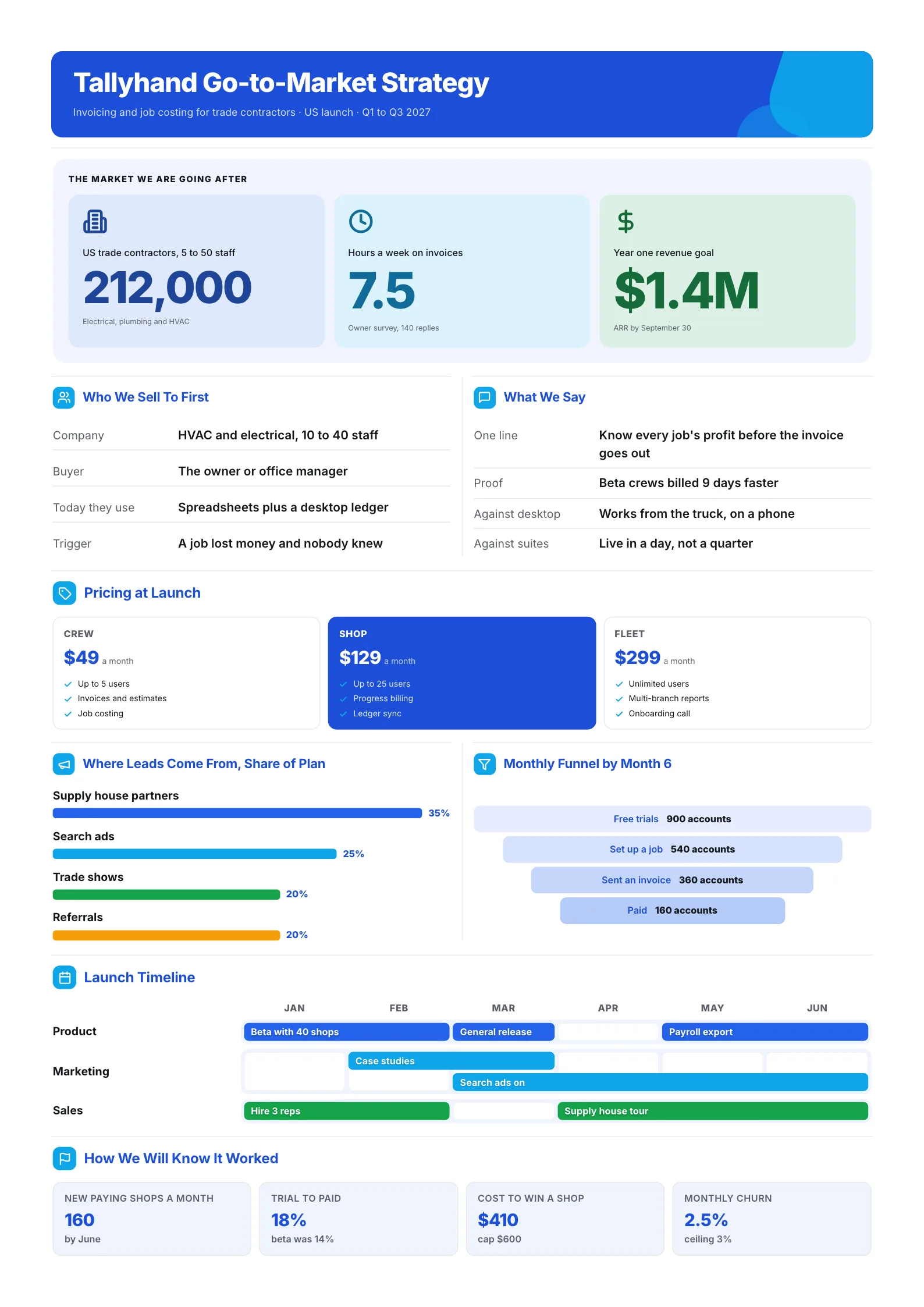
Check 2: a software launch that names its buyer
 Edit this template
This SaaS go to market strategy doesn't stop at "contractors." It sells first to HVAC and electrical firms with 10 to 40 staff, and the buyer is "The owner or office manager." It even writes the moment they start looking: "A job lost money and nobody knew." Three plans run from $49 to $299 a month.
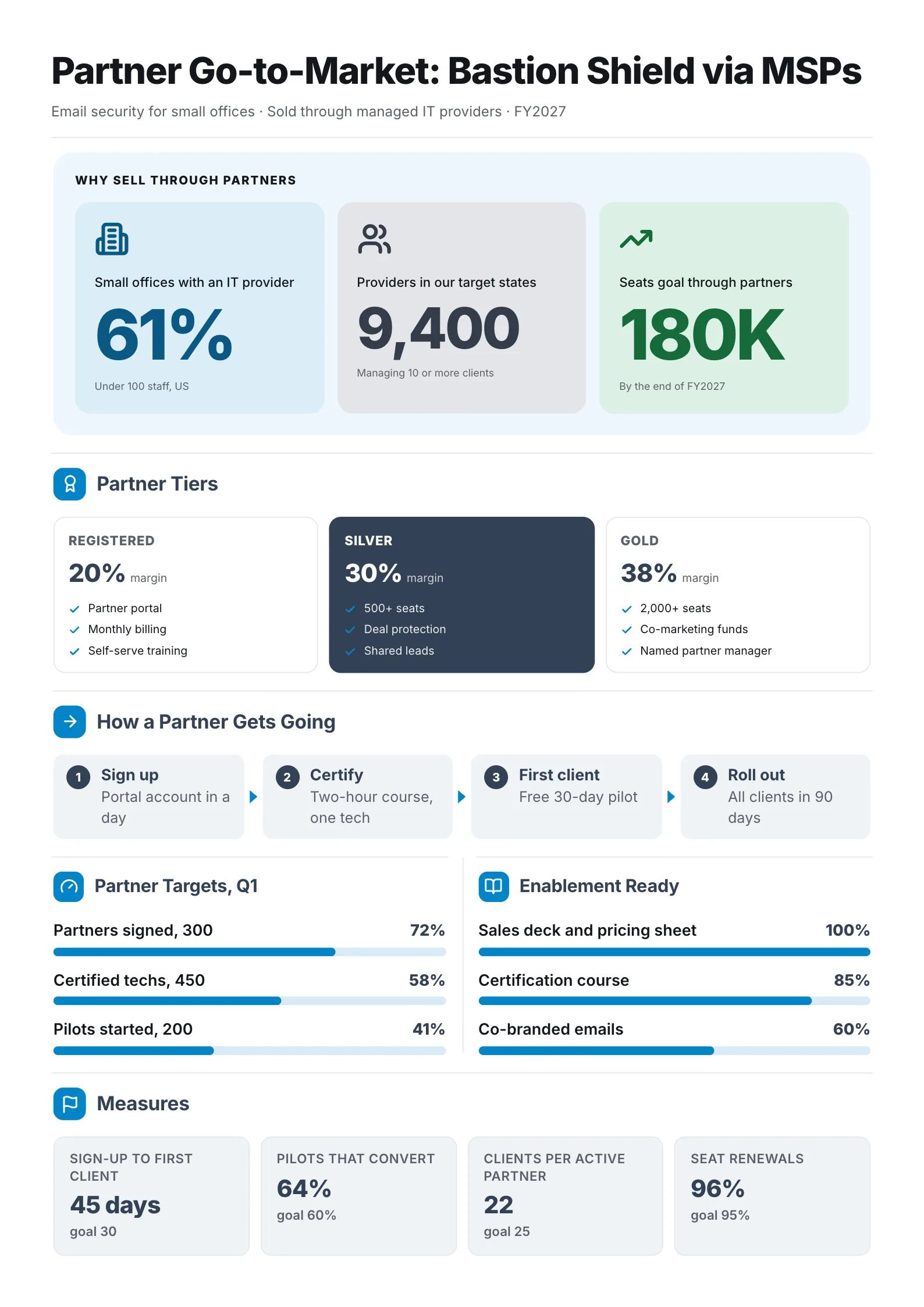
Check 5: a partner program with its terms on the page
 Edit this template
Like Netskope, this channel partner go to market plan sells through managed IT providers. It puts the deal in numbers. Registered partners earn a 20% margin, Silver partners 30% at 500 or more seats, and Gold partners 38% at 2,000 or more. It also tracks days from sign-up to a partner's first client, 45 today against a goal of 30.
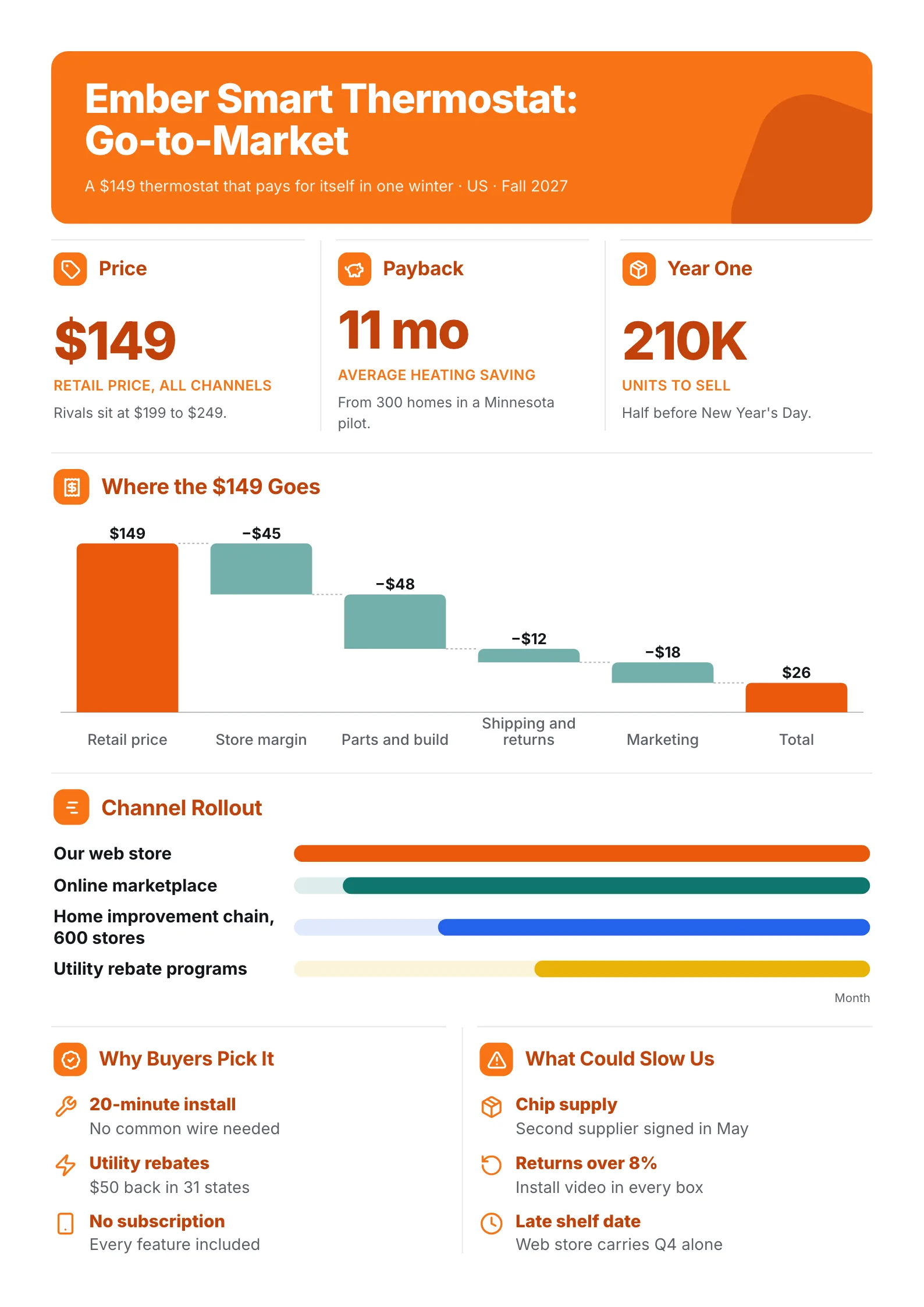
Check 4: a product with four channels, each with a job
 Edit this template
This hardware product go to market plan rolls out a $149 thermostat through a web store, an online marketplace, a home improvement chain with 600 stores and utility rebate programs. Rebates give buyers $50 back in 31 states. It plans for a late shelf date too, with the web store carrying Q4 alone.
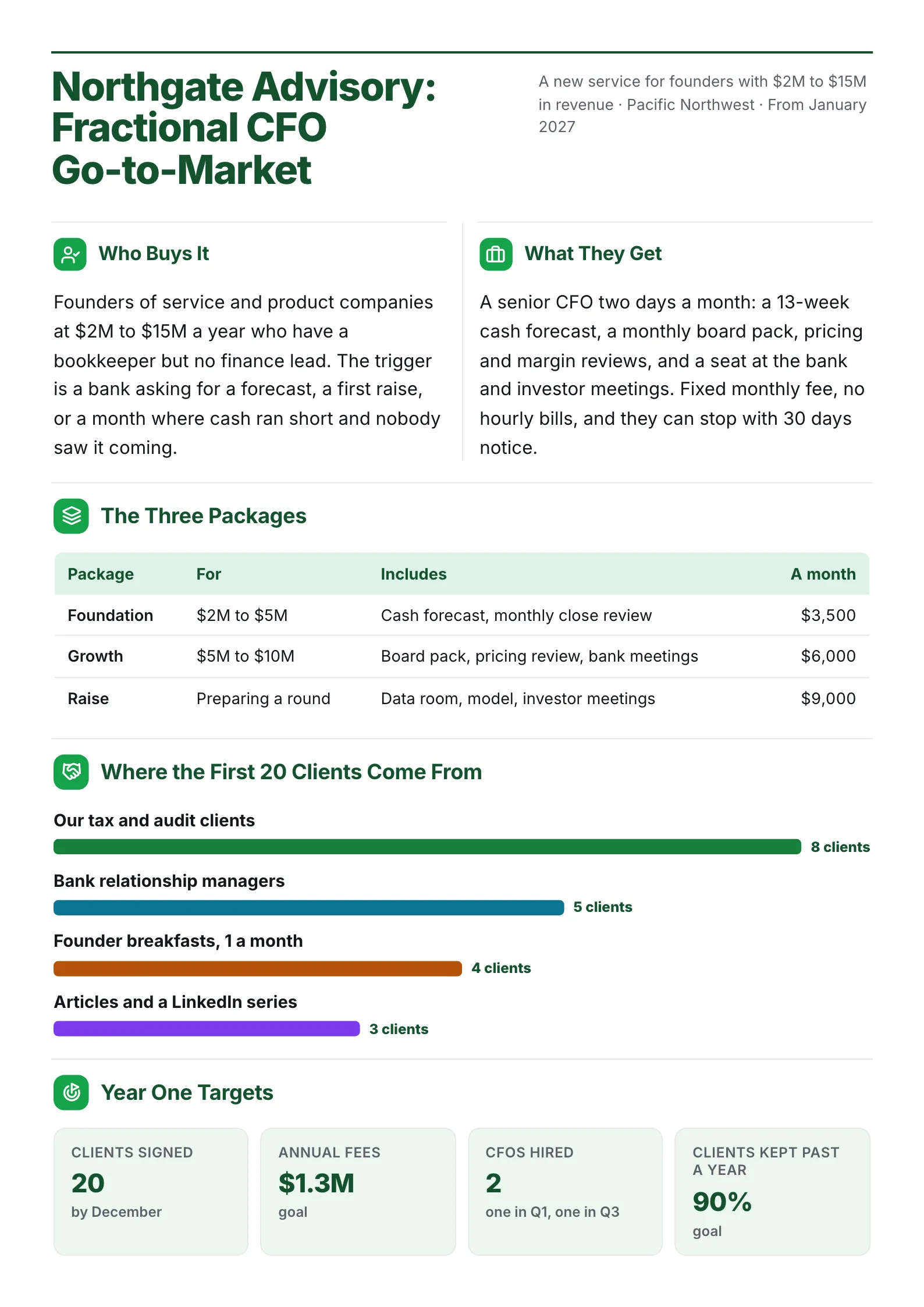
Check 3: a service firm that picks its sales routes
 Edit this template
A fractional CFO service sells on trust, so this professional services go to market strategy skips ads. Its first 20 clients come from four routes: its own tax and audit clients, bank relationship managers, a founder breakfast once a month, and articles with a LinkedIn series. Packages run from $3,500 to $9,000 a month.
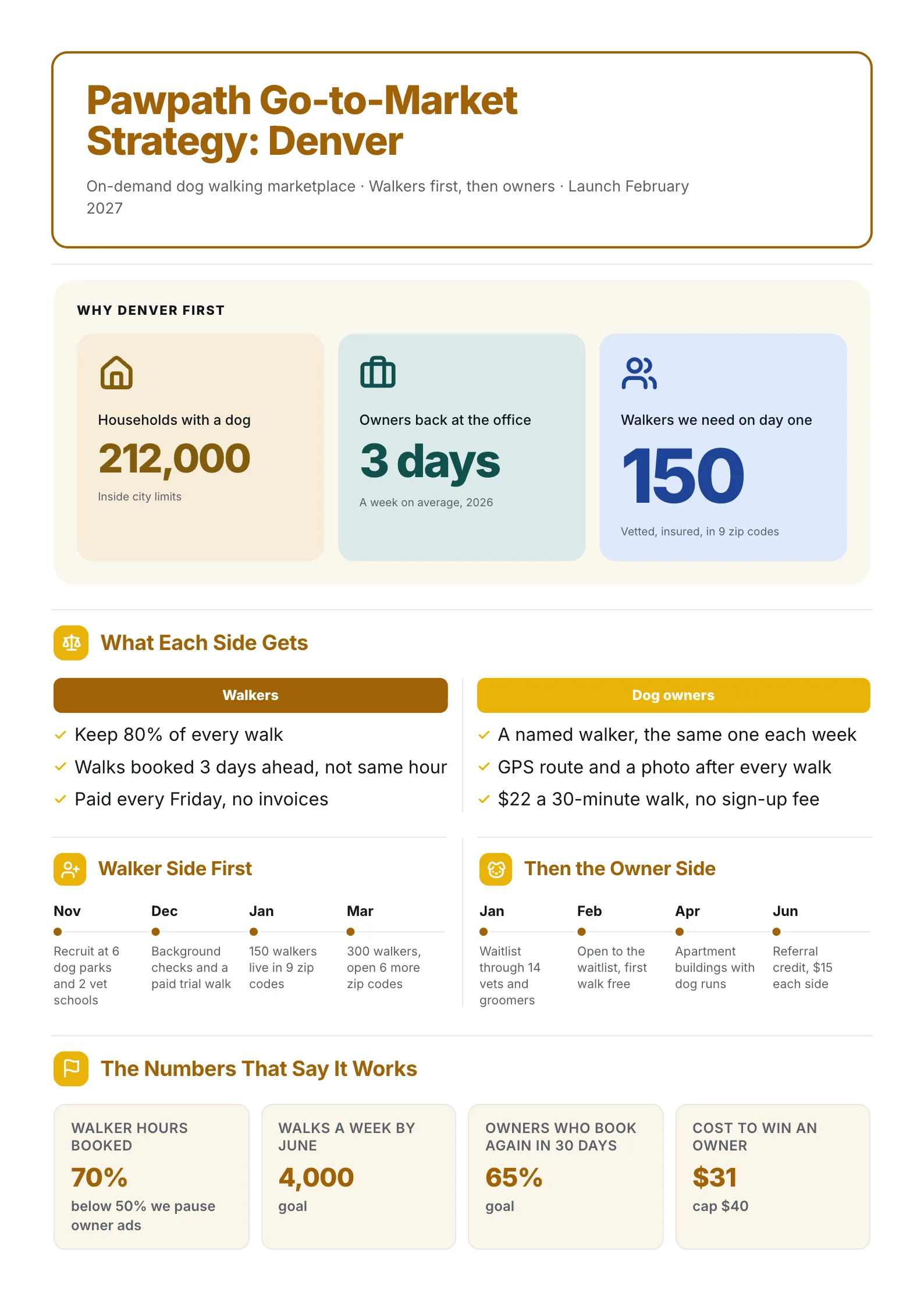
Check 9: a marketplace that opens one side at a time
 Edit this template
This marketplace go to market strategy starts in one city and signs up walkers before owners, with 150 walkers in 9 zip codes on day one. It also writes the number that stops it. If fewer than 50% of walker hours are booked, it pauses owner ads.
Before you start the checklist
Check who else is selling to your buyers. The SBA's market research guide asks you to assess "Your window of opportunity to enter the market" and "Any barriers that may hinder you as you enter the market." Write one line on each. Then start at check 1 with that window in mind.
Make your go-to-market plan
Run the 9 checks on your draft, then fix what's missing. To build the plan from scratch, read our guide on how to write a go to market strategy, or compare plans in our go to market strategy examples. Pick the MakeOnepagers go-to-market plan nearest your business and swap in your tiers, channels and numbers. Have rough launch notes? Drop them into the free AI One-Pager generator and check its draft against the list.
Frequently asked questions
What should be on a go to market strategy checklist?
Your buyer tiers, the role that signs, a sales motion for each tier, one job per channel, written partner terms, an awareness number, one proof account, the second sale and the order of your markets. Those 9 come from what Oura, Navan, Suja Life and Netskope wrote in their S-1 filings.
When should you run a go to market checklist?
Before launch, while the plan can still change, and again once you have real numbers. Checks 6 and 9 need a starting value, so measure awareness and pick your first market before you spend on ads.
How many channels should a launch use?
As many as you can give a clear job. Oura uses 4, and each one does something the others don't. If you're small, start with one or two and add the next once the first one brings in sales.
How is a go to market checklist different from a launch plan?
A launch plan lists tasks and dates for one launch day. A go to market checklist tests the strategy behind it, like who buys, how they buy and what proves it worked. Run the checklist first, then build the launch plan from it.
Where can I read real go-to-market strategies?
In S-1 filings on the SEC's EDGAR site. Companies going public describe how they sell, often under a heading like "Our Go-to-Market Strategy." Search EDGAR's full text for that phrase and read the Business section.




