A One-Page Fact Sheet Format, Starting With the Key Facts
A fact sheet format taken from 5 World Health Organization sheets: a short list of key facts, then set headings, a dated line and what you're doing about it.

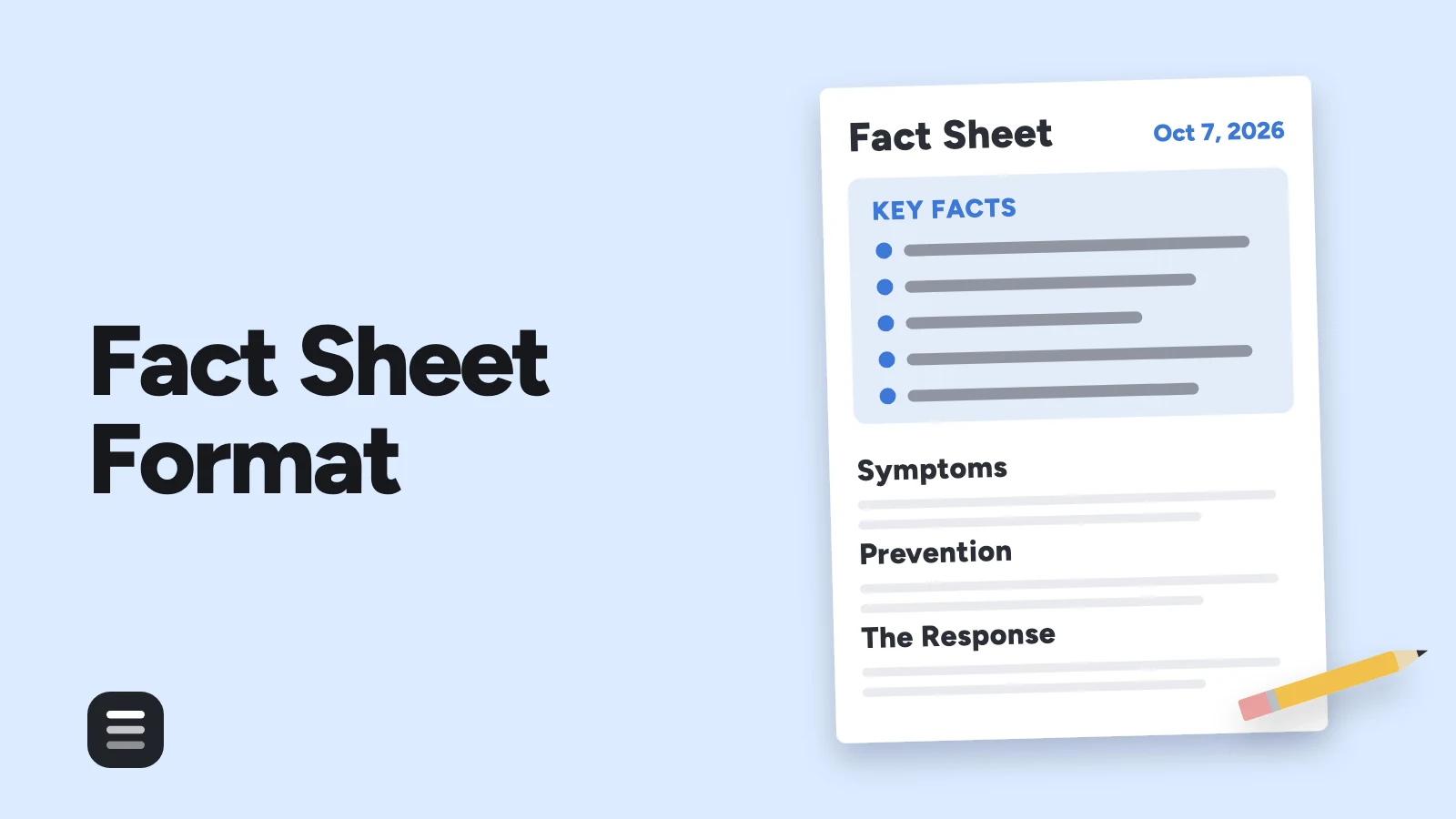
Someone picking up your page should be able to leave after ten seconds with the facts that matter, or stay and read more. That's the whole job of a fact sheet format. The World Health Organization publishes this kind of sheet on health topics, so we read five and wrote down what each one does, in order. Start from a free one pager template.
One‑Pager examples
Real One-Pagers made with MakeOnepagers. Open any one to edit it as your own.
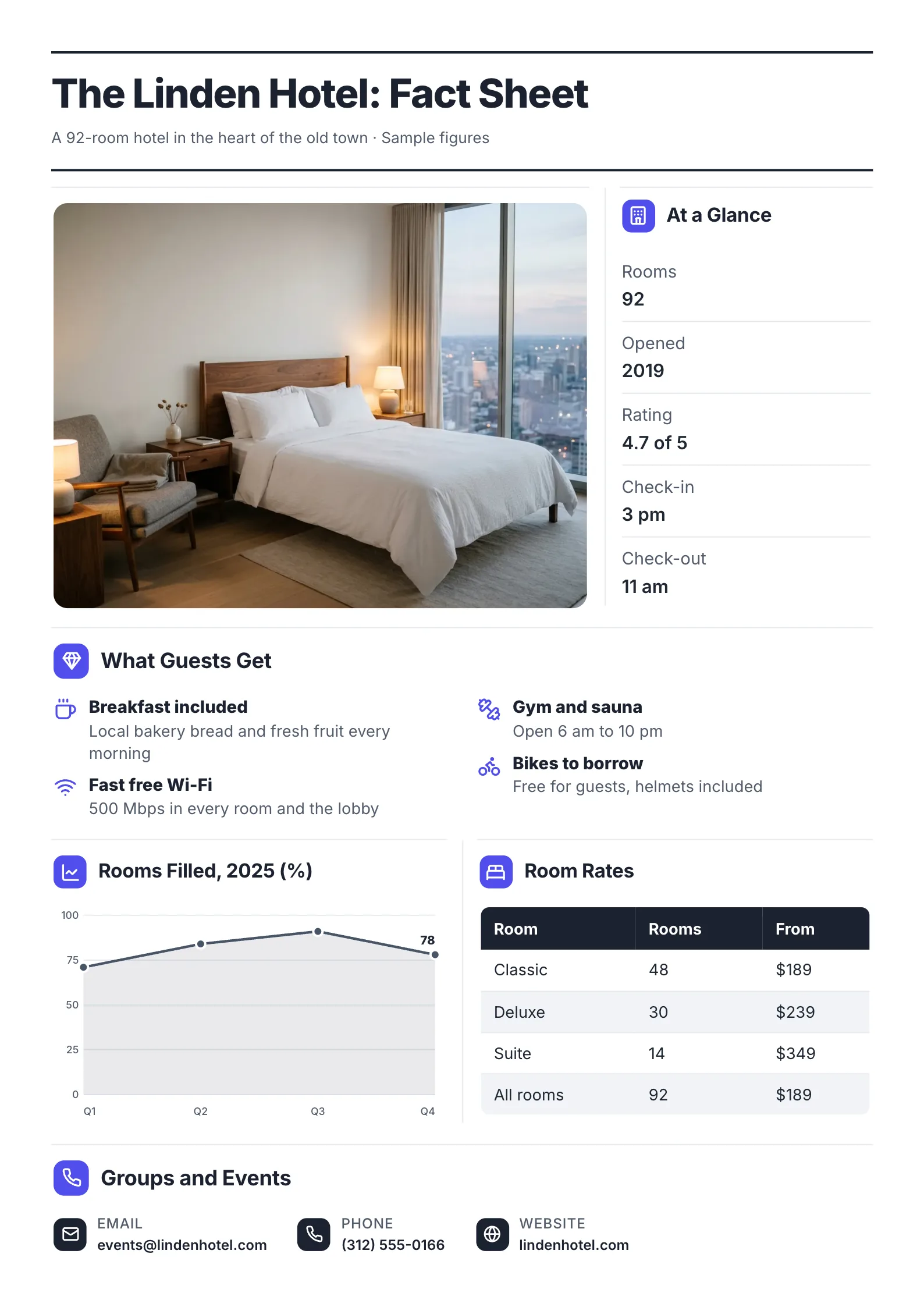 Hotel Fact SheetEdit for free(opens in a new tab)
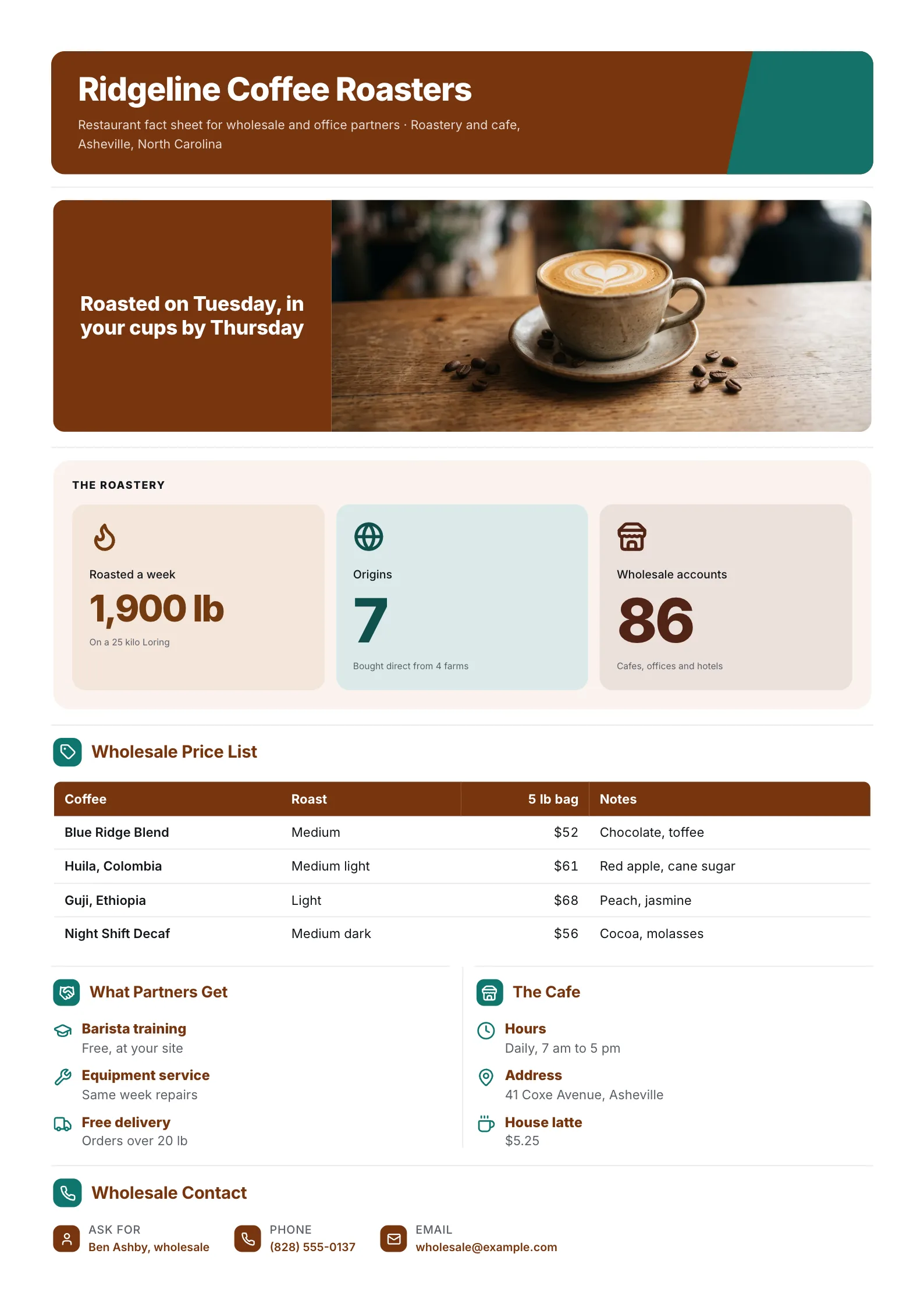 Restaurant Fact Sheet: Coffee Roaster WholesaleEdit for free(opens in a new tab)
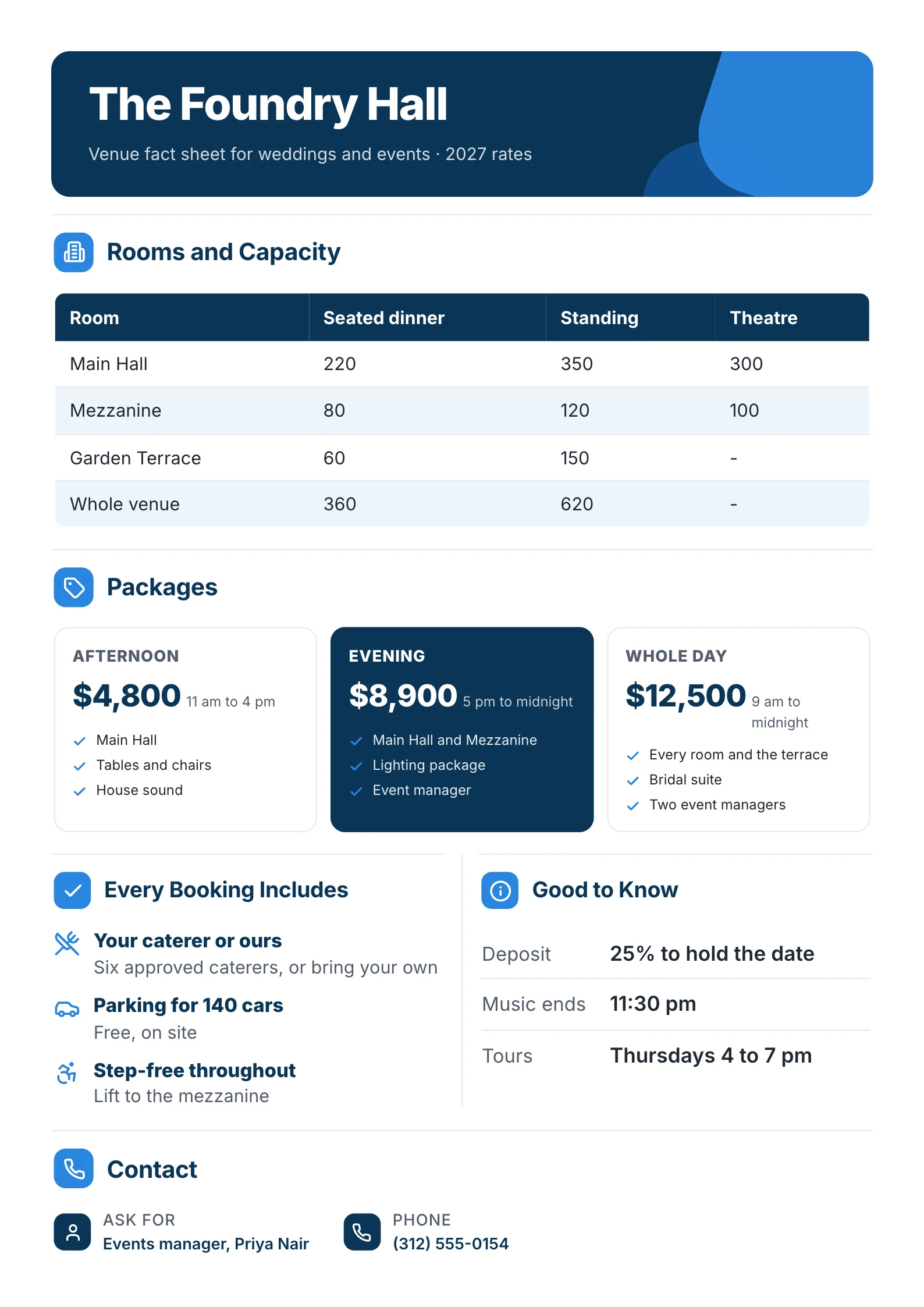 Event Venue Fact SheetEdit for free(opens in a new tab)
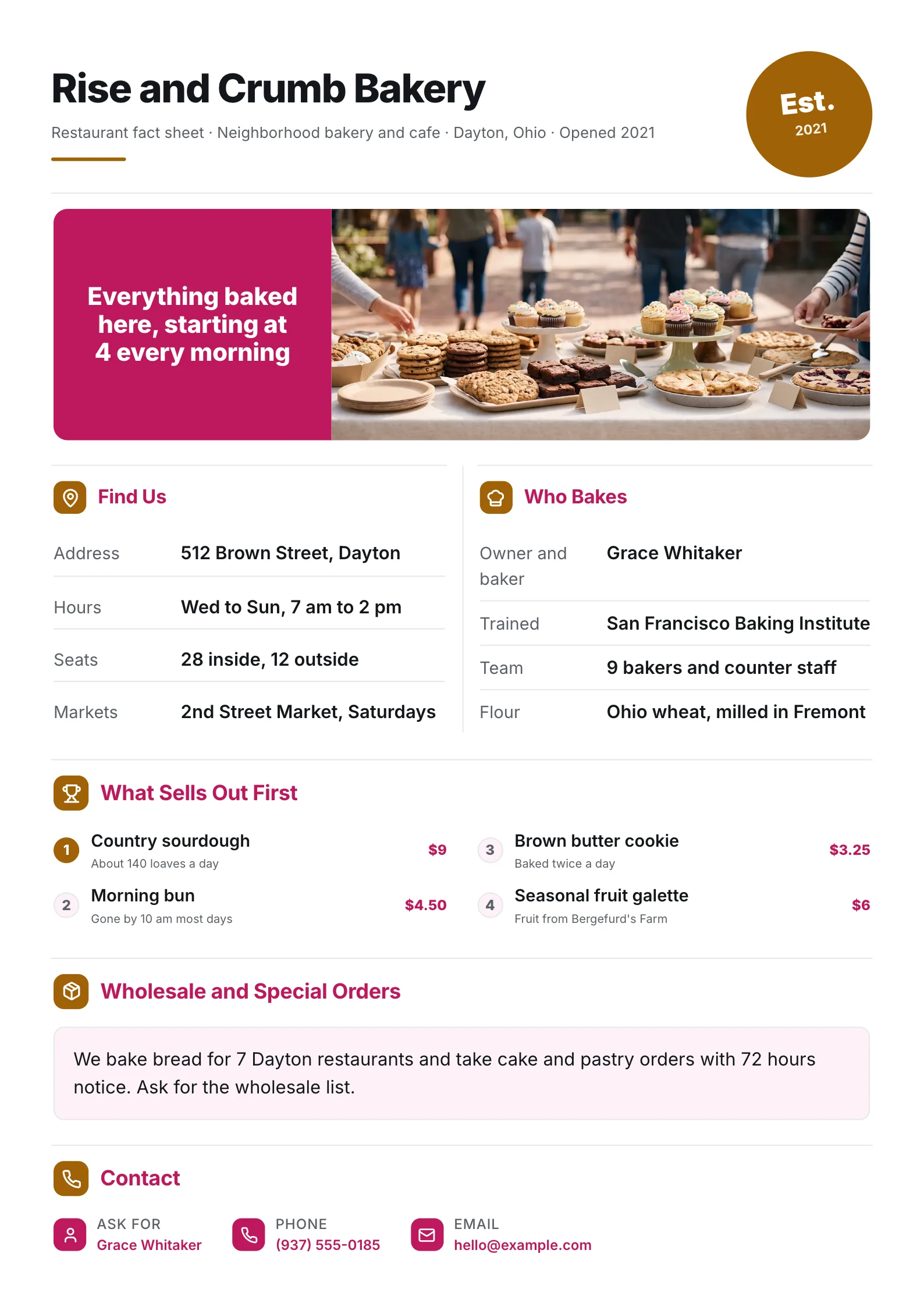 Restaurant Fact Sheet: Neighborhood BakeryEdit for free(opens in a new tab)
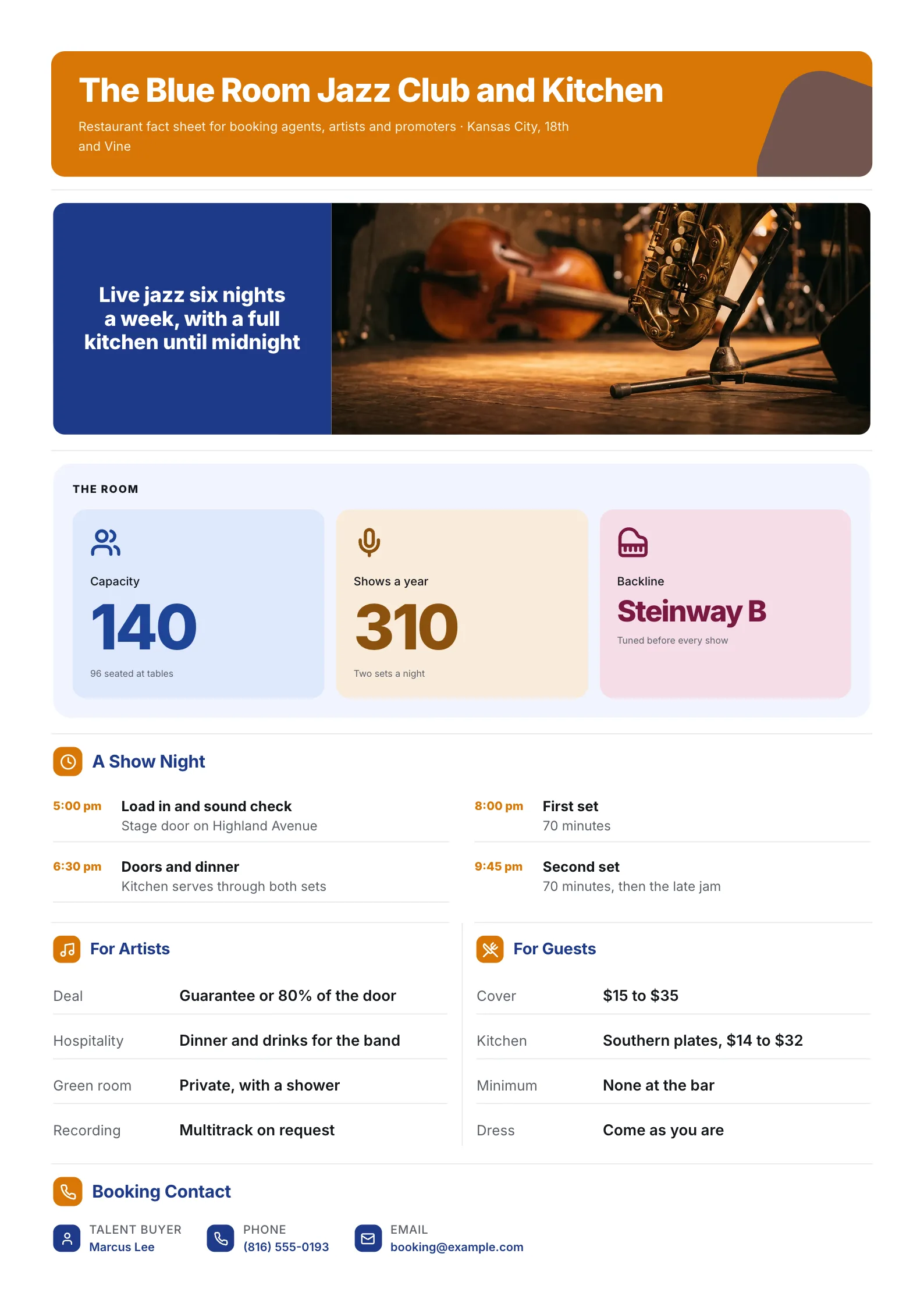 Restaurant Fact Sheet: Jazz Club and KitchenEdit for free(opens in a new tab)
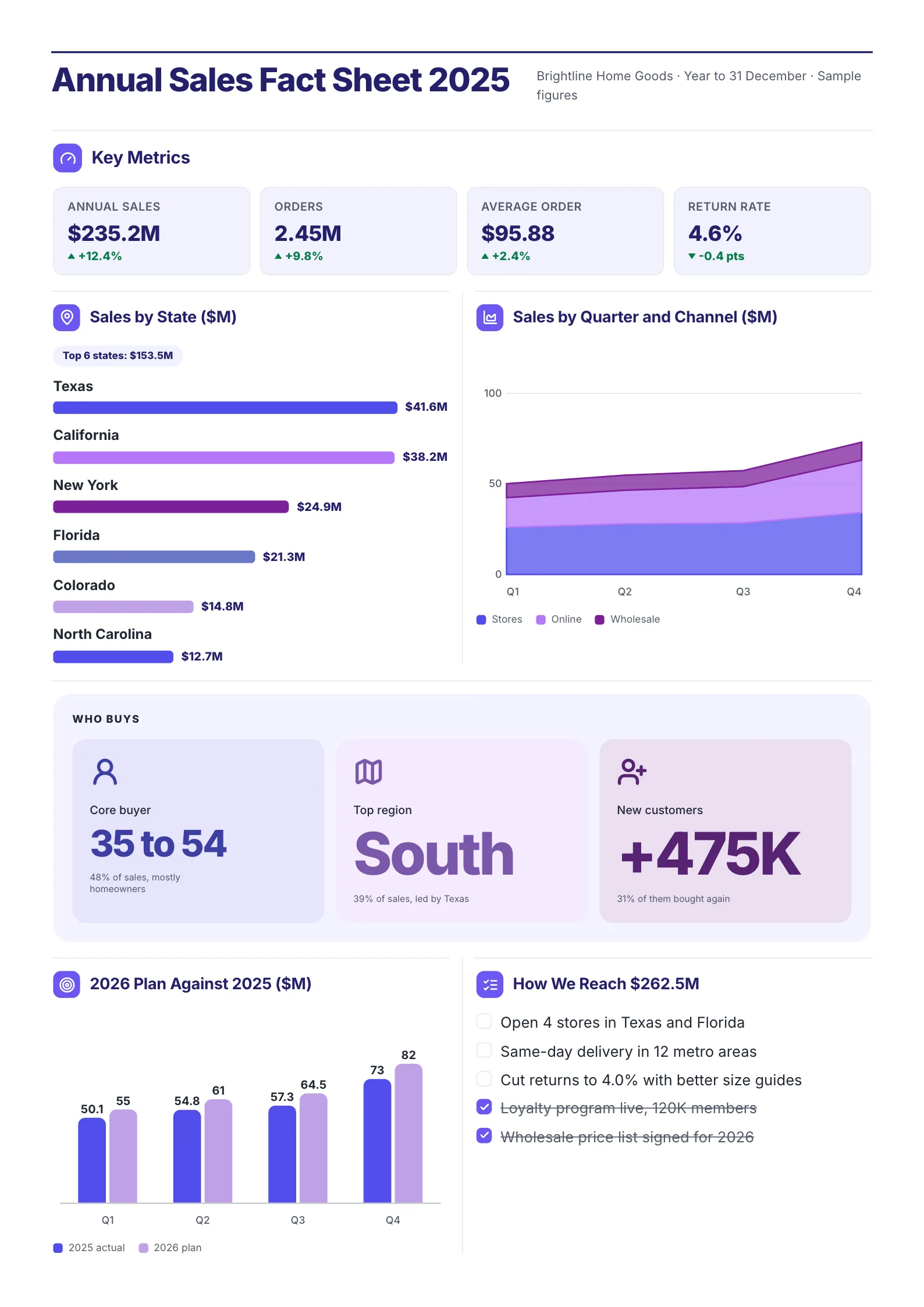 Annual Sales Fact SheetEdit for free(opens in a new tab)
The pattern is simple enough to copy on one page. You start on a few short facts. You follow them with headings people can predict. You date the page, and you end on what you're doing about the subject. Below is what WHO does at each step and how five one-page sheets from MakeOnepagers use the same moves for a town hall, a pizzeria, a caterer, a bond fund and a solar installer. Those five are made up, names and numbers alike.
The 5 sheets we read
On October 30, 2026, we opened WHO's sheets on hypertension, diabetes, obesity and overweight, depression and malaria. Here's what each one carries.
| Sheet | Date shown | Key facts on top | Headings before the last one | Last heading |
|---|---|---|---|---|
| Hypertension | September 25, 2025 | 7 | 7 | WHO response |
| Diabetes | November 14, 2024 | 6 | 8 | WHO response |
| Obesity and overweight | October 7, 2026 | 5 | 11 | WHO response |
| Depression | September 11, 2026 | 5 | 5 | WHO response |
| Malaria | December 4, 2025 | 4 | 13 | WHO response |
Headings include subheadings.
These sheets run long on a screen, and yours has one page. That's why the top of the WHO format is the part to take. Everything a one-page reader needs sits in those first few lines.
Open with 4 to 7 facts, each one short
Every sheet starts under the words "Key facts," before any explanation. The depression sheet's first line is only six words: "Depression is a common mental disorder." The obesity sheet opens with a count you can repeat at dinner: "In 2024, 1 in 7 people (1.1 billion) in the world were living with obesity."
Two habits make these lists work. Each fact stands alone, so anyone can quote one without the others. And each fact is a full sentence, so a number never floats without saying what it counts.
 Edit this template
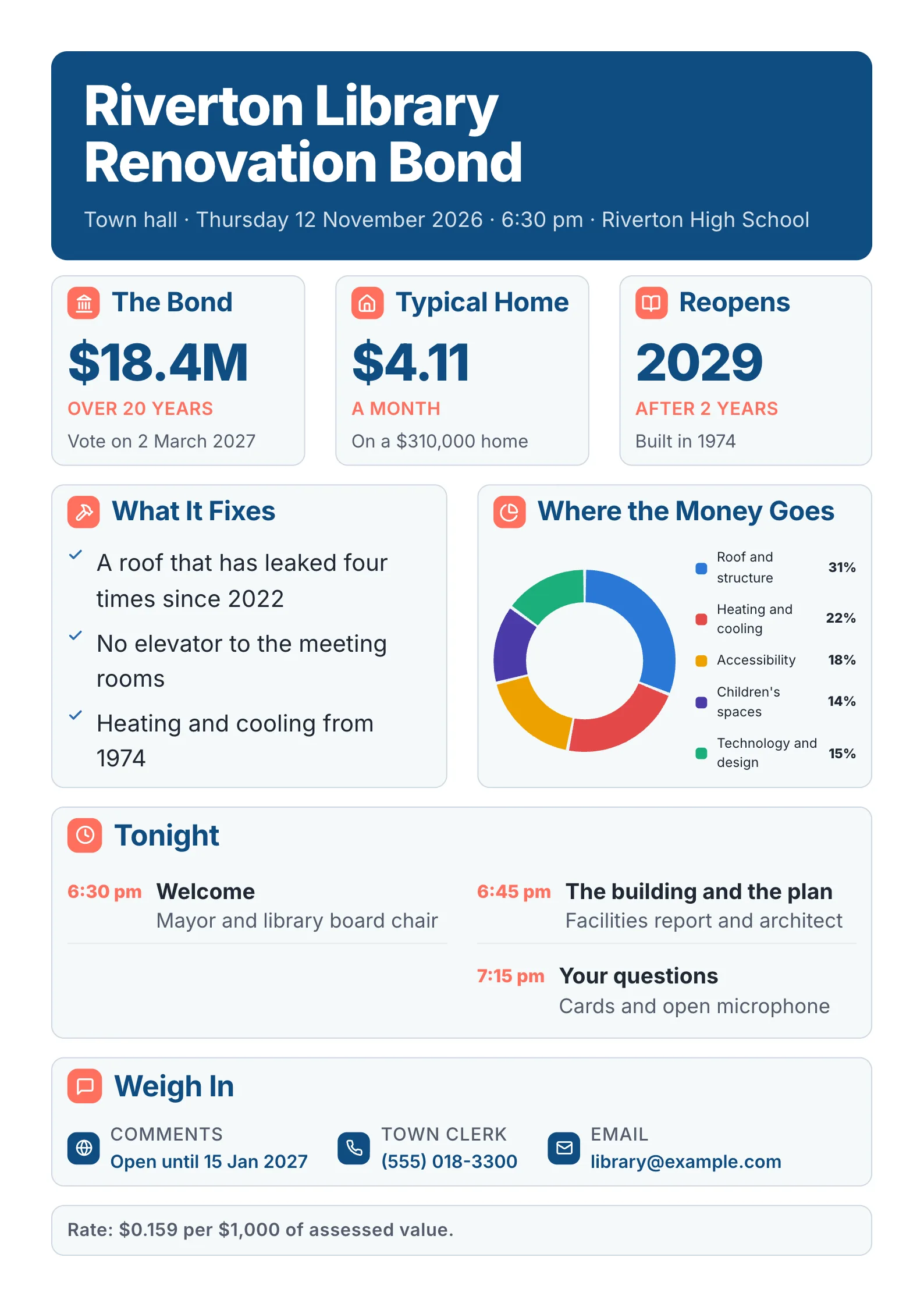
Three tiles answer what a voter asks first: how much, when's the vote and what it costs their home.
Riverton's sheet turns the list into tiles. A neighbor walking into the meeting gets the bond's size, the cost to a typical home and the reopening date before finding a seat. With room for only three facts, pick the three you'd get asked about out loud.
Use headings people can predict
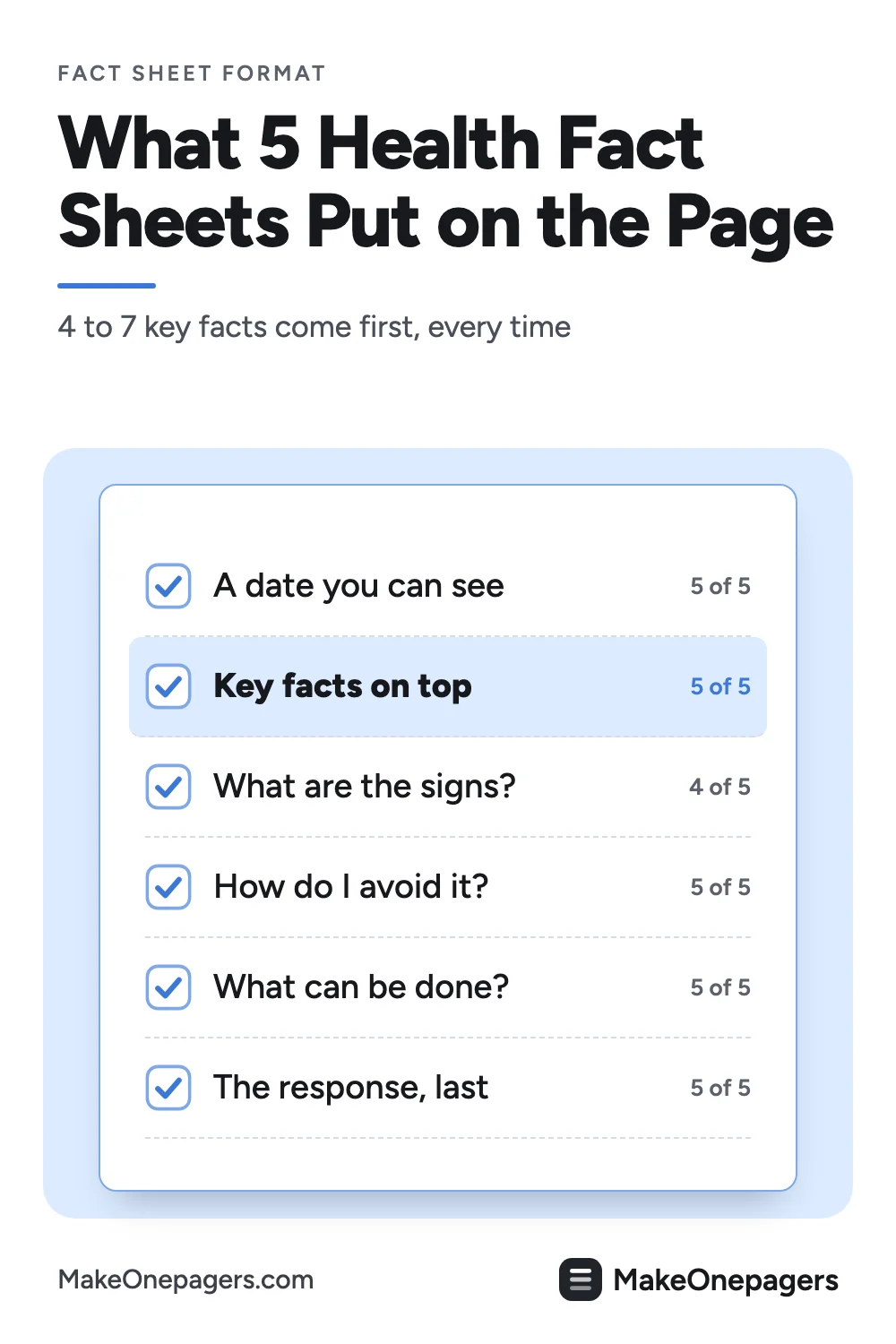
The headings barely change from one disease to the next. Here's how often each job shows up across the five.
| What the section does | WHO's heading | Sheets with it |
|---|---|---|
| What are the signs? | Symptoms; Symptoms and patterns | 4 of 5 |
| How do I avoid it? | Prevention; Prevention and management; Contributing factors and prevention | 5 of 5 |
| What can be done about it? | Treatment; Diagnosis and treatment; Prevention and management | 5 of 5 |
| What is WHO doing? | WHO response | 5 of 5 |
The one sheet with no symptoms heading is obesity, which swaps in a definition instead. That's a good lesson for your page. Keep the slots steady, and change one only when the topic demands it.
A sheet for a business works the same way, with the buyer's questions as the slots. What do I get, what does it cost, how does it work and who do I call?
 Edit this template
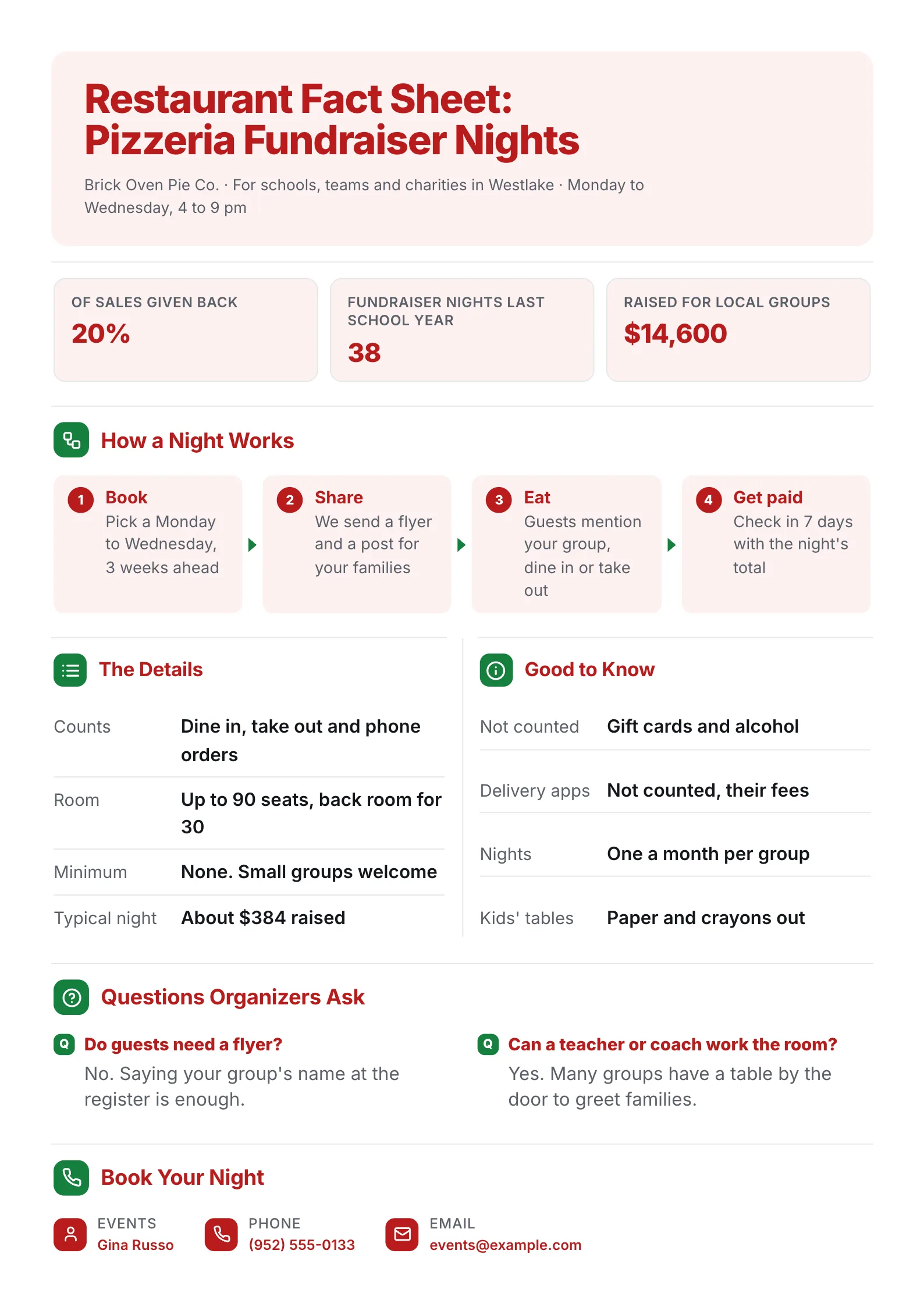
Book, Share, Eat, Get paid: a school parent can read the whole deal without calling.
 Edit this template
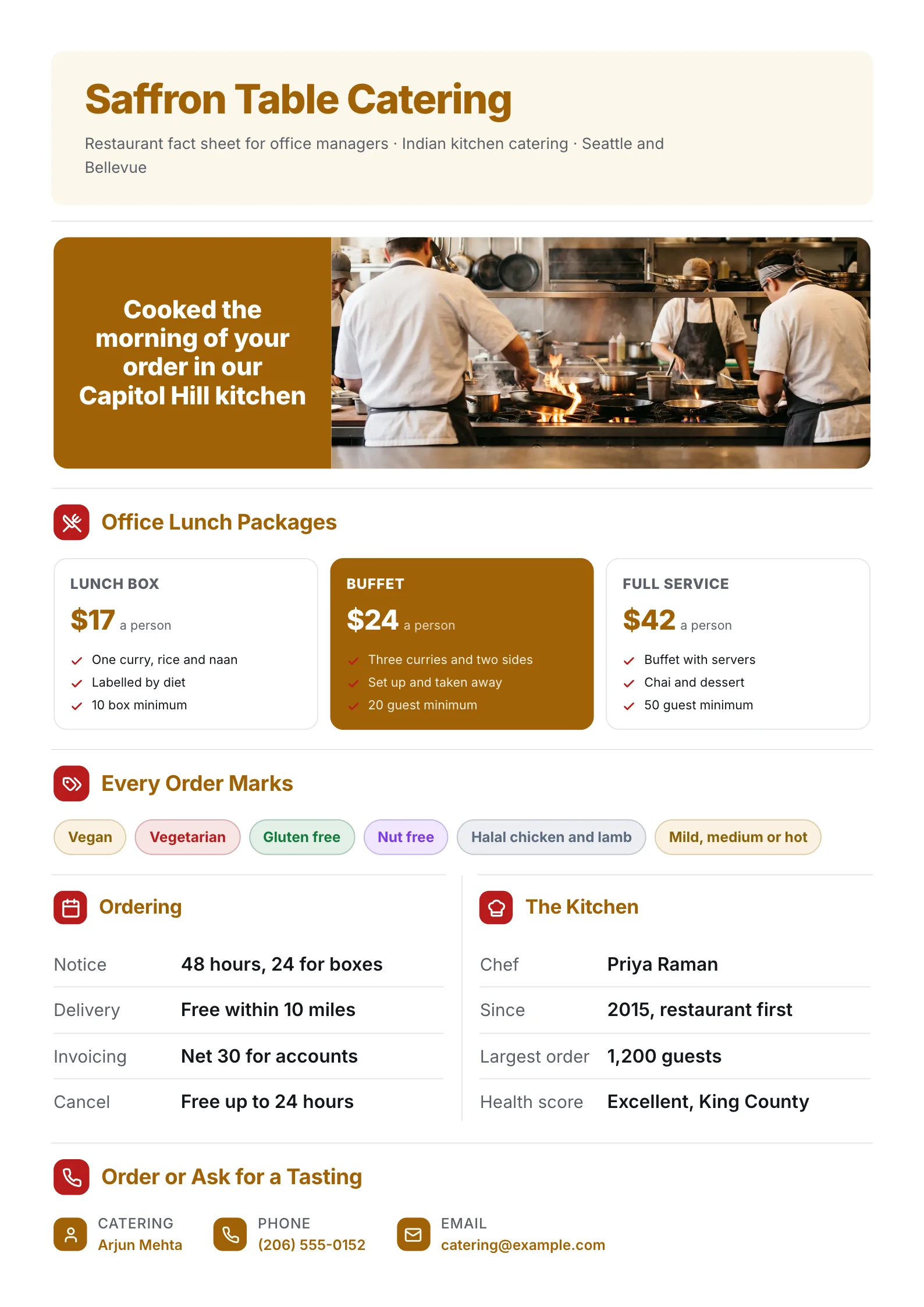
An office manager comparing caterers looks for the price per person and the minimum, so those lead each package.
Notice that neither page opens with the owner's story. If your history matters, give it one line after the facts.
Put a date on the page
All five WHO sheets print a date, and the dates are nearly two years apart. Numbers get their own dates too: the diabetes sheet says its 830 million is from 2022, on a page dated November 2024. That's two separate facts, how old the number is and when the page was last checked.
Your sheet needs the same two things. Date the page, and date any number that will age.
 Edit this template
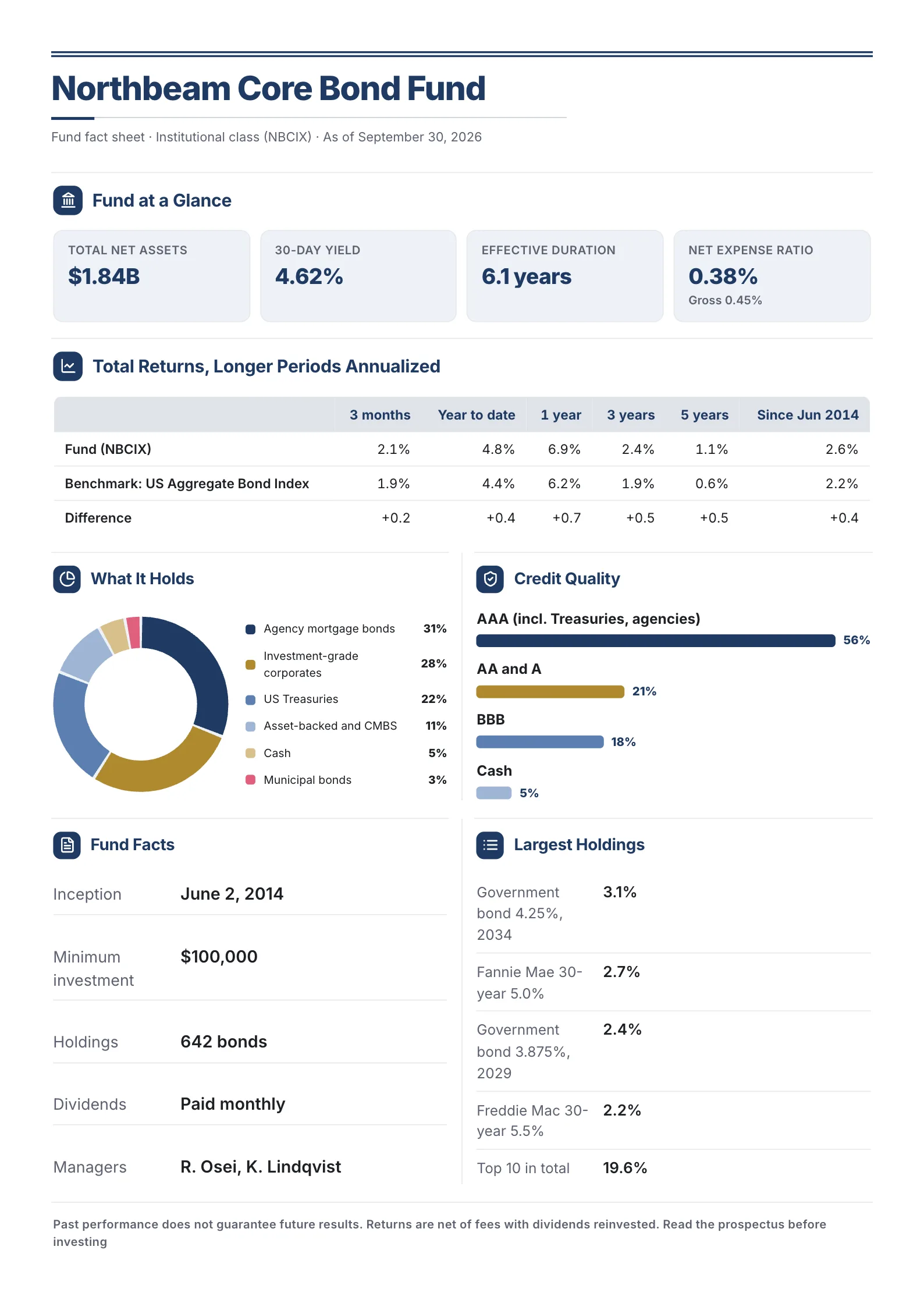
"As of September 30, 2026" sits in the subtitle because every number below depends on it.
A fund sheet can't go without that line. A price list or hotel sheet can get away with less, but people still want to know your page isn't three years old. "2027 rates" is enough.
End on what you're doing about it
Every WHO sheet closes with "WHO response," a short account of what the organization itself does on the subject. After a page of facts, you've shown who's behind them and what they stand for.
For a company, that closing block is your plan or your track record. For a nonprofit, it's the program. For a town, it's the next meeting.
 Edit this template
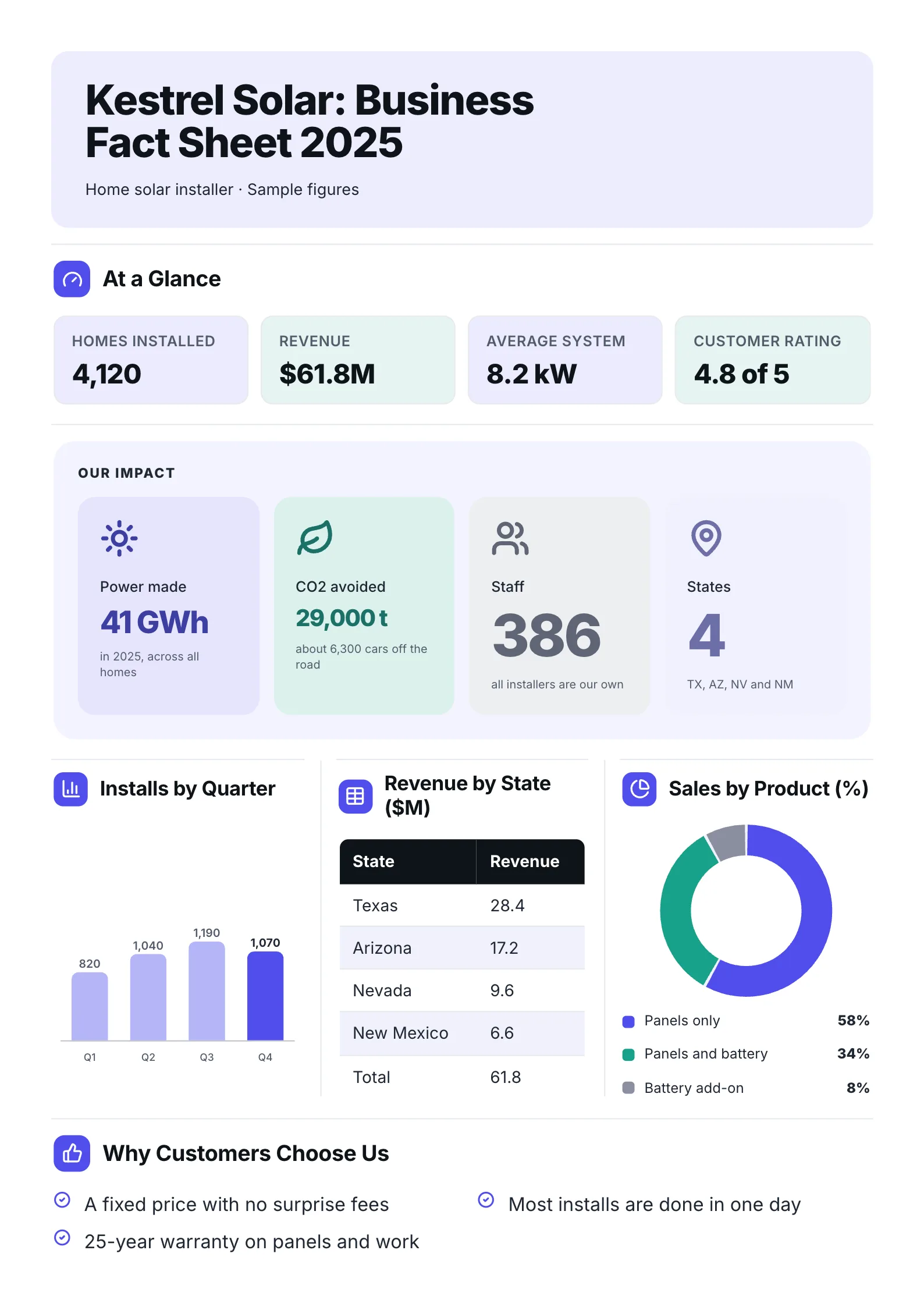
The numbers open the page, and the impact section says what those installs added up to.
Kestrel's Our Impact block does what WHO's last section does. It moves from what the company measures to what the company did with it: 41 GWh of power made and 386 staff, all its own installers.
A one-page fact sheet format to copy
Fold the WHO pattern onto one page, and the order runs like this.
- Title and date. Name the subject and how current it is.
- Key facts. Three to seven short lines or tiles, each able to stand alone.
- What it is or what you get. One short block for a reader who's new to the subject.
- The reader's two or three questions. Give each one a heading they'd recognize.
- What you're doing, and who to contact. End on your work and a name, phone or web address.
Why the key facts come before the design
WHO's list works with no design at all, which tells you where the effort belongs. Five sentences that still work typed on a plain sheet leave your layout with one job, which is to keep out of their way.
Frequently asked questions
Is one page enough for a fact sheet?
It is for most uses, and two sides is the most you'd want in print. WHO's sheets are long because they serve as a web reference, but all of them let you stop after the key facts.
Should a fact sheet use bullets or paragraphs?
Use short lines or tiles at the top and brief paragraphs lower down. WHO's sheets follow that split, with a bulleted list of facts first and paragraphs under the headings.
Do you need sources on a fact sheet?
If you cite a number you didn't measure yourself, yes. A small source line at the foot is enough, and your date line tells readers how current it is. Our guide on how to write a fact sheet covers crediting in more detail.
Is a fact sheet the same as a one-pager?
Close, though a fact sheet informs and a one-pager usually asks for something. You can see more of each in these fact sheet examples.




