How to Write a Fact Sheet: What 13 NIMH Fact Sheets Teach
How to write a fact sheet, learned from 13 one-sheet fact sheets the National Institute of Mental Health publishes: length, titles, body shapes and endings.

Here's how to write a fact sheet: decide if your subject fits on one side or needs two, and title it with the question your reader is asking. Open with one or two sentences on who it's for, pick one shape for the body, and close by telling your reader where to turn. That's the pattern in the 13 fact sheets the National Institute of Mental Health (NIMH) prints on a single letter-size sheet. The one-sided ones hold about 160 to 300 words, and 6 of those 7 close by telling the reader where to turn. Start from a free one pager template.
One‑Pager examples
Real One-Pagers made with MakeOnepagers. Open any one to edit it as your own.
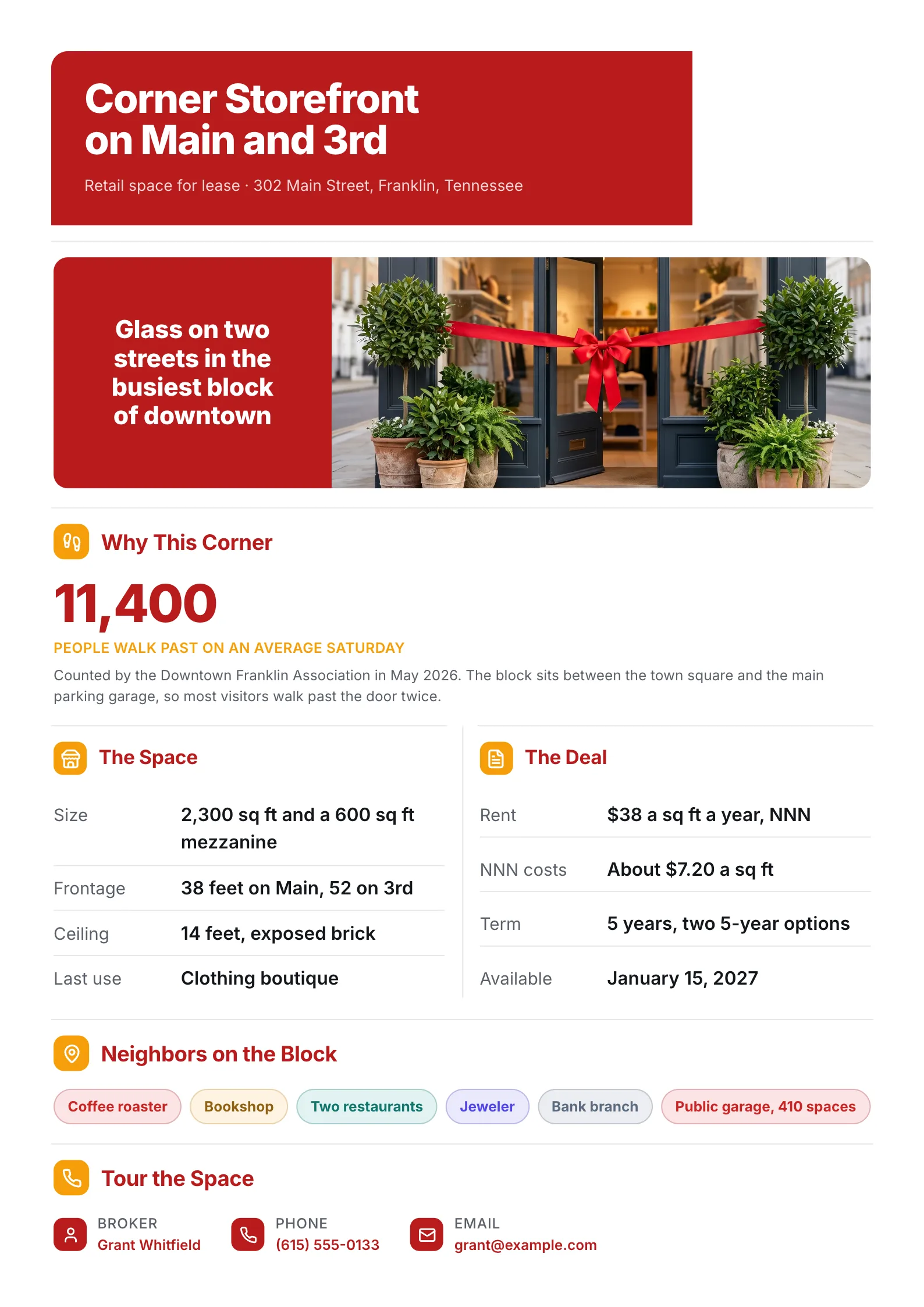 Property Fact Sheet: Retail Storefront LeaseEdit for free(opens in a new tab)
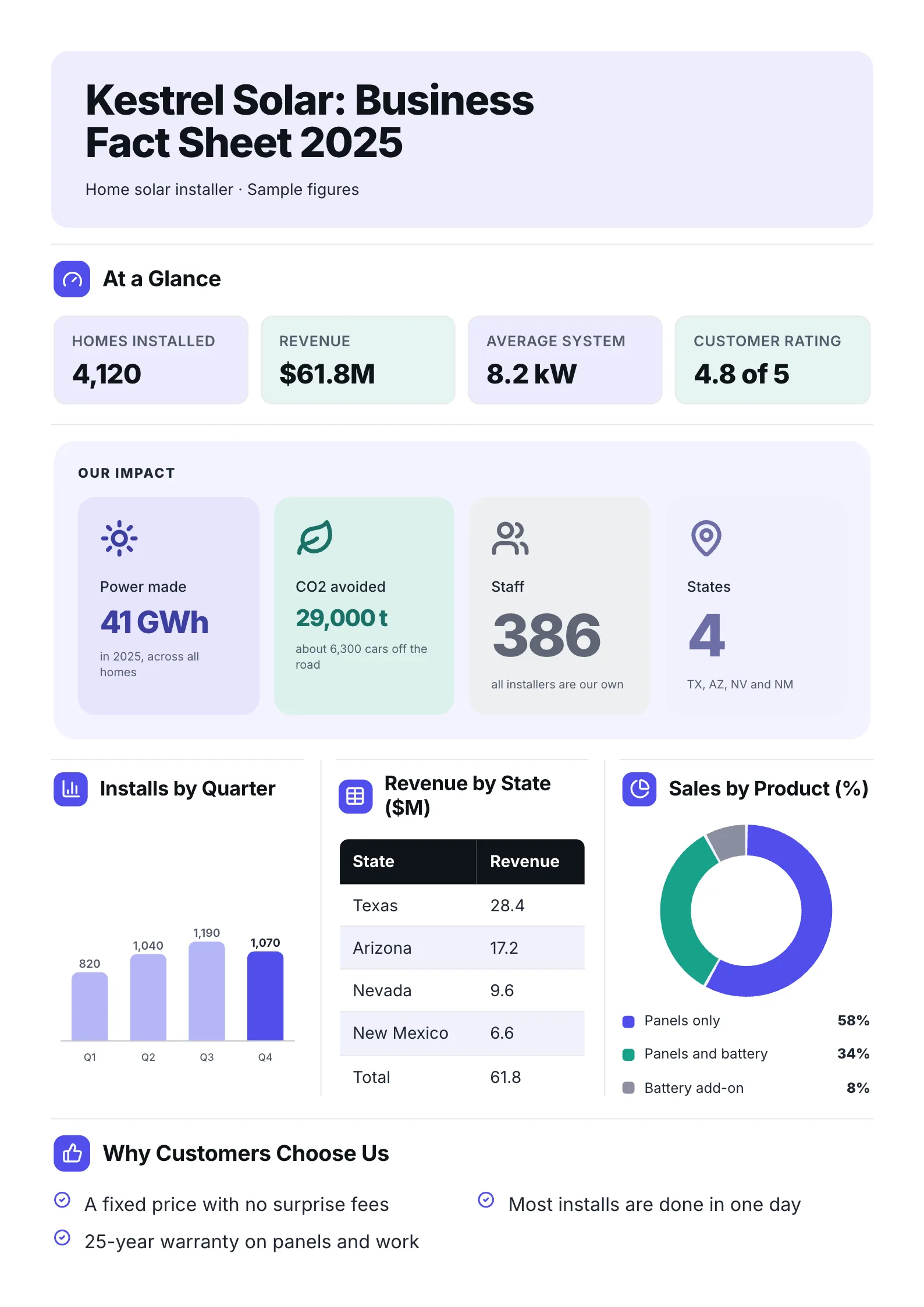 Business Fact SheetEdit for free(opens in a new tab)
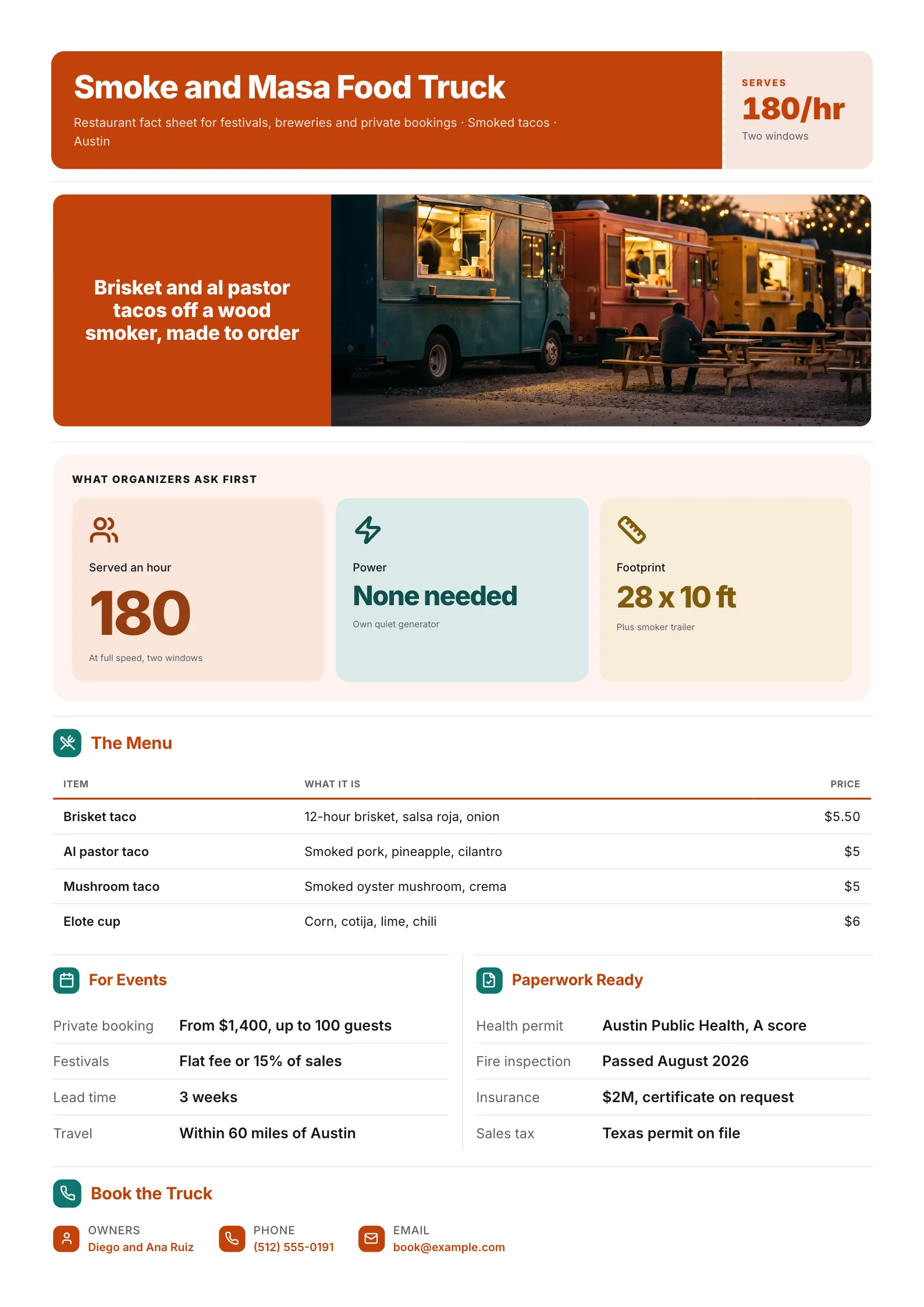 Restaurant Fact Sheet: Food Truck BookingEdit for free(opens in a new tab)
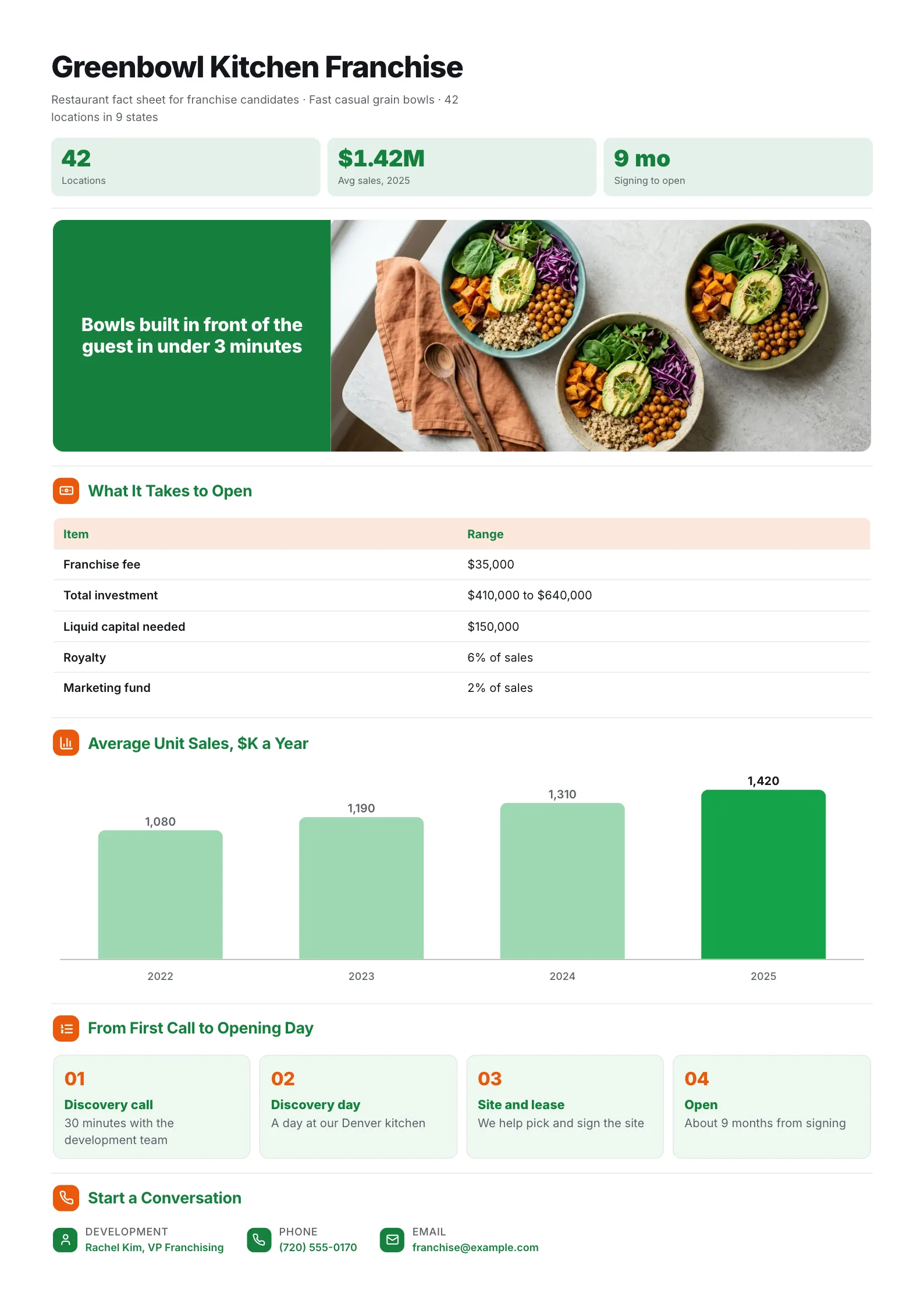 Restaurant Fact Sheet: Franchise OpportunityEdit for free(opens in a new tab)
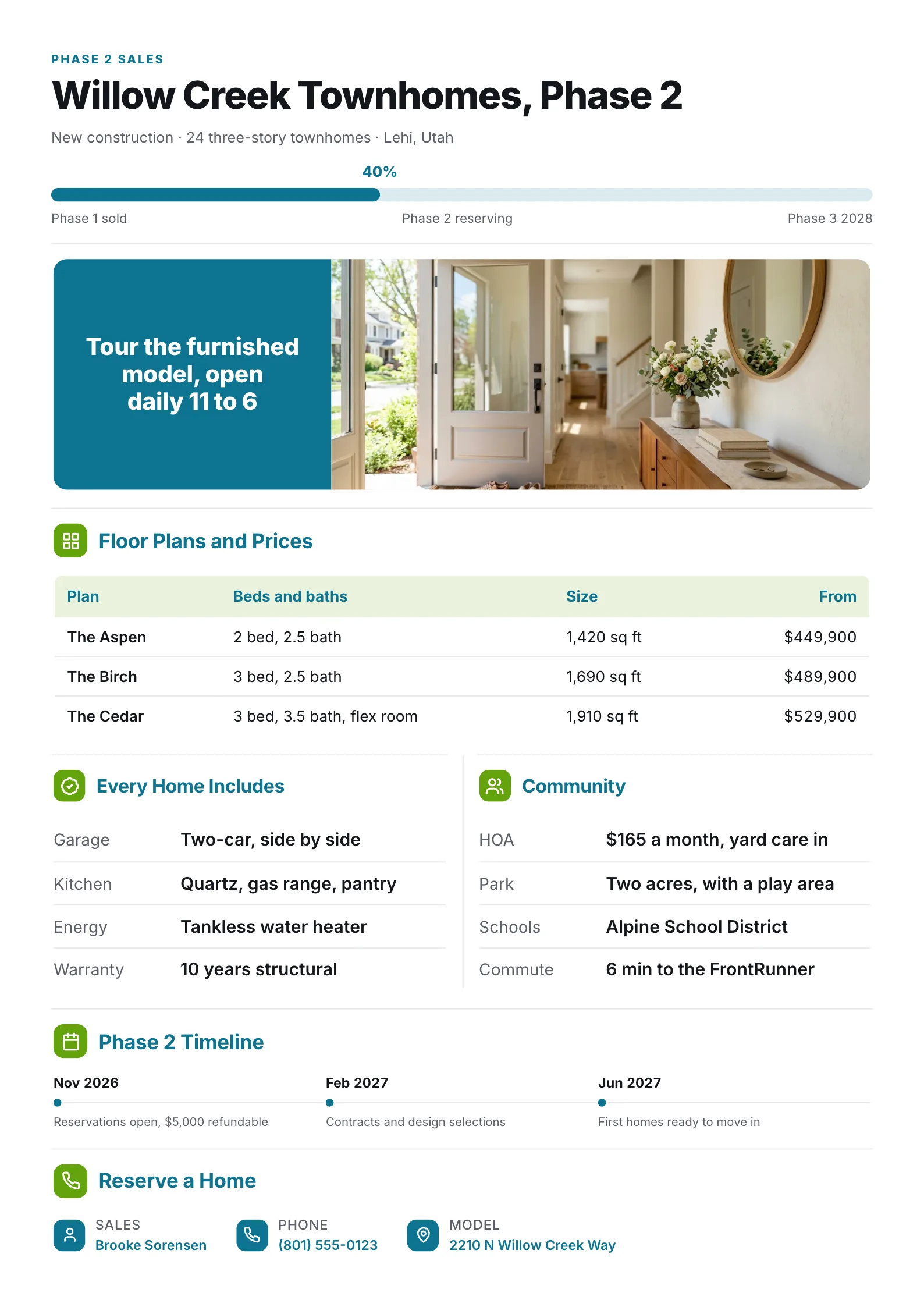 Property Fact Sheet: New Construction TownhomesEdit for free(opens in a new tab)
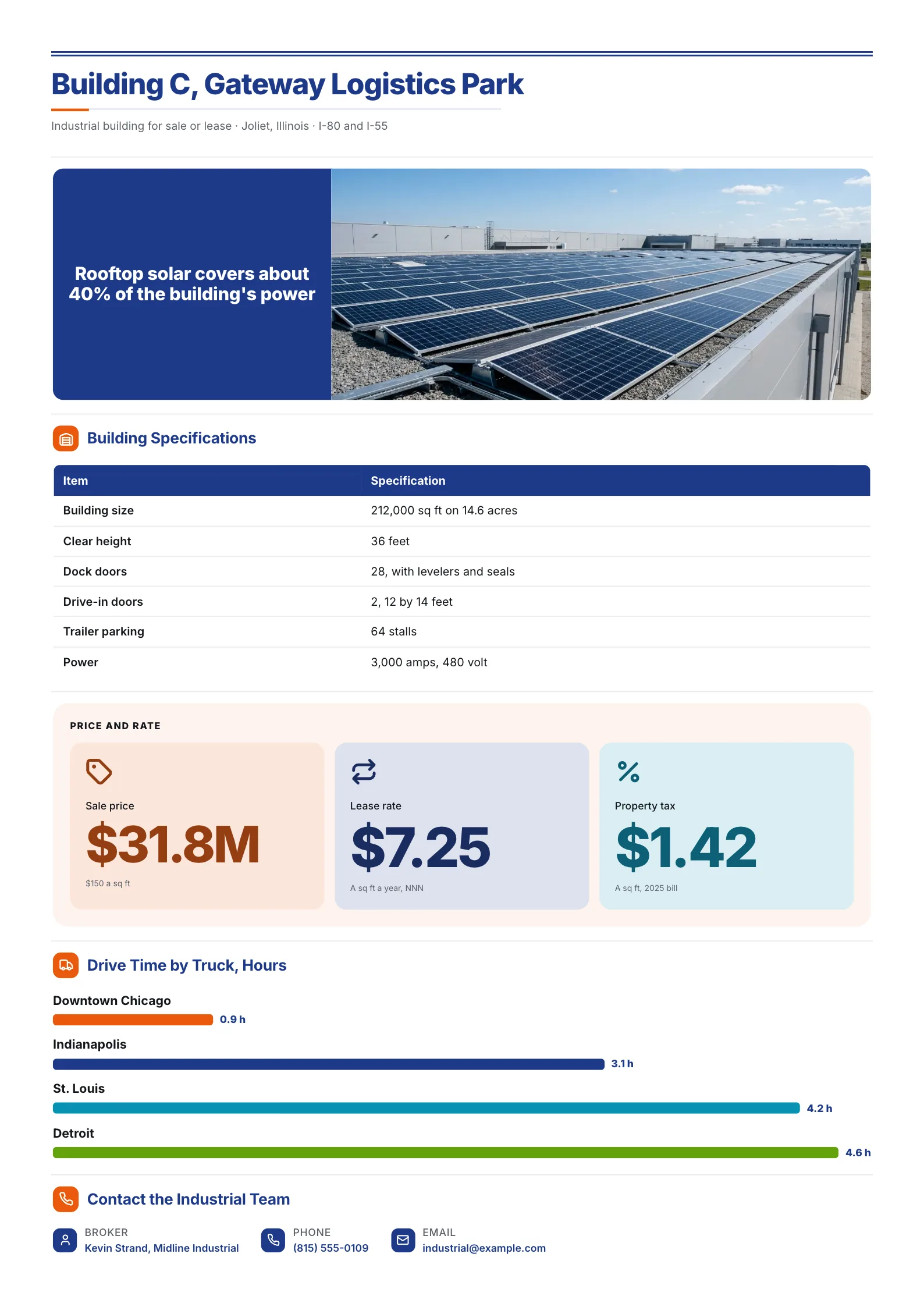 Property Fact Sheet: Industrial WarehouseEdit for free(opens in a new tab)
NIMH writes for worried parents, teens and patients, people who will read for a minute and stop. If your reader is busy too, its fact sheets are a good model for you. Below are the sheets we read, what they share, and how to adapt the pattern when your fact sheet is for a business, a building or a vote.
The 13 NIMH fact sheets we read
On October 26, 2026, the NIMH Brochures and Fact Sheets A to Z page listed 44 English publications on a single page. 36 of them link a PDF. We kept the 13 printed on one US letter sheet, front only or front and back. We left out 23 that are longer or a different size: 7 four-page leaflets, 11 booklets of 8 pages or more, 3 activity books, 1 anniversary book and 1 square infographic. We read each of the 13 in full and counted its words with the free pdftotext tool, every word on the sheet, footer included.
| Fact sheet | Sides | Words | How the body is built | How it closes, above the footer |
|---|---|---|---|---|
| Warning Signs of Suicide | 1 | 157 | Three labeled groups | The 988 Lifeline: call, text or chat |
| What Are Common Types of Eating Disorders? | 1 | 171 | Four labeled boxes | Talk to a health care provider |
| Bipolar Disorder in Teens and Young Adults: Know the Signs | 1 | 177 | Two labeled lists of 5 | Call or text 988, or call 911 in danger |
| Let's Talk About Eating Disorders | 1 | 189 | Six headings that state a fact | Its last fact, with no next step |
| Seasonal Affective Disorder (SAD): More Than the Winter Blues | 1 | 251 | Two questions, each with its own advice | A find-help link, then 988 |
| 5 Action Steps to Help Someone Having Thoughts of Suicide | 1 | 263 | Five numbered steps | Two web addresses |
| Teen Depression: More Than Just Moodiness | 1 | 298 | Two questions with checklists | Call or text 988 |
| The Teen Brain: 7 Things to Know | 2 | 608 | Seven numbered points | Help links, 988 and 911 |
| I'm So Stressed Out! Fact Sheet | 2 | 743 | Questions, plus a stress vs. anxiety table | 988, then a list of 5 resource links |
| Depression in Women: 4 Things to Know | 2 | 767 | Four headings that state a fact | A list of 3 agencies, then a treatment finder |
| Helping Children and Adolescents Cope With Traumatic Events | 2 | 808 | Questions, with columns by age | Crisis lines, then a list of 4 resource links |
| Tips for Talking With a Health Care Provider About Your Mental Health | 2 | 833 | Five numbered tips | Its fifth tip, with no next step |
| Understanding the Link Between Chronic Disease and Depression | 2 | 918 | Six questions as headings | A link to read about clinical trials |
Seven fit on one side and six use both. What they share is short: a title that names the subject, a body built in one shape, NIMH's name on the sheet, a publication number, and NIMH's web address printed in the footer.
One side or two: let the job decide
The seven one-sided sheets run from 157 to 298 words, about 190 in the middle. The six two-sided sheets run from 608 to 918, about 790 in the middle. Nothing in the set sits between 298 and 608 words. Each sheet is clearly one size or the other.
Look at what each size carries, and you'll see the rule. The one-siders hold one list or one decision: the warning signs, the five steps, mild symptoms against severe ones. The two-siders explain something first, like what stress is, how the teen brain changes, or why chronic disease and depression feed each other, and then give the advice.
So ask yourself one question before you write a word. Does your reader need to recognize something or do something? Then one side is enough. Do they need to understand it first? Then plan for two, and keep both sides to the same shape. TrestleLink, which trains researchers to write for lawmakers, puts the outer limit at 1 to 2 pages, and all 13 NIMH sheets stay inside it.
Write the title as the reader's question or a count
Read the 13 titles aloud and you'll hear how a worried reader thinks. One is a question ("What Are Common Types of Eating Disorders?"). Three promise a count ("5 Action Steps", "7 Things to Know", "4 Things to Know"). Five pair the subject with a short line after a colon that says what you'll get, like "Know the Signs" or "More Than Just Moodiness".
None of them is a bare label like "Depression Fact Sheet". Kent State's Center for Teaching and Learning suggests that classroom fact sheets put the subject followed by the words "Fact Sheet" in the title, which helps a teacher sort a stack of assignments. For a reader who chooses whether to pick your sheet up, the NIMH way works harder. Name the subject, then add the question or the promise.
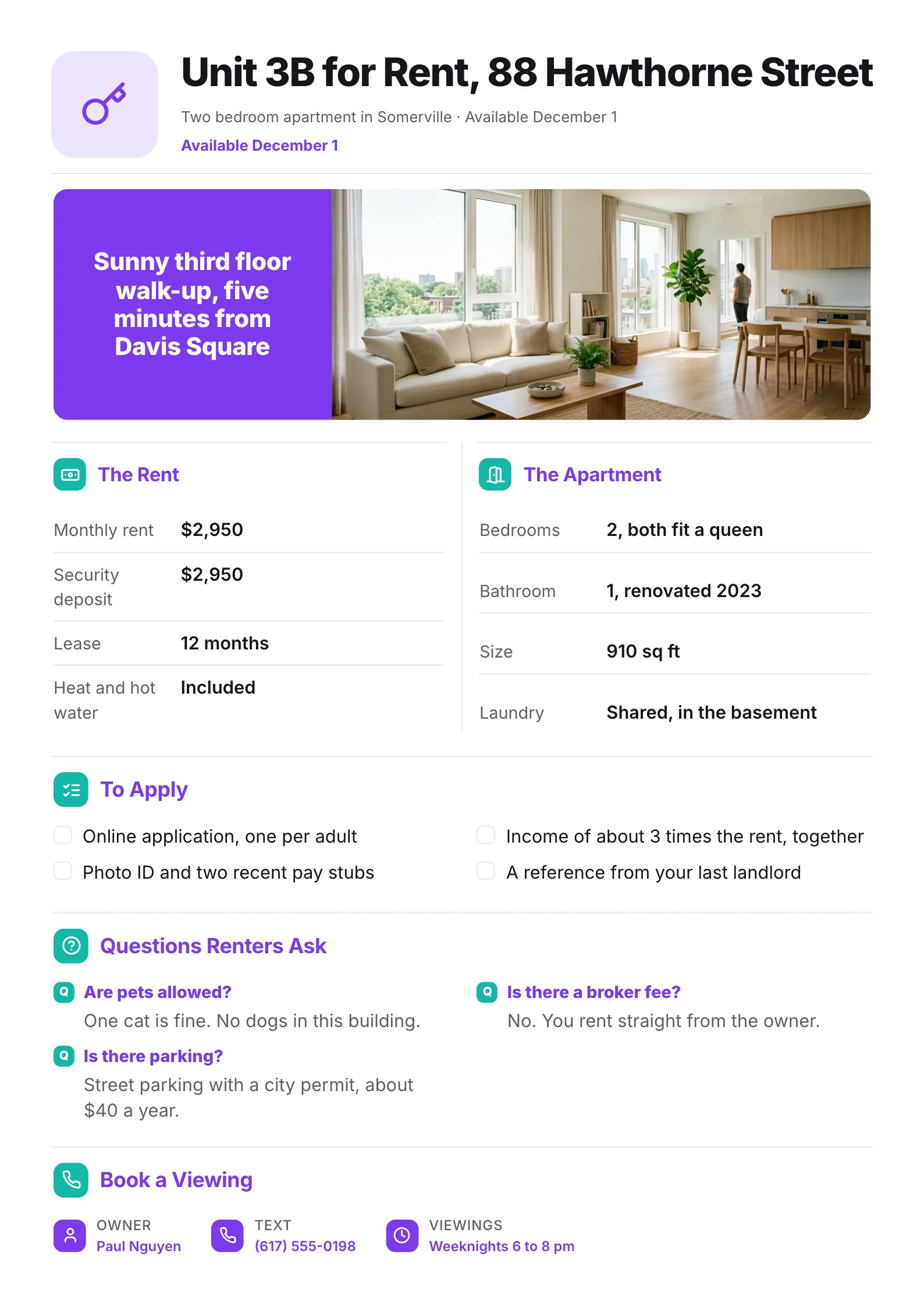 Edit this template
Sample names and figures. The title names the subject and what the reader gets, a unit for rent, with no "Fact Sheet" label. The questions renters ask get their own answers, and the sheet closes on one person to text.
Open with who it's for and what they'll get
Twelve of the 13 sheets start with a short paragraph in larger type before the first heading. Most run two or three sentences. The teen depression sheet opens on the reader's own feeling: "Being a teenager can be tough, but it shouldn't feel hopeless." The stress sheet says what the sheet will do: "Read this fact sheet to learn whether it's stress or anxiety, and what you can do to cope."
The one exception, the chronic disease sheet, goes straight to its first question, "What is a chronic disease?", and answers it in the next line. Either way, your reader knows within two lines if the sheet is for them, and you should aim for the same. Kent State gives the same length for the opening, a summary of 1 to 3 sentences.
Pick one shape for the body
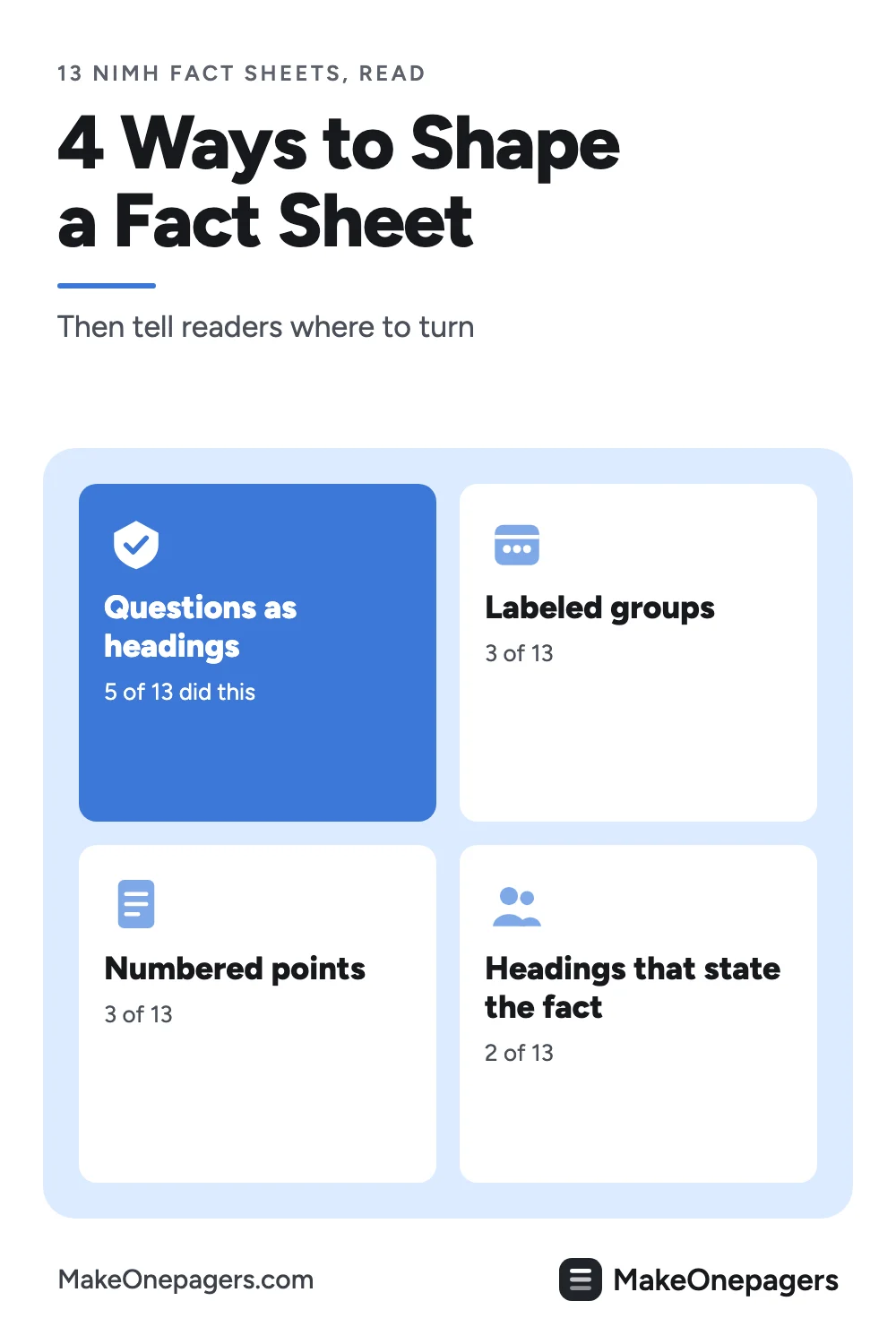
Every sheet uses one shape from top to bottom, and across the 13 you'll find four. Pick the one that fits your reader.
| Shape | How many | Use it when | NIMH example |
|---|---|---|---|
| Questions as headings | 5 | Your reader arrives with questions | Chronic disease: "Can depression lead to chronic disease?" |
| Labeled groups | 3 | You list signs, types or options side by side | Warning signs: Talking about, Feeling, Changing behavior |
| Numbered points | 3 | The order matters, or you promised a count | 5 Action Steps: Ask, Be there, Help keep them safe |
| Headings that state the fact | 2 | You correct a belief | "It is possible to recover from an eating disorder." |
The question shape is the most common, and it's the easiest for you to write. List what your reader would ask you face to face, then answer each in two to four sentences. The SAD sheet turns it into a decision. One question asks about mild symptoms that lasted less than two weeks, the other about severe ones that lasted more, and each leads to its own advice.
If your subject needs it, you can add a second tool inside your shape, as two sheets do. The stress sheet sets stress and anxiety side by side in a three-column table, with what they share in the middle. The traumatic events sheet splits its signs into columns by age: 5 and younger, 6 and older, and any age.
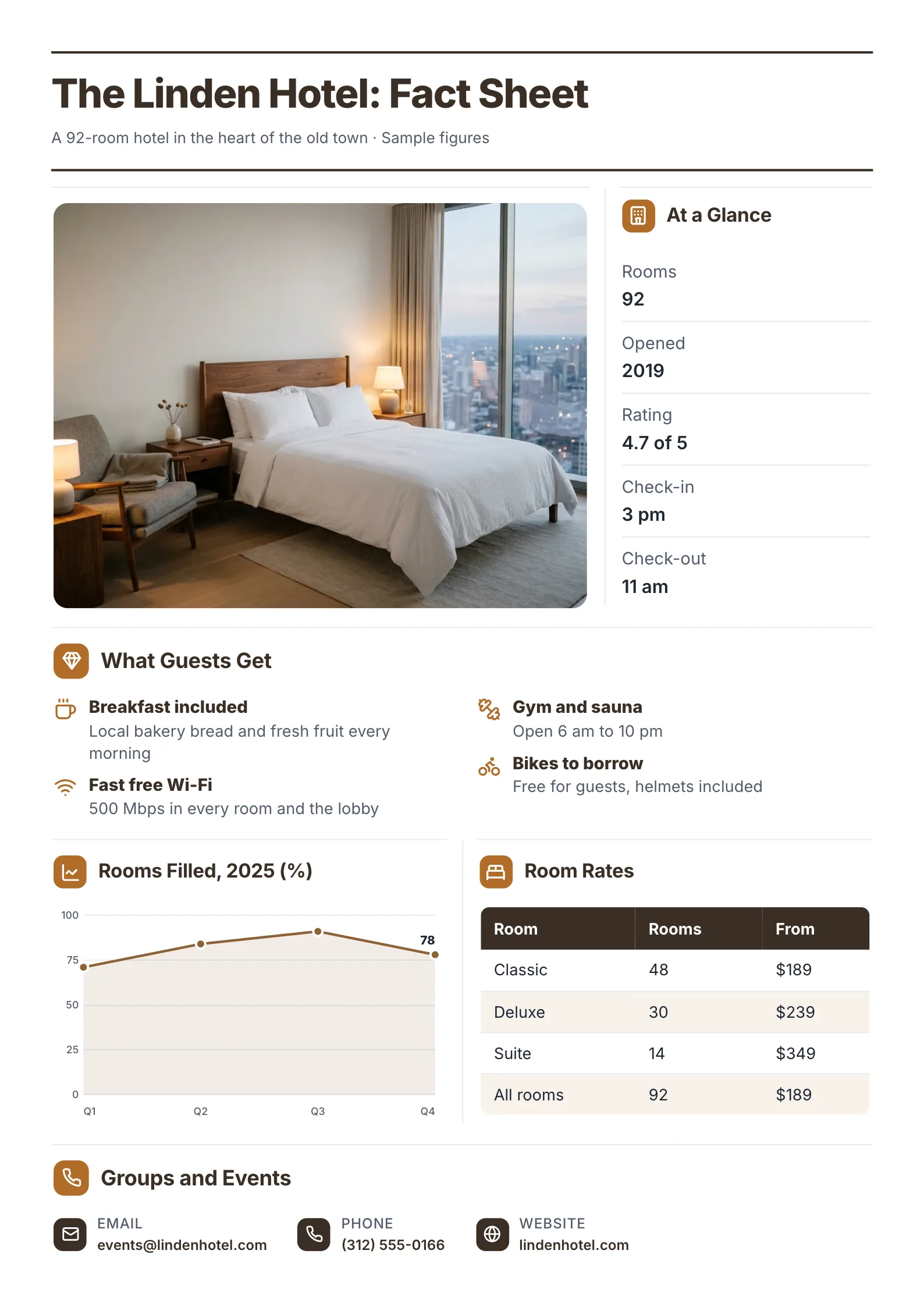 Edit this template
Sample names and figures. Your eye moves through labeled groups from top to bottom, and the rates table is the second tool inside that shape, like the stress sheet's table. It closes on three ways to reach the events team. One thing to change when you make yours: the title ends in "Fact Sheet", the bare label the NIMH sheets skip, so name what the guest gets instead.
Tell the reader where to turn
Every one of the 13 prints NIMH's web address in its footer, so that line is the same on all of them. What you should study is the last thing the writer chose to say above it, and there the two sizes differ.
On one side, 6 of the 7 close by telling the reader where to turn, in a line or two. Four give the 988 Suicide & Crisis Lifeline, one says to talk to a health care provider, and one lists two web addresses. The bipolar sheet puts two choices side by side, call or text 988 for support or call 911 in danger, and the SAD sheet gives a link to find treatment, then 988 for a crisis. The odd one out, Let's Talk About Eating Disorders, stops on its last fact.
On two sides, the endings vary. Three close on a list of resource links: 5 on the stress sheet, 4 on the traumatic events sheet and 3 agencies on the women's sheet. The teen brain sheet closes on help links and the crisis lines, and the chronic disease sheet on a link about clinical trials. The tips sheet just stops after its fifth tip, so your reader is left with nowhere to go.
So here's what you can copy for your own sheet. On a one-sided sheet, give your reader one or two places to go, written out in full so they work on paper: a person, a web address or a date. On two sides, a short list of where to learn more is fine, and in 2 of the 3 lists NIMH puts the crisis line right above it, so the urgent step comes first.
Credit the sheet, and date it
Not one of the 13 has a reference list. Four mention research in passing ("Studies show that asking people if they are suicidal does not increase suicidal behavior or thoughts"), with no citation on the sheet. NIMH can do that because its name is the source: every sheet carries the NIMH name or logo and a publication number, and four print the year they were revised (2023 or 2024).
You probably aren't a federal research agency, so don't copy that part. Kent State asks for a references section on classroom sheets, and a short source line under a chart or a number does the same job in less space. Copy the other two habits. Put your organization's name on the sheet. If it will be handed around for months, print the month it was last checked, so a reader holding an old copy knows it.
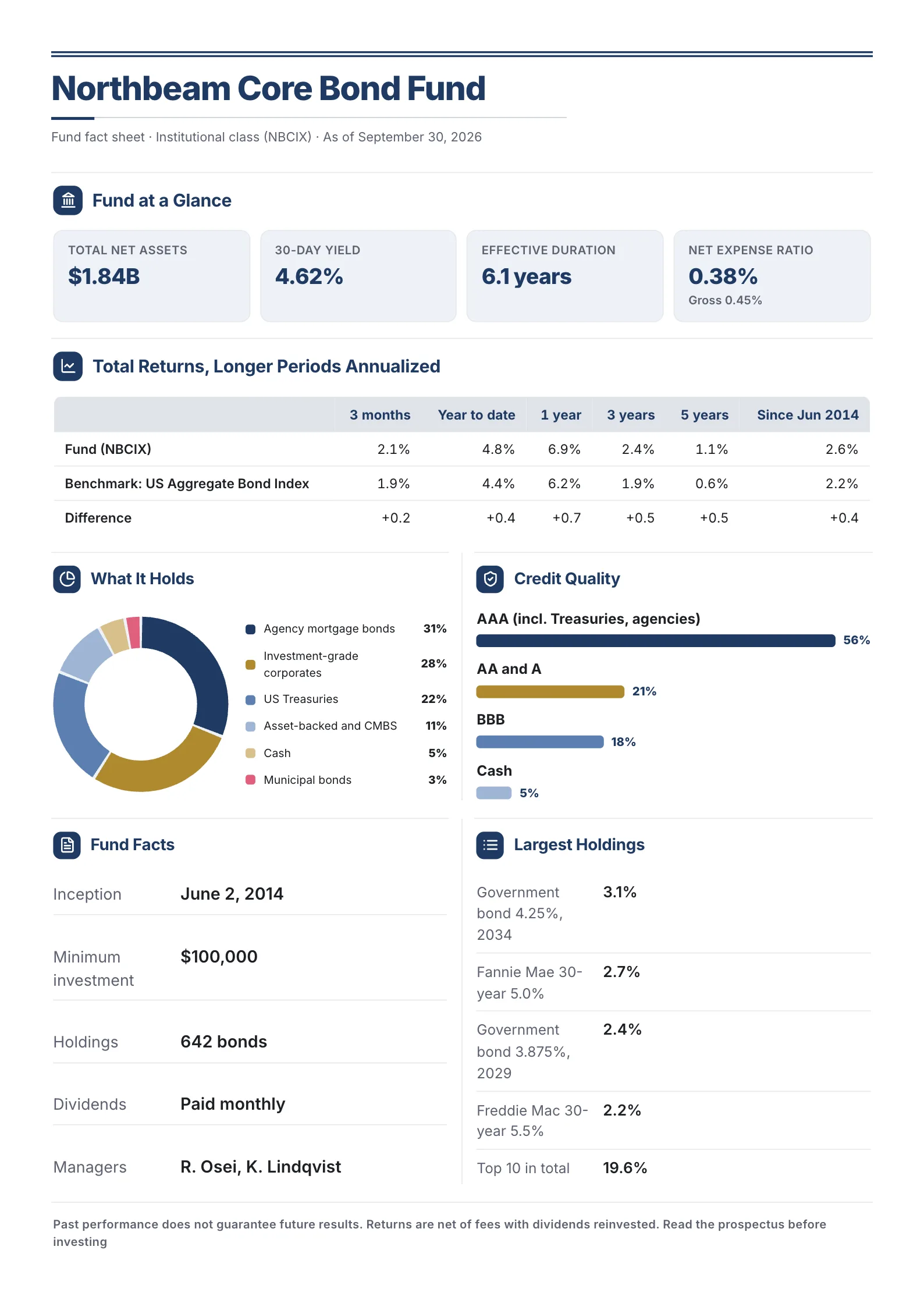 Edit this template
Sample names and figures. You'll find the "as of" date in the line under the title, and the last line says how the returns were figured and to read the prospectus, so a reader holding an old copy knows what they have.
When your fact sheet sells, persuades or invites
NIMH informs. Many fact sheets ask for something, like a vote, a booking or a lease, and that changes what goes at the top. TrestleLink's four parts for a policy fact sheet are a good outline for any of them: a targeted audience, your main point, supporting arguments and actionable options. It also says to imagine your sheet is read for 30 seconds, and that the title, the headings and the recommendation are all that gets read.
For you, that means the numbers your reader will decide on move up, into a row under the title. Your body keeps one shape, and the place to turn stays at the bottom.
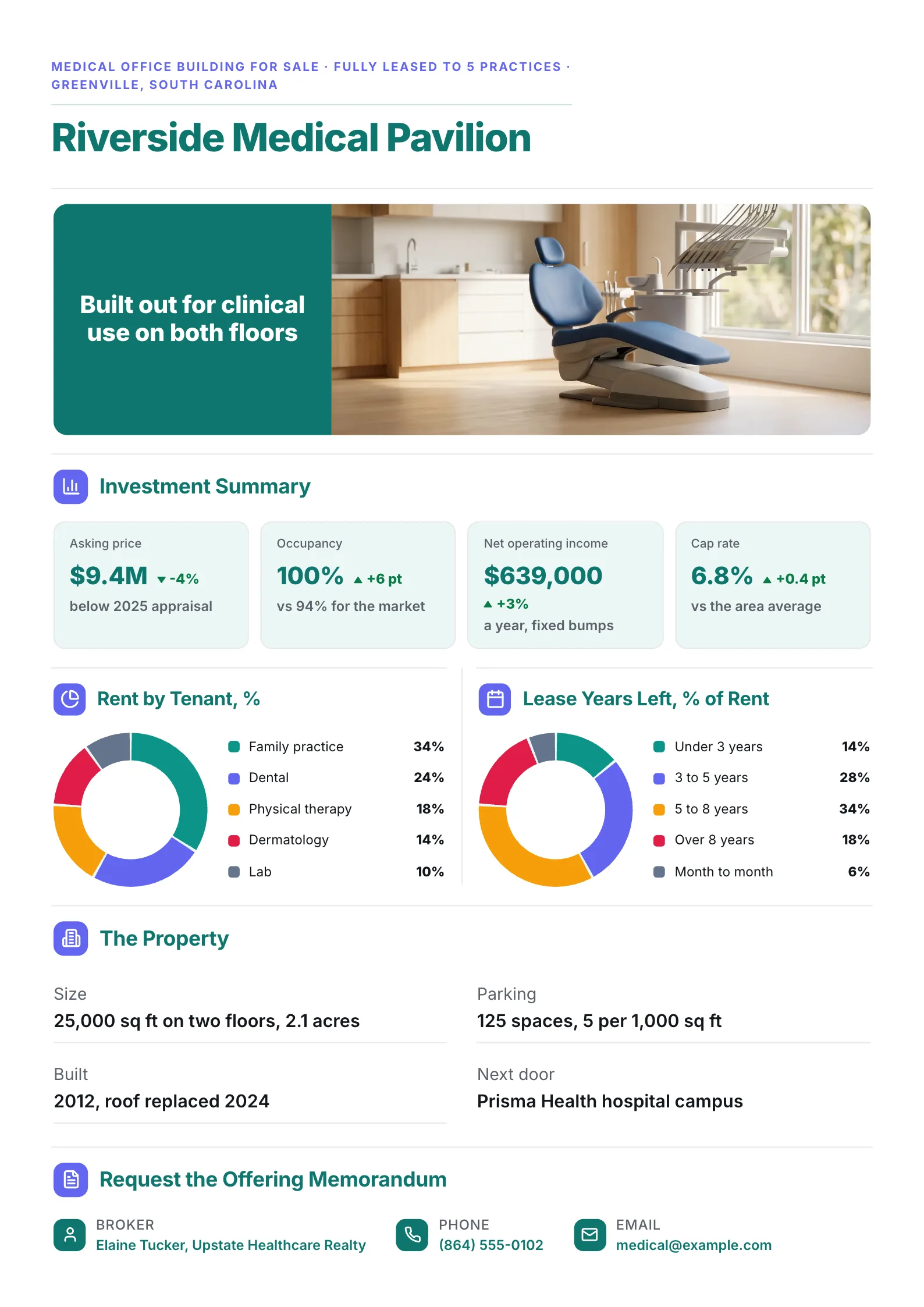 Edit this template
Sample names and figures. The four numbers your buyer decides on sit in a row under the title, and the sheet closes on one action you want them to take, request the offering memorandum, with the broker's name, phone and email.
 Edit this template
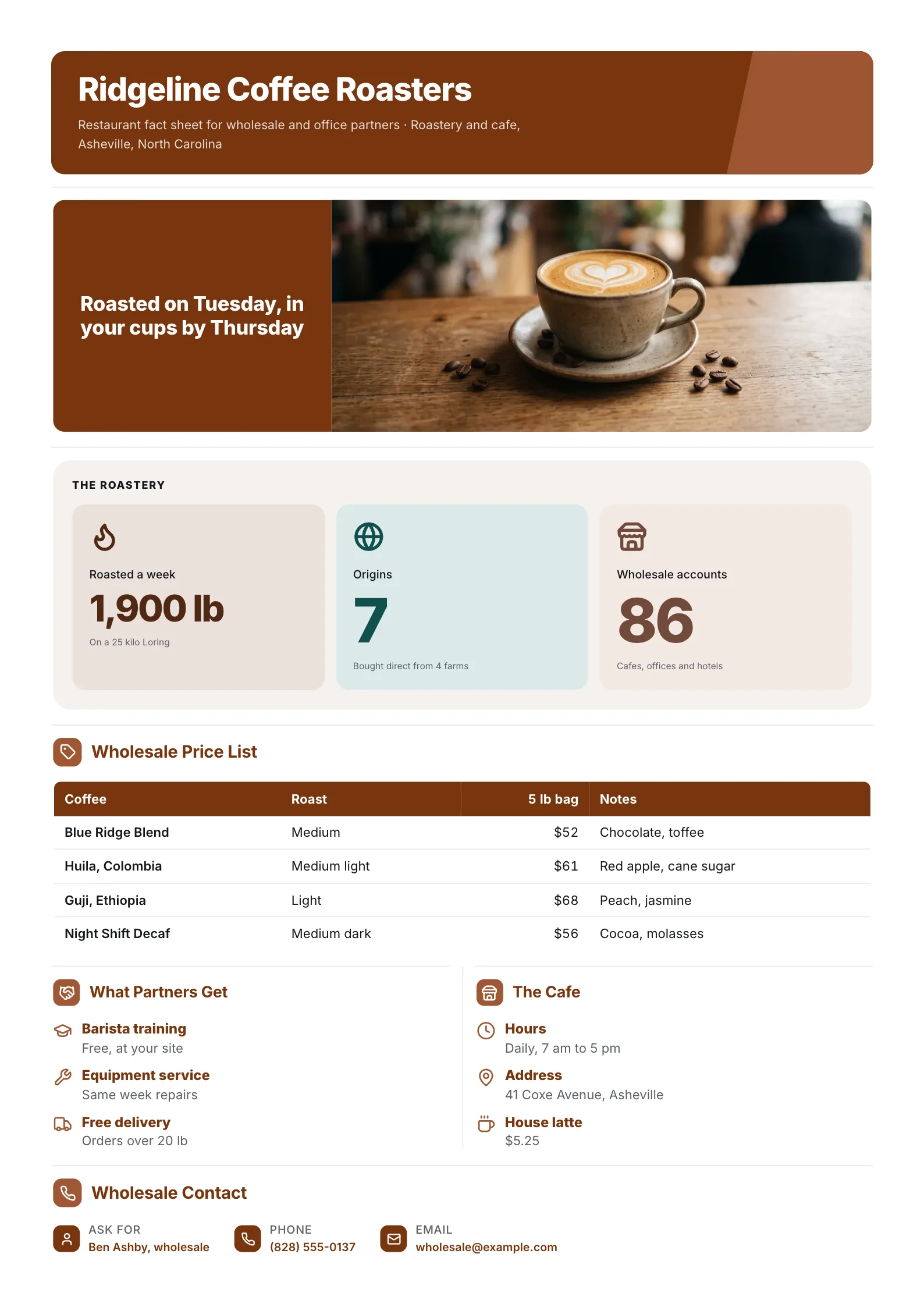
Sample names and figures. The first line tells you what the sheet is, who it's for and where, which does the job of NIMH's opening paragraph. What Partners Get and The Cafe are labeled groups, and the sheet closes on one person to ask for.
Write your fact sheet, step by step
- Write down the reader and the one thing they should do. Recognize a sign, book a room, vote by a date.
- Choose one side or two. One for a list or a decision, two when the reader must understand something first.
- List the questions your reader would ask you. Five to seven is plenty for one side.
- Pick the body shape that fits those questions: questions as headings, labeled groups, numbered points or statements that correct a belief.
- Write the title as the subject plus the question or the promise.
- Write the opening in one to three sentences: who it's for and what they'll get.
- Keep each section short: two to four sentences or a short list, as the NIMH one-siders do.
- Close on where to turn, written out in full: one or two places on one side, a short list on two.
- Add your name and your sources in a line at the bottom, plus the date if the facts can go stale.
Questions people ask about writing fact sheets
How long should a fact sheet be?
One side or two. NIMH's one-sided sheets run about 160 to 300 words, and its two-sided ones about 610 to 920. If yours lands in between, either cut it to one side or give it the room of two.
Does a fact sheet need references?
It needs a source a reader can check. NIMH relies on its own name and a publication number. A school, company or nonprofit should add a short source line or, for a class, a references section as Kent State suggests.
How do I make a fact sheet in Word or Google Docs?
Both work. Set up one column for the title and opening, then two columns for the body, and keep the place to turn in a box at the bottom. If you'd rather start from a finished design, open a fact sheet in MakeOnepagers, edit it in your browser, and download a PDF.
What is the difference between a fact sheet and a brochure?
Size and reading time. NIMH's own list shows it: its fact sheets fit one letter sheet, while its longer titles run 4, 8, 17 or 43 pages. Ten of its 11 eight-page booklets measure 6 by 9 inches, with room for more explanation. Choose a fact sheet when your reader will give you a minute.
Make your fact sheet
Pick the body shape that fits your reader's questions, then start from a design that already has a key-number row and a contact strip. You can browse every fact sheet design in MakeOnepagers, see more layouts on our fact sheet template page, or turn your notes into a first draft with our One-Pager maker (free for 7 days).




