What Each Business Counts: 5 Unit Economics Examples
Five unit economics examples: a store account, an e-bike, a software customer, a home cleaning job and a solar install, each counting a different unit.

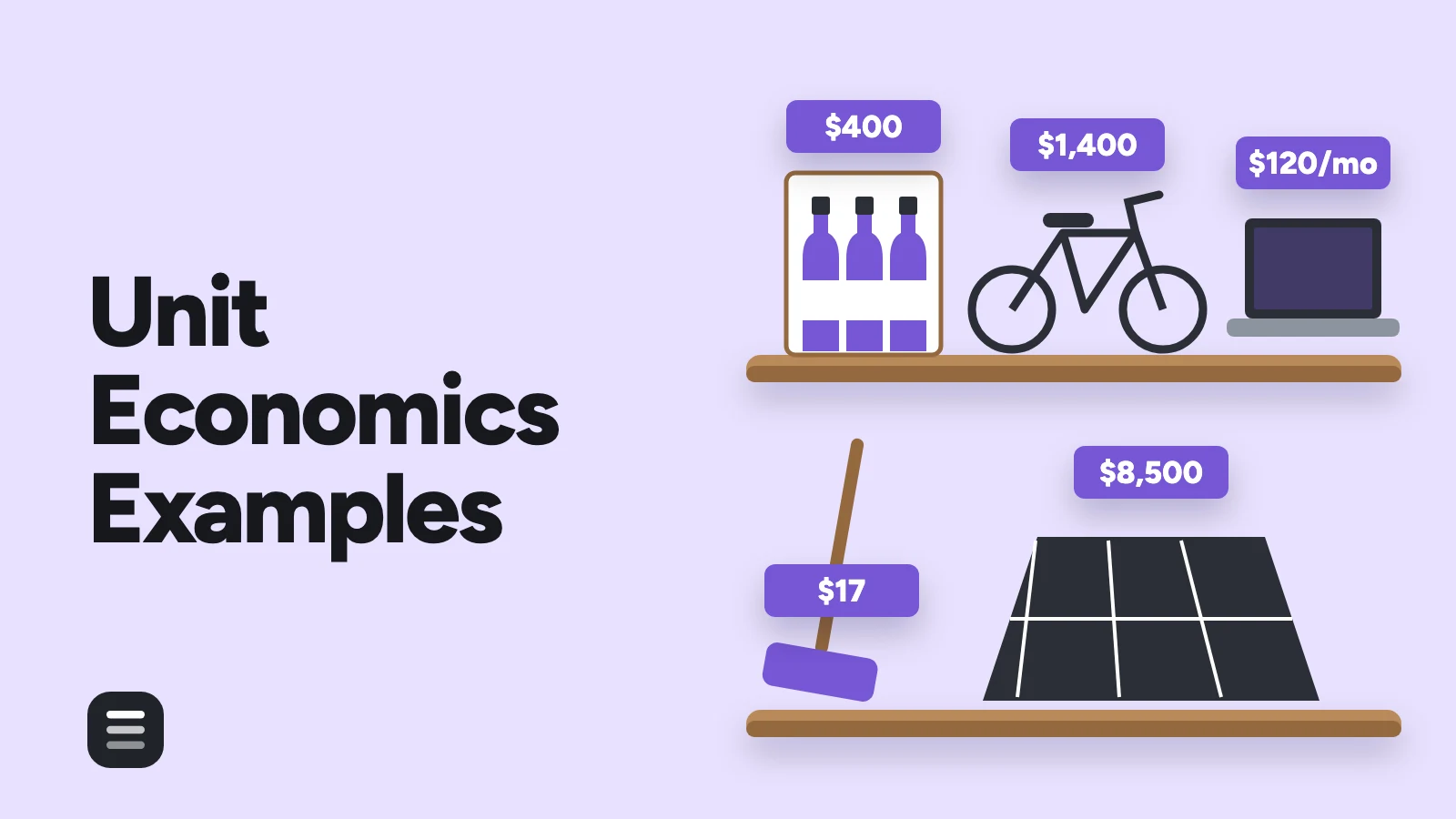
A kombucha maker counts one store. A bike share counts one bike. A solar company counts one install, and each ends up with a different answer to "should we sell more of this?" In these unit economics examples, the choice of unit decides what the owner finds out. Start from a free one pager template.
One‑Pager examples
Real One-Pagers made with MakeOnepagers. Open any one to edit it as your own.
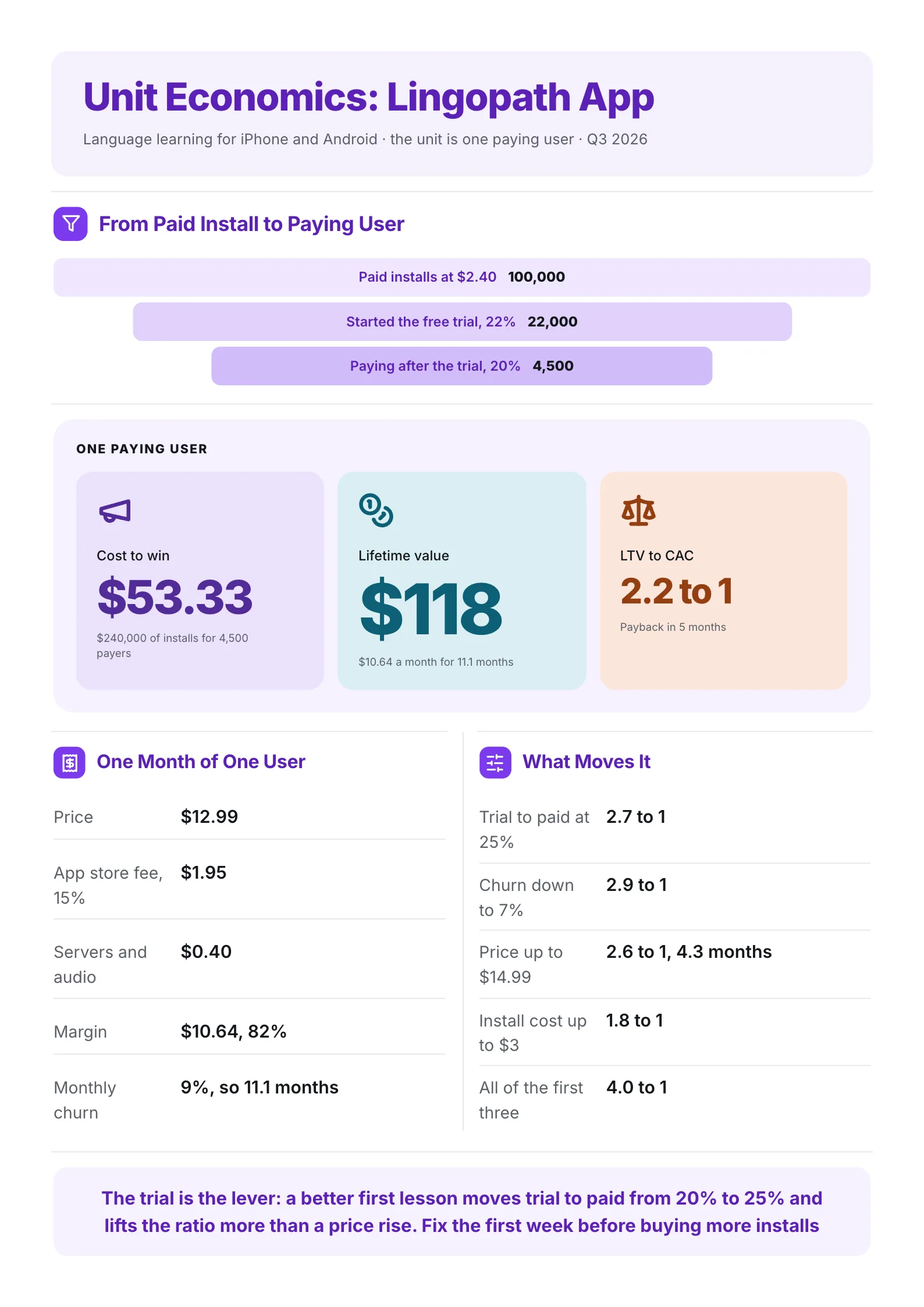 Unit Economics: Mobile AppEdit for free(opens in a new tab)
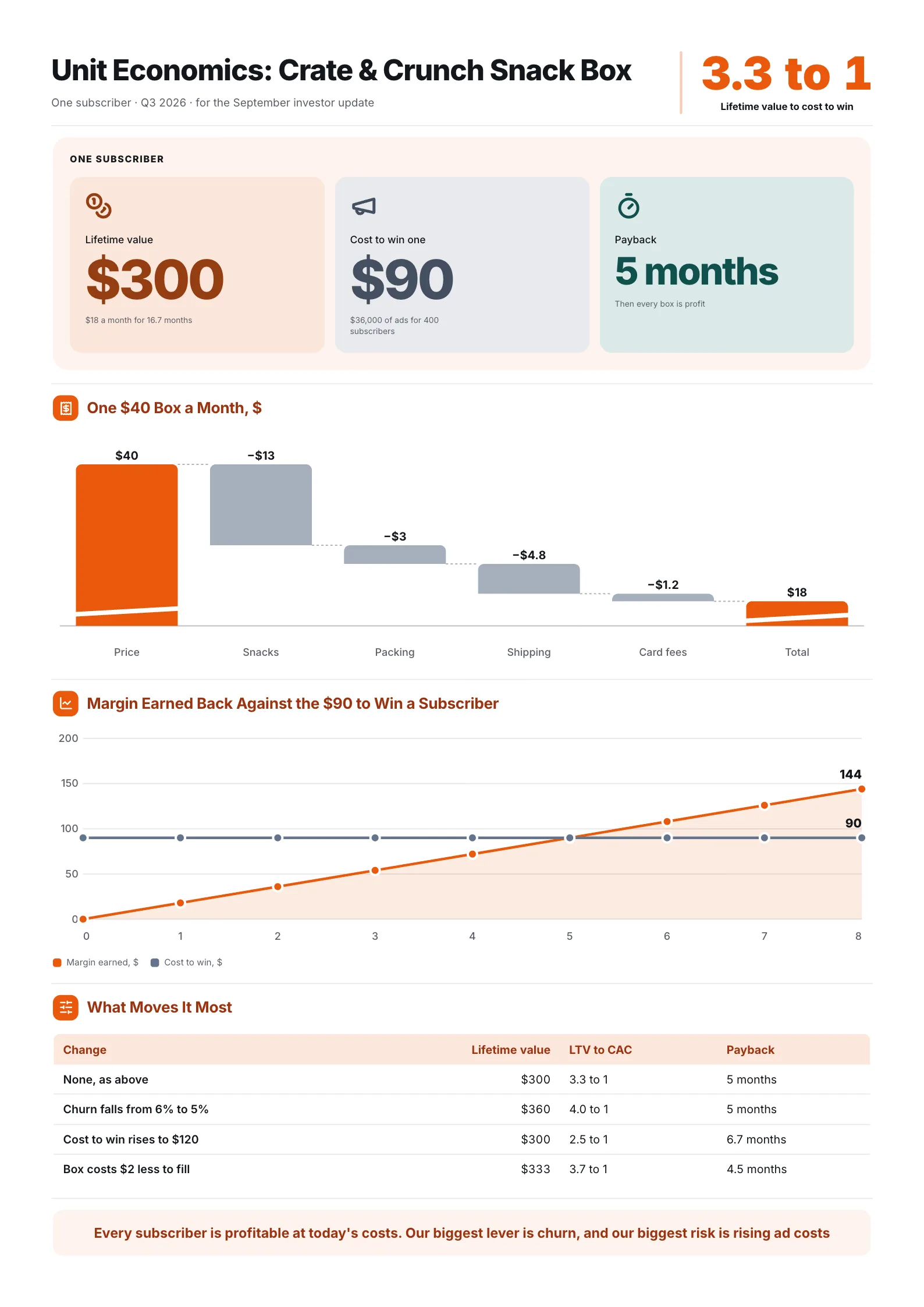 Unit Economics: Subscription BoxEdit for free(opens in a new tab)
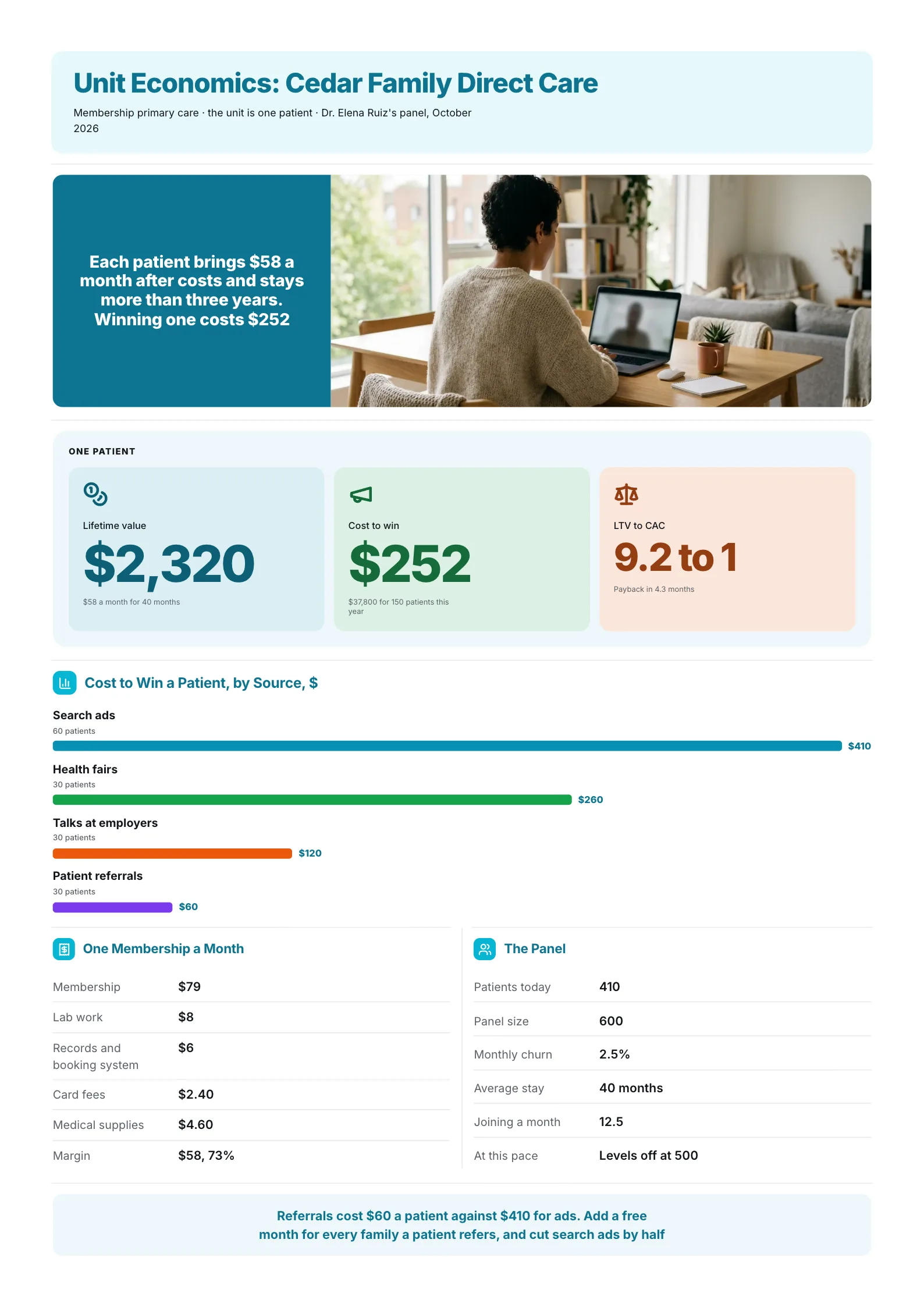 Unit Economics: Membership ClinicEdit for free(opens in a new tab)
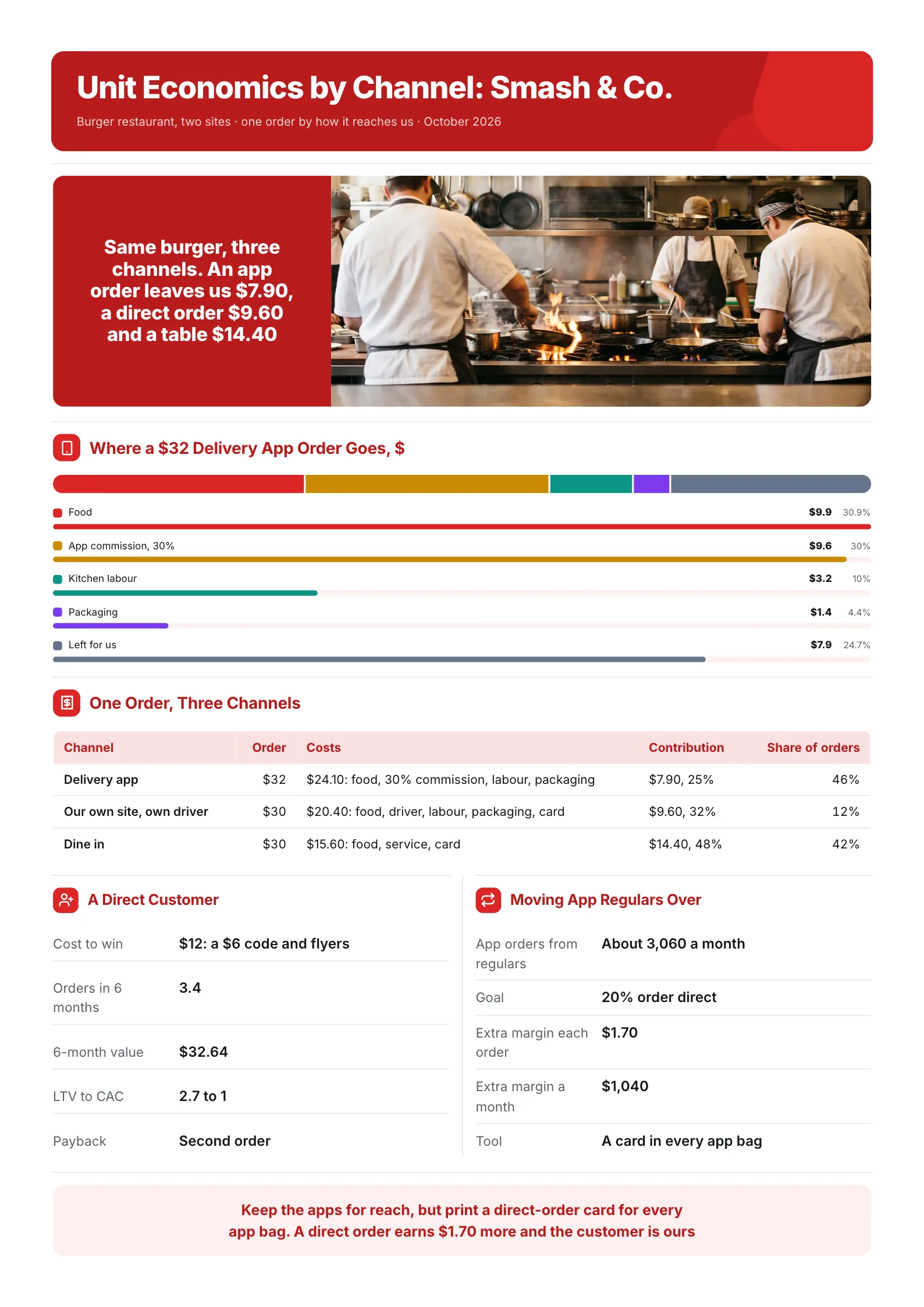 Unit Economics: Restaurant by ChannelEdit for free(opens in a new tab)
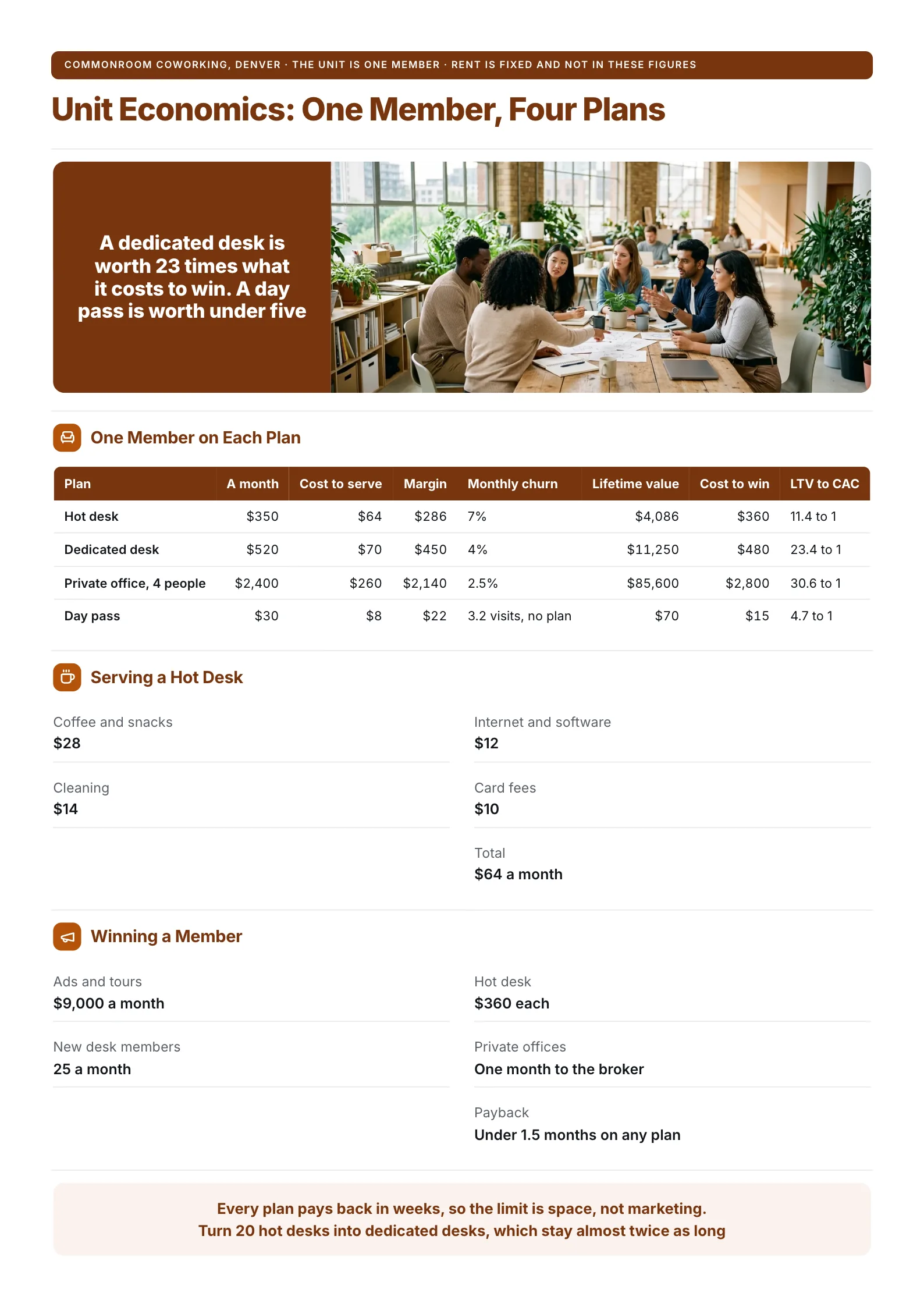 Unit Economics: Coworking by PlanEdit for free(opens in a new tab)
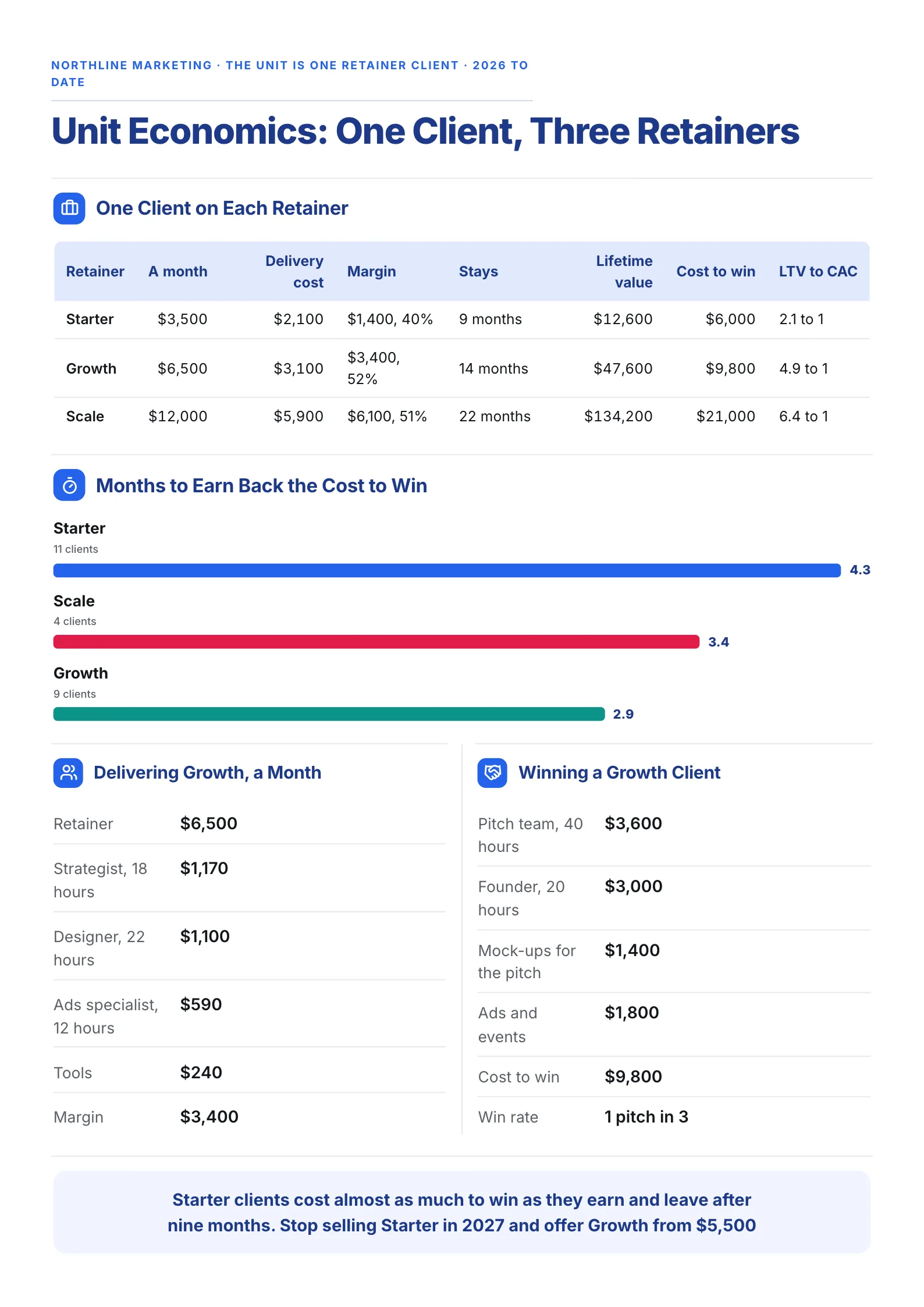 Unit Economics: Agency RetainersEdit for free(opens in a new tab)
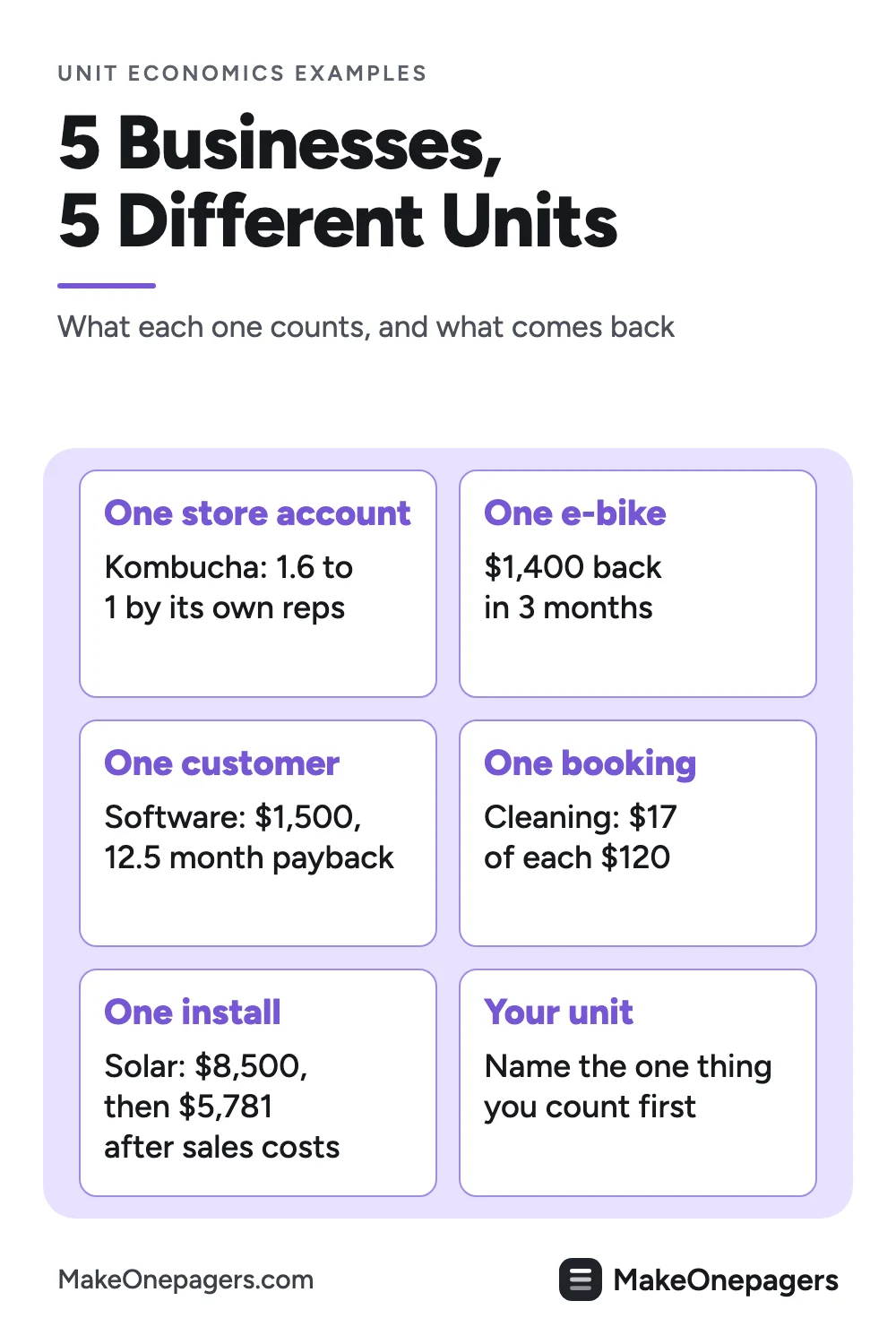
These five samples, made with MakeOnepagers, all fit on one page. The companies are invented and the sums are checkable, and each one has a lesson you can use on your numbers. For the formulas themselves, start with how to calculate unit economics.
The five at a glance
| Business | The unit | Cost up front | What comes back | The answer |
|---|---|---|---|---|
| Kombucha maker | One store account | $400 to $1,500 | 26 months of orders | 1.6 to 1 by its own reps, 4.3 to 1 through a distributor |
| Bike share | One e-bike | $1,400 | $466 a month | Pays back in 3 months, over an 18-month life |
| Scheduling software | One customer, by segment | $1,500 for a small business | $120 a month in that segment | 2.3 to 1, 12.5 month payback |
| Home cleaning marketplace | One booking and one customer | The cost to win a customer | $17 of each $120 booking | Earned back in under three months |
| Home solar | One install | $600 to $3,800 to win | $8,500 before sales costs | $5,781 after them, on average |
Dave, a banking app, gives you a real number to read these against. Its 2025 annual report says it spends about $19 to win a member and earns that back in under four months, which it calls the fastest in company history. An app that signs people up from a phone has costs you won't share, so use it as a marker for payback, and leave its dollar figure alone.
One store account: a choice between two routes
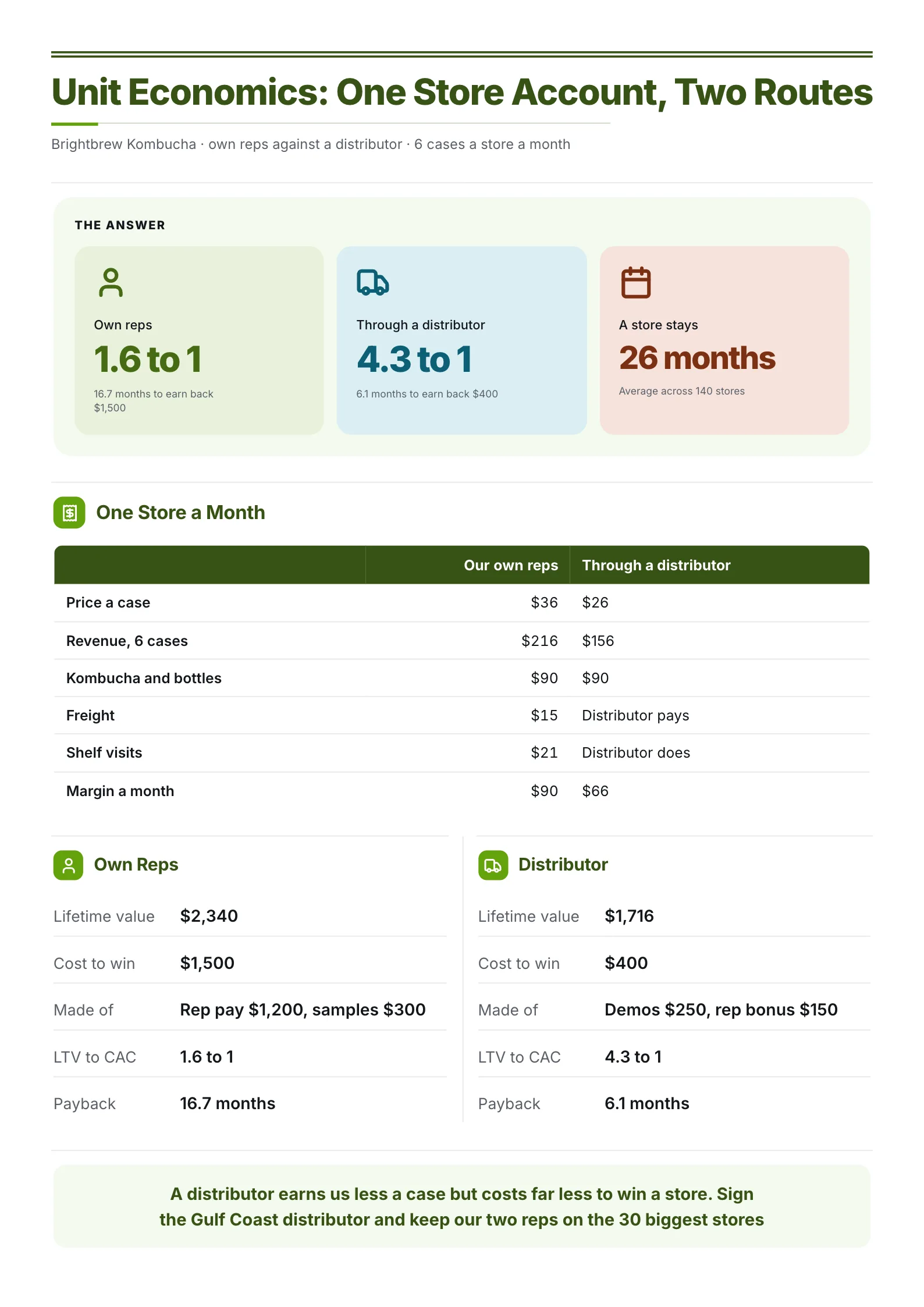
When you sell through shops, your unit is the shop. That lets you compare two ways of reaching it.
 Edit this template
A distributor takes $10 off each case, $36 down to $26, and the route still wins by a wide margin.
The tempting mistake is to compare price per case and stop there. Brightbrew gives up $10 on every case to a distributor, yet it pays only $400 to open a store, against $1,500 with its own reps. Your own "cheaper" route may look different once you add what it costs to open the account.
One e-bike: count the asset
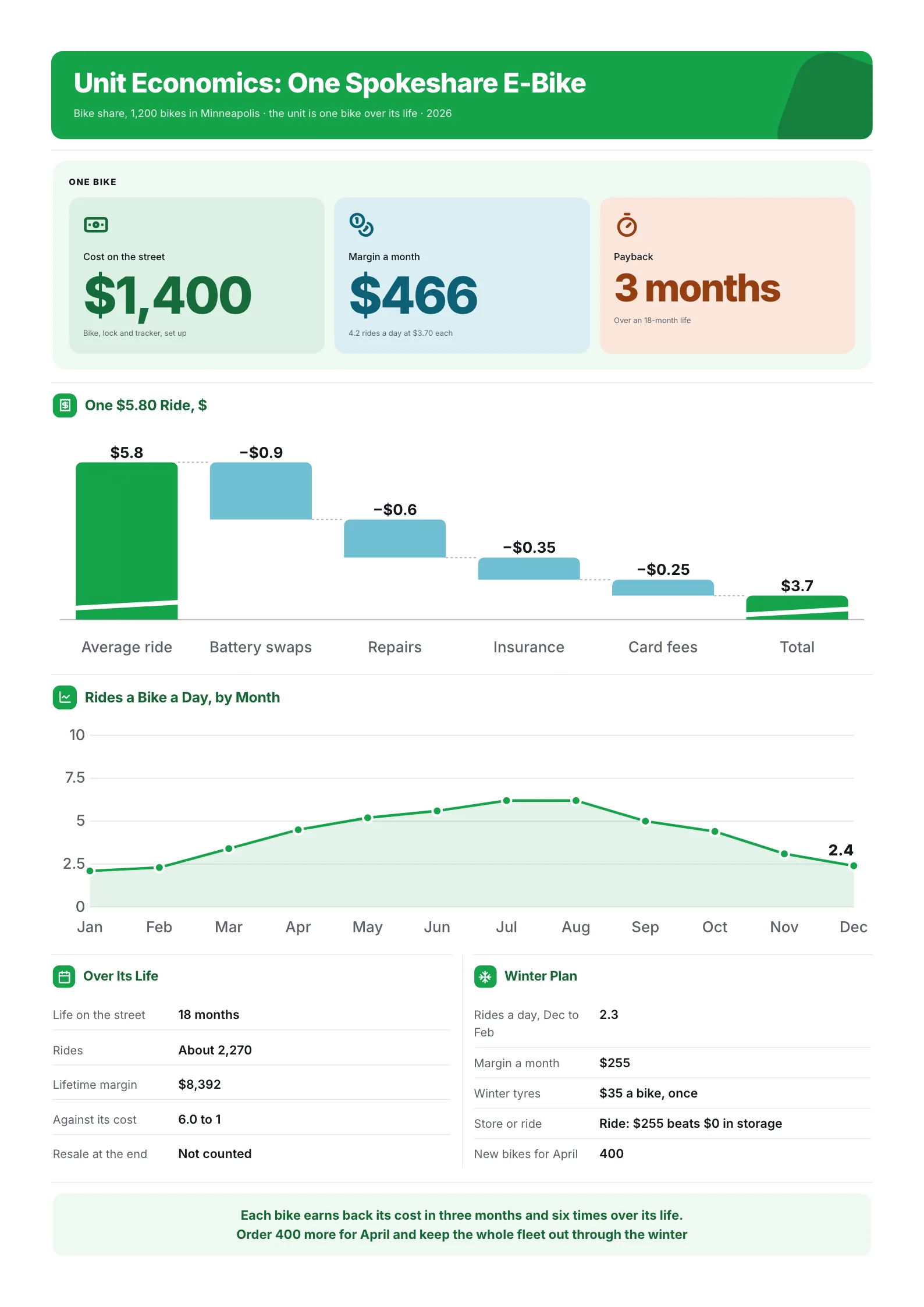
Your unit can be the thing you own, when the thing is what earns.
 Edit this template
Rides a Bike a Day, by Month is on the page because winter decides whether that 3 months holds.
A customer-based sum wouldn't help Spokeshare, since a rider can pick any of 1,200 bikes. Count the bike, and the big question becomes how long it lasts. The 18-month life is the assumption to test, so you'd want it on your version too. The same logic works for your delivery van, vending machine or rental unit.
One customer, by segment: the average is hiding something
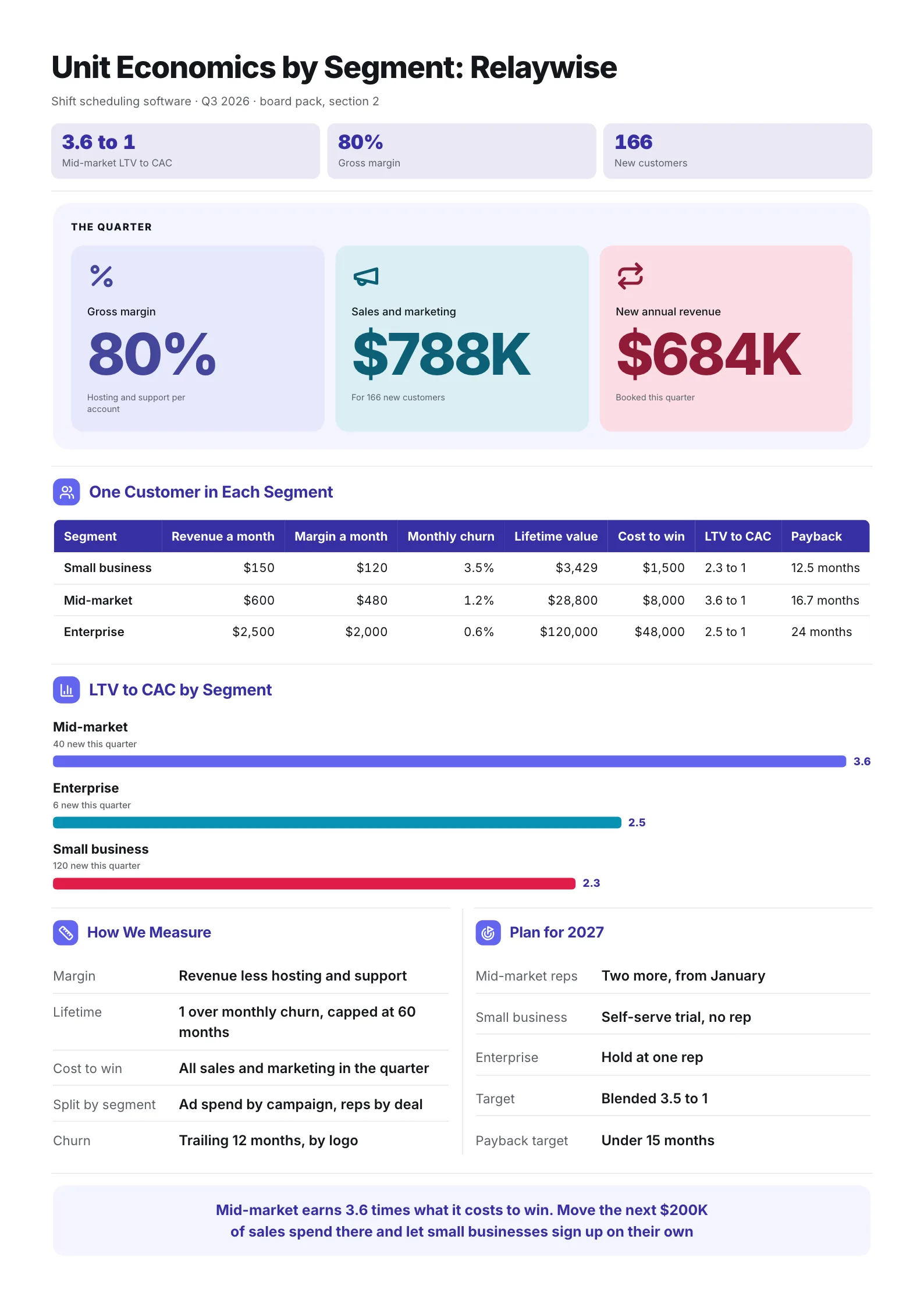
A single blended ratio can hide a weak group of customers, so split yours by customer size before you report it.
 Edit this template
The table is the page: every segment gets the same seven columns, so a board member can read across.
Relaywise's small business row sits at 2.3 to 1 with a 12.5 month payback. It's a section of a board pack, so the table comes straight after three numbers for the quarter. When your segments differ, your next hire or ad dollar should follow the row that pays back fastest.
One booking: two sides to count
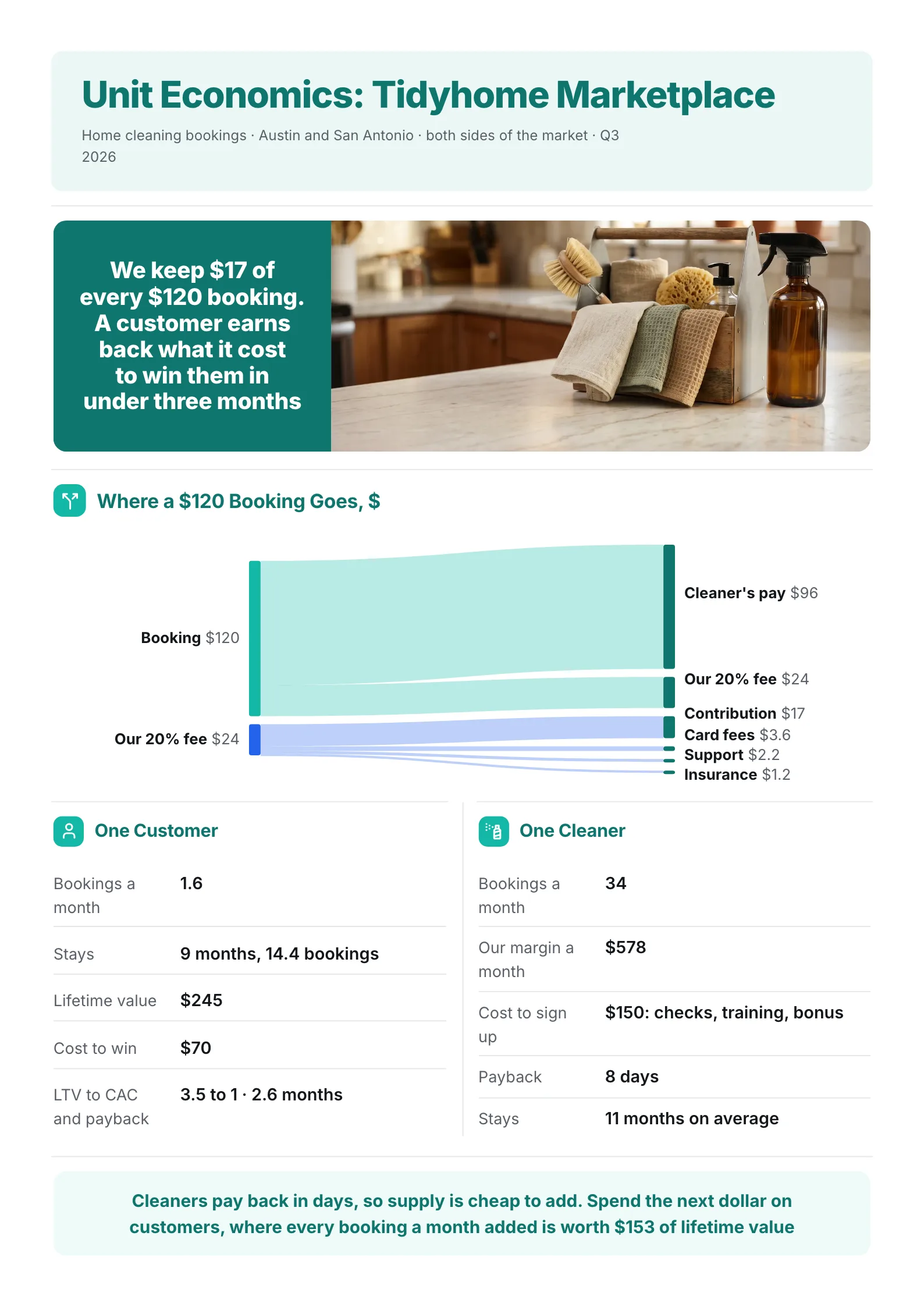
A marketplace has two customers, and each has its own cost to win.
 Edit this template
The chart starts from the whole $120, so a reader sees that the 20% fee is the only part Tidyhome has to work with.
Tidyhome's revenue looks like $120 and is really $24, and card fees, insurance and support take $7 of that. If you run anything where money passes through you, start your sum from what you keep. Your margin on $24 is the one that has to pay for growth.
One install: when each sale is big
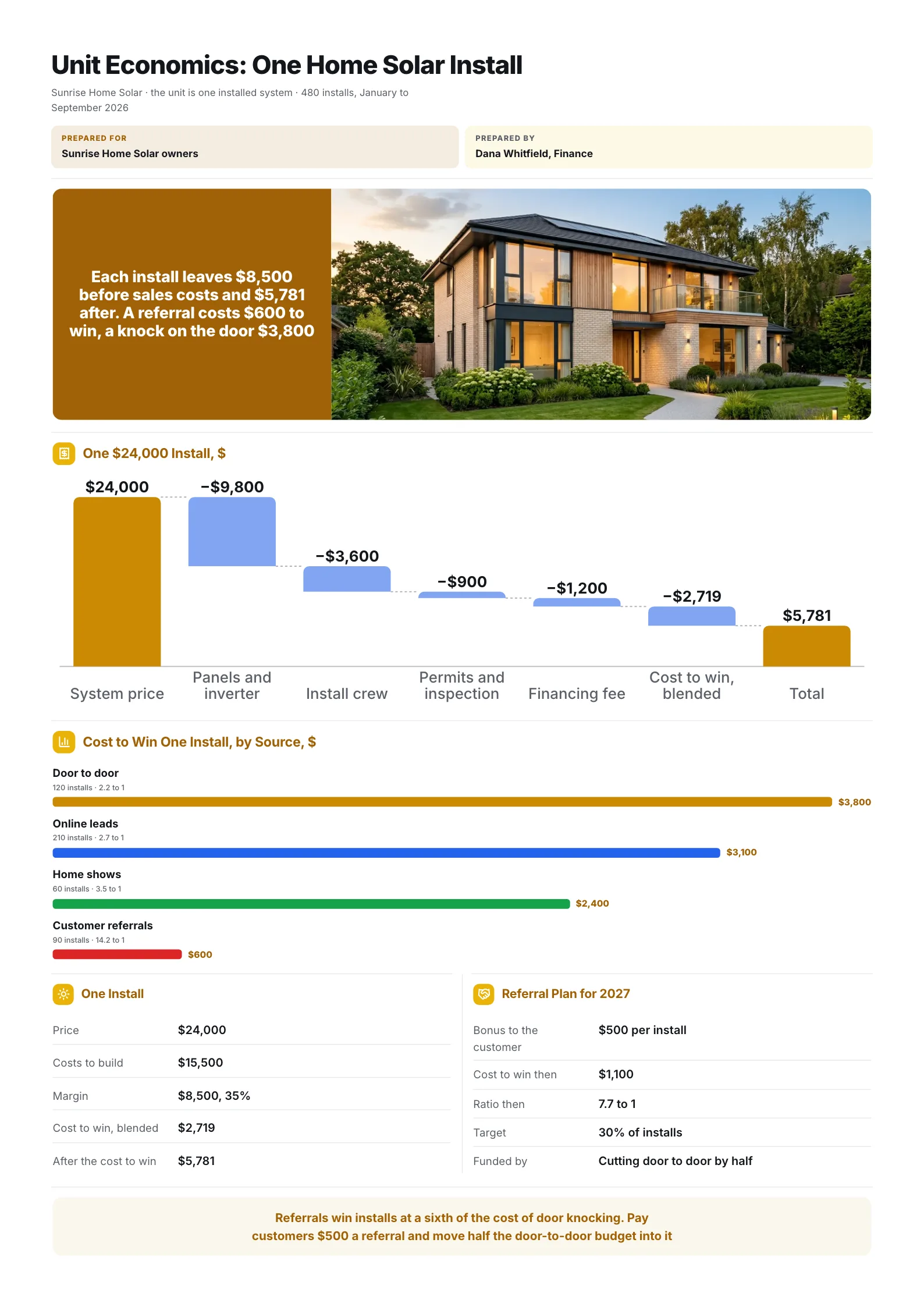
Big one-time sales change the sum. There's no monthly margin to wait for, so you can put the answer right at the top.
 Edit this template
An owner could act on Cost to Win One Install, by Source the next morning.
Referrals cost $600 and door knocks $3,800, on the same $24,000 system. With numbers that far apart, your blended cost is nearly meaningless. Write yours by source, and you'll know where your next dollar should go.
Pick your unit
Three questions will get you there:
- What repeats? Whatever you sell over and over is your likely unit.
- What do your costs follow? A bike wears out per ride, and an account needs a rep per store.
- What decision are you making? Comparing routes needs the store. Comparing ad sources needs the sale.
Frequently asked questions
Are these unit economics examples from real companies?
No. They're samples, and the sums add up so you can follow them. Dave's figures come from its real 10-K.
What's a good LTV to CAC ratio?
3 to 1 is the common yardstick. MarketWise's 2025 10-K says a ratio above 3x points to strong profitability, then reports about 2.0x for itself. Read your payback beside it, because your cash runs out in months.




