Teacher Newsletter Examples by Grade, From the Toddler Room to 10th Grade English
Teacher newsletter examples for kindergarten, grade 3, middle school science and high school English, beside 6 real class letters we read from 6 schools.

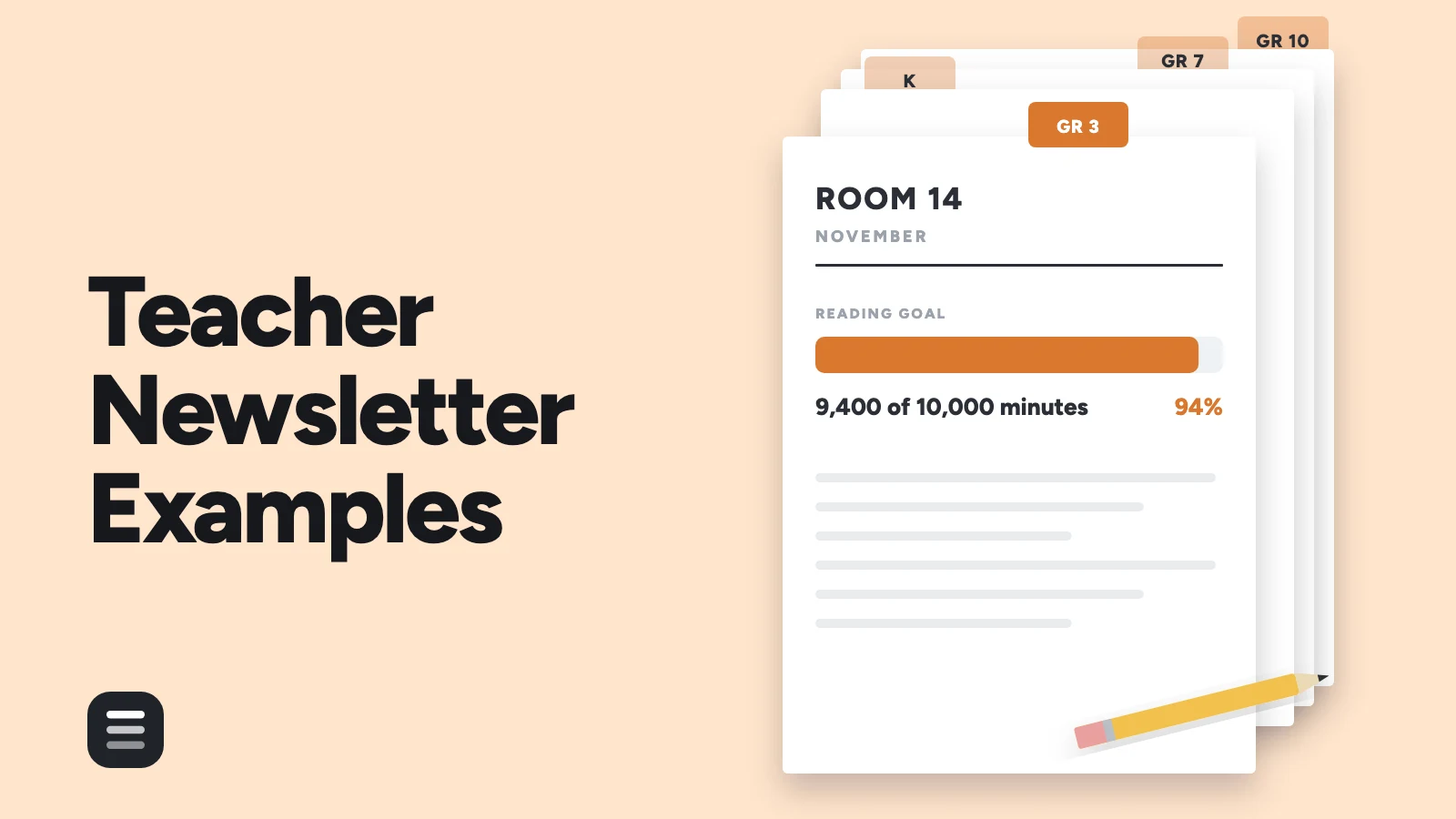
A toddler room's letter and a 10th grade English letter share little more than a date line, and the teacher newsletter examples on this page run from one to the other. For toddlers through kindergarten, keep yours short, weekly and full of things to practice at home. In grades 1 to 5 you can go monthly, with a calendar and what each subject covers. In middle school your letter follows a unit. In high school it follows a book or a course and spells out how your students' work is graded. Start from a free one pager template.
One‑Pager examples
Real One-Pagers made with MakeOnepagers. Open any one to edit it as your own.
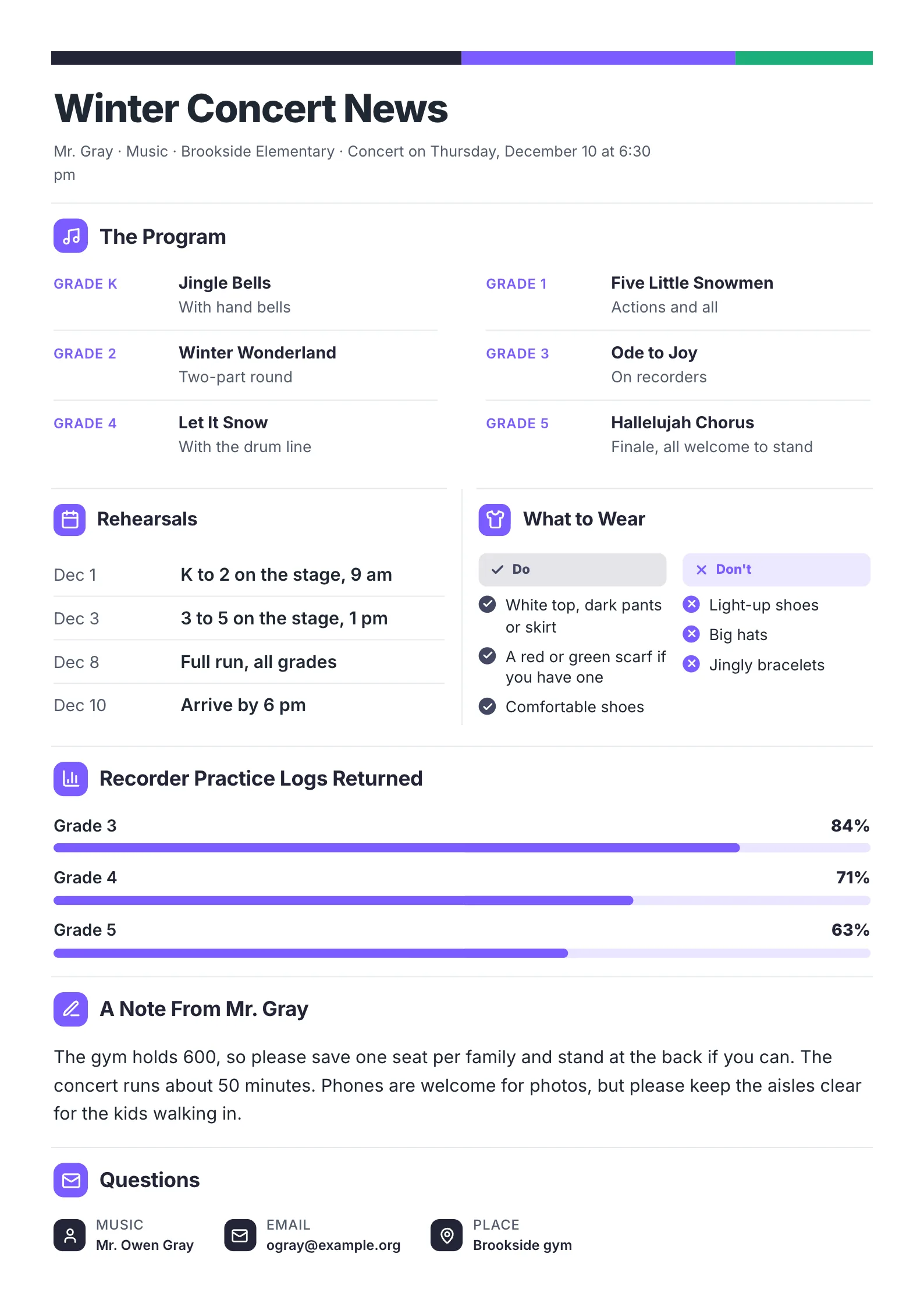 Teacher Newsletter: Music ConcertEdit for free(opens in a new tab)
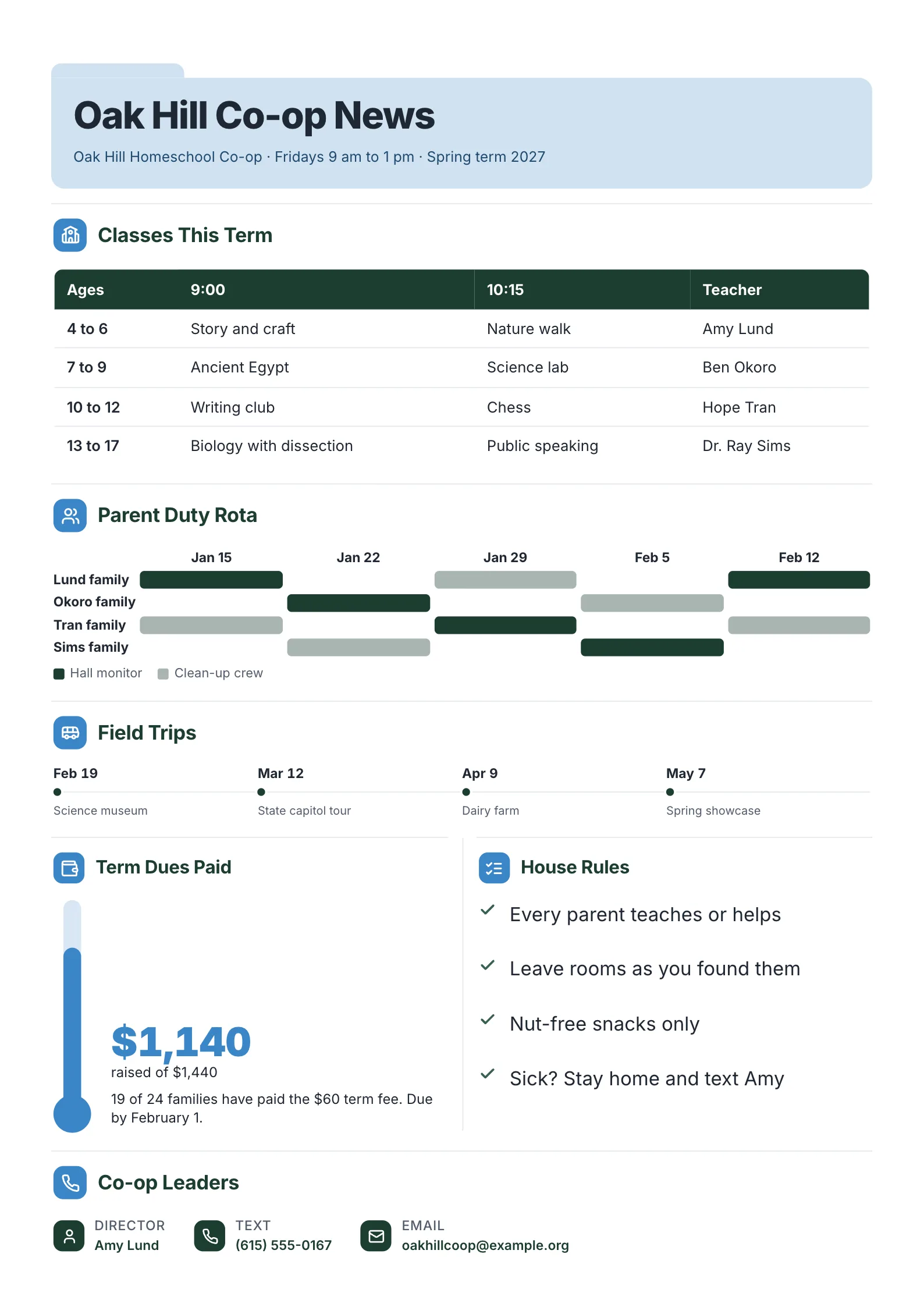 Teacher Newsletter: Homeschool Co-opEdit for free(opens in a new tab)
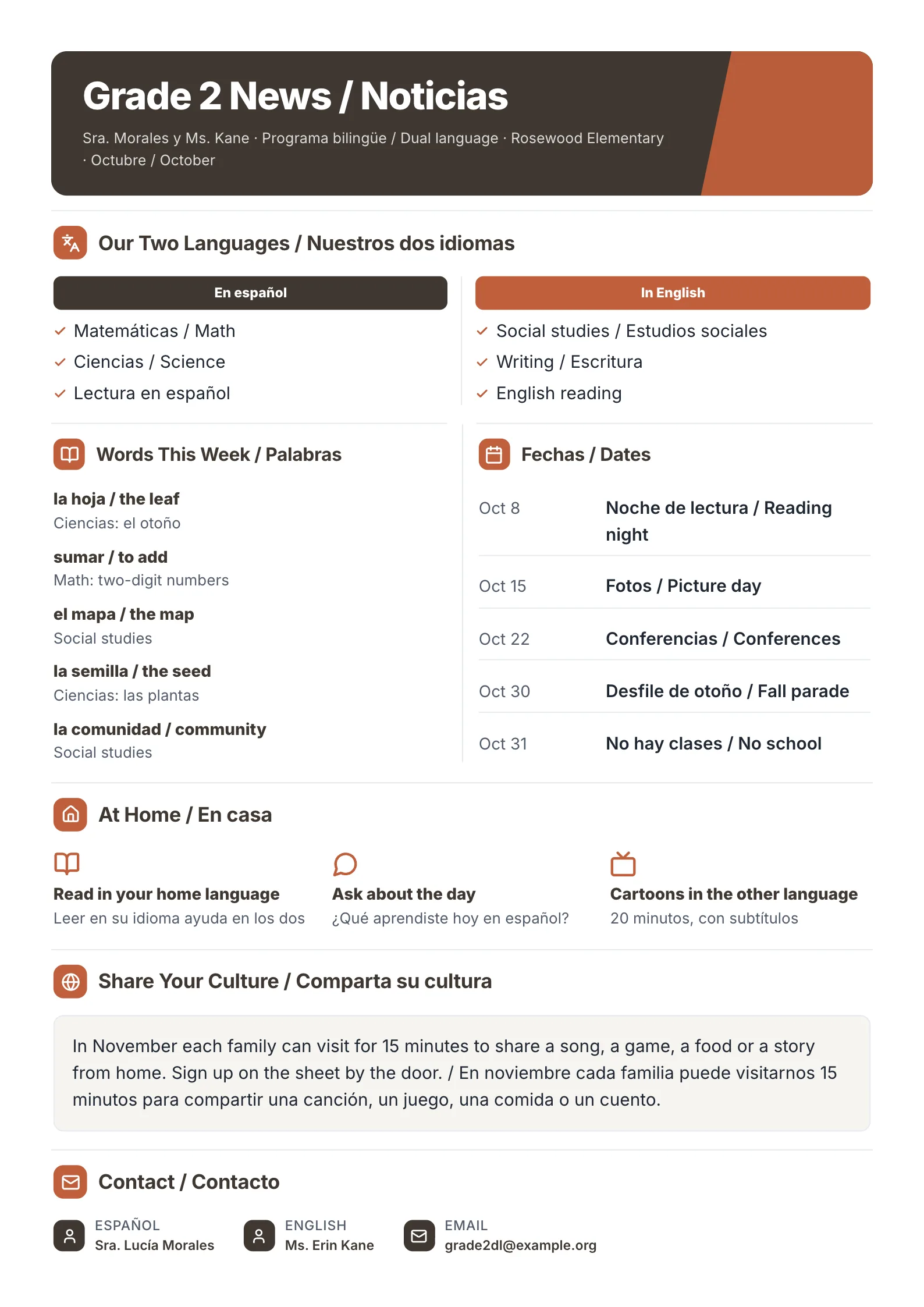 Teacher Newsletter: Dual Language ClassroomEdit for free(opens in a new tab)
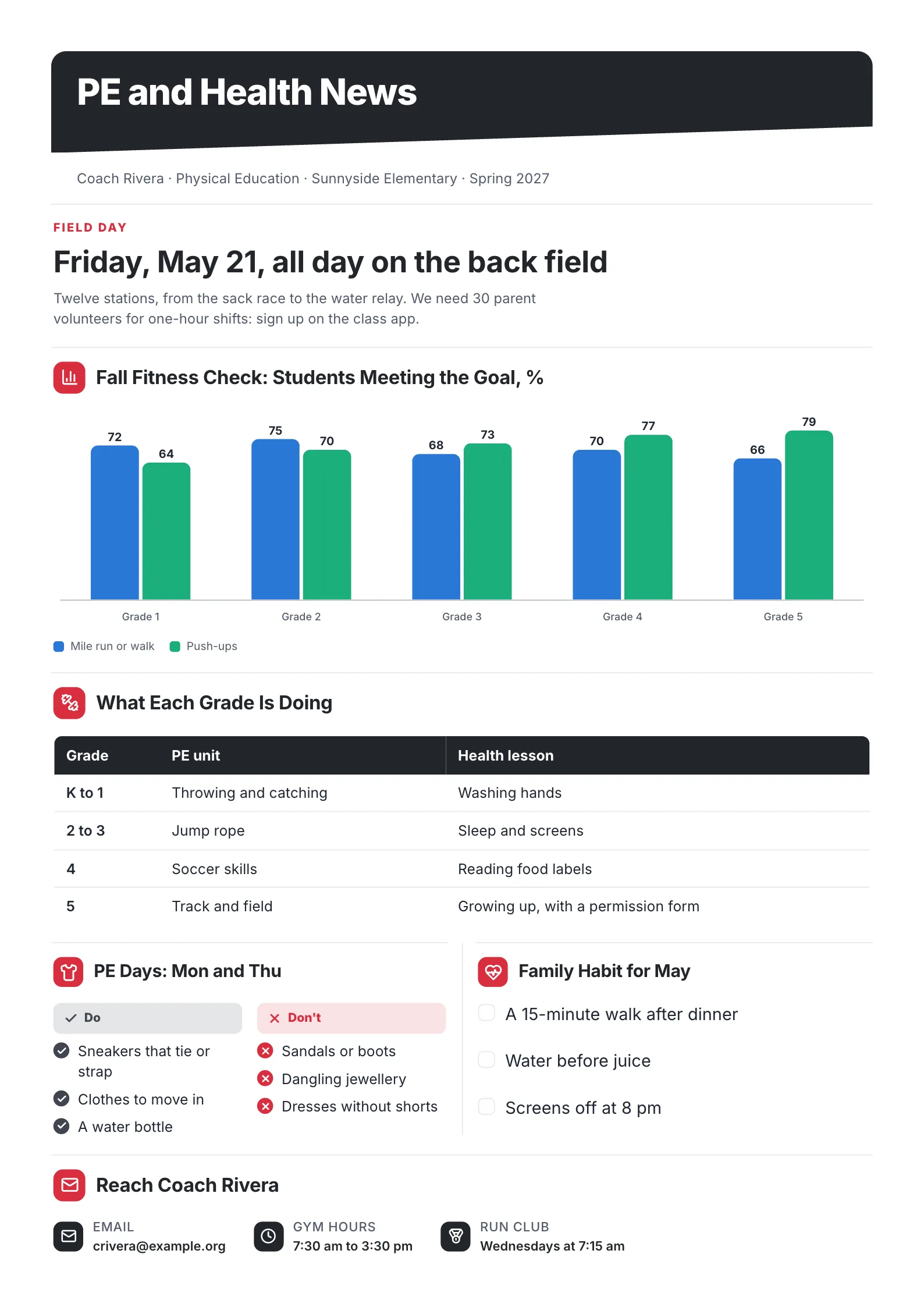 Teacher Newsletter: PE and HealthEdit for free(opens in a new tab)
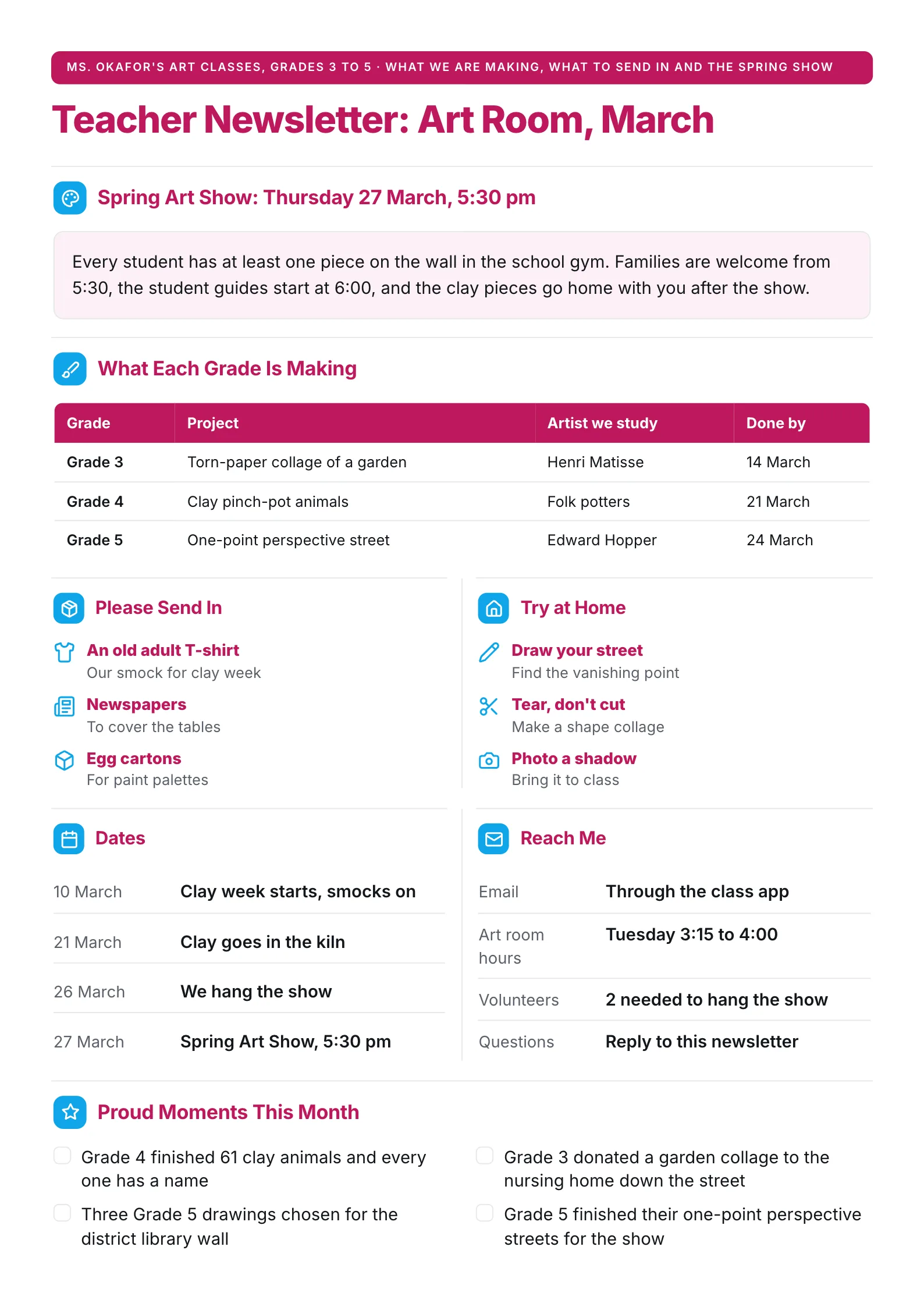 Teacher Newsletter: Art RoomEdit for free(opens in a new tab)
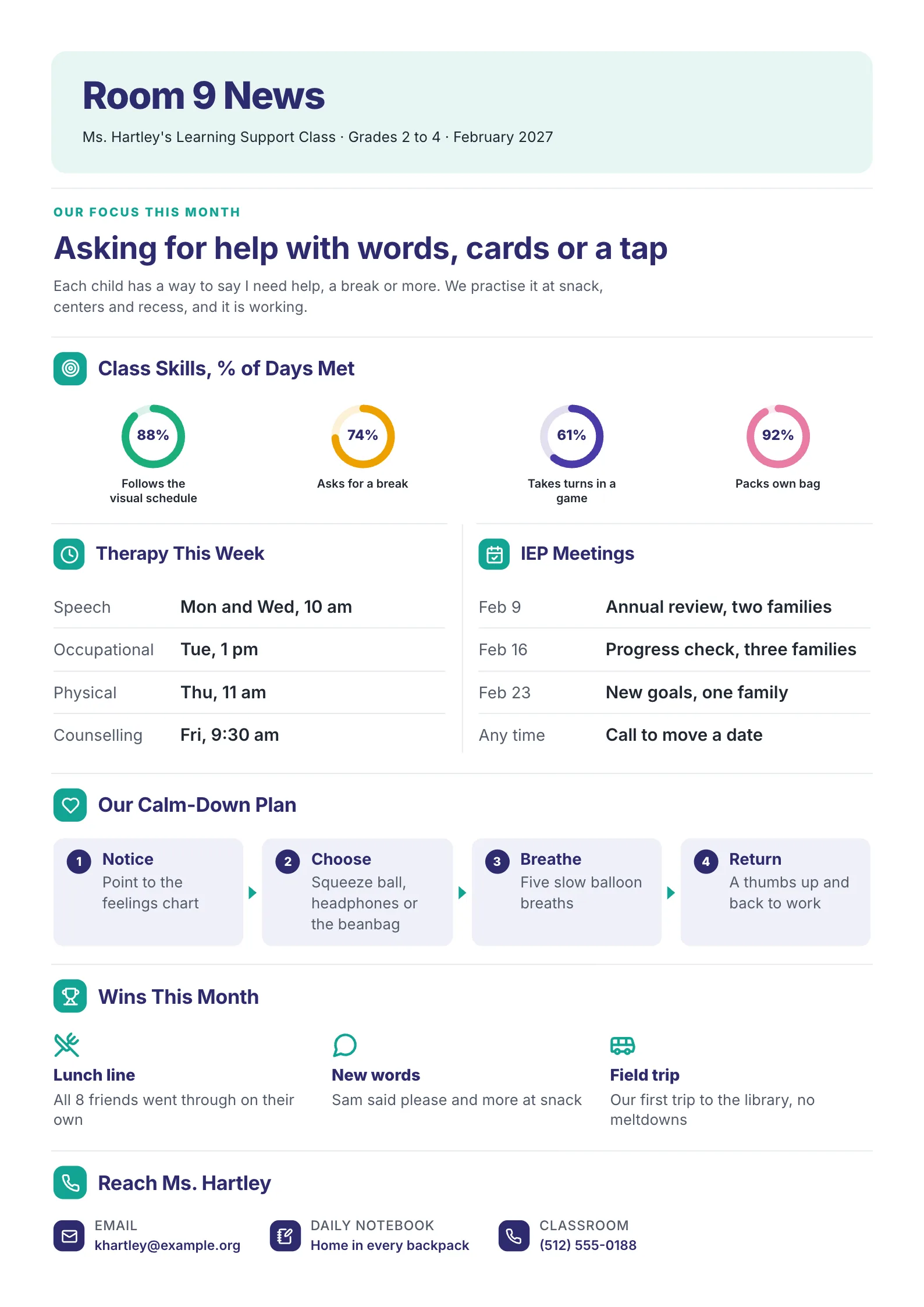 Teacher Newsletter: Special Education ClassroomEdit for free(opens in a new tab)
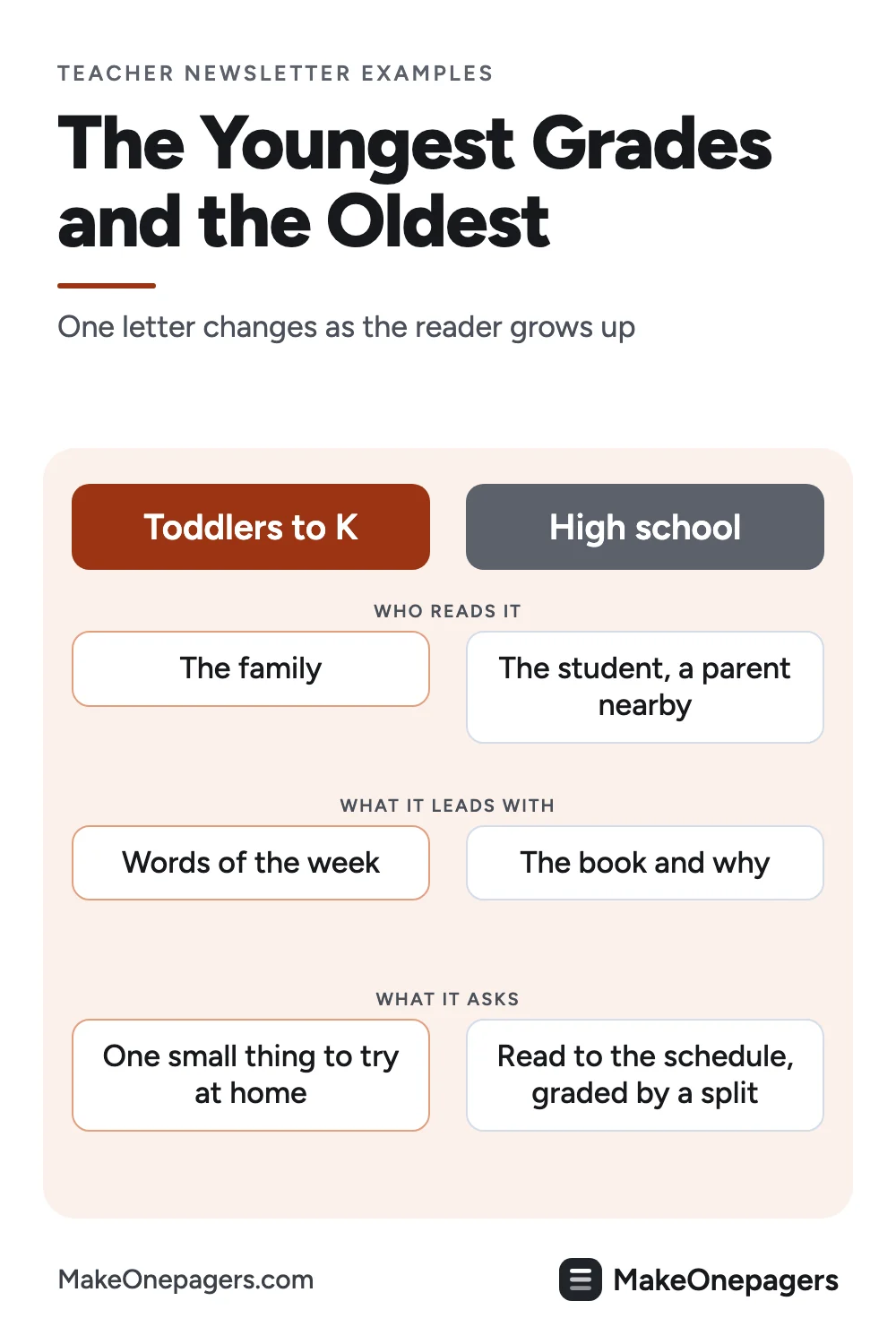
We read 6 real letters from 6 schools to check that pattern, from a toddler room's week in May 2026 to a high school's summer reading letter. Below, each grade band pairs one of those real letters with a one-page teacher newsletter example you can copy, built in MakeOnepagers. After the grade bands, one teacher's letter is followed from September to May, the way yours will change over a year.
Toddlers to kindergarten: a short week, words to practice and one star
 Edit this template
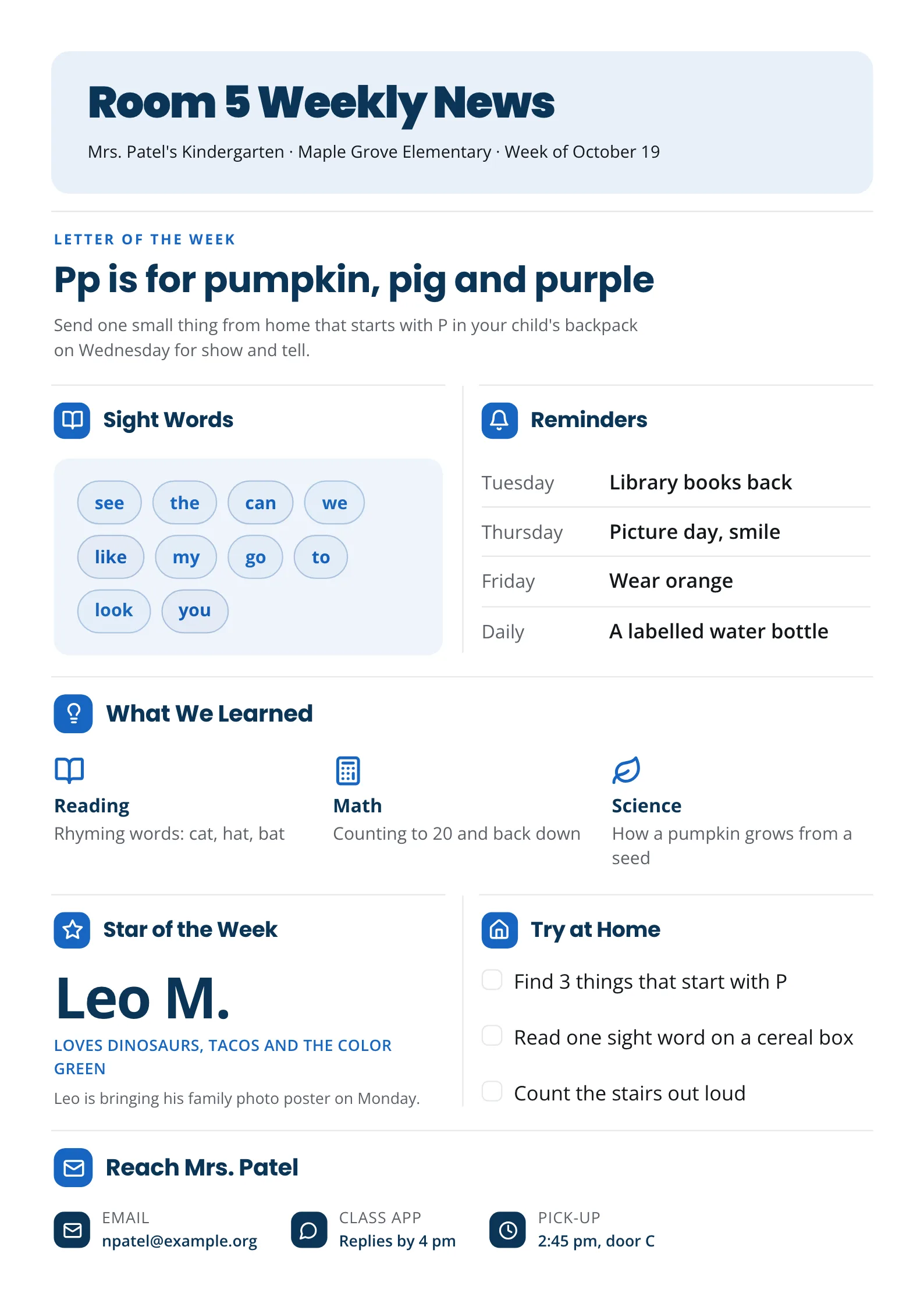
One letter, ten words and three tiny jobs for home fill most of this kindergarten week.
This sample covers a kindergarten's week of October 19, and you could send it as is. "Pp is for pumpkin, pig and purple" sits at the top, with a request to send one small thing from home that starts with P. Then come ten sight words in bubbles, from "see" to "you," and a reminder for each day. Library books go back on Tuesday, and picture day is Thursday. The "Try at Home" box gives your families three easy things, like counting the stairs out loud. Keep your own home tasks that small, so a tired parent can do one before bed.
The real kindergarten letters we read look the same. The Country School's kindergarten update for February 6, 2026, lists 10 new sight words to practice at home, from "into" to "too." It also gives five dated reminders, among them a Spanish performance at 9:15 am and spring break from March 23 to April 6. A toddler room's newsletter from The Epiphany School in May 2026 names the song, the book and next week's theme. Like our sample, it has a Star of the Week. Rotate yours so every child gets a turn during the year.
Families of four- and five-year-olds read your newsletter to know what to ask about at dinner and what to pack. Give them words to say, one thing to bring and your dates.
Grades 1 to 5: a month on one page
 Edit this template
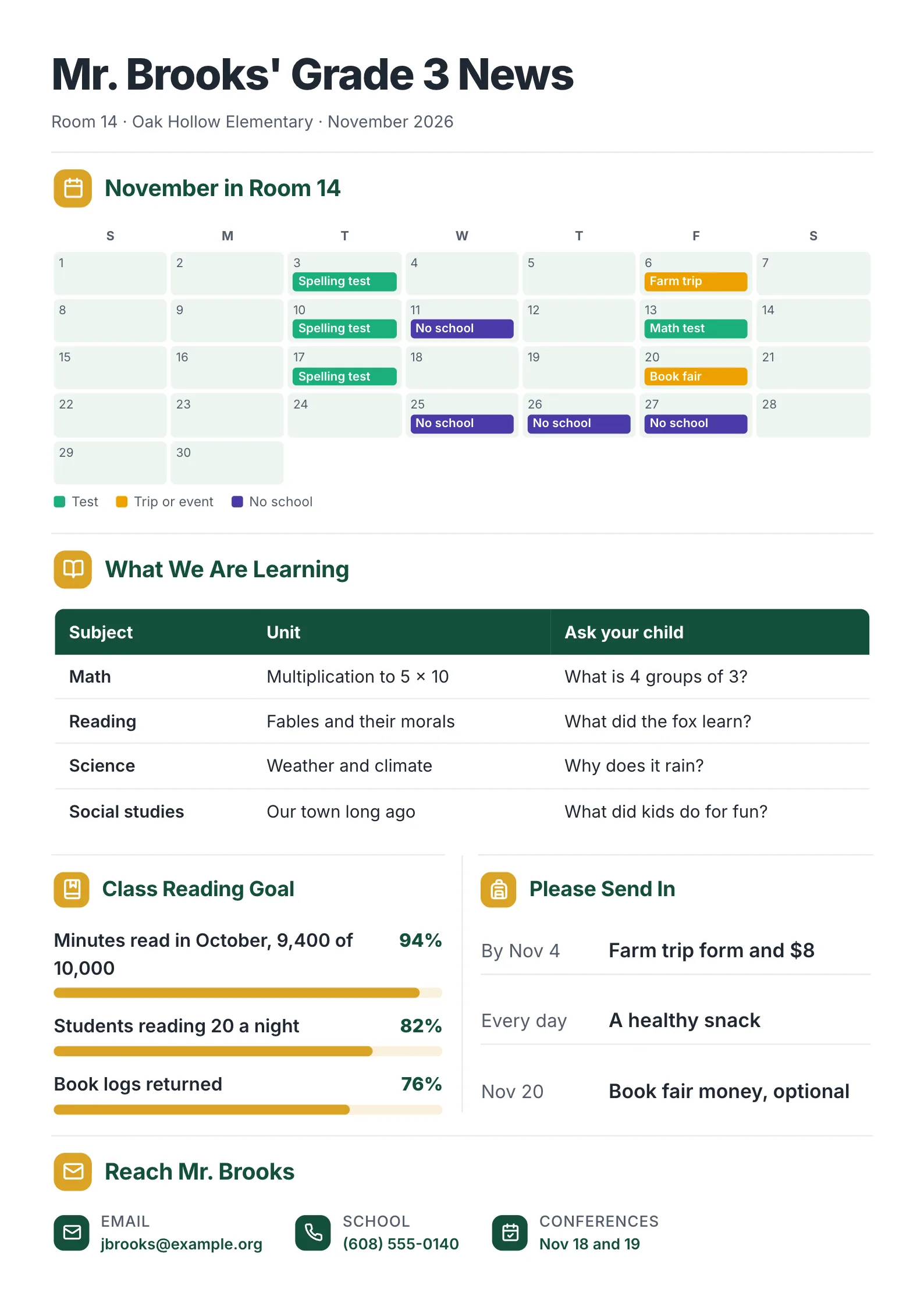
Your month of tests, trips and days off sits in one calendar block above the subjects.
By third grade, a week is too short to plan around. This sample covers all of November in Room 14. The calendar marks spelling tests, a math test, a farm trip, the book fair and four days with no school. Under it, a subject table hands your families a question to ask their child for each unit. For reading it's "What did the fox learn?" and for math "What is 4 groups of 3?"
It also puts the class goal in a number, so your families can cheer it on. In October the class read 9,400 of 10,000 minutes, which is 94%. And 82% of students read 20 minutes a night. A clear "Please Send In" list ends with the farm trip form and $8 due by November 4. Put a due date on every form you ask for.
The Troy Elementary letter for December 2025, from a district in Idaho, does this job for grades 3 and 4 at once. On one page it gives each grade's goals in math, ELA, writing, science and social studies. Its column of dates on the right includes a field trip, a late start, three dress-up days, a music concert and winter break from December 22 to January 2. Its main reminder is the one our sample counts: read at least 20 minutes each night.
A letter that covers two grades can borrow Troy's habit and label every goal with its grade, so a parent can skip to their own child's line.
Middle school: one unit, one family update
 Edit this template
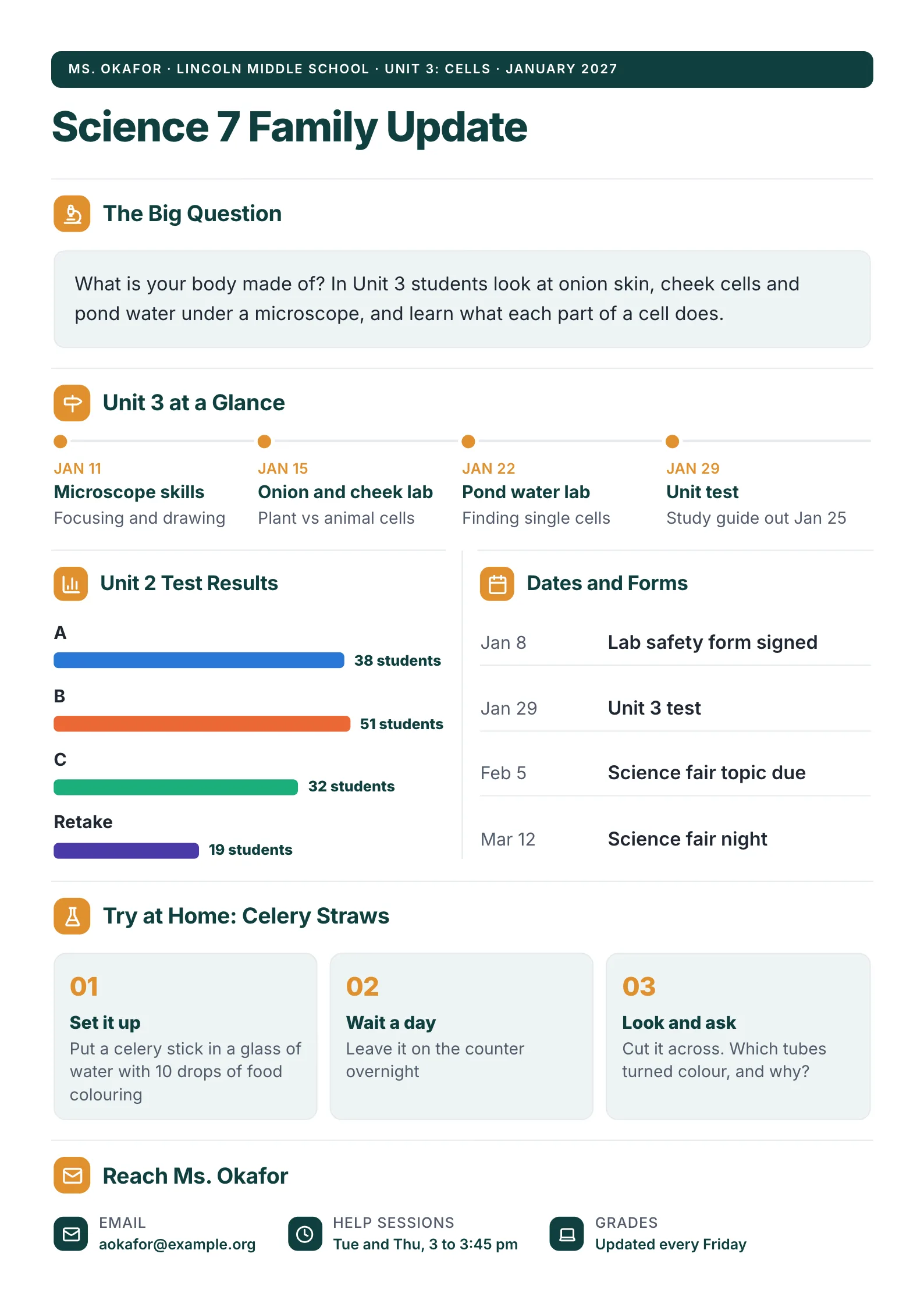
The unit sets the rhythm here, so this sample goes out once per unit.
A middle schooler has several teachers, so one newsletter rarely covers the whole week. This Science 7 sample follows Unit 3, on cells. It opens with "The Big Question," What is your body made of? Then it lists four dates, from microscope skills on January 11 to the unit test on January 29. It even shows how the last unit went: 38 A grades, 51 Bs, 32 Cs and 19 retakes. Families get a quick read on how your class is doing, and because the chart shows only counts, no child is named.
The best idea in our middle school letter came before the year even started. The 6th grade team at Farnsworth Middle School in Guilderland, New York, asked parents to email a letter about their child by August 31. It wanted to hear about strengths, talents and favorite activities before orientation. Of the 6 letters we read, it's the only one that asks families to write back about their child. It also says the team teaches a character lesson every Friday, and it dates the open house as September 25.
If you teach middle school, send one update per unit, built around your unit's test date.
High school: the book, the dates and the grading
 Edit this template
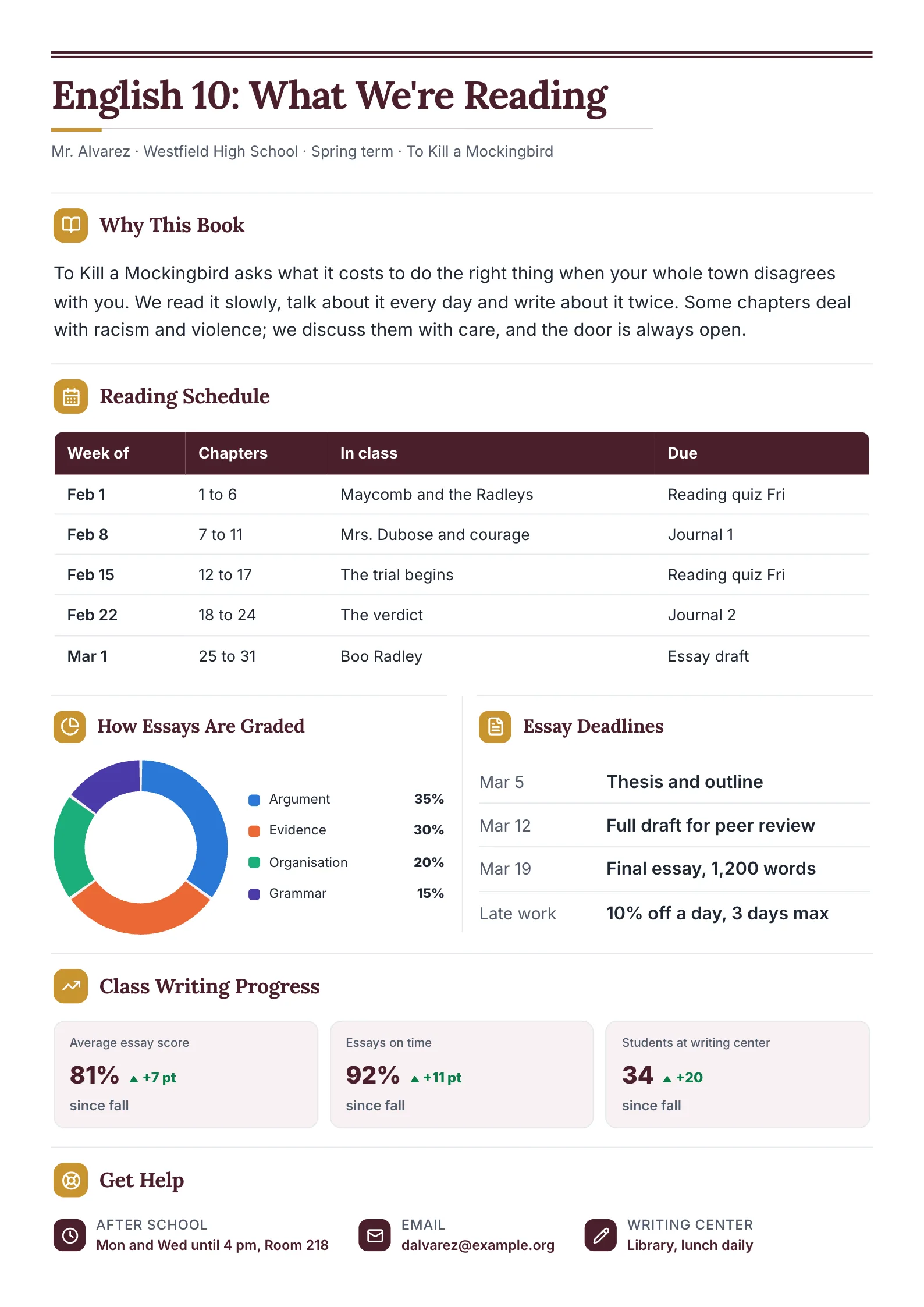
Students read the schedule, and parents read the grading pie.
By 10th grade, your newsletter is mostly for the student, with a parent reading over your student's shoulder. This English 10 sample gives the reason for the book in one paragraph. It says the class discusses the chapters on racism and violence "with care." Name the hard chapters in your letter before your students reach them, so no parent hears about them first at dinner. Then a five-week table pairs chapters with what's due, from chapters 1 to 6 in the week of February 1 to the essay draft in the week of March 1.
The grading pie answers the question you'll hear most from parents. Argument counts for 35%, evidence 30%, organization 20% and grammar 15%. Give your own split in numbers that add to 100, so you can point a parent to the slice when a grade comes back low. The late rule is short too, 10% off a day for up to 3 days. The final essay is 1,200 words, due March 19.
The one real high school letter we read is a summer letter, sent before the year starts. Holy Savior Menard Central High School in Alexandria, Louisiana, sent its English parents a one-page letter on May 20, 2026. It asks families to buy an unabridged copy of each novel and to have the reading done before school. Students should expect a test, an analysis or an essay in the first week or two. The letter lists four English teachers and the courses each one teaches, so a parent knows who to email.
How one teacher's letter changes from September to May
Your class will need very different newsletters across the year. Here's what the real letters put in each season, next to the sample you can start from.
| Season | What the real letters included | Sample to start from |
|---|---|---|
| Late summer and September | Bethune Elementary's kindergarten letter lists 23 supplies, 12 for each child and 11 for the class or a wish list. Farnsworth asks for a parent letter and gives the first day and open house. | Back to school |
| December | Troy lists three dress-up days, a concert at 9:00 a.m. and the winter break dates. | Music concert sample |
| Winter and spring | The Country School sends 10 sight words and five reminders in one week. | Kindergarten weekly |
| May and June | Epiphany's toddler room spreads field day over two days so each child gets a turn. Holy Savior Menard sets the summer reading. | End of year |
 Edit this template
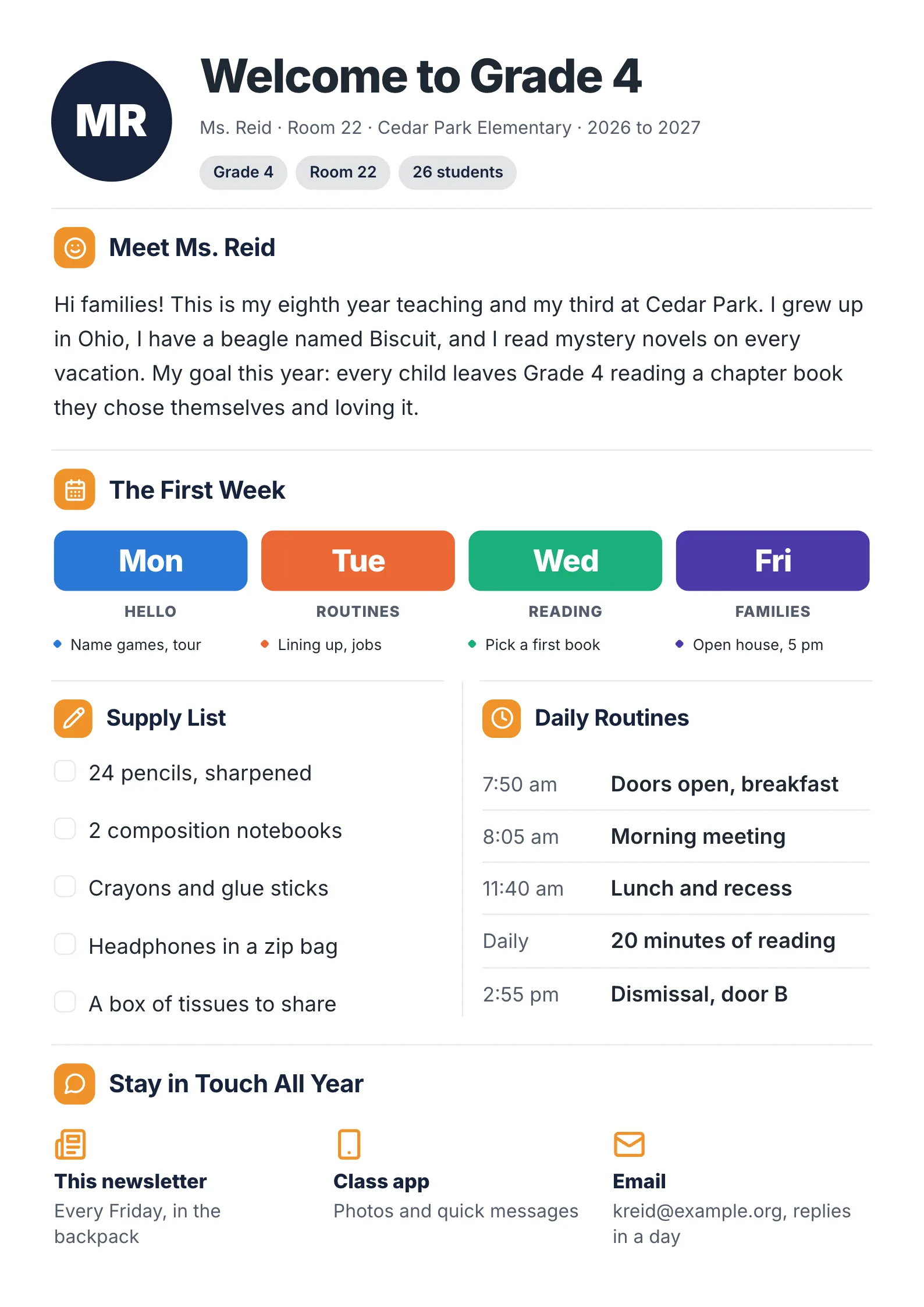
Your September letter introduces you before it asks families for anything.
The September sample for Grade 4 opens with the teacher's own short introduction, the part your families will read first. It's her eighth year, she has a beagle and she has one goal for the class. Then four days of the first week get a line each, the supply list keeps to five lines and the day's routine runs from doors opening at 7:50 am to dismissal at 2:55 pm. Bethune Elementary's real kindergarten list in Philadelphia is longer, with 23 items, but it does one thing every supply list should. It says that if buying supplies is hard, the family can contact the school for help. Put that line on your own list, even if most of your families never need it.
 Edit this template
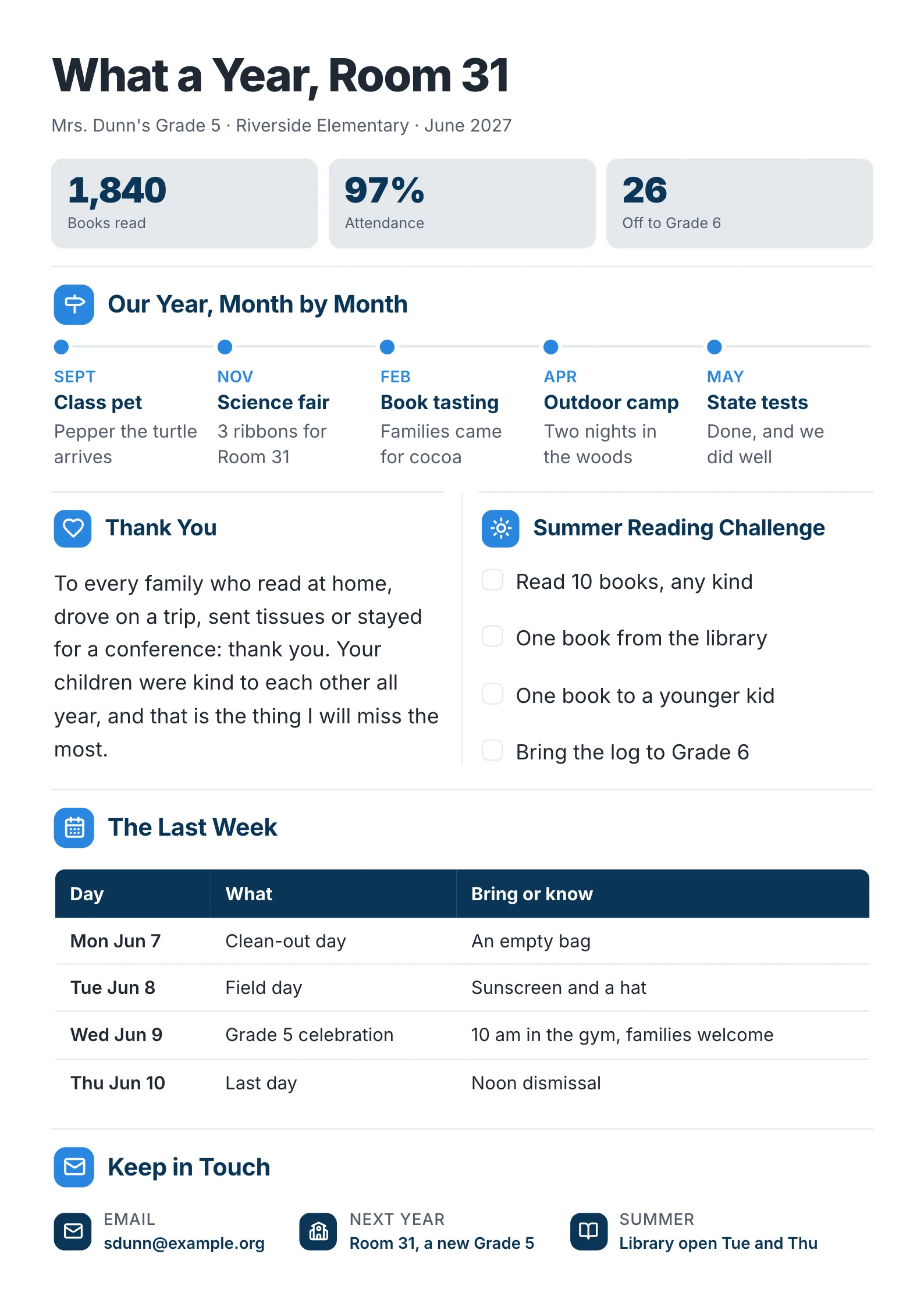
June's letter looks back with numbers and then hands families a summer plan.
In June, the sample turns into a short yearbook. Five months each get one line, from the class turtle arriving in September to state tests in May. Then three numbers close the year: 1,840 books read, 97% attendance and 26 students off to Grade 6. A summer reading challenge asks for 10 books, and the last week is laid out day by day so nobody misses field day or the noon dismissal. Send yours a week before the last day, while backpacks still come home.
For a step-by-step on the writing itself, see our how to write a newsletter guide, and for a single fill-in page, our teacher newsletter template.
Five letters talked, one listened
Five of the six real letters told families what to do and when. Only Farnsworth's asked them to write back about their child. A teacher who hears from a parent in August learns a child's strengths before the first test shows the gaps, and the parent learns that someone at school wants to know.
You don't need a form for it. Make the last line of your dates box one question, such as "What does your child love, and what worries them this year?", with the day you'd like the answer.
Frequently asked questions
How often should a teacher send a newsletter?
It depends on your grade. The kindergarten and toddler letters we read go out weekly. Our grade 3 sample is monthly, and the middle school sample goes out once per unit. Pick a rhythm your families can count on and keep to it, and say it in the letter, like the Grade 4 sample's "Every Friday, in the backpack."
What should a kindergarten newsletter include?
The words or letters of the week, what the class learned, reminders by day, and one small thing to try at home. The Country School's real letter sends 10 sight words, and the Epiphany toddler letter and our sample both add a Star of the Week.
What do you put in a high school class newsletter?
The book or unit, a reading schedule with what's due each week, how essays are graded and when you're available for help. Keep the reason for the book to one short paragraph and name any hard content plainly.




