Strategic Plan Examples by Horizon: How Many Goals Carry a Number?
Strategic plan examples sorted by how far ahead they look, with a count of how many goals in six published 2026 plans carry a real number.

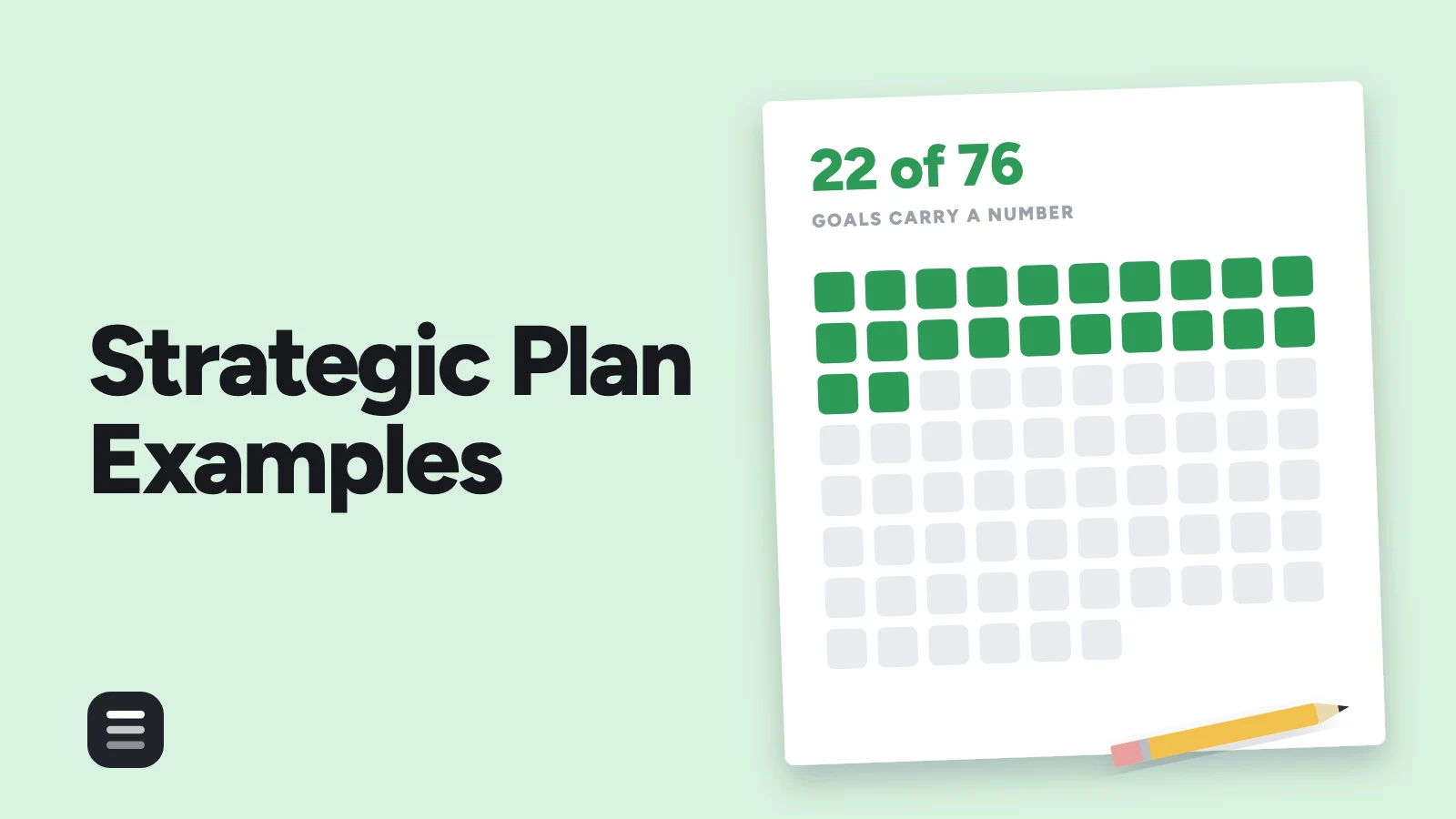
We read six strategic plan examples that real organizations published in 2026, and we counted their goals. There were 76 in all. Only 22 carry a number you could check a year from now, and 18 of those sit in one school district's scorecard. Take that district out and the other five plans give a number to 4 goals out of 58. Start from a free one pager template.
One‑Pager examples
Real One-Pagers made with MakeOnepagers. Open any one to edit it as your own.
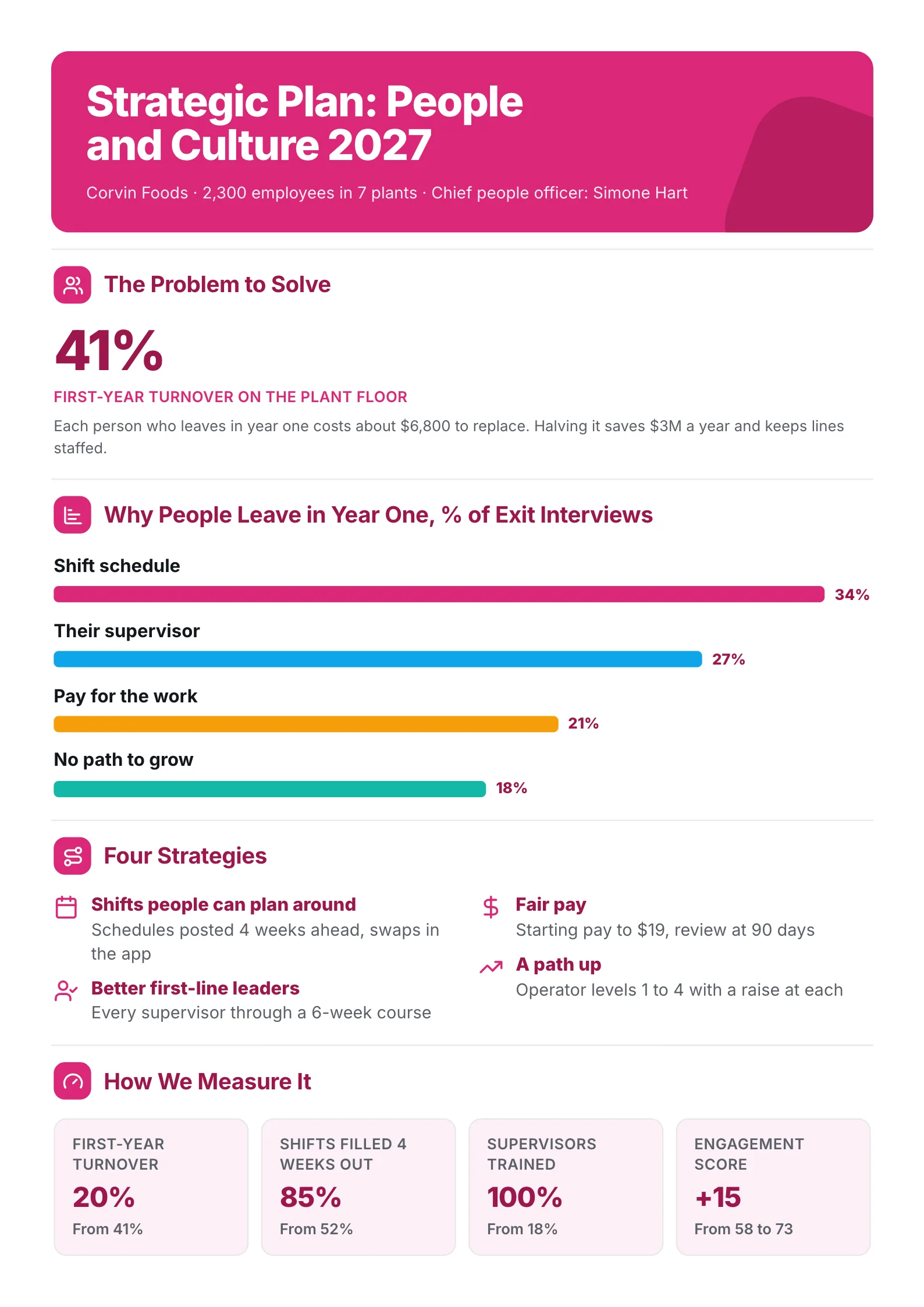 Strategic Plan: HR People and CultureEdit for free(opens in a new tab)
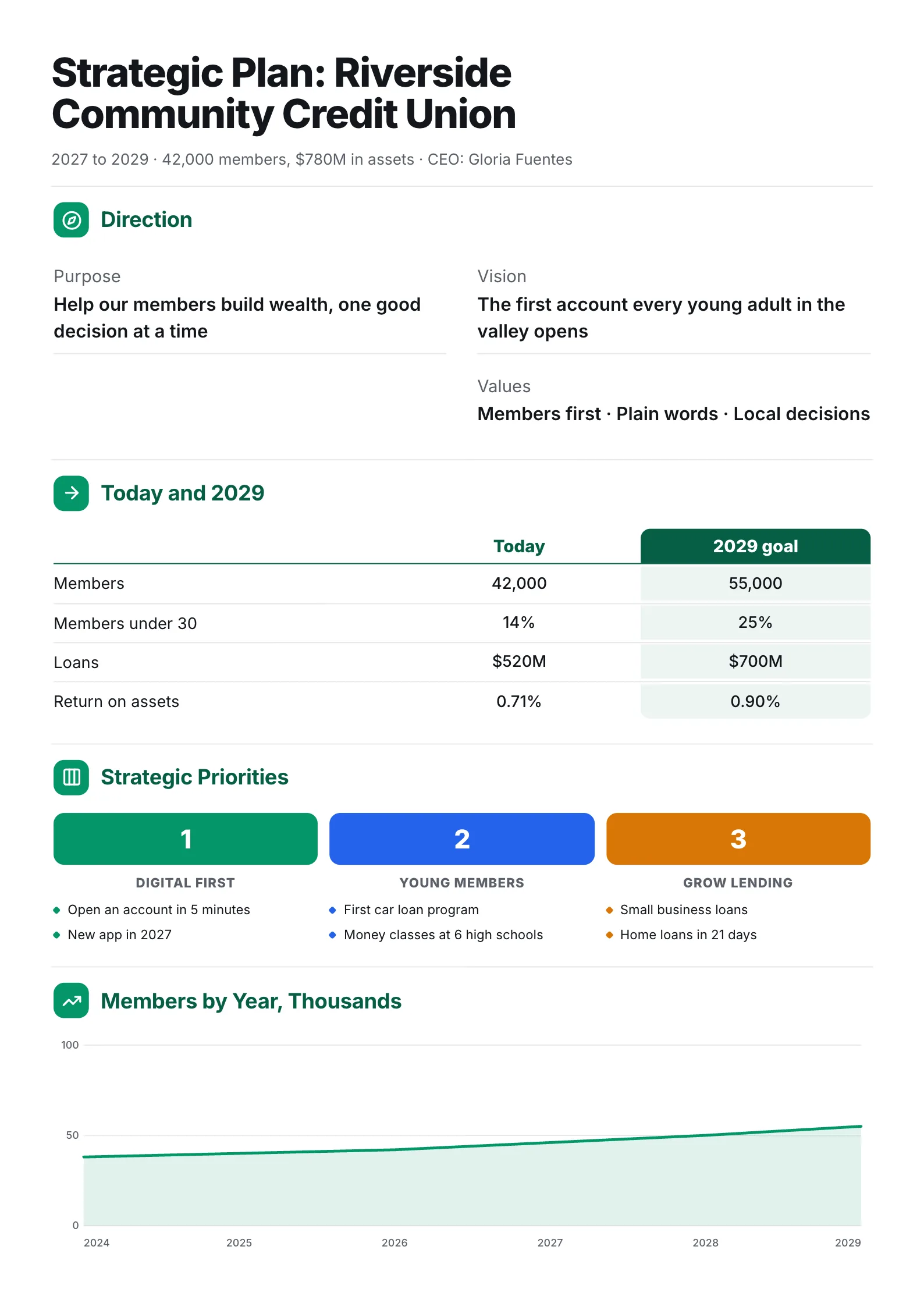 Strategic Plan: Credit UnionEdit for free(opens in a new tab)
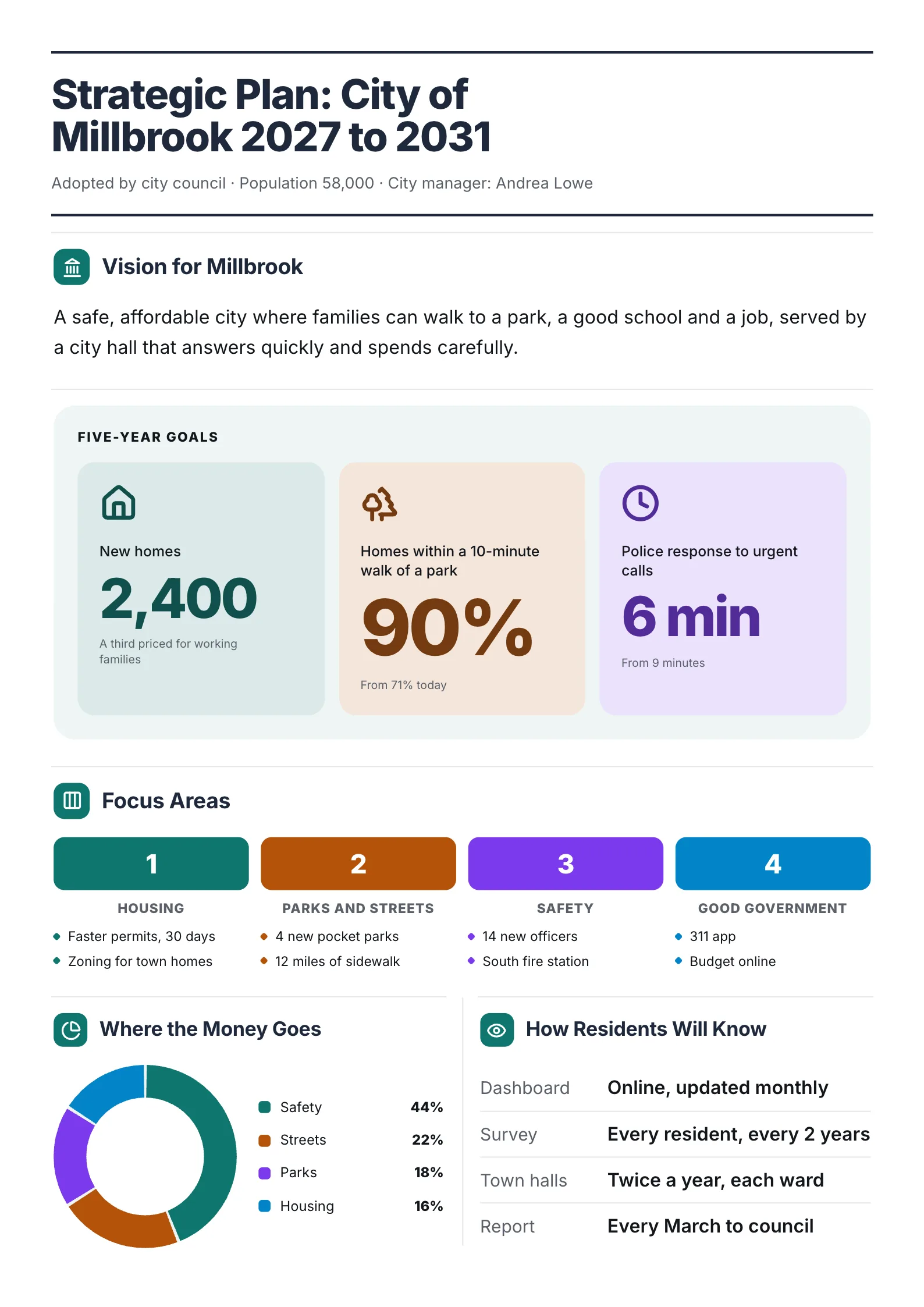 Strategic Plan: City GovernmentEdit for free(opens in a new tab)
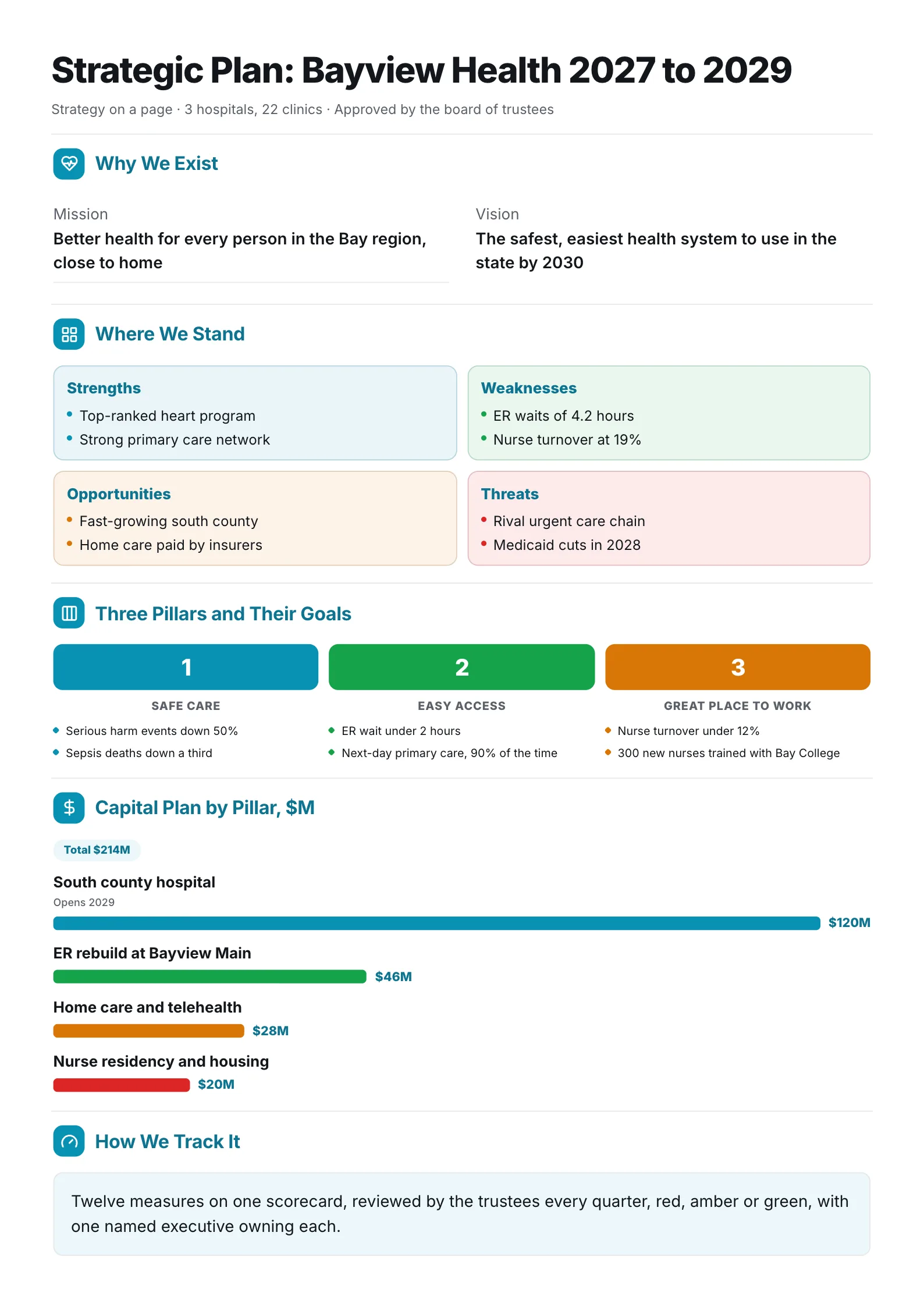 Strategic Plan: Hospital Health SystemEdit for free(opens in a new tab)
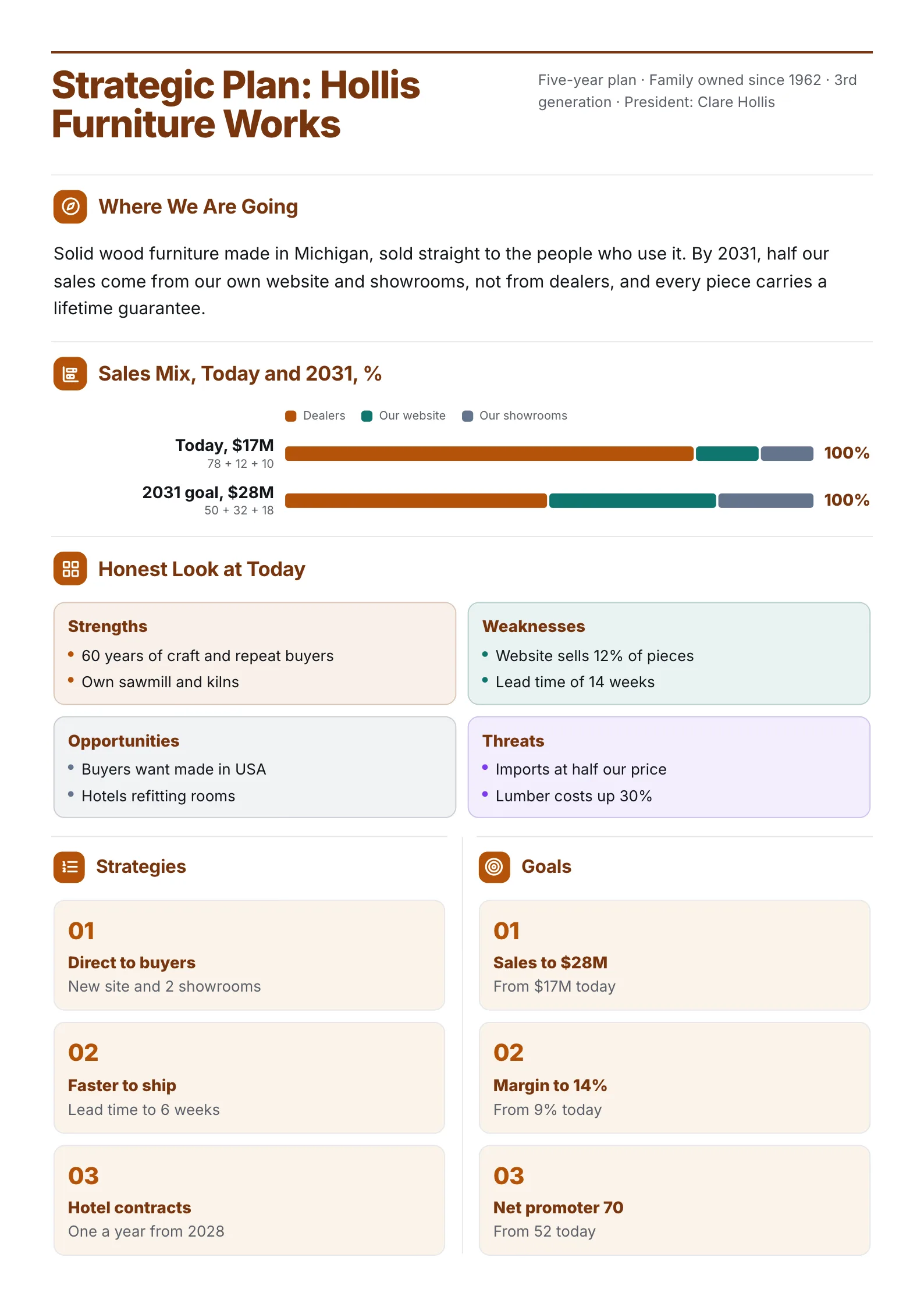 Strategic Plan: Family ManufacturerEdit for free(opens in a new tab)
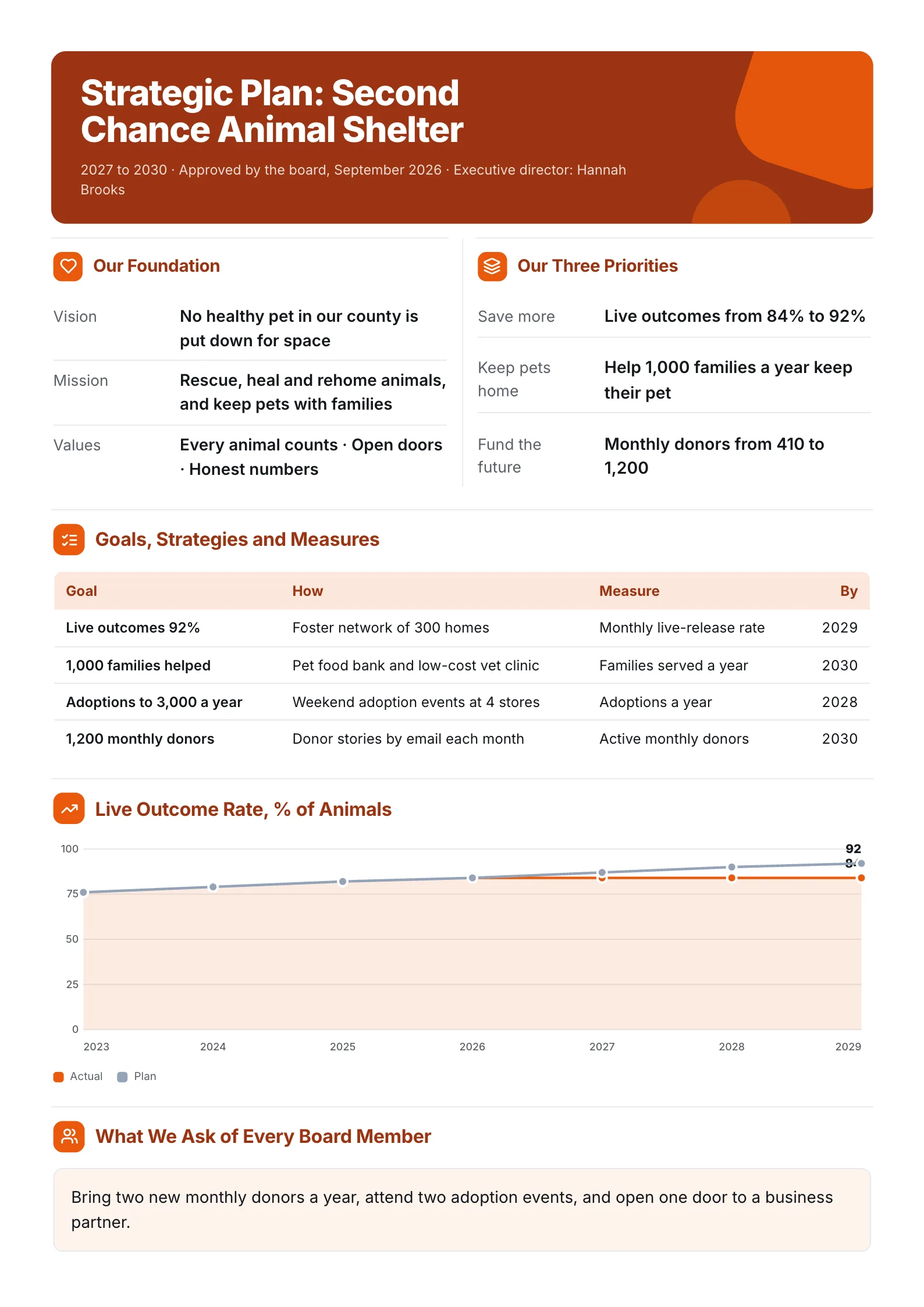 Strategic Plan: Nonprofit Animal ShelterEdit for free(opens in a new tab)
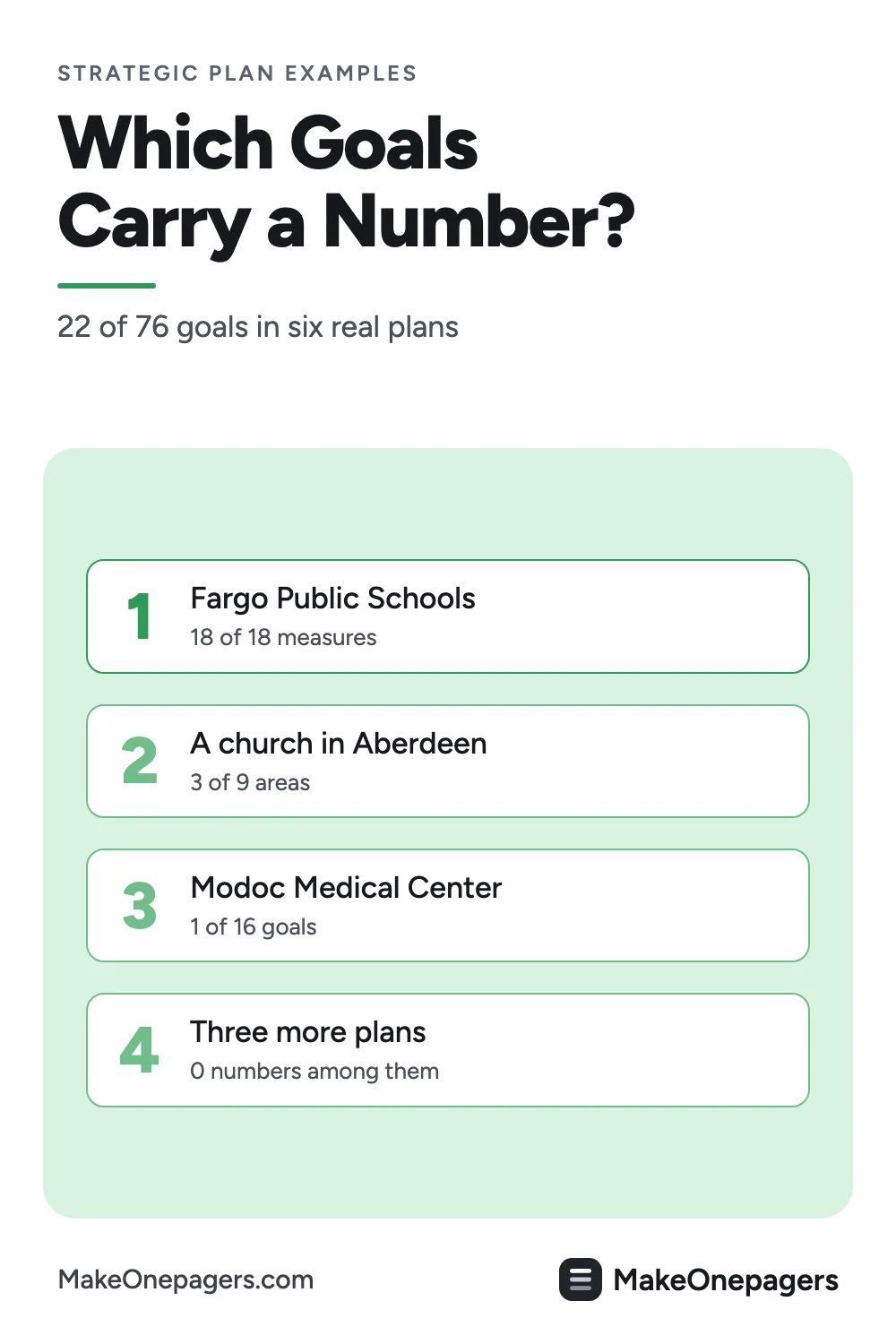
For every plan we asked two questions. How many goals, objectives or measures does it set? And how many name an amount, a rate or a count you could check at the end?
Below, those six real plans are sorted by how far ahead they look, from one fiscal year to five years. Next to them sit one-page examples you can start from, so you can borrow the good habits and skip the gaps.
The count, before you read a single plan
Here's the tally you can scan first. Click any plan's name further down to open the original.
| Plan | Looks ahead | Goals or measures | Carry a number |
|---|---|---|---|
| Modoc Medical Center, California | One fiscal year, to June 30, 2026 | 16 goals | 1 |
| Fargo Public Schools, North Dakota | One school year, 2026-27 | 18 measures | 18 |
| Rancho Cucamonga City Council, California | Three years | 4 goals | 0 |
| Sonoma Valley Hospital, California | 2026 to 2028 | 4 objectives | 0 |
| Wilmette Public Schools District 39, Illinois | 2026 to 2031 | 5 goals, plus 20 for 2026-27 | 0 |
| A Baptist church in Aberdeen, North Carolina | 2026 to 2030 | 9 areas | 3 |
Source: our count of the six published plans, read October 30, 2026.
You can close the same gap in your own plan. Write today's number and the target beside each result you care about, the way Fargo does on every line.
One-year plans keep the targets close
A one-year plan is the easiest place to put a number on everything, because you'll find out soon. The two real plans in this group went opposite ways.
Modoc Medical Center, fiscal year 2026
The Modoc Medical Center strategic plan runs a small hospital's year on a two-page grid you can read in five minutes. Five headings run down the side, from SERVICE at the top to GROWTH at the bottom. Under them sit 16 goals, and each goal breaks into a short list of tasks.
The tasks are clear and practical, the kind you could assign on Monday. Recruit a replacement chief medical officer. Bring back mobile MRI with four nearby hospitals. Train managers every quarter. You'd know who to call about each one.
Only one line in the whole plan carries a number. Under "Expand Enhanced Care Management," a task reads "Enroll at least 15 new members in the ECM program." Every other goal ends when the work is done, and you can't tell from the page whether it went well or badly.
Fargo Public Schools, 2026-27 targets
Fargo went the other way, and it's the plan you'll want open beside your own draft. Its Metrics for Success page lists 18 measures in five groups, and every single one has a target for the 2026-27 school year.
You can see the starting point next to the goal. Students attending more than 90% of days goes from 81.8% to 87%. Students who say they belong goes from 88% to 90%. Work-based learning grows from 389 learners to 428. The operating budget moves from a 2.1% deficit to break-even.
Fargo also does something brave. Four baselines read "Not yet received," and one measure reads "Data not tracked" with a target of 5 beside it. Your plan can do the same. Set the target now, and add the starting number when the data lands.
Two one-year examples to start from
 Edit this template
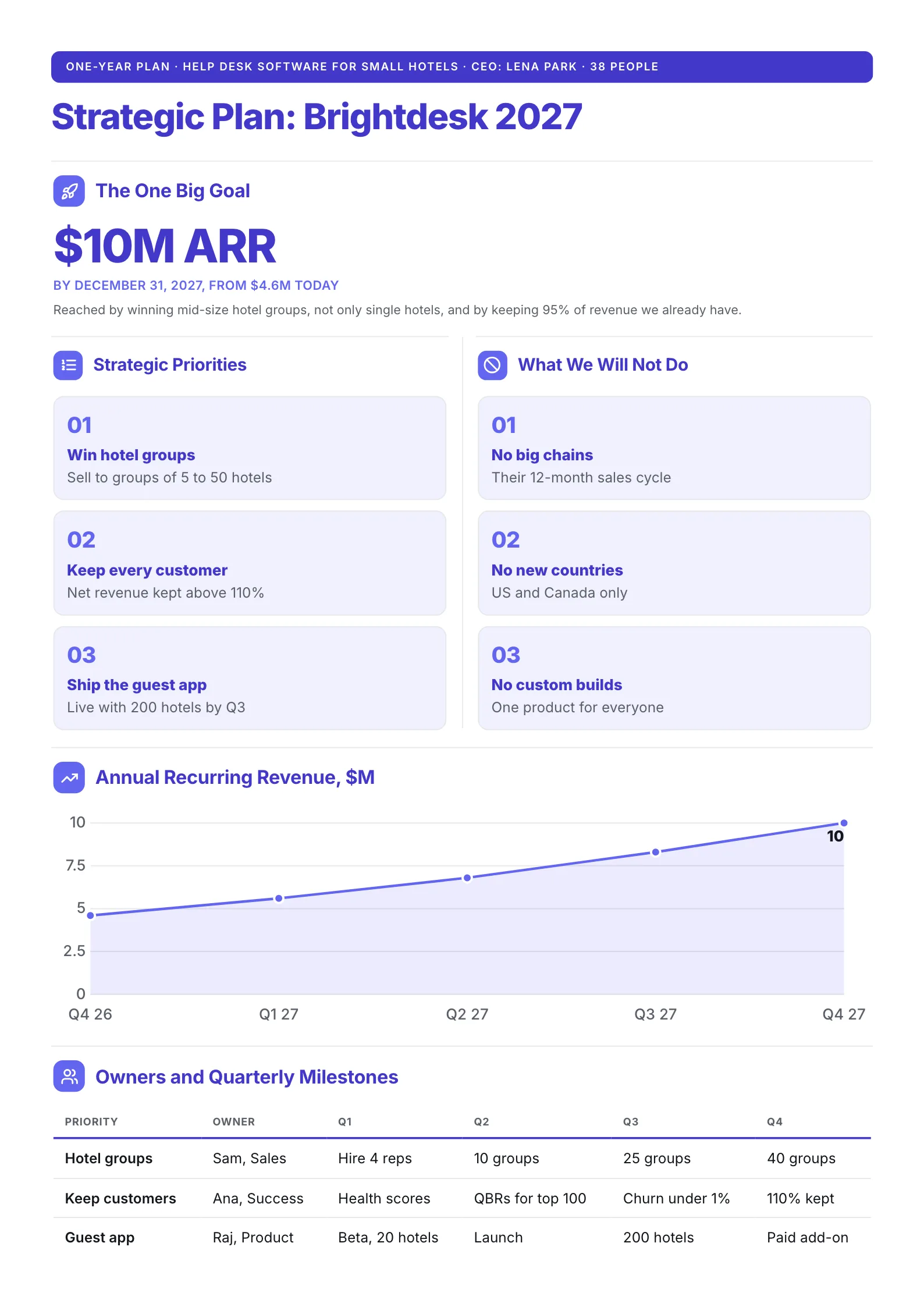
Brightdesk names one goal for the year, $10M in recurring revenue from $4.6M, and plots the path quarter by quarter.
This startup plan puts the number at the top, where the whole team sees it first. Three priorities sit under it, each with a target of its own. One reads "Net revenue kept above 110%." Then comes a box most plans skip, called "What We Will Not Do." No big chains, no new countries and no custom builds. Teams that keep chasing side projects will want to copy that box word for word.
 Edit this template
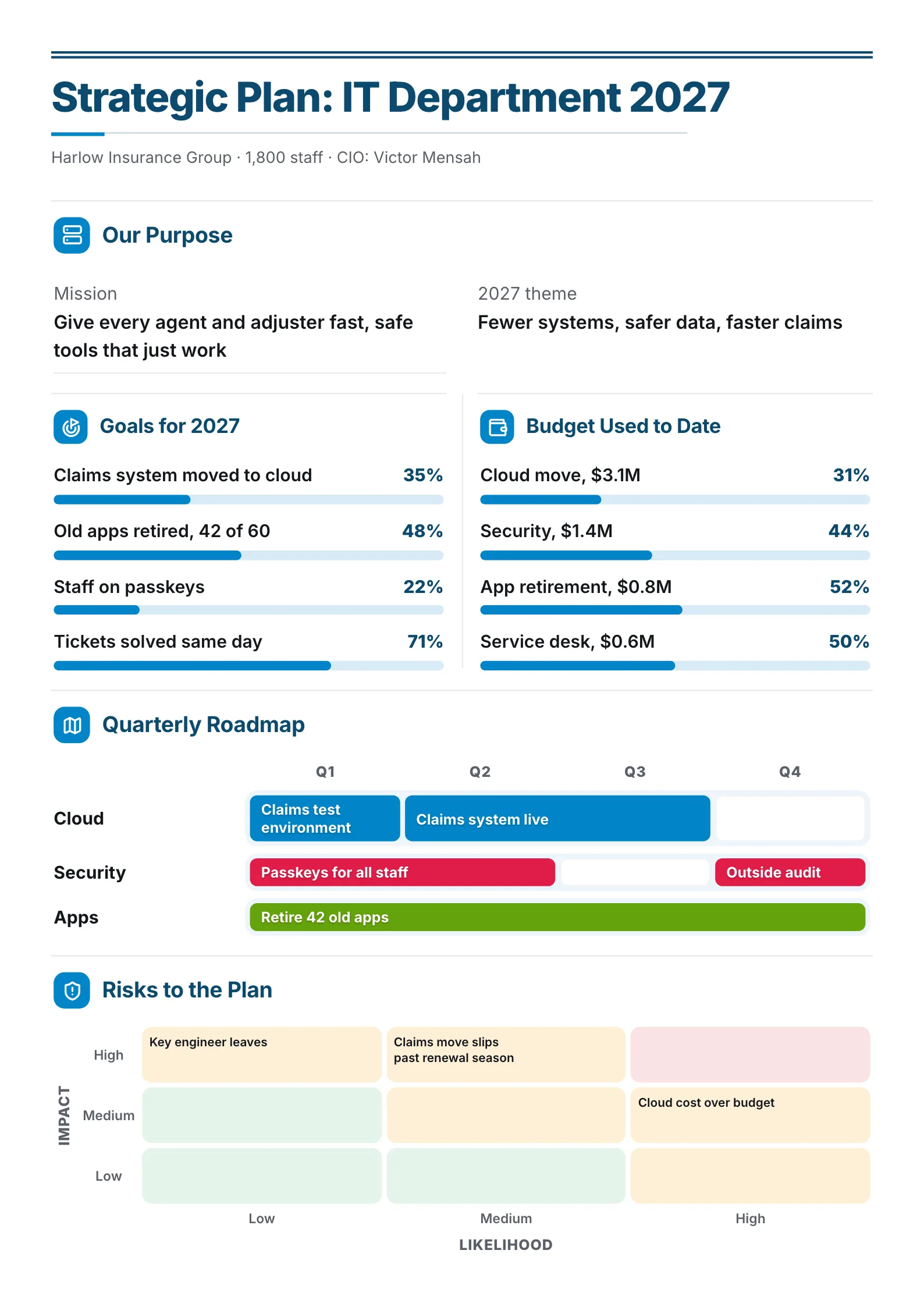
Harlow Insurance draws each 2027 goal as a bar, with the cloud move at 35% and old apps at 48%.
The IT plan works like a dashboard you can update every month, and your team can read it at a glance. Each goal is one labeled bar, so your reader sees staff on passkeys at 22% and same-day tickets at 71% without reading a sentence. A small grid at the bottom rates three risks, like a key engineer leaving. Use this one when your boss wants to see progress, and a promise isn't enough.
Three-year plans let dates do the work
Three years sits in the middle, and it's long enough that numbers start to feel risky. The two real plans here each lean on something else, and you can borrow from both.
Rancho Cucamonga 2026 City Council Goals
The Rancho Cucamonga City Council goals fit on a single page. The council set them at a February 2026 session, adopted them on March 4, 2026, and gave itself three years to finish.
There are four goals, and each one opens with a deadline. "By the end of July 2026, implement the Drones as First Responders Program." The other three name December 2026, January 2027 and September 2027. One of them is a draft of a longer plan called "The Next 50."
None of the four carries a number. Each one has a date and a finished thing you can point to, though, and you'll know on the day whether it happened. When your goals are projects more than results, this is a clean way to write them.
Sonoma Valley Hospital 2026 Strategic Plan Update
The Sonoma Valley Hospital 2026 plan runs from 2026 to 2028 and also fits on one page. It names four objectives, and one of them, Connected Culture, is marked as new this year. Under the objectives sit 12 short measures.
Some of those measures sound like numbers. "Meet or Beat Budget" and "% Population Served" are both on the page. But the plan never says which budget or what percent, so the count for this plan stays at zero. Put the target right beside a measure like that. "% Population Served" becomes useful the moment it reads "from 31% to 40%."
Two three-year examples to start from
 Edit this template
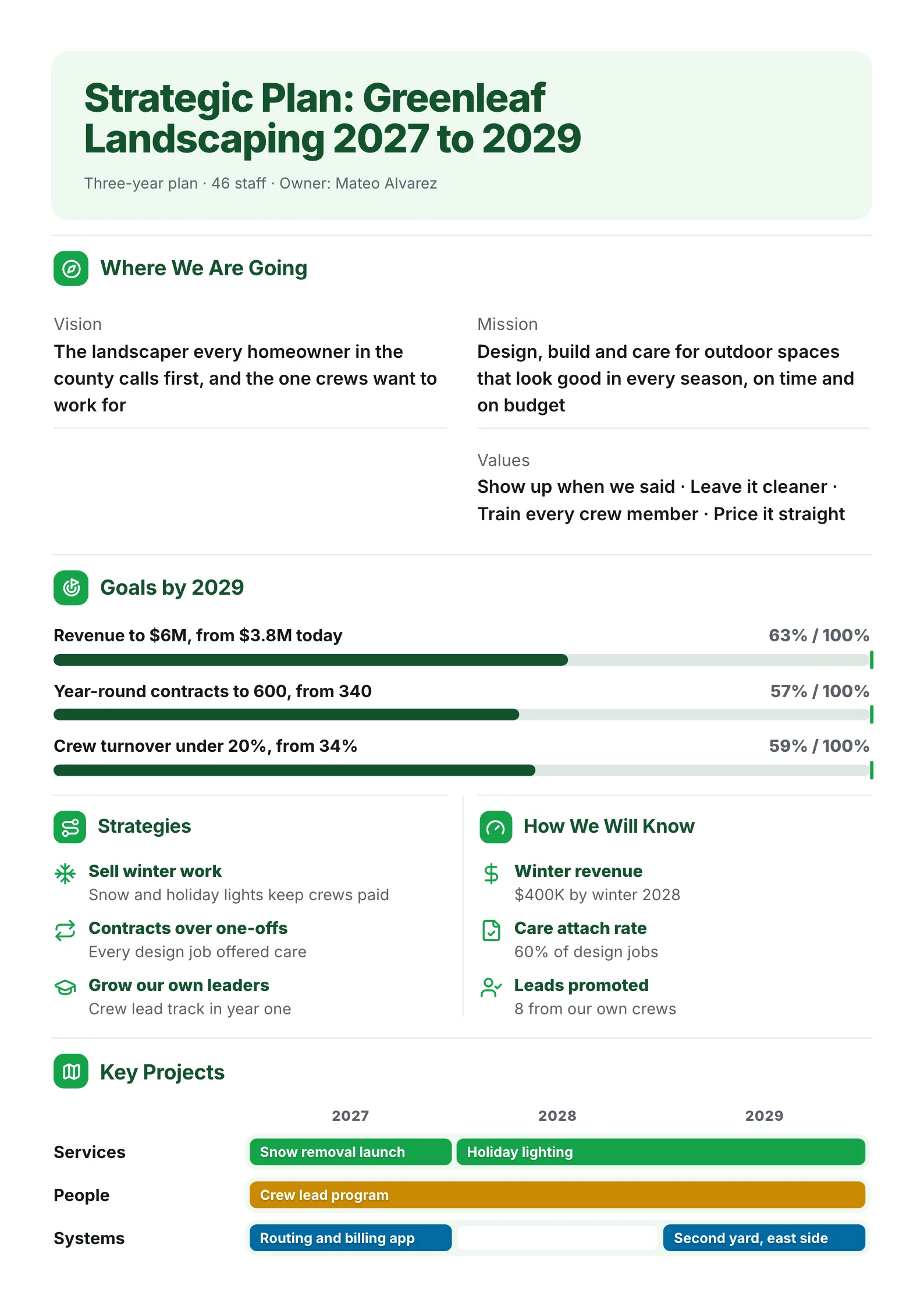
Greenleaf wants $6M in revenue by 2029, up from $3.8M, and shows it's 63% of the way there.
Every one of Greenleaf's three goals has a "from" number. Revenue goes from $3.8M to $6M. Year-round contracts go from 340 to 600. The share of crew who stay a year goes from 66% to 80%. Then a box called "How We Will Know" adds three checks for the strategies, like $400K in winter revenue by winter 2028. A small business owner can read the whole three years in under a minute.
 Edit this template
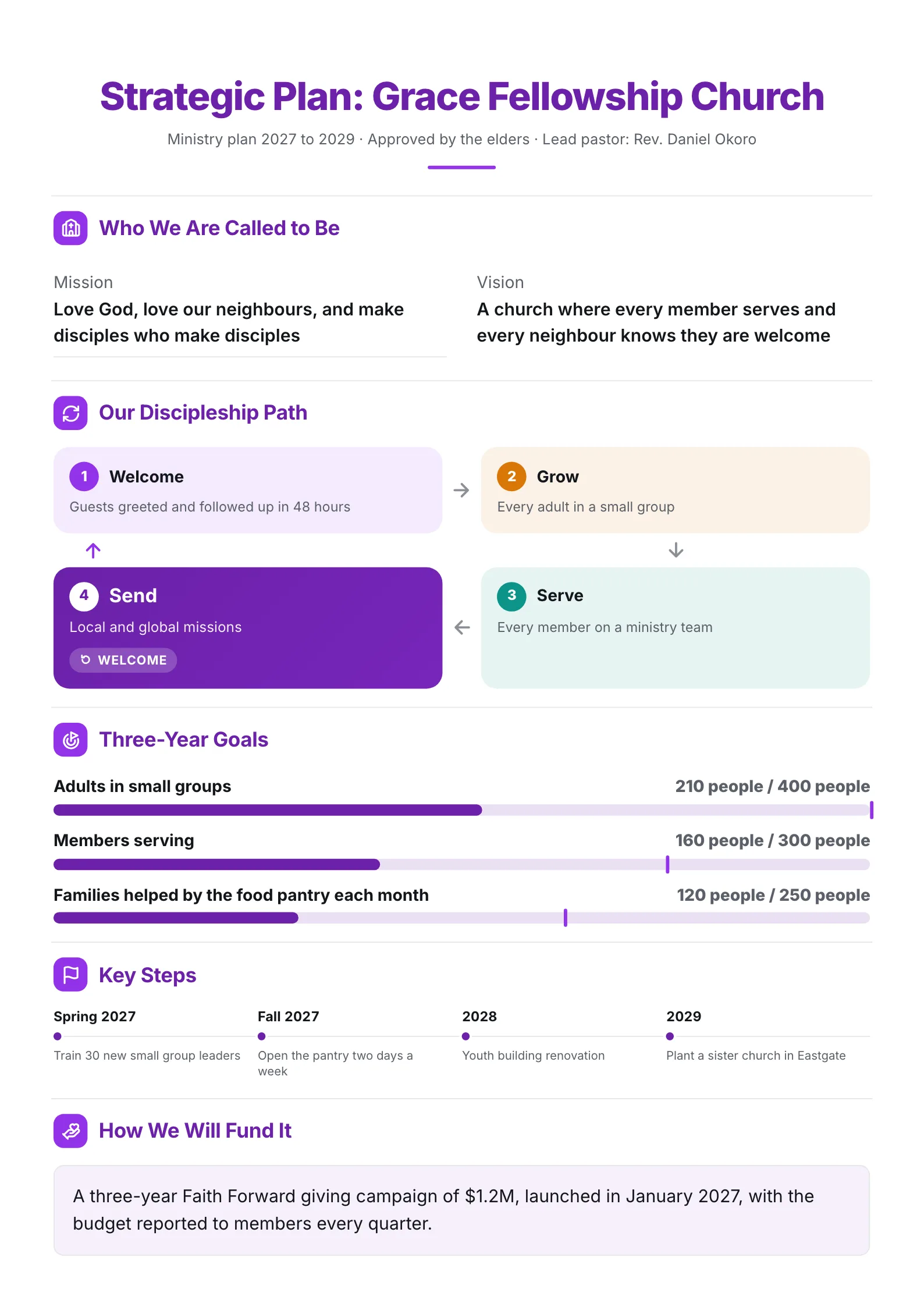
Grace Fellowship puts today's number beside every 2029 target, from small groups to the food pantry.
If you lead a ministry and doubt that numbers belong in your plan, read these three. Adults in small groups go from 210 to 400. Members serving go from 160 to 300. Families helped by the food pantry each month go from 120 to 250. The plan also says how it's paid for, with a $1.2M giving campaign reported to members every quarter.
Five-year plans set a direction, and some add a yearly list
Nobody can promise exact results five years out, so Wilmette, one of the two five-year plans we read, splits the work in two. It sets a big direction for five years and a shorter list for the year ahead. If your board wants numbers on a five-year plan, put them on a yearly list like that first, where you can check them when the year closes.
Wilmette Public Schools District 39, 2026-31
The Wilmette District 39 strategic plan was approved unanimously by the board in June 2026. It names five priorities, each with one goal for 2031. Then it adds 20 goals for the 2026-27 year alone, split across those five priorities.
The shape works for your board. Your five-year promise stays steady, and the yearly list changes as you learn. The catch is that none of the 25 goals carries a number. "Improve maintenance ticket response time" is a good aim. "Close 90% of tickets in 3 days" is a goal your board can check.
A Baptist church in Aberdeen, North Carolina, 2026-2030
Church leaders will get a lot out of this church's Strategic Vision 2026-2030. The 15-page plan opens with Proverbs 16:3 and sets out 10 core values. Then it lays out six areas of ministry and three building projects, nine areas in all.
Three of the nine carry a number you could check. The missions plan asks for at least four mission trips a year. Care for homebound members means a contact at least once a month. The building plan raises the HVAC fund to $60,000. Two more areas carry a date, like a church plant in Carthage planned for December 2027.
The best part is a line most plans hide. The parking lot was meant to be finished by the end of 2025, and it wasn't. The plan says so plainly, then gives the new dates. Bids were accepted in April 2026, work starts in early July, and it should take no more than 90 days. When one of your goals slips, you can write it up the same way.
A five-year example to start from
 Edit this template
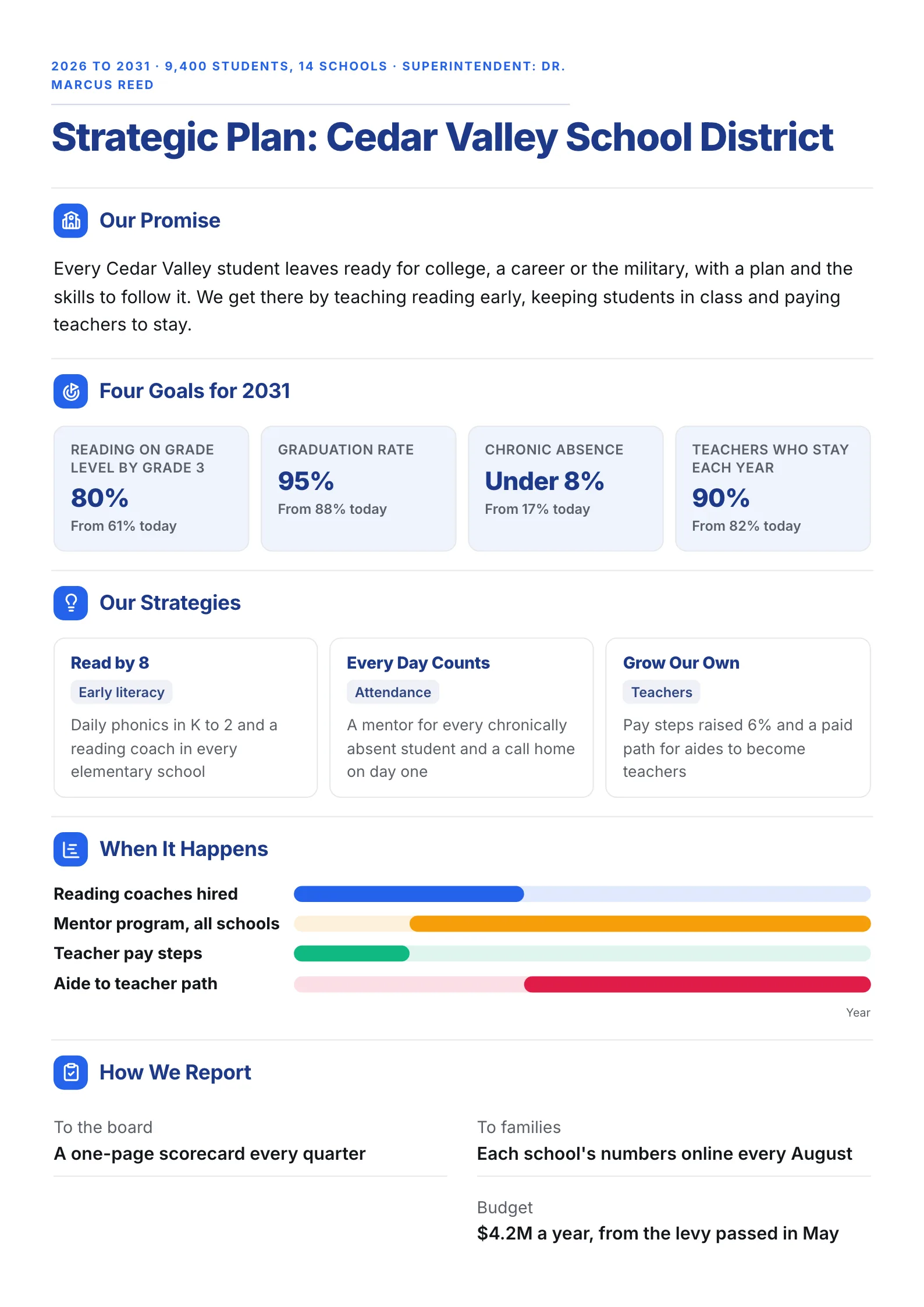
Cedar Valley sets four targets for 2031, like reading on grade level by Grade 3 rising from 61% to 80%.
Put this next to Wilmette and the difference jumps out. Cedar Valley has fewer goals, four instead of 25, and every one has a number. Graduation goes from 88% to 95%. Chronic absence falls from 17% to under 8%. Teachers who stay each year rise from 82% to 90%. The plan then tells you how it reports, with a one-page scorecard for the board every quarter. You could lift that reporting line straight into your own plan.
What the count means for your plan
You don't need a number on every goal to have a useful plan. Rancho Cucamonga shows that a dated deliverable works fine when the goal is a project. But when your goal is a result, like better attendance or more members, give it a number and a starting point.
Here's a quick check you can run on your draft:
- Count your goals. Past about six for one year, you'll struggle to track them.
- Mark each goal you could measure at year end. Aim for most of them.
- For each number, write where you're starting. No data yet? Write "not yet received," like Fargo.
- Add one line for anything that slipped last time, and its new date.
Run the count on your own draft
Before your plan goes to the board, do what we did with these six. Put your goals in one column and tick each one that names a number you could check next year. Across our six plans, fewer than one goal in three earned a tick, and four of the six ticked one goal or none.
A low count is easy to fix on one page. Pick the horizon first, then the field. Brightdesk suits a startup sprinting through one year, and Cedar Valley suits a school board looking to 2031. City, credit union and nonprofit plans are waiting in the MakeOnepagers strategic plan templates, most with today's number already sitting next to its target.
Strategic plan examples FAQ
How many goals should a strategic plan have?
The plans we read ran from 4 goals to 25. The shorter lists were far easier to follow. Our one-page examples set between one and four goals each, with a target on every one. To fit yours on a single sheet, see our one-page strategic plan guide.
What's the difference between a one-year and a five-year strategic plan?
A one-year plan names the targets you'll hit before the year ends. A five-year plan sets a direction, and some, like Wilmette's, add a shorter list for the coming year.
Should every goal have a number?
Results should. Projects can use a deadline instead. "Raise attendance to 87%" needs the number, while "finish the design by December 2026" is already checkable. Once your goals have numbers, an OKR template helps you track them each quarter.




