Quarterly Business Review Questions: 18 to Ask, Borrowed From Federal Law
Quarterly business review questions built from the five things US law makes the big federal departments check each quarter, with sample answers on one page.

Good quarterly business review questions cover five things: how you did against the goal, who else needs to act, which efforts are actually working, which goals are at risk, and what you'll change next quarter. Ask those every quarter and your review stops being a slide tour and starts producing decisions. Start from a free one pager template.
One‑Pager examples
Real One-Pagers made with MakeOnepagers. Open any one to edit it as your own.
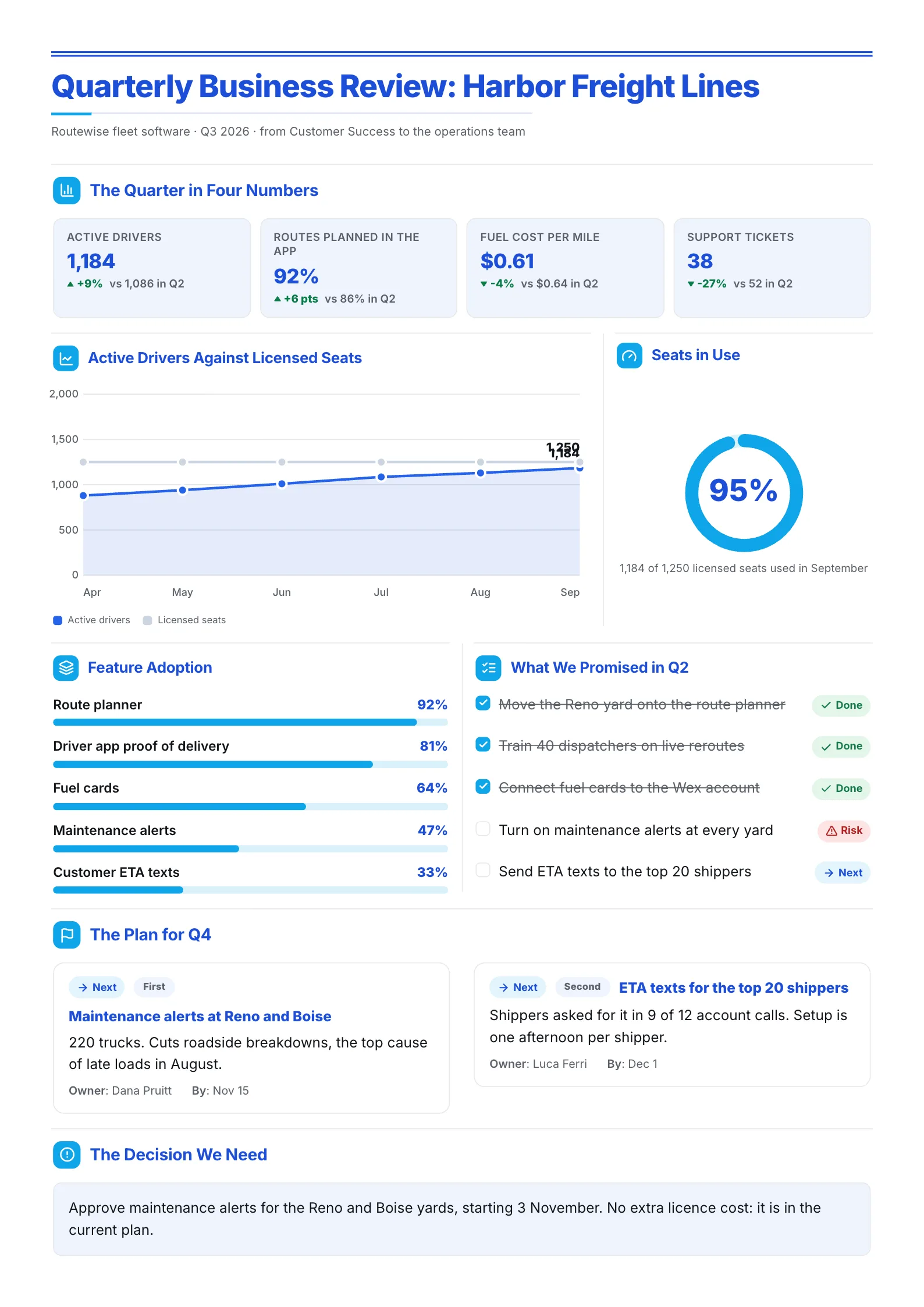 Customer Quarterly Business ReviewEdit for free(opens in a new tab)
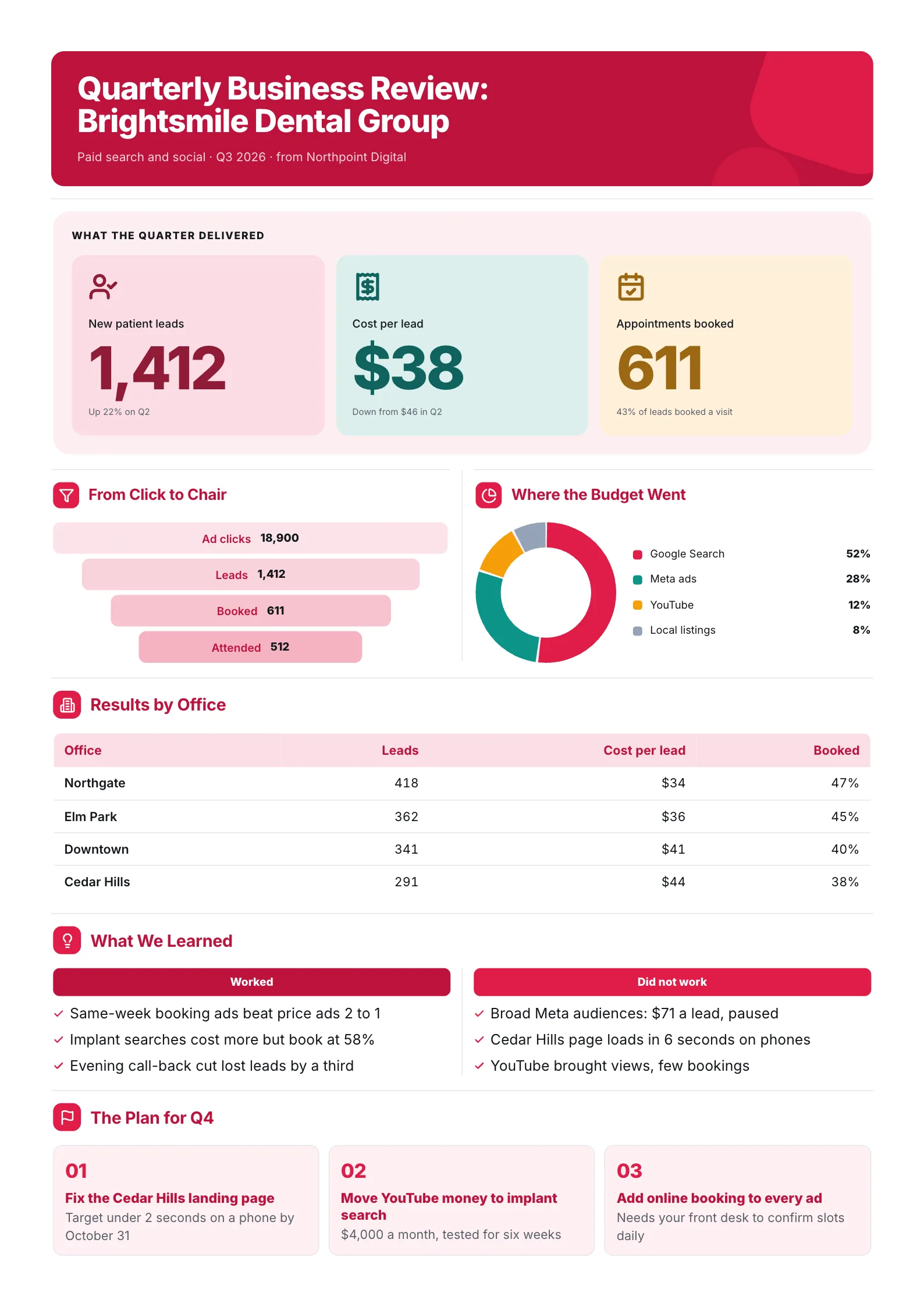 Agency Client Quarterly Business ReviewEdit for free(opens in a new tab)
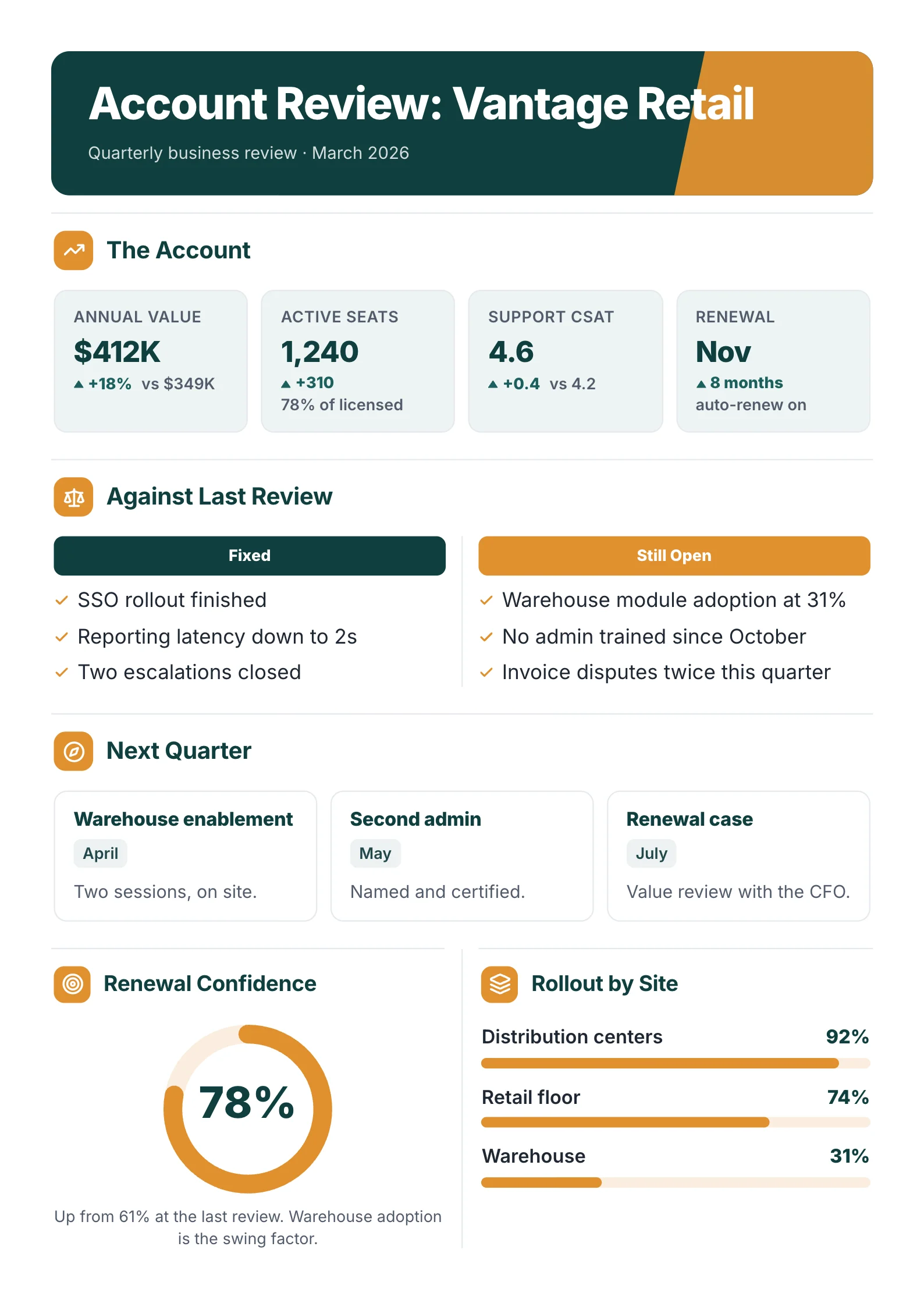 Quarterly Business ReviewEdit for free(opens in a new tab)
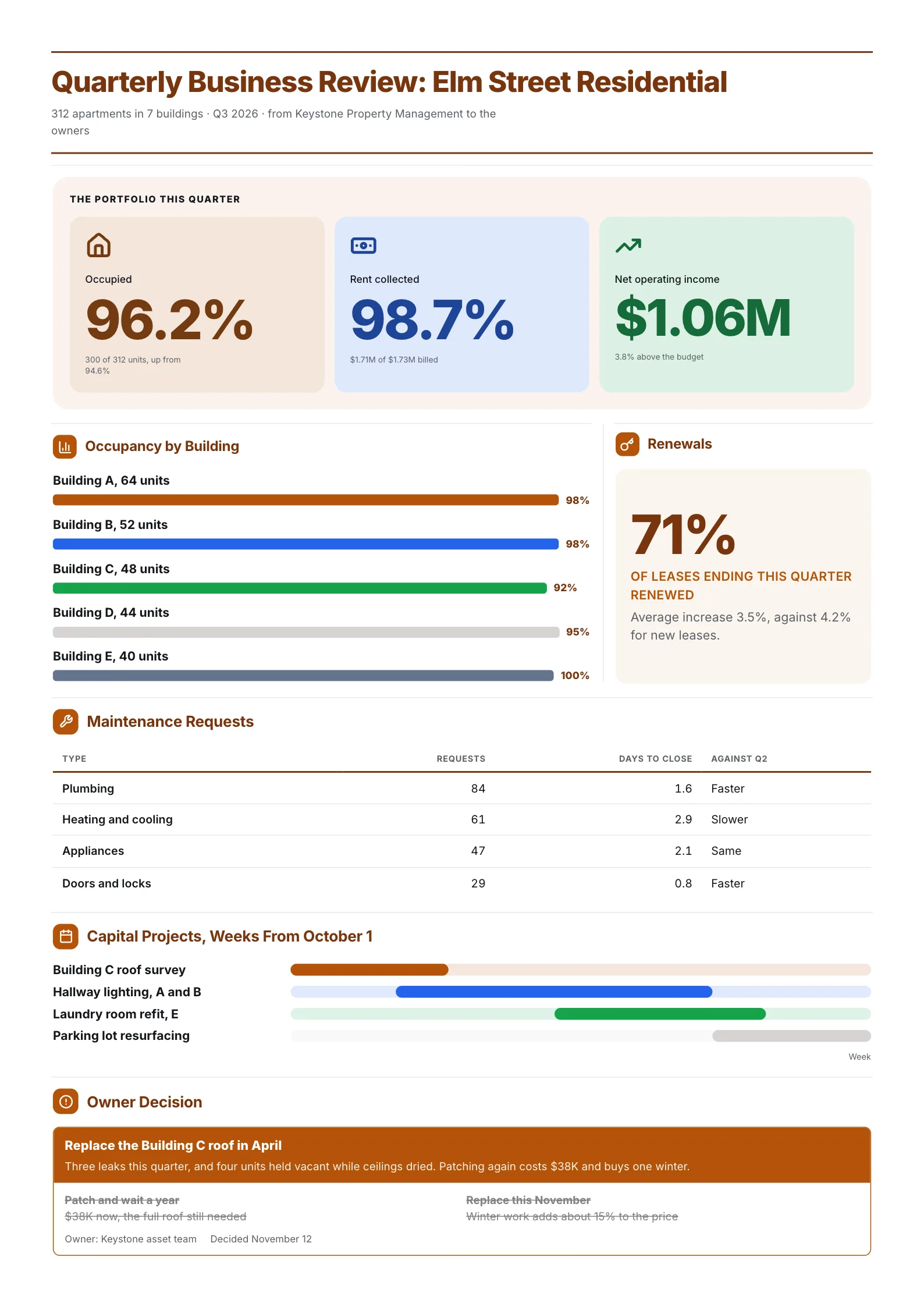 Property Management Quarterly Business ReviewEdit for free(opens in a new tab)
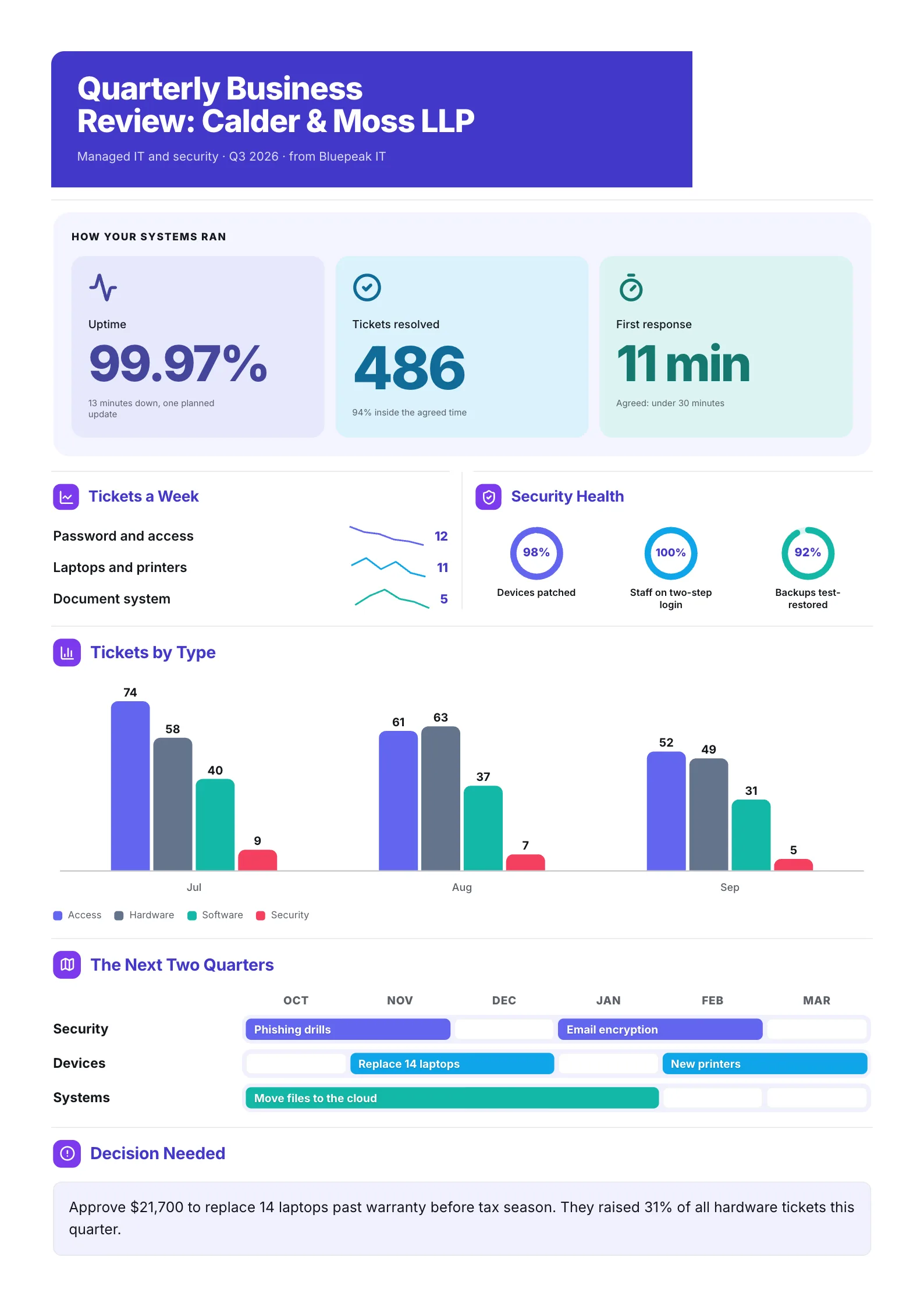 IT Services Quarterly Business ReviewEdit for free(opens in a new tab)
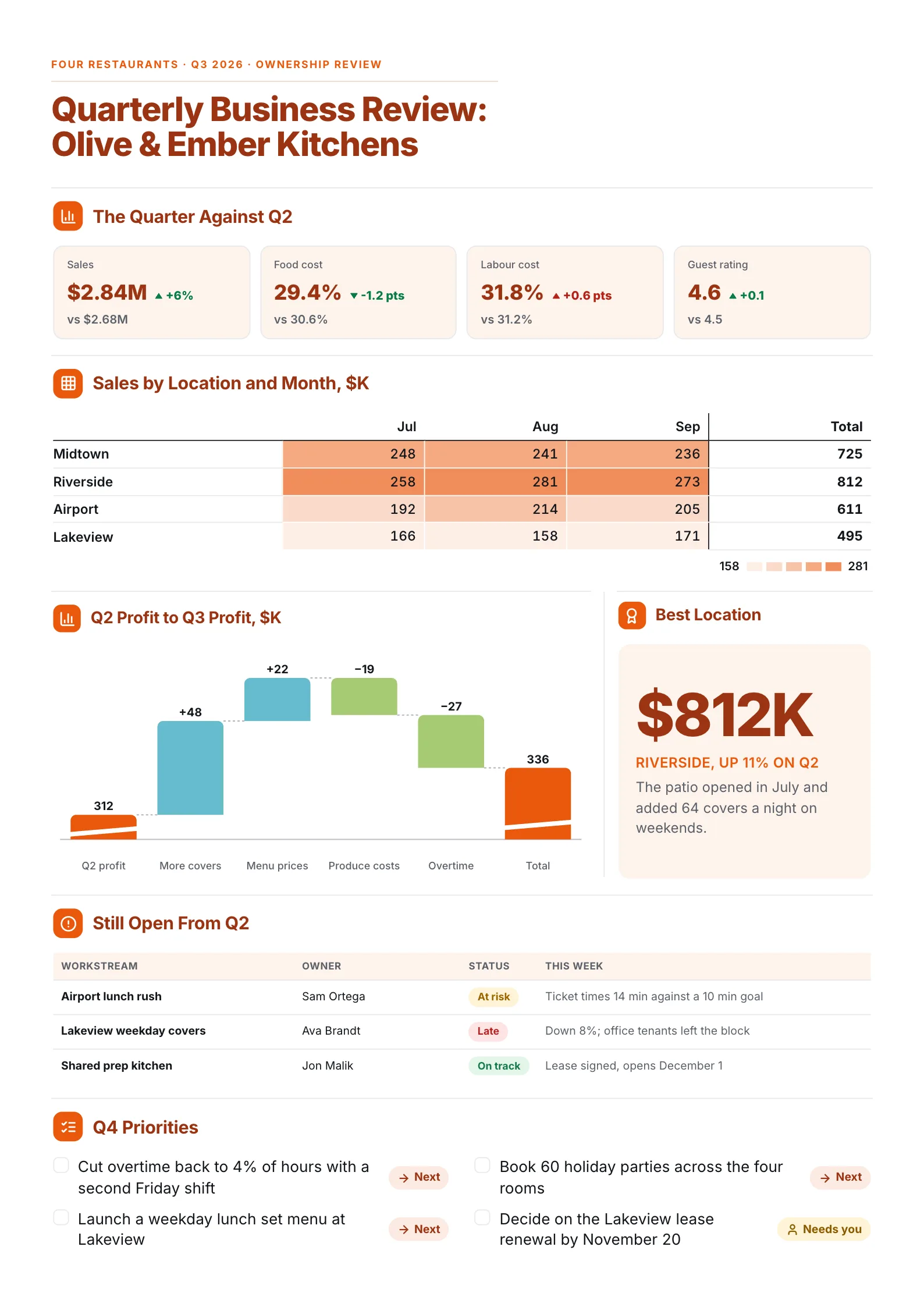 Restaurant Group Quarterly Business ReviewEdit for free(opens in a new tab)
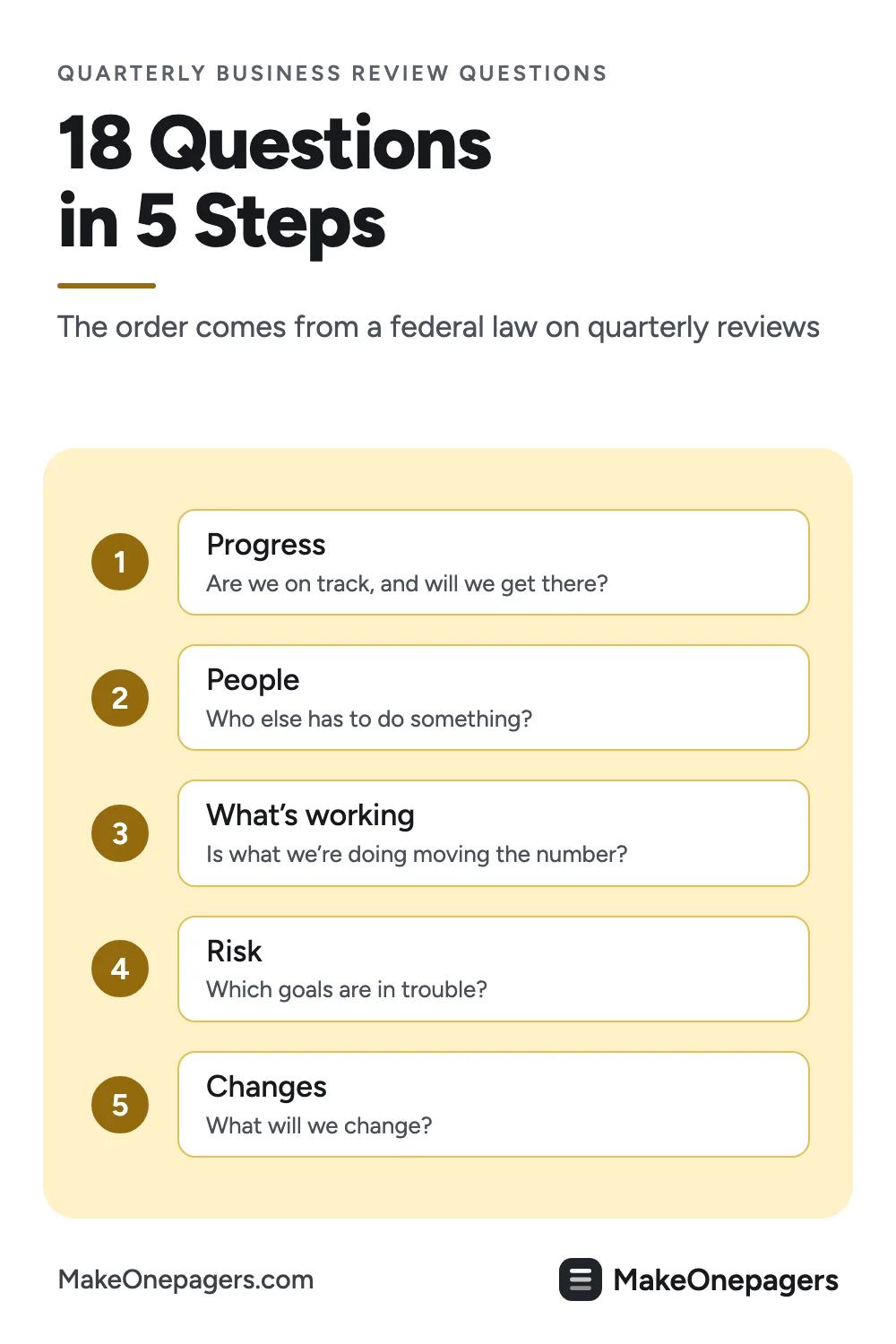
That five-part list comes from a federal law. Under 31 U.S.C. 1121(b), the head and chief operating officer of each agency that sets priority goals (the big departments listed in section 901(b), plus any the White House budget office adds) must review those goals at least once a quarter. The law spells out what that review has to do, in five steps. It's one of the few places anyone has written down, in plain terms, what a quarterly review is for. Below, each step becomes a set of questions you can ask in your own QBR. They work for a team review, a client account review and a supplier review alike, and each step comes with a one-page sample so you can see what a good answer looks like.
The five steps the law requires
At least quarterly, for each priority goal, the agency's leaders must:
| Step | What 31 U.S.C. 1121(b) says to do | The question it becomes |
|---|---|---|
| 1 | Review progress in the most recent quarter, the overall trend, and the likelihood of meeting the planned level | Are we on track, and will we get there? |
| 2 | Coordinate with the people inside and outside the agency who contribute | Who else has to do something? |
| 3 | Assess whether programs, policies and other activities are contributing as planned | Is what we're doing actually moving the number? |
| 4 | Categorize goals by their risk of not reaching the planned level | Which goals are in trouble? |
| 5 | For the goals most at risk, identify strategies to improve, including any changes needed | What will we change? |
Source: 31 U.S.C. 1121(b), read October 30, 2026 at Cornell's Legal Information Institute. The law also names a Performance Improvement Officer to support each review, a role you can give to whoever keeps your numbers.
Notice the order. Progress comes first, and change comes last, and the law ties the change step to the goals at greatest risk. That's a useful habit for you. Spend the meeting on the goals in trouble, and let the ones on track get a one-line update. A team that reviews ten goals in equal depth runs out of time before it reaches the one that matters.
Step 1: questions about progress
The law asks for three things here, and most reviews only cover the first. You need this quarter's number, the trend behind it, and an honest guess at your odds of hitting the goal.
- What was the goal for this quarter, and what did we reach?
- Is the trend over the last four quarters going up, flat or down?
- At this pace, will we hit the year's goal? If not, by how much will we miss?
- Which one number would you show if you could only show one?
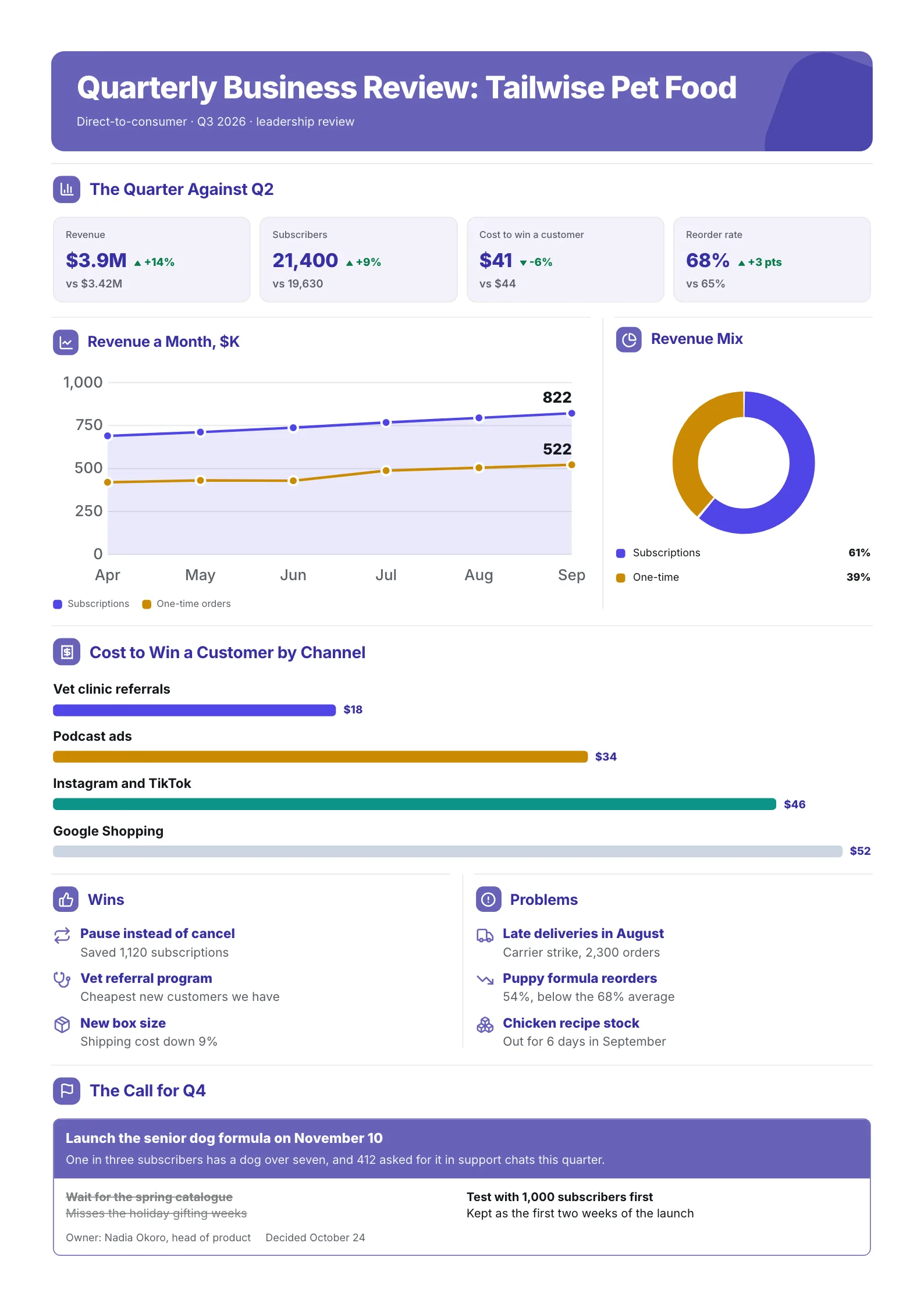
The online store review below puts question 4's one number first: revenue went from $3.42 million to $3.9 million, up 14%, beside 21,400 subscribers. Your reader knows the quarter before reading a word of detail. The same top band shows the cost to win a customer falling to $41 from $44 and the reorder rate rising to 68% from 65%. Those two tell you whether the 14% will hold. A single quarter's jump can come from one promotion. A rising reorder rate means your customers keep coming back on their own. The band only compares with last quarter, so put the year's goal and your last four quarters beside it to answer questions 1 to 3.
 Edit this template
Sample names and figures. The quarter's answer sits in the first line: $3.42M to $3.9M, up 14%.
Step 2: questions about people
The law says to coordinate with relevant people inside and outside the agency. In your business, that's the other teams, suppliers or clients your goal depends on. A QBR that only talks to the people in the room misses half the reasons a number moved.
- Who outside this team affected the result, for better or worse?
- What do we need from them next quarter, and have we asked?
- Who is the one owner for each goal?
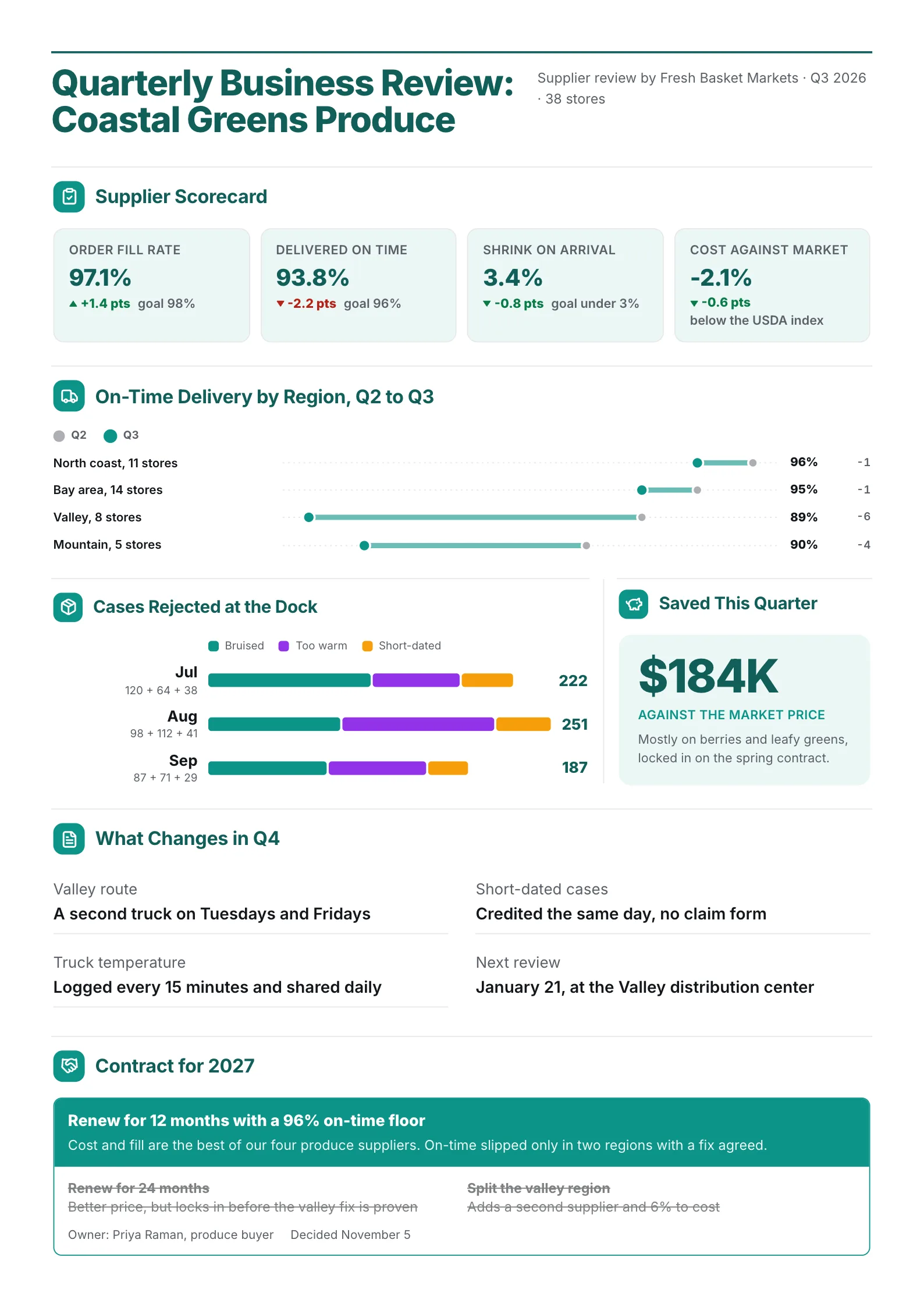
A supplier review is this step on one page. The one below tracks on-time delivery at 93.8% against a goal of 96%, names the Valley region, which slipped from 95% to 89%, and ends with the decision: renew, with a 96% floor written into the contract. Partner reviews earn their keep that way, with a clear ask your supplier can accept or push back on.
 Edit this template
Sample names and figures. The review ends on a decision about the supplier, with an owner and a date.
Step 3: questions about what's working
The law asks whether each program, policy and activity is contributing "as planned". In other words, your effort and your result are two different things, and you have to check that one caused the other.
- Which of last quarter's actions moved the number, and how do we know?
- What did we spend time or money on that didn't move anything?
- Is anything we're doing working against the goal?
- What would we stop if we had to cut one thing?
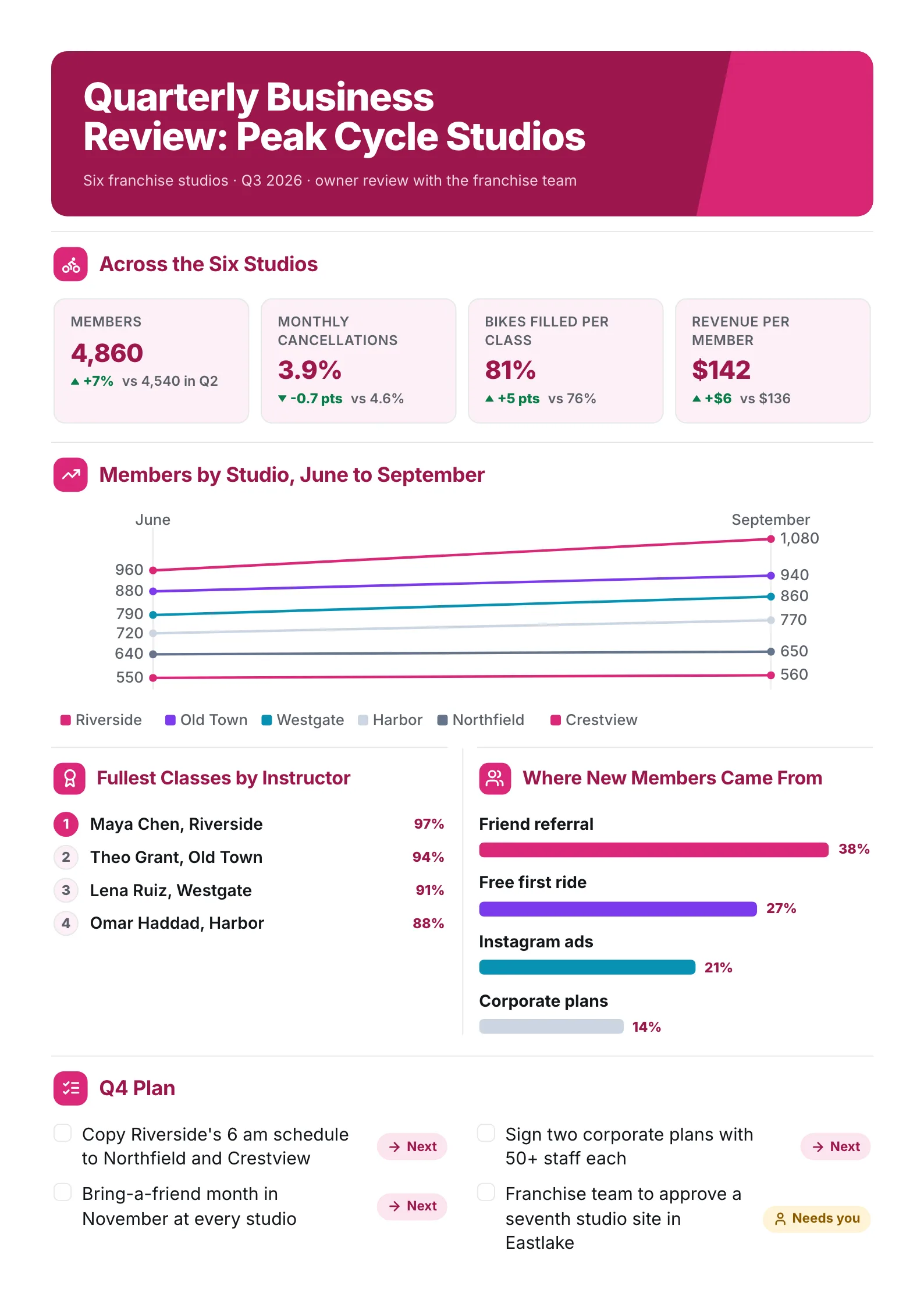
The franchise review below grew members from 4,540 to 4,860, up 7%, and shows where the new members came from. Friend referrals brought 38% of them and a free first ride brought 27%, ahead of Instagram ads at 21%. So the Q4 plan leans on a bring-a-friend month. Knowing what's behind a number is what lets you decide where your next dollar goes. Corporate plans brought the fewest new members here, 14%, yet the Q4 plan still signs two more, so that's the line someone should be asked to defend.
 Edit this template
Sample names and figures. Members up 7%, and the source chart shows which efforts earned them.
Step 4: questions about risk
The law asks leaders to sort goals by the risk of missing them. That's a different question from "did we hit it this quarter". Your goal can be green today and still be at high risk for the year, and you want to know that by July.
- Which goals are on track, which are at risk, and which will miss?
- What's the evidence behind each rating?
- Which risk would hurt most if it came true?
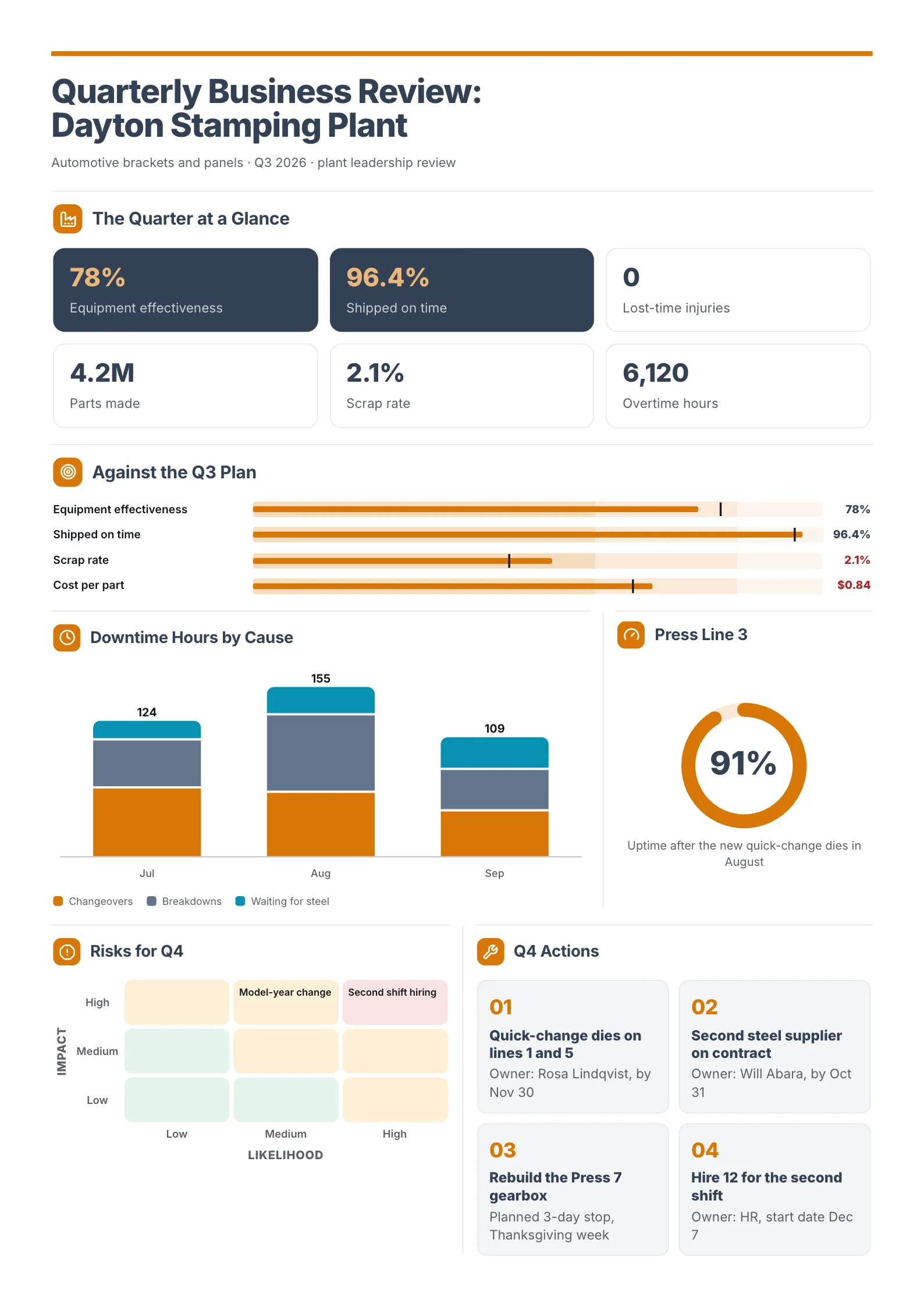
The manufacturing plant review below puts this on a grid. Equipment effectiveness is 78% against a goal of 82%, and the risks sit in one place, sorted by how likely and how costly they are. Your team can argue about the ratings, which is the point. Steel coil delays score 4 for likelihood and 4 for impact, so they top the list, and the plan answers with a second steel supplier by October 31. A rating with no action beside it is just a worry on paper.
 Edit this template
Sample names and figures. The risk grid turns step 4 into something your team can see and debate.
Step 5: questions about change
Only now does the law ask for a plan, and only for the goals at greatest risk. It asks for "prospects and strategies" to improve, including changes that may be needed.
- For each goal at risk, what will we do differently next quarter?
- Who owns that change, and by what date?
- What would tell us by mid-quarter that it isn't working?
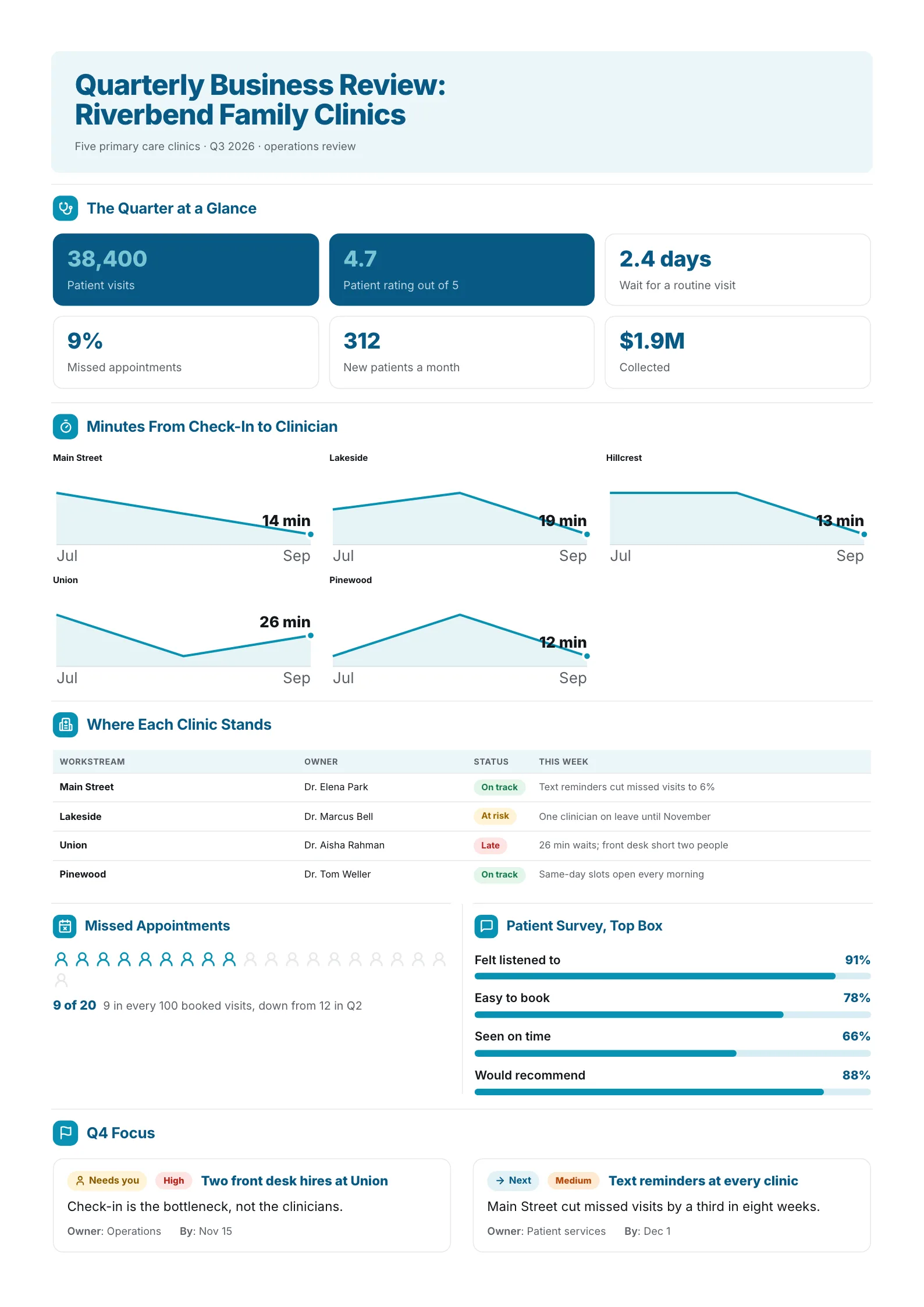
The clinic network review below does this for one site. Union clinic is red, with 26-minute waits, and the review traces the delay to check-in at the front desk. The fix is two front desk hires, owned by operations, by November 15. Missed visits are down to 9% from 12%, and Main Street's text reminders get rolled out to every clinic. Change goes where the risk is, with an owner and a date.
 Edit this template
Sample names and figures. The one red site gets the change, and the program that worked spreads to every clinic.
One more question, from the yearly review
Subsection (c) of the same law adds a yearly review of the agency's broader goals. One of its required steps is to identify whether more evidence is needed to understand how well a goal is going. That makes a good closing question for your QBR, too:
- What don't we know yet, and how will we find out before next quarter?
It makes you say what you don't know. A program you're unsure about gets named as unsure, with a plan for how you'll measure it. That beats a confident green rating that falls apart in the next quarter, and it tells your team exactly what data to collect before you meet again.
When you run the QBR for a client
Turn the five steps around and ask them across the table:
- Step 1: Which result from this quarter mattered most to your boss?
- Step 2: Who on your side should we be talking to that we aren't?
- Step 3: Is any part of our work not adding value for you?
- Step 4: What's changing in your business next quarter that could put these goals at risk?
- Step 5: What should we do differently before we meet again?
They sit outside the 18 above: the same five steps, asked from the client's seat.
How to use these questions
You don't need all 18 in one meeting. Pick two or three per step, send them out a week ahead, and ask each owner to answer in writing on one page. The meeting then starts from the answers instead of a slide walk-through.
Keep the same questions from quarter to quarter. Your answers become comparable, and a goal that slides from on track to at risk stands out right away. Change the list once a year, at the yearly review, when you also reset the goals.
For a ready layout, see our quarterly business review template post. For the full process from data to meeting, read how to write a quarterly business review.
Ask the risk question before the meeting ends
Of the five steps, step 4 is the habit to hold on to above the rest. Before the meeting ends, every goal gets a rating: on track, at risk or off track. Write the ratings at the top of your review in a MakeOnepagers QBR layout, and next quarter's meeting starts with whether they changed.
Frequently asked questions
What should be included in a quarterly business review?
Results and trend against the goal, who else has to act, what drove the results, the goals at risk, and the changes for next quarter. Federal law asks the big federal departments for the same five pieces every quarter.
How long should a QBR meeting last?
An hour is enough if the answers arrive in writing first. Spend most of that hour on steps 4 and 5, where the decisions are.
Who should attend a quarterly business review?
The owner of each goal, the decision maker, and anyone outside the team whose work the goal depends on. That last group is step 2 of the law, and it's the one most often left out.
What questions should a client ask in a QBR?
Ask whether the work hit the goals you agreed on, what the provider will change for goals at risk, and what they need from you. Those are steps 1, 5 and 2, asked by the client.




