How to Write a Quarterly Business Review: 6 Habits From 7 Shareholder Letters
How to write a quarterly business review, from 7 public companies' Q3 letters: all 7 compare to last year, and 4 grade themselves against their own forecast.

Open your quarterly business review with your three or four most important numbers. Then put an earlier quarter beside each one and say how the quarter went against what you predicted. Name what went wrong and why, then write your numbers for next quarter. Start from a free one pager template.
One‑Pager examples
Real One-Pagers made with MakeOnepagers. Open any one to edit it as your own.
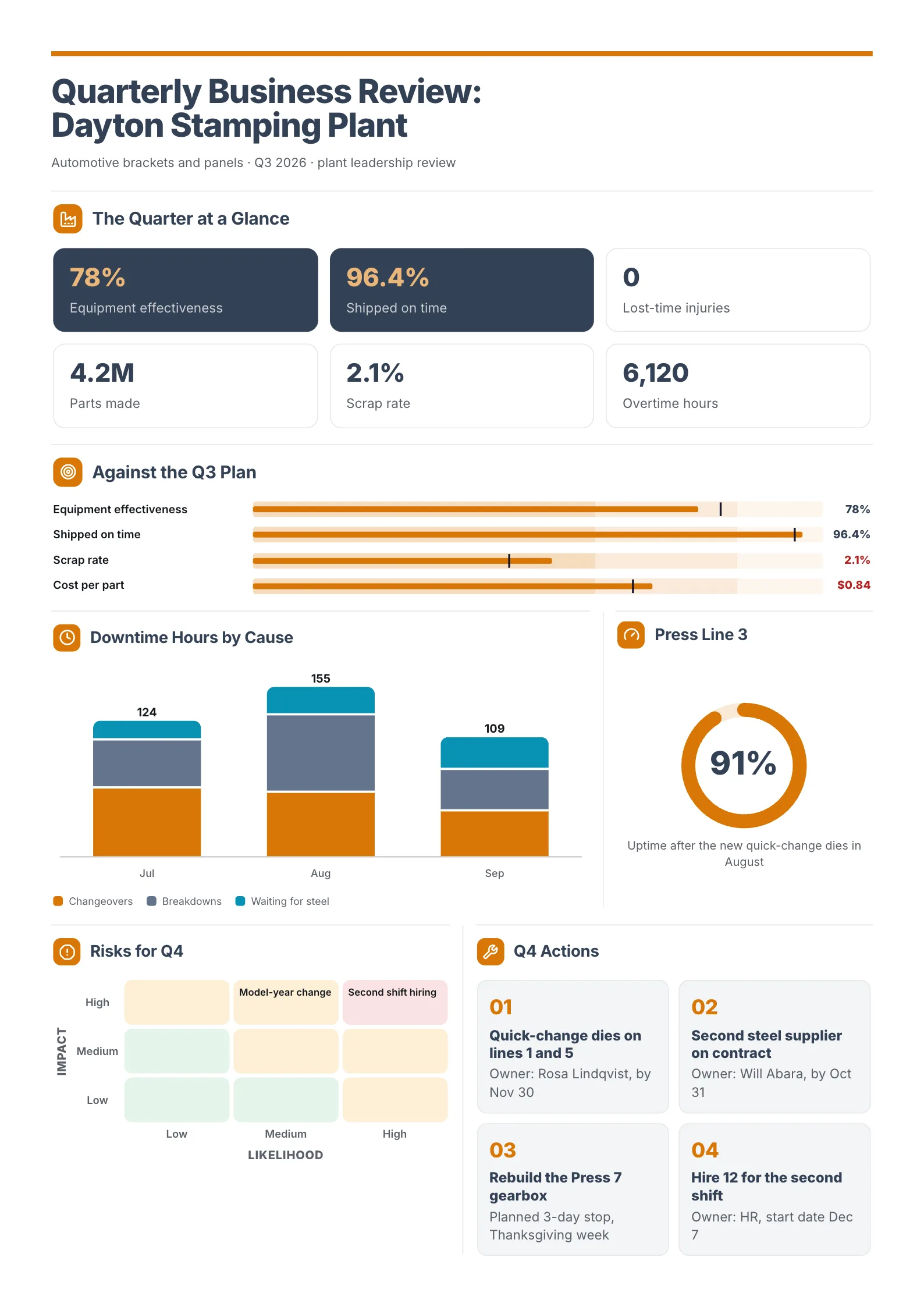 Manufacturing Plant Quarterly Business ReviewEdit for free(opens in a new tab)
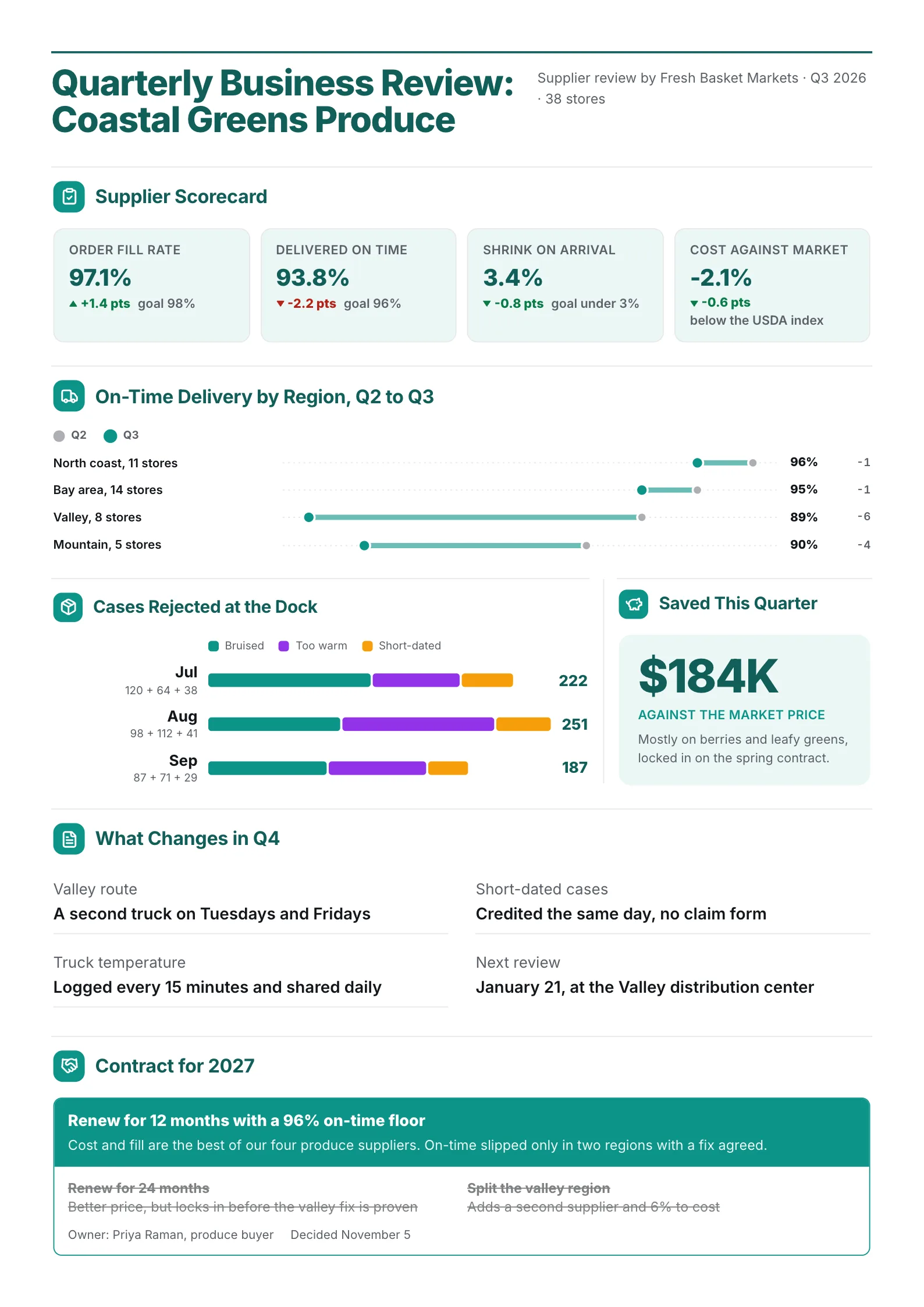 Supplier Quarterly Business ReviewEdit for free(opens in a new tab)
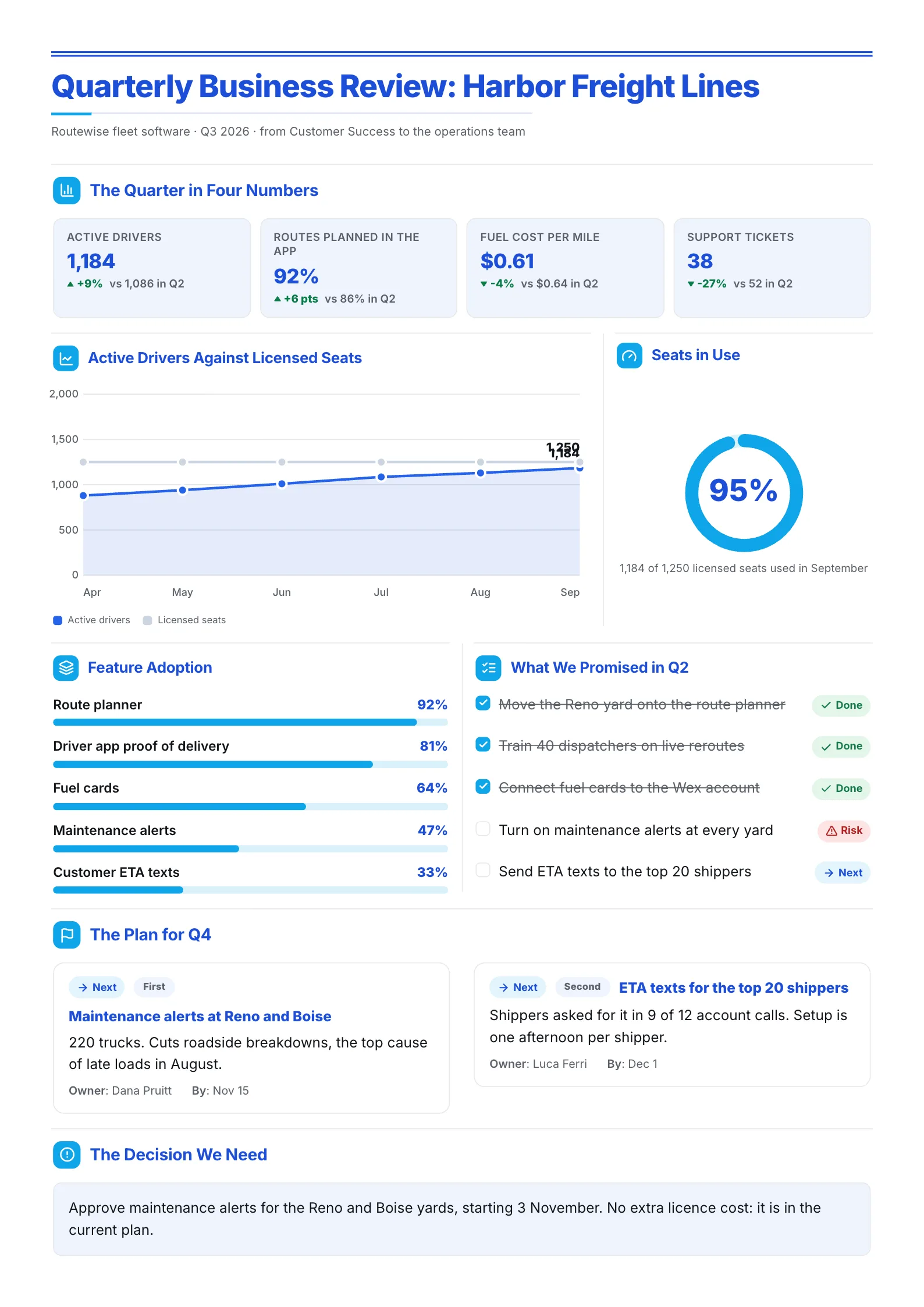 Customer Quarterly Business ReviewEdit for free(opens in a new tab)
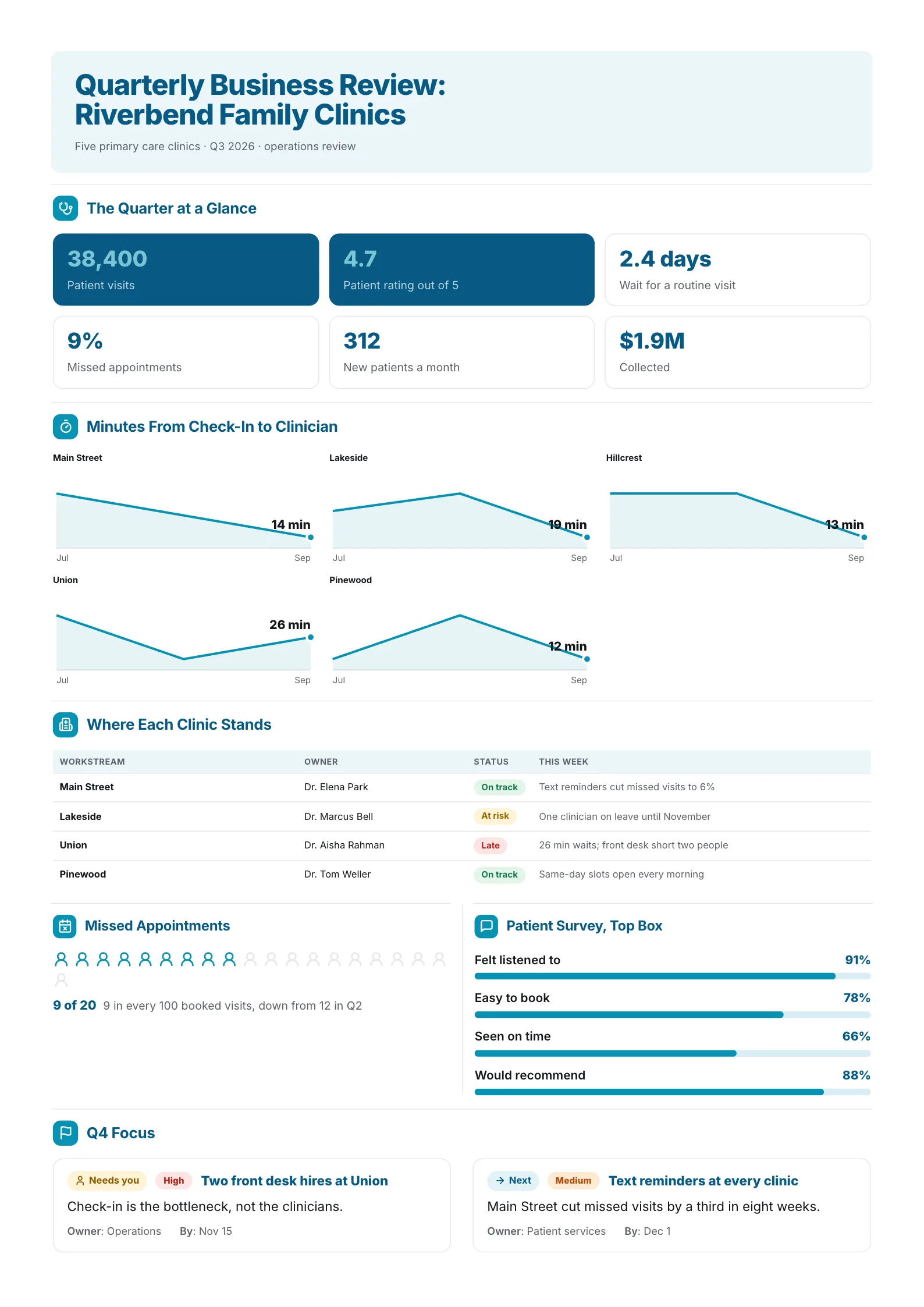 Healthcare Quarterly Business ReviewEdit for free(opens in a new tab)
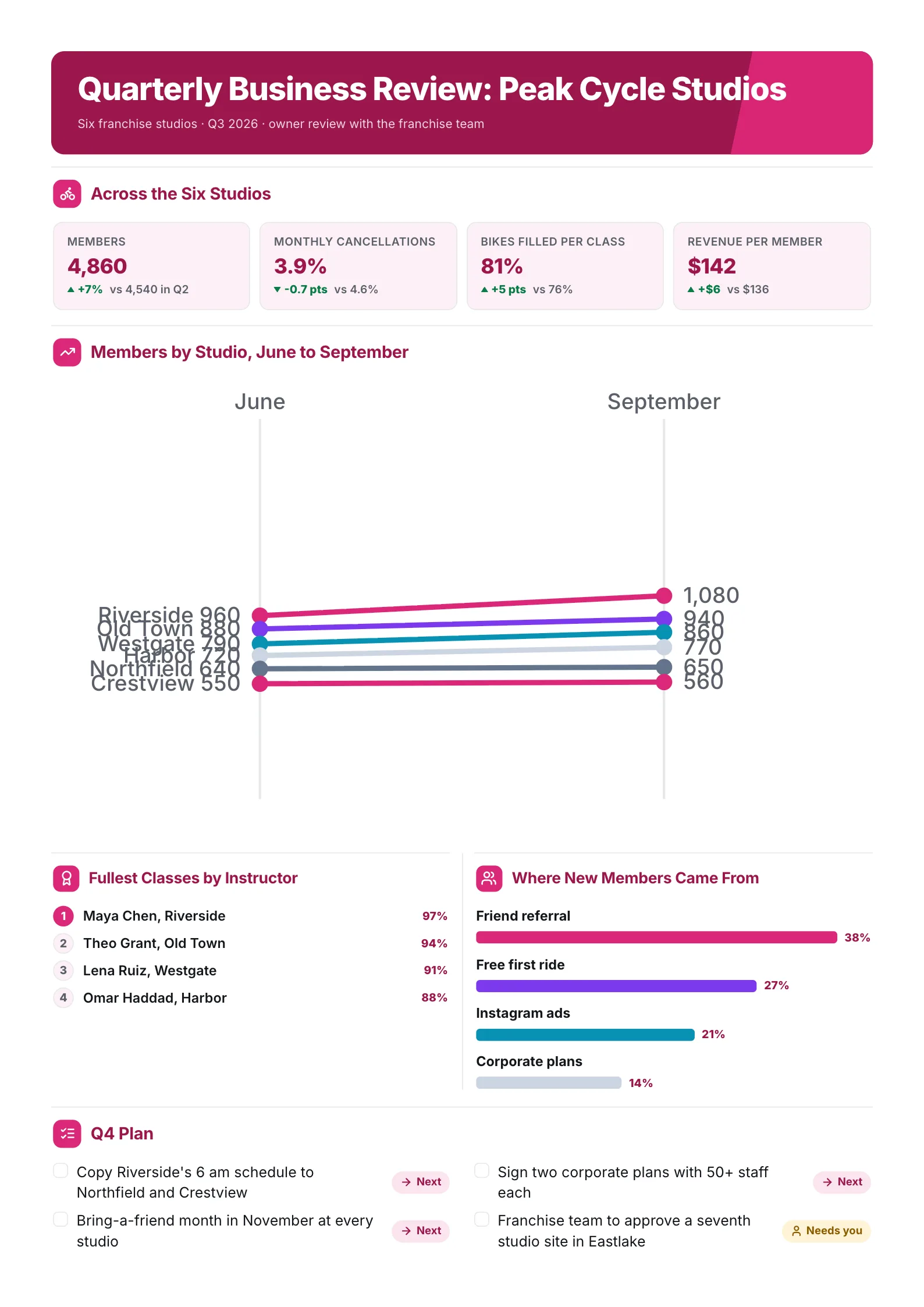 Franchise Quarterly Business ReviewEdit for free(opens in a new tab)
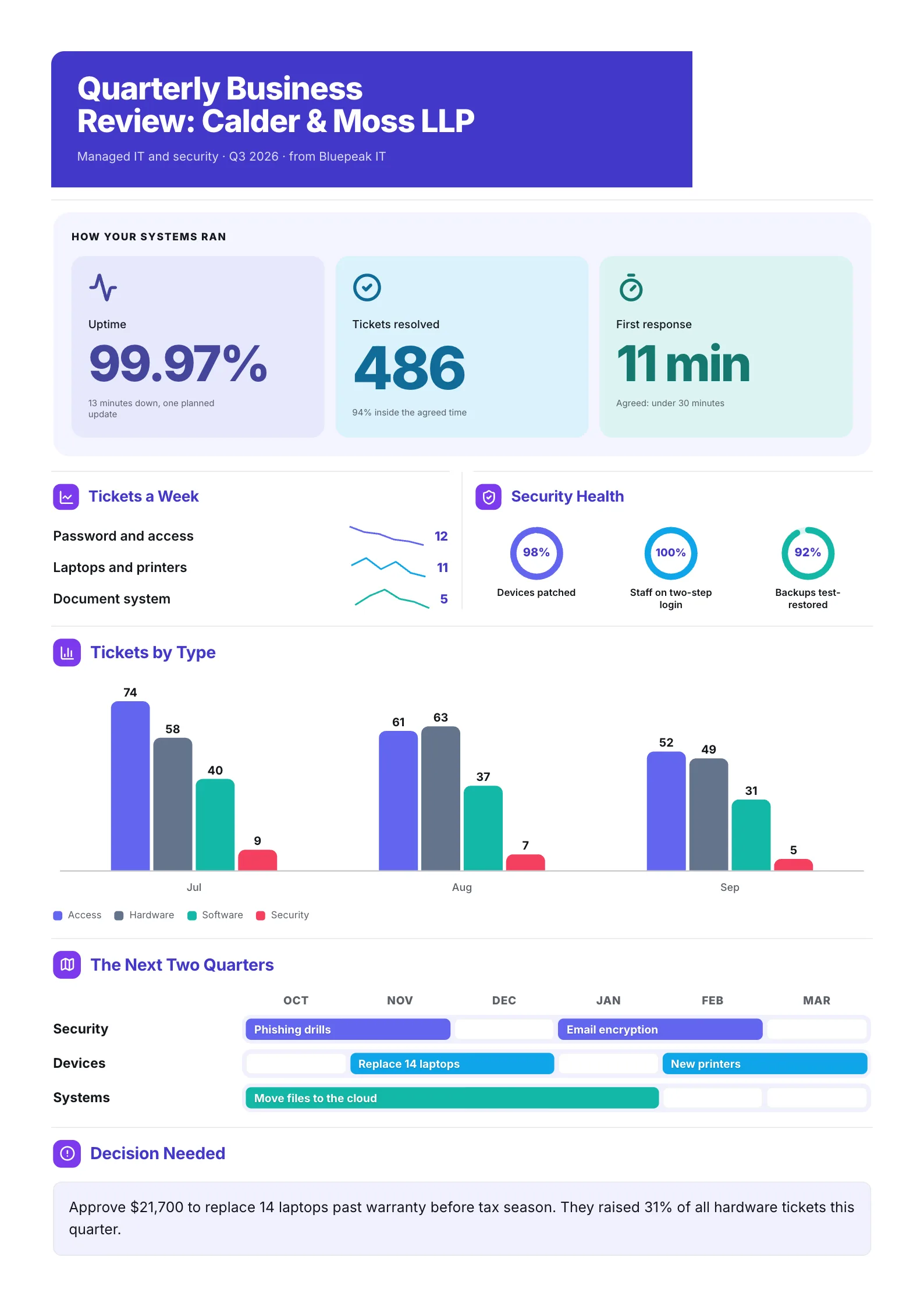 IT Services Quarterly Business ReviewEdit for free(opens in a new tab)
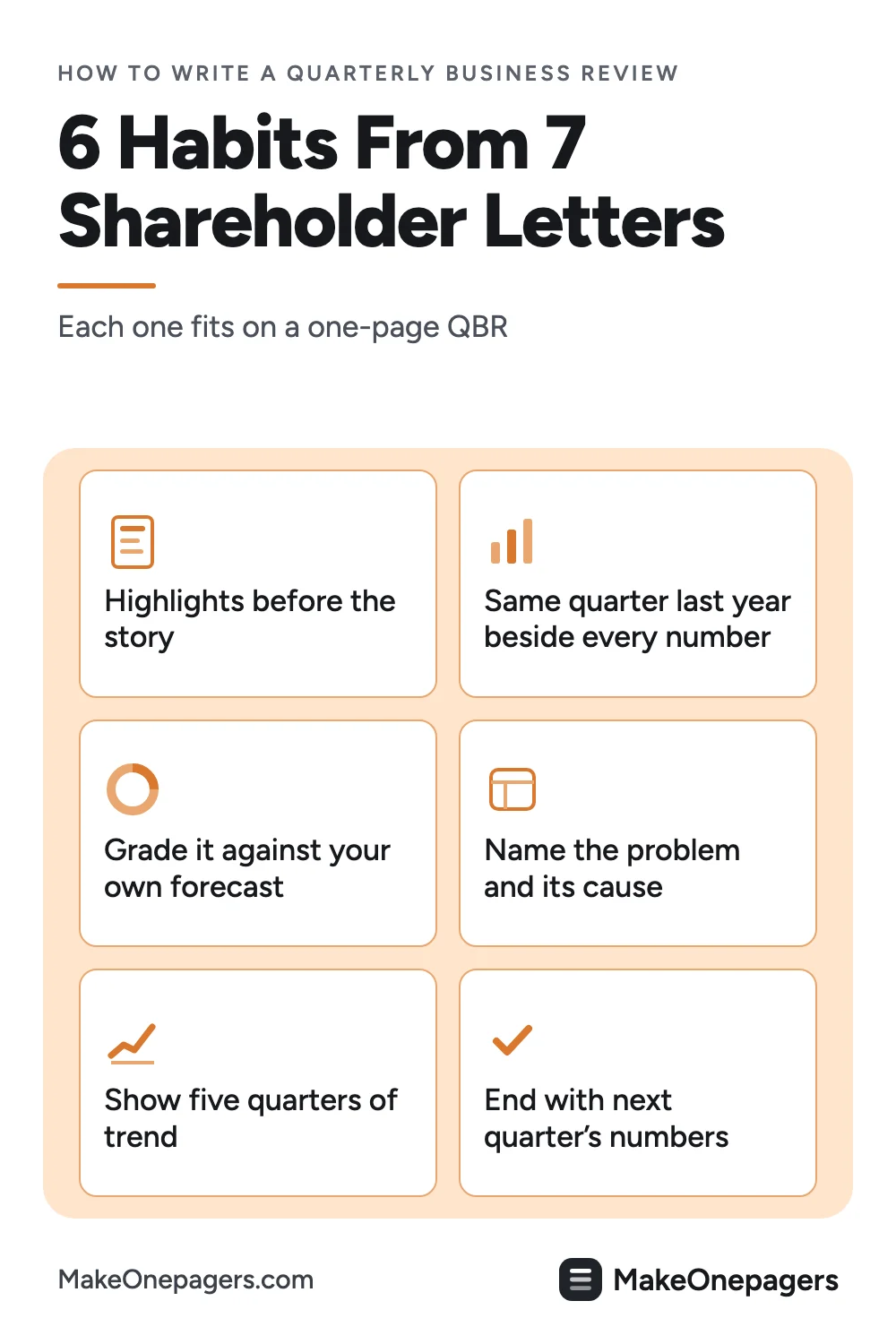
We took that order from what public companies do every quarter in their shareholder letters, the most read quarterly reviews there are. We read the third quarter 2025 letters of 7 companies, from Netflix to Lemonade, on October 30, 2026. All 7 compare to last year, and all 7 give numbers for next quarter. Four go one step further and grade their results against their own earlier forecast. Here are the six habits, and how to use each one in your own QBR, for a client, a boss or a board.
What 7 shareholder letters do every quarter
| Habit | Letters that do it |
|---|---|
| Compare each result to the same quarter last year | 7 of 7 |
| Give numbers for next quarter or the year | 7 of 7 |
| Put the highlights before the story | 5 of 7 |
| Name a problem and its cause early | 5 of 7 |
| Check the result against their own earlier forecast | 4 of 7 |
| Show a trend table of 5 or more quarters | 3 of 7 |
Source: our read of 7 third quarter 2025 shareholder letters filed with the SEC, October 30, 2026. Each letter is linked at the end.
These letters are long, from about 3,900 words for ZipRecruiter to more than 8,000 for Coursera and Rivian. Your QBR doesn't need to be. The habits work just as well on one page, and the five examples below show how.
1. Lead with the highlights
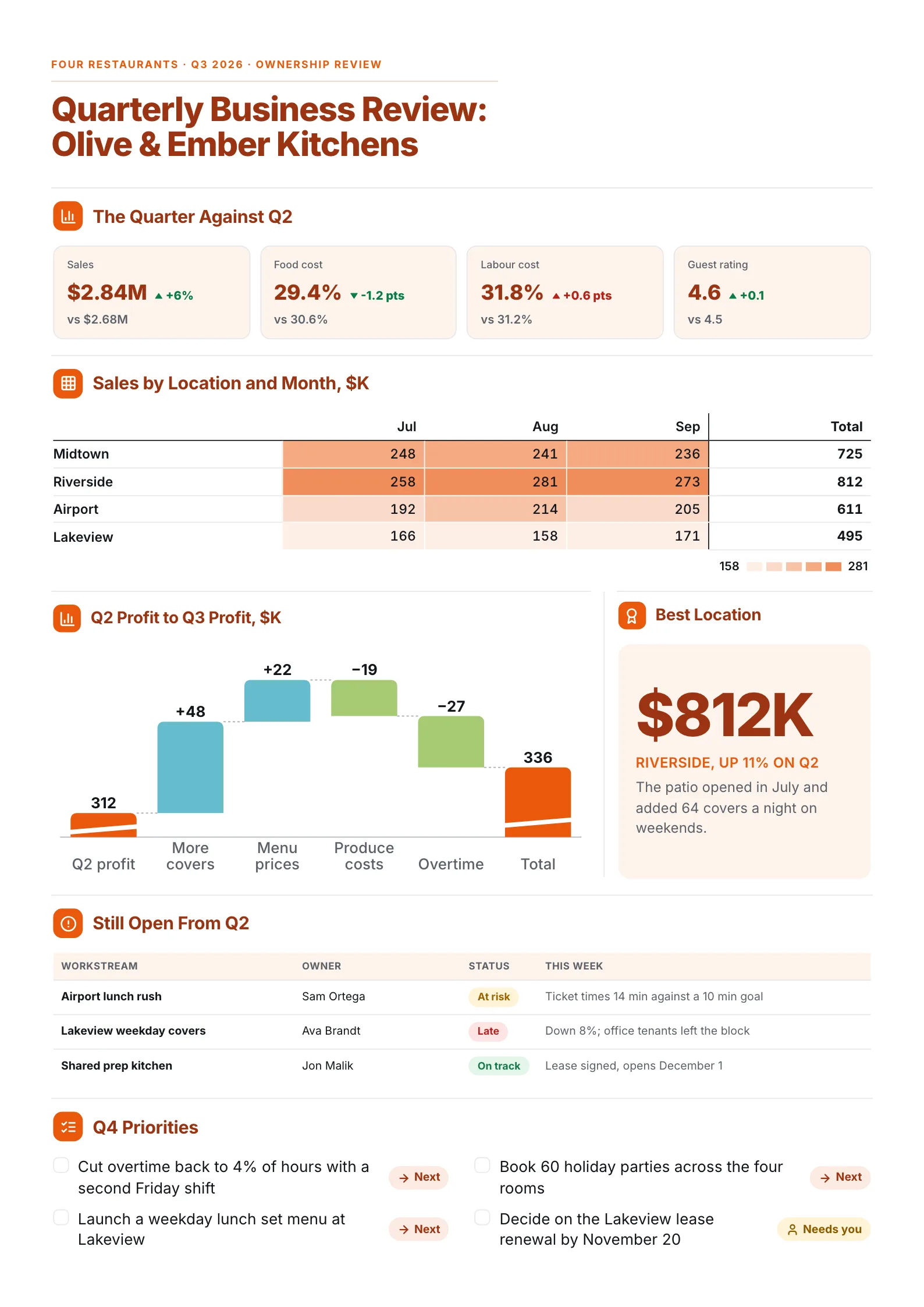
Five of the 7 letters open with a short list of results before any story. Roku calls it "Q3 2025 Key Results" and starts with total net revenue of $1.211 billion, up 14%. Duolingo puts a table on page one, with daily active users at 50.5 million, up 36% on a year earlier.
Your reader may only look at the top of the page. Choose three to five numbers that tell them how the quarter went, and put them first. Sales, profit, customers and one number that's special to your business are a good start.
 Edit this template
Sample names and figures. The four headline numbers sit across the top, each with its second quarter figure and the change beside it.
2. Put a comparison beside every number
All 7 letters compare their results to the same quarter a year before. Public companies use that comparison because many businesses rise and fall with the seasons. A toy store's fourth quarter will always beat its first, so comparing the two tells you very little.
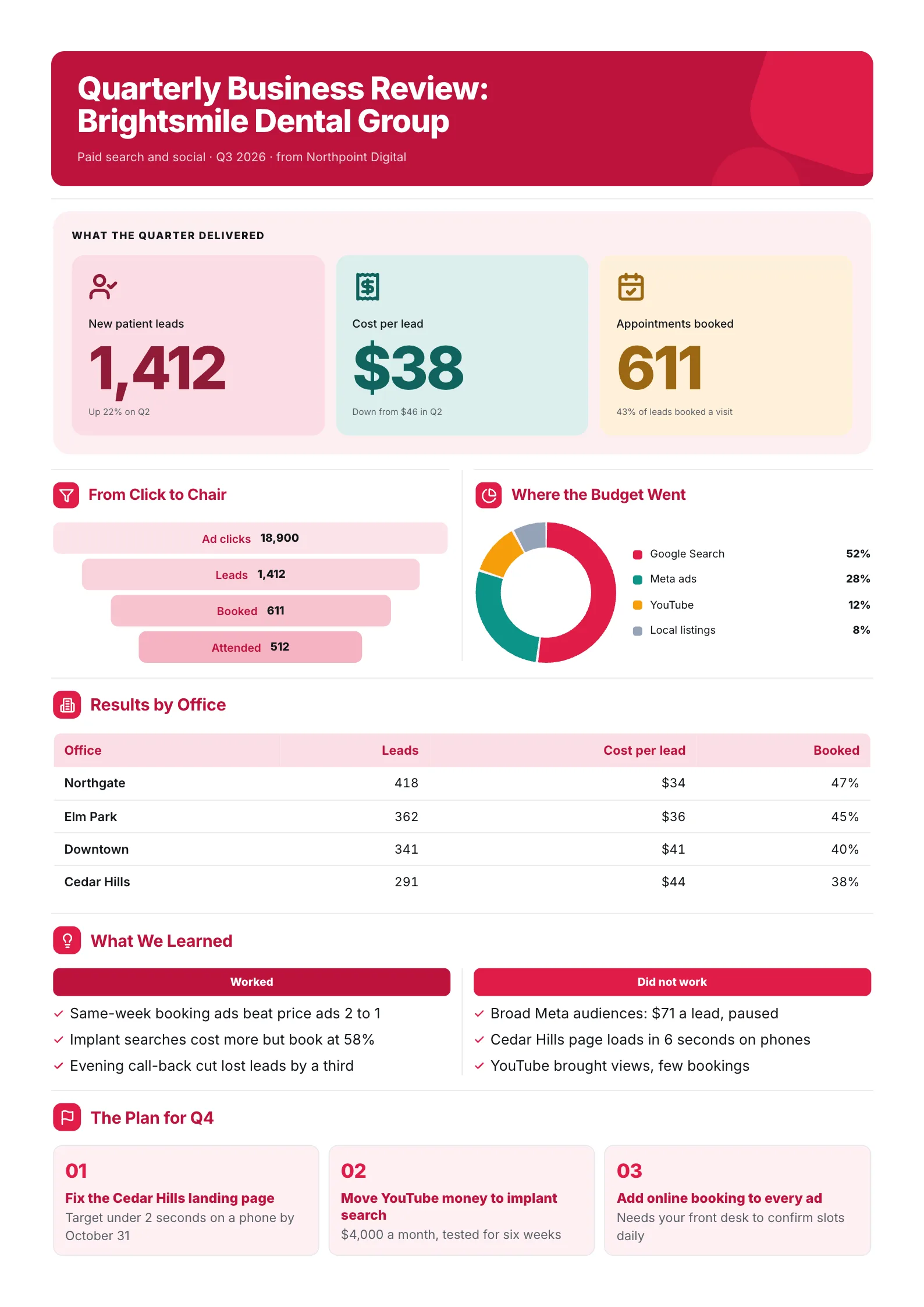
Put the earlier number right beside this one, with the change as a percent. Roku writes "up 17% YoY" after its platform revenue. Your reader shouldn't have to work out the change in their head. For sales that swing with the seasons, compare with the same quarter last year. If they don't, the quarter just before works too, as long as the label says which one you used. Show the target too, when there is one.
 Edit this template
Sample names and figures. Leads and cost per lead each sit beside their second quarter number, and the funnel shows where the 1,412 leads went.
3. Grade the quarter against what you said last time
This is the habit most QBRs skip. Four of the 7 letters check their results against their own earlier forecast. Netflix does it in its first two lines. Revenue grew 17%, in line with its forecast. Operating margin came in at 28%, below its guidance of 31.5%.
Roku says platform revenue came in slightly above its outlook. Lemonade says it crossed 30% growth in premium ahead of schedule. ZipRecruiter says its guidance now implies a full-year adjusted EBITDA margin of 9%, above the mid-single-digit scenario it set out at the start of the year.
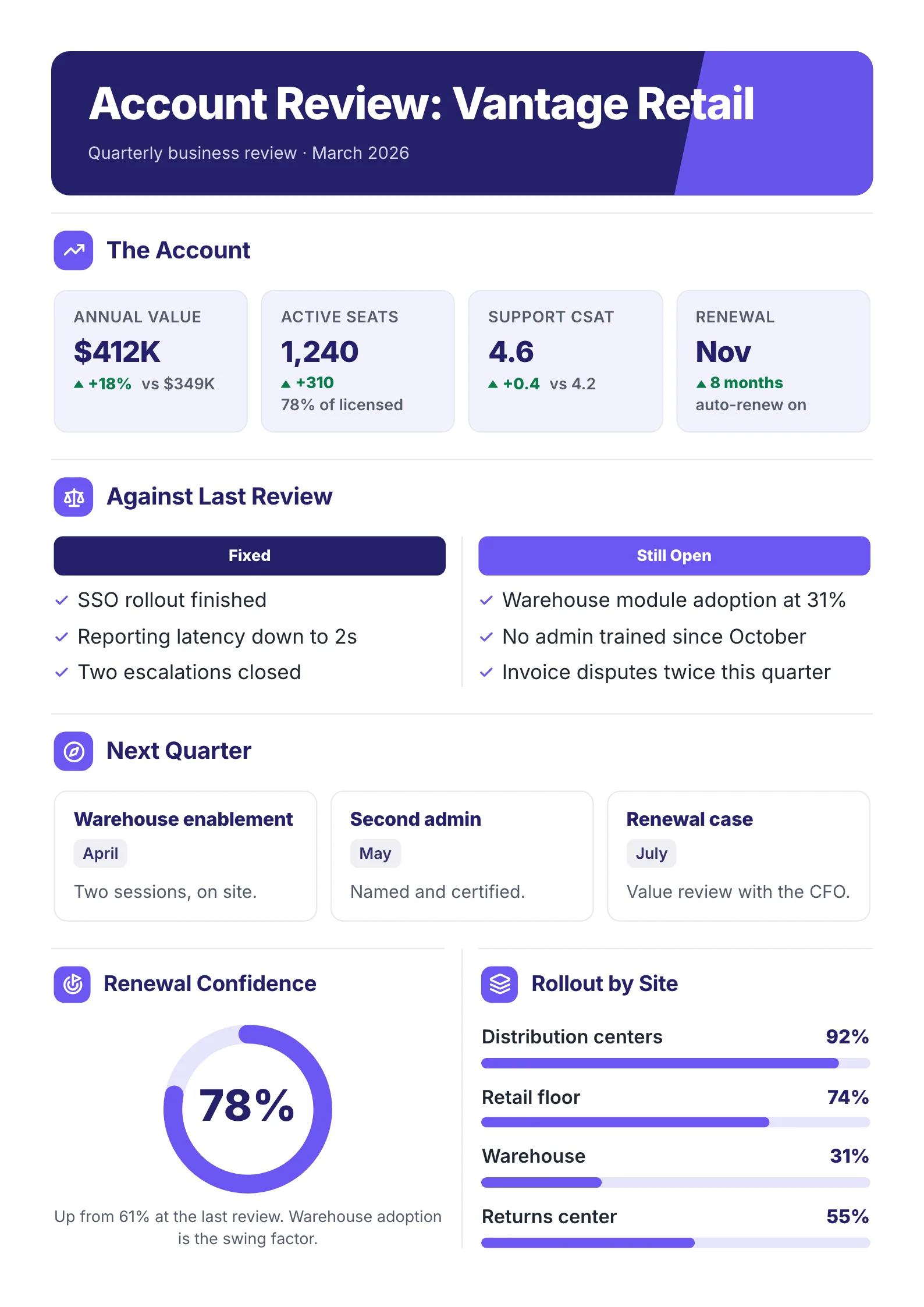
For your QBR, pull up last quarter's review and list what you promised. Mark each one as hit, missed or still open. Clients and bosses remember what you promised, so it builds trust when you check it before they do.
 Edit this template
Sample names and figures. The section against the last review lists each earlier item as fixed or still open.
4. Name the problem and its cause, early
Five of the 7 letters name a problem near the top and explain it. Netflix said its margin miss came from an expense tied to a tax dispute in Brazil that wasn't in its forecast. Duolingo said user growth was a little slower than the quarter before, partly because it posted less "unhinged" content on its social accounts. Rivian named tariffs and policy changes. ZipRecruiter named a soft labor market.
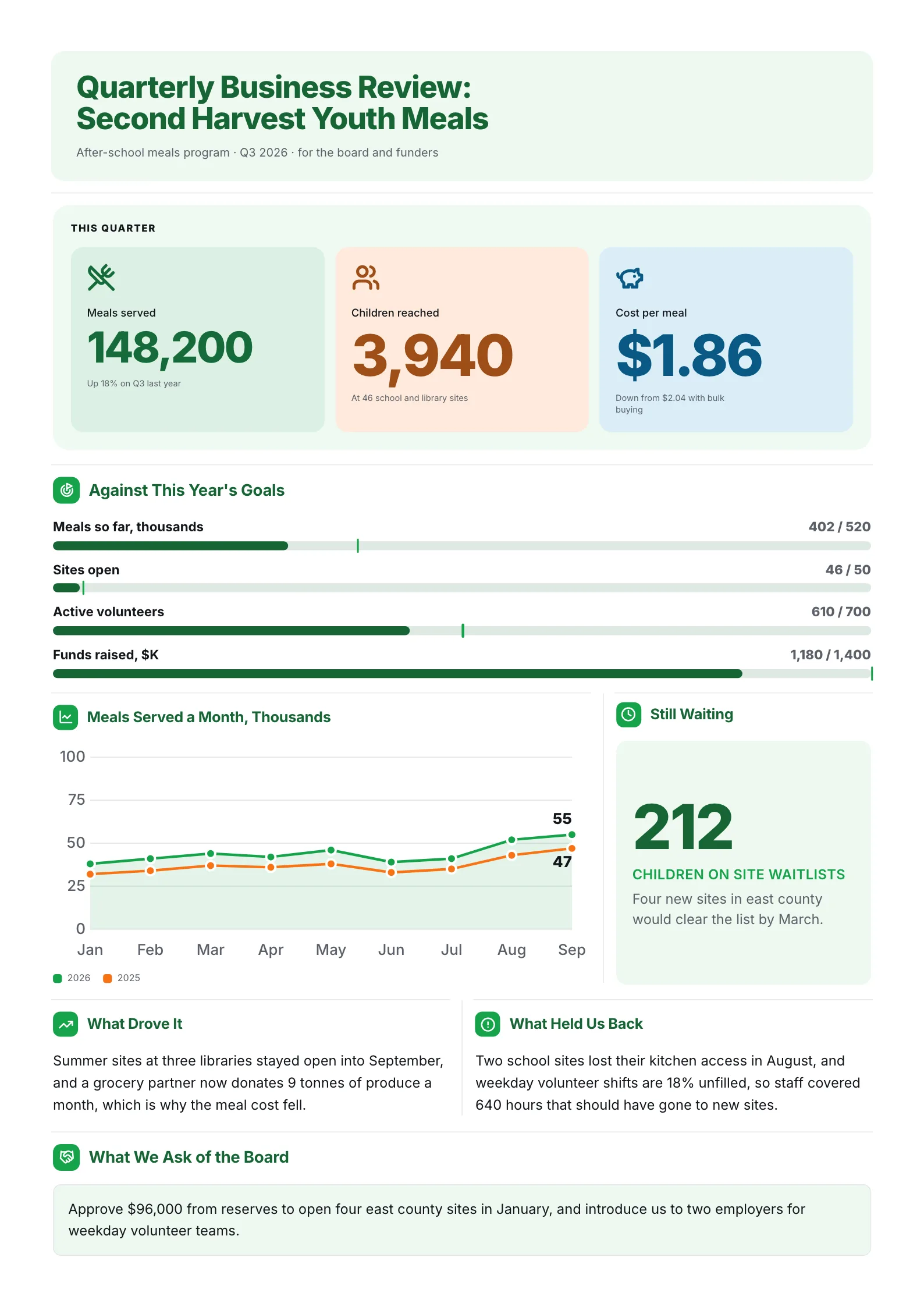
Each one gives the reader a cause, so the number makes sense. When you hide a miss, your reader finds it anyway and then wonders what else you left out. In your QBR, give each problem a short line with the number, the cause and what you're doing about it.
 Edit this template
Sample names and figures. The page gives a box to what held the program back, beside what drove it, before the $96,000 ask.
5. Show the trend over five quarters
Three of the 7 letters include a table of five or more quarters. Netflix's runs from the third quarter of 2024 to the third quarter of 2025, then adds a column for its fourth quarter forecast, with revenue of $11,960 million. One table shows where the business has been and where the company expects it to go.
A single quarter can mislead. Five quarters show whether a dip is a blip or a slide. In your QBR, a small chart or a short table of your main number over the last five quarters does the job. Add next quarter's target as the last column, the way Netflix does.
6. End with numbers for next quarter
All 7 letters close with an outlook in numbers. Rivian set delivery guidance of 41,500 to 43,500 vehicles. Coursera raised its 2025 revenue outlook to $750 million to $754 million. Netflix put its forecast right into its table.
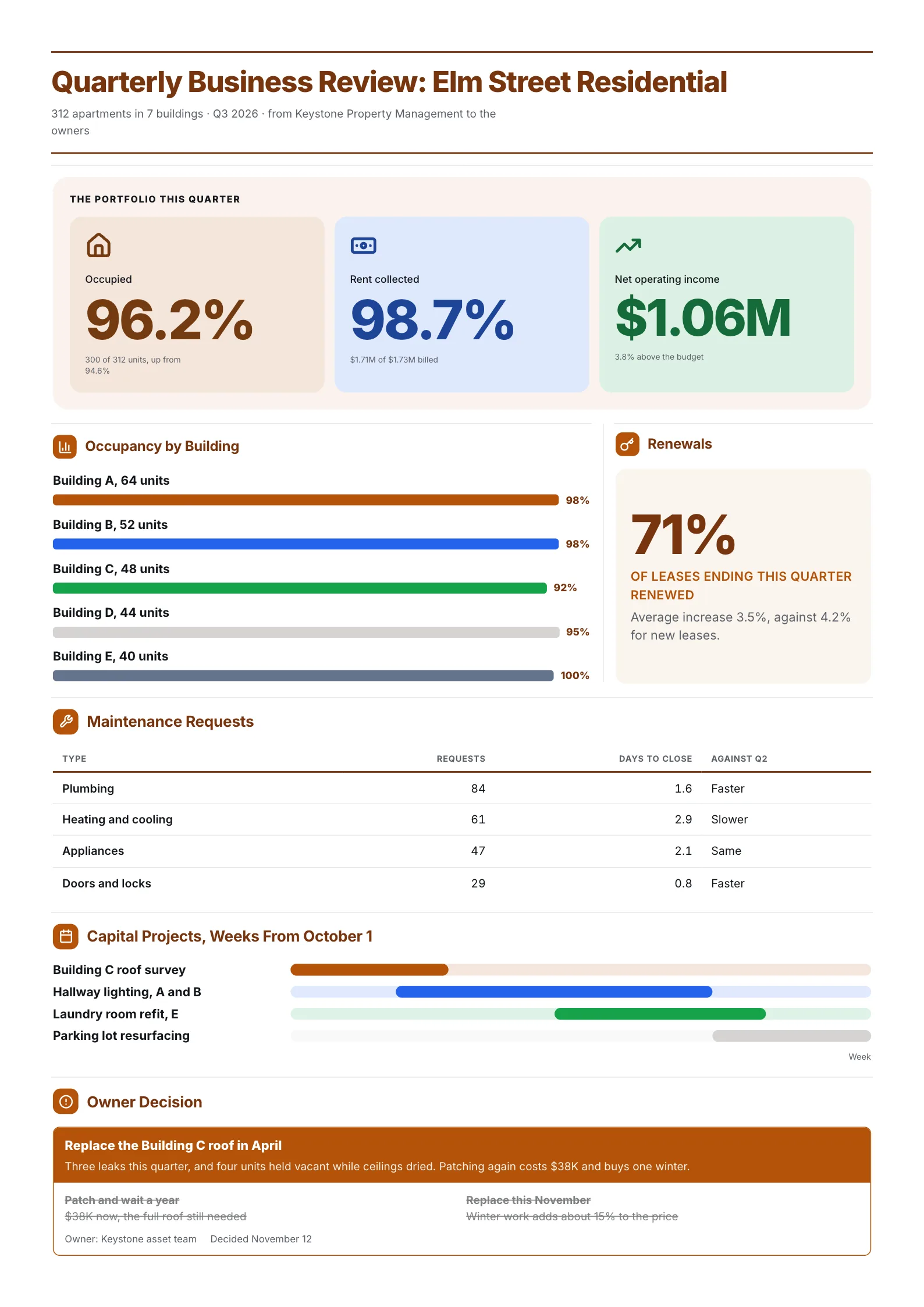
Your QBR should end the same way. Give next quarter's targets, the two or three priorities behind them, and any call you need your reader to make. Next quarter, these targets become the list you grade yourself against in habit 3.
 Edit this template
Sample names and figures. The page closes on one owner decision, so the review ends with the next step.
One opening, rewritten with the six habits
Here's a sample QBR opening for a small cleaning company, first as many teams write it:
Q3 was a busy quarter. We added several new office clients and revenue grew nicely. There were some staffing challenges in August, but the team pulled together. We're excited about Q4.
Your reader learns almost nothing from it. There's no number they can check, no comparison, no cause for the August trouble and no target. Here's the same quarter with the habits applied:
Revenue $486K, up 11% on Q3 last year ($438K). New office clients 14, against our goal of 12. Margin 18%, below the 21% we forecast in July.
What went wrong: 3 cleaners left in August, so we paid $19K in overtime to cover their routes. Two new hires started September 15.
Q4 targets: revenue of $510K, margin back to 20%, and 10 new clients. Decision needed: approve one more van by November 20.
The second version is only a few lines longer, and every line holds a number. It answers the questions a client or owner would ask in the meeting, before the meeting starts. Each part maps to a habit. The top line gives highlights against last year, and the margin line checks the July forecast. The August line names a problem with its cause, and the last line sets next quarter's numbers.
Three QBR mistakes the letters avoid
Burying the miss. None of the 5 letters that named a problem saved it for the last page. Netflix and Duolingo raised theirs on the first page.
Changing the measure. The trend tables in the Netflix, Roku and Lemonade letters show the same measures for five quarters running, so readers can follow each one. If you swap your headline numbers every quarter, your reader can't tell whether things got better. Pick your three to five numbers once, and keep them until the business itself changes.
Ending without a target. All 7 letters end with numbers for the period ahead. A QBR that closes on "we're excited about next quarter" gives your reader nothing to check you against next time. Even a range helps. Rivian gave a delivery range 2,000 vehicles wide, and Coursera gave a revenue range of $4 million. Your reader can still hold you to a range, and you aren't pinned to a single figure you can't yet see.
How to put the six habits on one page
Here's a simple order for a one-page QBR built from the letters:
- Highlights. Three to five numbers across the top, each with its comparison.
- Against the forecast. What you promised last quarter, marked hit, missed or open.
- The trend. Your main number over five quarters, with next quarter's target.
- Problems and causes. One line each, with the fix.
- Next quarter. Targets, priorities and any decision you need.
Our QBR designs already follow this order, with room for the comparisons and a box for the decision. Our quarterly business review template post has a 45-minute meeting agenda to go with the page. If your audience wants the main numbers alone, our guide on how to write a KPI report covers the shorter version.
The 7 shareholder letters we read
| Company | Letter | Filed |
|---|---|---|
| Netflix | Q3 2025 letter to shareholders | October 21, 2025 |
| Roku | Q3 2025 shareholder letter | October 30, 2025 |
| Duolingo | Q3 2025 shareholder letter | November 5, 2025 |
| Coursera | Q3 2025 shareholder letter | October 23, 2025 |
| Rivian | Q3 2025 shareholder letter | November 4, 2025 |
| Lemonade | Q3 2025 shareholder letter | November 5, 2025 |
| ZipRecruiter | Q3 2025 shareholder letter | November 5, 2025 |
We read each letter as filed with the SEC on October 30, 2026. The research file has one row per letter.
Start with last quarter's promises
Before you write anything new, open your last QBR and copy out every target and promise you made. That list becomes section two of this one, and it's the part your reader will look for first. Then fill in the page around it with a QBR design in MakeOnepagers.
Frequently asked questions
What should a quarterly business review include?
The highlights, each result beside an earlier quarter, a check against what you promised last time, the problems with their causes, and targets for next quarter. Those habits showed up across the 7 shareholder letters we read.
How long should a quarterly business review be?
One page for the summary, with backup if your reader wants it. The shareholder letters we read ran from about 3,900 to more than 8,000 words, but they serve thousands of investors. A QBR for one client or one boss can say the same things on a single page.
What is the difference between a QBR for a client and one for your own company?
A client QBR shows the value you delivered to them and what's next for the account. An internal QBR shows your team's or company's results to leadership or owners. Both use the same habits, with the comparisons and the forecast check doing most of the work.
How do you present a missed target in a QBR?
Say it early, with the number and the cause, and what you'll do about it. Netflix put its margin miss in the second line of its letter and named the tax expense behind it. Your reader trusts the rest of the page more when the miss is out in the open.




