Product Launch Ideas for a Small Budget, and What Backs Each One
Product launch ideas from real launches and sources: Harry's 85,000-name list, Pebble's Kickstarter, James Clear's preorder bonuses, plus FTC, SBA and FedEx guidance.

Harry's, the razor company, gathered, by its own estimate, over 85,000 valid email addresses in the week before its store opened, mostly because people could earn free product by inviting friends. Product launch ideas on a small budget work like that: they give somebody a reason to act before launch day. Start from a free one pager template.
One‑Pager examples
Real One-Pagers made with MakeOnepagers. Open any one to edit it as your own.
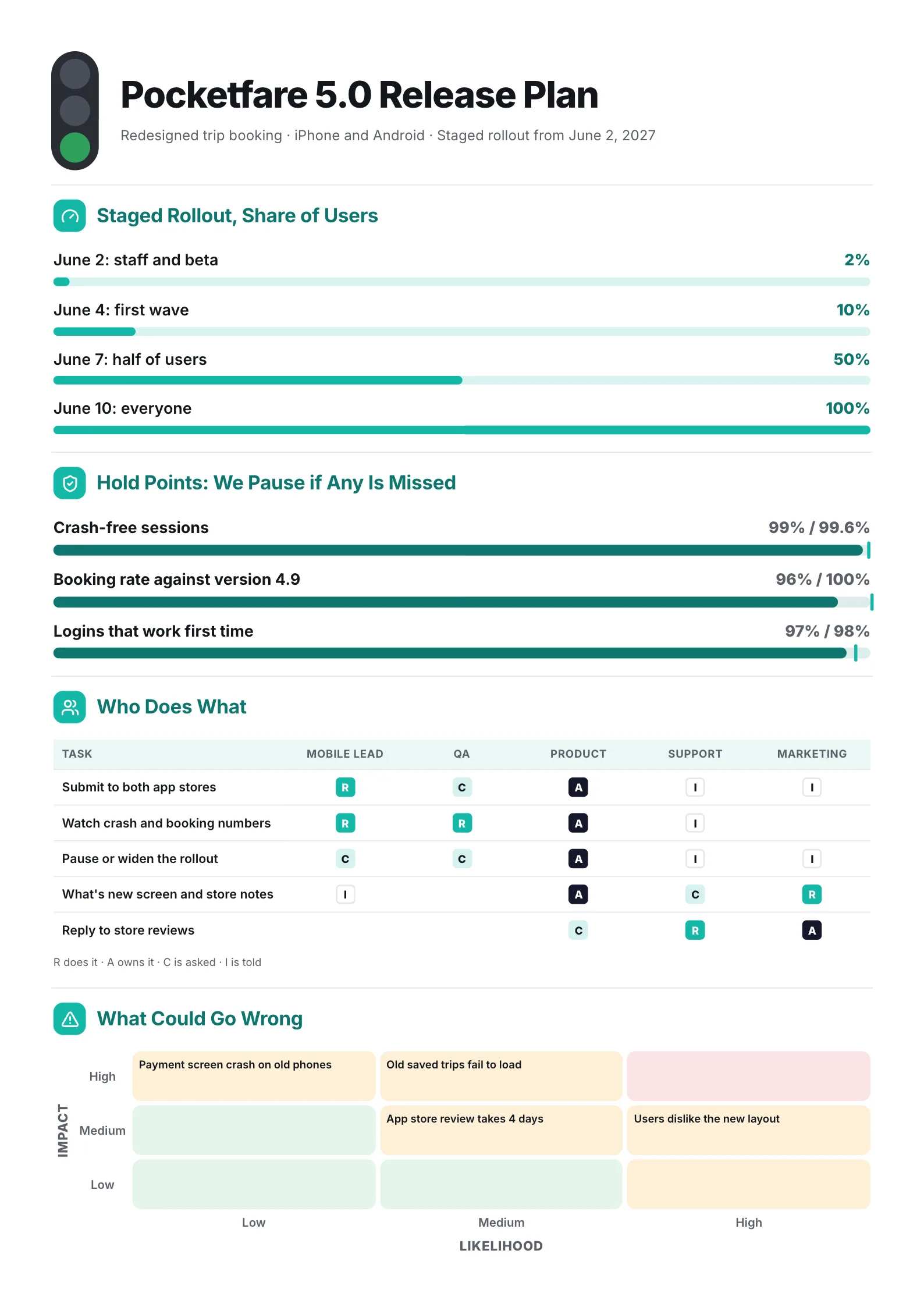 Product Launch Plan: App ReleaseEdit for free(opens in a new tab)
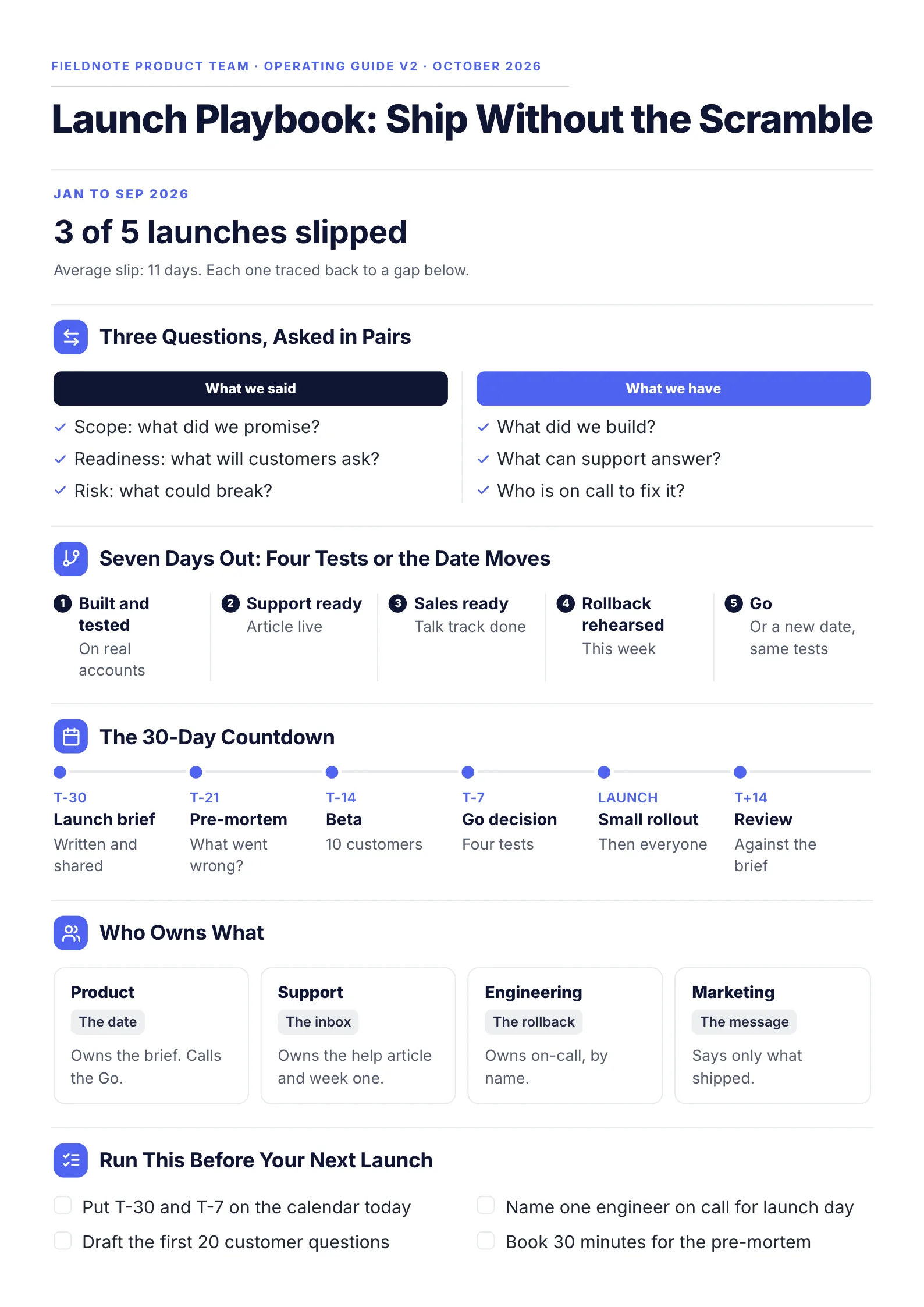 Product Launch PlaybookEdit for free(opens in a new tab)
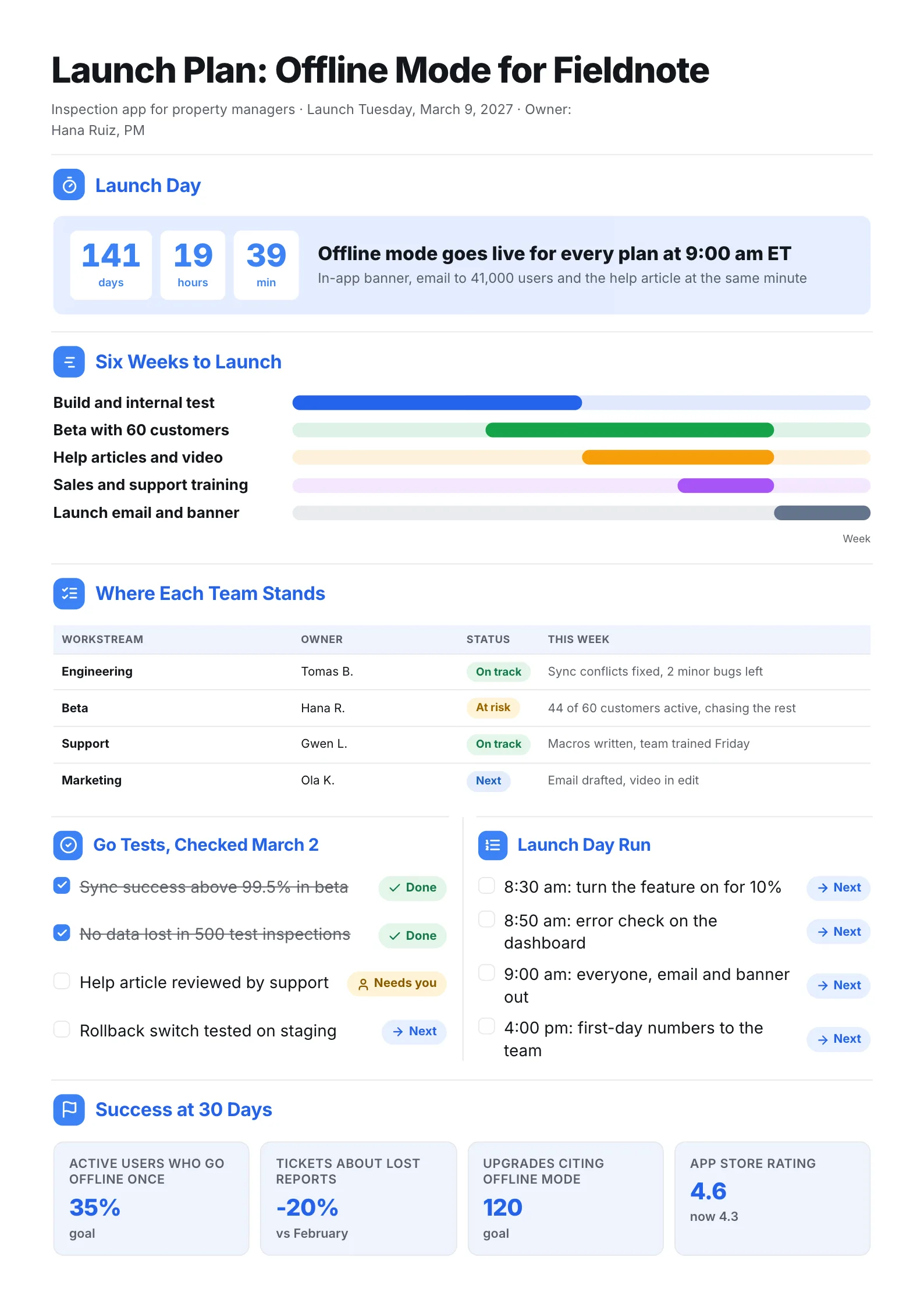 Product Launch Plan: Software FeatureEdit for free(opens in a new tab)
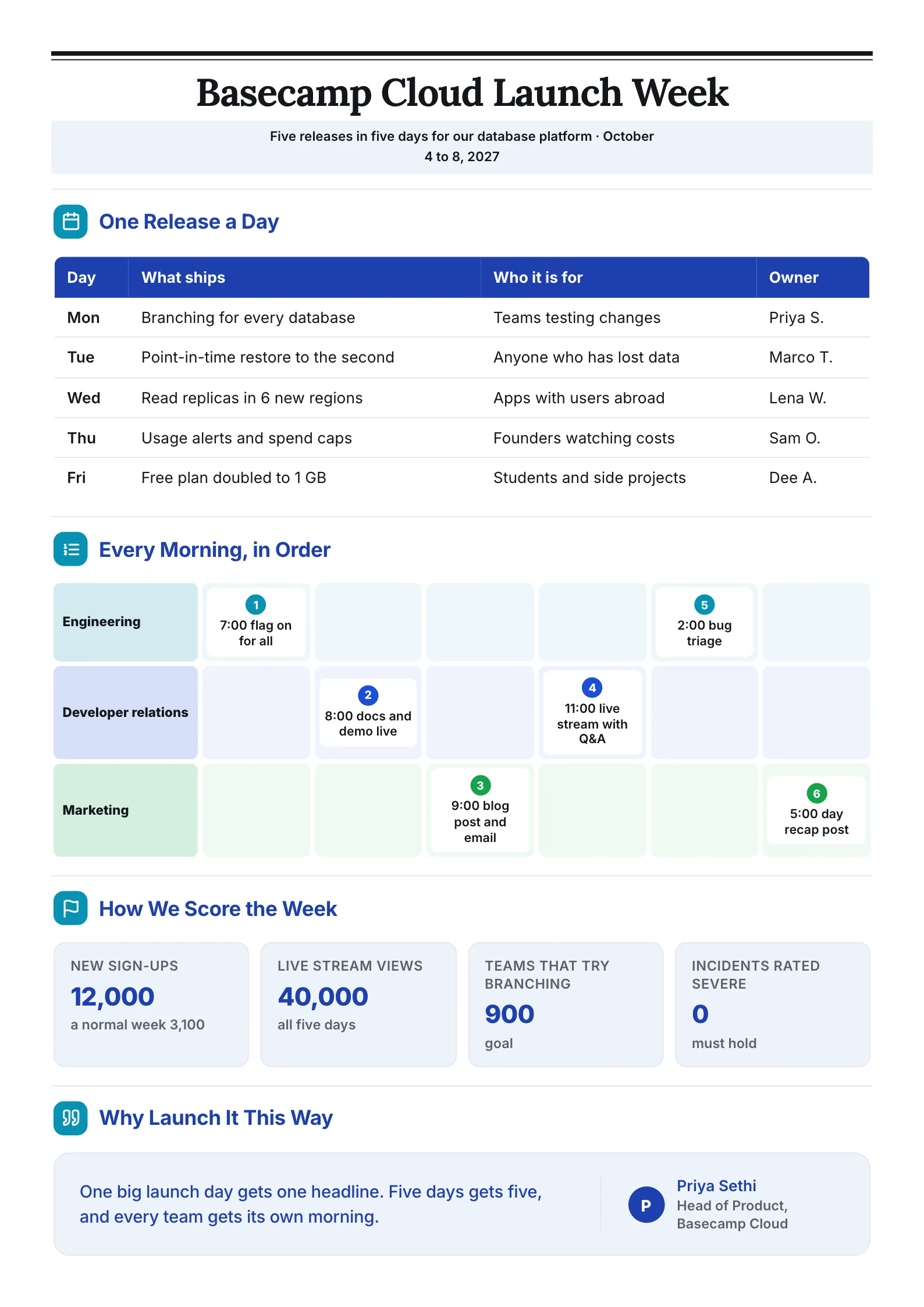 Product Launch Plan: Launch WeekEdit for free(opens in a new tab)
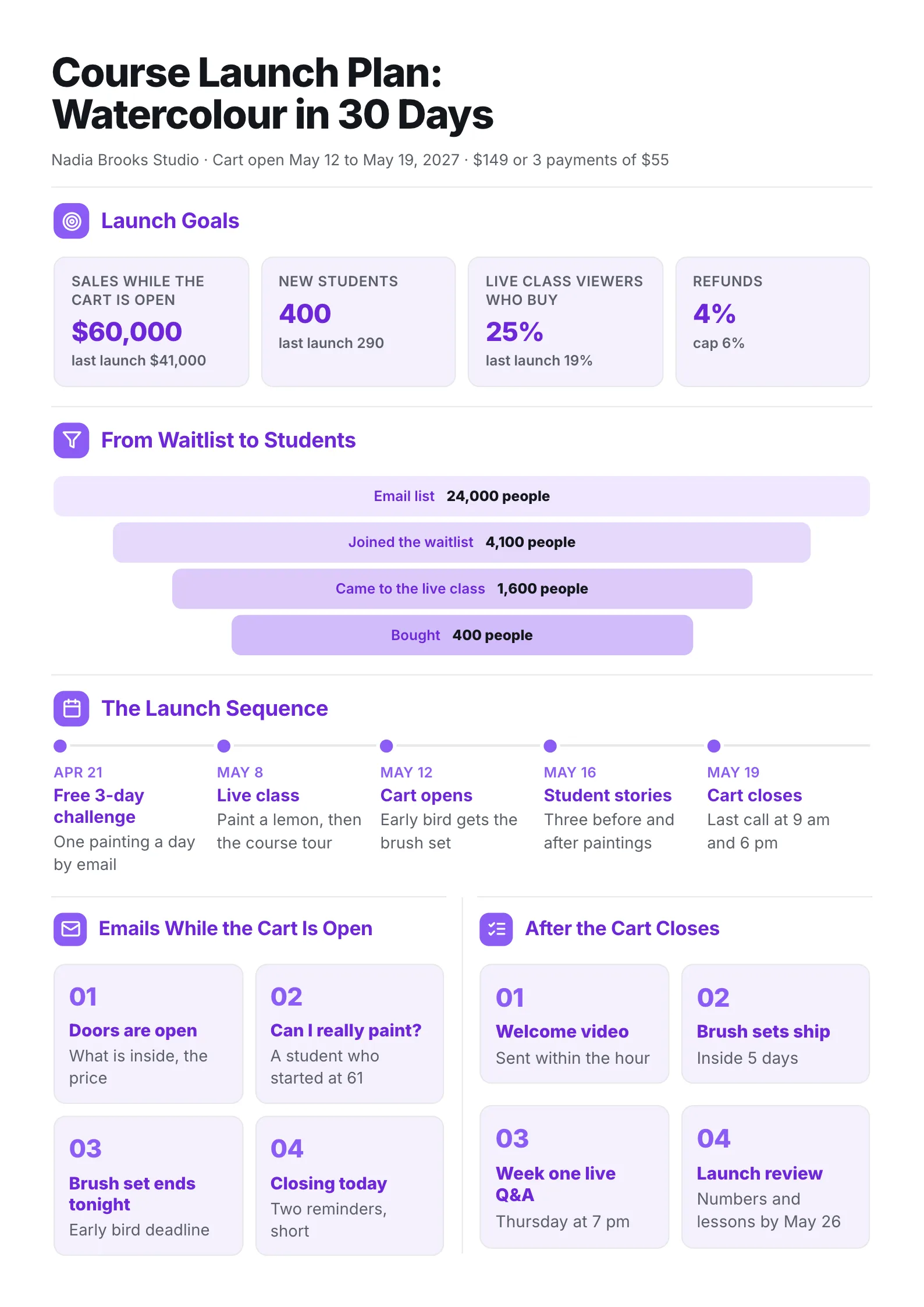 Product Launch Plan: Online CourseEdit for free(opens in a new tab)
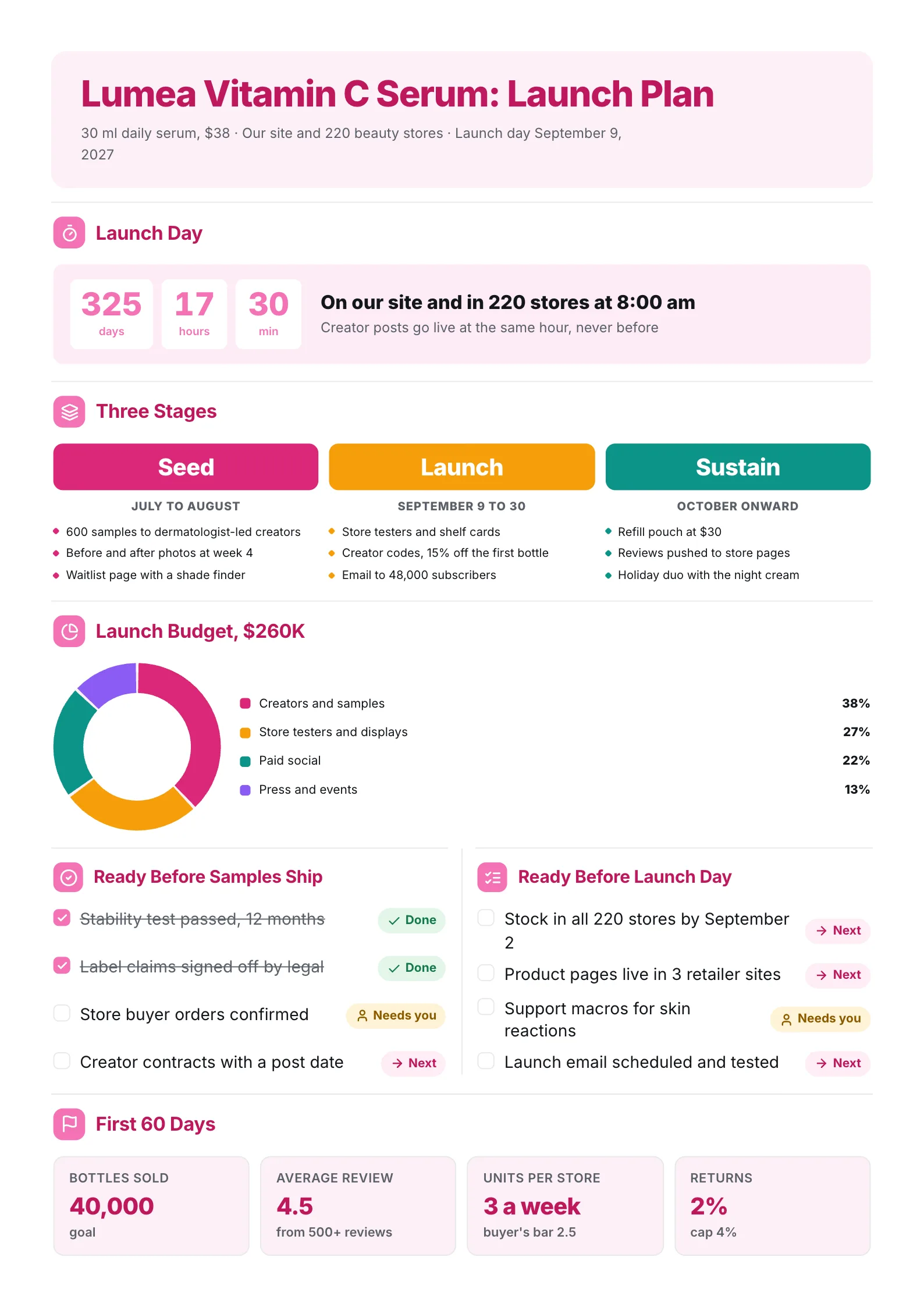 Product Launch Plan: Beauty ProductEdit for free(opens in a new tab)
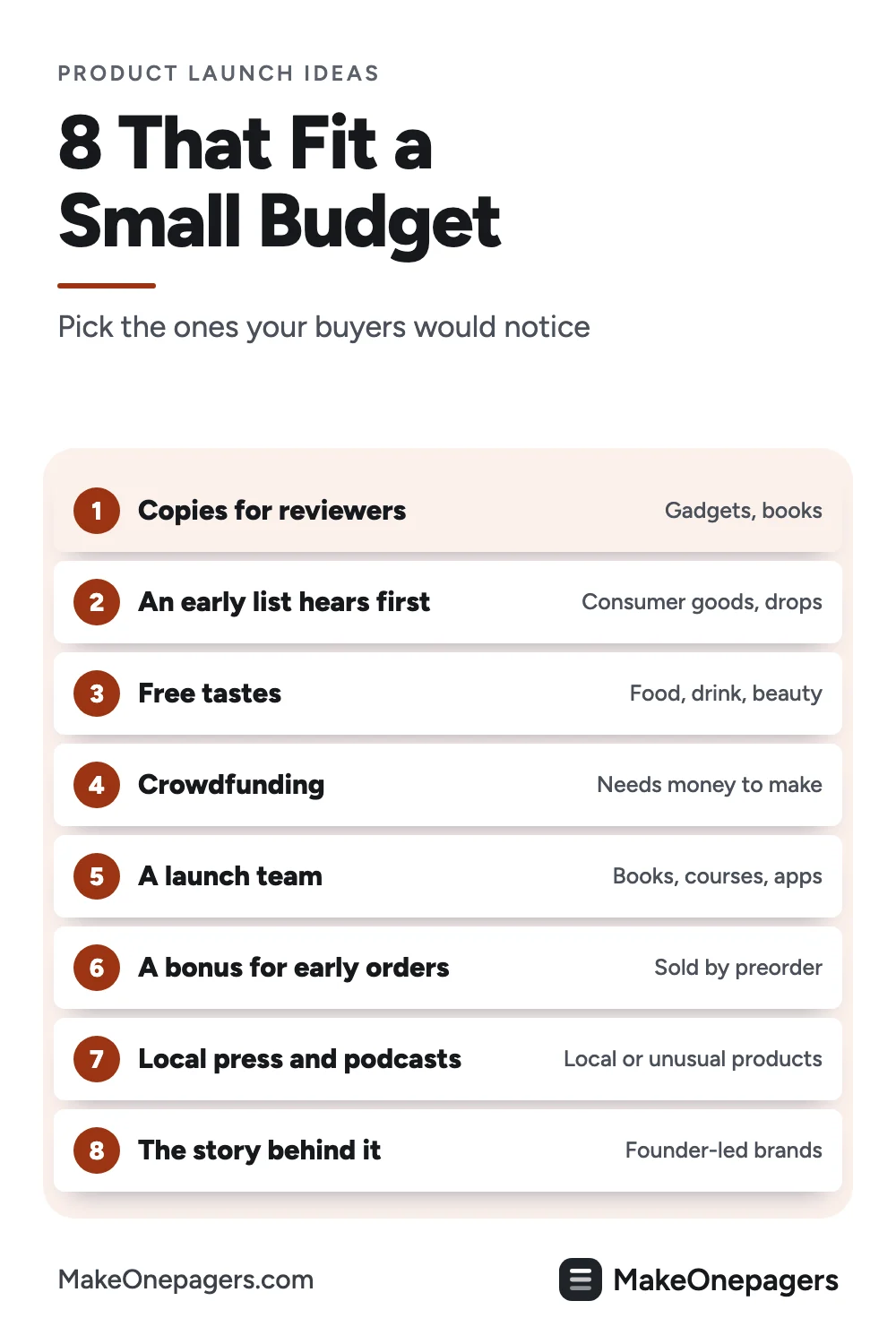
Below are eight ideas, read at their sources on October 30, 2026. Three have a measured result behind them, and the table says what backs the other five. Five of them also come with a one-page plan from MakeOnepagers so you can see the dates and owners laid out, though those brands and figures are made up.
The 8 ideas at a glance
| Idea | Best for | Main cost | What backs it |
|---|---|---|---|
| 1. Early copies for reviewers | Gadgets, books | Samples and shipping | A rule on how to do it: FTC |
| 2. An early list with a referral prize | Consumer goods, drops | Prizes and a simple page | A result: Harry's |
| 3. Free tastings or trials | Food, drink, beauty | Product you give away | A result: Journal of Retailing study |
| 4. Crowdfunding | A product that needs money to make | Page, video, fees | A result: Pebble Time |
| 5. Asking fans for specific help | Books, courses, apps | Your time | An example: James Clear |
| 6. A bonus for ordering early | Anything sold by preorder | The bonus | An example: James Clear |
| 7. Local press and podcasts | Local or unusual products | Your time | Advice: FedEx |
| 8. A behind-the-scenes story | Founder-led brands | Your time | Advice: FedEx |
1. Send early copies to reviewers
Reviews on launch day need products in reviewers' hands weeks before it. Set a date they may publish, and open your preorders that same day.
 Edit this template
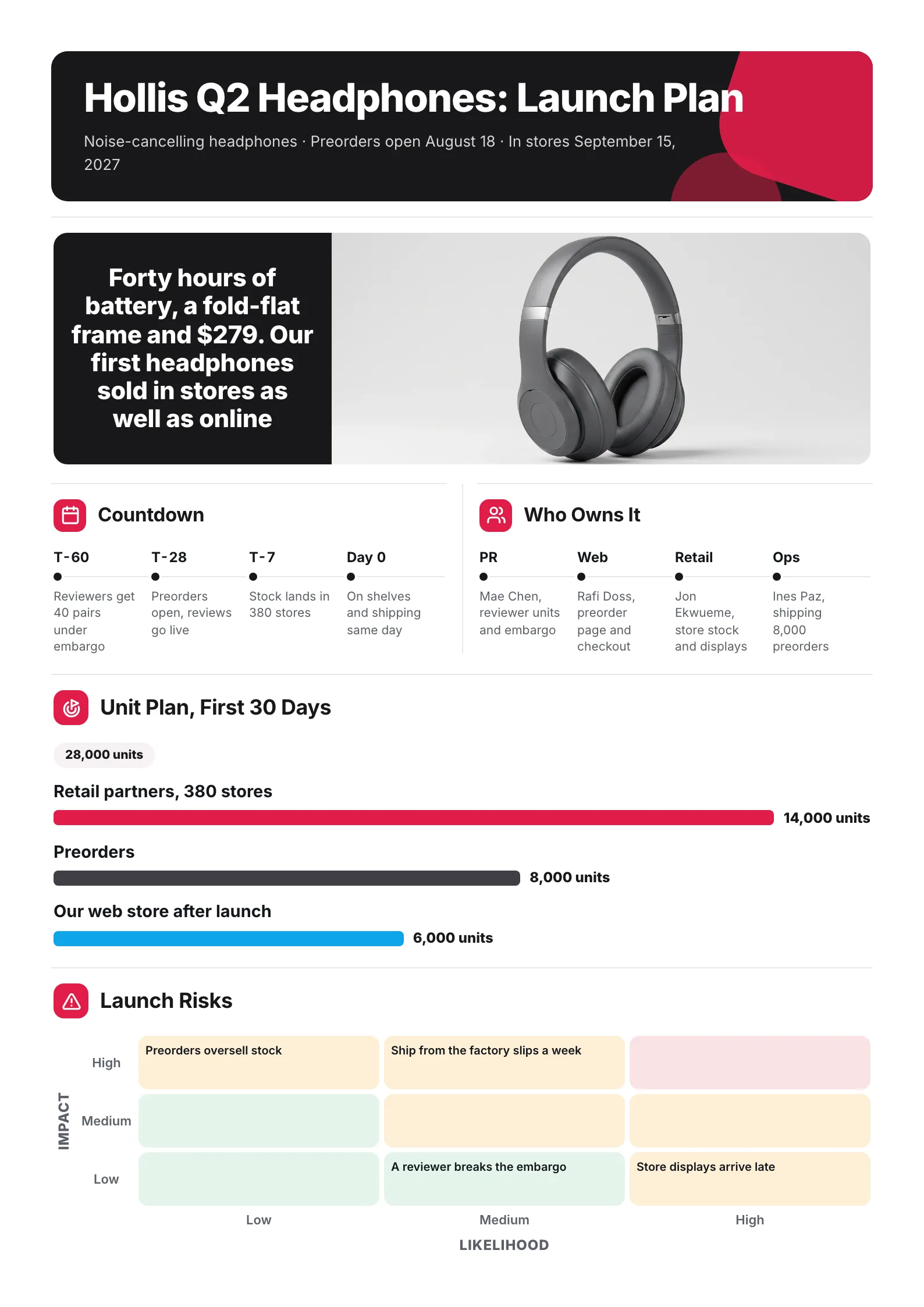
Forty pairs go out at T-60, and the reviews and preorders both go live at T-28.
Put the disclosure in your note to each reviewer, because free product creates a duty. The FTC's endorsement guidance says a connection should be disclosed "everywhere you endorse the product," and that goes for anyone who gets it free or at a substantial discount in a way people wouldn't expect. A one-line request in the shipping note protects both of you.
2. Build an early list with a prize for sharing
Harry's built its list on two pages. The first took an email address, and the second gave each person a personal link. Their account on Tim Ferriss's blog gives the prize ladder: five referrals earned a free shave cream and ten earned a razor.
The numbers show why the ladder matters. They had guessed anywhere from 3,000 to 15,000 signups and ended with over 85,000 valid addresses. Referrals brought in 77% of those, with about 20,000 people bringing in about 65,000 friends. More than 200 people referred more than 50, and the company says many of those were people close to it with large followings, so it's worth telling your friends first.
 Edit this template
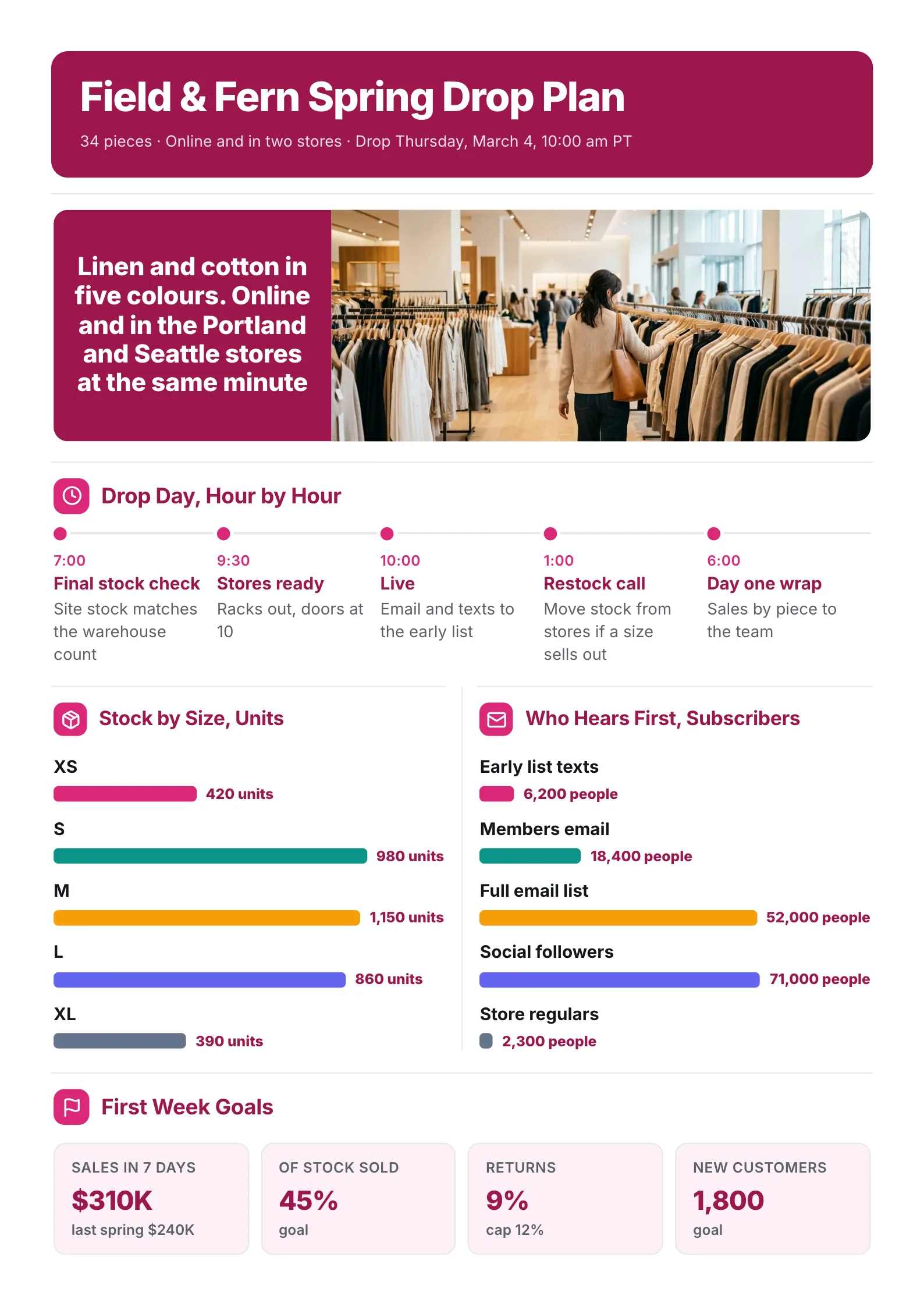
A 1:00 restock call is already on the schedule, in case a size sells out.
Field and Fern's page shows the other half of this idea, which is deciding who hears first on launch day. Once you have your list, rank it and message each group in order.
3. Offer a free taste
A Journal of Retailing study from the Wisconsin School of Business found "both an immediate and a sustaining sales increase" from in-store sampling. It adds two details for a small brand: repeat events for one product stretch the effect, and smaller stores with less variety gain more than big ones. So book two tastings at a neighborhood shop before chasing one at a superstore.
 Edit this template
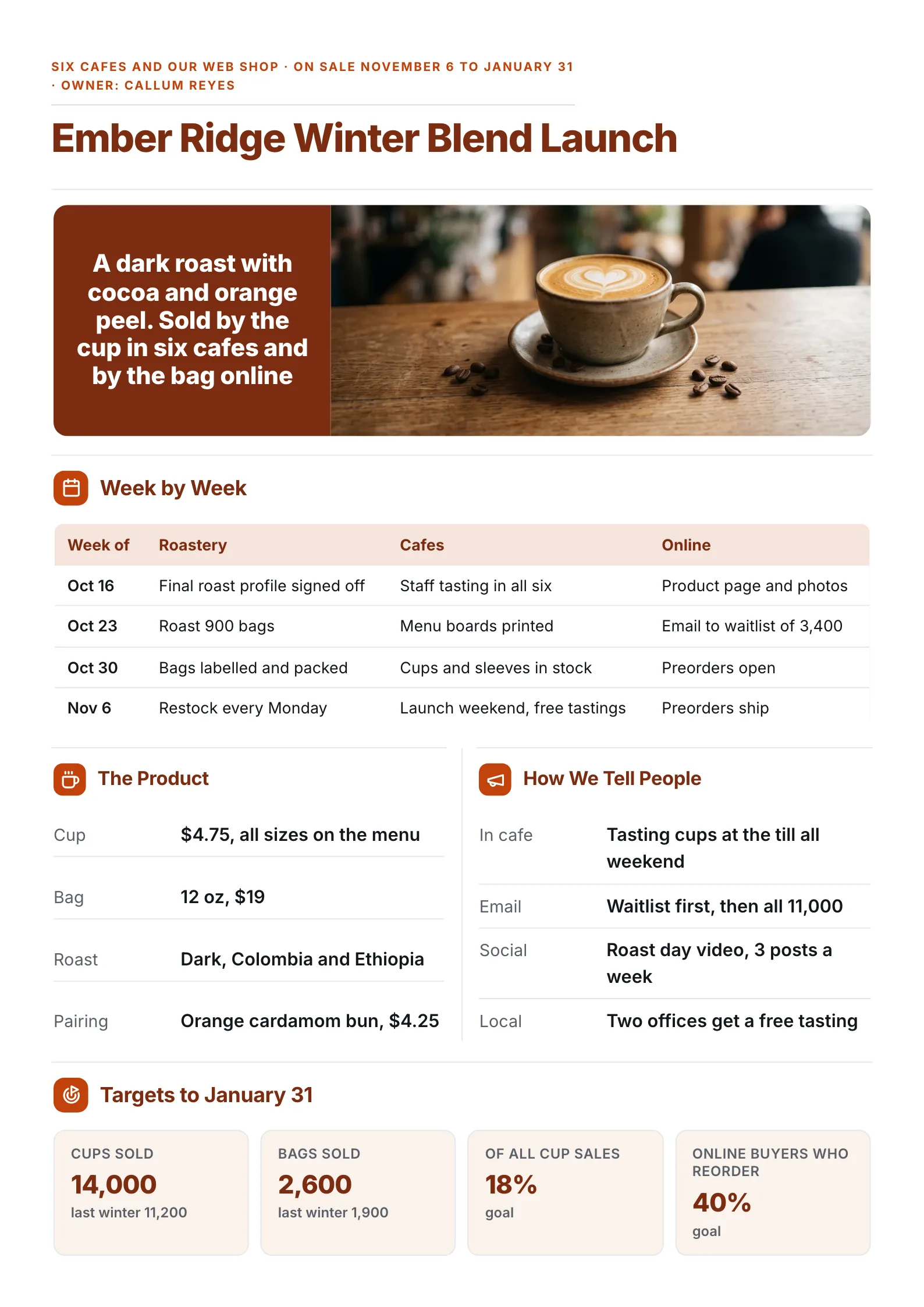
Staff taste the blend in all six cafes weeks before customers do, so they can describe it.
You can apply the same logic to a trial size or a demo in your store. Train your staff first, since a customer who tries something free will usually have one question ready.
4. Raise the money through crowdfunding
When you can't pay for a print run up front, a campaign can fund it and test demand at the same time. Pebble Time is the famous version: TechCrunch reported that it passed its $500,000 goal in seventeen minutes and reached $6.5 million nine hours in. Pebble had already sold watches to a crowd, so read that speed as what an existing audience can do.
 Edit this template
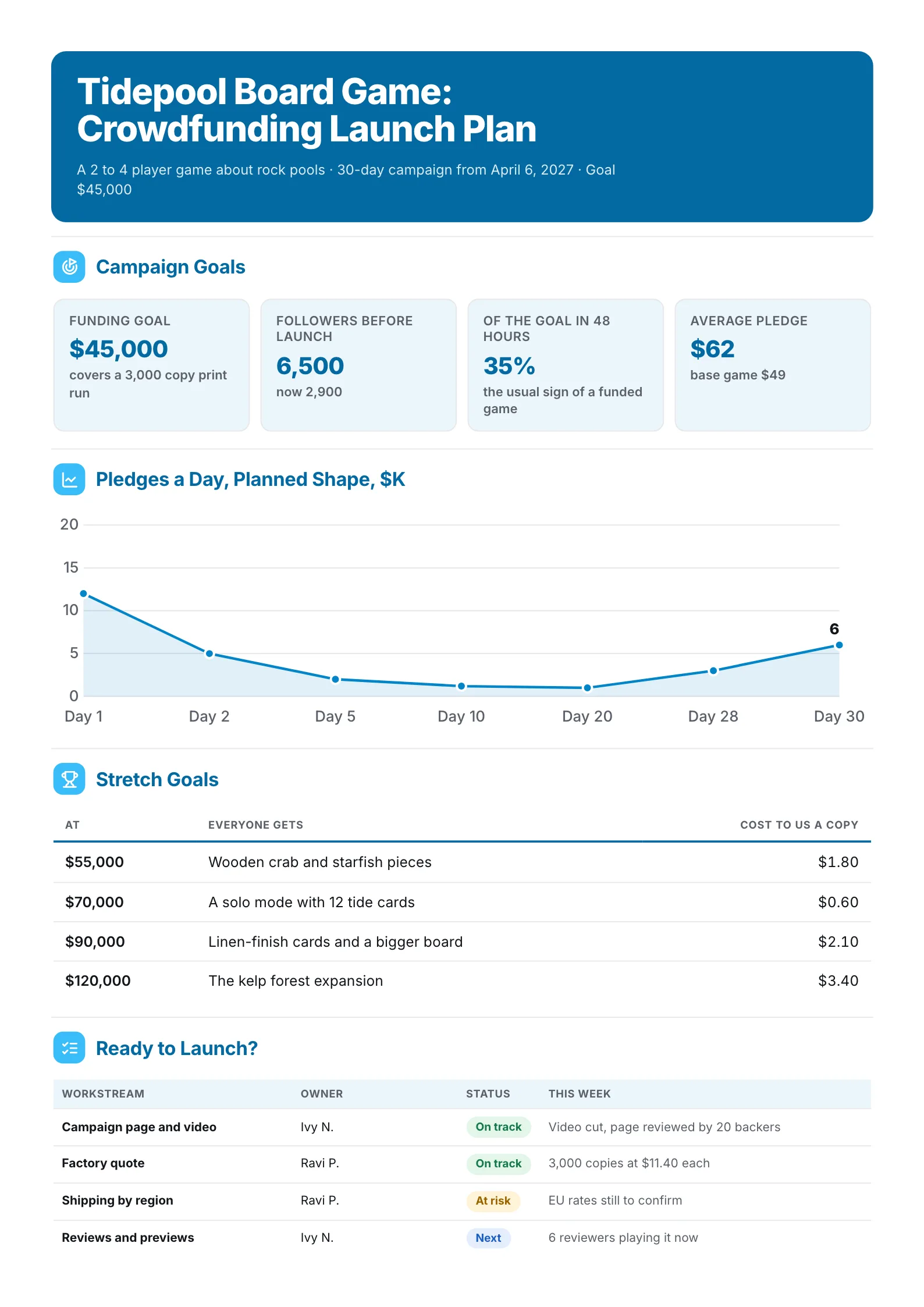
Each stretch goal shows its cost per copy, so a good day can't sink the budget.
Your plan can follow Tidepool's order. It sets a follower target for before launch day, and it prices every stretch goal per copy before promising it.
5. Ask fans for specific help
When James Clear announced Atomic Habits, he told readers exactly what would help: preorder, introduce him to someone with a platform reaching over 100,000 people, offer an interview or order in bulk. Each request has a clear size, so a reader can tell in a second whether it fits them.
Copy that shape with your numbers. A small brand might ask for one review, one share and one introduction to a shop owner, with a deadline.
6. Reward early orders
Clear paired those requests with a bonus. His 1-book package offered a private webinar, two application guides, a one-page cheat sheet and a reading guide by email. Buyers proved it by forwarding a receipt, so the bonus needed no special checkout, and people who had already preordered could still claim it.
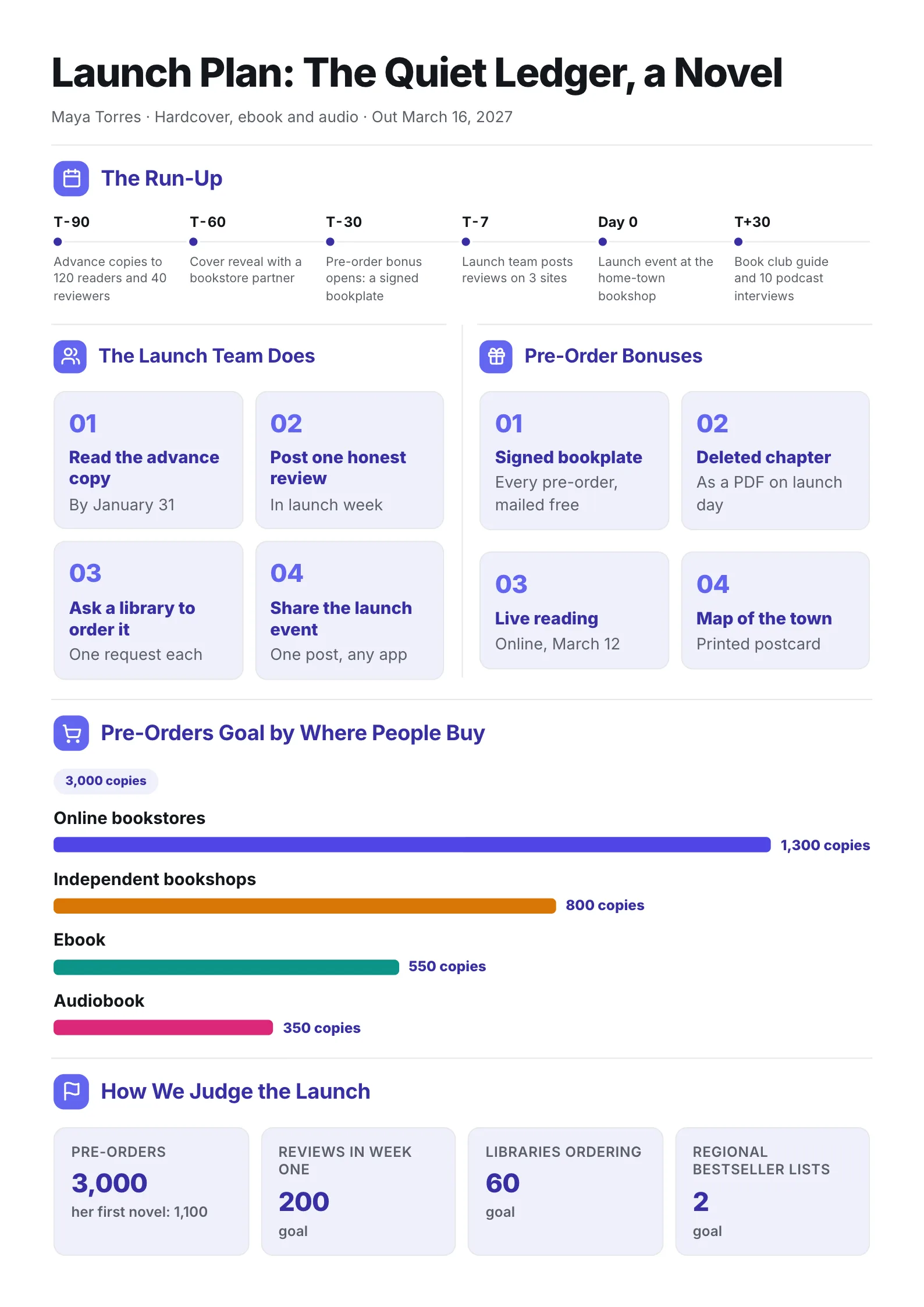 Edit this template
A signed bookplate costs little to mail and gives readers a reason to order now.
Everything in Clear's package is digital, so it costs almost nothing to send to one more buyer. Your bonus should pass that test too.
7. Pitch local press and podcasts
FedEx's small business guide lists free routes like these: contributing an article to a site your customers read, getting interviewed on podcasts or for your local paper, and appearing on your local news station. All of them trade your time for attention. Write three sentences on why your product is news in your town, and send them to one reporter.
8. Tell the story behind it
The same guide suggests pre-launch blog posts with a behind-the-scenes look, plus a short video on how you came up with your idea, and your phone will do for that. It also suggests teaser emails once a week, rising to twice a week when launch is a couple of weeks away.
FedEx adds a caution on social media: use the sites your customers already use. Its example is that men 65 and older probably won't see your Instagram videos.
To lay out the whole launch on one page, see our product launch plan template.
How many to run
Harry's ran one idea well and Clear ran two. For a first launch, one or two is a sensible ceiling, because each of these takes a person's full attention in the weeks when the product itself needs it most.
Frequently asked questions
How do you choose a product launch idea?
Start with what your customer needs before buying. A taste, a review and a friend's word each answer a different doubt, so pick the idea that answers yours.
How early should you start planning a product launch?
The sample plans start about 3 to 13 weeks out, depending on the product. Harry's put its whole list together in a single week, though it had the pages and prizes ready first.
How do you write a product launch plan?
Give each idea an owner and a date, and add up what it costs. The SBA's marketing plan guidance asks for clear goals and a full cost breakdown, and that suits a launch too.




