Patient Education Handout Examples That Say Where to Keep the Sheet
5 patient education handout examples on one page, from low blood sugar to newborn care, and how AHRQ's PEMAT scores a handout patients can act on.

A patient leaves your office with a handout, gets home and has one question. Can the sheet answer it without a phone call? These patient education handout examples are built so the answer is yes. Each one tells the patient what's normal, what to do next and when to call. Start from a free one pager template.
One‑Pager examples
Real One-Pagers made with MakeOnepagers. Open any one to edit it as your own.
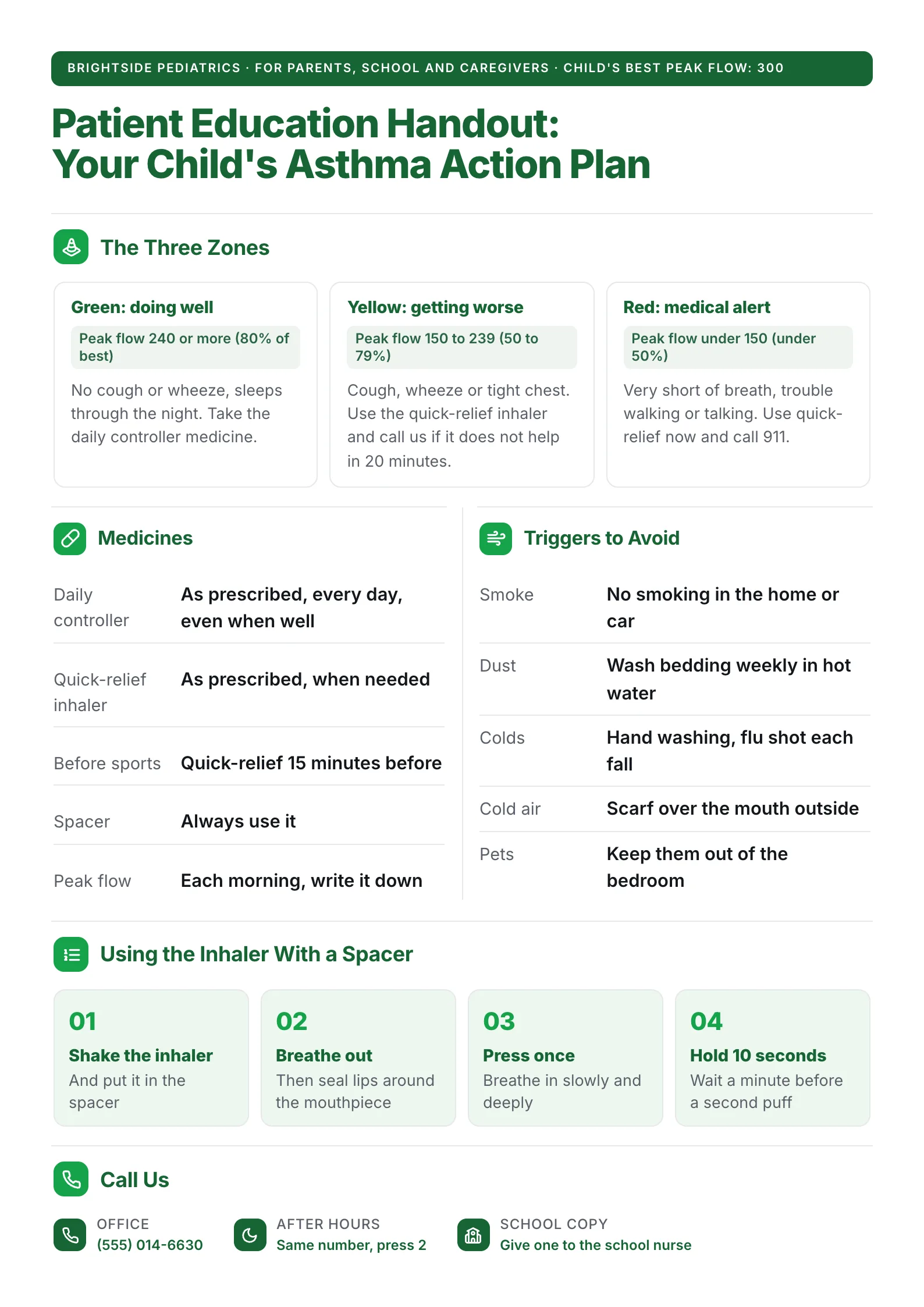 Patient Education Handout: Child Asthma Action PlanEdit for free(opens in a new tab)
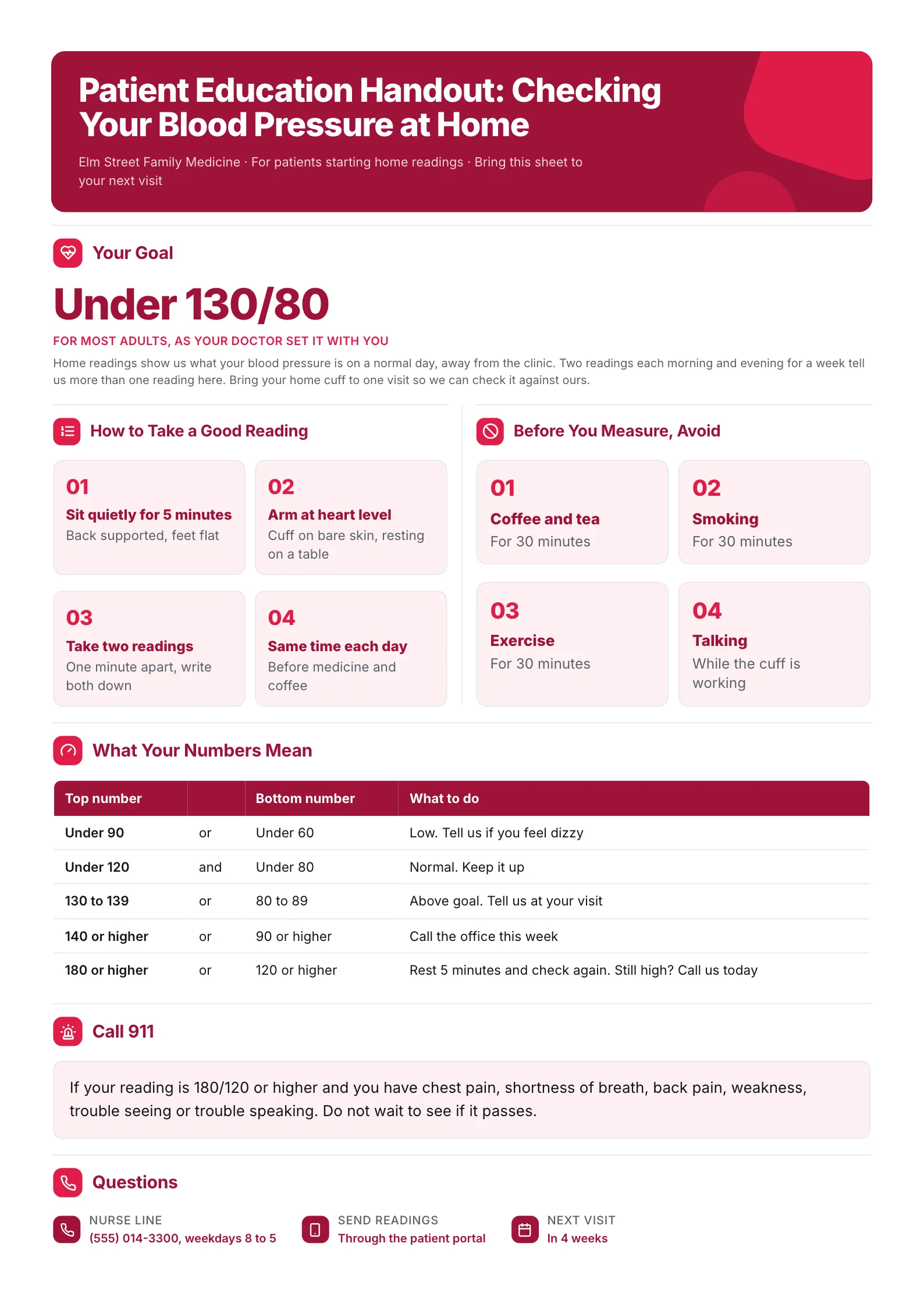 Patient Education Handout: Home Blood PressureEdit for free(opens in a new tab)
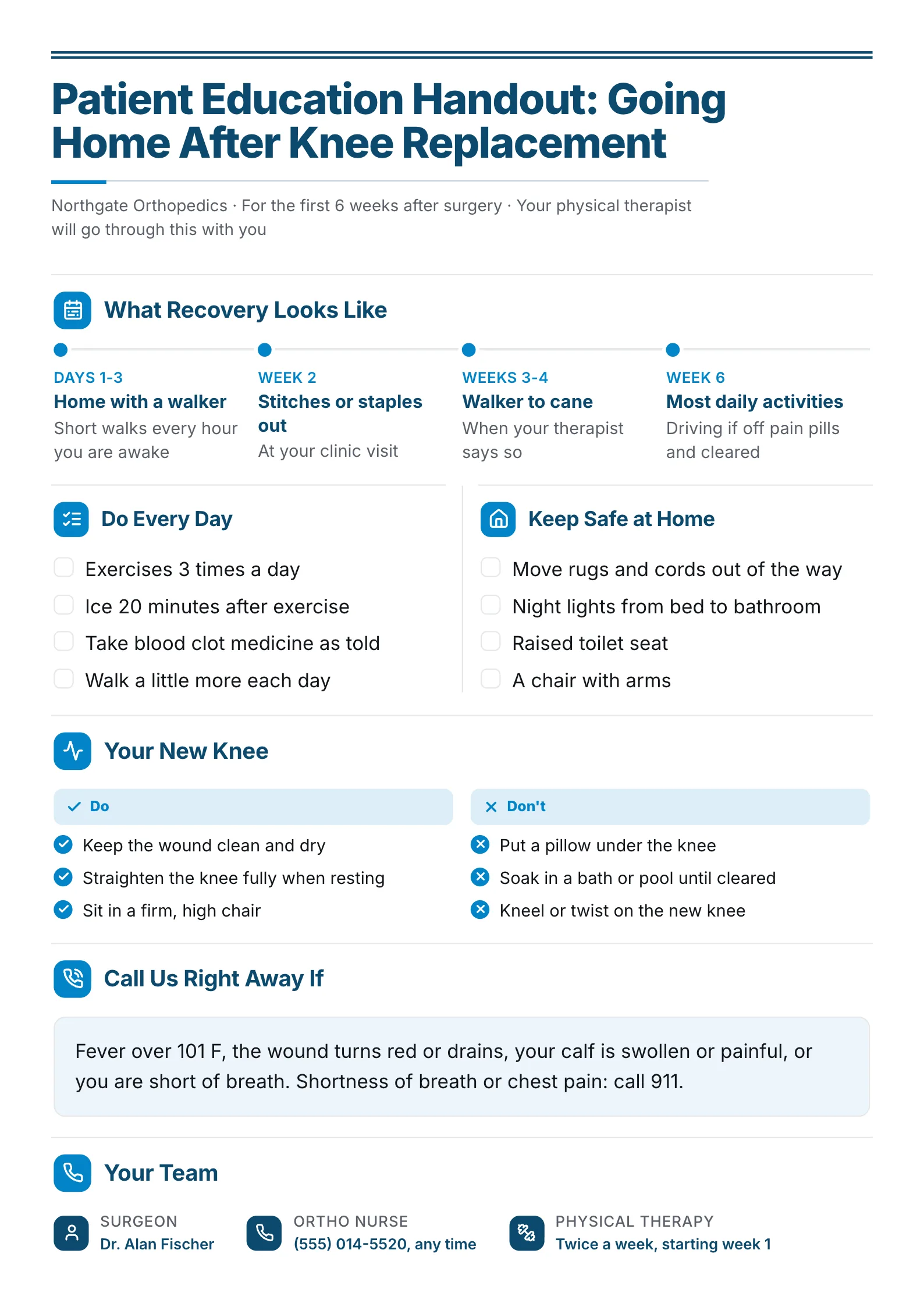 Patient Education Handout: After Knee ReplacementEdit for free(opens in a new tab)
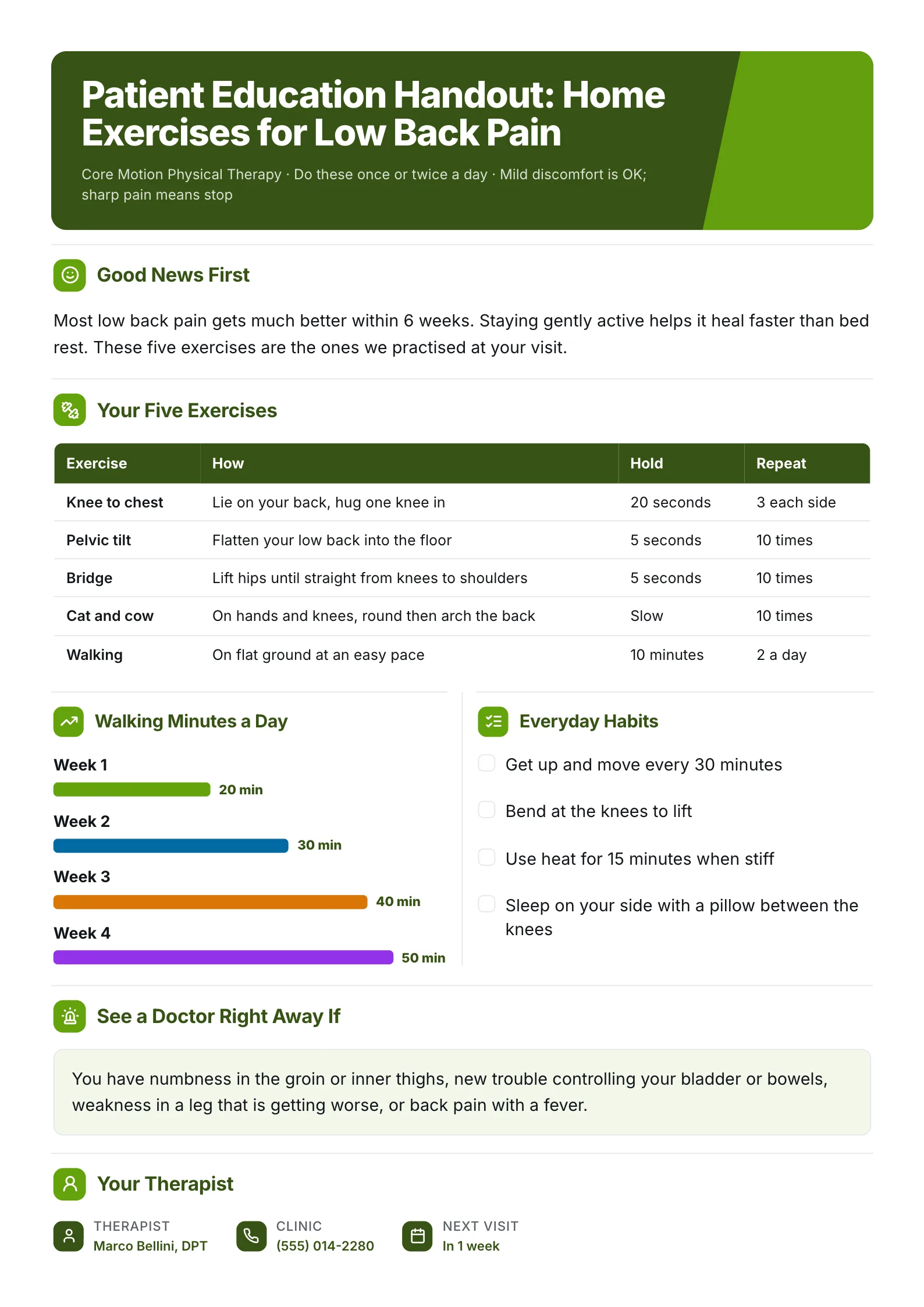 Patient Education Handout: Back Pain ExercisesEdit for free(opens in a new tab)
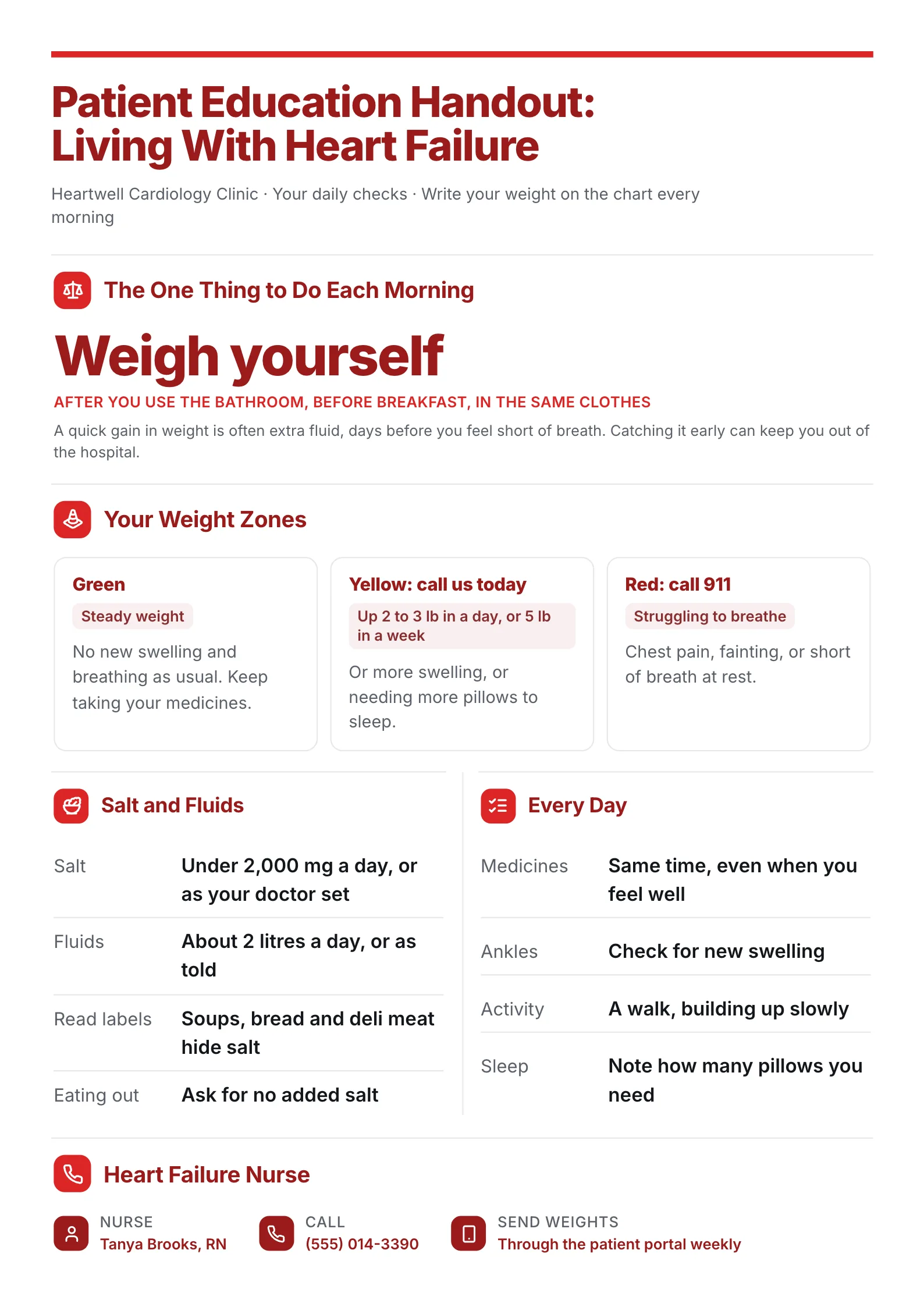 Patient Education Handout: Heart Failure Daily ChecksEdit for free(opens in a new tab)
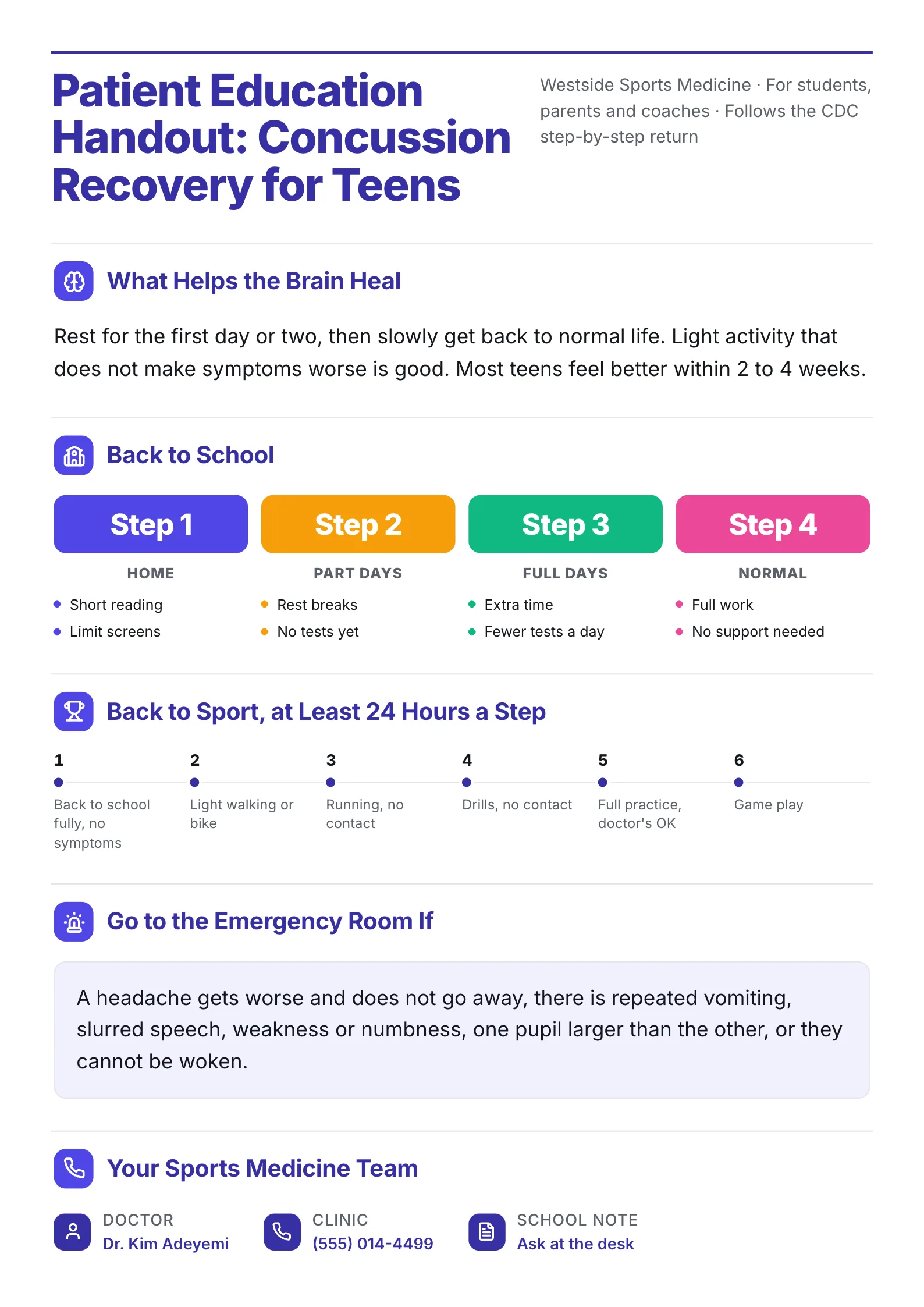 Patient Education Handout: Teen Concussion RecoveryEdit for free(opens in a new tab)
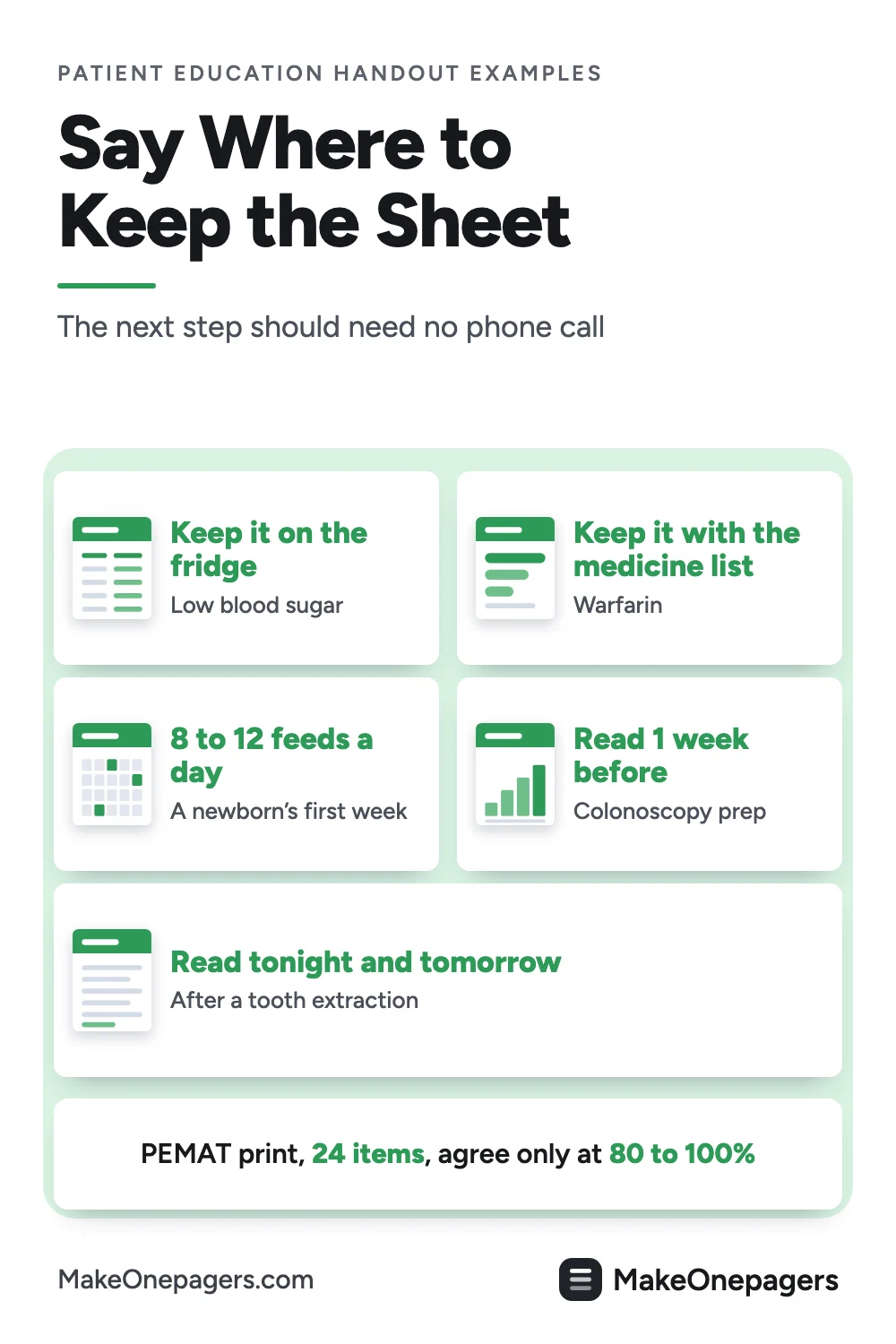
The five sheets cover low blood sugar, warfarin, a newborn's first week, colonoscopy prep and care after a tooth extraction. Four of them say in the subtitle where to keep the sheet or when to read it, and the newborn sheet tells parents to bring questions to the first check-up. A line like that shows a sheet was designed for a kitchen and not a waiting room. Then we run them past AHRQ's scoring tool, which you can use on a draft of your own.
Low blood sugar, kept on the fridge
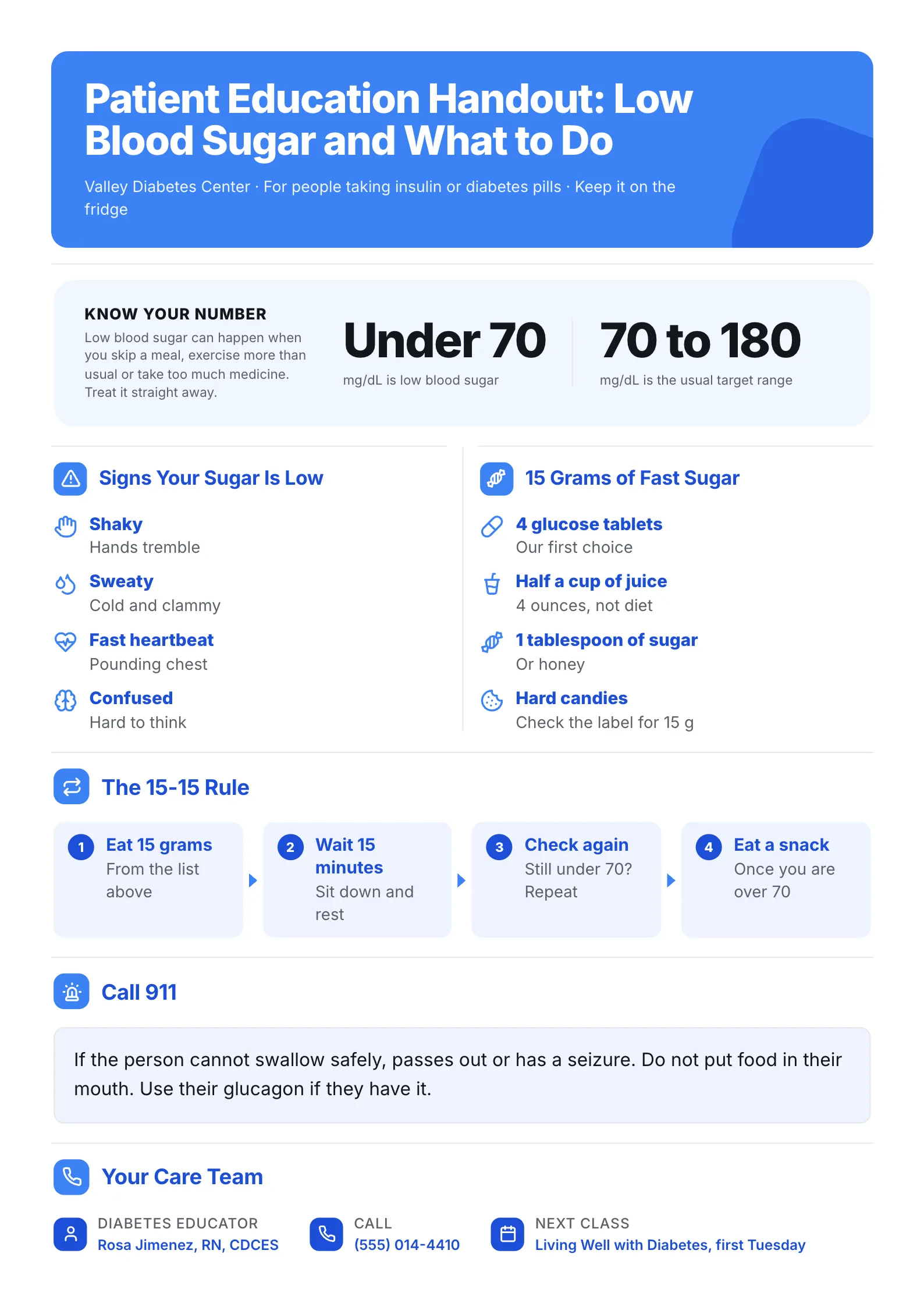
Valley Diabetes Center wrote this sheet for people taking insulin or diabetes pills. The subtitle says to keep it on the fridge, because that's where a patient will be standing when their sugar drops.
 Edit this template
A made-up clinic with sample guidance. The numbers row turns a scary moment into a simple check.
"Know Your Number" puts two facts in large type. Under 70 mg/dL is low. From 70 to 180 is the usual target range. A short line explains when lows happen: after a skipped meal, more exercise than usual or too much medicine.
The signs are written as single words with a plain description underneath. Shaky means hands that tremble. Sweaty means cold and clammy. Confused means hard to think. A patient who's starting to feel low can read those in seconds.
Then comes the action, 15 grams of fast sugar, with 4 glucose tablets as the clinic's first choice. Your patient doesn't have to work out a dose in the middle of a low.
Warfarin, kept with the medicine list
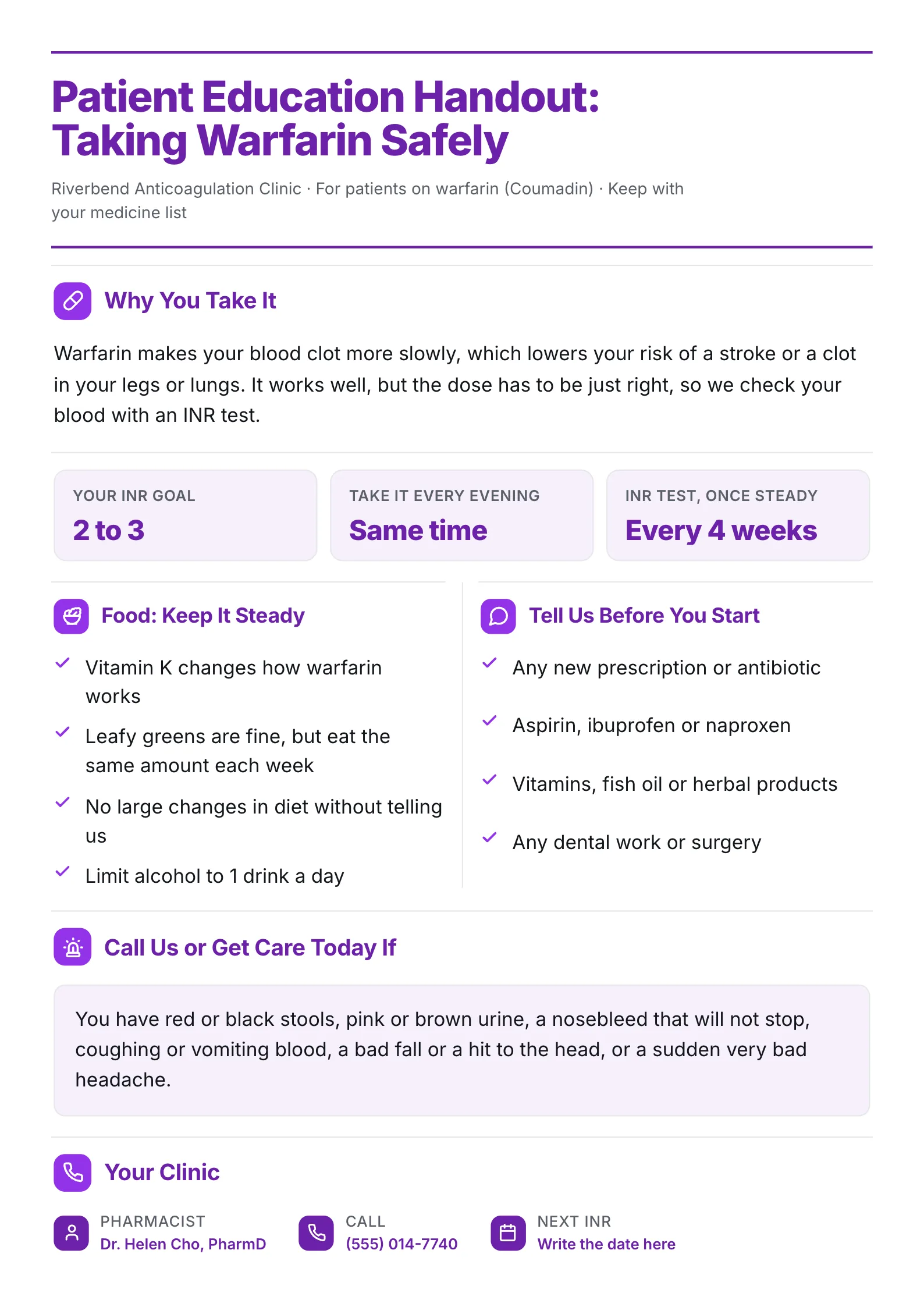
Riverbend Anticoagulation Clinic's handout is for patients on warfarin (Coumadin). It's meant to sit with the patient's medicine list, since it's the sheet they'll reach for when a new prescription shows up.
 Edit this template
A sample clinic and pharmacist. The "Call Us" box lists the danger signs in one sentence.
Three numbers set the routine. The INR goal is 2 to 3. The pill goes down at the same time every evening. Once a patient is steady, an INR test comes every 4 weeks.
"Food: Keep It Steady" and "Tell Us Before You Start" cover the two things that throw warfarin off. The "Call Us or Get Care Today If" box names the warning signs: red or black stools, pink or brown urine, a nosebleed that won't stop, a bad fall or a hit to the head, or a sudden very bad headache. The pharmacist's name sits right under it, so the patient knows who answers. Put a name from your own office there, and you'll hear from the patient before they guess.
A newborn's first week at home
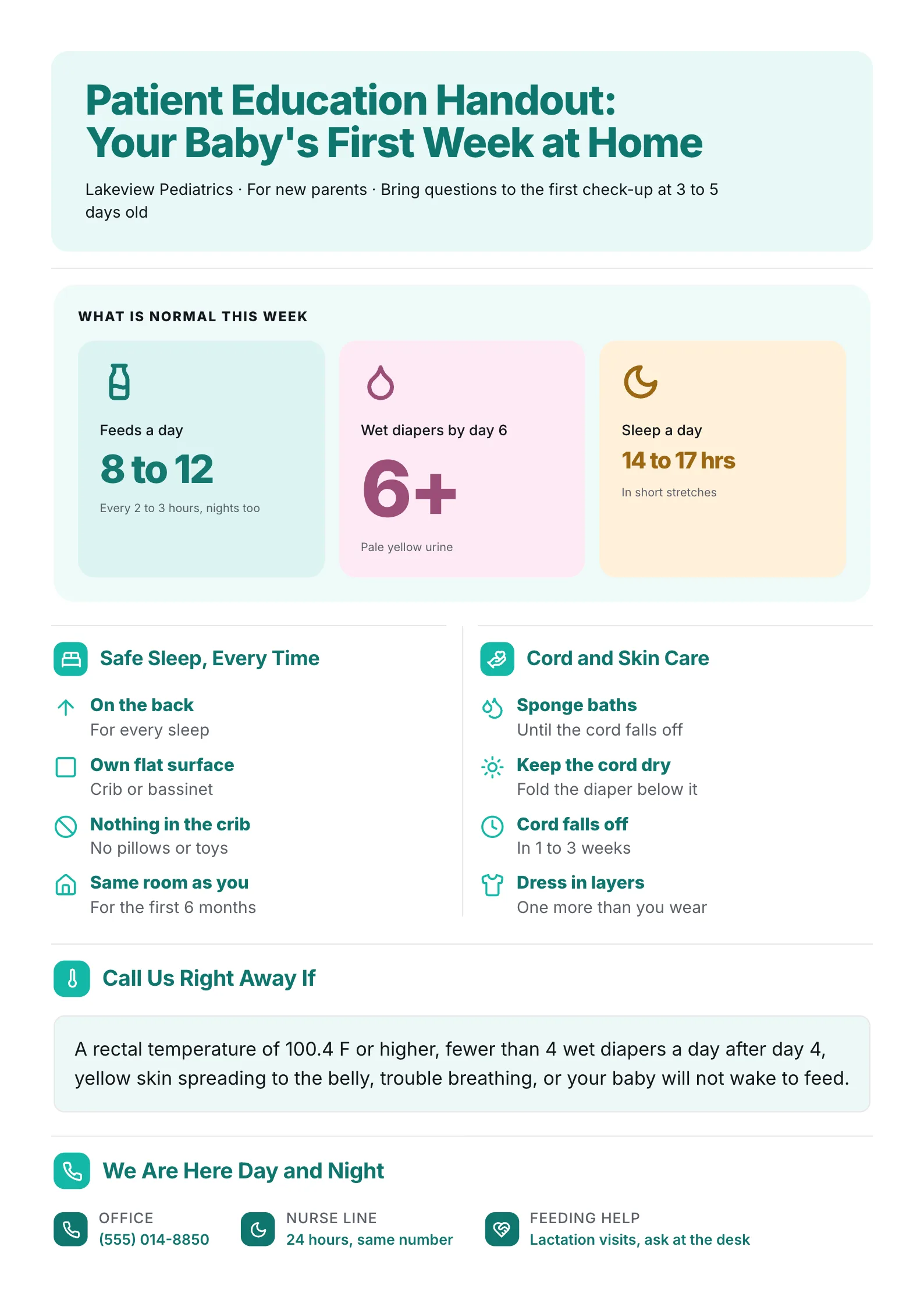
Lakeview Pediatrics wrote this one for new parents, and it ends with a reminder to bring questions to the first check-up at 3 to 5 days old.
 Edit this template
Lakeview is invented. "What Is Normal" calms parents down before it tells them anything else.
"What Is Normal This Week" is the box new parents will read at 3 am. 8 to 12 feeds a day, every 2 to 3 hours, nights too. Six or more wet diapers by day 6. Then 14 to 17 hours of sleep, in short stretches. Exhausted parents need to know what's normal before they can spot what isn't. You know which call your staff gets most, so answer it on the sheet.
"Safe Sleep, Every Time" is four short rules. On the back for every sleep. On their own flat surface, a crib or bassinet. Nothing in the crib, no pillows or toys. In the parents' room for the first 6 months.
Colonoscopy prep, read a week before
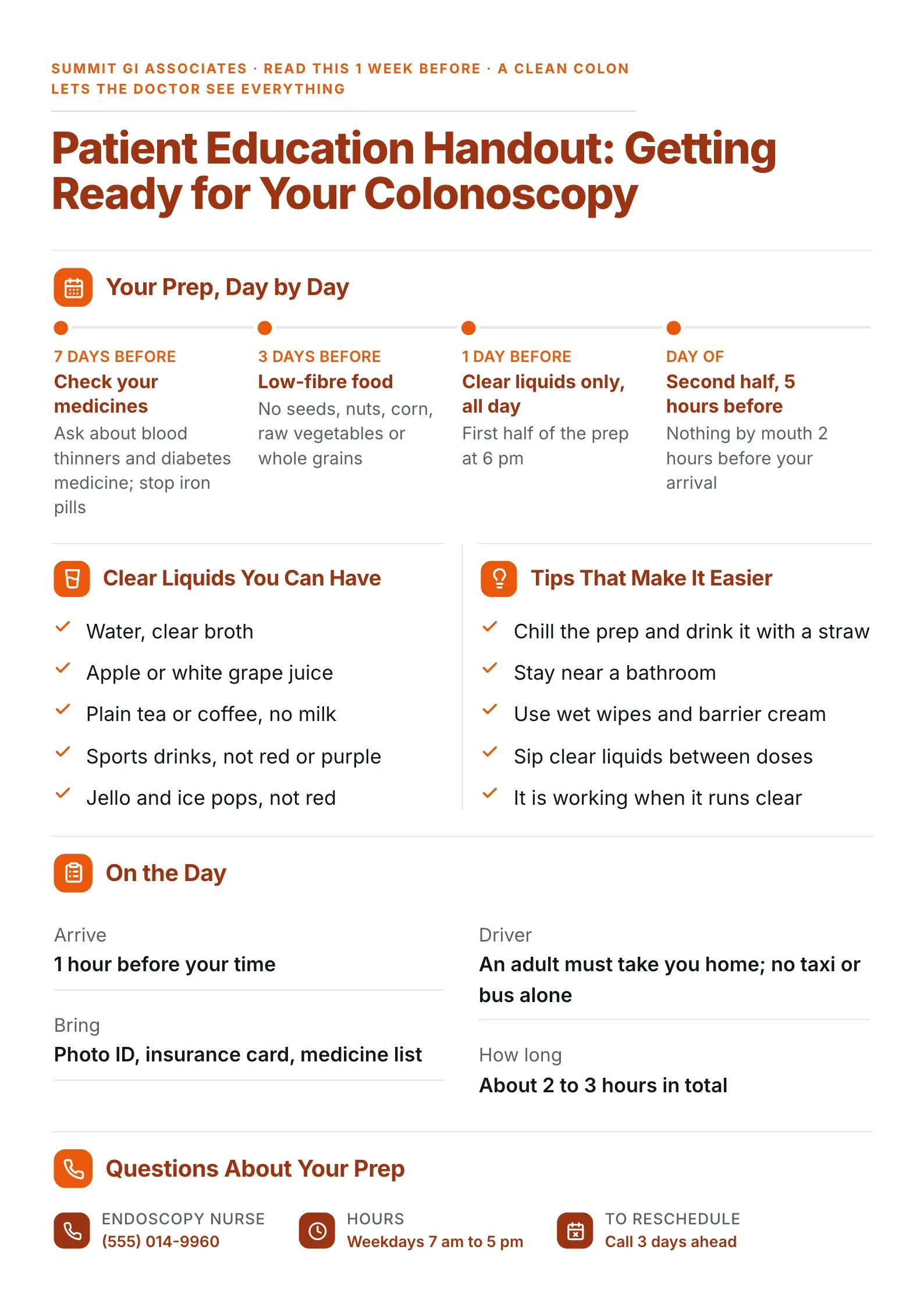
Summit GI Associates' handout says to read it 1 week before, and it explains why up front. A clean colon lets the doctor see everything.
 Edit this template
A sample practice. The day-by-day timeline is the whole handout's job.
Check your medicines first, the timeline says, and ask about blood thinners and diabetes medicine; stop iron pills. Then low-fiber food, with no seeds, nuts, corn, raw vegetables or whole grains. Then clear liquids only, all day. The first half of the prep goes at 6 pm, the second half 5 hours before, and nothing by mouth 2 hours before you arrive.
"On the Day" tells the patient to arrive 1 hour before their time. A patient who misreads one of these steps may need the procedure repeated, so seeing them in order on one sheet helps.
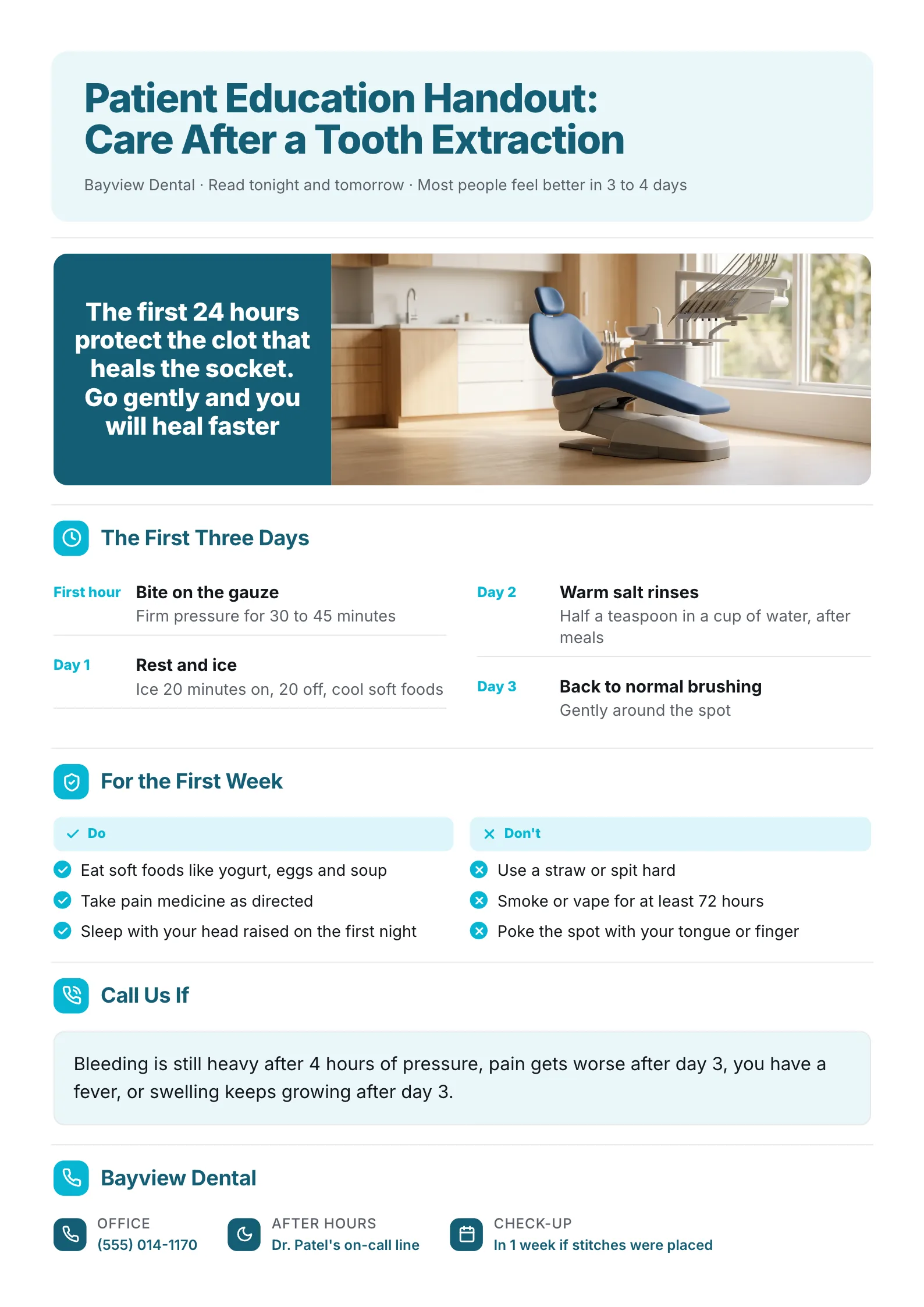
After a tooth extraction, read tonight and tomorrow
Bayview Dental's sheet is timed for the two days that matter, and it opens with good news: most people feel better in 3 to 4 days.
 Edit this template
Bayview is invented. The reason for each rule is printed beside it, so patients follow it.
The handout explains the why before the what. The first 24 hours protect the clot that heals the socket, so a patient who goes gently heals faster. That one sentence makes every rule below it easier to follow.
The first three days are spelled out. Bite on the gauze with firm pressure for 30 to 45 minutes. Ice 20 minutes on, 20 off, with cool soft foods. Rinse with half a teaspoon of salt in a cup of water after meals. Brush gently around the spot. The "Call Us If" box starts with bleeding that's still heavy after 4 hours of pressure.
How AHRQ scores a printed handout
AHRQ's Patient Education Materials Assessment Tool, PEMAT, gives you a way to check a handout before you print a thousand copies. We read its instructions for printable materials on October 30, 2026.
| PEMAT step | What it says |
|---|---|
| Pick the tool | PEMAT-P for printable materials (24 items) or PEMAT-A/V for audiovisual (17 items) |
| Rate each item | Agree is 1, Disagree is 0, and Not Applicable only where the item offers it |
| When to agree | Only when the trait holds nearly all the time, 80% to 100% |
| How to read it | As a patient new to the subject would, using only what's on the page |
| Score it | Points divided by items rated, times 100, done separately for understandability and actionability |
The tool's first item asks whether the material makes its purpose completely evident. Each of the five sheets above answers that in its title and subtitle, before the first box. Score your draft twice, once for understandability and once for actionability. A low second number means the sheet explains the topic but doesn't yet tell the patient what to do.
Tell them where to keep it
Read the subtitles again. Keep it on the fridge, keep it with your medicine list, read it 1 week before, read it tonight and tomorrow, bring questions to the first check-up. That one line tells your patient when the sheet matters, and every handout here from MakeOnepagers carries one. Add yours, then score the page with PEMAT before it goes to print.
Frequently asked questions
What makes a good patient education handout?
One topic, plain words, short action steps and a clear "call us if" box. Tell the patient where to keep it. Our patient education handout template post walks through the sections.
How long should a patient handout be?
One page is enough for a single task, like a prep, a medicine or the first days after a procedure. If you need more, split it into two handouts with one job each.
Should handouts include pictures?
Use them when a picture shows a step faster than words, like where to place a blood pressure cuff. Leave out pictures that only decorate, since your patient's eye goes to them first.




