A Meeting Summary Format for People Who Missed the Meeting
A meeting summary format from a real council action summary and a UC San Diego template: who came, what was decided, who does what and when you meet next.

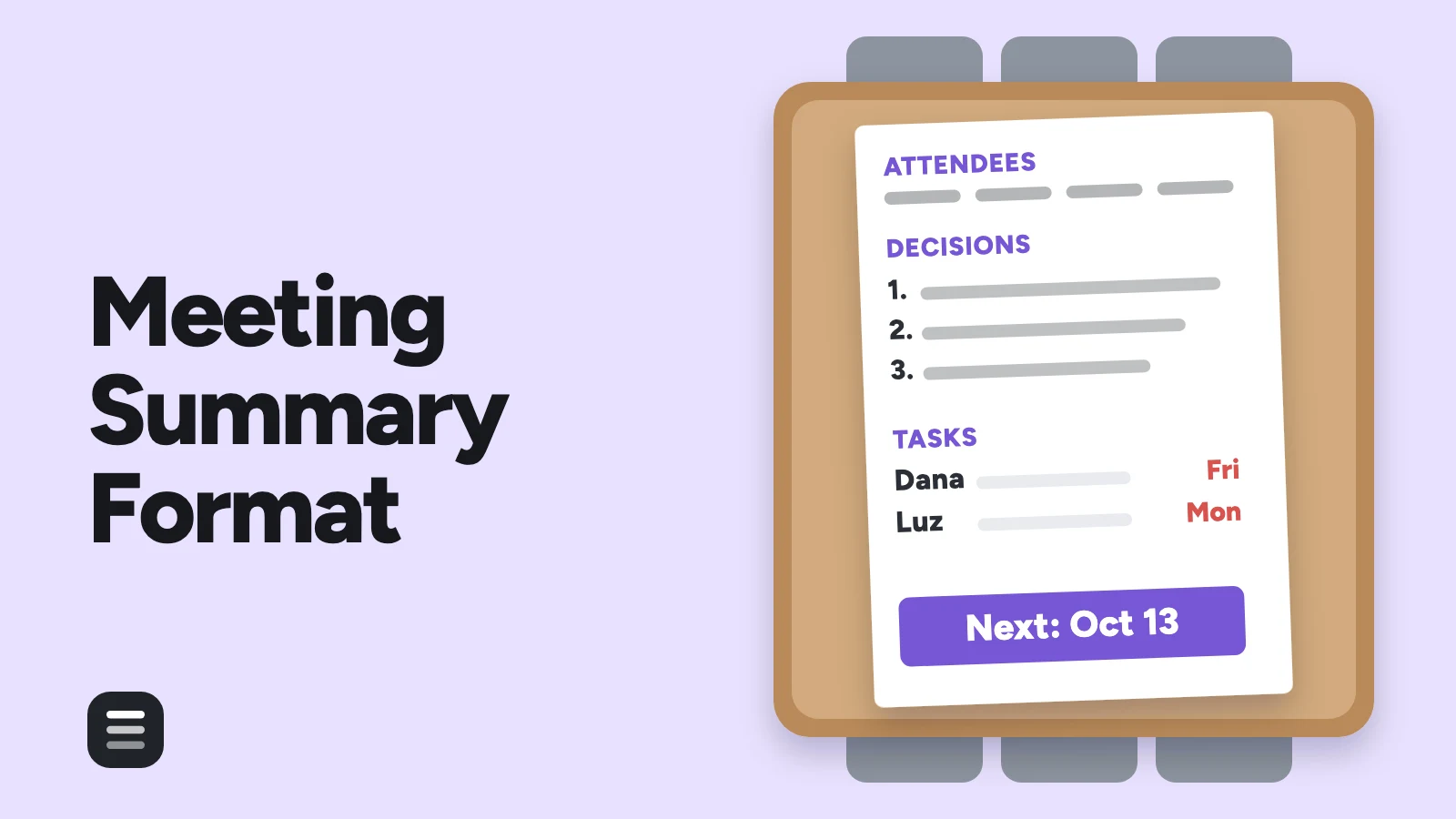
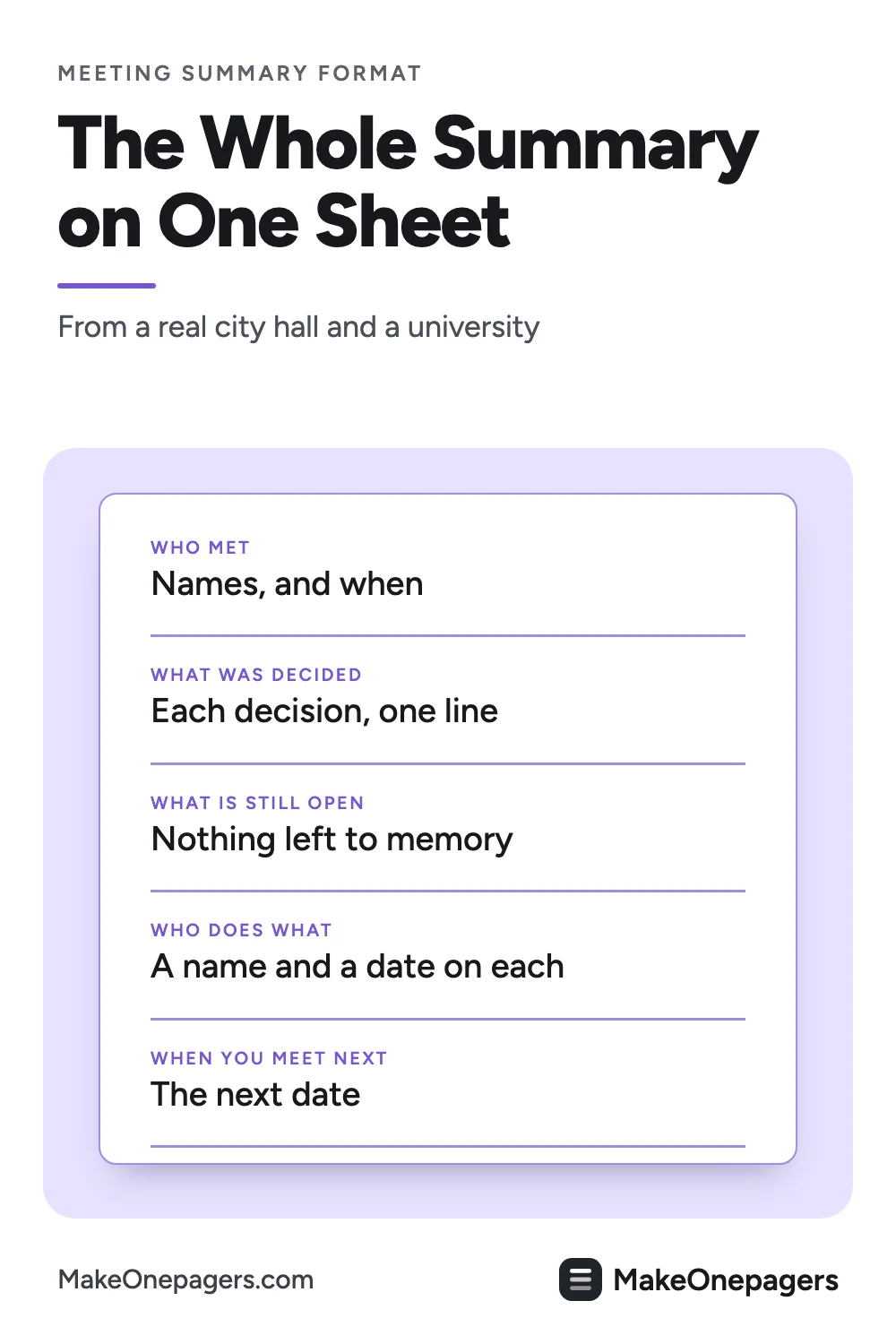
Someone who missed your meeting should know their next job within a minute of opening the page. A meeting summary format gets them there with four parts: who met, what you decided, who does what by when and when you meet again. Anything else can stay in your notes. Start from a free one pager template.
One‑Pager examples
Real One-Pagers made with MakeOnepagers. Open any one to edit it as your own.
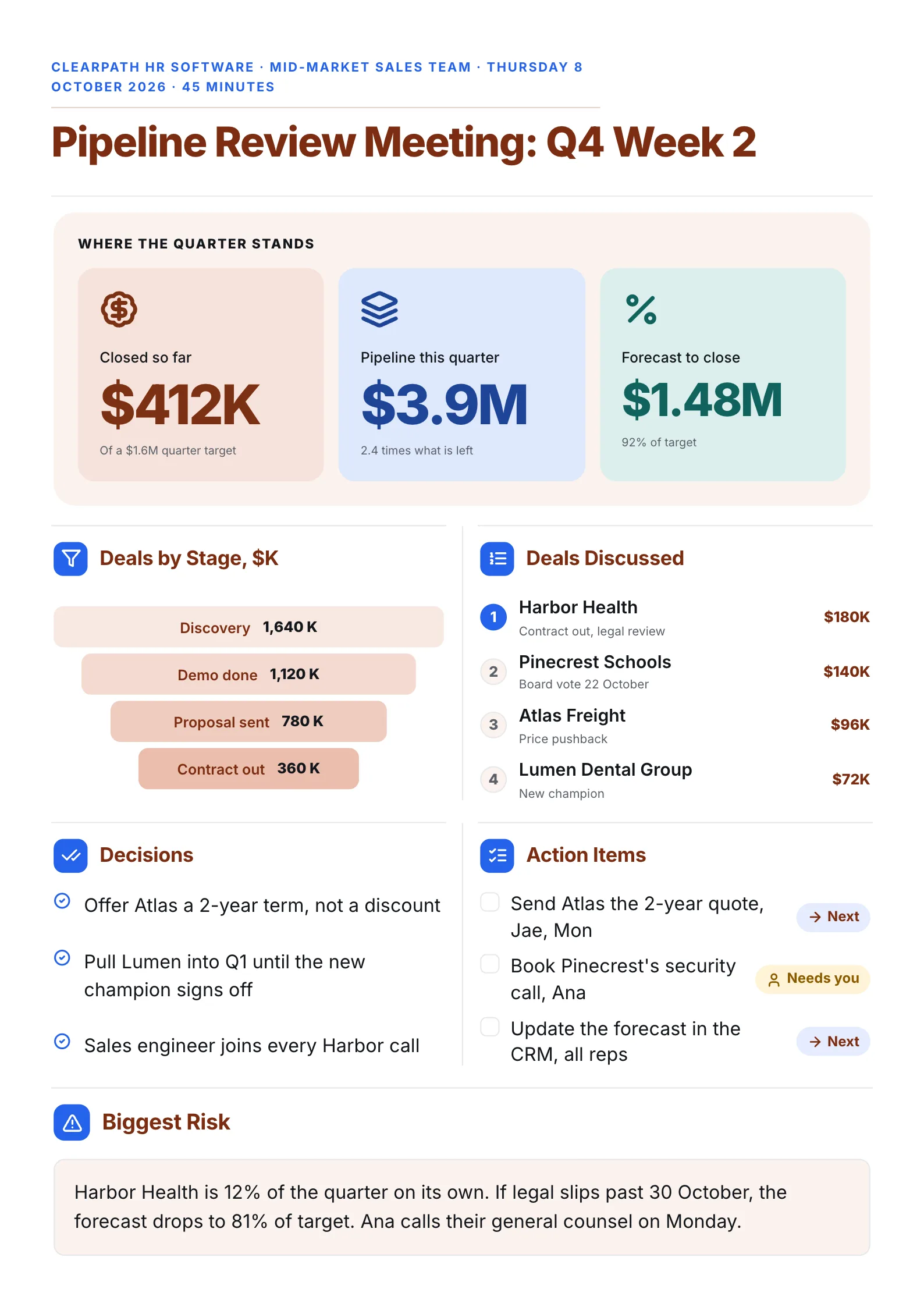 Meeting Summary: Sales Pipeline ReviewEdit for free(opens in a new tab)
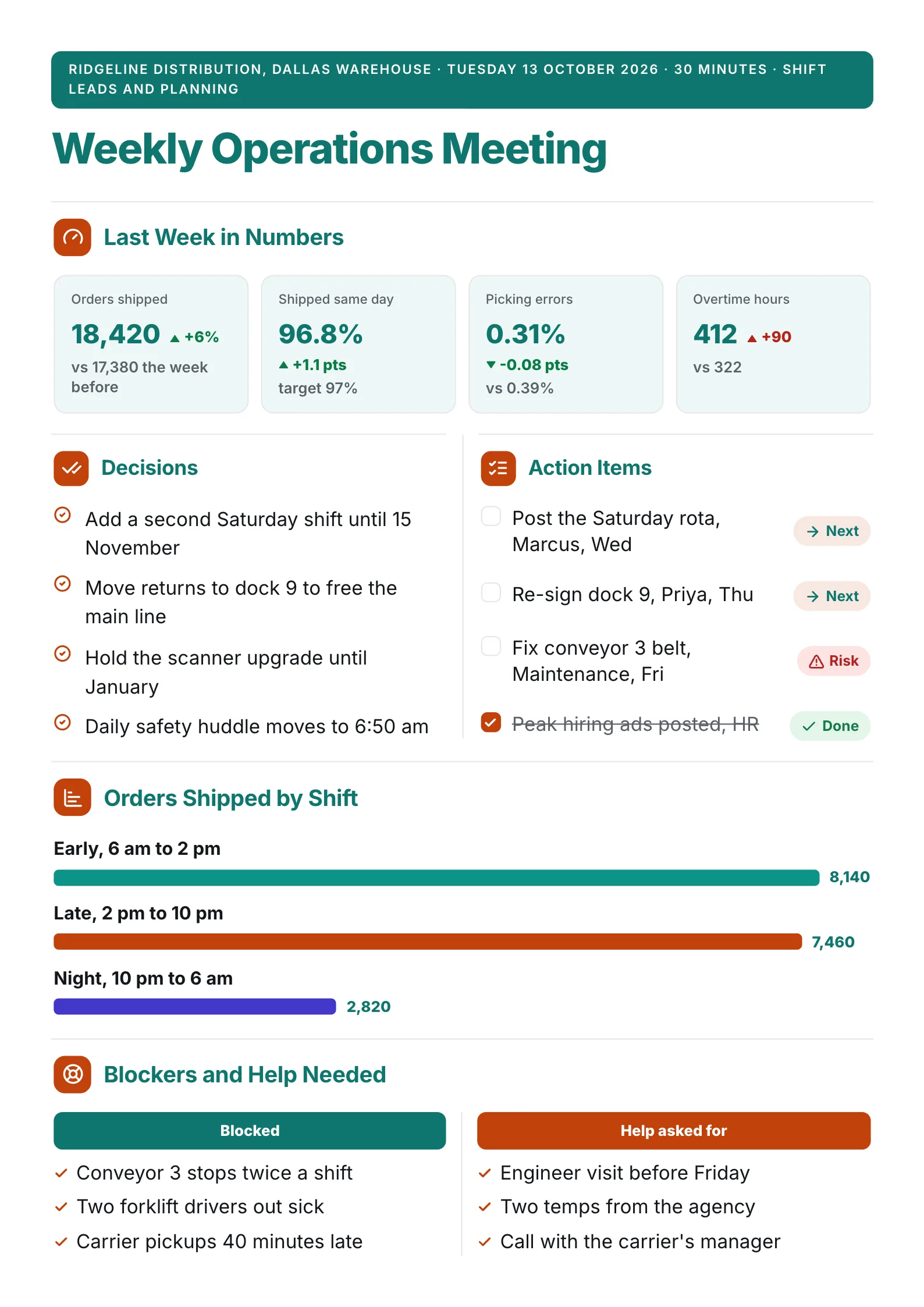 Meeting Summary: Weekly OperationsEdit for free(opens in a new tab)
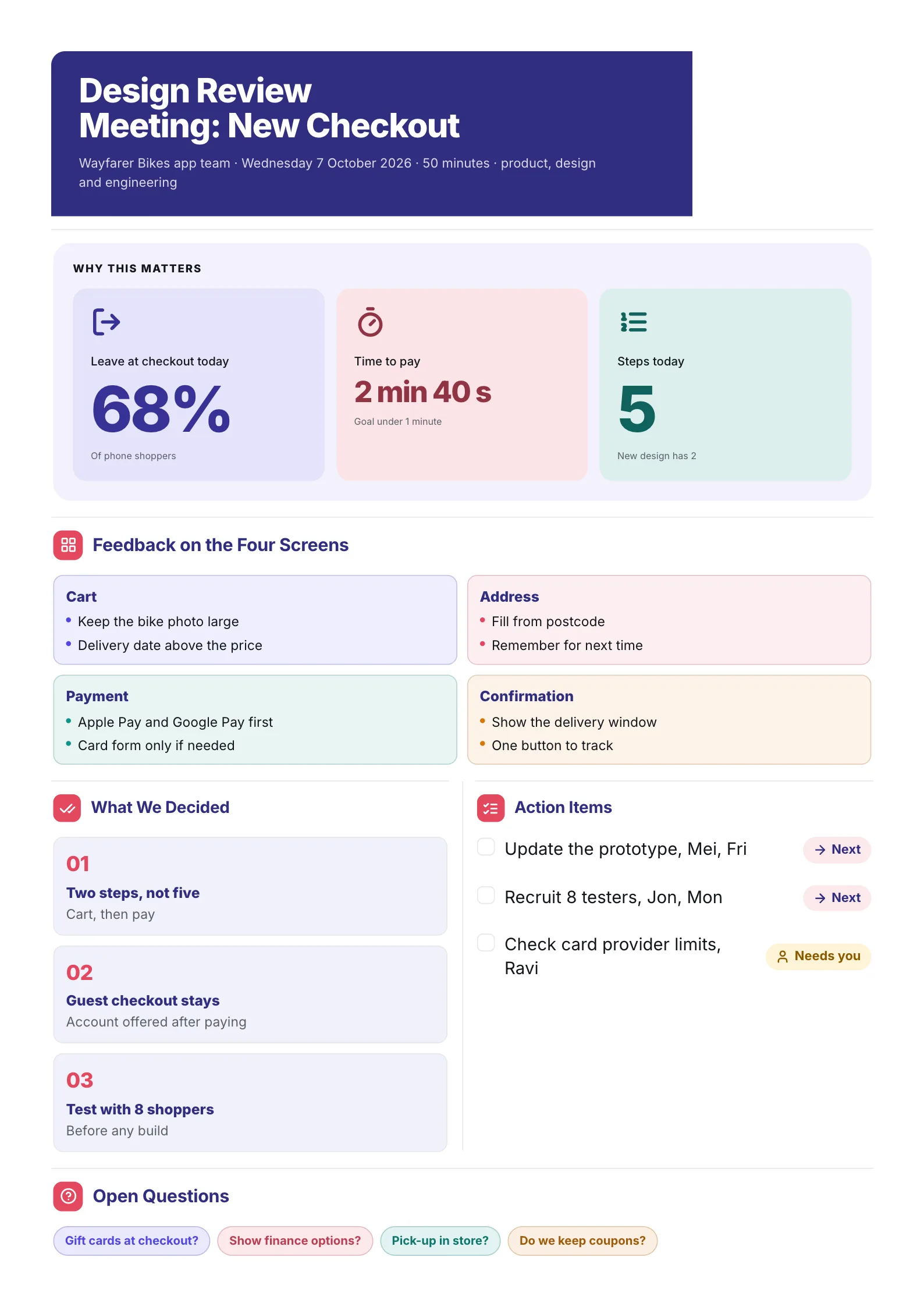 Meeting Summary: Design ReviewEdit for free(opens in a new tab)
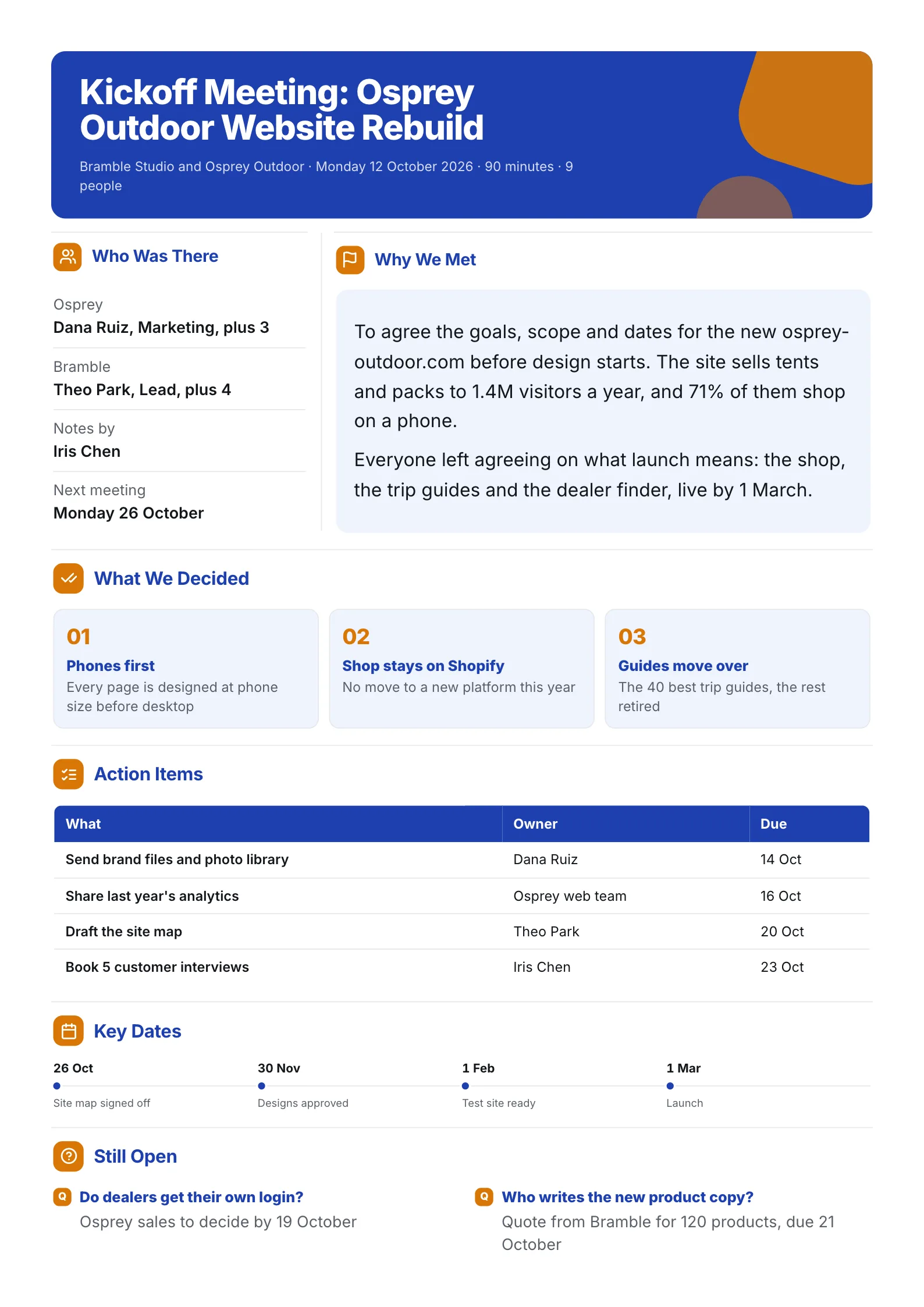 Meeting Summary: Client KickoffEdit for free(opens in a new tab)
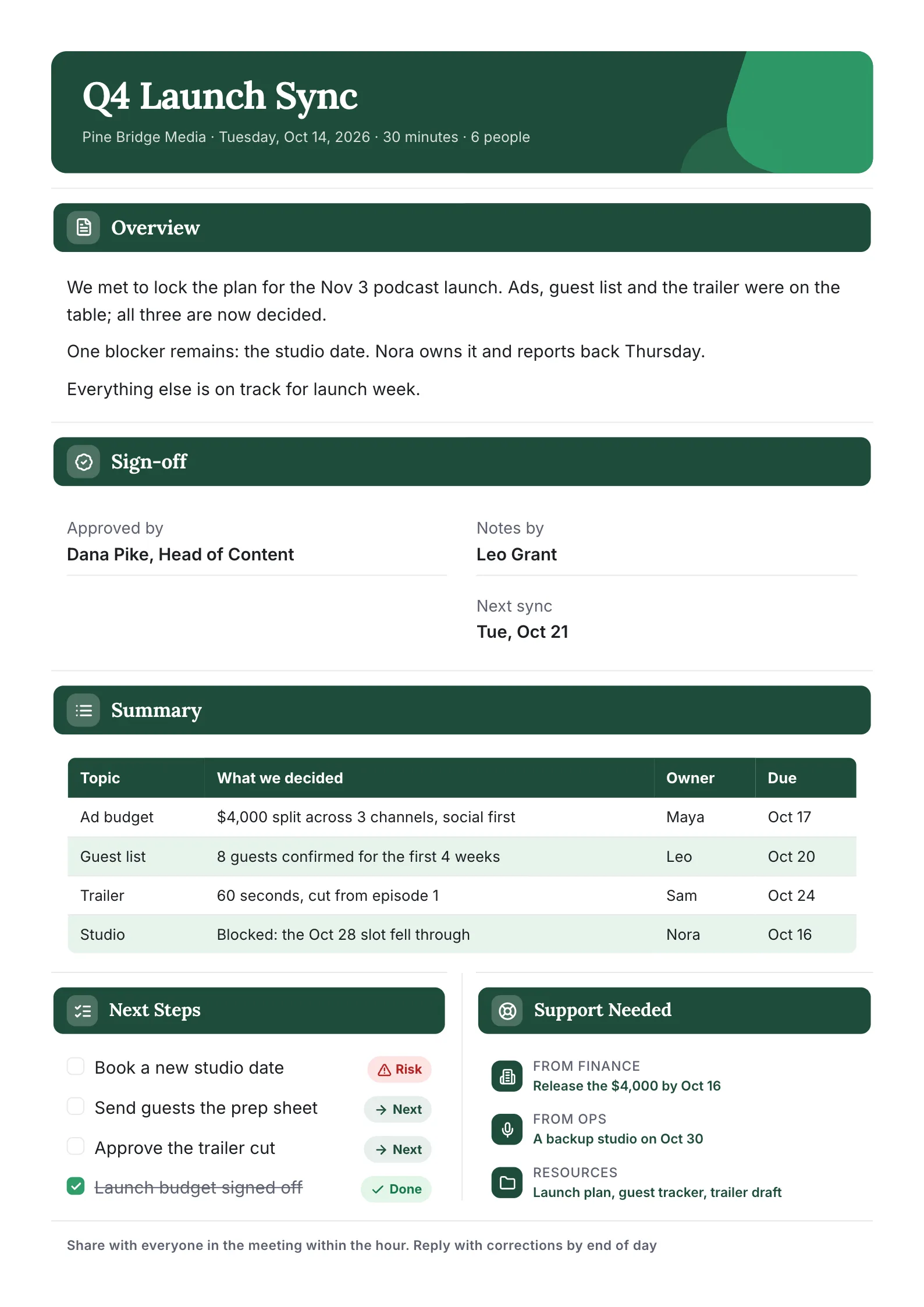 Meeting Summary One-PagerEdit for free(opens in a new tab)
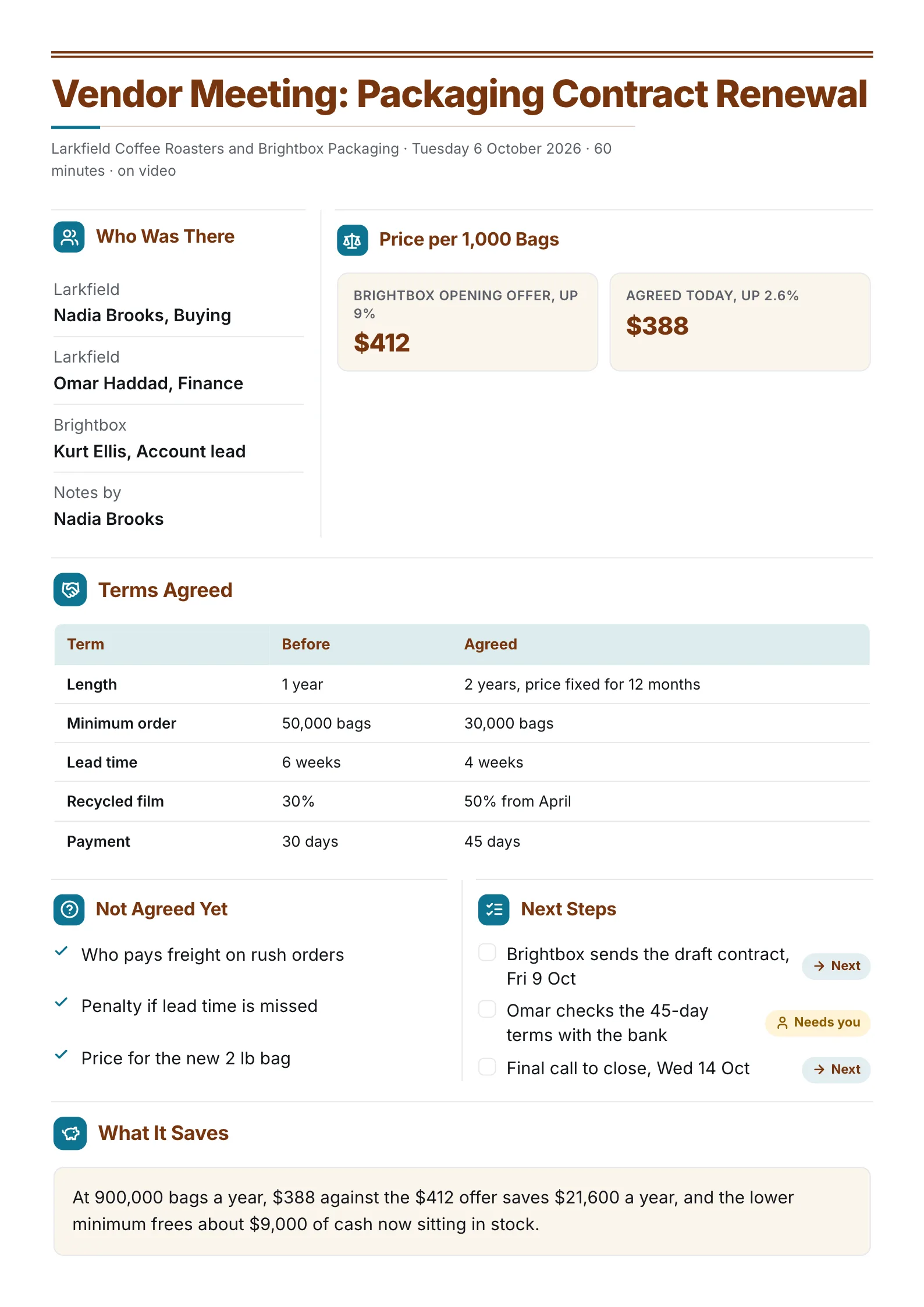 Meeting Summary: Vendor NegotiationEdit for free(opens in a new tab)
We checked that against two real documents, one a city council's action summary from Tallapoosa, Georgia, and the other a meeting summary template from UC San Diego written for workgroups. Each sample here comes from MakeOnepagers, with invented names and figures.
What the two real documents have in common
| Part | Tallapoosa council, September 8, 2025 | UC San Diego template |
|---|---|---|
| Who and when | Attendance by name and post, with the meeting date | Group name, date and time ("Don't forget the year!"), attendees |
| Discussion | Left out entirely | One row per agenda topic: major points, then next steps |
| Decisions | A list of eight approvals in plain sentences | "Decisions Made," outlining major outcomes |
| Follow-up | Not assigned here | "Who will do what by when," with a point person and due date |
| Next meeting | Monday, October 13, 2025, at 6:00 pm at City Hall | Included in decisions, with approximate timing if not confirmed |
A public body and a workgroup need different things. Tallapoosa is telling residents what happened, so it can skip assignments, while a team has to record who owns each task. Your summary should lean toward whichever reader you've got.
Part 1: Who met, and when
Put the group, the date with its year and the attendees at the top. Add how long you met if the time matters, and list absent people when they own work.
 Edit this template
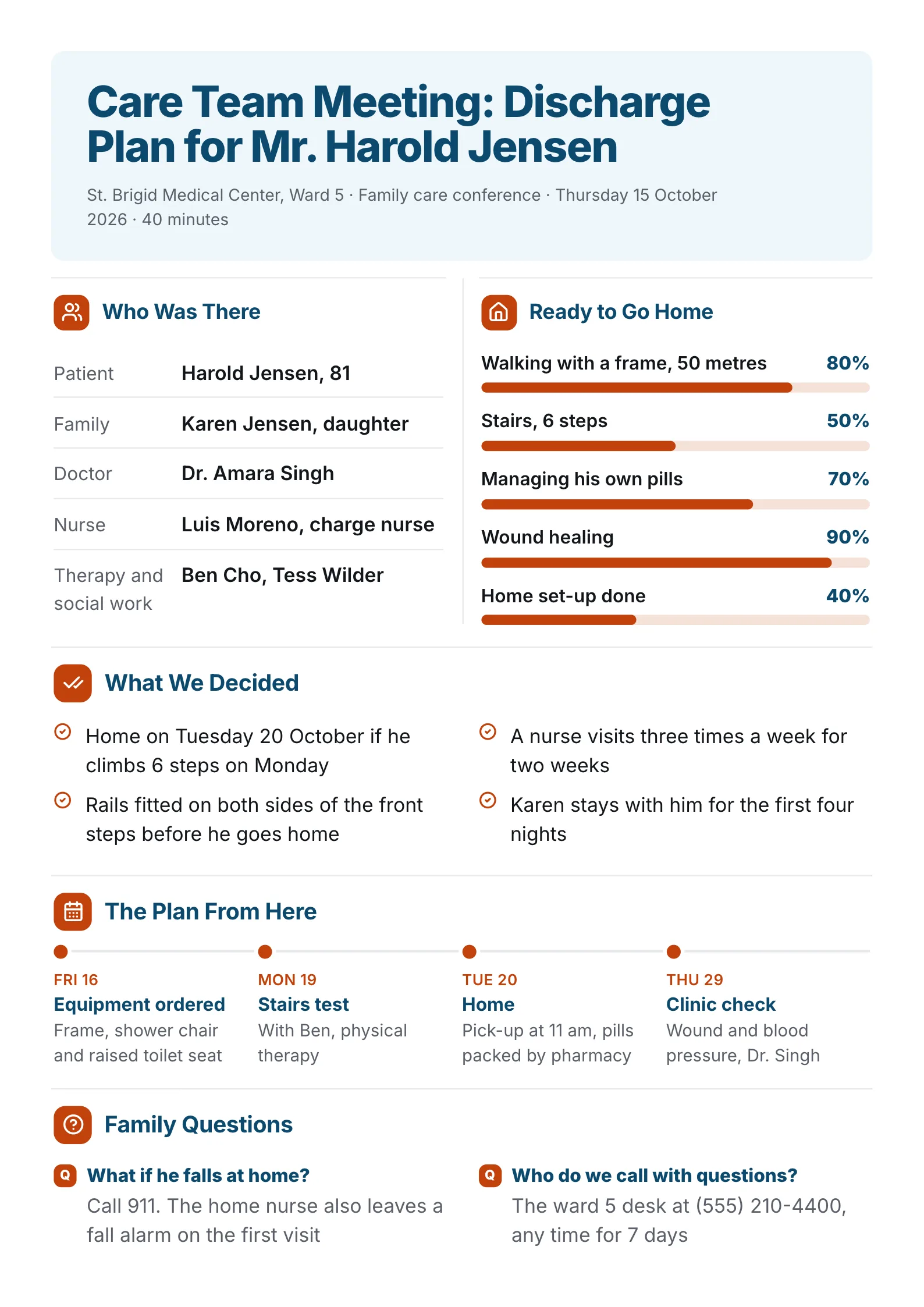
"Who Was There" names each person by role, so the family knows who to call about what.
Part 2: What was decided
Write each decision as a sentence someone could act on. Tallapoosa's "Approved to purchase new replacement computers for the Police Department" works because a reader needs nothing else to understand it.
 Edit this template
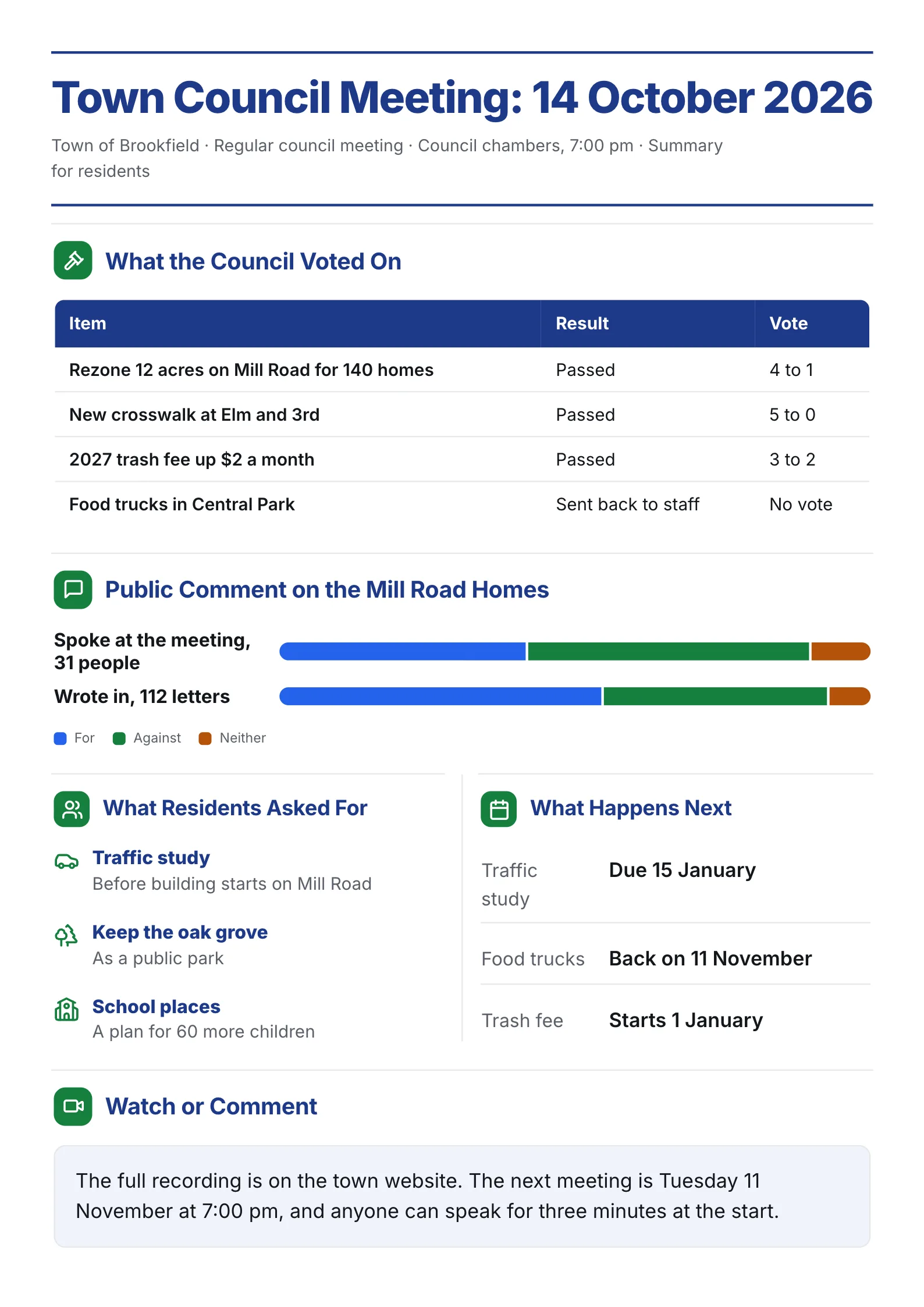
Votes get their own column, and the food truck item reads "Sent back to staff."
Include what stayed undecided as well. A separate list of open items stops people from assuming that silence meant yes.
 Edit this template
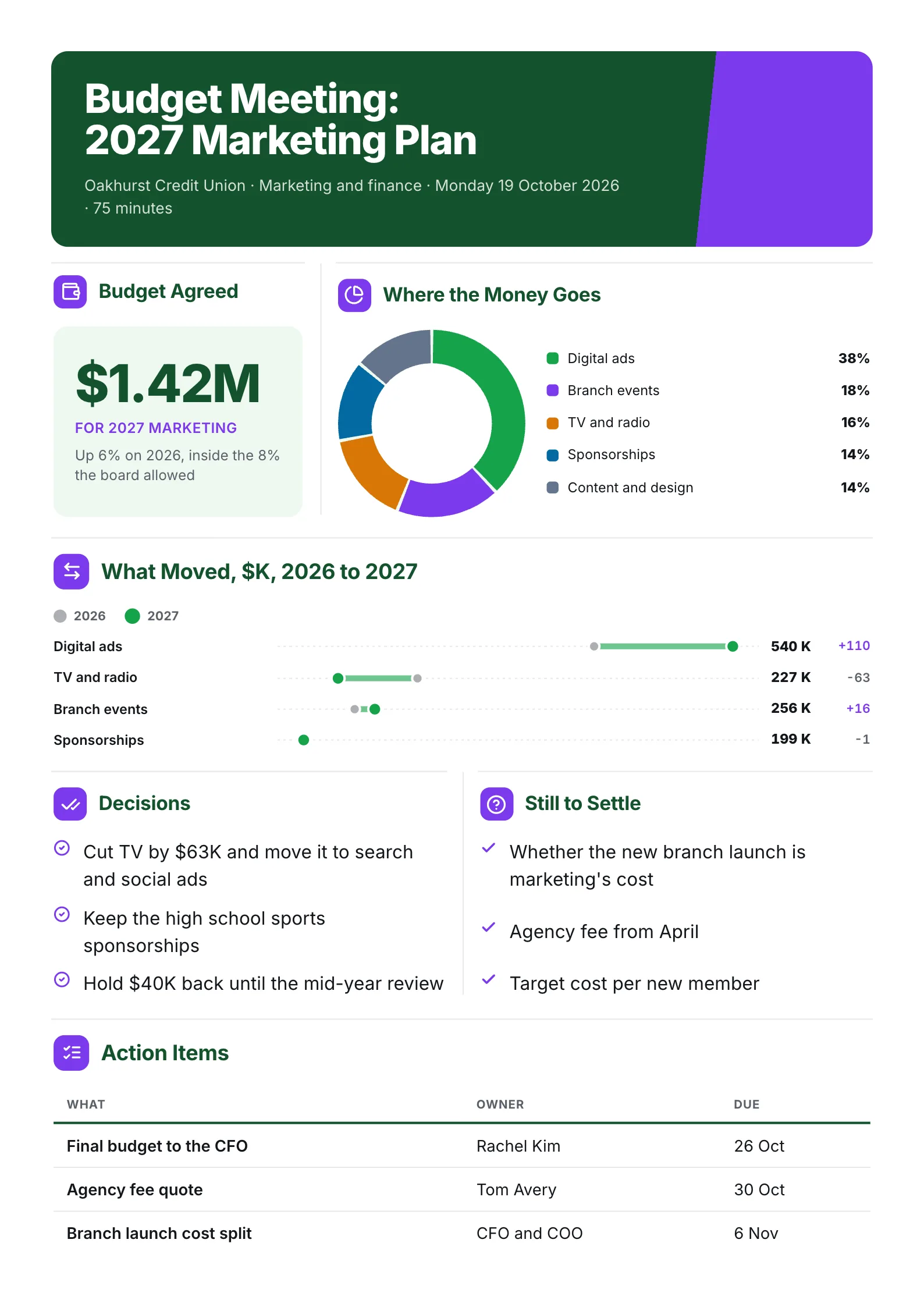
Decisions and "Still to Settle" sit side by side, so the $40,000 held back isn't mistaken for spent.
Part 3: Who does what by when
UC San Diego's template asks you to begin each task with an action verb like "arrange" or "call," and to name a point person and a due date. Of everything on the page, that table is what people will come back to.
 Edit this template
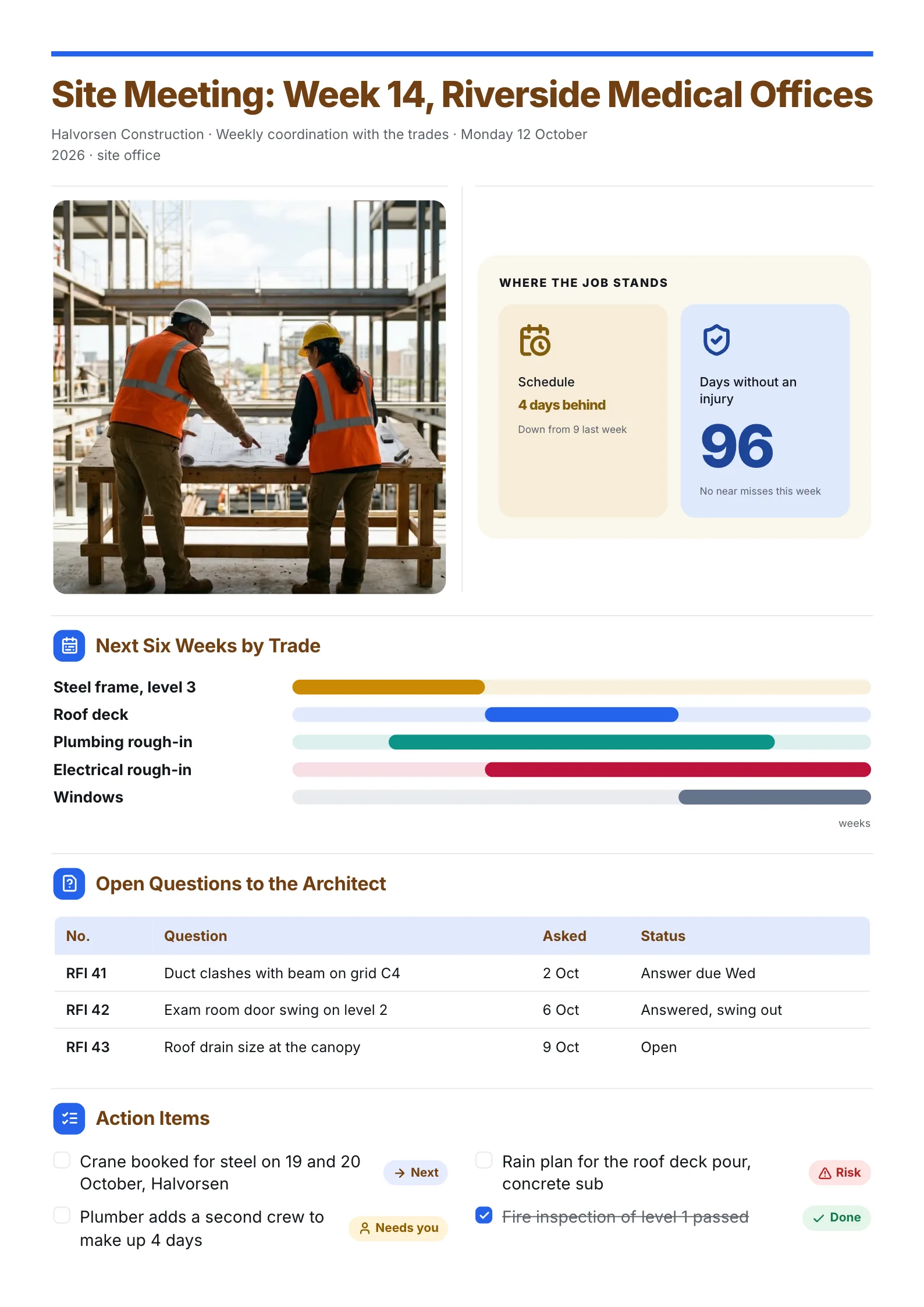
Open questions to the architect carry a number, a date asked and a status, so none gets lost between weeks.
Check last meeting's list before you write this one. Anything unfinished carries over with its owner, and UC San Diego gives those a table of their own for overdue tasks.
Part 4: When you meet next
End on the date, time and place, the way Tallapoosa does. If it's not confirmed, UC San Diego suggests giving approximate timing, and that's better than leaving it blank.
When your meeting was mostly announcements
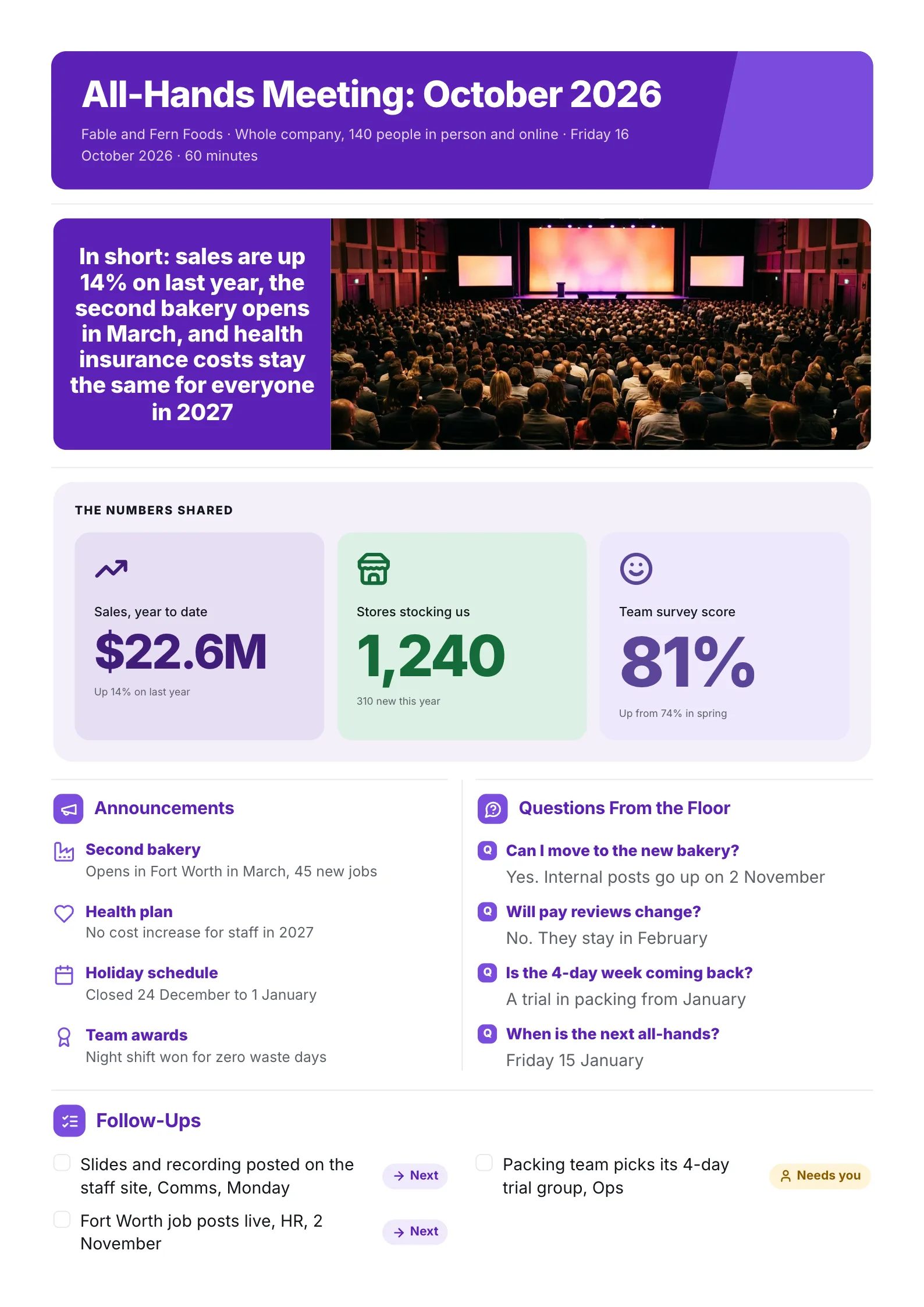
Some meetings have few decisions. Lead with a one-line "in short," then add your numbers and announcements below it.
 Edit this template
"In short" gives everyone the three headlines, and people who skipped the meeting may read only that line.
A short format you can copy
Here's the plain text version, ready to paste into an email:
Group, date with year, attendees
Decided: one sentence per decision, with a Still open line for each unsettled question
Tasks: action, owner, due date
Next meeting: day, time and place.
Our guide on how to write a meeting summary covers note taking, and the template guide has filled examples.
Frequently asked questions
How is a summary different from minutes?
Minutes are a formal record, often with rules your board must follow. A summary is shorter and tells people what to do. A public body might publish both, as many councils do, so check your rules first.
How soon should you send a meeting summary?
Send yours the same day when you can, while your people still remember and before anyone starts on the wrong task.
What should a meeting summary include?
Who met and when, what was decided, who does what by when and the next meeting date. Add a line for anything you left undecided.




