BlogGuide
Legislative One‑Pager: What 11 Real Hill One‑Pagers Have in Common, and a Template
We read 11 real legislative one-pagers and a state guide. Every one had a direct ask and a named contact. Plus a legislative one pager template.

By MakeOnepagers Team
Updated · 10 min read
A legislative one-pager is a single page you hand to a lawmaker or their staff to win support for a bill or an issue. It names the bill, states the problem with a number, says what the bill would do and why it matters, asks for one specific action, and gives a name and phone number to follow up with. Staff read it after the meeting, often alone, so it has to make the case without you in the room.
One‑Pager examples
Real One-Pagers made with MakeOnepagers. Open any one to edit it as your own.
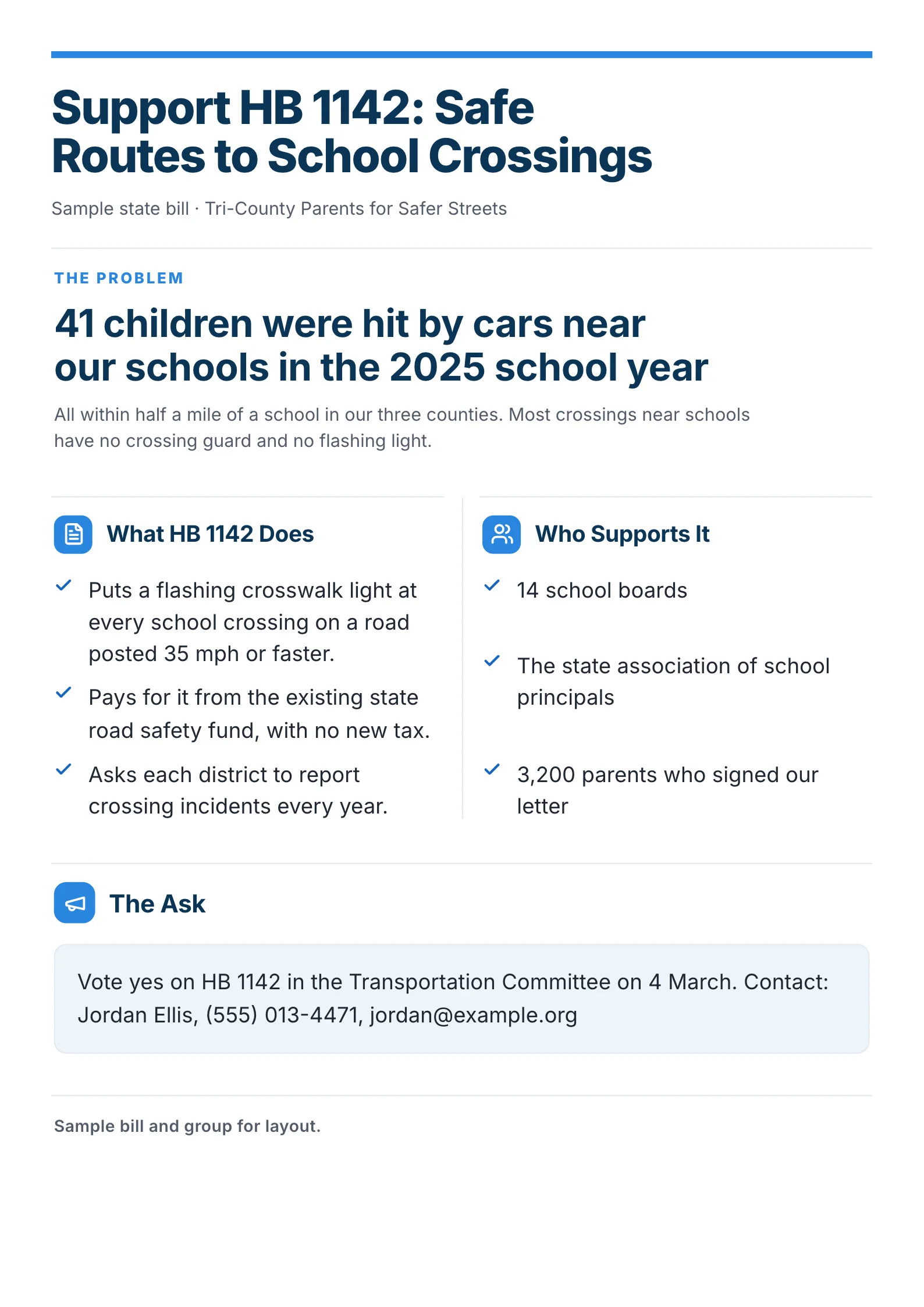 Legislative One-PagerEdit for free(opens in a new tab)
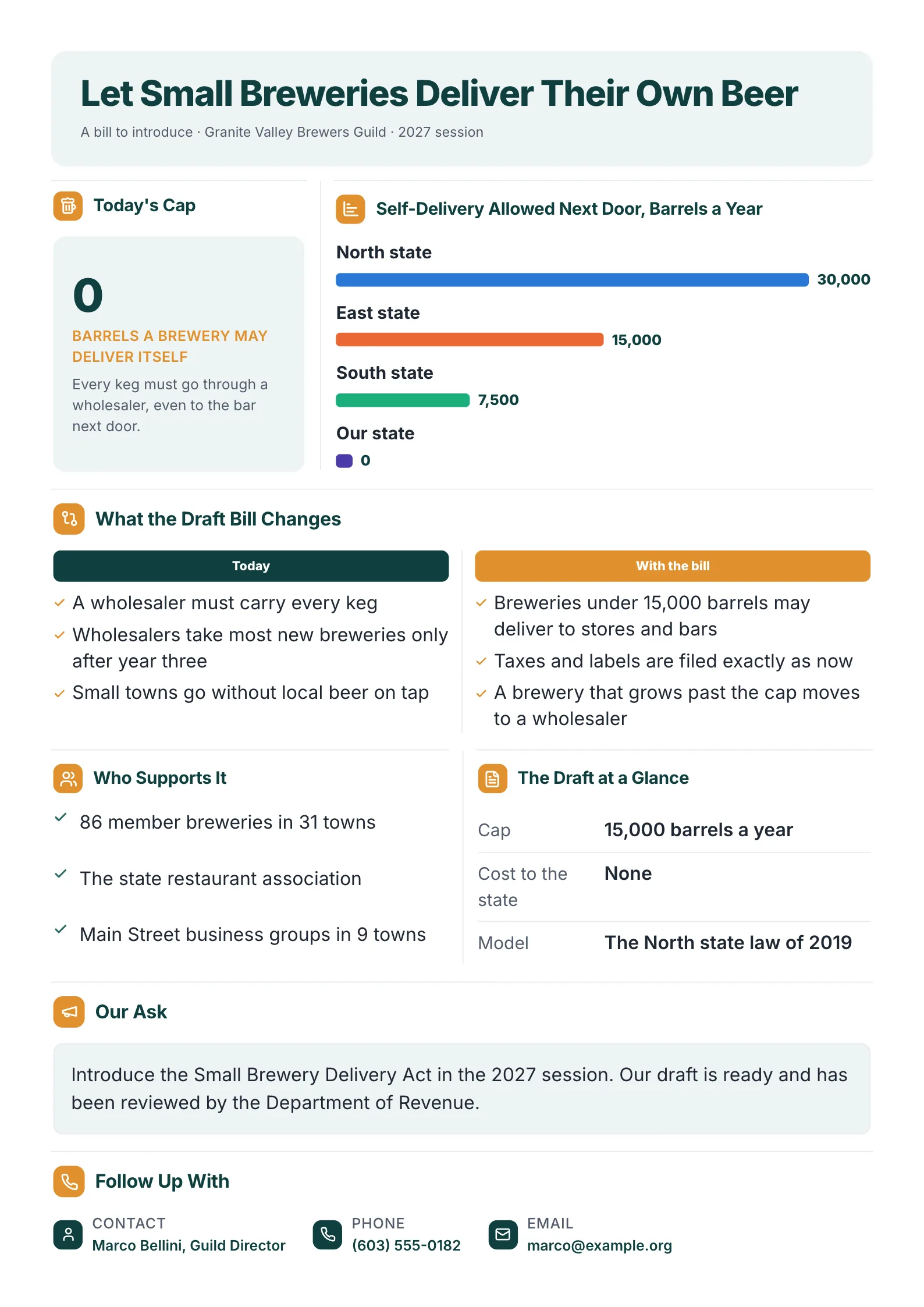 Legislative Brief: Brewery Self-DistributionEdit for free(opens in a new tab)
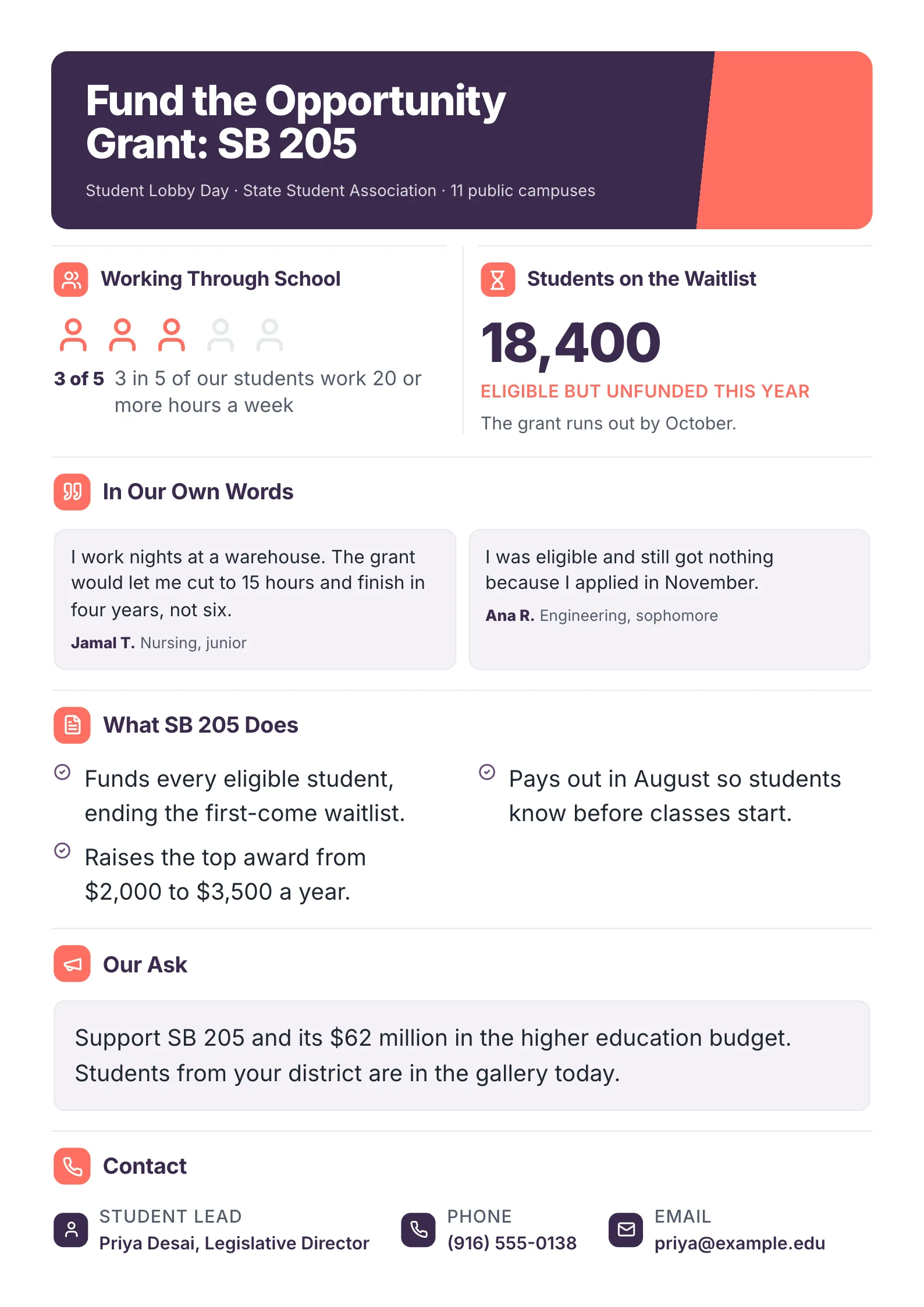 Legislative Brief: State Need-Based GrantEdit for free(opens in a new tab)
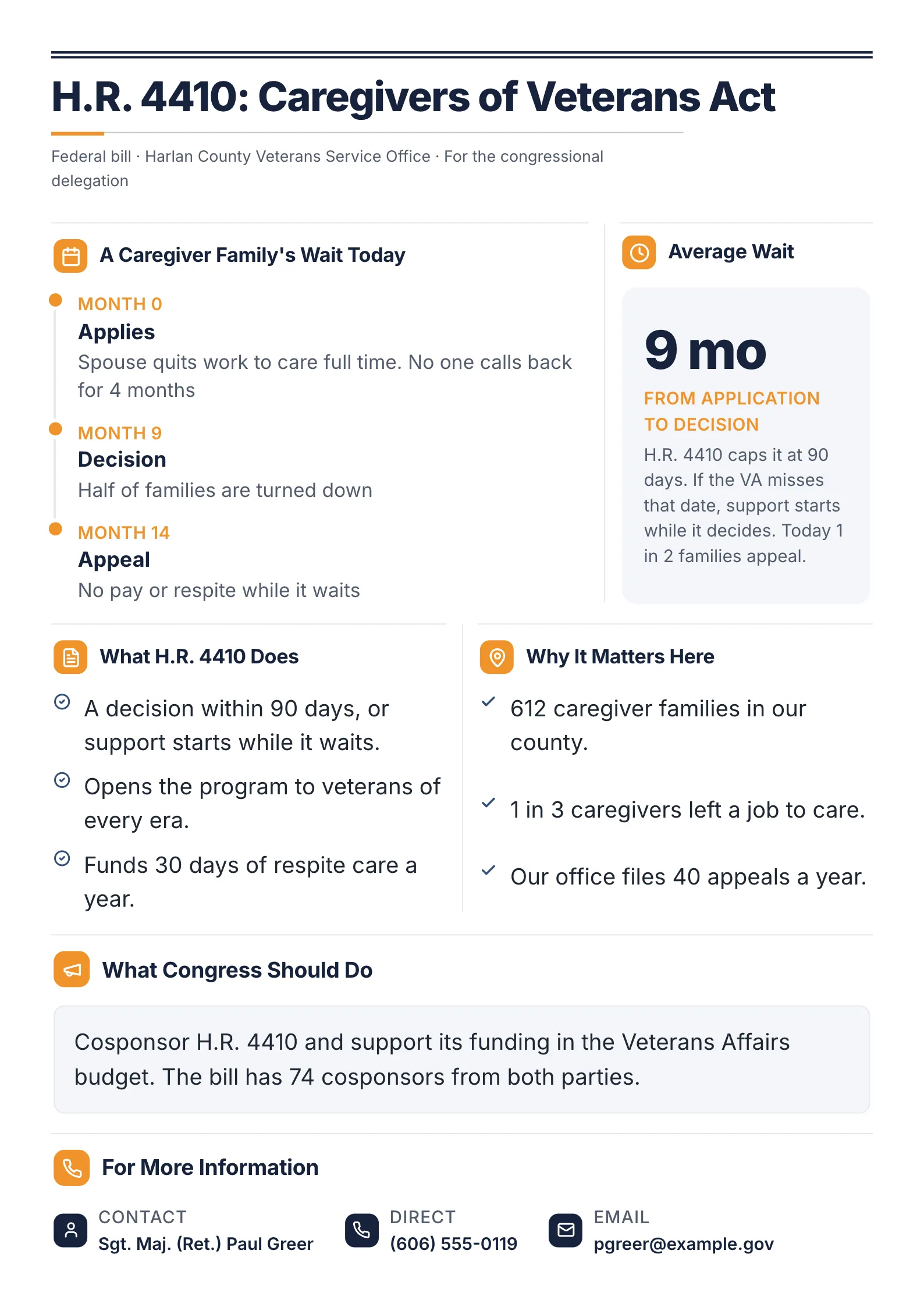 Legislative Brief: Veteran Caregiver SupportEdit for free(opens in a new tab)
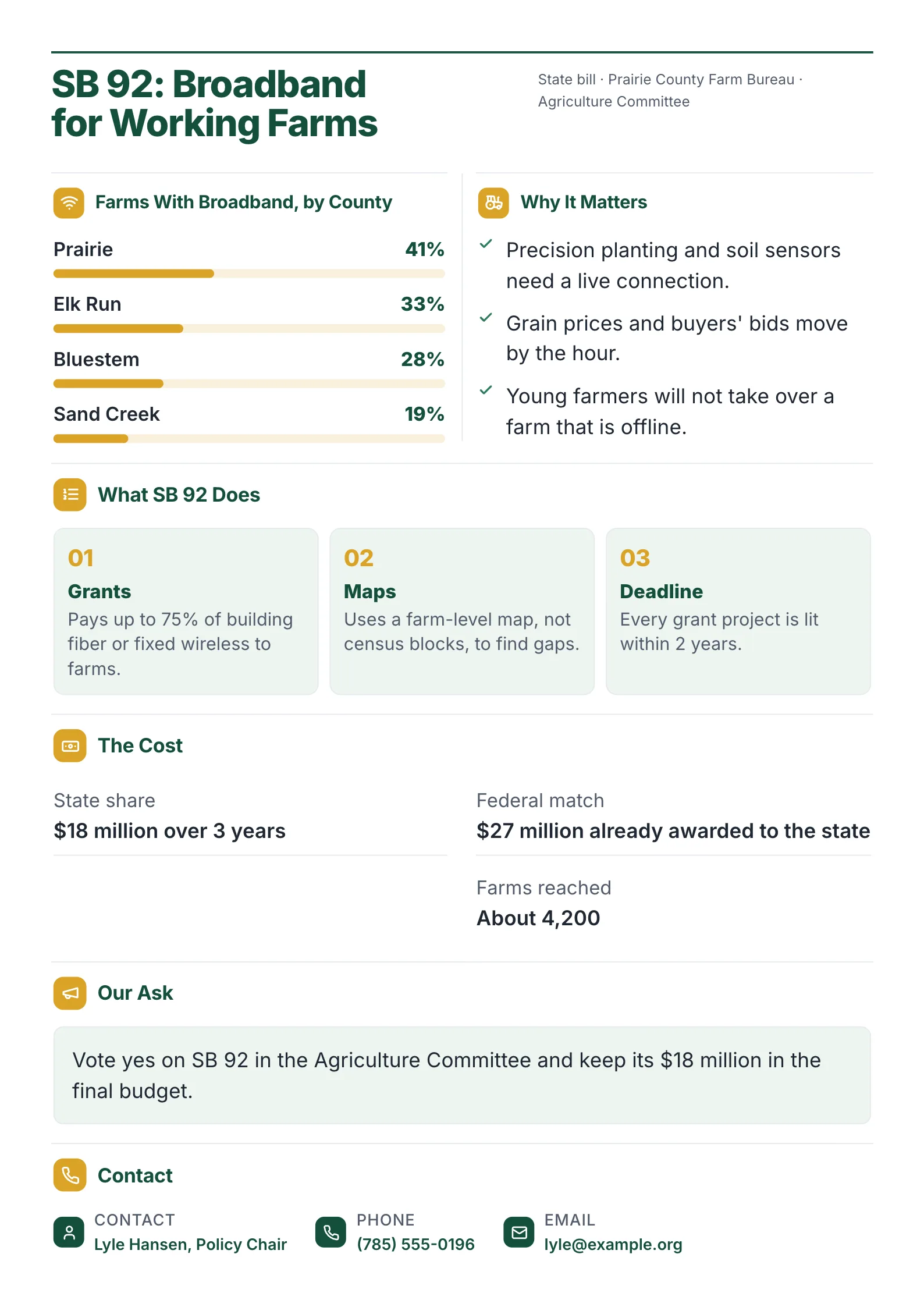 Legislative Brief: Broadband for FarmsEdit for free(opens in a new tab)
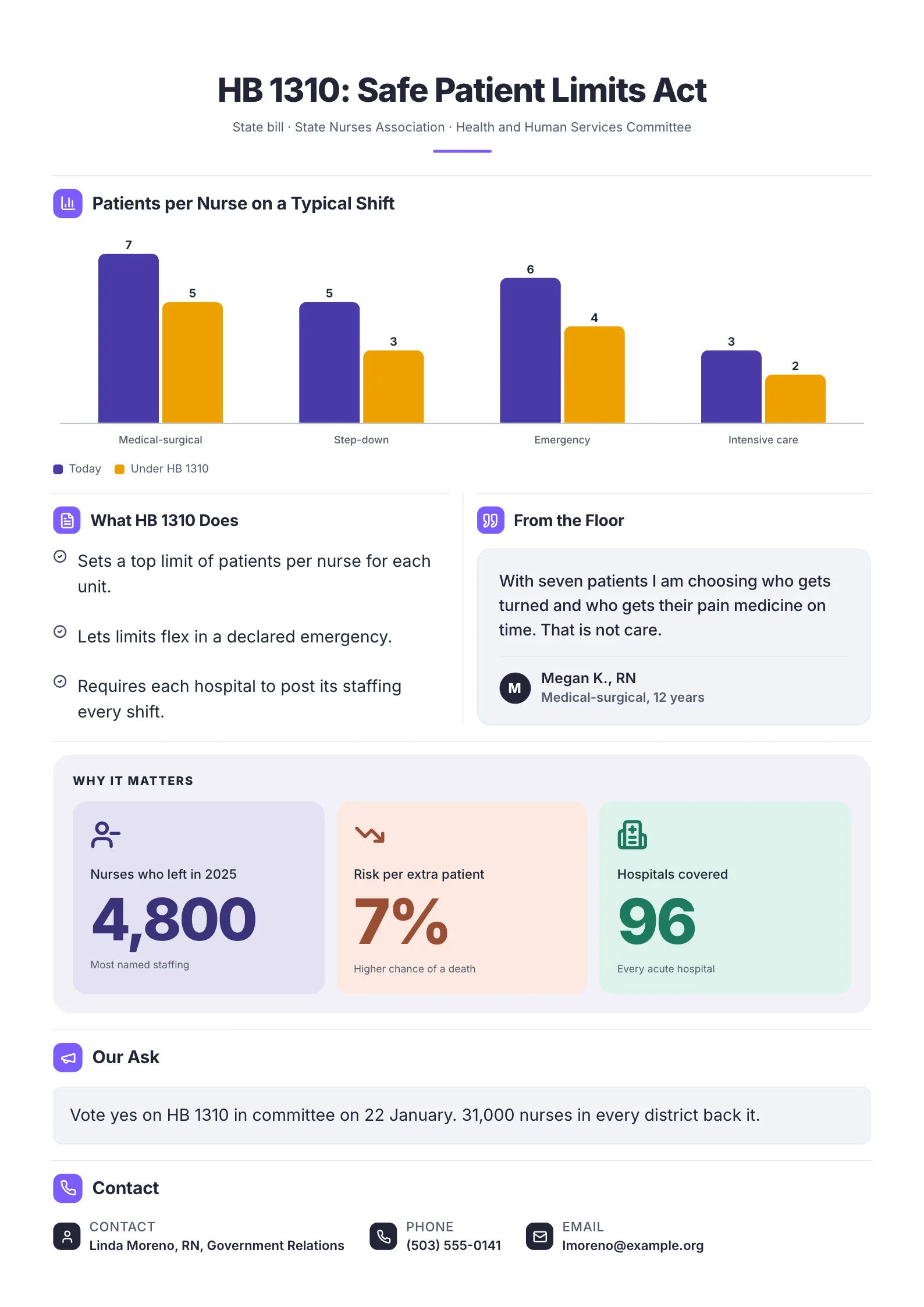 Legislative Brief: Safe Nurse StaffingEdit for free(opens in a new tab)
To show what that looks like in practice, we read 11 real one-pagers that a national medical association, the American Academy of Orthopaedic Surgeons (AAOS), published for its meetings with members of Congress, and the one-pager outline a state legislature gives to citizens. Below are what they share, a legislative one pager template, and an example laid out on one page.
What is a legislative one-pager?
It is the document left behind after a meeting with a legislator, which is why it is also called a leave-behind. It can support a bill already introduced, ask a lawmaker to introduce one, or explain an issue before any bill exists.
It is not a white paper or a fact sheet. A fact sheet informs; a legislative one-pager asks. Every part of it builds toward one request.
The official outline: one state legislature's version
Hawaii's Legislative Reference Bureau runs a Public Access Room that helps residents take part in lawmaking. Its One Pager for Legislators, dated April 2026, sets out six parts under a title of "Proposal for X":
| Part | What the outline asks for |
|---|---|
| Background | Who you are and what your organization does |
| The issue, problem or opportunity | A quick summary, legislation from other states, data; bullet points |
| The solution | The fix, and how the legislator can help |
| The ask | Exactly what you want: introduce or take a position on a bill, give feedback, suggest people to contact, sign a letter of support |
| Stakeholders and supporters | A list of who backs it |
| Contact info | So the legislator or staff can follow up |
The outline's line on the ask is the one most one-pagers miss: be specific about what you are asking the legislator to do.
What 11 real one-pagers have in common
We read 11 one-pagers AAOS posted for congressional offices, from 2018 and 2019, on topics from medical liability reform to student loan interest for residents.
| Feature | One-pagers | Detail |
|---|---|---|
| Fits on one page | 11 of 11 | 302 to 501 words, median 388 |
| Title is the bill or issue name | 11 of 11 | At the top, usually the act's full name |
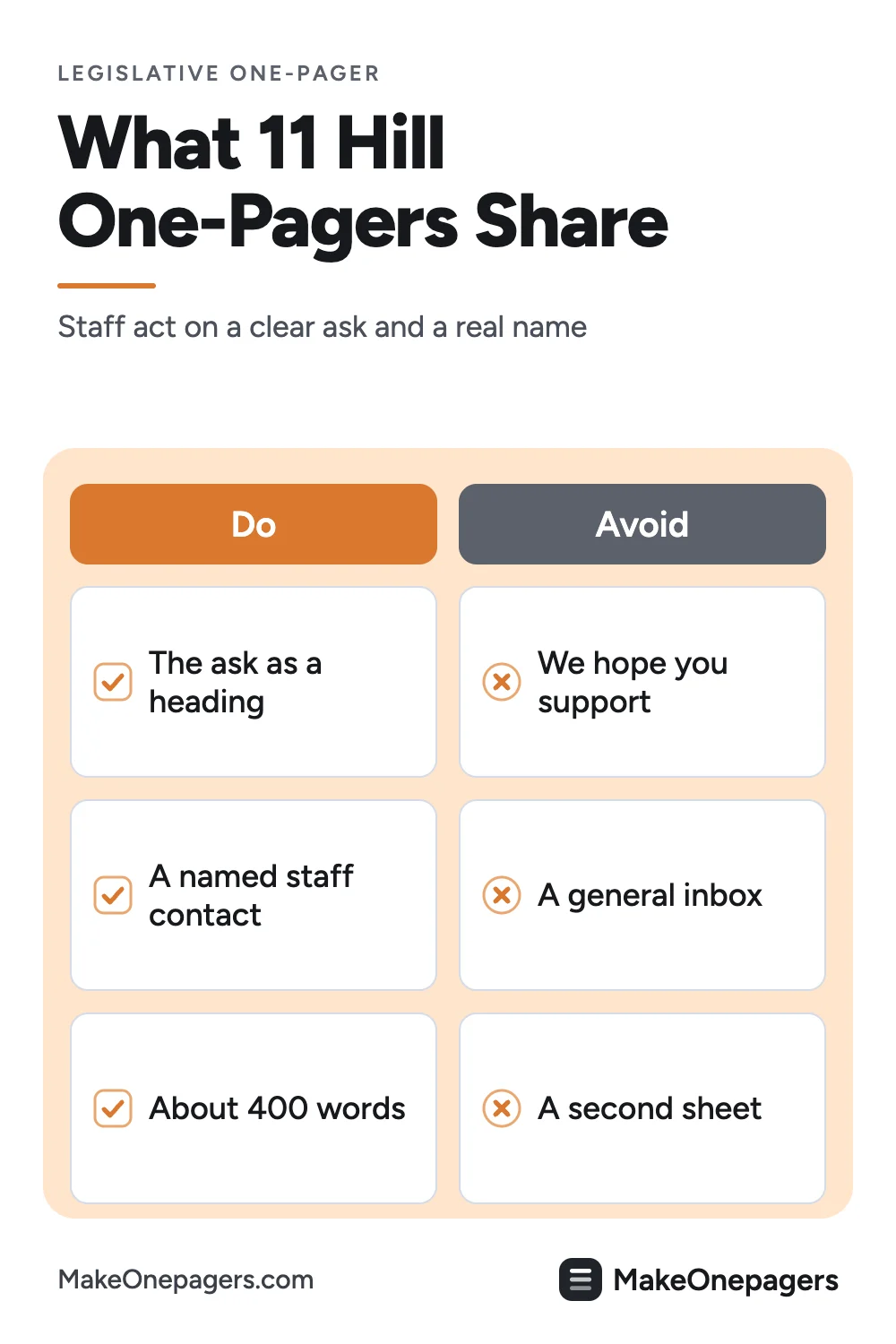
| A heading for the ask | 11 of 11 | 9 use "What Congress Should Do", 2 use "AAOS Recommends" |
| A named staff contact and direct phone | 11 of 11 | "For more information, contact" a named person, with a 202 number |
| Website and social handle in the footer | 11 of 11 | The same footer on every page |
| At least one bill number (H.R. or S.) | 7 of 11 | The other 4 are about issues, rules or payment cuts |
| At least one dollar or percent figure | 8 of 11 | Such as medical school debt and the cost of a payment cut |
| A "Why it matters" heading | 6 of 11 | Such as "Why the REDI Act Matters" |
What it shows:
- The ask is a heading, not a sentence buried in a paragraph. Every one of the 11 gives it its own heading, and 10 of them put it in the last fifth of the page, where the eye lands last.
- A person, not an inbox. Every page names a staff member and a direct phone number. Staff can call one person.
- About 400 words is enough. The longest page, on opioids, ran 501 words. None needed a second page.
- Bill numbers when there is a bill. 7 of 11 cite one; when the ask is to repeal a payment cut or change a rule, there may be none to cite.
Legislative one pager template
Copy this order. The word budgets follow the 11 pages above.
Title: the bill's name and number, or the issue in five words.
The problem (60 to 100 words)
- What is happening, to whom, with one or two numbers.
- Why now: a deadline, a vote, a change in law.
What the bill does (50 to 100 words)
- In plain words, not the bill's legal language.
- Who it helps and how.
Why it matters (60 to 120 words, or three bullets)
- The effect on the lawmaker's district or state if you can show it.
- Cost or savings, if known.
Supporters (one line)
- Other organizations, the bill's sponsors, or the number of cosponsors.
What we ask (one or two sentences, under its own heading)
- "Cosponsor H.R. 0000." "Vote yes on SB 00." "Include $X in the budget."
Contact: your name, role, phone and email.
A legislative one-pager laid out on one page
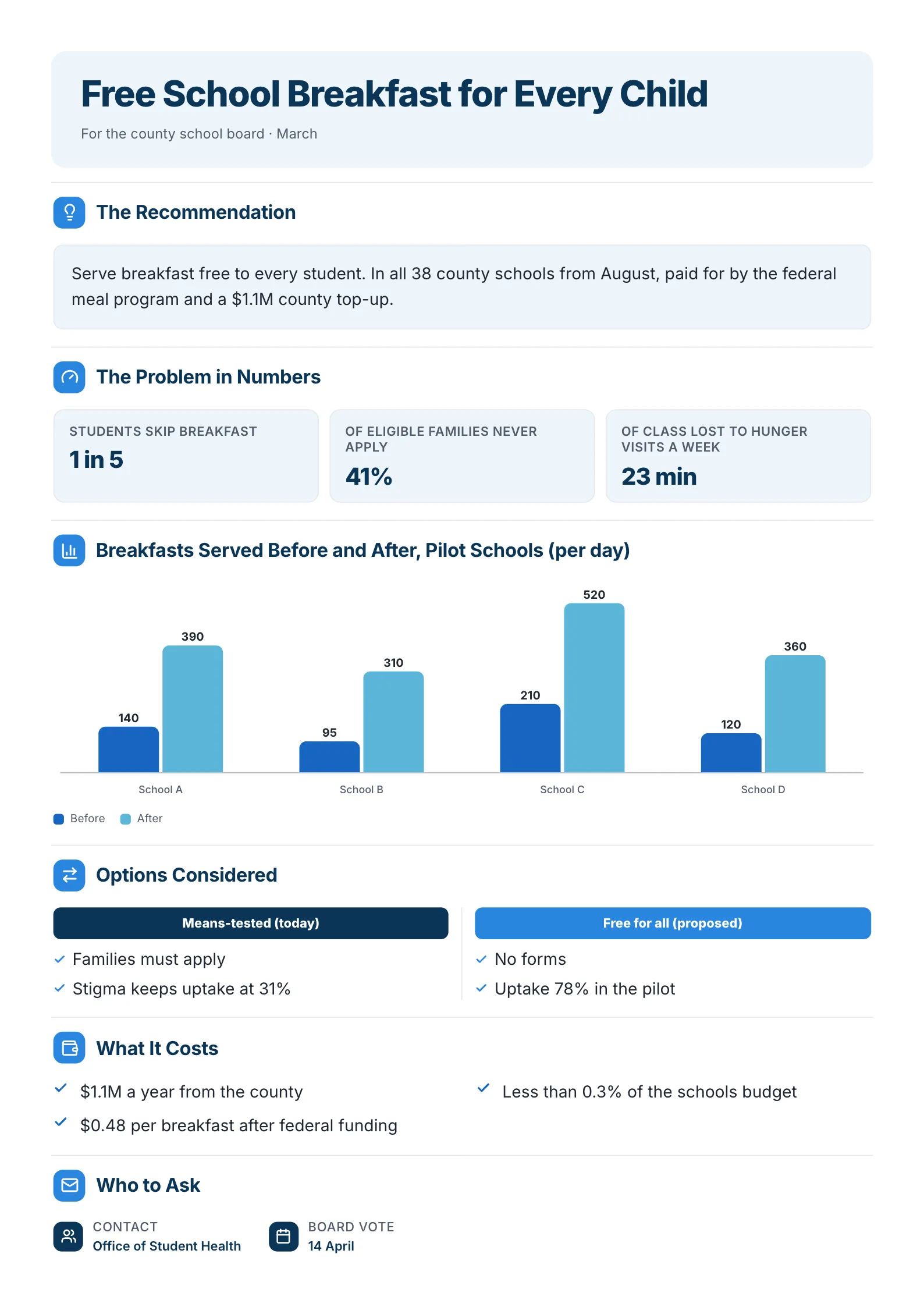
Text in that order works on letterhead. Laid out with big numbers and a chart, it is read faster. This sample was made with MakeOnepagers for a county school board, a local legislative body, and it opens ready to edit: every word, chart and color.
 Edit this template
The ask at the top, the problem in three numbers, one chart, the cost and the vote date.
What to copy:
- The ask first, in a box: serve breakfast free to every student in all 38 county schools from August, with how it is paid for.
- The problem as three numbers: 1 in 5 students skip breakfast, 41% of eligible families never apply, 23 minutes of class lost to hunger visits a week.
- One chart of the evidence: breakfasts served per day before and after in four pilot schools.
- Options considered: means-tested today against free for all, with uptake for each (31% against 78% in the pilot).
- What it costs and the vote date, because the decision has a date.
The real one-pagers above put the ask last. Both work; what matters is that the ask has its own heading and cannot be missed. For a lawmaker who already knows the issue, ask first.
Edit for free: policy brief template.
5 more legislative one-pager examples
Each one below asks for something different, from a different group, at a different level of government. All five keep the parts the 11 Hill pages share: the bill or issue as the title, a number for the problem, the ask under its own heading and a named contact with a phone number. Each was made with MakeOnepagers and opens ready to edit.
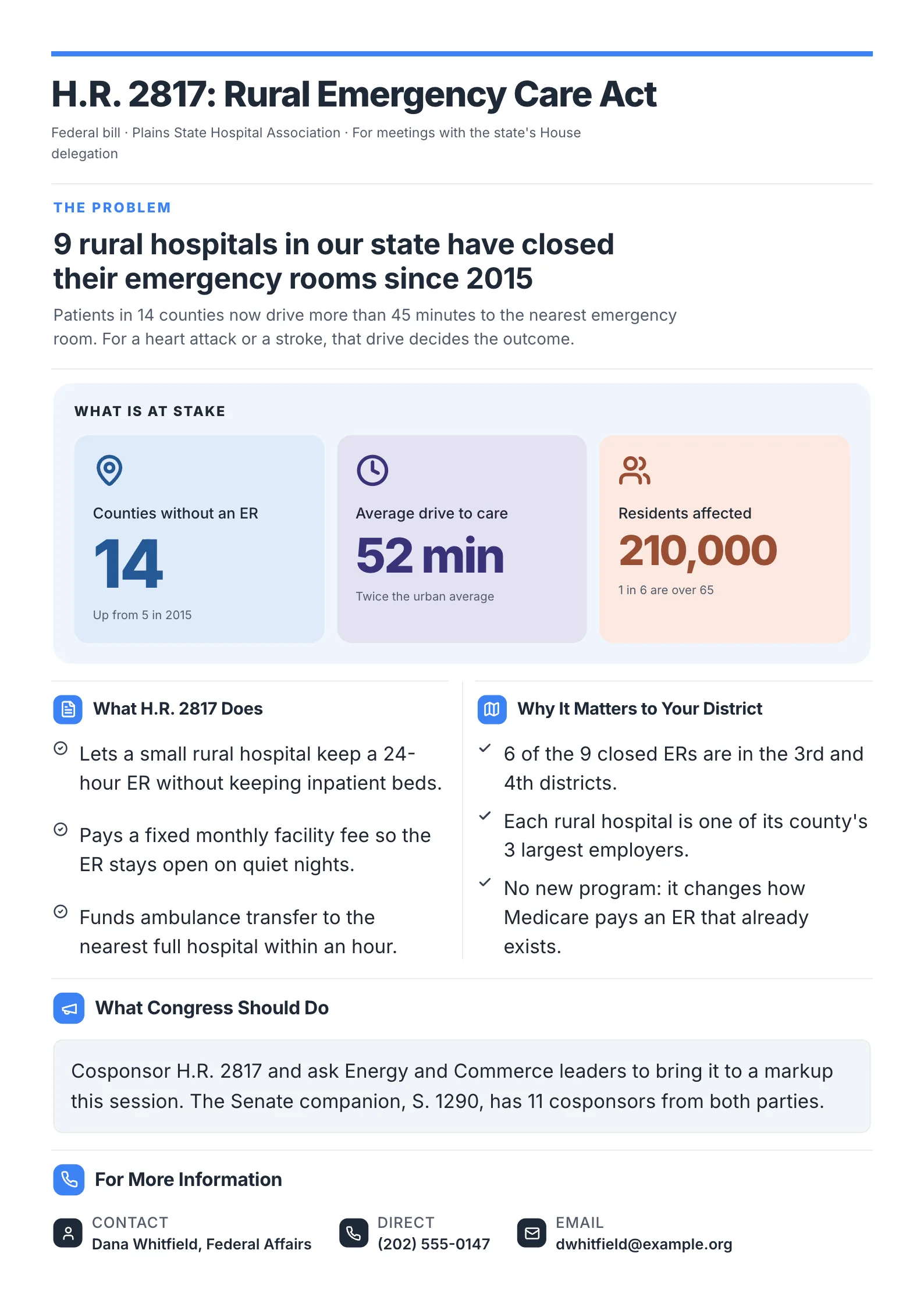
A federal bill: "What Congress Should Do"
 Edit this template
The AAOS pattern for a House office: the problem in one number, the district stakes, then "What Congress Should Do".
Edit for free: rural hospital legislative brief.
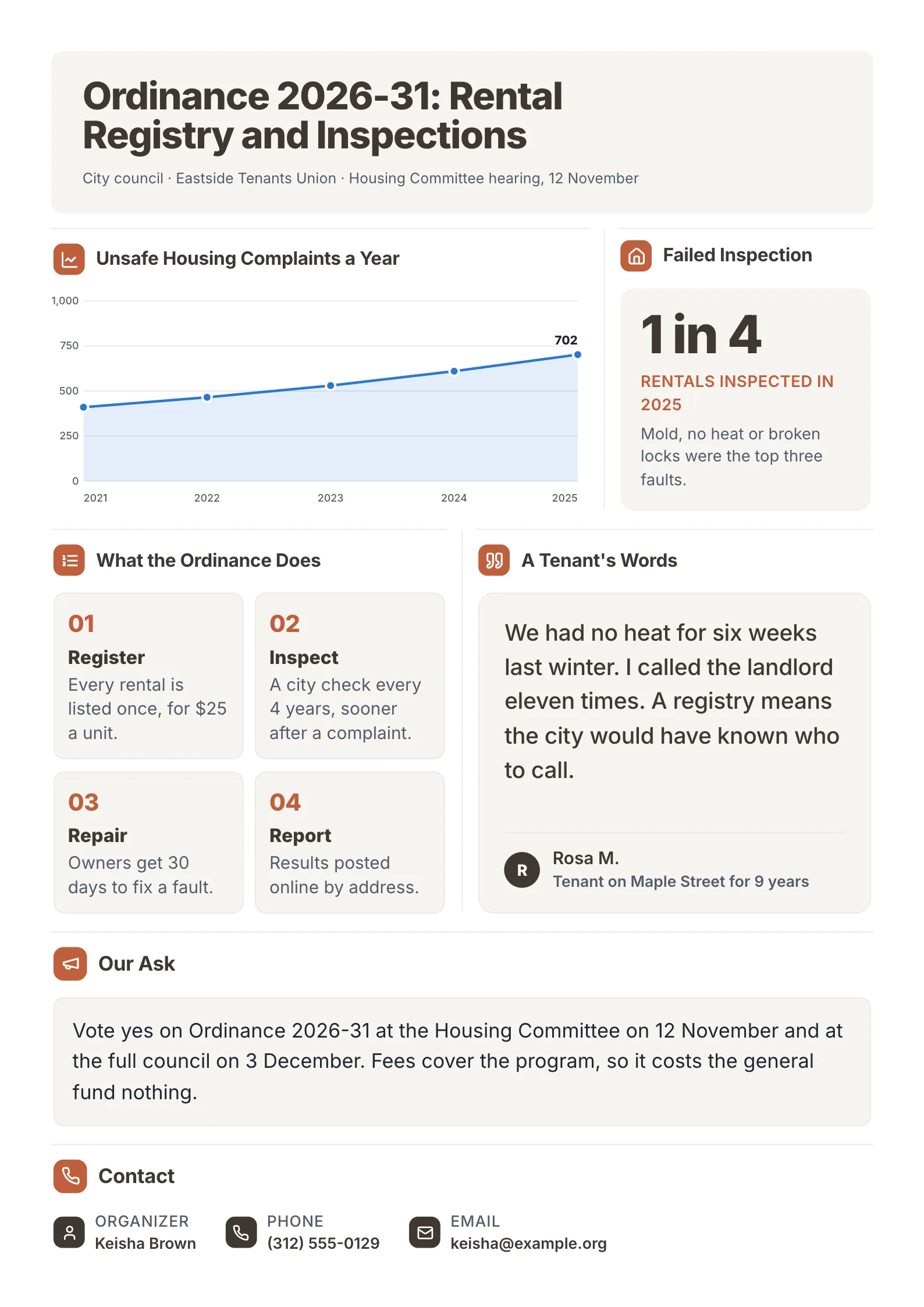
A city ordinance, with a resident's voice
 Edit this template
For a city council: the local trend as a chart, one tenant's words, and both the committee and the full council dates.
Edit for free: city rental registry legislative brief.
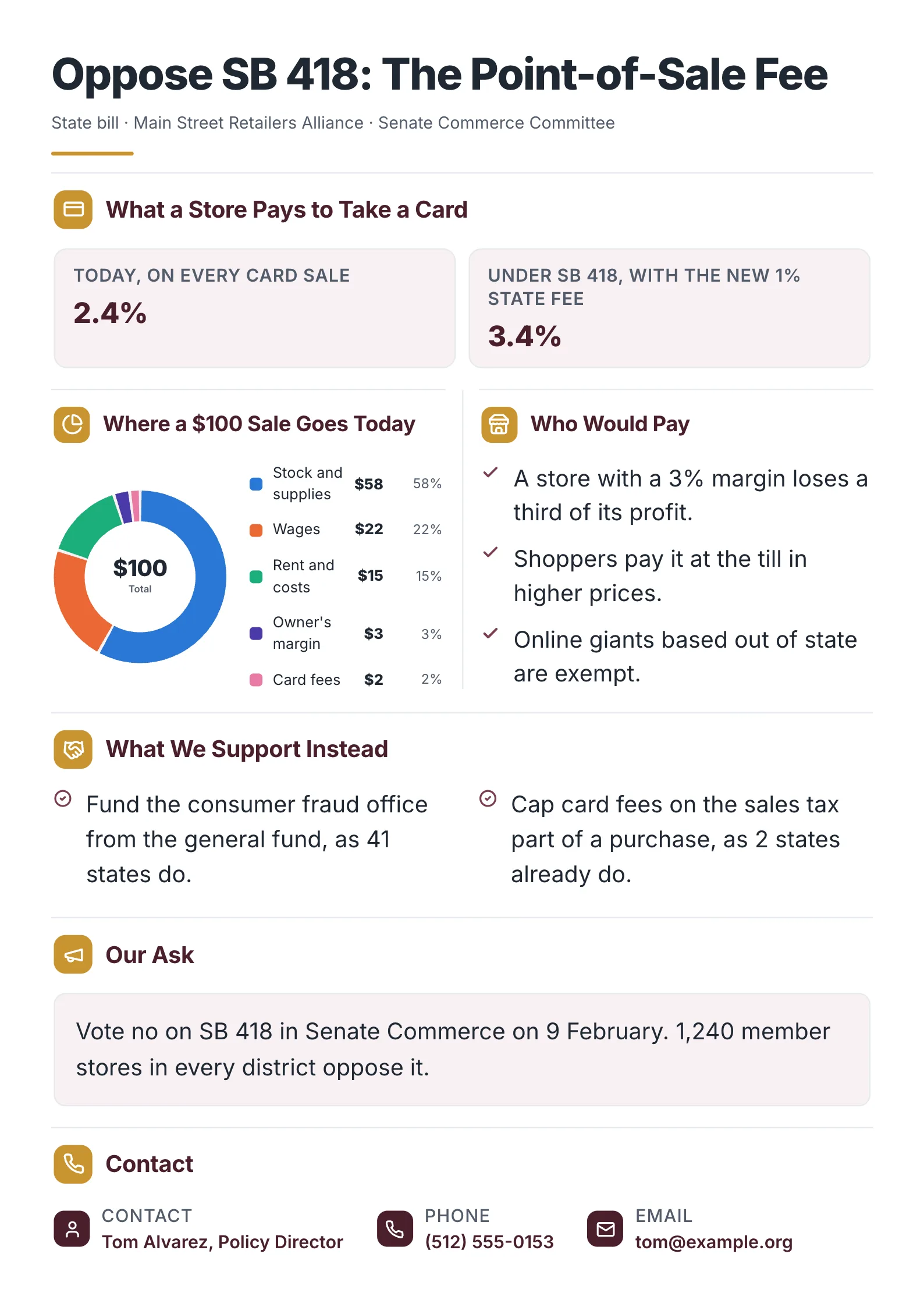
A vote no, with an alternative
 Edit this template
Opposing a bill works best when the page also says what you would support instead.
Edit for free: vote no legislative brief.
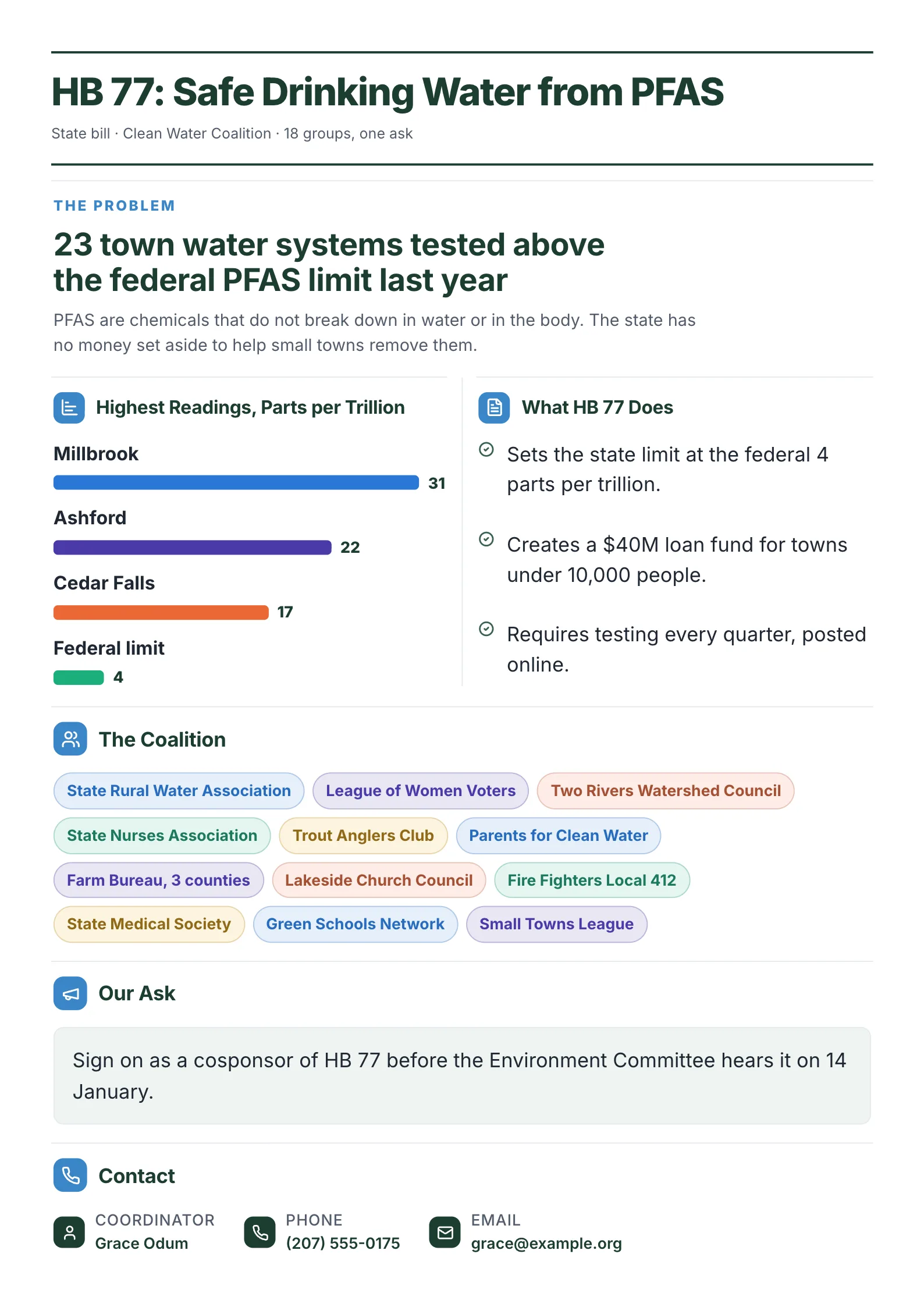
A coalition sign-on
 Edit this template
Hawaii's outline asks for stakeholders and supporters. When the list is the argument, give it its own block.
Edit for free: safe drinking water legislative brief.
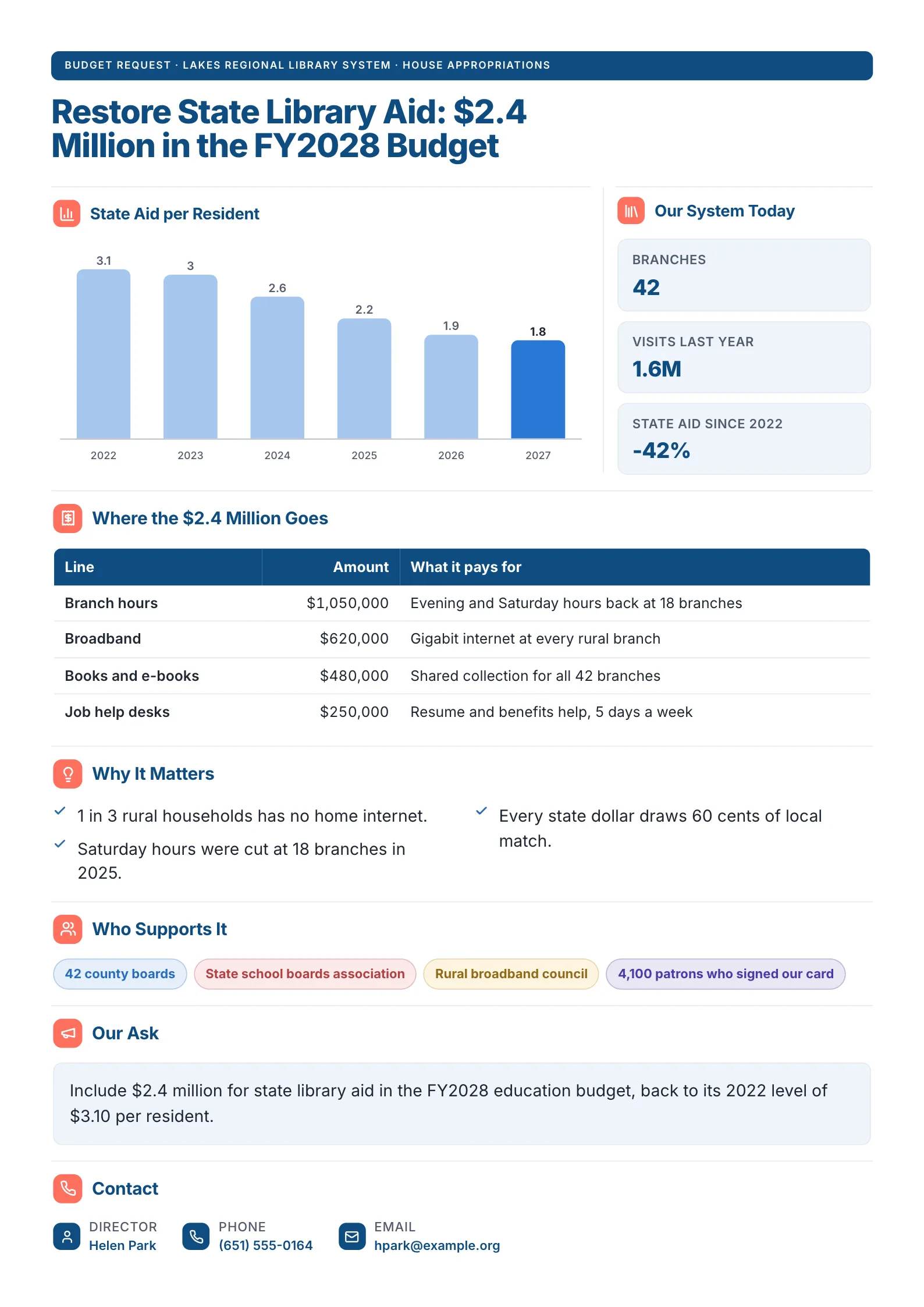
A budget request, line by line
 Edit this template
An appropriations ask names the amount in the title and shows where every dollar goes.
Edit for free: state budget request legislative brief.
How to write the ask
| Weak | Strong |
|---|---|
| We hope you will consider supporting this issue. | Cosponsor H.R. 5734, the REDI Act. |
| Please help rural hospitals. | Vote yes on [bill number] when it reaches the floor. |
| We need more funding. | Include $1.1M for school breakfast in the county budget. |
| Let us know your thoughts. | Meet with our clinic directors in your district this spring. |
One ask per page. If you have three bills, make three one-pagers.
Federal, state and local: what changes
| Level | Who reads it | What to adjust |
|---|---|---|
| Congress | Staff who cover dozens of issues | Bill number, the effect on the member's state or district, cosponsor count |
| State legislature | Members and committee staff, often part-time | Bill number, session deadlines, what other states have done (Hawaii's outline asks for it) |
| City council or school board | Members and the public | The local numbers, the cost to the local budget, the vote date |
Before and after the meeting
- Before: print several copies, one for each person in the room and one for the file. Bring a version with no internal notes.
- In the meeting: walk through it in the same order: the problem, the bill, why it matters, the ask.
- After: email it as a PDF with your thank-you note the same day, so staff can forward it.
- Later: if the bill changes number or status, update the page. A one-pager citing the last session's bill number looks out of date.
Legislative one-pager mistakes
- No ask, or a vague one. "We hope you will support this issue" gives staff nothing to act on.
- No contact person. A general inbox does not get a call back. All 11 pages above name a person.
- The bill's legal language. Say what it does in plain words; staff can read the bill.
- More than one page. None of the 11 needed two. If yours does, you are making two cases.
- No numbers. 8 of 11 used at least one dollar or percent figure. Use one wherever you have it.
Legislative one-pager checklist
- The bill name and number, or the issue, as the title
- The problem with at least one number
- What the bill does, in plain words
- Why it matters to this lawmaker's district or state
- Supporters or cosponsors
- One specific ask, under its own heading
- A named contact with phone and email
- One page, about 300 to 500 words
Make your legislative one-pager
Open the free policy brief template, put your ask in the box at the top, your three strongest numbers under it, and your name and phone at the bottom, then download it as a PDF to print and to email after the meeting.
Frequently asked questions
What should a legislative one-pager include?
The bill or issue as the title, the problem with numbers, what the bill does, why it matters, supporters, one specific ask under its own heading, and a named contact. Hawaii's Legislative Reference Bureau outline uses background, the issue, the solution, the ask, supporters and contact information.
How long is a legislative one-pager?
One page. The 11 real one-pagers we read ran 302 to 501 words, with a median of 388.
What is the difference between a one-pager and a policy brief?
A legislative one-pager asks a specific lawmaker for a specific action. A policy brief can be longer and may inform without asking. In practice many advocates use a one-page policy brief layout for their one-pager.
Should I include the bill number?
Yes, whenever there is a bill. 7 of the 11 one-pagers we read cite at least one House or Senate bill number. If the ask is about a rule or a budget line, name that instead.
What is a leave-behind?
Another name for a legislative one-pager: the page you leave with the lawmaker or staff after a meeting so they have the case and your contact details.