An Incident Report Format That Changes Order With the Reader
An incident report format built from OSHA's Form 301 and a Florida school form: 7 blocks that repeat, with how the order changes for a family, an insurer or an engineer.

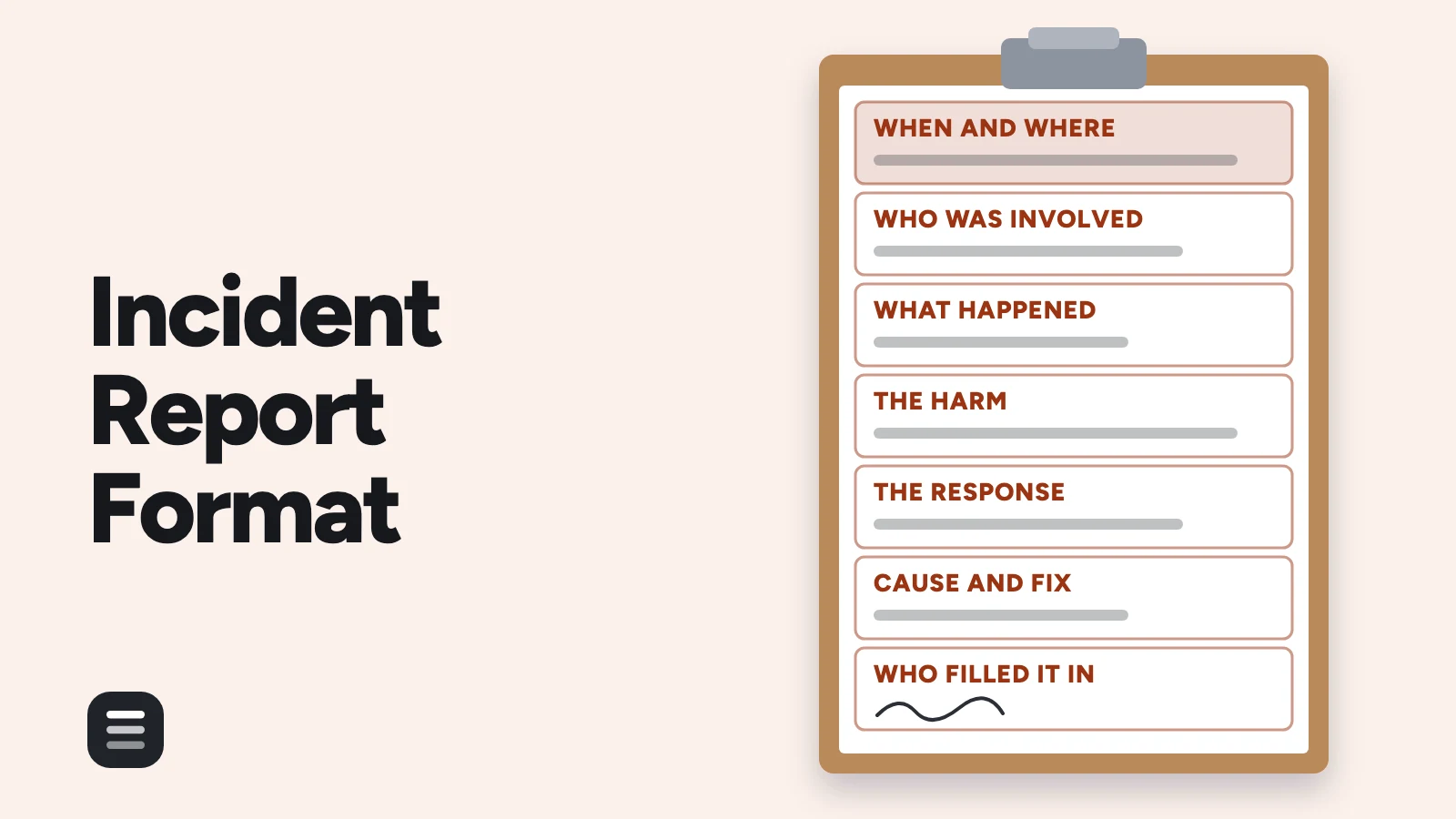
No single legal layout exists for an incident report format, and OSHA itself accepts substitutes for its own form. Under the federal rule, an "equivalent form" has to meet three conditions: it holds the same information, it's as readable and understandable, and it's completed using the same instructions as the OSHA form it replaces. So your layout has some room, as long as those three hold. Start from a free one pager template.
One‑Pager examples
Real One-Pagers made with MakeOnepagers. Open any one to edit it as your own.
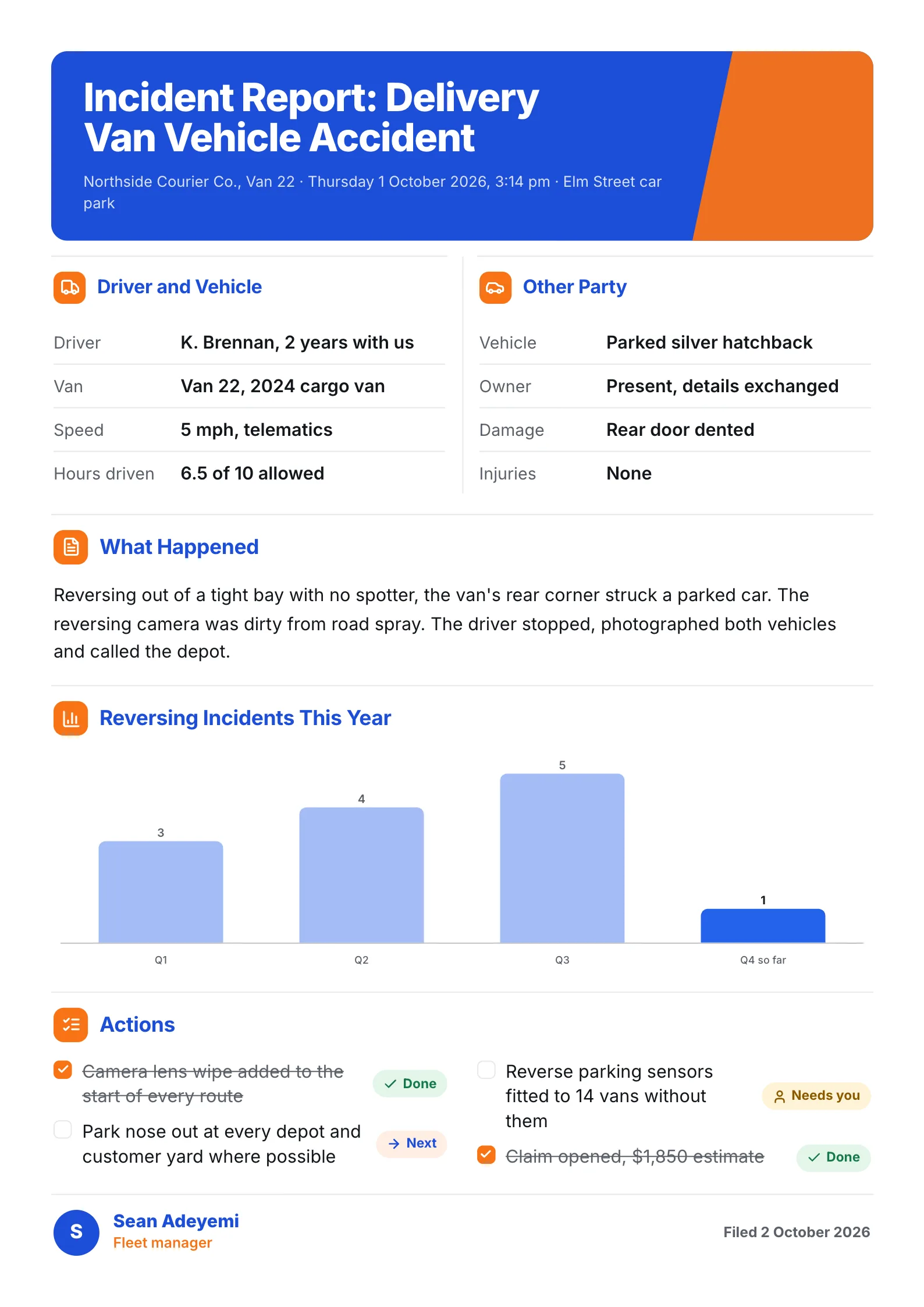 Incident Report: Delivery Van Vehicle AccidentEdit for free(opens in a new tab)
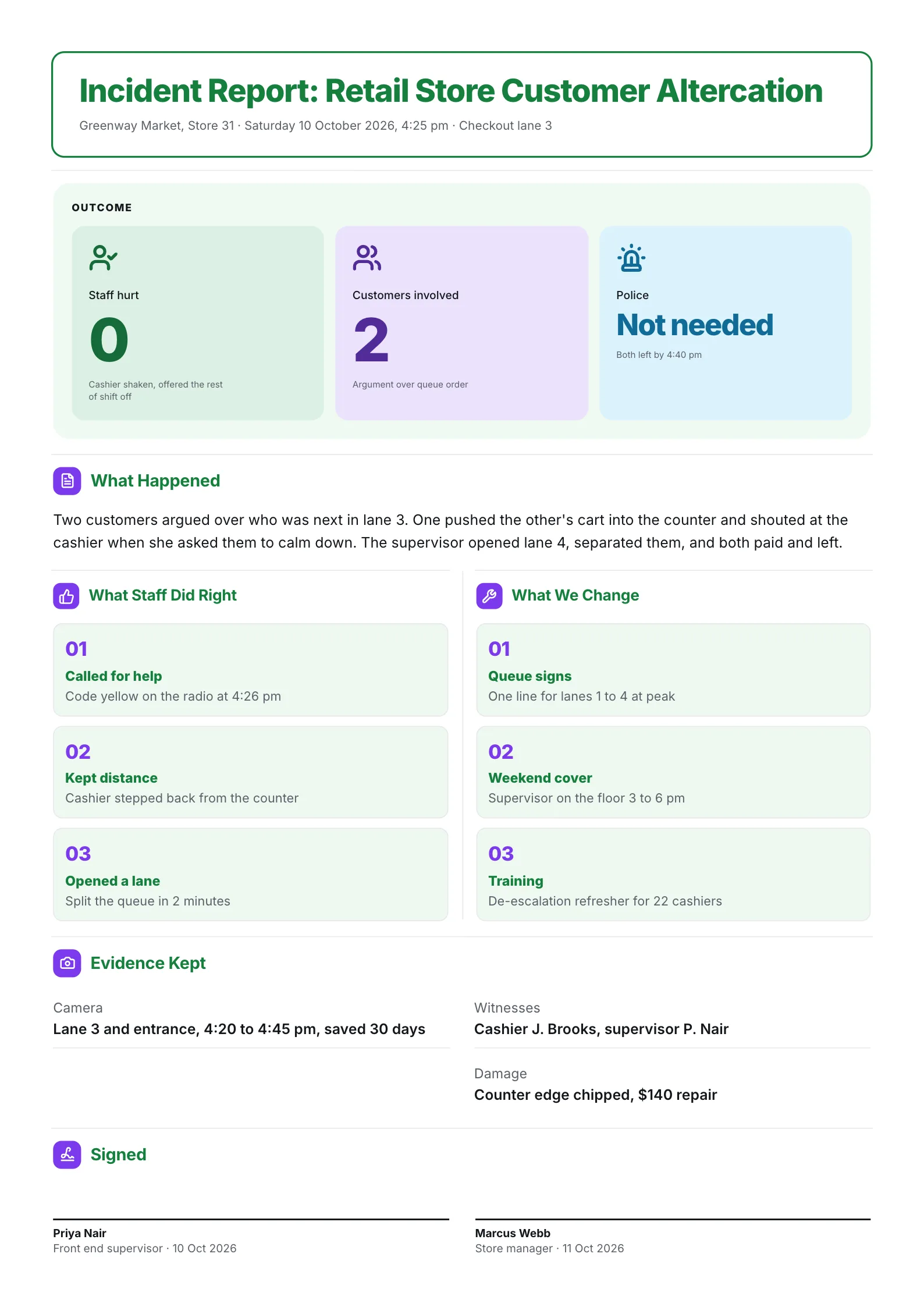 Incident Report: Retail Store Customer AltercationEdit for free(opens in a new tab)
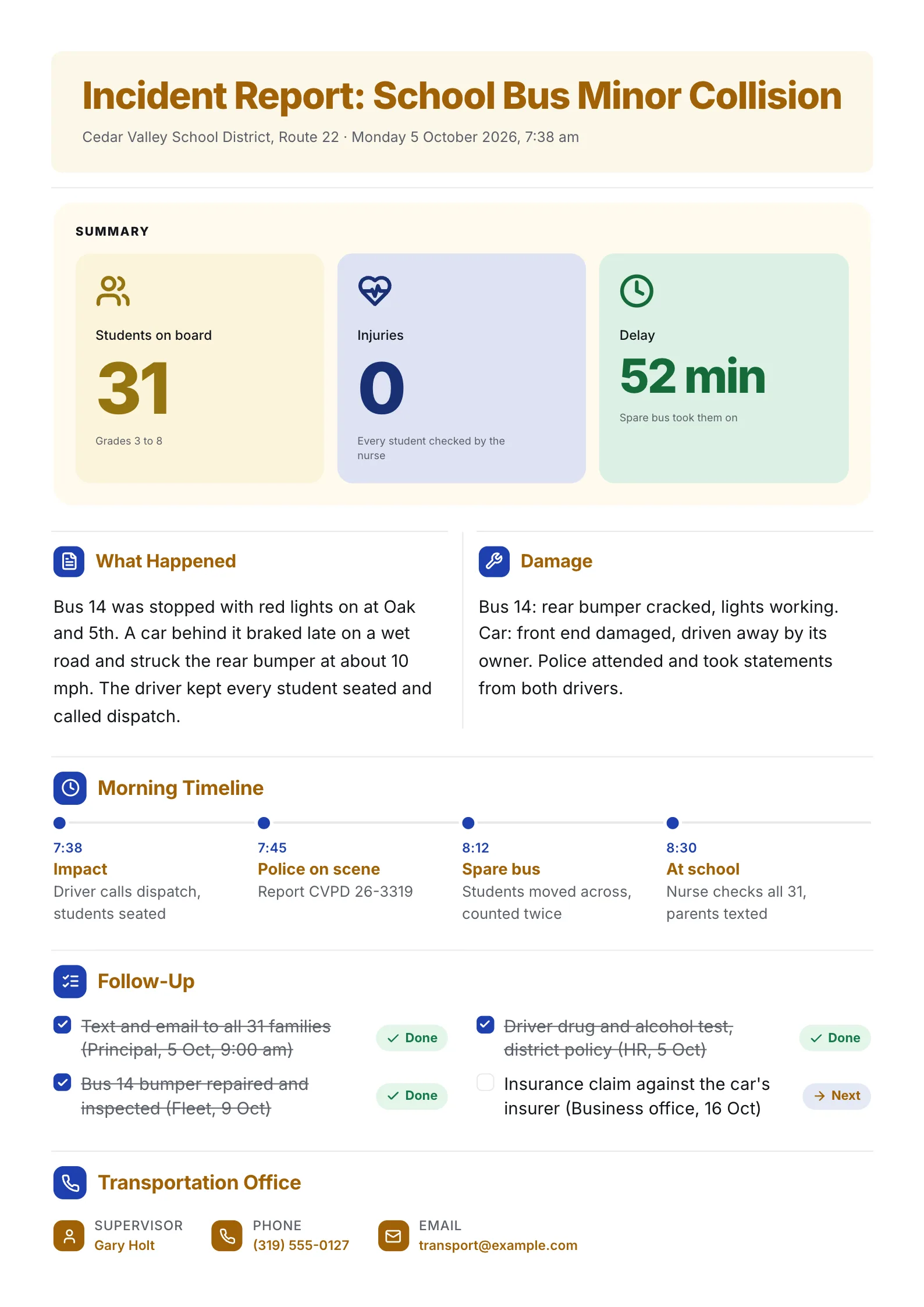 Incident Report: School Bus Minor CollisionEdit for free(opens in a new tab)
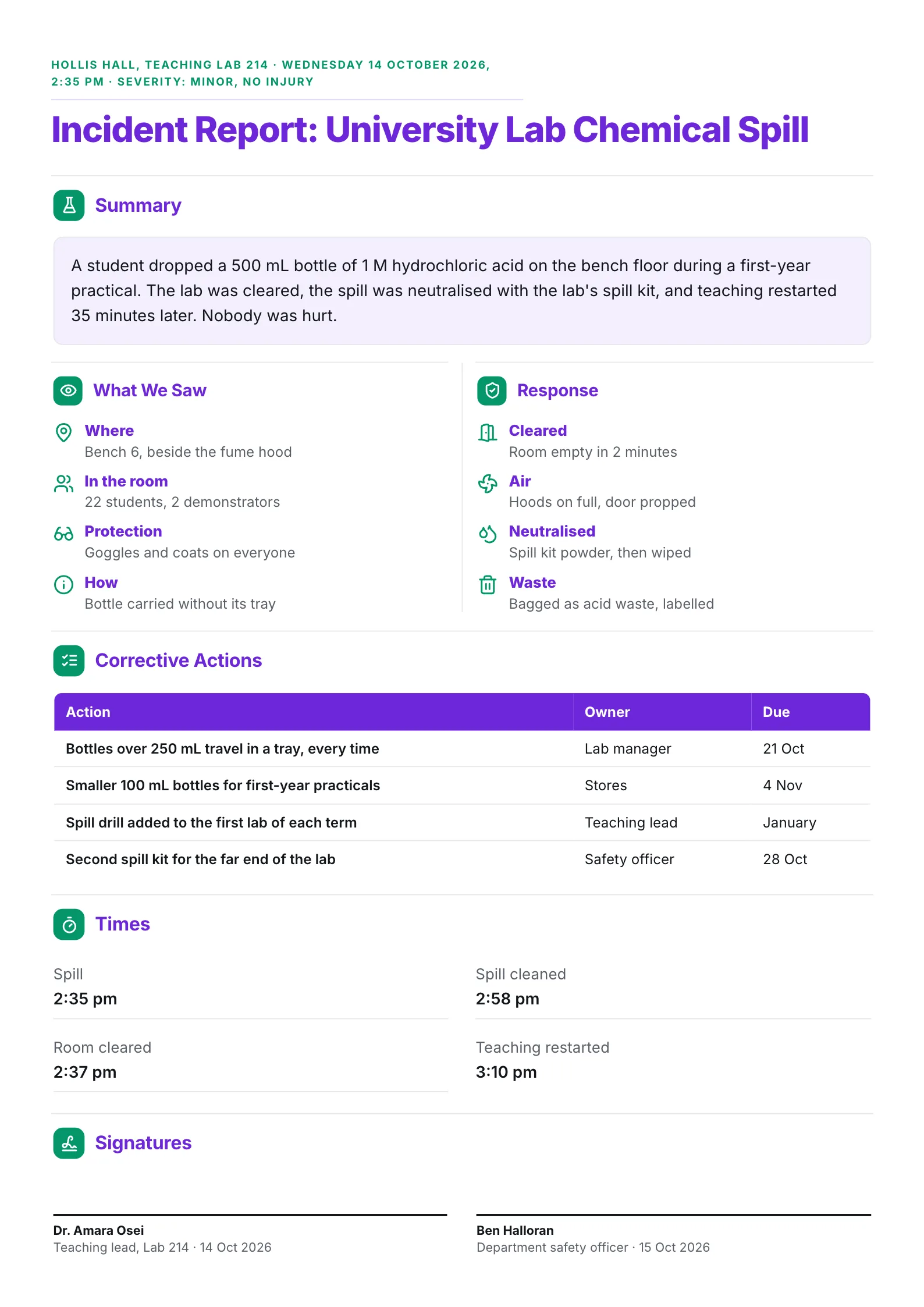 Incident Report: University Lab Chemical SpillEdit for free(opens in a new tab)
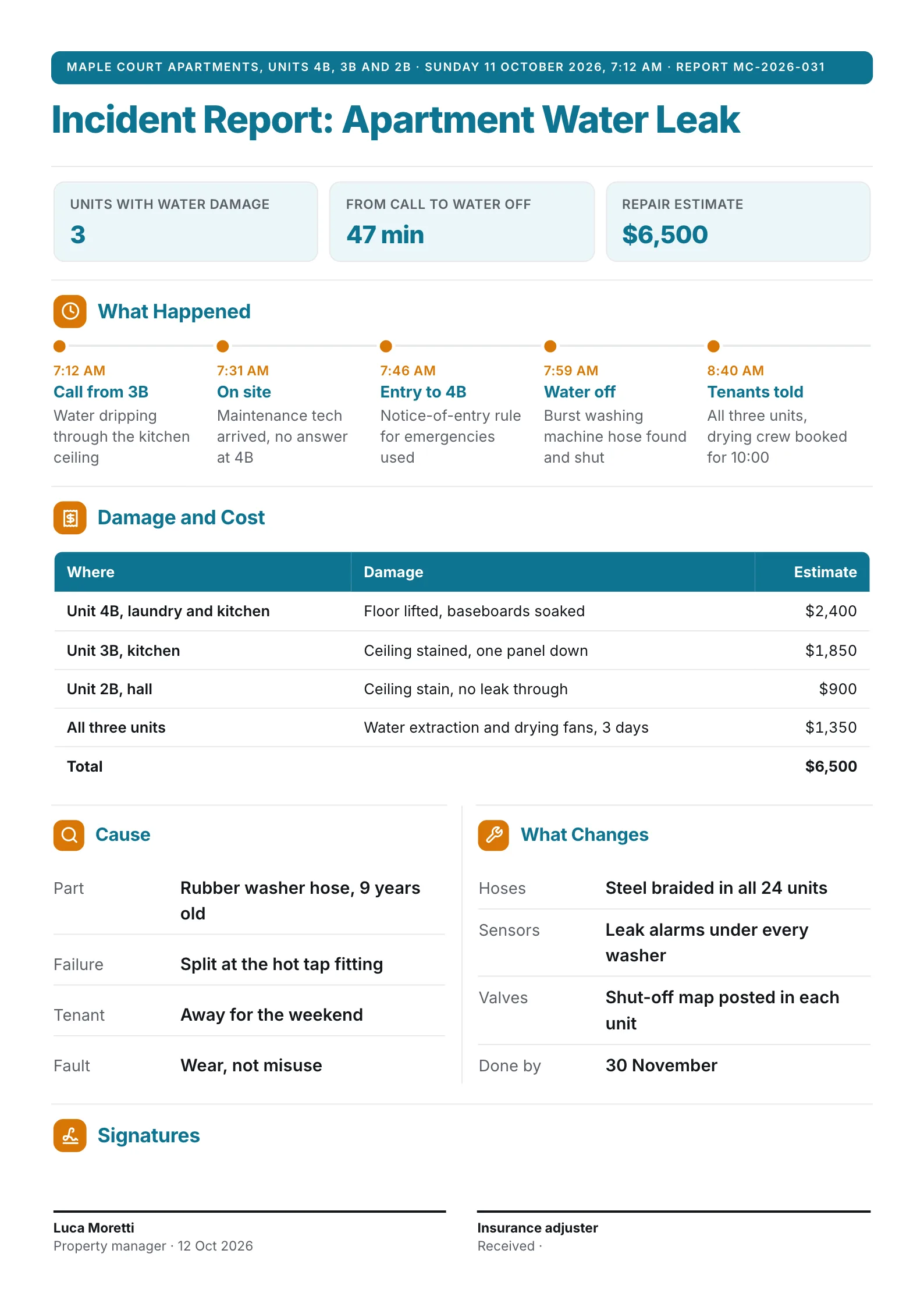 Incident Report: Apartment Building Water LeakEdit for free(opens in a new tab)
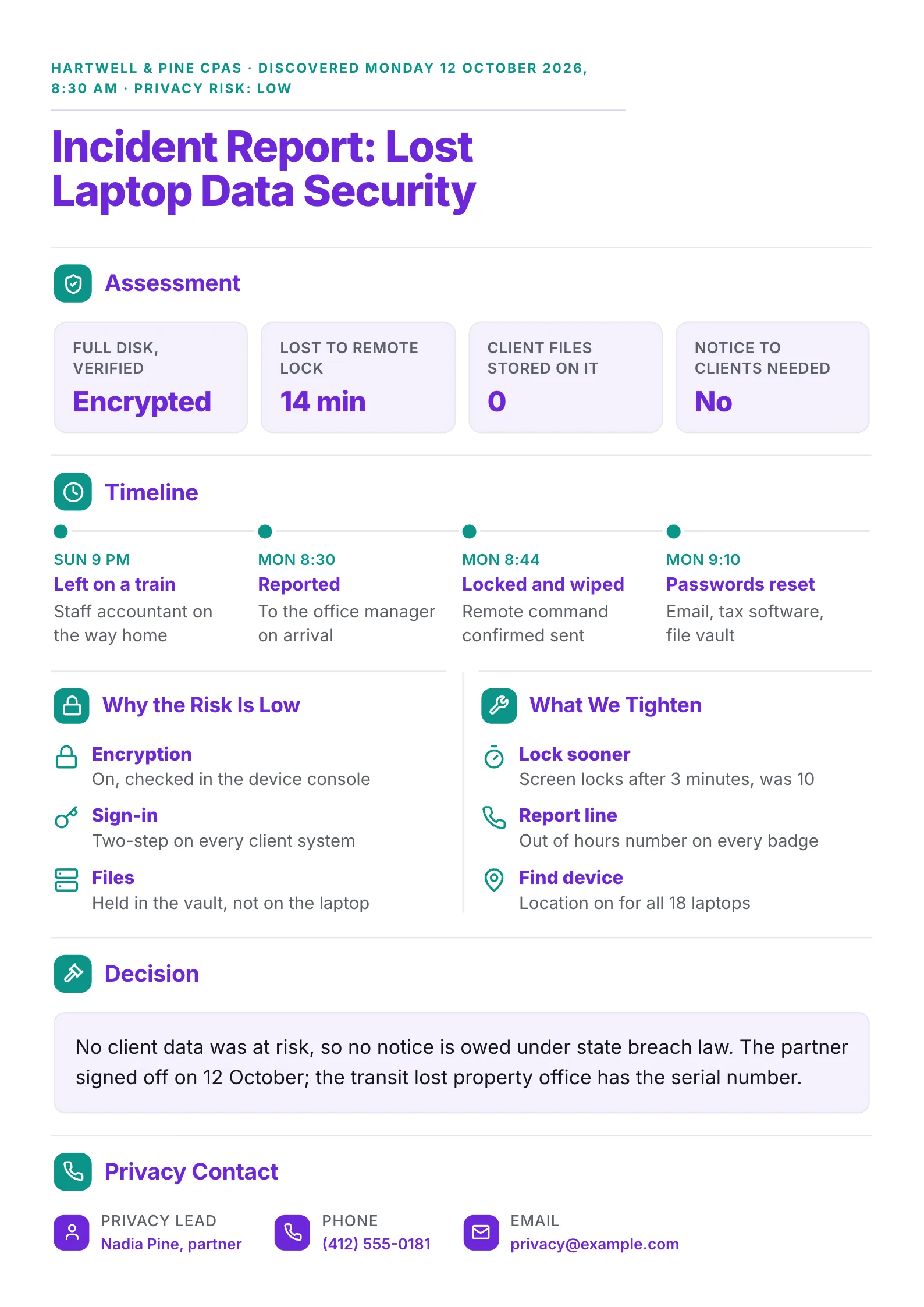 Incident Report: Lost Laptop Data SecurityEdit for free(opens in a new tab)
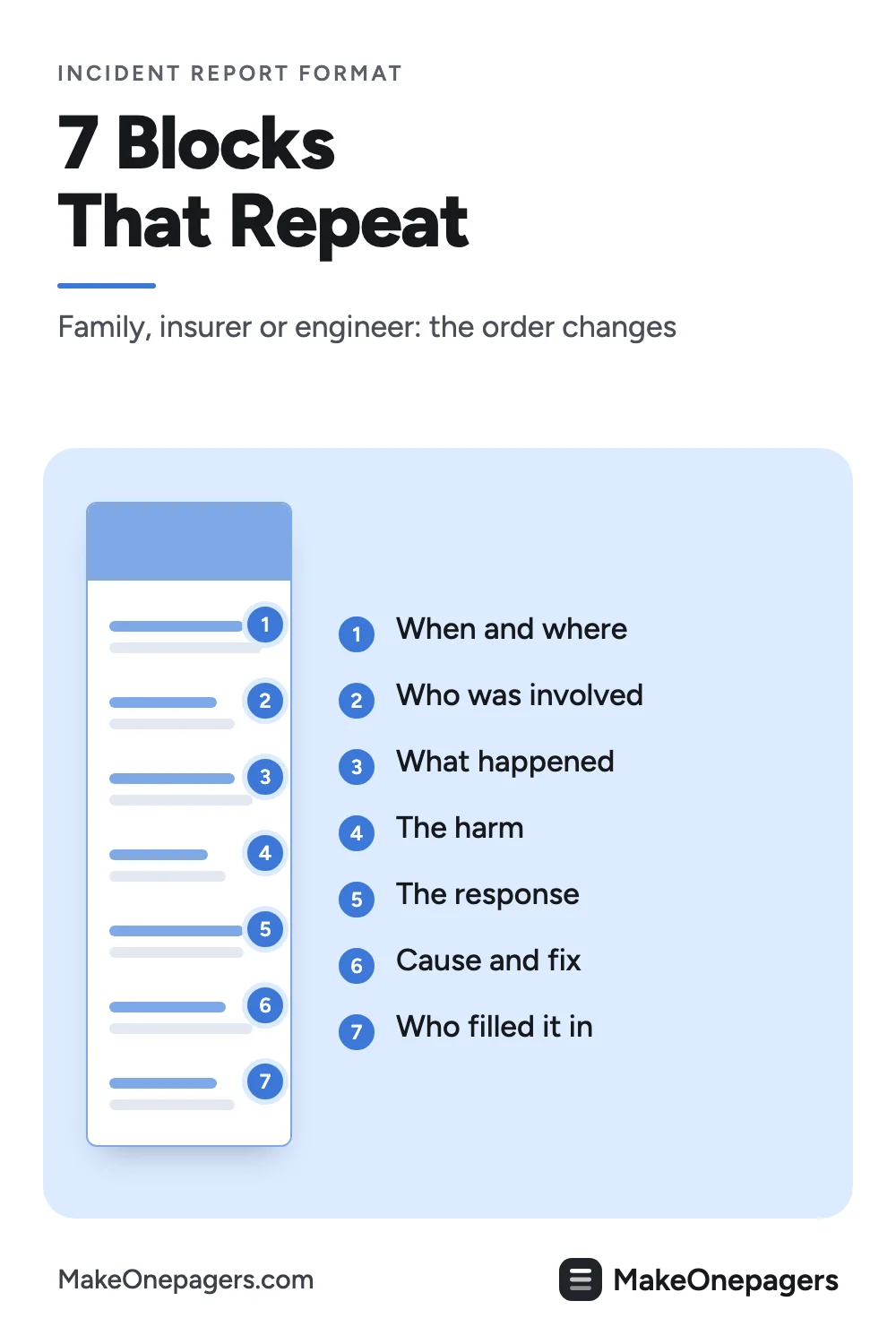
We compared two official forms from very different worlds: OSHA's Form 301 for workplace injuries and a student injury form from Pasco County Schools in Florida. They overlap on nearly every block. The samples below come from MakeOnepagers, with invented names and figures.
The 7 blocks that repeat
| Block | OSHA Form 301 asks | Pasco school form asks |
|---|---|---|
| 1. When and where | Date of injury, time, time work began | Date and time, plus any video of the location |
| 2. Who | Full name, address, date of birth, date hired | Name, student number, school, grade, guardian |
| 3. What happened | What the employee was doing just before, then what happened | What the student says happened or what a witness saw |
| 4. The harm | The injury and the object or substance that caused it | First aid given and how the student was treated |
| 5. The response | Physician, emergency room, overnight stay | 911, parent notified, physician seen, return to school |
| 6. Cause and fix | Not a separate block | The administrator investigates to find the cause |
| 7. Who filled it in | Name, title, phone and date | Administrator or designee |
Block 6 is where your report can beat a government form. OSHA's form records the event for its log, and fixing the cause is left to you. Add that block anyway, since it's what your boss will read first next time.
Deadlines belong in your format too. OSHA gives covered employers seven calendar days after learning of a recordable case, and Pasco wants its form within three business days. Print your deadline at the top of your blank form.
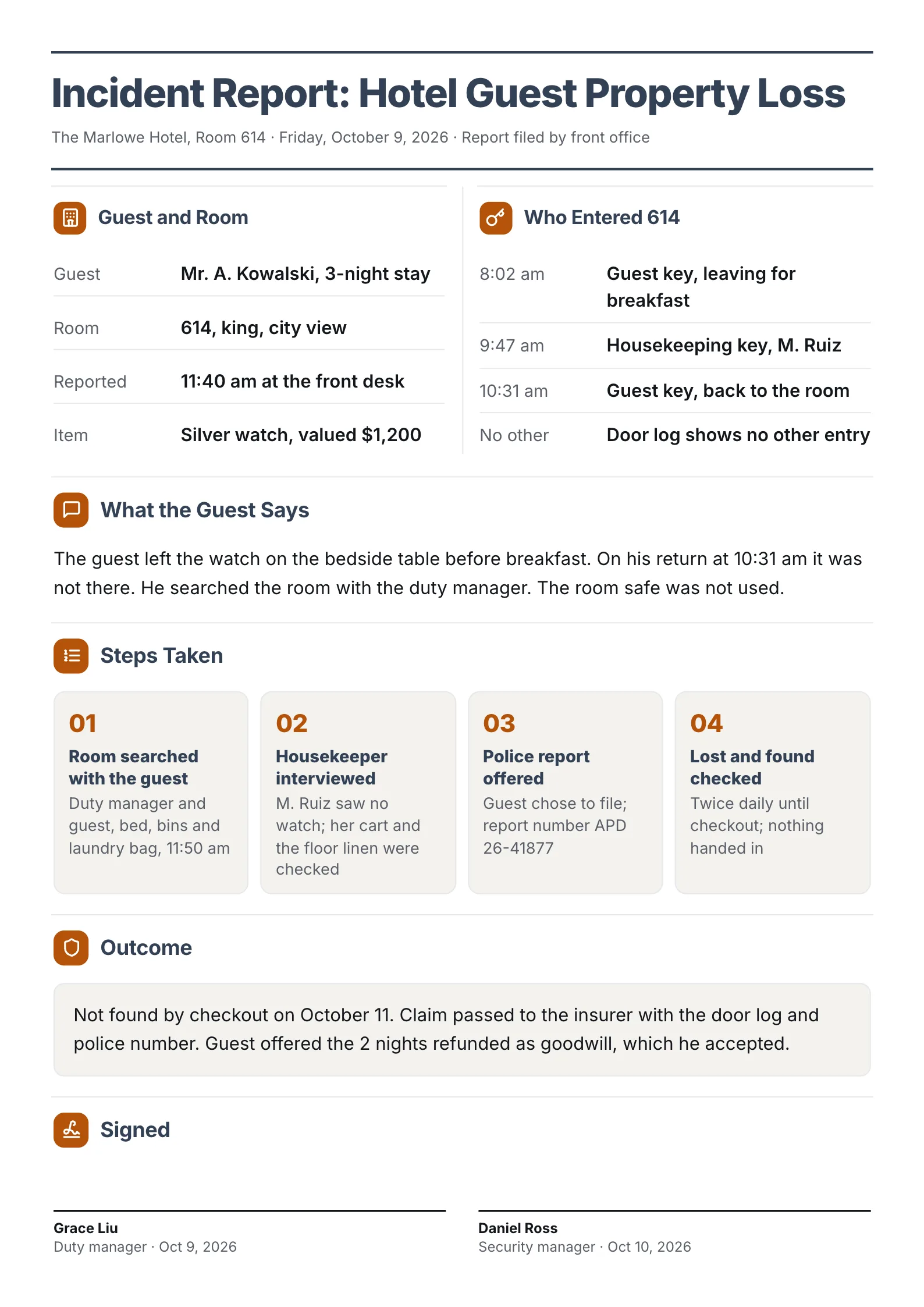
Reader: an insurer or a lawyer
Keep to facts in time order, with a signature. Separate what someone told you from what you saw yourself.
 Edit this template
"What the Guest Says" stands apart from the door log, so a claim and a record never blur together.
Pasco's form does this with a check box, asking you to mark the account as the student's or a witness's. Borrow the idea for any report that may reach a claims desk.
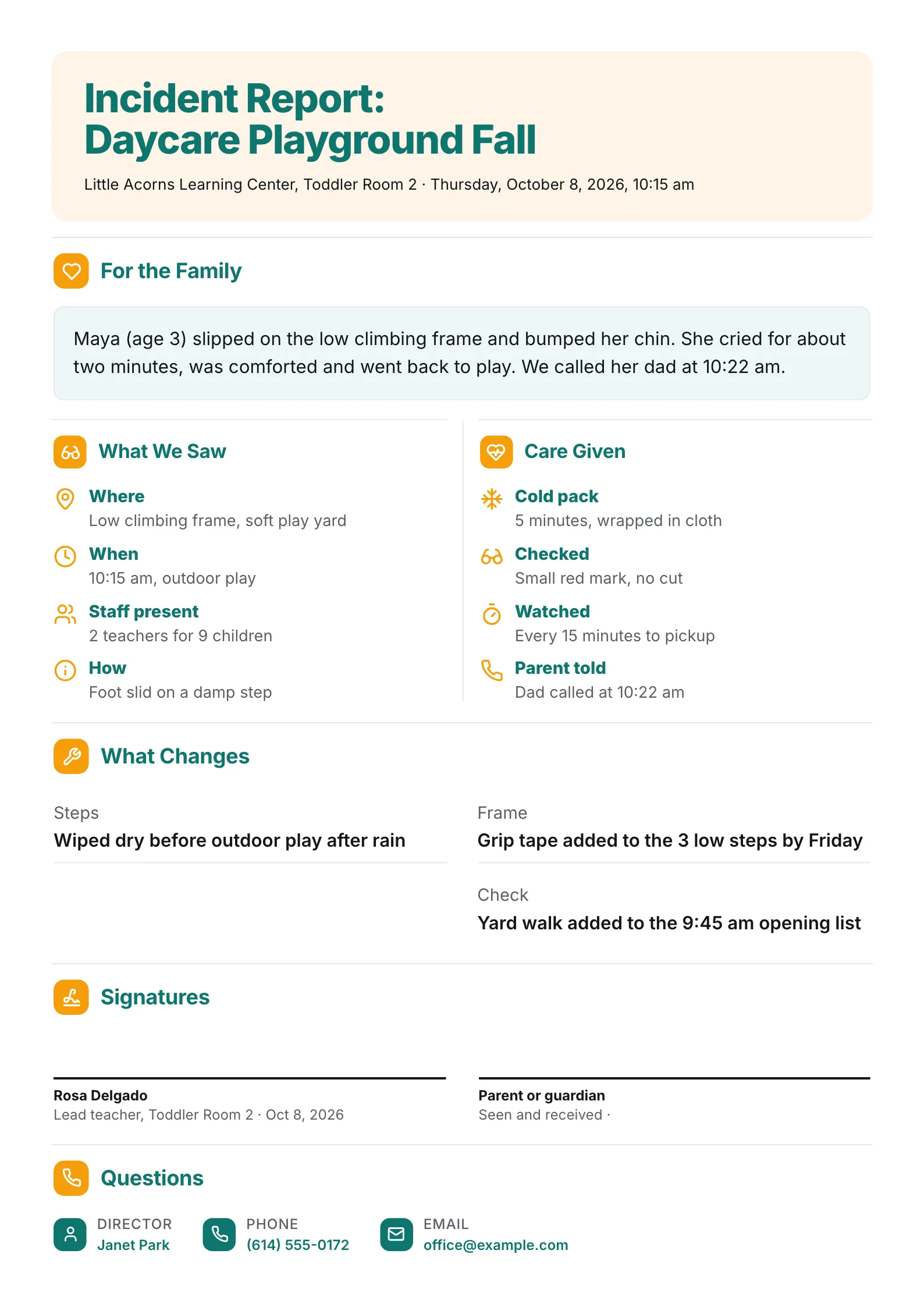
Reader: a family
Lead with how the person is. Everything else can follow.
 Edit this template
"For the Family" opens the page, and the parent signs "Seen and received" at the end.
Notice how little jargon this needs. "We called her dad at 10:22 am" answers a worried parent directly, and your version should name that time too.
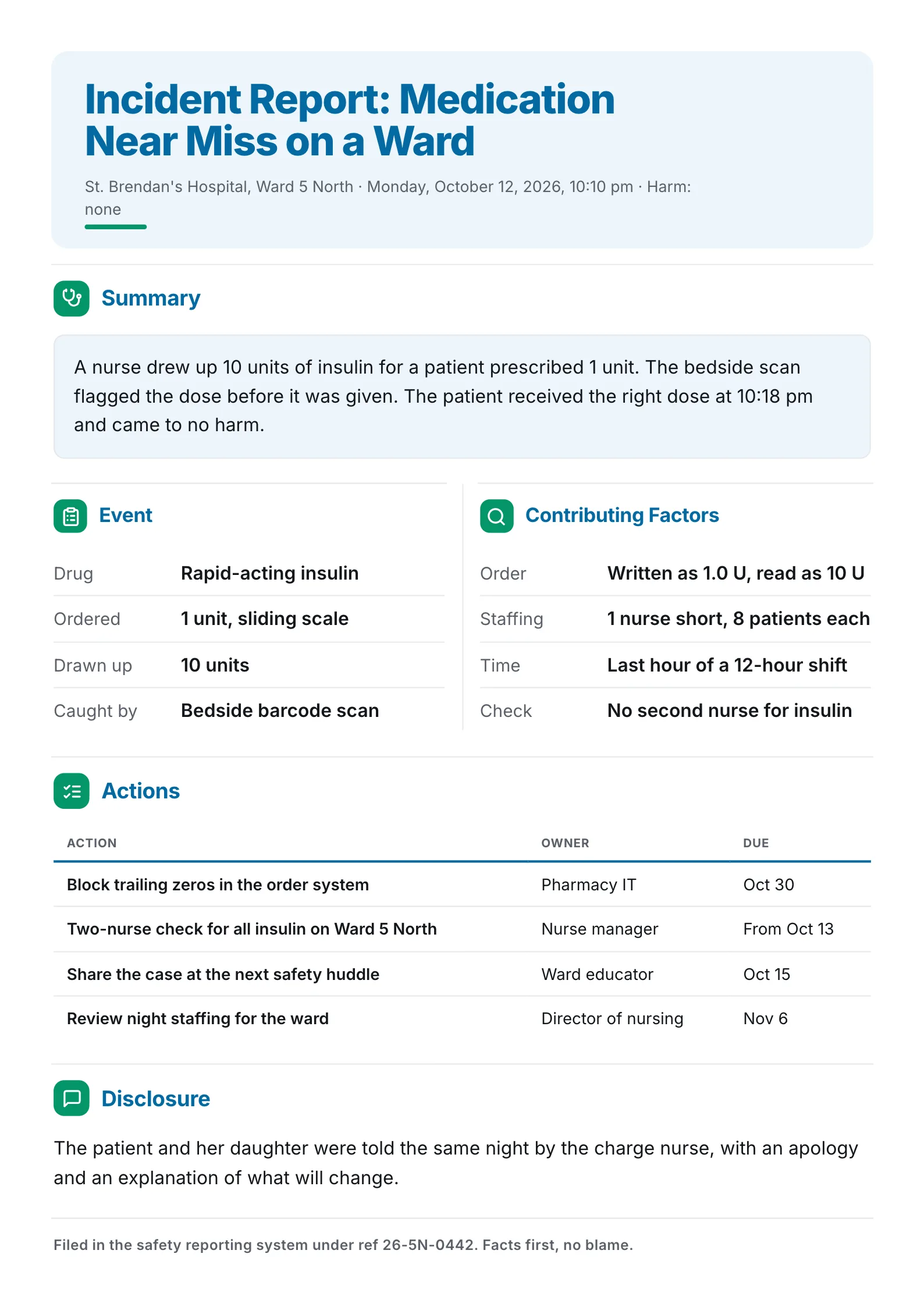
Reader: a safety committee
Your summary comes first, then contributing factors. Those can be several small things, and listing them keeps blame from landing on one person.
 Edit this template
Four factors appear, from "Written as 1.0 U, read as 10 U" to a missing second check.
Each action has an owner and a date. A fix with no name beside it tends to stay undone, so give yours a person.
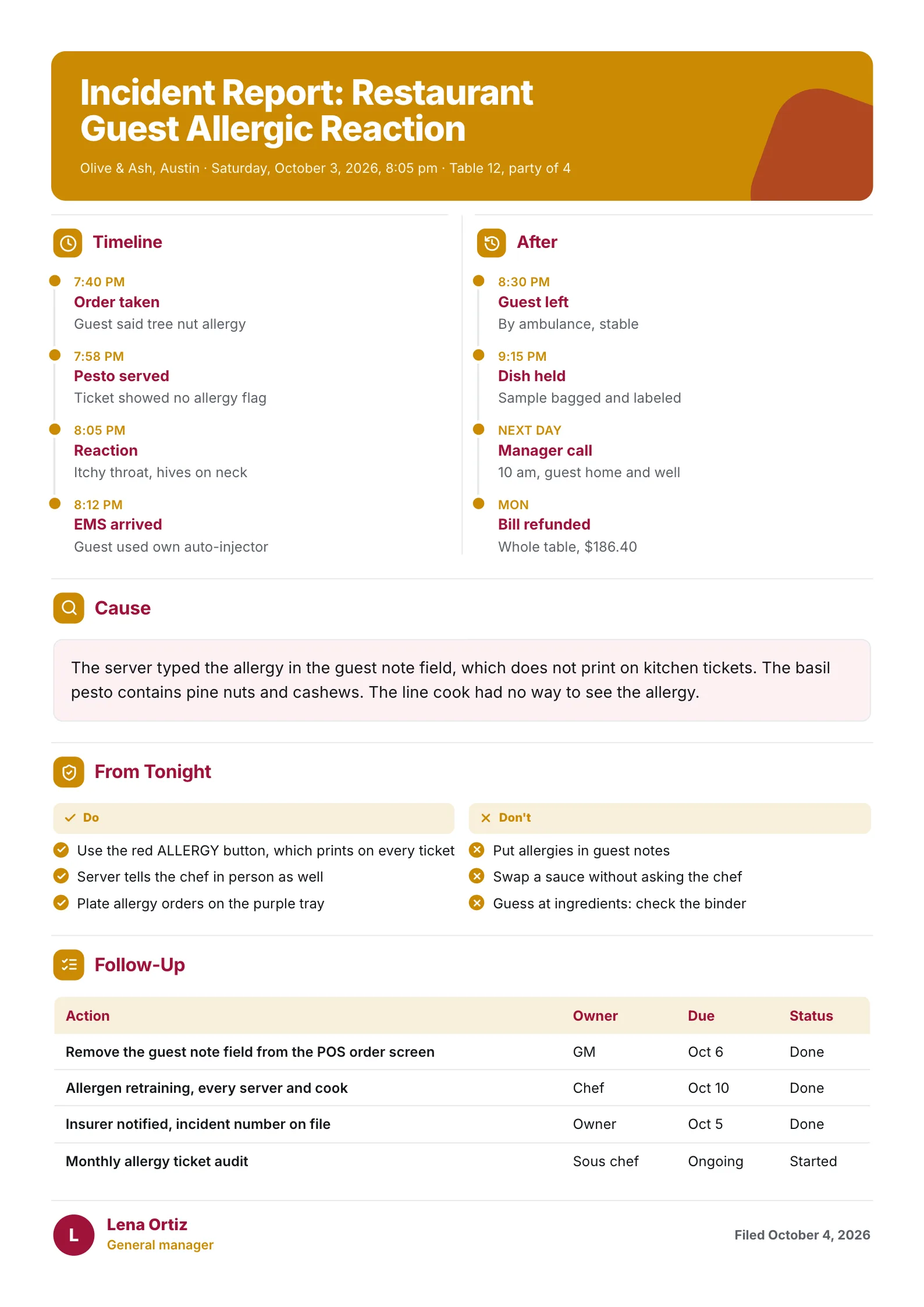
Reader: an operations team
Timeline first. A short log shows where the minutes went, and the cause sits right beneath it.
 Edit this template
The cause is one plain fact: the guest note field doesn't print on kitchen tickets.
Reader: engineers and customers
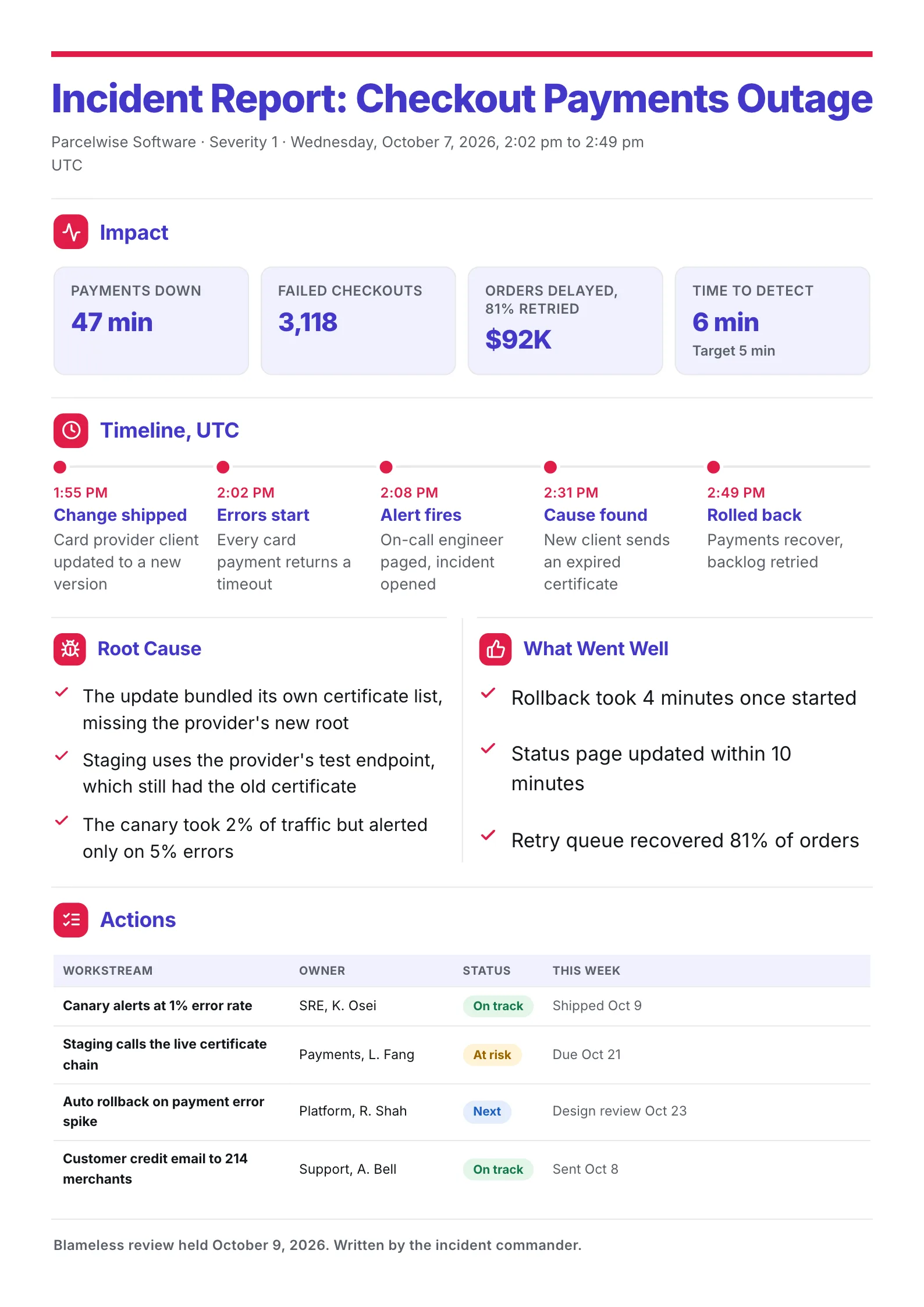
Software incidents use the same blocks with different labels. Impact replaces injury, and root cause gets more room.
 Edit this template
Time to detect sits beside its target, 6 minutes against 5, so one miss is plain to see.
Format rules that fit any report
- Use exact times, not "this morning."
- Write in past tense and stick to what's known.
- Quote people in their own words, and name who said it.
- Keep one version of the page for every incident, so reports can be compared.
- Sign and date it, with the name of the person who can answer questions.
For wording and state injury form deadlines, see how to write an incident report.
One decision before the blank form
Who reads your reports most often? Their first question goes at the top, and the other six blocks follow in the order above. Your deadline belongs up there as well.
Frequently asked questions
Can you replace OSHA's form with your own?
Yes, if yours is an equivalent form. It has to hold the same information, be as readable and understandable, and be completed using the same instructions as the OSHA form it replaces. Check that every 301 question has a place on your page, and keep OSHA's instructions with it.
How long should an incident report be?
Most incidents fit on one page. Attach longer statements, photos or logs behind it, and keep your first page as the summary everyone reads.
What should an incident report include?
When and where, who was involved, what happened, the harm, the response, the cause and fixes, and who filled it in.
How soon does an incident report have to be filed?
OSHA gives covered employers seven calendar days after learning of a recordable case. Pasco's school form wants three business days, so check the rule that applies to you.




