How to Write an Incident Report: What 5 Official Forms Ask For
How to write an incident report, built from OSHA's Form 301 and four state and federal injury forms: what they all ask, the deadlines and five examples.

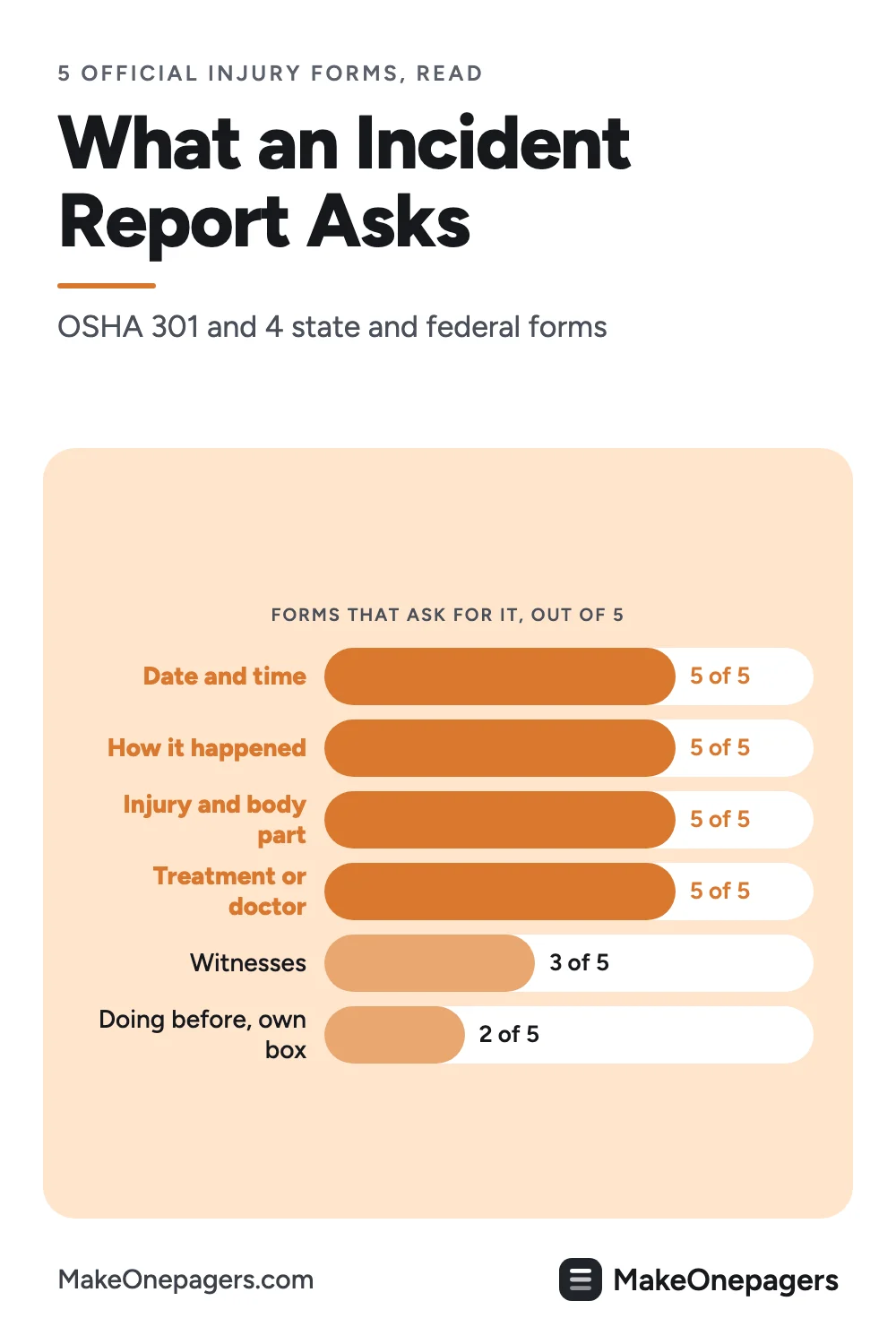
Here's how to write an incident report: record the date and time, the place, what the person was doing, what happened step by step, the injury and the body part, the treatment and who saw it. Then sign and date it. To check that list against the real thing, we read five official injury forms on October 26, 2026. One was OSHA's Form 301 and four were state and federal forms. All five asked for the date, the time, how it happened, the injury and the treatment. Only two asked, as a question of its own, what the person was doing just before. Start from a free one pager template.
One‑Pager examples
Real One-Pagers made with MakeOnepagers. Open any one to edit it as your own.
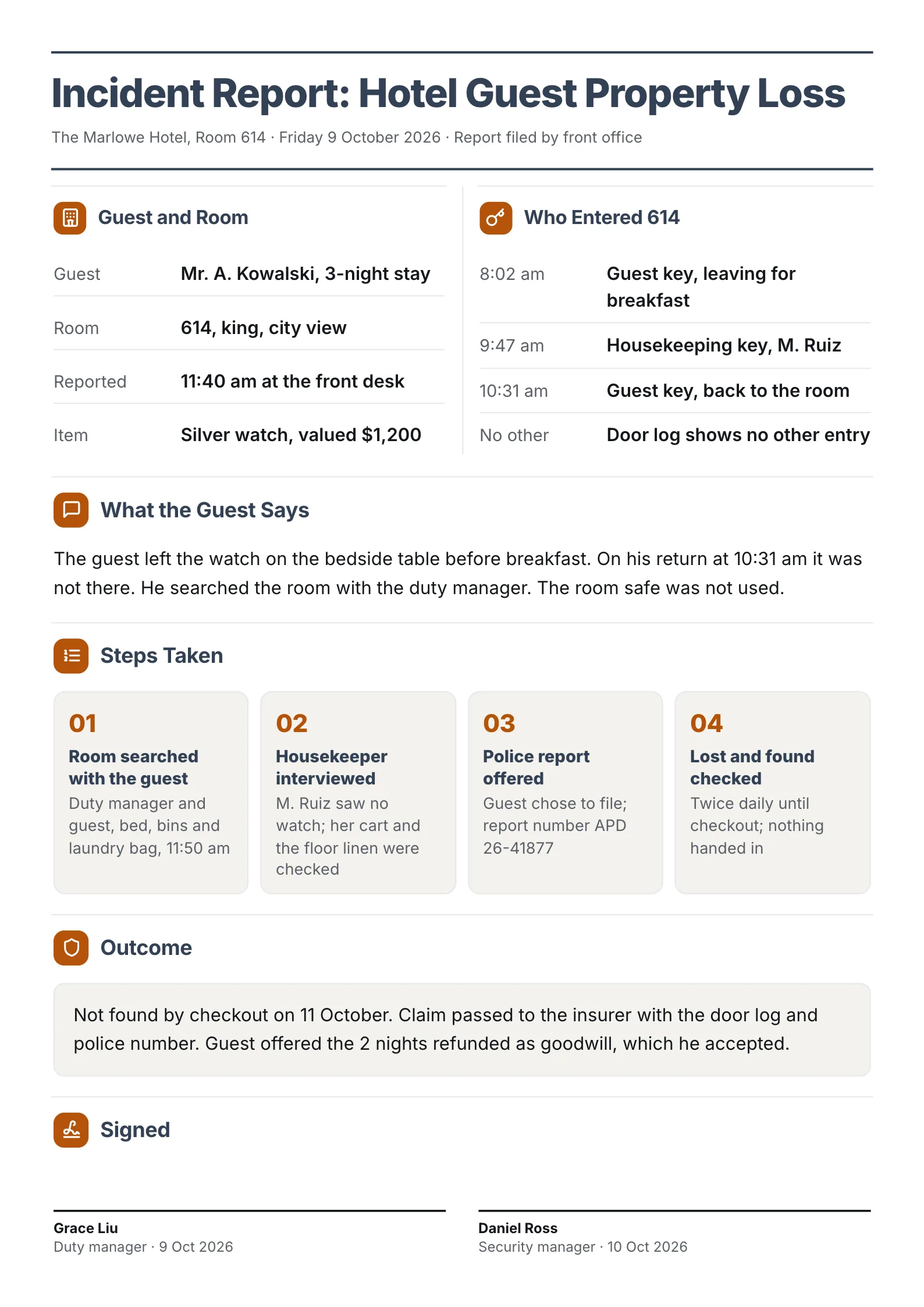 Incident Report: Hotel Guest Property LossEdit for free(opens in a new tab)
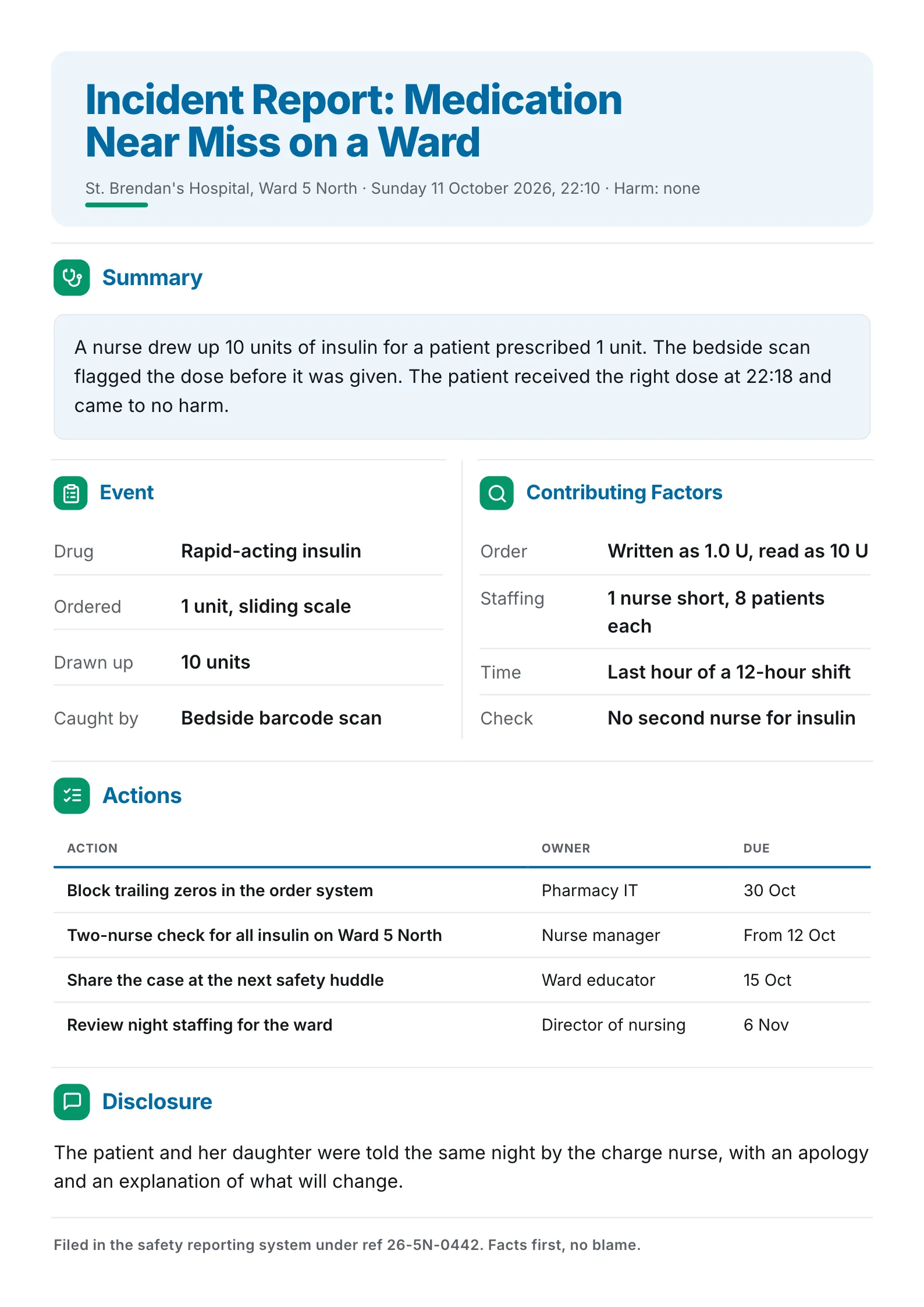 Incident Report: Medication Near Miss on a WardEdit for free(opens in a new tab)
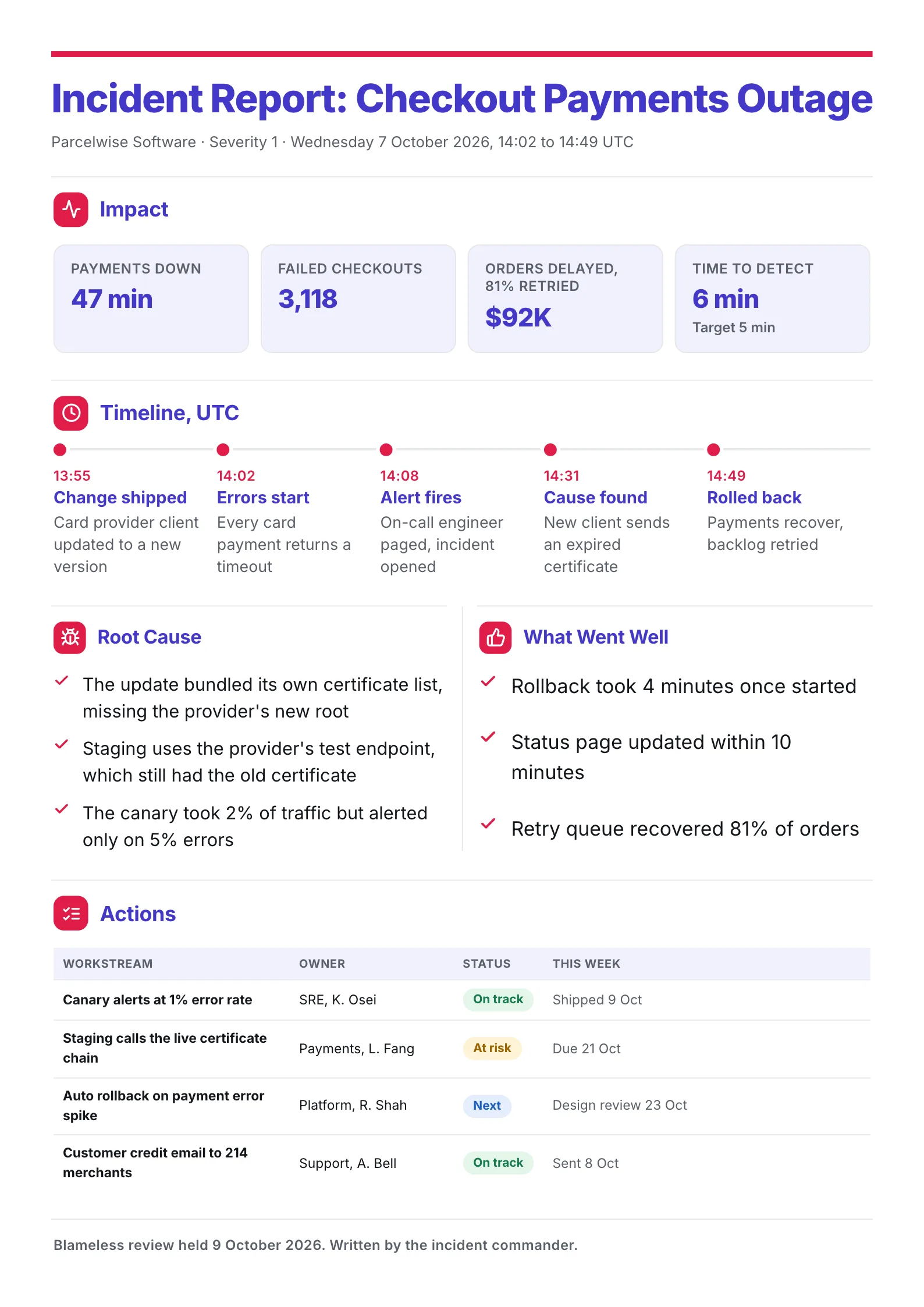 Incident Report: Checkout Payments OutageEdit for free(opens in a new tab)
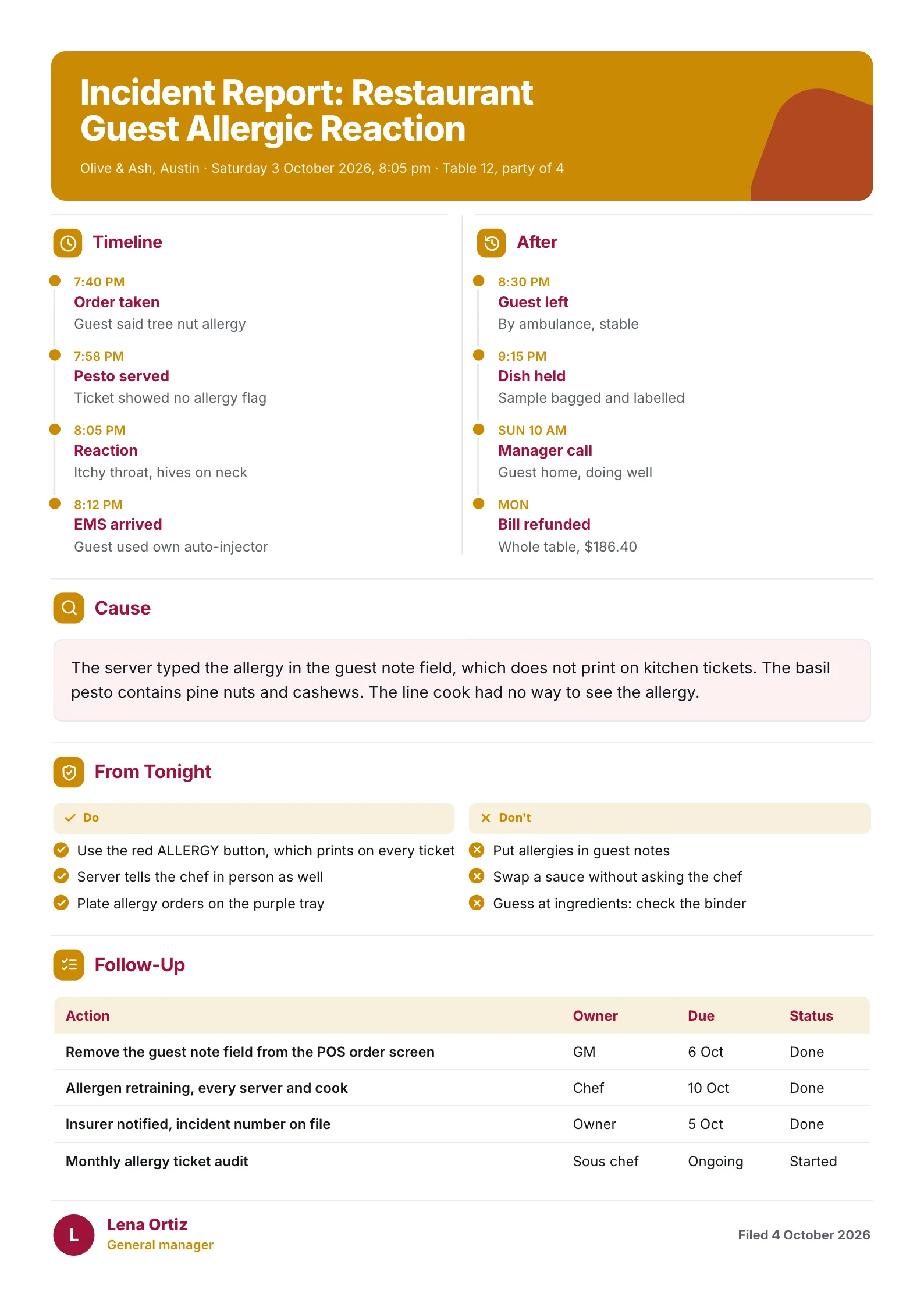 Incident Report: Restaurant Guest Allergic ReactionEdit for free(opens in a new tab)
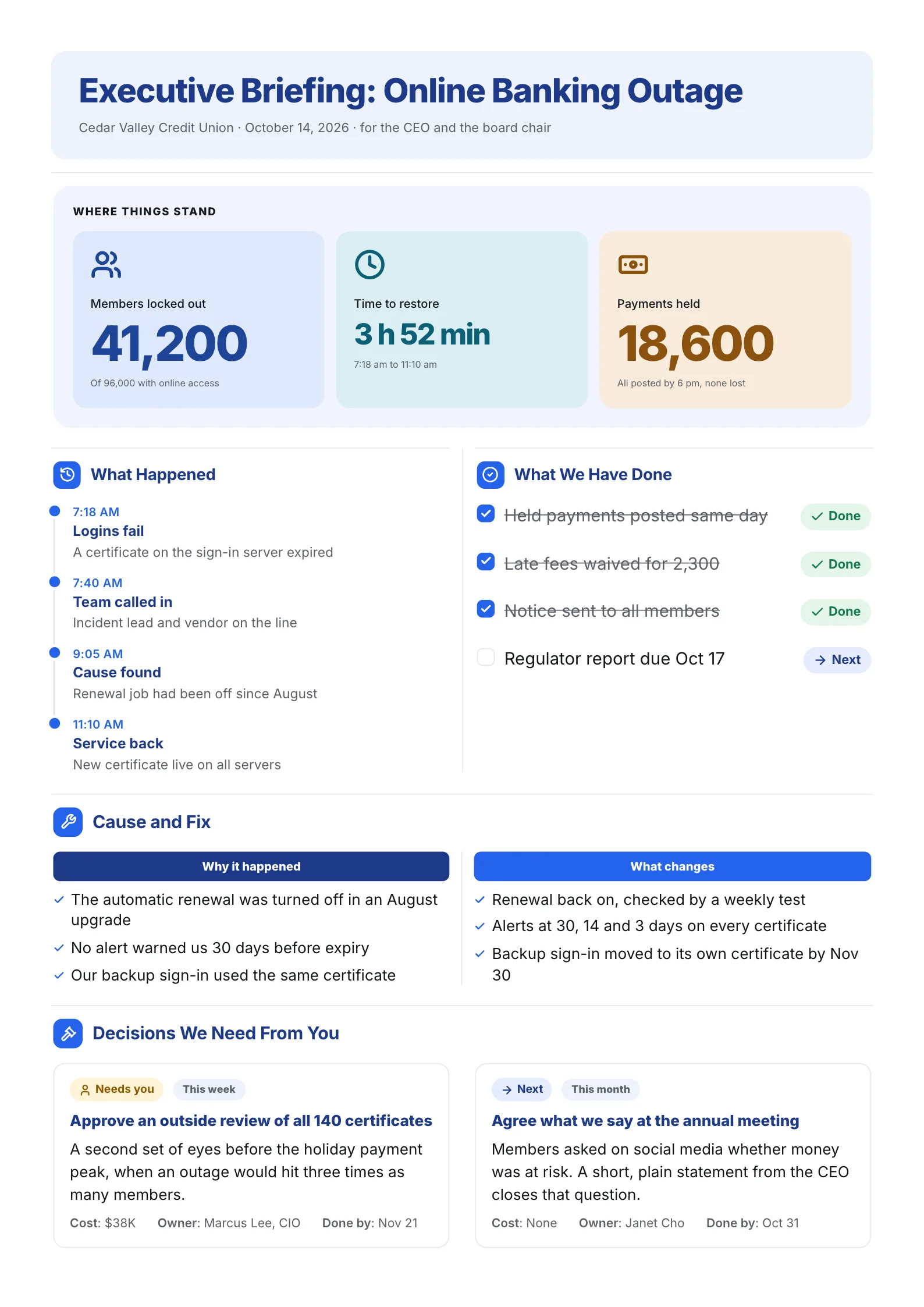 Executive Brief: Incident BriefingEdit for free(opens in a new tab)
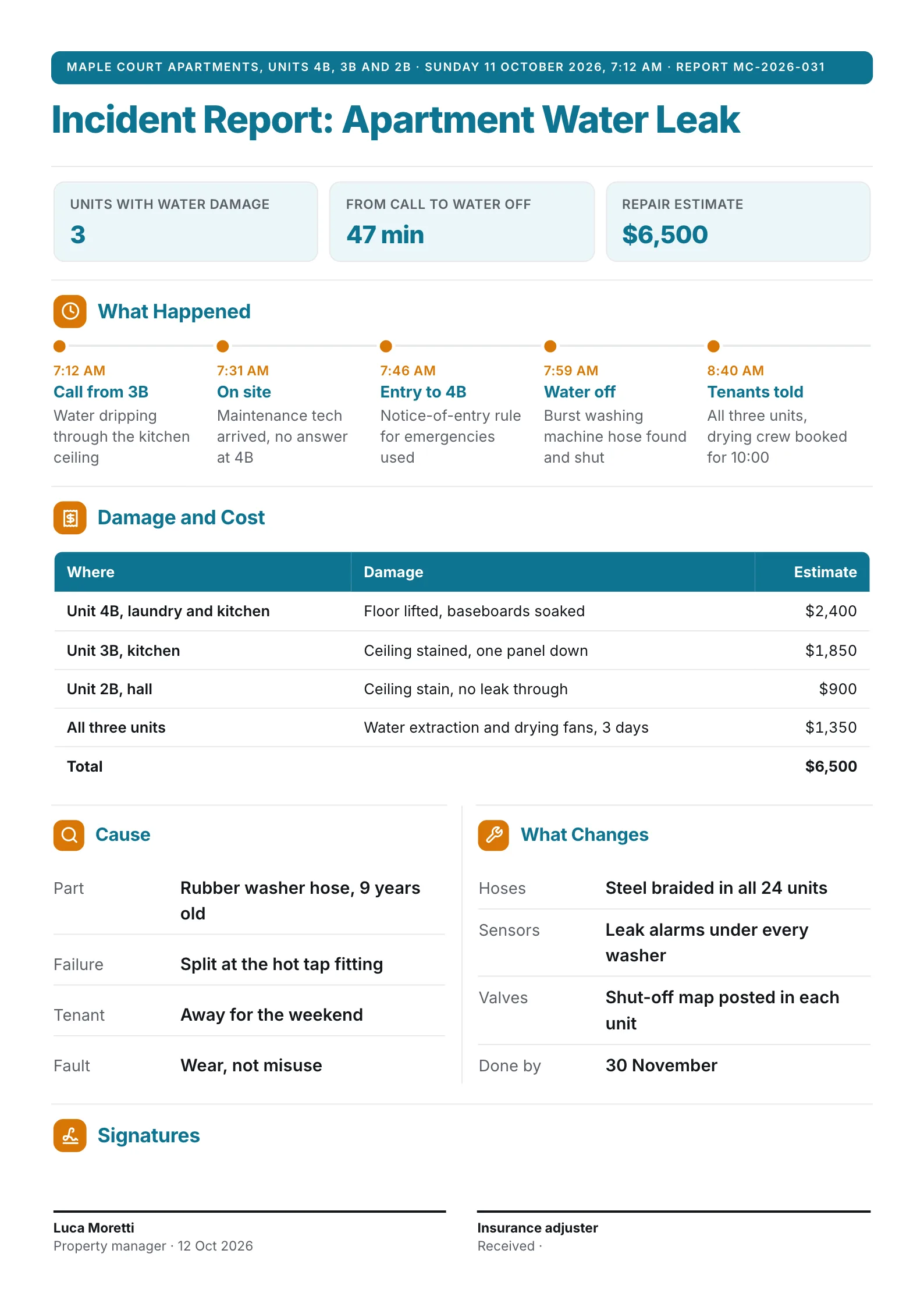 Incident Report: Apartment Building Water LeakEdit for free(opens in a new tab)
That's the line that tells your manager, your insurer and OSHA why it happened. Texas folds it into a wider question about the events leading up to the injury, and New York and the federal form leave it to your story, so it's easy to skip. Below you'll find what each form asks, the deadlines, how to write the part in your own words, and five reports you can open and edit for free.
The five forms we read
The wikiHow and Venngage guides, two of the top three results on Bing when we searched, list the parts of a report without pointing to a form. We wanted the parts that the people who receive your report actually ask for. So we read the forms a US workplace injury report can end up on:
- OSHA Form 301, the Injury and Illness Incident Report. Employers covered by OSHA's recordkeeping rule fill one in for each recordable case. We read the form itself and the federal rule behind it (29 CFR 1904 and the 2023 rule at 88 FR 47254).
- Texas DWC Form-001, the Employer's First Report of Injury or Illness (Rev. 10/24).
- California Form 5020, the Employer's Report of Occupational Injury or Illness.
- New York Form C-2F, the Employer's First Report of Work-Related Injury/Illness (9-23).
- Federal Form CA-1, the federal employee's notice of a traumatic injury.
We went through each form line by line and marked which of 15 facts it asks for. Every count below comes from that table, and we kept the form numbers so you can check any row yourself.
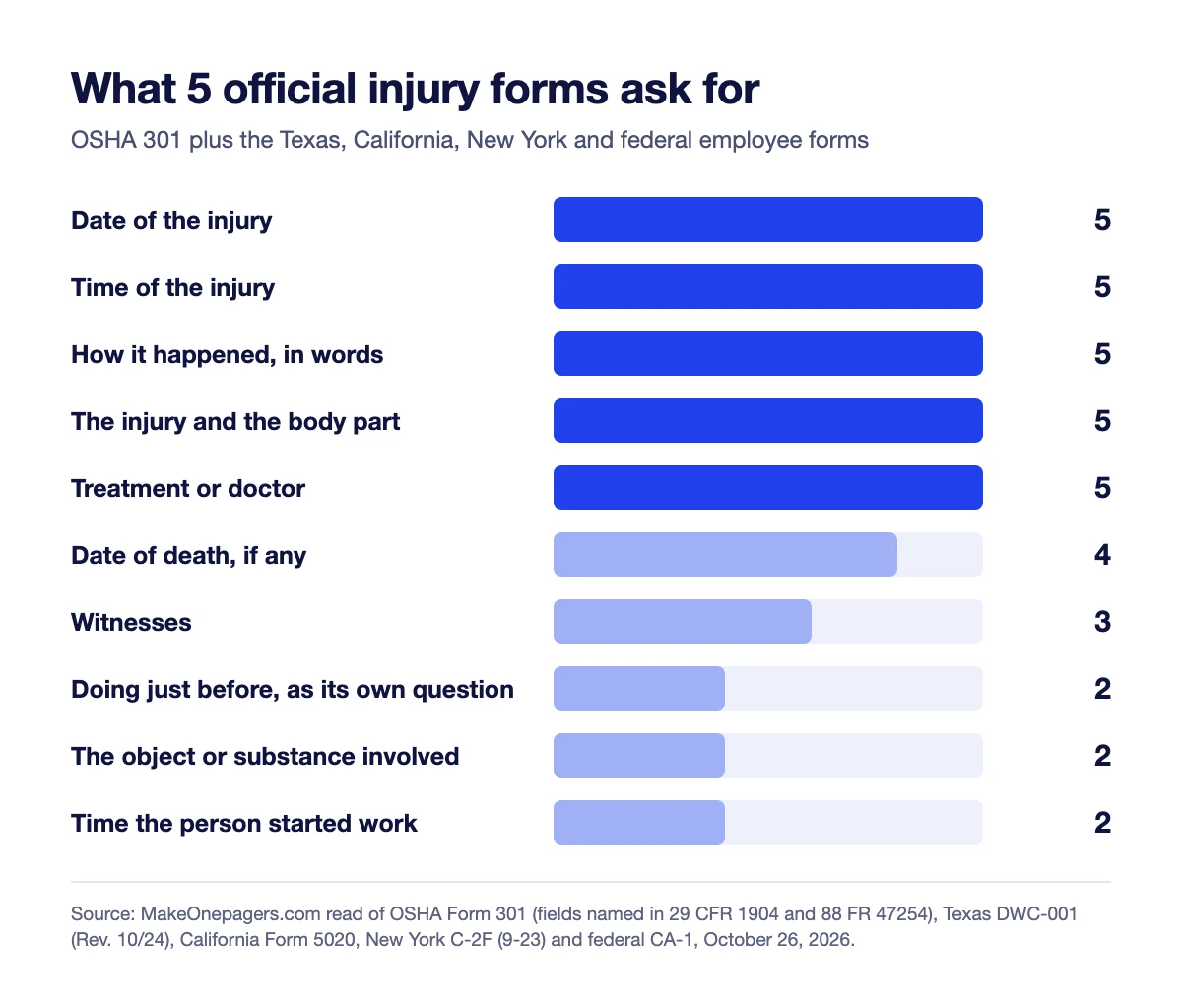
Source: MakeOnepagers.com read of OSHA Form 301, Texas DWC-001, California 5020, New York C-2F and federal CA-1, October 26, 2026.
One rule makes this list useful even if you never send a form to anyone. OSHA lets you use your own report instead of Form 301 if it has the same information (29 CFR 1904.29(b)(4)). Many employers use an insurance form this way. The lines below cover the event itself. To stand in for Form 301, your report also needs the employee's name, address, date of birth, date hired and sex, a case number, and the date of death if the person died.
What to put in an incident report, line by line
The date and the time
All five forms ask for both. Write the time to the minute if you know it, and add when the person started work that day. OSHA's form and California's ask for that start time, because an injury two hours into a shift and one eleven hours in tell different stories. US forms write dates month first, as in October 26, 2026, so use that order if your report might go to a US insurer or agency.
Where it happened
The four state and federal forms all ask where the injury happened. Be exact enough that someone who wasn't there could stand on the spot. "Loading dock 2, beside the north door" works. "The warehouse" doesn't.
What the person was doing just before
Only OSHA and California ask this as its own question, and it's the one most worth copying. OSHA's Form 301 asks what the employee was doing just before it happened, and the answer names the task and the tools. "Carrying two boxes of copy paper down the back stairs" tells a reader where to look for the fix. Write it before you write what went wrong.
How it happened, in your own words
All five forms leave room for a short story of the event. California's form shows the shape it wants in a printed sample: a worker steps back, slips on scrap, brushes a fresh weld and burns a hand. That's one cause after another, ending in the injury. Write yours the same way:
- Start with the task the person was doing.
- Say what changed or went wrong.
- Name the object or substance that caused the harm.
- End with the injury.
Here's the difference in practice. "Employee was careless and hurt her hand" gives a reader nothing to fix. "While cutting boxes at the packing table, the blade slipped off a staple and cut the left palm" names the task, the cause, the object and the injury in one sentence. Leave blame and guesses out. If you don't know something yet, write "not known yet" and come back to it.
The injury and the body part
All five forms ask what the injury was and where on the body. Be specific: "a cut across the left palm" or "a sprained right ankle", not "hurt hand". Write only what you saw or what a doctor said. Leave the diagnosis to the doctor.
Treatment and who gave it
All five forms ask about treatment or the doctor who gave it. The federal CA-1 asks for the first doctor's name and address and the first date of care. Write down the first aid given at the scene, then the name of any doctor or clinic and the clinic's address, and whether the person went to an emergency room or stayed in a hospital overnight. OSHA's form asks both of those last two as yes or no questions.
Witnesses
Three of the five forms ask for witnesses: Texas, New York and the federal CA-1. Write each witness's name and how to reach them, and get their account in their own words the same day. If nobody saw it, write "no witnesses" so a reader knows you asked.
Your name, signature and the date
The four state and federal forms ask the person filling them in to sign and date them. Add your job title and a phone number, so the reader knows who to call with a question.
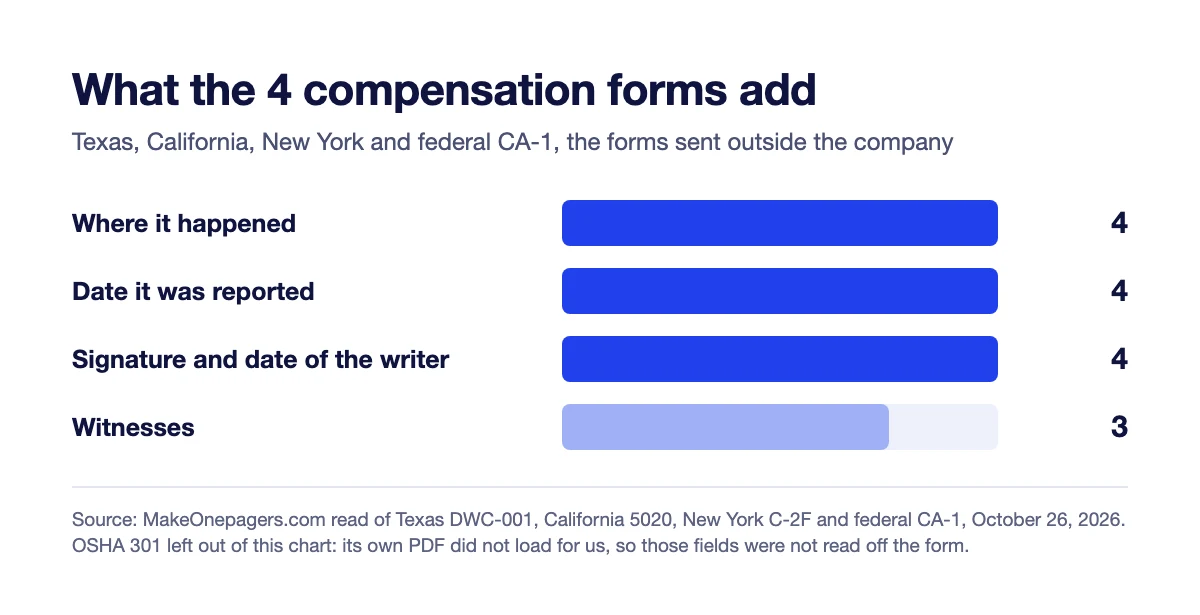
Source: MakeOnepagers.com read of Texas DWC-001, California 5020, New York C-2F and federal CA-1, October 26, 2026.
How long you have to write it
Each form sets its own deadline, and each one starts counting at a different moment. That's why the safest habit is to write your report on the day it happens, while people still remember the details.
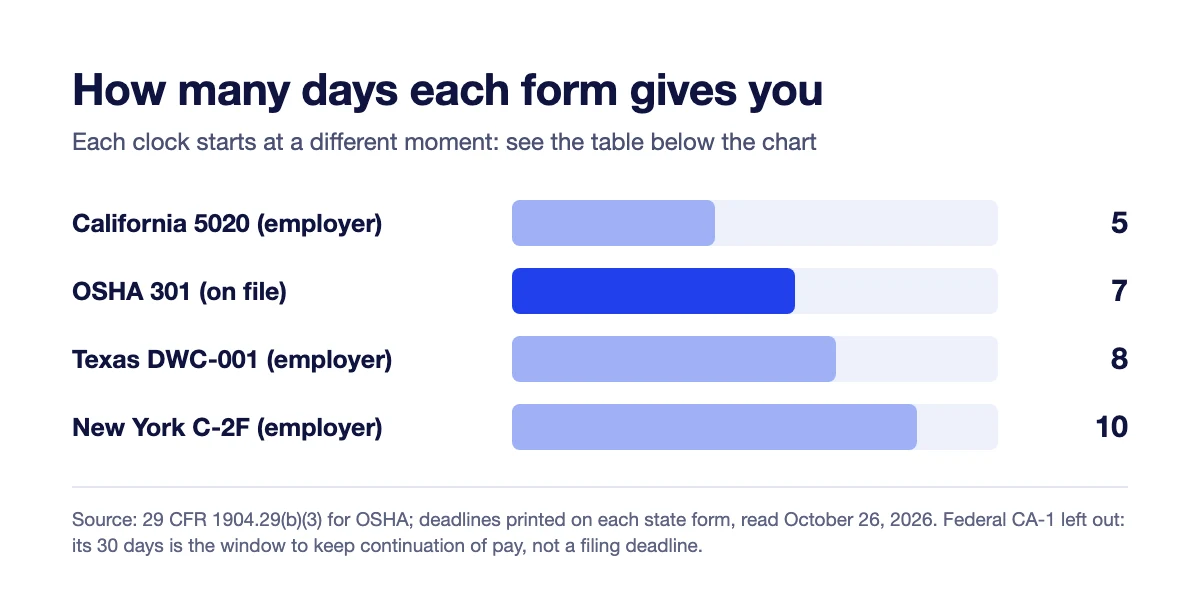
Source: 29 CFR 1904.29(b)(3) for OSHA, and the deadlines printed on each state form, read October 26, 2026.
| Form | Days | When the clock starts |
|---|---|---|
| California 5020 | 5 | When the employer learns of an injury that costs time beyond the day or needs more than first aid |
| OSHA 301 | 7 calendar days | When the employer learns a recordable case happened |
| Texas DWC-001 | 8 | After the employee's first day away from work because of the injury |
| New York C-2F | 10 | From the injury or illness |
| Federal CA-1 | 10 working days | For the supervisor to send the form to the federal compensation office after receiving it, when medical bills or time lost are expected |
The federal form has a second number to know. An employee who files CA-1 within 30 days of the injury may be entitled to continuation of pay, meaning regular pay for up to 45 calendar days while out. The agency can dispute it, and the form lists the reasons it can use to refuse. The 30 days is a condition for that pay, so it isn't on the chart as a filing deadline.
California's form also says a serious injury, illness or death must be reported to the state's safety office right away by phone. The rule that covers your state might be different, so check your own state's form before you rely on one of these numbers.
Keep it private, and keep it for five years
An incident report holds medical details, so treat it like a medical record. OSHA's Form 301 warns against putting names, phone numbers or Social Security numbers in the fields that describe the event (fields 14 to 17). Keep the person's name in the top part of the form, not in the story.
OSHA also names six kinds of case where the name comes off the log, and you write "privacy case" in its place (29 CFR 1904.29(b)(7)). They are an injury to an intimate body part or the reproductive system, a sexual assault, a mental illness, HIV, hepatitis or tuberculosis, a needlestick or cut from a sharp object contaminated with someone else's blood, and any other illness when the employee asks. You keep a separate, confidential list that links the case number to the name.
Then keep the report. OSHA asks employers to save Form 301 reports for five years after the end of the year they cover (29 CFR 1904.33). File yours where you'll find it again, with the case number on the front.
Five incident reports to start from
Each of these opens in MakeOnepagers, and you can edit every word for free. We picked them for the part of a good report each one shows best. Before you send yours, check it against the lines above and add any your situation needs.
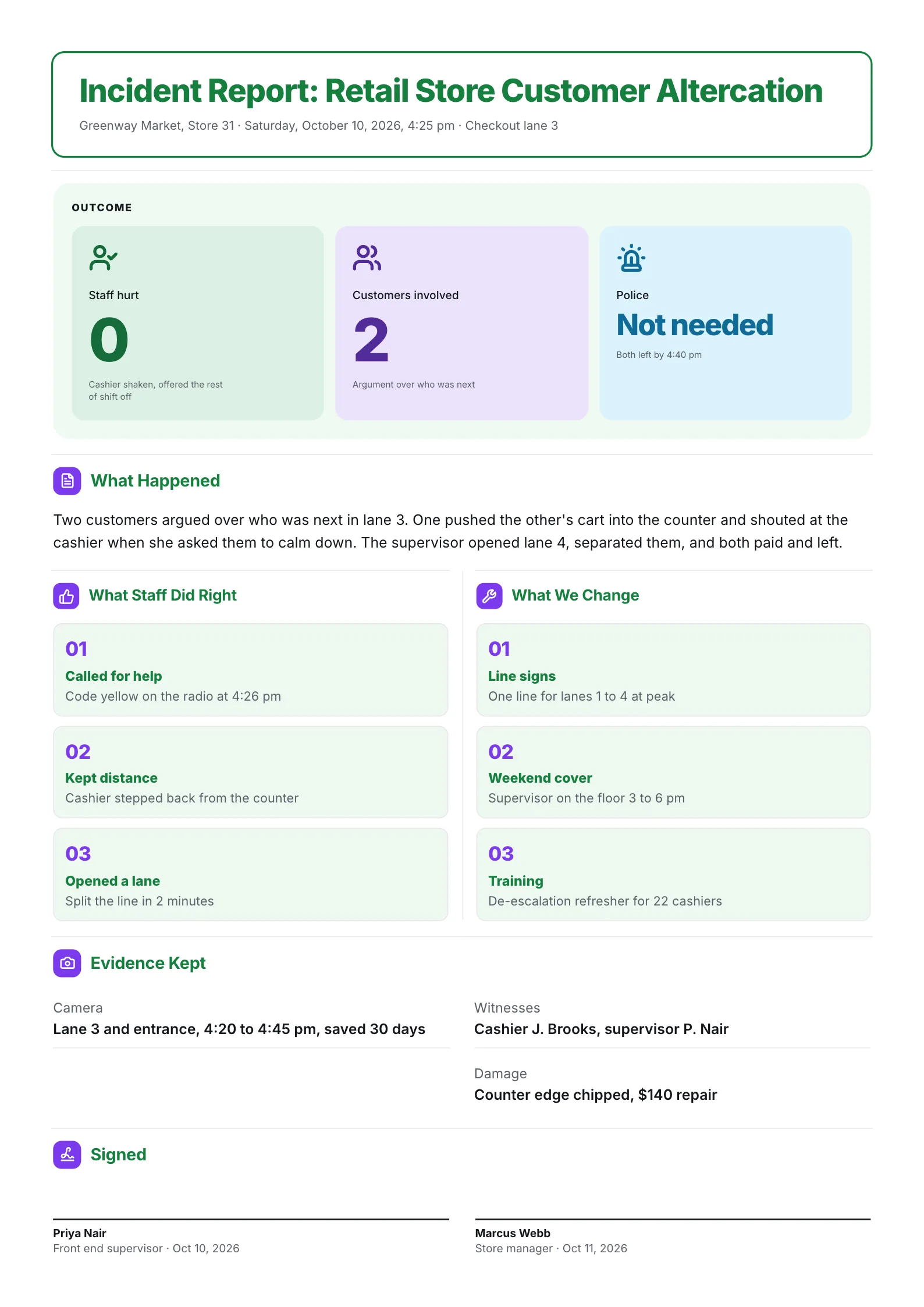 Edit this template
This retail report shows the witness and signature lines done well. It names both witnesses, says which camera footage was saved and for how long, and carries two signatures with dates, from the front end supervisor and the store manager. Nobody was hurt here, so it has no injury or treatment lines. Add those if your case has an injury. You can edit this retail incident report template for free.
 Edit this template
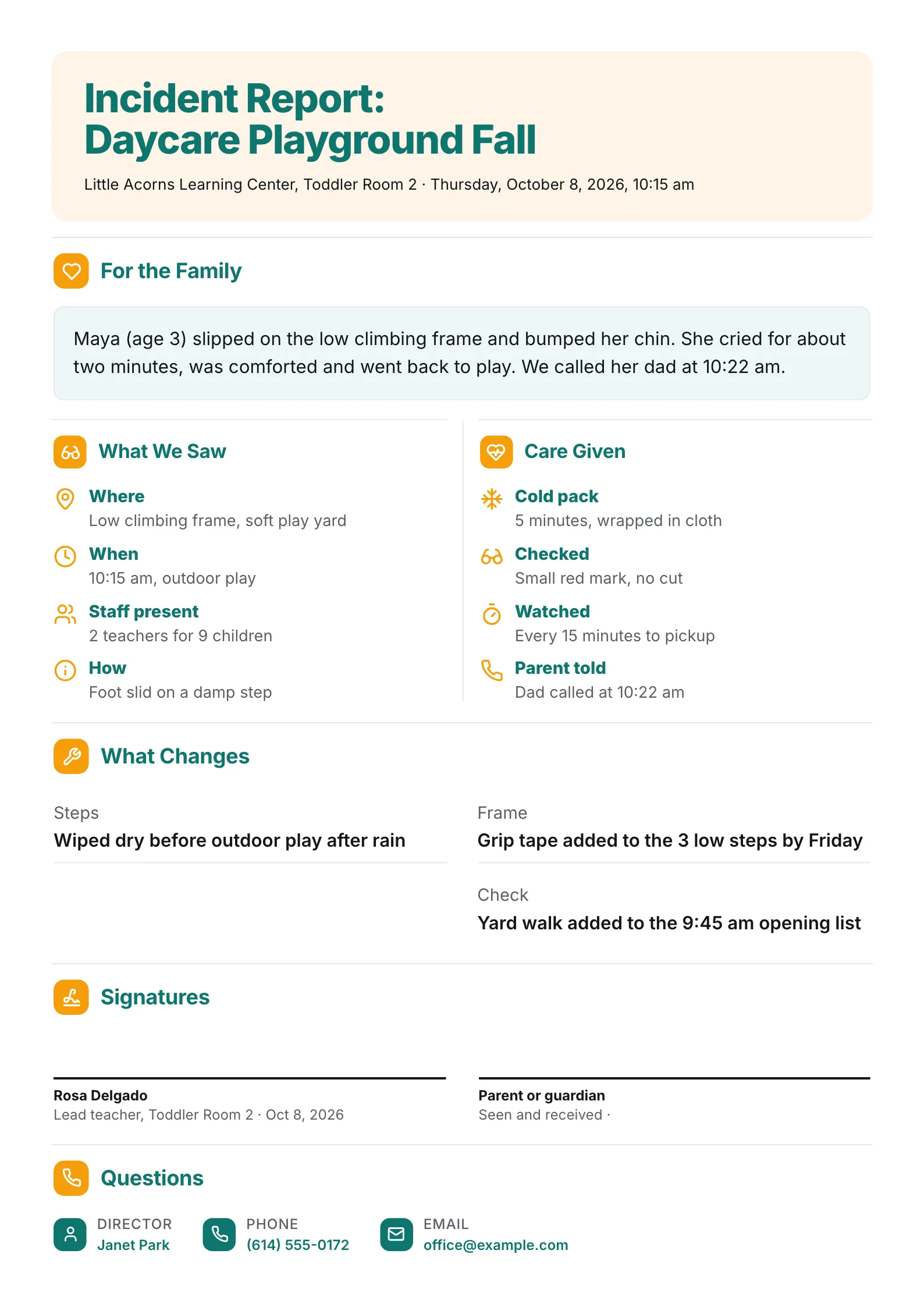
The daycare report shows the place, time and cause as four short lines anyone can read in seconds: where, when, staff present and how. Its care section gives the first aid, how long it lasted and the minute a parent was called. The signature block has a line for the parent too, which is a good habit whenever a family is involved. You can edit this daycare incident report template for free.
 Edit this template
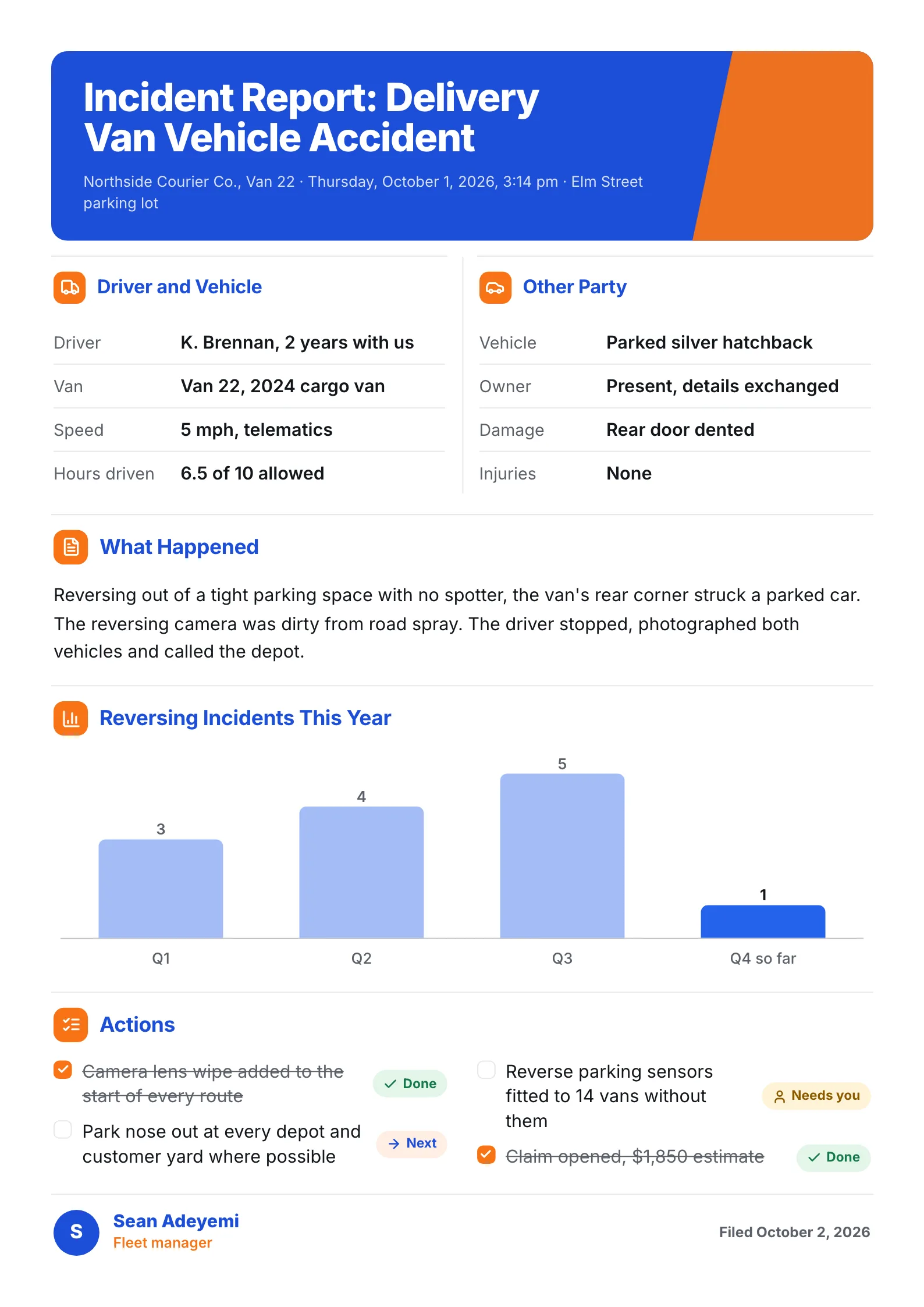
This vehicle report shows the story written the way California's sample asks. It says what the driver was doing (reversing out of a tight bay), what went wrong (no spotter, and a dirty camera) and what it hit. It also records the speed from the van's tracker and the hours driven. It has no witness line, so add one, even if it reads "none". You can edit this vehicle incident report template for free.
 Edit this template
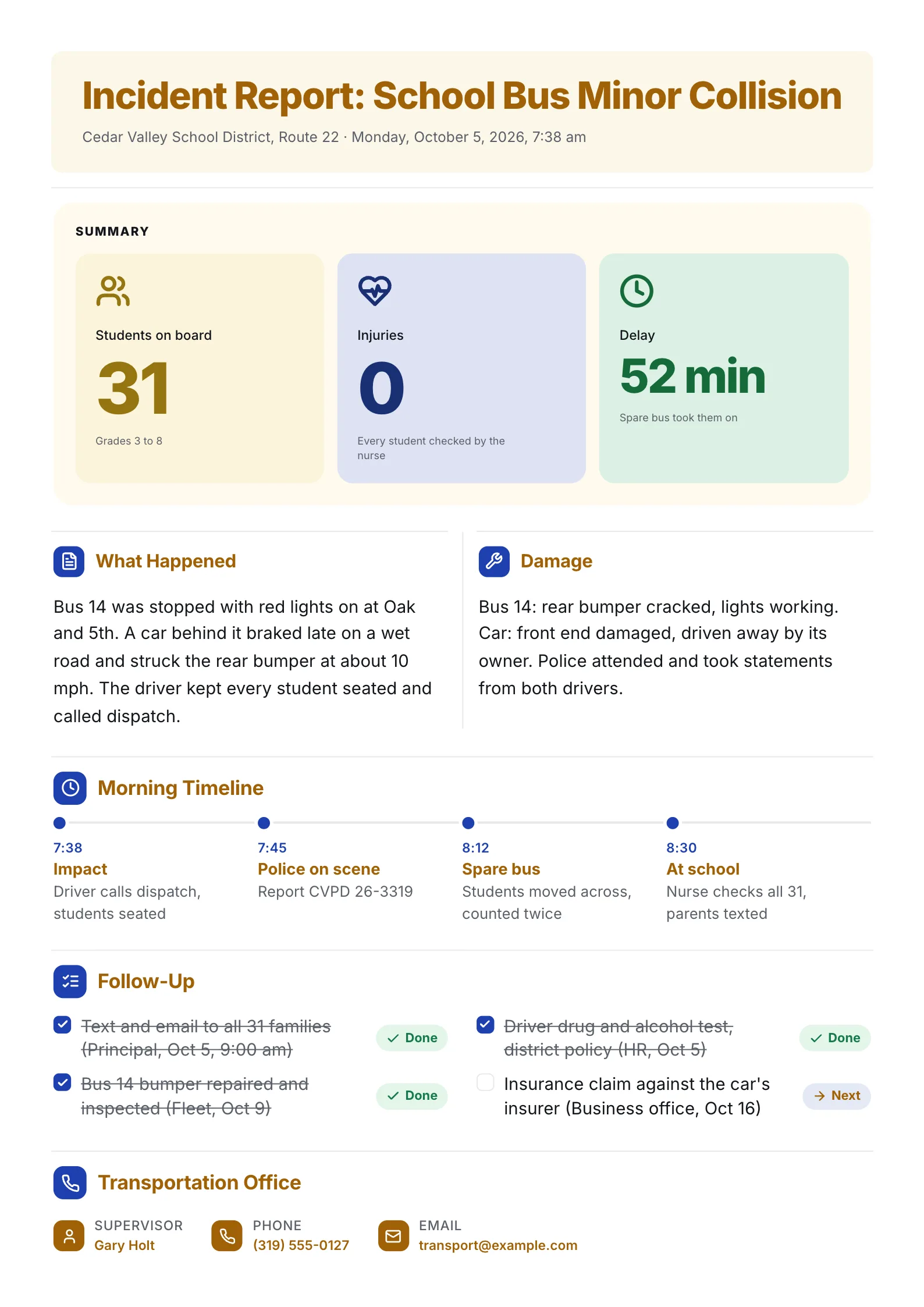
The school bus report shows a timeline that a reader can check, from the moment of impact to the nurse's check at school. It records the police report number, which an insurer will ask for. Every follow-up has an owner and a date. Add a signature and date for the person who wrote it before you file it. You can edit this school bus incident report template for free.
 Edit this template
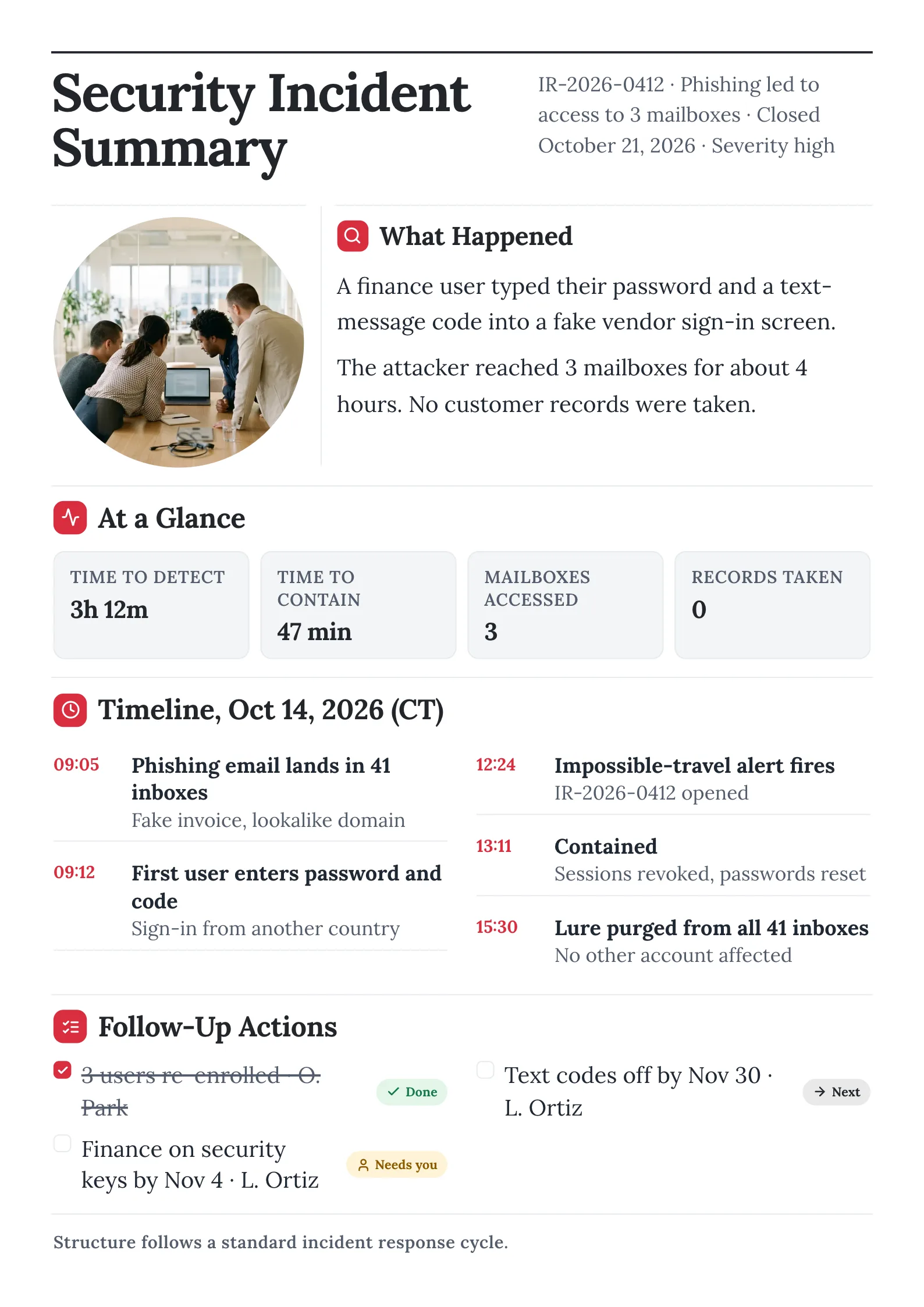
An IT incident drops the injury fields and keeps the timeline. This security summary logs each step to the minute, says how long the problem took to find and to stop, and gives every follow-up an owner. Use it when the incident is a breach or an outage and nobody was hurt. You can edit this security incident summary template for free.
How to write an incident report, step by step
- Make the scene safe and get help first. First aid and calls come before paperwork.
- Write it the same day. Note the date, the time to the minute and when the person started work.
- Say exactly where it happened. Name the room, the area and the nearest fixed point.
- Write what the person was doing just before. Name the task and the tools.
- Tell what happened in order. Task, what went wrong, the object, then the injury.
- Describe the injury and the body part. Write what you saw, and leave the diagnosis to a doctor.
- Record the treatment. First aid, the doctor or clinic, and any emergency room or overnight stay.
- List the witnesses. Names, contact details and their own account, or "no witnesses".
- Sign and date it, then file it by the deadline. Keep names out of the story, and keep the report for five years.
Questions people ask about writing an incident report
How do I write an incident report for work?
Use the nine steps above, and check which forms your employer must file. If your company keeps OSHA records, your report has to cover what Form 301 asks, within 7 calendar days of learning about the case. If you're the injured worker, tell your employer in writing as soon as you can. Federal employees use Form CA-1. Filing it within 30 days of the injury means they may be entitled to up to 45 calendar days of regular pay while they're out, though the agency can dispute it.
How do I write an incident report as a security guard?
Write it before your shift ends. Give the time to the minute, the exact spot and what you saw yourself, kept apart from what others told you. Name every witness and any police officer with their report number. Note the camera footage and where it's saved. The retail report above shows that section.
How do I write an incident report in nursing?
Write only the facts you saw, in the order they happened, without blame or guesses. Record the time, the patient's condition, the care you gave and who you told, with the time you told them. Follow your hospital's own form and policy for where the report goes. The medication near-miss report among the examples on this page shows one laid out for a ward.
What should you not write in an incident report?
Leave out blame, guesses and opinions, like "she was careless" or "he must have been tired". Keep names, phone numbers and Social Security numbers out of the story of what happened. If you don't know a fact yet, write "not known yet" and add it later.
How long should an incident report be?
One page is enough for most incidents. Keep the story to the facts a reader needs, and add a second sheet only for a long sequence of events or a full witness statement.
Do I need witnesses for an incident report?
Three of the five forms we read ask for them. Even when a form doesn't, a named witness makes your report much easier to trust. If nobody saw it, say so in writing.
Write yours in minutes
Open any of the reports above, or start a blank one, in MakeOnepagers. Fill in the lines from this guide, sign it, and download it as a PDF to file or share.




