How to Write a Report: 8 Steps From 3 State Audit Reports
How to write a report, step by step, from 3 state audit reports we read in full: a short summary first, findings as headings and named owners.

Knowing how to write a report comes down to a few habits you can learn in an afternoon. Start with the questions the report has to answer, then gather the facts that answer them. Put a short summary at the front, write each heading as a finding, and finish with numbered recommendations that say who should act. Give the people you wrote about a chance to reply before you publish. Start from a free one pager template.
One‑Pager examples
Real One-Pagers made with MakeOnepagers. Open any one to edit it as your own.
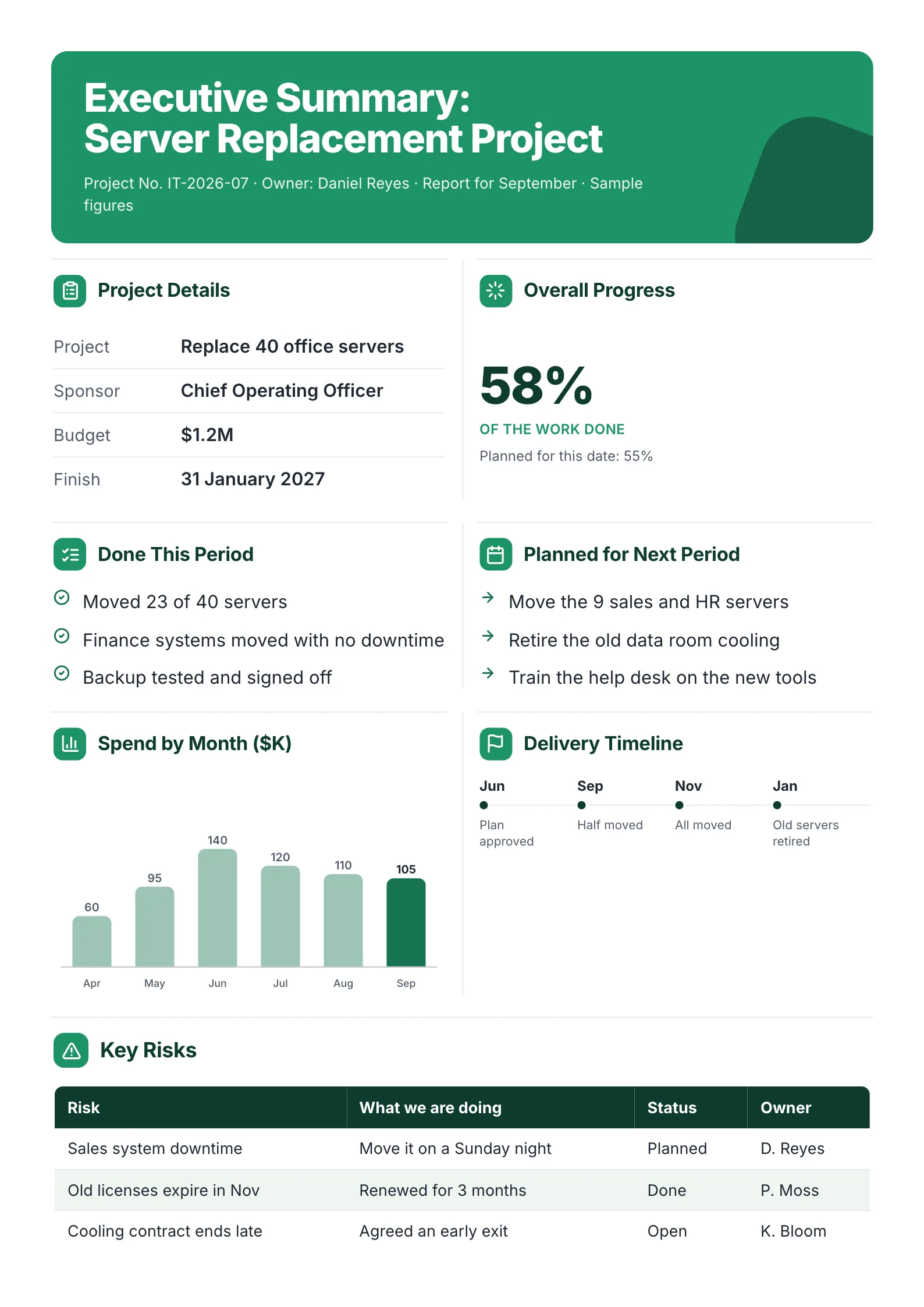 Executive Summary of a Project ReportEdit for free(opens in a new tab)
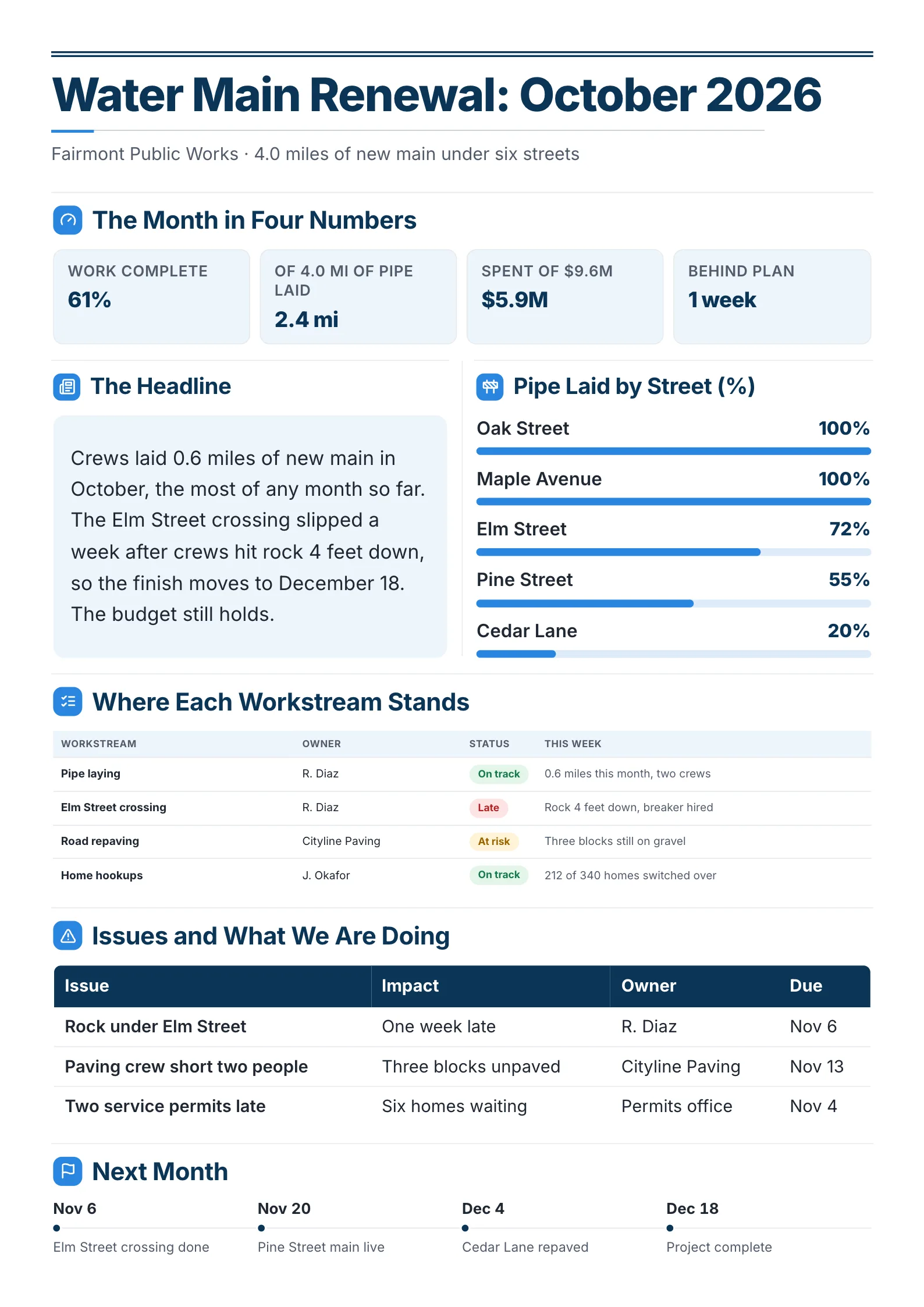 Monthly Project Summary ReportEdit for free(opens in a new tab)
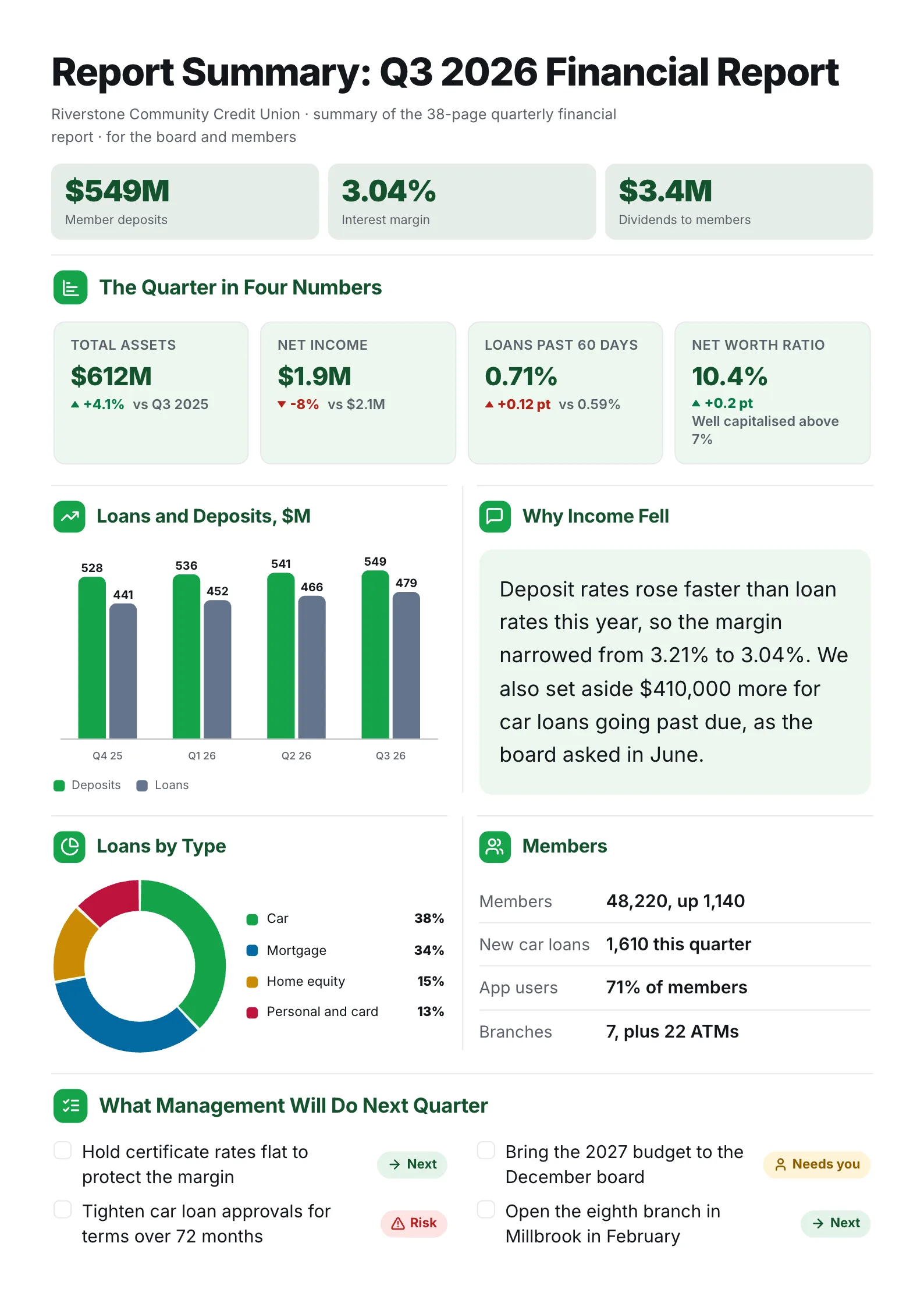 Report Summary: Quarterly Financial ReportEdit for free(opens in a new tab)
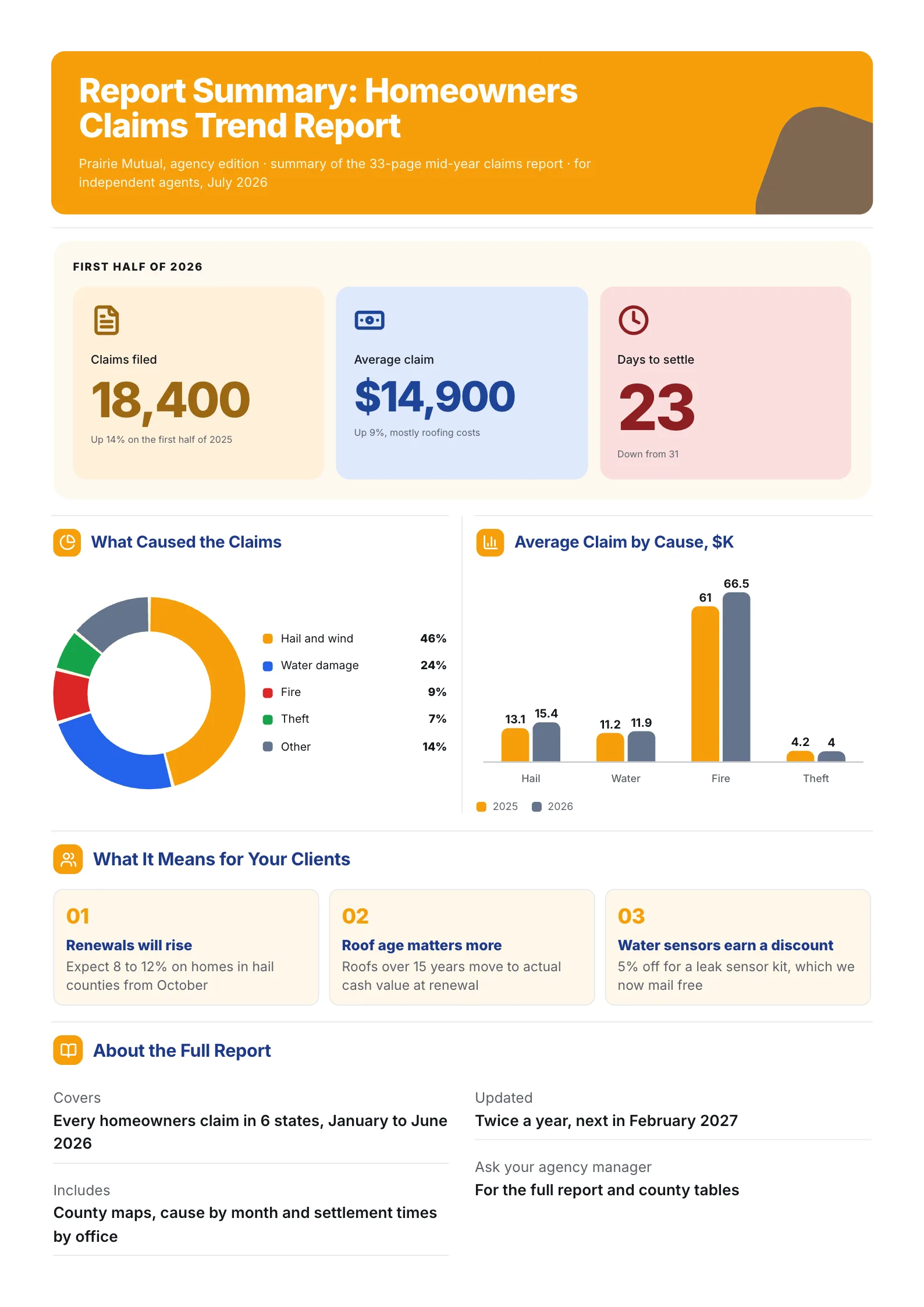 Report Summary: Insurance Claims TrendsEdit for free(opens in a new tab)
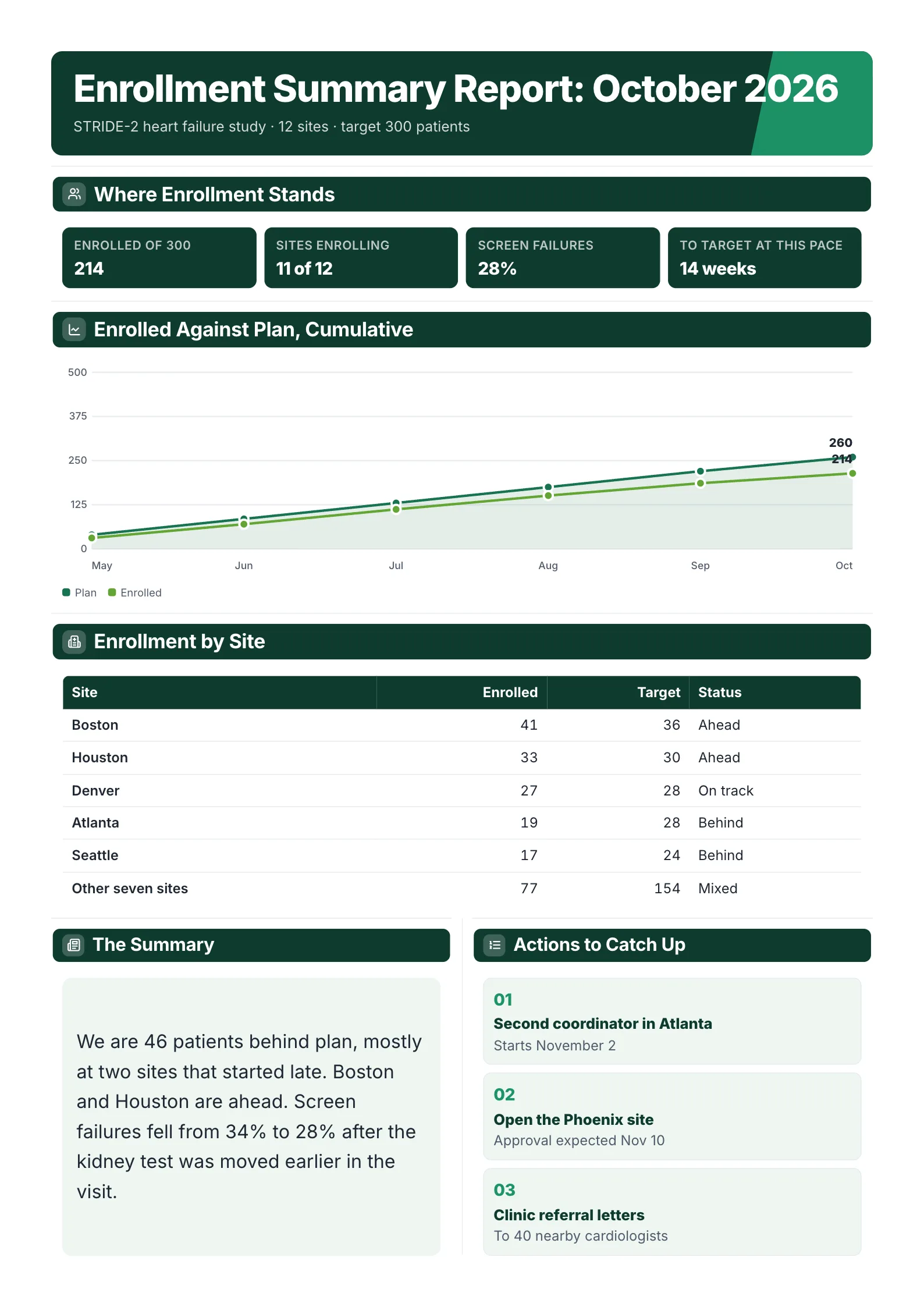 Clinical Trial Enrollment Summary ReportEdit for free(opens in a new tab)
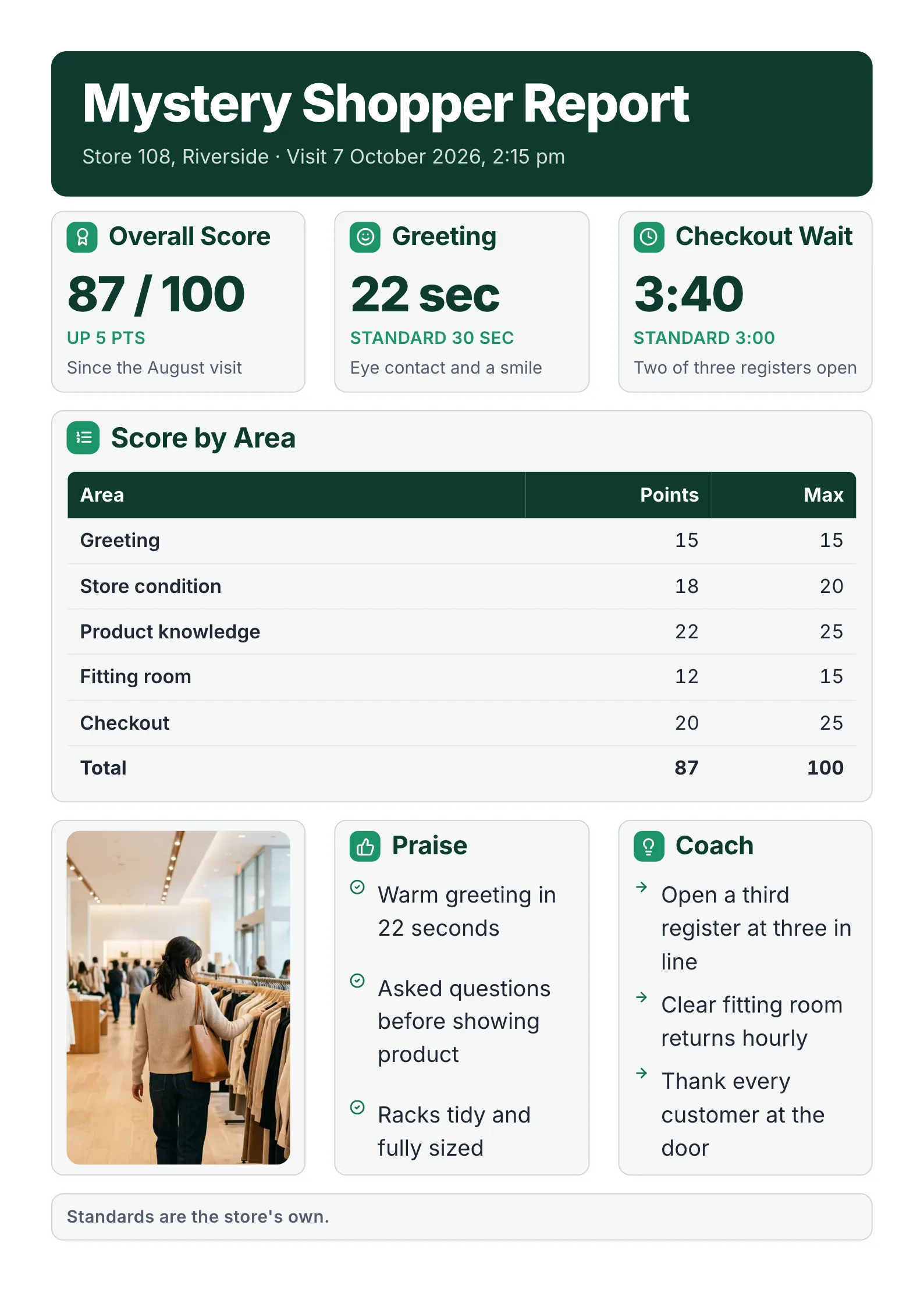 Mystery Shopper ReportEdit for free(opens in a new tab)
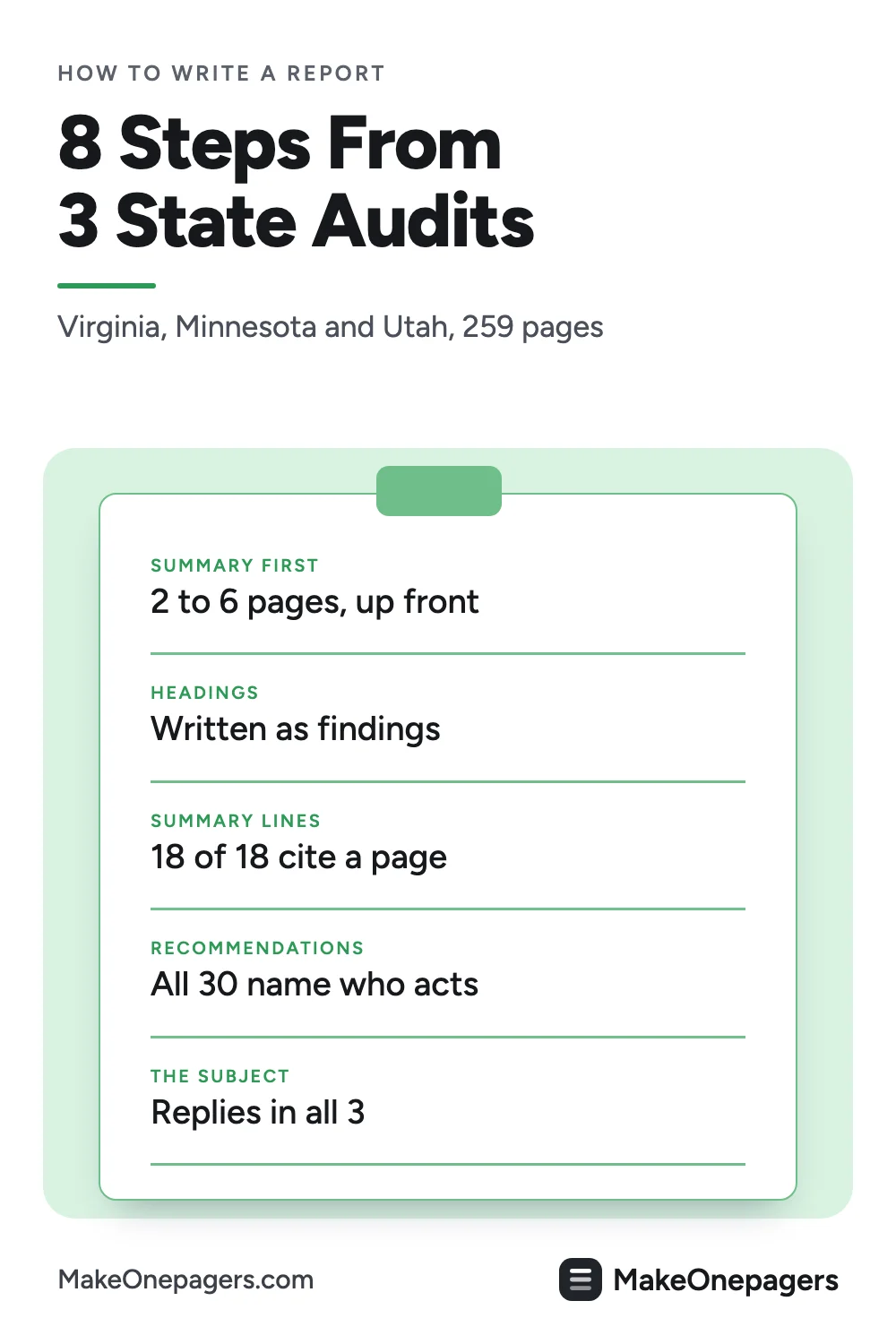
That's the order three state audit offices use, and we went through one report from each, 259 pages in all. They come from Virginia, Minnesota and Utah, and each one was written for its state's lawmakers.
| Virginia JLARC | Minnesota OLA | Utah OLAG | |
|---|---|---|---|
| Report | Community colleges, October 2025 | Office of Ombudsperson for Families, January 2026 | Medicaid inspector general, September 2025 |
| Pages | 105 | 74 | 80 |
| Summary | 6 pages, at the front | 2 pages, at the front | 2 pages, at the front |
| Recommendations | 8, each tagged with its chapter | 10, each with a page number | 12, numbered by chapter |
| Who acts | Named in all 8 | Named in all 10 | Named in all 12 |
| Subject's reply | Letters in Appendix C | Letter at the end | 17-page response at the end |
Source: MakeOnepagers read of 3 state audit reports, November 5, 2026. Each report title links to the PDF we read.
Step 1: Write down the questions before you start
Every report answers a question someone asked, so write that question down before you collect anything. Minnesota's report says so in its introduction: "We focused our evaluation on the following questions." Then it lists two, "To what extent has the Office of Ombudsperson for Families fulfilled its statutory duties?" and "How well does the Office of Ombudsperson for Families address complaints?"
Virginia does the same thing in a box on the first page of its summary, called "Why we did this study." Utah's version is a box called "Audit Request," which says who asked for the audit. Two or three questions are enough for most reports. A fact that doesn't help answer one of them can go in an appendix, or be left out.
Step 2: Gather the facts, and keep a note of how
Your reader will trust your findings only as far as they trust your method, so record what you did while you do it. Minnesota's footnotes are a good model, because they're plain and they give numbers. The team reviewed files for 36 complaints. It surveyed the office's community boards and heard back from 7 of 11 members, "a response rate of 64 percent." A public survey drew 14 responses.
Virginia gives a short account in Chapter 1 and puts the full method in an appendix called "Research activities and methods." Either way works. What matters is that a doubtful reader can see how many files, people or records sit behind each claim.
Step 3: Put a short summary at the very front
All three reports open with a summary, and none of them makes it long. Virginia's summary is 6 pages out of 105, and Minnesota's and Utah's are 2 pages each. Utah's cover letter even tells the reader where to look: "An audit summary is found at the front of the report."
Minnesota opens its summary with one bold sentence that carries the whole verdict: "The Office of Ombudsperson for Families (OBFF) does not consistently follow requirements in law and lacks adequate oversight." If your reader stops after that line, they still know the answer. Write your summary last, once the findings are settled, but put it first.
Step 4: Write every heading as a finding
A heading like "Online learning" tells your reader what a section is about. A heading like "Proportion of students taking courses online has increased substantially" tells them what you found. Virginia's summary uses the second kind for all 7 of its headings, and the numbers sit right under them, with fully online students up from 17 percent in 2015-16 to 41 percent in 2024-25.
Utah numbers its findings and writes them the same way, like "1.2 The OIG Does Not Conduct Annual Planning, Limiting Its Ability to Provide Full Medicaid Coverage." Read just the headings of either report and you have the story. Try it with your own draft. Headings that read like a table of contents should be rewritten as sentences.
Step 5: Point every summary line to its proof
This is the habit we liked best. Minnesota's two-page summary has 11 findings and 7 recommendation lines, and every one of those 18 lines ends with a page number. One reads, "Many individuals we spoke with across Minnesota's child protection system were unfamiliar with OBFF. (p. 29)"
A reader who doubts a line can turn straight to the evidence. A reader who agrees can skip the chapter entirely. Adding the numbers takes a few minutes once your pages are final, and it makes a long report feel short.
Step 6: Number your recommendations and name who acts
All 30 recommendations in the three reports name someone. Virginia's 8 each start with "The Virginia Community College System should" or "The State Board for Community Colleges should." Minnesota's 10 split between the office itself, the Legislature, the office's community boards and the ombudspersons. A recommendation with no owner is easy to agree with and easy to ignore.
Numbering helps people talk about them. Utah explains its system in one line: each recommendation's number "consists of its chapter followed by a period and recommendation number within that chapter." So 1.6 is the sixth one in Chapter 1. Virginia does a lighter version, ending each recommendation with its chapter, such as "(Chapter 2)." In a meeting, "let's start with 2.1" saves a lot of page turning.
Step 7: Say what each fix will change
Half of Utah's recommendations end with a reason. Six of its 12 include the words "Doing so will," followed by the result, as in recommendation 1.6: "Doing so will improve recommendation quality and promote Medicaid accountability."
That one sentence answers the reader's next question, which is "why bother?" Add it to your own recommendations, and make it as concrete as you can. "Doing so will cut wait times to 2 weeks" beats "Doing so will improve service."
Step 8: Let the people you wrote about reply
All three reports print a written reply from the people they examined. Virginia explains its process in Appendix C: agencies "are given the opportunity to comment on an exposure draft of the report," and "Appropriate corrections resulting from technical and substantive comments are incorporated in this version." Minnesota prints the office's letter, dated January 26, 2026, at the end. Utah's response runs 17 pages.
Showing a draft to the subject does two things for you. It catches factual errors before your reader does, and it shows the reader both sides. For a work report, that might mean sending the draft to the team you're writing about a day early and adding a line on what they said.
The order, at a glance
Put the eight steps together and you get a structure you can reuse for almost any report.
- Title and one-line verdict. Say what you found in the first sentence.
- Summary. Up to two pages for most reports, with findings as headings and a page number on every line.
- Why and how. The questions you answered and the method, in brief.
- Findings. One section per finding, each with its evidence.
- Recommendations. Numbered, each naming who acts and what it will change.
- Response. What the people you examined said.
- Appendix. Full methods, data tables and anything a skeptic might check.
Using the steps for a work report or a school report
You won't write 80 pages for your manager, but the same steps shrink well. Google's top suggestions after "how to write a report" are reports for work and for school, so here's how the steps fit each one.
For work. Ask your manager what decision the report should help with, and write that down as your question. Keep your summary to a few lines at the top of the first page, with the verdict in the first sentence. Write your headings as findings, like "Returns doubled after the March price change." Then end with two or three numbered actions, each with a name and a date, and send a draft to the team you're writing about before it goes up the chain.
For school. Your teacher's assignment sheet is your question, so copy its wording to the top of your notes. Write down your method as you go, including how many sources you read or how many trials you ran. Put a short abstract or summary first if the assignment allows it. Then add a section on what went wrong and what you'd change, because that's where you show you understand the work.
Five one-page reports that follow these steps
Not every report runs 80 pages. These samples from MakeOnepagers show the same habits squeezed onto a single sheet. Every name and number in them is invented.
A summary that opens on one paragraph and ends on a decision
 Edit this template
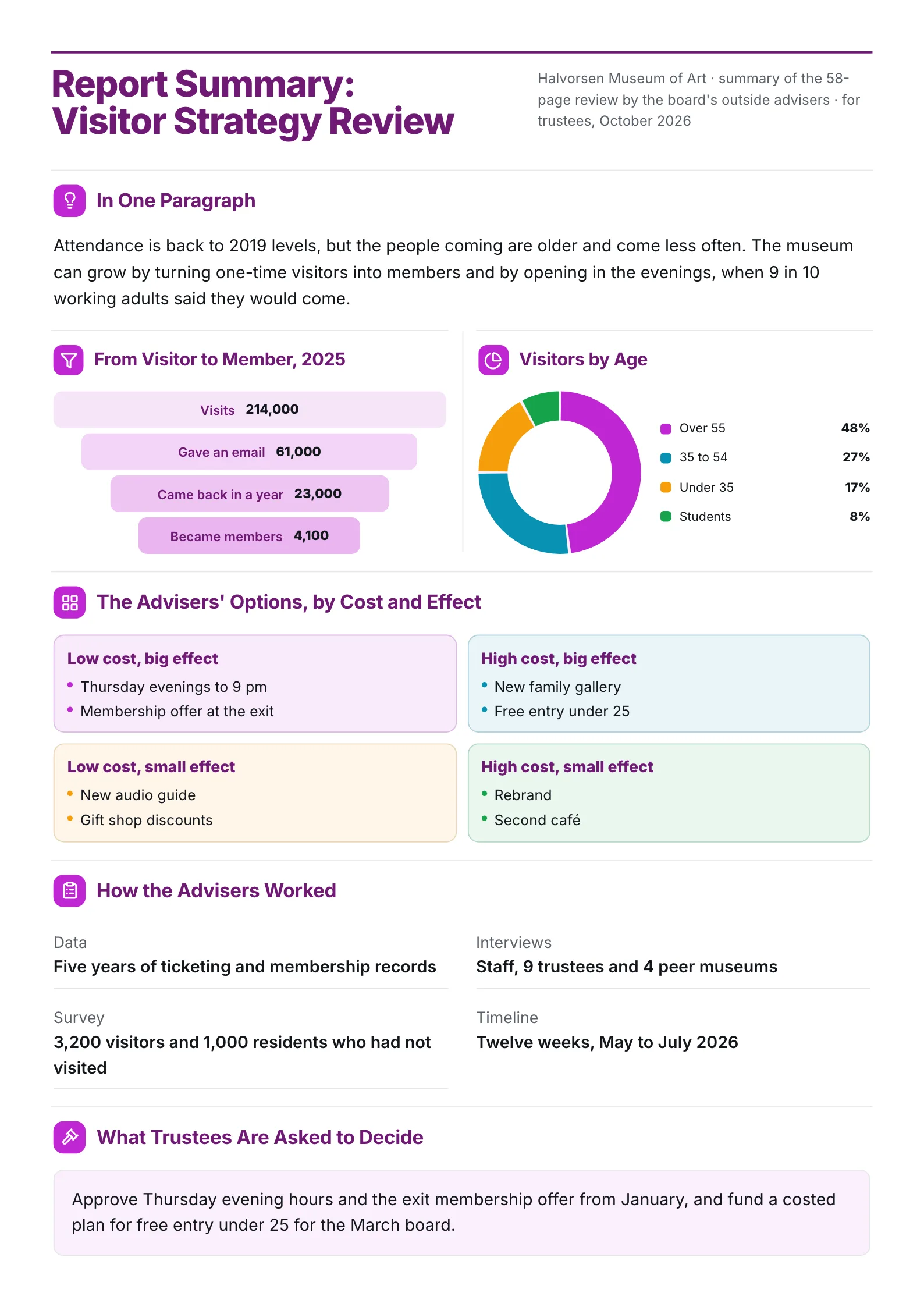
This strategy review report summary sums up a 58-page review for a museum's trustees, and it starts with a box called "In One Paragraph," just like Step 3. Its method box covers Step 2, listing five years of ticketing records, a survey of 3,200 visitors and 1,000 residents, and twelve weeks of work. It ends on "What Trustees Are Asked to Decide," so the board knows exactly what the report wants from them.
A building report that leads with the gap
 Edit this template
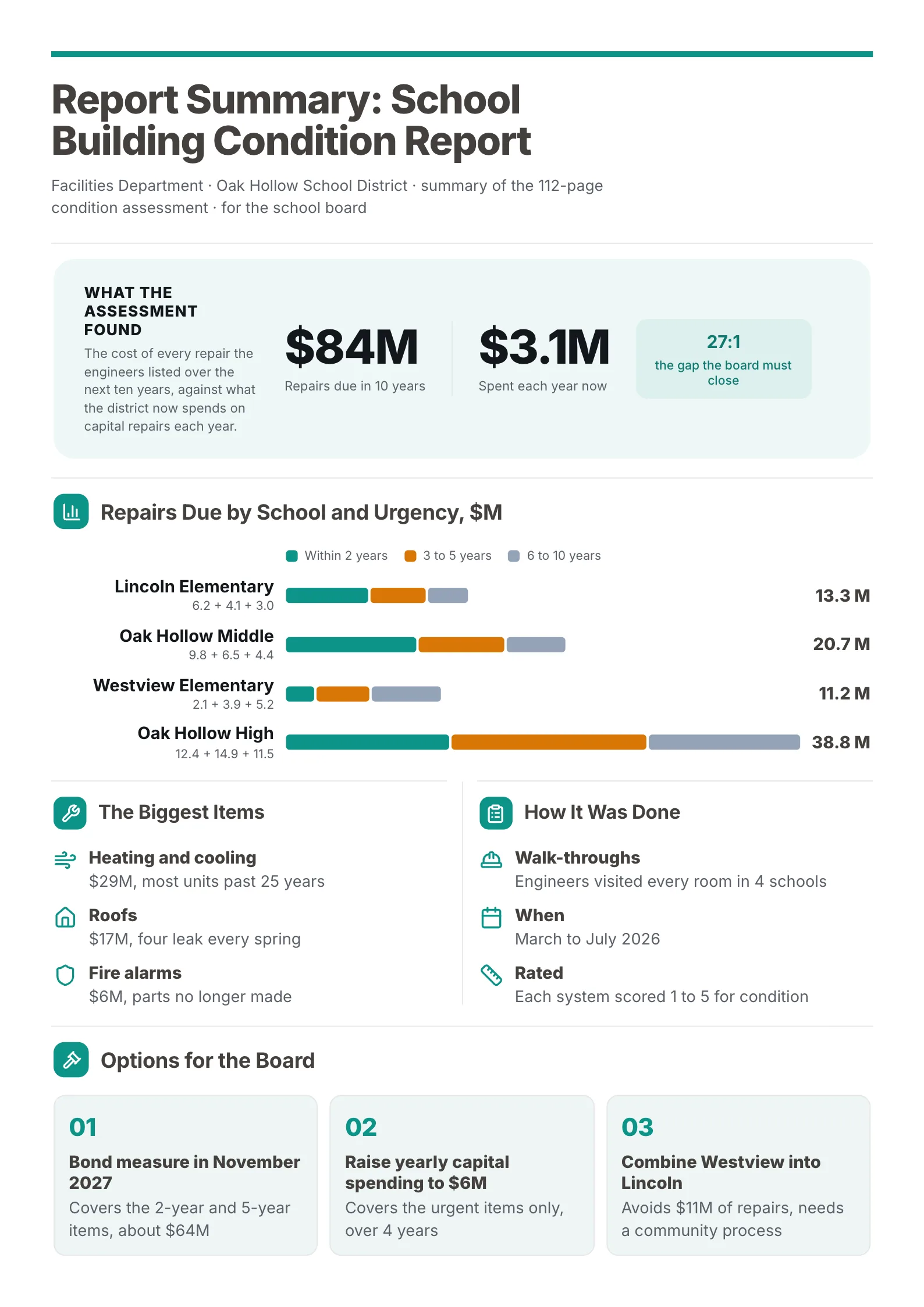
This building condition report summary states its finding as two numbers side by side: $84M of repairs due in 10 years, against $3.1M spent on repairs each year. It explains how the engineers worked, visiting every room in 4 schools and scoring each system from 1 to 5. Then it gives the board three options, from a bond measure of about $64M to combining two schools, which avoids $11M in repairs.
A grant report that turns lessons into next year's plan
 Edit this template
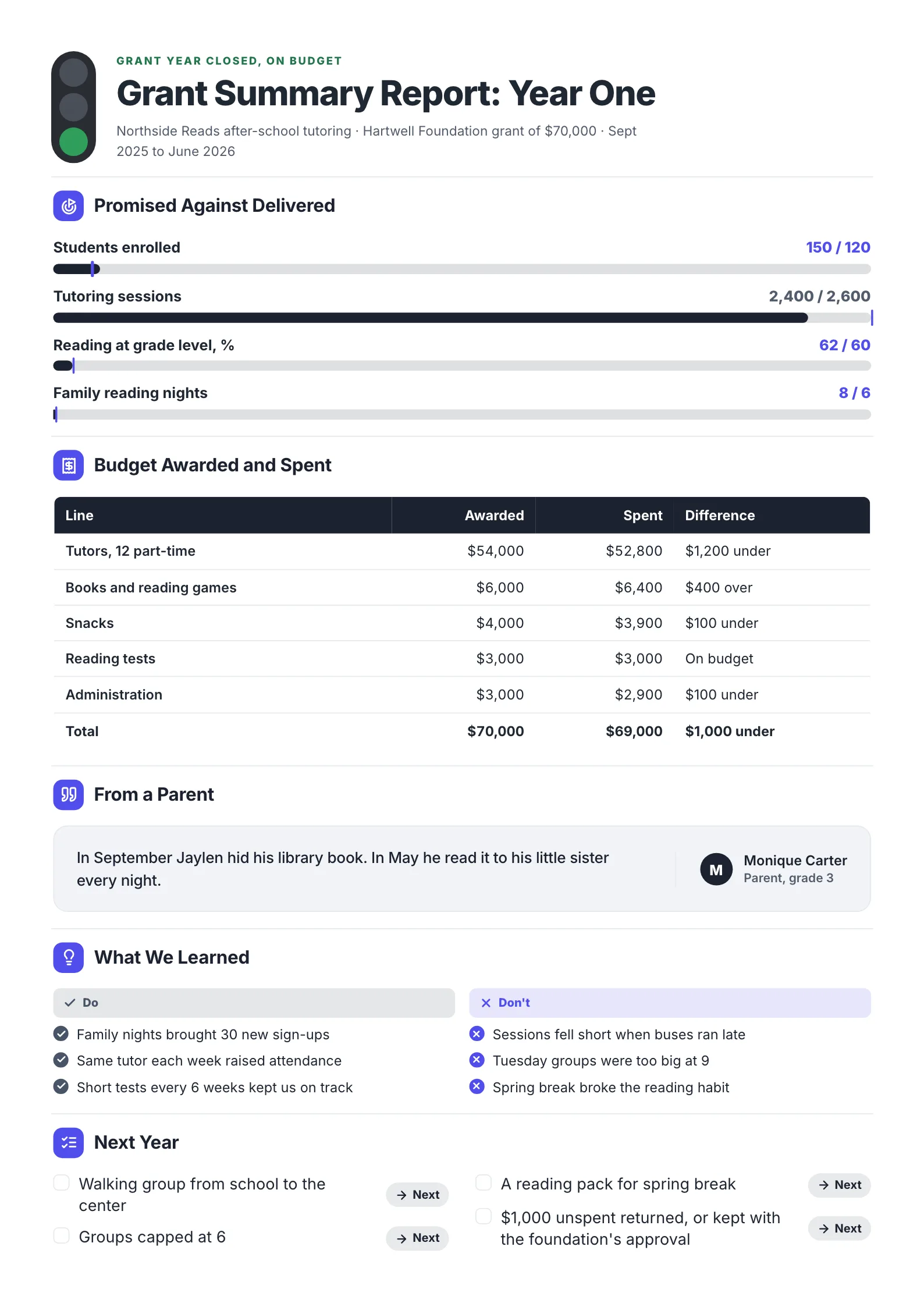
This grant summary report shows the findings-to-recommendations link from Step 6 in its smallest form. Under "What We Learned," it notes that Tuesday groups were too big at 9. Under "Next Year," it caps groups at 6. It also shows the money plainly, with $69,000 of a $70,000 grant spent and $1,000 left over.
A store visit where every action has a name
 Edit this template
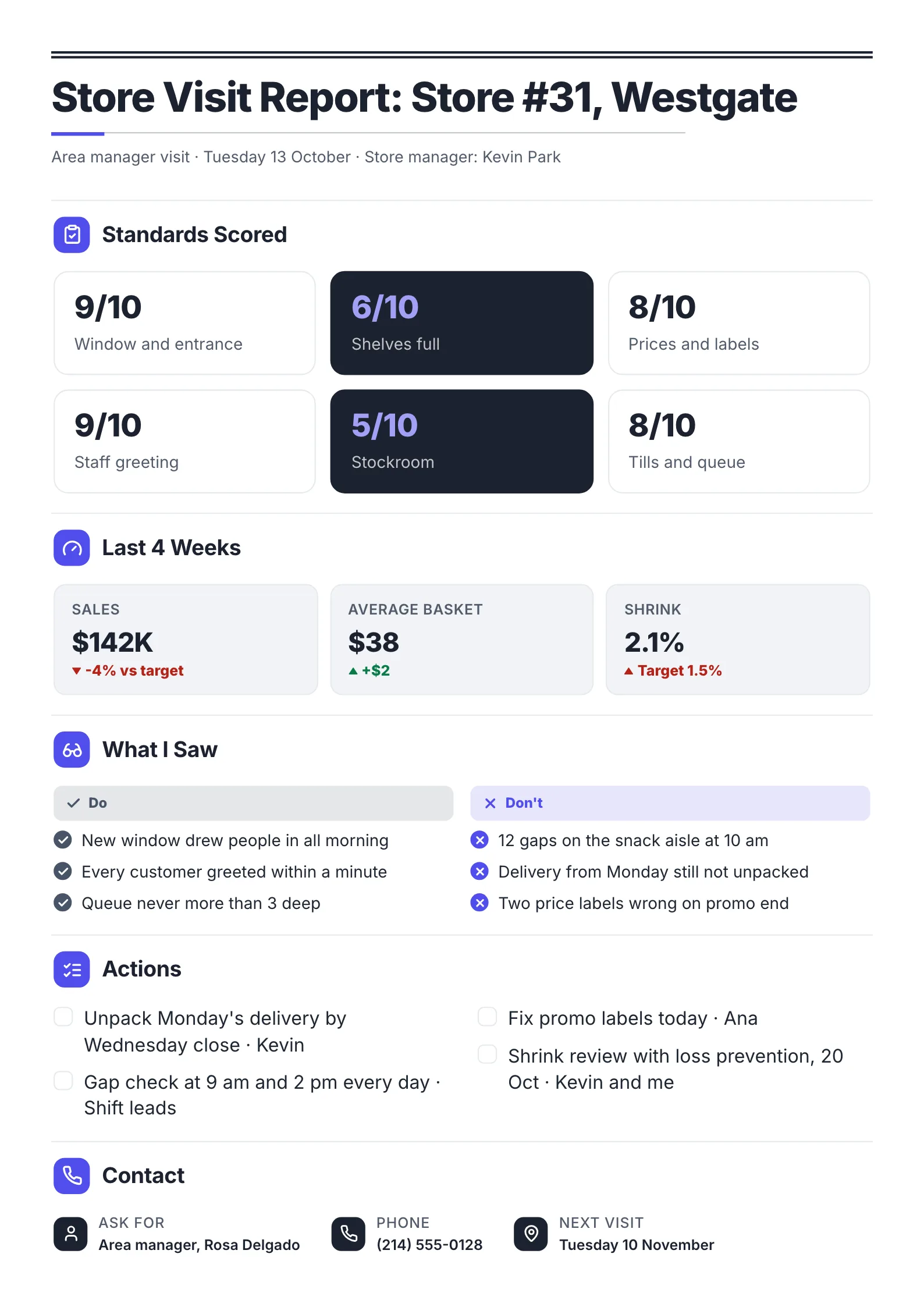
This store visit report scores six standards, and the stockroom comes in lowest at 5 out of 10. Its actions follow Step 6 to the letter, because each one ends with a person. "Unpack Monday's delivery by Wednesday close" goes to Kevin, and "Fix promo labels today" goes to Ana. Nobody leaves the visit wondering whose job it is.
A lab report that admits what went wrong
 Edit this template
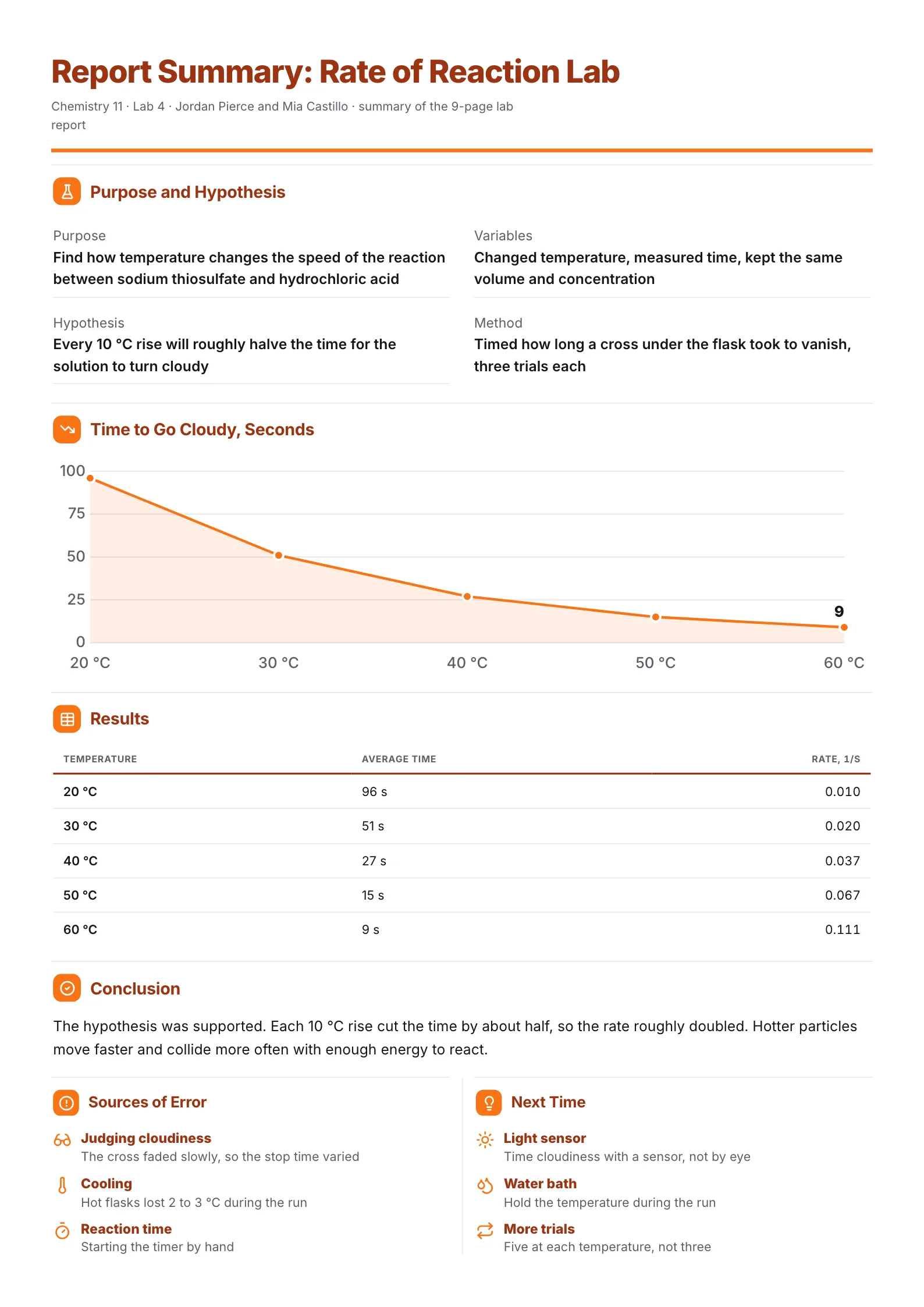
For a report written for school, this lab report summary is the student version of Step 2, because it shows both its method and its limits. It states the hypothesis, says each temperature got three trials, and lists its own sources of error, such as hot flasks losing 2 to 3 °C during the run. Its "Next Time" box asks for five trials instead of three. A teacher reads that as care, and so does any boss.
Make your report
Pick the MakeOnepagers report closest to yours and replace the sample facts with your own findings, owners and dates. Our guide on how to summarize a report shows how to turn a long report into its front page. For a ready one-sheet layout, see the one page report template, and for more finished samples, browse these report examples. With rough notes and no layout yet, start in the free AI One-Pager generator and edit what it builds.
Frequently asked questions
Where does the summary go in a report?
At the front, right after the title. All three state reports we read put it there. Virginia's ran 6 pages, and Minnesota's and Utah's ran 2 each.
Should report headings be full sentences?
For findings, yes. A sentence heading tells the reader what you found, so someone who only skims the headings still gets the story. Virginia's summary writes all 7 of its headings this way.
How do I write a recommendation in a report?
Start with who should act, then what they should do, then what it will change. Utah's report adds a "Doing so will" line to 6 of its 12, which answers the reader's question of why it matters.
Should I show my report to the people it's about first?
Yes, when you can. Virginia sends agencies an exposure draft and fixes the errors they point out before publishing. It catches mistakes early, and printing their reply shows your reader both sides.
What goes in the methods section of a report?
What you looked at and how much of it. Give numbers, like how many files you read, how many people you surveyed and how many answered. Minnesota reported 36 complaint files and 7 of 11 board members answering its survey.




